LinksLocal Links Social Media My Other Websites Music Politics Others Networking Music DatabaseArtist Search: Website SearchGoogle: |
Loose Tabs (10)Further notes on the news of October.
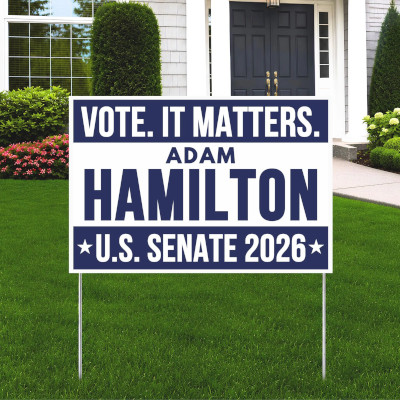
On Monday, November 2, I published another one of my Loose Tabs compilations, this one picking up from where my previous one, on September 30, left off. As I was wrapping up, I jotted down a few notes here. Loose Tabs has a Table of Contents, which may help you navigate, but I don't want to overdo the links here. New StoriesLooking Back at Israel: 3 years after the "apocalypse," 1 year after the "ceasefire"; the quotes suggesting some ambiguity, but this does raise the question, if at any point the killing rises to the level of genocide, doesn't that apply not just to the peak moment but to the long process that led to the peak, and any aftermath that falls short of restitution? The war to demolish and erase Gaza, which Netanyahu launched in October 2023, is ultimately not all that different from the events Ilan Pappé documented in his 2006 book The Ethnic Cleansing of Palestine — something I was reminded of recently in reading Eyal Weizman's Ungrounding, which starts uncovering Gaza in 1948. We didn't call it genocide then, because Israel was more circumspect about covering their tracks, but we now know the intent was there, and the numbers were staggering. But does anyone argue that the mistreatment of Jews by Nazis from 1933 through the Kristallnacht of 1937 up to the invasion of Poland in 1939 wasn't part of the Nazi genocide? I'm not very happy with litigating the word "genocide" as pertains to Israel. The point of the word, and the law, was to prevent anything remotely like that from ever happening, and it that it's failed. I've never like the term "ethnic cleansing," which was originally coined in Serbia as a euphemism for mass murder, but has come to mostly signify using threats of violence to drive people away from their homes, forcibly transferring them. That was explicit policy in some cases in 1948, in others less formal practice, elevated to policy by the refusal of a right to return. In 1967, Israel revived the practice, but trimmed it back after US complaints. Since 2023, many Israeli officials have wanted to revive forced transfer, but Egypt in particular has refused to cooperate. In between there were lesser attempts to force exile. The constant has always been the impulse to, and desire for, genocide. Even after 2023, whatever arguments you can make to diminish the charge against Israel are mostly limits Israel imposed on itself to avoid looking even worse. Who knows what would have happened had the killing been hidden from the public, as the Nazi genocide was. There are also related sections on the film NAZA, on the Nobel Peace Prize (awarded to former ICJ jurist Navi Pillay), and Israel's Elections. While the people have voted, and delivered a strong rebuke of Netanyahu (Likud lost 9 seats), the actual choice of Prime Minister often involves considerable horse-trading behind closed doors. With the two major coalitions split 53-48, two Palestinian parties (with 19 seats) hold the balance of power. Now, if the anti-Netanyahu coalition wants power bad enough, the Palestinians votes to put them over the top are asking for very little: they wouldn't be partners in the government, with ministry seats, but they would allow it to organize and function, in the hope that will somehow be less deadly than Netanyahu, Ben Gvir, and Smotrich. I've also included sections on the elections in Brazil, where leftist Lula da Silva was reelected after trailing in the first round. I've also collected the stories on Trump's ill-fated press secretary Katie Zacharia. Major ThreadsThe War on Iran continues to simmer, as neither Netanyahu not Trump wants to admit defeat before their respective elections. Netanyahu at least got his wish. Trump too, as Iran has been working behind the scenes to reinforce its diplomatic efforts. So there's not much to report here, other than gloom-and-doom scenarios that all sides are spinning. I'm skeptical that Trump will try to improve his bargaining position by lashing out after the elections (there are plans to do so, but that doesn't mean they will be followed). Three reasons: Trump doesn't know what he wants in the end; no amount of further bombing is going to get him there; Iran can respond to any escalation by hitting back, especially against the vulnerable Gulf States (whose money has Trump's ear). The Israel sections show how Israel is continuing military operations regardless of the "ceasefire," especially in Lebanon and the West Bank. Meanwhile, Israel continues to lose support in the US and elsewhere. Also note that NatCon held their "annual confab" in Israel this year, reinforcing the linkages between injustice in Israel and the right's desire for more of the same here. The World section has pieces on the Ukraine war, and on the election in Serbia, where Alexsandr Vucic's right-wing regime was ousted by a student movement. As Ishaan Tharoor points out, right-wing regimes all around the world are fast wearing out their welcome. I believe that's because they are intrinsically corrupt and incompetent. Clearly, the Republican example in the US since Reagan bears that out. There are, as usual, four sections on Trump: one on his war frenzy, and more generally on American militarism; one on his fight against law and order, including what the Supreme Court is (or more often is not) doing to constrain him, although I may also venture into "law enforcement" (if that's what you want to call whatever ICE feels like doing); one on other aspects of his administration (ranging from wanting to privatize Social Security to promoting the spread of AIDS in South Africa, with a cluster of pieces on his now-former ambassador to Greece); and finally one that focuses on Trump himself (Chris Lehman has a good review of Trump's rallies, although Margaret Hartmann's list of rants is funnier). The next sections are on Electoral Politics, Other Republicans, and Democrats. These are longer than usual, perhaps inevitably given proximity to the election. The only candidate I go into any depth on is Adam Hamilton (D, running for the Senate seat from Kansas), as he is local, and I'm curious how outsiders view him. I'm avoiding speculation on polls and/or outcomes, as we will have real answers soon. I wrote a long comment on a Rob Urie piece, which does a nice job of encapsulating my take on American history from 1970 to the present. I also have a long comment on a Corey Robin piece that tries to reframe his piece along somewhat different lines. Both of these comments are bits I've been thinking about for my "Weird" book. My main thesis is that Trump appeared as some kind of revolutionary at a time when the system seemed impossible to fix or even to get to function. Revolutions are extreme measures, taken only when reform is impossible, as appears the case when you're stuck with Democrats like Clinton, Obama, and Biden. Of course, there is more to this, but that's enough to start with. The Republicans piece could have been many times longer, but they're all basically mini-Trumps, so distinctions without any meaningful difference. The Democrats have a more interesting set of pieces, including a couple that are future-policy-oriented, a general profile on DSA, and a cluster of pieces on the Haley Stevens dud-bombshell. In Economists and the Economy, I catch up with Dean Baker, and add a few more pieces, like "Trump's broken promises, in 11 charts." Technology has some AI pieces. End MatterUnder Regular Columnists, I only included Jeffrey St. Clair's "Roaming Charges" pieces, which is the one regular column I know of that everyone should read. I created this section to keep them together, as opposed to spreading them over everywhere. I usually have more, but this month didn't find the time. Miscellaneous Pieces should include whatever's left over, but I only filed one piece there this month. The End Matter is also a little short, aside from the Obituaries. I've had a rough month, and I've been slowing down all year. I haven't been able to spend much time on Loose Tabs (although I am just under 300 links and 19000 words). Lots of sources I used to check regularly I simply haven't gotten to. I haven't done a Book Roundup post since May 2025. I've only indexed one Streamnotes file this year. I have a Jazz Critics Poll coming up this month, and I'm far from prepared to do it. (For starters, I still have email problems, and working email is absolutely essential.) I'm not particularly fond of politics. I don't even care much about news. (My wife is a news junkie, so much of what I do pick up is accidental or second hand from.) I'm just trying to keep what little I know straight, to make some sense of it all. But I'm pretty sure of a few bedrock principles: Power corrupts; an ego is a dangerous thing; anyone without doubts isn't thinking or feeling; the pursuit of money eats your soul; the only deal that everyone can agree to is equality; everyone is pretty much the same; respect everyone, at least until they prove unworthy, and even then question your understanding; if you shit on people, they'll make you regret it; if you shit on people, you'll lose respect for yourself; there is no excuse for war. No matter how many stories you read, they'll only make sense in terms of your model for how the world works, so take pains to make sure your model is as right as possible. All I am doing is taking a lot of data, and running it through my model of how the world works (and doesn't). Trump and his Republicans are easy cases. We need to separate them from power, because they can't handle it, and they only wind up hurting everyone. That may be true of many Democrats as well, but most are at least marginally more open, more considerate, more caring, more thoughtful. In an election, you have to figure out who you can work with, vote for them, then figure out how to make them better. It's a battle for inches, but that may be all you can do. So do it. It's not much to ask. Notes on Everyday Life, 2026-11-02 |