|
An occasional blog about populist politics and popular music, not necessarily at the same time. LinksLocal Links Social Media My Other Websites Music Politics Others Networking Music DatabaseArtist Search: Website SearchGoogle: Recent Reading
Music DatabaseArtist Search: Website SearchGoogle: |
Friday, June 19, 2026 Music Week
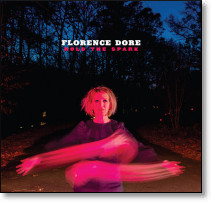
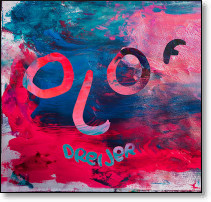
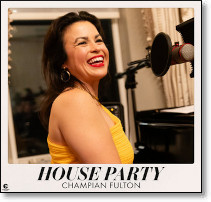
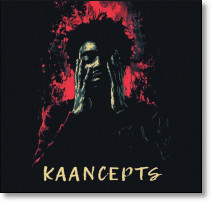
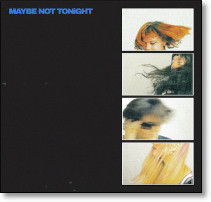
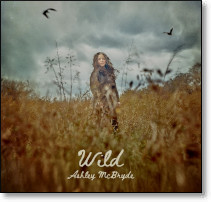
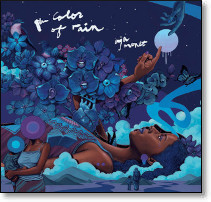
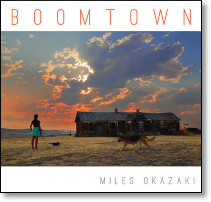
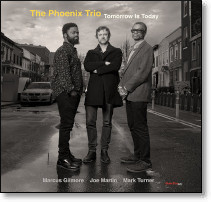
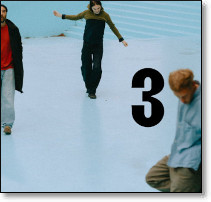
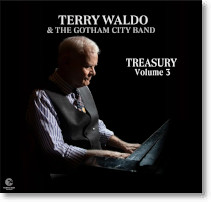
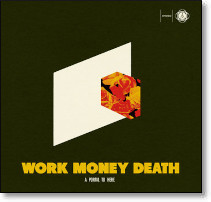
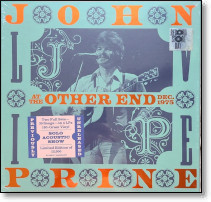
Music: Current count 46138 [46097] rated (+41), 9 [8] unrated (+1). This week's advance copy went out to Notes on Everyday Life subscriber list Wednesday evening: Music Week (6:3) (also here). To get these delivered straight to your mail box, please subscribe. I posted a very large Loose Tabs back on Saturday, June 14 (369 links, 26521 words). I've added a couple more items to the file, which are only appearing with this update. I haven't had time for any extensive revisions, let alone for starting work on next time around. More importantly, I haven't followed through on my intention to pull some excerpts out from the file, and rewrite them for posting on Notes on Everyday Life. I have a lot more to say, especially on the Iran/Lebanon war, but I'm having trouble keeping up, and wind up doing a lot of thrashing. The main thing I want to say about Trump's "deal" is that the details, which seem mostly to be about money, don't really matter. The only things that really do matter are whether Trump is sincere about abandoning the war path, and is in sufficient control of his administration to stop Israel from sabotaging the deal. That he has been hurt politically by his decision to start bombing is way beyond doubt. That resuming the bombing would only hurt him more is also pretty obvious, although there are many consultants in Netanyahu's pocket who are arguing otherwise. Thus far the really worst case scenarios, which involve major destruction and possible upheaval in the Persian Gulf states, haven't really happened. Of course, it will be really hard for Trump to control Israel. It will take discipline and clarity he has never yet demonstrated. For starters, Israel has developed a lot of deep-seated influence in Washington, including on his staff and in his cabinet — the very people he is powerless without. But also, Netanyahu is extremely persistent, as two-faced and under-handed as anyone in politics gets. He's shown, time and again, that he's willing to bend, but won't break, and will snap back first opportunity he gets. It's also quite possible the Democrats will play this so badly he feels the need to resume the war to reassert his "tough guy" self-conception. It's easy enough to come up with a list of points showing that his deal is more generous to Iran than Obama's JCPOA deal was. But I'm more inclined to argue that both of those deals weren't generous enough. Instead of trying to hamstring Iran with technicalities (and "snap back" sanctions), merely to appease Israel's much publicized but insincere fears, Obama should have sought to normalize relations with Iran: ending the sanctions, assuring Iran that neither Israel nor the Gulf States would attack it, and seeking Iran's cooperation in resolving disputes around the region (e.g., Lebanon, Syria, Yemen, even Hamas — although Iran's influence with them was almost purely propaganda spin by Israel). By not even trying to end the conflict, Obama paved the way for Trump to withdraw from JCPOA and start his own disastrous war. Of course, the blame for that war lies squarely with Trump, but that's no excuse for Obama's failures, both viz. Iran and in failing to do anything meaningful about Israel's increasing marginalization and dehumanization of the Palestinians. Sure, Obama's blind spot viz. Israel isn't much different from Biden's or Trump's. All three, like most American politicians, are totally in thrall to Israel's propaganda line — or at least were, until it started to become clear what kind of world Israel is building. The good and bad news here is that Israel doesn't need war with Iran to do what they really want to do, which is to drive the Palestinians away from their land claims. As I've noted many times, Israeli demonization of Iran has mostly served to manipulate the Americans (who still harbor grudges from 1979). Trump, on the other hand, doesn't need to see Iran as a threat, and he doesn't need to believe in "two-state" delusions. He's quite happy to support Israel's ethnic cleansing as long as it feeds into his graft. (Bribes are always much simpler/cleaner than ideology.) That may mean that Israel has to give up on their dreams of occupying and annexing Lebanon, but that's something Israel can save for later. (It was on Ben-Gurion's wish list from 1948, but you rarely heard much about it until 1982; after 2000, it faded again, until being revived last year following the "cease-fire" in Gaza. Give Israel a moment's peace, and they go looking for the next war.) PS: I wrote the previous paragraphs yesterday. I have some further thoughts this morning, but I'll save them for a future Substack post, when I feel a bit less under the gun. As I explained in my April 5 The Big Questions post, the problem has always been one of Trump finding an off-ramp that was palatable to him politically. This one isn't ideal, but nothing with Trump is, or can be, because, well, he's stupid, and egomaniacal, and that's far from being his worst quality. So forget "do the right thing" as a guideline. That isn't even a concept with him. What he wants is to claim victory, and to avoid further punishment (politically, of course, but also anything that might diminish his graft). His victory claim is that he has stopped Iran from ever getting a nuclear bomb, and that the Strait of Hormuz will be open and toll-free. His concessions are to drop the sanctions (which are bad for business, and only serve to make Iran more anti-American), to promise not to bomb Iran again (which he can deliver on, because it was always a stupid thing to do), and to restrain Israel (from doing the same, which it could only do with American support, and from Lebanon, which will be a sticking point for Netanyahu and his coalition). Israelis will scream bloody murder over having their wars curtailed, but that's a price they can well afford to pay — much as they did every time they removed their settlers from some untenable outpost (v. Sinai in 1979, Gaza in 2005). But what really matters to them is their "ethnic cleansing" in the occupied territories, and Trump has alrealdy proven to be their most reliable, and least squeamish, ally ever. Besides which, Netanyahu knows Israel can't afford to sustain those wars on their own, so Trump holds if not all the cards, the (pun inevitable) trump ones. Besides, while Ben-Gvir can exalt Israeli sovereignty and rail against American bullying, much of Netanyahu's political capital is based on the perception that he's a master manipulator of American politicians. So for him picking a fight with Trump is a lose-lose proposition. He has his own skin to save in elections that are fast approaching. Having failed to keep the Americans in the war, perhaps his best tactic is to claim his share of Trump's victory. The other thing to bear in mind about the "deal" is that aside from the "nuclear issue," most of what matters is the money flowing from the Gulf states into Iran. Trump cannot politically afford to rebuild Iran, but the Gulf states cannot afford not to. Iran could collect tribute in tolls, but major development investment, free from American sanctions, has the same effect, looks better, and builds long-term ties. The main reason I haven't had time to write up these thoughts, or much else on my mind, is the work it's taking to get the Francis Davis Jazz Critics Mid-Year 2026 Poll going. I sent the first round of ballots out last week. Voting so far is alarmingly light (19 ballots counted; less than a dozen more acks, many actually nacks). My worst fear is that the mail isn't getting delivered, and people who would vote aren't hearing about it, but there is very little I can do about that (beyond sending nag letters out, something I'm uncomfortable with, and likely to meet the same fate). I understand that most of the mid-year drop off is due to timing, uncertainty, doubt, and simply not having enough time to think about things this trivial. I've tried to emphasize that one shouldn't fret over getting this right: just take a couple minutes and jot down the titles of a few albums that you'd like your friends and readers to hear about. We'll table them up, and present them in a way that helps everyone get a better grasp on the year (so far) in recorded jazz. So far, we're averaging about 9 new albums per ballot (the maximum, if a voter provides a full list of 10 new jazz albums and 5 rara avis, is 15). I'm already up to my ears in tips of records that I hadn't heard before, and most turn out to be very good. This is a bit part of the reason I have so many A- and B+(***) records this week (12 each). I'm still suppressing the totals on the website, but I've made it possible to see the ballots as they come in, as well as lists of all of the albums that have received votes. One thing I'm hoping for is that people will post links to their online ballots — my own ballot is here — and that this will stimulate some interest in the poll. I should send out a second round of invitations soon, and maybe some reminders. I'm always worried about invitations and reminders getting caught up in spam traps, especially as there's virtually nothing I can do about it. It would help to stir up some chatter wherever potential voters hang out, but aside from mentioning it here and on my X/Bluesky feeds, I don't have many ideas. Last few years I worried about the poll falling apart under my stewartship. I did manage to push the vote total up in 2024, only to see it drop in 2025 (while DownBeat claimed their biggest poll ever, including dozens of names I had invited but didn't hear from; why anyone would slog through their 50 questions, which always takes me 6-8 hours, yet can't find time to write down a list of two of favorite albums, is beyond me — surely it's not just the T-shirt?). Still, I find album lists much more interesting than trying to sort out a pecking order for pianists (too many great ones) or flautists (too few?). For me at least, albums are the units we search out. Everything else is just name-dropping. But I'm trying not to worry about turnout. Even if we only hit what I currently imagine as a minimal response (50-60 ballots), we are certain to generate lots of interesting information (at least for the few of us who try to follow such things). At 19, we already have. One thing I haven't had time to do this year is to look at the other mid-year ("so far") polls that have been published (e.g.: Guardian; Hip-Hop Golden Age; NME; Rolling Stone; Saving Country Music; Shatter the Standards; Stereogum; Treble). For one thing, I'm not tracking them this year. (Whether I do an EOY aggregate remains to be seen, but I haven't started one, and it's a big piece of busy work I don't have time or energy to tackle.) While most of the jazz albums below come from poll tips (although some, like Champian Fulton, caught my gaze while looking for something else), much of the non-jazz comes from Robert Christgau's June Consumer Guide. I was surprised to find only one album I had previously heard (Pony, which I had forgotten, so seemed like zero; more will appear next week). New records reviewed this week: Ambrose Akinmusire/Mary Halvorson: Slo-Mo Neon Luminate Hoverings (2025 [2026], Nonesuch): Two of the biggest names in jazz, the trumpet player with five top-five poll finishes so far, the guitarist with two outright wins, in a duo here after landing after landing on the same major label. Minor details prove their talents, in an intimate, low-key encounter that discourages hype. B+(***) [sp] Lakecia Benjamin: We Dream (2026, Artwork): Alto saxophonist, half-dozen albums since 2012, has toured with r&b bands, has crossed over enough to get some Grammy attention, but sounds pretty solidly rooted in Coltrane here, with a side of hip-hop. B+(**) [sp] Circular Arcs: Conventicle (2020 [2025], Castor & Pollux Music): Trio of Esteban Flores (guitar), John Rieder (bass), and Nathan Hubbard (drums); Hubbard has a substantial discography going back to 2002, but the others are relatively new. Fairly heavy noise-fusion, impressive as far as it goes. B+(***) [bc] Cola: Cost of Living Adjustment (2026, Fire Talk): Post-punk guitar-bass-drums trio from Montreal, Tim Darcy the singer-songwriter, third album since 2022. Some fairly strong guitar. B+(*) [sp] Corima: Hunab Ku (2026, Soleil Zeuhl): Los Angeles band "playing rock-fusion in the Zeuhl vein" — a term I had to look up, one originally applied to the French prog rock band Magma (which I recall from the 1970s; realizing that French wouldn't work for rock, and unwilling to switch to English, they invented a new lanaugage to sing in, Kobaïan); fourth album. Only one I recognize is saxophonist Patrick Shiroishi, but others play violin, keys, bass, and drums/tabla/harmonium. Most are credited with vocals, but they're not very intrusive. B+(*) [bc] Florence Dore: Hold the Spark (2026, Propeller): Singer-songwriter from Nashville, teaches American/Comparative Lit in North Carolina, recorded an album in 2001, another two decades later, and now a third. Christgau describes her as "writerly," then makes his point in quotes. I wouldn't have noticed, but approve in theory, and look forward to accidentally stumbling on similar evidence. But sounds pretty solid as is. A- [sp] Dave Douglas: Transcend (2025 [2026], Greenleaf Music): Postbop trumpet player, emerged as a more adventurous rival to Wynton Marsalis in the 1990s, tremendous chops, has always recruited top young musicians for his groups, hasn't always pleased me with his compositions. Another quintet, with James Brandon Lewis on tenor sax, and an unconventional rhythm section: Rafiq Bhatia (guitar), Tomeka Reid (cello), and Ian Chang (drums). B+(***) [sp] Olof Dreijer: Loud Bloom (2026, Dh2): Electronic music producer from Sweden, formerly half of the Knife (5 albums, 2001-13) with slbing Karin Dreijer. Second solo studio album. Deep synths, heavy beats, some vocal fluff. I find it very appealing, although at volume it may disturb the neighbors. A- [sp] Champian Fulton: House Party (2025 [2026], Turtle Bay): Retro-standards singer, started with David Berger's big band in 2007, plays her own piano, with her "longtime trio" of Hide Tanaka (bass) and Fukushi Tainaka (drums), also saxophonists Klas Lindquist (alto) and Cory Weeds (tenor). She is superb, but the real treat here is the 10:58 sax joust on "Billie's Bounce," which for a moment had me wondering whether I was playing "The Chase." A- [sp] Goal Weight [Maggie Cox & Jennifer Gersten]: Keep Telling Yourself That (2025 [2026], Relative Pitch): New York City duo, bass and violin. B+(***) [sp] Phillip Golub: Partisan Ship (2025 [2026], Berthold): Pianist, from LA but based in NYC, several albums since 2020, plays various synths here (Flexichord, Behringer Neutron, Arturia Digital), with spots for Yuma Uesaka (clarinets, tenor sax, blass clariflute), Anna Webber (flute, tenor sax), David Leon (alto sax), Layale Chaker (violin), Elias Stemeseder (more synths), some bass and drums (or drum machine). B+(**) [bc] Gregory Hutchinson: Kind of Now: The Pulse of Miles Davis (2026, Warner Music Arts): One of many projects revisiting Davis on his centennary, led by the drummer, with Ambrose Akinmusire (trumpet) in the key role, accompanied by Ron Blake (tenor sax/bass clarinet), two guitarists (Emmanuel Michael and Jakob Bro), piano (Gerald Clayton), and bass (Joe Sanders), playing three originals and ten pieces from the songbook (4 by Davis, 4 by Wayne Shorter, one each for Tony Williams and Charlie Parker, with a Victor Feldman assist). B+(**) [sp] Ernesto Jodos/Rocio Giménez López: Una Casa Con Dos Pianos (2026, Blue Art): Two pianists from Argentina. Jodos has over a dozen albums since 1997. López a shorter discography, since 2017. Nice. B+(**) [sp] K.A.A.N.: Kaancepts (2025, D-Ace Beats): Rapper Brandon Perry, from Maryland, based in Los Angeles, acronym stands for Knowledge Above All Nonsense, Wikipedia lists 27 albums, 3 mixtapes, 13 EPs, and 61 singles since 2014, but Discogs only has 8 albums plus 13 other releases, and neither has this one, which evaded attention in part by dropping on December 25. I've heard one album, Subtle Meditation (an A- from 2018). Could be that this is a compilation tied into a video, but that too is unclear. What is obvious is that few have ever rapped faster, so he generates his own frenzied rhythm, leaving producer D-Ace Beats (who sometimes gets co-credit, but landed on my source as the label name) to steady the ship. A- [sp] Lime Garden: Maybe Not Tonight (2026, So Young): British "wonk pop" band, second album, Chloe Howard the singer, plays guitar (as does Leila Deeley, with Tippi Morgan on bass and Annabel Whittle on drums). First songs are very catchy, and while they're not all that striking, they never let up. A- [sp] Joe Lovano: Paramount Quartet (2025 [2026], ECM): Tenor saxophonist from Cleveland, emerged in the late 1980s working with Paul Motian and Bill Frisell in the 1980s, then John Scofield; dominated the 1990s with Blue Note albums like From the Soul. He has been steadily productive since then, but the albums have been hit and miss. New quartet here with Julian Lage (guitar), Asante Santi Debriano (bass), and Will Calhoun (drums). B+(***) [sp] Ashley McBryde: Wild (2026, Warner Nashville): Country singer-songwriter, sixth album since 2018, only has writing credits on 6 (of 11) songs, with the most striking song Randall Clay's "Rattlesnake Preacher." But McBryde owns it, establishing her rustic deep south roots, a firm foundation to rock out on. A- [sp] Aja Monet: The Color of Rain (2026, Drink Sum Wtr): Poet, performer, activist, from New York, based in Los Angeles, second album after four books. Promises "all rhythm and no algorithm." But she lays on some serious politics: "From Palisades to Palestine/ An actress compares the LA oceanfront to Gaza/ Never mentions the Rafah border/ The cutoff of two thousand aid trucks / Neglects to mention body bags, rubble, or the Israeli snipers aimed at children," and "nothing like disaster to shock a heart into beating" and "HEPA can't filter this coruption/ Maybe, maybe socialism is on its way." A- [sp] Jason Moran/BlankFor.ms/Marcus Gilmore: Shards (2024 [2026], Red Hook): Pianist, from Houston, early albums on Blue Note (1999-2006) established him as a major figure. (After two more Blue Notes, his self-released albums since 2016 have gotten little publicity, although 2023's From the Dancehall to the Battlefield was something of an exception; I haven't heard his new Plays Ellington.) Second album with this trio, Tyler Gilmore on electronics, and (presumably not related) Marcus Gilmore on drums. I can't say the electronics made much of an impression, but the piano did. B+(***) [sp] The New Pornographers: The Former Site Of (2026, Merge): Canadian indie rock band, 10th studio album since 2000, leader is Carl Newman, although other singer Neko Case is probably better known given her solo career (as A.C. Newman has three solo albums 2004-12; Dan Bejar, aka Destroyer, was a third singer-songwriter until recently). I liked Case before I heard them, but she's never been the point, and after a few disappointments, I decided they don't have any. Still, this is pleasant and occasionally catchy. B+(**) [sp] Miles Okazaki: Boomtown (2025 [2026] Pi): Guitarist, a dozen-plus albums since 2006, including a "Complete Compositions of Thelonious Monk." Large group here with three saxophonists (Caroline Davis, Anna Webber, Jon Irabagon), two trombonists (Jacob Garchik and Kalia Vandever), piano (Matt Mitchell), drums (Dan Weiss), and two bassists (Chris Tordini and Hannah Marks). Most impressive at full strength. A- [cd] [06-26] Ivo Perelman/Wadada Leo Smith: Duologues 5 (2026, Ibeji): Tenor sax and trumpet duo. Two masters, though not a lot of contrast or momentum. B+(***) [sp] The Phoenix Trio: Tomorrow Is Today (2025 [2026], Giant Step Arts): Mark Turner (tenor sax), Joe Martin (bass), and Marcus Gilmore (drums), order from back cover, with front cover going Gilmore-Martin-Turner. Martin wrote 4 (of 6) songs, with one each for the others. Turner was part of the 1990s mainstream resurgence, which coincided with the revival of major labels like Blue Note and Verve, and to my mind at least was led by a dozen or more major tenor saxophonists. He's had ups and downs since then, but seems ideally situated with these younger players. A- [cd] [06-19] Ragini Trio: 3 (2026, W.E.R.F.): Sax trio from Belgium, with Nathan Daems (tenor sax/effects), Marco Bordoscia (double bass/bass guitar), and Lander Gyselinck (drums). Fine print says the group name comes from "years of deep exploration into long-form ragas, South Indian Carnatic traditions, konnakkol, and Western jazz." And here I thought I was just a sucker for a well-formed, full-throated saxophone trio. A- [bc] David Sanchez: Tambó (2025 [2026], Ropeadope): Tenor saxophonist, from Puerto Rico, made a big impression in the 1990s (peaking in 1998 with Obsesión), first album since 2019, half soaring over Latin percussion like the good olde days, half slacks off a bit to show his ballad skills. B+(***) [sp] Omar Sosa/Joo Kraus/Diego Pinera: Vibe Factor (2026, Music Hub): Cuban pianist, left in the 1990s for Ecuador, eventually wound up in Spain. Many albums since 1996. Strangely very little info available on this album, but Kraus (from Germany) plays trumpet, and Pinera (from Uruguay) drums. Apt title. B+(**) [sp] This Is Lorelei: Holo Boy (2025, Double Double Whammy): Singer-songwriter Nate Amos, who defers to vocalist Rachel Brown in their band Water From Your Eyes, serves up a second album solo (short at 26:53 but with 10 songs), which dropped shortly before his "Super Deluxe" expansion of the first one. B+(***) [sp] Terry Waldo & the Gotham City Band: Treasury Volume 3 (2026, Turtle Bay): Ragtime pianist, b. 1944, mentored by Eubie Blake 1969-83, but also studied with Roland Hanna, Dick Wellstood, and Jaki Byard; called his first band The Fungus Five Plus Two ("our music grows on you"), but best known for Waldo's Gutbucket Syncopators (1969-81), and now for his Gotham City Band (since 1984). Old songs, recently recorded (I've been assured). The first two volumes are treasures indeed. This is, if anything, even more delightful. A- [sp] Work Money Death: A Portal to Here (2026, ATA): British jazz group, name from tenor saxophonist Tony Burkill's 2017 debut album, fourth album under the group name, only Sam Hobbs (drums) remains from the orginal group, which now has Johnny Richards (piano), Neil Innes (bass), and Sam Bell (percussion), plus extras here and there. "Aim to produce longform, improvised pieces inspired by the work of Pharoah Sanders and Alice Coltrane." A fairly surefire formula (cf. Nate Birchall), which they deliver on. A- [bc] Recent reissues, compilations, and vault discoveries: Muriel Grossmann: Quartet (2008 [2026], Modernistas): Alto saxophonist, from Austria, one of her first albums, recorded in Ibiza, where she lives. With Radomir Milojkovic (guitar), David Marroquin (bass), and Marko Jelača. B+(***) [bc] Intercommunal Free Dance Music Orchestra: Vol. 1: Concert À Prades-Le-Lez (1974 [2026], Souffle Continu): Jazz group led by French pianist François Tusques (b. 1938), followed up his 1971 album Intercommunal Music by organizing this group, which in various guises recorded a half-dozen albums up to 1983. This one has two saxophonists (Jo Maka and Michel Marre), trombone (Adolphe Winkler), and percussion (Guem). Draws on sources "from New Orleans to Brittany to North Africa," and perhaps points south. B+(***) [bc] Intercommunal Free Dance Music Orchestra: Vol. 2: Concert À Prades-Le-Lez (1974 [2026], Souffle Continu): Continues for another four tracks, 38:44. B+(**) [bc] Charlie Mariano/Sal Nistico: Barcelona Meeting (1989 [2026], Fresh Sound): Two saxophonists, alto and tenor, only together on three tracks, the rest quartet tracks, three led by Mariano, five by Nistico, all backed by Frank Strazzeri (piano), Isla Eckinger (bass), and Peer Wyboris (drums). B+(**) [sp] Red Norvo: The Secret Session (1942 [2026], Dot Time): Mallets player (1908-99), started recording in 1933, filling up eight volumes in the Classics Chronological Series through 1951. This session, where he plays xylophone, was recorded in secret in late 1942, in defiance of the recording ban, just before the war would break up his band. Best known musicians here are Shorty Rogers (trumpet), Eddie Bert (trombone), and Aaron Sachs (clarinet/alto sax), backed by piano, bass, and drums. B+(**) [bc] John Prine: Live at Old Town School of Folk (2010 [2026], Oh Boy): The new album I was looking for when I found his 1975 Other End set(s). Opens with "Spanish Pipedream," and the wear and tear on his voice — throat cancer did that, and could have done worse — is obvious. "The Oldest Baby in the World" suffers even worse, as the band that often picks him up lays back. The patter can be hard to pick up, although I recognized the "happy enchilada song" bit. B+(**) [bc] John Taylor With Stan Sulzmann: Quintessence (1987 [2026], Jazz in Britain): English pianist (1942-2015), a major figure in British jazz, who worked with John Surman, Kenny Wheeler, and (in Azymuth) with Norma Winstone. Sulzmann (b. 1948) plays soprano sax here, backed by Rundfunkorchester Hannover des NDR. B+(*) [bc] The Visitors [Earl & Carl Grubbs]: Motherland (1975 [2026], Craft): Saxophonist brothers, Earl Grubbs (d. 1989, tenor/soprano) and Carl Grubbs (1944-2024, alto), recorded four albums 1972-76; Carl had a few later albums on his own, plus work with Julius Hemphill and Odean Pope. Album cover lists their names right after the group name. Credit varied over time, with first album just The Visitors; the second (like this one) with names after group, the third with Earl & Carl Grubbs (The Visitors). With Jo Bonner (piano), John Lee (bass), and Victor Lewis (drums). Straddles free jazz and soul jazz. B+(**) [sp] Old music: Tony Burkill: Work Money Death (2017, ATA): British tenor saxophonist, first album, only one under his own name, but he has four more as Work Money Death. Quartet with Gerald Cooper (piano), Sam Hobbs (drums), and Pete Williams (percussion). He's got that Coltrane-Sanders thing going, which is pretty hard to screw up. B+(***) [sp] Florence Dore: Perfect City (2001 [2002], Slewfoot): First album, didn't get to her second until 2022, but she wrote a couple books in the meantime — Novel Sounds: Southern Fiction in the Age of Rock and Roll, and The Ink in the Grooves: Conversations on Literature and Rock 'n' Roll. B+(**) [sp] Florence Dore: Highways & Rocketships (2022, Propeller Sound): Second album, after a long break. Could be that the pandemic jolted her out of academia, or maybe marrying drummer Will Rigby (although the band credits are missing from Discogs, and merely hinted at on Bandcamp). B+(**) [sp] John Prine: Live at the Other End Dec. 1975 (1975 [2021], Rhino/Atlantic): I vaguely recall email from the late singer-songwriter's label that they've come up with a new old live album, but I can't find the mail, or any evidence of it. But I did find this item, which has two hour-long sets from the very end of his Atlantic years: four 1971-75 albums, all strongly recommended. So few songs here I don't know and love. Presentation is singing over solo guitar, with Steve Goodman joining in for two songs, and intermittent patter. Probably unnecessary at the time, but works perfectly right now. A- [sp] Unpacking: Found in the mail last week (incomplete):
|