|
An occasional blog about populist politics and popular music, not necessarily at the same time. LinksLocal Links Social Media My Other Websites Music Politics Others Networking Music DatabaseArtist Search: Website SearchGoogle: Recent Reading
Music DatabaseArtist Search: Website SearchGoogle: |
Sunday, August 30, 2026 Music Week
Music: Current count 46502 [46464] rated (+38), 19 [16] unrated +3). Advance Music Week appeared August 29 on Substack as Music Week (8:4). It is also archived here. Look in either of those places for the original introduction. I tried to keep it on subject, but in my haste, I sent it out with formatting errors and without an album cover gallery that I actually commented on. At this point I feel like writing a completely different introduction. You can figure out what's going on with the albums below. I've got other shit on my mind, more personal and more troubling, so let's go. Only saving grace is the knowledge that I need to wrap this up tonight, so I can start a new week tomorrow. OK, that didn't work. Laura wanted to watch a movie, and picked the second of the Danish "Department Q" movies, The Absent One, from 2014. We watched the first one, The Keeper of Lost Causes (2013) a few weeks back, and the story there was familiar from the British Dept. Q (first season 2025, on Netflix; evidently there will be more). Anyhow, that kept me from writing and posting last night. I'm not sure I had anything to say, anyway. Or maybe I have too much to say, but I'm embarrassed at how little of it results in anything useful. Some time ago, I had the thought that when I give up on the world, I'll switch from reading nonfiction to fiction. Or maybe I should just watch movies? I realize that fiction is a valid, and in some ways even superior, path to learning about the world. What reading it lacks is a sense of direction. When I pick up a nonfiction book, it's usually because I have a specific set of questions, derived from some kind of research project. And I have tons of projects. I worry, though, that none will ever come to fruition, as I'm tempted to turn them over in my head endlessly. Still, what's bothering me is less the endlessness of the writing projects than the one project that I'm actually likely to force myself to complete: the 21st Annual Francis Davis Jazz Critics Poll. While I don't need to do much on this until November, and that may well be the easy way out, I've never been more conscious of how much time it will take, what the demands will be, the wear and tear, and how much more I could have done to prepare in the past. I keep telling myself that this will be my last one, but that just makes the task heavier. Could we turn it into some kind of self-perpetuating institution? I have lots of ideas on that, fewer skills, and no fucking idea how to proceed. Well, I do have some ideas. I always have fucking ideas — just too many of them. I'll start to sketch some of them out in the next month or so, initially on my jpadmin email list, then as things shape up (assuming they do), on my other lists (jazzpoll is for voters, jpmedia was initially for publicists, but I'll probably open it up for anyone who wants updates). One thing that's fairly urgent is that I need to figure out my email situation. Yahoo still sucks, but it's working today, at least so far. Beyond that, I need to review the voter list, and try to figure out who to add, who to drop, and how to best communicate with them. Then there's the website. I can always hack another year onto the current framework, where each new year is cloned from the last, and hitched to the end like a caboose. But the very minor facelift I started a month ago is still far from complete, and I still haven't incorporated several of the files Francis Davis sent me before his death, let alone filled in the rest of the holes. One bit of prep here would be to write a piece on the DownBeat critics poll, which came out in their August issue, just before our own poll got wrapped up in July. I still haven't looked at it, but I can refer back to my own ballot. The thing I'm most interested in is the list of voting critics. I'll try to get that done in the next week or two. Another newsletter piece I've been thinking about is a list of albums that made my non-jazz A-list in 2025 that went unreviewed by Robert Christgau. I wanted to do this after his Dean's List appeared belatedly (May 7). As I recall, mostly underground hip-hop and country: 2025 was a banner year for the former, and pretty good for the latter. Perhaps it seems too late, but most end-of-year lists are way too early. One of my complaints about DownBeat's polls is that they roll the album boundaries up to the moment of voting instead of taking advantage to reflect on the previous year — April for critics and August for readers seems about right to me. Of course, there are many more things I'd like to write about that don't involve music. The August 27 Loose Tabs, which has since expanded to more than 22k words, not counting my summary, has lots of ideas that could be developed. I mention one there that I even have a title for: "Is It Possible to Negotiate a Gentler Genocide?" I've written much of that before, but I've never quite broached the idea that it might be better for Palestinians just to leave their homeland. Neither side wants to hear this, and Trump is unable to hear or act — although, oddly enough, he could lay claim to the idea, but is too combative to consider the essential idea of "gentler." But even if Trump is followed by a president who cares (not Biden, and not Obama-Bush-Clinton either), I don't see any chance to impose a better solution on Israel, or for Israel to change before much more harm is done. There are other mini-essays there that could easily be expanded. I talk about data centers as a political issue; about what's wrong with the ICC, and why we need something like it; about Trump's feint toward North Korea; I talk about the drone war in Ukraine, and how it's moving toward AI; I consider "has America crossed the asshole threshold?"; I puzzle over the notion of "Woke 1.0"); I have two long sections on Democratic Party strategy: whether to campaign for Trump voters (yes), and whether centrists are the answer (no); I talk about Medicare for All; I have a section on the Canada trade war nonsense, among many more Trump stunts, some dumb, some evil, most both; I write about estate taxes; I mention a book on Israel's Lobby, which I will probably read; I also consider the late critic Dave Marsh, and my relationship to him. I could spend the rest of the year on such things. One specific piece I am thinking about is an effort to sum up the five worst things Trump has done. The idea started as a top ten, but that would be too long, and too aggravating — and also too short, as fifty wouldn't be much of a reach, and I doubt I'd run out before 500, except of patience and sanity.
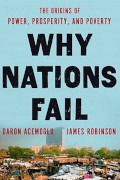
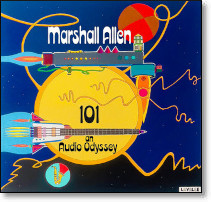
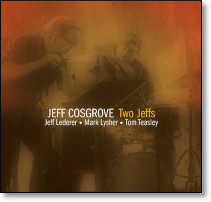
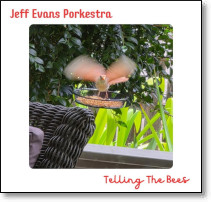
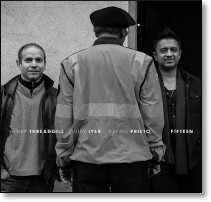
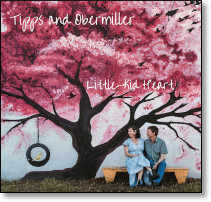
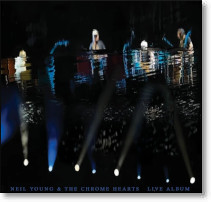
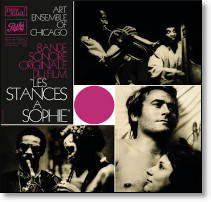
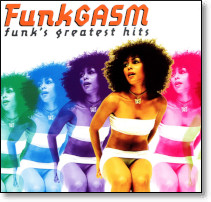
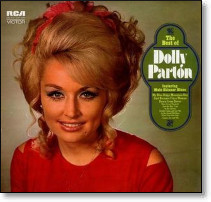
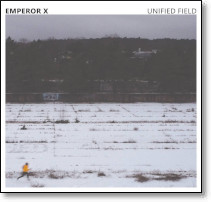
Sure, that's six points, all worthy of inclusion, each capable of being grossly expanded. Although I suppose the sixth goes so "without saying" that I could save it for the conclusion: "and as if all that wasn't bad enough, . . ." But I see this leading to a second piece, which lists things that Trump has done that will make it easier to respond with real effective change. For starters, he's demolished the credibility of the centrist ("pro-business") camp in the Democratic Party, both as political strategy and as a policy paradigm. I'm not sure how hard to push this: as long as Trump is in power, we don't have many real options, but the horizons for possible change have opened up considerably. I've developed a theory that a large segment of Americans really wanted some kind of revolution in 2016, but were denied any sort of meaningful change from the left (which appeared as Bernie Sanders) — blame this on the Democratic Party, if you want, but I think the corporate media had much more to do with defining what was allowed and not. On the other hand, Trump appeared to promise a revolution that corporate America (oligarchy) could live with, and that drew just enough people in to tilt the vote. Obviously, if you had a left analysis, you didn't fall for Trump, but how many people really did? (I got mine the hard way, reading Genovese, Sweezy, and Adorno, but my orientation came earlier, in reaction to the 1960s.) But if you didn't, and weren't among the people that Trump obviously hated, you might be gullible enough to think that someone like Trump would fight selflessly for you, go to Washington, "drain the swamp," and fix all the obvious problems. Whatever else, Trump promised change. Even in 2024, clearly out for revenge and redemption, he came off as the revolutionary, while Harris courted the rich. And what he's done since taking office surely counts as some kind of revolution. And while he hasn't seized power as completely and dramatically as Hitler in 1933, that's not for scruples, and not for lack of will. It's harder to do that in America, mostly for structural reasons, but disturbing that he's seized as much power as he has: proof, I think, that America wasn't built to suffer so much inequality. I grew up admiring revolution: especially the American, and as I increasingly identified with the left, with others like the French, the Russian, and the Chinese, even if they didn't turn out as well as one had hoped. But as I grew older, I came to see revolution not as a striving for a better world, but as proof that the old regimes were not just fatally flawed, but incompetently managed. And I came to see the pain of revolution as unnecessary and undesirable. And I'm not alone in this: very few people on the left in America look forward to revolution. (Bernie Sanders' carefully couched "political revolution" line always bothered me, even though I was pretty sure I understood and approved of what he meant.) So I've largely come around to the idea that the only revolutions that are possible today are ones from the right, and the only thing they can do is to cause pain and destruction. And, indeed, that's about all you can say for Trump's revolution. But it will be interesting to see how much damage he does to the reactionary forces that brought him to power. I could speculate, but on what basis? Of course, there is much more I've been thinking about. I read a book on Venezuela, and have moved onto Acemoglu & Robinson's Why Nations Fail. I should write a piece on the failures of the Chavez-Maduro regimes, and also what Trump is doing there: why this looks to Trump like a massive win, and why it's really just another chapter in the misery there, and in the Trump's debacle here. I've read several books on Israel, and specifically on Jewish anti-Zionism, and I have more to say about that. (I also have more books on Israel waiting, and still mean to do at least one more post on Agha & Malley's Tomorrow Is Yesterday.) I've also read a small pile of books on AI, which I'm starting to figure out. One not-too-distant project is to sign up for some tools, and start using it, mostly for research, but also perhaps for organizing my own voluminous writings. In fact, I can think of enough interesting technical projects to dispense with writing (even on music) altogether. Of course, dropping the music is an idle threat: just looking at my Substack stats, the music reviews get a good 30% more attention than anything else I write. Especially when I ramble, as I suspect I'm doing here. Still, at this point, I'd be much happier if I could just round up some friends and cook. That seems to be about my size limit on projects, and I can tell whether I did good or not. I'll refer you to the Music Week (8:4) notes on the music below. The Emperor X grade, the Golems of the Red Planet revisit, and several new albums came after reading Robert Christgau's August Consumer Guide, as did the back catalogue dives into Mary Lee's Corvette and Tipps & Obermiller. The Jeff Evans Porkestra was a tip from people who try to anticipate Christgau by jumping on new albums by people he is known to like. The Art Ensemble of Chicago reissue downloads were belatedly begged from the label. The Bandcamp page just offers extracts. The Dolly Parton is very limited. I started looking for The Best of Dolly Parton, and not finding it, I listened to the albums it was drawn from. After listening to the "Muleskinner Blues" single, I figured I had heard enough to review it. I didn't realize that the 1975 Best Of was billed as Vol. 2 until I saw the cover scan in a Tom Carson post (although I must have had the LP at one point, as it is graded in my database). I may still fill in 1971-75 albums I haven't heard, but several of them I have. Looking at my grade list, I'd say her later stuff is pretty hit-and-miss, but I've certainly missed some. Sorting out the compilation is a hopeless task, although pretty much any of them are fine for remembrance. Aside from the Parton obituaries, I didn't include a music section this Loose Tabs. Wrapping it up is always a rush, and there's little time to search out everything. One piece I would have mentioned had I found it in time is RiotRiot's The 50 Best Rock Bands Right Now in 2026. They're in countdown order, and I thought it was brilliant to list the Rolling Stones at 50, then the Butthole Surfers at 49. After that I'm not so sure, especially as I haven't converted this into a personal listening checklist, as I did in 2024. I will note that only one band from his 2024 top-10 is still up there: Big Thief. Also that a couple I have looked up have albums coming out later this year, so he's better connected than I am. I'd also like to note the latest Christian Iszchak An Acute Case: 29 August 2026. His favorite album this column is Asylum, by Inpatient, which seems to be two rappers, Chris Webby and Ren Gill. I played it: thought the first half was brilliant, enough that I went ahead and noted an A− review, but the second half gave me pause. After two further plays, I decided to downgrade it, while adding lyric quotes that suggest otherwise. I'm happier with the lower grade, but much of it is indeed brilliant, and you may well figure it's worthwhile. I'll publish my review next week, but you can find it on Spotify or Bandcamp. New records reviewed this week: Marshall Allen: 101: An Audio Odyssey (2026, Ropeadope): Alto saxophonist, longtime member and ghost band leader of Sun Ra Arkestra, title possibly for his age, main driver here appears to be producer Jamaaladeen Tacuma (electric bass), started around the Big Ears Festival, which brought in name musicians Nels Cline (electric guitar) and Immanuel Wilkins (alto sax, acoustic upright bass), with extra recording later (including a vocal by Tara Middleton). The funk groove reminds me of Tacuma at his best, but he hasn't had this much to juggle since Ornette Coleman. A− [sp] Ancient Infinity Orchestra: It's Always About Liberation (2024 [2026], Gondwana): English spiritual jazz ensemble, 16 members (winds but no brass, strings including harp and banjo) from Leeds, led by bassist Ozzy Moysey, third album. Another venture into the church of Coltrane. B+(**) [sp] Blu & Exile: Time Heals Everything (2026, Dirty Science): Underground rapper Johnson Barnes and producer Alexandr Manfredi, from Los Angeles, fifth duo album since 2007, many more albums separately or with others. B+(***) [sp] Rachel Brooke: This One's for You (2026, Mal): Country singer-songwriter, from northern Michigan, fifth album since 2008, plus a couple of duos with Lonesome Wyatt. Fine voice, good songs, lots of steel guitar. B+(***) [sp] Elizabeth Cook: Great Television (2026, Agent Love): Country singer-songwriter, eighth album since her self-released debut in 2000, three from 2007-16 barely scratched the country charts, all A− in my book, this coming back after a six year break. Too soon? The strings that kick off the album weren't a good idea. And the songs struggle until she rips off "Caldonia and the Love Convoy." And while I like the Rolling Stones cover, I don't quite get the point. B+(*) [sp] Jeff Cosgrove/Jeff Lederer/Mark Lysher/Tom Teasley: Two Jeffs (2026, Grizzley Music): Drummer, from DC, label and dates uncertain, I would normally have parsed the cover as giving him sole credit, but title suggests including Lederer (sax/clarinet), and the bassist and percussionist names are on the same level. Cosgrove is best known for his Motian Sickness group, but also shows up on many free jazz dates, especially with Ivo Perelman. This showed up on the Motian Sickness Bandcamp page, but is mostly standards, from "Cheek to Cheek" to "Summertime" via "Swing Low, Sweet Chariot." A− [sp] Rodney Crowell: Then Again (2026, New West): Country singer-songwriter, 25th album since 1978, many superb. Not so much this time. B+(*) [sp] Jeff Evans Porkestra: Telling the Bees (2026, self-released): Atlanta-based country-rock band, the namesake on guitar and vocals; two previous EPs, this one weighing in at 12 songs, 42:49. The EPs ended before I could really get into them, but this one keeps coming, especially with songs like "Born to Read" and "Big Enough." A− [sp] Hurray for the Riff Raff: Live Forever: Live at the Old Town School of Folk Music (2025 [2026], Nonesuch): Singer-songwriter Alynda Segarra, born in the Bronx, moved to New Orleans to play folk music, has moved on to Chicago, where this live set was recorded. Fourteen songs, ten from her best-ever 2024 album The Past Is Still Alive. Seems to me like the anti-ICE "Precious Cargo" could be angrier, but "Ogallala"'s "to watch this world burn, with a tear in my eye" seems about right. B+(***) [sp] Lalu: Lalu (2026, self-released): Australian group, not finding much about them. I can hear the "coherently arranged folk-rock." B+(*) [sp] Jeff Lederer/Mary LaRose With the Wildebeest Quintet: There's a Yearnin': Music for Winds and Voice (2026, Little (i) Music): Names on clarinet and voice, with the quintet adding flute, clarinet, oboe, bassoon, and horn, for something "third stream"-ish. B+(*) [sp] Low Cut Connie: Livin in the USA (2026, Contender): Retro-rock group from Philadelphia, led by Adam Weiner, who plays some mean piano, and usually rocks out. But the title cut is a lament, which I suppose makes it "timely." B+(**) [sp] Glenn Morrow's Cry for Help: Our Final Album Vol. 1 (2026, Bar/None): Indie rock band from Hoboken, debut an eponymous album in 2017, released 2 in 2020. Morrow was a partner in Bar/None Records, whose first album was by a group Morrow was in, the Individuals (1982), with other bands leading up to this one. Title unclear. Record has some appeal. Less sure about point. B+(**) [sp] Linda May Han Oh/Melissa Aldana: Beneath Lifted Skies (2026, Biophilia): Bass and tenor sax duo; the former born in Malaysia and grew up in Australia, the latter from Chile, both based in New York with substantial critical following. This is a nice record, especially when they tackle something familiar, but stays within its limits. B+(***) [sp] Nicholas Payton/Butcher Brown: A Supreme Blue (2026, Concord): Trumpet player from New Orleans, albums since 1993, mostly a mainstream player, established his trad chops on a 1997 album with Doc Cheatham, has dabbled less successfully in jazztronica. Backed by the Richmond-based band, which has a dozen albums since 2014. Idea here is to play Kind of Blue followed by A Love Supreme, updating both to show their contemporary relevancy. That's an amusing thought, and the groove treatment on Kind of Blue is rather pleasing, but I draw the line well short of the synthesized voice on A Love Supreme. B− [sp] Prairie Princess: Jewish American Prairie Princess (2026, self-released): Singer-songwriter Emerson Borakove, from Nebraska but recording in New York City, with a band she calls the Ruby Slippers. Somewhere between alt-country and anti-folk, which doesn't preclude a little rock noise. B+(**) [sp] Margo Price: Days of Unrest (2026, Loma Vista): Country singer-songwriter, sixth album since 2016, or actually it's being dubbed a "protest mixtape," as the album is rather thin (9 songs, 29:00), and the originals (mostly Mexican-themed) are outnumbered 5-4 by covers (Bob Dylan, Woody Guthrie, Blaze Foley, Charlie Daniels, trad.). The Dylan is the liveliest, but the Foley is the most sharply pointed. A- [sp] Alex Roitman Tango Ensemble: La Cocina De Tango (2025 [2026], ARTE-FL): Bandoneon player, based in Florida and/or Boston. Tangos, half originals, mixed in with Piazzolla and others, running through 10 songs in 32:41. Seems like a fine example of the art. B+(***) [cd] Slow Tiger: Slow Tiger (2024 [2026], Endectomorph Music): New York quintet organized by JP Schlegelmilch (playing organ; I know him mostly from the group Old Time Musketry, which had two very good 2011-13 albums), with Kenny Warren (trumpet), Adam Schneit (tenor sax/clarinet), Andrew Dow (electric bass), and Nathan Ellman-Bell (drums). B+(**) [sp] Antony Szmierek: Decoding Birdsong (2026, Mushroom Music): English poet, spoken word artist, and electronica musician. Second album. I love the basic sound. Words are clear enough, but didn't especially grab me at first, but eventually the savvy and smarts convinced me, at least that they add to the sound appeal. A− [sp] Technocrats: Passionata: The Music of Gregg Hill (2025 [2026], Cold Plunge): I must have heard a dozen albums of Hill's compositions, performed by various of his Michigan State alumni over the last 3-4 years, many (most? all?) under his own direction. No composer in recent years has worked harder at getting his work played by others, except perhaps John Zorn (who owning his own label, often claims credit for the albums). Septet here, I filed it under first-listed bass trombonist Chris Glassman, but the only other band members I recognize are Walter Blanding (tenor/soprano sax) and Bryn Roberts (piano). I've never learned how to separate compositions out from performances, so I'm no fair judge of someone like Hill. But this flows as well as any of the volumes I recall, and the larger band is deftly arranged, especially for the bass trombone. B+(***) [cd] Henry Threadgill Zooid: Cut You Where You Was (2025 [2026], Pi): Alto saxophonist, also plays flute, started in Air in the 1970s, third group album since 2014, with Liberty Ellman (guitar), Jose Davila (tuba/trombone), Christopher Hoffman (cello), and Elliot Humberto Kavee (drums). Tricky rhythms and shadings, the sort of thing that in an artist of his stature could win a poll, but feels a bit slight to me, although it does have some bright spots. B+(***) [cd] Henry Threadgill/Vijay Iyer/Dafnis Prieto: Fifteen (2025 [2026], Nonesuch): Alto sax/flute, with piano and drums, some sources say the title is how long this trio has been playing together, but this appears to be their first album. Three pieces by Threadgill, two each by the others. Very impressive at speed, but interesting always. A− [sp] Tipps and Obermiller: Little Kid Heart (2026, self-released): Married singer-songwriters Hilary Tipps and Steve Obermiller, both play guitar, with Taylor Tatsch (more guitar, mandolin, bass, keys, drums, and production). Google tagged this as "children's music," but it's actually parents' music. I can't particularly relate to either, but I like the easy flow and writerly details. A- [sp] Visible Cloaks: Pradessence (2026, RVNG): Electronica duo from Portland, Ryan Carlile and Spencer Doran, fifth album since 2015. Starts on the edge of annoying, then backs off a bit. B [sp] Westside Cowboy: It Goes On (2026, Island): British indie rock group, from Manchester, first album, easy-going, prototypically indie-rock sound. B+(**) [sp] Willow: The Thread (2026, Three Six Zero): Pop singer-songwriter, from Los Angeles, last name Smith, as in father Will Smith, eighth album since 2015, when she was 15, only one of them with any chart presence, although she had a platinum single in 2010. B+(*) [sp] Neil Young and the Chrome Hearts: As Time Explodes (2025 [2026], Reprise): New group, came up with a pretty good album in 2025, Talkin to the Trees, first A− in my book since Barn (2021), Psychedelic Pill (2012), Fork in the Road (2009), Prairie Wind (2005), Are You Passionate? (2002), more before that, though I haven't logged any full-A albums since Freedom (1989), or A+ since Rust Never Sleeps (1979, a grade I also gave to 1975's Tonight's the Night). Of those, the only albums I've replayed in recent years are the ones from the 1970s, but clearly he can evoke his unique legacy whenever he feels the need. This live set is from the album tour, but only repeats one album song ("Silver Eagle") and offers one new title — the album's "Big Change" ("could be bad and it could be great") having quickly resolved to "Big Crime" ("got to get the fascists out, got to clean the White House out . . . got big crime in DC at the White House, no more great again"). Beyond that, we get legacy songs, some obscure, most not, a couple ("Cortez the Killer" and "Like a Hurricane" stretched past 10 minutes, because that's what he does. This doesn't strike me as essential, given that these days we get more live Young several times a year, nor is "Big Crime" a big deal (although it's good to see that he's gotten over his foolish Reagan infatuation). But reviving "Ohio" is not unlike John Prine's revival of "Your Flag Decal Won't Get You Into Heaven Anymore," "Vampire Blues" is an old one I was delighted to hear again, "Be the Rain" is a later one that surprised me, and any time Young wants to stretch out, I'm game. A− [sp] Miguel Zenón & Luis Perdomo: El Arte Del Bolero Vol. 3 (2025 [2026], Miel Music): Alto sax and piano duets, from Puerto Rico and Venezuela, play eight songs by others, in the style that emerged in Cuba in the 1880s, one they consider "perhaps the most pan-Latin of genres." B+(***) [cd] Recent reissues, compilations, and vault discoveries: Art Ensemble of Chicago: Les Stances a Sophie (1970 [2023], Play Loud!): Free jazz group, grew out of Chicago's AACM (Association for the Advancement of Creative Musicians), partly formed in 1966 to back Roscoe Mitchell (sax), recording as a group in 1967 — Lester Bowie (trumpet), Joseph Jarman (sax), Malachi Favors (bass), and Famoudou Don Moye (drums) — but their discography really explodes when they toured Europe in 1969. This future film score was recorded late in their tour, with a Fontella Bass vocal to open, and a shorter one to close, and a balance between tradition and the cosmic future that Sun Ra is so famous for. A− [dl] Art Ensemble of Chicago: People in Sorrow (1969 [2026], Play Loud!): Recorded earlier in Paris, drummer Famoudou Don Moye had not yet joined, but everyone was tasked with various percussion instruments. One 40:10 piece, split over the original LP. B+(***) [dl] Old music: Jeff Cosgrove/Scott Robinson/Ken Filiano: Hunters & Scavengers (2018, Grizzley Music): Drums, saxophone, bass, improv aside from "Lonely Woman" at the end. B+(**) [bc] Jeff Cosgrove/Jeff Lederer/Mark Lysher: Welcome Home (2023, Grizzley Music): Drums, sax/clarinet, and bass, live at Town Run Brewing Company in Shepherdstown, WV. Good free improv. B+(***) [bc] Jeff Cosgrove/Noam Preminger/Kim Cass: Confusing Motion for Progress (2023, Grizzley Music): Another drums/sax/bass trio. B+(**) [bc] FunkGASM: Funk's Greatest Hits (1969-86 [1997], Relativity): From the heyday of CD compilations, Christgau mentioned this as "jamful" in a review that picked Rhino's Millennium Funk Party as the one to have. I bought it, and keep it in my travel cases, which is my first resort for something surefire. But Joe Yanosik never fails to track down a side-comment, and pictured this in a recent "listening today" post. It's out of print, of course, but someone assembled a Spotify playlist, so I thought I'd give it a spin. It hit the spot, even with no P-Funk (aside from a late Bootsy), even with groups I didn't recall, or didn't think of as funky. [PS: Also nice that AI nailed down the release dates in just two questions, instead of taking me the better part of the record to track that info down.] A− [sp] Mary Lee's Corvete: Mary Lee's Corvette (1996, Lenora): Singer-songwriter Mary Lee Kortes, first album, "intended as a promotional sampler," but with 7 songs, 28:40 comes close enough. B+(**) [bc] Mary Lee's Corvette: True Lovers of Adventure (1999, Wild Pitch): Billed as her/their "first full length album after the eponymous Mary Lee's Corvette 8-song live to two track that got it started for me." Good songs, nice delivery. B+(***) [sp] Mary Lee's Corvette: Love Loss & Lunacy (2006, Western Force): Fifth (and last) group album, I'm finding them out of order. Good songwriter, doesn't always keep my interest. B+(**) [sp] Mary Lee's Corvette: Blood on the Tracks: Arlene Grocery, NYC (2001 [2002], Bar/None): Live exercise, song-for-song rendition of Bob Dylan's 1975 album, almost universally acclaimed at the time, after several albums that weren't so beloved — I'd guess you'd have to go back to 1968's John Wesley Harding, and forward to 2001's Love and Theft, to find albums with comparable reputations. Or so I gather. I quickly soured on the album, and hate it to this day — at least as I remember it, but this exceptionally vivid remake brings back the exaggerated vocal tics and general oiliness I always found so annoying. B− [bc] Mary Lee's Corvette: 700 Miles (2003, Bar/None): Bandcamp lists: "Main band: Mary Lee Kortes, Andy York, Brad Alberta, Joe Chiofalo, Graham Hawthorne. Spotify says 2011, and has the label as Lakeside Lounge. Discogs offers a second 2003 release, on Southbound (UK). B+(**) [sp] Dolly Parton: Hello, I'm Dolly (1967, Monument): First album, at 21, although she had written hit songs for others (some with her uncle, Bill Owens). The two most emblematic songs were written by others, including the one announcing "this dumb blonde ain't nobody's fool," a point more than clear from the ten songs she did write (six with Owens). B+(***) [sp] Dolly Parton: Just Because I'm a Woman (1968, RCA): Second solo album, following her first duet album with Porter Wagoner, first on RCA, where her singles produced major best-ofs in 1970 and 1975, starting with the title song here. Fewer of her own songs, but most have gravitas (exception: the gold-digging "I'll Oilwells Love You"). B+(***) [sp] Dolly Parton: In the Good Old Days (When Times Were Bad) (1969, RCA): Third solo album, half the songs originals, the title cut a modest hit single. The others include a couple covers of big recent hits for others ("Harper Valley PTA," "D-I-V-O-R-C-E"). The latter is superb, but her own "Don't Let It Trouble Your Mind" seems more authentic. B+(***) [sp] Dolly Parton: My Blue Ridge Mountain Boy (1969, RCA): Fourth solo album, still looking for a hit, which was still a year away with "Muleskinner Blues" (and if that seemed too easy, "Joshua"). Her originals are down to four. Opening with other folks' hits ("In the Ghetto" and "Games People Play") seems a bit unworthy, but she aces them. B+(**) [sp] Dolly Parton: The Best of Dolly Parton (1967-70 [1970], RCA): None of the singles from her four very solid RCA solo albums produced a top-ten single ("Something Fishy" and "Just Because I'm a Woman" both topped out at 17), but her non-album "Mule Skinner Blues" hit number 3, so the label celebrated by including it as bait here, along with a previously unreleased "How Great Thou Art" to rope in the holy rollers, 10 songs in total. The quickie product went gold, setting her up for the better-charting singles to come, again summed up in 1975's The Best of Dolly Parton Vol. 2. A- [sp] Tipps and Obermiller: Love (And Other Mysteries) (2023, self-released): Hilary and Steve, married for a decade before they started writing songs together, so by the time of this debut album, they have seasoned reflections to share, like: "I don't care where we're going, I'm along for the ride." Good songwriting, harmonies, leads (mostly hers). Choice cuts: "These Hands," "Trouble in Mind." B+(***) [sp] Tipps and Obermiller: MacGuffin (2024, self-released): Second album, cover provides a dictionary definition for the title: "an object that solely exists as a reason for a story to move forward." Shows their literary smarts, but also that they weren't clear where to go next. B+(**) [sp] Grade (or other) ChangesSometimes further listening leads me to change an initial grade, usually either because I move on to a real copy, or because someone else's review or list makes me want to check it again. Also some old albums extracted from further listening: Emperor X: Unified Field (2026, Bar/None): Singer-songwriter Chad Metheny, albums since 1998, first one I really noticed was Western Teleport (2011). First pass through I complained that I didn't get much, but I had to give it another shot, especially after Michael Tatum raved about it (adding that he had seen them live, which was "transcendent"). Three, maybe four, plays later, and I'm getting if anything too much. I jotted down some lines: "praise Jesus, hail Reagan"; "I'd like to burn it down, but I'm not dumb"; "the market's not good, the market's not evil"; "you're so mad, what are you going to do about it?" Of course, you'll need more for context. But what I'm left with is a sense of so much anger. Also a songwriter who knows the difference between gallium and lithium. And, since I'm more into sound than words, this only gets sharper. I doubt I'll ever love this album, but it's hard to deny. [was B+(**)] A− [sp] Rechecked with no grade change: Golems of the Red Planet: Surf Masada: The Compositions of John Zorn (Heyday Again): Quartet from Akron, with "members of Tin Huey, Pointless Orchestra, and Trial of Lucy." I love the concept, but I'm slightly underwhelmed by the execution. B+(***) [bc] Unpacking: Found in the mail last week:
|