|
An occasional blog about populist politics and popular music, not necessarily at the same time. LinksLocal Links Social Media My Other Websites Music Politics Others Networking Music DatabaseArtist Search: Website SearchGoogle: Recent Reading
Music DatabaseArtist Search: Website SearchGoogle: |
Blog Entries [650 - 659]Friday, June 7, 2019 Weekend RoundupNo introduction. Cut my finger while cooking, and can't type worth a damn. Getting late, too. Some scattered links this week:
Ask a question, or send a comment. Monday, June 3, 2019 Music Week
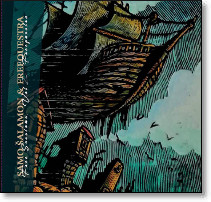
Music: current count 31587 [31558] rated (+29), 248 [251] unrated (-3). So, 29 again. Ran the counter this afternoon, after I found a missed grade and added a "remembered LP" grade -- an LP I distinctly remember having but which didn't get picked up when I jotted down my first grade list (mid-1990s, I think). I may have cut it some slack -- main thing I remember was being disappointed by it. Once again, surprised that I bagged that many -- after a very slow start, one that kept the Salamon Freequestra album in the changer for close to three days. Finished with Alfred Soto's top 20 list, checking out Mountain Goats, National, Tyler, and Weyes Blood, leaving me with only 5 A- records from his 20 (Control Top's Covert Contracts, Billie Eilish's When We All Fall Asleep, Where Do We Go?, Robert Forster's Inferno, Lizzo's Cuz I Love You, and Nilüfer Yanya's Miss Universe). Only one Christgau pick in those five (Eilish), and only one more in Soto's other 15 (Sharon Van Etten's Remind Me Tomorrow, a low B+ for me). Speaking of Eilish, Phil Freeman dissed her album in the course of making a Facebook rant:
I commented, taking exception to his examples: Eilish is currently 12 on my Music Year 2019 list, behind 7 jazz albums (counting my top-rated Heroes Are Gang Leaders: The Amiri Baraka Sessions, which admittedly has vocals, although the other 6 don't) and 4 other non-jazz. Of course, Freeman isn't complaining about me ignoring jazz albums in my annual lists. And I'm not much bothered that who spends most of his non-jazz time listening to metal should have trouble appreciating a lo-fi girl singer-songwriter. Or even that he offers Tyler, a hip-hop artist who buries himself in soft off-kilter tones, as another option in hype. (I agree that he is overrated, but I also find Igor to be his most pleasing and interesting album yet.) Where I disagree is in positing that the Art Ensemble of Chicago survivors reunion album is this year's flagship jazz hope. I played it (both CDs) until I gave up all hope, then let if off easy with a B+(**), which is to say that I currently have at least 50 jazz records this year that I like better. On the other hand, if I had to handicap the 2019 Jazz Critics Poll, I doubt I'd find more than a couple of my A- records in the top ten: James Brandon Lewis's An Unruly Manifesto seems most likely, then maybe Matthew Shipp's Signature, Moppa Elliott's Jazz Band/Rock Band/Dance Band, Quinssin Nachoff's Path of Totality, or David Berkman's Six of One -- hunches based as much on labels and publicists as on the records themselves. But none of those artists have fared well in past polls, which is a much stronger indicator. Some albums you're more likely to find on JCP ballots (my grades in brackets):
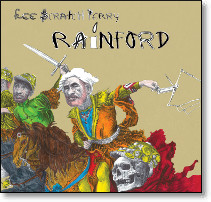
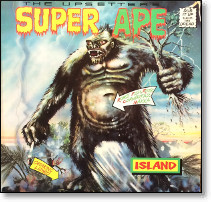
AEC looks pretty imposing on this list: it's big (last year was dominated by 2-CD releases and won by Wayne Shorter's 3-CD monstrosity), has historic cachet that reconciles the avant-garde with the tradition; it augments what's left of a legendary group augmented with lots of guest stars, and is on a label which always places records high in EOY polls (that same label is the reason Mitchell is on this list). None of the other records have that sort of cred, so maybe Freeman is right to pick it. My only complaint is that it isn't good enough. If I wanted to broaden the horizons of non-jazz critics, I'd start by recommending better records. Christgau remarked recently that EOY list-building has more to do with brand identification than diligent sorting and ranking. I know that to be true of my own lists, where my brand is somone who listens to all kinds of things and doesn't give a fuck about what anyone else thinks. As the Dean, I figure Christgau is more focused on building a pantheon, but individual lists tend to be idiosyncratically personal (and his certainly is). Freeman's referring to corporate lists, which are carefully crafted to cater to a target audience. There's no place for jazz in most, not because their writers dislike jazz (although many do, or simply don't get the exposure -- hardly anyone hears much outside of their niche these days), but because their editors don't expect their readers to be interested in such things. So what you see is what you'd expect when people of limited knowledge try to write down to appeal/appease people who know even less. Nonethless, as someone who has compiled literally thousands of EOY lists in recent years, I believe that there is actually a tiny trend toward more crossover jazz in predominantly indie/pop lists (although more so in UK than US). Last year the major breakthroughs were Kamasi Washington, Makaya McCraven, and Sons of Kemet (two A- records among those three, the other a high B+, so those picks were much more respectable as jazz than, say, Bad Bad Not Good from a few years back). I could write volumes more on EOY lists (for data, see last year's EOY aggregate and Jazz Critics Poll). But my bottom line is learn what you can from the data, don't begrudge other people's pleasures, and don't rag on people for not liking what you like. Back to my original thread about what I reviewed this week: beyond Soto's list, I looked at AOTY's Highest Rated Albums of 2019 and picked out a few records that seemed promising. Three sounded good enough to warrant multiple plays before I settled on B+(***): Fontaines D.C.'s Dogrel (1), Slowthai's Nothing Great About Britain (22), and Craig Finn's I Need a New War. Two previously graded A- in top 25: Dave's Psychodrama (2), and Little Simz's Grey Area (6), and a bunch more I haven't heard. By the way, the Lee Perry dive started with Christgau's review of Rainford. I couldn't find it on Napster, so went to Bandcamp. Obviously, a lot more Perry I haven't heard. I've always recommended the 3-CD compilation, Arkology, but that only gets you 4 prime years (expect overlap with Super Ape). I also really like the recent (2014) Back at the Controls. New records reviewed this week: Melissa Aldana: Visions (2019, Motéma): Tenor saxophonist, from Chile, studied at Berklee, won a Monk prize. Quintet, with Sam Harris (piano), Pablo Menares (bass), Joel Ross (vibes), and Tommy Crane (drums). Cites Frida Kahlo as inspiration. Mainstream postbop, emphasis on flow. B+(**) Bruce Barth: Sunday (2017 [2018], Blau): Pianist, from California, more than a dozen albums since 1993. Tenor saxophonist Jerry Bergonzi threatens to take this over, but the pianist doubles down and plays harder. With Mark Hodgson on bass and Stephen Keogh on drums, recorded live in Spain. B+(**) Jerry Bergonzi: The Seven Rays (2019, Savant): Tenor saxophonist, quintet with Phil Grenadier on trumper and Danish pianist Carl Winther's trio, same line-up as on 2017's Dog Star. More postbop, or maybe I just mean his sax rarely stands out. B+(*) Dave Douglas/Uri Caine/Andrew Cyrille: Devotion (2018 [2019], Greenleaf Music): Trumpet-piano-drums trio, type suggests I could have credited it just to Douglas, but the other names are stacked above the title. Caine comes out aggressive here, but the trumpet never really takes charge. B+(*) Ezra Collective: You Can't Steal My Joy (2019, Enter the Jungle): London-based jazz group, led by drummer Femi Koleoso with his brother TJ Koleoso on bass, Joe Armon-Jones on keys, plus trumpet and sax. More fusion than pop but that's a fine line. B Craig Finn: I Need a New War (2019, Partisan): Fourth solo album, after fronting groups Lifter-Puller and the Hold Steady. Has a distinctive voice, writes fine songs about other interesting people, produces them with warmth and sparkle. Worried a bit that the reason the songs haven't sunk in yet is that they're less memorable than his best, but this sounds great, even if it wears a bit thin. Title refers to U.S. Grant, who would think such a thing. B+(***) Fontaines D.C.: Dogrel (2019, Partisan): Irish post-punk group, led by singer Grian Chatten, first album, 11 songs in 39:55, most with rhythm that reminds me of the Roadrunners with a soupçon of Pogues, ends on a ballad ("Dublin City Sky") that ripens the accent. B+(***) Ryan Keberle & Catharsis: The Hope I Hold (2018 [2019], Greenleaf Music): Trombonist, has used this band name since 2012, with Scott Robinson (tenor sax), Jorge Roeder (bass), Eric Doob (drums), and Camila Meza (vocals/guitar). Songs inspired by Langston Hughes. B+(**) [cd] Maren Morris: Girl (2019, Columbia Nashville): Nashville singer-songwriter, Wikipedia lists some juvenilia but her effective debut was a 2015 EP followed by her hit album, Hero. Her follow up sticks to formula, effectively oversinging on top of excess production. B The Mountain Goats: In League With Dragons (2019, Merge): John Darnielle's 17th album, something to do with dungeons and dragons (the tabletop game), offers the level of songcraft we've come to expect, passes perhaps a bit too easily. B+(**) The National: I Am Easy to Find (2019, 4AD): Alt/indie band from Cincinnati, released their debut in 2001, Matt Berninger has the voice, while the band has a knack for rhythm -- gives them reliable appeal, as we wait for special moments. Not enough this time, but the talkie "Not in Kansas" is one. B+(**) Lee Scratch Perry: Rainford (2019, On-U Sound): Hard to know how much to credit dub, which takes existing tracks and adds echo and scratch, but Rainford Hugh Perry has a major player since the 1970s, spawning further dub masters like producer Adrian Sherwood here. Nine distinctive tracks dwell on his Upsetter theme, artfully enough to sound like everything and nothing else before. A- Rotten Girlz: Punk You (2018 [2019], Sazas): Slovenian jazz guitarist Samo Salamon's project. Seems like the original idea was to do something rockish, to which end he wrote some lyrics and recruited Eva Fozenel to sing. But his band -- saxophonist Achille Succi and drummer Bojan Krhianko -- didn't see any reason to temper down their jazz chops. The singer tried some scat, then dropped out after 5 cuts. B+(*) [cd] Samo Salamon & Freequestra: Free Sessions, Vol. 2: Freequestra (2016 [2019], Klopotec): Slovenian guitarist, has been producing 3-5 albums per year since 2004. Group here expands from his Rotten Girls trio to twelve, with two more guitarists, piano, violin, tuba, more horns, and a second drummer. Vol. 1 was released in 2017 as Planets of Kei. A- [cd] Samo Salamon/Szilárd Mezei/Jaka Berger: Swirling Blind Unstilled (2018 [2019], Klopotec): Guitar-viola-drums trio. Mezei was featured in Freequestra Vol. 1, but missed out on Vol. 2. Similar moves here, but the group is too sparse to sweep you away. B+(**) [cd] Slowthai: Nothing Great About Britain (2019, Method): English rapper Tyron Frampton, from Northampton, first album, after two EPs and several singles. Hard/harsh but austere beats, thick accent, hard to catch much of an album where words are the main course. B+(***) Peter Stampfel and the Atomic Meta Pagans: The Ordovician Era (2019, Don Giovanni): Scratchy-voiced folksinger's follow up to The Cambrian Explosion, the ancient eras represented in his selection of moldy standards. Cover adds "featuring Shelley Hirsch." B+(*) Mavis Staples: We Get By (2019, Anti-): Quickly became the star of her father's gospel family act, tried going secular in the 1970s, much later finding her calling as the torch bearer of the civil rights movement. At 80 she has more gravitas than anyone needs, which lends extra heft to Ben Harper's solemn songs. A- Tyler, the Creator: Igor (2019, Columbia): Tyler Okonma, Odd Future rapper turned soul crooner and slinky r&b producer -- an improvement, for once. B+(**) Vampire Weekend: Father of the Bride (2019, Columbia): Fourth album, first three were alt/indie darlings, but this one -- six years after the last, minus music wizard Rostam Batmanglij, leaving singer Ezra Koenig the main writer, plus a number of guests -- is a sprawling 18-cut mix: cheerful, often catchy, rarely compelling, with a couple cuts where the pop gets overly ripe. Not something I care about enough to figure out. B+(**) Weyes Blood: Titanic Rising (2019, Sub Pop): Natalie Mering, moniker a corruption of a Flannery O'Connor novel (Wise Blood). Fourth album, heavily orchestrated. B- Old music: Jerry Bergonzi Trio: Lost in the Shuffle (1998, Double Time): With Dan Wall on organ and Adam Nussbaum on drums. Mostly originals (one Hart & Rodgers standard), strong tenor sax showing. B+(**) Jerry Bergonzi: Spotlight on Standards (2016, Savant): "Witchcraft," "Dancing in the Dark," "Come Rain or Come Shine," "Stella by Starlight," others less famous. Backed by organ (Renato Chicco) and drums (Andrea Michelutti), more energy than a great ballad album needs, but this tenor saxophonist has always been restless. B+(***) Lee Perry: Africa's Blood (1971, Trojan): First LP under his own name, most songs attributed to the Upsetters, although the opening James Brown riff is credited to Dave Barker, and Winston Price also gets a feature. Perry wrote everything but "My Girl," a weak signal of the song. B+(*) Lee Perry and the Upsetters: Some of the Best (1968-79 [1985], Heartbeat): One of the first US compilations of Perry productions, with credits to Dave Barker, Bob Marley, Junior Byles, and Linval Thompson, as well as lots of Upsetters. Not sure of the dates, but most pre-1974. All singles-length (2:07-3:43). Few stand out, but "Keep On Shanking" is the operative motto. B+(***) The Upsetters: Super Ape (1976, Mango): Lee Perry's first record appeared in 1969, and through the 1970s he mostly recorded as the Upsetters. This one originally appeared as Scratch the Super Ape in Jamaica, then was picked up by Island, introducing him to the world. This may have seemed slight, or just weird, at the time, its dub effects obscuring reggae's pop sense, but it seems like a classic now. In fact, one cut seems like a radical remix of Junior Murvin's "Police and Thieves" -- a hit a year later, produced by Perry. A- The Upsetters: Return of the Super Ape (1978, Upsetter): The sequel, didn't get the Island distribution but has been reissued a dozen times or more, with Cleopatra crediting this to Lee "Scratch" Perry & the Upsetters. B+(**) Added grades for remembered lps from way back when:
Unpacking: Found in the mail last week:
Ask a question, or send a comment. Sunday, June 2, 2019 Weekend RoundupNo time for an intro, but let's credit Bernie Sanders for this tweet:
Some scattered links this week:
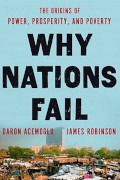
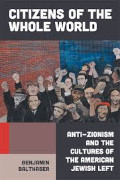
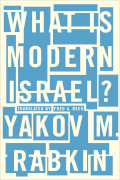
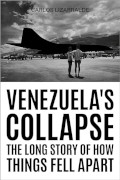
Ask a question, or send a comment. Saturday, June 1, 2019 Book RoundupWhen I posted my latest Book Roundup on March 15 -- eleven months after my only 2018 compilation, after two in 2017, four in 2016, and five in 2015 -- I figured another one would be eminent. I got distracted, but here's a second batch of 40+ books, and I'm pretty certain that a third will be ready in a few weeks. These surveys are useful to me as a means of keeping track of what the world knows and is thinking about. I've been trying to track "the coming dark age" for some time now, but while lots of people seem to be getting dumber (or at least more certain of their ignorance), a lot of smart thinking is still being developed and preserved in books. As I've started doing recently, I'm including various related books in bullet lists following a leading one. There's also a supplemental list at the end, of books worth noting but not (as far as I'm concerned) at much length. Jill Abramson: Merchants of Truth: The Business and the Fight for Facts (2019, Simon & Schuster): Tries to update David Halberstam's The Powers That Be (1979) by profiling four major media corporation (The New York Times, The Washington Post, BuzzFeed, and VICE) as they make business out of the public's appetite for news. That, of course, raises the question of how the selection and reporting of news is filtered and often distorted by each of their business and cultural models. That's an intrinsically interesting question, but not necessarily one that can be answered -- for one thing the author adds her own limited vantage point. I can't say anything about charges that sections of the book were plagiarized. Related:
Carol Anderson: One Person, No Vote: How Voter Suppression Is Destroying Our Democracy (2018, Bloomsbury USA): At some point in recent history, Republicans came to realize that it was easier to win by suppressing the vote among Democratic constituencies than it was to convince those voters of a political program which actually promises little more than to make the rich richer at the expense of everyone else. Of course, this isn't new: all republics have struggled over who counts and who doesn't, but the core idea of democracy -- each and every person is entitled to the same vote -- has been hard to argue with, until very recently. Even now, even among Republicans, the arguments tend to be disguised, and much of the mischief avoids the spotlight. Also wrote, with Tonya Bolden, We Are Not Yet Equal: Understanding Our Racial Divide (2018, Bloomsbury). Previously wrote: White Rage: The Unspoken Truth of Our Racial Divide (2016). Also on voting rights:
Max Blumenthal: The Management of Savagery: How America's National Security State Fueled the Rise of Al Qaeda, ISIS, and Donald Trump (2019, Verso): For the most part, a basic primer on how the US fed and nurtured its eventual enemies in the Middle East, in a long series of events that ultimately show how arrogant and self-centered the architects of American policy have been. That general book has been written a half-dozen times already, with dozens of other tomes treating one aspect or another of the big picture. However, by dropping Trump into the title, he's adding another dimension: not just what American plots and wars have done to the Middle East, but what such persistent warmaking has done to the psyches of ignorant and oblivious Americans-- Trump being an example. Steven Brill: Tailspin: The People and Forces Behind America's Fifty-Year Fall -- and Those Fighting to Reverse It (2018, Knopf): Journalist, wrote a book on Obamacare called America's Bitter Pill: Money, Politics, Backroom Deals, and the Fight to Fix Our Broken Healtcare System (2015), looks for a bigger picture and finds it in "an erosion of responsibility and accountability, an epidemic of shortsightedness, an increasingly hollow economic and political center, and millions of Americans gripped by apathy and hopelessness." That sounds a bit like a backgrounder for Trump's "Make American Great Again" campaign slogan, but it appears that the culprit Brill identifies is Trump's own billionaire class. Arthur C Brooks: Love Your Enemies: How Decent People Can Save America From the Culture of Contempt (2019, Broadside Books): Someone might be able to write a decent book on this theme, but I doubt that the president of the American Enterprise Institute, a conservative propagandist who revels in his sense of moral superiority, is up to the task. Previous feel-good books include: Who Really Cares: The Surprising Truth About Compassionate Conservatism (2006); Gross National Happiness: Why Happiness Matters for America -- and How We Can Get More of It (2008); The Battle: How the Fight Between Big Government and Free Enterprise Will Shape America's Future (2010); The Road to Freedom: How to Win the Fight for Free Enterprise (2012), and The Conservative Heart: How to Build a Fairer, Happier, and More Prosperous America (2015). Turns out that it's easy to "love your enemies" once you've ground them under heel, which is the author's real mission. More recent efforts to make the conservatives seem like they think and care:
Contrast these with the right's more pedestrian hackwork, designed to rile up hatred (and otherwise confuse you):
Paul Buhle/Steve Max: Eugene V Debs: A Graphic Biography (paperback, 2019, Verso): Buhle was editor of Radical America, a major historian of American radical movements (co-editor of Encyclopedia of the American Let), and a long-time of the graphic book form, so the only thing surprising here is that it took so long to come together. Art by Noah Van Sciver, with additional help by Dave Nance. Actually, I've noted several of Buhle's graphic histories in the past. Here's a longer list (credits aren't always clear):
Chapo Trap House: The Chapo Guide to Revolution: A Manifesto Against Logic, Facts, and Reason (2018, Atria Books): I went through a kneejerk period in the 1960s when I rebelled so hard against the liberal warmongers of the Democratic Party that I was willing to throw away all appeals to "logic, facts, and reason," and embrace its opposite (arts, irrationality, mysticism). I changed my tune when I found that one could arrive at right conclusions through reason, and I wound up more dedicated to rationality than ever before. So at first glance I took this book to be complete, reactionary bullshit. But it turns out this is meant to be funny, and it's aimed at young people today who feel the same incoherent rage and disgust over the powers that be as I felt back in the 1960s. The authors are comedians who run some kind of podcast. And while there are some lame jokes and outright bullshit here, their core claim harbors a kernel of truth: "Capitalism, and the politics it spawns, is not working for anyone under thirty who is not a sociopath." Once you understand that, you can look elsewhere for better-reasoned explanations and proposals, but that insight is a good place to start. Sarah Churchwell: Behold, America: The Entangled History of "America First" and "the American Dream" (2018, Basic Books): Two iconic notions, offered as sweeping generalizations about America's role in the world, adopted by various political movements for varying ends depending on the time and place. The contemporary interest angle is that both played large roles in the 2016 election, perhaps even more so than in their long and storied past. On the other hand, they're basically bullshit, at once able to flatter and mislead their political targets, and there's something rather hollow about stretching a book around them. Kimberly Clausing: Open: The Progressive Case for Free Trade, Immigration, and Global Capital (2019, Harvard University Press): Theory tells us that free trade and unrestricted mobility of capital and labor increases wealth all around. The reality is something else, as global capital has exploited economic theory to effectively escape nation-state regulation, leading to ever more extreme inequality, stripping most people of most nations of their political standing. That has in turn produced a backlash, both on the reactionary right and on the left, which sees things like "free trade agreements" as little more than a power- and wealth-grab. Causing attempts to save theory from practice, by advancing political schemes to make open borders work for everyone. Anna Clark: The Poisoned City: Flint's Water and the American Urban Tragedy (2018, Metropolitan Books): We routinely receive warnings about America's crumbling infrastructure, but usually assume those threats are things that could happen in the future, not things already happening today. But the water system in Flint, Michigan has already turned toxic, killing and irreparably harming people who merely happened to live in the wrong place. Michael D'Antonio/Peter Eisner: The Shadow President: The Truth About Mike Pence (2018, Thomas Dunne Books): Two key questions here: How bad is Pence? And how powerful is he? Trump had promised to give his vice president unprecedented day-to-day power -- the first evidence of that was that Pence had the leading role in staffing the administration, which is how Trump got surrounded by so many orthodox extreme conservatives. But beyond his immediate influence, I can't recall a moment of disharmony between Trump and Pence -- indeed, hard to think of anyone else in the administration one can say that about. Part of this is that Pence has been eager and willing to support Trump's Kulturkampf fetishes, no matter how loony (e.g., his stunt leaving a NFL game after players took the knee during the national anthem, or his ridiculous task of holding the official press conference announcing the Space Force). The import of this is how Pence has set an example for even the most hopelessly ideological Republicans to line up behind and join forces with Trump. Jared Diamond: Upheaval: Turning Points for Nations in Crisis (2019, Little Brown): An anthropologist who since his famous Guns, Germs, and Steel: The Fates of Human Societies (1997) has used his license to practice macrohistory, taking a view that straddles vast stretches of time and space to wrap big questions up into tidy boxes. He picks on six countries for his turning points this time: Japan (forced opening by US in 1860s), Finland (attacked by Soviet Union in 1939 following their "non-aggression" pact with Nazi Germany), Germany and Austria (post-WWII), Indonesia and Chile (victims of US-backed coups in 1965 and 1973). He draws lessons for Americans today. I doubt he has much to say about karma. William Egginton: The Splintering of the American Mind: Identity Politics, Inequality, and Community on Today's College Campuses (2018, Bloomsbury): "Egginton argues that our colleges and universities have become exclusive, expensive clubs for the cultural and economic elite instead of a national, publicly funded project for the betterment of the country. Only a return to the goals of community, and the egalitarian values underlying a liberal arts education, can head off the further fracturing of the body politic and the splintering of the American mind." Lots of gripes about higher education these days, many from the right. Hard for me to sort these book out, probably because my own stake in academia is so tenuous:
David Graeber: Bullshit Jobs: A Theory (2018, Simon & Schuster): It's long been obvious -- I first picked up this insight from a book by Paul Sweezy written in the 1950s -- that we have a lot of jobs that don't really produce anything of value, that are effectively pointless and parasitical, what Graeber has finally called bullshit. He's an anthropologist and anarchist, the writer of a major tome Debt: The First 5,000 Years, and a book of his experience and theory of Occupy Wall Street, The Democracy Project:A History, a Crisis, a Movement. Greg Grandin: The End of Myth: From the Frontier to the Border Wall in the Mind of America (2019, Metropolitan Books): Author of a number of first-rate books on America's impact on Latin America -- e.g., Empire's Workshop: Latin America, the United States, and the Rise of the New Imperialism (2006) -- easily sees the links between two centuries of US aggression and the militarization of the US-Mexico border. Timely enough to include Trump's border wall fixation, though not the latest blow up in Venezuela. Bradley W Hart: Hitler's American Friends: The Third Reich's Supporters in the United States (2018, Thomas Dunne Books): Some were well known, like Charles Coughlin and Charles Lindbergh, the Bund and the America First Committee. I wouldn't be surprised to hear names like Koch and Trump pop up, although neither appear in what I've read. Still, I'd guess that actual supporters were fewer in number than sympathizers and apologists, especially those with home-grown racist and/or anti-labor agendas. On the other hand I really doubt that every isolationist was anti-semitic. Before WWII, Americans had a long history of believing that we should stay away from foreign entanglements, and the war schemes they lead to. Daniel Immerwahr: How to Hide an Empire: A History of the Greater United States (2019, Farrar Straus and Giroux): Beyond the 48 continental states, the US managed to pick up various far-flung lands, and has actually managed to keep more of them than any European rival: Alaska and Hawaii have become full-fledged states, Puerto Rico and various smaller islands are in limbo, the Philippines were let go but only losing them to Japan, the Panama Canal Zone was returned to Panama (which was itself a US creation), Cuba was never officially on the books but treated like a colony until its revolution. This surveys most of that list, stopping short of the coups and incursions and a globe-straddling archipelago of bases and even more pervasive property claims by private Americans and friendly investors. Stephen Kinzer: The True Flag: Theodore Roosevelt, Mark Twain, and the Birth of American Empire (2017; paperback, 2018, St Martin's Griffin): To be clear, Roosevelt was for and Twain was against in this particular political debate (c. 1898, what we've dubbed the Spanish-American War) over whether America should impose itself on others as an empire -- arguably not the first such debate, and most certainly not the last. Evan Thomas covered the pro-empire side (mostly) in The War Lovers: Roosevelt, Lodge, Hearst, and the Rush to Empire (2010); also Kinzer has previously written about the 1898 annexation of Hawaii in Overthrow: America's Century of Regime Change From Hawaii to Iraq (2006). Still, would be good to pay more attention to the anti-war/empire arguments. Eric Klinenberg: Palaces for the People: How Social Infrastructure Can Help Fight Inequality, Polarization, and the Decline of Civic Life (2018, Crown): Sociologist, writes about the value of shared spaces -- examples given include libraries, childcare centers, bookstores, churches, synagogues, and parks -- for building social bonds and a sense of common interests, as opposed to the fragmentation and isolation that has lately taken hold almost everywhere. Kevin M Kruse/Julian E Zelizer: Fault Lines: A History of the United States Since 1974 (2019, WW Norton): A broad history of what I've started calling the Reagan-to-Trump era, backing up a couple years (the falls of Nixon and Saigon, OPEC embargoes, desegregation riots in Boston) to get a running start. Jill Lepore says this details how "Americans abandoned a search for common ground in favor of a political culture of endless, vicious, and -- very often -- mindless division." Kruse previously wrote White Flight: Atlanta and the Making of Modern Conservatism (2005), and One Nation Under God: How Corporate America Invented Christian America (2015). Zelizer has written The Fierce Urgency of Now: Lyndon Johnson, Congress, and the Battle for the Great Society (2015, Penguin Press), and a few more, including books on the presidencies of Jimmy Carter, George W. Bush, and Barack Obama. Milton Lodge/Charles S Taber: The Rationalizing Voter (paperback, 2013, Cambridge University Press): Argues that "political behavior is the result of innumerable unnoticed forces and conscious deliberation is often a rationalization of automatically triggered feelings and thoughts," testing five basic hypotheses: "hot cognition, automaticity, affect transfer, affect contagion, and motivated reasoning." Yglesias used this book to explain Kanye West's embrace of Trump. Michael Mandelbaum: The Rise and Fall of Peace on Earth (2019, Oxford University Press): Argues that "in the twenty-five years after 1989, the world enjoyed the deepest peace in history." Further asserts that this blissful state ended "because three major countries -- Vladimir Putin's Russia in Europe, Xi Jinping's China in East Asia, and the Shia clerics' Iran in the Middle East -- put an end to end to it With aggressive nationalist policies aimed at overturning the prevailing political arrangements in their respective regions." Pretty amazing that anyone can look at the last 25-30 years and fail to identify the one nation that has been almost constantly at war, attacking "enemies" in more than a dozen countries scattered all around the world. Also that the author overlooked a number of other wars that broke out during the period, including the period's most deadly wars (in and around Congo). Bill McKibben: Falter: Has the Human Game Begun to Play Itself Out? (2019, Henry Holt): Wrote one of the early books on global warming, The End of Nature (1989). I read it during a mid-summer trip to Florida, where my initial skepticism was overcome by seeing and feeling how much heat could be absorbed into the atmosphere. Still, I hated his metaphor, and he has a knack for coming up with new irritating ways to say the same thing ever since. (Eaarth was the worst.) This is his latest, probably even more impassioned as he's made his career move from critic to activist. I'd probably find his 2013 memoir, Oil and Honey: The Education of an Unlikely Activist, more to my taste than this doomsday screed. But despite the hyperbole, he's been basically right all along. You have to respect that. John J Mearsheimer: The Great Delusion: Liberal Dreams and International Realities (2018, Yale University Press): Foreign policy mandarin, subscribes to the realist wing like his sometime co-author Stephen M Walt, has developed a healthy skepticism about how American foreign policy is practiced. Problem here is likely to be his choice of "Liberal Dreams" as his evil strawman. Although political liberals, especially in the anti-communist 1950s, readily supported America's originally bipartisan, military-first foreign policy, this policy has never advanced "liberal dreams." For the last 30-40 years, "liberal hegemony" has never been more than a neocon ruse, an attempt to dress up old-fashioned imperial power projection with a patina of nice words. Meanwhile, Walt has his own new book:
Steve Pearlstein: Can American Capitalism Survive? Why Greed Is Not Good, Opportunity Is Not Equal, and Fairness Won't Make Us Poor (2018, St Martin's Press): Reminded me first of Robert Kuttner's 2018 book Can Democracy Survive Global Capitalism (still unread on my shelf), but the questions are slightly different. Pearlstein seems to assume democracy will have the final say, and asks instead whether capitalism can be reformed in ways that will make it palatable to most people. Clearly, its current practices like "squeezing workers, cheating customers, avoiding taxes, and leaving communities in the lurch" tend to undermine public trust and confidence. Nomi Prins: Collusion: How Central Bankers Rigged the World (2018, Nation Books): Former bond trader, found her calling writing about the banking racket in the Bush years -- Other People's Money: The Corporate Mugging of America (2004), Jacked: How "Conservatives" Are Picking Your Pocket (Whether You Voted for Them or Not) (2006), It Takes a Pillage: Behind the Bailouts, Bonuses, and Backroom Deals From Washington to Wall Street (2009) -- looks at how "the open door between private and central banking has ensured endless opportunities for market manipulation and asset bubbles." I'm not a big fan of the titles per sé, but few people have written more lucidly about how theirs racket works. John Quiggin: Economics in Two Lessons: Why Markets Work So Well, and Why They Can Fail So Badly (2019, Princeton University Press): Author of Zombie Economics: How Dead Ideas Still Walk Among Us, an important effort to clear out much of the dead wood, takes up Henry Hazlitt's 1946 classic, Economics in One Lesson, which he summarizes as "leave markets alone, and all will be well." But all isn't well, as there are many cases of market failures, so Quiggin adds "Lesson Two: Market prices don't reflect all the opportunity costs we face as a society." He gives 400 pages of examples and explanations, in what may be one of the essential texts of modern economics. Eric Rauchway: Winter War: Hoover, Roosevelt, and the First Clash Over the New Deal (2018, Basic Books): After an overwhelming majority of Americans voted to free themselves from President Herbert Hoover, they faced a four-month delay until the new president could be sworn in -- a period so grueling that the US Constitution was changed to move future inaugurations up from March to January. This book covers those four months, a kind of pre-history to the famous "100 days" that followed Franklin Roosevelt's inauguration. In terms of anticipatory obstructionism, Hoover probably holds the record -- although John Adams in 1800-01 raised the bar, and Donald Trump will no doubt try to top them all in the shorter 2020-21 transition period. Richard Rhodes: Energy: A Human History (2018, Simon & Schuster): Recaps the history of mankind as the story of claiming and taming sources of energy, possibly starting with human and domesticated animal muscle, but wood, coal, oil, and nuclear play larger roles in this story -- Rhodes seems to be especially fond of nuclear, although the four major books he's written on nuclear bombs can be read as cautionary tales. I've read those four books, plus a couple more, and don't doubt that he is capable of synthesizing such a large and important story. Nathaniel Rich: Losing Earth: A Recent History (2019, MCD): A history, pointing out that by 1979 "we knew nearly everything we understand today about climate change -- including how to stop it," which goes on to show how supposedly responsible people failed to act on that knowledge, letting us slide into the ever-increasing crisis we face today. The Reagan administration's determination to promote coal and cripple the EPA and drive science from the policy process -- I'd say "echoes of Trump" but it's the other way around -- were key, but the thing you keep running into is human reluctance to deal with a catastrophe that seems to merely loom in the future, because the worst hasn't struck yet. Sam Rosenfeld: The Polarizers: Postwar Architects of Our Partisan Era (2017, University of Chicago Press): Assumes that the problem with politics today is partisan polarization, and seeks to find where that came from by examining the political period from 1945 through 1980, moving from "The Idea of Responsible Partisanship" to "The Making of a Vanguard Party" and "Liberal Alliance-Building for Lean Times." Winds up with a chapter on 1980-2000 and a "Conclusion: Polarization without Responsibility, 2000-2016." Rosenfeld attributes the idea that the two parties should be realigned on a liberal-conservative axis to Franklin Roosevelt. What actually forced the realignment was a single issue -- civil rights -- which straddled the 1980 divide (what we might call the tipping point). Whether this was a good or bad thing depends a lot on how important you think that issue is. But more generally, polarization always occurs when issues become more serious and less amenable to compromise -- and we see that happening now, on race (of course) but also on the more general principles of equality, fairness, justice, and whether government will serve or oppress the vast majority of the people. I don't mean to argue that polarization has no down side. The main one is that it's led one party in particular to view politics as a zero-sum game, even worse as it's blinded that party to recognizing common problems (most obviously, climate change, which Republicans furiously deny because it's inconvenient for some of their major donors). Joseph E Stiglitz: People, Power, and Profits: Progressive Capitalism for an Age of Discontent (2019, WW Norton): Major liberal economist, advised Clinton in the 1990s and bragged about it in The Roaring Nineties: A New History of the World's Most Prosperous Decade (2003), warned about Bush in the 2000s and reminded us in Freefall: America, Free Markets, and the Sinking of the World Economy (2010), wrote an important book on The Price of Inequality: How Today's Divided Society Endangers Our Future (2012), and several books on trade, starting with Globalization and Its Discontents (2002). I've read (and admired) most of his books, but overlooked an earlier book, Whither Socialism?, which claimed that "market socialism" couldn't work. His analysis back then probably has much to do with his decision now to push for what he calls "progressive capitalism" as the alternative to the burgeoning movement for socialism. I'm sure he's very smart about it, but I always find it a bit sad that the only occasions when the left gains enough power to do something, they first have to spend all their energy saving capitalism's sorry ass. Bhaskar Sunkara: The Socialist Manifesto: The Case for Radical Politics in an Era of Extreme Inequality (2019, Basic Books). Editor of Jacobin offers a primer on the history of socialism since the mid-1800s and "a realistic vision for its future" -- well short of the Soviet-era ideals, but carefully, cautiously tailored to provide universal, fair and equitable solutions to economic problems. Related:
Michael W Twitty: The Cooking Gene: A Journey Through African American Culinary History in the Old South (2017, Amistad): A family history back to its roots, focusing on the food that made each generation, and crossed in various ways from black to white and back. Also on food and the South: John T Edge: The Potlikker Papers: A Food History of the Modern South (2017, Penguin). Craig Unger: House of Trump, House of Putin: The Untold Story of Donald Trump and the Russian Mafia (2018, Dutton): A journalist with a nose for corrupt relationships, previously wrote House of Bush, House of Saud: The Secret Relationship Between the World's Two Most Powerful Dynasties (2004), seems to have a ripe subject digging into Trump's various deals with Russian mobsters and oligarchs. Jose Antonio Vargas: Dear America, Notes of an Undocumented Citizen (2018, Dey Street Books): Author spent 25 years as an "undocumented" American, "living illegally in a country that does not consider me one of its own," before outing himself to write about the experience in the New York Times -- becoming a spokesman for the millions of "undocumented" Americans. Less about immigration either as policy or practice than about what it feels like to live in a country you have to hide from. Other recent books on immigration:
William T Vollmann: Carbon Ideologies: Volume One: No Immediate Danger/Volume Two: No Good Alternative (2018, Viking): Mostly a novelist, occasionally writes non-fiction and has been known to get carried away, like his Imperial (1306 pp). This "almanac of global energy use" is similar-sized, but published in two volumes. Jon Ward: Camelot's End: Kennedy vs. Carter and the Fight That Broke the Democratic Party (2019, Twelve): This suggests that Reagan's triumph in 1980 had more to do with a breakdown caused by Ted Kenndy's almost unprecedented primary challenge against a president of his own party. The closest analogy I can think of was Teddy Roosevelt's rebuke of William Howard Taft in 1912, which wound up with his Bull Moose third party and both losing to Woodrow Wilson. Lots of parallels there, not least the challengers' sense of entitlement. Looking back now it's clear that Carter was a forerunner of many of Reagan's issues, and as such helped to legitimize someone who had previously been viewed as a far-right fringe candidate. One wonders whether the clearer choice that Kennedy might have presented would have faired better. Alan Wolfe: The Politics of Petulance: America in an Age of Immaturity (2018, University of Chicago Press). More like senescence, which has less to do with age than the popular choice 38 years ago to turn away from facing reality and pretend we're fine in Ronald Reagan's fantasy world. Wolfe is a political science prof (emeritus) with a long list of books, including The Seamy Side of Democracy: Repression in America (1973), Marginalized in the Middle (1996), Does American Democracy Still Work? (2006), and At Home in Exile: Why Diaspora Is Good for the Jews (2014). I last noticed him when he published The Future of Liberalism (2009), a spirited defense that this must contrast with. Shoshana Zuboff: The Age of Surveillance Capitalism: The Fight for a Human Future at the New Frontier of Power (2019 PublicAffairs): Seems to focus on the new information businesses, specifically the ones that track your every step in navigating the Internet, and analyze and market that information to others hoping to manipulate you. I'm not sure how far you can push this model: is it really that important? I suspect it may even be self-limiting. Other recent books also noted without comment: Ben S Bernanke/Timothy F Geithner/Henry M Paulson Jr: Firefighting: The Financial Crisis and Its Lessons (paperback, 2019, Penguin Books). William J Burns: The Back Channel: A Memoir of American Diplomacy and the Case for Its Renewal (2019, Random House). Tucker Carlson: Ship of Fools: How a Selfish Ruling Class Is Bringing America to the Brink of Revolution (2018, Free Press). Robert A Caro: Working (2019, Knopf). Susan Faludi: In the Darkroom (2016, Metropolitan Books; paperback, 2017, Picador). Henry Louis Gates Jr: Stony the Road: Reconstruction, White Supremacy, and the Rise of Jim Crow (2019, Penguin Press). Gary Giddins: Bing Crosby: Swinging on a Star: The War Years 1940-1946 (2018, Little Brown). Jonah Goldberg: Suicide of the West: How the Rebirth of Tribalism, Populism, Nationalism, and Identity Politics Is Destroying American Democracy (2018, Crown Forum). Max Hastings: Vietnam: An Epic Tragedy, 1945-1975 (2018, Harper). Steven Johnson: Farsighted: How We Make the Decisions That Matter the Most (2018, Riverhead Books). Dan Kaufman: The Fall of Wisconsin: The Conservative Conquest of a Progressive Bastion and the Future of American Politics (2018, WW Norton). Yasmin Khan: India at War: The Subcontinent and the Second World War (2015, Oxford University Press). Lawrence Lessig: America, Compromised (2018, University of Chicago Press). Steve Luxenberg: Separate: The Story of Plessy V. Ferguson, and America's Journey From Slavery to Segregation (2019, WW Norton). Anna Merlan: Republic of Lies: American Conspiracy Theorists and Their Surprising Rise to Power (2019, Metropolitan Books). Ashoka Mody: Euro Tragedy: A Drama in Nine Acts (2018, Oxford University Press). Raghuram Rajan: The Third Pillar: How Markets and the State Leave the Community Behind (2019, Penguin Press). Jeffrey D Sachs: A New Foreign Policy: Beyond American Exceptionalism (2018, Columbia University Press). Darrel M West: Divided Politics, Divided Nation: Hyperconflict in the Trump Era (2019, Brookings Institution Press). Joan C Williams: White Working Class: Overcoming Class Cluelessness in America (2017, Harvard Business Review Press). Ask a question, or send a comment. Monday, May 27, 2019 Music Week
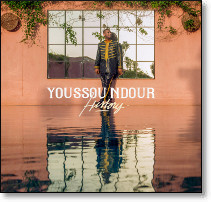
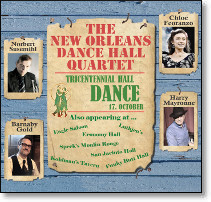
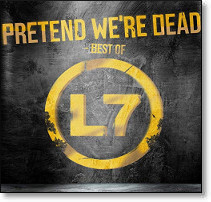
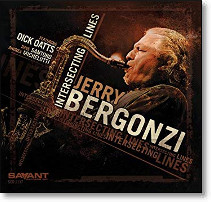
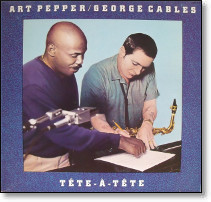
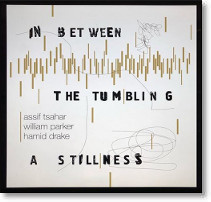
Music: current count 31558 [31518] rated (+40), 251 [252] unrated (-1). Last Monday in May, so extra work today doing my paperwork for the May Streamnotes archive. Rated count was 34 when I first checked on Sunday, but I've kept this open to see what fits into the month. Still, much of the bulk, both this week and for the month, has come from diving into back catalog. With new albums from George Cables and Jerry Bergonzi out, I thought they might be fun. When time ran out, I still had more Bergonzi to go, not least the new one. The week's finds are scattered. The latest Christgau Expert Witness picked a Youssou N'Dour album I had noticed from publicist email but hadn't tracked down (not on Napster, but I was able to stream from Rock Paper Scissors). Also Bassekou Kouyate & Ngoni Ba's Miri, a previous A- here (also according to Michael Tatum). Phil Overeem's latest list pointed me at Beyoncé's Homecoming and A Day in the Life, but the album I liked most was an exceptionally genteel trad jazz quartet he had down at 23. I got some more ideas from Alfred Soto's The best albums of 2019, first draft: specifically Nilüfer Yanya's Miss Universe -- although I'll note that I had heard his six higher-rated albums and didn't A-list any of them. (Further down his list, I did pick Control Top: Covert Contracts; Robert Forster: Inferno; Billie Eilish: When We All Fall Asleep, Where Do We Go?; and Lizzo: Cuz I Love You; still unheard: The Mountain Goats, Vampire Weekend, The National; Tyler, the Creator; and Weyes Blood.) Lucas Fagen provided the tip on L7 (also one I did't follow up on yet: Gary Clark Jr.). First L7 play didn't convince me, so I went back and played the Best Of. Gave the new one an extra play later, but didn't move it. They have one of the all-time great band sounds, but at this point I'd guess it's more likely to drop a notch than to rise one. Opposite is true of their eponymous debut, which Christgau missed and I'd never heard. They get something out of youth there that they'll never get back to again. It occurred to me that Ray Charles and Betty Carter might be on YouTube, and indeed it was. Someone wrote me a while back to point out that several albums I couldn't find on Napster were on YouTube (usually with nothing but the static album cover for video). I haven't followed that tip often, but with big chunks of backlist from both artists this month, seemed like good due dilligence. Disappointing album. David Cantwell has written an exceptionally thorough review of Robert Christgau's two recent essay compilations, Book Reports and Is It Still Good to Ya? (Duke University Press): Robert Christgau's big-hearted theory of pop. I managed to screw up Cantwell's name when I initially posted the link, confusing him with a mediocre pitcher from 1927-37 (W-L record 76-108, mostly with the doormat Boston Braves, although he looked better before going 4-25 in 1936). Turns out David Cantwell has been cranking out country music list-articles for Rolling Stone. It might be fun to follow up on them in June. I am posting tonight a new installment of XgauSez, Christgau's question-and-answer session. New records reviewed this week: Beyoncé: Homecoming: The Live Album (2018 [2019], Columbia, 2CD): Probably the biggest star in American music these days, but I never cared for her albums, at least until 2016's Lemonade -- ok, maybe 2013's Beyoncé, which I rated mid-B+. But none stuck with me long enough to recognize any songs on this Coachella concert, and that, plus the cavernous sound of spectacle I can't see let alone fathom, leaves me indifferent -- at least until "Run the World" broke through. B+(*) Carlos Bica/Daniel Erdmann/DJ Illvibe: I Am the Escaped One (2018 [2019], Clean Feed): Bass, tenor sax, and turntables. B+(*) Brooks & Dunn: Reboot (2019, Arista Nashville): Nashville hitmakers Kix Brooks and Ronnie Dunn reprise a dozen singles, starting with 1991's "Brand New Man," adding a guest vocalist to each. Mostly adds to the group's penchant for bombast, but Kacey Musgraves makes "Neon Moon" a choice cut. B George Cables: I'm All Smiles (2019, HighNote): Pianist, 75, my favorite of Art Pepper's pianists from his last period, still has a light and playful touch on his standards, in a trio with Essiet Essiet (bass) and Victor Lewis (drums). B+(**) Steve Davis: Correlations (2019, Smoke Sessions): Mainstream trombonist, twenty-some albums since 1994, after early stints with Art Blakey and Jackie McLean. Repeats Blakey's sextet lineup here, with trumpet (Joshua Bruneau), sax (Wayne Escoffery), piano (Xavier Davis), bass, and drums. B+(*) Elder Ones: From Untruth (2019, Northern Spy): Vocalist Amirtha Kidambi, second album as Elder Ones, a quartet with Matt Nelson (soprano sax/moog), Nick Dunston (bass), Max Jaffe (drums), with her on harmonium and synthesizer. Four pieces, 46:47, meant "to give the listener momentary relief from the anxiety and pain caused by living in our current reality." Doesn't work for me -- the music is abstract, and the vocals arch -- but then while I find much to be pessimistic about, I'm not much touched by pain and anxiety these days. B Luke Gillespie: Moving Mists (2018 [2019], Patois): Pianist, born and mostly raised in Japan (bio notes he lived in Ft. Worth in 1st grade and Memphis in 6th), studied jazz and classical piano at Indiana, where he teaches. Has a book and a CD (2003) in his CV, as well as several side credits (most with Indiana-based Buselli-Wallarab Jazz Orchestra). Various groupings here ranging from solo to septet, including three tracks with Walter Smith III (tenor sax), one each with Tierney Sutton (vocals), Dave Stryker (guitar), and Wayne Wallace (trombone). [July 12] B+(*) [cd] Luke Gillespie: Moving Mists (2018 [2019], Patois): Pianist, born and mostly raised in Japan (bio notes he lived in Ft. Worth in 1st grade and Memphis in 6th), studied jazz and classical piano at Indiana, where he teaches. Has a book and a CD (2003) in his CV, as well as several side credits (most with Indiana-based Buselli-Wallarab Jazz Orchestra). Various groupings here ranging from solo to septet, including three tracks with Walter Smith III (tenor sax), one each with Tierney Sutton (vocals), Dave Stryker (guitar), and Wayne Wallace (trombone). [July 12] B+(*) [cd] Carly Rae Jepsen: Dedicated (2019, 604/School Boy/Interscope): Canadian pop star, fourth studio album, I missed her 2008 debut, but have been a fan since "Call Me Maybe" broke as a single. This isn't as instant as her last two albums, but growing on me. On the other hand, instant is what you expect in a pop singer. B+(***) Norah Jones: Begin Again (2019, Blue Note, EP): Seventh album, a short one (7 songs, 28:53). Slight in every sense of the word. B Kehlani: While We Wait (2019, Atlantic/TSNMI): R&B singer, third mixtape, first after her certified gold debut album, a short one (9 cuts, 31:19). B+(**) L7: Scatter the Rats (2019, Blackheart): Riot grrrl band formed in 1985 by Donita Sparks and Suzi Gardner, peaked in the early 1990s, released their sixth album in 1999, called it quits until they regrouped to tour in 2015. First studio album since regrouping, hard to distinguish from their late 1990s efforts, but if anything rocks harder. B+(***) Doug MacDonald: Califournia Quartet (2018 [2019], Dmacmusic): Guitarist, originally from Philadelphia, based in Los Angeles, 15 albums. This a quartet, nice showcase for Kim Richmond (alto/soprano sax, flute), with bass and drums. B+(*) [cd] Matt Mitchell: Phalanx Ambassadors (2018 [2019], Pi): Pianist, based in New York, Wikipedia lists some early group records (2000-05) I wasn't aware of, but he's impressed a lot of folks since his 2013 Pi debut. I'm impressed too, as long as the piano is focused, but this no-horns quintet gets cluttered toward the end -- with guitar (Miles Okazaki), vibes, bass, drums. B+(**) [cd] Youssou N'Dour: History (2019, Naïve/Believe): Senegalese superstar, another strong album -- tempted to complain that his vocals are too strong, but that would be petty. A- [os] Phicus + Martin Küchen: Sumpflegende (2017 [2019], Fundacja Sluchaj): Catalan guitar-bass-drums trio (Ferran Fages, Alex Riviriego, Vasco Trilla), two previous albums, plus the Swedish saxophonist (tenor/alto), adding occasionally inspired noise. B+(*) [bc] Matthias Spillmann Trio: Live at the Bird's Eye Jazz Club (2017 [2019], Clean Feed): Swiss trumpet player, second album, both with same title -- refers to a club in Basel, the previous one with a quartet on the club's label. With Andreas Lang (bass) and Moritz Baumgärtner (drums). One original, five covers, closes with a nice "St. Louis Blues." B+(**) Spring Roll: Episodes (2017-18 [2019], Clean Feed): French chamber jazz outfit, steeped in avant-classical, led by Sylvaine Hélary (flutes), with Hugues Mayot (tenor sax/clarinet), Antoine Rayon (piano/Moog), and Sylvain Lemêtre (vibes/percussion). On two (of 5) cuts, Kris Davis takes over piano, and makes a difference (but it doesn't last). B+(*) Ben Stapp/Joe Morris: Mind Creature Sound Dasein (2017 [2019], Fundacja Sluchaj): Stapp plays tuba and euphonium, also "acoustic items," mostly duo with guitar, but Stephen Haynes (cornet) earns a "feat." credit on 4 (of 11) tracks. Scratch and drone, abstract, prickly. B+(*) [bc] Oli Steidle & the Killing Popes: Ego Pills (2017 [2019], Shhpuma): German drummer, has used his given first name Oliver as well as Olli elsewhere. Band includes Kit Downes (keybs) and Frank Möbus (guitar), and several guests pop in (bassist Peter Eldh with his own music, Philipp Gropper sax, Andreas Schaerer vocals). Prog rock, unsettlingly erratic. B- Norbert Susemihl/Chloe Feoranzo/Harry Mayronne/Barnaby Gold: The New Orleans Dance Hall Quartet: Tricentennial Hall Dance 17, October (2018 [2019], Sumi): German trumpet player/singer, started playing trad jazz in the 1970s, moving to New Orleans in 1980, eventually returning to Hamburg, then to Denmark. Recorded this in New Orleans, with Americans Feoranzo on clarinet (also vocals), Mayronne on piano, and Australian drummer Gold. Rather easy-going, often gorgeous renditions of some of my favorite music. A- Tanya Tagaq: Toothsayer (2019, Six Shooter, EP): Inuk throat singer from the south coast of Victoria Island, way up in the not-yet-balmy Arctic Ocean. Has a couple of interesting albums, the extreme vocals here mostly give way to hard beats, giving way to desolate ambience. Five songs, 24:57. B+(**) The Dave Wilson Quartet: One Night at Chris' (2018 [2019], Dave Wilson Music): Tenor saxophonist, some soprano, based in Lancaster, PA, where he has a musical instruments business. Fifth quartet album since 2002, recorded live in Philadelphia, a hot set with piano (Kirk Reese), bass, and drums, mixing Beatles ("Norwegian Wood") and Beach Boys ("God Only Knows") covers in with traditional fare ("Summertime"). B+(***) [cd] Nilüfer Yanya: Miss Universe (2019, ATO): British singer-songwriter, born in London, name preserves Turkish roots but the first band her guitar-rock reminded me of was the Buzzcocks. Gets slinkier after that, which I'd say is a plus. A- Recent reissues, compilations, and vault discoveries: A Day in the Life: Impressions of Pepper (2018, Impulse!): The Beatles' Sgt. Pepper's Lonely Hearts Club Band reconstructed, one song each by twelve artists, all much younger than their source, most with some crossover potential, many from the UK scene. Don't have the full credits, so I'm left with questions, like who plays the flute with Brandee Younger's harp? Beatles songs have been notoriously hard to jazz up, and this particular set has rarely been attempted. Results are scattered, the mix too varied to flow well, but here and there you catch a whiff of something transcending nostalgia. B+(*) L7: Pretend We're Dead: Best of L7 (1992-97 [2019], Warner Music Group): Digital-only audio tied into the 2016 documentary DVD, L7: Pretend We're Dead, drawing from only three of their albums, with 10/11 tracks from Bricks Are Heavy, 8/12 from Hungry for Sink, and 7/12 from The Beauty Process -- the first two are solid-A in my book, and the latter holds up better than I recalled. A Old music: Jerry Bergonzi: Intersecting Lines (2012 [2014], Savant): Featuring Dick Oatts (alto sax), with Dave Santoro (bass) and Andrea Michelutti (drums). Too friendly for a proper joust, but the two saxes work marvels together. A- Jerry Bergonzi: Dog Star (2017, Savant): Tenor saxophonist, with Phil Grenadier on trumpet, backed by Carl Winther's Danish piano trio. B+(***) George Cables: Cables Vision (1979 [1992], Contemporary/OJC): Early album for the pianist, all tracks feature Bobby Hutcherson on vibes, one just a duo, the others running 5-7 musicians, with neither Freddie Hubbard nor Ernie Watts making the impression you expected. B George Cables Trio: Beyond Forever (1991 [1992], SteepleChase): First of a series of eight albums the pianist recorded for the Danish label, attributed to his Trio but with three names listed under the title: Joe Locke (vibes), Santi Debriano (bass), and Victor Lewis (drums). Locke started his own run with the label in 1990, and did some of his best work there -- and he certainly brightens this up. B+(**) George Cables: Quiet Fire (1994 [1995], SteepleChase): Piano trio with Ron McClure (bass) and Billy Hart (drums). Wrote title song, leans toward modern jazz pieces for covers, including Gary Bartz and John Hicks among his composers. B+(***) George Cables: Person to Person (1995, SteepleChase): Solo piano: four originals and eight well-known standards (starts with a touching "My Funny Valentine," ends with "Body and Soul") cover all the bases. B+(***) George Cables Trio: Skylark (1995 [1996], SteepleChase): With Jay Anderson (bass) and Albert Heath (drums). Typically fine set, with Latin touches and a bit of Monk. B+(***) George Cables Trio: Dark Side, Light Side (1996 [1997], SteepleChase): Return of his trio with Jay Anderson (bass) and Billy Hart (drums). Usual mix, with Don Pullen's tribute to George Adams ("Ah George We Hardly Knew You") a special treat. B+(***) George Cables Trio: Bluesology (1998, SteepleChase): With Jay Anderson (bass) and Billy Drummond (drums). Two originals here. Strong central arc from "A Night in Tunisia" to Milt Jackson's title song. In fact, strong throughout. B+(***) George Cables: One for My Baby (2000, SteepleChase): Another trio, with Jay Anderson on bass and Yoron Israel on drums. More standards, the title cut stretched to 10:04. B+(**) Ray Charles/Betty Carter: Ray Charles and Betty Carter (1961, ABC): When Charles left Atlantic for ABC, a big part of his deal was that he got control of his catalog, which has had the perverse effect of making his ABC years (24 albums, 1960-1973) hard to find, especially now. He poduced some of his greatest work during those years, but he was much less consistent. This was his fourth album, a meet up with a young jazz singer with a couple of recent albums, here backed by a snappy big band, there by mopey strings. Two brilliant singers, but not much chemistry between them. B [yt] Carly Rae Jepsen: Tug of War (2008, Maple Music/Fontana North): First album, at 22, after a 3rd place finish in Canadian Idol, sold 10,000 units in Canada but didn't chart anyway. Production isn't state-of-the-art, but I like her voice, admire her originals, and the one cover is the best John Denver I've heard since Toots & the Maytals. B+(***) L7: L7 (1988, Epitaph): First studio album, quartet fronted by three women: Donita Sparks sang and played guitar, Suzi Gardner played guitar ad sang, Jennifer Finch bass and vocals -- Sparks and Garder the writers. Eleven songs, 31:58. Sounds prophetic. B+(***) Art Pepper/George Cables: Tête-À-Tête (1982 [1983], Galaxy): The first of two sax-piano duet albums, recorded two months before Pepper died. Cables wrote the title piece, the other ballads, some as well worn and comfy as "Body and Soul" and "'Round Midnight." Pepper is as lovely as ever, and Cables plays a lot of piano. A- Art Pepper/George Cables: Goin' Home (1982, Galaxy): A second set of duets, recorded a month after Tête-À-Tête, one month before Pepper's death, and seems to have been released first -- it occupies most of the 16th and final CD of The Complete Galaxy Recordings, one of the most consistently inspired runs in jazz history. With more clarinet, comes in for a softer landing. B+(***) Grade (or other) changes: Assif Tsahar/William Parker/Hamid Drake: In Between the Tumbling a Stillness (2015 [2018], Hopscotch): Tenor sax trio, recorded at the leader's club in Tel Aviv with the best rhythm section one could hope for, as good as they get. The saxophonist is equally poised, opening long at 34:22, followed by shorter pieces (14:59, 4:29) that flow together. [was: A-] A Unpacking: Found in the mail last week:
Ask a question, or send a comment. Sunday, May 26, 2019 Weekend RoundupHere in Wichita it's rained every day for a week with more coming tonight, tomorrow, the day after. We're up to 11.96 inches this month (2nd wettest May ever; annual average is 34 inches). Many rivers in southeastern Kansas have flooded -- my recent trip to Oklahoma was detoured when the Kansas State Turnpike went under water. Wichita used to flood regularly, and my home would surely be under water but for "the big ditch" -- a flood control project built in 1950-59. (See Beccy Tanner: 'Big Ditch Mitch' saved Wichita many times; also, David Guilliams: The Big Ditch: The Wichita-Valley Center Flood Control Project [PDF].) I've been reading up on this, not least because I haven't seen the rivers this high since 1966, when the Ditch spared Wichita (barely) an epochal flood that wiped out the Arkansas River dam in Lamar, CO, and flooded every other town on the river's path into Oklahoma and Arkansas. Reading Guilliams' history reminds me that we had politicians in the 1940s who were as short-sighted as the ones we have today, but I'll always be thankful they got outvoted. That Ditch was the best investment Wichita ever made. Without it I wouldn't be able to get around to this week's other stories. Some scattered links this week:
Ask a question, or send a comment. Monday, May 20, 2019 Music Week
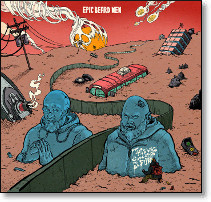
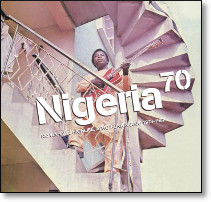
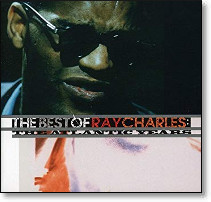
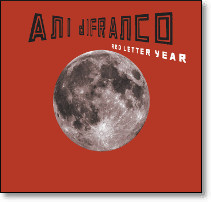
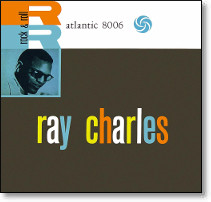
Music: current count 31518 [31498] rated (+20), 252 [249] unrated (+3). Rated count well down this week. Wednesday through Friday got totally wiped out, starting with a dental appointment, then shopping for dinner on Friday, then marathon cooking. Zhanna Pataki and I made a blini feast. I found a Russian grocery store in Tulsa the previous week, and picked up a pound of salmon caviar ("Alaskan rubies") and three whole schmaltz herring. The latter went, one each, into sour cream sauce, mustard sauce, and Estonian potato salad (with golden beets, apple, and ham (actually, Canadian bacon). Other side salads: poached cod with horseradish sauce, cucumbers in sour cream, green bean and walnut, carrot and garlic. I got a couple of salmon filets and salted them. I made two loaves of rye bread (only disappointment: came out dense and dry, probably because the dough was, or maybe I just don't know how to properly knead bread; anyway, the expensive Breville food processor wasn't up to the task). For dessert, I made a light sponge cake, and topped it with strawberries and whipped cream (recipe called for smetana, but I didn't allow myself enough time to make my own -- probably should have bought some in Tulsa, when I had the chance). I just now realized that I had brought a jar of eggplant caviar back from Tulsa but failed to serve it. Dinner was spectacular, and exhausting. A couple weeks ago I learned that Ani DiFranco has written a memoir, No Walls and the Recurring Dream. She grew up in Buffalo, and was close to my cousin's family there, so I have some kind of personal interest in her story, and I've been aware of her musical career from near the beginning. Then last week I noticed her No Walls: Mixtape on Napster, so delved a bit deeper. I read what I could from Google's excerpt, while listening to Mixtape -- unplugged remakes of 25+ years of remarkable songs -- and a couple other items I had missed that I found on her Bandcamp. Stopped short of the bootlegs, although one of my favorites (and one of the best places to start with her) is the live Living in Clip. I was especially pleased that after panning most of her recent albums with Todd Sickafoose I enjoyed Red Letter Year so much. I wrote about her in [The New] Rolling Stone Album Guide. A current grade list is here. Robert Christgau reviewed Epic Beard Men this week, along with two records by Quelle Chris that I had already reviewed. I gave Guns another spin, enjoyed it, but left my grade at B+(***). For whatever it's worth, I've graded A- all four of Strut's Nigeria 70 compilations. I couldn't begin to rank them, other than to note that I have the CDs to the first, and played one out of my travel case while cooking last week. I doubt any are as good as the best King Sunny Adé albums, or the second edition of The Rough Guide to Highlife, but the new one hits the exact same pleasure centers, and that was good enough for me. The Ray Charles comp was the one I skipped when reviewing his Atlantics last week. It's the one you'd most likely buy if you're reluctant to get the entire 3-CD box (The Birth of Soul). Not sure why I didn't grade it as high as the box or two of the source albums, other than that I didn't give it a lot of time. I'm still bothered that we don't have the ABC albums available for streaming. And I will note that one problem with virtually every "greatest hit" collection from that period is the mandatory inclusion of two hideous Beatles covers. Compilers don't always pick the best songs, so that may be what's slightly off about the Rhino Atlantic Best Of. Best jazz album of the week was the first 2019 Clean Feed release I've found on Napster. They've sometimes been hard to search out, but until this year all of their releases have been available for streaming, which lately has saved me the hassle of downloading. Not everything that's come out is available yet, but I'm glad to get what I can. I'll try to catch up in coming weeks. (There are a couple more on this week's list, as well as one where the musician sent me the CD -- thanks for that favor.) New records reviewed this week: Charlie Apicella & Iron City: Groove Machine (2018 [2019], OA2): Guitarist, several albums both before and after moving up front in his band. Not as insipid or mechanistic as the title implies, thanks in large part to saxophonist Gene Ghee, although organ player Radam Schwartz (who contributed a piece) probably deserves some credit as well. Covers from Lou Donaldson and Willis Jackson. B+(*) [cd] Camp Cope: How to Socialise & Make Friends (2018, Run for Cover): Australian group, from Melbourne, three women, Georgia McDonald the singer-guitarist. Second album, singer has a distinctive voice, making a strong impression. B+(***) Ani DiFranco: No Walls: Mixtape (2019, Righteous Babe): Product tie-in to the folksinger's new book, No Walls and the Recurring Dream: A Memoir, reprising 25 years of songs, mostly unplugged but with a few tricks here and there (also guests on three songs). At first I tried reading excerpts from her memoir while listening to this, but didn't have enough attention to satisfy both. Many striking songs here -- probably also on Canon, her 2-CD retrospective through 2007 -- maybe more so with her accumulated perspective, chops too. A- Epic Beard Men: Season 1 (2018, Strange Famous): Rap duo from Providence, Rhode Island: Sage Francis, with seven albums and eight mixtapes since 1998, and B. Dolan, five years younger, three albums and three mixtapes on his own. First album, but their collaboration goes back at least a decade. B+(**) Epic Beard Men: This Was Supposed to Be Fun (2019, Strange Famous): Second album: picks up quickly from the first and powers through, with big, old school beats, pressured rhymes, real stories. A- The Fictive Five: Anything Is Possible (2018 [2019], Clean Feed): Avant group, retains the title of their 2015 album as group name: Larry Ochs (tenor/sopranino sax), Nate Wooley (trumpet), Harris Eisenstadt (drums), with two bassists (Ken Filiano and Pascal Niggenkemper), both using effects. B+(**) John Hart: Crop Circles (2017 [2019], SteepleChase): Guitarist, released two Blue Note albums 1990-92, a couple more on Concord through 1997, not much since. Quartet here with alto sax (Dick Oatts), bass, and drums. Three originals, twice as many covers, from "How Deep Is the Ocean" to "Besame Mucho" with stops at Ellington and Monk. B+(**) Fred Hersch & the WDR Big Band: Begin Again (2019, Palmetto): Pianist, more important as composer here as Vince Mendoza's big band overwhelms his typically erudite playing. B+(*) [cd] Jørgen Mathisen's Instant Light: Mayhall's Object (2018 [2019], Clean Feed): Norwegian saxophonist (tenor/soprano), has appeared on a few albums since 2014. Quartet with piano (Erlend Slettevoll), bass (Trygve Waldemar Fiske), and drums (Dag Erik Knedal Andersen). Very strong, especially on the closing "Neutron Star," the climax set up by a terrific piano interlude. A- The Pete McGuinness Jazz Orchestra: Along for the Ride (2018 [2019], Summit): Trombonist, sings some, discography goes back farther, but organized his big band in 2006, and that's been his main vehicle since. Composed half, arranged all, draws on New York musicians, swings a little. B Yoko Miwa Trio: Keep Talkin' (2019, Ocean Blue Tear Music): Japanese pianist, based in Boston, eighth album since 2003, mostly trios. Mostly originals, likes to keep them upbeat, plus covers of Monk, Mingus, Beatles, Joni Mitchell, something Latin ("Casa Pre-Fabricada"). B+(***) [cd] Priests: The Seduction of Kansas (2019, Sister Polygon): Postpunk group from DC, led by singer Katie Alice Greer, second album, expands a bit musically, arguably political because politics matters, but for them the context and form are "character sketches about the everyday banality of evil." B+(***) Scheen Jazzorkester & Thomas Johansson: «As We See It . . . » (2019, Clean Feed): Norwegian avant-jazz group, 12 musicians, founded in 2010, with a half-dozen albums, most featuring guests like trumpeter Johansson here, rising above the ensemble grind. B+(***) [cd] The Selva: Canicula Rosa (2018 [2019], Clean Feed): Portuguese trio: Ricardo Jacinto (cello), Gonçalo Almeida (bass), Nuno Morão (drums). Second album. The bassist is best known, laying down a minimalist groove, while the cello rises above. B+(**) Senyawa: Sujud (2018, Sublime Frequencies): Duo from Jogjakarta, Indonesia: Rully Shabara ("extreme vocals") and Wukir Suryadi ("homemade instruments"). Recommended by Phil Overeem, who is also a big fan of Zeal & Ardor, a group which mashes field blues into metal. These guys do something like that, although I can't identify the original ingredients for you. B+(***) [bc] Marcus Shelby Orchestra: Transitions (2017 [2019], MSO): Bassist, eighth album as leader, fifth with his big band. Mostly standards here, mostly Ellington and Cole Porter, although he starts off with a Mingus piece, shortening the title to "Remember Rockefeller" (dropping the bit about "Nazi U.S.A."). Tiffany Austin sings several, adding to the reverential air. B+(*) [cd] Rodney Whitaker: Common Ground: The Music of Gregg Hill (2017 [2019], Origin): Bassist, born in Detroit, director of jazz studies at Michigan State, eighth album as leader since 1995. Group includes Terell Stafford (trumpet/flugelhorn), Tim Warfield (alto/tenor/soprano saxes), and Bruce Barth (piano). Hill wrote all the pieces, co-produced, is pictured on the cover alongside Whitaker, but doesn't play. Whitaker's daughter, Rockelle Fortin, sings lyrics she wrote on four songs. B+(*) [cd] Recent reissues, compilations, and vault discoveries: Nigeria 70: No Wahala: Highlife, Afro-Funk and Juju 1973-1987 (1973-87 [2019], Strut): Fourth installment in the label's Nigeria 70 series, the first a sweeping 3-CD set from 2001 that expanded the decade from 1964 to 1980. Further single-CDs came out in 2008 and 2011, so they haven't been in a rush to dump this one out (12 cuts, 81:06). Not the top material, but the highlife and juju styles are pretty irresistible. A- [bc] Old music: Ray Charles: The Best of Ray Charles: The Atlantic Years (1951-59 [1994], Rhino): Twenty cuts on one CD, a fine introduction with most of the high points, although I haven't spent enough time with it to swear it's a better than any of the three discs of Rhino's earlier The Birth of Soul box. A- Ani DiFranco: Red Letter Year (2008, Righteous Babe): Sixteenth album, don't recall exactly when she grew too sophisticated for folk music. Maybe 2001's double Revelling/Reckoning, which started a series of albums I didn't much care for, but she's come out the other end here, with ten instrument credits (some plural), plus a number of notable jazz musicians (Todd Sickafoose, Mike Dillon, Allison Miller, a string quartet led by Jenny Scheinman, and the Rebirth Jazz Band to open and close). Songs too: subject matter ranges from the big bang to the atom bomb, not that it ever strays far from the personal (or the political). A- [bc] Ani DiFranco: Binary (2017, Righteous Babe): Nineteenth studio album, somehow missed my attention when it came out. Easy to hear why: she started as a folksinger because it was a cheap route, and made it work by being so damn direct. This, with jazz bassist Todd Sickafoose the main musical contributor and another dozen helpers (mostly jazzbos and New Orleans legends, plus a chance to hear Maceo Parker and Skerik on the same track), is all sorts of sophisticated. B+(*) Larry Ochs: The Fictive Five (2014 [2015], Tzadik): Second album kept this title as group name, but this first album was credited to the saxophonist/composer/producer. Same group: Nate Wooley (trumpet), Harris Eisenstadt (drums), Ken Filiano and Pascal Niggenkemper (bass). B+(*) [bc] Unpacking: Found in the mail last week:
Ask a question, or send a comment. Monday, May 20, 2019 Weekend RoundupRan a day late on this one, partly because I went long on the intro, but also because I found so many links in my early trawl through the usual sources I wasn't able to finish my rounds, then found even more when I tried to wrap up. I'm sure it's always the case that an extra day or two to let the words settle and go back and restructure would be useful, but I've rarely felt that more than this week. Abortion became a much hotter political issue last week, with the passage and signing of a law in Alabama which criminalizes abortion in all cases except when it is necessary to save the life of the woman, with doctors risking prison terms of up to 99 years if their call on life-saving is disputed. Much focus on this particular law centers on the lack of any exclusion for rape and incest, which most people agree would be reasonable grounds for abortion. (As Phil Freeman tweeted: "Your first mistake was assuming old white men in Alabama were against rape and incest.") But the Alabama law is just one of many state laws Republicans have been pushing lately, all aimed at relitigating Roe v. Wade in the Trump-packed Supreme Court. (E.g., The "heartbeat" bills that could ban almost all abortions, passed in four states including Ohio and Georgia, and coming soon in Missouri; still more draconian bills are in the works, such as A Texas bill would allow the death penalty for patients who get abortions.) I'll start this off by quoting from a Facebook post by a relative of mine in Arkansas, Marianne Cowan Pyeatt, offering an unvarnished glimpse of what anti-abortion Republicans are telling themselves:
One thing this shows is that the fight over abortion rights is being fought at the margins, with both sides seeking maximalist positions, although there is nothing symmetrical about the conflict. There is only one fanatical side to this issue: those who, like Marianne here, want to ban all abortions. No one on the opposite side -- and I am about as opposite as anyone gets -- wants to terminate all pregnancies. Rather, we understand that pregnancy is a complicated issue that affects women in many different ways, and that there are some circumstances where some women feel they would be better off with an abortion. We believe that this should be a free and responsible choice, and to make this a real choice for all women requires that we isolate it from the encumbrances of government regulation and economic pressure. I've long thought that conservatives and libertarians should be strong supporters of abortion rights. Libertarians cherish freedom, and freedom is the ability to make free choices -- among which one of the most important is whether to bear and raise children. Not everyone who wants children is able to have them, but safe abortion at least makes it possible to choose not to have children. As for conservatives, they always stress the responsibilities parenthood infers. It would be perverse if they did not allow those who felt themselves unable to assume the responsibility of raising children the option of not having them. Indeed, in the past have sometimes wanted to impose limits on the fertility of those they deemed unfit to raise children (e.g., the forced sterilization of the eugenics movement). Consequently, the hard turn of Republicans against free access to abortion and birth control has always struck me as bad faith: a political ploy, initially to capture votes of Catholics and Southern Baptists, who had traditionally voted Democratic. I first noticed this in Bob Dole's 1972 Senate campaign, and I never forgave him for politicizing the issue. (He was being challenged by William Roy, a ob/gyn who had occasionally performed abortions, which were legal in Kansas well before Roe v. Wade. Until that time Kansas Democrats were more likely to be anti-abortion than Republicans. Using abortion as a partisan tactic may have started with Nixon's 1972 "silent majority"/"southern strategy." It was especially successful in Missouri. See How abortion became a partisan issue in America.) Abortion rights are desirable if there are any circumstances where abortion is a reasonable choice. Most people recognize rape and incest as valid reasons, as well as the health of the woman and/or the fetus. Beyond that there arise lots of possible economic and psychological concerns, which can only really be answered by the woman (with the advice of anyone she chooses to consult). We generally, if not always consistently, recognize that our freedom is rooted in a right to privacy. Since a decision to terminate has no broader repercussions, there is no good reason for the government to get involved. (One might argue that a decision not to terminate might concern the state, in that it would wind up paying for the child's education and health care, but no one who supports abortion rights is seeking that sort of oversight. China's "one child" policy is an example, but no one here is arguing for the state to enforce such a thing.) Regardless of how cynical Republican leaders were when they jumped on the anti-abortion bandwagon, they learned to love it because it dovetailed with the prejudices and fears they exploited (Jason Stanley has a handy list, in his recent book, How Fascism Works), while doing little to detract from their main objective: making the rich richer, and building a political machine to keep the riches coming. (Thomas Frank, in his 2004 book What's the Matter With Kansas?, tried to expose their two-faced cynicism, but he wound up only agitating the anti-abortion mobsters into demanding more results for their votes.) Marianne's post is full of such prejudices, even while she tries to paper over others. But while the first line refers to the Alabama law, she'd rather turn the tables by accusing "stupid liberals" of wanting to kill babies the instant before birth. That would be a symmetrically opposite point of view, but even if legal it's not a real something anyone would do. Some links on the Alabama law and the assault on abortion rights:
Some scattered links this week:
Ask a question, or send a comment. Monday, May 13, 2019 Music Week
Music: current count 31498 [31469] rated (+29), 249 [248] unrated (+1). Weird how these weekly totals keep landing on 29 (6th time so far this year). Should have been less, given that I drove to the Tulsa area on Wednesday, returning Friday evening. Took my travel cases for the car, nothing remotely new in them. Packed the Chromebook, but inadvertently left it at home. Supposedly I can check email and web on phone, plus a million apps including Napster, but I've never got the hang of that. My second cousin down there swears she does everything with Siri, and I could see how that might be better than trying to type on a clumsy and error-prone touch screen. As a confirmed Apple-phobe, that isn't even an option I'd consider, but I gather Samsung has something along those lines (bixby?). I suppose I should look into that. Meanwhile, I seem to be the only person I know who can go 3-4 days between charges, so I take comfort in that. I wanted to visit my cousin Duan, second son of my mother's oldest sister, Lola. I hadn't been down there since his older brother, Harold, passed several years ago, and he's up to 92 now. He's lived in/around Bristow as long as I can remember -- we went to visit Aunt Lola every couple months when I was young, and by then Harold and Duan had their families, my second cousins just a couple years younger than I was, so we were fairly close. Harold and Duan were drafted into WWII, and Duan got called back for the Korean War. That seems to have qualified him for living in the Veterans Center in Claremore, where he moved a few months ago. Probably a good place for him at this stage, but not one I'd ever look forward to (not a prospect with my 4F). Can't say as we had good talks, but was good to see him. I saw live music twice in Oklahoma, although nothing I can recommend. The first was a free concert at the Veterans Center, with a c&w singer who called himself Cowboy, and who toured with a dwarf pony in tow -- something the vets seemed to appreciate. He mostly played Merle Haggard songs (and nothing as obvious as "Okie From Muskogee"; more like "Silver Wings"). One bizarre moment: he had a little girl bring him up a disguise designed to make him look like Elvis Presley, then launched into a medley of three r&b songs ("Lawdy Miss Clawdy," "See See Rider," don't recall the third), suggesting not only that even today black music was only acceptable if dressed up as white. He then played a fourth Elvis song, something late and not black, and didn't bother with the disguise for that. Blackface has gone out of fashion, but whiteface still works in Oklahoma. (There were a few black residents at the Center, but they were a tiny minority, and I don't recall any at the show.) Second live music experience was attending a recital at the Coweta High School of their various band ensembles, starting with 6th grade. All three of my second-cousin's granddaughters played there, among at least a hundred others. No strings, but lots of flutes and clarinets -- I counted 12 and 18 in the high school band -- a few saxophones, the odd oboe or bassoon, a fair amount of brass, and a pretty substantial investment in percussion (including a featured percussion ensemble). Best was a pair of Cuban tunes. More typical were the Andrew Lloyd Weber medleys. Lasted over two hours, which was exhausting for all (huge crowd, by the way). They made passing reference to also having a jazz ensemble, but nothing I heard fit that bill. Given that hole in my week, the only way I got to 29 was by streaming oldies. I started by looking for Betty Carter's album with Ray Charles. Napster didn't have it, or for that matter much of anything else after Charles left Atlantic for ABC. I mostly know his Atlantics through the 1991 Rhino 3-CD box, The Birth of Soul (my grade: A), but since the individual albums were available, I worked through them, yielding most of this week's pick hits. That also got me Ray Charles Presents David 'Fathead' Newman, and I followed that up with a few more of Newman's records (especially his early HighNotes). I didn't go very deep there, as I've never found him to be especially remarkable. After I got back from Oklahoma, I played the new Greg Abate record, so I took a look at his back catalog. He's a mainstream saxophonist, more rooted in bebop than swing, and I especially liked his 2014 album Motif, so I was more hopeful there. I skipped a few things like his samba album, but got a fairly good sense of where he's come from. Several very nice albums, the best being one with Alan Barnes. The next logical step would be to see what else I can find by Barnes. My database lists six of his albums, all Penguin Guide ***(*)-rated, but I haven't heard any of them yet. Surprised I've missed him, although I have rated records he shared but I've filed under other names: Tony Coe, Scott Hamilton, Warren Vaché. Revisited the latest Coathangers album this week, after Robert Christgau gave it an A-. As I recall, Michael Tatum also likes the album. I gave it a B+(***) on one or two plays back in March, and found that my review didn't need much tweaking. I played his other pick, Priests' The Seduction of Kansas, after the break, so next week for it and Camp Cope's How to Socialise & Make Friends -- both good, high B+ records. New records reviewed this week: Greg Abate with the Tim Ray Trio: Gratitude: Stage Door Live @ The Z (2019, Whaling City Sound): Saxophonist, grew up in Rhode Island, plays alto and tenor, adds baritone and flute here, well schooled in bebop. Ray is a pianist, his trio with bass and drums, featured on Abate's recent albums. Mostly originals, including a Phil Woods tribute, with three covers: one each from Roland Kirk and Joe Henderson, plus a nice feature for the pianist: "Jitterbug Waltz." B+(***) [cd] Rebecca DuMaine and the Dave Miller Combo: Chez Nous (2018 [2019], Summit): Standards singer, started in New York singing and acting, now based in San Francisco, has several albums, this one backed by Miller's piano trio plus Brad Buethe on guitar. Touches all the usual bases, from Jobim ("So Danco Samba") and the Beatles ("Yesterday"), with two songs in French, all tastefully done. B+(**) [cd] Peter Jensen & DR Big Band: Stand on Your Feet and Fight: Voices of the Danish West Indies (2018 [2019], ILK): Denmark was a relatively minor player in the transatlantic slave trade, possessing three islands in the Caribbean, populating and exploiting them with 100,000 slaves, and eventually selling them off to the United States to become the US Virgin Islands (St. Croix, St. John, and St. Thomas). The music here is a lament, contemplating this history, and recalling it through the spoken word of its survivors (recordings made between 1978 and 1985, recalling rebellions in 1878 and 1915). B+(*) [cd] Ellynne Rey: The Birdsong Project (2019, self-released): Standards singer, second album, band includes Joel Frahm on tenor sax. Casting about for songs featuring birds, she struggles with "Skylark," "The Peacocks," "Song to a Seagull" (J. Mitchell), only hitting her stride near the end -- "Flamingo," "Blackbird," and that ultimate Bird song, "Ornithology." B [cd] Gwilym Simcock: Near and Now (2018 [2019], ACT): British pianist, half-dozen albums since 2007, this his second solo effort. No shortage of harmonies here, yet this doesn't do much for me. B Aki Takase Japanic: Thema Prima (2018 [2019], BMC): Pianist, born in Japan but long based in Germany. A lot going on here, with adventurous free jazz, wild flings, scattered electronics, sound effects, even some hip-hop. A major factor is turntablist Takase's son Vincent Graf von Schlippenbach (dba DJ Illvibe), but the band also includes Daniel Erdmann (sax), Johannes Fink (bass), and Dag Magnus Narvesen (drums). B+(***) The United States Air Force Band: The Jazz Heritage Series: 2019 Radio Broadcasts (2019, self-released, 4CD): Radio shots, hour-long discs with a sound test to start, super-annoying plugs for the Air Force, musicians all prefaced by rank. Three are build around featured guests, including snippets of anodyne interviews. Cyrille Aimée actually sounded pretty good, especially coming on after the group's Tech. Sgt. chick singer. Kenny Barron was a good sport, and Branford Marsalis was on his best behavior. I passed out during the fourth disc. They play perfectly ordinary swing-to-bop, which would be easily forgettable except for the evil of their mission. C- [cd] Wayne Wallace Latin Jazz Quintet: The Rhythm of Invention (2019, Patois): Trombonist, from San Francisco, gravitated toward Latin jazz and has specialized lately. Quintet adds piano, bass, drums, and congas, but doesn't stop there, as the album lists 20 guest musicians, usually 2-4 cuts each, mostly horns and strings, plus a bit of spoken word. B+(*) [cd] Old music: Greg Abate Quartet: Bop City: Live at Birdland (1991, Candid): Plays alto, tenor, sopranino sax, and flute, but pictured with the alto. He released an album in 1981, but his career basically starts here, his original title cut pledging allegiance to bebop, although he doesn't do anything more obvious than a piece called "Basting the Bird." With James Williams (piano), Rufus Reid (bass), and Kenny Washington (drums). Nice tone, shown to best effect on an atypical cover of "These Foolish Things." B+(***) Greg Abate: Straight Ahead (1992 [1993], Candid): As advertised, a quintet with "featuring" names on the front cover because they're bankable: Claudio Roditi, Hilton Ruiz, George Mraz, Kenny Washington. B+(**) Greg Abate Quintet: Dr. Jekyll & Mr. Hyde (1995, Candid): Featuring Richie Cole (alto sax), the leader's main tool, but that encourages him to switch off to everything from baritone to soprano plus flute. With Chris Neville (piano), Paul Del Nero (bass), and Artie Cabral (drums). Live, somewhere. B+(*) Greg Abate Quintet: Bop Lives! (1996, Blue Chip Jazz): Just alto sax this time, his group expanded with the addition of Claudi Roditi (5/9 cuts, trumpet on 3, flugelhorn on 2), backed by Kenny Barron (piano), Rufus Reid (bass), and Ben Riley (drums). B+(**) Greg Abate: Evolution (2002, 1201 Music): A chance to show off all his kit: four saxes (tenor on the cover, no flute this time), all originals, backed by piano-bass-drums (James Williams, Harvie S, Billy Hart). B+(***) Greg Abate/Alan Barnes: Birds of a Feather (2007 [2008], Woodville): Two saxophonists, a quintet recorded on the latter's label, with John Donaldson (piano), Andy Cleyndeft (bass), and Spike Wells (drums), a strong rhythm team. Reminds me of those Ammons-Stitt blow-outs. A- Ray Charles: Ray Charles (1953-56 [1957], Atlantic): First album, first on Atlantic, anyway: a 14-cut LP, the first side shows off his distinctive sound, that blend of blues and jive that would soon make him one of rock and roll's most distinctive hit makers. How soon? Well, side two starts with "Hallelujah I Love Her So" and "Mess Around," and ends with "I Got a Woman." A Ray Charles: The Great Ray Charles (1956 [1957], Atlantic): Where his first and third Atlantic albums were cobbled together from singles, this second album was recorded as such, with eight longer tracks (3:40-5:54, total 37:37), all instrumentals, the idea perhaps to establish a jazz identity as well as r&b. He gets a distinctive sound on piano, but the arrangements are nothing special, and the musicians come and go. B+(**) Ray Charles: The Genius After Hours (1956-57 [1961], Atlantic): Outtakes from the sessions for The Great Ray Charles, organized into a quickie album when the Genius left the label. Feels more intimate, as the big band stuff got moved out first. B+(**) Ray Charles: Yes Indeed! (1952-58 [1958], Atlantic): Third album, compiling various earlier singles, some memorable, all true to his form. A- Ray Charles: What'd I Say (1952-59 [1959], Atlantic): Title song, nominally two parts split on the single, run together for 6:26 here, is Charles' greatest vamp piece. The 3:54 "Rockhouse" also runs two parts, with everything else short, 10 titles totalling 30:08. A Ray Charles: The Genius of Ray Charles (1959, Atlantic): At this point he's starting to figure that everything he touches turns to genius, and he's half right. He picks a mixed bag of standards, but the arrangements are more crucial: Quincy Jones' big band is stellar on the first side, but Ralph Burns' string orchestra is a drag. B+(**) Ray Charles: Ray Charles In Person (1959 [1960], Atlantic): Seven-cut, 29:19 live set, recorded in Atlanta. No complaints, far as that goes. B+(*) Ray Charles: Ray Charles Live (1958-59 [1987], Atlantic): Double LP compilation from 1973, combining Charles two live albums from the Atlantic period -- 1958's Ray Charles at Newport and 1960's Ray Charles in Person (at Herndon Statium in Atlanta) -- reordered with an extra track on the CD reissue, still just 71:55. B+(***) Ray Charles: The Genius Sings the Blues (1952-60 [1961], Atlantic): A rumage through the tapes to eke out an extra album as he left the label. The theme is a natural one, although this does remind you that before he became a genius, he started out as a pretty fair Charles Brown clone. B+(***) David "Fathead" Newman: Fathead: Ray Charles Presents David 'Fathead' Newman (1958 [1960], Atlantic): Saxophonist (tenor on 5 cuts, alto on 3), first album in a long career, mostly pleasant soul/groove albums, best known for his work with Charles -- pianist here, along with Hank Crawford (bari sax), Marcus Belgrave (trumpet), bass, and drums. B+(*) David Newman: Fire! At the Village Vanguard (1988 [1989], Atlantic): From two nights, dropped the nickname, mostly plays tenor sax but opts for the flute for "Filthy McNasty," backed by Kirk Lightsey (piano), Steve Nelson (vibes), bass, and drums, with Hank Crawford joining on alto sax for 4 (of 8) cuts, Stanley Turrentine on tenor for 3 -- not much fire early on, but Turrentine brings it. B+(**) David "Fathead" Newman: Chillin' (1998 [1999], HighNote): Ray Charles' saxophonist recorded very regularly on his own all the way up to his death in 2009 -- fifty years, about that many albums. His home stretch starts with this first album for Joe Fields' label. With John Hicks on piano, Bryan Carrott on vibes, bass and drums, the leader with a little flute, soprano, and alto as well as his tenor sax. Gentle, often lovely, especially "My Favorite Things." Cadino Newman sings the last two. B+(*) David "Fathead" Newman: Keep the Spirits Singing (2000 [2001], HighNote): Mostly sax quartet with John Hicks on piano, with a little flute thrown in. But three tracks add trombone and percussion, and Steve Turre nearly runs away with the record on those. B+(*) David "Fathead" Newman: The Gift (2002 [2003], High Note): Pretty typical album, with the tenor saxophonist showing off his flute and other saxes, backed by John Hicks (piano) and Bryan Carrott (vibes) as well as bass (Buster Williams) and drums (Winard Harper). B+(*) David "Fathead" Newman: Song for the New Man (2004, HighNote): He seems to have found his voice here, even on the Herbie Mann tribute (long at 8:58). Trombonist Curtis Fuller (5/9 cuts) fits in better, and pianist John Hicks remains strong throughout. B+(***) Grade (or other) changes: The Coathangers: The Devil You Know (2019, Suicide Squeeze): Punkish girl group from Atlanta, a going concern since 2007, made me wonder whether they're going soft, but "F the NRA" allayed those fears, and the next song ("Memories") is even better. As for the slow ones, further listening reveals how together they are. [was B+(***)] A- Unpacking: Found in the mail last week:
Ask a question, or send a comment. Sunday, May 12, 2019 Weekend RoundupI spent much of the week in Oklahoma, visiting my 92-year-old cousin, his two daughters, and various other family. I packed my Chromebook, then forgot it, so went a few days without my usual news sources -- not that anything much changed while I was away. Trying to catch up here, including a few links that seem possibly useful for future reference. Looks pretty obvious from my "recent reading" sidebar that I'm in a gloomy mood about the viability of democracy in this nation. The odd book out is subtitled "On the Writing Process" -- thought that might inspire me to write about it, and it has made me a bit more self-conscious in my writing. The one I recommend most is Jason Stanley's How Fascism Works: The Politics of Us and Them. I lumped it into a list in my recent Book Reports, but it's well thought out and clear, with a fair smattering of historical examples but more focused on here and now: things you will recognize. I rather wish there was a more generic word than "fascism": one with less specific historical baggage, one that can be used in general discourse without tripping off unnecessary alarms. On the other hand, as a leftist, I've always had a keen nose for generic fascism, so the word suits my purposes just fine. I have, in fact, been using it since the 1970s, which is one reason the modern American conservative movement always seems to coherent and predictable. Some scattered links this week:
I don't have much to say about Game of Thrones, but I was struck by this ratiocination by Zack Beauchamp: "But it's one thing for Daenerys to act like Bush, and another for her to act like Hitler." He's talking about the indiscriminate fire-bombing of cities full of innocent civilians, but while Bush criminally started wars, lied about his reasoning, rounded up and tortured supposed enemies, disrupted the lives of millions doing irreparable harm, just to show the world that it's more important to fear his "shock and awe" than to respect his self-proclaimed beneficence, and while Hitler did those same things on an even more epic scale, the most comparable historical example of a leader laying waste to entire cities was Harry Truman -- who we generally recall as an exceptionally decent and modest president. You can say that war does that, even to otherwise decent people. You can say that Hitler and Bush were worse than Truman because they started wars whereas Truman was simply trying to end one he had inherited. (This is not the place to get into how he escalated the Cold War and the Korean War, which in many ways I find more troubling than his "final solution" to WWII.) You can say that Hitler was worse than Bush because his desire for war was more deeply rooted in the uncritical imperialism and racism of the era, which made him even more vindictive and bloodthirsty. But I'd also note that Truman was not above the prejudices of Hitler's era, and that Bush (while less racist than Truman let alone Hitler) was, like all conservatives ever, fully committed to traditional hierarchies of wealth and power, which made it easy for him to run roughshod over all the others. I have no idea where Daenerys fits among this trio, as she is a fictional character in an imaginary world. Even if she reflects the world of her creators, she does so haphazardly and inconsistently. |