|
An occasional blog about populist politics and popular music, not necessarily at the same time. LinksLocal Links Social Media My Other Websites Music Politics Others Networking Music DatabaseArtist Search: Website SearchGoogle: Recent Reading
Music DatabaseArtist Search: Website SearchGoogle: |
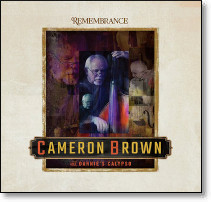
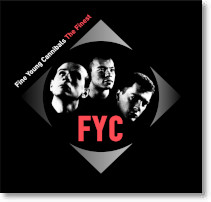
Saturday, October 3, 2026 Music Week
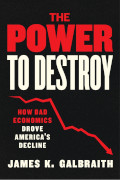
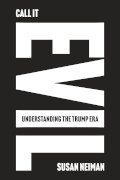
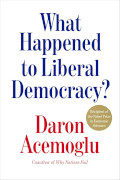
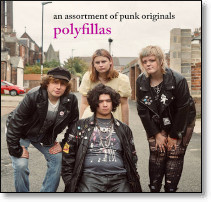
October archive (in progress). Music: Current count 46680 [46640] rated (+40), 31 [25] unrated +6). Advance Music Week appeared October 3 on Substack as Music Week (10:1). It is also archived here. My cutoff was done before the Substack post, but the introduction is revised/rewritten. September in Wichita is usually hot, and this one was hotter for longer than any I can recall. The heat finally broke last week, so the coming of October wasn't such a surprise. But very little of what I imagined doing in September got done, which leads me to the apprehension that October won't be any more fruitful. Take this past week, straddling the two months, for instance. I started the week figuring I should do the minimum effort to close out Loose Tabs, which I finally did on Sept. 30, with 16414 words. As I had, in the meantime, neglected Substack, I figured the least I could do was to write up a short overview, which took two more days. That pushed my cutoff back to Friday evening, this advance synopsis to Saturday, and the full report? Here it is. While I wound up listening to quite a lot of music last week (40 albums), I didn't write much about most of them, and struggled to pick out six for the advance. (My original plan was to do 6-8 albums, but I've often wound up with 9. I think this is the first time I've settled on six. And two of the A− albums were promoted at the last minute, although they struck me as likely contenders from the first hearing.) Some of the records below were left over from Christgau's Consumer Guide. More were left over from working off the Brad Luen checklists. While I haven't checked everything off, I've pretty much hit my limit there. I also sent in a ballot for Brad Luen's 1996 poll. I wasn't keeping annual lists then, but I did have a 1996 list that I must have hacked together later (judging from the formatting, around 2005). Once I decided to vote, I did some due diligence and consulted my database for 1996 albums. I compiled them into a much larger updated list, with 68 A-listed new music albums, and 91 old music compilations. That ratio's probably typical for me in the 1990s: that was a golden decade for reissues, as the industry was urging you to replace all your old vinyl with shiny overpriced discs. I probably bought more new music in the 1990s than in the 1980s, but much less than in the 1970s, when I was just starting out. Sure, I blamed my turn away from new music on grunge and gangsta, but I was also looking for a much better understanding of the past. To that end, I scoured through record guides, compiled lists, and went shopping — mostly in the bargain used piles. I was obsessive enough at both that when Michael Tatum offered to publish a column by me, my choice was Recycled Goods. I might also note that earlier, back in 1996 in fact, Robert Christgau asked me to review Rhino's jazz anthologies, in a piece the Village Voice published as Jazz for Dummies. It still offers a fair sense of where I was at as a fledgling jazz fan in 1996, including the now quaint line, "some 900 CDs later, I'm still learning new things." Well over 9000 CDs later, I worry that I've finally entered the phase of just coasting, but this week's old music (and not just the ultra-obscure Jon Waine) is mostly still new to me. Plans for October: try to write up that Israel-genocide essay; add some significant detail to the "Weird" book outline; do the groundwork for the Francis Davis Jazz Critics Poll, including at least some rough scaffolding for his future website; sign up for at least one AI tool; clean up some things around the house, including an initial stab at filling up and emptying the recycling kiosk; make a birthday dinner (I'm thinking I'll finally try my hand at Italian, but ingredients are harder to find around here than my recent stabs at Burmese and Indonesian, and I see other problems with selection and staging, so this could get tricky). But the only thing on that list I'm actually looking forward to is the cooking, which I've done far too little of recently. By the way, I just finished reading Susan Neiman's Call It Evil: Understanding the Trump Era. I may have some minor quibbles, but she's very clear on the need to base one's politics on ethnics and to speak of it in moral terms. The book may already have had some effect in how I approached stories in Loose Tabs. I admit I was so turned off by how GW Bush used "evil" — he meant someone who could only be dealt with by killing — that I gave up on using the word. I now see my mistake as his clever ruse, as his use is precisely what evil means. It's no coincidence that the best book of recent American history is Kurt Andersen's Evil Geniuses: The Unmaking of America: A Recent History (2020). By the way, there is not a lot of practical difference between Neiman's book and Daron Acemoglu's What Happened to Liberal Democracy?, but Neiman argues for socialism (while disavowing communism and/or marxism), while Acemoglu tries to fashion something similar out of liberalism, calling his version "working-class liberalism." Both labels are tarnished, both by their enemies and by their adherents. On the other hand, it's hard to speak of something until you give it a name, so we're likely to be struggling with this for some while. Next on my "nightstand" is James K Galbraith's The Power to Destroy: How Bad Economics Drove America's Decline. Galbraith's books, The Predator State: How Conservatives Abandoned the Free Market and Why Liberals Should Too (2008) and The End of Normal: The Great Crisis and the Future of Growth (2014), are among the best books I've ever read on the politics of economics. New records reviewed this week: 1-800-Mikey: In Yun (2026, Goner): Australian lo-fi bedroom pop group, principally Michael Barker, fourth album since 2022. B+(*) [bc] RJ Chesney: A Southern Man (2026, Man of Straw): Singer-songwriter born in Macon, raised in Biloxi, figures he knows better than others what makes a Southern Man, among which he counts Johnny Cash, Jimmy Carter, and MLK. B+(**) [sp] Mike Dana Jazz Orchestra: Farther (Still) (2025 [2026], Origin): Guitarist, studied at Berklee, taught at Fresno City College (1990-2018), since 2015 has been involved with Jazz Education Abroad, teaching in Lebanon and elsewhere. Has some reputation as a composer, but this appears to be his first album as leader. Big band, a bit short on brass, with two (of five) sax slots given to oboe and bassoon, but "special guests" added for solos: trumpeters Aaron Janik and Ingrid Jensen; saxophonists Eric Marienthal, Bob Mintzer and Tim Ries. B+(*) [cd] Defcee & Steel Tipped Dove: We Will Be Brief (2026, Fused Arrow): Chicago rapper Adam Levin, several albums since 2018, with producer Joseph Fusaro. Brief indeed: 12 songs, 28:24. But packed with ideas, quips, and deft beats. A− [bc] Daniel DeLorenzo: Can You Not (2026, self-released): Guitarist, has several albums on Bandcamp and Spotify since 2017, but I can't find a Discogs listing. Trio with bass (Theous Jones) and drums (Casey Toll). Seven songs, originals plus a noise-laced Schumann, 27:57. B+(**) [cd] Dinosaur Jr.: Near There (2026, Jagjaguwar): Indie rock band, appeared on SST in the 1980s, this their 13th studio album, I was never much impressed by them, although I did like one J. Mascis solo album (Several Shades of Why), and one of Lou Barlow's Sebadoh albums (Barksdale). B+(*) [sp] FaithNYC: Love Is a Wish Away (2024, Creation Youth): Singer-songwriter Felice Rosser, from Detroit, old enough to recall the 1967 riots, not sure when she moved to New York, but she released an album as Faith in 1997. Plays bass and sings, with Fin Hunt (drums) and Justin Adams (guitar/percussion/keyboards). With notions of funk and punk and dub for context, something that is not like anything else. B+(**) [sp] Diego Figuerido: Horse Blues (2026, Arbors): Brazilian guitarist, quite a few albums since 2005, first appeared on this retro-swing label in a 2019 duo with Ken Peplowski, and has been a regular since then. With his brother Tacio Figueiredo on bass, plus keyboards (Gi Reis), harmonica (Uira Cabral), and drums (Anderson Matos). Sophisticated easy listening. B+(*) [sp] Chad Fowler/Eri Yamamoto: Polkadots & Moonbeams (2024 [2026], Mahakala Music): Duets, alto sax/flute and piano, improv pieces, aside from a start with one Fowler wrote, and the title song at the end. B+(**) [bc] Shelley Hirsch/Christian Weber/Alfred Vogel: Vanish (2024 [2026], Boomslang): Composer/vocalist/performance artist (b. 1952), a dozen albums and many side-credits since 1985, backed here by bass and drums. B+(**) [sp] Katseye: Wild (2026, HYBE/Geffen, EP): "Global girl group," originally six singer-dancers from four countries but based in Los Angeles, modeled on K-pop — where HYBE is a big label, accounting for their initial sales advantage in South Korea. Third EP, down to five on the cover, but just four performed on their recent SNL feature. Five songs, 13:37, three released as singles so far ("Animal" the best). B+(**) [sp] Azar Lawrence: Turn the Music Up (2026, Trazar): Tenor saxophonist (also soprano), 1974 debut was an especially strong album, faded away in the 1980s but came back strong in 2007. Returns to his early songs here, pushing the "spiritual jazz" dimensions, even including "The Creator Has a Master Plan." B+(**) [cd] Carla Marciano: Daydreaming: My Beloved Father Giovanni (2025 [2026], Challenge): Italian alto/sopranino saxophonist, from Salerno, several albums since Trane's Groove in 2002, an influence, backed by piano-bass-drums, supplemented by string orchestra on several tracks. B+(**) [cd] Branford Marsalis and Dianne Reeves: Dedicated to You (2026, Blue Note): Presented as a John Coltrane tribute, the idea is to have Reeves sing the six songs from 1963's ballad album, John Coltrane and Johnny Hartman, backed by the saxophonist and his quartet: Joey Calderazzo (piano), Eric Revis (bass), and Justin Faulkner (drums), who add instrumentals, three as bonus tracks. The Coltrane/Hartman album has long struck me as one that should be great but isn't — although Coltrane's Ballads, from the same year, is so sublime you have to blame Hartman. Reeves is a superb singer, but that doesn't seem to help much here. Most modern saxophonists are indebted to Coltrane, and few more so than Marsalis. But why aim for his most anodyne gestures? B+(*) [sp] Gretechen Parlato: The Wise Ones (2026, Edition): Jazz singer, from Los Angeles, father is a well-known bassist, and grandfather was a trumpet player; eighth album since 2005, writes some and also draws originals from Alan Hampton (bass) and Josh Mease (guitar), so the closest thing to a standard is a Stevie Wonder song arranged by Robert Glasper (one of three pianists). Rather pretty. B+(*) [sp] Houston Person: From the Heart (2026, Arbors): Mainstream tenor saxophonist, started with Prestige in 1966, where he also did A&R, continuing with Joe Fields through the Muse and HighNote labels, so it's a surprise to see him show up on a different label (especially one that's been relatively quiet of late). With Eddie Allen (trumpet), John Di Martino (piano), James Chirillo (guitar), Sean Smith (bass), Vincent Ector (drums). Standards, nicely done, easy. B+(***) [sp] Polyfillas: An Assortment of Punk Originals (2026, Dangerous): Punk band from Sunderland, in far northeast England (just southeast of Newcastle), principally Ava and Jamie Dangerous. First album, an EP (whence "Rude Boys of England") and several singles. Title suggests a formal exercise, more a love letter to history than the upswell of primal rage that drove punk in the 1970s. But now I'm old enough I not only don't mind, I applaud. A− [cd] Julian Davis Reid and Circle of Trust: Mercy We Need (2026, Too Lost): Pianist from Chicago, also a theologian, has a previous album with this group, side projects like the JuJu Exchange, side credits with Isaiah Collier and Jamila Woods. Five songs feature Tramaine Parker (vocals), four Lenard Simpson (alto sax, one both). My appetite for the gospel vocals is pretty limited. B+(*) [cd] Andy Sheppard: Salt Catchers (2025 [2026], ECM): Tenor saxophonist (also soprano), albums since 1987, especially with Carla Bley. Trio with Rita Marcotulli (piano) and Michel Benita (bass). B+(*) [sp] Bria Skonberg: Indigo (2025 [2026], Cellar): Canadian trumpet player and singer, ninth album since 2009. One original, the rest standards, from "Mood Indigo" through Sting, the most striking a Jacques Brel-Rod McKuen song, "If You Go Away." B+(***) [sp] Skyzoo & Apollo Brown: Luxury Tax (2026, First Generation Rich/Escapism): Underground rapper Gregory Skyler Taylor, from New York, couple dozen albums since 2006, including a previous with Detroit producer Brown. B+(**) [sp] Wadada Leo Smith: Constellations and Hemispheres (2017-22 [2025], Burning Ambulance Music): Trumpet player, five pieces (59:10) recorded over several years, the first track with piano (Sylvie Courvoisier) and drums (Marcus Gilmore), the others with more players, peaking out at 10 for the 22:05 centerpiece. B+(***) [sp] Tinashe: Popstar (2026, Atlantic/Nice Life/Tinashe Music): Pop singer-songwriter, last name Kachingwe, father from Zimbabwe, born in Kentucky, grew up in Los Angeles, eighth album since 2014. B+(***) [sp] Tres Hongos: More Chips (2024 [2026], Relative Pitch): Trio of Jacob Wick (trumpet), Marc Riordan (piano), and Frank Rosaly (drums), third album, widely spaced since 2012. B+(**) [sp] Lex Walton: Ultimate Love Forever (2026, Sub Pop, EP): Singer-songwriter, some kind of noise-pop, cites Les Rallizes Dénudés as inspiration, Wikipedia cites a discography going back to 2018 but this is probably the first one with any real distribution, a short one at that (7 songs, 19:50), but gets your attention. B+(**) [sp] Recent reissues, compilations, and vault discoveries: Cameron Brown and Dannie's Calypso: Remembrance (2011 [2026], Sunnyside): Bassist, b. 1945 in Detroit, first albums in his Discogs list were: Massimo Urbani, Beaver Harris, and George Adams/Don Pullen Quartet; although his first side credits were with George Russell, and one quickly notices Archie Shepp, Mal Waldron, Dewey Redman, Dannie Richmond, and Sheila Jordan. The band name here is a tribute to Richmond, and song titles name Russell, Jordan, and Don Cherry, and the songs include material by Richmond, Redman, Cherry, and Jobim. Quintet: Lisa Parrott (alto/soprano/baritone sax), Jason Rigby (tenor/soprano sax), Russ Johnson (trumpet), and Tony Jefferson (drums). That roster suggests serious postbop, but the reality is raucous freebop, with a nod toward calypso. A− [sp] Jon Waine: Second Skin (1975-1983) (1975-83 [2026], Corbett vs. Dempsey): New Jersey experimental/post-punk band, principally Brian McCormack (guitar) and William Pope (vocals, aka Pope.L, who "went on to have an illustrious career as a conceptual visual artist"). They produced one single in 1982 (per Discogs, "Do the Tic/Boogie Down the Congo," now "impossibly rare"). This gathers up 30 recordings, putting the more mature 1980-83 material on the first CD, with home recordings from 1975-81 filling out a second CD. Interesting sound here, some novel kind of fractured no wave funk, the closest analogue Pere Ubu (with nothing quite like David Thomas or Peter Laughner). This could have been edited down, but history is inevitably messy. B+(***) [bc] John Larkin: Before Scatman: Early Sessions (1978 [2026], Iceberg, EP): Jazz pianist/singer (1942-99), grew up with a stuttering problem, which he overcame first by playing piano, then by scatting. He recorded five albums 1986-99, most as Scatman John. These four songs (23:13) came earlier. Surprisingly intense. B+(*) [sp] Old music: Lola Beltrán: Voz E Inspiracion (1975, Peerless): Mexican singer and actress (1932-96), specialized in ranchera and huapango music, many albums from 1954 on. Not hard to identify this is specifically (dramatically, even operatically) Mexican. B+(**) [yt] Daniel DeLorenzo: Trio (2017, self-released): Guitarist, from North Carolina, first album, with Theous Jones (drums) and Able Jones (organ), plus extra guitar on two tracks (Doug Sours). Seven jazz standards, from "Work Song" to "Straight No Chaser," 38:02. B+(**) [bc] Fine Young Cannibals: The Finest (1985-89 [1996], MCA): British ska-pop band, founded by David Steele and Andy Cox from the Beat, with Roland Gift as the singer (who also had a star turn in the Stephen Frears/Hanif Kureishi movie Sammy & Rosie Get Laid). They released two albums, reduced to 10 songs here, plus a soundtrack cut and three previously unreleaseds for bait. A− [sp] Fine Young Cannibals: The Finest: The Rare and the Remixed (1985-89 [1996], MCA): Second disc adds three extra songs and five remixes, total 43:07, nothing essential or important or unlistenable. Just the extras, without trying to factor in the best-of: B+(*) [sp] F.S.K.: International (1995 [1996], Sub-Up): German group, founded 1980 as Freiwillige Selbstkontrolle ("voluntary self-control"), went with initials around 1989. Kind of a folk-rock grounding, but more eclectic, perhaps even whimsical (not that it's easy to tell). B+(**) [sp] Violeta Parra: Las Últimas Composiciones De Violeta Parra (1966, RCA): Chilean folk singer-songwriter (1917-67), collected songs from all over, but also wrote these, recorded simply with her guitar and percussion. B+(***) [sp] Astor Piazzolla: Sinfonia De Tango (1955, Disques Vogue, EP): Argentinian tango composer, first album, 10-inches, 8 songs, 23:04, further credited to "su bandoneon y sus cuerdas" (strings, from Orchestre National De L'Opéra De Paris, along with Lalo Schifrin on piano. B+(**) [sp] Scatman John: Scatman's World (1995, RCA): John Larkin, recorded a couple of previous albums under his own name, turned his stutter habit into a unique mix of rap, scat, and jaunty pop schtick. This album turned into a novelty hit, especially in Japan (where it sold 1.5 million). Features a utopian anthem, "World of Scatland." B+(*) [sp] Idrissa Soumaoro & L'Eclipse De L'I.J.A.: Le Tioko-Tioko (1978, Eterna): From Mali, seems prototypical. B+(**) [sp] Zuhura Swaleh/Matano Juma & Orchestra Morning Star: Karama Zijiri (1973, Pwani): Originally a cassette, split between the two singers, ladies first. While the band could be backing both, Juma's singles credit it, and my rough impression is that he gets the more polished support. Swaleh was born in 1947 in Nairobi, later moved to Mombasa, on the coast with a long history of Arab trade, where the local style is called taarab, and the influence is decidedly Arabic. (The Zanzibara series includes a volume subtitled L'âge d'or du taarab de Mombasa, with several recordings each — Swaleh's are credited to Zuhura & Party or Zuhura & Zein Musical Party; they also appear on Zanzibara 10: First Modern, Taarab Vibes From Mombasa & Tanga.) I know less about Juma, but he is also associated with taarab. B+(**) [yt] Caetano Veloso: Bicho (1977, Philips): Brazilian singer-songwriter (b. 1942), one of the founders of the Tropicália movement in the late 1960s, and a major figure ever since, but someone I've sampled very lightly over the years. B+(***) [sp] Yellow Magic Orchestra: Yellow Magic Orchestra (1978, Alfa): Japanese synthpop group, originally a one-shot project of bassist Haruomi Hosono, but developed into a band with drummer Yukihiro Takahashi and keyboard player Ryuichi Sakamoto. Nice beats album, but vocals eventually seep in, and clutter increases. B+(*) [sp] Yellow Magic Orchestra: Solid State Survivor (1979, Alfa): Japanese electropop group, debut 1978, second album, continued until 1984, then reformed briefly in 1992, 2002, and 2007: Haruomi Hosono (bass/keyboards), Yukihiro Takahashi (vocals/drums), and Ryuichi Sakamoto (keyboards), the best known for his solo career (d. 2023). Opens with instrumentals, lighter and quirkier than Kraftwerk or even Can, then breaks the vocal ice with an amusing "Day Tripper." B+(**) [sp] Unpacking: Found in the mail last week:
|