|
An occasional blog about populist politics and popular music, not necessarily at the same time. LinksLocal Links Social Media My Other Websites Music Politics Others Networking Music DatabaseArtist Search: Website SearchGoogle: Recent Reading
Music DatabaseArtist Search: Website SearchGoogle: |
Friday, October 16, 2026 Music Week
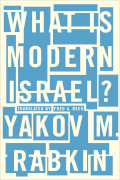
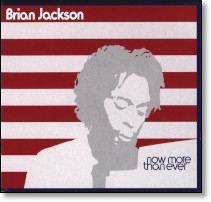
October archive (in progress). Music: Current count 46742 [46721] rated (+21), 24 [24] unrated +0). Advance Music Week appeared October 16 on Substack as Music Week (10:3). It is also archived here. My cutoff was done before the Substack post, but the introduction is revised/rewritten. This has been a very rough week for me. Sacroilliac problems flared up, a couple of times. I've been reassured that they go away, and so far they have, but they sap all of one's energy and patience until they do. I've also been working on my "what to do about Israel" essay, and have blown my self-imposed deadline of getting it done this week. I'm a good week away from having anything presentable, although at the rate I've managed over the last couple weeks, it may be two or three. One consequence is that many days I've only felt like playing Coleman Hawkins and Ben Webster, who still manage to lift me out of the deepest funks. The rated count for this week is 21. That doesn't count the Go-Betweens, which I added late, hoping to fill my image gallery out (3 looks better than 2), but got cold feet on. There's an element of 1970s nostalgia in my top picks. Julius Eastman composed "Gay Guerrilla" in 1979. Most of Brian Jackson's songs not only appeared in the 1970s. On NOEL, I wrote: "but were topical in ways that still seem meaningful, but the closet hope and surface pessimism has turned deeply cynical: the revolution will be televised, but it won't change anything." This is too convoluted for me to even try to straighten out. The album is partly a Gil Scott-Heron Greatest Hits, except that the wording has shifted subtly to reflect the current moment (most notably, Black Thought's narration of "The Revolution Will Not Be Televised"). However, the music is still rooted in the 1970s, which gives it an optimistic bounce one rarely hears in neo-soul, trip-hop, or hip-hop these days. As for "revolution," age and bitter experience has soured me. I have a lot coming up next week, starting with a showing of Matty Wishnow's Robert Christgau documentary, The Last Critic in Wichita at the Tallgrass Film Festival, and a talk by Phyllis Bennis at Wichita's Global Learning Center. I also see that Bennis has a book I was unaware of, published in 2025: Understanding Palestine and Israel. Her earlier Understanding the Palestinian-Israeli Conflict: A Primer is one of the best general introductions to the subject. I know her a little bit, and have tremendous respect for her insights, although I have serious doubts that her hopes of organizing around the South African precedent will bear fruit. Both events are likely to stimulate thoughts, but we'll see about writing. I alluded to "much more afoot." Main thing from my perspective is that I'll be doing some cooking, which I am very much looking forward to (assuming, of course, that my body doesn't fail me). I'll write more on this (at least in the notebook, and possibly on Facebook, where my posts are generally public, and can be followed without declaring friendship). I suppose I should note that I've been banned from X, for what they've called "inauthentic behaviors." All I've done there recently has been to post short links to my blog and substack posts. But I've gotten so few views there that it's hardly been worth the trouble. I've asked for a copy of my data, but no response so far. While I am still on Bluesky, it's more important than ever (well, at least for me) to subscribe to Notes on Everyday Life. What's unclear at present is whether I will ever feel like engaging regularly with a Twitter-like social media service. They all feel like yelling at a brick wall. I've gotten a couple of enquiries in the last week regarding the Francis Davis Jazz Critics Poll, which is to say I'm already rapidly falling behind my job there. I figure it will be my main focus starting in early November, but fear I won't be able to get to it until then, and will wind up repeating the same half-assed performance of the last several years. New records reviewed this week: 300SkullsAndCounting/Jenny Sparks: This Is Spa Town! (2026, XL, EP): British artist, maybe Hal Hewetson, has a self-released 2025 album, some more stuff on Bandcamp. Discogs lists the album style as "screamo, chiptune." Sparks seems to be a bassline producer, not evident in their video. 9 songs, 22:23. Normally I hate glitch pop, but this at least has a pretty good beat. B+(***) [sp] Adéla: Prima (2026, Capitol): Pop singer-songwriter, from Slovakia, last name Jergová, studied ballet in Moscow, danced in Vienna and London, moved to Los Angeles, all by age 19, when she got drummed out of HYBE's Dream Academy talent context (the winners became Katseye). First album after an EP, starts hot, goes through the various moves, most working well enough, few spectacular. B+(**) [sp] Alexis Cole: Taking My Seat: A Musical Inheritance (2026, Tiger Turn): Standards singer and pianist, a dozen-plus albums since 1999, sings familiar tunes quite credibly, backed by bass (David Finck) and drums (Kenny Hassler). B+(**) [cd] [11-09] Julieta Eugenio: Mi Boathouse (2026, Dox): Tenor saxophonist, from Argentina, based in New York, third album, with Glenn Zaleski (piano), Matt Dwonszyk (bass), and Jonathan Barber (drums). B+(**) [sp] Yosef Gutman: Perfect Traveler (2026, Soul Song): Bassist, born in South Africa, studied at Berklee, based in Jerusalem, has several albums. Started as duets with pianist Yonathan Avishai, adding in woodwinds (Gilad Ronen) and drums (Daniel Dor), with some spoken word narration I didn't catch. Nice melodies, with airs from Morocco to Yemen. B+(**) [sp] The Hanged One: Limbo (2026, Relative Pitch): Tenor saxophonist Camila Nebbia, from Argentina, based in Berlin, leads a sextet, which opens very loud. With cello (Julia Bilat), guitar (Arne Braun), electronics (Andres Marino), bass (Vinicius Cajado), and drums (Lukas Akintaya). Varies a bit after the first piece. B+(**) [bc] Nathan Hanson/Steve Hirsh: Memory Is Subjective (2025 [2026], Mahakala Music): Saxophone (tenor/soprano) and drums duo. Hanson has several albums and more credits going back to 1995. Hirsh is a more recent regular on the label. B+(**) [bc] Marina Herlop: Dja Dja (2026, self-released): Catalan pianist, sings some, her music tends to be classified as electronic, fifth album since 2018. Some interesting bits. B+(*) [sp] Brian Jackson: Now More Than Ever (2026, BBE): Composer, keyboardist, sings some (but delegates most vocals), best known for his co-credits with Gil Scott-Heron (1974-80), has a few solo albums since 2000. Recycles several well known Scott-Heron pieces, including an updated "The Revolution Will Not Be Televised," while adding more of his most agreeable funk. I don't remember the 1970s as being as glum as "Winter in America," but 45 years after Reagan's false springtime, this serves as a wake up. A− [sp] Shai Jaschek: Portrait (2026, Jazz Bird): Israeli-born guitarist, based in New York, second album, trio with bass (Joe Martin) and drums (Kush Abadey). B+(**) [sp] Matt Lavelle & the 12 Houses: Hymn to the Universe (2022 [2026], Mahakala Music): Leader, who had developed distinctive styles on trumpet and bass clarinet, opts for pocket trumpet and E-flat piccolo clarinet here. Group is a big band built around Zodiac Sax Quartet (including the late Clare Daly), with the brass giving way for flutes and a bassoon, and viola instead of bass. "No More Hate" breaks out into a chant. B+(***) [bc] William Parker: Waltz for Gregory (2023 [2026], AUM Fidelity): The bassist, but just composer/producer here (Ken Filiano fills in on bass) needs no introduction, but Gregory is Hines (actor, singer, but most notably here tap dancer). Title cut (14:27) has Melissa Almaguer tapping. Andrea Wolper sings Parker's lyrics, which mean well but don't always sit easy on the music, no matter how skilled her contortions. With Bruce Barth (piano), Jim Ferraiuolo (oboe), Steve Swell (trombone, terrific), and Kevin Murray (drums). B+(***) [cd] Jason Robinson: Blue Salience: For Yusef Lateef (2025 [2026], Circumvention Music, 2CD): Saxophonist, albums since 1998, some quite ambitious, including this big band he calls his Janus Orchestra. He plays some tenor sax and alto flute here, but his main credit is percussion, followed by a long list including cuica, clavinet, and synthesizer. This doesn't particularly work for me, perhaps because I've never had a real sense of Lateef, or maybe it just takes too much concentration to sort out what's going on. Whatever it is, there's sure a lot of it. B+(*) [cd] [10-29] Sha Ray and DJ Haram: Critical Thot (2026, Backwoodz Studioz): Bay area rapper, first album (9 songs, 24:37; Bandcamp adds three remixes), with Philadelphia producer Zubeyda Muzeyyen. Dense, seems close to breaking through but rarely does. B+(*) [sp] Nirosta Steel: My Skyscraper (2026, Ulyssa): Stevan Hall, from Scotland (b. 1957), worked with Arthur Russell in New York in the 1980s, his own discography only appearing after 2012, with this his third album, a panorama of off-kilter disco-funk artifacts. B+(*) [sp] Fumi Tomita: Yokai: Songs of the Japanese Supernatural (2025 [2026], OA2): Japanese bassist, teaches in Massachusetts, has several albums since 2011, original pieces here, with Carl Clements (saxes/flute), Jason Ennis (guitar), and Gary Fieldman (drums). B+(**) [cd] [10-16] Wild Up: Julius Eastman, Vol. 5: Gay Guerilla (2026, New Amsterdam): Self-described "band," a 20-piece orchestra by my count, led and conducted by Christopher Rountree, which I figure as 8 strings, 8 horns (trumpet and french horn for brass), 2 pianos, 2 percussion. They did various projects starting in 2014, but latched onto Eastman (1940-90) in 2021 with Femenine, and return again with one of the composer's more famous works (8 parts, 28:49). An exceptional piece of music. A− [sp] Wishy: Nature's Pill (2026, Winspear): Indie rock group from Indiana. Second album, Noted the VU quote. Guitar jangle, seems possible that their name is a tribute to Wussy, not that I care. B [sp] Recent reissues, compilations, and vault discoveries: The Go-Betweens: Fountains of Youth: Live at the Town and Country Club, London, 10th May 1987 (1987 [2026], Beggars Banquet): Australian band, two major singer-songwriters, Grant McLennan (1958-2006) and Robert Forster (b. 1957), both with notable solo careers after 1990, although there were more group albums 2000-05. The group's early work is definitively compiled in 1978-1990, but this live set, which previews a bit of their penultimate Tallulah, works nearly as well. B+(***) [sp] Coleman Hawkins and Göran Lindbergs Trio: Bean and the Swedish Boys (1963 [2026], Vax): The legendary saxophonist, with a local rhythm section at the Golden Circle in Stockholm: Göran Lindberg (piano), Kurt Lindgren (bass), and Rune Carlsson (drums). B+(***) [sp] Old music: Coleman Hawkins: Coleman Hawkins and Confrères (1958 [1960], Verve): Original LP ran 5 tracks, 34:58: one track with Ben Webster, Herb Ellis, and Oscar Peterson's Trio, plus four more with Roy Eldridge, Hank Jones, George Duvivier and Mickey Sheen. [1988 CD reissue adds two bonus tracks, not on current stream.] B+(*) [sp] Freddie Jackson: Rock Me Tonight (1985, Capitol): Soul singer (1956-2026), first album, first four topped the R&B charts, their pop chart success declining from 10 to 59. "Mellow groove, mellow sound. Just lie back and enjoy it." B+(*) [sp] New York Ska-Jazz Ensemble: Collection 1995-2004 (1995-2004 [2005], Megalith): Long-running group (latest LP 2022), concept is to take jazz standards (like "Harlem Nocturne" and "Haitian Fight Song") and play ska tricks on them. Starts with four tracks from their 1995 debut, then two more from 1996, after which I have trouble tracking the sources. Some live tracks. Some vocals (including "Teardrops From My Eyes"). B+(**) [sp] Wild Up: Julius Eastman, Vol. 4: The Holy Presence (2024, New Amsterdam): "Digs ever deeper into Eastman's oeuvre, performing lesser-known works that represent a mystically charged and spiritually reflective vein of his dynamic catalog." Opens with a vocal piece, "Our Father," sung by Davone Tines, followed by a piano piece with Richard Valitutto, then on to the main event, "The Holy Presence of Joan d'Arc" (20:09, following a 10:07 "Prelude" featuring Tines, too much of a "classical singer" for me). Featured on the longer work is cellist Seth Parker Woods. B+(*) [sp] Unpacking: Found in the mail last week:
|