|
An occasional blog about populist politics and popular music, not necessarily at the same time. LinksLocal Links Social Media My Other Websites Music Politics Others Networking Music DatabaseArtist Search: Website SearchGoogle: Recent Reading
Music DatabaseArtist Search: Website SearchGoogle: |
Blog Entries [550 - 559]Monday, May 25, 2020 Music Week
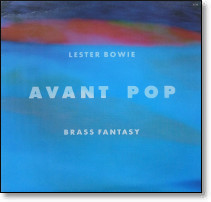
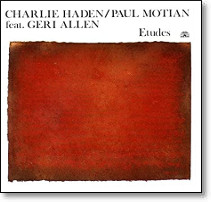
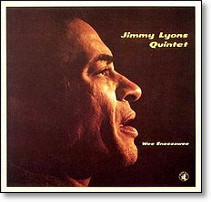
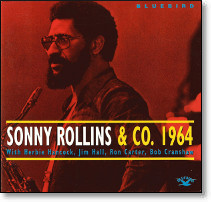
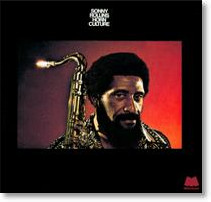
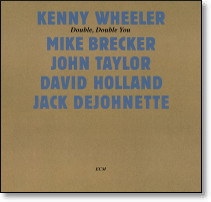
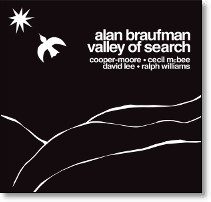
Music: Current count 33333 [33277] rated (+56), 209 [214] unrated (-5). Played a lot of old jazz last week. I mostly started with albums that were nominated by JazzTimes in reader polls to select the best albums of the 1970s and 1980s, but once I got into an artist's oeuvre I let myself wander. A couple of these albums were singled out by Chris Monsen as among the ten best of the 1980s, and they fared considerably better than average. I was particularly on the lookout for ECM releases, as they've only recently become available on Napster. Dozens more records on the list, so I may stick with this for a while. I'm not giving up on new records -- more like pacing myself. I am still maintaining my tracking and metacritic files. They're just not inspiring me to check out a lot of albums at the moment. Rated count includes a few records I missed counting in previous weeks, but mostly reflects that I rarely gave records a second play (especially old jazz). More exposure could lift a few of them -- especially among the Sonny Rollins releases, given that I have The Complete RCA Victor Recordings (1962-64, 6CD) at A-, and Gary Giddins' expert selection from the Milestones (1972-2000), with one song per album, Silver City, at A+. This is the last Monday of May, so Streamnotes (May, 2020) is wrapped up. I noticed that I had missed doing the indexing for April, so fixed that. I still haven't done the indexing for the last two Book Roundups, so need to work on that. I also have enough Questions to start trying to write up some answers. Should have some of them by the end of the week. PS: Thought I had got through a week with no major jazz or pop deaths to report, but found out about Jimmy Cobb (91) just after I posted. Also missed Mory Kanté (70). New records reviewed this week: The Dream Syndicate: The Uiverse Inside (2020, Down There): From Los Angeles, 1980s band, regarded as neo-psychedelia, broke up in 1989 with Steve Wynn going on to a moderately successful singer-songwriter career. Regrouped in 2012, third album since. Especially fond of soaring vamps, which can run as log as the 20:27 opener. B+(*) Steve Earle: Ghosts of West Virginia (2020, New West): Coal mining songs for a Coal Country documentary, 10 of them but only runs 29:46. Several are memorable, not least the one Eleanor Whitmore sings. B+(***) Joe Harrison +18: America at War (2019 [2020], Sunnyside): Noting that the US has been engaged in war "nearly every year" since his birth in 1957 (I would have said 1941), he offers this "musical meditation on a lifetime of ruinous armed conflicts conducted by the United States." Big band, conducted by Matt Holman. Some remarkable passages here: big, bold, more than a little discomfiting. B+(***) Alain Mallet: Mutt Slang II: A Wake of Sorrows Engulfed in Rage (2018 [2020], Origin): Pianist, from France, studied at Berklee and now teaches there, Google describes him as "Jonatha Brooke's ex-husband" (on the other hand, Brooke has a substantial Wikipedia page that doesn't mention him). Has a previous album, Mutt Slang. Long album, leans Brazilian. B+(*) Ted Moore Trio: The Natural Order of Things (2019 [2020], Origin): Drummer, director of Jazz Department at UC Berkeley, graduated from Eastman 1973, not sure if he has anything else under his own name, but he was part of Paul Winter's groups, and led a group called Brasilia. Wrote 7 (of 8) tracks here, arranged the other. With Phil Markowitz on piano and Kai Eckhardt on bass. B+(**) Shelly Rudolph: The Way We Love (2010-17 [2020], OA2): Singer-songwriter from Portland, OR; website shows five albums. Nine songs, short at 30:40, credits scattered aside from David Darling on cello, with four pianists. My first impression was overwrought, but a closer listen reveals a distinctive voice. Nice cover of "Stand by Me." B [cd] Recent reissues, compilations, and vault discoveries: Apala: Apala Groups in Nigeria 1967-70 (1967-70 [2020], Soul Jazz): A Yoruba music style, originated in the 1930s, based on talking drums, thumb piano, percussion, originally rooted in religion -- strikes me as a parallel to nyahbinghi in Jamaica, but harder to understand. Haruna Ishola is the biggest star, responsible for 5 (of 18) tracks here. B+(*) Eddie Russ: Fresh Out (1974 [2019], Soul Jazz): Keyboard player from Pittsburgh (1940-96), recorded three albums 1974-78, this his first. Mostly groove, with Larry Nozero (flute, soprano sax), guitar, bass, drums, extra percussion, mixing in anonymous strings and horns. Three originals, covers from Les McCann, Chuck Mangione, and Stevie Wonder. B Old music: Muhal Richard Abrams: Young at Heart/Wise in Time (1969 [1996], Delmark): Pianist from Chicago, AACM founder, second album, two long pieces: a 29:20 piano solo, and a 21:52 quintet track, with Leo Smith (trumpet), Henry Threadgill (alto sax), bass, and drums -- by far the more exciting piece. Not sure if the original LP runs that long. B+(**) Muhal Richard Abrams: Think All, Focus One (1994 [1995], Black Saint): Plays synthesizer as well as piano, leads a septet with most of the options of a big band: trumpet, trombone, tenor sax/bass clarinet, guitar, bass, drums -- not big names but each has a role. B+(***) Muhal Richard Abrams: Song for All (1995 [1997], Black Saint): Piano/synthesizer, leading a septet -- trumpet (Eddie Allen), trombone (Craig Harris), saxes (Aaron Stewart), vibes, bass, drums, with voice (Richards Abrams) to start. B+(***) George Adams: Sound Suggestions (1979, ECM): Tenor saxophonist, joined Charles Mingus in 1973 and played on his last great albums (along with Don Pullen and Dannie Richmond -- from 1979 members of the Adams/Pullen Quartet). With Kenny Wheeler (trumpet), Heinz Sauer (tenor sax), Richie Beirach (piano), Dave Holland (bass), and Jack DeJohnette (drums). Wheeler wrote 2 (of 5) songs, vs. 2 by Adams, 1 by Sauer. Only true Adams moment is "Got Someethin' Good for You," a huge blues with his growling vocal and hottest sax. B+(*) George Adams/Don Pullen Quartet: Live at Montmartre (1985 [1986], Timeless): Live shot from Copenhagen, with Cameron Brown (bass) and Dannie Richmond (drums) filling out the Quartet, and John Scofield (guitar) along for the ride (starts with one of his pieces). [Later reissued under Adams' name only. Some good moments here.] B+(**) The Art Ensemble of Chicago: Bap-Tizum (1972 [1973], Atlantic): Cover proclaims "Great Black Music" and "Recorded in performance at the Ann Arbor Blues & Jazz Festival 1972." Long-running group, founded by AACM members in 1968, with Lester Bowie (trumpet), Roscoe Mitchell/Joseph Jarman (reeds), Malachi Favors (bass), and Don Moye (drums), everyone also on percussion, which is what ultimately matters. Other stuff harder to take. B Art Ensemble of Chicago: Nice Guys (1978 [1979], ECM): Group recorded inensely 1969-70, a few more to 1974, then a break until they landed here on ECM. Starts with Lester Bowie's bent reggae "Ja," and ends with a flair. B+(***) Art Ensemble of Chicago: Full Force (1980, ECM): Four pieces, one each by all but Moye, one by everyone. Lives up to title. B+(***) Art Ensemble of Chicago: The Third Decade (1984 [1985], ECM): The number of credited instruments has hit a likely record here. According to Discogs: Lester Bowie (4), Joseph Jarman (19), Roscoe Mitchell (16), Malachi Favors (8), Don Moye (20). B+(**) Tim Berne Sextet: The Ancestors (1983, Soul Note): Alto saxophonist, first album on a label that got any notice. With Mack Goldsbury (soprano/tenor sax), Herb Robertson (trumpets), Ray Anderson (trombone/tuba), Ed Shuller (bass), Paul Motian (drums). Three longish pieces. B+(*) Tim Berne: Mutant Variations (1983 [1984], Soul Note): Quartet with Herb Robertson (trumpet), Ed Schuller (bass), and Paul Motian (drums). Five songs, each with a different concept as he sets and defies expectations. Most impressive for me is "Clear," where the horns run free. B+(***) Arthur Blythe: Blythe Spirit (1981, Columbia): Alto saxophonist, from Los Angeles, part of Horace Tapscott's scene before he landed a major label contract and responded with Lennox Avenue Breakdown, his masterpiece. This is his fourth album for Columbia, midway through a decade tenure. Most tracks have guitar, cello, tuba, and drums. The other two: a resplendent "Misty" with piano-bass-drums (John Hicks, Fred Hopkins, Steve McCall), and a trad gospel with organ-tuba (Amina Claudine Myers, Bob Stewart). B+(***) Lester Bowie's Brass Fantasy: I Only Have Eyes for You (1985, ECM): Trumpet player from St. Louis, member of Art Ensemble of Chicago, first album (of nine) with this group, a nonet with four trumpets, two trombones, French horn (Vincent Chancey) and tuba (Bob Stewart), plus drums. Most impressive at the bookends: the title standard, and a Bowie credit that draws heavily on old gospel. B+(***) Lester Bowie's Brass Fantasy: Avant Pop (1986, ECM): Alternates originals, including one dedicated by Steve Turre to Machito, with pop tunes ("Saving All My Love for You," "Blueberry Hill," "Crazy," "Oh, What a Night"). The covers are fun, but a Bowie credit with its "No Shit" chorus is even more so -- I hesitate to call it an original because it sure sounds like it was cribbed from somewhere. A- Tommy Flanagan: Thelonica (1982 [1983], Enja): Pianist, plays nine Thelonious Monk tunes, with George Mraz (bass) and Art Taylor (drums). B+(**) Charlie Haden/Paul Motian Feat. Geri Allen: Etudes (1987 [1988], Soul Note): Bass-drums-piano trio, the pianist much the junior partner here with one original song ("Dolphy's Dance") vs. three each (although two of Motians were short "Etude" titles), plus covers from Ornette Coleman and Herbie Nichols. Remarkable balance and poise, and when the piano drops out you still get something remarkable. A- [yt] Jimmy Lyons: Other Afternoons (1969 [1979], Affinity): Alto saxophonist, best known for his work with Cecil Taylor from 1961 up to his death in 1986. This, recorded in Paris for BYG, is his first album as a leader -- only one until 1979. Quartet with Lester Bowie (trumpet), Alan Silva (bass), and Andrew Cyrille (drums). B+(**) Jimmy Lyons Quintet: Wee Sneezawee (1983 [1984], Black Saint): Alto saxophonist, best known for his work with Cecil Taylor, in a quintet with Raphe Malik (trumpet), Karen Borca (bassoon), William Parker (bass), and Paul Murphy (drums). Exciting runs from all three horns, but especially Lyons, and you do notice how great the bassist is. A- Jimmy Lyons Quintet: Give It Up (1985, Black Saint): Karen Borca (bassoon) and Paul Murphy (drums) return, this time with Enrico Rava (trumpet) and Jay Oliver (bass). B+(***) Oregon: Oregon (1983, ECM): Jazz/world fusion group formed in Eugene, Oregon in 1971, recorded their early albums for Vanguard (most notably 1973's Music of Another Present Era). Ralph Towner (guitar, but mostly synthesizer here), Paul McCandless (reeds), Glen Moore (bass), Colin Walcott (percussion). B Oregon: Crossing (1984 [1985], ECM): More guitar, a little more upbeat. B+(*) Sonny Rollins: With the Modern Jazz Quartet (1951-53 [1982], Prestige/OJC): Originally on 10-inch albums, compiled into Rollins' first LP in 1956: four tracks as billed from 1953, eight Quartet tracks from 1951 (Kenny Drew, Percy Heath, and Art Blakey), and one earlier track with Miles Davis, Heath, and Roy Haynes. B+(**) Sonny Rollins: Sonny Rollins [Volume 1] (1956 [1957], Blue Note): Not sure when this officially became Volume 1 -- the only thing other than the artist name on the original LP was "blue note 1542," and I've never seen any "Volume 1" artwork, although a 1988 reissue says Volume One on the CD, and most sources even for earlier reissues are explicit. Vol. 2 came out in 1958, and they were reissued together many times. Quintet with Donald Byrd (trumpet), Wynton Kelly (piano), Gene Ramey (bass), and Max Roach (drums) on five songs, a relaxed 40:41. B+(**) Sonny Rollins: Sonny Rollins Volume 2 (1957, Blue Note): With JJ Johnson (trombone), Paul Chambers (bass), Art Blakey (drums), and two pianists listed (Horace Silver and Thelonious Monk, nothing on who plays what but it shouldn't be hard to figure out). Two Rollins originals, two Monk songs, two standards. Feels like three scattered singles, and I'm not sure any of them really belong to Rollins. B+(**) Sonny Rollins: Sonny Rollins Plays (1956-57 [2010], Essential Music Group): LP originally released by Period (probably in 1958), as a "Leonard Feather Presents," only one side (three songs, 19:37) by Rollins (Quintet with Jimmy Cleveland on trombone, Gil Coggins on piano, plus bass and drums), the other by Thad Jones and His Ensemble (with Frank Foster or Frank Wess on tenor sax). Strong period for both artists, though caveat emptor is in order. B+(***) Sonny Rollins Featuring Jim Hall: The Quartets (1962 [1986], RCA Bluebird): Reissue of The Bridge -- Rollins' first record for RCA -- plus two tracks from What's New? All tracks have Hall on guitar, Bob Cranshaw on bass, and most have Ben Riley on drums. B+(***) Sonny Rollins & Don Cherry: Live at the Olympia '63 (1963 [2010], Master Classics): Tenor sax and trumpet, quartet with Henry Grimes (bass) and Billy Higgins (drums), one of several recordings made during a two-month tour of Europe, has appeared on several labels under various titles (e.g., The Complete 1963 Paris Concert, on Gambit). B+(***) Sonny Rollins/Don Cherry Quartet: The Complete 1963 Copenhagen Concert (1963 [2014], Doxy, 2CD): Same group, live set, four days before the Olympia radio shot, five pieces stretched out even more. Sound is a bit dodgy, but the excitement is palpable. B+(**) Sonny Rollins: Live in Tokyo, Japan '63 (1963 [2010], Master Classics): Long takes of "Mack the Knife" and "Oleo" (22:06 and 23:12) with a quintet: Reshid Kmal Ali (trumpet), Paul Bley (piano), Henry Grimes (bass), Ron McCurdy (drums), two short tracks with Betty Carter vocals, and a final "On a Slow Boat to China" with a Japanese pick-up rhythm section. B+(**) Sonny Rollins: Sonny Rollins & Co. 1964 (1964 [1995], RCA Bluebird): Six tracks from The Standard Sonny Rollins (1965), one from Now's the Time (1964), six more not issued at the time. Some trio with bass and drums, three tracks add Jim Hall (guitar), five others Herbie Hancock (piano). That's a formula for a messy collection, but Rollins in one of those grooves he barely needs anyone else. A- Sonny Rollins: Horn Culture (1973, Milestone): Second album for Milestone, his regular label from returning from his hiatus in 1972 up to his definitive This Is What I Do in 2000. With piano (Walter Davis Jr.), guitar (Yoshiaki Masuo), electric bass (Bob Cranshaw), drums (David Lee), and percussion (Mtume). A- Sonny Rollins: The Cutting Edge (1974, Milestone): Live, from Montreux Jazz Festival, with same band except for Stanley Cowell on piano, plus bagpipes on the long "Swing Low, Sweet Chariot" closer. Mostly seems to be in a laid-back mood, although occasionally you get a glimpse of what he can do. B+(*) Sonny Rollins: The Way I Feel (1976, Milestone): George Duke wrote two songs, but Patrice Rushen is the keyboard player here (and wrote the other non-original). With Lee Ritenour (guitar), Billy Cobham (drums), Bill Summers (conga), bass or tuba, and much more on 4 (of 7) tracks. All meant to make him feel happy, which is contagious. B+(***) Sonny Rollins: Easy Living (1977, Milestone): Fifth Milestone album, six tracks: three originals, "Isn't She Lovely?," "My One and Only Love," "Easy Living." Band mostly electric -- guitar, bass, keyboards (George Duke) -- with Tony Williams. Takes two songs on soprano, not what you generally pay your money for, but we're still talking Sonny Rollins here. B+(***) Sonny Rollins: Don't Stop the Carnival (1978, Milestone): Live double from Great American Music Hall in San Francisco, runs 9 songs, 70:56. Electric guitar, bass, keyboards, plus Tony Williams, with Donald Byrd (trumpet) joining midway. Critics have been harsh, but Rollins can be awesome, especially on his solo intro. B+(**) Sonny Rollins: Don't Ask (1979, Milestone): Electric band, with Larry Coryell (guitar), Jerome Harris (bass), Mark Soskin (keyboards), Al Foster (drums), and Bill Summers (congas). Flirts with disco (although I can't see "Disco Monk" breaking on the dance floor) and orientalism ("Tai-Chi," where he plays lyricon?). Title anticipates the reviews. B Sonny Rollins: Love at First Sight (1980, Milestone): Two trio cuts, with George Duke (keyboards) and Stanley Clarke (electric bass), four more add drums (Al Foster), two of them also add congas. Pretty solid album. B+(***) Sonny Rollins: No Problem (1981, Milestone): First thing I noticed here was the vibraphone (Bobby Hutcherson), which adds a little sparkle to his basic groove band: Bobby Broom (guitar), Bob Cranshaw (bass), Tony Williams (drums). Still, the only reason to listen is the saxophone, which he kicks up a notch (e.g., "Coconut Bread"). B+(**) Sonny Rollins: Reel Life (1982, Milestone): Two guitars here, with Bobby Broom from recent albums and Yoshiaki Masuo from Rollins' mid-1970s group, plus Jack DeJohnette joins on drums. None of which really matter, as the best thing here is the 2:12 "Solo Reprise" at the end. B+(*) Sonny Rollins: The Solo Album (1985, Milestone): One piece, 56:10, split into two parts. I've seen this panned viciously, but solo sax is hard to do, every little bit exposed, and when you get down to it, the sonic palette isn't very broad. I find it often remarkable, but even I have trouble sitting still for the entire run. B+(**) Sonny Rollins: Old Flames (1993, Milestone): Mostly stadards, like his 1989 Falling in Love With Jazz, all the better to wax eloquent. [5/7 tracks] B+(**) Kenny Wheeler: Gnu High (1975, ECM): Canadian trumpet player, studied at Royal Conservatory of Music in 1950, moved to UK in 1952, played in many free jazz groups but always seemed like more of a postbop player, especially on his many ECM albums. This was his first, playing flugelhorn (really his main instrument), in a quartet with Keith Jarrett (piano), Dave Holland (drums), and Jack DeJohnette (drums). B+(***) Kenny Wheeler: Around 6 (1979 [1980], ECM): Sextet: Evan Parker (soprano/tenor sax), Eje Thelin (trombone), J.F. Jenny-Clark (bass), Edward Vesala (drums), Tom van der Geld (vibraharp). Parker has some strong runs. B+(**) Kenny Wheeler: Double, Double You (1983 [1984], ECM): Quintet: Mike Brecker (tenor sax) is the surprise name on the cover; John Taylor (piano) a close long-time collaborator, plus Holland and DeJohnette. Stellar cast, but I doubt Wheeler has ever been more on top of a record. A- Unpacking: Found in the mail last week:
Ask a question, or send a comment. Sunday, May 24, 2020 Weekend RoundupRobert Christgau wrote an impassioned piece last week on why it matters for people to vote for Biden and the Democrats against Trump and the Republicans in November. You can find it here and here -- scroll down to the last question and answer. I agree substantively, but have a few quibbles. First, I gagged on the phrase "criminally stupid." Stupid, maybe, but that isn't (and shouldn't be) a crime. Gauging the importance of any election requires both a lot of information and a good sense of political dynamics over time. How difficult it is should be clear from our different estimates and prognoses of what a Trump victory would mean. (Which, just to be clear, don't diminish our agreement that this election is "crucial" and that if it goes the wrong way a lot of very bad things will happen.) For instance: "Abortion will end, feminism atrophy, gay rights shrivel." If the Supreme Court overturns Roe v. Wade, states will be free to outlaw abortion (and for that matter birth control), but only a few states will. Same with LGBTQ rights. The effect will be to undermine rights that currently all Americans share, but unless this can be followed up with new federal legislation the effect will be to make red and blue states diverge further. Granted, if Republicans win by landslides (augmented or enabled by gerrymandering and voter suppression, which is the only way that seems possible) they might be able to rewrite federal law to force their views on blue states. They might even amend the constitution to get rid of parts they don't like (although most likely they'll be happy enough to have their packed courts read the constitution their way). None of this woud cause feminism to "atrophy": if anything, it will make it sharper and more necessary. Indeed, while we prefer not to speak of it, one thing that invariably happens is that when power tilts one direction, resistance grows. A lot of bad things have happened since 2016, but resistance has grown, both in numbers and in clarity and resolve. The lines about what Hillary would have done differently aren't very convincing -- especially the one about billionaires, because while she was chummy with different ones than Trump was, she was always very deferential to them (as were Democrats like Obama and Biden). At least with Trump as president, we don't have to go through this election defending her. I'm not a person who believes that things have to get worse before they can get better, but I do recognize that people often learn things only the hard way. I voted for Hillary even though I thought she was fucking awful, because I understood how much worse Trump was, but also because I thought we'd be better off starting from her as a baseline than we'd be with Trump. Obviously, I think that with Biden vs. Trump, as well. I voted for Bernie Sanders, and Biden was one of my least favorite candidates, so I'm not happy he's the nominee, but I'm also not very unhappy with the way the race has shaped up. Aside from the necessity of beating Trump and the Republican ticket -- which in terms of policy (if not personality) if anything worse than Trump -- the second most important thing for me is to advance the ideas of the left. While Sanders and others have made remarkable progress, it was clear that they have not swayed the powers in the party, and that the latter would stop at nothing (including self-defeat) to keep control of the Democratic Party. With Biden we have a seat at the table to argue for policies on their merits, and we shouldn't have to spend much of our energy fighting off internecine attacks from the right. Nothing is certain, but as I keep insisting, the answers to our major problems are on the left. Biden needs answers as much as we do. The Democratic Primary in Hawaii went for Joe Biden (63.23%), over Bernie Sanders (36.77%). You can draw either conclusion from this. On the one hand, Biden has drawn consistent majorities everywhere since shortly after Super Tuesday, and there's no real chance he's going to weaken. On the other hand, there's still a sizable bloc of Democrats who think we can do better, and that too -- despite the campaign blackout and Bernie's own endorsement of Biden -- shows no sign of weakening. Some scattered links this week:
Ask a question, or send a comment. Friday, May 22, 2020 Book RoundupAside from last week's Trump Books, this is my first Book Roundup since October 31, 2019, so lots of ground to cover. As usual, 40 books in the main section (well, 45), some with lists of extras tacked on. Then a bunch of "briefly noted" -- most just noted. Not inconceivable I could return and write more about some of them later. I've even been known to read the occasional book that first appeared there. But at least this includes them in the big file for future reference. This time I have a third section, which includes leftovers from the Trump Books roundup. I didn't sort them out as I did before. Again, this section includes some forthcoming books -- some surprisingly close to the election, like they're deliberately planning on being irrelevant. [PS: On further reflection, I think I should move these new books back into the old post, but will hold off on doing that until later, so those reading in real time won't have to go back.] My usual methodology here is to start with Amazon's tracking of my tastes and interests, and see where their recommendations lead me -- especially given that their book pages contain blurbs and user reviews, often even a partial "look inside," usually sufficient information to base my notes on. However, Amazon has become much more frustrating and much less useful lately. Their "my recommendations" page is now about 80% non-book clutter, and their book subject lists have generally been slashed from 50 to 15 books (I've seen them with as few as 4), so not much to explore from there. Their book pages used to have long lists of related books (usually books that others have bought or looked at), but the only thing they offer regularly now is "books you may like" -- pretty much the same list on every page. Their subject browsing has never been useful (it's even hard to find it). Even searches are pot shots. For the Trump books, I scoured through 50-60 screens of titles before posting last week. Most of the books below showed up in the next 20-30 screens. I wound up going to Barnes and Noble for Trump books. Their subject browsing has been slightly better in the past, although it, too, seems worse than before. (Filters now seem to cancel each other out rather than further refine, and order by date is flat out broken.) Plus they don't have nearly as much aggregate information, so when I do find a book there, I wind up having to search it out on Amazon. I also looked at Indie Bound, but found no help at all. Looks like you can order there, but can't really shop. [PS: Finally, looked at Good Reads, which turns out to be more useful.] In the future, it looks like I'm going to have to return to doing things like thumbing through the New York Review of Books looking for advertisements. (In the past, I went to libraries and bookstores to jot down lists of titles. From age 16 on I prowled around bookstores several times a week, regarding it as essential to my mental health, but that practice declined and ended when Borders went bankrupt.) I even tried doing a Google search for "new political books," which referred me to BookAuthority's 63 Best New Politics Books to Read in 2020. Some real crap, but at least 25% of the books there didn't show up in my Amazon searches. (Thanks to that list, I added Lawrence Lessig's book to the list, and after looking up Lessig I wrote the two Ganesh Sitaraman entries, increasing the main list to 42 books.) Two of the longer sublists deserve special mention. I often list previous works by authors, but that went a little long with Joseph J Ellis. I look at the aforementioned "big file" often to see what other books someone has written, so it's always tempting to broaden that list -- currently, it's just everything mentioned in previous Book Roundups, but I can imagine stuffing it into a database. On the other hand, I didn't do that for the next author down, Eric Foner. That's partly because I've followed Foner more closely in the past, and indeed have read several of his books that predate the file (actually starting with Free Soil, Free Labor, Free Men: The Ideology of the Republican Party Before the Civil War (1970; paperback, 1995, Oxford University Press). Also did a long list under Nathan J Robinson, but the other list I wanted to mention was the one under Laurie Garrett. You hear people arguing that no one could have anticipated the pandemic, but as the list shows, there's actually a pretty substantial literature on the subject, with Garrett's big 1994 book as a cornerstone. Admittedly, I padded the list with historical books on the 1918 influenza. That is the most similar historical event to the present one, so seems of special interest today. I wasn't finding much on older plagues, but given how much else I had I decided not to look harder. But I did think of a Robert Desowitz book I had read 20+ years ago, and thought it worth mentioning. Also stumbled across a new article by Garrett, which would have been good in a Weekend Roundup. Hard to predict when the next Book Roundup will appear, given what a mess my scratch file is currently in, plus the recent search troubles. I currently have 49 books left over, but most of them are mere stubs (some of those I might as well add as such below). On the other hand, at least a dozen are ready to go, and even as I write this I'm finding more books I want to comment on. Books (from the main section) I've read so far: Erwin Chemerinsky: We the People; Ani DiFranco: No Walls and the Recurring Dream; Matt Farwell/Michael Ames: American Cipher; Eric Foner: The Second Founding; Ezra Klein: Why We're Polarized; John McPhee: Draft No. 4; Suketu Mehta: This Land Is Our Land; Cailin O'Connor/James Owen Weatherall: The Misinformation Age; Charles Postel: Equality; Emmanuel Saez/Gabriel Zucman: The Triumph of Injustice; Joan C Williams: White Working Class. Most of these I picked up rather haphazardly from the library. I've also read all (or nearly) of Robert Christgau: Book Reports and Paul Krugman: Arguing With Zombies as pre-book essays. Wrote two of those up at the end, only after seeing them in my book feed. Posting this without yet doing the indexing. The "big file," see above for link, currently has 4,505 books (paragraphs, approximately the same thing), so it is already pretty unwieldy (although I can still load its 1.8 MB into an emacs buffer and search it almost instantly, so it still works for me). David A Ansell: The Death Gap: How Inequality Kills (paperback, 2019, University of Chicago Press): Doctor, has spent 40 years working in some of the poorest hospitals in Chicago, wrote a book about his experiences: County: Life, Death and Politics at Chicago's Public Hospital (2011, Academy Chicago Publishers). Problem here is not just that America's health care system fails poor Americans, inequality has stacked the deck against them even before illness or injury strikes. Related:
Andrew Bacevich: The Age of Illusions (2020, Metropolitan Books): Ex-soldier, professed conservative, Bacevich has written a long series of books about the revival of militarism in America after Vietnam and how that renascent military was wasted and ruined in a series of wars in the Middle East. He looks to be retracing his steps here, focusing especially on the decision to maintain "sole superpower" status after the Cold War's sudden end, a decision that encouraged new enemies to replace the old. While that has been profitable for an arms industry and a bureaucracy always in need of enemies, the forever wars have only left America poorer and shabbier than before. Christopher Caldwell: The Age of Entitlement: America Since the Sixties (2020, Simon & Schuster): This is regarded as a rare conservative attempt at serious cultural history, but as always the word "entitlement" gives the mythmaking impulse away. Caldwell takes "readers on a roller-coaster ride through Playboy magazine, affirmative action, CB radio, leveraged buyouts, iPhones, Oxycontin, Black Lives Matter, and internet cookies" to illustrate his case that "the reforms of the 1960s, reforms intended to make the nation more just and humane, instead left many Americans feeling alienated, despised, misled." Erwin Chemerinsky: We the People: A Progressive Reading of the Constitution for the Twenty-First Century (paperback, 2018, Picador): Dean of UC Berkeley School of Law, previously wrote The Conservative Assault on the Constitution (2011), and The Case Against the Supreme Court (2014). His "progressive reading" emphasizes the preamble, which among other things permits the government to "promote the general welfare, and secure the blessings of liberty to ourselves and our posterity" -- about as progressive a directive as one can imagine. Also see:
Robert Christgau: Book Reports: A Music Critic on His First Love, Which Was Reading (paperback, 2019, Duke University Press): Second collection of essays, following up Is It Still Good to Ya? Fifty Years of Rock Criticism 1967-2017 (paperback, 2018, Duke University Press) with a selection of book reviews -- some on music history and criticism, some on fiction, some loosely grouped as "Bohemia Meets Hegemony" and "Culture Meets Capital." Adam Cohen: Supreme Inequality: The Supreme Court's Fifty-Year Battle for a More Unjust America (2020, Penguin Press): From 1936 to 1969 we were fortunate to have a Supreme Court that leaned left, for the only real period in American history when the Court worked to broaden and deepen the rights of all citizens, often in opposition to repressive and reactionary state and even federal laws. In 1969, Nixon started a campaign to pack the court with right-wingers (although his first two nominees were rejected by the Senate, his choice of William Rehnquist started to change the tide). Also see (plus the Robin Pogrebin/Kate Kelly book below, and the Erwin Chemerinsky book/list above):
John Corbett: Pick Up the Pieces: Excursions in Seventies Music (2019, University of Chicago Press): Music writer and impressario (owns his own reissue label), reminiscences about 4-11 records from each year of the 1970s -- a pretty hip selection, many (even obscurities) I would have picked, probably more jazz than I knew at the time. Starts with the Kinks' "Lola," ends 1979 with the Raincoats' cover of same (plus one 1980 album, Grace Jones' Warm Leatherette). William Dalrymple: The Anarchy: The East India Company, Corporate Violence, and the Pillage of an Empire (2019, Bloomsbury): Major historian of British India, focuses here on the early period when English power was entrusted to private enterprise, the notorious East India Company -- a case example of what's likely to happen when the powers of state are directed exclusively for the profit of foreign shareholders. The progression is spelled out in chapter titles: "1599," "Sweeping With the Broom of Plunder," "Bloodshed and Confusion," "Racked by Famine," and "The Corpse of India." After the revolt of 1859, the British government had to step in and take over. They, too, did a lousy job. Ani DiFranco: No Walls and the Recurring Dream: A Memoir (2019, Viking; paperback, 2020, Penguin Press): DIY folksinger from Buffalo, released her own records and made a business out of that, which she still regards as a pretty weird thing to do. I have a cousin who moved to Buffalo and knows her -- my cousin's family shows up here and there in the book, and I figure I probably caught a glance of Ani as a girl, long before I started hearing about how amazing she was, which was long before you did, so I've always felt a bit of a personal connection. Also I figure it's good for me to read the occasional memoir, especially of people growing up political, as I may write one myself some day. I found the early family/city parts fascinating, the music/industry less so. I suspect she does too. EJ Dionne Jr: Code Red: How Progressives and Moderates Can Unite to Save Our Country (2020, St Martin's Press): The Washington Post columnist's second Trump book, perhaps a little more desperate than the first (One Nation Under Trump: A Guide for the Perplexed, the Disillusioned, the Desperate, and the Not-Yet-Deported), but doubling down on his centrist pitch, that progressives have to give in and accept nothing for their votes, so the centrists can cut their own deals furthering oligopoly. Barbara Ehrenreich: Had I Known: Collected Essays (2020, Twelve): Starts with the Harper's piece that grew into her bestseller, Nickel-and-Dimed, with more on inequality, health, men, women, science, joy, God, and "bourgeois blunders" -- a rather vast category. A good selection, but after two dozen books, not remotely close to collected. Joseph J Ellis: American Dialogue: The Founders and Us (2018, Knopf): Historian, has written a number of books on the founding of the United States (partial list below). Notes the persistence of "what would the Founding Fathers think?" questions on current topics, tries to juxtapose several contemporary questions with thinking from those founders: Thomas Jefferson (racism), John Adams (inequality), George Washington (imperialism), and James Madison (the doctrine of original intent). I wouldn't put much stock in the answers (at least from the first two), but shows us again how the study of history is always (for better or worse) an interaction with the present. More Ellis books, and other recent period titles:
Matt Farwell/Michael Ames: American Cipher: Bowe Bergdahl and the US Tragedy in Afghanistan (2019, Penguin Press): Bergdahl was a troubled teenager in Idaho, signed up and got thrown out of the US Coast Guard, joined the US Army as a private and got sent to Afghanistan. There, he wandered off his base, was captured by the Taliban and held for five years before being repatriated in a prisoner exchange. He was then reviled by the right-wing press, and as a result was court-martialed for desertion, convicted, and dishonorably discharged, without further incarceration. His story parallels America's futile and foolish war effort. Eric Foner: The Second Founding: How the Civil War and Reconstruction Remade the Constitution (2019, WW Norton): America's foremost historian of the period, his main book Reconstruction: America's Unfinished Revolution, 1863-1877 (1988; updated edition, paperback, 2014, Harper). This focuses most specifically on the three constitutional amendments of the period, including the one about "birthright citizenship" that Trump has most explicitly attacked. This details how and why they were passed, and how they've been reinterpreted by the courts ever since (e.g., how the 14th Amendment has been taken as carte blanche for corporate power). Laurie Garrett: The Coming Plague: Newly Emerging Diseases in a World Out of Balance (1994; paperback, 1995, Farrar Straus & Giroux): This is an old book, massive (768 pp), nothing remotely specific on this year's pandemic, but a solid rejoinder to anyone's insinuation that "no one could have anticipated this." Garrett, by the way, is still around, most recently writing Trump Has Sabotaged America's Coronavirus Response. Here are some more books on pandemics and plagues, broadening the net both going back and forward.
Kim Ghattas: Black Wave: Saudi Arabia, Iran, and the Forty-Year Rivalry That Unravaled Culture, Religion, and Collective Memory in the Middle East (2020, Henry Holt). There's a natural dynamic to revolution to try to expand -- one thinks of the French wars against European monarchies, and Russia's appeal to proletarian revolution elsewhere. When Iran threw off the Shah, one of the first things the new Islamic Republic did was to mount a challenge for leadership of the Muslim World -- something Saudi Arabia had assumed since occupying the "holy cities" of Mecca and Medina. Hence the "forty-year rivalry" documented here. While revolutionary fervor in Iran has ebbed, isolation orchestrated by the Saudis, Israel, and the United States (as always, the sorest of sore losers) has kept a desperate edge on the conflict. Dan Kaufman: The Fall of Wisconsin: The Conservative Conquest of a Progressive Bastion and the Future of American Politics (2018, WW Norton): The Kochs put a lot of money and organization into flipping Wisconsin, and had their most remarkable success these, with Scott Walker winning two terms as governor, Ron Johnson twice defeating Russell Feingold for the Senate, and a state legislature so gerrymandered Republicans still have a massive edge despite losing the popular vote -- Democrats did manage to rebound some in 2018. Moreover, Republicans won not by sugar-coating their ideology, but by taking advantage of their wins to implement some of the most radically right-wing policies in the nation. Marc Hetherington/Jonathan Weiler: Prius or Pickup? How the Answers to Four Simple Questions Explain America's Great Divide (2018, Houghton Mifflin): Sure, badly. On the other hand, if you tell someone what your politics are, then ask them to answer the questions for you, the answers will probably correlate, at least in that people with different politics will probably put you into the authors pigeonholes. All that proves is that you can lie with statistics, as opposed to the usual process of just spouting nonsense. Authors also wrote:
AG Hopkins: American Empire: A Global History (2018, Princeton University Press). I thought I'd slip this in under Daniel Underwahr's How to Hide an Empire, but at 960 pp this is by far the more sweeping book, basically a recasting of the whole history of America as viewed through its imperialistic proclivities. Author is British, which no doubt helped set up the global imperial framework. Ezra Klein: Why We're Polarized (2020, Simon & Schuster): Polarization per se doesn't bother me. Indeed, given that Republicans have moved significantly to the right, it's good that Democrats have moved somewhat left, and would I'd be happier if they moved even further. Sure, this does cause problems, like when one party (almost always the Republican) tries to obstruct the other from doing it would do itself if under different circumstances (like pass stimulus bills). Klein cites a lot of political science research on how people identify themselves in groups, but he refuses to credit any kind of "identity politics" strawman (unlike, say, Mark Lilla, in The Once and Future Liberal: After Identity Politics). He sees identity as inevitable but also flexible and multi-layered, which strikes me as right. Paul Krugman: Arguing With Zombies: Economics, Politics, and the Fight for a Better Future (2020, WW Norton): New York Times columnist and sometime economist recycles his columns, organized into thematic sections, like how Obamacare was supposed to work, why the Euro didn't, why tax cuts aren't always good, why deficits aren't always bad, and how politics affects (and infects) everything. Michael Lind: The New Class War: Saving Democracy From the Managerial Elite (2020, Portfolio): Started out as a thinker with conservative impulses, gradually turned on the right without abandoning those instincts. Seems to be intent on defending working class Trump voters here from the charge of bigotry, arguing that they're caught in the grip of a class war against them, and for a "class compromise that provides the working class with real power." Andrew Marantz: Anti-Social: Online Extremists, Techno-Utopians, and the Hijacking of the American Conversation (2019, Viking). You know, there's a lot of incoherent shit on the internet. If you look for it, you'll find it, and if you take it seriously, you'll start to worry about, oh say, the future of civilization. As near as I can tell, that's what Marantz is doing here, plus a little legwork to meet up with some of the people who play assholes in virtual space. I'm not sure any of it matters, but he does spend enough time chatting up the alt-right to draw out their general maleficence, so that's something. Just not sure it's worth the trouble. Branko Marcetic: Yesterday's Man: The Case Against Joe Biden (paperback, 2020, Verso): Intended as "a deep dive into Joe Biden's history and the origins of his political values," argues that "far from being a liberal stalwart, Biden often outdid even Reagan, Gingrich, and Bush, assisting the right-wing war against the working class, and ultimately paving the way for Trump." Even though Biden's been the Democratic frontrunner, we haven't seen many books reviewing his life and record. But I'm reminded here that the publisher has a history of dredging up dirt on Democratic candidates -- back in 2000, I read one of their more brutal hatchet jobs, Al Gore: A User's Manual (by Alexander Cockburn and Jeffrey St Clair). Biden is a much easier target -- Gore at least seemed to have the gravitas and smarts to make his frequent maneuvers to the right seem merely opportunistic, whereas Biden simply does whatever seems easiest. On the other hand, Biden's running less on his own record than on someone else's, and few have seen fit to call him on that. More on Biden:
Michael J Mazarr: Leap of Faith: Hubris, Negligence, and America's Greatest Foreign Policy Tragedy (2019, PublicAffairs): A RAND Corporation senior analyst, the sort of person who would have rubber-stamped the Bush administration's plot to invade Iraq, claims to have figured out how it all went so horribly wrong. He blames the decision on "a strain of missionary zeal that lives on" -- clearly, John Bolton is a particularly odious example. But while it's pretty easy these days to find politicians who admit that Iraq was a mistake, it's much harder to find ones who question the assumptions that went into that miscalculation. As such, even with books like this on the shelf, we have little reason to expect future war planners to have learned from past disasters. John McPhee: Draft No. 4: On the Writing Process (2017; paperback, 2018, Farrar Straus and Giroux): My favorite nonfiction writer constructs a memoir of his writing, stories of who and when and why, mixed with occasional grammar tips. I was hooked at the latter, although his thoughts on structure will challenge me more. Still, I'm reluctantly coming to suspect that at 89 his major works are behind him: The Founding Fish was 2002, Uncommon Carriers 2006, and since then just collections, most recently The Patch (2018), which I passed up at the library: essays on fishing, football, golf, lacrosse, bears, and something called "An Album Quilt." Suketu Mehta: This Land Is Our Land: An Immigrant's Manifesto (2019, Farrar Straus and Giroux): Born in India, grew up in New York, wrote journalism all around the world, giving him the feel and perspective to write his major book, Maximum City: Bombay Lost and Found (2004). "Mehta juxtaposes the phony narratives of populist ideologues with the ordinary heroism of laborers, nannies, and others . . . also stresses the destructive legacies of colonialism and global inequality on large swaths of the world: When today's immigrants are asked, 'Why are you here?' they can justly respond, "We are here because you were there.'" Cailin O'Connor/James Owen Weatherall: The Misinformation Age: How False Beliefs Spread (2018; paperback, 2020, Yale University Press): Useful anecdotal history of many cases where blatant falsehoods were propagated far and wide, both recent and fairly deep into the past (e.g., the "health benefits" of bleeding). Also a series of approximate mathematical models of how such ideas are transmitted, ranging from gossip to propaganda. Kevin C O'Leary: Madison's Sorrow: Today's War on the Founders and America's Liberal Ideal (2020, Pegasus Books): A research fellow at the Center of the Study of Democracy at UC Irvine, previously wrote Saving Democracy: A Plan for Real Representation in America (paperback, 2006, Stanford University Press). Argues that Madisonian democracy was essentially liberal, and that the Republican Party has "unleashed an illiberal crusade against the ideals of the Founding Fathers." Both liberals and conservatives have tried to claim the Founders and their Constitution as their own. I've long thought that Scalia's "originalism" is a crock. On the other hand, the liberal case has mostly been aspirational, as they recall best sentiments and overlook how often those ideals have been failed. Still, I recall that my own politics started with a naive embrace of our noble past, leading me to turn against modern politicians of both parties for their many failures to live up to those ideals. But since then, one party has stood out in its desire to wreck the very foundations of democracy and equality: the Republicans, as O'Leary makes clear here. Thomas Philippon: The Great Reversal: How America Gave Up on Free Markets (2019, Belknap Press): By which he means: stopped worrying about monopoly power and shied away from antitrust enforcement. Economist, teaches finance at Stern School of Business. That's a reasonable position: capitalists wax eloquent about the efficiencies of the free market, but the first thing they learn to do in business school is to undermine and thwart competition. But I've seen this book picked apart by none other than James K Galbraith -- to some extent in defending his father (who was tolerant of well-regulated monopoly), but also for lionizing Wright Patman (D-TX), who had a reputation as a populist in the 1930s but didn't impress me much when he was chairing the House Banking Committee in the 1960s. Thomas Piketty: Capital and Ideology (2020, Belknap Press): Massive successor to the French economist's Capital in the Twenty-First Century, runs 1104 pages. Krugman panned this for wandering too far afield, but one suspects that a good part of the complaint has to do with Piketty's more radical political leanings. Goes deep in time, and all around the world, seeking to understand the roots of inequality and its extension today. Robin Pogrebin/Kate Kelly: The Education of Brett Kavanaugh: An Investigation (2019, Portfolio): The authors dug up some of the background exposés that crowded out discussion of judicial philosophy -- reason enough to keep him far away from the Supreme Court. Book includes several revelations that resurfaced questions as to whether Kavanaugh lied to Congress during his confirmation hearings, and whether he should be impeached for it. Clearly, as a Supreme Court Justice, he's well positioned to do immense damage to our rights under the Constitution. Charles Postel: Equality: An American Dilemma 1866-1896 (2019, Farrar Straus and Giroux): A history of several political movements following the Civil War that took the notion of equality, given renewed emphasis following the end of slavery and the constitutional promise of equal rights, and tried to expand it to various groups -- farmers, women, labor. It's worth noting that several of those movements made alliances with the restoration of white power in the South, and as such compromised the equality they sought on the fractured ground of racism. Postel wrote a previous book, The Populist Vision. Jedediah Purdy: This Land Is Our Land: The Struggle for a New Commonwealth (2019, Princeton University Press): Philosopher, I guess, although he makes his living teaching law. Hailing from West Virginia, he's haunted by the relationship between environmental destruction and poverty. A blurb touts this as a "Thoreauvian call to wake up," but surely he realizes that lifting a title from Woody Guthrie suggests a more straightforward revolution. Jennifer Ratner-Rosenhagen: The Ideas That Made America: A Brief History (2019, Oxford University Press): Intellectual history, "from the Puritans to Postmodernism, and everything in between." That's a tall, probably impossible order, especially given how much actual thinking in American history simply cancels one another out. To come up with something more usually requires an agenda. This one isn't clear, not least because what we might have recognized as a liberal/progressive consensus a generation or two ago has been widely trashed of late, mostly (but not only) by the right. Author previously wrote American Nietzsche: A History of an Icon and His Ideas (2011; paperback, 2012, University of Chicago Press). Nathan J Robinson: Why You Should Be a Socialist (2019, All Points Press): Editor of Current Affairs, has a pile of books since 2013, including ones focused on Bill Clinton and Donald Trump, but more intent on explaining how much better life could be with democratic socialism. Other books by Robinson and other books on democratic socialism:
David Rohde: In Deep: The FBI, the CIA, and the Truth About America's "Deep State" (2020, WW Norton). All bureaucracies have their own special interests, and those that act in secrecy are especially likely to hide their own agendas. The FBI, especially but not exclusively under J Edgar Hoover, often put its own agenda first, which led to numerous abuses, especially directed at what they dubbed "subversive" groups, like civil rights activists and labor unions. The CIA has been even more secretive, and their remit to run clandestine operations has been even more widespread. Moreover, they've enjoyed direct private access to the president -- at least since 9/11 on a daily basis, so their ability to shape US foreign policy, whatever their motives may be, is nonpareil but also obscure. Indeed, it's not uncommon for presidents-elect to reverse course following their first briefing, which only adds to the aura of mysterious power. So much as been obvious to everyone on the left since Harry Truman, but the last few years it's been Trump et al. who've been up in arms over the "deep state" -- an epithet they tend to apply indiscriminately to the whole civil service. This book provides some background, but mostly to help sort out the charges that the FBI and CIA, with their Obama-era leadership, were out to get Trump. I don't doubt there's something to those charges, but Trump's demands are such an overreach not just of decent policy but of law that it's hard to side with him, even against adversaries this bad. Heather Cox Richardson: How the South Won the Civil War: Oligarchy, Democracy, and the Continuing Fight for the Soul of America (2020, Oxford University Press): Historian, argues not just that the defeated Confederacy was able to restore its old system of white supremacy for a century after the Civil War, but that a the American West provided a key vector for Southern political influence, notably through the "movement conservatives" like Barry Goldwater. Thus we see that their efforts to maintain supremacy did not end with the civil rights movement, but continue to influence the Republican Party today. Richardson previously wrote:
Emmanuel Saez/Gabriel Zucman: The Triumph of Injustice: How the Rich Dodge Taxes and How to Make Them Pay (2019, WW Norton): Saez is the world's foremost statistician of inequality, so expect a fair amount of number crunching here. Zucman, who I associate with French economist Thomas Piketty, has a previous book more specific to this concern: The Hidden Wealth of Nations: The Scourge of Tax Havens (2015; paperback, 2016, University of Chicago Press). Makes a strong case for cracking down on tax havens, showing that the failure of the US and other countries to do so is a deliberate choice in favor of oligarchy. Also makes a case for a wealth tax. Gabriel Sherman: The Loudest Voice in the Room: How the Brilliant, Bombastic Roger Ailes Built Fox News -- and Divided a Country (2014; paperback, 2017, Random House). This is the basis for Showtime's TV series, with Russell Crowe playing Ailes. I had missed the book, which sounds like it's meant to blow smoke up Ailes' ass, and couldn't stand watching the show -- mostly because I didn't find Ailes' bloviating speeches credible (not so much that I couldn't believe he gave them but I couldn't stomach the notion that anyone bought them). Still, probably the single most important political story of the last quarter-century, so someone had to tell it. Ganesh Sitaraman/Anne L Alstott: The Public Option: How to Expand Freedom, Increase Opportunity, and Promote Equality (2019, Harvard University Press): The most often hear "public option" these days as Joe Biden's preferred way of patching up Obamacare's failure to assure competitive private health insurance. As such, it's seen as an alternative to Medicare for All, but the latter is a much better example of what the authors mean by "public option": a case where the government provides a public service, not bound by the private sector's need to maximize profit. The section on history offers examples like public libraries and Social Security, and admits "mixed results in education and housing." Part Three plots out where this could go, and probably shortchanges "And More" with just 12 pages. Ganesh Sitaraman: The Great Democracy: How to Fix Our Politics, Unrig the Economy, and Unite America (2019, Basic Books): Author of The Crisis of the Middle-Class Constitution: Why Economic Inequality Threatens Our Republic (2017, Knopf), which offered a pretty convincing account of the founding of the nation as an egalitarian ideal struggling to become real. Here he focuses on more recent history: the rise of the right from Reagan on (which he roots in and doesn't distinguish from neoliberalism, a term he uses a lot but I'd prefer to limit). Prescriptions follow. [PS: In his "Acknowledgments" I was surprised to find generous mention of Pete Buttigieg.] Gene Sperling: Economic Dignity (2020, Penguin Press): Cover adds: "Chief White House Economic Adviser to President Obama and President Clinton." Sperling advertised himself as The Pro-Growth Progressive in 2005, with his "economic strategy for shared prosperity." At that time, he was cooling his heels, working at the Brookings Institution, waiting to become Hillary Clinton's chief economic adviser for her ill-fated 2008 campaign (2008 was, however, very good to Sperling, as he received $2.2 million "from a variety of consulting jobs, board seats, speaking fees and fellowships" (that's prosperity, but not what I'd call shared). He easily made the transition from Clinton to Obama, and was a prominent player in Ron Suskind's 2011 book Confidence Men: Wall Street, Washington, and the Education of a President. The new book leads off with a blurb from Hillary Clinton, who says "it should be our North Star for the recovery and beyond." There are people with worse resumes in Washington (e.g., those currently working for Trump), but few "progressives" have aimed so low and still failed to deliver. Even now, he's trying to buy us off with "dignity" (which, by the way, he defines as "you know it when you see it"). Good luck with that. Matt Stoller: Goliath: The 100-Year War Between Monopoly Power and Democracy (2019, Simon & Schuster): Big book on the dangers of concentration of economic power as companies connive to prevent or limit competition: something antitrust law was meant to prevent, but has been hobbled by loose definitions and lax enforcement, not unrelated to the ever-greater role that lobbying and campaign "contributions" play in American politics. Joan C Williams: White Working Class: Overcoming Class Cluelessness in America (paperback, 2019, Harvard Business Review Press): Sympathetic enough to her subjects, emphasizing how the desire for stability and belief in self-sufficiency offer the white working class a conservative ethos, a point which could be extended to the non-white working class if they only had a party option that wasn't as offensive as the Republicans. Contrasts this to the urban professionals who may be more liberal socially but also lack the grounding in community and its identities, and may wind up more alienated as a result. In passing, she mentions "class migrants," who typically come from the working class but are able to function in the professional world, appreciating bits of both. Other recent books noted with little or no comment: Alberto Alesina/Carlo O Favero/Francesco Glavazzi: Austerity: When It Works and When It Doesn't (2019, Princeton University Press). Charlotte Alter: The Ones We've Been Waiting For: How a New Generation of Leaders Will Transform America (2020, Viking). Profiles of young politicians, the eldest Pete Buttigieg (b. 1982), the only other one I recognize Alexandria Ocasio-Cortez (b. 1989). Andrew J Bacevich, ed: American Conservatism: Reclaiming an Intellectual Tradition: A Century of Writings From Henry Adams to the Present (2020, Library of America). Molly Ball: Pelosi (2020, Henry Holt). Frida Berrigan: It Runs in the Family: On Being Raised by Radicals and Growing Into Rebellious Motherhood (paperback, 2015, OR Books). Rutget Bregman: Humankind: A Hopeful History (2020, Little Brown): "A more politically radical Malcolm Gladwell." Vincent Brown: Tacky's Revolt: The Story of an Atlantic Slave War (2020, Belknap Press). Oren Cass: The Once and Future Worker: A Vision for the Renewal of Work in America (2018, Encounter Books): Former "domestic policy director for Mitt Romney's presidential campaign." Panashe Chigumadzi: These Bones Will Rise Again (2020, The Indigo Press): On Zimbabwe and overthrowing Robert Mugabe. Michael D'Antonio: The Hunting of Hillary: The Forty-Year Campaign to Destroy Hillary Clinton (2020, Thomas Dunne Books). Alan Dershowitz: Guilt by Accusation: The Challenge of Proving Innocence in the Age of #MeToo (2019, Hot Books). Joan Marans Dim/Antonio Masi: Lady Liberty: An Illustrated History of America's Most Storied Woman (2019, Fordham University Press). Mike Duncan: The Storm Before the Storm: The Beginning of the End of the Roman Republic (2017; paperback, 2018, PublicAffairs). Anna Fifield: The Great Successor: The Divinely Perfect Destiny of Brilliant Comrade Kim Jung Un (2019, PublicAffairs). Marc Fleurbaey, et al: A Manifesto for Social Progress: Ideas for a Better Society (paperback, 2018, Cambridge University Press). Kristen Ghodsee: The Left Side of History: World War II and the Unfulfilled Promise of Communism in Eastern Europe (paperback, 2015, Duke University Press). Ted Gioia: Music: A Subversive History (2019, Basic Books). Malcolm Gladwell: Talking to Strangers: What We Should Know About the People We Don't Know (2019, Little Brown). Thom Hartmann: The Hidden History of Guns and the Second Amendment (paperback, 2019, Berrett-Koehler). Thom Hartmann: The Hidden History of the Supreme Court and the Betrayal of America (paperback, 2019, Berrett-Koehler). Thom Hartmann: The Hidden History of the War on Voting: Who Stole Your Vote -- and How to Get It Back (paperback, 2020, Berrett-Koehler). Nolan Higdon/Mickey Huff: United States of Distraction: Media Manipulation in Post-Truth America (And What We Can Do About it) (paperback, 2019, City Lights). Jonathan Horn: Washington's End: The Final Years and Forgotten Struggle (2020, Scribner). Susan Jacoby: The Age of American Unreason in a Culture of Lies (paperback, 2018, Vintage Books): Revised edition of her 2008 The Age of American Unreason, itself a return to Richard Hofstadter's famous Anti-Intellectualism in American Life. Sean Kay: Rockin' the Free World! How the Rock & Roll Revolution Changed America and the World (2016, Rowman & Littlefield; paperback, 2018, RL). Stephen Kinzer: Poisoner in Chief: Sidney Gottlieb and the CIA Search for Mind Control (2019, Henry Holt). Michael T Klare: All Hell Breaking Loose: The Pentagon's Perspective on Climate Change (2019, Metropolitan Books). Michael J Klarman: The Framers' Coup: The Making of the United States Constitution (2016, Oxford University Press). Mikael Klintman: Knowledge Resistance: How We Avoid Insight From Others (2019, Manchester University Press). Nicholas D Kristof/Sheryl WuDunn: Tightrope: Americans Reaching for Hope (2020, Knopf). Peter La Chapelle: I'd Fight the World: A Political History of Old-Time, Hillbilly, and Country Music (paperback, 2019, University of Chicago Press). Rob Larson: Capitalism vs. Freedom: The Toll Road to Serfdom (paperback, 2018, Zero Books). Erika Lee: America for Americans: A History of Xenophobia in the United States (2019, Basic Books). Lawrence Lessig: They Don't Represent Us: Reclaiming Our Democracy (2019, Dey Street Books). Steven Levingston: Barack and Joe: The Making of an Extraordinary Partnership (2019, Hachette Books). Matthew Lockwood: To Begin the World Over Again: How the American Revolution Devastated the Globe (2019, Harvard University Press). Agusto Lopez-Claros/Bahiyyih Nakhjavani: Equality for Women = Prosperity for All: The Disastrous Global Crisis of Gender Inequality (2019, St Martin's Press). Allen Lowe: God Didn't Like It: Electric Hillbillies, Singing Preachers, and the Beginning of Rock and Roll, 1950-1970 (paperback, 2013, Constant Sorrow Press). Annie Lowrey: Give People Money: How a Universal Basic Income Would End Poverty, Revolutionize Work, and Remake the World (2018, Crown). George Monbiot: Out of the Wreckage: A New Politics for an Age of Crisis (2017; paperback, 2018, Verso). Jenny Odell: How to Do Nothing: Resisting the Attention Economy (2019, Melville House). Michael O'Sullivan: The Levelling: What's Next After Globalization (2019, PublicAffairs). Robert B Reich: The System: Who Rigged It, How We Fix It (2020, Knopf). Ruth Reichl: Save Me the Plums: My Gourmet Memoir (2019; paperback, 2020, Random House). Thomas E Sheridan/Randall H McGuire, eds: The Border and Its Bodies (2019, University of Arizona Press). Frank Smyth: The NRA: The Unauthorized History (2020, Flatiron Books). Rebecca Solnit: Recollections of My Nonexistence: A Memoir (2020, Viking). Joseph E Stiglitz: Globalization and Its Discontents Revisited: Anti-Globalization in the Era of Trump (paperback, 2017, WW Norton). Cal Thomas: America's Expiration Date: The Fall of Empires and Superpowers . . . and the Futrure of the United States (2020, Zondervan). Jia Tolentino: Trick Mirror: Reflections on Self-Delusion (2019, Random House). Rick Van Noy: Sudden Spring: Stories of Adaptation in a Climate-Changed South (2019, University of Georgia Press). Michael Walzer: A Foreign Policy for the Left (2018, Yale University Press). Jesse Wegman: Let the People Pick the President: The Case for Abolishing the Electoral College (2020, St Martin's Press). Tara Westover: Educated: A Memoir (2018, Random House). Kevin D Williamson: The Smallest Minority: Independent Thinking in the Age of Mob Politics (2019, Gateway). Even after trying hard to round up all but the flimsiest and most ridiculous books on Trump, his administration, and the 2020 election, I find I still missed a few: Seth Abramson: Proof of Conspiracy: How Trump's International Collusion Is Threatening American Democracy (2019, St Martin's Press): Previously wrote Proof of Collusion: How Trump Betrayed America (2018, Simon & Schuster), and has a third volume in the works, each over 400 pp range (this one 592). Seth Abramson: Proof of Corruption: Bribery, Impeachment, and Pandemic in the Age of Trump (2020, St Martin's Press): A third volume, after Proof of Collusion (2018) and Proof of Conspiracy (2019). This seems to me like far and away the fattest subject, even before the author tacked on something about the pandemic, probably making it one of the first books to broach the subject. Still, seems too early to tell much. [September 8] Jeffrey F Addicott: Trump Judges: Protecting America's Establishment Pillars to "Make America Great Again" (paperback, 2020, Imprimatur Press). Dan Alexander: White House, Inc: How Donald Trump Turned the Presidency Into a Business (2020, Portfolio). Senior Editor at Forbes, so it's unclear whether this is muckraking or just their usual run of business puff pieces. But possibly useful to the extent he shows how it's done. [August 11]. Martin Amis: The Rub of Time: Bellow, Nabakov, Hitchens, Travolta, Trump: Essays and Reportage, 1986-2016 (2017, Joathan Cape). Sara Azari: Unprecedented: A Simple Guide to the Crimes of the Trump Campaign and Presidency (2020, Potomac Books): Author is "a practicing lawyer who specializes in white-collar crime," and at least starts with cases that led to prosecutions -- first chapter is on George Papadopoulos). Doesn't read "simple," but at 176 pp is short. Kobby Barda: The Key to Understanding Donald J Trump (2019, Simple Story). Edwin L Battistella: Dangerous Crooked Scoundrels: Insulting the President, From Washington to Trump (2020, Oxford University Press). Joy Behar: The Great Gasbag: An A-Z Study Guide to Surviving Trump World (2017; paperback, 2018, Harper). Pablo J Boczkowski/Zizi Paracharissi, eds: Trump and the Media (paperback, 2018, MIT Press). Dan Bongino: Spygate: The Attempted Sabotage of Donald J Trump (2018, Post Hill Press). Ben Bradlee Jr: The Forgotten: How the People of One Pennsylvania County Elected Donald Trump and Changed America (2018, Little Brown). Donna Brazile: Hacks: The Inside Story of the Break-ins and Breakdowns That Put Donald Trump in the White House (2017, Hachette Books). Laura Briggs: How All Politics Became Reproductive Politics: From Welfare Reform to Foreclosure to Trump (2017, University of California Press). Martha Brockenbrough: Unpresidented: A Biography of Donald Trump (2018, Feiwel Friends). FH Buckley: The Republican Workers Party: How the Trump Victory Drove Everyone Crazy, and Why It Was Just What We Needed (2018, Encounter Books). Leonard Cruz/Steven Buser, eds: A Clear and Present Danger: Narcissism in the Era of Donald Trump (paperback, 2016, Chiron Publications). Brian Francis Culkin: The Meaning of Trump (paperback, 2018, Zero Books). The Daily Show With Trevor Noah: The Donald J Trump Presidential Twitter Library (2018, Spiegel & Grau). Kim Darroch: Collateral Damage: Britain, America, and Europe in the Age of Trump (2020, PublicAffairs): Former British Ambassador to the US, resigned under fire "after a series of cables containing unflattering descriptions of President Trump." [September 15] Alan Dershowitz: Defending the Constitution: Alan Dershowitz's Senate Argument Against Impeachment (paperback, 2020, Hot Books). Ian Doescher/Jacopo della Quercia: MacTrump: A Shakespearean Tragicomedy of the Trump Administration, Part I (paperback, 2019, Quirk Books): An adaptation of Shakespeare's Macbeth, or possibly Barbara Garson's Macbird (1967)? Lou Dobbs: The Trump Century (2020, Broadside Books): The Thousand Year Reich in an age of diminished expectations. [September 1] Jesse Duquette: The Daily Don: All the News That Fits Into Tiny, Tiny Hands (paperback, 2019, Arcade). David A Farenthold: Uncovering Trump: The Truth Behind Donald Trump's Charitable Giving (paperback, 2017, Diversion Books). John Bellamy Foster: Trump in the White House: Tragedy and Farce (paperback, 2017, Monthly Review Press): Marxist sociologist, editor of Monthly Review, has a number of books on ecological and financial crises. This is a short (144 pp), early take on Trump's election, by a guy who knows a "neo-fascist" when he sees (or smells) one. John Gartner/Steven Buser, eds: Rocket Man: Nuclear Madness and the Mind of Donald Trump (paperback, 2018, Chiron Publications): Some chapters: "If Trump Were a Policeman I Would Have to Take Away His Gun"; "Trump's Sick Psyche and Nuclear Weapons: A Deadly Mixture"; "Facing the Truth: The Power of a Predatory Narcissist"; "Trump's No Madman, He's Following the Strongman Playbook"; "Visions of Apocalypse and Salvation." John Glaser/Christopher A Preble/A Trevor Thrall: Fuel to the Fire: How Trump Made America's Broken Foreign Policy Even Worse (and How We Can Recover) (2019, Cato Institute). Mardy Grothe: Deconstructing Trump: The Trump Phenomenon Through the Lens of Quotation History (2019, Quoterie Press). Pete Hegseth: American Crusade: Our Fight to Stay Free (2020, Center Street): Flag-waving "old school patriot" with military background and tattoos, sees Trump as a "sign of a national rebirth," while decrying "Leftists who demand socialism, globalism, secularism, and politically-correct elitism." Parlayed his conceits into a job as co-host of Fox & Friends Weekend. Donald Heinz: After Trump: Achieving a New Social Gospel (paperback, 2020, Cascade Books). Rosanna Hildyard: Ubu Trump (paperback, 2017, Eyewear Publishing): Alfred Jarry's 1888 play Ubu Roi, "translated and entirely updated" by Hildyard. When I first saw MacTrump, I flashed on this as the more apt production . . . and here it is! Gene Ho: Trumpography: How Biblical Principles Paved the Way to the American Presidency (paperback, 2018, iUniverse). Adam Hodges: When Words Trump Politics: Resisting a Hostile Regime of Language (paperback, 2019, Stanford University Press): Analysis of Trump's words (you know, "the best words"), especially via Twitter. Carl Hoffman: Liar's Circus: A Strange and Terrifying Journey Into the Upside-Down World of Trump's MAGA Rallies (2020, Custom House). Katy Tur's Unbelievable (2017) provides a sense of what Trump's rallies are like, or at least were during the 2016 campaign, but this promises to be both more in-depth and more up-to-date. While the fans and the appeal are likely to be the same, I can't help but wonder if Trump being president doesn't intensify the sense of power. [September 22] Charles Hurt: Trump Saves America: Our Last Hope to Be Great Again (2019, Center Street). Aaron James: Assholes: A Theory of Donald Trump (2016, Doubleday). Brittany Kaiser: Targeted: The Cambridge Analytica Whistleblower's Inside Story of How Big Data, Trump, and Facebook Broke Democracy and How It Can Happen Again (2019, Harper). David King: Why Trump Deserves Trust, Respect, and Admiration (paperback, 2016, CreateSpace): Blank pages -- not the first such Trump book I've seen. Edward Klein: All Out War: The Plot to Destroy Trump (2017, Regnery). Howard Kurtz: Donald Trump, the Press, and the War Over the Truth (2018, Regnery). Gary Lachman: Dark Star Rising: Magick and Power in the Age of Trump (paperback, 2018, TarcherPerigee). Martin E Latz: The Real Trump Deal: An Eye-Opening Look at How He Really Negotiates (2018, Brisance Books). David Limbaugh: Guilty by Reason of Insanity: Why the Democrats Must Not Win (2019, Regnery). Trevor Loudon: White House Reds: Communists, Socialists & Security Risks Running for US President, 2020 (paperback, 2020, independent): Quotes Trump saying the 2020 election would be about "Communism versus Freedom," then proceeds to red-bait "ten high profile contenders for the Democratic presidential nomination." Previously wrote Barack Obama and the Enemies Within (2011, 688 pp), and The Enemies Within: Communists, Socialists and Progressives in the US Congress (2013, 702 pp). Michael Maccoby, ed: Psychoanalytic and Historical Perspectives on the Leadership of Donald Trump (paperback, 2020, Routledge). Derek Mailhiot: Trump: America's First Zionist President (paperback, 2019, independent): Author means this as a compliment, but where exactly does that leave America First? Even if you see Trump's "deep relationship" is really with Christian Zionism, what does that mean but a yearning for Armageddon? And that's a longing Israeli Zionists want to encourage? Stephen Mansfield: Choosing Donald Trump: God, Anger, Hope, and Why Christian Conservatives Supported Him (2017, Baker Books). Gerardo Marti: American Blindspot: Race, Class, Religion, and the Trump Presidency (paperback, 2020, Rowman & Littlefield). Mike McCormick: Fifteen Years a Deplorable: A White House Memoir (paperback, 2019, 15 Years a Deplorable). Rachel Montgomery: All I Ever Wanted to Know About Donald Trump I Learned From His Tweets: A Psychological Exploration of the President Via Twitter (paperback, 2017, Skyhorse). Samhita Mukhopadhyay/Kate Harding, eds: Nasty Women: Feminism, Resistance, and Revolution in Trump's America (paperback, 2017, Picador). Stephanie Muravchik/Jon A Shields: Trump's Democrats (2020, Brookings Institution Press). [August 25] Jack Murphy: Democrat to Deplorable: Why Nine Million Obama Voters Ditched the Democrats and Embraced Donald Trump (paperback, 2018, independent). Caitríona Perry: In America: Tales From Trump Country (2018, Gill Books). Carol Pogash, ed: Quotations From Chairman Trump (2015, RosettaBooks). I'm surprise this hasn't been revised and reissued, given how much additional verbiage Trump has spewed in the meantime. Maybe the editor thinks it was already perfect? By the way, this wasn't the first attempt to parody Chairman Mao's "Little Red Book": I had a copy of Quotations From Chairman LBJ back in the day; and it was followed by a little blue book of Richard Nixon quotes, Poor Richard's Almanack. Joel Pollak/Larry Schweikart: How Trump Won: The Inside Story of a Revolution (paperback, 2017, Regnery). Kevin Powell: My Mother. Barack Obama. Donald Trump. And the Last Stand of the Angry White Man (2018, Atria Books). Jack Rasmus: The Sourge of Neoliberalism: US Economic Policy From Reagan to Trump (paperback, 2020, Clarity Press). Ted Rall: Trump: A Graphic Biography (paperback, 2016, Seven Stories Press). Ian Reifowitz: The Tribalization of Politics: How Rush Limbaugh's Race-Baiting Rhetoric on the Obama Presidency Paved the Way for Trump (paperback, 2019, Ig Publishing). Sheldon Roth: Psychologically Sound: The Mind of Donald J Trump (Bombardier Books). Against every other psychologist and psychiatrist who's weighed in on the subject, argues that Trump is "remarkably complicated, often brilliant, comfortingly human, and most importantly, of completely sound mind." David Rubin: Trump and the Jews (2018, Shiloh Israel Press): Note that Amazon's "frequently bought together" adds David Rubin: God, Israel, and Shiloh: Returning to the Land (paperback, 2011, Shiloh Israel Press), and Mark Blitz: Decoding the Antichrist and the End Times: What the Bible Says and What the Future Holds (paperback, 2019, Charisma House). John Bernard Ruane: The Real News! The Never-Before-Told Stories of Donald Trump & Fake News (paperback, 2018, Post Hill Press). Michael Savage: Stop Mass Hysteria: America's Insanity From the Salem Witch Trials to the Trump Witch Hunt (2018, Center Street). Steven E Schier/Todd E Eberly: The Trump Presidency: Outsider in the Oval Office (paperback, 2017, Rowman & Littlefield). Ben Shapiro: The Establishment Is Dead: The Rise and Election of Donald Trump (2017, Creators Publishing). Marsha Shearer: America in Crisis: Essays on the Failed Presidency of Donald Trump (paperback, 2019, GoMyStory). James B Stewart: Deep State: Trump, the FBI, and the Rule of Law (2019, Penguin Books). David A Stockman: Trumped! A Nation on the Brink of Ruin . . . And How to Bring It Back (2016, Laissez Faire Books): Ronald Reagan's Budget Director, turned libertarian iconoclast, fantasizes a bit about Trump making "ten great deals" -- which, of course, he never came close to considering, and not just because he doesn't really consider anything. Gene Stone: The Trump Survival Guide: Everything You Need to Know About Living Through What You Hoped Would Never Happen (2017, Dey Street Books). Roger Stone: The Making of the President 2016: How Donald Trump Orchestrated a Revolution (2017, Skyhorse). I missed this, but did list Stone's later book, The Myth of Russian Collusion: The Inside Story of How Donald Trump Really Won (paperback, 2019, Skyhorse). Stephen E Strang: God, Trump, and Covid-19: How the Pandemic Is Affecting Christians, the World, and America's 2020 Election (paperback, 2020, Frontline): Short (128 pp) follow up to the author's God, Trump, and the 2020 Election: Why He Must Win and What's at Stake for Christians if He Loses (2020, Frontline), and for that matter his 2017 book, God and Donald Trump. Joe Walsh: F*ck Silence: Calling Trump Out for the Cultish, Moronic Authoritarian Con Man He Is (2020, Broadside Books): Author is a "rock-ribbed conservative," a former Republican congressman from Illinois who briefly challenged Trump in the 2020 Republican presidential primary. Jonathan Weisman: (((Semitism))) Being Jewish in America in the Age of Trump (2018, St Martin's Press). Shannon Wheeler: Sh*t My President Says: The Illustrated Tweets of Donald J Trump (2017, Top Shelf Productions). John K Wilson: President Trump Unveiled: Exposing the Bigoted Billionaire (paperback, 2017, OR Books). Byron York: Obsession: Inside the Democrats' War on Trump (2020, Regnery). Chief political correspondent for the Washington Examiner, and Fox News hack. Previously wrote: The Vast Left Wing Conspiracy: The Untold Story of How Democratic Operatives, Eccentric Billionaires, Liberal Activists, and Assorted Celebrities Tried to Bring Down a President -- and Why They'll Try Even Harder Next Time (2005, Crown Forum). [September 8] Also: books that I've written about (or noted) before, that I missed when looking for old Trump books: Tucker Carlson: Ship of Fools: How a Selfish Ruling Class Is Bringing America to the Brink of Revolution (2018, Free Press). Andrew C McCarthy: Ball of Collusion: The Plot to Rig an Election and Destroy a Presidency (2019, Encounter Books). Ask a question, or send a comment. Saturday, April 18, 2020 Music Week
Expanded blog post, May archive (in progress). Music: Current count 33277 [33244] rated (+33), 214 [212] unrated (+2). First a reminder that you can use this form to ask me a question, or just make a comment. I'll start answering when they've piled up to a presently undetermined critical mass. The form is similar to the one I created for Robert Christgau. Both use a free software captcha package to cut down on spam. I've heard it cuts down on legit submissions as well, although Christgau has received close to 1,000, so it seems to work well enough. I hadn't noticed any prominent musician deaths in the past week. Well, Phil May, 75, singer for The Pretty Things, a Brit Invasion group that had a cult following among my Terminal Zone comrades. I did find out about a couple of older deaths last week, when I received a PDF booklet with biographical sketches of a few dozen people who participated in antiwar protests at Washington University in St. Louis in 1970. I moved to St. Louis a couple years later, so wasn't directly involved at that stage, but wound up knowing close to a third of the people in the booklet, as well as others unlisted. Two had died a few years back: Larry Kogan, who I knew as the owner of Left Bank Books but had been one of the main figures prosecuted for burning down the ROTC building in 1970; and Fred Faust, who had edited the student newspaper and been the main technical guy for every radical publication of the period. Fred started a typesetting business called Just Your Type, and one day he came up to me in Larry's book shop and offered me a job. That was the first job I ever had, and it changed my life: taught me I could make a living and survive on my own. Incidentally, when I left academia, I got into reading rock crit, and started my own checkered career as a record reviewer. I noticed that JazzTimes is running a readers' poll to pick the 10 best jazz albums of the 1980s. I've jotted down their ballot for future reference (162 albums). First thing I'm struck by is that I missed a majority of the albums (100, 61.7%). I bought some jazz in the late 1970s, and lots from 1995 on (increasingly shifting to promos and streaming), so what I know of jazz in the 1980s has mostly been backfill, and almost all from purchases, so I've been pretty selective. Still, I can't complain that the ballot has a lot of obviously mediocre pop jazz (some: one Kenny G, one Bob James, two George Benson, one Yellowjackets, two Bobby McFerrin). Still, a lot of stuff on that list I would like to hear sooner or later (including 12 from ECM, 6 from Soul Note/Black Saint, 3 from Enja). Still, I've only graded 17 records on the list A- or above (4 by Don Pullen, 3 by Ornette Coleman), so a lot of fairly typical B+ material. I'm not prepared to offer a list, but here's one that Chris Monsen posted on Facebook (with my grades in brackets -- checked out the last three while writing this):
I looked for their 1970s poll, but the page has been taken down. I did manage to scrounge up a results page from Google's cache, so added it to my notebook. The results page only listed 82 albums. With a shorter list of more famous records, the share I've listened to rose to 63.4% (up from 38.3% for the 1980s). The number of A- or better albums remained close to constant (16 vs. 17, 30.7% of graded albums vs. 27.4% for the 1980s). More really low grades, too (8 B- or lower in the 1970s vs. 3 in the 1980s). Several points on this week's haul:
After no unpacking last week, this week bounced back to something more normal, maybe even a bit above normal. New records reviewed this week: The Bad Plus: The Tower Tapes #4 (2019 [2020], Jazz Club Ferrara): Trio, formed in 2000 with Reid Anderson (bass) and David King (drums), Orrin Evans taking over the piano slot in 2018. Two sets (42:48 and 57:59). B+(**) [bc] Danny Barnes: Man on Fire (2020, ATO): Singer-songwriter from Texas, plays banjo, best known for his 1991-2000 group Bad Livers, less so for his 2014-18 group Test Apes, more than a dozen solo albums, can sound old-timey country with a hint of bluegrass, or postmodern. B+(***) Majid Bekkas: Magic Spirit Quartet (2018 [2020], ACT Music): Moroccan singer, plays various instruments (guimbri, oud, guitar), in a Scandinavian quartet with Goran Kajes (trumpet), Jesper Nordenström (keyboards), and Stefan Pasborg (drums), with Chaouki Family adding karkabas and backing vocals on two tracks. B+(*) Josh Berman/Paul Lytton/Jason Roebke: Trio Discrepancies (2018 [2019], Astral Spirits): Cornet, percussion, bass, second of two records for this trio. [PS: Side B didn't play cleanly.] B+(**) [lp] Tim Berne's Snakeoil: The Tower Tapes #1 (2017 [2020], Jazz Club Ferrara): Part of a large stash of live recordings from Ferrara, Italy -- sixteen volumes at the moment, wide range of jazz groups, quickly dumped for your quarantine listening pleasure. Leader on alto sax, with his main group since 2011: Oscar Noriega (clarinet, bass clarinet), Matt Mitchell (piano), Ches Smith (percussion). Two long sets (51:41 and 51:59), no attempt to identify pieces within. B+(**) [bc] Broken Shadows: The Tower Tapes #2 (2020, Jazz Club Ferrara): More quarantine tapes. Quartet name comes from an Ornette Coleman piece, with Tim Berne (alto sax), Chris Speed (tenor sax), Reid Anderson (bass), and Dave King (drums). Two sets (47:16 and 57:35), no songs let alone song credits. Reminds me how terrific Berne's 1990s group with Speed was, and this rhythm section may be even more of a powerhouse. A- [bc] Wayne Escoffery: The Humble Warrior (2019 [2020], Smoke Sessions): Tenor saxophonist (some soprano), born in London, based in New York, albums since 2001. Mostly quartet with piano (Dave Kikoski), bass (Ugonna Okegwo), and drums (Ralph Peterson), adding trumpet (Randy Brecker) and/or guitar (David Gilmore) to four tracks in the middle, one with a vocal (Vaughn Escoffery). B+(*) Bob Gluck: Early Morning Star (2019 [2020], FMR): Pianist, rabbi, professor, has written books on Miles Davis, Herbie Hancock, and Paul Winter; composed electronic music before moving into jazz; fifth album since 2011, group has clarinet, bass, drums, and voice (Andrea Wolper). I find the voice uncomfortably operatic, but the music is engaging. B+(*) [cd] [06-15] The Howling Hex: Knuckleball Express (2020, Fat Possum): Rock group, principally Neil Hagerty, who co-led Royal Trux 1987-2001, closer to grunge than to punk, but similarly straightforward and sharp. More than a dozen albums since 2003. This one is on the short side (ten songs, 28:48, but two of them top 4:45). B+(**) Sam Hunt: Southside (2020, MCA Nashville): Country singer-songwriter, second album (plus a "mixtape"), both hits, has a big sound which occasionally puts a single over. B+(*) KVL: Volume 1 (2019, Astral Spirits): Trio, initials for Quin Kirchner (drums), Daniel Van Duerm (keyboards), and Matthew Lux (bass), each with a side of electronics. Jaimie Branch (trumpet) has a stellar turn on one cut. [PS: Vinyl was warped so bad I couldn't play Side B.] B+(*) [lp] Rob Luft: Life Is the Dancer (2019 [2020], Edition): British guitarist, second album, quintet with Joe Wright (tenor sax), Joe Webb (organ/piano), bass, and drums. Two tracks add trumpet and voice -- latter is a problem. Some adventurous sax spots, but not much else. B Chad Matheny: United Earth League of Quarantine Aerobics (2020, Dreams of Field, EP): Singer-songwriter, better known as Emperor X, American but based in Berlin, offers a quickie quarantine special. Seven songs (four versions of "Stay Where You Are"), 26:06, the others every bit as topical, including an inspirational labor anthem. A- [bc] Mdou Moctar: Mixtape Vol. 1 (2020, self-released): Singer-songwriter from Niger, plays guitar, half-dozen albums, some among his region's finest. This one's a single 44:37 rack, mixed together from demos and live scraps -- the latter especially intense. B+(***) [bc] Lido Pimienta: Miss Colombia (2020, Anti-): Singer-songwriter, born in Colombia, raised in Canada, based in Toronto, second album. In Spanish, beats a little choppy, then gets even choppier. B+(**) Charles Rumback: June Holiday (2018 [2020], Astral Spirits): Chicago drummer, eight album since 2009, leads a trio here with Jim Baker (piano) and John Tate (bass). [NB: Couldn't play second side of LP, which slipped due to warpage. I did play an MP3 dowloads of the entire album.] B+(**) [lp] Shabazz Palaces: The Don of Diamond Dreams (2020, Sub Pop): Hip-hop duo from Seattle, fifth album, an anomaly on their indie rock label, where they tend toward dark atmospherics and obscure iconography. B+(**) Snotty Nose Rez Kids: Born Deadly (2020, Fontana North, EP): Canadian "First Nations" rap duo, Yung Trybez and Young D, three albums, the most recent (Trapline) recommended. Five tracks, 15:48. B+(**) Craig Taborn/Dave King: The Tower Tapes #3 (2019 [2020], Jazz Club Ferrara): Piano-drums duo, both also credited with electronics. Two parts (57:04 and 18:22). Taborn is one of the top pianists today, but he first started winning polls in the less competitive electric keyboard category, which he returns to impressively here. B+(***) [bc] Azu Tiwaline: Draw Me a Silence Part I (2020, IOT, EP): Electronica producer from Tunisia, Nice beat and ambience. Six songs, 27:04. A Part II is due late May, as is a 2-LP that combines the two. B+(**) Rod Wave: Pray 4 Love (2020, Alamo): Young rapper from Florida, Rodarius Green (how young? "grew up listening to E-40"). Second album, a hip-hop lovers rock. B+(**) Hayley Williams: Petals for Armor (2020, Atlantic): Singer-songwriter, first solo album after five fronting Paramore. Organized as three discs, but at five songs each, totals 55:47. B+(*) Charli XCX: How I'm Feeling Now (2020, Asylum): English pop star, Charlotte Aitchison, fourth album, a quickie recorded under quarantine in her home studio in Los Angeles. Doesn't allow her the usual kitchen sink pop production, but she cranks the synths up loud enough it doesn't matter. B+(***) Recent reissues, compilations, and vault discoveries: Derek Bailey/Greg Goodman: Extracting Fish-Bones From the Back of the Despoiler (1992 [2017], The Beak Doctor): Duo, guitar and "objets d'intérieur" (mostly percussion). Goodman has played on a dozen-plus albums 1978-2017, mostly improv settings with everyone's name on the top line. B+(**) [lp] Emperor X: Nineteen Live Recordings (2005-13 [2020], Dreams of Field): Singer-songwriter Chad Matheny, debuted under his alias in 1998, got some notice for his 2011 album Western Teleport, released this in 2013, the date still on Bandcamp despite adding a "2020 Preface" to the page (sounds like a reissue to me, especially as the label has changed). Interesting guy, but expect rough spots. B+(*) [bc] The Good Life: The Animals Took Over (2009 [2020], self-released): Drummer Scott Amendola put this together, taking the name from a piece on the Pat Matheny/Ornette Coleman album Song X, recorded it live in Oakland, and finally decided to donate it to Food Bank NYC. With two guitarists (John Dieterich and Nels Cline), clarinet (Ben Goldberg), and electric bass (Trevor Dunn) -- a slightly augmented Nels Cline Singers. Two Coleman tunes, an opener by Jimmy Giuffre, three originals from the band. Could be tighter, but nearly ever song peaks. A- [bc] John Gruntfest/Greg Goodman: In This Land All the Birds Wore Hats and Spurs (1984-2008 [2017], The Beak Doctor): American alto saxophonist, only other album Discogs lists is from 1977, plus a couple of side credits. Goodman, a British gadfly who shows up on widely scattered platters with various avant-gardists, is credited with "Every Thing Else." That seems to be about right. A- [lp] Fela Anikulapo Kuti and Egypt 80: Perambulator (1983 [2020], Knitting Factory): Two tracks, "Perambulator" (14:36) and "Frustration" (13:42). Title track appears to date from a 1978 release of Shuffering and Shmiling, but when MCA did their 1978 reissues it was replaced by "No Agreement" (the title of a 1977 album that didn't get reissued). Fairly classic groove pieces, dubious discography. B+(***) Nina Simone: Fodder on My Wings (1982 [2020], Verve): Originally released as Fodder in Her Wings on Carrere in France, reissued in France by CY in 1988, and by Sunnyside in 2015. A mixed bag of pieces, including some Latin rhythm, an upbeat gospel, and the aptly titled "Liberian Calypso." B+(**) Stone Crush: Memphis Modern Soul 1977-1987 (1977-87 [2020], Light in the Attic): Crate digging, 19 songs from 15 artists I've never heard of. Title cut was by O.T. Sykes, a dentist, and has a bit of Commodores funk to it. Nothing brilliant here, but the soft ballads are fetching, the nods toward disco and funk functional. B+(**) Old music: Luís Lopes: Noise Solo at ZBD Lisbon (2011-12 [2013], LPZ): Portuguese guitarist, has impressed me, especially with his Humanization 4tet, plays solo, focus on noise but not for its own sake. B+(*) [lp] Pamelo Mounk'a: No. 1 Africain: Ça Ne Se Prete Pas (1982, Star Musique): Congolese singer-songwriter (1945-96), from Brazzaville, had a hit "L'Argent Appelle L'Argent" (1981), later recorded with Rochereau and M'Bilia Bel. Christgau recommended his 1983 album Propulsion!, but this was the only LP I managed to track down. Soukous groove music, but first side sounds off to me, like the speed is wobbling. Nice ballad on the flipside, and better groove. B+(*) [lp] Pamelo Mounk'a: Propulsion! (1983, Disques Sonics): Four-track LP (30:05), found them on a compilation (L'Essentiel, on Syllart), but thought I'd review them separately as I've long looked for this particular album. Relatively light touch for soukous, but the groove wins out. A- Pamelo Mounk'a: L'Essentiel (1981-84 [1993], Syllart): Minor soukous star from Brazzaville, on the other side of the Congo River. Ten-track compilation, the first four tracks (including hit "L'Argent Appelle L'Argent") from his eponymous 1981 album, next four from 1983's Propulsion!, plus two more I haven't found any other home for ("Le Travail, Toujours Le Travail," "Adjoussou D'Abidjan"). High point is the album Propulsion!, which you're most likely to find here. A- Pamelo Mounk'a: L'Indispensable (1982-85 [1993], Syllart): As far as I can tell, Syllart's three compilation all appeared at the same time, and don't have clear chronology or pecking order. This starts off with the 1982 album Samantha, then adds five tracks from I know not where. At least two tracks here belong on his best-of: "Samantha" and "Camitina." B+(***) Pamelo Mounk'a: L'Incontournable (1982-85 [1993], Syllart): Starts with Africain No. 1: Ça Ne Prete Pas (1982), adds five more songs of unknown providence. As with the other volumes, gets stronger as it goes. B+(***) William Elliott Whitmore: Kilonova (2018, Bloodshot): Folk/country singer-songwriter from Iowa, ninth album since 1999, went with covers this time, "punk rock without the breakneck tempos." The best are the most obscure. B+(**) Hal Willner: Whoops, I'm an Indian (1998, Pussyfoot): Record producer, best known for a series of tribute albums where various artists rehash the works of some notable composer -- my favorite has long been Lost in the Stars: The Music of Kurt Weill, but he's also honored Nino Rota, Thelonious Monk, Charles Mingus, Harold Arlen, Leonard Cohen, and several genres, like Walt Disney songs, or pirate ballads, sea songs, and chanteys. But while I've filed several albums under his name, this is the only one he put his own name on, crediting Martin Brumbach and Adam Dorn (Mocean Worker) and himself as co-authors and producers. Audio collage with occasional references to trad tunes, and Ralph Carney adding some reeds. B+(***) [bc] Grade (or other) changes: Fiona Apple: Fetch the Bolt Cutters (2020, Epic): Best regarded/most hyped album of the year so far. I played it two or three times when it came out, was impressed by the drums, less convinced by the songs, so I hedged. Played it more, impressed by how effortlessly it flows together without ever seeming formulaic, so hedging it the other way. [Was: B+(***)] A- Unpacking: Found in the mail last week:
Ask a question, or send a comment. Sunday, May 17, 2020 Weekend RoundupNo introduction. No time, and none needed. I should note that you can ask questions (or comment) on this or pretty much anything else by using this here form. Some scattered links this week:
Ask a question, or send a comment. Saturday, May 16, 2020 Trump BooksMy last Book Roundup was back on October 31, 2019, so I'm overdue for another. I quickly came up with more than one column's worth, and noticed that an awful lot of those books -- including several cascaded lists -- dealt with Donald Trump, his corrupt administration, and the political dynamics that got him elected, and that continues to support him. Obviously, a big part of the timing has to do with the 2020 election. We have, by comparison, few books on Democrats, aside from political strategy books aimed at defeating Trump. So I thought I'd group these Trump books into a single post. This does not include more general political and economic books, or books on specific issues that aren't explicitly tied to Trump -- although Trump looms large over them as well. I'm including a number of forthcoming books. I usually wait for them in my periodic reports, as I always have enough old stuff to fill the column, but if they fit the theme, I might as well include them here. Some extend as far out as October 27. The future dates are noted. Some books in the main section include lists of additional books on same or similar subject. Anonymous: A Warning (2019, Twelve): Allegedly by "a senior Trump administration official," a book-length expansion of a New York Times op-ed called "I Am Part of the Resistance Inside the Trump Administration." As far as I know, the author hasn't been exposed yet. His/her bona fides are established by insisting that he/she is a conservative activist, dedicated to advancing movement goals with or without Trump's blessing. I don't doubt that policy subversion like this happens in all White Houses, but it's usually not something to brag about. Krystal Ball/Saagar Enjeti: The Populist's Guide to 2020: A New Right and New Left Are Rising (paperback, 2020, Strong Arm Press): Authors are co-hosts of "Rising at the Hill TV," where they seem to take opposing left-right positions, agreeing only on the establishment figures at the root of the problems. Each signs their own pieces, with the combined book gaining accolades from both Tucker Carlson and Nina Turner (co-chair of Bernie 2020). Wayne Barrett: Without Compromise: The Brave Journalism That First Exposed Donald Trump, Rudy Giuliani, and the American Epidemic of Corruption (paperback, 2020, Bold Type Books): Edited by Eileen Markey, this collects the late Village Voice reporter's early reporting on Trump -- it's pretty safe to say that Trump first came to my attention thanks to Barrett's reports, and I learned all I ever really needed to know about Trump there. Barrett later wrote a book on Trump (1992's Trump: The Deals and the Downfall), revised in 2016 (Trump: The Greatest Show on Earth: The Deals, the Downfall, the Reinvention). Not sure why the publication date here is so far out, or whether the book includes much on Barrett's other prime subject, Ed Koch -- his book, written with Jack Newfield, was City for Sale: Ed Koch and the Betrayal of New York). [September 22] Andrea Bernstein: American Oligarchs: The Kushners, the Trumps, and the Marriage of Money and Power (2020, WW Norton): Co-host of a podcast called "Trump Inc.," offers a deep dive into where the family fortunes came from, how they "encouraged and profited from a system of corruption, dark money, and influence trading." David Bromwich: American Breakdown: The Trump Years and How They Befell Us (2019, Verso Books): A short (192 pp) chronicle of "the degradation of US democracy," mostly through the expansion of presidential war-making powers and the double-speak that was first enshrined in law by the 1947 National Defense Act. Has a second new book out this month: How Words Make Things Happen (2019, Oxford University Press). Some previous books: Politics by Other Means: Higher Education and Group Thinking (1994); The Intellectual Life of Edmund Burke: From the Sublime and Beautiful to American Independence (2014); Moral Imagination: Essays (2014). Roderick P Hart: Trump and Us: What He Says and Why People Listen (paperback, 2020, Cambridge University Press): While probably not a pro-Trump book, Hart is generous enough to take Trump at his word. In fact, he counts Trump's words, sorts them out, and establishes why Trump voters respond to various words and themes, and therefore promises to answer questions about who and why where most writers rely on their prejudices. Susan Hennessy/Benjamin Wittes: Unmaking the Presidency: Donald Trump's War on the World's Most Powerful Office (2020, Farrar Straus and Giroux). The authors are editors of the website Lawfare and senior fellows at the Brookings Institution, and Hennessy previously worked as an attorney in the NSA, so it's not surprising they view the presidency as a legal and institutional totem rather than as the simple reflection of any actual President, or that they should want to defend it against an occupant as ill suited as Trump. On the other hand, the phrase "the world's most powerful office" gives me the creeps. Ever since WWII, Congress has increased the power of the presidency, especially through the vast array of warmaking forces at the president's disposal. One could write a book showing how dangerous that is given a president as unstable and deranged as Trump, and that's the likely value of this book. But the list of favorable blurb authors -- Hillary Clinton, James Comey, Michael Hayden, Preet Bharara -- for this book suggest that the author's agenda is something else. Charles J Holden/Zach Messitte/Jerald Podair: Republican Populist: Spiro Agnew and the Origins of Donald Trump's America (2019, University of Virginia Press). This is a stretch, a case of scouring history for precedents and settling for trivial likeness. Agnew was a relatively liberal Maryland governor, but Nixon wanted a hatchet man for his campaign, especially someone who could exploit the prejudices of the white ethnics Nixon's strategists hoped to pry away from the Democratic Party. Agnew stepped up, and became a culture war lightning rod, but Nixon made sure to get rid of him before his own resignation. No subsequent politician sought to emulate Agnew, and there is no reason to think that Agnew could have run on his own. As for being a "populist," the authors mean bigot and prig, which is all that reminds them of Trump. Ben Howe: The Immoral Majority: Why Evangelicals Chose Political Power Over Christian Values (2019, Broadside Books). White evangelical Christians vote overwhelmingly for Donald Trump. This confuses liberals who are inclined to give evangelicals the benefit of their doubts, and saddens evangelicals who have liberal instincts. But it doesn't surprise ex-believers like myself much, as we've long noted the deep well of hatred their "faith" justifies and reinforces.
Sarah Kendzior: Hiding in Plain Sight: The Invention of Donald Trump and the Erosion of America (2020, Flatiron Books): Journalist from Missouri, previously wrote The View From Flyover Country, claims she predicted Trump's win in 2015, then launches into a comparison of Trump to Uzbek strongman Islam Karimov, who also made aspirations to greatness part of his political vocabulary. The book broader and deeper than Trump, with chapters of "a buried American history" from at least the 1980s, although tying that decade to Roy Cohn keeps the focus close enough to Trump. John Marini: Unmasking the Administrative State: The Crisis of American Politics in the Twenty-First Century (2019, Encounter Books): One of Trump's most resonant campaign lines in 2016 was his pledge to "drain the swamp." I didn't believe him, but more importantly I didn't understand him. By "swamp" I assumed he meant the pervasive influence of money in Washington, flowing from thousands of lobbyists and the interest groups they represented. What else could he possibly have meant? So when he took office, I took it as plain hypocrisy when he hired dozens of lobbyists to hand control of regulation over to the businesses affected. But here Marini argues that "the swamp" has nothing to do with money. Rather, "the swamp" is the domain of government workers: people hired by the government to serve the public interest by limiting private greed and ensuring that government services are run for the public's benefit. He dubs these public servants "the swamp creatures," and applauds Trump's efforts to purge them and/or to subjugate them to Trump's partisan patronage machine. Michael Lewis covers some of this in The Fifth Risk, showing how Trump's efforts to politicize administration undermines our collective well-being. How much so is all but unfathomable, but the Covid-19 pandemic has exposed one sector's failings most dramatically. Dan P McAdams: The Strange Case of Donald J Trump: A Psychological Reckoning (2020, Oxford University Press): It's tempting to think one can psychoanalize Trump, given that even before he ran for president he was such a public figure, projecting virtually no sense of personal depth. After various other attempts, this one is widely praised for its balance and for insights into why Trump still appeals to many people, even while many more regard him as puerile, narcissist, sociopathic, and/or moronic. Jennifer Mercieca: Demagogue for President: The Rhetorical Genius of Donald Trump (2020, Texas A&M University Press): A "political communication expert," a professor in the Department of Communication at Texas A&M, co-editor of a previous book on another president's somewhat different rhetorical conception. After immersing herself in Trump-speak, she found that Trump and his campaign "expertly used the common rhetorical techniques of a demagogue." She backs that up with technical analysis (citing various fallacious arguments, "reification, paralipsis, and more"). Turns out that those of us who jumped to the conclusion that he's just another fascist were on the right track. [July 9]
Malcolm Nance: The Plot to Betray America: How Team Trump Embraced Our Enemies, Compromised Our Security, and How We Can Fix It (2019, Hachette Books). Author "spent 35 years participating in field and combat intelligence activity including both covert and clandestine anti & counter-terrorism support to national intelligence agencies, and has written a series of books, first celebrating the US War on Terror (e.g., An End to Al Qaeda: Destroying Bin Laden's Jihad and Restoring America's Honor), and trying to relaunch the Cold War with Russia (e.g., The Plot to Hack America: How Putin's Cyberspies and WikiLeaks Tried to Steal the 2016 Election, and The Plot to Destroy Democracy: How Putin's Spies Are Winning Control of America and Dismantling the West). I find this line of argument against Trump to be both useless and obscene: useless because Trump isn't either a principled or effective critic of the security hawks, and obscene because what the critics advocate for is even worse than what Trump does (or sometimes talks about doing). And I'm especially uncomfortable with talk about "betraying America" (or, worse still, "treason"). The purpose of such talk is invariably to shut down discussion of political choices in foreign policy -- something that is sorely needed. Richard W Painter/Peter Golenbock: American Nero: The History of the Destruction of the Rule of Law, and Why Trump Is the Worst Offender (2020, BenBella Books): Painter "served as White House chief ethics counsel under President George W Bush," which doesn't sound like much in the way of credentials -- if you ask me, Bush's administration was as corrupt at any in American history (at least, pre-Trump), and his staff lawyers were remarkably practiced at rationalizing torture and other war crimes. On the other hand, he doesn't simply draw the line at Trump. He's written a long book that goes deep into American history, exposing dozens of examples where "the rule of law" was violated by American politicians. But first he starts with sketches of Nero and George III, emphasizing their similarities to Trump (starting with narcissism). Joe Palazzolo/Michael Rothfeld: The Fixers: The Bottom-Feeders, Crooked Lawyers, Gossipmongers, and Porn Stars Who Created the 45th President (2020, Random House). Cover looks like it fell out of a tabloid, which seems peculiarly appropriate for this president. Makes you wonder whether Trump's relative immunity to scandal isn't the result of such prolonged exposure it's not only lost its power to shock, it's become part of his aura. Of course, the big draw here is the bit about porn stars, not least because they are more honest and less unsavory than fixers like Roy Cohn and Michael Cohen. Dan Pfeiffer: Un-Trumping America: A Plan to Make America a Democracy Again (2020, Twelve): "Pod Save America" co-host, worked (as did the other three) in Obama administration, feels that entitles him to give practical advice on how to defeat Trump in 2020. There are a number of books like that out recently, including:
Jerrold M Post/Stephanie R Doucette: Dangerous Charisma: The Political Psychology of Donald Trump and His Followers (2019, Pegasus Books): Post is "the long-time head of psychological profiling at the CIA," where he prepared numerous profiles of world leaders -- "he may be the only psychiatrist who has specialized in the self-esteem problems of both Osama bin Laden and Saddam Hussein." That sounds pretty dubious to me: I have serious doubts about shrinks who have direct access to patients, and understand how easy it is to project one's prejudices, especially across vast distances. One possible value-added here is the probe into the psyches of Trump's supporters. Post previously wrote:
Philip Rucker/Carol Leonnig: A Very Stable Genius: Donald J Trump's Testing of America (2020, Penguin Press): Another detailed chronicle of madness and mayhem in the Trump White House, as leaked to two senior Washington Post writers (Pulitzer Prize winners). They seem to be especially chummy with the unelected foreign policy intelligentsia alarmed by Trump's occasional lapses from the usual American clichés, which can get annoying. The title is Trump's self-description, which has been widely lampooned (see parody books below). Robert P Saldin/Steven M Teles: Never Trump: The Revolt of the Conservative Elites (2020, Oxford University Press): Sure, various Republican "elites" had reservations about Trump in early 2016, but they turned out to be purely tactical: once Trump won, all was forgiven, with GOP officials as well as rank-and-file lining up dutifully, eventually learning not to even flinch when he does something obviously uncouth. That left a few incalcitrants to oppose Trump in the sanctified name of conservatism. This book divides them up into four parts: national security professionals; political operatives; public intellectuals; lawyers and economists. The best known are in the third group, but many of them work for mainstream media outlets where their views are esteemed. Jim Sciutto: The Madman Theory: Trump Takes on the World (2020, HarperCollins): CNN's chief national security correspondent, his standing within America's imperial security establishment amply demonstrated by his 2019 book, The Shadow War: Inside Russia's and China's Secret Operations to Defeat America. Title refers to Nixon's "madman theory," which at least had a cunning rationale behind it. That Trump's madcap approach to foreign policy differs first in that it isn't remotely a theory, as is clear when Sciutto admits that Trump's employs his version "sometimes intentionally and sometimes not." I'm fairly sure that someone could write a book that reduces Trump's foreign policy to a handful of simple rules, like: Trump is always looking for short-term business propositions; Trump has no concerns about liberal ideals like human rights and democracy, but he does loathe any hint of socialism, and he defaults to being a race and religious bigot; Trump likes foreign leaders who flatter him, even if they're the wrong race and/or religion; Trump bears grudges against countries that fail to show him sufficient obeissance, and is obsessed with the idea that supposed allies are cheating him (or America); Trump has no real interest in results, so he's happy doing nothing as long as people are saying the right things. Needless to say, he is frustrating and annoying to anyone who actually has an ideological stake in foreign policy, like the neoliberal and neoconservative mandarins who dominate the business, but he hasn't changed much of what they do. [August 18] Stuart Stevens: It Was All a Lie: How the Republican Party Became Donald Trump (2020, Knopf): Author "spent decades electing Republicans at every level" and "knows the GOP as intimately as anyone in America," but evidently has changed his mind root and branch -- as opposed to the "Never Trumpers" who claim to remain true to principles that Trump personally betrayed. I've been saying all along that Trump is the expected outcome of decades of right-wing political machinations, so I'm gratified to see Stevens making just that case. I doubt he's exactly right, but his complaint about "five decades of hypocrisy and self-delusion" is spot on. [August 4]. Jeffrey Toobin: True Crimes and Misdemeanors: The Investigation of Donald Trump (2020, Doubleday): First significant history of the Mueller Invesgitation and the Impeachment of Donald Trump, by the legal analyst for CNN and The New Yorker, who has written weighty books on the Clinton impeachment (A Vast Conspiracy: The Real Story of the Sex Scandal That Nearly Brought Down a President), Bush v. Gore (Too Close to Call: The Thirty-Six Day Battle to Decide the a2000 Election), the Supreme Court (The Nine: Inside the Secret World of the Supreme Court and The Oath: The Obama White House and the Supreme court), as well as some famous criminal cases (OJ Simpson, Patty Hearst, Oliver North). Not sure I give a shit, but this is a book he was destined to write. [August 4]. Other new books on Mueller and/or impeachment:
Dannagal Goldthwaite Young: Irony and Outrage: The Polarized Landscape of Rage, Fear, and Laughter in the United States (2019, Oxford University Press). I haven't yet found a book that explores the thesis that Donald Trump is basically a stand-up comic, but that's one way of viewing his rallies -- at least if you can manage not to gag, which is the most common reaction among people who are perceptive. One big problem is that Trump isn't very funny, but he does some things that comics do: he distorts the truth in unexpected ways, in the hopes of getting an instant emotional response instead of a reasoned one. Young explores a number of politically-focused cultural figures, finding that those on the right aim mostly at provoking rage, whereas many of those on the left would rather evoke laughter. (Of course, not everyone left of center aims at comedy; most pundits are sober analysts, and there are another few who simply rail at the right -- although they usually still do have more facts at their disposal than is customary on the right -- well, Russia-phobes excepted). Indeed, for me the most remarkable cultural change I've seen since Trump became president has been the politicization of late-night talk shows, where Trump is lambasted and ridiculed in ways that were unimaginable for Reagan and the Bushes, or for that matter Obama and the Clintons. I'm not sure that's a good thing, but I have taken considerable comfort in knowing that my own revulsion over Trump is so widely shared. James D Zirin: Plaintiff in Chief: A Portrait of Donald Trump in 3,500 Lawsuits (2019, All Points Books): Not sure anyone ever tried to count before, but Trump clearly holds the record for most lawsuits (either filed or defended against), probably by an order of magnitude, maybe two or three. Trump has a couple of lawsuits being argued this week before the Supreme Court, where he's attempting to suppress subpoenas for his financial records -- something all other recent presidential candidates have volunteered. I can think of other lawsuits where presidents attempted to elevate their office beyond the normal reach of law (Nixon, Clinton), as well as cases like Bush v. Gore, and Trump has political cases like those, but most of his relate to his business practices, which doesn't make them any less tawdry. And these are recent Trump-themed books I'm only briefly noting, as I don't have much more to say about them. Most memoirs by Trump staff and appointees wind up here -- presumably they have some historical value, even if they wind up being pure propaganda. I have, however, separated out the purer pro-Trump propaganda books, as well as trivia and attempts at humor (see the following sections). Eric Alterman: Lying in State: Why Presidents Lie -- and Why Trump Is Worse (2020, Basic Books). [August 11] Alain Badiou: Trump (paperback, 2019, Wiley). Kate Bennett: Free, Melania: The Unauthorized Biography (2019, Flatiron Books). Peter Bergen: Trump and His Generals: The Cost of Chaos (2019, Penguin Press). Sarah Blaskey/Nicholas Nehamas/Caitlin Ostruff/Jay Weaver: The Grifter's Club: Trump, Mar-a-Lago, and the Selling of the Presidency (2020, PublicAffairs). [August 4] John Bolton: The Room Where It Happened: A White House Memoir (2020, Simon & Schuster). Kate Andersen Brower: Team of Five: The Presidents Club in the Age of Trump (2020, Harper). [May 19] Nina Burleigh: Golden Handcuffs: The Secret History of Trump's Women (2018, Gallery Books): Four women on cover: Ivanka and the three wives. Ian Buruma: The Churchill Complex: The Curse of Being Special, From Winston and FDR to Trump and Brexit (2020, Penguin Press). [September 1] Josh Campbell: Crossfire Hurricane: Inside Donald Trump's War on the FBI (2019, Algonquin Books). Patrick Cockburn: War in the Age of Trump: The Defeat of ISIS, the Fall of the Kurds, the Conflict With Iran (2020, Verso Books). [July 7] Robert Dallek: How Did We Get Here? From Theodore Roosevelt to Donald Trump (2020, HarperCollins). Bob Davis/Lingling Wei: Superpower Showdown: How the Battle Between Trump and Xi Threatens a New Cold War (2020, HarperCollins): Wall Street Journal reporters. [June 9] Lawrence Douglas: Will He Go? Trump and the Looming Election Meltdown in 2020 (2020, Grand Central). Daniel W Drezner: The Toddler in Chief: What Donald Trump Teaches Us About the Modern Presidency (paperback, 2020, University of Chicago Press). Jonathan Engel: Unaffordable: American Healthcare From Johnson to Trump (2018, University of Wisconsin Press). David Enrich: Dark Towers: Deutsche Bank, Donald Trump, and an Epic Trail of Destruction (2020, Custom House). Guy Fawkes: 101 Indisputable Facts Proving Donald Trump Is an Idiot: A Brief Background to the Most Spectacularly Unqualified Person to Ever Occupy the White House (2018, Guy Fawkes). Emily Jane Fox: Born Trump: Inside America's First Family (paperback, 2019, HarperCollins). David Frum: Trumpocalypse: Restoring American Democracy (2020, Harper). [May 26] Mark Green/Ralph Nader: Fake President: Decoding Trump's Gaslighting, Corruption, and General Bullsh*t (paperback, 2019, Skyhorse). Jean Guerrero: Hatemonger: Stephen Miller, Donald Trump, and the White Nationalist Agenda (2020, HarperCollins). [August 11] Nikki R Haley: With All Due Respect: Defending America With Grit and Grace (2019, St Martin's). Steve Harris: America's Secret History: How the Deep State, the Fed, the JFK, MLK, and RFK Assassinations, and Much More Led to Donald Trump's Presidency (2020, Skyhorse). Richard L Hasen: Election Meltdown: Dirty Tricks, Distrust, and the Threat to American Democracy (2020, Yale University Press). Steven Hassan: The Cult of Trump: A Leading Cult Expert Explains How the President Uses Mind Control (2019, Free Press). Julie Hirschfeld Davis/Michael D Shear: Border Wars: Inside Trump's Assault on Immigration (2019, Simon & Schuster). Charles E Hurlburt: The Enemy Within: A Chronicle of the Trump Administration: Book One (11/2016-08/2018) (paperback, 2019, independent). Mary Jordan: The Art of Her Deal: The Untold Story of Melania Trump (2020, Simon & Schuster). [June 16]. David A Kaplan: The Most Dangerous Branch: Inside the Supreme Court in the Age of Trump (paperback, 2019, Broadway Books). Jonathan Karl: Front Row at the Trump Show (2020, Dutton). Jasmine Kerrissey/Eve Weinbaum/Claire Hammonds/Tom Juravich/Dan Clawson, eds: Labor in the Time of Trump (paperback, 2020, ILR Press). Glenn Kessler/Salvador Rizzo/Meg Kelly [The Fact Checker Staff of The Washington Post]: Donald Trump and His Assault on Truth (paperback, 2020, Scribner): Only 384 pp? [June 2] Harold Hongju Koh: The Trump Administration and International Law (2018, Oxford University Press). Daniel S Lucks: Reconsidering Reagan: Racism, Republicans, and the Road to Trump (2020, Beacon Press). [August 4] Lachlan Markay/Asawin Suebsaeng: Sinking in the Swamp: How Trump's Minions and Misfits Poisoned Washington (2020, Viking): Two investigative reporters for The Daily Beast explain how Trump has remade the DC "swamp" in his own image. Jim Mattis/Bing West: Call Sign Chaos: Learning to Lead (2019, Random House): Trumps' first Secretary of Defense, but evasive on all that. HR McMaster: Battlegrounds: The Fight to Defend the Free World (2020, Harper): Trump's second National Security Advisor. [September 15] Rory McVeigh/Kevin Estep: The Politics of Losing: Trump, the Klan, and the Mainstreaming of Resentment (2019, Columbia University Press). Pippa Norris/Ronald Inglehart: Cultural Backlash: Trump, Brexit, and Authoritarian Populism (paperback, 2019, Cambridge University Press). Joseph S Nye Jr: Do Morals Matter? Presidents and Foreign Policy From FDR to Trump (2020, Oxford University Press). Greg Palast: How Trump Stole 2020: The Hunt for America's Vanished Voters (paperback, 2020, Seven Stories Press). [July 14] William J Perry/Tom Z Collina: The Button: The New Nuclear Arms Race and Presidential Power From Truman to Trump (2020, BenBella Books): Former Secretary of Defense. [June 30] John J Pitney Jr: Un-American: The Fake Patriotism of Donald J Trump (2020, Rowman & Littlefield). Patrick Porter: The False Promise of Liberal Order: Nostalgia, Delusion and the Rise of Trump (2020, Polity). [July 7] Eric A Posner: The Demagogue's Playbook: The Battle for American Democracy From the Founders to Trump (2020, St Martin's). [June 30] Scott Ritter: Scorpion King: America's Suicidal Embrace of Nuclear Weapons From FDR to Trump (2nd ed, paperback, 2020, Clarity Press). [June 1] Amy Roost/Alissa Hirshfeld: Fury: Women's Lived Experiences During the Trump Era (paperback, 2020, Regal House). David Rothkopf: Traitor: A History of American Betrayal From Benedict Arnold to Donald Trump (2020, St Martin's). [October 27] Sarah Huckabee Sanders: Speaking for Myself: Faith, Freedom, and the Fight of Our Lives Inside the Trump White House (2020, St Martin's). [September 8] Steven E Schier/Todd E Eberly: How Trump Happened: A System Shock Decades in the Making (2020, Rowman & Littlefield). Gerald F Seib: We Should Have Seen It Coming: From Reagan to Trump -- A Front-Row Seat to a Political Revolution (2020, Random House). [August 25] Glenn Simpson/Peter Fritsch: Crime in Progress: Inside the Steele Dossier and the Fusion GPS Investigation of Donald Trump (2019, Random House): Authors are co-founders of Fusion GPS. Ryan Skinnell, ed: Faking the News: What Rhetoric Can Teach Us About Donald J Trump (paperback, 2018, Societas). Guy M Snodgrass: Holding the Line: Inside Trump's Pengaton With Secretary Mattis (2019, Penguin). Brian Stelter: Hoax: Donald Trump, Fox News, and the Dangerous Distortion of Truth (2020, Atria/One Signal). [August 25] Benjamin R Teitelbaum: War for Eternity: Inside Bannon's Far-Right Circle of Global Power Brokers (2020, Dey Street Books). Ivana Trump: Raising Trump (2017, Gallery Books). Shoba Sivaprasad Wadhia: Banned: Immigration Enforcement in the Time of Trump (2019, NYU Press). Ken Wilber: Trump and a Post-Truth World (paperback, 2017, Shambhala). Jeffrey R Wilson: Shakespeare and Trump (paperback, 2020, Temple University Press). For context, these are Trump-themed books I've written about or merely noted in previous Book Report posts. In some cases I've reproduced (or more often edited down my) original comments. Books from this section that I have read: Tim Alberta: American Carnage; David Daley: Ratf**ked; Ben Fountain: Beautiful Country Burn Again; Allen Frances: Twilight of American Sanity; David Frum: Trumpocracy; Stanley B Greenberg: RIP GOP; Michael Lewis: The Fifth Risk; Alexander Nazaryan: The Best People; James Poniewozik: Audience of One; Matt Taibbi: Insane Clown President; Katy Tur: Unbelievable. Alan I Abramowitz: The Great Alignment: Race, Party Transformation, and the Rise of Donald Trump (2018, Yale University Press): Looks at shifting party alignments, especially racial/ethnic, religiosu, ideological, and geographic. Seth Abramson: Proof of Collusion: How Trump Betrayed America (2018, Simon & Schuster). Tim Alberta: American Carnage: On the Front Lines of the Republican Civil War and the Rise of President Trump (2019, Harper): Politico reporter, tight with Republican House leaders like Boehner and Ryan, covers changing forces since 2008, especially Tea Party, Freedom Caucus, and the ultimately decisive arrival of Trump. Dale Beran: It Came From Something Awful: How a Toxic Troll Army Accidentally Memed Donald Trump Into Office (2019, All Points Books). Max Blumenthal: The Management of Savagery: How America's National Security State Fueled the Rise of Al Qaeda, ISIS, and Donald Trump (2019, Verso): Basic primer on how the US fed and nurtured its eventual enemies in the Middle East -- a fundamental incoherence that Trump has done nothing to resolve. Frank O Bowman III: High Crimes and Misdemeanors: A History of Impeachment for the Age of Trump (2019, Cambridge University Press). Amanda Carpenter: Gaslighting America: Why We Love It When Trump Lies to Us (2018, Broadside Books). Chris Christie: Let Me Finish: Trump, the Kushners, Bannon, New Jersey, and the Power of In-Your-Face Politics (2019, Hachette). Stephen F Cohen: War With Russia? From Putin & Ukraine to Trump & Russiagate (paperback, 2019, Hot Books). James Comey: A Higher Loyalty: Truth, Lies, and Leadership (2018, Flatiron). David Daley: Ratf**ked: The True Story Behind the Secret Plan to Steal America's Democracy (2016; paperback, 2017, Liveright): Nuts-and-bolts on how the right-wing has plotted its takeover of American democracy, especially by gerrymandering. Stormy Daniels: Full Disclosure (2018, St Martin's Press). Michael D'Antonio: The Truth About Trump (paperback, 2016, St Martin's Griffin): Reissue of 2015 book, Never Enough: Donald Trump and the Pursuit of Success. Michael D'Antonio/Peter Eisner: The Shadow President: The Truth About Mike Pence (2018, Thomas Dunne Books). First book I'm aware of to take stock of Trump's Vice President, who seems to have parlayed his obsequious devotion to Trump and his extensive networking with far-right Republicans into a position of exceptional behind-the-scenes power. EJ Dionne Jr/Norman J Ornstein/Thomas E Mann: One Nation After Trump: A Guide for the Perplexed, the Disillusioned, the Desperate, and the Not-Yet-Deported (2017, St Martin's Press): Quickie from veteran Washington reporters. Maureen Dowd: The Year of Voting Dangeously: The Derangement of American Politics (2016, Twelve). Ben Fountain: Beautiful Country Burn Again: Democracy, Rebellion, and Revolution (2018, Ecco Books): Novelist, shocked by the 2016 election, posits an 80-year cycle of crises, lining Trump up with the comings of the Civil War and the Great Depression. Allen Frances: Twilight of American Sanity: A Psychiatrist Analyzes the Age of Trump (2017, William Morrow). Argues that Trump is not technically insane, but raises many pertinent questions about whether America as a whole. Justin A Frank: Trump on the Couch: Inside the Mind of the President (2018, Avery). David Frum: Trumpocracy: The Corruption of the American Republic (2018, Harper): Former Bush speechwriter turned Never Trumper, faults Republicans for failing to satisfy the needs of their base voters, has a good nose for Trump's corruption. Stanley B Greenberg: RIP GOP: How the New America Is Dooming the Republicans (2019, Thomas Dunne Books). Democratic pollster, sees Republicans boxing themselves into a corner due to declining demographics and a dysfunctional platform. Joshua Green: Devil's Bargain: Steve Bannon, Donald Trump, and the Storming of the Presidency (2017, Penguin). Asad Haider: Mistaken Identity: Race and Class in the Age of Trump (paperback, 2018, Verso). Luke Harding: Collusion: Secret Meetings, Dirty Money, and How Russia Helped Donald Trump Win (paperback, 2017, Vintage Books). Seth Hettena: Trump/Russia: A Definitive History (2018, Melville House). Elizabeth Holtzman: The Case for Impeaching Trump (2019, Hot Books). Michael Isikoff/David Corn: Russian Roulette: The Inside Story of Putin's War on America and the Election of Donald Trump (2018, Twelve). David Cay Johnston: The Making of Donald Trump (2016, Melville House). David Cay Johnston: It's Even Worse Than You Think: What the Trump Administration Is Doing to America (2018, Simon & Schuster). Michiko Kakutani: The Death of Truth: Notes on Falsehood in the Age of Trump (2018, Tim Duggan Books). Marvin Kalb: Enemy of the People: Trump's War on the Press, the New McCarthyism, and the Threat to American Democracy (2018, Brookings Institution Press). Brian Klaas: The Despot's Apprentice: Donald Trump's Attack on Democracy (2017, Hot Books). Naomi Klein: No Is Not Enough: Resisting Trump's Shock Politics and Winning the World We Need (paperback, 2017, Haymarket Books): Prominent critic, especially of what she calls "disaster capitalism." Tied this title to Trump, but later books also deal with Trump, just in broader contexts. Naomi Klein: The Battle for Paradise: Puerto Rico Takes on the Disaster Capitalists (paperback, 2018, Haymarket Books). Naomi Klein: On Fire: The (Burning) Case for a Green New Deal (2019, Simon & Schuster). Michael Kranish/Marc Fisher: Trump Revealed: An American Journey of Ambition, Ego, Money, and Power (2016, Scribner). Laurence Leamer: Mar-A-Lago: Inside the Gates of Power at Donald Trump's Presidential Palace (2019, Flatiron). Brandy Lee: The Dangerous Case of Donald Trump: 27 Psychiatrists and Mental Health Experts Assess a President (2017, Thomas Dunne Books). Barry Levine/Monique El-Faizy: All the President's Women: Donald Trump and the Making of a Predator (2019, Hachette Books). Michael Lewis: The Fifth Risk (2018, WW Norton). Mostly writes on financial debacles, but is more interested in following the stories of interesting people. For this book, he goes into the federal bureaucracy, providing an eye-opening view of the valuable services of three government departments, and how Trump's politicization of those departments is undermining their jobs. And since much of what they do aims to limit risks, you rarely notice them until something bad happens. Jeffrey Lord: Swamp Wars: Donald Trump and the New American Populism vs. the Old Order (2019, Bombardier Books). Amanda Marcotte: Troll Nation: How the Right Became Trump-Worshipping Monsters Set on Rat-F*cking Liberals, America, and Truth Itself (2018, Hot Books). Andrew G McCabe: The Threat: How the FBI Protects America in the Age of Terror and Trump (2019, St Martin's Press). Jeff Merkley: America Is Better Than This: Trump's War Against Immigrant Families (2019, Twelve). Greg Miller: The Apprentice: Trump, Russia and the Subversion of American Democracy (2018, Custom House). Angela Nagle: Kill All Normies: Online Culture Wars From 4Chan and Tumblr to Trump the Alt-Right (paperback, 2017, Zero Books). Alexander Nazaryan: The Best People: Trump's Cabinet and the Siege on Washington (2019, Hachette Books): Offers us a rogues gallery of Trump's cabinet-level deputies, who more often than not turn out to reflect the vanity and avarice of their leader. David Neiwert: Alt-America: The Rise of the Radical Right in the Age of Trump (2017; paperback, 2018, Verso): Wrote a pair of books on how the right responded to the Obama election in 2008; e.g., with John Amato: Over the Cliff: How Obama's Election Drove the American Right Insane. Omarosa Manigault Newman: Unhinged: An Insider's Account of the Trump White House (2018, Gallery Books). John Nichols: Horsemen of the Trumpocalypse: A Field Guide to the Most Dangerous People in America (paperback, 2017, Nation Books): Quickie, offering brief biographies of Trump's early cabinet and staff, many of whom didn't last long (although they were usually replaced by others even more sycophantic and/or corrupt. Pippa Norris/Ronald Ingelhart: Cultural Backlash: Trump, Brexit, and Authoritarian Populism (paperback, 2019, Cambridge University Press). Keith Olbermann: Trump Is F*cking Crazy (This Is Not a Joke) (2017, Blue Rider Press). Greg Olear: Dirty Rubles: An Introduction to Trump/Russia (paperback, 2018, Four Sticks Press). James Poniewozik: Audience of One: Donald Trump, Television, and the Fracturing of America (2019, Liveright). TV critic, provides a detailed account of Trump's media exposure, his constant search for the limelight, how his fame and wealth are linked, and where his politics comes from. The single most insightful book I've found on Trump. Bill Press: Trump Must Go: The Top 100 Reasons to Dump Donald Trump (and One to Keep Him) (2018, Thomas Dunne Books). Joy-Ann Reid: The Man Who Sold America: Trump and the Unraveling of the American Story (2019, William Morrow). Rick Reilly: Commander in Cheat: How Golf Explains Trump (2019, Hachette Books). Corey Robin: The Reactionary Mind: Conservatism From Edmund Burke to Donald Trump (2011; paperback, 2017, Oxford University Press): Original subtitle ended at Sarah Palin. Nathan J Robinson: Trump: Anatomy of a Monster (paperback, 2017, Demilune Press). April Ryan: Under Fire: Reporting From the Front Lines of the Trump White House (2018, Rowman & Littlefield). Greg Sargent: An Uncivil War: Taking Back Our Democracy in an Age of Trumpian Disinformation and Thunderdome Politics (2018, Custom House). Marc Shapiro: Trump This! The Life and Times of Donald Trump: An Unauthorized Biography (paperback, 2016, Riverdale Avenue Books). Cliff Sims: Team of Vipers: My 500 Extraordinary Days in the Trump White House (2019, Thomas Dunne Books). Mark Singer: Trump and Me (2016, Mark Duggan Books). Amy Siskind: The List: A Week-by-Week Reckoning of Trump's First Year (2018, Bloomsbury): Extensive index of every time she noticed Trump doing something well outside the norms of his office, accumulating 528 pp in little more than one year. Ryan Skinnell, ed: Faking the News: What Rhetoric Can Teach Us About Donald J Trump (paperback, 2018, Societas). Sean Spicer: The Briefing: Politics, the Press, and the President (2018, Regnery): Trump's first press secretary. Charles J Sykes: How the Right Lost Its Mind (2017, St Martin's Press). Matt Taibbi: Insane Clown President: Dispatches From the 2016 Circus (2017, Spiegel & Grau): Quickie compilation of 2016 campaign reports. Lawrence Tribe/Joshua Matz: To End a Presidency: The Power of Impeachment (2018, Basic Books). Katy Tur: Unbelievable: My Front-Row Seat to the Craziest Campaign in American History (2017, Dey Street Books): TV reporter assigned to Trump for the 2016 campaign. Craig Unger: House of Trump, House of Putin: The Untold Story of Donald Trump and the Russian Mafia (2018, Dutton): Previously wrote House of Bush, House of Saud: The Secret Relationship Between the World's Two Most Powerful Dynasties (2004). Vicky Ward: Kushner, Inc. Greed. Ambition. Corruption. The Extraordinary Story of Jared Kushner and Ivanka Trump (2019, St Martin's Press). Rick Wilson: Everything Trump Touches Dies: A Republican Strategist Gets Real About the Worst President Ever (2018, Free Press). Michael Wolff: Fire and Fury: Inside the Trump White House (2018, Henry Holt). Michael Wolff: Siege: Trump Under Fire (2019, Henry Holt). Bob Woodward: Fear: Trump in the White House (2018, Simon & Schuster). One thing that the Trump years have given us is a shitload of parody, satire, and trivia: some insightful in ways that more sober assessments miss the impact of, some comforting, some outrageous, some scabrous, some totally missing the point. Here are some (not all by any means). Some may even be pro-Trump. (* indicates books I haven't listed before.) Alec Baldwin/Kurt Andersen: You Can't Spell America Without Me: The Really Tremendous Inside Story of My Fantastic First Year as President Donald J. Trump (A So-Called Parody) (2017, Penguin Press). John Barron: A Is for "Asshole": A Children's "ABC" Guide to Donald Trump & the Trump Administration (paperback, 2018, CreateSpace).* William H Clark/John M Werthen Jr: Tweeter of the Free World: A Covfefe Table Book: A Collection of Donald Trump's Funniest Tweets (2018, Politically Correct Publishing).* The Editors of the Onion: The Trump Leaks: The Onion Exposes the Top Secret Memos, Emails, and Doodles That Could Take Down a President (2017, Harper Design).* Faye Kanouse/Amy Zhing: If You Give a Pig the White House: A Parody for Adults (2019, Castle Point).* Holan Publishing Inc: Sh*t Trump Says: The Most Terrific, Very Beautiful and Tremendous Tweets and Quotes From Our 45th President (2017, Hollan Publishing).* Holan Publishing Inc: Sh*t Trump Says: Flips, Flops, Flattery, and Falsehoods From Our 45th President (2019, Hollan Publishing).* John Klotsche: Donald John Trump: MEMEoir of a Stable Genius (paperback, 2019, Gatekeeper Press).* John Lithgow: Dumpty: The Age of Trump in Verse (2019, Chronicle Prism).* Mike Luckovich: A Very Stable Genius (paperback, 2018, ECW Press): editorial cartoons.* Michael S Luzzi: Trumpty Dumpty: A Parody Is on the Loose, Trump's Invaded Mother Goose, a Chronicle of Trumpty Times, Reimagind in Classic Rhymes (paperback, Boggs Hill Boys Press).* MAD: MAD About Trump: A Brilliant Look at Our Brainless President (paperback, 2017, MAD).* MAD: MAD About the Trump Era (paperback, 2019, MAD).* Brennan Matthews/Michelle Kerr: Tragic Trump: A Series of Comical Explanations for President Donald Trump (paperback, 2020, independent).* Media Lab Books: My Amazing Book About Tremendous Me: Donald J Trump -- Very Stable Genius (2018, Media Lab Books).* Leroy Mould II/Karin Carlson, eds: Very Stable Genius: The Best Words and Quotations of Donald J Trump, Individual One, the Chosen One. Volume II (paperback, 2019, independent).* A Nasty Woman: F*ck Trump: An Adult Coloring Book (paperback, 2017, Toppings Publishing).* Rob Sears: The Beautiful Poetry of Donald Trump (2020, Canongate Books).* GB Trudeau: Yuge! 30 Years of Doonesbury on Trump (paperback, 2016, Andrews McNeel). GB Trudeau: #SAD!: Doonesbury in the Time of Trump (paperback, 2018, Andrews McMeel). GB Trudeau: Lewser! More Doonesbury in the Time of Trump (paperback, 2020, Andrews McMeel). [July 7]* Finally, I want to group together a long list of pro-Trump books. In most cases, the titles alone suffice to give you an idea of how deranged the books are. (* indicates books I haven't listed before; I'm grouping both old and new books together for cumulative effect.) It's possible that a small number of these exhibit more honesty and discretion than is immediately apparent, but most are pure propaganda, straight from the right-wing disinformation machine. There is a real sickness out there. Nick Adams: Trump and Churchill: Defenders of Western Civilization (2020, Post Hill Press): Foreword by Newt Gingrich.* Mykel Barthelemy: Trump Is a Racist! Here's Why (paperback, 2019, independent).* James A Beverley: God's Man in the White House: Donald Trump in Modern Christian Prophecy (paperback, 2020, Castle Quay).* Conrad Black: Donald J Trump: A President Like No Other (2018, Regnery): Reissue [August 18] with new title: A President Like No Other: Donald J Trump and the Restoring of America (paperback, 2020, Encounter Books). Dan Bongino: Exonerated: The Failed Takedown of President Donald Trump by the Swamp (2019, Post Hill Press). Eric Bolling: The Swamp: Washington's Murky Pool of Corruption and Cronyism and How Trump Can Drain It (2017, St Martin's). L Brent Bozell III/Tim Graham: Unmasked: Big Media's War Against Trump (2019, Humanix Books). Jason Chaffetz: The Deep State: How an Army of Bureaucrats Protected Barack Obama and Is Working to Destroy the Trump Agenda (2018, HarperCollins).* Jason Chaffetz: Power Grab: The Liberal Scheme to Undermine Trump, the GOP, and Our Republic (2019, Broadside Books). John Michael Chambers: Trump and the Resurrection of America: Leading America's Second Revolution (2019, Defiance Press). Steve Cioccolanti: Trump's Unfinished Business: 10 Prophecies to Save America (paperback, 2020, Discover Media). Horace Cooper: How Trump Is Making Black America Great Again: The Untold Story of Black Advancement in the Era of Trump (2020, Bombardier Books).* Jerome R Corsi: Killing the Deep State: The Fight to Save President Trump (2018, Humanix Books). Ann Coulter: In Trump We Trust: E Pluribus Awesome! (2016, Penguin).* Ann Coulter: Resistance Is Futile! How the Trump-Hating Left Lost Its Collective Mind (2018, Penguin).* Charles Davies: Getting Trump: How the Media Is Hurting Itself Chasing the Donald (2019, Defiance Press). Alan Dershowitz: Trumped Up: How Criminalization of Political Differences Endangers Democracy (paperback, 2017, CreateSpace). Alan Dershowitz: The Case Against Impeaching Trump (2018, Hot Books): Later reissued as The Case Against the Democratic House Impeaching Trump (2019, Hot Books). JM Eckert: And In Walked Trump: For Such a Time as This (paperback, 2018, Xulon Press). John L Fraser: The Truth Behind Trump Derangement Syndrome: There is More Than Meets the Eye (paperback, 2018, JF Publications). Major Garrett: Mr. Trump's Wild Ride: The Thrills, Chills, Screams, and Occasional Blackouts of an Extraordinary Presidency (2018, All Points Books). Newt Gingrich: Understanding Trump (2017, Center Street). Newt Gingrich: Trump's America: The Truth About Our Nation's Great Comeback (2018, Center Street). Newt Gingrich: Trump vs China: Facing America's Greatest Threat (2019, Center Street). Sebastian Gorka: The War for America's Soul: Donald Trump, the Left's Assault on America, and How We Take Back Our Country (2019, Regnery). Victor Davis Hanson: The Case for Trump (2019, Basic Books): Historian of ancient Greece, turned right-wing hack. Robert Henderson: Praying for the Prophetic Destiny of the United States and the Presidency of Donald J Trump From the Courts of Heaven (paperback, 2020, Destiny Image).* Thomas R Horn: The Rabbis, Donald Trump, and the Top-Secret Plan to Build the Third Temple: Unveiling the Incendiary Scheme by Religious Authorities, Government Agents, and Jewish Rabbis to Invoke Messiah (paperback, 2019, Defender).* Thomas R Horn: Shadowland: From Jeffrey Epstein to the Clintons, From Obama and Biden to the Occult Elite: Exposing the Deep-State Actors at War With Christianity, Donald Trump, and America's Destiny (paperback, 2020, Defender).* David Horowitz: Big Agenda: President Trump's Plan to Save America (2017, Humanix Books). David Horowitz: Blitz: Trump Will Smash the Left and Win (2020, Humanix Books). [June 2]* Charles Hurt: Still Winning: Why America Went All In on Donald Trump -- And Why We Must Do It Again (2019, Center Street). Gregg Jarrett: The Russia Hoax: The Illicit Scheme to Clear Hillary Clinton and Frame Donald Trump (2018; paperback, 2019, Broadside Books). Gregg Jarrett: Witch Hunt: The Story of the Greatest Mass Delusion in American Political History (2019, Broadside Books). Ronald Kessler: The Trump White House: Changing the Rules of the Game (2018, Crown Forum).* Charlie Kirk: The MAGA Doctrine: The Only Ideas That Will Win the Future (2020, Broadside Books).* Corey R Lewandowski/David N Bossie: Let Trump Be Trump: The Inside Story of His Rise to the Presidency (2017, Center Street). Corey R Lewandowski/David N Bossie: Trump's Enemies: How the Deep State Is Undermining the Presidency (2018, Center Street). Corey R Lewandowski/David N Bossie: Trump: America First (2020, Cener Street). [September 29]* Theodore Roosevelt Malloch: The Plot to Destroy Trump: The Deep State Conspiracy to Overthrow the President (paperback, 2019, Skyhorse). Lily Manchubel: Too Far Left: An Eroding United States Democratic Republic: Anecdotal Observations of President Obama's Administration Left Leaning Cultural Shift, Poor Foreign and Domestic Government Policies; Versus That of Trump's More Right of Center Programs (paperback, 2019, Lulu Publishing Services): Deserves some sort of award for cutest fascist title. Matt Margolis: Trumping Obama: How President Trump Saved Us From Barack Obama's Legacy (paperback, 2019, Bombardier Books). KT McFarland: Revolution: Trump, Washington and "We the People" (2020, Post Hill Press).* Paul McGuire/Troy Anderson: Trumpocalypse: The End-Times President, a Battle Against the Globalist Elite, and the Countdown to Armageddon (paperback, 2019, FaithWords).* Stephen Moore/Arthur Laffer: Trumponomics: Inside the America First Plan to Revive Our Economy (2018, All Points Books): Possibly the two worst "economists" in America.* Hal Moroz: The Book of Tweets: President Trump's Social Media Revolution & America's New Birth of Freedom (paperback, 2018, CreateSpace).* Bill O'Reilly: The United States of Trump: How the President Really Sees America (2019, Henry Holt). George Papadopoulos: Deep State Target: How I Got Caught in the Crosshairs of the Plot to Bring Down President Trump (2019, Diversion Books). Star Parker With Richard Manning: Necessary Noise: How Donald Trump Inflames the Culture War and Why This Is Good News for America (2019, Center Street). Jeanine Pirro: Liars, Leakers, and Liberals: The Case Against the Anti-Trump Conspiracy (2018, Center Street). Jeanine Pirro: Radicals, Resistance, and Revenge: The Left's Plot to Remake America (2019, Center Street). Andrew F Puzder: The Capitalist Comeback: The Trump Boom and the Left's Plot to Stop It (2018, Center Street): Trump's first pick to be Secretary of Labor.* Ralph Reed: For God and Country: The Christian Case for Trump (2020, Regnery).* Vernon Robinson III/Bruce Eberle: Coming HOme: How Black Americans Will Re-Elect Trump (2020, Humanix Books).* Jesse Romero: A Catholic Vote for Trump: The Only Choice in 2020 for Republicans, Democrats, and Independents Alike (paperback, 2020, TAN Books).* Austin Ruse: The Catholic Case for Trump (2020, Regnery). [August 11]* Anthony Scaramucci: Trump: The Blue-Collar President (paperback, 2019, Center Street). Allen Salkin/Aaron Short: The Method to the Madness: Donald Trump's Ascent as Told by Those Who Were Hired, Fired, Inspired -- and Inaugurated (2019, All Points). Michael Savage: Trump's War: His Battle for America (2017, Center Street). Michael Savage: Trump's Fight for America: The Battle Continues (2020, Center Street). [September 15]* Kurt Schlichter: The 21 Biggest Lies About Donald Trump (And You!) (2020, Regnery). [July 7]* Peter Schweizer: Profiles in Corruption: Abuse of Power by America's Progressive Elite (2020, Harper).* Lee Smith: The Plot Against the President: The True Story of How Congressman Devin Nunes Uncovered the Biggest Political Scandal in US History (2019, Center Street).* George A Sorial/Damian Bates: The Real Deal: My Decade Fighting Battles and Winning Wars With Trump (2019, HarperCollins): Sorial is a "longtime Trump Organization executive and attorney." Sean Spicer: Leading America: President Trump's Commitment to People, Patriotism, and Capitalism (2020, Center Street). [October 13] Roger Stone: The Myth of Russian Collusion: The Inside Story of How Donald Trump Really Won (paperback, 2019, Skyhorse). Stephen E Strang: Trump Aftershock: The President's Seismic Impact on Culture and Faith in America (2018, Frontline).* Stephen E Strang: God and Donald Trump (2017, Frontline).* Stephen E Strang: God, Trump, and the 2020 Election: Why He Must Win and What's at Stake for Christians if He Loses (2020, Frontline).* Kimberley Strassel: Resistance (At All Costs): How Trump Haters Are Breaking America (2019, Twelve). Mark Taylor: The Trump Prophecies: The Astonishing True Story of the Man Who Saw Tomorrow . . . and What He Says Is Coming Next (2nd ed, paperback, 2019, Defender).* Donald Trump Jr: Triggered: How the Left Thrives on Hate and Wants to Silence Us (2019, Center Street). Lance Wallnau: God's Chaos Candidate: Donald J Trump and the American Unraveling (2016, Killer Sheep Media): Written after Jeb Bush referred to Trump as "the chaos candidate."* Doug Wead: Game of Thorns: The Inside Story of Hillary Clinton's Failed Campaign and Donald Trump's Winning Strategy (paperback, 2018, Center Street).* Doug Wead: Inside Trump's White House: The Real Story of His Presidency (2019, Center Street).* Diana West: The Red Thread: A Search for Ideological Drivers Inside the Anti-Trump Conspiracy (paperback, 2019, independent).* Matthew Whitaker: Above the Law: The Inside Story of How the Justice Department Tried to Subvert President Trump (2020, aRegnery): Whitaker was Trump's Acting Attorney General after Trump fired Jeff Sessions.* John Yoo: Defender in Chief: Donald Trump's Fight for Presidential Power (2020, St Martin's): GW Bush's "torture memo" lawyer. [July 28]* Ask a question, or send a comment. Monday, May 11, 2020 Music Week
Music: Current count 33244 [33207] rated (+37), 212 [218] unrated (-6). Probably the longest list of musician deaths of any week so far this year:
At least those were the ones I jotted down. Wikipedia lists another dozen-plus musicians I didn't recognize -- mostly classical and world, but also three rappers: Benedict Chijioke [Ty], William Daniels [King Shooter], and Andre Harrell, the latter better known as a producer. No new names so far Monday, but comedian Jerry Stiller (92) died today. As you may know, his "better half" (Anne Meara) passed in 2015. I haven't tracked down much writing on these musicians, but can point to Robert Christgau's Little Richard: Sexual Shaman and Embodiment of Rock 'n' Roll at Its Most Incendiary. Billboard has been keeping their own list, which adds names like: Nick Blixky, Cady Groves, Brian Howe, Troy Sneed, Scott Taylor, and many more from earlier in the year. Speaking of obituaries, the Wichita Eagle runs a couple pages of them on Sundays, a bit less on Wednesdays. I didn't do an exact count, and I didn't dig back into the archives, but there's a good chance that Sunday's list was the first time in my life when more people younger than me died than people older than me. The list above split 6 older, 2 younger, but 5 of the 6 were +5 years or less, so for my wife, the break would be 1 older (Little Richard), 7 younger. That's, well, disturbing. Records listed below lean toward old music. I started the week listening to items I hadn't previously heard from drummer Gerry Hemingway's Bandcamp page (Auricle Records). One of the first records I tried there was Perfect World, a Penguin Guide **** and an A- last week. Nothing this week that good, but that's often the case given how I snatch up the better-regarded records first, and am usually content to give the rest a single spin. Some other Hemingway records I especially recommend (* on Bandcamp page): Songs (2002), The Whimbler (2005)*, Riptide (2011)*; BassDrumBone's Hence the Reason (1997); Saturn Cycle (1994, with Georg Gräwe and Ernst Reijseger); En Adir (1997, with Ivo Perelman, Marilyn Crispell and William Parker); Inbetween Spaces (2010, with Ellery Eskelin)*; Below the Surface Of (2010, with Terence McManus)*; The Apple in the Dark (2010, with Ivo Perelman); Code Re(a)d (2014, with Assif Tsahar and Mark Dresser); Table of Changes (2015, with Marilyn Crispell); Luminous (2018, with Simon Nabatov and Barry Guy); many more side credits, including most of what he did in Anthony Braxton's legendary 1983-93 Quartet -- Willisau (Quartet) 1991 is especially monumental; also two Lisa Sokolov records Presence (2004) and A Quiet Thing (2009). Hemingway's site offered two BassDrumBone albums I hadn't heard, so that got me looking at trombonist Ray Anderson. The two Dutch albums on Kemo are fun, and there's a good chance that one (or both) could eventually earn an A- grade. The Henry Threadgill album is one I had ungraded on vinyl, and then I noticed the Air albums. Having run out of Astral Spirits CDs, I felt the need to dust off the turntable and play the three LPs they sent me -- but I had pulled the Threadgill album out a while back, so went with it first -- then moved on to other ungraded LPs (they'll show up in next week's report). Meanwhile, I wiped out nearly all of my demo queue, and even delved into some downloads I had lying around. Plus I got guidance from two list compilers: Lucas Fagen (a short, belated 2019 list) and Phil Overeem (a long one on 2020 so far). Thanks to the latter for noticing Mark Lomax's The 400 Years Suite -- though he would probably return the nod for me writing up Lomax's 2019 12-CD 400: An Afrikan Epic. The new one can be viewed as a footnote to last year's edition, but I doubt anyone else will produce a more powerful jazz album this year. The Aruán Ortiz album is a re-grade from one I streamed back in March. Maybe it does help to send me physical product (although this one is pure promo). A persistent publicist got me to listen to a download of the Dave Glasser album after the physical got lost in the mail. I should also mention the MakroQuarktet set. Good chance I would have given an A- to a straight reissue of their 2008 album Each Part a Whole, but the extra material didn't quite merit it. However, if you consider the extra material a mere bonus, and understand that after sampling it you can stick the the first disc, you might value it higher. Not much to report on various projects. I did announce a Q&A feature last week, but so far have only received one question (and not one I'm chomping at the bit to answer -- something about a low grade for a record I don't recall in any detail, beyond the obvious point that I didn't much like it). I won't guarantee that I'll answer every question, but I'll get to that one in due course. Meanwhile, any questions? Please use this form. Thanks. New records reviewed this week: Anáhuac: Y_y (2017 [2018], Astral Spirits): Trio, initially met in Austin: Ignaz Schick (turntable/electronics), Chris Cogburn (percussion/electronics), Juan Garcia (double bass). Filed under Cogburn when the first album I noticed listed his name first on the front cover (this earlier one starts with Schick, but not on the cover). Some voice, some noise. B Anáhuac: Ascua (2018 [2020], Astral Spirits): Another one, slightly more impressive. B+(*) [dl] Brian Andres Trio Latino: Mayan Suite (2019 [2020], Bacalao): Bay Area Drummer, has a larger group called The Afro-Cuban Jazz Cartel. Drops back to a piano trio here with Christian Tumalan (piano) and Aaron Germain (bass), who offer original pieces as well as covers from Chick Corea and standards like "Someday My Prince Will Come" and "On Green Dolphin Street." B+(*) [cd] [05-15] Blueface: Dirt Bag (2019, Cash Money, EP): Rapper Johnathan Porter, from Los Angeles, debuted with a 2018 mixtape, then two EPs -- this the second, 8 tracks, 21:33, most featuring rappers I've heard of but haven't heard much by. B+(***) Blueface: Find the Beat (2020, Cash Money): First studio album, compared to last year's EP twice as many songs, bigger name featuring spots, still only 41:29, with FBeats and Scum Beatz keeping the beats choppy. B+(**) Dave Glasser: Hypocrisy Democracy (2019 [2020], Here Tiz): Mainstream alto saxophonist, from New York, handful of records since 2000 plus side credits with the Count Basie and Dizzy Gillespie ghost bands, Illinois Jacquet, Clark Terry, and so forth. Quartet, also plays soprano sax and flute, backed by Andy Milne (piano), Ben Allison (bass), and Matt Wilson (drums). Gets in some surprisingly strong runs, and the rhythm section kicks ass. A- [dl] Jinx Lennon: Border Schizzo Fffolk Songs for the Fuc**d (2020, Septic Tiger): Irish folk singer-songwriter with punk airs, has twenty years of self-released albums. An interesting character, although I'm not finding him aligning much with my mood these days. B+(**) Mark Lomax, II & the Urban Art Ensemble: 400 Years Suite (2019 [2020], CFG Multimedia): Single-disc live presentation of music from the Columbus, Ohio drummer's monumental 12-CD 400: An Afrikan Epic, performed by his superb regular quartet -- Dean Hulett on bass, William Menefield on piano, and most importantly Edwin Bayard on soprano and tenor saxophone -- plus a string quartet. Bayard blows you away every time, but the gospel piano solo is nearly as impressive. Wish I had a CD, and the time to see if even the strings say masterpiece. A Josh Nelson Trio: The Discovery Project: Live in Japan (2019 [2020], Steel Bird): Pianist, tenth album since 1998, trio with Alex Boneham (bass) and Don Schnelle (drums). The Discovery Project started with his 2011 album Discoveries, combining visuals and scenography with his music. CD, of course, just has the music. B+(**) [cd] Arturo O'Farrill/The Afro Latin Jazz Orchestra: Four Questions (2020, Zoho): Pianist, son of Cuban bandleader Chico O'Farrill, a master of his craft and leader of New York's most famous Latin jazz big band. Title piece runs 16:13, with Cornell West's long harangue its focal point. I was impressed enough to note some of the more intricate scoring in the next piece, before vocals I'd rather tune out appeared. B [cd] Adam Rudolph/Ralph M. Jones/Hamid Drake [Karuna Trio]: Imaginary Archipelago (2020, Meta): Back cover and spine use group name, front cover just lists the musicians, percussionists by trade, each credited with instruments I don't recognize: membranophones, idiophones, chordophones, aerophones, as well as voice and electronic processing. Exotica fading into esoterica. B+(***) [cd] Brandon Seabrook With Cooper-Moore & Gerald Cleaver: Exultation (2019 [2020], Astral Spirits): Guitarist, with diddley bow and drums, no problem making a little noise, especially with this rhythm section keeping him on the rails. B+(***) [dl] [06-19] TeeJayx6: The Swipe Sessions (2019, The Family Entertainment): Detroit rapper, first mixtape, invents a new genre: cybergangsta. I never got the point behind Bitcoin, so some of this goes over my head. Can't say as I approve of the rest either, but beats and flow are still valid currencies. B+(***) Recent reissues, compilations, and vault discoveries: The MacroQuarktet: The Complete Night: Live at the Stone NYC (2007 [2020, Out of Your Head, 2CD): Quartet, two trumpet players (Dave Ballou and Herb Robertson), bass (Drew Gress) and drums (Tom Rainey). Released one album in 2008, Each Part a Whole, a live set from The Stone in NYC reissued on the first disc here, along with a second disc of additional material. B+(***) [cd] Old music: Air: Montreux Suisse Air: Live at Montreux 1978 (1978, Arista Novus): Saxophonist Henry Threadgill's 1975-82 trio with Fred Hopkins (bass) and Steve McCall (drums), best known for their 1979 album Air Lore, which brought Scott Joplin and Jelly Roll Morton into the avant-jazz canon. Live set offers three originals, 39:02. B+(*) Air: Live Air (1976-77 [1980], Black Saint): Two sets (39:53 total), one in New York, the other Michigan. Starts meandering, with way too much flute, but ends real strong. B+(*) Air: Air Mail (1980 [1981], Black Saint): Three pieces, titles just initials, just 35:41. Again, flute opens weak, but sax ends strong. B+(**) Ray Anderson/Mark Helias/Gerry Hemingway: Oahspe (1978 [1979], Auricle): BassDrumBone trio, a decade before they started recording under that name, the first record (of dozens) the trombonist and bassist put their name on, second for drummer Hemingway (whose debut featured the others). B+(***) [bc] Ray Anderson/Han Bennink/Frank Möbus/Ernst Glerum/Paul Van Kemenade: Who Is in Charge? (2010 [2011], Kemo): American trombonist, likes to play funk as well as avant-garde, visits the Netherlands, where avant has always had a comic edge. The others play drums, guitar, bass, and alto sax -- the latter is someone I've overlooked, although his discography goes back to 2000 and includes several pairings with Wolter Wierbos. He also wrote three pieces here, vs. 1 each for the others (except Bennink; maybe he picked the "Song for Ché" cover?). B+(***) Ray Anderson/Han Bennink/Ernst Glerum/Paul Van Kemenade: Checking Out (2016, Kemo): Same group minus guitar, which doesn't cost them much. B+(***) BassDrumBone [Ray Anderson/Mark Helias/Gerry Hemingway]: Cooked to Perfection (1986-96 [1999], Auricle): Trombone-bass-drums trio, nominally their sixth group album but culled from various European tours, with five tracks from 1986, one 1987, two 1996. B+(**) [bc] John Butcher/Gerry Hemingway: Buffalo Pearl (2005 [2008], Auricle): Duo, tenor/soprano sax and drums, joint improv, recorded live in Buffalo. B+(***) [bc] Gerry Hemingway: Kwambe (1978, Auricle): Drummer, from New Haven, Connecticut; first album, probably 22 at the time, opens with the 20:41 title piece, quintet with African instruments (Ghanian flute and Tanzanian xylophone), piano (Anthony Davis) and bass (Mark Helias). Other pieces include a trio with Davis and George Lewis (trombone/euphonium), a solo, and an early assembly of BassDrumBone (Hemingway's long-running trio with Helias and Ray Anderson). B+(*) [bc] Gerry Hemingway: Solo Works (1981, Auricle): Solo percussion, four pieces ranging from 6:00 to 9:58, doesn't connect much, but not without interest. B [bc] Gerry Hemingway Quintet: Outerbridge Crossing (1985 [1987], Sound Aspects): First Quintet album, recorded in New Haven, with David Mott (baritone sax), Ray Anderson (trombone/tuba), Ernst Reijseger (cello), and Mark Dresser (bass). Snappy title cut shows promise, but things drag later on. B+(*) [bc] Gerry Hemingway: Tubworks (1985 [1988], Sound Aspects): Another solo percussion record, opens with the 17:54 "Four Studies for Single Instruments." Similar issues with all of his solo albums, but "Dance of the Sphygmoids" picks up the pace. B+(*) [bc] Gerry Hemingway Quintet: Slamadam (1991-94 [1995], Random Acoustics): Nine Quintet albums 1985-2011, this one midway, with his most common lineup: Michael Moore (alto sax/clarinet/bass clarinet), Wolter Wierbos (trombone), Ernst Reijseger (cello), and Mark Dresser (bass). Nice mix, especially the horns. B+(***) [bc] Gerry Hemingway: Acoustic Solo Works 1983-94 (1983-94 [1996], Random Acoustics): More solo, appeared with Electro-Acoustic Solo Works 1984-95, but I don't recall thinking much of his use of electronics. Percussion, of course. B+(*) [bc] Gerry Hemingway Quintet: Waltzes, Two-Steps & Other Matters of the Heart (1996 [1999], GM): Same quintet, released after they closed their 1990-98 run, but looking back at their 27 gig/28 day 1996 tour of Europe. Scattered treats, but the waltzes are fun when they kick in. B+(***) [bc] Gerry Hemingway Quartet: Johnny's Corner Song (1997 [1998], Auricle): The second of four Quartet albums, lineups vary but all have two horns and bass -- here Ellery Eskelin (tenor sax), Robin Eubanks (trombone), and Mark Dresser (bass). B+(**) [bc] Gerry Hemingway/Thomas Lehn [Tom & Gerry]: Kinetics (2003-06 [2008], Auricle): Duo, Lehn plays analog synthesizer, could be listed first (per "Tom & Gerry"), but I'm following left-to-right artist names further down, because that files better. Also because it's the drums that justify the title. B+(*) [bc] Gerry Hemingway: Kernelings: Solo Works 1995-2012 (1995-2012 [2014], Auricle): More scattered solo pieces, some straight drumming I like quite a bit. Originally came with a DVD, which I haven't seen. B+(**) [bc] New Air: Live at Montreal International Jazz Festival (1983 [1984], Black Saint): After Air split up in 1982, Henry Threadgill (alto/baritone sax, flute) and Fred Hopkins (bass) regrouped for the occasional gig, with Pheeroan Aklaff (percussion) justifying the "New" sobriquet. This is the first of two live albums. B+(***) Henry Threadgill Sextett: Subject to Change (1984 [1985], About Time): Saxophonist (alto/tenor, also flute and clarinet), third album (of five 1982-89) with this group, the extra 't' signifying a second drummer (and seventh musician). With trumpet (Rasul Sadik) and trombone (Ray Anderson), cello (Diedre Murray) and bass (Fred Hopkins). Richly layered. Ends with a vocal by Amina Claudine Myers. B+(**) [lp] WHO [Michel Wintsch/Gerry Hemingway/Bänz Oester]: Identity (1999, Leo): Piano-drums-bass trio, first album to spotlight their initials on the cover, although Wintsch and Hemingway shared a 1994 album, and the trio went on to record several more through 2014. B+(***) WHO Trio: WHO Zoo (Acoustic) (2011-13 [2014], Auricle): Initials: Michel Wintsch (piano), Gerry Hemingway (drums), Bänz Oester (double bass). B+(***) WHO Trio: WHO Zoo (Electric) (2011-13 [2014], Auricle): Originally a second disc to WHO Zoo, the "electric" refers mostly to Wintsch's use of synthesizer, but piano is still common. Three longish pieces. B+(***) Grade (or other) changes: Aruán Ortiz With Andrew Cyrille and Mauricio Herrera: Inside Rhythmic Falls (2019 [2020], Intakt): Cuban pianist, based in New York, the others drums and percussion (the latter is also Cuban, the drummer a Haitian born in Brooklyn), all three also credited with voice, their occasional chants another layer of rhythm. [was: B+(**)] A- [cd] Unpacking: Nothing new in the mail last week. Ask a question, or send a comment. Friday, April 10, 2020 Weekend RoundupWe seem to be at a crossroads, where the pandemic is undiminished but the pressures to re-open the economy have grown to the point where stupidity is taking over. I have to admit I was surprised to see the economy shut down as quickly and firmly as happened in the first weeks of March. I was also surprised that Congress moved so dramatically to compensate victims of the collapse. However, over the last couple of weeks Republicans have started to revert to form. It's never been clearer how they see the stock market as a proxy for America: with the stock market recovered from its initial shock, they don't have any qualms about letting the rest of the economy rot. Sure, they talk about opening up, but what they really want to do is to shirk responsibility: to blame unemployment on chickenshit workers and customers, and bully them into bucking up. Meme of the week: "The end of stay-at-home orders doesn't mean the pandemic is over. It means they currently have room for you in the ICU." Some scattered links this week:
The essential worker trap: "It's hard to get unemployment benefits if you've been deemed 'essential.'" Indeed, it seems like a lot of the push to "re-open" the economy is coming from states looking to cut unemployment costs/benefits. Matt Taibbi: The bailout miscalculation that could crash the economy. Ishaan Tharoor: A Bay of Pigs-style fiasco in Venezuela. Philip Weiss: Bush was worse than Trump. Reaction to Peter Baker: George W Bush calls for end to pandemic partisanship, where (not for the first time) Bush proved to be saner, smarter, and more of a statesman than Trump. Of course, any attempt to rehabilitate Bush -- even if the point is to illuminate how awful Trump is -- isn't worth the confusion. The fact is that Nixon, Reagan, Bush, and Trump form a series, where each is worse because their predecessors each left the polity in much worse shape than they found it. Weiss singles out the Iraq War as proof that Bush was the worst, but my own view is that Iraq was just a stupid, arrogant afterthought to Bush's real disaster, which was the decision to invade Afghanistan -- a decision Bush still rarely gets credit for, because the media campaign was so automatic that the major people Bush defeated (McCain in the primary, Gore in the main) would have done exactly the same thing. (Presumably not my candidate, Ralph Nader. But even Bernie Sanders voted for the War on Terror; Barbara Lee was the only one with the foresight and fortitude to vote against the mad rush to war.) Every time I see one of these attempts at Bush nostalgia, I'm reminded of the SNL skit where Will Ferrell plays GW Bush and delivers the truest line ever: "So I just wanted to address my fellow Americans tonight and remind you guys that I was really bad." Also see:
One should never forget how much severe damage GW Bush did relative to when he started out -- worst of all was his "War on Terror," which his successors have extended another dozen years with no sense of a change of mind, a militarization of the American psyche that has meant that a generation of Americans have known nothing but vicious insanity, but his two terms were riddled with atrocious policy, starting with his tax cuts, ending with the recession caused by years of indulging Wall Street. Still, you Bush usually had the decency to hide his plans behind a shroud of lies and doublespeak. Trump has mostly extended Bush's standard Republican policy directions -- his cruel turn against immigration is Trump's one major innovation -- what has changed is how shameless Trump is about his contempt for law, for decency, for the great majority of people he seeks to trample on. Matthew Yglesias:
Li Zhou: "Leave no vacancy behind": Mitch McConnell remains laser-focused on judges amid coronavirus. He understands that Republican control of the Senate and Presidency are tenuous, but once confirmed judges serve for life. And while partisan judges cannot legislate, they can powerfully restrict the ability of the people to make meaningful changes to law and government. More evidence that the Republicans are more focused on conserving their power than on letting future governments serve the will of the people. Ask a question, or send a comment. Monday, May 4, 2020 Music Week
Expanded blog post, May archive (in progress). Music: Current count 33207 [33179] rated (+28), 218 [221] unrated (-3). Some leftover Weekend Roundup business:
Another famous musician died last week: Tony Allen, the Nigerian drummer who created Afrobeat (although his bandleader, Fela Anikulapo Kuti, took most of the credit). He released a few dozen post-Fela albums under his own name. Perhaps the best came out early this year, Rejoice, a 2010 vault tape co-headlined by the late South African trumpet master, Hugh Masekela. Looking at lists of recent deaths, one name that jumped out at me was Maj Sjowall (84), co-author of the Martin Beck detective books, a name I recall from early days when I took seriously every book published by Pantheon Books. One of many names I was unfamiliar with, but belatedly thankful for, was Henry Geller, who was resposible for getting cigarette advertising banned from TV. Also noticed the "overlooked" obituary of Kate Worley (1958-2004), who wrote the Omaha the Cat Dancer comics (with illustrator Reed Waller). I probably read more of them than of any of the recent authors to show up in these lists. Count a bit light this time. That happens from time to time, and may reflect nothing more than that I played old music for breakfast most of the week. Also worked on my queue, which is under ten deep, and some of that on vinyl. (I guess I should at least make sure my turntable still works, but I've been going through a lazy spell.) I've done a bit of website work for Robert Christgau and for Carol Cooper, but neither are quite ready for prime time. The latter is an experiment trying to convert her archive to use WordPress. I'm a bit more than half way through, and think it doesn't look too bad. I have a potentially bigger WordPress project for Notes on Everyday Life, but haven't begun to get it off the ground. Learning a few things, though. I've also ported some of my Xgau Sez to my website, so you can fill in a form to ask me a question (or comment or just vent). I've added an extra entry for keywords, thinking that it might be nice eventually to be able to bring up all the answers on a given subject. No guarantee I'll use what you provide, but a good suggestion will save me some thought (on the other hand, a bad one will cost me more). I haven't ported the answer code yet. Figure I don't have to do that until I have a question to answer. One more item back on the agenda: I'd like to do some significant weeding out of the paper and plastic hoard here. Started by pitching a couple stacks of magazines into the recycle tonight. Last time I looked into donating stuff to libraries, there seemed to be zero interest in magazines, so that seemed like a safe place to start. A few years back, I had a plan to start donating CDs to Wichita State University, but my interest waned with every building they named after a Koch, and more so after my sister died. Not sure they're even interested any more -- at any rate lost my contact there. I've been assuming that trying to sell things would be too much hassle for too little return (pretty much the lesson I drew from selling lots of vinyl before moving from NJ to KS -- got something like 25 cents per LP). If you have any thoughts on this, let me know. New records reviewed this week: Tetuzi Akiyama/Nicolas Field/Gregor Vidic: Interpersonal Subjectivities (2017 [2019], Astral Spirits): Electric guitar, percussion, and tenor sax, no names I've run across before, although the Japanese guitarist has a long list of records since 2001 (69 Discogs entries). Nicely paced, no thrash, endlessly inventive. A- [cd] Chris Byars: On the Shoulders of Giants (2019 [2020], SteepleChase): Retro-bebop tenor saxophonist, after having established himself as the most impressive of Luke Kaven's Smalls circle, lately has indulged in tributes (to Lucky Thompson, Gigi Gryce, Duke Jordan, Frank Strozier). Still, wrote 8 (of 9) songs here, the opening cover from Tommy Turentine. Sextet, with Zaid Nasser (alto sax), Stefano Doglioni (bass clarinte), John Mosca (trombone), Ari Roland (bass), and Phil Stewart (drums). B+(**) Chris Cogburn/Juan García/Ignaz Schick: Anáhuac (2016 [2020], Astral Spirits): Percussion/electronics, double bass, and turntables/electronics. Three longish pieces, "composed in real time with no overdubs," which sounds like hit and miss, but better than expected. B+(**) [cd] Ronnie Cuber: Four (2019, SteepleChase): Baritone saxophonist, eighteenth album since 1976, assembled what for all intents and purposes is a soul jazz group -- guitar (Ed Cherry), organ (Brian Charette), and drums (Adam Nussbaum) -- and honks his way through a set of standard jazz tunes ("Sidewinder," "Bluesette," "How High the Moon"). B+(***) Joe Ely: Love in the Midst of Mayhem (2020, Rack 'Em): Singer-songwriter, based in Austin but bred in Lubbock, presents ten previously unreleased songs from various points in his career, one each going back as far as 1973-74. None of them click for me, but I do hear faint echoes of albums I still love. B+(*) Dylan Hayes Electric Band: Songs for Rooms and People (2020, Blujazz): Keyboard player, some piano but mostly electric, with electric bass, guitar, drums, tenor sax/EWI (Santosh Sharma), spots for trumpet (Jay Thomas). Fast and fusiony. B [cd] Art Hirahara: Balance Point (2020, Posi-Tone): Pianist, American, fifth album since 2011, trio with Joe Martin and Rudy Royston, plus Melissa Aldana on tenor sax. B+(*) Anna Högberg Attack: Lena (2019 [2020], Omlott): Swedish sextet, leader plays alto sax, with tenor sax (Elin Forkelid), trumpet (Niklas Barnö), piano (Lisa Ullén), bass, and drums -- all but Barnö women. Second group album (Barnö's first), rough and tumble free jazz. B+(***) [bc] Brian Landrus/Fred Hersch/Drew Gress/Billy Hart: For Now (2019 [2020], BlueLand): Baritone saxophonist, also plays bass clarinet, alto and regular flute. Tenth album, has more help than the big names on the cover: Michael Rodriguez (trumpet), strings enough for a string quartet. B+(*) [05-15] Lil Wayne: Funeral (2020, Young Money): Rapper from New Orleans, thirteenth studio album since 1999, not counting dozens of mixtapes. This seems like a big deal at 24 cuts, 76:04. Christgau thinks this is his best since No Ceilings (2010). Perhaps, but I'm not caring much. B+(**) LP and the Vinyl: Heard and Sceen (2019 [2020], OA2): Pretty awful band name. "LP" is singer Leonard Patton, from San Diego, has several records under his own name, backed here by piano (Danny Green), bass and drums. Green wrote two songs (one with Patton), the rest are covers, some surprise picks ("Life on Mars," "The Fool on the Hill," "Wonderwall"). Voice has its soulful moments. B [cd] Nduduzo Makhathini: Modes of Communication: Letters From the Underworld (2020, Blue Note): South African pianist, half-dozen local albums, this his first big international exposure (aside from appearing in Shabaka and the Ancestors). McCoy Tyner fan, especially for A Love Supreme, some fine saxophone here, don't care much for the vocals. B+(**) Joe McPhee/Dave Rempis/Tomeka Reid/Brandon Lopez/Paal Nilssen-Love: Of Things Beyond Thule Vol. 2 (2018 [2020], Aerophonic): Same quintet, focus on the cello makes this less grating, until it isn't. B+(**) [bc] Tom Misch & Yussef Dayes: What Kinda Music (2020, Beyond the Groove): English singer-songwriter, established himself with two Beat Tape mixes before his 2018 debut album. Dayes is a jazz drummer, but leans toward r&b here, with guitar shimmer. B+(**) Darrell Scott: Sings the Blues of Hank Williams (2020, Full Light): Country singer, more than a dozen albums since 1997, usually writes his own songs but gives a nod to the honky tonk founder here. Williams' songs are rarely identified as blues, but he managed to moan more miserably than the bleakest bluesman imaginable, so I could see Scott taking him that way. Can't hear it, though. B Martial Solal & Dave Liebman: Masters in Paris (2016 [2020], Sunnyside): Piano and saxophone (tenor/soprano) duo, recorded a few months after their Masters in Bordeaux, so the pianist would have turned 89. Familiar standards, the opening "A Night in Tunisia" is especially striking. B+(***) Dayna Stephens Trio: Liberty (2019 [2020], Contagious Music): Tenor saxophonist, 10+ albums since 2007, mainstream/postbop, seems like I first noticed him on other people's albums. Trio with Ben Street (bass) and Eric Harland (drums). Good framework to hear him play. B+(***) Michael Thomas: Event Horizon (2019 [2020], Giant Step Arts, 2CD): Alto saxophonist, not the same name trumpet player, co-leader of Terraza Big Band, only album I've found under his own name, a live quartet with more established players: Jason Palmer (trumpet), Hans Glawischnig (bass), and Johnathan Blake (drums). B+(***) [cd] [05-08] Gary Versace: All for Now (2019 [2020], SteepleChase): Piano trio, with Jay Anderson (bass) and Obed Calvaire (drums). Not sure I've seen him play piano before --usual instruments are organ and accordion, so not unrelated. Mostly originals, including one from Bud Powell. B+(**) Webber/Morris Big Band: Both Are True (2018 [2020], Greenleaf Music): Two tenor saxophonists, Anna Webber and Angela Morris, both conduct, both also play flute, co-lead a conventional big band plus guitar and vibes. Too fancy for me to figure out. B+(**) Recent reissues, compilations, and vault discoveries: Alan Braufman: Valley of Search (1975 [2018], Valley of Search): Alto saxophonist, first album, for that matter the first album released on India Navigation, an important avant-jazz label of the late 1970s. With Cooper-Moore (piano), Cecil McBee (bass), David Lee (drums), and Ralph Williams (percussion). One piece is based on a Baha'i prayer, recited by Cooper-Moore -- comes off gloomy. But elsewhere the rhythm kicks up, and joy develops. A- Alan Braufman & Cooper-Moore: Live at WKCR May 22, 1972 (1972 [2019], Valley of Search, EP): Sax-piano duo, earliest work I've run across from either, just three tracks (17:40), "Suite I," etc. Avant intensity, the pianist already a unique talent. B+(**) Old music: Don Cherry/Dewey Redman/Charlie Haden/Ed Blackwell: Old and New Dreams (1979, ECM): Ornette Coleman's legendary 1958-61 Quartet, minus Coleman, plus Redman, who played tenor sax in Coleman's 1960s groups. Group did an eponymous album for Black Saint (1976), two for ECM, regrouped on the drummer's birthday in 1987 for A Tribute to Blackwell, their final concert (he died in 1992). Two Coleman songs, one each from Redman, Cherry (trumpet, piano), Haden (bass), and Blackwell (drums). B+(**) Don Cherry/Dewey Redman/Charlie Haden/Ed Blackwell [Old and New Dreams]: Playing (1980 [1981], ECM): Redman (tenor sax) opens up strong, and eclipses Don Cherry (trumpet) as the main force here. Three Coleman songs, one each for Cherry, Redman, and Haden. B+(***) Gerry Hemingway Quintet: Perfect World (1995 [1996], Random Acoustics): Drummer, played in Anthony Braxton's legendary quartet, also BassDrumBone, long list of albums as leader since 1978. Quintet recorded five tracks in three locations, with Michael Moore (alto sax/clarinet/bass clarinet), Wolter Wierbos (trombone), Ernst Reijseger (cello), and Mark Dresser (bass). Starts scratchy/abstract, turns remarkable when everyone comes together. A- [bc] Old and New Dreams: Live in Saalfelden 1986 (1986 [2017], Condition West): Live shot, Paul Motian filling in for regular drummer Ed Blackwell. Sound not great, but some of their best playing -- even on the 17:20 "Bass Feature." B+(***) [bc] Unpacking: Found in the mail last week:
Ask a question, or send a comment. Monday, May 4, 2020 Weekend RoundupThis title offers a pretty apt introduction to the week: Adam Cancryn: As death toll passes 60,000, Trump's team searches for an exit strategy. A good second course would be Adam Serwer: Trump is inciting a coronavirus culture war to save himself. Trump doesn't seem to understand much, but his big hedgehog idea is that every day is a campaign day, and issues matter only in that they can be spun as campaign fodder. This mostly means casting them as culture war, using his takes to excite his base, or to offend his enemies (which in turn excites his base). He doesn't have any other interest in solving problems, and never feels the least bit of responsibility when his administration fails. Indeed, he's found that he can usually get away with not mentioning it (or declaring it "fake news" when someone else brings it up). After all, political discourse on the right has been untethered from reality ever since Reagan discovered "morning in America." As for his minions, they, too, have one hedgehog idea, which is to consolidate as much political power as possible, and use that power to do favors for their donors, seeing that as the way to consolidate even more power. Hence, even with the pandemic dominating the headlines, they keep plugging away at spreading their corrupt favors around. Some primary returns: Ohio (April 28, postponed from March 17): Joe Biden 72.43%, Bernie Sanders 16.61%; Kansas (May 2): Joe Biden 76.85%, Bernie Sanders 23.15%. Kansas, by the way, used a ranked choice system, which eventually reduced Tulsi Gabbard, Elizabeth Warren, and "uncommitted" to 0 votes. Wikipedia has more: Warren got 7.8% in the first round. Biden gained 6,119 votes when she was eliminated, vs. 5,822 for Sanders. Some scattered links this week:
|