Blog Entries [650 - 659]Sunday, May 5, 2019
Weekend Roundup
No time to work on this, as I spent Sunday trying to break in a new
Mexican cookbook. Much of Saturday too, and more of Friday -- not that
I had even started then. The one story that dominated the interest of
the liberal media was Attorney General William Barr's Senate testimony
and his failure to appear before the House. I was tempted to tweet when
I looked at
Talking Points Memo and
they had devoted their entire front page to Barr (aside from one bit
on the implosion of Stephen Moore's Fed nomination).
Actually, this should have been a banner week for the media to pick
apart Trump's increasingly manic and deranged foreign policy. The US
hasn't been taken such a nakedly imperial stance toward Latin America
since FDR traded in his cousin's penchant for Gunboat Diplomacy for
the sunny promise of a Good Neighbor Policy. I didn't link to anything
below on Trump's phone call to Putin, mostly because no one seems to
know enough about it to write intelligently. But there were also fairly
major stories that could have been reported about Korea, China, Iran,
Egypt, Turkey, Yemen, and Israel/Palestine (where Netanyahu celebrated
his election victory by launching the heaviest assault on Gaza since
2014).
Some scattered links this week:
Alexia Fernández Campbell:
Jason Del Ray:
The making of Amazon Prime, the internet's most successful and devastating
membership program. Jason Ditz:
Venezuela's Guaido 'consering asking US to invade. That'll really
convince the Venezuelan people he has their best interests at heart. David Enrich:
Trump wants to block Deutsche Bank from sharing his financial records.
Matt Gertz/Rob Savillo:
Major media outlets' Twitter accounts amplify false Trump claims on average
19 times a day. Masha Gessen:
Under Trump, the language we use to create political reality is
crumbling:
One of the most frightening things I've witnessed in recent months was
a very polite conversation in a well-lit room in the Ronald Reagan
Building, in Washington, D.C., on Monday. The director of policy
planning at the State Department, Kiron Skinner, was interviewed
onstage by a woman who used to hold her job: Anne-Marie Slaughter,
who is now the head of the New America Foundation (where I am a
fellow this year). . . .
I have heard talk like this before, in Russia. A government official
once told me that he "carried out emanations": not policies, laws, or
even orders but signals akin to what Skinner called "hunches and
instincts." It's what officials do in countries that are led by a
combination of ignorance and corruption.
Kathy Gilsinan:
David A Graham:
Why Stephen Moore's Fed bid failed. Sean Illing:
Bill McKibben has been sounding the climate alarm for decades. Here's his
best advice. Interview with McKibben, whose new book is Falter:
Has the Human Game Begun to Play Itself Out?. Quinta Jurecic:
All of the impeachable offenses: "Focusing on the Mueller report
alone risks leaving out the obvious. Jen Kirby:
Trump has nominated Kelly Craft to be the next UN ambassador. Here's who
she is. Sonali Kolhatkar:
Trump's abortion lies are going to get somebody killed. PR Lockhart:
Tennessee passed a law that could make it harder to register voters.
James North:
Once again, 'NYT' distorts the news, dishonestly making Gazans the
aggressor and Israel the victim. Molly Olmstead:
John Kelly joines board of company that detains migrant children. Joshua Partlow/David A Fahrenthold:
At Trump golf course, undocumented employees said they were sometimes told
to work extra hours without pay. Susan E Rice:
The real Trump foreign policy: stoking the GOP base: "Why else would
he pursue so many policies in Latin America that do not serve the national
interest?" What about the economic interests of his donors? Or their more
general hatred of popular rule (aka democracy)? Charlie Savage/Eric Schmitt/Maggie Haberman:
Trump pushes to designate Muslim Brotherhood a terrorist group. Paul
Woodward, in linking to this, also linked to a background piece from Jan.
27, 2017: William McCants/Benjamin Wittes:
Should the Muslim Brotherhood be designated a terrorist organization?
Adam Serwer:
The dangerous ideas of Bill Barr: "The attorney general's theory of
executive power places presidents above the law." Danny Sjursen:
The left needs to stop crushing on the generals. I'd respond that the
left I know doesn't, but when you write for American Conservative
your perspective might be distorted enough to include some "leftists" I
wouldn't. Alex Ward:
Benjamin Wittes:
Matthew Yglesias:
For the record, tonight's Cinco de Mayo menu, nearly all from The
Best Mexican Recipes (America's Test Kitchen):
- Chicken adobo
- Braised short ribs with peppers and onion
- Cheese enchiladas
- Classic Mexican rice
- Skillet street corn
- Restaurant-style black beans
- Shrimp and lime ceviche
- Mango, jicama, and orange salad
- Cherry tomato and avocado salad
- Key lime pie
- Duce de leche cheesecake
I generally cut the hot peppers back by 50%. I made the beef and the
desserts the night before. Started around noon, aiming at 6pm dinner,
but it wound up closer to 7pm, putting a couple guests to work. Used a
gluten-free shell for the key lime pie, but made cheesecake crust from
scratch, using a box of caramel and sea salt cookies plus some graham
crackers. Used store-bought yellow corn tortillas, which were the weak
link in the enchiladas (otherwise pretty great). Ten people, so the
table was pretty crowded. Kitchen was a colossal mess, but got it
straightened out by bedtime.
I've never been a big fan of Mexican food, but figured I should give
it a try, especially given access to specialty grocers here. But when
I bought my first Mexican cookbook, I found it impenetrable. This one
is intentionally simplified, which helped get me started. This cookbook
didn't have any desserts, so I scrounged around the web, not finding
much that interested me. (I've made flan and rice pudding many times
before, but didn't want to do them here. And while I'm partial to cake,
tres leches isn't a favorite.) On the other hand, lime figures large
in the meal, and I had the pie shell on the shelf. The cheesecake was
a second thought, and turned out to be a nice complement.
Ask a question, or send a comment.
Monday, April 29, 2019
Music Week
Music: current count 31440 [31400] rated (+40), 255 [256] unrated (-1).
Last Monday of the month, so time to unveil
April Streamnotes, including
this week's subset below. Five Mondays this month, so the totals are up
handsomely from the two previous four-Monday months. Weekly rated count
is up a bit, but that's partly because I found five records I failed to
record grades for recently. Some of those bookkeeping errors probably
caused me to log 29-album weeks (four so far this year) instead of 30,
long my standard for a productive week.
Worth noting that all three of this week's new non-jazz A-list albums
here also placed high on
Phil Overeem's latest list (numbers 4, 6, and 20). For what little
it's worth, I wrote those before seeing Overeem's list, but not before
Dan Weiss praised them on Facebook (although I think I first heard of
Billie Eilish from
Christgau).
Those tips help make up for the frustration of declining awareness
I've been feeling. Although I still keep a
music tracking file, I've stopped
making any systematic effort to find and list prospects, leaving me
with little concept of what to search out next. As a result, I veer
off on arbitrary tangents, as when I found a piece called
A Guide to Drexciya's Futuristic Electro. I really liked Drexciya's
Journey of the Deep Sea
Dweller, Vol. I back in 2012, so that seemed worth pursuing.
But it certainly fell far short of a plan.
Finally, a link that makes more sense to list here than in yesterday's
Weekend Roundup:
Rachel Syme: Vince Aletti's Obsessive Collection of Seminal Fashion
Magazinse. Vince was one of the first people I met when I moved
to New York City in 1977, so it's good to see him again, even older,
as we all are.
New records reviewed this week:
Kevin Abstract: Arizona Baby (2019, Question Everything/RCA):
Rapper Clifford Ian Simpson, has a couple albums under this alias, but
more recently has been involved in the group Brockhampton. This is short
(32:21), released in three spurts before being consolidated into an album.
Loose, some catchy bits, more I didn't quite get.
B+(**)
Juan Álamo & Marimjazzia: Ruta Panoramica (2016
[2019], Summit): Marimba player, from Puerto Rico, teaches at University
of North Carolina, directing the Percussion Ensemble there. Latin jazz,
lots of percussion, several cuts with vocals by Christina Alamo Medina.
B+(**) [cd]
Anderson .Paak: Ventura (2019, Aftermath/12 Tone Music):
California rapper/singer, Brandon Paak Anderson, fourth album, continues
in quick succession his crawl up the coast from Venice through
Malibu and Oxnard. Some nice pieces here, but feels a bit
like leftovers from Oxnard.
B+(***)
Brittany Anjou: Enamigo Reciprokataj (2015-16 [2019],
Origin): Pianist, based in New York, originally from Seattle. Debut
album, two trio sets, with different bassists/drummers. Background
includes touring with Bikini Kill and singing in an experimental metal
band. Understands that upbeat keeps it moving.
B+(**) [cd]
Seamus Blake: Guardians of the Heart Machine (2017
[2019], Whirlwind): Tenor saxophonist, strong mainstream player, born
in London, grew up in Canada, based in New York, twenty albums since
1994. Solid quartet with piano (Tony Tixier), bass, and drums. Then
he sings one.
B+(***)
Club D'Elf: Night Sparkles (Live) (2011 [2019],
Face Pelt): Title per cover, although some sources expand to "(Live
at the Lizard Lounge, Cambridge, MA)." Group dates back to their 2000
debut, As Above: Live at the Lizard Lounge, with a 2005 album
from the same venue. More of their trademark world-groove jams, with
guests David Tronzo (slide guitar) and Moussa Traore (djembe).
B+(***)
Control Top: Covert Contracts (2019, Get Better):
Post-punk trio from Philadelphia, female singer (Ali Carter) on bass,
plus guitar (Al Creeton) and drums (Alex Lichtenauer), first album:
hard, fast, short (29:28, but 11 songs so I don't count it an EP),
"cathartic" is a word often used to describe them. Can't make out
many words, but with rants against "capitalist patriarchy, . . .
indictments of wrongdoing and abuse of power, odes to empathy and
ego death," I wouldn't refuse a lyric sheet.
A-
Cooper Moore/Stephen Gauci: Studio Sessions Vol. 1
(2019, Gaucimusic): Piano/tenor sax duets, eight numbered improvs,
free and far out. The pianist's name is usually hyphenated, hence
my sorting. Focus on the piano here. That's what the saxophonist
is doing.
B+(***)
Ronnie Cuber: Straight Street (2010 [2019], SteepleChase):
Baritone saxophonist, approaching 70 when he assembled this quartet --
George Colligan (piano), Cameron Brown (bass), Joe Farnsworth (drums) --
about as mainstream as you can get, long (71:19) takes of standards
("All the Things You Are," "Summertime") and bop-era classics (three
Coltranes, Gillespie's "Groovin' High," pieces by Scott LaFaro and
Philly Joe Jones).
B+(***)
Billy Eilish: When We All Fall Asleep, Where Do We Go?
(2019, Darkroom/Interscope): Teenage (17) singer-songwriter from Los
Angeles, last name O'Connell, home schooled, parents in show biz, older
brother started writing songs before her. First album, but her debut
was a 26:00 EP released in 2017, containing a single she recorded at
14 and turned into a video hit. Nothing here suggests she's so young.
Counted as electropop, the songs stick with you but the hooks are so
casual you scarcely notice them.
A-
Anat Fort Trio: Colour (2019, Sunnyside): Israeli pianist,
based in New York since 1996, has a handful of trio albums, this with Gary
Wang (bass) and Roland Schneider (drums).
B+(**)
Four: There You Go Thinking Again (2018 [2019],
Jazz Hang): Saxophone quartet -- Mark Watkins (soprano), Ray Smith
(alto), Sandon Mayhew (tenor), Jon Gudmundson (baritone) -- at least
one previous album (although with a different alto player). Trick
here is that they've doubled down by dubbing in five more saxophone
quartets (two cuts each).
B [cd]
Bill Frisell/Thomas Morgan: Epistrophy (2016 [2019],
ECM): Guitar and bass duets, playing standards ranging from "Red River
Valley" to two Monks and Paul Motian's "Mumbo Jumbo." Pretty minimal.
B+(*)
Stephen Gauci/Sandy Ewan/Adam Lane/Kevin Shea: Live at the
Bushwick Series (2019, Gaucimusic): Tenor saxophone, with
guitar for extra squeal to go with the squawk, plus bass and drums.
Three improvs, 38:10. Vigorous, little harsh for my taste.
B+(*) [bc]
Lizzo: Cuz I Love You (2019, Nice Life/Atlantic):
Melissa Jefferson, third album, raps, sings, wails, whines, cracks
wise. Says she pledges to be "Aretha Franklin for the 2018 generation."
Doesn't have the voice, but cranks up the drama, and the music is
punched up to the max. She makes an outsized impression, only fading
a bit at the end.
A-
Lisa Maxwell's Jazz Orchestra: Shiny! (2019, Uncle
Marvin Music): Her bio includes a lot of soundtrack work as well as
playing saxophone for Guns 'n' Roses and Spinal Tap. This is her big
band debut, dedicated to the late trumpeter Lew Soloff, mostly New
York players, the best known with fusion/crossover credits. Splashy.
B+(*) [cd]
Bennett Paster: Indivisible (2018 [2019], self-released):
Keyboard player, grew up in New Mexico, studied in Boston, based in New
York, has a few previous records. Backed by bass and drums, guitar (Al
Street) on most cuts, tenor sax (Kenny Brooks) on half, plus scattered
congas and percussion. Nice, lively mix, with some Latin tinge.
B+(*) [cd]
Andrew Rathbun: Character Study (2017 [2018], SteepleChase):
Tenor saxophonist, from Canada, moved to New York, came up in 2000 on
Fresh Sound New Talent, mainstream player, gets some strong support
from Tim Hagans (trumpet) and a top-notch rhythm section (Gary Versace
on piano, Jay Anderson, and Bill Stewart).
B+(**)
Eric Reed: Everybody Gets the Blues (2019, Smoke Sessions):
Mainstream pianist, couple dozen albums since 1991, his first dedicated
to Art Blakey, this one kicking off with "Cedar Waltzin'" (for Walton).
With Tim Green (alto sax), Mike Gurrola (bass) and McClenty Hunter (drums).
Blues may be the ground, but this is too bright and bouncy to get bogged
down.
B+(**)
Steph Richards: Take the Neon Lights (2019, Birdwatcher):
Trumpet player; from Calgary, Canada; based in Brooklyn; has recorded
with Vinny Golia and Henry Threadgill. Second album (first was credited
to Stephanie Richards), backed by piano trio (James Carney, Sam Minaie,
Andrew Munsey).
B+(***)
Dave Scott: In Search of Hipness (2018 [2019],
SteepleChase): Trumpet player, based in New York (teaches at Western
Connecticut State), not to be confused with Dave Len Scott (another
trumpet player), sixth album since 1995. Sextet with violin (Sarah
Bernstein), guitar (Nate Radley), piano (Jacob Sacks), bass, and
drums. "Hip" strikes me as too dated a word for such fancy postbop.
B+(*)
Swindle: No More Normal (2019, Brownswood): British
grime/dubstep producer Cameron Palmer, with some ties to the new jazz
scene, but this never finds a real vibe, and strikes me as overblown.
B-
Trapper Keaper: Meets Tim Berne & Aurora Nealand
(2019, Ears & Eyes/Caligola): New Orleans "space-funk" duo, William
Thompson IV (mostly keyboards) and Marcello Benetti (drums), one previous
album, meet up here with two alto saxophonists (Nealand also plays
accordion). One's tempted to credit Berne, but there's a lot going on.
B+(***) [cd]
Cory Weeds Quintet: Live at Frankie's Jazz Club (2019,
Cellar Live): Alto saxophonist, studied at UNT and Capilano U, owns
Cellar Jazz Club in Vancouver and their label, fourteen albums since
2008 -- haven't heard any before, but Everything's Coming Up Weeds
is a good title. Standard bebop quintet with Terell Stafford (trumpet),
Harold Mabern (piano), bass, and drums. Live sound's a little thin.
B+(*)
Walt Weiskopf European Quartet: Worldwide (2019,
Orenda): Tenor saxophonist, first recorded in 1989, one of a cluster
of richly-toned mainstream players from the 1990s, although I can't
say as I followed him closely -- mostly a name that followed Benny
Wallace like a shadow. Until I track down his 1990s albums, I can't
really attest that this is his best ever, but both fast and slow it's
a sax lovers delight. The Europeans are Carl Winther (piano), Andreas
Lang (bass), and Anders Mogensen (drums).
A- [cd]
Recent reissues, compilations, and vault discoveries:
Afro-Blue Persuasion: Live at Haight Levels: Volume One
(1967 [2019], Tramp): Previously unreleased Afro-Cuban jazz from San
Francisco, a group led by vibraphonist Ulysses Crockett, with piano
(John Miller), tenor sax/oboe/flute (Robert Harvey), bass (Robert Bing
Nathan), drums (Robert Belinsky), and "guests" Paul Jackson (bass) and
Harold Haynes (congas). Not super Cuban, with tunes like "Straight No
Chaser" and a fast-tracked "The Girl From Ipanema."
B+(**)
Afro-Blue Persuasion: Live at Haight Levels: Volume Two
(1967 [2019], Tramp): More, both volumes could have squeezed onto a
single CD but the main release focus is vinyl. Starts with "Cuban
Fantasy" and ends with "A Night in Tunisia."
B+(**)
Elecktrokids: Elektroworld (1995 [2019], Clone Classic
Cuts): Billing: "based in Flint, Michigan, USA, the four young sons of
an electrician welded together their debut album." No names, but one or
both members of Drexciya are implicated in this Krautrock move, where
the few lyrics are repeated at length, a strategy that works better for
the beats.
B+(**) [bc]
Mark Turner/Gary Foster: Mark Turner Meets Gary Foster
(2003 [2019], Capri, 2CD): Foster's is a name I haven't heard in a
while. Born in 1936, mostly plays alto sax, debut album in 1968, a
few more through 1984, less often up to a 2006 duo with Putter Smith
(bass), most when he was featured on someone's album. Turner is 29
years younger, had a smashing debut in 1994 and major label presence
for a decade, until a saw mishap set him back. He's been busy lately,
but his string of A-list albums predates this, a warm and friendly
two-sax quartet, with Smith and Joe LaBarbera (drums).
B+(***) [cd]
Old music:
Bill Cunliffe/Gary Foster: It's About Love (2003, Torii):
Piano-alto sax quartet, with Jeff D'Angelo (bass) and Tim Pleasant (drums),
mostly ballads, lush tending toward gorgeous, lovely showcase for the
sax voice.
B+(***)
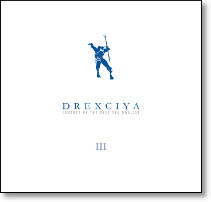
Drexciya: Journey of the Deep Sea Dweller III (1992-97
[2013], Clone Classic Cuts): Detroit techno duo, James Stinson and Gerald
Donald, constructed a whole mythology "of underwater dwellers descended
from pregnant slave women thrown overboard during the trans-Atlantic
deportation. Starting with their 1992 Deep Sea Dweller EP, they
kept at it for a decade (Stinson died in 2002), then languished until
this Dutch label started collecting their early work on four CDs. I
reviewed I and II when they came out, but didn't notice
later comps. This is nearly as good (maybe a bit less consistent) as
the first.
A- [bc]
Drexciya: Journey of the Deep Sea Dweller IV (1992-97
[2013], Clone Classic Cuts): Mopping up, including five "Unknown Journey"
cuts. Some introduce a newly developed warble which adds a dimension to
their sound, but doesn't seem as perfectly paced.
B+(***) [bc]
Drexciya: Neptune's Lair (1999, Tresor): After enough
short releases to fill the four Clone Classic Cuts CDs, the Detroit
techno duo's first full-fledged album.
B+(***)
Drexciya: Grava 4 (2002, Clone): Third (and last)
album. Attractive beats, but fades a bit.
B+(**)
Billie Eilish: Don't Smile at Me (2017,
Darkroom/Interscope, EP): Eight track, 26:00 debut, "a sleeper hit,"
cracked the charts a month and a half after its release, going on to
earn nearly a million "album-equivalent units" and "more than 1.2
billion on-demand audio streams" -- not that I noticed, at least
until her follow-up album appeared. Singles are more pop, more
easily distinguished from the filler.
B+(***)
Unpacking: Found in the mail last week:
- Greg Abate with the Tim Ray Trio: Gratitude: Stage Door Live @ The Z (Whaling City Sound)
- Brittany Anjou: Enamigo Reciprokataj (Origin)
- Rebecca DuMaine and the Dave Miller Combo: Chez Nous (Summit): June 7
- Satoko Fujii: Stone (Libra): June 7
- The Invisible Party: Shumankind (Chant -18)
- Peter Jensen & DR Big Band: Stand on Your Feet and Fight: Voices of the Danish West Indies (ILK)
- Ellynne Rey: The Birdsong Project (self-released): May 1
- Rent Romus' Life's Blood Ensemble: Side Three: New Work (Edgetone)
- The Richard Shulman Trio: Waltzing out of Town (RichHeart Music): May 11
- Wayne Wallace Latin Jazz Quintet: The Rhythm of Invention (Patois): June 7
- Walt Weiskopf European Quartet: Worldwide (Orenda): May 3
Ask a question, or send a comment.
Sunday, April 28, 2019
Weekend Roundup
Started early and still running late. Having recently read Benjamin
Carter Hett's The Death of Democracy: Hitler's Rise to Power and
the Downfall of the Weimar Republic, I woke up this morning with
the idea of writing something about Trump, Republicans, and Fascism
for today's introduction. Never got close to that. Hett's book is
pretty straight history, but you can find a page here or there where
you could easily gloss in Trump's name for Hitler's. Then you move
onto other pages where Trump fails any comparison, usually by being
too dumb or too lazy. There are also big differences between the
Nazis and the Republicans, although differences on race, foreigners,
unions, and military muscle are insignificant. The biggest one is
that the Nazis actually had their own goon squad that could go out
and physically attack their suspected enemies, whereas Republicans
only wish they could do that. Still, the key point about Germany in
1932 was supposedly sober conservatives were so desperate to squash
the left -- indeed, any trace of popular government, of democracy --
that they were willing to hand power over to a psycho like Hitler
and his vicious gang of followers. Republicans seem happy to do the
same thing here in America, for the same reasons, and with the same
obliviousness to consequences.
I should note somewhere that former Senator
Richard Lugar (R-IN)
died last week. Back in the 1980s he was the model of how a Republican
politician could straddle moderate urban politics (he was mayor of
Indianapolis) and the Reagan reaction, which for a time helped make
the latter seem more innocuous and palatable. He was finally devoured
by the right, purged in a primary by an opponent so extreme that the
Democrats were able to (temporarily) pick up the seat. I never felt
any particular fondness for Lugar, but I could understand why people
respected him. Even his breed of Republican is now a thing of the
past.
Also noted that historian
David Brion Davis has died. His 1967 book The Problem of Slavery
in Western Culture greatly affected the way pretty much everyone
understood the history of slavery in the Americas. I've often thought
I should check out his later books, especially the ones that extended
his study into the 19th century. I learned of his death from a cranky
Corey Robin note, which I decided not to bother with below. Here's
a more useful (and generous)
obituary.
Anyhow, this is what the week has to show for itself:
Greg Asner:
To solve climate change and biodiversity loss, we need a Global Deal for
Nature. Nicholson Baker:
My brain on cable news: "Tuning into TV's battle to the death."
What's actually on cable these days is a bizarre legalistic death battle.
Cohen, Manafort, Flynn, Butina, Mueller, Giuliani, et al. We aren't
debating whether Trump has been responsible for the deaths of innocents,
because everyone knows that he is -- presidents and collateral damage go
hand in hand. If Trump goes to prison, it will not be for child murder,
but for distributing hush money to silence former mistresses and for
taking bribes and for engaging in back channel machinations with Russia.
Whatever it takes, I suppose, but I have to agree with my cable guy:
there's something unseemly about the means employed.
Fox News is addictive and awful: choirboys gone to seed and women's
dresses with weird portholes at the shoulders or at the cleavage. The
anchors jeer smilingly at ideas that any sensible person of generous
mind can see make sense. Quick clips of closed-circuit footage of humans
with darker skin doing bad things are injected into the river of commentary --
mug shots included -- to create little mental firecracker pops of righteous
wrath among the pickup-truck crowd, along with "funny" attacks on progressive
causes by rightist comedians who love steak and country music. Fox &
Friends is a hot mess of clean living and white-right American
self-deception, and I can't watch it for very long without feeling
queasy. But it's an easy mark.
Jane Coaston:
Trump's new defense of his Charlottesville comments is incredibly
false. Related: Allegra Kirkland:
Whitewash: Trump takes new approach to sanitizing Charlottesville
protests. Helena Cobban:
The UAE's seedy influence operations are a footnote to the Mueller
report. Bryce Covert:
Hedge-fund ownership cost Sears workers their jobs. Now they're fighting
back. Seems like lots (damn near all of ) the companies you read about
in bankruptcy first passed through a phase where private equity operators
first bought the company with its own debt than stripped assets and paid
themselves "management fees." Maybe if they were lucky they'd be able to
sell the carcass off, but current bankruptcy law favors creditors over
employees and customers, finishing the liquidation while leaving the
public worse off. Our think tanks need to think about this situation,
and come up with new bankruptcy laws that allow companies to survive
such malign ownership, preferably under employee ownership, with debt
loads reduced to levels which allow the companies to carry on. Other
regulations could help, but just changing bankruptcy law would shift
the incentives dramatically.
Alex Emmons:
Coalition airstrikes in Raqqa killed at least 1,600 civilians, more than
10 times US tally, report finds. Tom Engelhardt: Publisher and introduction writer at
TomDispatch:
Todd Gitlin:
The roots of Trumpian agitprop: Hint: article namechecks Leni
Riefenstahl, as well as Susan Sontag writing about Riefenstahl. Patrick Greenfield:
Spain election: socialist party PSOE declared winner: live update
blog; PSOE is expected to be able to form a coalition with the further
leftist party Podemos; the far-right party Vox surged, but only wound
up with 24 MPs (6.8%), at the expense of more mainstream conservatives
(PP is down from 137 to 66). Sue Halpern:
The terrifying potential of the 5G network: "The future of wireless
technology holds the promise of total connectivity. But it will also be
especially susceptible to cyberattacks and surveillance." Guess who else
is selling snooping gear? Richard Silverstein:
Israel and the selling of the surveillance state. Murtaza Hussain:
Our enemies are the same people: San Diego synagogue shooter inspired
by New Zealand anti-Muslim massacre. Sean Illing:
White identity politics is about more than racism: Interview with
Ashley Jardina, author of White Identity Politics.. Christopher Ingraham:
Rich guys are most likely to have no idea what they're talking about,
study suggests. Greg Jaffe:
Capitalism in crisis: US billionaires worry about the survival of the
system that made them rich. Sam Knight:
The uncanny power of Greta Thunberg's climate-change rhetoric.
The climate-change movement feels powerful today because it is
politicians -- not the people gluing themselves to trucks -- who seem
deluded about reality. Thunberg says that all she wants is for adults
to behave like adults, and to act on the terrifying information that
is all around us.
Related: Stewart Lee:
Why Greta Thunberg is now my go-to girl. Paul Krugman:
Armpits, white ghettos and contempt: "Who really despises the American
heartland?" Opens with a sidebar on Stephen Moore (Trump's Fed pick),
noting:
Moore is an indefensible choice on many grounds. Even if he hadn't
shown himself to be extraordinarily misogynistic and have an ugly
personal history, his track record on economics -- always wrong,
never admitting error or learning from it -- is utterly disqualifying.
Survival of the wrongest: "Evidence has a well-known liberal bias."
Much more on Stephen Moore.
The great Republican abdication: "A party that no longer believes
in American values." Wait! Aren't greed, hubris, and desperate schemes
to rig every contest the ultimate American values? Those are clearly
the hallmarks of the recent Republican Party, and those are traits
one can question and denounce. But calling them un-American misses a
big part of their appeal. Bill McKibben:
To stop global catastrophe, we must believe in humans again: "We have
the technology to prevent climate crisis. But now we need to unleash mass
resistance too -- because collective action does work." Edited extract
from his new book, Falter: Has the Human Game Begun to Play Itself
Out?. He also pleaded for mass resistance recently in
Glaciers and Arctic ice are vanishing. Time to get radical before it's
too late. Paul Mozur/Jonah M Kessel/Melissa Chan:
Made in China, exported to the world: the surveillance state. Anna North:
Trump's Fed pick wrote that women should be banned from March Madness:
Well, actually he's written and said a lot of stupid things, not least
on matters more germane to his appointment -- not that whether he's an
asshole is irrelevant. As for Trump's other pick of a political hack for
a Fed seat, see: Li Zhou:
It's official: Herman Cain is not going to be on the Fed. Zhou also
wrote:
Young voters want more action on climate change -- even if it hurts the
economy. Gabby Orr/Andrew Restuccia:
How Stephen Miller made immigration personal. Andrew Prokop:
Ben Protess/William K Rashbaum/Maggie Haberman:
How Michael Cohen turned against President Trump. Eric Rauchway:
Obama's original sin: "A new insider account reveals how the Obamas
administration's botched bailout deal not only reinforced neoliberal
Clintonism, but also foreshadowed an ongoing failure to fulfill campaign
promises." Review of Reed Hundt: A Crisis Wasted: Barack Obama's
Defining Decisions. Reminds me that perhaps the first of those
decisions was letting Clinton factotum John Podesta run the transition
team, which initially penciled in such pivotal figures as Tim Geithner
and Lawrence Summers. Gabriela Resto-Montero:
Most Americans believe Trump lied to them, but think impeachment is a
bad idea. Related: Ella Nilsen:
Democrats' impeachment dilemma, explained. James Risen:
Unanswered questions in the Mueller report point to a sprawling Russian
spy game. David Roberts:
Aaron Rupar:
Darren Samuelsohn/Andrew Desiderio/Kyle Cheney:
'This is risky': Trump's thirst for Mueller revenge could land him in
trouble. Related: Andrew Restuccia:
Mueller report exposes diminishing power of Trump denials: "The
report has reignited a media debate about how seriously to take the
White House's statements of fact." Eric Schmitt/David E Sanger/Maggie Haberman:
In push for 2020 election security, top official was warned: don't tell
Trump. Ben Schwartz:
The trigger presidency: "How shock jock comedy gave way to Donald
Trump's Republican Party. Dylan Scott:
Trump's high-stakes subpoena battle with House Democrats,
explained. Matt Shuham:
Trump lets loose stunning falsehood that doctors, mothers 'execute'
babies. Ben Taub:
How the War on Terror is being written: Starts on Guantánamo, ends
with a long list of links to source documents. Midway, Taub notes:
The year after [James] Mitchell published his memoir [Enhanced
Interrogation], it was cited in a lengthy
report by Physicians for Human Rights, which argues that the
interrogation program represented "one of the gravest breaches of
medical ethics" since the Nazi medical experiments during the
Second World War.
These documents -- along with contemporaneous reports and books
by investigative journalists, academics, lawyers, and human-rights
advocates -- make up an evolving draft of post-9/11 history. With
each passing year, more details surface in memoirs, lawsuits, and
military commissions, and the historical record comes into sharper
focus. Millions of pages have come to light, and millions more remain
classified. But, seventeen years into the war on terror, a core,
uncomfortable fact remains: people on the receiving end of classified
security programs -- from drone strikes to renditions and interrogations --
become aware of the outlines of secret U.S. national-security laws and
practices long before American citizens have any clarity or say about
what is being done in their name.
Guantánamo's darkest secret. Murray Waas:
Mueller prosecutors: Trump did obstruct justice. Alex Ward:
Democrats want to challenge Trump's foreign policy in 2020. They're still
working out how. Surprisingly little here, or maybe not given how
readily Democrats have lined up behind the common consensus policies in
place since shortly after WWII. Consider "the four main pillars of a
progressive foreign policy (so far)":
- Confront climate change
- Democracy promotion and anti-corruption
- Strengthening alliances
- Rebuilding America
I would have started off with negotiated demilitarization: securing
treaties all around the world that resolve conflicts and reduce the
military posture of all nations (especially the US). My second point
would be to expand "democracy promotion and anti-corruption" to lean
left, to support more power for workers and for women, while accepting
that capital rights need to be limited and regulated. On trade, I'd
work to limit (or in many cases eliminate) rents based on intellectual
property. This in turn should lead to greater sharing of best practices
in science and technology, which would help with problems like climate
change, loss of biodiversity, etc. I'd also like to see some sort of
international framework for dealing with migration. Democrats have done
a miserable job of formulating foreign policy due to the old colonial
mentality where they've never seen the rest of the world's peoples as
our equals, and never recognized that our welfare is co-dependent on
the world's. Another piece on trying to change Democratic strategy:
David Klion:
When will Washington end the Forever War?.
Sri Lanka suffered from decades of violence before the Easter Sunday
bombings. Related: Samanth Subramanian:
After the Easter bombings, Sri Lanka grapples with its history of
violence. Robin Wright:
Matthew Yglesias:
We're not hearing enough from 2020 candidates about things they could do
as president.
Joe Biden is the Hillary Clinton of 2020: "Americans want outsiders,
reformers, and fresh faces, not politicians with decades of baggage."
Pretty much all you need to know about Biden in 2020, but not the only
thing written this week. E.g.:
Moira Donegan:
Anita Hill deserves a real apology. Why couldn't Joe Biden offer
one? Jill Filipovic:
Joe Biden's policies are as troubling as his inappropriate
touching. German Lopez:
Joe Biden's long record supporting the war on drugs and mass incarceration,
explained. Arwa Mahdawi:
Joe Biden is the Hillary Clinton of 2020 -- and it won't end well this
time either. Jane Mayer:
What Joe Biden hasn't owned up to about Anita Hill. Jim Newell:
The 2020 candidates smell blood: "The reason so many Democrats are
running is they think Biden won't survive."
The field in 2016 was so small not because politicians with national
aspirations didn't exist, but because they thought Clinton -- with her
name recognition, financial resources, party relationships, high early
polling numbers, and general next-in-line aura -- was inevitable. She
cleared the field of most competition because other mainstream candidates
knew she would win (and non-mainstream Bernie figured she would too).
Biden is something more like a 2016 Jeb Bush: a weak establishment
favorite whose time might be past and -- should voters deprioritize his
top perceived strength, electability -- who could soon face the wolves.
Newell also wrote:
Biden has successfullyl goaded Trump, which is exactly what he needs to
do. One thing many Democrats will be looking for in primary season
is the candidate who most effectively articulates their rage over Trump,
and one of the best ways to do that is to get under his thin skin. Nate Silver:
How Joe Biden could win the 2020 Democratic Primary: Put a lot of
weight on his initial poll lead, and hope nothing goes wrong. Matt Taibbi:
Is Joe Biden 'electable' or not? Thank God, nobody seems to know.
The Democratic establishment should chill out about Bernie Sanders.
As Sanders continues to rate highly in national polls, many longtime party
stalwarts are palpably agitated over a blend of personal grievances and
overblown political and policy concerns. . . .
As a personal matter, the establishment's response is understandable.
Sanders, an independent Vermont senator, tends to portray the institutional
Democratic Party as corrupt and relentlessly sows suspicion about the
motives and integrity of everyone who disagrees with him. He treats the
catastrophe of the 2016 election as a deserved rebuke to party leaders.
And he brushes aside mountains of practical realities that others have
spent years dealing with.
But blowing up over this makes no sense. The whole point of a party
establishment is to be cynical, detached, practical-minded, and realistic.
If they assess Sanders's actual track record -- rather than his personally
insulting rhetoric -- they'd discover a fairly unremarkable blue-state
liberal who's good at winning elections and has extensive experience with
the disappointing realities of the legislative process.
Relevant here: Peter Daou:
I was Bernie's biggest critic in 2016 -- I've changed my mind: "It
would be an epic act of self-destruction for Democrats to try to hobble
his campaign." Let's see if I can explain this in simple terms. During
the Reagan-to-Trump era, Democrats have been preoccupied with raising
money (cultivating donor support). Some, like Obama and the Clintons,
have even done a good job of this, largely by promising that they'd do
an even better job for business than the Republicans would -- something
the stats clearly support. Meanwhile, the Democrats have let their base
go to hell, and found their support eroding, even as Republicans have
even less to offer. What Sanders is doing is rebuilding the Democratic
Party base, by appealing to the people Democrats have been screwing for
decades now. Attacking Sanders risks driving this base away, if not to
the Republicans then to a third party or nothing. Sanders is doing the
party a huge favor by not running as an independent. The party needs to
reciprocate by welcoming him and his voters. They might even find, like
Daou, that they'll learn something. Gary Younge:
Brexit is not just a tragedy for Britain.
Ask a question, or send a comment.
Monday, April 22, 2019
Music Week
Music: current count 31400 [31371] rated (+29), 256 [252] unrated (+4).
Seems like pretty much everything is a struggle these days. My most
common complaint is that I'm getting sick and tired of not being able
to do things right. A typical example was trying to repair a screen door
lock. A nylon washer disappeared, and has proven impossible to replace.
I bought some things I thought I might be able to use, then lost them.
Bought some more, and turned out they were too thick, and hole was too
small. I tried drilling out the hole, and destroyed the washer. Finally
reassembled the door handle without the washer. The set screw is hard
to get a grip on. It will no doubt fall apart again in a matter of days,
at best a couple weeks. I have a bunch of other things that are falling
apart, many because I didn't do a good enough job building them in the
first place.
On the other hand, I have gotten a few things done. The new pantry
shelf unit is painted and bolted in place, although we haven't really
put it to use yet. That's waiting a second pantry improvement. I built
a rather neat storage unit, then screwed up hanging the door so it
never closed correctly (or at least easily). It finally dawned on me
that if I could shave a quarter inch off the bottom surface, it should
close without having to change the hinges. All that's left to do there
is to rehang the door, and see whether the theory worked. Tomorrow.
At least I finally got my computers moved, making my workspace much
more comfortable. Still haven't done the next step, which is to set up
virtual web servers on the secondary machine, so I can start redesigning
the Robert Christgau and Carola Dibbell websites. I should at least know
what I'm doing there.
Meanwhile, another routine week of music discoveries. Hard part for
me is deciding what to search out. This seems like a typical week with
two weeks of
Christgau picks, further
search down
Phil Overeem's list, and the first
Michael Tatum Downloader's Diary in quite a while. Unfortunately, I
found myself coming up short with their well-considered picks. Instead,
I went with the new Chemical Brothers album (I think someone on the
Expert Witness Facebook group raved about it, but don't recall who),
and a 1979 jazz album reissue that probably showed up in a
Bandcamp Daily list (which I started using a couple weeks back
when I couldn't play Napster).
Also, two rare regrades to from B+(***) to A-, originally reviewed
by streaming but given a few more changes after CDs arrived. People
shouldn't get the idea that all they have to do to get higher grades
is to send me CDs, but they do help in cases where I've held a grade
back due to some minor reservations.
April Streamnotes should be released with next Music Week, on April
29. Currently have 113 records in the draft file, so I'll probably
wind up with 140-150.
New records reviewed this week:
Art Ensemble of Chicago: We Are on the Edge: A 50th Anniversary
Celebration (2018 [2019], Pi, 2CD): Formed as a quintet in 1969,
out to make "great black music," recorded intensely at first, regularly
until the founders started to die out: they tried replacing Lester Bowie
(trumpet) in 1999, but didn't do much after Malachi Favors (bass) passed
in 2004. Now they are down to two: Roscoe Mitchell (reeds) and Famadou
Don Moye (percussion). Joseph Jarman died in 2019 after this was recorded,
but doesn't play on it. On the other hand, the Chicago avant-garde turned
out en masse here: some vocals I don't like, Moor Mother rap I do, too
much strings and flute, but with transcendent stretches, enough to register
who they are and what they're about.
B+(**)
The Chemical Brothers: No Geography (2019, Virgin EMI):
When I organized my database c. 2000 I filed all the electronica albums
under "techno," which is evidently a more limited (shall we say technical?)
term. But back then I was thinking of artists like this UK duo, with three
fairly major albums 1995-99. They've slowed down, with just four even spaced
albums since 2005. But this one sounds much like the early ones, with one
foot planted in disco, the other pushing metal hard to the floor.
A-
Martin Frawley: Undone at 31 (2019, Merge): Australian
singer-songwriter, solo after two albums with the Twerps.
B+(***)
Ahmed Ag Kaedy: Akaline Kidal (2019, Sahel Sounds):
Tuareg from northern Mali, just guitar and vocal, a steady, easy roll,
gentle blues minus the downside.
B+(**)
Salif Keita: Un Autre Blanc (2018 [2019], Naive):
A quite remarkable singer from Mali, born to royalty, cast out for
his albinismo, gained fame as "the golden voice of Africa," first
with his group Les Ambassadeurs then as a solo act from 1987. Past
70 now, with one of his better albums, the rhythm not quite as
effortless as I'd like.
B+(***)
Khalid: Suncity (2018, RCA, EP): Surname Robinson,
first album showed his mastery of his topic, American Teen,
now moving somewhat more cautiously into adulthood. Seven tracks
including an intro skit and an interlude, 21:09.
B+(*)
Khalid: Free Spirit (2019, RCA): Impressive second
album, attractive, catchy in spots, pleasant throughout, but runs a
bit longer than my interest holds out.
B+(***)
Larry Koonse: New Jazz Standards Vol. 4 (2019, Summit):
Guitarist, born in San Diego, based in Los Angeles, father was another
jazz guitarist, Dave Koonse, and they have a couple of duo albums (one
in 1978 when Larry was a teenager, another in 2003). Not much directly
under Koonse's name, but lots of side credits -- seems like every jazz
album recorded in LA over the last two decades. He leads a quartet here,
with Josh Nelson (piano), Tom Harrington (bass), and Joe LaBarbera (drums),
but the real auteur doesn't play: Carl Saunders, who's compiled 100 of
his compositions into the book New Jazz Standards, and recruited
the leaders of he previous volumes in this series: Sam Most, Scott
Whitfield, and Roger Kellaway. As a big band trumpeter, Saunders knows
what he's doing. But aren't standards supposed to be recognized first?
B [cd]
Joachim Kühn: Melodic Ornette Coleman: Piano Works XIII
(2018 [2019], ACT): German pianist, many albums since 1969, including
a live duo in 1996 with Coleman. This is solo, Coleman tunes plus one
original tribute. Makes a fair case for Coleman as a melodist, but that
always seemed rather tangential to his genius.
B+(*)
Russ Lossing: Changes (2018 [2019], SteepleChase);
Pianist, from Ohio, based in New York since 1986, at least 15 albums,
mostly trios (many unconventional), mostly original material, tends
to find his own idiosyncratic way (much like his long-time drummer
and mentor, Paul Motian). This is fairly conventional, a trio with
Michael Formanek and Gerald Cleaver, mostly standards (3 Monk, 2
Ellington, opens with "Bye, Bye Blackbird").
B+(***)
Russ Lossing: Motian Music (2019, Sunnyside): The
late drummer Paul Motian led kind of a dual life. On the one hand,
he played in a remarkable series of piano trios, starting with Bill
Evans and including Keith Jarrett, Paul Bley, Marilyn Crispell,
Enrico Pieranunzi, Martial Solal, Geri Allen, and Lossing. On the
other, he rarely used piano on his own records (a favorite trio was
with Joe Lovano and Bill Frisell). This, a trio with Masa Kamaguchi
(bass) and Billy Mintz (drums), is Lossing's second album of Motian
compositions. It effectively merges the two paths, but the results,
like Motian, are somewhat inscrutable.
B+(**)
Reba McEntire: Stronger Than the Truth (2019, Big
Machine): Country singer, from Oklahoma, in her sixties now, debut
album in 1977, this is her 33rd in 43 years. Neotrad sound, strong
drawl, some sad songs, some upbeat, a single ("Freedom") with the
potential to be abused something awful.
B+(*)
Sam Ospovat: Ride Angles (2018 [2019], Skirl): Drummer,
originally from Lincoln, Nebraska; based in Bay Area, has at least one
previous record. Trio with Matt Mitchell (most impressive on piano) and
Kim Cass (bass), plus scattered guests -- Brandon Seabrook (guitar), Nick
Lyons (alto sax), and Lorin Benedict (scat vocals) -- each adding an
interesting twist.
B+(**) [cd]
Hama Sankare: Ballébé: Calling All Africans (2018,
Clermont Music): From Mali, plays a style called calabash, guitar
has some drone and voice some moan giving him a desert blues vibe.
B+(***)
Hama Sankare: Niafunke (2019, Clermont Music):
Second album. Christgau prefers the first but they strike me as
pretty interchangeable.
B+(***)
Silk Road Assassins: State of Ruin (2019, Planet Mu):
UK electronica trio, from Bath, monikers Tom E Vercetti, LovedrOid,
Chemist. Vacillates between industrial and grime, picking up my ears
with the latter.
B+(*) [bc]
Marcos Silva: Brasil: From Head to Toe (2019, Green Egg):
Keyboard player, born in Rio de Janeiro, based in Bay Area, which has
become a major center for Brazilian music in the US. Band includes Gary
Meek on sax and flute. Mostly a pleasant groove album, soaring a bit.
B [cd]
Solange: When I Get Home (2019, Saint/Columbia):
Knowles, long overshadowed by her sister Beyoncé, got a lot of
attention for 2016's A Seat at the Table, follows that up
here. I find both albums subdued and inscrutable, this one perhaps
even more so. Cover art very similar, with her looking dazed and
sad.
B+(*)
Spellling: Mazy Fly (2018 [2019], Sacred Bones):
R&b singer-songwriter Tia Cabral, second album, "experimental"
in the sense that she doesn't fit the mold, or any other I can
think of.
B+(**)
Sunflower Bean: King of the Dudes (2019, Mom + Pop, EP):
Indie rock trio from Long Island, Julia Cumming the singer/bassist, with
two albums and three EPs -- this one 4 snappy cuts, 12:03.
B+(**)
Recent reissues, compilations, and vault discoveries:
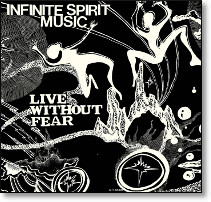
Infinite Spirit Music: Live Without Fear (1979 [2019],
Jazzman): One-shot Chicago group, best known member is percussionist
and singer Kahil El'Zabar, although Ka T' Etta Aton also sings, and
there are two more percussionists, plus Henry Huff (most impressive
on sax), Soji Abedayo (piano), and Michaka Uba (bass). I'm not a big
fan of the vocals (although the title hits home), but the music
transcends such concerns. Vol. 27 in Jazzman's Holy Grail Series.
Makes me wonder what else I've missed.
A- [bc]
Live at Raul's (1979 [2019], Steady Boy): Ten songs
from five punk/garage bands I'd never heard of -- The Explosives,
Standing Waves, Terminal Mind, The Next, The Skunks -- recorded live
in Austin, TX, released at the time. Reminds one what a shock to the
system punk was back then. Also that Austin was still a backwater.
B+(*)
Onda De Amor: Synthesized Brazilian Hits That Never Were
(1984-94) (1984-94 [2018], Soundway): Crate-digging, no one
here I recognize, and nothing that really stand out, but every cut
has energy and panache, and they all flow together nicely.
B+(**) [bc]
Weaponise Your Sound (2019, Optimo Music): British
electronica comp, on "Diet Clinic's sublabel," "all proceeds go to
London based charity, Focus E15, which demands social housing, not
social cleansing." No one I've ever heard of. Not all electronic,
veers a bit into exotica, all worth hearing.
B+(**) [bc]
Old music:
Salif Keita: The Mansa of Mali: A Retrospective
(1978-94 [1994], Mango): Mostly from three Mango albums, with one
long song from much earlier and three more songs from soundtracks.
Probably the place to start, though it trails off a bit toward the
end.
B+(***)
Russ Lossing: Dreamer (2000, Double Time): Pianist's
first album, a trio with Ed Schuller (bass) and Paul Motian (drums).
Seven originals, two Monks, one piece from Andrew Hill.
B+(**)
Russ Lossing/Ed Schuller/Paul Motian: As It Grows (2002
[2004], Hatology): Same piano-bass-drums trio, a couple years down the
road, with Lossing writing nearly everything.
B+(**)
Russ Lossing: All Things Arise (2005 [2006], Hatology):
Solo piano. Opens with a 4-part, 27:00 suite, featuring a fair amount
of drama, then tacks on six more pieces: one original, two Ellingtons,
Sonny Rollins, Ornette Coleman, "Alabama Song."
B+(**)
Timosaurus: I Love You More Than Yesterday (2011,
self-released): Avant sax-guitar-drums trio: Matt Nelson, Andrew
Conklin, and Sam Ospovat. Free jazz squall up front, energetic but
rough. Deconstructs later on, isolating the sounds while still
retaining interest.
B+(**) [bc]
Grade (or other) changes:
Kuzu: Hiljaisuus (2017 [2019], Astral Spirits/Aerophonic):
Chicago trio: Dave Rempis (alto/tenor/baritone sax), Tashi Dorji
(guitar), and Tyler Damon (percussion). This is very harsh free
jazz, similar to when the Thing hooks up with a rock guitarist
who just wants to freak out, but better (if you can stand it). I
wrote that back after streaming last fall, then got a CD in the
mail in February, causing various bookkeeping issues: the release
in September 2018 was vinyl and digital, so is the February 2019
CD a reissue, or should I treat the real new release as 2019? I
procrastinated, but when I finally did give it a spin, I was blown
away. I used to hate this kind of free jazz squall, then got to
where I could stand it, and once in a while even thrill to it --
this one of those rare cases. As for the bookkeeping, this gets
a double entry -- I'll leave it in the 2018 lists at the lower
grade, but include it in 2019's A-list as a new record. (Some
comparable cases: I still figure on treating Cardi B's Invasion
of Privacy as a 2018 release even though its CD didn't come
out until Feb. 22, as I, and pretty much everyone else, heard it
in 2018. On the other hand, I missed the 2018 digital release of
Eric Dolphy's Musical Prophet, only hearing it after the
CDs dropped on January 25, so I'm treating it as 2019.)
A- [cd]
Matthew Shipp Trio: Signature (2018 [2019], ESP-Disk):
Piano trio with Michael Bisio (bass) and Taylor Baker (drums). Seemed
like a typically solid performance when I streamed it, but I took more
time with it after the CD arrived, and it gradually fell into place --
less raw power than his best previous trios, but he keeps building.
[was B+(***)] A- [cd]
Unpacking: Found in the mail last week:
- The Campfire Flies: Sparks Like Litle Stars (OverPop Music)
- Mark Dresser Seven: Ain't Nothing but a Cyber Coup & You (Clean Feed): May 10
- Four: There You Go Thinking Again (Jazz Hang)
- Bennett Paster: Indivisible (self-released): May 3
- Trapper Keeper: Meets Tim Berne & Aurora Nealand (Ears & Eyes)
- Mark Turner/Gary Foster: Mark Turner Meets Gary Foster (Capri): May 17
- The United States Air Force Band: The Jazz Heritage Series: 2019 Radio Broadcasts (self-released)
Ask a question, or send a comment.
Sunday, April 21, 2019
Weekend Roundup
Let's start off with a range of reactions to the release (with
extensive redactions) of the final report of Special Prosecutor Robert
Mueller:
Alex Ward:
The Mueller report, explained in 500 words: Fair to start with this
executive summary of the report itself, but this falls far short of its
intent ("everything you wanted to know . . . but detailed as briefly as
possible"), mostly by not examining the context or process. One thing
I've long wondered about was to what extent low-level operatives in
Trump's (and his PAC allies') cyber operations were aware of let alone
had contacts with the Russian operatives who worked on Trump's behalf.
Even if they didn't explicitly coordinate, they very likely built on
and reinforced each other's work. Mueller seems to have taken a top-down
approach, looking at a few suspicious meetings, but it's not clear that
he did any investigation of the campaign staff most competent to actually
collude (not just with the Russians but with other foreign or nominally
independent organizations). Mueller may have had narrow legal reasons
for limiting his focus, but it would have been helpful to spell them
out. One big problem with the American political system is that a lot
of what campaigns -- both raising money and spending it -- do may not
technically be illegal but stikes me (and probably most people) as
profoundly corrupt. Scott R Anderson, et al. (long list of contributors at
Lawfare):
What Mueller found on Russia and on obstruction: a first analysis.
Also at
Lawfare:
Anne Applebaum:
Why was Trump so afraid of the Mueller investigation? We may never know.
Indeed. Maybe, as the author implies, he had things to hide that Mueller
didn't uncover. Maybe he just couldn't stand the pressure of being picked
apart by investigators whose ambitions and/or biases could result in him
being framed? Trump knows as well as anyone how the system can be rigged.
The only thing you can be sure of is that Trump's word on what happened is
worthless. Bill Blum:
Five critical takeaways from the Mueller report. Zack Beauchamp:
Ryan Bort:
Trump will be attacking the 'Crazy Mueller Report' for the rest of his
life. Alvin Chang/Javier Zarracina:
The Mueller report redactions, explaind in 4 charts: Total redacted
content: 7.25%. Most heavily redacted were Russian "Active Measures"
Social Media Campaign (46%), Russian Hacking (23%), and Prosecution and
Declination Decisions (31%). Isaac Chotiner:
Neal Katyal on whether the Mueller report went far enough: Interview
with a law professor who helped "draft the special-counsel regulations"
after Ken Starr's protracted effort to crucify Bill Clinton. Katyal says:
I would say three people's colors have been revealed by this report. We
have learned Mueller's reputation is real. We have learned Trump's
disregard for the truth and the rule of law is real. And we have learned
Barr has become a total Trumpian Attorney General.
Jane Coaston:
The Seth Rich conspiracy theory needs to end now: "The Mueller report
confirms that the late DNC staffer had absolutely nothing to do with leaked
emails later shared by WikiLeaks." George T Conway III:
Trump is a cancer on the presidency. Congress should remove him. EJ Dionne Jr:
Mueller's report is the beginning, not the end. Masha Gessen:
The hustlers and swindlers of the Mueller report. Susan B Glasser:
The Mueller report won't end Trump's presidency, but it sure makes him
look bad. Glenn Greenwald:
Robert Mueller did not merely reject the Trump-Russia conspiracy theories.
He obliterated them. Katie Halper:
9 ways the media blew it in its 'Russiagate' coverage.
Sean Illing:
Does the Mueller report exonerate Trump? I asked 12 legal experts. Jen Kirby:
Confused about who's who in the Mueller report? Start here. Ezra Klein:
The best defense of Trump is still a damning indictment: "The Mueller
report's defense of Trump: exculpatory incompetence, misplaced rage."
The problem with impeachment. Despite the nesting, let's put the
impeachment eggs in this one basket:
I skipped over the stories of various politicians calling for
impeachment (or not). I basically agree with Rubin (and Pelosi): as long
as impeachment is a partisan divide, there's no way to do it, and
trying detracts from other efforts to expose Trump. Still, it doesn't
hurt to rattle that sword now and then, especially as its futility
is really an indictment of the Republicans protecting Trump. In the
long run, people need to think about better ways of limiting abuse
of presidential power. I think it should be possible for Congress
to overturn arbitrary Trump orders like his border emergency and
Yemen War support, to pick two recent examples, without having to
muster enough support to also override his veto -- especially given
that we have an electoral system which lets someone win a 4-year
term with as little support as Trump had in 2016. Dara Lind:
7 times the Mueller report caught Sean Spicer and Sarah Sanders lying
to press. Renato Mariotti:
The obstruction case against Trump that Barr tried to hide. Jane Mayer:
In the Mueller report, Erik Prince funds a covert effort to obtain
Clinton's e-mails from a foreign state. Ella Nilsen:
It's official: House Democrats subpoena the full, unredacted Mueller
report. Andrew Prokop:
The Mueller report's biggest mystery: "What did Mueller find out about
Trump associates and email leaks?" James Risen/Robert Mackey/Trevor Aaronson:
Annotating special counsel Robert Mueller's redacted report. Jennifer Rubin:
Five questions that still need to be answered in the Mueller report.
Aaron Rupar:
Charlie Savage:
How Barr's excerpts compare to the Mueller report's findings. Khushbu Shah:
Mitt Romney is "sickened" by the Trump administration's "dishonesty" after
reading Mueller report. Danny Sjursen:
Liberals sold their souls to the war machine on Russia. Jennifer Taub:
Don McGahn not listening to Donald Trump doesn't absolve the President
of a crime. Peter Van Buren:
Mueller's investigation is missing one thing: a crime:
Almost everything Mueller has, the perjury and lying cases, are crimes
he created through the process of investigating. He's Schrodinger's Box:
the infractions only exist when he tries to look at them.
On the other hand, a lot of things that aren't really prosecutable
crimes look and smell bad. Politicians lie about them because they
know this, and are trying to avoid exposing their faults.
I originally figured I'd try to write up my take on this, but at
this point I'm too exhausted (not to mention disgusted).
Some scattered links this week:
Peter Beinart:
Nobody knows anything about 'electability': Article runs with Biden's
picture up top, since pundits would much rather talk about his "electability"
than his policy views or track record, but touches on others, noting that
"they're making lots of dubious assumptions."
All this glib talk about electability has a cost. It leads commentators,
often implicitly, to give "electable" candidates a pass when their policy
views are fuzzy or flat-out wrong. So what should journalists do? It's
simple: Spend less time discussing which candidates can win the presidency
and more time discussing what they'd do if they actually won.
Jonathan Blitzer:
The unlawful ambitions of Donald Trump's immigration policy. Lee Camp:
Nearly 100,000 Pentagon whistleblower complaints have been silenced.
Jane Coaston:
Andrew Yang's plan to take on opioids: decriminalize heroin and fentanyl.
Marjorie Cohn:
America's coup efforts in Venezuela enter a frightening new phase. Coral Davenport:
Interior Dept. opens ethics investigation of its new chief, David
Bernhardt. That didn't take long, although few things could be
less surprising. Karen DeYoung:
Trump administration announces new measures against Cuba. Especially
clever is the line about Cuba expanding "its malign influence and
ideological imperialism across the region." Another example of the
recent fashion of attacking the left by using the same language the
left has traditionally used about the right. Also: Gregory Weeks:
The US is thinking of invading Venezuela. That's unlikely to lead to
democracy. And: Francisco Toro:
Pompeo reaches the dead end of Trump's Venezuela policy, and
With US military action, Venezuela could become the Libya of the
Caribbean.
Related: Alex Horton:
Trump soured relations in Latin America. China and Russia have welcomed
the chaos. Rob Evans:
Half of England is owned by less than 1% of the population. Next up:
Peter Hetherington:
So 1% of the people own half of England. Inheritance tax reform could fix
that. Masha Gessen:
The dangerous bullying of Ilhan Omar. Related:
Ilhan Omar's deeply American message. Tara Golshan:
Jen Kirby:
An art historian explains the tough decisions in rebuilding Notre
Dame. David D Kirkpatrick:
Trump endorses an aspiring Libyan strongman, reversing policy. Maybe
when he saw the memo he just misread the name (Khalifa Hifter)? Sarah Kliff:
CBO: over 1 million Americans have become uninsured since 2016. Paul Krugman:
Dara Lind:
Bernie Sanders's Fox News town hall wasn't a debate. Bernie won anyway.
German Lopez:
Marijuana legalization is very popular. Andrew Prokop:
7 winners from the first big presidential fundraising reports:
After sections on Sanders, Harris, and Buttagieg: "Donald Trump is
set to raise tons of cash while Democrats battle each other." No
self-funding this time around. He's back to cash in. Sigal Samuel:
The false choice between helping Notre Dame and helping poor people. Khushbu Shah:
Republican strategist Karl Rove says Bernie Sanders could beat Trump
in 2020: Much of this is based on Sanders' performance in facing
a Fox-hosted town hall, warning his fellow right-wing activists that
"beating Sanders by attacking his democratic socialist views 'won't
be as easy as Republicans may think.'" Still, he's trying:
However, the Republican strategist wasn't completely glowing in his
analysis of the Democrat, arguing in his Wall Street Journal piece,
"Such platitudes go only so far in masking what drives Mr. Sanders'
philosophy: resentment, grievance, and a desire to take from those
who have and redistribute the wealth, all to expand government. He
may describe socialism in benign terms, but he regularly drops his
guard, opening himself up to devastating counterpunches."
I started to compile a list of recent right-wing books, noticing
a trend of trying to paint Democrats as resentful, embittered, and
vindictive -- traits that sure sound to me like the hate mongering
that has bent the right-wing base so far out of shape and elected
demagogues like Trump. Some examples, to give you a flavor of how
desperate right-wing propagandists have become: Noah Rothman's
Unjust: Social Justice and the Unmaking of America; Derek
Hunter's Outrage, Inc.: How the Liberal Mob Ruined Science,
Journalism, and Hollywood, and Arthur C Brooks' Love Your
Enemies: How Decent People Can Save America From the Culture of
Contempt. Those titles (with minor tweaks) could easily have
been used for books critiquing the right. That right-wingers have
adopted them shows that they recognize that their credibility has
worn out. Danny Sjursen:
Who are the real terrorists in the Mideast?
American history for Truthdiggers: Vietnam, a US tragedy: Number 29
in the author's series recapping American history, starting in 1607 with
Original sin. I've always found this history interesting, both
for what it tells us about where we came from, and why we keep making
the same mistakes over and over again, but I've never felt like beating
myself up over the sins of my ancestors. On the other hand, having
grown up and lived through Vietnam, I feel no sympathy whatsoever for
anyone who refuses to acknowledge that the American War in Vietnam
was anything less than a colossal mistake. Still:
It is the war that never dies. Vietnam, the very word shrouded with
extraordinary meaning in the American lexicon. For some it represents
failure; for others guilt; for still more, anger that the war could
have and should have been won. Americans are still arguing about this
war, once the nation's longest. For those who lived through it -- the
last war the U.S. fought partly with draftees -- it was almost
impossible not to take sides; to be pro-war or anti-war became a
social and political identity unto itself. This tribal split even
reached into the ranks of military veterans, as some joined antiwar
movements and others remained vociferously sure that the war needed
to be fought through to victory. Indeed, today, even the active-duty
U.S. military officer corps is rent over assessment of the Vietnam
legacy.
I've been reading recently about how the reaction against Germany's
defeat (most notoriously the "stab-in-the-back" myth) in 1918 fueled
the rise of Nazism in Germany. The same thing has happened with the US
right and Vietnam, leading conservatives (dedicated as ever to keeping
a social order which raises the rich up and beats the poor down) more
often than not to wrap themselves up in militarist myths of past and
future martial glory. Nor is Vietnam the only war that those invested
in "America's war machine" refuse to learn from. See: William J Astore:
America's generals haven't learned anything from Iraq.
We are all complicit in America's war machine.
Who will be the last to die for a lie? The Afghan War drags on.
With friends like these: abusive frenemies and American Mideast policy.
Mike Spies:
Secrecy, self-dealing, and greed at the NRA. Joseph E Stiglitz:
Progressive capitalism is not an oxymoron: This is real basic:
Standards of living began to improve in the late 18th century for two
reasons: the development of science (we learned how to learn about
nature and used that knowledge to increase productivity and longevity)
and developments in social organization (as a society, we learned how
to work together, through institutions like the rule of law, and
democracies with checks and balances).
Key to both were systems of assessing and verifying the truth. The
real and long-lasting danger of the Trump presidency is the risk it
poses to these pillars of our economy and society, its attack on the
very idea of knowledge and expertise, and its hostility to institutions
that help us discover and assess the truth.
There is a broader social compact that allows a society to work and
prosper together, and that, too, has been fraying. America created the
first truly middle-class society; now, a middle-class life is increasingly
out of reach for its citizens.
America arrived at this sorry state of affairs because we forgot that
the true source of the wealth of a nation is the creativity and innovation
of its people. One can get rich either by adding to the nation's economic
pie or by grabbing a larger share of the pie by exploiting others --
abusing, for instance, market power or informational advantages. We
confused the hard work of wealth creation with wealth-grabbing (or, as
economists call it, rent-seeking), and too many of our talented young
people followed the siren call of getting rich quickly.
Also see Andrew Ross Sorkin's interview with Stiglitz:
Socialist! Capitalist! Economic systems as weapons in a war of words.
Stiglitz has a new book: People, Power, and Profits: Progressive
Capitalism for an Age of Discontent (WW Norton). Simon Tisdall:
Trump's veto over Yemen is a scandalous abuse of presidential power.
Alexia Underwood:
The Israeli-Palestinian peace process is dead. An expert explains why.
Interview with Khaled Elgindy, author of Blind Spot: America and the
Palestinians From Balfour to Trump. Some more links on Israel and
last week's election:
Alex Ward:
Iran labels all US troops in the Middle East "terrorists": It's
a response to America's similar designation of Iranian troops the
day before." Actually, both designations raise into question the
self-conception (and conceits) of the designator. On the other hand,
US troops have killed a lot more people over the last two decades,
so there's something to the charges. See Danny Sjursen, above, for
more details.
This is how Bernie Sanders thinks about foreign policy: "The
senator wants to create a global democratic movement to end oligarchy
and authoritarianism." That would be a major change from US policy
under both parties ever since the start of the cold war, which was
to support and extend capitalist property rights everywhere, while
to undermine labor and anti-colonial political movements, and very
often to support local oligarchs and authoritarians against their
people. Matthew Yglesias:
What Pete Buttigieg learned from Donald Trump: "In a crowded field,
it pays off to say 'yes' to everything and get attention."
Ask a question, or send a comment.
Monday, April 15, 2019
Music Week
Music: current count 31371 [31344] rated (+27), 252 [251] unrated (+1).
May just be seasonal allergies, but feeling too lousy to even take
a stab at writing an introduction. I still have
XgauSez to edit
and post before I go to bed tonight, so need to get onto that while
I can.
A couple of notes, though. I've been talking about moving computers
around for a month or more. I finally got that done this week. Best
thing so far is that I have two relatively uncluttered desks to work
on, instead of one hopelessly messy one. Also I moved the speakers
above the desk, where they sound better and I can access the controls.
(Also, now both computers have speakers. Subwoofers are still under
the desk, where they should be, and that space is less cluttered than
before. No website work yet, but I should get to that soon.
Delighted to see Michael Tatum's
A Downloader's Diary (49) finally posted. I checked out a couple
of his recommendations below (also found a new live Pet Shop Boys he
didn't mention). Also continuing to pick albums off from Phil Overeem's
25% through the briar patch list.
Finally, I finally did manage to cast a Downbeat Critics
Poll ballot, a day past the deadline, but seems likely to be counted
(not that I could ever tell from the results). I didn't do a very
good job of collecting notes this time, but here is
what I have.
New records reviewed this week:
Charlotte Adigéry: Zandoli (2019, Deewee, EP):
Belgian singer, roots in French Caribbean, electronic dance grooves,
second EP (5 tracks, 22:56).
B+(**)
Etienne Charles: Carnival: The Sound of a People Vol. 1
(2019, Culture Shock Music): Trumpet player, from Trinidad, studied
in Florida and at Juilliard, teaches at Michigan State, seventh album
since 2006. Plays up his Afro-Caribbean roots, and parties down.
B+(**)
Ben Lamar Gay: Confetti in the Sky Like Fireworks [This Is
Bate Bola OST] (2018 [2019], International Anthem): Soundtrack
to a short film that appeared in 2018, so I'm guessing that's the date
(could be earlier). Mostly electronics, mostly atmospheric, aside from
a bit at the end I zoned out before.
B
Ariana Grande: Thank U, Next (2019, Republic): Pop
star, fifth album coming rather fast after her well-reviewed (except
by me) Sweetener. This suggests to me that she's stabilizing
as a top-tier pro, rather than (as I thought at the time) declining
into a hack. Will keep an eye on her.
B+(**)
William Hooker: Cycle of Restoration (2018 [2019],
FPE): Avant drummer, discography goes back to 1975, trio with Mark
Kirschenmann (trumpet) and Joel Peterson (drums), sounds like some
uncredited electronics mixed in. One improv set live in Detroit,
starts "serene" so takes a while to get interesting ("Panchromatics
1" and "2").
B+(*)
Amber Mark: Conexão (2018, Virgin EMI, EP): Pop/r&b
singer-songwriter, has some self-released singles before graduating to
this 4-song, 17:32 EP. Despite title, songs in English. I'm not finding
any bio. A promising outing.
B+(**)
Wynton Marsalis: Bolden: Music From the Original Soundtrack
(2019, Blue Engine): Dan Pritzker directed the movie, released May 3,
starring Gary Carr as Buddy Bolden (1877-1931, but unrecorded and locked
up after 1907), the first of the legendary New Orleans cornet players,
and Reno Wilson his better known successor, Louis Armstrong. Marsalis
was the obvious choice to score this, using his Jazz at Lincoln Center
crew and guest vocalists: Catherine Russell, Brianna Thomas, and most
often Wilson, who does his best to sing like Pops and isn't really up
to it.
B+(***) [cd]
Xose Miguélez: Ontology (2018 [2019], Origin):
Tenor saxophonist, from Galicia in Spain, the panhandle due north
of Portugal, an autonomous region of Spain with its own language
and folk culture -- something Miguélez specializes in. With guitar,
bass, drums, and vibes on a couple cuts, an extra saxophonist (Matt
Otto) on a few more. Ends with a 1981 field recording, but all along
seemed a bit off the beaten path.
B+(**) [cd]
Billy Mohler: Focus! (2019, Make): Bassist, based in
Los Angeles, Bandcamp page talks about "returns his Focus to jazz
after a successful career in rock, pop and R&B production and
songwriting." This may be his first album, a pianoless free jazz
quartet, with Chris Speed (tenor sax/clarinet), Shane Endsley (trumpet),
and Nate Wood (drums). Starts with a bit of bass solo, then the band
cuts loose. Slows down toward the end, but still holds your interest.
A- [cd]
OGJB Quartet [Oliver Lake/Graham Haynes/Joe Fonda/Barry Altschul]:
Bamako (2016 [2019], TUM): Alto sax, cornet, bass and drums.
Haynes the youngest (b. 1960), the least avant, most African-oriented,
but manages to fit in. Lake speaks on the Haynes' title piece. Mostly
interesting mish-mash, except when Lake gets up a full head of steam
and runs away with everything.
B+(***) [cd]
Nicki Parrott: From New York to Paris (2019, Arbors):
Bassist from Australia, based in New York, sang a bit at first, and
was so appealing she moved on to whole albums, mostly standards from
the swing era. Plenty of New York and Paris songs to choose from --
my favorite is the one in French, "La Mer." Gil Goldstein's accordion
adds that Gallic touch, with John DeMartino (piano), Alvin Atkinson
(drums), and Harry Allen on tenor sax.
B+(**)
Jeremy Pelt: Jeremy Pelt the Artist (2018 [2019],
HighNote): Trumpet player, close to twenty albums since 2001, leads
this off with his layered five-part "Rodin Suite." Two keyboard
players (Victor Gould on piano), guitar, the vibraphone/marimba
stands out (Chien Chien Lu). Balance of album inches toward hard
bop.
B+(*)
Pet Shop Boys: Agenda (2019, X2, EP): Four songs,
short, punchy hits (13:08), mostly topical ("On social media," "What
are we going to do about the rich?," "Give stupidity a chance").
B+(**)
Pet Shop Boys: Inner Sanctum (2018 [2019], X2):
Live at the Royal Opera Hall, released as a DVD although I'm just
going by the audio. I don't think the duo gains anything in the
concert hall, although the crowd noise draws (even a singalong on
"West End Girls") you into the experience, and they have no trouble
drawing twenty-plus terrific songs -- sometimes two or three to a
cut -- from their deep discography. Ends with a reprise of "The Pop
Kids" -- their latest, a pure throwback to their heyday, although
songs like "It's a Sin" and "Go West" tower even higher.
A-
Joshua Redman Quartet: Come What May (2018 [2019],
Nonesuch): Second-generation tenor saxophonist, was an instant star
back in 1992 so seems like he's been around forever, but he's still
under 50. Standard quartet: Aaron Goldberg (piano), Reuben Rogers
(bass), Gregory Hutchinson (drums). Solid set, sounds like he's got
his own sound back, some spark too.
B+(***)
Ruby Rushton: Ironside (2018 [2019], 22a): British
jazz group, led by Ed Cawthorne (aka Tenderlonious; flute, soprano
sax, synth, wah pedal, percussion), with Aidan Shepherd (keyboards)
also writing a couple of songs, plus Nick Walters (trumpet) and Tim
Carnegie (drums). Has some ambition, edge and drive, but nothing
really sticks with me.
B
Jim Snidero: Waves of Calm (2019, Savant): Mainstream
alto saxophonist, couple dozen albums since 1984, last album celebrated
Cannonball Adderley, here goes for "deep reflection and restrained
maturity," occasioned by "his father's ongoing struggle with Parkinson's
disease." Lovely album, with help by Jeremy Pelt (trumpet), Orrin Evans
(piano), Nat Reeves (bass), and Jonathan Barber (drums).
B+(***)
Dave Stryker: Eight Track III (2019, Strikezone):
Guitarist, been around, soul jazz groove with organ (Jared Gold),
vibraphone (Stefon Harris), drums (McClenty Hunter), and congas on
a few cuts. Covers include Steely Dan and a lot of Motown.
B+(**) [cd]
James Suggs: You're Gonna Hear From Me (2018, Arbors):
Trumpet player, from Pennsylvania, teaches at University of South Florida,
seems to be his first album, lined up some impressive backup: Houston
Person (tenor sax), Lafayette Harris (piano), Peter Washington (bass),
and Lewis Nash (drums).
B+(**)
Fumi Tomita: The Elephant Vanishes (2018 [2019], OA2):
Bassist, based in New York for 15 years, teaches at U. Mass in Amherst,
evidently his first record, subtitled "Jazz Interpretations of the
Short Stories of Haruki Murakami." Easy-flowing postbop, with Jason
Rigby (sax), Mike Baggetta (guitar), Art Hirahara (piano), and drums.
B [cd]
Warren Vaché: Songs Our Fathers Taught Us (2019, Arbors):
Cornet player, retro swing when he started out in the late '70s, plays
standards here from "My Melancholy Baby" and "Slow Boat to China" to
"Birks Works." Guitarist Jacob Fischer is a steady force here, carrying
most of the songs. Also with Neal Miner (bass) and Steve Williams (drums).
B+(***)
Dann Zinn: Day of Reckoning (2018 [2019], Origin):
Saxophonist (tenor/soprano), also plays wood flute, teaches in Bay
Area, fifth album since 2003 (or 1996?), backed by piano trio (Taylor
Eigsti), upbeat, in commanding form throughout.
B+(***) [cd]
Recent reissues, compilations, and vault discoveries:
Louis Armstrong: Sparks, Nevada 1964! (1964 [2018],
Dot Time): Late in his career -- he didn't record much after 1966,
and died in 1971 -- but this catches him on top of the world, with
a smash single ("Hello Dolly"), a crack (if no longer All Star) band
(Billy Kyle and Arvell Shaw are still in). His voice has an extra
load of gravel, but he's still remarkably nimble, especially as he
pushes his hit to 7:05, and his trumpet is as brilliant as ever.
Still, he takes a break, giving Shaw a long solo on "How High the
Moon," then turning the microphone over to Jewel Brown for two cuts.
But she's terrific, and he returns for the closing crowd pleaser:
"When the Saints Go Marching In."
A-
Imamu Amiri Baraka: It's Nation Time: African Visionary Music
(1972 [2018], Motown): Poet, playwright, novelist, essayist, wrote an
important book on music (Blues People), made his name as Leroi
Jones then changed it in 1965, appeared on a record that year with New
York Art Quartet. This builds on his 1970 book It's Nation Time,
a potent mix of black power politics and avant-jazz, notably with Gary
Bartz (alto sax), various keyboards and guitar, scattered horns, Reggie
Workman (bass), and lots of percussion -- intense, angry, frazzled.
B+(***)
Duke Ellington: In Coventry, 1966 (1966 [2018],
Storyville): Solo piano for the 9:13 openener, "New World A-Comin',"
then joined by the orchestra. Set in Coventry Cathedral, he decided
to go sacred, most melodramatically with 20:39 of "In the Beginning
God" -- lifted midway with a bit of gospel hoedown, before he gets
way too serious again.
B
Ben Lamar Gay: 500 Chains (2013-14 [2018], International
Anthem): Chicago-based musician, sings/speaks, plays cornet, probably more,
recorded seven unreleased albums since 2010 before his "greatest hits"
debut, Downtown Castles Can Never Block the Sun. This is the
first of the seven "source albums" to appear. Hard to wrap my head
around the spoken parts, but spots (especially with the horn) impress
(actually a bit more than the "best of"; he's a project).
B+(***)
Ben Lamar Gay: Grapes (2013-14 [2018], International
Anthem): Very experimental, closer to rock or soul than to jazz, which
isn't to say it's predictable or easy.
B+(*)
Ben Lamar Gay/Edinho Gerber: Benjamin E Edinho (2011-13
[2018], International Anthem, EP): Adds a tropicalia vibe with Brazilian
guitar master, from a couple stretches when the duo co-resided in Rio de
Janeiro and Chicago. Eight cuts, 28:27.
B+(*)
Joanne Grauer: Introducing Lorraine Feather (1977
[1978], MPS): Pianist, based in Los Ageles, eponymous debut in 1974,
only a few albums after this sophomore effort. Trio on the A-side,
three B-side tracks introduce the singer and also mark an early
appearance for tenor saxophonist Ernie Watts.
B+(*)
Kankyo Ongaku: Japanese Ambient, Environmental and New Age
Music 1980-1990 (1980-90 [2019], Light in the Attic): Beware
the version differences: the full 3-LP package has 25 tracks, the
2-CD a bit less at 23, but the digital, which is the only one I've
heard, stops at 10 (41:47). This doesn't sound like much at first:
a bit of quiet piano, a shift to synth and more electronics, the
occasional light rhythm track. Nice and calming, not meditative (at
least not exactly). Grows on you, or maybe just gets comfy.
A-
Unpacking: Found in the mail last week:
- Juan Álamo & Marimjazzia: Ruta Panoramica (Summit)
- Larry Koonse: New Jazz Standards Vol. 4 (Summit)
- Lisa Maxwell's Jazz Orchestra: Shiny! (Uncle Marvin Music): May 17
- Sam Ospovat: Ride Angles (Skirl)
- Marcos Silva: Brasil: From Head to Toe (Green Egg): May 3
Ask a question, or send a comment.
Sunday, April 14, 2019
Weekend Roundup
I don't feel up to writing much about
Julian Assange, but following his arrest in London, I anticipate
that I'll find a bunch of links this week and should collect them
together. Assange is an Australian, a computer programmer who came
up with Wikileaks, a system to collect and publish anonymously
submitted documents. That's always seemed like a noble endeavor,
an aid in exposing how the rich and powerful conspire in private
to manipulate and profit, and for a while he seemed to be doing
just that. He quickly ran afoul of those powers, most notably the
US government, which set out to charge him with various crimes,
and quite possibly orchestrated a broader smear campaign against
him. Assange, in turn, sought asylum from criminal charges, and
since 2012 has been sheltered by the Ecuadorean embassy in London.
I don't know how much Assange has had to do with Wikileaks since
2012 (or how much freedom he has had to do anything), but his
brand name wound up playing a role in Trump's 2016 campaign when
it framed the release of hacked emails from the Clinton campaign.
One effect of the DNC dump was to expand the Democratic side of
bipartisan outrage against Assange, especially as Clinton's drones
tried to paint him as a Putin accomplice.
I don't have strong opinions about Assange one way or the other,
but I did welcome his release of leaked documents on the Iraq War
and the US State Department. (See my September 2, 2010 entry,
Troops,
on the "Collateral Murder" video, anti-war vet Ethan McCord, and
a related speech by Barak Obama -- what I said then is still pretty
relevant today.) Releasing the DNC emails didn't particularly bother
me either, although the timing was suspicious (immediately after the
release of
Trump's Access Hollywood tape, allowing the media to spin
scandal on top of scandal), as was the lack of any RNC/Trump campaign
emails to balance the picture.
Anyhow, the Assange links:
Let's also break out multiple links on Israel's elections:
Scattered links on other topics this week:
Matthew Yglesias:
Julian Castro really wants to talk about immigration, but it's most
impressive talking about his work.
Trump's sister quietly retired in February, and it's actually a big deal:
Something here I didn't know: that Trump has a sister,
Maryanne Trump Barry, who is a US Court of Appeals judge (appointed,
by the way, by Bill Clinton in 1999, although Ronald Reagan appointed
her to US District Court in 1983). She retired to escape an investigation
into the possibly fraudulent scheme whereby Fred Trump transferred
property to his children to evade taxes.
Elizabeth Warren's new plan to make sure Amazon (and other big companies)
pays corporate tax, explained: "No more claiming big profits to
investors while paying nothing to the IRS."
Progressives should worry more about the odds that Joe Biden will win:
"Liberals are assuming the former vice president will fade on his own, a
trap Republicans fell for with Trump." They may both be front-runners,
but not many similarities beyond that. Trump campaigned as an outsider,
whereas Biden is the most complete insider even considering a run. The
most comparable 2016 Republican is Jeb Bush, although I'd give Biden
better odds than I gave Bush -- he may not have much of a program or
a real following, but at least he's not a laughingstock.
Immigration makes America great. This is a good general "explainer"
on most of issues related to immigration. I'm more of a moderate (or
maybe skeptic?) when it comes to promoting immigration: I'm concerned
about the downward pressure on labor markets immigrants pose; I worry
that immigration feeds our right-wing tendencies to ignore the needs
of impoverished natives; I've noted that many immigrants lean to the
political right (in many cases becoming jingoistic -- the Cubans are
an obvious case, since US immigration law favors anti-communists).
I've noted, for instance, that no less than five (of 16) Republican
presidential candidates in 2016 has at least one foreign-born parent
(including Trump, who also has a foreign-born wife). Still, I don't
doubt the general economic advantages of immigration at present (or
slightly elevated) levels. And the problems I've noted would go away
if we had a better political atmosphere.
Trump's flailing shake-up of the Department of Homeland Security,
explained: Key subhed here: "Trump's been in tantrum mode for
weeks."
But Trump is an all-stick, no-carrot kind of guy. His idea of doing a
deal with Democrats was to cancel DACA protection for young undocumented
immigrants and then offer to reinstate it in exchange for sweeping
concessions. And he wants to get Mexico to do favors for him by
threatening to hurt both countries' economies unless they do what he
wants. This incredibly punitive, wildly ineffective approach to
dealmaking has been a hallmark of Trump's approach to the presidency
from Day 1, and it appears to be derived from his success as a business
executive at using his greater wealth to stiff contractors and
shareholders.
But in the presidency, this kind of bullying doesn't work at all,
as you can see from his lack of success in getting border wall money
appropriated. A reasonable response to policy failure would be to try
to go in a new direction, but Trump seems entirely uninterested in
that. So rather than rethink his approach, he's now inclined to burn
through administration personnel, even though shuffling the names on
an org chart around isn't going to alter any of the fundamentals of
the situation.
Howard Schultz only has one idea about politics, and it's bad:
"Making him president won't fix the problems of partisanship."
Trump's possibly illegal designation of a new acting homeland security
secretary, explained. Zack Beauchamp:
Republicans are taking Ilhan Omar's comments on 9/11 out of context to
smear her. Well, when did they ever let context complicate a good
smear? David Dayen:
Betsy DeVos quietly making it easier for dying for-profit schools to rip
off a few more students on the way out. Sean Illing:
Why conspiracy theories are getting more absurd and harder to refute:
Interview with Nancy L Rosenblum, co-author (with Russell Muirhead) of
A Lot of People Are Saying: The New Conspiracism and the Assault on
Democracy. Umair Irfan:
A brief guide to David Bernhardt, Ryan Zinke's replacement at the
Interior Department: "Three things to know about the former oil
lobbyist who's just been confirmed as the new Secretary of the
Interior." Kalpana Jain:
4 key things to know about India's elections Thursday. Jen Kirby:
The new Brexit deadline is October 31. Dara Lind:
The post-purge agenda: what the White House wants next on immigration:
"Donald Trump and Stephen Miller are pushing for a multi-pronged asylum
crackdown." German Lopez:
Ella Nilsen:
Why the Senate is blocking a new net neutrality bill, a year after trying
to save it. The House passed a bill. McConnell refuses to allow the
Senate to consider it. Trump says if passed he will veto it. Anna North:
A Texas bill would allow the death penalty for patients who get abortions:
"The bill is unlikely to pass, but it's part of a larger trend." Trita Parsi:
Trump's Iran terrorist designation is designed to lock in endless enmity.
Related:
Daniel DePetris/Richard Sokolsky:
Bolton and Pompeo are steering Trump toward war with Iran;
Robert Mackey:
On the eve of Israel's elections, Netanyahu thanks Trump for sanctioning
Iran at his request. Andrew Prokop:
Gabriela Resto-Montero:
Josie Duffy Rice:
Jussie Smollett and the impulse to punish. Chicago's outgoing
mayor Rahm Emmanuel, cementing his reputation as a grandstanding
dickhead, ordered the city to sue Jussie Smollett for the costs of
investigating him before dropping charges, some $130,000.
Given the failures of law enforcement in Chicago, [F.O.P. president
Kevin] Graham is not in a strong position to castigate [Cook County
states attorney] Foxx. In the first half of 2018, Chicago police made
an arrest or identified a suspect in just fifteen per cent of murder
cases. Similarly, Emanuel's concern about the costs of the Smollett
investigation is misguided at best; in 2018 alone, the city paid a
total of a hundred and thirteen million dollars in police-misconduct
settlements and related legal fees. . . .
As Matthew Saniie, the chief data officer for Foxx's office, recently
wrote, in Cook County, cases in which the defendant, like Smollett,
pleads not guilty to a fourth-degree felony end in a deferred prosecution
seventy-five per cent of the time. Foxx runs the second-largest prosecutor's
office in the country, responsible for prosecuting crimes in Chicago and
a hundred and thirty-four municipalities. Her staff sees almost half a
million cases every year. Prosecutorial discretion is one of the pillars
of our justice system, and it is her job to discern what deserves her
staff's attention, as opposed to what has grabbed the most public attention.
Aaron Rupar:
Trump promised his sons would keep business out of politics. He's admitting
that was a lie. This links to: Elaina Plott:
Inside Ivanka's dreamworld: "The 'first daughter' spent years rigorously
cultivating her image. But she wasn't prepared for scrutiny." Kirk Semple:
Central American farmers head to the US, fleeing climate change. Peter Stone:
Trump hotels exempted from ban on foreign payments under new stance.
Benjamin Wallace-Wells:
Bernie Sanders imagines a progressive new approach to foreign policy:
While the rest of the field plays catch up with his 2016 platform, he
breaks new ground. But his main break with the bipartisan orthodoxy is
thus far limited to sensibility. He's more likely to promote peace and
respect than the others because he values them, but he's yet to get
down to the specifics it will take to deal with Israel/Palestine, to
pick the one case other politicians most fear. Alex Ward:
Ask a question, or send a comment.
Monday, April 8, 2019
Music Week
Music: current count 31344 [31312] rated (+32), 251 [249] unrated (+2).
Back in business. I figured all it would take to get Napster working
again was a reboot -- it broke following a software update that didn't
require one but involved a new Flash module, so I suspected that threw
things out of sync. Still, I didn't want to do that for other reaasons,
but was forced to when the computer freaked out and gave me a swizzle
patterned screen. That suggested something far worse, but the reboot
fixed that too.
Working Napster gave me a chance to catch up with the last couple
weeks of Robert Christgau picks --
Stella Donnelly/Sharon Van Etten and
Pedro the Lion/Jason Ringenberg -- where only the B+ record didn't
disappoint. (Actually, I couldn't find Ringenberg's Stand Tall
on Napster, but was able to fish a Soundcloud link from my email trash,
so thanks to the publicist.) Guess I'm still missing the
Ariana Grande/Amber Mark week -- I had the former's Sweetener
way down at B, a grade split matching Mitski's Be the Cowboy, but
haven't heard the more recent one.
Took a dive into George Strait after panning his new one, mostly because
I noticed an unheard Christgau A- in the database (Something Special),
and it panned out. I had his first Greatest Hits (1985) at A-, so
it made sense to check out its source albums (just three of them). I'm not
sure that grade holds up, but didn't recheck it. Still, after dismissing
most of his songs as unmemorable, I've wound up with "You Look So Good in
Love" stuck in my mind all week.
Other records suggested by various sources, most prolifically
Phil Overeem. The tip on Angel-Ho came from breathless hype in
The Nation ("Angel-Ho is the future of pop music"). I dug up Petra
Van Nuis after she wrote to me (so sometimes that works). Strait and
Mandy Barnett just showed up in Napster's featured lists.
Making fair progress on most projects, although not enough on moving
the computer. (Will do that after I post this, I promise.) Biggest one
is a new piece of badly-needed pantry shelving, which needs one more
coat of paint before I drag it in and bolt it to the wall. I have a
couple more projects in that space, ready to roll as soon as the first
one is operational. Still, more projects seem to present themselves all
the time. Dug up a couple plastic drawers full of CDs today, and my wife
argued that I should get rid of them (something about the hoarding being
psychotic). I had a plan a couple years back to start donating CDs to a
local library, but never followed through on it -- partly because I was
working on the Jazz Guide, maybe because they kept naming various
buldings after the Kochs. The reason for having a substantial library is
to look things up, but I'm fast losing my ability to do so, not to mention
my prospects of ever writing anything worthwhile on the subject.
Still, the project I feel more pressing need for is to come up with a
system so I can quickly identify where all my tools (and hardware) are.
I'm forever thrashing, trying to find things I know I have somewhere,
sometimes even having to buy more tools to replace those I've lost (most
recently, a set of hole saws). In fact, thrashing seems to be the word
for the week, maybe even the season.
New records reviewed this week:
Angel-Ho: Death Becomes Her (2019, Hyperdub): South
African electronica producer Angel Antonio Valerio, trans, veers
between hip-hop and electro-noise, beat-heavy but not that simple.
B+(*)
Art "Turk" Burton: Ancestral Spirits (2019, T N' T
Music): Percussioist (conga and bongo drums) from Chicago, rooted in
Latin jazz but also involved in AACM, playing in Muhal Richard Abrams'
big band and Nicole Mitchell's Black Earth Ensemble. Gathers up three
more percussionists here, Eddie Beard on piano and organ, Ari Brown
and Edwin Daugherty on saxes, and singer/narrator Maggie Brown. Opens
with a nod to Mongo Santamaria, followed by "A Night in Tunisia" and
"Killer Joe," and later adds memorable takes of "Summertim" and
"Freedom Jazz Dance." Latin groove throughout, although the saxes
sometimes get out of hand.
A- [cd]
Romain Collin: Tiny Lights: Genesis (2019, XM):
French pianist, studied at Berklee, debut album in 2007, joined
here by Matthew Stevens (guitar), Obed Calvaire (drums), and the
Prague Philharmonic Orchestra, with string arrangements by Kazuma
Jinnouchi. Starts fusion, a hard groove album, gets fancier when
they slow it down. Hype sheet promises two more volumes shortly,
Blood and Gold.
B+(**) [cd]
The Comet Is Coming: Trust in the Lifeforce of the Deep
Mystery (2019, Impulse!): London-based band, names listed as
King Shabaka (Shabaka Hutchings, tenor sax), Danalogue the Conqueror
(Dan Leavers, keyboards), and Betamax Killer (Max Hallett, drums).
Second album. Inspired by spiritual jazz artists like Alice Coltrane
and extraterrestrials (similar but not quite the same thing) such as
Sun Ra.
B+(**)
Jordon Dixon: On! (2019, self-released): Tenor saxophonist,
born in Baton Rouge, based in DC, second album, backed by piano-bass-drums
(plus trumpet on one cut). Mainstream, original pieces, lovely tone, soulful.
B+(***) [cd]
Stella Donnelly: Beware of the Dogs (2019, Secretly
Canadian): Singer-songwriter from Perth, Australia, offers what Christgau
calls "a catalogue of assholes" -- males, "boys will be boys" -- although
I'm also struck by the allergies and bearers of infectious diseases.
B+(***)
Steve Earle & the Dukes: Guy (2019, New West):
Sings the Guy Clark songbook, marginally better than the originals
but not significantly different or even distinctive. Could broaden
Clark's audience a bit.
B+(***)
Fleurine: Brazilian Dream (2018 [2019], Pure Imagination):
Dutch jazz singer-songwriter, last name Verloop, fifth album since 1995,
all self-penned Brazilian tunes here, plays some guitar, with a mostly
Brazilian band -- Vitor Gonçalves, Rogerio Boccato, and Chico Pinheiro
the best known -- augmented by Brad Mehldau and Chris Potter, strings on
one cut, horns on another. Dreamy, indeed.
B+(**) George Freeman: George the Bomb! (2018 [2019],
Blujazz/Southport): Jazz guitarist, born 1927 so he's edged over 90,
leans heavy on funk and blues here, with the Southport house band,
with vocals shared by Billy Branch and Joanie Pallatto. Couple of
standout food songs: "Where's the Cornbread?" and "Home Grown Tomatoes."
B+(**) [cd]
Polly Gibbons: All I Can Do (2019, Resonance):
Jazz singer qua blues belter, third album, wrote 2 (of 12) songs,
the best surprise from Prince. Backed with piano, organ and guitar
(Paul Bollenbeck).
B [cd]
Girls on Grass: Dirty Power (2019, self-released):
Brooklyn alt/indie band, led by singer-songwriter Barbara Endes (also
plays guitar), with girl drummer Nancy Polstein and two blokes. Second
album. One lyric jumped out at me: "Capitalism ruins everything that's
worth doing." Also something about "Commander in Thief."
B+(**)
Pablo Lanouguere Quintet: Eclectico (2019, self-released):
Bassist, from Argentina, based in New York, plays electric as well as
upright, first album, original compositions that feature Nick Danielson
on viola, backed by guitar (Federico Diaz), piano (Emilio Teubal), and
drums (Franco Pinna). Struck me as avant-classical, so took me a while.
B+(**) [cd]
Jenny Lewis: On the Line (2019, Warner Bros.):
Singer-songwriter, fourth studio album (not counting her tenure
with Rilo Kiley or various other ad hoc projects). She has good
pop sense, but I'm not picking up much here.
B+(*)
Helado Negro: This Is How You Smile (2019, RVNG Intl):
Singer-songwriter Roberto Carlos Lange, born in Florida, parents from
Ecuador, half-dozen albums since 2009. Woozy tempo with shifting shapes,
reminds me a bit of Arto Lindsay at his most Brazilian, but even more
deliberately -- so much I doubt I really caught much of it.
B+(*)
New Orleans Jazz Orchestra: Songs: The Music of Allen
Toussaint (2018 [2019], Storyville): Directed by drummer
Adonis Rose, a big band, several guest vocalists -- Dee Dee
Bridgewater, Phillip Manuel, Gerald French -- nine songs, as
advertised.
B+(**) [cd]
Pedro the Lion: Phoenix (2019, Polyvinyl): Indie rock
band formed in Seattle in 1995, broke up after their fourth album in
2004, singer-songwriter David Bazan going on to a checkered solo career.
Bazan is an interesting guy with things to say, but his music never did
much for me. The band beefs it up.
B+(**)
Jason Ringenberg: Stand Tall (2019, Courageous Chicken):
Country rocker from Illinois, called his first band Jason & the
Scorchers -- their 1983 EP Fervor earned the name -- tried a solo
album in 1992, occasionally recorded as Farmer Jason, this his first since
a Christmas album in 2014. In 2017, he got a gig as artist-in-residence
at Sequoia National Park, and wrote a couple of songs about the tall trees
there, as well as the title instrumental. Added a Ramones tribute, and a
few titles like "John the Baptist Was a Real Humdinger," "Hobo Bill's Last
Ride," and "Many Happy Hangovers to You." Sixty now, and still scorchin'.
A- [sp]
Royal Trux: White Stuff (2019, Fat Possum): Garage rock
band from DC, formed 1988 by Neil Hagerty (ex-Pussy Galore) and Jennifer
Herrema, released ten albums by 2002, regrouped here, as part of a deal
to reissue their old records. Reports are they've already broken up again,
beause Hagerty refuses to tour. I haven't heard their old stuff, and
probably won't, but seems likely they have a cult following somewhere.
B+(**)
Sir Babygirl: Crush on Me (2019, Father/Daughter, EP):
Kelsie Hogue, started in hardcore bands, solo debut is a 9-track (but
if you scratch the reprises and outro more like six songs), 26:24 mini.
Christgau: "So fake they're funny and so shiny they squeak."
B+(***)
George Strait: Honky Tonk Time Machine (2019, MCA
Nashville): Dependable, predictable: his first two albums were called
Strait Country and Strait From the Heart, but he was
smart enough not to return to that well, moving on to One Step
at a Time and Always Never the Same in the late 1990s,
and more recently Here for a Good Time and Cold Beer
Conversations. This is his 30th album, a little more explicit
in honky tonk references, probably because the songs speak less.
B
Terraza Big Band: One Day Wonder (2017 [2019],
Outside In Music): Co-led by Michael Thomas (alto sax) and Edward
Perez (bass), who composed most of the pieces, arranged the rest.
Standard sections, mostly New York names I recognize, plus guitar
and (3/9 cuts) extra percussion (Samuel Torres).
B+(*) [cd]
Sharon Van Etten: Remind Me Tomorrow (2019, Jagjaguwar):
Singer-songwriter from New Jersey, fifth album, finds an engaging groove
and haunts it.
B+(*)
Petra Van Nuis & Dennis Luxion: Because We're Night People
(2018, String Damper): Voice and piano duo from Chicago. Fifth album for
the singer (-songwriter?), including a couple of previous duos with guitarist
(husband) Andy Brown. The pianist played with Chet Baker in the 1980s, and
with vocalist Diane Delin -- Discogs credits him with one album each, but
his own website lists 6 and 4, as well as a dozen more albums with various
leaders.
B+(*)
Dave Zinno Unisphere: Stories Told (2018 [2019],
Whaling City Sound): Bassist, third album, all under this group rubric,
a hard bop quintet with Mike Tucker (tenor sax), Eric 'Benny' Bloom
(trumpet/flugelhorn), Tim Ray (piano), and Rafael Barata (drums).
Bright and upbeat, except for the cover of "Michelle," which (Like
most Beatles songs) is a tarpit for jazz musicians.
B+(*) [cd]
Recent reissues, compilations, and vault discoveries:
Burnt Sugar/The Arkestra Chamber: Twentieth Anniversary Mixtapes:
Groiddest Schnizzits: Volume Two (2001-17 [2019], Trugroid/Avantgroidd):
Back in 1999 rock critic Greg Tate decided to try his hand at cosmic
jazz, rounding up friends and acquaintances, his own credit most often
"conduction" -- the Butch Morris term for a conductor trying to direct
improvisers. Tate's a word guy, so he recruited singers. I'm not, so
I've always had trouble following that aspect. For their 20th, they
came out with three discs of remixes -- this is the only one I've found
so far (otherwise I'd be tempted to review them as a set).
B+(***)
Old music:
Mandy Barnett: I Can't Stop Loving You: The Songs of Don
Gibson (2013, Rounder): She built her career in Patsy Cline
tributes, and has the voice for the job. Turns her attention here
to the writer of Cline's signature song, "Sweet Dreams," which she
nails perfectly. Elsewhere I miss Gibson's own self-effacing swing,
not that I mind her torching his laments -- she has the voice.
B+(***)
The Comet Is Coming: Channel the Spirits (2016, The
Leaf Label): First album, more groove and harder grind, but not quite
all the way through.
B+(***)
George Strait: Strait Country (1981, MCA): First
album, ten songs none running more than 3:06 (27:51 total), mostly
draws songs from Dean Dillon and Frank Dycus, relationship songs
that understand it's complicated: "Every Time You Throw Dirt on
Her (You Lose a Little Ground)," "She's Playing Hell Trying to Get
Me to Heaven," "Her Goodbye Hit Me in the Heart."
B+(**)
George Strait: Strait From the Heart (1982, MCA):
Second album, marginally longer (28:45), recorded his first original
("I Can't See Texas From Here"), better than "Marina del Rey" let
alone "Lover in Disguise."
B
George Strait: Right or Wrong (1983, MCA): Another
short one, but his voice is maturing, and his roots are spreading.
After three albums the label decided they had enough to release a
Greatest Hits, and I thought it was pretty good. But I won't
complain about the filler here, except to note that he didn't write
any of it.
B+(***)
George Strait: Does Fort Worth Ever Cross Your Mind
(1984, MCA): No fluff, his shortest album yet (25:55), the honky tonk
songs done elegantly and/or plaintively, which is to say with a bit
less inspiration than one would wish for.
B+(**)
George Strait: Something Special (1985, MCA): Hits
his stride here, even if he doesn't break a sweat trying. Better songs
are the key, nothing especially classic, but tapping ten different
writers/teams suggests he's looked high and low. And he's so relaxed
singing them he delivers his longest album to date (32:49).
A-
George Strait: The Best of George Strait [20th Century Masters:
The Millennium Collection] (1983-93 [2002], MCA Nashville): The
standard Strait compilation these days is probably 50 Number Ones
(2004), but rather than wallow in all that I thought I'd first check this
short one (12 songs, 39:01), as I missed it last time I tried going deep
on the series. But aside from one 1983 hit ("You Look So Good in Love")
this sticks to a fairly narrow time slice, 1987-93. Given his career
(even just to date), I doubt I'd pick more than 3-4 of these.
B+(**)
George Strait: 50 Number Ones (1982-2004 [2004], MCA
Nashville, 2CD): He released one album nearly every year from 1981
through 2009 (skipping 1995, 2002, and 2007), usually with 3-4 singles
from each, so steady production adds up. He has four albums and no
hit singles since 2009, but Wikipedia credits him with the most number
one Billboard US country singles ever (45, disputing ten songs
here) and the second-most top-tens (86, behind Eddy Arnold's 92). One
new song here, making 51 total (and yes, it was released as a single
and went number one). His always sounds fine, never rubs you the wrong
way -- his consistency is truly remarkable, but I doubt he's turned out
a stone cold classic, here or elsewhere.
B+(***)
Unpacking: Found in the mail last week:
- Art Ensemble of Chicago: We Are on the Edge: A 50th Anniversary Celebration (Pi, 2CD): April 26
- Art "Turk" Burton: Ancestral Spirits (T N' T Music): May 3
- George Freeman: George the Bomb! (Blujazz/Southport)
- Wynton Marsalis: Bolden: Music From the Original Soundtrack (Blue Engine): April 19
- Xose Miguélez: Ontology (Origin): April 19
- Billy Mohler: Focus! (Make)
- New Orleans Jazz Orchestra: Songs: The Music of Allen Toussaint (Storyville): April 19
- OGJB Quartet [Oliver Lake/Graham Haynes/Joe Fonda/Barry Altschul]: Bamako (TUM): May 17
- Dave Stryker: Eight Track III (Strikezone): May 3
- Fumi Tomita: The Elephant Vanishes (OA2): April 19
- Dann Zinn: Day of Reckoning (Origin): April 19
Ask a question, or send a comment.
Sunday, April 7, 2019
Weekend Roundup
One of my principles here is not to bother with politician horserace
links, especially presidential candidates. One thing I've long held is
that a president is only as good as his (or someday her) party, so the
big question to ask any presidential candidate is: what are you going to
do to get your party elected and make it an effective force? Still, every
now and then I have opinions on specific people. When Greg Magarian griped
about
Tim Ryan and
Michael Bennet getting a burst of press attention, as have recent
stories about
Beto O'Rourke and
Pete Buttigieg raising great gobs of money, I commented:
Worth noting that O'Rourke and Buttigieg are principled neoliberals, and
are raising money as such. They can do that because their youth and
inexperience hasn't saddled them with the sort of baggage the Clinton
establishment bears. That's bad news for Biden, who would be the obvious
next-in-line for Clinton's donors if they didn't suspect that the brand
is ruined. They may also be thinking that running someone young and
outside might help crack Sanders' lead among young voters -- something
Biden has no prayer of doing.
The one candidate I've been hearing the most (and most negative) about
is Joe Biden. He hasn't announced yet, but evidently the decision has been
made, the timing around Easter. Biden has led recent polls, but that can
be attributed to his much greater name resolution. I've always figured the
decision would turn on whether he's willing to risk his legacy on a very
likely loss, but I suppose the decision will turn mostly on whether he can
line up sufficient funding. (I had some doubts that Bernie Sanders would
run, but when I saw his early funding reports, I immediately realized I
was being silly.) Clearly, he didn't run in 2016 because Hillary Clinton
had locked up most of his possible funding. That's less obvious this year,
but a lot of competitive candidates have jumped in ahead of him.
Biden isn't awful, but he has a lot of baggage, including a lot of
things that wound up hurting Clinton in 2016 (like that Iraq War vote).
Some of those things could hurt him in the primaries, especially his
rather dodgy record on race and crime, and with women. Other things,
like his plagiarism scandal, will hurt him more in the general election.
But the big problem there is that he was a Washington insider and party
leader for so long that he makes it easy for Republicans to spin this
election into a referendum on forty years of Democratic Party failures.
Obama was largely able to avoid that in 2008, but Clinton couldn't in
2016.
Also, there is the nagging suspicion that he isn't really a very good
day-to-day candidate. Last time he ran for president he was an also-ran,
unable to get more than 1-2% of the vote anywhere. He got the VP nod from
Obama after Clinton decided she'd rather be Secretary of State, and one
suspects that the Clintons pushed for Biden as VP because they didn't
regard him as a serious rival in 2016 (when a sitting VP would normally
have the inside track to the nomination). And he's exceptionally prone to
gaffes. He managed to avoid any really bad ones running with Obama, but
running on his own he'll get a lot more scrutiny and pressure. Nobody
thinks he's stupid or evil -- unlike Trump, whose base seems to regard
those attributes as virtues -- but nobody is much of a fan either (well,
except for the fictional
Leslie Knope, which kind of proves the point).
For more, if you care, see Michelle Goldberg:
The wrong time for Joe Biden:
Beyond gender, on issue after issue, if Biden runs for president he will
have to run away from his own record. He -- and by extension, we -- will
have to relive the debate over the Iraq war, which he voted to authorize.
He'll have to explain his vote to repeal the Glass-Steagall Act, which,
by lifting regulations on banking, helped create the conditions for the
2008 financial meltdown. (Biden has called that vote one of the biggest
regrets of his career.) In 2016, Hillary Clinton was slammed for her
previous support of the 1994 Violent Crime Control and Law Enforcement
Act, which contributed to mass incarceration. Biden helped write the law,
which he called, in 2015, the "1994 Biden crime bill." . . . No one should
judge the whole span of Biden's career by the standards of 2019, but if
he's going to run for president, it's fair to ask whether he's the right
leader for this moment. He is a product of his time, but that time is up.
Other political news last week included the death of Ernest Hollings,
the long-time South Carolina senator, at 97. I was, well, shocked to see
him referred to in an obituary as a populist -- a thought that had never
crossed my mind. I would grant that he was not as bad as the Republicans
who served in the Senate alongside him (Strom Thurmond and Lindsey Graham),
or his Republican successor (Jim DeMent). Still, those are pretty low
standards.
By the way, a couple of non-political links below: subjects I used to
follow closely in more carefree times. See if you can pick them out.
Some scattered links this week:
Matthew Yglesias:
Jonathan Blitzer:
How climate change is fueling the US border crisis: "In the western
highlands of Guatemala, the questio is no longer whether someone will
leave but when." Two further installments:
The epidemic of debt plaguing Central American migrants, and
The dream homes of Guatemalan migrants. Philip Bump:
Nearly everything Trump just said about Puerto Rico is wrong. Jane Coaston:
FBI director: White nationalist violence is a "persistent, pervasive
threat". Related: Weiyi Cai/Simone Landon:
Attacks by white extremists are growing. So are their connections. Sean Collins:
Barack Obama warns against a "circular firing squad" over ideological
purity in politics: Sounds like Obama is attacking the left, once
again counseling compromises that ultimately prove ineffective, but
his centrist-neoliberal allies are every bit as ideological, and if
anything have more experience in using their spite against the left
to make sure even their lame compromises rarely change anything. I'm
reminded how John Lewis refused to purge Communists from the UMW,
because he appreciated that they were the union's most passionate and
effective organizers. The centrists need to realize that they need
the left in order to attain anything significant once they've worked
their compromises. And as the article shows, left-leaning polticians
aren't actually doing things to undermine party unity -- other than
making solid policy proposals and arguing them on their merits. Obama,
on the other hand, is showing himself to be irrelevant. Some may feel
nostalgic for his basic competence and his devotion to the threadbare
pieties of Americanism, but as a politician you have to judge him on
his inability to deliver the change he campaigned for and his failure
to build a party that could protect, sustain, and extend even his most
modest dreams. Tara Golshan:
Congress passes historic resolution to end US support for Saudi-led war
in Yemen. David M Halbfinger:
If you've followed Israeli elections, you may have noticed that since
the late 1970s, the only time Israeli politics have shifted left was when
the Bush I administration made clear its displeasure with Yitzhak Shamir's
obstruction of the Madrid Peace Talks. Israeli voters noticed, and voted
the more flexible Yitzhak Rabin in, leading to the Oslo Accords, which
Clinton allowed Netanyahu and Ehud Barak to turn into a charade. But as
Clinton, Bush, Obama, and even more explicitly Trump kowtowed to Israel,
Israelis had no reason not to indulge their chauvinist prejudices, with
each election pushing the government ever further to the right. Sean Illing:
How digital technology is destroying our freedom: Interview with
Douglas Rushkoff, exploring the theme of his recent Team Human
and earlier books like Life Inc.: How the World Became a Corporation
(2009), Program or Be Programmed (2011), Present Shock: When
Everything Happes Now (2013), and Throwing Rocks at the Google
Bus (2016) -- he's sort of a latter-day Neil Postman. (The one book
I've read by him is Nothing Sacred: The Truth About Judaism,
where he sees Judaism as an evolutionary step toward atheism. I could
make a similar claim for Calvinism, based more on personal history.) Sarah Kliff:
Trump does have a health care plan. It would cause millions to lose
coverage. Mike Konczal:
Should the Green New Deal repeat the failures of Cap-and-Trade? Paul Krugman:
Donald Trump is trying to kill you: "Trust the pork producers; fear
the wind turbines." I will add this quibble: if you ever find yourself
standing under a wind turbine, you'll find that they are very ominous
and unpleasant, emitting loud noises as the huge blades screech and
whine above your head.
Republican health care lying syndrome: "Even Trump supporters don't
believe the party's promises."
The incredible shrinking Trump boom: "At least corporate accountants
are having some fun." I suspect this title could be used for a much broader
investigation than this note on the effects of the Trump tax cut.
GOP cruelty is a pre-existing condition: "Republicans just won't stop
trying to take away health care."
Republicans really hate health care: "They've gone beyond cynicism
to pathology." Related: Jamelle Bouie:
An opening for Democrat: "On health care, this isn't what Trump's
voters bargained for." Bouie writes:
But while Trump's decision to govern for conservatives has netted him
high approval ratings with Republicans who remain loyal to him, it has
also undermined the coalition that put him in the White House,
threatening his prospects for re-election.
We saw some of this with the midterms. The drive to repeal Obamacare
was a major reason Republicans lost their majority in the House of
Representatives. The attempt made Trump's approval rating plunge to
the mid-30s, lower than that of other presidents at that point in their
first term. Large majorities opposed the bill to repeal and replace the
health care law, and 60 percent said it was a "good thing" it failed to
pass. Forty-two percent of voters named health care as their top issue
in the midterms, and 77 percent of them backed Democrats.
In 2016, Trump ran without the burden of a record. He could be
everything to everyone -- he could say what people wanted to hear. And
he used that to reach out to working-class whites as a moderate on the
economy and a hard-line conservative on race and immigration.
Now, as president, Trump is a standard-issue Republican with an almost
total commitment to conservative economic policy. Those policies are
unpopular. And they have created an opening for Democrats to win back
some of the voters they've lost.
Dara Lind:
German Lopez:
Jonathan Mahler/Jim Rutenberg:
How Rupert Murdoch's empire of influence remade the world: Part 1: Imperial
reach, followed by
Part 2: Internal divisions, and
Part 3: The new Fox weapon. Louis Menand:
What baseball teaches us about measuring talent: Review of Christopher
Phillips' new book Scouting and Scoring: How We Know What We Know About
Baseball. Noted because this is a subject I've spent a lot of time on,
albeit not very recently. Kelsey Piper:
Google cancels AI ethics board in response to outcry: I can imagine
many angles to this, but the best reported one was opposition to Heritage
Foundation president Kay Coles James, underscoring the notion that
conservatives have no credibility when it comes to ethics -- although
Google's inclusion of a "drone company CEO" was even more blatant. - Douglas Preston:
The day the dinosaurs died: "A young paleontologist may have discovered
the most significant event in the history of life on Earth."
Andrew Prokop:
Some Mueller team members aren't happy with Barr's description of their
findings. Aaron Rupar:
Trump plans to nominate a second loyalist to the Fed: Herman Cain:
You got to give Trump some credit for learning here. When the Fed chair
opened up, his staff gave him two options. While he picked the lesser
inflation hawk, he still wound up with a guy who repeatedly raised the
Fed funds rate, constricting the economy (and especially speculators
and scam artists like himself who benefit most from cheap money). No
doubt this got him thinking: Why not pick some loyal political hacks
instead of letting the bankers limit his choices? Stephen Moore was
his test case, and while Cain isn't as much of a hack as Moore, he's
even less "qualified" (in normative terms). Amanda Sakuma:
Trump attacks Rep. Ilhan Omar hours after a supporter was charged with
threatening to kill her: Subhed: "He wants to drive a wedge between
Jewish voters and the Democratic Party." TPM emphasized the latter in
its coverage of Trump's speech to the Republican Jewish Coalition:
Zeke Miller:
Trump tries to lure Jewish voters: Dems would 'leave Israel out there'.
Related: Matt Shuham:
American Jewish orgs to Trump: Netanyahu is ot 'our' Prime Minister.
On the other hand, Netanyahu is Sheldon Adelson's Prime Minister --
Adelson owns the newspaper in Israel most closely associated with
Netanyahu, and Adelson is the Republican Party's most visible Jewish
bankroller, so that's probably close enough for Trump. Emily Stewart:
What's going on with Mar-a-Lago and Chinese spies, explained.
Related: Fred Kaplan:
Mar-a-Lago is a foreign spy's dream come true. Matt Taibbi:
The Pentagon wins again: "In an effort to prevent non-defense cuts,
House Democrats grant the DOD exactly the raise it wanted." Alex Ward:
Philip Weiss:
Sean Wilentz:
The "reputational interests" of William Barr. Related:
Benjamin Wittes:
Bill Barr has promised transparency. He deserves the chance to deliver.
TomDispatch:
Ask a question, or send a comment.
Monday, April 1, 2019
Music Week
Music: current count 31312 [31297] rated (+15), 249 [253] unrated (-4).
Rated count way down, about half of what I consider a solid week.
When I dropped to 29 last week, I described that as a "lazy week."
Could say that again, but the real reason for the drop off is that
the Flash plugin on my computer is fucked up, making it impossible to
use Napster (or, for that matter, Spotify). That left me with playing
CDs (9) and using Bandcamp (6), and I didn't really have much to
choose from or look for on either. Unplayed CD queue is currently
only 7
deep, and I don't just randomly play unknowns on Bandcamp. On the
other hand, the Bandcamps generally got two spins, and the CDs more
than that (I'd guess Larry Fuller got 7-8 plays -- not that I needed
more than 2, but it made for pretty pleasant background music). All
that lead to a couple anomalies. Only one A- is the lowest weekly
total in quite some time, and I'm actually not real solid on it --
I've never been much of a
Betty Carter fan,
and should probably go
back and check some of her earlier releases (and re-check The
Audience With Betty Carter, which I have at B- even though it
wears a Penguin Guide crown). It could be that I promoted
it at the last minute because I came up with nothing else.
The other anomaly is the high percentage of B+(***) grades (8/15).
Certainly the multiple replays helped out. At this point, I'm pretty
sure the jazz records (especially the CDs) have plateaued, but three
of the Bandcamps might merit further investigation: Mekons, Quelle
Chris, and Mdou Moctar. I think I have those three pegged right, but
they're close, and it's worth noting that I have the immediately
previous albums by all three at A- (It Is Twice Blessed,
Everything's Fine, and Blue Stage Sessions).
Priorities for the coming week will be to reconstruct my crashed
tax file, finish (paint) a new pantry shelf, and finally get my
computers rearranged and reconnected (hopefully fixing the Napster
problem, and allowing me to get onto some website work). Also have
my DownBeat Critics Poll invite, so that will be another
(pretty much wasted) chunk of time. One website task I did manage
to get done last week was to build a
book page for
Robert Christgau's new essay collection, Book Reports: A Music
Critic on His First Love, Which Was Reading, due out from Duke
University Press on April 12. Info and various links on that page.
Still to be done is the nasty task of embargoing most of the pieces
that appear in the book, so this is your last change (for several
years) to squirrel away free copies of most of the book.
New records reviewed this week:
Laura Antonioli: The Constant Passage of Time (2018
[2019], Origin): Singer, writes some (lyrics, I think), cut a record
with George Cables in 1985, restarted around 2004, working with Richie
Beirach, and picked up the pace after her 2014 Joni Mitchell tribute.
Two Mitchell pieces here -- she has the voice and manner down pat --
along with Sheryl Crow and Neil Young. With Sheldon Brown on sax and
clarinet, Dave McNab on guitar, Matt Clark on piano, plus bass and
drums.
B+(**) [cd]
Michaël Attias: Ëchos La Nuit (2018 [2019], Out of
Your Head): Alto saxophonist, parents Moroccan, born in Israel, grew
up in Paris and Minneapolis, based in New York, albums since 2002,
fewer than I expected. This one is solo improv, somehow imvolving a
piano ("the sympathetic resonance of the piano strings set into
vibration by the sound of the saxophone"). Slow, contemplative, or
maybe just cautiously deliberate.
B+(**) [cd]
Blu & Oh No: A Long Red Hot Los Angeles Summer Night
(2019, Native Sounds): Rapper Johnson Barnes, active since 2007, and
rapper/producer Michael Woodrow Jackson (since 2004), reinforcing each
other, building tension and urgency of their Los Angeles fable.
B+(**) [bc]
Chord Four: California Avant Garde (2016 [2019],
self-released): Pianoless free jazz quartet, based in Los Angeles,
the horn players Andrew Conrad (tenor sax/clarinet/bass clarinet)
and Brandon Sherman (trumpet/flugelhorn), backed by bass (Emilio
Terranova) and drums (Colin Woodford). Eponymous album in 2010.
This seems to be their fourth. Smart, intricate, doesn't grate,
could even be characterized as understated.
B+(***) [cd]
Larry Fuller: Overjoyed (2018 [2019], Capri): Pianist,
from Toledo, Ohio, recorded a trio album in 1998 with Ray Brown and
Jeff Hamilton but more often appeared as the pianist in their piano
trios. Released a trio album I liked under his own name in 2014, and
follows that up here, with Hassan Shakur and Lewis Nash. Two originals,
more standards that catch your ear, the title cut from Stevie Wonder.
B+(***) [cd]
Ross Hammond & Sameer Gupta: Mystery Well (2018,
Prescott): Guitar and tabla duo. Guitarist has been prolific over a
decade, including a previous duo album with Gupta. Doesn't have the
twang of a sitar, but fits in nicely.
B+(***) [bc]
Remy Le Boeuf: Light as a Word (2017 [2019], Outside
In Music): Alto saxophonist, from Santa Cruz, California, based in
Brooklyn, first album under his own name following three with brother
Pascal as the Le Boeuf Brothers. Sextet with Walter Smith III (tenor
sax), Aaron Parks (piano), guitar, bass, and drums. Postbop, a little
slick but goes somewhere.
B+(**) [cd]
Mekons: Deserted (2019, Bloodshot): Venerably Anglo
(now Chicago?) cowpunk group reunited for another roundup, starts out
sounding strong (and angry), hits a skid spot midway, and and I tend
to lose interest after that, not that I don't hear things that make
me wonder if more plays might bring it around.
B+(***) [bc]
Mdou Moctar: Ilana: The Creator (2019, Sahle Sounds):
Tuareg from Niger, plays guitar, sings, got me thinking that if Ali
Farka Tuareg was the John Lee Hooker of the Sahara, he just might be
the Jimi Hendrix. Then he tails off a bit, the old groove and trance
getting the upper hand.
B+(***) [bc]
Ivo Perelman/Mat Maneri/Nate Wooley: Strings 3 (2018
[2019], Leo): Continues the prolific tenor saxophonist's series from
last year, all albums (so far) featuring Maneri on viola -- the first
with two violins, the second with cello. This one adds some trumpet
dischord to the core ugliness, although in the end you could learn
something from the messiness of freedom.
B+(*) [cd]
Ivo Perelman/Mat Maneri/Nate Wooley/Matthew Shipp: Strings
4 (2018 [2019], Leo): Add the pianist and it all becomes much
more coherent, even if he never seems to be conspicuous.
B+(***) [cd]
Quelle Chris: Guns (2019, Mello Music Group): Rapper
Gavin Tennille, underground division, pretty good duo album last year
with Jean Grae (cameo here), like the beats here, I'm a little slow on
the words. Choice cut: "Obamacare."
B+(***) [bc]
SOL Development: The SOL of Black Folk (2019, self-released):
Oakland hip-hop collective, acronym stands for Source of Light, title
reflects on W.E.B. DuBois's best-known book. So much talent the styles
clash, but "Nobody" puts it all together, and I'd probably find more
if I put in the time.
B+(**) [bc]
Tiger Hatchery: Breathing in the Walls (2017 [2018],
ESP-Disk): Avant-sax trio, with Mike Forbes, Andrew Scott Young (bass),
and Ben Billington (drums), group together since 2010 (Forbes has a
2009 album with Young and Weasel Walter). Rugged, striking, relatively
short (30:18).
B+(***) [cd]
Recent reissues, compilations, and vault discoveries:
Betty Carter: The Music Never Stops (1992 [2019],
Blue Engine): Jazz singer, dubbed Bebop Betty when she started out in
the mid-1950s, deep voice, nimble scat, her work on Verve from 1980
up to her death in 1998 is especially revered -- albeit not by me:
I've been impressed by her bands, but never cared much for the vocals.
I should probably reacquaint myself, as she shows remarkable poise
and range here, in a previously unreleased Jazz at Lincoln Center
tape. Some small group cuts, more big band, some strings arranged
by Geri Allen: I doubt any of those are really up to her standards,
but they work well enough.
A- [cd]
Unpacking: Found in the mail last week:
- Romain Collin: Tiny Lights: Genesis (XM): April 12
- Jordon Dixon: On! (self-released): June 7
- Polly Gibbons: All I Can Do (Resonance): April 19
- Pablo Langouguere Quintet: Eclectico (self-released): May 31
Ask a question, or send a comment.
prev -- next
|