LinksLocal Links Social Media My Other Websites Music Politics Others Networking Music DatabaseArtist Search: Website SearchGoogle: |
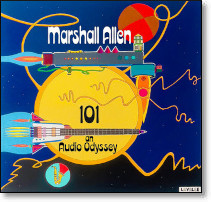
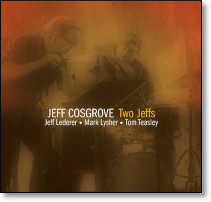
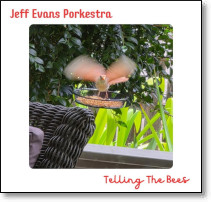
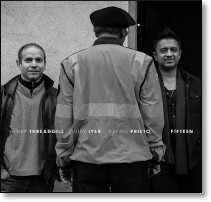
More Intro IdeasRehashing a Music Week introduction with more and more ideasI'm fairly pleased with my Music Week workflow: first an initial selection of 6-9 albums and a short introduction for a mid-to-late-week post, then an update of my website with all of the reviews (variable, but the average is close to 30), usually a day later. My subscriber list has grown from 99, where it was stuck for a couple of months, to 154. I can also say that views are about 20-25% higher for Music Week than for anything else I post here. Noted, somewhat uncomfortably, as I usually feel more confident and much satisfied when I'm writing about politics or history or philosophy or damn near anything. I need to come up with some names to distinguish the newsletter and website versions of Music Week: I've been using "advance" and "long" or "full" or "reference," but nothing feels right. Since I usually compile the reviews before writing the "advance," the full set could be available at the same time. However, I usually take a bit more time to work on the introduction: there are more reviews I can reflect on, and over the years I've tended to stick personal notes in my Music Week blog posts. Leaving that sort of thing out helps me get the "advance" versions done quicker. And I figure I can take my time with the blog post, since the most urgent news is already out. Anyhow, after posting (8:4), I found myself in an odd mood: I wasn't very happy with the intro I had posted, and I had other shit on my mind (some medical stuff, some end-of-summer blahs, a lot of frustrated projects and unresolved work. So rather than just edit what I had posted, I started again from scratch. I wrote all day Saturday, and posted what I came up with on Sunday. I wound up laying out a lot of possible work, in enough detail that I thought it might be interesting here. Plus, this gives me a chance to edit some more, and you a chance to comment. By the way, I screwed up once again and forgot to include the album covers when I mailed Music Week (8:4) out, so here you go:
◆ ◆ ◆ Some time ago, I had the thought that when I give up on the world, I'll switch from reading nonfiction to fiction. Or maybe just watch movies, which is the source of most of what I know about literature? I understand that fiction is a valid, and in some ways even superior, path to learning about the world. But what reading it lacks for me is a sense of direction and purpose. When I pick up a nonfiction book, it's usually because I have a specific set of questions, derived from some kind of research project. And I have tons of projects. I worry, though, that none will ever come to fruition, as I'm tempted to turn them over in my head endlessly. Still, what's bothering me is less the endlessness of the writing projects than the one project that I'm actually likely to force myself to complete: the 21st Annual Francis Davis Jazz Critics Poll. While I don't need to do much on this until November, and that may well be the easy way out, I've never been more conscious of how much time it will take, what the demands will be, the wear and tear, and how much more I could have done to prepare in the past. I keep telling myself that this will be my last one, but that just makes the task heavier. The poll is genuinely useful, and much appreciated by people I care about. I wonder, could we turn it into some kind of self-perpetuating institution? I have ideas on that, fewer skills, and no fucking idea how to proceed. Well, I do have some ideas. I always have ideas — just way too many of them. I'll start to sketch some of them out in the next few weeks, initially on my jpadmin email list, then as things shape up (assuming they do), on my other lists (jazzpoll is for voters, jpmedia was initially for publicists, but I might as well open it up for anyone who wants updates). One thing that's fairly urgent is that I need to figure out my email situation. Yahoo still sucks — it was working yesterday when I wrote that, but it broke again today. Beyond that, I need to review the voter list: try to figure out who to add, who to drop, and how to best communicate with them. Then there's the website. I can always hack another year onto the current framework, where each new year is cloned from the last, and hitched to the end like a freight train. But the very minor facelift I started a month ago is still far from complete, and I still haven't incorporated the last files Francis Davis sent me before his death, let alone filled in the rest of the holes. One bit of prep here would be to write a piece on the DownBeat critics poll, which came out in their August issue, just before our own poll got wrapped up in July. I still haven't looked at it, but I can refer back to my own ballot. The thing I'm most interested in is the list of voting critics — especially who votes for them but not for us? I can't grasp why would wade through their 51 ballot questions, which takes me 4-8 hours, but think coming up with a list of 10 records they like is too much work? Could it really just be the free promo cap? I'll try to get that done in the next week or two. Another newsletter piece I've been thinking about is a showcase of albums that made my 2025 non-jazz A-list, excluding those Robert Christgau reviewed that went unreviewed by Robert Christgau. The ones he reviewed are well known, and if the first pass is too long, I could even exclude artists he's reviewed in the past but missed this round (like Maria Muldaur, the Ex, Dean Wareham, Bryan Ferry). I thought about doing this after his Dean's List appeared belatedly (May 7), but got delayed. Christgau tries to narrow his focus down to about 150 albums per year, whereas I write about close to ten times that many (although if you weed out the jazz, that drops considerably). He comes up with an EOY list of 60-80, most of which I agree with. My A-list is longer (107 in 2025), but still pretty selective, and well worth checking out. Seems like it was an especially good year for underground hip-hop, but there's a pretty wide range. Perhaps it seems too late, but most end-of-year lists are way too early. I keep adding to mine all through the following year. Of course, there are many more things I'd like to write about that don't involve music. The August 27 Loose Tabs, which has since expanded to more than 22k words, not counting my summary, has lots of ideas that could be developed. I mention one there that I even have a title for: "Is It Possible to Negotiate a Gentler Genocide?" It's a hideous idea, but Israel's right-wingers are unlikely to stop until they've ground all Palestinians into dust, and no one else is able let alone likely to stop them. I've written bits of this before, but I've never quite broached the idea that Palestinians might be better off just leaving their homeland. Neither side wants to hear this, and Trump is unable to hear or act — he could even lay claim to the idea, but he's incapable of grasping the benefits of "gentler." (His ICE agenda could have gone down easier, but with him cruelty seems to be the point.) But even if Trump is followed by a president who cares (not Biden, and not Obama-Bush-Clinton either), I don't see any chance to impose a better solution on Israel, or for Israel to change before much more harm is done. And international law is a dead dream until this, practically the UN's first real crisis, can be handled. There are other mini-essays there that could easily be expanded. I talk about data centers as a political issue; about what's wrong with the ICC, and why we need something like it anyway; about Trump's feint toward North Korea; I point to the drone war in Ukraine, and which could accelerate the move toward autonomous AI weapons; I consider "has America crossed the asshole threshold?"; I puzzle over the notion of "Woke 1.0"); I have two long sections on Democratic Party strategy: whether to campaign for Trump voters (yes), and whether centrists are the answer (no); I talk about why Medicare for All is still the solution; I note an impending student debt crisis; I have a section on the Canada trade war nonsense, among many more Trump stunts, some dumb, some evil, most both; I write about estate taxes; I barely mention the Meta lawsuit settlement, as I have little sense of how much more it's attempting to cover up; I mention a book on Israel's Lobby, which I will probably read (although I doubt I have to); I also consider the late critic Dave Marsh, and my relationship to him. I could spend the rest of the year on such things. One specific piece I've been thinking about is an effort to sum up the five worst things Trump has done. The idea started as a top ten, but I want to focus as tightly as possible on the very worst things, at a fairly high level, and not get sucked into collecting list lists: otherwise, one could easily run on to 50, or 500. This is a first pass at such a list. The order isn't ranked, but it is roughly chronological in terms of impact, if not strictly date.
Sure, that's six points, but they all fit together, and do a pretty good job of summing up the problem. Although I suppose, if I had to get down to five, the sixth could go "without saying," reserved for an "as if all that wasn't bad enough" conclusion. But originally I had slated it first: even before we knew what he would do, we knew for certain that his time would be lost. That's what makes his presidency so utterly corrosive of hope. It's not just that people were foolish enough to vote for him. It's that they're powerless to correct their mistake. But the wasteland of the second Trump presidency need not be for nought. I've imagined a second piece, more speculative of course, which lists things that Trump has done that will make it easier to respond with measures that finally live up to the real problems we face. For starters, he's demolished the credibility of the centrist ("pro-business") camp in the Democratic Party, both as political strategists and as a policy wonks. Much of his pitch has been to characterize Democrats as corrupt and feeble, so it should be easy to turn those tables on him. He's also discredited the notion of defense through deterrence, although Democrats are slower to point that out, and are often confused in their sense of world order. They need to build up a thorough critique of the abuse of power, and of the greed that drives it. What's wrong here is amply demonstrated by Trump. What's needed is an alternative, which gives people the rights and tools to resist this abuse. That's a work in progress, hotly debated on the left. It's arguably radical — certainly in the sense of the 1966 Paul Jacobs/Saul Landau book that first caught my political imagination — but that may be the clean break we need. I've developed a theory that a large segment of Americans really wanted some kind of revolution in 2016, but were denied any sort of meaningful change from the left (which appeared as Bernie Sanders) — blame this on the Democratic Party, if you want, but I think the corporate media had much more to do with defining what was allowed and not. On the other hand, Trump tapped into the same spirit of revolution without any risk of offending corporate America (oligarchy), and that drew just enough people in to tilt the vote. Obviously, if you had a left analysis, you didn't fall for Trump, but how many people really did? I got mine the hard way, reading Genovese, Sweezy, and Adorno, but my orientation came earlier, in reaction to 1960s failure of liberalism to deliver peace, justice, and freedom. But if you didn't, and weren't among the people that Trump obviously hated, you might be gullible enough to think that someone like Trump would fight selflessly for you, go to Washington, "drain the swamp," and vanquish all your imagined and real enemies. Whatever else, Trump promised change. Even in 2024, clearly out for revenge and redemption, he came off as the revolutionary, while Harris courted the establishment rich. And what he's done since taking office surely counts as some kind of revolution. While he hasn't seized power as completely and dramatically as Hitler in 1933, that's not for scruples, and not for lack of will. It's harder to do in America, where power is more widely scattered, especially in private institutions. Still, is is disturbing that he's seized as much power as he has: proof, I think, that America wasn't built to suffer so much inequality, and was never free from the temptation of bribery. I grew up admiring revolution: especially the American, and as I increasingly identified with the left, with others like the French, the Russian, and the Chinese: even if they didn't turn out as well as one had hoped, the old orders clearly needed to be swept away. But as I grew older, I came to see revolution not as heroic striving for a better world, but as proof that the old regimes were both fatally flawed and incompetently managed. Over the last century, real progress toward greater equality and broader wealth has usually been achieved peacefully, without the nasty side-effects. And during that period, leftists have adopted non-violent tactics, while the right has stuck to its brutalist faith in force. I'm not alone in this: very few on the left in America look forward to revolution. (Bernie Sanders' carefully couched "political revolution" line always bothered me, even though I was pretty sure I understood and approved of what he meant: a radical change of heart, peacefully attained.) So I've largely come around to the idea that the only revolutions that are possible today are ones from the right, and the only thing they can do is to cause pain and destruction. And, indeed, that's about all you can say for Trump's revolution. But we've often seen violence backfiring, and we've seen some of that already with Trump. It's likely that such violence will be part of his undoing, and that this will lead to a broader rejection of force as a tool of political compliance. I could speculate more, but these things will happen soon enough. Of course, there is much more I've been thinking about. I read a book on Venezuela, and I'm following that up with Acemoglu & Robinson's Why Nations Fail — Venezuela being a pretty good example, although probably not in the book. I should write a piece on the failures of the Chavez-Maduro regimes, and also what Trump is doing there: why his oil bounty looks to Trump like a massive win, and why it's really just another chapter in the misery there, and in the Trump's debacle here. The central point of Why Nations Fail is that success depends on building a central state which distributes power to a broad base of institutions. The US has done this going back to well before Independence, but now we find Trump tearing them down to extract profits and enhance his own power: a formula that has led to ruin everywhere, including in Venezuela — and not just under Chavez and Maduro, as extractive governments have been the rule going back to the Conquistadores. I've also read several more books on Israel, and specifically on Jewish anti-Zionism, so I will have more to say about that. I also have more books on Israel waiting, and still mean to do at least one more post on Agha & Malley's Tomorrow Is Yesterday.) I've also read a small pile of books on AI, which I'm starting to figure out. One not-too-distant project is to sign up for some tools, and start using them, mostly for research, but also perhaps for organizing my own writings. In fact, I can think of lots of interesting technical projects, enough to dispense with writing (even on music) altogether. Of course, dropping the music is an idle threat. As I noted above, looking at my Substack stats, the music reviews get a good 30% more attention than anything else I write. Especially when I ramble, as I suspect I'm doing here. Still, at this point, I'd probably be much happier if I could just round up some friends and cook. That seems to be about my size limit on projects, and I has the immediate gratification of telling me whether I did good or not. I'm already thinking about birthday dinner. Seems like it's finally time to do Italian, but narrowing the menu down is going to be difficult. And while Wichita isn't bad for many world cuisines, for some reason Italian is a real weak spot. I can't even really recommend a local restaurant, although perhaps I'm still spoiled from my years in New York City. Notes on Everyday Life, 2026-08-31 |