|
Tuesday, January 20, 2015
Music Week
Music: Current count 26129 [26097] rated (+32), 402 [389] unrated (+13).
Missed my usual Monday deadline this week. Stuff happens, most of
which is getting me down.
Rated count dropped back into normal range, although that may just
be because I lost Sunday to cooking (Italian, for six). I played old
favorites that day, winding up with Ben Webster's Soulville --
I'm tempted to bump it up a notch to A+, but the CD player (a Sony
CDP-CD345) was dead this morning, so it will be some time before I
play anything on the good stereo. I suppose I can still play CDs on
the computer, but that's not really the same thing (and I've never
done it except to test the sound system). I can still stream stuff,
so there'll be more of that in the next week or so until I sort this
out. The problem is in the mechanics: the motor, gears, belts, or
what have you that are used to open the tray and change discs. I've
gone through four or five CD changers in the lifespan of one receiver,
and they seem to be getting crappier all the time. They're also not
getting cheaper (actually, I mean less expensive; a free market should
weed out planned obsolescence, but when have we had one of those?).
Pazz & Jop came out last week. I meant to do some of my usual
analysis this week, but that got wiped out with the rest of the week.
The album totals are
here, compiled by Glenn McDonald. I've noted the standings
there in my
EOY Aggregate, scoring
them like a regular list (which means 1 point for everything from
21st to the end). Some notes:
There were 481 voters this time, out of a "thousand plus"
invites sent out (past years have had close to 1500, but they're
less forthcoming this year. Kendrick Lamar was on 43.6% of those
ballots; Courtney Barnett 34.6%; no one else more than 20%. The
top three point totals were 2639-1872-1073, so huge margins for
Lamar and Barnett. The former was no surprise at all. The latter
shouldn't have been, but Sufjan Stevens has been securely ranked
second in my EOY aggregate ever since Lamar passed him. P&J
reliably values American hip-hop more than my EOY Aggregate,
which includes dozens of British and European lists. Kendrick
Lamar topped both lists by large margins, but below nearly every
US hip-hop artist gained from EOYA to P&J:
- Vince Staples: Summertime '06: from 12 to 7
- Drake: If You're Reading This It's Too Late: 19 to 18
- Future: DS2: 20 to 17
- Miguel: Wildheart: 22 to 14
- Donnie Trumpet & the Social Experiment: Surf: from 32 to 15
- Shamir: Ratchet: 34 to 31
- The Weeknd: Beauty Behind the Madness: 35 to 19
- Earl Sweatshirt: I Don't Like Shit, I Don't Go Outside: 39 to 26
- Dr Dre: Compton: A Soundtrack: 41 to 56
- ASAP Rocky: At.Long.Last.ASAP: 52 to 65
- Rae Sremmurd: SremmLife: 64 to 40
- Young Thug: Barter 6: 66 to 32
- The Internet: Ego Death: 67 to 57
- Jazmine Sullivan: Reality Show: 94 to 39
- Dawn Richard: Blackheart: 100 to 29
On the other hand, Sleaford Mods: Key Markets dropped from
36 to 122, and Young Fathers dropped from 56 to 120. My theory for
the two drops on this list (Dr. Dre and ASAP Rocky, but especially
the former) is that the albums sucked. I won't try to dig through
the data, but I think there's a fairly decent correlation between
quality (as measured by the gold standard of my grades) and the gain
from the EOYA baseline to P&J.
It would be helpful if P&J made available demographic data
on the electorate. I imagine that at least 95% of the voters are
Americans (or at least based in the US), and that helps tilt the
electorate toward US hip-hop. On the other hand, the voters are
probably 90-95% white, and the number of hip-hop specialists is
probably quite small. Note that the biggest gains in my hip-hop list above were
posted by women (Dawn Richard, Jazmine Sullivan). P&J voters
are also more likely to favor women artists relative to the EOYA
baseline. To wit:
- Courtney Barnett: Sometimes I Sit and Think, and Sometimes I Just Sit: from 3 to 2
- Grimes: Art Angels: 7 to 4
- Julia Holter: Have You in My Wilderness: 8 to 33
- Sleater-Kinney: No Cities to Love: 10 to 5
- Bjork: Vulnicura: 11 to 23
- Joanna Newsom: Divers: 13 to 16
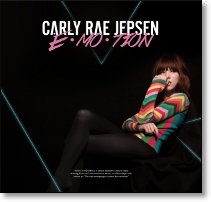
- Carly Rae Jepsen: E-mo-tion: 16 to 3
- Beach House: Depression Cherry: 23 to 38
- Adele: 25: 27 to 35
- Natalie Prass: Natalie Prass: 42 to 67
- Lana Del Rey: Honeymoon: 46 to 61
- Kacey Musgraves: Pageant Material: 47 to 20
- Wolf Alice: My Love Is Cool: 49 to 115
- Florence + the Machine: How Big How Blue How Beautiful: 50 to 64
- Hop Along: Painted Shut: 59 to 22
- Laura Marling: Short Movie: 61 to 112
- Torres: Sprinter: 65 to 28
- Chelsea Wolfe: Abyss: 71 to 176
- Jenny Hval: Apocalypse Girl: 72 to 112
- Ibeyi: Ibeyi: 74 to 143
- Beach House: Thank Your Lucky Stars: 78 to 118
- Waxahatchee: Ivy Tripp: 79 to 37
- Susanne Sundfor: Ten Love Songs: 83 to 72
- Jessica Pratt: On Your Own Love Again: 90 to 63
- Jazmine Sullivan: Reality Show: 94 to 39
- Dawn Richard: Blackheart: 100 to 29
- Ashley Monroe: The Blade: 102 to 36
- Rhiannon Giddens: Tomorrow Is My Turn: 105 to 52
The trend is a bit less pronounced here, because other styles and
the US/UK split enter into the matter, and because the electorate is
probably 80-85% male (I counted once, but don't recall the numbers).
To sharpen it a bit I dropped
two non-singers (Holly Herndon, who dropped from 21 to 78, and Maria
Schneider, 69-289). I also extended the EOYA cutoff to 110 to pick
up Monroe and Giddens (no hip-hop artists in that range, but the next
one down, Heems, got a bump from 113 to 74). Among style issues,
P&J likes country (including alt) more than EOYA (aside from
Musgraves and Monroe, above, Chris Stapleton rose from 62 to 24,
James McMurtry from 107 to 51, and Eric Church from 138 to 83). On
the other hand, with rare crossover exceptions P&J has little
interest in electronica, with rare crossover exceptions, really
isn't very interested in electronica. Last week I made a list of albums I thought would finish
higher in P&J than in my EOYA. My list included several names
that did indeed make significant gains: Sleater-Kinney (10-5),
Vince Staples (12-7), Kacey Musgraves (47-20), Hop Along (59-22),
Chris Stapleton (62-24), Bob Dylan: Shadows in the Night
(81-49), Bob Dylan: The Cutting Edge (96-86), Ashley Monroe
(102-36), James McMurtry (107-51), and Heems (113-74). Others on
my list didn't do so well: Oneohtrix Point Never: Garden of
Delete (14-30), Lana Del Rey (46-61), JLin: Dark Energy
(48-127), ASAP Rocky (52-65), Arca: Mutant (57-66), Ezra
Furman: Perpetual Motion People (76-184), . Most of these
are records that had steadily gained throughout my list build.
Furman was probably just wishful thinking, given that almost all
of his support came from UK lists. Oneohtrix was my main surprise
here: it had closed strong late, was as close to hip-hop as to
electronica, and had quite a bit of US support (including an A-
from Christgau), so it seemed likely to buck the anti-electronica
bias (similar to Flying Lotus last year). Some big gains I didn't mention: Carly Rae Jepsen (16-3),
Jason Isbell: Something More Than Free (28-11), The Weeknd
(35-19), Waxahatchee (79-37), Titus Andronicus (75-50). I also
didn't look far enough down the EOYA list to even consider:
Hamilton (134-21), Royal Headache (108-44), Beach Slang (144-48),
Future: 56 Nights (194-56), Bully: Feels Like (136-62),
Colleen Green: I Want to Grow Up (342-68), Yo La Tengo: Stuff
Like That There (126-69), Julien Baker: Sprained Ankle
(219-70), The Sonics: This
Is the Sonics (356-73), Speedy Ortiz: Foll Deer (159-77),
Joan Shelley: Over and Even (253-80), Laurie Anderson:
Heart of a Dog (193-83), JD McPherson: Let the Good Times
Roll (226-94), Erykah Badu: But You Caint Use My Phone
(218-95), Beauty Pill: Describes Things as They Are (492-97),
Jeffrey Lewis: Manhattan (211-98). The biggest surprise for
me was Jepsen, despite being aware that the album made substantial
gains over time. Hamilton was less of a surprise, but it's
such an unusual item (and appeared so late in the year) there were
no obvious rules for how it might move. I hadn't even been aware of
it until Rolling Stone -- almost alone among publications --
listed it 8th. (Its only other top ten placement was number 2 at
Billboard.) I played it, and found it a rather unique item --
a trait some like a lot, while most of the rest of us simply put it
out of mind. (I quibbled more with the tone than with the facts of
the history -- I never thought of Hamilton as an immigrant striver;
he seemed much more to be a proto-Napoleon, an empire-builder. Of
course, constant contrast to Burr makes him look good. As for as
the music is concerned, I appreciate the hip-hop as a joke, but
it's clear to me Lin Manuel-Garcia draws more on the hack-musical
tradition than any other resource.) I didn't attempt to predict many losses: I flagged Julia
Holter (8-33) and Kamasi Washington (9-8) as possibles, and Blur
(15-53) and Sleaford Mods (36-122) as probables, and thought
Adele (27-35) could go either way. Otherwise, I rather expected
everything on the EOYA list that wasn't rising would fall a bit
but roughly maintain order. To some extent that happened toward
the top of the list: Sufjan Stevens: Carrie and Lowell
(2-6), Jamie XX: In Colour (4-9), Father John Misty: I
Love You Honeybear (5-10), Tame Impala: Currents (6-12),
Bjork (11-23), Kurt Vile: B'lieve I'm Goin Down (17-27).
Beyond that most of the exceptional drops were genre-related:
electronica: Jamie XX (4-9), Chvrches: Every Open Eye (31-41),
Arca (56-66), Floating Points: Elaenia (29-76), Holly Herndon
(21-78), Four Tet: Morning/Evening (82-104); jazz: Maria
Schneider (69-289), Rudresh Mahanthappa: Bird Calls (99-190),
Vijay Iyer: Break Stuff (98-232); metal: Deafheaven: New
Bermuda (24-54), Ghost: Meliora (84-104), Faith No More:
Sol Invictus (63-125), Tribulation: The Children of the
Night (95-143), Iron Maiden: The Book of Souls (73-179);
and something I can only disparage as damaged art rock: Holter (8-33),
Unknown Mortal Orchestra: Multi-Love (30-106), Tobias Jesso
Jr: Goon (44-102), Godspeed You! Black Emperor: Asunder
Sweet and Other Distress (77-538) -- but note that Beauty Pill
was an exception. Kamasi Washington: The Epic (9-8) is a unique case.
The idea that it might drop was largely based on the fact that it
got reasonably good support among jazz critics (4th place in the
Jazz
Critics Poll, I pick up a lot of jazz lists, and P&J has
very few jazz critics voting. Take those jazz critics away and
The Epic finishes a few slots lower (12-15th). I also
noted that it did exceptionally well in Europe, and that would
work against it in P&J. I also don't think it's all that
great (and as I noted, records I don't like tend to sink), but
it's also a fairly unique item if you get into it, and I've long
suspected that there is a latent jazz audience waiting for
something to break out of the tradition and the school system.
So it wasn't certain to drop, but I wouldn't have been surprised
if it did. And now we know that it held its own, passing four
records ahead of it (Stevens, XX, Misty, and Holter) while getting
passed by three others (Jepsen, S-K, and Staples). Maybe I should
be hopeful that more such crossovers will follow, but I still
rather think it's a fluke. The vote distribution has a long tail: only 2 records appear
on more than 20% of the ballots, 14 on more than 10%, 32 on 5% or
more, roughly 100 on 2%, roughly 200 on 1%, and more than 1200 on
fewer ballots (the highest single ballot album came in 267th).
Relative rankings are pretty much meaningless after 250th place
(if not more like 200th). I've long felt that the poll would be
much more interesting if you allowed voters to cast longer ballots --
to fatten up that tail -- where 11-20 are accorded 3 points (vs.
minimum 5 for the top 10), 21-30 2 points, and everything after
that 1 point. The marginal points wouldn't have much impact on the
totals, but they would make it much easier to analyze the voting
base and the affinities of individual voters. The poll could also
solicit various forms of demographic information. I'd also like to
construct a taste profile where voters rate a selected list of
records independently of their rankings. More work, sure, but a
lot more useful data. (I did use the expanded voting scheme on a
couple of polls I ran on the Christgau website, and I thought it
worked well -- the voter base was small and pretty homogeneous,
so the extra data helped a lot.) - Glenn McDonald also calculates a number of extra metrics to
help explain the data (explanation
here). Aside from
kvltosis, which attempts to find records that were popular among
voters who stayed clear of the really popular records -- a dialectic
which can elevate records favored by smallish cliques (like jazz and
metal) rather than true obscurities -- McDonald's other categories
have meaningful names which undermined by peculiar definitions. One
you can sort of understand is
enthusiasm: the ratio of points to votes. The list it generates
is a mix of poll leaders (6. Lamar, 14. Stevens, 16. Jepsen, 23.
Washington, 25. Barnett, 28. Grimes) and low-vote albums where odds
suggest that there will be a wider spread of vote value. To limit
the latter effect, McDonald only lists albums with 5+ votes: the
result is that the top three have 5-6 votes, and half of the top
40 have 10 votes or less. Some of those certainly do show albums
that only a small circle likes a lot (like #19 Laurie Anderson,
or with a wider circle #4 Hamilton) but some are statistical
flukes.
Several of McDonald's terms seem almost as arbitrary as their
definitions. Hipness, for instance, favors album voters who also
voted for singles over those who didn't. I've been on both sides
of that equation, and hardly feel hipper for having filled out a
singles list this year. The
Hipness
list itself may steer slightly toward pop, but mostly looks like
noise to me. Except, that is, for the bottom five (min. 5 ballots):
Dave & Phil Alvin: Lost Time, Ezra Furman, Jeffrey Lewis,
Laurie Anderson, and Yo La Tengo. Michael Tatum must be kicking
himself for not filing a singles ballot this year (also Robert
Christgau and Cam Patterson). I'm not going to bother with deconstructing McDonald's other
terms, like Monolithity, Vitality, and Singularity, none of which
mean anything you can imagine. I will note that I personally followed
a voting strategy which undermines those categories: I deliberately
only picked singles from albums I didn't pick. I don't know how
common that strategy is -- you'd largely eliminate it by allowing
more than 10 album picks -- but it complicates using singles data
to gain insights into voters. (I'll note, for instance, that Dan
Weiss moved up on my "similar ballots" list because I literally
cribbed some singles from his ballot. We did have two albums in
common -- Barnett and Heems -- enough to put him on my list, but
further down.) I will comment on Metalism, a category which exists
only because McDonald is a Metalist (#5 this year). The same concept
could be applied with any reasonably identifiable genre -- hip-hop,
country, jazz, electronica, Latin, African, etc. As someone who is
the proud owner of a .000 lifetime metalism score, I dare say
anything else would be more interesting. My own ballot-plus-analysis is
here,
including previous ballots back to 2008 (used to calculate Breadth,
another concept I find statistically dubious). The Centricity score
is more useful: it measures how much overlap a voter has with the
poll average, so the people who go with the crowd have high scores
(I find it curious that I only recognize 2 of the 20 most centric
voters) and those who abhor crowds have low scores. My centricity
scores have averaged .131, with a low in 2014 of .061, but reached
a record high this year at .234, almost exclusively on the strength
of voting for Courtney Barnett: 166 other votes; after that it's
James McMurtry (16), Heems (11), Laurie Anderson (8), Sleaford Mods
(6), Henry Threadgill (4), Irene Schweizer (2), Lyrics Born (1),
and Paris (1). I could have totally goosed my score by voting for
Kendrick Lamar, which would have placed in my top 20, but as much
as I admire the album, I still don't really feel it (and I've played
it twice since voting), nor did I feel like wasting a vote (that
ultimately went to Heems but probably should have gone to a third
jazz album, Schlippenbach Trio or Chris Lightcap). The point being
that these numbers are volatile, depending as much on strategic
choices as taste. All of the EOYA values listed above are taken from last week's
file. Since then I've added in a bunch of new lists, plus noted all
the P&J results. I'll add more data over the next few days, but
I'm getting pretty close to done. Main thing I will be doing is jumping
from individual ballot to ballot. For instance, I'll check out everyone
I don't already know who has a similar ballot to mine. (Michael Tatum,
not for the first time, topped that list.) Ever since the Voice built
its database-driven P&J reporting system this kind of hopscotch
has been its most useful feature, allowing you to repeatedly pose the
questions: who likes the albums I like, and what do they also like. Also see the Hilary Hughes interview with the former Pazz & Jop
poobahs:
Robert Christgau, Joe Levy, Ann Powers, and Greg Tate on the Year That
Was. Christgau gets cranky about Hamilton, Kamasi Washington,
and Chris Stapleton, and I have to admit I basically agree with him on
those.
The big music news of the week was David Bowie's death. I was a
pretty serious fan back in the 1970s, but I have to admit that I've
been surprised by the outpouring of testaments and such. (Last time
that happened was with Michael Jackson, who like Bowie touched many
people deeper than I realized. Here are some links I collected:
I spent a few days last week going through nearly all of the Bowie
albums I had missed. I can't say that I missed much, although the song
"I'm Afraid of Americans" has only become truer. Despite the jazz moves,
I can't, however, see his new album, Blackstar, as some sort of
final masterpiece. Which isn't to deny that it is a big improvement --
his best since Scary Monsters (1980) or maybe even Heroes
(1977). (Actually, my favorite Bowie album ever is Lust for Life,
under Iggy Pop's name, which also came out in 1977.)
Finally, more EOY lists:
New records rated this week:
- The Arcs: Yours, Dreamily (2015, Nonesuch): [r]: B
- Battles: La Di Da Di (2015, Warp): [r]: A-
- The Bellfuries: Workingman's Bellfuries (2015, Hi-Style): [r]: B
- David Bowie: Blackstar (2016, Columbia): [r]: B+(***)
- Kenny Carr: Exit Moon (2015, Zoozazz Music): [cd]: B+(*)
- Bob Gluck/Billy Hart/Eddie Henderson/Christopher Dean Sullivan: Infinite Spirit: Revisiting Music of the Mwandishi Band (2015 [2016], FMR): [cd]: B+(***)
- Health: Death Magic (2015, Loma Vista): [r]: B+(*)
- Lil Dicky: Professional Rapper (2015, self-released, 2CD): [r]: A-
- Lions: Lions EP (2014 [2015], self-released, EP): [bc]: B+(**)
- Jenny Maybee/Nick Phillips: Haiku (2015 [2016], self-released): [cd]: B
- Terrence McManus and John Hébert: Saints and Sinners (2015, Rowhouse Music): [dl]: B+(*)
- John Raymond: John Raymond & Real Feels (2014 [2016], Shifting Paradigm): [cd]: B+(***)
- Adam Rudolph/Go: Organic Guitar Orchestra: Turning Towards the Light (2015, Cuneiform): [dl]: B+(**)
- Skyzoo & Antman Wonder: An Ode to Reasonable Doubt (2013, self-released, EP): [r]: B+(**)
- Skyzoo: Music for My Friends (2015, First Generation Rich): [r]: B+(**)
- The Stryker/Slagle Band Expanded: Routes (2015 [2016], Strikezone): [cd]: B+(***)
- Snarky Puppy/Metropole Orkest: Sylva (2014 [2015], Impulse!): [r]: B+(***)
Recent reissues, compilations, and vault discoveries rated this week:
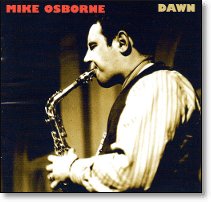
- Mike Osborne: Dawn (1966-70 [2015], Cuneiform): [dl]: A-
- Gloria Ann Taylor: Love Is a Hurtin' Thing (1971-77 [2015], Luv N' Haight): [r]: B+(*)
Old music rated this week:
- David Bowie: David Live (1974 [2005], Virgin EMI, 2CD): [r]: B
- David Bowie: Stage (1978 [2005], Virgin EMI, 2CD): [r]: B+(**)
- David Bowie: Tonight (1984, EMI America): [r]: B-
- David Bowie: Never Let Me Down (1987, EMI America): [r]: B-
- David Bowie: Black Tie White Noise (1993, Virgin): [r]: B
- David Bowie: The Buddha of Suburbia (1993 [2007], Virgin): [r]: B
- David Bowie: Outside (1995, Virgin): [r]: B-
- David Bowie: Earthling (1997, Virgin): [r]: B
- David Bowie: Hours . . . (1999, Virgin): [r]: B-
- David Bowie: Heathen (2002, ISO/Columbia): [r]: B
- David Bowie: Nothing Has Changed (1995-2014 [2014], Columbia/Legacy): [r]: B+(*)
- Sue Foley: Change (2004, Ruf): [r]: B+(***)
- Peter Karp/Sue Foley: Beyond the Crossroads (2012, Blind Pig): [r]: B+(*)
- Tin Machine: Tin Machine (1989, EMI): [r]: C+
Grade changes:
- Carly Rae Jepsen: E-MO-TION (2015, Interscope/Schoolboy/Silent): [r]: [was: B+(***)] A-
- Lord Huron: Strange Trails (2015, Iamsound): [r]: [was: B+(**)] B+(***)
Unpacking: Found in the mail last week:
- Melissa Aldana: Back Home (Wommusic): advance, March 11
- Cowboys & Frenchmen: Rodeo (Outside In Music): CD, no cover
- Blue Muse: Blue Muse Live (Dolphinium)
- Kenny Carr: Exit Moon (Zoozazz Music)
- Roxy Coss: Restless Idealism (Origin)
- Mike Freeman ZonaVibe: Blue Tjade (VOF): January 25
- Ira Hill: Tomorrow (self-released)
- Joseph Howell: Time Made to Swing (Summit)
- Christine Jensen and Maggi Olin: Transatlantic Conversations: 11 Piece Band Live (Linedown): February 15
- Matt Kane & the Kansas City Generations Sextet: Acknowledgement (Bounce-Step): March 4
- Urs Leimgruber/Alex Huber: Lightnings (Wide Ear)
- Dick Oatts/Mats Holmquist/New York Jazz Orchestra: A Tribute to Herbie +1 (Summit)
- La Orquesta Sonfonietta: Canto América (Patois): February 12
- Matt Parker Trio: Present Time (BYNK): February 12
- Jemal Ramirez: Pomponio (First Orbit Sounds Music)
- Roswell Rudd & Heather Masse: August Love Song (Red House): February 26
- Samo Salamon Bassless Trio: Unity (Samo)
- Carlos Vega: Bird's Ticket (Origin)
- Ray Vega & Thomas Marriott: Return of the East West Trumpet Summit (Origin)
Ask a question, or send a comment.
|