Blog Entries [600 - 609]Sunday, October 20, 2019
Weekend Roundup
Half a week here, after my
Midweek
Roundup came out on Thursday. Still too exhausted to write an
intro.
Some scattered links this week:
Aaron Bady:
Jedediah Purdy has an idea that could save us from capitalism and the
climate crisis: Interview with Purdy about his latest book, This
Land Is Our Land. Article doesn't live up to its premise, not all
Purdy's fault, but I've never found his books all that satisfying. Riley Beggin:
Tulsi Gabbard calls Hillary Clinton "the queen of warmongers" in her
latest clash with top Democrats. A point which was pretty obvious
after Clinton called Gabbard "the favorite of the Russians." Clinton
is also still bear-baiting Jill Stein; see Tessa Stuart:
Green Party torches Hillary Clinton for claiming Jill Stein is 'totally'
a Russian asset. I've seen people attempt to defend Clinton on this
(e.g., Charles P Pierce:
Hillary Clinton is more than qualified to judge the effectiveness of
foreign-influenced candidates), but they're rubbing salt into a
still tender wound. Russian interference in 2016 is well established
as a fact, but neither explains nor excuses Clinton's loss to Trump,
nor does it make Trump unworthy (although lots of other things do)
let alone brand him as some kind of Russian stooge. Moreover, such
charges appear to have the intent of worsening US-Russian relations,
at a time when better relations with Russia would be helpful on many
issues. When Clinton attacks Gabbard and Stein as "favorites of the
Russians," she's really warning Democratic candidates that Russia is
bad and they should repeat her 2016 sabre-rattling mistakes. That the
net effect of her attacks has been to increase Gabbard's popularity
only underscores how irrelevant Clinton has become. For something
much deeper on Gabbard, see Kerry Howley:
Tulsi Gabbard had a very strange childhood. [PS: Robert Wright
on Clinton's attacks:
Virality and virulence. Another valuable Wright post:
How the New York Times distorts our view of Syria.] Max Blumenthal:
The US has backed 21 of the 28 'crazy' militias leading Turkey's brutal
invasion of northern Syria: "Former and current US officials have
slammed the Turkish mercenary force of 'Arab militias' for executing
and behading Kurds in northern Syria. New data from Turkey reveals that
almost all of these militias were armed and trained in the past by the
CIA and Pentagon." Hannah Brown:
Wildfires are raging in Lebanon. Experts say they saw this coming.
"Fires are burning across Lebanon during a record heatwave." Jonathan Chait:
Alvin Chang:
The man who rigged America's election maps: "How Tom Hofeller shifted
the balance of power by taking gerrymandering to the extreme." William D Cohan:
"There is definite hanky-panky going on": The fantastically profitable
mystery of the Trump chaos trades: "The president's talk can move
markets -- and it's made some futures traders billions. Did they know
what he was going to say before he said it?" Related: Jake Johnson:
Democrats demand federal investigation of 'suspicious' stock sales linked
to Trump's economy-shifting trade war moves. Also:
Hey Securities and Exchange Commission, if you are watching. Someone is
trading on insider info. Chas Danner:
Ocasio-Cortez credits Sanders for her political awakening at Bernie's
comeback rally in Queens. Warren Davidson:
Trump is right: Ending the endless wars starts in Syria. This is a
little mealy-mouthed, but not exceptionally so for a House Representative
(R-OH): I'd reject "after 9/11, America had a clear cause for war in
Afghanistan" and some of the chest-beating about America's military,
but this shows that some Republicans are eager to claim the mantel of
peace, especially when Democrats cede that ground. Also note:
Dhrumil Mehta:
Republican voters are largely backing Trump's withdrawal from Syria.
Also note:
Syria critic Lindsey Graham reverses stance, says Trump's policy could
succeed. It's getting really hard to overstate how completely Trump
has the Republican Party under his thumb. Anthony Faiola:
Socialism doesn't work? An emerging middle class of Bolivians would
beg to differ. Steve Fraser:
Existential threat versus existential crisis: "The Great Depression
and the Climate Crisis, New Deals then and now." Adam Goldman/William K Rashbaum:
Review of Russia inquiry grows as FBI witnesses are questioned:
After complaining about "witch hunts," Trump and Barr order up one
more to their liking. Fred Hiatt:
It's not news that Trump is corrupt. What's new is how he is succeeding
in corrupting our government. Sean Illing:
Christopher Ingraham:
For the first time, workers are paying a higher tax rate than investors
and owners: "The proximate cause of the shift was Trump's 2017 tax
cut, which dramatically slashed taxes on corporate profits and estates."
Sarah Jones:
Bernie Sanders hasn't killed identity politics: Maybe not, but he's
defined an identity that transcends the usual boxes that Democratic Party
proponents of "identity politics" like to tick off, partly because he's
revived an old identity "centrist" Democrats have been trying to wash
their hands of (the working class), and partly because he has no desire
to make those other distinctions. Mark Karlin:
Trump isn't bringing any troops home. In fact, he has sent an additional
14,000 troops to the Mideast since May. It's just another con. Ed Kilgore:
Jen Kirby:
The UK Parliament just blew up Boris Johnson's Brexit plans:
"Parliament just voted the make the prime minister seek a Brexit delay,
even if his deal passes." Kirby previously wrote:
The UK and EU have a new Brexit agreement. But it's not a done deal
yet. More on Brexit:
Jeff Klein:
Syria, the Kurds, Turkey and the US: Why progressives should not support
a new imperial partition in the Middle East. Anita Kumar:
Trump can't stop bragging to foreign leaders about his resorts. Eric Lach:
Bernie Sanders and Alexandria Ocasio-Cortez make a show of force in
Queens. Michael Laris:
Messages show Boeing employees knew in 2016 of problems that turned
deadly on the 737 Max. Eric Levitz:
Biden's attacks on Medicare for All undermine the entire Democratic
agenda. Eric Lipton:
Trump's choice to bring G7 to his own resort would violate conflict-of-interest
law, if he weren't President. Mujib Mashal/Thomas Gibbons-Neff:
Civilian casualties reach highest level in Afghan War, UN says. Aaron David Miller/Eugene Rumer/Richard Sokolsky:
What Trump actually gets right about Syria: First paragraph back
peddles a bit: "Trump's assessment of the situation [in Syria] is not
entirely wrong." Still, their main points are spot on, even if they
aren't flattering to the American ego: "The US-Kurdish relationship
was never going to last"; "Russia is the key power broker in Syria";
"Assad is here to stay"; "There won't be a second caliphate"; and
"Syria is not a vital US interest." Turns out that Miller wrote a
book back in 2014 (ergo, pre-Trump): The End of Greatness: Why
America Can't Have (and Doesn't Want) Another Great President.
From a note on the book: "Americans are adrift in a kind of Presidential
Bermuda Triangle suspended between the great presidents we want and
the ones we can no longer have. . . . Indeed, greatness is too rare
to be relevant in our current politics, and driven as it is by
nation-encumbering crises, too dangerous to be desirable." Good
thing he got this book written before Trump came around, else he
would have had to incorporate a twist too deranged to anticipate:
a "stable genius" with "unmatched wisdom" who blundered his way
into crisis only to find himself totally lacking in whatever it
takes for "greatness" to emerge. Ally Mutnick:
Why Republicans should be worried about their chances of retaking the
House. Adam K Raymond:
World's least self aware person, Donald Trump Jr, attacks Bidens for
nepotism. Jody Rosen:
Staring down Donald Trump, the same elephant in every room.
We are not "all Greta Thunberg," but all of us know what it's like to
be ambushed by Donald Trump. He pops up on your social media feed with
hateful words and impulsive policy announcements. He flickers on TV
screens in bus terminals and airport departure lounges, forever looming
over your shoulder. He barges unbidden into your dreams. It is a condition
of being alive in America in 2019. No matter who you are or what you're
trying to accomplish, whether you're a 16-year-old working to save the
planet or an ordinary citizen trying to make it through the day with
some peace of mind intact, you will inevitably confront the specter of
Trump, drifting into the frame in a cloud of disorder and bad vibes.
Even the president's most dedicated enablers scan the sky warily,
awaiting today's cyclone, the next reckless, capricious twist of the
plot. The door swings open, the president enters, all heads turn. The
camera whips around, and suddenly, everything else -- better angels,
higher ideals, common decency, common sense, beauty, truth -- blurs
into the background.
Matthew Rosenberg/Kevin Roose:
Trump campaign floods web with ads, raking in cash as Democrats struggle.
Aaron Rupar:
Alexander Sammon:
The miseducation of Mean Pete: "Once the Rhodes Scholar version of
Mister Rogers, Buttigieg has become the snarling incarnation of anti-left
rage." You know, I've long suspect that a big part of the pitch centrist
Democrats make to their donors, even if only implicit, is that they will
help business by, among other favors, keeping the left contained. That's
part of why Clinton and Obama hardly ever lifted a finger to help labor,
and it's part of why they felt few qualms about surrendering control of
Congress, thereby giving up any chance of implementing the progressive
platforms they successfully ran for president on. Buttigieg has done an
impressive job of raising money from those same donors, only he's having
to be much more explicit about carrying their water, and in 2019 those
donors are much more worried by the left than they are by Trump and
the Republicans. His eagerness to do that has made him a viable niche
candidate, but when it comes to converting money to votes he may find
himself pinned down way too narrowly. A related article from June 25:
Do Pete Buttigieg's donors know him better than we do?: "The South
Bend mayor has become a darling to Silicon Valley and Wall Street elite.
That alone is a red flag." Greg Sargent:
Jon Schwarz:
What I learned from the debate: Democrats still can't level with voters
about the American empire. Related: Alex Emmons:
Trump's chaotic Syria exit puts anti-war 2020 Democrats in a delicate
spot. Schwarz also wrote:
The US is now betraying the Kurds for the eighth time. Philip Shenon:
'A threat to democracy': William Barr's speech on religious freedom
alarms liberal Catholics. Gregory Shupak:
Media alarmed by US pullout from Syria -- which didn't actually happen.
David Smith:
US justice department resumes use of death penalty and schedules five
executions. Matt Stieb:
As Trump fumes, GOP advances real party goal of making federal judiciary
great again. Keeanga-Yamahtta Taylor:
When the dream of owning a home became a nightmare: "A federal
program to encourage black homeownership in the 1970s ended in a flood
of foreclosures." Jeffrey Toobin:
William Barr's wild misreading of the First Amendment. Paul Waldman:
A new report suggests Trump may have committed financial crimes. Benjamin Wallace-Wells:
The French economist who helped invent Elizabeth Warren's wealth tax:
Gabriel Zucman. Alex Ward:
Trump loves dictators. Erdogan is the latest to take advantage of that.
I don't think it's right to call Erdogan a dictator. He holds his office
due to winning a reasonably open election (although he has used surviving
an attempted military coup as an excuse for consolidating power in ways
that may undermine future democracy). Many of the other "dictdators" Trump
seems to admire were also elected, including Putin (Russia), Modi (India),
Bolsonaro (Brazil), and Duterte (Philippines), but so was the only one
Trump has actually called a dictator: Maduro (Venezuela). Clearly, he
has little appreciation of, or concern for, the democratic process -- no
surprise, given that he was elected with the flimsiest popular mandate of
any of the above, but also because right-wingers are always contemptous
of democracy, perhaps because even they suspect that their rule is
unwarranted.
The Syrian ceasefire the US brokered is already falling apart.
Top Trump official throws Giuliani under the bus in impeachment inquiry
statement. Matthew Yglesias:
Impeachment is too important to leave to Congress -- it's going to take
mass mobilization. I don't want to rain on anyone's desire to march,
but I don't really buy this, even before discounting the inapplicability
of various foreign examples. If impeachment happens, it's going to be
done on narrow legalistic grounds, and it's not going to change power
dynamics in any way. Mike Pence would replace Trump as president, he's
pretty much hand-picked the cabinet anyway, and Congress would remain
divided and ineffectual as at present. Sure, it's merited, and sure, it
would be a chastising lesson for future presidents. Most of all, it
presents an educational opportunity. But nothing significant can change
until the 2020 elections, so that's where most of that pent-up energy
should be directed. Well, that and keeping the frameworks for the rest
of the political struggle viable, because even if the Democrats win big
in 2020, we're still going to need a peace and social justice movement,
union organizing, environmental awareness, and so forth. Li Zhou:
Ask a question, or send a comment.
Thursday, October 17, 2019
Midweek Roundup
Sometime Wednesday afternoon it occurred to me that I might as well
go ahead and round up the first rush of Democratic debate links for
the Weekend Roundup. Then I wondered whether I could just dispatch
them early, in a Midweek Roundup (something I've done a couple times,
but not often). So here's what I rounded up by bedtime. Not many
comments, other than to note that the "conventional wisdom" on Syria
is not only worse than what Tulsi Gabbard has to say, it's worse
than Donald Trump (see, e.g., his dismissal of Lindsey Graham,
below).
Some scattered links this week:
FiveThirtyEight:
Cristina Cabrera:
Graham threatens to become Trump's "worst nightmare" in escalating
feud: This promises to be more fun than Graham's two-plus years
of utter sycophancy, but amidst all the insanity Trump has spouted
over the last week, he sure has Graham's number:
Trump, however, doesn't seem to particularly care what his closest
Senate ally thinks.
"Lindsey Graham would like to stay in the Middle East for the next
thousand years, with thousands of soldiers fighting other people's
wars," Trump told reporters on Wednesday afternoon. "I want to get
out of the Middle East."
Trump said Graham ought to focus on "the judiciary" and investigating
Trump's "deep state" conspiracy theory instead.
"That's what the people of South Carolina want him to focus on,"
the President said. "The people of South Carolina don't want us to
get into a war with Turkey, a NATO member, or with Syria. Let them
fight their own wars."
Alexia Fernández Campbell:
No one has a damn clue how many jobs will be lost to automation. Matthew Chance:
Putin is on a victory lap of the Middle East. I suspect this is
overstated, and of little practical import, but it does reflect the
fact that the US has seen its reputation as a benefactor and power
erode after decades of incoherent, reckless, and obsessive actions
(not least its subservience to Israel). Moreover, America's position
is likely to deteriorate further, especially as American public
opinion turns against Saudi Arabia, Turkey, UAE, and Egypt -- a
conjuncture of Islamophobia on the right and anti-authoritarianism
on the left. Trump's unique contribution to this is that he's
convinced many despots in the Middle East that they no longer have
to choose between the US and Russia. Patrick Cockburn:
Turkey's Syria invasion rapidly backfiring for Ankara. Jonathan Cook:
Israel prepares to turn Bedouin citizens into refugees in their own
country. Tom Engelhardt:
American Brexit: "It's not just Britain headed for the subbasement
of imperial history." Kareem Fahim:
Turkey's Erdogan presses offensive in Syria boosted by a nationalist
surge at home. Doesn't that often happen in the early days of a
war, before blowback occurs and the consequences sink in? Tara Golshan:
Bernie Sanders's plan to reshape corporate America, explained. Rebecca Gordon:
Extorting Ukraine is bad enough, but Trump has done much worse. Ben Hubbard, et al:
In Syria, Russia is pleased to fill an American void. Sean Illing:
The racial pessimism of Clarence Thomas: Interview with Corey Robin,
whose new book is The Enigma of Clarence Thomas. Sarah Jones:
Trump 'surprised' the grieving parents of a British teen at the White
House. Ed Kilgore:
Moderators and rivals pound Warren on middle-class tax-hike evasions.
It's a rather dumb question, implying that middle class people aren't
paying for health insurance now, where in fact they're paying through
the nose into a scheme that squeezes them harder every year. Jen Kirby:
Ezra Klein:
Sorry, but Democrats need to talk about Hunter Biden. "Trump won't
be."
In 2016, Bernie Sanders famously refused to attack Clinton's emails in
the debates. "The American people are sick and tired about hearing about
your damn emails," he said to applause. The result was that rather than
Democrats realizing how damaging that story was -- and how ineffective
Clinton was at putting it to rest -- during the primary, they found that
out in the general election. And yes, the media deserves the blame for
the coverage decisions, but Democrats can't simply assume the media won't
make the same mistakes in 2020. The lesson of Clinton's emails is that
unfair smears can help Donald Trump get elected.
One thing that might help here would be to never let an answer to
this question go more than one sentence without bringing up Trump and
his family of leeches. Then feel free to point out more examples of
families profiting from their genes, like the Bushs, the Cheneys, the
Romneys, and (sure) the Kennedys. Nepotism is an endemic problem in
America, but it's worse in times of greater inequality and corruption,
like now. Maybe go on and offer a back-handed compliment to the Bidens,
who at least have the decency to recognize that even the appearance
of impropriety is something that needs to be avoided. Of course, this
approach would work better if the candidate isn't Joe Biden, but even
he could handle the question much better than he did in the debate. Eric Levitz:
PR Lockhart:
Forth Worth officer charged with murder in killing of black woman in
her own home. Dylan Matthews, et al:
5 winners and 3 losers from the October Democratic presidential debate.
Winners: Bernie Sanders; Elizabeth Warren; Pete Buttigieg; opioid epidemic
activists; universal basic income. Losers: Tulsi Gabbard; Joe Biden; free
trade. My biggest problem with these judgments concerns Gabbard. Zack
Beauchamp charges her with "a series of blatantly false statements,"
but the first one he points out is "the regime change war we've been
waging in Syria." He flatly asserts that "The US is not waging a war of
regime chance in Syria (as Biden pointed out later in the debate)," but
the US was an early supporter of anti-Assad forces, way before ISIS
emerged as a factor in the war. ISIS gave the US an excuse to use air
power and ground troops in Syria, but the US never wavered in its
opposition to the Assad government (even while fighting ISIS undercut
the opposition and helped Assad stay in power). Beauchamp repeats the
"regime change war" canard several times, and applauds Buttigieg for
his "succinct and devastating" putdown of Gabbard: "You can put an
end to endless war without embracing Donald Trump's policy, as you're
doing." But Gabbard has been much more consistently opposed to Trump
on Syria than her critics, who seem to have forgotten how we got into
this horrible, nasty war in the first place. You can read the debate
transcript in
Here's what the 2020 Democrats are saying about Trump's Syria policy.
Warren's statement there isn't bad: "We need to get out but we need to
do this through a negotiated solution." A President Warren might even
be able to do that. Indeed, the best solution to all of America's many
foreign policy problems would be negotiation, aimed at replacing the
myopic projection of American power with mutually beneficial international
frameworks. But Gabbard is less deluded by American myth than any other
candidate, and that clarity helps her here. (Where she falls down is not
having the commitment to justice that you see with Sanders, or for that
matter with Warren.) But Trump is incapable of negotiating anything, not
least because he has no sense of decency himself, so his own sloppy exit
is probably the best one can hope for now. You could even say that what
he's done is accidentally brilliant: by double-crossing first the Kurds
then the Turks in rapid succession, he has pivoted US policy in favor of
consolidating Assad's power, which is at present the only viable path to
peace in Syria. No reason to think he was smart enough to figure that
out himself, but maybe Vladimir Putin was. Trump's unique contribution
was in being too insensitive to object. Ian Millhiser:
Ella Nilsen/Li Zhou:
House Republicans joined Democrats in condemning Trump's actions in
Syria. Vote was 354-60. Anna North:
Ronan Farrow's new book is a reminder of how silencing women helped
Trump get elected: Book is called Catch and Kill: Lies, Spies,
and a Conspiracy to Protect Predators. Also on the book: Daniel
Lippman:
Ronan Farrow: National Enquirer shredded secret Trump documents. Delia Paunescu:
The fourth 2020 Democratic presidential debate, explained in under 25
minutes. Andrew Perez:
Documents reveal hospital industry is leading fight against Medicare for
All. Kelsey Piper:
Tom Steyer shouldn't be running for president. Frank Rich:
There are only 5 candidates still standing after the latest Democratic
debate: He's counting Joe Biden out, which seems a bit premature,
so you can probably guess the rest: Warren, Sanders, Harris, Buttigieg,
and Klobuchar. Assumption seems to be that the latter two-three will
pick up "moderate" support as Biden falters/flails. I think that may
misread much of Biden's support: what they like about him is that he
comes off as a solid, old-fashioned Democrat, safe and respectable,
at a time when Republicans have every structural advantage and have
never been more dangerous. Others may have similar platforms, but no
one else has that particular vibe, or comes close. David Roberts:
California's deliberate blackouts were outrageous and harmful. They're
going to happen again. Aaron Rupar:
Giuliani's $500,000 payout from Fraud Guarantee reveals the hypocrisy of
his attacks on Hunter Biden: "Giuliani is staunchly opposed to cashing
in on political connections -- unless he's doing it."
Greg Sargent:
Mick Mulvaney's role in the latest Trump scandal just deepened.
Sabrina Shankman:
Trump wants to erase protections in Alaska's Tongass National Forest,
a storehouse of carbon.
Emily Stewart:
Kamala Harris's call to suspend Trump's Twitter account, explained.
"It's complicated." I rather doubt that. Steve M.
This is why it's not worth shutting down Trump's Twitter.
Matt Stieb:
Matt Taibbi:
In Democratic debate, more evidence that Ukrainegate helps Biden:
"The more Democrats rally around Joe Biden, the clearer Donald Trump's
path becomes."
Benjamin Wallace-Wells:
Is this Elizabeth Warren's Democratic Party?
Alex Ward:
Matthew Yglesias:
Ask a question, or send a comment.
Monday, October 14, 2019
Music Week
October archive
(in progress).
Music: current count 32212 [32183] rated (+29), 229 [229] unrated (+0).
Cutoff was Sunday evening, after posting
Weekend Roundup. Didn't have all of the unpacking done, so unrated
count is a bit low. The two A- records came early in the week. Both
are available on Bandcamp:
Drumming Cellist,
Abdallah Ag Oumbadougou. There's a good chance that The Rough
Guide to the Roots of Country Music might have hit A- on a second
or third play, but not having the booklet, having to spend close to
an hour checking dates, and the suspicion that I've heard everything
there elsewhere didn't dispose me to be especially generous.
I saw a little bit (maybe 10%) of Ken Burns' Country Music
PBS series. Not much there I didn't already know, but thought what
I saw was pretty useful -- certainly didn't strike me as distorted
and deceptive, like his Jazz series. As far as I can tell,
the only product tie-ins are called The Soundtrack, available
in both a 2-CD edition and a 5-CD box. I don't like streaming boxes --
actually, I don't have the patience, in large part because it's hard
to break them up in to listenable chunks, and there's no booklet to
help you keep score -- so I probably won't bother, but the tracklists
look impeccable. Probably not as good as Classic Country Music:
A Smithsonian Collection (also 5-CD), but better than Columbia
Country Classics (from 1990, also 5-CD). Virtually no overlap with
Rough Guide, for reasons that hardly need explication.
I read about the Exbats in last week's
Robert Christgau's Consumer Guide. If the link doesn't seem to
work, maybe you should subscribe? I was pleased to find my previous
A- picks for Chance the Rapper and Tyler Childers as good or better.
Also that he found more than I did in Black Midi, Chuck Cleaver,
Rapsody, and Sleater-Kinney. Some folks have asked about
XgauSez. It's
on a new schedule, fourth Wednesday of each month, and subscribers
will get it delivered to their mailboxes.
Continuing to plug things into my
tracking and
metacritic files, which
is helping me keep up to date. For instance, I can tell you the
best-reviewed new records of the week (10-11):
Big Thief: Two Hands (15);
Kim Gordon: No Home Record (12);
Elbow: Giants of All Sizes (8).
Best-reviewed new records of the previous week (10-04):
Angel Olsen: All Mirrors (24) [*];
Nick Cave & the Bad Seeds: Ghosteen (22);
Danny Brown: Uknowhatimsayin¿ (16) [***];
Wilco: Ode to Joy (10);
DIIV: Deceiver (9).
New records I most want to track down:
Yazz Ahmed: Polyhymnia;
Jaimie Branch: Fly or Die II: Bird Dogs of Paradise;
Bill Frisell: Harmony;
Abdullah Ibrahim: Dream Time;
Chris Knight: Almost Daylight;
L'Orange & Jeremiah Jae: Complicate Your Life With Violence;
Kelsey Waldon: White Noise/White Lines.
Rez Abbasi: A Throw of Dice by the Silent Ensemble
(2017 [2019], Whirlwind): Guitarist, from Pakistan, has recorded
regularly since 1993. Based this one on an Indian-German silent
film from 1929. Quintet with Pawan Benjamin (sax, flute, bansuri),
plus bass, drums, and percussion (Rohan Krishnamurthy).
B+(*) [cd] [10-19]
Mats Åleklint/Per-Åke Holmlander/Paal Nilssen-Love: Fish
& Steel (2018 [2019], PNL): Eponymous group album, but
the names are on the cover so I figure they deserve the credit --
especially since the Swedes (trombone and tuba), prolific as they
are, rarely get lead billing.
B+(***) [bc]
Simone Baron & Arco Belo: The Space Between Disguises
(2019, GenreFluid): Pianist, also plays accordion, seems to be her first
album. Core trio helped with production, adding strings and percussion,
which makes it sound way too chamberish for my taste.
B- [cd] [11-08]
Katerina Brown: Mirror (2019, Mellowtone Music):
Singer, based in Bay Area, songs include three in her native Russian
(with English versions tacked on as "bonus tracks"). With pianist
Adam Shulman, other scattered about, with a Kenny Washington duet.
B [cd] [10-18]
Cashmere Cat: Princess Catgirl (2019, Mad Love/Interscope,
EP): Norwegian DJ Magnus August Hølberg, second album (if 7 songs, 18:34
counts). No ID on the voice (other than a Christina Aguilera sample),
which fits the cartoon cover.
B+(*)
Drumming Cellist [Kristijan Krajncan]: Abraxas (2019,
Sazas): Kristijan Krajncan, from Slovenia, plays cello and dubs in
percussion tracks, second album, not quite solo in that he works in
a couple guest spots (electronics, harpsichord). The upbeat pieces
move smartly, and the occasional change of pace remains of interest.
A- [cd]
David Finck: Bassically Jazz (2019, Burton Avenue
Music): Bassist, looks like his third album, with many more side
credits (website lists 122) since 1988. Centers on the leader's
instrument, with weak horns (flute/trombone), piano (Jim Ridl)
and vibes (Joe Locke), guitar, drums, vocals (Linda Eder or Alexis
Cole) on three cuts.
B+(*)
Ras Kass: Soul on Ice 2 (2019, Mello Music Group):
Rapper John Austin IV, recorded two albums for Priority 1996-98,
third album here reprises his debut title. He remained active in
his missing decades, appearing on other albums and releasing a pile
of mixtapes. Sounds old school.
B+(***)
Krokofant: Q (2019, Rune Grammofon): Norwegian fusion
trio -- Tom Hasslan (guitar), Jørgen Mathisen (sax), Axel Skalstad
(drums) -- had three numbered albums before this one, which adds bass
Ingebrigt Håker Flaten) and vibes (Axel Skalstad). Saxophonist has
some avant chops, not much in evidence.
B
Remy Le Boeuf: Assembly of Shadows (2019, SoundSpore):
Saxophonist, from Santa Cruz, second solo album after several in his
brother act. Big band, conducted by Gregory Robbins, no strings in the
credits but I was faked out, maybe because the long suite sounds so
classical, with no swing and a lot of Anne Webber's flute. I took an
instant dislike to it, but on second play have to admit some intricate
(and quite lovely) passages (and no strings).
B [cdr] [11-01]
Little Brother: May the Lord Watch (2019, Imagine
Nation Music/For Members Only/Empire): Hip-hop group from Durham,
North Carolina, four albums 2003-10, regrouped as a duo (rappers
Phonte [Coleman] and Big Pooh [Thomas Jones]) for this album. Nice
flow, solid album.
B+(**)
John McPhee/Paal Nilssen-Love: Song for the Big Chief
(2017 [2019], PNL): Tenor/pocket trumpet and drums duo, something
they've done before (e.g., the 7-CD Candy box set), something
the drummer has done with lots of saxophonists. All pretty consistent,
but this one was recorded just after Sunny Murray died, recalling his
1969 album Big Chief.
B+(**) [bc]
Bernie Mora & Tangent: No Agenda (2019, Rhombus):
Guitarist, has a couple previous albums with this group name -- only
player I recognize is saxophonist Doug Webb. Fusion, comes out roiling,
never really loses that, although attention is something else.
C+ [cd]
Poncho Sanchez: Trane's Delight (2019, Concord
Picante): Congolero, born in Texas, grew up in California, 1980
debut album Salsa Picante. Covers three Coltrane tunes
here, the title one of two originals. Some vocals.
B
Louis Sclavis: Characters on a Wall (2018 [2019],
ECM): French clarinetist, records since 1981, 13th for ECM since 2002.
Quartet, opens with piano (Benjamin Moussay). Cover shows a concrete
wall, looks like Israel's West Bank partition, although looks small
because a human figure has been painted nearly the height of a panel.
B+(*)
Mike Stern-Jeff Lorber Fusion: Eleven (2019, Concord):
Fusion guitarist and smooth jazz keyboardist, both looking their age
(66-67), with Jimmy Haslip co-producing. Not much to it.
C+
Tinariwen: Amadjar (2019, Anti-): Touareg group from
Mali, steady stream of albums since 2002. Recent albums appear to credit
"+10:1," evidently the band's name in Tamasheq. Hard to differentiate
among their many albums, but this one seems relatively laid back.
B+(**)
Kiki Valera: Vivencias En Clave Cubana (2018 [2019],
Origin): Cuban cuatro master, a member of Familia Valera Miranda, "a
century-old group and one of the most important purveyors of the Son
Cubana." Indeed, sounds impeccably Cuban, with Coco Freeman's vocals,
a dash of trumpet, and lots of percussion.
B+(***) [10-16]
Rodney Whitaker: All Too Soon: The Music of Duke Ellington
(2017 [2019], Origin): Bassist, from Detroit, teaches at Michigan State,
ten or so albums since 1996, mainstream affairs, this his first explicit
nod to swing. Leads a sextet which covers the bases: trumpet (Brian Lynch),
tenor sax (Diego Rivera), trombone (Michael Dease), piano (Richard Roe),
and drums (Karriem Riggins), with Rockelle Whitaker vocals on most tracks.
Delightful program.
B+(***) [10-16]
Barrence Whitfield Soul Savage Arkestra: Songs From the Sun Ra
Cosmos (2019, Modern Harmonic): Retro blues-rocker, born in
Florida (as Barry White), studied in Boston, long based there, band
called Barrence Whitfield & the Savages. Sun Ra's songbook takes
him to some strange places, but "Muck Muck" was made for him.
B+(**)
Carrie Wicks: Reverie (2019, OA2): Singer-songwriter,
based in Seattle, backed by a nice jazz combo, with Brent Jensen on
sax (soprano/alto) and Bill Anschell's piano trio. Can't say much on
the originals (all co-written, most with Ken Nottingham), but the
covers are nice and poised.
B+(*) [cd] [10-16]
Young M.A: Herstory in the Making (2019, M.A Music/3D):
New York Rapper Katorah Marrero, first album after an EP (Herstory),
a couple mixtapes, a hit single ("OOOUUU"). Gender not always clear,
especially when she goes on a rant about her "bitches."
B+(*)
Recent reissues, compilations, and vault discoveries:
The Exbats: E Is 4 Exbats (2016-18 [2019], Burger):
Post-punk trio from Arizona, drummer-vocalist Inez McLain, her father
Kenny on guitar, plus a bass player. Most songs appeared on previous
albums with titles that make me curious.
B+(***)
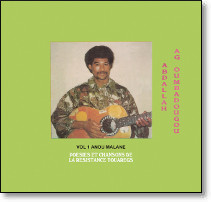
Abdallah Ag Oumbadougou: Anou Malane (1995 [2019],
Sahel Sounds): Tuareg guitarist-singer from Niger, recorded this
in Benin. Regarded as a classic in the style, so steady you start
to wonder if it isn't too easy, but that's only because the balance
is so impeccable.
A-
The Rough Guide to the Roots of Country Music: Reborn and
Remastered (1926-33 [2019], World Music Network): A primer
on the oldtime folk music of the white American south, the legacy
country music claimed as its roots. Some familiar names, some more
obscure. Not able to sort this out compared to similar comps, but
this would fill the gap fairly well. Main caveat I have is that the
label is notoriously shoddy in its documentation, but I haven't
seen whatever accompanies this one.
B+(***)
Cecil Taylor: Mysteries: Indent: Antioch College/Yellow
Springs, Ohio/March 11, 1973 (1973 [2018], Black Sun):
Mysteries seems to be a series of vault recordings by the
late avant-pianist. Cover omits "Mysteries," but includes the rest,
as above. However, title is usually given as Mysteries: Second
Set of Indent. Indent appeared in 1977 on Arista/Freedom,
as one of Taylor's first solo records. I didn't care for it at the
time, but this second set is pretty spectacular.
B+(***)
Cecil Taylor: Mysteries: Untitled (1961-76 [2019],
Black Sun): That's the title, plain as day on the cover. One 49:14
solo set (previously unreleased) from the Bösendorfer Festival in
November 1976, plus three well-known group tracks from Taylor's
side of a 1961 two-artist LP shared with Roswell Rudd.
B+(**)
Old music:
The Exbats: A Guide to the Health Issues Affecting Rescue
Hens (2016, Burger): First album, released on cassette tape.
Playing these after the compilation (E Is 4 Exbats) gives me
a combination of déjà vu and roughly comparable filler.
B+(**)
The Exbats: I've Got the Hots for Charlie Watts
(2018, Burger): Second album (cassette), as above, but hedged up for
the title (and maybe for some of the filler).
B+(***)
Rodney Whitaker: Ballads and Blues: The Brooklyn Sessions
(1998, Criss Cross): Bassist, first album as leader after more than
a decade of side-credits, especially with Roy Hargrove, also Terence
Blanchard and Eric Reed. Three pieces by Paul Chambers (also one by
George Duvivier) proclaim his roots. With Ron Blake (tenor/soprano
sax), Reed (piano), Stefon Harris (vibes), and Carl Allen (drums),
plus Wycliffe Gordon (trombone) on two tracks.
B+(**)
Barrence Whitfield & the Savages: Soul Flowers of Titan
(2018, Bloodshot): I've long thought of him as a blues-rocker, but he
owes more to, and sounds more like, 1950s rockers like Chuck Berry and
Little Richard than the 1960s bluesmen (or Englishmen) who defined the
genre. Doesn't necessarily pick or write great songs, but when he does
he can really burn it up.
B+(***)
Unpacking: Found in the mail last week:
- Binker Golding: Abstractions of Reality Past and Incredible Feathers (Gearbox)
- Dan McCarthy: City Abstract (Origin) [10-16]
- Mute: Mute (Fresh Sound New Talent) [12-13]
- One O'Clock Lab Band: Lab 2019 (UNT) [11-22]
- Kiki Valera: Vivencias En Clave Cubana (Origin) [10-16]
- Rodney Whitaker: All Too Soon: The Music of Duke Ellington (Origin) [10-16]
- Carrie Wicks: Reverie (OA2) [10-16]
Ask a question, or send a comment.
Sunday, October 13, 2019
Weekend Roundup
Trump has gotten a lot of flack this week for his decision allowing
Turkey to invade Syria. Turkey's attack is directed not at the Syrian
government or ISIS but at the Kurdish militias in norther Syria, which
Turkish strong-man Erdogan regards as a potential security threat, as
presumingly giving aid and comfort to Turkey's own Kurdish minority.
The Kurdish militias had not only opposed the Syrian government, which
hardly anyone in America has a kind word for, but also operated as
allies or proxies in America's war against ISIS. Hence, the complaints
you hear most often are that Trump has abandoned a trusted US ally,
and that the invasion is likely to head to a humanitarian disaster --
the emphasis shifting from neocons to their liberal enablers. The
only support Trump has found has come from paleocons like Rand Paul
who want the US to draw back from foreign wars, but don't much care
if the rest of the world destroys itself.
One problem is that Trump (or for that matter Obama) has never had
a coherent strategy on Syria, or for that matter anywhere else in the
Middle East. A reasonable goal would be to maintain peace among stable
governments, biased where possible toward broad-based prosperity with
power sharing and respect for human rights. Obama might have agreed
with that line at the start of Arab Spring, but he soon found that ran
against the main drivers of American Middle East policy: Israel's war
stance, the Arabian oil oligarchies, Iranian exiles, arms merchants,
and scattered pockets of Christians (except in Palestine) -- forces
that had never given more than occasional lip-service to democracy and
human rights, and were flat-out opposed to any whiff of socialism.
Obama was able to help nudge Mubarak aside in Egypt, but when the
Egyptians elected the wrong leaders, he had second thoughts, and didn't
object to the military restoring a friendly dictatorship. Obama had no
such influence in Libya and Syria, so when their leaders violently put
demonstrations down, some Americans saw an opportunity to overthrow
unfriendly regimes through armed conflict. It is fair to say that Obama
was ambivalent about this, but he wound up overseeing a bombing campaign
that killed Qaddafi in Libya, and he provided less overt support to some
of the Syrian opposition forces, and this led to many other parties
intervening in Syria, with different and often conflicting agendas.
It's worth stressing that nothing the US has attempted in the
Middle East has worked, even within the limited and often incoherent
goals that have supposedly guided American policy, let alone advancing
the more laudable goals of peace and broad-based prosperity. Iraq and
Afghanistan have shown that the US is incapable of standing up popular
government after invasion and civil war. Libya suggests that ignoring
a broken country doesn't work any better. But Syria is turning out to
be an even more complete disaster, as the ancien regime remains as the
only viable government. Assad owes his survival to Russia's staunch
support, but also to the US (and the Kurds), who defeated his most
potent opposition: ISIS.
What needs to be done now is to implement a cease fire, to halt all
foreign efforts to provide military support for anti-Assad forces, to
reassert the Assad government over all of Syria, to convince Assad not
to take reprisals against disarmed opponents, and to start rebuilding
and repatriating exiles. Trump's greenlighting of the Turkish invasion
does none of this, and makes any progress that much harder -- not that
there is any reason to think that Trump has the skills and temperament
to negotiate an end to the conflict, even without this blunder.
The only American politician who begins to have the skills to deal
with problems like Syria is Bernie Sanders, because he is the only one
to understand that America's interests -- peace, prosperity, cooperation
everywhere -- are best served when nations everywhere choose governments
that serve the best interests of all of their own peoples (socialism).
Everyone else is more/less stuck in ruts which insist on projecting the
so-called American values of crony capitalism and militarism, the goal
to make the world subservient to the interests of neoliberal capital.
In this regard, Trump differs from the pack only in his reluctance to
dress up greedy opportunism with high-minded aspirations (e.g., Bush's
feminist program for Afghanistan). Trump's freedom from cant could be
refreshing, but like all of his exercises in political incorrectness,
it mostly serves to reveal what a callous and careless creature he is.
Short of Sanders, it might be best to concede that America is not
the solution to the world's woes, that indeed it is a major problem,
so much so that in many cases the most helpful thing we could do is
to withdraw, including support for other countries' interventions.
Syria is an obvious good place to start. On the other hand, replacing
American arms and aims with Turkish ones won't help anyone (not even
the Turks).
PS: After writing the above, Trump ordered the last US
troops out of Syria. That in itself is good news, but everything
else is spiraling rapidly out of control. Meanwhile, Syrian Kurds
are looking for new allies, and finding Assad (see Jason Ditz:
Syrian Kurds, Damascus reach deal in Russia-backed talks).
Some scattered links on this (some of which are just examples of
what I've been complaining about):
Some scattered links this week:
Andrew Bacevich:
High crimes and misdemeanors of the fading American Century. Jared Bernstein:
The climate crisis and the failure of economics. Jonathan Blitzer:
Why Trump's fourth Secretary of Homeland Security just resigned:
Kevin McAleenan, "acting" Secretary for six months now.. John Cassidy:
Jonathan Chait:
Nancy Cook:
Impeachment tentacles spread throughout Trump's team. Judy Fahys:
What the BLM shake-up could mean for public lands and their climate
impact. John Feffer:
Trump's undeclared state of emergency: "Trump is counting on his
base to endorse his increasingly open law-breaking." Tara Golshan:
Trump signed an executive order about how much he hates Medicare-for-all:
"The order's intent is to promote Medicare Advantage but it has a lot of
vague language" -- mostly intended to undermine the Medicare Trump claims
he defends. Constance Grady:
Ellen DeGeneres, George W Bush, and the death of uncritical niceness.
Umair Irfan:
Sarah Jones:
Fred Kaplan:
Ed Kilgore:
Jen Kirby:
US and China reach a "phase one" trade deal: "President Donald Trump
announced an agreement to delay tariffs and for China to buy agricultural
products." PR Lockhart:
"They murdered this woman": Texans outraged after an officer shoots a
black woman in her own home. German Lopez:
The case for prosecuting the Sacklers and other opioid executives.
Ian Millhiser:
Ella Nilsen:
Bernie Sanders takes aim at the DNC with his new anti-corruption plan.
Charles P Pierce:
Andrew Prokop:
Robert Reich:
Donald Trump: xenophobe in public, international mobster in private.
David Roberts:
This climate problem is bigger than cars and much harder to solve:
Heavy industry is responsible for around 22 percent of global CO2 emissions.
Forty-two percent of that -- about 10 percent of global emissions -- comes
from combustion to produce large amounts of high-temperature heat for
industrial products like cement, steel, and petrochemicals.
To put that in perspective, industrial heat's 10 percent is greater than
the CO2 emissions of all the world's cars (6 percent) and planes (2 percent)
combined. Yet, consider how much you hear about electric vehicles. Consider
how much you hear about flying shame. Now consider how much you hear
about . . . industrial heat.
Not much, I'm guessing. But the fact is, today, virtually all of
that combustion is fossil-fueled, and there are very few viable
low-carbon alternatives. For all kinds of reasons, industrial heat
is going to be one of the toughest nuts to crack, carbon-wise.
Aaron Rupar:
Basav Sen:
Dig beneath the world's far-right governments -- you'll find fossil
fuels. David K Shipler:
Punishing the poor for being hungry: "The Trump administration wages
war on food stamps." Jesse Singal:
Anti-free-speechers still aren't taking their own arguments seriously.
A critique of Andrew Marantz, author of Antisocial: Online Extremists,
Techno-Utopians, and the Hijacking of the American Conversation, as
excerpted in
Free speech is killing us: "Noxious language is causing real-world
violence. What can we do about it?" Matt Taibbi:
We're in a permanent coup. Getting a little paranoid here, arguing
that as bad as Trump is, the "U.S. intelligence community" that seems
out to get him is actually more sinister. Nick Turse:
The forgotten trauma of a forgotten war: "As the world looks away,
death stalks the Democratic Republic of Congo." Anya van Wagtendonk:
Kenneth P Vogel:
Giuliani's Ukraine team: In search of influence, dirt and money. David Walsh:
It took decades, but the anti-New Deal crusaders have triumphed:
"A decades-long campaign by a handful of well-heeled foundations has
succeeded in laundering ideas through academia into law." Alex Ward:
Matthew Yglesias:
Ask a question, or send a comment.
Monday, October 7, 2019
Music Week
Music: current count 32183 [32156] rated (+27), 229 [219] unrated (+10).
Slow start on the week, partly because I flushed Monday's listening
out in
September Streamnotes, and
ended this Sunday night. Partly because the Kevin Sun 2-CD album sat
in the changer four days while I slowly made up my mind. Sun's album
never quite matched his Trio debut, nor is the George Coleman
album quite as terrific as his The Master Speaks, but in the
end both came close enough. Among the also-rans, Laurie Anderson's
spoken word over Tibetan ghost music came closest, and might deserve
further attention. Turns out Phil Overeem likes the album a lot
(number 9 on his
latest list. Also found my two good vault albums there. More to
follow next week.
I added those and a few others to my
metacritic file. In turn
I checked out several of the better-rated albums I hadn't bothered
with, but didn't find I enjoyed it much. Most I'm pretty sure of, but
artists like Angel Olsen, Bon Iver, and Jessica Pratt just make me
wonder if I'm getting too old for this shit. Also in the "don't do
it for me" category are fairly ordinary rockers like Cherry Glazerr,
Sleater-Kinney, and Girl Band.
Got a lot of mail last week (today's take is listed below but not
counted above). I'm noting future release dates as I get them, also
when I do reviews. The queue is usually sorted FIFO, as I suspect
keeping it sorted by release date would be a big hassle. Upcoming
week may be less than usual, as I have some house projects, plus a
bit of cooking coming up. Then some medical shit, before Trump takes
that away, too.
New records reviewed this week:
Laurie Anderson/Tenzin Choegyal/Jesse Paris Smith: Songs From
the Bardo (2019, Smithsonian Folkways): Spoken word and violin,
an exploration of impending death, or maybe just The Tibetan Book
of the Dead: "bardo" in Tibetan Buddhism is the state of existence
between death and rebirth. Choegyal chants, plays various Tibetan
instruments, Smith mostly piano, with extras adding cello and percussion.
Proceeds too slowly for my taste, but makes me wonder.
B+(***)
Ben Bennett/Zach Darrup/Jack Wright: Never (2018,
Palliative): Percussion, guitar, and sax, unnamed improv pieces,
inventive but pretty harsh. Wright, from Pittsburgh, has been
around a while, first album in 1982, Discogs lists 52 albums,
I've heard one. Darrup, from Philadelphia, has one previous, a
duo with Wright, and Bennett, also from Philadelphia, has several,
including at least three with Wright.
[3/5 tracks, 37:44/63:25]
B+(*) [bc]
Bon Iver: I, I (2019, Jagjaguwar): Justin Vernon,
from Wisconsin, discography dates back to 1998 but his platinum
breakthrough came with this group name in 2008. Fourth Bon Iver
album, title stylized lc, as in math, but harder to figure. Rather
quirky music, opaque to me, but possible to imagine there's more
to it somewhere.
B
Danny Brown: Uknowhatimsayin¿ (2019, Warp):
Detroit rapper, underground, fifth album, slung a load of sex rhymes
on XXX, but no, I don't really follow what he's saying now.
Do dig the beats, and the squeaky voice, and wonder whether a few
more spins might make the difference.
B+(***)
Cherry Glazerr: Stuffed & Ready (2019, Secretly
Canadian): Alt/indie band from Los Angeles, pricipally singer-guitarist
Clementine Creevy, with bass and drums. Third album.
B
George Coleman: The Quartet (2019, Smoke Sessions):
Tenor saxophonist, probably best known as the guy who kept the tenor
sax slot warm for Miles Davis between Coltrane and Shorter, but he's
recorded a dozen-plus albums under his own name, some really great --
like My Horns of Plenty (1991), and (after a long break) A
Master Speaks (2016). Not sure exactly when this one was recorded:
most likely shortly before or after his 84th birthday, well before
pianist Harold Mabern (83) died in September. The octogenarians are
delights, ably supported by John Webber and Joe Farnsworth.
A-
The Comet Is Coming: Afterlife (2019, Impulse!):
British fusion trio, sax/keybs/drums credited to aliases (King
Shabaka, Danalogue, Betamax). Short album (6 tracks, 32:19).
B+(*)
Kris Davis: Diatom Ribbons (2018 [2019], Pyroclastic):
Avant-pianist, from Canada, debuted in 2003 and quickly established
herself as a major figure, especially in groups with tenor saxophonist
Tony Malaby. Here she makes some kind of breakout bid, doubling down
at tenor sax (Malaby + JD Allen), spotting two top guitarists (Nels
Cline and Marc Ribot), mixing in turntables, electronics, and vocal
bits, without making it too easy.
B+(***)
Girl Band: The Talkies (2019, Rough Trade): Irish
alt/indie post-punk band, no evident females, Dara Kiely the singer,
backed with guitar-bass-drums. Second album, four years after their
first, bleak and claustrophobic, what passes for their comfort zone.
B+(*)
Robert Glasper: Fuck Yo Feelings (2019, Loma Vista):
Once and future jazz pianist, promised to bring a shot of hip-hop
into the jazz milieu, never impressed me much, but this jam session
qua mixtape proves his knack for networking. Long guest list, long
album (19 tracks, 71+ minutes), moments come and go.
B+(*)
Mika: My Name Is Michael Holbrook (2019, Republic/Virgin
EMI): Parents American (Israeli and Lebanese roots), born in Beirut,
moved to Paris at 1, then to London at 9, so counts as a British pop
star. Title is true, but omits last name Penniman. Fifth album.
B+(**)
Simon Nabatov: Readings: Red Cavalry (2018 [2019],
Leo): Russian avant-pianist, long based in Germany, based this on
Isaac Babel texts, read dramatically by Phil Minton. The music --
with Frank Gratkowski (reeds), Marcus Schmickler (electronics),
and Gerry Hemingway (drums) -- is most interesting when it breaks
free.
B+(*)
Simon Nabatov: Readings: Gileya Revisited (2018
[2019], Leo): Gileya is the Russian Futurist group from the 1920s,
better known today for their art (e.g., El Lissitzy) than for their
writings, which provide the texts here. Same group as on Red
Cavalry, except that Jaap Blonk is the voice here. Tough
going, with occasional flashes of brilliance.
B+(*)
Angel Olson: All Mirrors (2019, Jagjaguwar):
Singer-songwriter from St. Louis, based in Asheville, NC; fourth album
since 2012, the previous one (My Woman) finishing high in critics
polls. Music here built up from strings, some songs strong enough to
suggest what all the fuss is about.
B+(*)
Jessica Pratt: Quiet Signs (2019, Mexican Summer):
Singer-songwriter, from San Francisco, plays guitar (although this
opens with a piano solo), sometimes slotted as folk, probably for
its bare DIY-ness. Short (9 tracks, 27:48), and yes, quiet.
B-
Carmen Sandim: Play Doh (2019, Ropeadope): Pianist,
from Brazil, based in Colorado, second album, all originals, septet
gives her lots of options with three horns, guitar, bass, and drums.
B+(*) [cd] [10-25]
Sleater-Kinney: The Center Won't Hold (2019, Mom + Pop):
Second album after their 2005-15 hiatus, with two singer-guitarists I've
never cared much for, and a terrific drummer (Janet Weiss) who's on this
album but has since quit the band. Good news here is by midway I lost
track of whatever it was used to irritate me so much (Carrie Brownstein's
screech?). Not so good news is by the end I was scarcely paying attention
at all.
B
Tyshawn Sorey and Marilyn Crispell: The Adornment of Time
(2018 [2019], Pi): Drums and piano, more of the former, a single 64:57
piece recorded live. Seems more cut up than that, with a complete stop
in the middle making you wonder whether the record is over, and a lot
of stretches where nothing much happens, but does close strong.
B+(**) [cd]
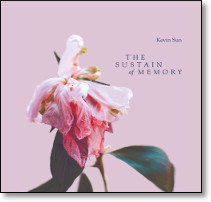
Kevin Sun: The Sustain of Memory (2019, Endectomorph
Music): Tenor saxophonist, b. 1991, based in New York, has degrees
from Harvard and New England Conservatory, a blog which serious jazz
students will find worth perusing, and a previous Trio album
which was by far the most impressive debut of 2018. Expands every
which way here, except in song count, where the limit is three long
ones (36:27, 29:23, 48:22). Adds Adam O'Farrill on trumpet, pianist
Dana Saul -- whose Ceiling in in the running for this year's
finest debut -- on tracks one and three, and swaps his Trio
bassist and drummer for others on the long finale. I'm slightly less
impressed by the sprawl, but he's still on track as a major talent.
A- [cd] [11-15]
Tegan and Sara: Hey, I'm Just Like You (2019, Warner
Brothers): Twin sisters, last name Quin, from Canada, ninth album since
1999. I thought they found their calling when they went electropop last
time, so I'm a bit disappointed they're leading with the guitars this
time. Not real disappointed, mind you.
B+(**)
Andrés Vial/Dezron Douglas/Eric McPherson: Gang of Three
(2019, Chromatic Audio): Piano-bass-drums trio, the pianist from
Montreal, did a find Monk album last year, this one even more
impressive with all original pieces.
B+(***) [cd]
Recent reissues, compilations, and vault discoveries:
Fania Goes Psychedelic (1967-71 [2019], Fania):
Not clear what (if anything) distinguishes this from boogaloo,
but then "psychedelic" never had a substantive definition --
close enough for Ray Barretto to call the lead song "Acid."
B+(***)
World Spirituality Classics 2: The Time for Peace Is Now
(1970s [2019], Luaka Bop): Cover explains: "These undeniably soulful,
passionate, and urgent songs from obscure 45's, dug up from a long
dormancy in attics, sheds and crates across the American south, are
a subset of seventies-era gospel, focusing not on Jesus or God, but
instead on ourselves, and how we exist with each other."
B+(***)
Old music:
Bertrand Denzler Cluster: Y? (1998 [2000], Leo Lab):
French tenor saxophonist, couple dozen albums since 1992. Quartet,
with Benoît Delbecq on prepared piano, Hélène Labarrière on bass,
Norbert Pfammatter on drums.
B+(***)
Bertrand Denzler/Norbert Pfammatter: NanoCluster 02/2000
(2000, Leo Lab): Half of the saxophonist's Cluster group, retaining
just tenor sax and drums. Ten numbered free improvs, impressive rigor,
but sometimes less is less.
B+(**)
Unpacking: Found in the mail last week:
- Rez Abbasi: A Throw of Dice by the Silent Ensemble (Whirlwind): October 19
- Katerina Brown: Mirror (Mellowtone Music): October 18
- Drumming Cellist [Kristijan Krajncan]: Abraxas (Sazas)
- Lorenzo Feliciati/Michele Rabbia: Antikythera (RareNoise): cdr, October 25
- Satoko Fujii/Joe Fonda: Four (Long Song): November 8
- Francesco Guerri: Su Mimmi Non Si Spara! (RareNoise): cdr, October 25
- Roger Kellaway: The Many Open Minds of Roger Kellaway (IPO): November 1
- Doug MacDonald & the Tarmac Ensemble: Jazz Marathon 4: Live at Hangar 18 (DMAC): October 15
- Bernie Mora & Tangent: No Agenda (Rhombus)
- The Niro Featuring Gary Lucas: The Complete Jeff Buckley and Gary Lucas Songbook (Esordisco): November 8
- Northern Ranger: Eastern Stranger (self-released, EP)
- Miles Okazaki: The Sky Below (Pi): October 25
- Anne Phillips: Live at the Jazz Bakery (Conawago)
- Chip Stephens/Stenn Wilson: Sadness & Soul (Capri): October 18
- Dave Stryker: Eight Track Christmas (Strikezone): November 1
- Esbjörn Svensson Trio: E.S.T. Live in Gothenburg (2001, ACT, 2CD): October 25
- Gebhard Ullmann/Hans Lüdemann/Oliver Potratz/Eric Schaefer: MikroPULS (Intuition): October 18
- Brahja Waldman: Brahja (RR Gems): cdr
Ask a question, or send a comment.
Friday, September 6, 2019
Weekend Roundup
Once again, ran out of time before I could get around to an
introduction. The impeachment story rolls on, and Trump is getting
weirder and freakier than ever. Meanwhile, more bad shit is happening
than I can get a grip on. And what's likely to happen when the new
Supreme Court gets down to business. Once you tote up all the damage
Trump's election directly causes, you need to look up "opportunity
costs."
Some scattered links this week:
Zeeshan Aleem:
A second whistleblower on Trump and Ukraine is coming forward. Michael Amia:
Trump wants to shoot people in the legs. The United States' closest ally
already does that. It's long been clear to me that a big part of the
love US right-wingers have for Israel is envy: they wish their own country
to become as brutal, as imperious, as militarist as Israel has proven to
be. Alexia Fernández Campbell:
Jonathan Chait:
Michelle Chen:
The US border security industry could be worth $740 billion by 2023.
A shocking number, but it was already worth $305 billion in 2011. Jelani Cobb:
Why Trump, facing impeachment, warns of civil war. Andrew Cockburn:
Just how swampy are US-Saudi arms deals? Patrick Cockburn:
The post-Saddam Hussein settlement in Iraq is on the brink of collapse.
David Daley:
How to get away with gerrymandering. Ryan Devereaux:
Mining the future: Climate change, migration, and militarization in
Arizona's borderlands. Jason Ditz:
US test fires ICBM, declares it a 'visible message of national security'
("which flew 4,200 miles from California to the Marshall Islands"):
a non-story compared to North Korea test-firing smaller missiles or
China "showing off arms in a parade," despite being pointed toward
China and North Korea. Harry Enten:
Trump's impeachment polling is historically unprecedented. James K Galbraith:
This 50-year-old economic book helps explain the corporate republic we
live in: On James K Galbraith's The New Industrial State
(1967). David Gardner:
Donald Trump's 'maximum pressure' campaign against Iran has backfired.
Matt Gertz:
Team Trump's 2020 strategy is Clinton Cash all over again.
But wouldn't the likelihood of it working be dependent on the Democrats
nominating a candidate like Hillary Clinton? Masha Gessen:
The difference between leaking and whistle-blowing in the Trump White
House. Refers to a new book by Tom Mueller on the history of
whistle-blowing: Crisis of Conscience, and notes:
An effective whistle-blower stays below the radar while methodically
collecting information; staying power and an ability to remain
inconspicuous are key. The person who blew the whistle on Trump and
Ukraine appears to possess both of these qualities, and others: the
complaint is meticulously documented and worded with exquisite care.
By its very existence, the document blows the whistle on the Trumpian
style -- hasty, sloppy, overblown, and unsubstantiated.
Other opponents of Trumpism within the government have leaked rather
than blown the whistle. No sooner was the President inaugurated than
members of the White House staff told reporters that the President
acted like a "clueless child," had no interest in intelligence reports,
spent his time watching TV, and was largely kept out of the decision-making
process. These stories, which began in January of 2017, quickly grew
familiar, and the more bizarre the reality they described, the greater
their normalizing effect.
Tara Golshan/Ella Nilsen:
Elizabeth Warren's new remedy for corruption: a tax on lobbying. Dana Goodyear:
Trump's war on California and the climate. Conn Hallinan:
How the Saudi oil field attack overturned America's apple cart:
"For all their overwhelming firepower, the U.S. and its allies can
cause a lot of misery in the Middle East, but still can't govern
the course of events." Sarah Jones:
Peter Kafka:
The 2 companies that place all those ads at the bottom of webpages are
combining: "Taboola is buying Outbrain." Ed Kilgore:
Some impeachment-shy Democrats just fear it will backfire, as
do some impeachment-shy "progressive" pundits. One worry is no doubt
Trump campaign to drop bomb on Biden in early voting states:
Trump's reelection effort "will air over $1 million in anti-Biden
commercials in Iowa, South Carolina, New Hampshire and Nevada" --
probably the most blatant attempt to influence other party primary
voting since Nixon's "dirty tricks" campaign against Edmund Muskie
in 1972. This almost looks like Trump baited the Democrats into
impeaching him, just for the free publicity.
What will Republicans do if Trump goes down? A rather silly
exercise in handicapping the Republican bench. Trump is more likely
to die suddenly or become debilitated than to be convicted by this
Senate, in which case Republicans could scramble but would probably
figure Pence the best shot at saving Trump's legacy. The fact is
that Trump not only owns the public perception of the Party, he's
the only one with proven ability to convince a significant bloc of
far-from-wealthy voters to cut their own throats. Kilgore also
contributed to
Is there any chance the GOP is about to turn on Trump?
Uh, no.
Here we go: Supreme Court accepts first big post-Kavanaugh abortion
case.
Will progressive Democrats 'move to the center' when facing Trump?
Could be, but Sanders and Warren have spelled out their platforms so
extensively that it will be hard for them to run on anything else --
at most, they'll concede that some things they want will be lesser
priorities as long as significant numbers of Democrats aren't on
board. Should they is another question. It looks to me like Trump's
going to try to run to the left of centrist Democrats, presenting
them as corrupt and himself as the champion of working people and as
the defender of Social Security and Medicare. Moreover, he'll make
mincemeat of any Democrat as hawkish as Hillary Clinton. Sure, it
will all be lies, but he's done it before, and it's not clear how
much credibility four years of broken promises has cost him. The
one Democrat he can't feint left of is Sanders, and in that case
he may not try, figuring red-baiting will do the trick. The big
advantage that Sanders has, even over Warren, is that no one doubts
his sincerity or his integrity, and up against Trump those are the
characteristics that matter most. Of course, compared to Trump, any
Democrat should be able to score those points, but moving to the
lame, corrupt, ineffective center won't help them. Only moving to
the left will.
Nixon's defenders claimed he was a victim of a 'coup.' So did Clinton's.
Only a story now because Trump's claiming that too -- started, in fact,
back during the Mueller inquiry. Carolyn Kormann:
How oceans rise and die on a warming planet: As Jane Lubchenco, a
former US National Oceanic and Atmospheric Administration administrator,
puts it: "The ocean today is higher, warmer, more acidic, less productive,
and it holds less oxygen."
As a result, coral reefs are bleaching a ghostly white, and, although
some can recover, others are dying at a rapid rate. Monster storms are
persistent. Marine heat waves -- projected to increase fiftyfold if
current trends continue -- are depleting fisheries. Ocean acidification
is severely harming all sorts of species, which then harms people, too,
since many of these species are critical to local economies. Glaciers
are melting faster with consequences for people in the mountains and
on the coasts alike.
Anita Kumar:
A Trump hotel mystery: Giant reservations followed by empty rooms:
"The House is investigating whether groups tried to curry favor with
Trump by booking rooms at his hotels but never using them." Jonathan Lethem:
Snowden in the labyrinth: Review of Edward Snowden's memoir,
Permanent Record. Eric Levitz:
Dylan Matthews:
Why almost no one is guilty of treason, explained: "Adam Schiff isn't
guilty of treason, nor is Donald Trump, and neither is just about any
other person you can think of." Then why not just expunge the word from
our vocabulary? Jane Mayer:
The invention of the conspiracy theory on Biden and Ukraine. Ian Millhiser:
Trump's DOJ just escalated the fight over whether religion is a license
to discriminate. Jeremy Mohler:
This California highway boondoggle shows why we need more infrastructure
funding: And why "public-private partnerships are a poor replacement
for robust federal investment in infrastructure." Benjamin Mueller:
Jeremy Corbyn or no-deal Brexit? The UK might have to choose. Ella Nilsen:
Democrats have subpoenaed the White House in the next phase of their
impeachment inquiry.
Warren and Sanders raised significantly more money than Biden in the
third quarter. Biden came in fourth, also trailing Pete Buttigieg.
Or, as ABC put it,
Warren surpasses Biden in latest fundraising haul but falls short of
Sanders. I've seen a meme (probably from the Sanders campaign, but
I can't find a viable link) which lists the "top donors by profession"
for Biden (president of company, managing partner, real estate developer,
lawyer, investor), Warren (psychologist, scientist, editor, librarian,
psychotherapist), and Sanders (teacher, nurse, farmer, truck driver,
waiter/waitress, construction). For a similar breakdown along these
lines, see Karl Evers-Hillstrom:
Sanders or Warren: Why gets more support from working-class donors?
Toluse Olorunnpia/Amy Goldstein:
Trump attacks Democrats' health care plans and pledges to protect Medicare
during political speech to Florida retirees. The big lie is on,
but note that Trump is signaling that he intends to run to the left
of Democrats on health care, even though what he means is something
completely different.
President Trump blasted his potential Democratic presidential rivals
in a highly political speech here Thursday, telling a group of senior
citizens that "maniac" Democrats would rip away their health care,
decimate their retirement accounts and prioritize undocumented
immigrants over U.S. citizens.
"All of the Democrat plans would devastate our health care system,"
Trump said during a visit to The Villages, where he signed an executive
order designed to expand the private-sector version of Medicare that
Republicans favor.
Here's what Charles P Pierce wrote about the same Trump speech:
The President* is a blight, but watch what the conservative movement's
up to behind him: "They're coming for Medicare, folks." Pierce
blogs more often than I feel like citing, but some of his best
titles last week:
Brittany Packnett:
The real reason Amber Guyger was convicted. An off-duty white
police officer shot and killed an unarmed black man in his apartment
in Texas. Against odds, she was charged and convicted of murder.
Police officers have killed over a thousand people a year in recent
years: Of those killed by police since 2005, less than 100 officers
have been arrested, only 35 officers have been convicted -- and, as
of March, only three of them of murder. Less than 1 percent of all
officers are convicted when their victim is Black -- even though
Black people are three times more likely than white people to be
killed by police.
Packnett credits the verdict to a fully integrated jury. However,
before you start thinking that justice is starting to work in America,
note: Anya van Wagtendonk:
Joshua Brown, a key witness in the murder trial against Amber Guyger,
was fatally shot. Troy Patterson:
A new book argues that Trump is television in human form: On
James Poniewozik's Audience of One: Donald Trump, Television,
and the Fracturing of America.
Poniewozik almost wants to rate Trump as a great postmodern thinker,
but the problem is that Trump does not think. Nonetheless, Trump is a
great postmodern feeler, who intuits and responds to the stimuli of
electronic media with the dark brilliance of an idiot savant, in the
sure belief that only suckers care about objective truth. Poniewozik
calls Trump's daily performance qua Trump a manifestation of
"lizard-brain postmodernism -- the salesman's intuition that the
cartoon of a thing was more powerful to people than the thing itself."
William Rivers Pitt:
Trump is spreading fear because he fears impeachment: The one thing
about the impeachment inquiry that I find most perplexing is why Trump
has reacted with such crazed panic. Surely he knows that the Republican
Senate will never remove him from office. And given that there is zero
chance of the Republican Party denying him nomination for a second term,
the only contest that really matters is the 2020 election. Yet every day
he squirms, rants, raves, acting out in ways that not only don't offer
any practical defense against the charges but really make most people
question his competency and even sanity. Peter Pomerantsev:
Rudy Giuliani welcomes you to Eastern Europe: "So much about the
Trump administration seems pulled from the playbook of a post-Soviet
kleptocracy." Other Putin critics, like Masha Gessen, have said much
the same thing, most likely because that's what they're used to seeing.
I doubt Trump is consciously taking Putin as a model (no matter how
sympathetic he is). Rather, cynical oligarchs don't have many options
in how to spin their corruption. Andrew Prokop:
The incredibly damning Ukraine texts from State Department officials,
explained. Richard V Reeves:
Now the rich want your pity, too: "If the wealthy are so stressed
out, whose fault is that?" David Remnick:
"Stupid Watergate" is worse than the original. A game effort to
make the case, anyway, not least by pointing out that both scandals
started as efforts to rig elections and as such were attacks on our
faith in democracy. But even though I don't doubt that a Trump
dictatorship would be even more malign than a Nixon one, the only
dimension where Trump is way ahead of Nixon is stupid, and I don't
see how that makes it worse. What might make it worse is that most
Republicans today are so shameless and so desperate to cling onto
power that they've lost the capacity to understand when their
president breaks bad. Doyle Rice:
The Earth just had its hottest September on record: For what little
it's worth, Wichita bucked the trend all summer long, but got with the
program for September: possibly not a record, but hottest month we've
had all year, still above 90F on 9/30 (but 49F as I write this). David Rohde:
How disinformation reaches Donald Trump. Aaron Rupar:
Eric Schmitt/Maggie Haberman/Edward Wong:
Trump endorses Turkish military operation in Syria, shifting US
policy: What's the Kurdish word for people who are recruited,
used up, and carelessly discarded? Once "comrades-in-arms," now
more like "losers." Jeremy Singer-Vine/Kevin Collier:
Political operatives are faking voter outrage with millions of made-up
comments to benefit the rich and powerful. Case in point: 22 million
public comments submitted to FCC on net neutrality regulations. Danny Sjursen:
Impeach all presidents: Sure, it's hard to think of any recent US
president who hasn't committed high crimes along the way, especially
in using the US military to kill people in other countries. Even Nixon's
Watergate crimes paled in comparison to other things he did, like his
coup in Chile and his escalation in Indochina. Some Democrats will tell
you that Trump forced them to impeach, but it's always been a process
that has been selectively used for distinct political purposes. On the
other hand, when you can impeach, why not? The charges brought against
Clinton were bullshit, but at the time I urged convicting him, because
he had done other things that merited removing him from office (e.g.,
his bombing operations in Iraq, which his Republican foes usually
applauded). Jeff Stein/Tom Hamburger/Josh Dawsey:
IRS whistleblower said to report Treasury political appointee might have
tried to interfere in audit of Trump or Pence. Jonathan Swan:
Mulvaney predicts post-impeachment landslide. "Mulvaney also
believes that the longer the impeachment process drags on, the better
it is, politically, for Trump." Impeachment also seems to be spurring
small donors, which is not a resource Trump had in 2016. I don't doubt
that Mulvaney's attitude exists, especially among Trump's inner circle
of sycophants, but I think it's more likely that less-committed voters
will get sick and tired of all the noise, especially given how erratic
Trump has been acting. Matt Taibbi:
The 'whistleblower' probably isn't: "It's an insult to real
whistleblowers to use the term with the Ukrainegate protagonist." Anton Troianovski/Chris Mooney:
Radical warming in Siberia eaves millions on unstable ground. Anya van Wagtendonk:
Rick Perry's spent a lot of time in Ukraine. Now he's caught up in the
impeachment inquiry. For more on Perry, see: Chas Danner:
What we know about Trump's bizarre attempt to blame Rick Perry for the
Ukraine call. Alex Ward:
Robin Wright:
Trump's close-call diplomacy with Iran's President. Christopher Wylie:
How I helped hack democracy: An excerpt from the author's book,
Mindf*ck: Cambridge Analytics and the Plot to Break America. Matthew Yglesias:
Li Zhou/Hannah Brown:
1999 vs. 2019: Senate Republicans' attitudes on impeachment sure have
changed a lot: Many examples, first two Lindsey Graham and Mitch
McConnell.
Ask a question, or send a comment.
Monday, September 30, 2019
Music Week
September archive
(finished).
Music: current count 32156 [32117] rated (+39), 219 [229] unrated (-10).
When I ran the numbers, they came up a bit short of the list, so I
rechecked and found 5-6 I had failed to register grades on. At least
one of those should definitely have shown up in this week's list, so
I added it, but that makes me suspect I may have slipped up elsewhere.
So a reminder: The monthly compilation (link above) is more authoritative
than the weekly ones (which are extracted from it). Also, note that
some reviews now have a date after the grade. These are records that
have future release dates. I've changed my mind several times on how
to handle those cases.
Noticed the links in my
Music index page needed some updating to
reference 2019 files, of which
Music Tracking turned out to
require the most work: there were literally dozens of dumb typos
keeping it from displaying, as well as a bunch of missing grades.
I wanted to make sure there was a link to my
EOY [Mid-Year] List
Aggregate, where I started collecting mid-year best-of list
info but have more recently supplemented that with review grades
(usually 80+ at AOTY, but I'm tracking other sources as well,
especially jazz).
I added several fan lists from an Expert Witness Facebook post,
and that (well, plus adding in Michael Tatum's
latest grades) was enough to tilt first place from Sharon Van
Etten to Billie Eilish. There's still a structural problem that
favors records released before July -- Lana Del Rey ranks highest
among later releases at 28, and the highest June release is at 21
(Freddie Gibbs & Madlib; highest September release is Charli
XCX at 68, followed by Brittany Howard at 73). By the way, one of
those fan lists led me to Oompa, another to Octo Octa, and others
to most of the African comps below, so they've earned their keep.
Revisited several albums while trying to wrap this up, and wound
up promoting Oompa, Andrew Lamb, and Taylor Swift. Possible that Kwi
Bamba and Alefa Madasgascar could have benefited from more
attention.
New records reviewed this week:
Karl Berger/Jason Kao Hwang: Conjure (2014 [2019],
True Sound): Duets, Berger playing piano and vibraphone, Hwang violin
and viola. Both are major figures, Berger from as far back as 1967,
but these improvs don't generate excitement.
B [10-01]
Randy Brecker/Ada Rovatti: Brecker Plays Rovatti: Sacred
Bond (2019, Piloo): Rovatti is an Italian saxophonist, four
records since 2003, her compositions here, married the trumpet-playing
Brecker in 2001, their daughter Stella brightening up the cover and
contributing a vocal cameo. Core quintet with the leaders, David
Kikoski on keyboards, plus bass and drums, and a few guests (I'm
noticing Adam Rogers' guitar), mostly upbeat, running long.
B+(**) [cd] [10-25]
Zack Clarke Trio: Vertical Shores (2017 [2019],
Clean Feed): Pianist, based in New York, third album, trio with
Kim Cass (bass) and Dre Hocevar (drums).
B+(*)
DaBaby: Kirk (2019, Interscope): Rapper Jonathan Kirk,
second album after a series of mixtapes, much bigger label. Beatwise,
streetwise, on the make, bounces off several guests, a snappy 35:08.
B+(***)
Sam Dillon: Out in the Open (2018, Cellar Live): Tenor
saxophonist, studied with Eric Alexander and seems like a chip of the
old block. First album, quartet with Peter Zak (piano), Yoshi Waki
(bass), and Billy Drummond (drums). Two originals, covers from Porter
to Silver to Jobim to Hendrix. Mainstream, strong impression, piano
especially sharp.
B+(**)
Sam Dillon: Force Field (2018 [2019], Posi-Tone):
Another strong outing, four tracks with extra horns (trumpet, alto
sax, two of those with trombone), pianist Theo Hill switches to
electric for three. Four originals, covers include Chick Corea
and Charlie Parker. Not sure the extra flash helps.
B+(*)
Harris Eisenstadt: Canada Day Quartet Live (2018
[2019], Clean Feed): Canadian drummer, released first Canada Day
album in 2009, three more through 2015. Groups have varied, but all
start with Nate Wooley (trumpet), here joined by Alexander Hawkins
(piano) and Pascal Niggenkemper (bass).
B+(**)
Gabriel Ferrandini: Volúpias (2017 [2019], Clean Feed):
Portuguese drummer, Discogs credits him with 15 albums (since 2009),
but this is only the second to list his name first, and he's best
known in RED Trio. Another trio here, with Pedro Sousa (tenor sax)
and Hernani Faustino (bass, also from RED Trio).
B+(**)
Vyacheslav Ganelin/Deniss Pashkevich/Arkady Gotesman:
Variations (2018 [2019], Jersika): Piano/tenor sax/drums trio,
a lineup familiar from the pianist's famous Soviet Era avant-jazz trio.
After the break up, Ganelin moved to Israel. Don't know anything about
the others, or even where these four LP-length pieces were recorded,
but the label is Latvian. Scattered stretches impress as before, but
they don't jump out at you.
B+(*)
The Garifuna Collective: Aban (2019, Stonetree):
Group from Belize, the former British colony in Central America
(northeast of Guatemala), backup for Andy Palacio until his death
in 2008. Short album (8 cuts, 27:28), nice groove, relaxed.
B+(**)
Kano: Hoodies All Summer (2019, Parlophone):
Jamaican-British rapper Kane Brett Robinson, sixth album since
2019. Grime beats, plays them down.
B+(*)
Petros Klampanis: Irrationalities (2017 [2019], Enja):
Greek bassist, based in New York, several albums since 2011, leads a
trio here with Kristjan Randalu on piano and Bodek Janke on drums.
Even before checking the credits, I noticed the clarity of the bass,
and the delicacy of the piano.
B+(**) [cd] [10-18]
The Baba Andrew Lamb Trio: The Night of the 13th' Moon
(2018 [2019], LFDS): Alto saxophonist, born in North Carolina, grew up
in Chicago and New York, cut his first record in 1995, has a few more,
this (I think) the first to adopt the honorific Baba, maybe because it
was recorded at Bab Ilo (in Paris). With Yoram Rosilio (bass) and Rafael
Koerner (drums). Free improv, bracing, challenging.
B+(***)
Landline: Landline (2019, Loyal Label): Brooklyn
postbop group -- Chet Doxas (tenor sax), Jacob Sacks (piano), Zack
Lober (bass), Vinnie Sperrazza (drums) -- have a novel way of group
composing based on a game called telephone.
B+(**) [cd] [11-01]
Guillaume Muller: Sketches of Sound (2019, self-released):
French guitarist, based in New York, first album, quintet with alto sax
(Nino Wenger), piano (Jim Funnell), bass, and drums. Maintains a nice
groove, with a little spark from the sax.
B+(*)
Laura Noejovich: Laura Has New Standards (2018
[2019], Enchanted Meadow): Older standards too, like "Misty" and
"Summertime" and "When You Wish Upon a Star," inadvertently proving
that the old ones are still the best, although with her arch soprano
and Takeshi Asai's skeletal piano not by much.
C+ [cd] [11-02]
Octo Octa: Resonant Body (2019, T4T LUV NRG): Maya
Bouldry-Morrison, Brooklyn-based DJ, fifth album since 2011. Strong
dance moves, occasional bits of subversion.
B+(***) [bc]
Oompa: Cleo (2019, OompOutLoud): Boston rapper,
second album, "forever representing the queer, black, orphaned, hood
kids and them." Underground, breaking out.
A-
Miles Perkin Quartet: The Point in Question (2018
[2019], Clean Feed): Canadian bassist, from Manitoba, has a couple
previous albums. This one with trumpet (Tom Arthurs), piano (Benoît
Delbecq), and drums (Jim Black).
B+(*)
Cene Resnik Trio 'Watch for Dogs': Shades of Colors
(2016 [2019], Not Two): Tenor saxophonist, from Slovenia, several
other albums. Trio with Giovanni Maier (bass) and Zlatko Kaucic
(drums). Starts lost in color, but picks up (or should I say bursts
out?) after a few.
B+(**)
Kendrick Scott Oracle: A Wall Becomes a Bridge
(2019, Blue Note): Drummer, fifth album, fourth under this group
name, with John Ellis (reeds), Mike Moreno (guitar), Taylor Eigsti
(piano), Joe Sanders (bass), and DJ Jahi Sundance (turntables),
plus a Derrick Hodge vocal.
B+(*)
Matthew Snow: Iridescence (2018 [2019], self-released):
New York bassist, first album, composed six (of eight) pieces, employs
a sextet -- no one I've heard of, but alto saxophonist Clay Lyons and
trombonist David Gibson impress, guitar and vibes add to the options,
and the drummer plays with the band.
B+(***) [11-29]
Something Blue [Alexa Tarantino/Nick Finzer/Sam Dillon/Art
Hirahara/Boris Kozlov/Rudy Royston]: Maximum Enjoyment
(2018 [2019], Posi-Tone): Auteur here is probably producer Marc
Free, who created a retro-bop framework for the first three "new"
musicians (alto sax, trombone, tenor sax), backed by his standby
rhythm section (piano, bass, drums).
B+(*)
The Souljazz Orchestra: Chaos Theories (2019, Strut):
Canadian acid jazz group, from Ottawa, ninth album since 2005. Some
strong sax breaks.
B+(*)
STL GLD: The New Normal (2019, AR Classic): Boston
hip-hop band, don't know much about them, but hype speaks of
"multifaceted and complex," and there's lots of that.
B+(**)
Alexa Tarantino: Winds of Change (2019, Posi-Tone):
Alto saxophonist (credit here says "woodwinds"), first album (though
I filed Something Blue's Maximum Enjoyment under her name, as
first-listed artist). Quintet, with Nick Finzer (trombone), Christian
Sands (piano), Joe Martin (bass), and Rudy Royston (drums).
B+(**)
Ben Van Gelder/Tony Tixier/Tom Berkmann/Mathias Ruppnig:
Scopes (2019, Whirlwind): Eponymous band debut, my
parsing not unreasonable given the cover. Europeans: sax (Dutch),
piano (French), bass (German), drums (Austria), the latter two
pegged as the leaders. Fairly comfortable, mildly adventurous
postbop.
B+(**)
Mareike Wiening: Metropolist Paradise (2018 [2019],
Greenleaf Music): German drummer, based in New York, first album,
quintet with Rich Perry (tenor sax), Dan Tepfer (piano), Alex Goodman
(guitar), and Johannes Felscher (bass). Postbop, goes with the flow.
B+(*) [11-01]
Eri Yamamoto Trio & Choral Chameleon: Goshu Ondo Suite
(2018 [2019], AUM Fidelity): Japanese pianist, moved to New York 1995,
tenth album since 2002, mostly trios. This adds a huge choir (47 names),
to the 7-part, 49:06 title suite, swarming and marching over a tense
and dynamic sonic landscape. Then one more piece, a chill down without
the choir, which reminds you how fine the piano has been throughout.
A- [cd] [11-15]
Recent reissues, compilations, and vault discoveries:
Alefa Madagascar (1970s-80s [2019], Strut): Sampler
into "the unique culture of salegy, soukous and soul on the island
in the '70s and '80s."
B+(***) [bc]
Louis Armstrong: Live in Europe (1948-52 [2019],
Dot Time): Radio shots from two nights in France with his original
All-Stars lineup, followed by a set in Berlin four years later,
with only Arvell Shaw left from the 1948 group. Latter probably
has a slight edge on sound, plus Velma Middleton trading vocals.
Classic stuff, but better on any number of live period albums,
most impressively The California Concerts.
B+(**)
Kwi Bamba: Kwi Bamba & L'Orchestre De Gama Berema
(1997 [2018], Ouch!): From Guinea, former leader of 1960s band Nimba
Jazz, a precursor of the better known Bembeya Jazz National. Billed as
his/their first international release, drawing on Guerzé and Kpellé
traditions, happy to have the recording date but know nothing more.
Does fit the mold.
B+(***) [bc]
John Coltrane: Blue World (1964 [2019], Impulse!):
Previously unreleased recordings from a session between Crescent
and A Love Supreme, soundtrack tracks recorded for Gilles Groulx,
director of Le chat dans le sac. Classic quartet, five songs,
extended to 36:33 with three takes of "Village Blues" and a second of
"Naima." Nestled in the valley between masterpieces, nothing remotely
new here, but remarkable on any other count.
A-
Nâ Hawa Doumbia: La Grande Cantatrice Malienne Vol. 1:
Decouverte 81 a Dakar (1981 [2019], Awesome Tapes From
Africa): From the Wassalou region in southern Mali, first album,
about 22 at the time, strong vocals over a stringed instrument
(kora?).
B+(***)
Old music:
Nâ Hawa Doumbia: La Grande Cantatrice Malienne Vol. 3:
Korodia (1982 [2011], Awesome Tapes From Africa): Malian
singer, recorded in Côte d'Ivoire, seems to be the original title,
although I have yet to see a Vol. 2 (and Napster shows an
album cover with first song name added). Music is fairly basic,
voice grows on you. Rather short: 4 cuts, 29:39.
B+(**) [bc]
Grade (or other) changes:
Taylor Swift: Lover (2019, Republic): Pop megastar,
seventh album, the first six multi-platinum, Wikipedia notes her age
(29) and net worth ($360 million). With that kind of money, she can
hire good help -- chiefly Jack Antonoff and Joel Little -- while
stretching her product out to 18 songs, a bit over an hour. Album
has some lulls: no doubt it could be edited down and sharpened up.
But two songs I always notice -- "Paper Rings" and "You Need to
Calm Down" -- and most others eventually clicked.
[was: B+(***)] A-
Unpacking: Found in the mail last week:
- Randy Brecker/Ada Rovatti: Brecker Plays Rovatti: Sacred Bond (Piloo): October 25
- Tyshawn Sorey and Marilyn Crispell: The Adornment of Time (Pi)
- Andrés Vial/Dezron Douglas/Eric McPherson: Gang of Three (Chromatic Audio): October 4
Ask a question, or send a comment.
Sunday, September 29, 2019
Weekend Roundup
 I noticed
this image somewhere recently, and was reminded that I had used it every
Weekend Roundup for several months early in the Trump regnum. While I
eventually put the image aside, I have in fact done this every weekend
since the reign of terror started, so figured I'm entitled to resurrect
the image. You can find it in the notebook starting on
February 5, 2017, and scroll
up from there (the entries are last-in/first-out). I noticed
this image somewhere recently, and was reminded that I had used it every
Weekend Roundup for several months early in the Trump regnum. While I
eventually put the image aside, I have in fact done this every weekend
since the reign of terror started, so figured I'm entitled to resurrect
the image. You can find it in the notebook starting on
February 5, 2017, and scroll
up from there (the entries are last-in/first-out).
Last week's "whistleblower" story has, like a tropical depression
growing into a hurricane entering warm Carribbean waters, mushroomed
into this week's (and the rest of this year's, and most of 2020's)
impeachment extravaganza.
Many links follow:
David Atkins:
The impeachment probe should include all of Trump's crimes: I'm
sympathetic to this point of view, thinking it important to recognize
and challenge all of Trump's crimes and misdeeds, but that's a tall
order -- a lot of effort where you only need one conviction to send
the miscreant packing. Others, below, argue for keeping it simple
and moving fast, and I can't say they're wrong. On the other hand,
you could do that, advancing the most universally agreed upon charge,
then follow that up with additional articles of impeachment. Also
should be possible to identify additional targets (e.g., Pence,
Barr, Mnuchin). Related to Atkins, see Peter Certo:
The case for impeachment goes way beyond Ukraine. A bigger list,
still far from complete. Julian E Barnes/Michael S Schmidt/Adam Goldman/Katie Benner:
White House knew of whistleblower's allegations soon after Trump's call
with Ukraine leader: "The whistle-blower, a C.I.A. officer detailed
to the White House at one point, first expressed his concerns anonymously
to the agency's top lawyer." Zack Beauchamp:
The whistleblower memo details Trump's systematic attack on American
democracy. John Cassidy:
Jonathan Chait:
Sarah Chayes:
Hunter Biden's perfectly legal, socially acceptable corruption:
"Donald Trump committed an impeachable offense, but prominent Americans
also shouldn't be leveraging their names for payoffs from shady clients
abroad." Why not add "or from shady clients at home"? Eugene Scalia is
a pretty good example of the latter. On Biden, see: Michael Birnbaum/David
L Stern/Natalie Gryvynak:
Former Ukraine prosecutor says Hunter Biden 'did not violate anything'.
Jane Coaston:
"This is about Trump": 2020 GOP primary challengers endorse impeachment
in their first debate. Sean Collins:
Gabriel Debenedetti/Benjamin Hart:
How bad might impeachment be for Joe Biden's prospects? Daniel W Drezner:
The strategic case for impeaching President Trump.
So why impeach Trump? Because he will obsess about it. The moment it
becomes a live option, the moment a trial in the Senate seems conceivable,
he will talk about nothing else. He will rant to his staff and bore foreign
leaders about it. He loves a fight. And every moment Trump thinks about
impeachment is a moment he is not thinking about doing even more reckless
things.
Eleanor Eagan/Jeff Hauser:
House Dems must ramp up other oversight: "House Democrats' oversight
of President Trump has not been vigorous enough, and now is their opportunity
to hold the entire administration accountable." Noah Feldman:
A special counsel must investigate Rudy Giuliani and Bill Barr:
Safe to say, that isn't going to happen. Susan B Glasser:
"Do us a favor": The forty-eight hours that sealed Trump's impeachment.
David Greenberg:
Stop comparing Trump's impeachment case to Johnson's . . . or Nixon's . . .
or Clinton's. John F Harris:
Trump killed the seriousness of impeachment: "Impeachment proceedings
used to be news of unquestionable gravity. The week showed it's just
more fodder for the ideological and culture wars." Actually, by this
logic, it was the Clinton impeachment that led us to see the process
as nothing more than partisan treachery. I could argue that the charges
this time are graver and more urgent, and that the risks of letting
those charges slide unchallenged are greater, but probably not enough
to convince Republicans to disown their leader. Shane Harris/Josh Dawsey/Ellen Nakashima:
Trump told Russian officials in 2017 he wasn't concerned about Moscow's
interference in US election. Sarah Jones:
Turns out that impeachment might not scare voters after all. Ed Kilgore:
Jen Kirby:
6 key takeaways from the Ukraine whistleblower complaint. Josh Kovensky:
Top takeaways from the Trump-Ukraine whistleblower complaint. Paul Krugman:
Republicans only pretend to be patriots: One aspect of this particular
line of impeachment that I'm not looking for is how many Democrats will
try to frame themselves as the true defenders of American security, while
casting Trump and his Republican cronies not just as crass opportunists
and hypocrites only really concerned with their own power and money, but
as fools indebted to foreign powers:
The irony is that in the past few years this paranoid fantasy, in which
a major U.S. political party is de facto allied with an international
movement hostile to American values, has actually become true. But the
party in question is the G.O.P., which under Trump has effectively become
part of a cross-national coalition of authoritarian white nationalists.
Republicans were never the patriots they pretended to be, but at this
point they've pretty much crossed the line into being foreign agents. . . .
What an impeachment process would do now is get the truth about who
really cares about defending America and its values -- and who doesn't --
out into the open. By forcing Republicans to explicitly condone behavior
they would have called treason if a Democrat did it, Nancy Pelosi and
her colleagues can finally put an end to the G.O.P.'s long pretense of
being more patriotic than its opponents.
It's easy (often downright demagogic) to smear Russia and Saudi Arabia
for their associations with old enemies of America, but the real reason
Trump does their bidding is because they represent the global oligarchy,
a class that Trump belongs to and does regular business with.
The winners and losers of the latest Trump scandal.
Impeaching Trump is good for the economy: "It will slow down the
administration's war on competence." Michael Kruse:
'If he's not in a fight, he looks for one.': "Trump's Ukraine scandal
reflects his lifelong craving for a fresh enemy." Coincidence that the
Ukraine phone call occurred a mere 24 hours after Mueller's Congressional
testimony brought his special investigation story to a supposed close?
Steve M. comments
(Does
Trump Want to Be Impeached?):
Kruse's story has its share of macho quotes:
"Trump is a predator," Republican strategist Alex Castellanos asserted
last spring. "When something enters his world, he either eats it, kills
it or mates with it."
But although Kruse doesn't emphasize this point, a pattern emerges:
Trump fights until he loses. Then he moves on to another arena
and resumes fighting, until he loses again.
The problem for Trump is that now he can't move to a more important
arena. He's in the championship match. If he loses now -- if he has a
compulsion to fight until he loses -- then he has nowhere to go but down.
Health permitting, I'm sure he sees lots of money-raking opportunities
after his presidency ends, even by impeachment (and none beneath his
dignity). As a commenter notes:
I'm not convinced Trump sees his current job as the pinnacle of possible
jobs. First off, it requires a shit ton more work (and travel) than he
wants to give. Second, although he is certainly using it for some nice
grifting, there are way too many required activities that he can't
monetize. I can see him being happy to capitalize on 'having been president'
to sell his usual lines of crap (and charge directly for those rallies he
will keep doing, without having to funnel bits of that cash stream through
annoying campaign rules). Plus he'd like a big figure cash deal to call in
to whatever show/podcast, something he can do from his golden toilet.
Eric Levitz:
GOP divided over how enthusiastically to cover for Trump's corruption
on Ukraine. Martin Longman:
How a whistleblower accomplished what Mueller could not. Dylan Matthews:
The Trump-Ukraine scandal just got its Watergate-tapes moment. Ian Millhiser:
The 4 possible crimes in the Trump-Ukraine whistleblower scandal,
explained: Seems to me like a stretch to make a case that Trump
violated the letter of these laws, although he has certainly run
afoul of the ethical norms these laws are intended to embody. In
particular, I cannot disagree that the transcript
"reads more like a mafia shakedown".
- Did Trump or his associates violate campaign finance law?
- Does Trump's act constitute bribery?
- Did he commit extortion?
- Did he obstruct justice?
Ella Nilsen/Li Zhou/Matthew Yglesias:
9 things everyone should know about the impeachment process.
Generally Useful primer, but I have one bone to pick: When asking
"how many presidents have been impeached?" they answer: "The House
has initiated an impeachment inquiry for three presidents, through
it has only charged two with articles of impeachment." They're right
that the House only voted to impeach two presidents: Andrew Johnson
and Bill Clinton, with neither ultimately removed from office by the
Senate ("convicted" seems to be the favored term, but I'd say you're
not impeached until the Senate does so). But while remembering Nixon,
who dodged impeachment by resigning, and avoided jail by having his
successor pardon him, they forgot another prominent impeachment target.
See: Ronald G Shafer:
'He lies like a dog': The first effort to impeach a president was led
by his own party. Like Johnson, Tyler was given the VP nomination
by a party that wanted to broaden its appeal, was elevated after the
death of a popular president, and turned out to be anathema to that
party. If you know Tyler's name at all, it's probably via William
Henry Harrison's catchy campaign slogan, "Tippecanoe, and Tyler too."
On the other hand, see David Greenberg's argument above that historical
impeachment analogies aren't very useful. Still, they offer a typology:
Tyler and Johnson are cases where Congressional majorities tried to
impose their will on obstructionist presidents; Nixon was a cases where
a presidents overstepped his normal powers, with criminal contempt for
legal norms; Clinton was a case a thin House majority thought it would
be a good PR stunt to impeach with no chance of success. At this point,
impeaching Trump is like Nixon (if you're a Democrat) or like Clinton
(if you are a Republican). Jonathan O'Connell/David A Farehthold:
Trump's other Ukraine problem: New concern about his business. Delia Paunescu:
Here are the most damning parts of the whistleblower report against
President Donald Trump. Andrew Prokop:
David Remnick:
Nancy Pelosi: An extremely stable genius. Lousy title, but one a
weak mind might find hard to resist. There's an old Gandhi quote about
having to change his mind to stay aligned with his followers ("after
all, I am their leader"). Had Pelosi not flipped on impeachment, she
would have been lost as a leader. Now she's back in control of a much
more unified party. Frank Rich:
The case for a fast, focused Trump impeachment. James Risen:
Donald Trump's call with Ukrainian leader, one day after Robert Mueller's
Congressional testimony, shows the president is a brazen criminal. David Rohde:
The whistle-blower complaint is democracy at work, not the Deep State.
Aaron Rupar:
Steve Mnuchin's efforts to spin Trump's Ukraine scandal were a disaster.
Darren Samuelsohn/Quint Forgey:
How Mitch McConnell could give impeachment the Merrick Garland treatment.
Charlie Savage:
8 takeaways from the whistle-blower complaint. Nate Silver:
If this is Trump's best case, the Ukraine scandal is looking really bad
for him. Mark Joseph Stern:
William Barr hit a new low in his crusade to bury the whistleblower
complaint. Matt Stieb:
Andrew Sullivan:
The moment of truth for Brexit and Trump: Far from my favorite pundit,
but it's worth pointing out that Brexit and Trump are allied projects,
built on self-delusion, and fated for disaster -- something some of us
recognized full well at the time, while many of those who bought into
the fantasies have only buried their heads further. Plus this:
But I bet Trump does not even understand the high crime he committed --
leveraging national-security policy to get a foreign government to smear
a political opponent. Trump admires mafiosi, and always has. He has done
his best to emulate them his entire life. Why would he not continue to
do so? And a narcissist of Trump's proportions is simply unable to act
in the interest of something other than himself, or see his personal
interests as different than or subordinate to his public duties. So his
psyche is stopping him from seeing what a big deal this is, while his
eyes and ears see potential catastrophe. This will not end well. And it
didn't help that Rudy Giuliani kept popping up on cable news, like a
whirling dervish in a skull mask, digging his client into a deeper and
deeper political grave.
Another writer who has noted this US-UK crisis alignment: Amy
Davidson Sorkin:
Donald Trump and Boris Johnson: A tale of two crises. Margaret Sullivan:
Trump, the TV president, finally meets a media story he can't control.
Murray Waas:
Trump, Giuliani, and Manafort; The Ukrainian scheme. Benjamin Wallace-Wells:
How the security Democrats came around to impeachment. Alex Ward:
As an intro to everything, see Vox's
The 10 biggest stories you missed while you were glued to the Trump
impeachment drama:
- A new report finds humans have caused irreversible changes to the
Earth's oceans and places
- The UK's Supreme Court thwarts Prime Minister Boris Johnson's
Brexit ploy
- The Trump administration slams the door on refugees
- The WeWork implosion is sending shockwaves across Silicon Valley
- The fight over Joker rages on -- before the movie has even
arrived in theaters
- GM workers strike for second week
- Protesters in Egypt rise up against President Abdel Fattah el-Sisi
- Greta Thunberg versus Trump and some right-wing trolls
- Hate speech online is apparently fine, so long as it's only from
politiians
- Spider-Man returns to the Marvel Cinematic Universe
My own link picks on some of these stories (but adding a few more):
Jon Lee Anderson:
At the UN, Jair Bolsonaro presents a surreal defense of his Amazon
policies. Bernard Avishai:
Netanyahu gets a dubious presidential mandate. What happens next? Four
possible scenarios. James Bruggers:
Southern state energy officials celebrate fossil fuels as world raises
climate alarm. Cristina Cabrera:
State Dept escalates investigation into Clinton emails amid Trump's Ukraine
scandal. Alexia Fernández Campbell:
Juan Cole:
Yemen's Houthis say they invaded Saudi Arabia, captured thousands of troops
in Najran. But they also said they blew up Saudi Arabia's oil depot,
something the US would rather blame Iran for. Beginning to look like the
Saudis are getting some blowback for their savage intervention in Yemen.
Eric Foner:
The very soul of the republic: "Equality's vexed meaning in Gilded
Age America." Review of Charles Postel's book, Equality: An American
Dilemma, 1866-1896. Suzanne Gordon/Jasper Craven:
The Trump Administration is sabotaging veterans' access to health care:
"In its push toward privatization, the VA is actively thwarting Congressional
oversight." Steve Helling:
Honor student is struck in head by stray bullet while sitting at computer,
dies on her 12th birthday. Sarah Jones:
America's income inequality is reaching a tipping point. Anne Kim:
How 2020 Democrats are a missing the message on the economy: "The
candidates have yet to tackle the growing problem of regional inequality."
When President Obama took office in 2008, Republican and Democratic
districts enjoyed roughly the same median household income: $55,000
and $54,000, respectively. . . .
Since then, median household income in Democratic districts soared
to $61,000 in 2018, according to Muro and Whiton, while incomes in
Republican districts fell to $53,000. The annual economic output of
Democratic districts likewise skyrocketed, from $35.7 billion to $48.5
billion on average per district, while the economies of Republican
districts shrank. The average Republican district's GDP is now just
two-thirds that of the average Democratic district's GDP.
Related: Claire Kelloway:
How to close the Democrats' rural gap: "Forget Trump's tariffs.
Big Ag is driving a new farm crisis." Jen Kirby:
Naomi Klein:
The Green New Deal: A fight for our lives. Mike Konczal:
Jill Lepore:
Edward Snowden and the rise of whistle-blower culture: A review
of Snowden's memoir, Permanent Record. Marianne Levine:
Senate again rebukes Trump on national emergency declaration. Eric Levitz:
German Lopez:
More researh finds "stand your ground" laws lead to more homicides. Ian Millhiser:
George Monbiot:
For the sake of life on Earth, we must put a limit on wealth. Anna North:
America's abortion debate is being defind by Fox News. Kim Phillips-Fein:
The failed political promise of Silicon Valley. Reviews Margaret
O'Mara's book, The Code: Silicon Valley and the Remaking of America.
Charles Pierce:
How many future terrorists did we create yesterday? "The United States
bombed 30 farm laborers sitting around a campfire Wednesday. They surely
have brothers and sons and friends who will not forget." Brian Resnick:
Scientists: humans are rapidly turning oceans into warm, acidifying basins
hostile to life: "A new UN report warns changes to the oceans this
century will be "unprecedented." Related: Brad Plumer:
The world's oceans are in danger, major climate change report warns.
David Roberts:
Aaron Rupar:
"Liddle', not Liddle": Trump's latest tweets are among his most bizarre
yet. Reminiscent of the
snipe hunt my Boy Scout camp leaders roped us into, I tried looking
up the unrecognized word. All I found was
this,
which (apostrophe or not) is probably not what Trump was thinking. More
serious is the one where he suggests that the whistleblower should be
drawn and quartered. Robert J Shapiro:
Trump's economic program has left most Americans worse off. David K Shipler:
Interpreting Joe Biden is more complicated than you think. Chance Swaim:
Wichita's mayor steered multi-million-dollar water plant contract to
friends. The mayor is Jeff Longwell, who's also responsible for a
shady deal to tear down Wichita's venerable minor league ballpark and
practically give away adjacent city land, including a stretch of river
front. Deep within Longwell's water plant scheme is a plan to privatize
operation of Wichita's water supply. We fought against the first step
a couple years ago, and were unable to stop funding of a company to
do initial planning. Longwell's corruption built on that. Jennifer Szalai:
'The Enigma of Clarence Thomas' makes a strong case for its provocative
thesis. Review of Corey Robin's new book on Thomas. For an excerpt
from the book, see: Corey Robin:
Clarence Thomas's radical vision of race. Taylor Telford:
Income inequality in America is the highest it's been since Census
Bureau started tracking it, data shows. Maureen Tkacik:
Crash Course: How Boeing's managerial revolution created the 737 Max
disaster. I've been ranting about Boeing's management for decades
now. This cites a 2002 report, and before that the 1997 merger with
McDonnell-Douglas, and those indeed appear to be turning points. My
father, my brother, and many others I knew worked there, and what may
have passed as good jobs when I was young (I was never so sure) grew
steadily more troubled. One turning point was when Boeing moved their
headquarters from Seattle to Chicago, a city they had no presence in,
so management would never have to directly face the workers and the
communities they were screwing. Still, for a long time, they managed
to build planes that flew and landed safely. Then, even that changed:
And indeed, that would appear to be the real moral of this story: Airplane
manufacturing is no different from mortgage lending or insulin distribution
or make-believe blood analyzing software -- another cash cow for the one
percent, bound inexorably for the slaughterhouse. In the now infamous
debacle of the Boeing 737 MAX, the company produced a plane outfitted
with a half-assed bit of software programmed to override all pilot input
and nosedive when a little vane on the side of the fuselage told it the
nose was pitching up. The vane was also not terribly reliable, possibly
due to assembly line lapses reported by a whistle-blower, and when the
plane processed the bad data it received, it promptly dove into the sea.
Nick Turse:
Alex Ward:
Sean Wilentz:
The culmination of Republican decay: Review of Tim Alberta's book,
American Carnage: On the Front Lines of the Republican Civil War
and the Rise of President Trump. Also see: Eric Alterman:
Making sense of Trump's rise, where he also reviews Alberta's book,
along with Brian Rosenwald: Talk Radio's America: How an Industry
Took Over a Political Party That Took Over the United States and
James Poniewozik: Audience of One: Donald Trump, Television, and
the Fracturing of America. I've been reading Alberta's book, finding
it a useful historical framework, although (as Wilentz points out) stuck
in a very narrow tunnel, where resistance to Trump never extends beyond
Jeff Flake, Bob Corker, and Paul Ryan (well, aside from quoting GW Bush's
"that was some weird shit" inauguration line). As such, he doesn't offer
any real insight into why many Republicans loved Trump before the election,
and still more embraced him since. Matthew Yglesias:
The Zelensky call also shines light on Trump's financial corruption.
The strange career of Rudy Giuliani, from US attorney to Trump bagman,
explained.
New claims that Trump failed to proect American journalists in Egypt
demand investigation.
To beat Trump, try running an outsider: "A veteran like Joe Biden
risks letting Trump off the hook for corruption."
Let me be clear: If you are a single-issue "don't let the president's
son do shady stuff" voter, and the choice on Election Day comes down
to Donald Trump or Joe Biden, the correct choice is still Biden. . . .
Specifically with regard to Hunter Biden and Ukraine, Trump was not
conducting some kind of good government audit, he was holding core US
foreign policy objectives hostage to his narrow self-interest. And this
is something he does not just on extraordinary occasions but routinely.
From Israel to India to Venezuela and beyond, Trump seems utterly
incapable of viewing the public interest as having any standing or
independent weight beyond his narrow politics. He quite openly believes
that the entire Justice Department should serve his personal interests,
rather than the interests of impartial justice, and his continued
presence in office is a national scandal. . . .
But by the same token, there's something perverse about moderate
and allegedly electability-minded Democrats lining up behind a guy
who was first elected to the Senate in 1972.
If "experienced Washington hand" were the best formula for winning
elections, then Hillary Clinton would have won in 2016, and veteran
senators would outnumber young governors among successful presidential
candidates. Voters don't like "the system," and the baggage that comes
with it. The best way, by far, to make Trump own his corruption is to
pick someone from outside the swamp to run against him, rather than
letting him continue to position himself as the scourge of the
establishment.
Democrats are stuck in a doom loop of premature polling. Li Zhou:
Trump claims he wants to lower drug prices. He'll have to convince his
own party to do it. But he won't convince his party, because they'll
always defend moneyed interests against people, and because he won't
really try, because he does too. But talk about it? Sure, he'll talk
it up.
Ask a question, or send a comment.
Monday, September 23, 2019
Music Week
September archive
(in progress).
Music: current count 32117 [32080] rated (+37), 229 [227] unrated (+2).
Didn't get my unpacking done until late Monday afternoon, so that
became the cutoff -- adding 2 rated albums from Sunday night, and
flipping the unrated count from -9 to +2. Before unpacking, I had
managed to empty the new jazz queue, but it's up to 12 now. And it
turns out that most of the new records don't drop until November,
so I probably shouldn't rush on them.
Robert Christgau's first post-Noisey Consumer Guide was mailed
out last week. As he promised in his introduction
(It's
a Start), "the first one is free," so
here it is. Follow one of the
"Subscribe now" buttons to make get the second and subsequent
consumer guides, plus any additional missives, delivered straight
to your mailbox.
Probably because he was working off a backlog, but I had heard all
but two albums from this month's offering (both various artists comps):
The Daisy Age (Ace) and Lost in China (Riverboat). And
I only found one of those streamable, so it's in this week's haul.
This won't be a regular feature, but I thought I'd table up our grades
(his first):
- Charlotte Adigéry: Zandozi (Deewee) [***, **]
- Hayes Carll: What It Is (Dualtone) [B+, A-]
- The Daisy Age (Ace) [A+, ?]
- Lana Del Rey: Norman Fucking Rockwell! (Interscope) [***, A-]
- Lost in China (Riverboat) [B+, **] *
- Madonna: Madame X (Interscope) [A-, A-]
- The National: I Am Easy to Find (4AD) [A-, **]
- The Paranoid Style: A Goddamn Impossible Way of Life (Bar/None) [A, ***]
- Pink: Hurts 2 B Human (RCA) [**, ***]
- 75 Dollar Bill: I Was Real (Glitterbeat/Tak:til) [A-, ***]
- Bruce Springsteen: Western Stars (Columbia) [*, B-]
- Taylor Swift: Lover (Republic) [A-, ***]
Presumably some of these differences can be chalked up to reports
that he plays these records at least twice as many times as I do, plus
has the benefit of working from physical copies. (I own none of them,
although on his word I've ordered The Daisy Age, which Amazon
informs me should arrive by Xmas.) The one I most likely shortchanged
was probably the National, which I recall only gaving one spin. The
only non-trivial differences are on Paranoid Style (I'm not nearly as
impressed by Elizabeth Nelson as he is) and Springsteen (perhaps there
is some redeeming social merit there, but I doubt it's worth digging
out). Nelson, by the way, has a
much-praised recent essay on The Mekons Rock 'N' Roll.
I could do the same thing with Michael Tatum's latest
A Downloader's Diary (51), which doesn't have much more I hadn't
heard. Again, his grades first, mine after, '*' for ones I got to
after the fact:
- Carsie Blanton: Buck Up (self-released) [A, A-]
- Blarf: Cease and Desist (Stones Throw) [A-, B-] *
- Car Seat Headrest: Commit Yourself Completely (Matador) [A-, **] *
- Stef Chura: Midnight (Saddle Creek) [A-, **]
- GoldLink: Diaspora (RCA) [A-, ***]
- Jambú (E Os Míticos Sons da Amazônia) (Analog Africa) [B+, ***]
- Kokoko!: Fongola (Transgressive) [A-, **] *
- Madonna: Madame X (Interscope) [A, A-]
- Purple Mountains: Purple Mountains (Drag City) [A+, ***]
- Sleater-Kinney: The Center Won't Hold (Mom + Pop) [B+, ?]
- Spoon: Everything Hits at Once: The Best of Spoon [B+, ?]
- Freddie Gibbs & Madlib: Bandana (ESGN/Keep Cool/Madlib Invasion/RCA) [***, A-]
- Mekons: Deserted (Glitterbeat) [***, ***]
- The Hold Steady: Thrashing Through the Passion (Frenchkiss) [***, A-]
- Imperial Teen: Now We Are Timeless (Merge) [**, ?]
- Ibibio Sound Machine: Doko Mien (Merge) [**, ?]
- Kate Tempest: The Book of Traps and Lessons (American) [**, *]
- Digital Kabar: Electronic Maloya from La Réunion Since 1980 (Infiné) [**, ?]
- Nilüfer Yanya: Miss Universe (ATO) [*, A-]
- Nigeria 70: No Wahala: Highlife, Afro-Funk & Juju 1973-1987 (Strut) [*, A-]
- Beyoncé: Homecoming: The Live Album (Parkwood/Columbia) [C+, *]
- Bruce Springsteen: Western Stars (Columbia) [B-, B-]
- Weyes Blood: Titanic Rising (Sub Pop) [B-, B-]
- Anderson .Paak: Ventura (12 Tone/Aftermath) [B-, ***]
- Marvin Gaye: You're the Man (Motown) [B-, **]
- Hama: Houmeissa (Sahel Sounds) [B-, *]
- Sebadoh: Act Surprised (Dangerbird) [B-, ?]
- Kim Petras: Clarity (Bunhead) [C+, ?]
- Offset: Father of 4 (Motown/Quality Control) [C+, ?]
So not much there I didn't know about and went on to find brilliant
(and sure, I still have some listening to do), but the reviews themselves
were way beyond anything I could have written (one reason, I'm afraid,
I rarely bother anymore).
Took a dive into Teddy Edwards this week. Idea came up when I saw
Out of This World as a new reissue, but given that it's digital
only, I used the hard-copy dates. His best record remains Together
Again!, with Howard McGhee (1961). I might also note that the Art
Pepper box isn't quite up to many of his period recordings, including
most of The Complete Galaxy Recordings, or a lot of the live
bootlegs Laurie Pepper has been reissuing. Still remarkable.
September has five Mondays, one more after today, so I can wait
until then to index
September Streamnotes.
New records reviewed this week:
Reid Anderson/Dave King/Craig Taborn: Golden Valley Is Now
(2018 [2019], Intakt): Bad Plus bassist and drummer split writing credits
7-3, with a different keyboard player, but where a big point of Bad Plus
was playing acoustic instruments, this is nearly all electronic -- mostly
minor groove pieces, occasionally congealing into ambience. Not unattractive,
but hard to see the point.
B-
AP6C [Alberto Pinton Sestetto Contemporaneo]: Layers
(2017 [2019], Clear Now): Pinton, an Italian based in Stockholm,
plays baritone sax, clarinet, bass clarinet, piccolo and bass flute.
Thirteen albums since 2001, first title adopted for his label name.
Mixed bag, with Mats Åleklint's trombone a consistent delight, the
leader in fine form, Mattias Ståhl adding vibes, Selma Pinton's
vocals a needless complication.
B+(**) [cd]
Terrence Brewer & Pamela Rose: Don't Worry 'Bout Me:
Remembering Ella & Joe (2019, Strong Brew Music, EP):
Jazz guitarist, half dozen albums since 2007, second one titled
Groovin' Wes, and standards singer, three albums on her
own (first in 1993). "Joe" is Pass, who did a duo album with
Fitzgerald in 1970. Six songs, 27:17, not as striking as their
inspirations, but a game effort.
B+(*) [cd]
Taylor Ho Bynum 9-tette: The Ambiguity Manifesto
(2019, Firehouse 12): Cornet player, an Anthony Braxton protégé,
often works with a sextet -- Jim Hobbs (alto sax), Bill Lowe (bass
trombone/tuba), Mary Halvorson (guitar), Ken Filiano (bass), and
Tomas Fujiwara (drums) -- expanded here with Ingrid Laubrock (tenor
and soprano sax), Tomeka Reid (cello) and Stomu Takeishi (elecrric
bass guitar).
B+(**)
Jimmy Cobb: This I Dig of You (2019, Smoke Sessions):
Veteran drummer, played with Miles Davis circa Kind of Blue,
with Coltrane in 1958-59, and into the 1960s: the Adderleys, Wynton
Kelly, Wes Montgomery. no albums under his own name until 1994, but
more than a dozen since. Recorded this one a month after turning 90,
with Peter Bernstein (guitar), Harold Mabern (piano), and John Webber
(bass). Pretty easy going, with the guitar taking most of the leads,
and Mabern (who has since died) a delight.
B+(**)
Jimmy Cobb: Remembering U (2016 [2019], Jimmy Cobb
World): Cover adds "featuring Roy Hargrove" (actually, just two tracks,
with Napster adding "& Javon Jackson," for one of them). Other than
that, a trio with Tadataka Unno (piano) and Paolo Benedettini (bass).
Hargrove died in 2018, so earlier than that, the best clue being that
this was credited as Rudy Van Gelder's last recording session, and he
died in 2016.
B+(*)
The Raymond De Felitta Trio: Pre-War Charm (2019,
Blujazz): Pianist, better known for directing and writing films,
but has a previous album, a solo tribute to Earl Hines. Two trios
here, a conventional one with Mike Alvidrez on bass and Paul Kreibich
on drums, and another which swaps bass for clarinet (Alex Budman),
adding nice colors to the ballads, a plus you don't miss much on
the upbeat ones.
B+(***) [cd]
Laszlo Gardony: La Marseillaise (2019, Sunnyside):
Hungarian pianist, based in Boston, more than a dozen albums since
1988, this one solo. Originals, one based on the title anthem, plus
"O Sole Mio," "Misty," and one from Denny Zeitlin.
B+(**) [cd] [10-24]
Ghostface Killah: Ghostface Killahs (2019, Now
Generation): Wu-Tang rapper, 13th album on his own. Short one (33:15).
Tells a fine tale, beats resolutely old school.
B+(***)
Gordon Grdina Quartet: Cooper's Park (2019, Songlines):
Canadian, plays guitar and oud, long list of albums since 2006. This
is a strong quartet, with Russ Lossing (piano, rhodes, clavinet), Oscar
Noriega (alto sax, bass clarinet), and Satoshi Takeishi (drums). Five
pieces, each developing slowly before finally sinking teeth.
B+(***)
Keiji Haino/Merzbow/Balasz Pandi: Become the Discovered,
Not the Discoverer (2019, RareNoise): Guitar, electronics,
and drums, not that those first two are very distinct. The first
two are Japanese, are pioneers in noise with many dozens of albums,
things I have only rarely sampled, partly because their appeal to
me is pretty limited.
B+(*) [cdr] [09-27]
Chrissie Hynde With the Valve Bone Woe Ensemble: Valve Bone
Woe (2019, BMG): Rocker, long-time leader of Pretenders, only
the second album released under her own name, this doing covers with
a large orchestra. Not a bad singer for this material, but lushness
tends to overwhelm.
B
Indoor Pets: Be Content (2019, Wichita): British
rock band, first album after an EP, catchy enough to be pop but
more crunch than usual. Could turn out to be significant, or not.
B+(*)
Ethan Iverson Quartet With Tom Harrell: Common Practice
(2017 [2019], ECM): A live set from the Village Vanguard, with the
ex-Bad Plus pianist's new trio -- Ben Street on bass and Eric McPherson
on drums -- plus trumpet. Two Iverson originals, the rest standards,
mostly slow ones suiting Harrell, not giving the pianist a lot of space.
B+(*)
Jpegmafia: All My Heroes Are Cornballs (2019, EQT):
Rapper Barrington DeVaughn Hendricks, also known as Devon Hendryx,
third album after a number of mixtapes. Beats chill verging on
abstract, music has a cut-up quality that's off-putting at first.
I'm not there yet, but appreciate the cornball effort.
B+(**)
Led Bib: It's Morning (2018 [2019], RareNoise):
British quasi-fusion jazz group, ninth album since 2005, led by
drummer Mark Holub with two saxophonists (Pete Grogan and Chris
Williams), newcomer Elliot Galvin on keybs, but the big change
here is vocalist-lyricist Sharon Fortnam, moving them toward art
song -- not that the band never sneaks in some trouble.
B [cd]
Ben Markley Quartet Featuring Joel Frahm: Slow Play
(2019, OA2): Pianist, fourth album, wrote everything, recruited a
top-notch tenor saxophonist, and pace title let him run with a full
head of steam.
B+(**) [cd]
Monoswezi: A Je (2017, Riverboat): African-Nordic
group, the Africans hailing from Mozambique and Zimbabwe (and Mali?),
the others from Norway and Sweden with jazz sides. Third album, low
keyed groove and chant.
B+(*)
Tish Oney With the John Chiodini Trio: The Best Part
(2019, Blujazz): Jazz singer, bio refers to her as "Dr. Oney," fifth
album, writes some, draws on other originals including guitarist
Chiodini, who composed three songs for Peggy Lee lyrics.
B- [cd]
Ivo Perelman/Matthew Shipp: Efflorescence: Volume 1
(2018 [2019], Leo, 4CD): Tenor sax and piano, long relationship (at
least since 1996), lots of recent records, too many to distinguish
but their basics are solid as ever. Still, not immune to fatigue,
more likely mine than theirs.
B+(***) [cd]
Peterson Kohler Collective: Winter Colors (2018
[2019], Origin): Core group is guitarist Dave Peterson, Lee Kohler
(piano), and Rob Kohler (bass), all from Montana, cousins even.
Group rounds out with label owner John Bishop on drums and Brent
Jensen on sax. Multiple flavors of postbop, depending on where
the focus flows.
B+(**) [cd]
Alberto Pinton Trio: Röd (2018, Clear Now): Italian
reed player, based in Stockholm, plays baritone and alto sax, clarinet,
and bass clarinet, backed by bass (Vilhelm Bromander) and drums (Konrad
Agnas).
B+(***) [bc]
Noah Preminger Group: Zigsaw: Music of Steve Lampert
(2018 [2019], self-released): Tenor saxophonist, first album 2007,
this a septet, mostly name players: Jason Palmer (trumpet), John
O'Gallagher (alto sax), Kris Davis (piano), Rob Schwimmer (haken
continuum/clavinet), Kim Cass (bass), Rudy Royston (drums). Lampert,
a trumpet player with five records since 2004, doesn't play here,
but recently composed the single wide-ranging 48:49 title piece.
I can't discern a unifying theme, but the many-faceted band shines.
A- [cd] [10-04]
Preservation Hall Jazz Band: A Tuba to Cuba (2019,
SWub Pop): Ben Jaffe's venerable New Orleans trad jazz outfit made
a pilgrimage to Cuba in 2015, filmed for a documentary with this
inevitable soundtrack. I'm not seeing any credits, but figure some
pieces to be by other groups, with the Cuban tinge predominant.
B+(*)
Kojey Radical: Cashmere Tears (2019, Asylum/Atlantic):
British rapper Kwadwo Adu Genfi Amponsah, London-born, parents from
Ghana, fourth EP, but at 10 cuts, 29:30 I'll count it as an album.
B+(*)
Markus Rutz: Blueprints Figure One: Frameworks
(2018 [2019], OA2): Trumpet player, based in Chicago, has a deep
band with saxophonist Brice Winston a strong contrast up front,
backed by piano, guiar, bass, drums, and congas.
B+(**) [cd]
Rachid Taha: Je Suis Africain ([2019], Naive):
Algeria's most famous raï star, based in Paris, died last year at
59, not sure exactly when this was recorded but it sounds like an
evolutionary step from his later work, including his "first song
in English." The fast ones don't rank with his best, but he's
aged gracefully, a most pleasant surprise.
A-
Recent reissues, compilations, and vault discoveries:
Lost in China: Off the Beaten Track From Beijing to Xinjiang
([2017], Riverboat): Very little info on the artists here, although
World Music Network decided to put this on their new music label as
opposed to their Rough Guide series. My impression -- more of
a wild guess -- is that it favors the isolated north and west rather
than the populous south and east.
B+(**)
Art Pepper: Promise Kept: The Complete Artists House
Recordings (1979 [2019], Omnivore, 5CD): In his last years
(d. 1982), the alto saxophonist recorded furiously, piling up so
many masterpieces that his 16-CD The Complete Galaxy Recordings
seems like an infinite trove of wonders. Still, he managed to sneak
aside, recording the 6-CD series of West Coast Sessions for
the Japanese Atlas label that Omnivore reissued in 2017, and four
more records for Artists House, collected here with extra cuts.
The albums were So in Love, Artworks, New York
Album, and Stardust, recorded over several dates with
two piano-bass-drums trios: Hank Jones/Ron Carter/Al Foster, and
George Cables/Charlie Haden/Billy Higgins -- mostly the latter.
A lot more than I can readily sort out, but most sounds much like
everything else he was doing at the time, which is to say marvelous.
A-
Old music:
Teddy Edwards Quartet: Good Gravy! (1961, Contemporary):
Tenor saxophonist, from Mississippi via Detroit, a young bebopper in the
1940s, settled into mainstream with Contemporary and Prestige in the early
1960s, spent some time in Europe during the dark years, but came back
strong in the 1990s up to his death in 2003. This is a fairly typical
quartet, with Danny Horton or Phineas Newborn in piano, Leroy Vinnegar
on bass, and Milt Turner on drums.
B+(**)
Teddy Edwards: Heart & Soul (1962, Contemporary):
Continuity with Vinnegar (bass) and Turner (drums) again, but Gerry
Wiggins' organ opens up a nod to soul jazz.
B+(*)
Teddy Edwards: Nothin' but the Truth (1966 [1967],
Prestige): With Walter Davis Jr. a bluesy piano player, plus guitar
and extra percussion to add a whiff of Brazil. Still, his best sax
run is the straightest, "On the Street Where You Live."
B+(*)
Teddy Edwards Quartet: Out of This World (1980 [1981],
SteepleChase): Recorded in Copenhagen with Kenny Drew (piano), Jesper
Lundgaard (bass), and Billy Hart (drums): the tenor saxophonist's only
album for Nils Winther, although had he stuck around he would have fit
nicely with their stable of American expats.
B+(**)
Teddy Edwards/Houston Person: Close Encounters (1996
[1999], High Note): Two gracious tenor saxophonists, did a 1994 album
together, take seven standards even easier here, backed by piano trio
(Stan Hope, Ray Drummond, Kenny Washington).
B+(**)
Teddy Edwards: Smooth Sailing (2001 [2003], High Note):
The tenor saxophonist's final album, another quartet playing standards,
with Richard Wyands (piano), Ray Drummond (bass), and Chip White (drums),
released a month before he died. Nice.
B+(**)
Steve Lampert: Venus Perplexed (2000 [2004], SteepleChase):
First album, unclear how old he was/is but his CV includes touring with
big bands led by Buddy Rich, Lionel Hampton, and Gerry Mulligan. Composer
only here, but septet includes a credit for Rich Lampert (piano, sequencing,
synthesizer, trumpet), as well as Rich Perry (tenor sax), Joe Locke (vibes),
Charles Blenzig (piano), plus electric bass, drums, and congas. Postbop,
smart and heady, nice tinkle to go with the horns.
B+(***)
Steve Lampert: Music From There (2006 [2007], Bridge):
A 12-piece suite, electronics plus various jazz musicians, the composer
playing trumpet, Rich Perry tenor sax, others scattered about, with
words on one piece.
B+(**)
Alberto Pinton: Nascent (2012 [2013], Redhorn):
Quartet, Pinton playing his usual range of reeds (plus melodica),
backed with guitar (Peter Nylander), double bass, and drums.
B+(**)
Unpacking: Found in the mail last week:
- Simone Baron & Arco Belo: The Space Between Disguises (GenreFluid) November 8
- Karl Berger/Jason Kao Hwang: Conjure (True Sound): October 1
- Petros Klampanis: Irrationalities (Enja): October 18
- Landline: Landline (Loyal Label): November 1
- Remy Le Boeuf: Assembly of Shadows (SoundSpore): November 1
- Guillaume Muller: Sketches of Sound (self-released): October 1
- Laura Noejovich: Laura Has New Standards (Enchanted Meadow): November 2
- Carmen Sandim: Play Doh (Ropeadope): October 25
- Matthew Snow: Iridescence (self-released): November 29
- Kevin Sun: The Sustain of Memory (Endectomorph Music): November 15
- Mareike Wiening: Metropolist Paradise (Greenleaf Music): November 1
- Eri Yamamoto Trio & Choral Chameleon: Goshu Ondo Suite (AUM Fidelity): November 15
Ask a question, or send a comment.
Sunday, September 22, 2019
Weekend Roundup
I had an idea for an introduction based on the book I've been reading:
Tim Alberta's American Carnage: On the Front Lines of the Republican
Civil War and the Rise of President Trump. I never really got the
title until it appeared in the text 400+ pages in, and it wasn't anything
like what I would have guessed. The line comes from Trump's inaugural
address, where it climaxes a series of assertions that have virtually
no connection to reality. I'd need to find the quote and unpack it a
bit, but it basically confirms my suspicion that the Republican campaign
in 2016 was basically an extortion racket. They had remarkable success
at spoiling eight years of Obama, and they clearly intended to treat
Hillary Clinton even worse should she win. The only way Americans could
save themselves from the wrath of the Republicans was to elect one --
in which case, the downside was limited to incompetence and corruption.
Of course, a better solution would have been to beat the Republicans
so badly they couldn't do any real damage, but that was too much to
hope for -- especially with Hillary as your standard bearer.
Some scattered links this week:
Zack Beauchamp:
Israel's election results show Netanyahu is in serious trouble:
"No one outright won. But Netanyahu did worse than he hoped and may
lose office because of it." More on this:
Alexia Fernández Campbell:
The house just passed a bill that would give millions of workers the right
to sue their boss. Jane Coaston:
Defending Kavanaugh has become personal for conservatives, not
ideological.
Rather, the idea of Brett Kavanaugh is that he is a stand-in for
conservative men, a blank slate upon which fears of liberal overreach
ruining the lives and reputations of right-leaning heterosexual men can
be projected. He's not Brett Kavanaugh -- he's your son, or your brother,
or even you. . . . For many on the right, particularly those increasingly
concerned about the potential weaponization of accusations of sexual
assault against conservatives, that's enough.
Justin Davidson:
The challenges of constructing New York's tallest apartment building:
Interview with architect Gordon Gill. Atul Gawande:
Letting go: "What should medicine do when it can't save your life?" Tara Golshan:
Bernie Sanders wants to put credit reporting companies like Equifax out
of business. Umair Irfan:
Greta Thunberg is leading kids and adults from 150 countries in a massive
Friday climate strike. Other links:
Sarah Jones:
The future is ours for the taking: Interview with Ann Pettifor,
author of The Case for the Green New Deal. Jen Kirby:
Boris Johnson had a really bad day in Luxembourg. The Incredible Hulk was
involved. Jill Lepore:
Edward Snowden and the rise of whistle-blower culture: Review of
Snowden's memoir, Permanent Record. Steven Levitsky/Daniel Ziblatt:
Why Republicans play dirty: You probably recall their examples,
and it wouldn't take much head-scratching to come up with their two
analogues (post-Reconstruction southern Democrats, pre-WWI German
conservatives -- although post-WWI were arguably even worse). I'd
quibble with this claim: "Republicans leaders are not driven by an
intrinsic or ideological contempt for democracy. They are driven by
fear." But they wouldn't fear losing so much if they hadn't started
out with their belief in a rightful socioeconomic hierarchy (with
themselves at the top), a belief that starts with fear and loathing
of what they take to be the lower orders. There may be cases where
conservatives are willing to respect democracy, but doing so is not
something that come naturally to those accustomed to ruling.
Actually, there are other things to quibble with here. "As the
collapse of democracy in Germany and Spain in the 1930s and Chile
in the 1970s makes clear, these escalating conflicts can end in
tragedy." Democracy didn't "collapse" in Spain or Chile: it was
murdered by right-wingers who refused to accept popular election
results, aided by malign foreign powers (Nazi Germany in Spain,
the US in Chile). Germany was a local affair, where the traditional
conservative powers backed the Nazis, not least because Hitler
promised an end to what they really feared: a government of, by,
and for the people. With their "dirty tricks," Republicans have
revealed that they're no better nor even different from reviled
conservative regimes of the past. Also, like their predecessors,
they won't stop until they're stopped. Hopefully, we can do that
with a peaceful election, before they manage to bring us all to
ruin.
Related, with many of the same examples, expressed more pointedly:
Paul Krugman:
Republicans don't believe in democracy. Eric Levitz:
David Brooks: Politics is too uncivil -- and anyone to my left is
un-American. You might think that someone stepping forward to
read and expose Brooks' inanity is a good thing because it saves us
from having to do so, but does anyone really care anymore whatever
Brooks is thinking (or in this case fantasizing) about?
Nancy Pelosi's drug plan pits Trump's base against GOP orthodoxy:
Two problems I see: one is that in trying to balance off competing
business interests, this still leaves a fair amount of slop as the
various parties try to game the system; the other is that Trump's
base has voted against its own best interests so regularly it's hard
to imagine they'll punish Republicans for protecting drug monopoly
profits. Ernesto Londoño:
Imagine Jair Bolsonaro standing trial for ecocide at The Hague.
Sure. I've often thought that the ICC was poorly designed, mostly
because it's more important to expose world-class criminals than
it is to actually incarcerate them. Also, any system of justice
needs to be fair, even-handed, and consistently and universally
applied. To do the latter, you need to be able to indict and trial
people in absentia, but to do the former, you need to provide them
with a defense, whether they participate in it or not. One way to
do this would be to build up a list of certified judges, prosecutors,
defenders, and expert investigators. Anyone can approach the court
to bring a case, which would then be developed through stages, each
with aimed at a degree of certainty in its verdict, mitigated by
defense arguments, including limits to information and extenuating
circumstances. All verdicts would remain tentative, subject to
further litigation as more evidence is made available. The court
would in theory be able to order punishment, but few trials are
likely to get to that stage (as, indeed, few are now). But the court
proceedings would also be publicly available, so other jurisdictions
can build their own cases on them. But the key thing is that you
would have a common standard and process for charging individuals
with crimes against humanity (including war crimes), and we'd know
just where any given culprit stands. This article shows how a case
against Bolsonaro in such a court might proceed. You can probably
think of a few dozen more such obvious candidates. Henry Kissinger
would probably top my list, followed by GW Bush and Dick Cheney,
with Donald Trump rising fast. Dylan Matthews:
How a wealth tax could totally remake charity in the United States.
Ian Millhiser:
The astounding advantage the Electoral College gives to Republicans, in
one chart. Bob Moser:
Mitch McConnell: The man who sold America. Nicole Narea:
The US just signed a deal that could send asylum seekers back to El
Salvador. Delia Paunescu:
The 51st state? Interview with Sean Rameswaram, Derek Musgrove, and
Eleanor Holmes Norton on the movement for DC statehood. Related:
Tara Golshan:
House Democrats held the first hearing on DC statehood in 25 years:
"Republicans are unified in their opposition." Daniel Politi:
Pence took an eight-car motorcade to a Michigan island where vehicles
are banned: Another little something to add to that list of norms
being trashed by the Republican administration. Related: Erica L
Green:
US orders Duke and UNC to recast tone in Mideast Studies. Andrew Prokop:
Brian Resnick:
More than a quartet of all birds have disappeared from North America
since 1970. Related: Jeff Sparrow:
This isn't extinction, it's extermination: the people killing nature know
what they're doing. David Roberts:
Aaron Rupar:
Stephanie Savell:
The imperial debris of war: "Why ending the Afghan War won't end
the killing." Literally, as untold tons of unexploded munitions still
wait their destiny. Other TomDispatch links:
Dylan Scott:
Bernie Sanders's plan to eliminate medical debt, explained. Mark Joseph Stern:
The right's latest attack on academic freedom might actually work. Emily Stewart:
"Corruption is breaking our democracy": Elizaeth Warren's case for the
White House. Andrew Sullivan:
When the ideologues come for the kids: Looks like a rant about
"woke" people attempting to imposing their beliefs on impressionable
children, I expected this piece to be borderline-awful, and it comes
close. Still, reminded me that I've long thought that, while I fully
support the rights of adults to adopt any religious beliefs they
like, it's long struck me as cruel to impose those beliefs on their
children. I don't see a way to prevent that from happening, although
recognition that such harm is inevitable might spur us to providing
helpful counselors, as well as practicing more tolerance. Still,
in my experience, it's rarely the people who respect diversity who
are the problem. Emily Todd VanDerWerff:
The West Wing is 20 years old. Too many Democrats still think it's a
great model for politics. My wife was a fan, but I never got into
it, usually getting irritated and leaving the room after a few minutes.
Two things stand out in my memory: how President Bartlett always had
an appropriate Bible verse to quote for every occasion, and how often
he went to his default distraction strategem (bombing Iraq). I found
those trait horrifying, but some Democrats regard them as the magic
recipe for political success. West Wing showrunner Aaron Sorkin
went on to produce The Newsroom, which we rather quickly gave
up on -- unfortunately watching a whole episode on the good cheer and
excitement of everyone on hearing the news of Seal Team 6 killing
Osama Bin Laden. PS: From
Wikipedia on The West Wing:
The show's ratings waned in later years following the departure of
series creator Sorkin after the fourth season (Sorkin wrote or co-wrote
85 of the first 88 episodes), yet it remained popular among high-income
viewers, a key demographic for the show and its advertisers, with around
16 million viewers.
Alex Ward:
The week in US-Saudi Arabia-Iran tensions, explained. More links
on this:
Peter Baker/EricSchmitt/Michael Crowley:
An abrupt move that stunned aides: Inside Trump's aborted attack on
Iran. Patrick Cockburn:
The Saudi Arabia drone attacks have changed global warfare.
If the attacks proved anything, it's that Saudi Arabia, despite all its
super-expensive American firepower, is remarkably vulnerable to relatively
cheap weapons. Cockburn usually writes on the Middle East, but applies
some of what he's learned there to his homeland here:
Boris Johnson's coup is eerily reminiscent of Erdogan's rise to power.
Karen DeYoung/Missy Ryan/Paul Sonne:
US to send additional troops to Saudi Arabia after attacks on oil
facilities. Robert Mackey:
Threatening new war for oil, Donald Trump calls his own offer of Iran
talks "fake news". Matt Taibbi:
On Iran, Trump is all talk, and thank God: "For whatever reason,
Donald Trump seems reluctant to go to war -- and in moments like the
Iran crisis, we should be glad." Mahal Toosi:
Trump's deference to Saudi Arabia infuriates much of DC. Probably
because much of DC is insufferably arrogant and conceited, a combo
trait known as hubris. Still, Trump couldn't very well retaliate
for Saudi Arabia without Saudi Arabia's approval, could he? And as
much as you might want to slam Trump for showing weakness by backing
off from his initial deranged lunatic posture, it's just possible
that Saudi Arabia is the one getting cold feet, as they have the most
to lose if larger-scale war breaks out. Anya van Wagtendonk:
US officials say their pressure on Iran is working -- and that's why
tensions are getting worse: Pompeo and Mnuchin try to claim that
the poisoned chalice is half full. Robert F Worth:
The end of Saudi Arabia's illusion: "Time to face reality: The United
States doesn't want to go to war with Iran to protect its Arab allies."
Robin Wright:
In Saudi Arabia, world oil supplies are in flames; also:
Iran entrenches its "axis of resistance" across the Middle East.
Wright gets most of her info here from Israel, a source with its own
reasons for projecting Iran as a long-term "strategic" foe. Still,
even this view suggests that would be to try to normalize relations
with Iran, reducing Iran's supposed need for proxy conflicts, while
giving Iran a positive stake in the world economy. Matthew Yglesias:
Ask a question, or send a comment.
prev -- next
|