|
An occasional blog about populist politics and popular music, not necessarily at the same time. LinksLocal Links Social Media My Other Websites Music Politics Others Networking Music DatabaseArtist Search: Website SearchGoogle: Recent Reading
Music DatabaseArtist Search: Website SearchGoogle: |
Blog Entries [510 - 519]Sunday, October 11, 2020 Weekend RoundupGot a late start, by which time I was so annoyed and frustrated that I merely went through the motions. Hoped to get three things done during the week: a new batch of questions and answers, including a ballot exercise for a list of all-time greatest records; a books post (not yet done); and an update to my collection of Trump-era (2017 et seq) blog posts (thought I had it done, then decided to append some earlier Trump references, which I didn't get done (for the .odt file; link will still work when I catch up; beware that it is currently 874,147 words, 2,346 pages; there is a fair amount of redundancy there, but also a lot to be outraged about). I thought the latter might be useful for trying to write an endorsement letter like I did for Kerry vs Bush in 2004. But while I thought it important to try to construct a strong logical case back then, I'm not sure that's worth the effort this year. One could enumerate hundreds or thousands of reasons why Trump should be denied a second term, but the most fundamental one is: aren't you simply embarrassed that this guy has been given any measure of constitutional power in the United States of America? And if you aren't, why? I usually make a serious effort to understand how other people think, but I can't imagine any defense of Trump. If that isn't obvious enough, download the book, and read this week's addition (not yet in the book, but coming soon). Another possible project would be to edit those 2,346 pages down to something humanly readable. But right now, I'm not sure how much practical benefit that would offer. Or how much work I can possibly put into such a project. Election day is less than a month ago. If Biden wins, Trump will be history, and probably forgotten as quickly as GW Bush was after 2008. And if Trump wins, the future will be bleak indeed, not least because the stabilizing force of democracy will be so thoroughly discredited. Indeed, one of the most bizarre things about this election is how hard Trump is working to make sure that even if he wins, he won't have any legitimacy left to govern, because he's gone so far out of his way to discredit the entire electoral process. If you are a person with a stake in the system, you cannot afford to give him another term. And two more obvious points: the only real way to vote Trump out is to vote for Biden-Harris -- regardless of what you think of Biden-Harris (and frankly I don't think much of either); and while Trump is loathsome and obnoxious on a personal level far and beyond his party (including his VP Pence), the real harm he has done to this country has been his promotion of mainstream Republicans -- to the judiciary, to run the bureaucracy, to let lobbyists pollute the environment and get away with predatory business practices, to make the world a much more dangerous and hateful place. Hence, you should not only vote Trump out, but take his whole Party down with him. Our future depends on it. This week's topics are much like last week's topics:
The Covid-19 Pandemic and the White HouseAlex Abad-Santos: Even while sick with Covid-19, Trump sees masks as a symbol of weakness. Eliza Barclay: Trump and his staff's refusal to wear a face mask is a catastrophe. Julia Belluz: No, the Regeneron drug Trump received is not a Covid-19 "cure". One thing that's disturbing about Trump is how readily he likes to offer himself as a pitchman. Troy Closson: 80-year-old is killed after asking bar patron to wear a mask. Jahnavi Curlin: I'm a contact tracer. Trump's advice not to fear Covid-19 is dangerous. "I talk to people with Covid-19 almost every day. Trump's experience of the disease couldn't be more different from theirs." Chas Danner: Sheila Kaplan: White House blocked CDC from requiring masks on public transportation. Eric Lach: Donald Trump's campaign rallies are now confirmed public-health hazards. German Lopez:
Olivia Nuzzi: The entire presidency is a superspreading event. Kelsey Piper: Photos of Trump's reckless activities, ranked by their Covid-19 risk. Kaleigh Rogers: What are the possible side effects of Trump's Covid-19 treatment? Aaron Rupar: The White house won't say when Trump's last negative coronavirus test was. Here's why it matters. Melody Schreiber: Dylan Scott: Trump has been the biggest source of Covid-19 misinformation, study finds. Joanne Silberner: Why Covid-19 cases are surging in the UK. Emily Stewart: The Trump-related coronavirus cases we'll never hear about. Libby Watson:
Jeff Wise: For Trump, the most dangerous Covid phase lies ahead. The VP DebateI don't watch debates any more. At their best, you get one (or two) candidates skillfully navigating the conventional wisdom while trying to land a couple of memorable zingers. I remember Reagan-Mondale in 1984, which Mondale totally dominated on points and logic (not that I in any way enjoyed how belligerently anti-Communist he came off), but all the history books remember was Reagan's zinger ("I won't hold my opponent's inexperience against him"), plus Reagan's landslide that November. At worst, you get someone as boorish and ignorant as Donald Trump, and I've seen more than enough of him. Evidently, Pence avoided the worst by not being Trump, yet he had to tread carefully lest he offend his master, so he just tried to spin what he could, and duck the rest. He may not be as flagrantly loathsome as Trump, but his greater deliberation and cunning strike me as even worse traits. One thing the debate has done is to give us pause to reflect on his reign as VP. He has been every bit as consequential as Dick Cheney, for much the same reason: a weak, shallow, needy leader, and the opportunity to stock the upper reaches of government with his extended crony network. If he's underrated, it's because he's done all this with less fanfare than Cheney, and he's repeatedly had to prostrate and humiliate himself before Trump's overweening ego. Vox [Emily Stewart/German Lopez/Ella Nilsen/Li Zhou/Anna North/Dylan Matthews]: 5 winners and 3 losers from the vice presidential debate: Winners: Kamala Harris; Covid-19, Boringness ("Mike Pence is boring"; "But on Wednesday night, Pence's boringness was a strength"); #KHive; The fly. Losers: Infrastructure week; Ordinary Americans impacted by Covid-19; Susan Page. Possible research subject: Has there ever been a debate where the moderator wasn't a loser? 538/Ipsos (Laura Bronner/Aaron Bycoffe/Elena Mejia/Julia Wolfe): Who won the vice presidential debate? "Harris got higher marks for her performance -- and her policies." Harris led in "popularity contest" metrics, and improved more over the debate (+6 favorability compared to +2 for Pence). Harris led favorable 51-39; unfavorable was Harris 41, Pence 53. Matthew Cooper: Pence was pretty good. Harris was better. Susan B Glasser: Mike Pence's Trumpian makeover.
Sarah Jones: Trump won't debate unless there's a risk of infecting Biden. "At least the CPD has blocked him from accomplishing the 21st-century equivalent of pitching a plague corpse at an enemy." Jen Kirby: About that fly in the vice presidential debate. Needless to say, a dozen or more people I know responded by linking to videos of Wire's videos I Am the Fly -- not just because it's the most famous song about flies, but because you could imagine it as Pence's soundtrack: "I shake you down to say please/ As you accept the next dose of disease." Eric Levitz: No one won the Pence-Harris debate. But Trump lost. "The jarringly normal debate drove home how much worse Trump is at politics than his 'generic Republican' running mate." Jason Linkins: Kamala Harris and Mike Pence tried to have a normal debate. It didn't quite work. Martin Longman: Is Trump chickening out of more debates? Josh Marshall: Not even close.
Nicole Narea: A post-debate focus group of undecided voters suggests that Kamala Harris faces an uphill battle. Terry Nguyen: Why Mike Pence's pink-looking eye caused so much speculation. Anna North: What a Pence presidency would look like: "We've already seen a lot of what he might do." Ella Nilsen: The second debate between Trump and Biden is canceled. Dylan Scott: Mike Pence tried to blame Kamala Harris for undermining a Covid-19 vaccine. But the public blames Trump. Amy Davidson Sorkin: Covid-19 at the vice-presidential debate. Jeffrey St Clair: Roaming charges: A fly in the ointment. Weekly column, starts with the debate (almost live-blogging), noting among other things that "in medieval art, a fly was often paintedon a liar and moral hypocrite." More substantively:
St Clair eventually moves on to other topics. He offers a table of "new Covid-19 cases in the last 7 days: Vietnam - 5, Taiwan - 9, Yemen - 10, New Zealand - 25, White House - 34." He adds, "The Trump administration hasn't delivered this many positive results since, well, ever." Kelley Beaucar Vlahos: Out-of-touch, incoherent foreign poicy on display in Harris-Pence showdown. Benjamin Wallace-Wells: A straightforward vice-presidential debate about a catastrophic presidency. Matthew Yglesias: Mike Pence played a weak hand well. Other Aspects of the Campaign and ElectionsKatelyn Burns:
John Cassidy: Donald Trump's loopy self-pity tour of conservative media outlets. Isaac Chotiner: How to make sense of the polls. Interview with Sean Trende, of Real Clear Politics. Summer Concepcion: Here's how Trumpworld is rallying behind Covid-infected POTUS return to campaign trail. Spots on Larry Kudlow, Eric Trump, Lara Trump, and Ronna McDaniel. John F Harris/Melanie Zanoma: Republicans are finally ready to diss Don: I think they're grasping at straws here. Trump will be fair game if he loses, especially dragging lots of Republicans down with him, but until then few have the mettle to disrespect him, especially given that his fans are bred to be even more vindictive than the average Republican. That there's any equivocation at all signifies a much broader fear over the election. Conversely, the only reason GOP mandarins flocked to him was when he proved himself as a miracle winner in 2016. Jen Kirby: The battle over a Texas order limiting ballot drop-off locations, explained. Nancy LeTourneau: The media is spreading Trump's lies about mail-in voting. Julia Lurie: Private prisons have spent more on this election than any other in history. Nick Martin: North Carolina's labyrinthine voting nightmare: "A mix of Trumpian meddling, legal holdups, and a bureaucratic mess is putting Black voters at risk this election. Aaron Rupar: "They want to take care of certain little tiny fish": Trump's Hannity interview was off the rails. Paige Williams: Inside the Lincoln Project's war against Trump. Still More on Donald TrumpDavid Atkins: Trump is the most crooked president in American history. That should matter. Andrea Bernstein: Pattern of deception: From Trump family business to grifter in chief. Jonathan Chait: Trump's lifelong obsession with his superior DNA is being put to the test. Fabiola Cineas: Donald Trump is the accelerant: "A comprehensive timeline of Trump encouraging hate groups and political violence." Timeline starts in June, 2015, with details on 42 separate instances. Steve Coll: Donald Trump's consistent unreliability on Covid, and everything else. "It is painful to reflect on the tens of thousands of lives that might have been saved if a less reality-challenged President had occupied the White House." Tyler Cullis: The undeniable cruelty of Trump's 'maximum pressure' on Iran. John F Harris/Daniel Lippman: Amateur hour at the Trump White House: "The coronavirus outbreak at 1600 Pennsylvania Ave is just one facet of a much deeper presidential malaise." Fred Kaplan:
Kevin Liptak: Trump calls in for rambling and ugly post-hospital interview. Josh Marshall: Folks, the Executive Branch needs an audit. Nicole Narea:
Doug Palmer: Why Trump lost his battle against the trade deficit: "The monthly deficit in US goods trade with all other countries set a record high in August at more than $83 billion." Shouldn't this have been the key metric to determine whether Trump's promises on jobs and trade, and his flirtation with tariffs, been judged on? As noted here, Turmp's trade adviser Peter Navarro "predicted in 2016 [the trade gap] could be erased in one or two years." One might counter that today's results are the simple extension of longer-term trends, but you have to admit that Trump did nothing to budge them. JC Pan:
Alex Shephard:
Supreme Court, and Other InjusticesDavid Atkins: Republicans have already packed the courts. It's up to Democrats how to rebalance them. Amen. Dahlia Lithwick: We know exactly how Amy Coney Barrett will unravel Roe. Ian Millhiser: The bizarre abortion order just handed down by the Supreme Court, briefly explained. Tom Scocca: Amy Coney Barrett is as cynical as Trump. Adam Wren: How Amy Coney Barrett's religious group helped shape a city: "The People of Praise isn't well-understood by outsiders, but its influence -- and social conservatism -- run deeply through this Indiana city.". The Economy With No Stimulus DealJosh Barro: Wall Street got what it wanted from Trump and is ready for Biden. Katelyn Burns: Stimulus talks are at an impasse as Senate Republicans object to White House package. Jane Coaston: Trump's stimulus obstruction excites fiscal conservatives -- and no one else. I was going to ask why are these fiscal conservatives. The article names Arthur Laffer and Stephen Moore, who've never considered the possibility that tax cuts for the rich might increase the deficit. Ed Kilgore: Erratic Trump is all over the place on stimulus deal. Paul Krugman:
Eric Levitz: The GOP is sabotaging Trump's economy a month before election day. Here's why. "McConnell can afford to walk away from Covid relief because the Senate's partisan skew tightly limits how many seats his party can lose." Matthew Yglesias:
Gretchen Whitmer's Close CallAnna North: "The woman in Michigan": How Gretchen Whitmer became a target of right-wing hate. Cristina Cabrera: Trump attacks Whitmer after Feds foil plot to kidnap her, complains she hasn't thanked him. Fred Kaplan: The face of American insurgency: "The Michigan plot wasn't about Donald Trump. It goes deeper than that." I advise taking the Trump disclaimer with a bit of salt. Two of the six indicted took part in the anti-lockdown armed occupation of the Michigan State House, which may not have been directed by the White House, but was hinted at in statements both before and after the event. Andrew Prokop: Charges announced in plot to kidnap the governor of Michigan. Robert Snell/Melissa Nann Burke: Plans to kidnap Whitmer, overthrow government spoiled, officials say. MiscellaneousFabiola Cineas: Tropical depression Delta brings heavy rain and wind to the Gulf Coast. More fair to refer to it as Hurricane Delta. It was a Category 4 in the Caribbean before crossing over the Yucatan Peninsula in Mexico, and grew back to Category 3 in the Gulf of Mexico, before making landing in Louisiana as a Category 2. Edward-Isaac Dovere: Hillary Clinton says she was right all along: "The biggest factors she blames for her loss -- disinformation, Vladimir Putin, and America's deep political divide -- will still be problems even if Trump loses, the 2016 Democratic presidential nominee warns." I'm occasionally tempted to subscribe to The Atlantic, only to find it a bit rich for my taste. Articles like this make me glad I didn't nibble. At this point, who the fuck even cares what she thinks? Let alone thinks about herself! Dan Friedman: Elliott Broidy, former top Trump fundraiser, will plead guilty to violating foreign lobbying law. Umair Irfan: California's largest wildfire on record is now a million-acre "gigafire": "The August Complex Fire in North California has now burned an area larger than Rhode Island." Eric Levitz: Mike Lee opposes democracy -- but supports rule by 'the people'. I don't want to go too deep here, but one should point out that the objectives Lee touts as more important than democracy -- "liberty, peace, and prosperity" -- haven't actually been secured by the Republican antiversion (or perversion) of democracy. The US jails more of its citizens than any other nation, with right-wing Christians especially aggressive at denying and impeding popular rights (except, of course, gun ownership). The US has been constantly at war since 2001, and spent most of the time after 1945 cycling between hot and cold wars. Widespread prosperity has declined considerably since Reagan won in 1980, and the last two Republican presidents ended their terms with major recessions. It's easy enough to understand why Republicans like Lee don't want to let the people decide their own fates, but a superior grasp of liberty, peace, and prosperity isn't a valid reason. Ilan Pappe: Israel's Peace Process was always a road to nowhere. Alex Pareene: Would the GOP use Trump's Covid diagnosis to start a war? "Why hawks are determined to blame a foreign enemy for the president's health woes." I rather doubt the thesis, but since Trump not only recovered but decided getting Covid-19 was a blessing, I think we can put these worries aside. Still, it is often the case that when a crisis strikes, the hawks are first to roost -- recall Alexander ("I'm in charge here") Haig when Reagan was shot. Vijay Prashad/John Ross: Why America's economic war on China is failing. Zoë Richards: Graham says black people and immigrants can be successful with a caveat: They "just need to be conservative, not liberal." In other words, they need to toil obediently for the rich, eschewing any feelings of solidarity with people like themselves, or the vast majority of Americans. He cited examples, like Sen. Tim Scott and former Gov. Nikki Haley "as people of color who rose to success at least in part due to sharing that state's 'values.'" Charlie Savage: Nicholson Baker's maddening search for the truth. Mattathias Schwartz: The FBI team sent to 'exploit' protesters' phones in Portland. Alex Ward:
Matthew Yglesias:
Ask a question, or send a comment. Tuesday, October 6, 2020 Music Week
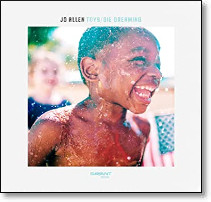
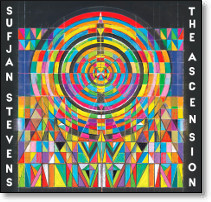
October archive (in progress). Music: Current count 34142 [34098] rated (+44), 217 [214] unrated (+3). Late start, after Weekend Roundup chewed up Monday. The delay there was due to the Trump White House's own pandemic-in-a-microcosm. Opened the Eagle today to find a Kathleen Parker column speculating on how his brush with Covid-19 might make Trump a bit humbler, but he had already scotched that idea with his fan club drive-by, then went on to tweet that Americans have nothing to fear from Covid-19, declaring that after three days in the hospital he feels better than he has in 20 years. It just goes to show that the worst case scenario wasn't that he would die. It's that he would recover and turn into an even bigger asshole. Indeed, his first piece of "work" since leaving the hospital was to pull the plug on a new stimulus deal: see Trump cuts off stimulus relief talks until after election, upending prospects for aid; and Trump abruptly ends stimulus talks after Fed Chair urges economic support. Jonathan Chait's view: Trump stimulus fail: Worst blunder in presidential history. Historians may debate that, but Wall Street's verdict was instantaneous: Dow drops 370, airlines hit hard. Meanwhile, add Stephen Miller to the list of White House aides who have tested positive for Covid-19. The toll of Kayleigh McEnany aides has risen to four. There is also an unnamed White House military aide, and the Joint Chiefs of Staff are all in quarantine. Dhruv Kullar, who wrote one of the most informative pieces I linked to in Weekend Roundup, wrote another piece on The recklessness of Trump's return to the White House. My impression is that doctors treated Trump so aggressively with anti-viral, steroid, and immunological treatments that they felt the need to monitor him in the hospital. If that unusual experimental treatment works, Trump may luck out and recover quickly with few of the side-effects that have plagued many survivors. On the other hand, if the disease can survive, Trump may be in for a much rougher ride. One thing that is clear is Most patients' Covid-19 care bears little resemblance to Trump's. In other news, Hurricane Delta is heading for Louisiana. It is currently a 145 mph Category 4 storm. It may weaken a bit when it crosses over Mexico's Yucatan Peninsula, then strengthen over the Gulf of Mexico. before landing in Louisiana Friday night/Saturday morning. Among recent musician deaths, Eddie Van Halen (65) has gotten the most publicity, but Johnny Nash (80) is remembered for the better song ("I Can See Clearly Now"). Others I recognize but haven't noted: Waldemar Bastos, Wayne Fontana, Trini Lopez, Helen Reddy. It's been a rough couple weeks for baseball players too, with Hall of Famers Lou Brock, Bob Gibson, and Tom Seaver; also Horace Clarke and Ron Perranoski. More I didn't recognize, like pitcher Charlie Haeger (37, played 2006-10, lifetime W-L record 2-7, ERA 6.40), of a self-inflicted gunshot wound, after being named as a suspect in the shooting death of his ex-girlfriend. That would have been a tragic story some other week. Record count includes most of Monday, so an extra day. I've been hard pressed to find things -- Phil Overeem's latest list was my most frequent guide. Still hope to do a book post and a batch of questions and answers later this week. Lots of things wearing me down, including some yardwork that's left me sore. I did finally finish Zachary D Carter's magnificent The Price of Peace: Money, Democracy, and the Lift of John Maynard Keynes. Moving on to something much lighter: Ruth Reichl Gourmet memoir. Most days all I can manage is to read a few pages early, and a few more late. New records reviewed this week: 21 Savage & Metro Boomin: Savage Mode II (2020, Slaughter Gang/Epic): Atlanta rapper Shéyaa Bin Abraham-Joseph and producer Leland Tyler Wayne, sequel to their 2016 EP. B+(**) Harry Allen: The Bloody Happy Song (2020, GAC): Tenor saxophonist, retro-swing guy, recorded this at home under lockdown, only credit his sax and midi keyboards. He somehow managed to sample a whole big band for the opener, but eventually drops down as far as solo, then overdubs a duet. His playing is exemplary throughout, but the non-existent others aren't so inspired. B+(**) JD Allen: Toys/Die Dreaming (2020, Savant): Tenor saxophonist, albums since 1999, trio with Ian Kenselaar (bass) and Nic Cacioppo (drums). Five originals, two standards ("You're My Thrill," "I Should Care"). Always a strong performer, this one impresses in the usual ways, then grows on you. A- Florian Arbenz/Greg Osby: Reflections of the Eternal Line (2020, Hammer): Swiss drummer, couple albums c. 2001, two more this year. This is a sax/drums duo, Osby playing soprano and alto. Stephan Spicher also get his name on the cover for "visuals." B+(***) [bc] Steve Arrington: Down to the Lowest Terms: The Soul Sessions (2019-20 [2020], Stones Throw): Joined the funk group Slave in 1975, left in 1981 to record as Steve Arrington's Hall of Fame, then solo through 1987. Recorded albums in 2009 and 2014, and now this new one, with "a new generation of talented producers." B+(*) Babe, Terror: Horizogon (2020, Glue Moon): Brazilian electronica producer Claudio Szynkier, at least nine albums since 2009. Ambient snooze with choral vocals. B- [bc] Victoria Bailey: Jesus, Red Wine & Patsy Cline (2020, Rock Ridge Music): Country singer-songwriter from California -- probably the source of her wine taste (aside from the title, there's another song called "Spent My Dime on White Wine"), but everything else is standard honky tonk, including a lot of pedal steel. B+(***) Biffy Clyro: A Celebration of Endings (2020, 14th Floor/Warner): Scottish rock band, eighth album since 2002, a big deal in Scotland since their debut, scaled the UK charts with 2007's Puzzle, sell well in Europe but not US. Mix it up toward the end, ranging from punk to prog, still makes me want to hear more. B Elvin Bishop & Charlie Musselwhite: 100 Years of Blues (2020, Alligator): Two geezers happy to play "front-porch, down-home music," "12 rootsy, spirited, humorous songs, mixing nine originals with three reimagined classics." Gets topical on "What the Hell?" with its big question, "I want to know how can four years seem so long." Charlie brings plenty of harmonica. B+(**) Bright Eyes: Down in the Weeds, Where the World Once Was (2020, Dead Oceans): Conor Oberst band since 1995, 10th studio album, not that it's kept him from pursuing a solo career and other projects. Still, this feels like a lot of work: 14 songs, 54:45, band members Mike Mogis and Nathaniel Walcott play 20 instruments (from Mellotron to Marxophone), and 50+ additional musicians are credited (most on strings or choir, but he's got half a big band's worth of horns, and two guys on bagpipes). I'm sure it's all very important, but not so sure I want to sort it out further. B+(**) Alan Broadbent Trio: Trio in Motion (2020, Savant): Pianist, from New Zealand, several dozen records since 1979. Trio with Harvie S (bass) and Billy Mintz (drums). B+(**) Apollo Brown & Che' Noir: As God Intended (2020, Mello Music Group): Detroit hip-hop producer Erik Stephens, two dozen albums since 2007, mostly collaborations with featured rappers -- this one a young woman from Buffalo. B+(**) Ceramic Dog: What I Did on My Long Vacation (2020, Northern Spy): Trio led by guitarist Marc Ribot, with Shahzad Ismaily (bass/keyboards) and Ches Smith (drums/electronics), everyone also credited with vocals. These are actually the leftovers from an album due in 2021, recorded over two weeks with the trio working in separate rooms, able to hear but not see each other. Six tracks, 31:04. B+(***) [bc] Convergence: Convergence (2020, Hammer): Swiss drummer Florian Arbenz, in an international group with two Cubans -- Jorge Vistel (trumpet) and Maikel Vistel (tenor sax) -- and others from UK, Australia, and Brazil. B+(**) [bc] Creeper: Sex, Death & the Infinite Void (2020, Roadrunner): British "goth-punk" group, second album, currently Metacritic's 4th highest rated album of 2020 (91/8) so seemed like something I should check out. May appeal to Nick Cave fans, but who am I to say that? B Drive-By Truckers: The New OK (2020, ATO): Second album this year, after The Unraveling in January -- currently my first-listed A- record in 2020, more because it got there early than anything else, as I don't recall it clear enough to compare it to later A- records. Even more uncertain here. I don't doubt their motives or their craft, but if three plays didn't do it, maybe it's not happening? Only half-impressed with their Ramones cover -- maybe their accent isn't distant enough from "The KKK Took My Baby Away"? B+(***) Ronnie Earl & the Broadcasters: Rise Up (2020, Stony Plain): Guitarist Ronald Horvath, from Queens, played with Roomful of Blues 1980-88, has a couple dozen albums leading this group. Diana Blue sings, band adds keyboards, bass, drums. Includes a "Blues for George Floyd." B+(*) Lafayette Gilchrist: Now (Lafayette Gilchrist Music, 2CD): Pianist, leads a trio with Herman Burnie (bass) and Eric Kennedy (drums). First disc impresses with non-stop rhythm (75:41). Second (73:36) has a bit less drive. B+(***) [cd] Luke Haines & Peter Buck: Beat Poetry for Survivalists (2020, Cherry Red): Postmodern bohemians: Haines sings and writes, best known for the Auteurs and Black Box Recorder; Buck plays guitar, mainly for R.E.M. but he's also dabbled elsewhere (e.g., Baseball Project, Filthy Friends). Both make their mark here, one might even say complementarily. B+(**) Hazar: Reincarnated (2020, IAN Productions): Acoustic guitarist Ulas Hazar, also plays saz, grew up in Germany, has at least one previous album. Al DiMeola joins here on guitar and cajon, with Piotr Torunski (bass clarinet), piano, and percussion. Package includes a DVD. B+(*) [cd] Idles: Ultra Mono (2020, Partisan): British band, from Bristol, third album, got a lot of early hype as the second coming of the Clash, which (of course) was ridiculous -- they lack both the early punk fury and the later pop knack, but somehow find a middle line, which supports today's fire and fury. B+(***) I.P.A.: Bashing Mushrooms (2018 [2020], Cuneiform): Norwegian-Swedish free jazz quintet, mostly well-known names -- Atle Nymo (tenor sax/bass clarinet), Magnus Broo (trumpet), Mattias Ståhl (vibes), Ingebrigt Håker Flaten (bass), Håkon Mjåset Johansen (drums) -- fifth album since 2009. B+(**) [dl] Jealous of the Birds: Peninsula (2020, Atlantic): Naomi Hamilton, from Northern Ireland, second album plus a couple EPs. B+(*) Fenne Lily: Breach (2020, Dead Oceans): British singer-songwriter, from Dorset, second album. Landed gigs opening for Lucy Dacus and Marika Hackman. Appealing in that vein. B+(**) Zara McFarlane: Songs of an Unknown Tongue (2020, Brownswood): British jazz/soul singer-songwriter, parents Jamaican, fourth album. B+(*) Thurston Moore: By the Fire (2020, Daydream Library): Sonic Youth honcho, sounds much like his old band but less commanding, still misses his better half. Express panned this as a "pale imitation," which isn't really true. B+(**) Tobin Mueller: What Survives: Radio Edits (2020, Artsforge): Pianist, discography (dating from 1980s) is split between jazz/funk and prog rock, with sections for solo piano, piano plus voice, and spoken word; biography includes a claim to have been one of the inventors of new age music. This is based on a 1995 Broadway show he wrote, played by nonet plus guests, the CD edited down from a much longer download-only release. Vocals are a weak spot. B+(*) [cd] Róisin Murphy: Róisin Machine (2020, Skint): Irish singer-songwriter, fifth album since 2005, electropop. B+(**) Douglas Olsen: 2 Cents (2018 [2020], self-released): Trumpet player, cites a 25-year history with a number of big bands, Latin jazz outfits, and r&b sidework, but I'm not finding any previous albums under his own name. Mostly a hard bop lineup, some tracks with extra congas. Six originals, a rumba, old bebop tunes from Dizzy Gillespie and Howard McGee/Fats Navarro. B+(**) [cd] [11-01] Kelly Lee Owens: Inner Song (2020, Smalltown Supersound): Electronica producer, from Wales, based in London, second album. Was prepared to dis the vocals, but sometimes they work. Beats discreet, but they work too. John Cale contributes a song, neither here nor there. B+(**) Bette Smith: The Good, the Bad and the Bette (2020, Ruf): R&B singer-songwriter, from Brooklyn, parents from Trinidad, second album, on a German blues label. Rocks. B+(**) Sufjan Stevens: The Ascension (2020, Asthmatic Kitty): "Singer-songwriter" seems too self-limiting. He is a pop composer of grand sweep and delicate bearing, an heir to Brian Wilson working on if anything a broader canvas. His is not a style I'm fond of, but half of these songs click for me, and the others seem to be lurking in the depths, awaiting their moment. A- Sylvan Esso: Free Love (2020, Loma Vista): Electropop duo from North Carolina, singer Amelia Meath and producer Nick Sanborn. Third studio album, a short one (10 songs, 29:14). Slight inside the grooves as well, but that's part of the charm. B+(*) Throwing Muses: Sun Racket (2020, Fire): Lo-fi indie pop band from Rhode Island, debut 1985 with step-sisters Kristin Hersh and Tanya Donnelly, latter left in 1991 (to found the Breeders), band broke up in 1997, reformed in 2003, third album since their return. Whispery vocals over off-kilter guitar/electronics. B+(*) Tessy Lou Williams: Tessy Lou Williams (2020, Tessy Lou Williams): Country singer-songwriter, from Montana, parents moved there from Nashville, where they were session musicians. First album, nice voice, impeccable neotrad sound. B+(**) Yelle: L'Ère Du Verseau (2020, Recreation Center): French electropop band, principally singer Julie Budet (Yelle) and Jean-François Perrier (GrandMarnier), recorded this fourth album (since 2007) in Montreal. B+(*) Recent reissues, compilations, and vault discoveries: Daora: Underground Sounds of Urban Brasil ([2020], Mais Um Discos, 2CD): "Hip-hop, leftfield beats, afrobeat and dub-influenced sounds from Brasil," 32 tracks, compiled by Rodrigo Brandao, vintage unknown but probably recent, only one artist I recognize (Baiana System), title slang "for something that's dope." Edges a little soft, as tends to be the case in Brazil, but that introduces a loopy, oblique humor that you rarely hear elsewhere. A- [bc] Dennis González: Forever the Falling of Stars (1995 [2020], Daagnim): Trumpet player from Texas, started recording in 1979 and has ever since released a steady stream of albums, except for a dry spell in the 1990s, when this "rare gem" was commissioned but only circulated within a "small circle." No credits, but mostly electronics, with voices ranging from rap to tone color, and some trumpet. B+(**) [bc] Old music: J.D. Allen: In Search of J.D. Allen (1998 [1999]. Red): Tenor saxophonist, from Detroit, first album, recorded in New York with Fabio Morgera (trumpet), Eric Revis (bass), Rodney Green (drums), and piano on three tracks (Shedrick Mitchell). Nine originals, closing with a cover of "Lonely Woman." B+(***) J.D. Allen: Pharoah's Children (2001 [2002], Criss Cross): Second album, quintet, with Jeremy Pelt (trumpet), Orrin Evans (piano), Eric Revis (bass), and Gene Jackson (drums). B+(**) JD Allen: Radio Flyer (2017, Savant): Expands on his usual trio -- Gregg August (bass) and Rudy Royston (drums) -- adding Liberty Ellman on guitar. B+(***) Tony Allen Plays With Afrika 70: No Accomodation for Lagos (1979, Polydor): Nigerian drummer, third album, leading what was essentially Fela Kuti's band. Two side-long tracks, 29:16; was squeezed with a second album into a 2002 CD, then split again for a 2011 vinyl reissue (by Kindred Spirits). B+(**) Tony Allen Plays With Afrika 70: No Accomodation for Lagos/No Discrimination (1979 [2002], Evolver): Combines two albums, although Napster omits one track ("Ariya"). B+(**) Dennis Gonzalez: Stars/Air/Stripes (1981 [1982], Daagnim): Trumpet player, from Dallas, early album (first was 1979), organized sixteen musicians for this, recorded in various combos in various locations, to scattered effect. B+(*) [bc] Dennis Gonzalez's Ataraxia: Ts'iibil Chaaltum (2017, Daagnim): "Eastern jazz trio," the leader playing trumpet/cornet, with Drew Phelps (bass) and Jagath Lakpriya (tabla), everyone adding to the percussion, but not breaking the calm. B+(*) Unpacking: Found in the mail last week:
Ask a question, or send a comment. Monday, October 5, 2020 Weekend RoundupTwo things first: unlike recent weeks, I didn't start collecting links until Sunday afternoon, so this will (or at least should be) shorter than the last six or so record-breaking weeks; also, because I expect several major clusters, I'm going to try something new, and sort nearly everything by subject area (with a miscellaneous at the end, which will mostly hold topics until I decide they've reached critical mass). As a Table of Contents is handy for me, the topics this week are:
I basically stopped collecting links late Sunday night, but held up posting until well into Monday so I could write some introductory remarks. Music Week will also be postposed a day this week. While I wasn't working on Weekend Roundup last week, I made some progress toward a books post. I should finish that mid-week, and may also have a music poll list, and perhaps some answers to reader questions (could use more). The Covid-19 Pandemic Crashes the White HouseLate Thursday evening I was watching Borgen. Laura had gone upstairs, but came down and told me that Trump and Melania had tested positive for Covid-19. My first reaction was to feel sorry for them -- evidently there's still some merit to the old adage about not wishing some misfortunes on your worst enemy. That was followed by considerable unease about the fate of the world. Might his illness elicit a wave of sympathy? Or maybe just forgetting of the awful things he's done, let alone the hideous person he has shown himself to be? Or maybe he dies, and Pence reaps the sympathy vote, either as a blank slate or Trump's "better angel"? (Someone believed capable of delivering on the many promises Trump bungled?) Whatever else happens, it is more imperative than ever to vote for Joe Biden and Democrats down the ticket. I decided then not to bother collecting this week's links until the dust settled down a bit. It soon turned out that Trump is still Trump, and Republicans are still Republicans. Laura spent the next few days watching Fox News, relishing how desperate they were wrap their brains around the news, looking to spin it into their usual propaganda, and coming up with very little. (I tried googling a phrase they used to suggest that people were laughing at Trump's misfortune, but couldn't find it -- perhaps remembering it wrong.) My own sense of perspective was helped by watching Jimmy Kimmel on Friday night, who did a nice job of expressing concern for the Trumps' health while pointing out the context in which their illness was contracted and spread. When I finally started collecting the links below, I found many pieces highly critical of Trump's attitude as well as his handling of the pandemic, including ones which assigned a fair share of blame directly on Trump. I didn't find evidence of gloating or schadenfreude (although the latter was reportedly the most looked-up word at Merriam-Webster Dictionary over the weekend). Moments ago I heard Sen. John Kennedy (R-LA) insisting that Covid-19 just isn't that dangerous, much as Trump himself has done. Today's Covid in the US death count is 209,690, with 7.4 million cases. Intelligencer has a pretty extensive news roll on Trump's Covid-19 case. The plan is to return him to the White House Monday evening, which may sound like he's out of the woods, but is not anything like you or me getting sent home from hospital. Lest you think Trump might have learned something from the illness, here's his tweet:
Assuming he doesn't relapse, he's promising to return even more dangerous than he's been so far. Eliza Barclay: Trump's refusal to wear a face mask is a catastrophe. Julia Belluz: Is Trump sicker than his doctors are saying? His treatment regimen raises questions. Isn't there an old joke about doctors examining your wallet before your body? The one clear thing is that the doctors are sparing no expense in treating Trump. What's less clear is whether all that attention, especially with the experimental treatments, will help him. But even if it does, don't expect to get the same care or attention. Health care is as inequal and unfair as any other aspect of America. Philip Bump:
Isaac Chotiner: Maggie Haberman on the fallout from Trump's hospitalization. As you probably know, Haberman covers the White House for the New York Times. Atul Gawande: Controlling the pandemic is the first step toward rescuing a failed system. Susan B Glasser: "There is zero reason to panic": On Trump's coronavirus case and the shredded credibility of his White House: "A report from Day One after the President's diagnosis." Fred Hiatt: Only the Trump team could spin this into even riskier messaging about the virus. Umair Irfan: Trump was tested regularly for Covid-19. He wanted less testing for everyone else. Jennifer Jacobs/Josh Wingrove: Trump kept regular schedule after learning close aide Hope Hicks had Covid. Peter Kafka: Who will tell us the truth about Trump's health? "We know it won't be Trump." Dhruv Khullar: How to understand Trump's evolving condition: "Day to day, the news can be confusing. But the treatment of COVID-19 has steps, phases, and milestones that can tells us a lot about how the President is doing." There's a lot here, but this paragraph caught my eye:
Jen Kirby: 3 of the world's most powerful Covid-19 deniers have gotten the virus: "Like Trump, at points in their tenure, the UK's Boris Johnson and Brazil's Jair Bolsonaro both downplayed the virus." German Lopez:
Amanda Marcotte: Trump has COVID-19: More evidence that he's always put his ego ahead of public health: "Relax -- Donny SuperSpreader can't benefit from catching a virus he has claimed affects 'virtually nobody.'" Tina Nguyen: 'God-tier genetics': A stunned MAGA world offers blame, adulation after Trump's diagnosis. Anna North: 10 facts about school reopenings in the Covid-19 pandemic. Olivia Nuzzi/Ben Jacobs: The White House is spreading virus and lies. Charles P Pierce: The chaos has to stop with the President's doctors: Reason I linked this is the photo. Evidently it takes 10 doctors (well, people in white lab coats) to give a confusing and probably misleading press conference on Trump's medical status. Andrew Prokop: What happens if the president is too sick to do the job? "The 25th Amendment, explained." Brian Resnick: Was the White House reception for Amy Coney Barrett a superspreading event?: "The event is at least a stark example of what not to do during a pandemic." Brian Resnick/Julia Belluz: How the White House became a coronavirus breeding ground. Benjamin Rosenberg: Everyone in the White House cluster who has said they tested positive for the coronavirus:
Dylan Scott: While Trump gets the best health care in the world, he wants to eliminate coverage for millions: "Trump's positive coronavirus test underscores the stakes of his fight against Obamacare." I'm not so sure about "the best" but he's certainly getting the most expensive health care in the world. Dylan Scott/Christina Animashaun: Covid-19's stunningly unequal death toll in America, in one chart. "Black Americans are dying at twice the rate of white Americans." Dan Spinelli: Trump's doctor just admitted he lied to stay "upbeat." He's still leaving big questions unanswered. Matt Stieb: The White House is failing to contact trace its own outbreak. Peter Weber: The October Surprise nobody wanted. Richard Wolfe: We should wish Trump well. But he's been astoundingly irresponsible at every turn. But isn't blaming people for the consequences of poor lifestyle choices something conservatives do? Patricia Kelly Yeo: COVID-positive Trump ignores CDC advise to take joyride, with grim Secret Service agents in tow: "The president left Walter Reed's presidential suite in a motorcade to wave to supporters, potentially exposing several Secret Service agents to the coronavirus." And yes, there are pictures. Wasn't that the whole point? By the way, this is another instance of how Trump is getting special treatment. Who else sick enough to be in hospital would be allowed a temporary pass for a publicity appearance? More:
Matthew Yglesias: Trump has consistently mocked adherence to public health guidelines.
The Trump-Biden DebateThe first debate between Trump and Biden was held on Tuesday, moderated by Chris Wallace. It was by all accounts a pretty ugly affair. Vox (Matthew Yglesias, German Lopez, Alex Ward, Li Zhou, Zack Beauchamp): 3 winners and 4 losers from the 2020 presidential debate. Format rules evidently prevent them from scoring it 7-0 Biden, so they sorted it by issue: Winners: Cross-talk and malarkey; China; Speaking directly to the American people. Losers: The "Biden has dementia" theory; Racial justice; Chris Wallace; America's safety. Yglesias followed up with Exclusive poll: Biden won the debate convincingly. Zack Beauchamp:
Fabiola Cineas: Trump was asked to denounce white supremacy. He wouldn't. Jane Coaston: The Trump campaign spent months portraying Biden as senile. That might be a mistake. Megan Day: Donald Trump endorsed right-wing violence during the debate. Matt Ford: Trump never answered the debate's most important question: "Let there be no 'both-sidesing' of the primary cause of American anxiety." Ben Jacobs: 'Just putrid': GOP insiders texted me their honest feelings about the debate. Ed Kilgore: So how do the polls look after that hellscape of a debate? Jen Kirby: Vote-by-mail is not full of fraud, despite Trump's debate claims. Ezra Klein: Joe Biden's most surprising, and possibly important, answer of the debate: "Biden disavowed a lot of ambitious progressive policies on Tuesday. But there were two he refused to reject." He refused to commit on ending the Senate filibuster or "packing the Court," saying "Whatever position I take on that, that will become the issue." Robert Kuttner: Biden: Notes for next time. Eric Levitz:
German Lopez: The reviews are in: The first presidential debate was a disaster. Steve M: After the debate, right-wingers are clapping louder. Harold Meyerson: Four more years of this jerk? "Trump does his re-election campaign no favors." John Nichols: Joe Biden should propose a $75 tax credit tonight -- then drop the mic: This is the week's dumbest piece of debate advice. Why $750? Just so Trump can reduce his tax burden to $0? While a lot of people could use a tax credit, pegging it to a number that Trump somehow hit on twice is meaningless outside of a few twitter circles. And drop the mic? Who even knows what that means? QED is more recognizable. Plus having a 77-year-old drop a microphone may suggest something other than a definitive dis. Ella Nilsen: Joe Biden smashed his single-hour fundraising record after the first presidential debate. Frank Rich: Should the first presidential debate also be the last? Aaron Rupar: 3 debate moments that showed how unsuited Trump is for the presidency: "Don't let Trump's debate bullying distract you from his ignorance and malevolence." Dylan Scott: If Trump wins, 20 million people could lose health insurance. If Biden wins, 25 million could gain it. "The enormous stakes for Americans' health insurance in the 2020 election, explained." Alex Shephard: The right is blaming Chris Wallace for Trump's terrible debate performance. Kristin Urquiza: I saw in the front row at the debate. Did Trump infect me with the coronavirus? Steven Waldman: Actually, it was a good debate. Seriously.
Other Aspects of the Campaign and ElectionsMost of this week's campaign stories were tied to topics above, but a few slipped into this section, as did the dystopian speculation about election shenanigans and what happens as and after the ballots are counted. I've generally been avoiding stories on polling, also on down-ballot races (even the very important battle over the Senate). I did flag one piece on the Kansas senatorial race, because it's rare a local race from my home state gets national attention. It also looks like the Senate races in Georgia and South Carolina are tightening up. Also included the bizarre Brad Parscale story here. I'm surprised there's not much more on it, as it suggests unplumbed depths of dementia and violence in the campaign. Also note that Parscale's replacement as head of the Trump campaign, Bill Stepien, is on the list of White House Covid-19 victims. Trump will have no shortage of people to blame for losing this year. Jane Coaston: The Proud Boys, explained: "The far-right street fighting group has embraced violence -- and Donald Trump." More on Proud Boys:
Eric Cortellessa: Republicans are slowing down mailed-in vote counts in key swing states. David Dayen: The winter of our discontent: "Projecting the 78 harrowing days after the election: "This is a horror story." Shirin Ghaffary: Democratic Party leaders are "banging their head against the wall" after private meetings with Facebook on election misinformation. Constance Grady: The bizarrely aggressive rhetoric of Trump's fundraising emails, explained: "Rhetoric scholars explain why Trump's campaign emails feel like someone is yelling at you."
Charlotte Klein: Texas Governor orders ballot drop-off locations closed across state. Nancy LeTourneau: This woman could be the first Democratic Senator from Kansas since 1932. She means 1938: Democrat George McGill was elected to finish a term in 1930, then re-elected to a full term in 1932. Barbara Bollier is running for an open seat being vacated by Pat Roberts, who nearly lost to an independent six years ago. She's an ex-Republican, which plays well in Kansas, a woman (Nancy Kassebaum won three Senate terms), has quite a bit of money, and is running against Roger Marshall (like Roberts, an agribusiness shill from Western Kansas). Aaron Rupar:
Walter Shapiro: Biden should be worried: "Trump's Covid-19 diagnosis has scrambled the presidential race irrevocably." Everyone's worried, but the spread between Trump's best-ever and worst-ever days is about four points, so the main thing Biden has to be worried about is doing something stupid, and even then we're talking about doing something stupider than Trump has already done. Gabriel Sherman: "The family is worried Brad will start talking": Trumpworld panics over debate fiasco as campaign turmoil mounts: Any other week this story would have been huge, as Trump's digital guru and recently deposed campaign manager staged a public meltdown, threatening to kill himself, before he was subdued and carted off by police.
More on Parscale:
Nate Silver: Trump's chances are dwindling. That could make him dangerous. Kelly Well: Trump's crew of far-right vigilante poll watchers is coming. Still More on Donald Trump and FamilyLast week's big New York Times exposé on The President's taxes continued to produce revelations and reaction. "Lock him up" may not yet be a campaign chant, but is on the minds of more than a few prosecutors. Helena Bottemiller Evich: Trump requires food aid boxes to come with a letter from him: "'In my 30 years of doing this work, I've never seen something this egregious,' one food bank director said." Molly Jong-Fast: Donald Junior's Hunter Biden obsession is creepy, and telling. Dylan Matthews: Here's how much you had to make in 2017 to pay more income tax than Donald Trump. Casey Michel: Ivanka Trump's starring role in her father's financial troubles: "If the president's tax shenanigans land him afoul of the law, the first daughter could go down with him." Anna North: The Melania tapes bust the "Free Melania" myth: "Turns out the first lady is a lot like her husband." Andrew Prokop:
Luke Savage: Attacking Trump as a "fake billionaire" is a dead end: "The real scandal isn't that Donald Trump is secretly poor -- it's that our system let such an obvious fraud get so rich." Matthew Yglesias: Trump could be in a lot of legal hot water if he loses the election: "The presidency shields him from charges of tax fraud, campaign finance violations, obstruction, and more." Details a long list of just the most obvious potential charges and liabilities, concluding:
Supreme Court, and Other InjusticesTrump's nomination of Amy Coney Barrett to the Supreme Court is still up in the air, as Republicans in the Senate plot to confirm her before the election. Although the biggest twist this week was that a promotional meet and greet for her looms large in the White House Covid-19 cluster outbreak. Also a few other stories relating to justice and not. Erwin Chemerinsky: The Court: How did we get here and what will it mean? Fabiola Cineas: Kentucky AG releases Breonna Taylor grand jury audio recordings. More on Breonna Taylor:
Eleanor Clift: Donald Trump might lose, but his judges will keep wrecking America for years to come. Adam Cole: The Supreme Court is about to hit an undemocratic milestone. The US Senate accords two votes per state, regardless of population, so it is possible to form a majority of Senators who represent only a minority of the population. Indeed, four Supreme Court justices have been confirmed by minority-vote Senators (Thomas, Alito, Gorsuch, and Kavanaugh). If Amy Coney Barrett is confirmed, she will probably be the fifth. Patrick Radden Keefe: The Sackler family's plan to keep its billions: "The Trump administration is poised to make a settlement with Purdue Pharma that it can claim as a victory for opioid victims. But the proposed outcome would heave the company's owners enormously wealthy -- and off the hook for good." Dahlia Lithwick: The deranged, dangerous push to still seat Amy Coney Barrett: "For the GOP, entrenching minority rule is more important than human life." Ian Millhiser:
Ella Nilsen: Amy Coney Barrett's Judiciary Committee hearing is still on, despite the Senate recess. David Sirota: The US Supreme Court may soon become plutocracy's greatest defender. Isn't it already? Not that it's needed as long as Trump is president and McConnell runs the Senate. Paul Starr: How to rebalance the Supreme Court. The EconomyMeanwhile, the economy churns, as some people return to work, but others are getting laid off -- especially as the earlier stimulus program job protections have expired. There appears to have been a little progress toward a compromise on a new relief bill, but now that the stock market has recovered, that's not much of a priority for Senate Republicans. Josh Barro: What the disappointing final jobs report before the election tells us about the economy. Timothy Noah: Trump's "greatest recovery in history" is wheezing out. Emily Stewart:
MiscellaneousUmair Irfan: Why we're more confident than ever that climate change is driving disasters. German Lopez:
Jane Mayer: The secret history of Kimberly Guilfoyle's departure from fox. JC Pan: Our plutocratic tax system was built for rich cheaters: "The Times exposé was a blunt articulation of how things work for people like Trump -- and against everyone else." Kaila Philo: Noam Chomsky does not think the planet is doomed (yet). Interview, on a new book Chomsky co-wrote with Robert Pollin: Climate Crisis and the Global Green New Deal. Kelsey Piper: Extreme poverty is getting worse across the globe for the first time in decades. Ask a question, or send a comment. Monday, September 28, 2020 Music Week
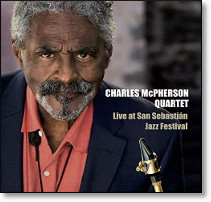
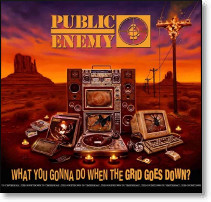
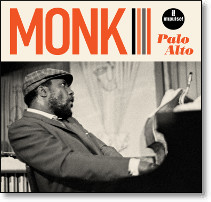
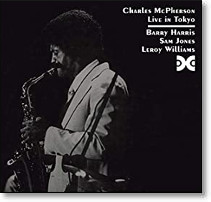
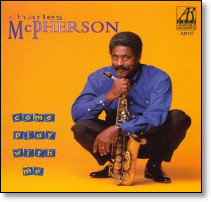
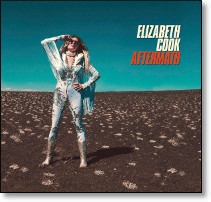
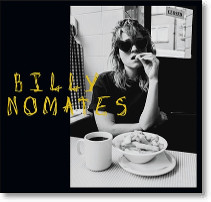
Music: Current count 34098 [34056] rated (+42), 214 [216] unrated (-2). Well, that's another month, not exactly wasted but not put to very good use either. I'm still reeling from recent deaths -- among friends, in my family, of semi-famous people I care about, and others I knew nothing of. I've never forgotten one of the late Diane Wahto's letters to the Wichita Eagle, probably right after the stolen 2000 election, where she bravely declared, "we survived one Bush; we can survive another." She did, but lots of people didn't, and she herself didn't survive Bush's partisan successor. Trump's death toll far exceeds the 204,888 Covid death count (as of today), and he's hurt millions more. Hurts my head just to think about it. Rolling Stone published a third iteration (after 2003 and 2012) of The 500 Greatest Albums of All Time. I started to transcribe it with my grades, but didn't get very far. Robert Christgau and Carola Dibbell published their ballots (unranked top-50 lists) here. Greil Marcus published a top 40 ballot. Other ballots I've found: Stephen Thomas Erlewine; well, that's it (RS did publish a list of voters, but not their ballots; only 28% were identified as journalists). Wikiwand has some statistics. I wasn't invited. Thought I might edit down a list from my 1,000 Albums for a Long and Happy Life, but haven't found the time. If I do pursue this further, I'll probably listen to some of the ranked records I had missed/passed up (as far as I've checked, 24 of the top 240, so 10%). Only anomaly in the list below worth mentioning is my dive into old Charles McPherson albums. Phil Overeem likes his newest album, Jazz Dance Suites. I wasn't able to find it, but did find a live album he released back in January, and that got me started. His 1975 album Beautiful! is a long-time favorite, and I also am a fan of his 2015 album The Journey, so I was primed to look for more. Two grade changes this time, nudging up albums I thought were pretty good to start with. Better to recheck them before the month ends than to complicate my paperwork later. Four week month, bumped the rated count up by 184 (so average 46/week, way above my long-term historic average) -- a bonus for not otherwise having much of a life, I guess. I haven't run the numbers yet, but I'm probably ahead on the year, even with more old music recently. New records reviewed this week: Artemis: Artemis (2020, Blue Note): Jazz supergroup founded 2017, seven women from six countries, first album, music director Renee Rosnes (piano), with Ingrid Jensen (trumpet), Melissa Aldana (alto sax), Anat Cohen (clarinet/bass clarinet), Noriko Ueda (bass), Allison Miller (drums), and Cécile McLorin Salvant (vocals on 2 tracks, the 2nd a highlight). B+(**) Daniel Carter/Brad Farberman/Billy Martin: Just Don't Die (2018 [2019], Ropeadope): Carter plays flute, trumpet, and tenor sax; the others guitar and drums. Credited as joint improv, but I imagine this as the guitarist's album, mostly because the others seem relucant to step on his toes, let alone show off. B+(*) [bc] Regina Carter Freedom Band: Swing States: Harmony in the Battleground (2020, Tiger Turn): Violinist, from Detroit, eleventh album since 1995. Cover notes as featuring: Jon Batiste (piano), John Daversa (trumpet), Alexis Cuadrado (bass), Kabir Sehgal (bass/percussion), Harvey Mason (drums). Mostly trad pieces, which the violin lends an old-timey feel to, with messages in the interludes: vote! B+(*) Tyler Childers: Long Violent History (2020, Hickman Holler/RCA): One of the best country singer-songwriters to emerge in recent years throws you a curve with no vocals (until the title song closer), just a batch of old-fashioned fiddle tunes. B+(***) Cliff Trio [Pandelis Karayorgis/Damon Smith/Eric Rosenthal]: Precipice (2019 [2020], Fundacja Sluchaj): Piano-bass-drums trio. Impressive pianist. B+(**) [bc] Conference Call: Prism (2020, Not Two): Free jazz quartet, seven albums 2002-13 with George Schuller on drums, replaced here by Dieter Ulrich, joining original members Gebhard Ullmann (tenor sax/bass clarinet), Michael Jefry Stevens (piano), and Joe Fonda (bass). Nice balance here. B+(***) Chick Corea: Plays (2018 [2020], Concord, 2CD): Solo piano, live, cover throws out some composer names, from 9 o'clock: Corea, Mozart, Gershwin, Monk, Scarlatti, Evans, Jobim, Chopin, Scriabin, Wonder. Play indeed he does. B+(*) The Croaks: One of the Best Bears! (2018 [2020], Fundacja Sluchaj): Avant-jazz trio: Martin Küchen (sopranino/soprano sax, metal objects), Martin Klapper (amplified objects, toys and small electronics), and Roger Turner (drums, metal and plastic). B+(*) [bc] Joe Farnsworth: Time to Swing (2020, Smoke Sessions): Mainstream drummer, not much under his own name but lots of side credits since 1991. Big-name quartet here, with Kenny Barron (piano), Peter Washington (bass), and Wynton Marsalis (trumpet, who checks out midway). B+(**) Chad Fowler/WC Anderson: Lacrimosa (2020, Mahakala Music): Saxophone and drums duo, seems to be the first album for either. Fowler mostly plays alto, but ranges up and down from there. Looks like he also has a big job at Microsoft, having started out with open source start ups before cashing in, and running this label on the side. This is rough, can get on my nerves. B+(**) [cd] Frode Gjerstad/Fred Lonberg-Holm/William Parker/Steve Swell: Tales From (2019 [2020], Fundacja Sluchaj): No credits, but typically sax (alto, I think), cello/electronics, bass, trombone -- the latter two fill ins for a plan that originally called for Matthew Shipp. Lonberg-Holm came best prepared, while the others do what they usually do. B+(**) [bc] Guillermo Gregorio/Joe Fonda/Ramón López: Intersecting Lives (2018 [2020], Fundacja Sluchaj): Clarinet player, from Argentina, lived in Europe for a while, but long based in Chicago. Backed by bass and drums. B+(**) [bc] Diana Krall: This Dream of You (2016-17 [2020], Verve): She pieced this together from older sessions that produced Turn Up the Quiet. I haven't figured out who plays what where, but whether playing in a duo, trio, quartet, or larger ensemble, she's steady, her voice nailing each thoughtful song. B+(***) The Mark Lomax Trio: The Last Concert: Ankh & the Tree of Life (2020, CFG Multimedia): Drummer, with the magnificent Edwin Bayard ever reliable on tenor sax and Dean Hullett on bass. Two long pieces, develop a bit slowly, peak out where they always do: strain, struggle, redemption. A- Charles McPherson Quartet: Live at San Sebastián Jazz Festival (2019 [2020], Quadrant): Alto saxophonist, broke in with Mingus in 1961, very influenced by Charlie Parker -- his first albums were Bebop Revisted! and Con Alma! -- developed into a unique voice. Hasn't recorded much since 2000, but his 2015 album The Journey was special. With Bruce Barth (piano), Mark Hodgson (drums), and Steven Keogh (drums), playing five extended pieces. Blues-based jams, form terrific. A- Joachim Mencel: Brooklyn Eye (2019 [2020], Origin): Pianist, from Poland, also plays hurdy-gurdy, recorded this in Brooklyn with guitar (Steve Cardenas), bass (Scott Colley), and drums (Rudy Royston). B+(*) [cd] Vic Mensa: V Tape (2020, Roc Nation, EP): Chicago rapper, father from Ghana, original name Mensah, fifth EP (7 tracks, 26:28), has a longer mixtape and a studio album. B+(**) Merzbow/Mats Gustafsson/Balász Pándi: Cuts Open (2018 [2020], RareNoise): Japanese noise artist Masami Akita, who if anything has a moderating effect on the Norwegian avant-saxophonist, plus a drummer. Not their first record together, but their longest one. Has its moments, but they can wear thin. B+(*) [cdr] Helen Money: Atomic (2020, Thrill Jockey): Cellist Alison Chesley, originally from Los Angeles, moved to Chicago for college and stayed there, had an acoustic duo called Verbow, did film work and other side projects, plus a half dozen albums as Helen Money. Also plays piano here, accompanied by harp, electronics, and drums. Tight, uncomplicated but rather prog instrumental rock. B+(***) Moor Mother: Circuit City (2020, Don Giovanni): Camae Ayewa, poet/musician/activist from Philadelphia. I originally filed her under hip-hop, but at this point hell if I know. Styled as a theatrial work in four acts, with spoken word over trumpet, sax, electronics, bass, and drums, with most contributing to perussion. Music veers into free jazz, or maybe just noise. B+(*) Public Enemy: what You Gonna Do When the Grid Goes Down? (2020, Def Jam): Time for a "Fight the Power" remix? That's the centerpiece here, and nothing else quite matches it. Still, this is hard and angry like few others can muster, which makes it timely, even if the time frame spans decades. A- Ben Rosenblum Nebula Project: Kites and Strings (2020, One Trick Dog): Pianist, also plays accordion, has a previous album. Originals, three covers ("Somewhere," Neil Young, a trad Bulgarian song). Postbop, with trumpet and tenor sax/bass clarinet, guitar, bass, drums, a few guests. B+(*) [cd] [10-16] Markus Rutz: Blueprints: Figure Two: New Designs (2018-19 [2020], OA2): Trumpet player, based in Chicago, has a previous Figure One. Six original compositions, covers of McCoy Tyner, Frank Foster, and Sam Rivers; postbop, with sax, piano, guitar, bass, drums, extra percussion. B+(*) [cd] Cecil Taylor and Tony Oxley: Birdland, Neuburg 2011 (2011 [2020], Fundacja Sluchaj): Piano and drums duo. Taylor died in 2018, but until this his most recent records were recorded in 2008, also duos with Oxley. Two (or three) improvs, 57:23, quieter than in their heyday, but can still startle you, remind you how damn near anything is possible. After all, that's what they do. A- [bc] Chip Wickham: Blue to Red (2020, Lovemonk): Flute player, sometimes goes as Roger Wickham (or Kid Costa), third album, with harp (Amanda Whiting), keyboards, bass/cello, drums, and percussion. B- Immanuel Wilkins: Omega (2020, Blue Note): Alto saxophonist, grew up near Philadelphia, based in New York, first album, produced by Jason Moran, backed by piano (Micah Thomas), bass, and drums. B+(**) WorldService Project: Hiding in Plain Sight (2020, RareNoise): British "punk-jazz" quartet -- Dave Morecroft (keyboards), Ben Powling (saxes), Arthur O'Hara (bass), Luke Reddin-Williams (drums), plus trombone on 4 (of 9) tracks, some vocals -- fifth album. I've found them to be very annoying in the past, so I reckon this one's marginal listenability an improvement. C+ [cdr] Recent reissues, compilations, and vault discoveries: Rich Krueger: The Troth Sessions (2002 [2020], Rockin'K Music): PhD in biochemistry, postdoc in neuroscience, day job as a clinical associate in pediatrics at the University of Chicago. Released two albums in 2018 that Christgau liked much more than I did -- second suggested that he had been writing songs for much longer. Turns out he had a folk-rock band in the 1980s, and cut these acoustic guitar and voice demos, enough for a short album (9 tracks, 29:07). B London Jazz Composers Orchestra: That Time (1972-80 [2020], Not Two): Avant big band, I think of it as being bassist Barry Guy's vehicle, but four composers are named on the cover: Kenny Wheeler, Guy, Paul Rutherford, and Howard Riley, each with a 14-18 minute piece, the first two from 1972, the latter 1980. B+(*) Thelonious Monk: Palo Alto (1968 [2020], Impulse!): Archival album, previously unreleased, so a big deal, recorded on a stage at Palo Alto High School, a side trip from a stand at the Jazz Workshop in San Francisco. Quartet, with Charlie Rouse (tenor sax), Larry Gales (bass), and Ben Riley (drums). This was near the tail end of one of Monk's best quartets, with seasoned experts reworking his old songs. A- Nublu Orchestra Conducted by Butch Morris: Live in Paris (2010 [2020], Nublu): "Conduction No. 190." At some point I should make a chart of who played on each of their live albums -- coming out now at a fairly rapid clip -- but aside from some regulars like Graham Haynes (cornet) and Doug Wieselman (guitar) the lineups seem pretty variable. B+(**) Old music: Charles McPherson: Con Alma! (1965 [1995], Prestige/OJC): Alto saxophonist, second album, quintet with Clifford Jordan (tenor sax), Barry Harris (piano), George Tucker (bass), and Alan Dawson (drums). Runs through six songs, mostly bebop standards like the title track, "Dexter Rides Again," and "Chasing the Bird." B+(*) Charles McPherson: Live at the Five Spot (1966 [1994], Prestige): Quintet with Lonnie Hillyer (trumpet), Barry Harris (piano), Ray McKinney (bass), and Billy Higgins (drums), originally released as The Quintet/Live! in 1967, reissue tacks on three extra tracks, bringing the CD to 74:26. Mostly bop repertoire. B+(*) Charles McPherson: From This Moment On (1968 [1997], Prestige/OJC): Quartet, with Cedar Walton on piano, Pat Martino on guitar, plus bass and drums. Walton and Martino tend to take over, but some find alto sax here and there. B+(**) Charles McPherson: Horizons (1968 [1998], Prestige/OJC): Sextet, Walton and Martino again, different bass and drums, with Nasir Hafiz's vibes prominent from the start. Four McPherson originals, two covers ("Lush Life" and "I Should Care"). Sax more prominent here, and he's clearly developing his tone and poise. B+(**) Charles McPherson: Siku Ya Bibi (Day of the Lady) (1972, Mainstream): He left Prestige after McPherson's Mood (1969), and recorded three 1971-73 albums for Mainstream. This is the second, dedicated to Billie Holiday. Good material for alto sax and quintet, but strings spoil half the tracks. B Charles McPherson: Live in Tokyo (1976, Xanadu): After Mainstream, the alto saxophonist recorded 5 records for Xanadu (1975-81). The first, Beautiful! (1975) is a special favorite. This one retains the bass-drums combo (Sam Jones and Leroy Williams), reverts to the leader's usual pianist (Barry Harris), and adds some guitar (Jimmy Raney). A- [yt] Charles McPherson: Come Play With Me (1995, Arabesque): Not much to show for the 1980s, but McPherson recorded three albums for Arabesque 1994-98. This middle one is a quartet with Mulgrew Miller (piano), Sati Debriano (bass), and Lewis Nash (drums) -- lovely effort all around. A- Charles McPherson: Manhattan Nocturne (1997 [1998], Arabesque): Another quartet, with Ray Drummond taking over on bass. [Glitch on first song.] B+(***) Charles McPherson: Live at the Cellar (2002, Cellar Live): Live shot from the Vancouver club, quartet with local piano trio (Ross Taggart, Jodi Proznick, Blaine Wikjord). Six songs, each topping 10:12 (up to 14:56). Closes strong. B+(***) Charles McPherson: What Is Love (2010, Arabesque): Released a decade after his 1994-98 records for the label, having trouble with dates and such, but could be new. Quartet with Randy Porter, Rufus Reid, and Carl Allen, plus strings: The Lark Quartet. I'm not a fan of the latter, but even they cannot ruin something as luscious as "My One and Only Love." B+(*) Charles McPherson Quartet: Love Walked In (2015, Quadrant): Quartet, with Bruce Barth (piano), Jeremy Brown (bass), and Stephen Keogh (drums). Scant discography, but mostly standards, leisurely but only two (of nine) reach 7 minutes. B+(***) Grade (or other) changes: Elizabeth Cook: Aftermath (2020, Agent Love): Country singer-songwriter, seventh album since 2000, had a breakthrough with 2007's Balls and the even better 2010 Welder. Rocking harder here, which is appealing enough but makes it harder to follow her songs. The exception is the closer, a reworking of John Prine's "Jesus: The Missing Years" to focus on Mary. [was: B+(***)] A- Billy Nomates: Billy Nomates (2020, Invada): British singer-songwriter Tor Maries, first album, some sources say "No Mates," produced by Geoff Barrow (Portishead), draws comparisons to Sleaford Mods for her talkie style and class consciousness (well, also Jason Williams' guest verse on "Supermarket Sweep," his voice barbed where hers fades away, too subtle for her material). Grows on you. [was: B+(***)] A- Unpacking: Found in the mail last week:
Ask a question, or send a comment. Sunday, September 27, 2020 Weekend RoundupWell, it's official now: as of September 22, 200,000 Americans are now confirmed dead from Covid-19. For more:
Let's start with overflow from the Supreme Court crisis, opened up by the death last week of Justice Ruth Bader Ginsburg. Some articles came out in anticipation, but it's now official: Trump selects Amy Coney Barrett to Fill Ginsburg's seat on the Supreme Court:
Some scattered links on other topics this week: Bethany Albertson: Trump's appeals to white anxiety are not "dog whistles" -- they're racism. That's because Trump's no whistler. He's the dog. He isn't the leader of the Republican Party. He's just a guy who watches too much Fox News, but because he has money and has spent his whole adult life seeking fame, he's come to represent all the little people whose prejudices and fears and psychoses he embodies. Zeeshan Aleem: Half of Americans who lost their job during the pandemic still don't have one. Anne Applebaum: The complicity of Republican leaders in support of an immoral and dangerous president. Associated Press: Trump and Nixon were pen pals in the '80s. Here are their letters. Just to creep you out, from the original CREEP. Zack Beauchamp: The Republican Party is an authoritarian outlier: "Compared to center-right parties in developed democracies, the GOP is dangerously far from normal." Hannah Beech: 'I feel sorry for Americans': A baffled world watches the US: "From Myanmar to Canada, people are asking: How did a superpower allow itself to be felled by a virus? And why won't the president commit to a peaceful transition of power?" The answer to both questions is hubris: the latter specifically by Donald Trump, the former much more generally. Even the Soviet Bloc, with nothing we recognize as democracy, generally allowed a peaceful transfer of power. (As Jeffrey St Clair mentions, in the piece below, the exception was in Romania, where Ceaucescu's generals took the leader out into a field and shot him, then outlawed capital punishment.) The US used to be better regarded, even more generously than was really deserved, but in the late 1940s Truman decided to kick the Soviet Union out of the coalition that had won WWII, and to direct US foreign policy against communists, socialists, labor unions, and anti-colonial resistance everywhere. When the Soviet Bloc collapsed, Washington doubled down on its economic program to impose capitalist austerity everywhere. Where Republicans differed from Democrats was in their insistence on treating their own folk as shabbily as the rest of the world. Trump's only innovation to this Washington Consensus was to stop pretending that the "medicine" was good for others. His vision is a world of oligarchs who can buy and sell whole countries. His "America First" is really just Trump First. Otherwise, if he really represented a system or a party, he wouldn't cling to power so desperately. Julia Belluz: 156 countries are teaming up for a Covid-19 vaccine. But not the US or China. Interview with Seth Berkley, of "Vaccine Alliance, one of the partners behind Covax." Russ Buettner/Susanne Craig/Mike McIntire: The President's taxes: Long-concealed records show Trump's chronic losses and years of tax avoidance: "The Times obtained Donald Trump's tax information extending over more than two decades, revealing struggling properties, vast write-offs, an audit battle and hundreds of millions in debt coming due." Major article, although it's still far short of what a full public release of Trump's tax records might show. Side articles: Charting an empire: A timeline of Trump's finances; 18 revelations from a trove of Trump tax records; An editor's note on the Trump tax investigation. For more:
Laura Bult: How the US keeps poor people from accessing abortion. Katelyn Burns: Trump says he won't commit to leaving office if he loses the election because of a "ballot scam". I'm growing weary of repeatedly asking Trump about whether he'd agree to "a peaceful transition of power" if he loses the election. It should be obvious by now that his repeated refusals signify two things: he doesn't believe that elections in the US are fair, not least because he's spending a lot of effort and money in scamming them for his own benefit; and underlying that, he clearly doesn't believe that fair and open democratic processes are valuable in their own right. When Al Gore in 2000 and Hillary Clinton in 2016 conceded, despite receiving more votes than Bush or Trump, they were showing their respect for a flawed but established democratic system. Trump has no such respect. He probably regards Gore and Clinton as suckers and losers for rolling over so easily. In contrast, he wants to appear tough, as someone who will fight for his beliefs down to the last technicality -- his dedication is something his supporters love about him, whereas the willingness of Democrats to back away from power fights has made them look weak and indecisive. Nor is this just Trump being his authoritarian bad self. Republicans have signalled their contempt for democracy for decades ago, as they've exploited every imbalance and loophole available to them to secure power far beyond their numbers. Indeed, their agenda is so tailored to narrow (and unpopular) special interests that it's hard to see how they could prevail in fair and open elections. (Indeed, it's easy to find instances where Republicans admit as much.) Still, I think a large part of Trump's refusal to say something as obvious as "of course, if I lose I'll respect the law" is that he feels obligated to project confidence in his electability -- especially given that polling has consistently shown him to be way behind. Muddying the waters, casting suspicion on the integrity of voting, is one of the few ways he can gain credibility for his campaign, even if it's as likely as not to backfire on him. Given all the horrors of the last four years, given his manifest ineptness for the job, given the malevolence of his administration, he should have no chance to win a second term. Yet your uncertainty just goes to show that his ploy is working. But it also adds to the sense of how ominously he looms over the future of the country, and how much of a toll even recognizing him as a legitimate political figure is taking from our psyches. [BTW: I previously wrote more on this, see Rupar below, which includes additional links on post-election worries.] Jonathan Chait:
John Cassidy: Trump is attacking American democracy at its core. Fabiola Cineas:
Adam Clark Estes/Rebecca Heilweil: The most dangerous conspiracy theory in 2020 isn't about blood-sucking pedophiles: "QAnon is scary, but misinformation about voter fraud poses a bigger and more immediate threat to democracy." Susan B Glasser: Here are twenty other disturbing, awful things that Trump has said this month, and it's not over yet. Eric Goldwyn: Costly lessons from the Second Avenue Subway. Thom Hartmann: Trump's destruction of America started with Ronald Reagan: "Why Reaganism needs to be ripped out by the root." Umair Irfan: Scientists fear the Western wildfires could lead to long-term lung damage. Malaika Jabali: Joe Biden is repeating the same mistakes that cost Hillary Clinton the election: "Biden is trying to woo unhappy Republicans, when he should be mobilizing hundreds of thousands of Democrats." Well, that's one way to get your attention -- Hillary Clinton is, after all, the only Democrats who's ever managed to lose an election to Trump -- but why should those options be either/or? No doubt the Biden campaign needs to put a lot of effort into getting out the base vote -- that's how Obama won two elections for Biden, and that's one place Clinton dropped the ball. On the other hand, I don't see any harm from touting a few Republican endorsements -- former Michigan governor Rick Snyder (of Flint water notoriety) is mentioned here. I would worry if Biden started tailoring his program to make vague cross-party appeals, but considering his opponent, he has a readymade case -- e.g., sanity. Peter Kafka: Apple won't take a cut -- for now -- when Facebook sells online classes: The underlying story is that Apple currently claims 30% of all charges for digital services that occur using apps from their app store (thus exploiting their control over iPhone users). I wasn't aware of that -- I've studiously avoided doing business with Apple ever since my Apple II days, when I got disgusted over their pricing of hardware components -- but evidently Google does the same thing with Android apps (I have an Android phone, but don't think I've ever downloaded any apps from their store, and certainly haven't paid them any money for them). Roge Karma: To achieve racial justice, America's broken democracy must be fixed. Jen Kirby: Yes, Russia is interfering in the 2020 election. "It wants to cause chaos, again. But it's also learned some lessons from 2016." It's no secret that Russian hackers favor Trump, and reasonable to infer that's because Putin favors Trump. But why seems to be nothing but speculation: maybe it's to sow chaos, maybe it's because Putin thinks Trump will be easier to deal with, maybe it's because Russia just wants to be viewed as a serious player, maybe the Republicans are subcontracting (an angle Mueller doesn't seem to have considered, distracted as he was by high level contacts between people who don't really work). Ezra Klein:
Michael Kranish: Donald Trump, facing financial ruin, sought control of his elderly father's estate. The family fight was epic. Eric Levitz:
Jane Mayer: A young Kennedy, in Kushnerland, turned whistle-blower. Bill McKibben: A post-Ginsburg Court could be one more climate obstacle: Give him any arbitrary headline, and he'll write you a piece about how it threatens the planet, adding "any chance we still have will require abnormal action." Presumably, not abnormal as in McConnell's rush to approve Trump's pick. More like abnormal in attending demonstrations led by McKibben. I don't recall Ginsburg ever taking a stand on anthropogenic climate change, but I do recall the Supreme Court overturning EPA limits on greenhouse gases because they didn't consider the economic impacts. She may have dissented from that. Trump's next pick certainly won't, so I guess McKibben has a point. But it's always the same one. Ian Millhiser: How the Supreme Court revived Jim Crow voter suppression tactics: Interview with Carol Anderson, author of One Person, No Vote: How Voter Suppression Is Destroying Our Democracy. Sara Morrison: Section 230, the internet free speech law Trump wants to change, explained. Nicole Narea:
Anna North: The Trump administration's war on birth control: "The Affordable Care Act made birth control more accessible than ever. Then came Trump." Jeff Orlowski: We need to rethink social media before it's too late. We've accepted a Faustian bargain: "A business model that alters the way we think, act, and live our lives has us heading toward dystopia." Well, we never thought it through in the first place. Social media was created by private companies, and designed in ways to allow those companies to profit by taking advantage of their users, and delivering them to advertisers. There are as lot of problems with that, but giving the government more control over them, even if it's just regulating them as monopolies, isn't much better, and could be worse. I'd like to see non-profit entities set up to chip away at their market, with some kind of public funding replacing their need to sell things. One great thing about the Internet is that the marginal cost of data is nil, so there's no reason anyone has to excluded from anything. Working back from that point, it should be possible to subsidize content creation in ways that don't make it subject to political control. And all sorts of ancillary processes could be generated on the basis of what people actually want, as opposed to what a few entrepreneurs calculate can be turned into profit. Evan Osnos: The TikTok fiasco reflects the bankruptcy of Trump's foreign policy. JC Pan: Some rich people are hilariously freaked out about a Biden presidency: "The mere prospect of a Democratic president nominally meddling with their plunder has generated anxiety among the wealthy." The photo is of Jamie Dimon, CEO of JP Morgan Chase, worth $1.3 billion, and among the seriously worried:
Heather Digby Parton: Trump's eugenics obsession: He thinks he has "good German genes," because he's a fascist: "Trump's 'racehorse theory' of genetics is profoundly racist -- it's also why he thinks he's a natural-born genius." Matt Phillips: China is on a building binge, and metal prices are surging. Lili Pike: China's commitment to become carbon neutral by 2060, explained. Andrew Prokop:
David Roberts:
Aaron Rupar:
Jerry Saltz: I don't know where this ends. But I cannot stop panicking about November. Sounds like he's my age, or a bit more -- talks about being at Chicago in 1968, whereas I only watched it on TV. Still, I can relate to this:
I was pretty quickly disabused of the notion that America always does right -- the Vietnam War did that, but it was easy to find much more -- but it seemed like we always lucked out from the worst consequences of our deeds. After all, Americans are fundamentally practical people, so sooner or later you have to adjust to reality and go with something that works. Clearly, lots of things in America aren't working right now, and fixing them is going to be hard, in no small part because the solutions often run against myths right-wingers have propagated over the last 40 (to 75) years. Some such problems are subtle, intricate, difficult to see, and those will be the hardest. But some are as fucking obvious and transparent as Donald Trump, and can be solved as simply as voting him out (or if you're as angry as you should be, try this one). When I grew up, it was literally impossible to watch a movie or TV show that didn't inexorably lead to a happy ending, so you can see where my instincts came from. That started to change with the advent of "anti-heroes" (coincidentally with the Vietnam War), and has progressed to the point where villains are our heroes, and vice versa. And in this world, it's hard to believe that we'll catch a break, and see Trump and the Republicans caught up short. Theodore Schleifer: This billionaire built a big-money machine to oust Trump. Why do some Democrats hate him? Reid Hoffman, founder of LinkedIn and investor in other ventures. Nicholas Lemann wrote about him in Transaction Man: The Rise of the Deal and the Decline of the American Dream, where he was profiled along with Adolf Berle and Michael Jensen to illustrate the business thinking aligned with FDR's New Deal (Berle), Reagan's right-wing reaction (Jensen), and the business-friendly New Democrats like Clinton and Obama (Hoffman). Nancy Scola: "Holy s---" is what we're thinking': Inside Facebook's reckoning with 2020. Jeffrey St Clair: Roaming charges: Simple twists of fate: Weekly column, one I long avoided but these days he's starting to feel refreshing. Starts with a series of bullet items on Breonna Taylor, ranging from "There were 146 arrests in Louisville on Wednesday, none for the murder of Breonna Taylor" to this:
Also this on the Supreme Court, which could have added more old cases (hundreds, maybe thousands) but stuck with the most notorious ones:
The answer is that the 1940s-1970s court did a few things (but not everything) right, which led people of my age to look to the Court for protection against unjust political power. That Court has been systematically undermined over decades, but three Trump appointments pushes it over the edge into the abyss of despotism. And, by the way, stopping Barrett won't save us. The Court is already packed. On a different subject:
Emily Stewart: We can end America's unemployment nightmare: "The problem with our social safety net is clear. The solution is, too." This is part of a series of articles Vox calls The Great Rebuild. Others:
Matt Stieb:
Margaret Sullivan: Four years ago, Trump survived 'Access Hollywood' -- and a media myth of indestructibility was born. This fails to mention that the Wikileaks dump of DNC emails came out right after the 'Access Hollywood' tape, a feint the media readily fell for. Then came Comey's announcement that the FBI was reopening its investigation into Hillary Clinton's emails, which resonated with all the earlier email stories. On the other hand, Trump managed to suppress the Stormy Daniels story until well after the election, so we have no idea how it might have played out, especially coming after the "Access Hollywood" tape. It certainly was true that major mainstream media outlets thought playing Trump up was good for business, and the polls suggested there wasn't much risk in doing so. They're liable to think the same thing for the same reasons this time. But repeatedly letting Trump off the hook isn't the same thing as deeming him indestructible. They could just as well take that as a challenge, and demolish him completely by election time. Lord knows, they owe the public a break. Katrina Vanden Heuvel: Stephen F Cohen, 1938-2020. Obituary of the late Russia scholar and noted critic of neo-Cold War jingoism, especially popular among Clintonist Democrats since Hillary got shafted, by his wife, aka editor of The Nation. Also on Cohen:
AJ Vicens: Republicans decry slow ballot counts while hampering efforts to speed them up. This is typical of everything Republicans have done on elections this round: they never offer anything to increase voting, to make sure voting is representative of the public, and/or to make sure the results are credible and trusted. They only work to scam the system, which makes sense given that their agenda is contrary to the interests of most people, and that most people recognize it as such. Alex Ward:
Jason Wilson/Robert Evans: Revealed: pro-Trump activists plotted violence ahead of Portland rallies. Matthew Yglesias:
Ask a question, or send a comment. Monday, September 21, 2020 Music Week
Expanded blog post, September archive (in progress). Music: Current count 34056 [34007] rated (+49), 216 [217] unrated (-1). I have very little to say here, so will keep it short. High rated counts continue, although some records below (Shipp, Pretenders) took 4-5 plays to settle down. Pretenders record is almost very good, but I shut it down on one song I lost interest in. That left me with some fairly obscure jazz titles for an A-list. Shipp and Bergman suggest it helps to actually send me the record. DMG sent me several records in the past, but I had no idea this Last Exit album existed. Stumbled on it by accident when I was following up on Piotr Orlov's Bandcamp piece, How South Africa's Blue Notes Helped Invent European Free Jazz. Otherwise, I just followed my nose. Especially looked through Music Tracking for priority picks. Jazz critic Stanley Crouch died last week. I have a question pending on him, so will write more once I collect my few thoughts. Meanwhile, Robert Christgau wrote Appreciation: Stanley Crouch, a towering critic, loved a good fight. Christgau previously reviewed Crouch's book on Charlie Parker, Kansas City Lightning. Crouch tried his hand at writing a Jazz Consumer Guide, although I think he only got one published. (Gary Giddins and Francis Davis also tried their hands at the format, well before mine from 2004-10.) One thing I will say about Crouch is that he was more persuasive writing about what he liked* than what he hated. (Asterisk there is that I haven't read the Parker book. Parker is worshipped by all reputable jazz critics, no doubt including Crouch, but I've never given up my doubts.) By the way, Phil Freeman writes about Crouch in his Ugly Beauty column, along with notes on the late Gary Peacock and a bunch of new records I need to check out. Haven't done this week's new releases in the metacritic file yet, but did catch up the previous week. That seems to be the new normal. New records reviewed this week: Fontaines D.C.: A Hero's Death (2020, Partisan): Rock group from Dublin, Ireland; first album was punkish enough to remind one of the Pogues, second is toned down in several ways. B+(*) Robert Gordon: Rockabilly for Life (2020, Cleopatra): Rockabilly revivalist from the late 1960s, when he teamed up with Link Wray and tried crashing the CBGB's scene. He recorded 7 records 1977-82, another burst 1994-97, another 2004-07, this one coming after a 6 year hiatus which spanned his 70th birthday. Nothing in my database since his grade B debut, so he's been pretty far out of mind. Fifteen songs here, each with a guest, unlikely any are originals but the only one I instantly recognized was "Hot Dog! That Made Her Mad" (with Rosie Flores). Digital adds as many "original reference mixes" -- sans guests is how I understand that, and often sharper. Not a major talent, but he's entitled to relish his life's work. B+(*) Frank Gratkowski/Simon Nabatov/Dominik Mahnig: Dance Hall Stories (2017 [2020], Leo): Free jazz, German reeds player who's recorded since 1991, picking up the pace in 2000, playing alto sax, clarinet, bass clarinet, and flute here, backed with piano and (on 4/8 tracks) drums). Not especially danceable. B+(**) Gordon Grdina's the Marrow: Safar-E-Daroon (2020, Songlines): Guitar and oud player, from Vancouver, BC, prolific since 2006, second album with this string and percussion group: Grdina on oud, Josh Zubot (violin), Hank Roberts (cello), Mark Helias (bass), and Hamin Honari (tombak, daf, frame-drum). B+(***) Gordon Grdina: Prior Street (2019 [2020], self-released): Guitarist from Vancouver, BC, also plays oud, has a long list of impressive albums. This one is solo, perhaps his first. B Charlotte Greve/Vinnie Sperrazza/Chris Tordini: The Choir Invisible (2018 [2020], Intakt): German alto saxophonist, based in New York, several albums since 2009 (four with Lisbeth Quartett). Trio with drums and bass. B+(*) Tee Grizzley: The Smartest (2020, 300 Entertainment): Detroit rapper Terry Wallace, active since 2016, mixtape. Love the beats. Words rather less so. B+(***) GuiltyBeatz: Different E.P (2020, Banku Music, EP): Ronald Banful, born in Italy (Palermo), moved to Ghana at age 6, learned to make beats on computer, had a hit single with Mr Eazi in 2018, did some production for Beyoncé. Few details available, but looks like six tracks, 16:00. B+(*) [yt] Haiku Hands: Haiku Hands (2020, Mad Decent): Australian dance-pop outfit, sisters Claire and Mie Nakazawa and Beatrice Lewis. First album. Bassist has a major in Chic riffs, and the oft-repeated lyrics are dumb enough to get smart. B+(*) Tigran Hamasyan: The Call Within (2020, Nonesuch): Armenian pianist, won prizes as a teenager, based in Los Angeles, tenth album at age 33, draws on folk influences and Middle Eastern scales, once dreamed of being a "thrash metal guitarist." Also sings and plays electronic keyboards and drums, only other regular musician is Evan Marien on bass, but guests come and go. Strong, dramatic, an impressive piece of work, just not one I'm wild about. B+(*) Ray Wylie Hubbard: Co-Starring (2020, Big Machine): Country singer-songwriter from Oklahoma, called his late-1970s band the Cowboy Twinkies, languished on folkie labels, started producing impressive albums in his 60s, and at 73 has a long list of people who want to appear with him: Ringo Starr, Don Was, Joe Walsh, Chris Robinson -- that's just the first song, but it clears most of the pop names away, leaving a mixed bag of country artists. Not his best batch of songs, but some notable passages. The label brought their big rock production, for better and worse. B+(**) I Think You're Awesome: Suite to Be You and Me (2019 [2020], Jaeger Community): Danish instrumental group, fifth album since 2014, electric bassist Jens Mikkel the composer/arranger, with two guitarists (one also on banjo), keyboards, drums, a second percussionist also on electronics, and this time Taiga String Quartet. More of a prog rock feel, but can click into place. B+(*) Jazz at Lincoln Center Orchestra With Wynton Marsalis: Sherman Irby's Inferno (2012 [2020], Blue Engine): Irby is an alto saxophonist, from Alabama, recorded a couple impressive mainstream albums for Blue Note 1997-98 (cf. Big Mama's Biscuits), not much since, but he's played in JLCO since 2005, and this is his Dante-themed "epic composition." Overture, six movements, big band. B+(*) Jazz at Lincoln Center Orchestra With Wynton Marsalis: Black Brown & Beige (2018 [2020], Blue Engine): Duke Ellington composed this suite for his 1943 Carnegie Hall Concert, underscoring the idea that jazz was becoming America's classical music. B Jazz at Lincoln Center Orchestra With Wynton Marsalis: Rock Chalk Suite (2019 [2020], Blue Engine): Basketball on the cover, tatooed with two icons, one for jazz, the other for KU. Liner notes by Derek Kwan, executive director, Lied Center of Kansas -- the big performing arts facility in Lawrence, KS. The songs were written by many JLCO members, each a basketball dedication, most (as far as I recall) for KU players -- head honcho Wynton Marsalis claimed Wilt Chamberlain and Lynette Woodward (who was sort of the Satchel Paige of women's basketball, joining the WNBA at 38 after spending her prime years in the Harlem Globetrotters). One vocal, Chris Crenshaw singing Sherman Irby's "The Truth" for Paul Pierce. A better-than-average outing, maybe because the lowbrow concept suits their middlebrow aesthetics. B+(**) Jazz at Lincoln Center Orchestra: Christopher Crenshaw's the Fifties: A Prism (2017 [2020], Blue Engine): A rare JLCO album cover that doesn't mention leader Wynton Marsalis by name, but the website does. Crenshaw plays trombone, has no albums under his own name but deserves full credit here, as composer, musical director and producer (elsewhere he is JLCO's first-call singer). B+(**) Jazz at Lincoln Center Orchestra With Wynton Marsalis: The Ever Fonky Lowdown (2019 [2020], Blue Engine, 2CD): A "funky jazz parable for 2020," ranging "from football to politics, from power to poverty, from love and romance to betrayal and corruption; it will make you dance and think." Wynton Marsallis wrote, "based on decades of conversations with my brother Ellis." Wendell Pierce narrates as Mr. Game, several others sing, and they brought in extra congas and persussion. As is often the case, Marsalis' penchant for sprawl overwhelms his limited stores of insight and utter lack of humor. B- Vic Juris: Let's Cool One (2019 [2020], SteepleChase): Cool-toned guitarist, 1953-2019, couple dozen albums since 1978, 50+ side credits (most often with Richie Cole or Dave Liebman). Cut this a few months before his death, with Gary Versace (piano), Jay Anderson (bass), and John Riley (drums). Nice and thoughtful. B+(*) Kaze & Ikue Mori: Sand Storm (2020, Libra): Free jazz quartet, one of pianist Satoko Fujii's many groups: two trumpets (Christian Pruvost and Natsuki Tamura) and drums (Peter Orins). Sixth group album I'm aware of, this one adding Mori's laptop electronica and some spurious voice (Tamura). Some terrific passages. B+(***) [cd] La Lucha: Everybody Wants to Rule the World (2019 [2020], Arbors): Translates as fight, or struggle. Florida trio -- John C O'Leary (piano/keyboards), Alejandro Arenas (bass), and Mark Feinman (drums) -- several albums since 2009, this one augmented with guests including producer Ken Peplowski (clarinet) and Houston Person (tenor sax). Latin rhythm when it doesn't get gummed up. Peplowski has an ace solo. B [bc] Jacám Manricks: Samadhi (2018 [2020], Manricks Music): Australian saxophonist ("of Sri Lankan & Portuguese origin"), plays alto, tenor, and soprano here, as well as clarinet, bass clarinet, flute, alto flute, and midi strings. Fifth record since 2009, ably backed by piano trio (Joe Gilman, Matt Penman, Clarence Penn). B+(**) [cd] Adam Niewood: Blue as a Whistle (2018 [2020], SteepleChase): Tenor saxophonist (also plays soprano), debut 2004 but second album didn't come until 2015, four more since. Mix of originals, two tracks by guitarist Gene Segal (plays on 4/9 cuts), covers of Coltrane and Mingus. B+(**) Adam Nussbaum: Lead Belly Reimagined (2019 [2020], Sunnyside): Drummer, mainstream, since the late 1980s, previously did The Lead Belly Project (2018), with this same quartet: Steve Cardenas (guitar), Nate Radley (guitar), Ohad Talmod (tenor sax). No doubt, Leadbelly is underappreciated as a standards source -- Clifford Jordan's These Are My Roots (1965) is an exception. Talmor isn't as imposing a saxophonist, but the guitarists help. B+(***) Pretenders: Hate for Sale (2020, BMG): Chrissie Hynde's London-based band, gold records 1979-1994, fifth since, spaced 3-6 years apart. First I've heard since 2002's Loose Screw, which come to think of it was a pretty good album. So is this, recapturing the old sound and adding contemporary ideas to it. Then it ends with a slow one called "Crying in Public," where the anguish is palpable. B+(***) The Psychedelic Furs: Made of Rain (2020, Cooking Vinyl): Big group in the early 1980s, started declining with 3rd or 4th album, broke up after 1991, regrouped in 2000 but this is their first album since. First song's an impressive return to form, but while their sound remains distinct, it's carrying some excess weight. Dan Reeder: Every Which Way (2020, Oh Boy): Folkie singer-songwriter, originally from Louisiana but he's been around (including a spell in Germany). Fifth album since 2004, all on John Prine's Oh Boy Records. Twenty songs, short, slow and simple, voice an acquired taste. B Rumer: Nashville Tears: The Songs of Hugh Prestwood (2020, Cooking Vinyl): British singer-songwriter, Sarah Joyce, born in Pakistan, where her father was chief engineer on a dam project, turned out her biological father was the family's cook. Grew up in England, moved to Los Angeles, then to Arkansas, where she married Burt Bacharach's former music director. Fifth album, the fourth subtitled A Bacharach and David Songbook. This one covers 15 songs by Prestwood. Leans toward countrypolitan, but the lush settings work for once. B+(**) Scenes: Trapeze (2020, Origin): Seattle group, seventh album since the 2001 title attributed to John Bishop (drums), Jeff Johnson (bass), Rick Mandyck (tenor sax), and John Stowell (guitar). Most of the series were trios I filed under Stowell, but Mandyck's return here shifts the focus, and adds a welcome dimension. B+(**) [cd] Matthew Shipp Trio: The Unidentifiable (2019 [2020], ESP-Disk): Piano trio with Michael Bisio (bass) and Newan Taylor Baker (drums). There's no shortage of these, and it took me a lot of plays to decide that this one stood out from the crowd -- those trademark hard chords for one, the ability to navigate the trickiest of rhythms for another. A- [cd] Greg Spero + Spirit Fingers: Peace (2020, Ropeadope): Pianist, Wikipedia lists eight albums 2002-14, including one called Radio Over Miles (2010), which is some kind of mashup of Miles Davis and Radiohead. Since 2014 he's been music director for Halsey, but also released an eponymous Spirit Fingers album in 2018.l Slightly off-kilter fusion band with guitar-bass-drums plus guests -- singer Judi Jackson (4 tracks), saxophonists Braxton Cook and Greg Ward (1 each). The latter are better, not least because they soar with the rhythm, whereas the vocals slow it down. B+(*) Henri Texier: Chance (2019 [2020], Label Bleu): French bassist, long list of albums and side credits since 1971. Quintet with Vincent Lê Quang (tenor/soprano sax), Sébastien Texier (alto sax/clarinet/alto clarinet), Manu Codjia (guitar), and Gautier Garrigue (drums). Guitar provides the muscle here. B+(**) Throttle Elevator Music: Emergency Exit (2020, Wide Hive): California "punk jazz" group, originally (2012) a trio -- Lumpy (drums/guitars), Matt Montgomery (piano/bass), and Kamasi Washington (tenor sax) -- five albums later an octet, adding texture to sound, but also smoothes off the rough edges. B+(*) Azu Tiwaline: Draw Me a Silence Part II (2020, IOT, EP): Electronica producer from Tunisia. Five tracks, 28:09. B+(*) Kali Uchis: To Feel Alive (Virgin EMI, EP): Pop singer from Virginia, actual name Karly-Marina Loaiza, father a refugee from Colombia. Four tracks, 10:03, follow up to her 2018 hit Isolation. Recorded during quarantine, feels skimpy. B Village of the Sun Feat. Binker & Moses: Village of the Sun/TED (2020, Gearbox, EP): Two songs, 11:01, where Simon Ratcliffe (of Basement Jaxx) meets Binker Golding (tenor sax) and Moses Boyd (drums). Starts to build something, but ends too soon. B Greg Ward/Jason Stein/Marcus Evans/Chad Taylor/Matt Lux: 85bears (2020, Ears & Eyes): Chicago group, title refers to Bears running back Walter Payton. Alto sax, bass clarinet, two drummers (Taylor overdubbed 3 tracks in post-production), and bass. Loose-jointed free jazz, highlighted by the contrast of the two horns. B+(***) [bc] Recent reissues, compilations, and vault discoveries: Borah Bergman/Perry Anderson/Steve Swell/Ray Sage: Quartets Trios Duos (2007 [2020], Mahakala Music): Piano (d. 2012), clarinet (d. 2018), trombone, drums -- when I looked up Sage, Discogs only listed 3 albums, all from 2007. Swell assembled this, with 2 duos and 5 trios in various configurations, and 2 quartets. He only plays on 6 (of 9) cuts, but they are the ones that jump out at you. A- [cd] The Claire Daly Band: Rah! Rah! (2008 [2020], Ride Symbol): Baritone saxophonist, half-dozen albums since 1999, this one had a very limited release in 2009. Title is a shout-out to Rahsaan Roland Kirk, covering four of his songs, along with a couple originals, covers of Charlie Parker and Frank Foster, some standards. Daly sings two: "Alfie" and "Everyday People." Quartet with Eli Yamin (piano), bass, drums, the sax shading everything. B+(**) [cd] [10-02] Dudk Pukwana: Dudu Phukwana and the "Spears" (1968-69 [2020], Matsuli Music): Alto saxophonist from South Africa, left the country in 1964 with Chris MacGregor and the Blue Notes. This combines his first album (1968) with a second unreleased album. Pukwana moved into avant-garde circles quickly enough, but he started out with a jazzed-up take on township jive, which is mostly what he presents here (and even better on 1973's In the Townships). B+(***) [bc] Old music: Frank Gratkowski Quartet: Spectral Reflections (2001 [2003], Leo): Second Quartet album, after Kollaps (a 4-star Penguin Guide pick). Leader plays alto sax, clarinet, and contrabass clarinet, with Wolter Wierbos (trombone), Dieter Manderscheid (bass), and Gerry Hemingway (drums). B+(***) Frank Gratkowsi Quartet: Facio (2003 [2004], Leo): Same group, the leader adding bass clarinet to his arsenal. Same ups and downs, too. B+(***) Last Exit: Headfirst Into the Flames: Live in Europe (1989 [2008], DMG/ARC): Short-lived avant-fusion quartet (1986-89), with Sonny Sharrock (guitar), Peter Brötzmann (reeds), Bill Laswell (bass), and Shannon Jackson (drums); two studio records plus some live tapes -- this one first appeared in 1993. You rarely think of Brötzmann as the guy who adds color and harmony, but that's the role Sharrock leaves him. A- [bc] Selwyn Lissack/Friendship Next of Kin: Facets of the Univers (1969 [2014], Downtown Music Gallery): Drummer from Cape Town, South Africa, moved to Britain in 1967, recorded this one album, released by Goody in France in 1971, and supplemented with a third long piece here. With Mongezi Feza (pocket trumpet), Mike Osborne (alto sax), Kenneth Terroade (tenor sax), and Earl Freeman (bass/piano/voice). An energetic free-for-all, doesn't strike me as exceptional but does appeal. B+(***) [bc] Gwigwi Mrwebi: Mbaqanga Songs (1967 [2006], Honest Jons): South African alto saxophonist, also known as Benjo or Benny, with the better known South African alto saxophonist Dudu Pukwana (who wrote 8 songs to Mrwebi's 6), with Ronnie Beer (tenor sax), Chris McGregor (piano), Coleridge Goode (bass), and Laurie Allan (drums). Original album title was Kwela, after another genre (which unlike here I associate with pennywhistle). Recording isn't spectacular, but I do love this music. B+(**) Pretenders: Break Up the Concrete (2008, Shangri-La Music): Six years after Loose Screw, the longest break to date. The songs may be coming slower, but there's little evidence of a drop in quality, and the slightly more leisurely pace can be a plus. B+(***) Pretenders: Live in London (2009 [2010], E1/Stroboscopic): Details are sketchy, but this is tied to a film by Pierre & François Lamoureux, some editions also providing a DVD. [Napster just provides 19 tracks, but other editions have more.] Some pretty great songs. B+(***) Pretenders: Alone (2016, BMG): Regular band went AWOL, so this is just Chrissie Hynde and studio musicians -- most famous is Dan Auerbach (unless Duane Eddy is more famous). Maybe the band mattered more than anyone thought. B+(*) Jim Waller and the Deltas: Surfin' Wild (1963 [1995], Sundazed): Waller plays piano and organ here, with Terry Christofsen on guitar, Ray Carlson on sax, plus bass and drums, through a set of surf instrumentals. Title cut may have been a minor hit. Guitar fits the surf paradigm, but organ and sax owe more to r&b models. B+(*) Unpacking: Found in the mail last week:
Ask a question, or send a comment. Sunday, September 20, 2020 Weekend RoundupAside from the death of Ruth Bader Ginsburg, my main takeaway for the week is that I'm seeing a lot of articles trying to promote the election chances of Donald Trump, or at least make you real nervous. One of the more self-consciously rational ones is Ed Kilgore: A rational case for Trump winning the election without stealing it. A bit less rational is Michael Kruse: Trump is riding high. Can he keep from blowing it?. I suppose this sort of thing is good for clicks, and may impress upon Democrats the need for extra vigilance. The "rational" basis seems to be that Trump's approval ratings are little (if any) worse than they've ever been, and there's also the Electoral College skew, the well-oiled Fox propaganda machine, and a lot of "dark money" up to "dirty tricks" (and I suppose you can throw the omnipotent Russians into the mix). But there's also a lot of irrational, often downright magical thinking involved. I cite a few articles in this cluster below, but I'm not in general interested in speculative paranoia. There are plenty of real things to fear these days. Nor do I wish to prejudge the malevolence and malignancy of the American people. If Trump wins, that case will be proven, and if not, faith in democracy -- even one as compromised as ours -- will be vindicated. The death of Ruth Bader Ginsburg opens up a seat on the Supreme Court, which has emerged as the ultimate arbiter of vice and virtue in the nation today. The fact that at age 87, with a series of grave illnesses, she clung onto her "appointment for life" shifts our focus away from her life and accomplishments to the political import of allowing Donald Trump to appoint her successor, subject only to the confirmation of Mitch McConnell's Republican Senate. The politicization of the Court is not new, although it has taken on a heightened and more desperate tone with recent polarization. From roughly 1940-80, we were fortunate to have had a Supreme Court that interpreted the Constitution in ways that expanded personal freedom and promoted social justice. This was a consequence of Franklin Roosevelt's long tenure as president and the legacy he left, which Republican Dwight Eisenhower rarely challenged, and which John Kennedy and Lyndon Johnson extended. The most important achievement of the New Deal Court was its rulings against Jim Crow laws, although it's worth noting that their effect was limited until serious civil rights legislation was passed under Johnson. This period lasted long enough to let people forget that before Roosevelt, the Supreme Court had been by far the most reactionary branch of government. Conservatives railed against the Court, and Richard Nixon mounted the first significant right-wing attack on the civil rights and social justice the New Deal Court promoted. Ever since, the right has mounted an hysterical campaign to take away the rights granted by the Court -- especially abortion, but also the constitutional right to privacy free choice is based on -- and to secure ever greater privileges for the rich (as evidenced most clearly by the Court's recent claim that unlimited campaign spending is protected "free speech"). In recent years, the Court has been precariously balanced between Republican-nominated conservatives and Democratic-nominated liberals, with the former holding a 5-4 majority. The vacancy caused by the death of Antonin Scalia in February, 2016 should have given Obama the chance to flip the court 5-4 in favor of the liberals, but Mitch McConnell's Republicans controlled the Senate and refused to even hold hearings much less risk a vote on Obama's nominee (Merrick Garland, actually chosen for his centrist credentials). Their argument then was that with the election on the horizon, the appointment should be reserved for the incoming president, not the outgoing "lame duck." Needless to say, that is an argument you won't be hearing McConnell make this time, even though the election is much closer now (46 days after Ginsburg's death, vs. eight months after Scalia's). All of this (and more) is covered in the following links. Perhaps the best place to start is Ian Millhiser: Ruth Bader Ginsburg's legacy, and the future of the Supreme Court, explained.
By the way, just read that Stephen F Cohen (81) died. He's written extensively on Russia and Putin, consistently arguing against restarting the Cold War and de-escalating the anti-Russia hysteria among Democrats since the 2016 election, without being uncritical of Putin. He will be missed, but if Trump is soundly defeated in November he may not be as essential as he's been over the last four years. I'm also saddened to note that Diane Wahto (80) has died here in Wichita. She was a friend and an ally, a former chair of the Wichita Peace group. Some scattered links this week: Kate Aronoff: The Biden adviser who gives climate activists nightmares: Ernest Moniz, Obama's secretary of energy, nuclear physicist, "good friend" of the fossil fuel industry. Under Moniz, oil companies overcame Hubbert's Peak to increase US oil and gas production past its 1969 peak. Since then, he's cashed in on the favors he doled out to the industry. Andrew Bacevich: The China conundrum: deterrence as dominance: "Does it really make sense to begin an arms race with China when there are so many other areas for competition and collaboration?" Democratic defense apparatchik Michele Flournoy, oft-touted as Biden's likely Secretary of Defense, thinks so. She is being provocative, as well as stupid. Dean Baker:
Moriah Balingit/Laura Meckler: Trump alleges 'left-wing indoctrination' in schools, says he will create national commission to push more 'pro-American' history. If anything, the opposite is the problem: "Yet educators and students say that Trump is wildly out of touch with what happens in public school classrooms, where the United States is still held up as a beacon of freedom and democracy, and a moral leader." That assertion was dubious even when I was growing up, which was one reason the more I read into US history, the more critical I became of American foreign (and for that matter domestic) policy. Trump is calling for more (not less) indoctrination, because he wants to make sure that Americans blindly follow leaders like himself. I find this proposal exceptionally horrifying, not just because it perpetuates a mythology which reinforces problems and issues we've failed to own up to but more basically it attacks the very principle that truth matters, and that historians are responsible for uncovering truth within the context of time past. It is, in short, a demand that we give up the ability to think critically and act morally. Zack Beauchamp: Conservative media is setting the stage for delegitimizing a Biden victory. Medea Benjamin/Leonardo Flores: The US needs a new 'Good Neighbor' policy toward Latin America: Reminds me how one of Mexico's 19th century presidents lamented: "Poor Mexico. So far from God, so close to the United States." For 30 years after the Spanish-American War, America treated Latin America with "gunboat diplomacy" -- repeatedly invading countries and installing puppet regimes. Franklin Roosevelt tried to turn this around with his Good Neighbor Policy, and generally did, until the Cold War spread and gave he US excuses to overthrow a dozen or more countries, starting with Guatemala in 1953. Jonathan Blitzer: The private Georgia immigration-detention facility at the center of a whistle-blower's complaint. John Cassidy: Jonathan Chait:
Fabiola Cineas:
Aaron Ross Coleman: Congress's failure to pass stimulus has had a devastating -- and predictable -- effect on minority groups. Chas Danner: The 2020 hurricane season is officially out of names. Only other year when they "went Greek" for extra names was 2005, which wound up with 27 named storms, but took an extra month to get there (three storms were so large that year their names were retired: Katrina, Rita, and Wilma). For a full rundown on this year's storms, see Wikipedia. Since this article, Tropical Storm Beta was named, and is gathering strength in the Gulf of Mexico as it heads for Texas and Louisiana. Hurricane Teddy, a Category 4 (the second largest this year, after Laura), is still active, but well off the Atlantic coast, threatening Bermuda, and likely to wind up hitting Nova Scotia. Tropical Storm Vicky petered out after hitting the Cabo Verde Islands, and Tropical Storm Alpha veered east into Portugal and Spain. Tropical Storm Wilfred is still active, well out in the Atlantic and slowly heading toward the East Coast. Because storms are named when they reach tropical storm level (tropical depressions are just numbered) the names sometimes seem out of sequence. The Atlantic hurricane season officially ends on November 30, but note that there were already 4 named storms (all tropical storms with 45-60 mph winds) before the season started, so norms don't seem to be working this year. Katherine Eban: "That's their problem": How Jared Kushner let the markets decide America's COVID-19 fate. I was referred to this piece by Libby Watson: Jared Kushner's psychopathic incompetence: "The White House's most cynical opportunist can't even get amorality right." Eban wrote:
Tom Engelhardt: Fire and fury like the world has never seen: One thing I've never been able to fathom is why some people think the "second coming of Christ" would be a good thing. My grandfather was the first to broach that subject with me, when he asked me whether I thought the founding of Israel would harken the day (the only thing I can remember him ever asking me). I don't recall answering. He came from along line of farmers whose intellectual interests began and ended with the Book of Revelations. (My father was the last of that line, and his ideas were pretty unconventional. My own take was that Revelations was to the Bible what a punchline was to a joke: if somehow you managed to swallow the set up, something that would make you finally realize it has all been a farce.) As it turns out, David Lloyd George thought just that when he signed the Balfour Declaration in 1917, and British rule over Palestine seemed designed to further that scenario (to the extent it seemed designed at all). There are at least a dozen recent books on how Trump is paving the way for the end times -- and those are just the ones by his more fanatic supporters. As something of a born-again atheist, I have no faith in heavenly kingdoms, either on earth or elsewhere, but I do recognize the impulses of crazed leaders to burn and leave it all in ruins. Early in his term, Trump famously threatened "fire and fury" should North Korea defy him. As Engelhardt notes:
John Feffer: Trump's scorched-earth doctrine: "Trump is doing whatever he can to make it impossible for his successor to resolve some of the world's most intractable problems." This article could have been 5-10 times as long (for instance, it never mentions Venezuela or Cuba, Bolivia or Brazil, or Somalia, where Trump has now bombed more than Bush and Obama combined). Maybe he's making some progress on disengagement from Afghanistan and Iraq, although nothing you can bank on. And he does seem to have dodged the worst case scenario he was headed for with North Korea, but again he's failed to work out any form of deal. Feffer has been working up to this piece, as in his A memo to the next president. Matt Ford: Bill Barr's titanic lack of self-awareness: I don't see why it's so hard to understand Barr. Subhed says "he claims to be just a public servant," but Republicans since Margaret Thatcher have repeatedly argued that there is no public interest, therefore no such thing as a public servant. All people are simply self-interested, and for Republicans self-interest means looking at everything purely in terms of political advantages. In Barr's case, "everything" is law, and law is simply a tool to be used for advancing his party and himself. He's smarter about it than Trump is, but that's a pretty low bar. More on Barr this week:
Susan B Glasser: "It was all about the election": The ex-White House aide Olivia Troye on Trump's narcissistic mishandling of Covid-19: "The first staffer on the coronavirus task force to go public tells The New Yorker that America's pandemic response was 'derailed by the person at the very top.'" Glenn Greenwald: The US-supported coup in Bolivia continues to produce repression and tyranny, while revealing how US media propaganda works. Benjamin Hart: Trump administration to ban WeChat and TikTok from app stores beginning Sunday. Allegedly there is a national security angle here, but it also seems likely that Trump is doing this just to force the apps to be sold to "American" companies, in which case it's hard to imagine that some sort of graft isn't involved. More:
Pamela Karlan: Our most vulnerable election: Review of Lawrence Douglas: Will He Go?: Trump and the Looming Election Meltdown in 2020. Stephen Kinzer: Back off Venezuela already: "The American campaign against socialist leader Nichoas Maduro is only hurting the people of the country." And reminding Venezuelans that the United States has always favored business interests over the people. [Unfortunately, the Boston Globe makes it impossible for occasional readers to access articles on their website.] Jen Kirby: Are China and Iran meddling in US elections? It's complicated. I'm sure that nearly every government in the world sees their fate affected by US elections, but few can do anything about it, and little of what they do can have any real effect -- in part because "meddling" usually produces an adverse reaction. Israel is the only real exception inasmuch as they can appeal for support from two groups of voters: Israel-minded Jews, and (more significantly and successfully of late) Apocalypse-minded Christians. But nobody much talks about Israel's efforts. Ezra Klein:
Paul Krugman: The GOP plot to sabotage 2021: In refusing to even negotiate a new relief/stimulus package, Republicans are signifying two things: they don't think any new legislation will help them at the polls in November; and if they lose, their intention is to leave the nation in the worst possible shape for the Democrats in January. Of course, if the Republicans retain control of the Senate, they'll do all they can to make Biden look bad, much as they did to Obama in the recession he inherited. You'd think this calculation would be obvious -- and something Democrats could rally voters against. But Republicans were no less blatant in 2008-09, and somehow managed to ride obstruction to a major rebound victory in 2010. Even if they lose in November, they feel invincible, because no one really calls them on their most malevolent impulses. Even less remarked upon is how this works as extortion. The basic argument is that if you don't elect Republicans, they are going to cause so much destruction that you'll regret the affront. Of course, normal, sane people would never give in to that sort of bullying. Yet time and again the American voters do -- at least, enough of them in our severely skewed electoral system to let them claim victory and use their powers to profit the 1% and undermine everyone else. Eric Levitz: It is not undemocratic to call Trump's presidency 'illegitimate'. Martin Longman:
German Lopez:
Jane Mayer: For Mitch McConnell, holding the Senate is the highest priority. Harold Meyerson: A Rorschach test for establishment liberalism. A note, which serves as an introduction, to a New York Times feature on the 50th anniversary of Milton Friedman's essay, "The Social Responsibility of Business Is to Increase Its Profits": Greed is good. Except when it's bad. Ian Millhiser:
Kiana Moore: "They didn't see me as innocent": "Can you remember your first experience with the police? For these 9 Black and brown people, the encounters would shape their sense of safety forever." Also see Amber Ruffin shares a lifetime of traumatic run-ins with police, a week's worth of memoirs Seth Meyers broadcast the week after George Floyd was killed. Nicole Narea:
Ella Nilsen: The ways Democrats could retake the Senate majority, explained. I rarely link to these horserace pieces, but flipping the Senate (and ending the filibuster) are essential for Biden and the Democrats to have any effectiveness at all. Would be especially delicious should South Carolina and Kentucky retire Graham and McDonnell. Timothy Noah: The good life that Keynes promised America got stolen: "A new study shows in electrifying terms the extent to which 45 years of income inequality destroyed the prosperity we should all be enjoying." Osita Nwanevu:
Trita Parsi:
Deborah Pearlstein: How the government lost its mind: "Over the past 50 years, America has given up on the Enlightenment-era ideals of its Founders -- and the country's coronavirus disaster is the result." Cameron Peters: Trump's Nevada rally was an exercise in delegitimizing voting -- and denying reality: "Trump keeps holding potential superspreader events in the middle of a pandemic." Lili Pike: What wildfires in Brazil, Siberia, and the US West have in common: "Climate change and mismanagement are fueling large, uncontrolled fires around the world." More on fire:
Katha Pollitt: Melania Trump really doesn't care: "A new book by her ex-best friend shows how the first lady sold her soul." The book is Stephanie Winston Wolkoff's "tell-not-quite-all" Melania and Me: The Rise and Fall of My Friendship With the First Lady. By the way, article opens with a picture of Trump and Melania kissing. Reminded me of the cartoon show Bojack Horseman. Weirdest thing about that show was when different species (e.g., with horse or dog heads) try to kiss. Andrew Prokop: Bob Woodward's new book Rage, and the controversies around it, explained. "What did Trump know about the coronavirus? And what did Woodward know?" It's occurred to me that Woodward might have been trying to make Trump look more knowledgeable about coronavirus in February than he was, although when you listent to the tapes, you quickly realize that he didn't know much -- the value of the tapes was in contrast to the even dumber things he later said publicly. It's also possible that Woodward didn't grasp even what Trump said, and that the import of the quotes only became evident near publication time when publishers were searching through the book for tidbits they could market. It's even possible that Woodward's conclusions about Trump fitness were suggested by editors after having read the book. More on Rage:
David Roberts: 4 astonishing signs of coal's declining economic viability: "Coal is now a loser around the world." Aja Romano: What we know about a deadly shooting in Rochester, New York: "Two people are dead and 16 injured after a shooting at a party." Aaron Rupar:
Tom Scocca: Crowd cheers as the President gloats about this one time the cops shot a reporter with a rubber ballot for no reason. Liliana Segura: Trump prepares to execute Christopher Vialva for a crime he committed as a teenager: "Vialva is the first Black man to face execution during Trump's killing spree. He is set to die on September 24." Vialva has spent more time on death row than he lived before he was sentenced to die. Alex Shephard:
Danny Sjursen: September 14, 2001: The day America became Israel: The date was when Congress voted, with just one dissent (Rep. Barbara Lee, D-CA) to give GW Bush a blank check for starting his Global War on Terror. Three days earlier, planes flew into the World Trade Center in NYC and the Pentagon near DC, killing close to 3,000 people. I was in Brooklyn at the time, visiting friends, and we watched a lot of TV that day. One thing I saw was stock video of Palestinians cheering and burning US flags, released by Israel shortly after the attacks. Later during the day, I saw the grinning mugs of Benjamin Netanyahu and Shimon Peres bragging about how good the attacks were for Israel, predicting that now Americans will see the world the way Israelis do. (Ariel Sharon was PM of Israel at the time, but his limited English didn't merit prime time, nor did his perpetual scowl.) 9/11 gave the neocons recently installed in key government positions by Bush and Cheney the opportunity they've been waiting for. The neocons may have started as fanatic Cold Warriors, but in the 1990s they formed an alliance with Israel's right-wing to scuttle the Oslo Peace Process and confront both the Palestinians and their Arab neighbors from a stance of absolute, uncompromising power. With Sharon's accession to power, their relationship to Israel shifted from support to envy: their most fervent hope was for the US to impose its absolute power on the world, as Israel was doing in its own little corner. Whence came mantras like "axis of evil" and "real men go to Tehran." You can argue about how well that stance has served Israel: the conflict with the Palestinians will never end until Israel grants them some semblance of justice, but the costs of dominance are within politically acceptable bounds, as long as BDS doesn't hamper business, and the next Intifada is no more efficient than the last. And for now, Israel has nothing to fear from formerly hostile neighbors. The thrust of Kushner's (which is to say Israel's) diplomacy has been to form a united political front between Israel and Arab despots who fear Iran and their own people and other Arabs and hope they will be more secure with hoards of sophisticated American and Israeli arms. Speaking of which, more on the Kushner deal:
Jeffrey St Clair: Roaming charges: Smoke on the water, lies burning in the sky. Starts with a bunch of photos of what Oregon looks like these days. Matt Stieb: Federal officials considered using a 'heat ray' against DC protesters. Farah Stockman: What I learned from a list of Trump accomplishments: "Facts are vital. But they are not sufficient." An introduction and executive summary of A fact-checked list of Trump accomplishments, where the list itself "consisted of 123 bullet points posted on the Conservative Hangout Facebook page in May." The thing I found most interesting here is that in order to make Trump look good, the listers most often selected "facts" designed to make Trump look more liberal than he is. Liberals may be embarrassed about using the word to describe themselves, but conservatives are shameless in recognizing that liberal policies are more popular than their own -- hence the need to hide and lie about them.
Derek Thompson: The reason Trump isn't trying to save the economy: "He is stuck in a Pollyannaish fantasy of his own making." Alex Ward: The bogus Steve Bannon-backed study claiming China created the coronavirus, explained. Matthew Yglesias:
Li Zhou:
Ask a question, or send a comment. Monday, September 14, 2020 Music Week
September archive (in progress). Music: Current count 34007 [33954] rated (+53), 217 [212] unrated (+5). Got a late start writing today. I had the idea yesterday that I'd finally try to make lasagna -- something I've never tried before, although I have been known to make a pretty awesome pastitsio. Back when I first had the idea -- well over a year ago -- most of the recipes I consulted called for oven-ready noodles, so that's what I bought and still had on hand. I started with Mark Bittman's classic lasagna recipe, and made the bolognese sauce yesterday, but ran out of time and saved it overnight. Bittman called for boiled noodles, but all I had was oven-ready, so I wound up mostly following the box recipe -- adding an extra cup of water to my reduced meat sauce to make sure the noodles had plenty of liquid. Made pretty much every mistake possible in assembling the loaf, and it looked pretty ugly when it came out of the oven. Not bad, but the noodles were the weak link. A bit surprised the rated count is so high, but my method for getting there was pretty conducive to quantity over writing. I searched through my tracking file for records I had given a medium/high priority to (basically 2 vs. 1, on what I had originally conceived of as a 3-to-0 scale, but haven't been using the ends). Currently I have 164 records at priority 2, mostly jazz. I started the week adding Saving Country Music picks to my metacritic file, so there's a fair number of alt-country albums in this week's crop. I also stumbled my way onto the Aerophonic Records Bandcamp, where Dave Rempis has been releasing a lot of his old tapes (a fairly common strategy for musicians sidelined by the pandemic). I also rummaged through my Downloads directory, sorted out what I had accumulated, and created a log to manage it better. My other splurge this week was from Robert Christgau's Consumer Guide, which aside from a few records I had previously given various B+ grades to (Chicks, No Age, No Joy, Taylor Swift -- I revisited No Age, see below), and Nat King Cole's Jumpin' at Capitol (released in 1990, an A- from way back, and not the only one), had a lot of things I hadn't heard. Only one I couldn't find was The Human Hearts, which back in 2012 released another Christgau A- I never managed to hear. Surprised I didn't like Billy Nomates more, especially given that I like Sleaford Mods a lot more than Bob does, but maybe that was the point? Christgau, by the way, published his guide to volunteering to work on the side of sanity and civilization in the 2020 election today: Vote! It Ain't Illegal Yet!. He's practiced what he preaches for many years now. I know a couple others who volunteer regularly to help with campaigns, but no one who's put more into it. All I can manage to do is to write up some obvious truths (as I've been doing weekly in my Weekend Roundups; for the Trump era, you can download this [odt format], which isn't totally up to date). I usually spend a fair amount of time updating the metacritic file on Mondays before posting this, but decided I'd rather get this out at a decent hour, and catch up later. Also thought I'd do a books post this week, but didn't make much progress on that, given the sheer length of yesterday's Weekend Roundup (1738 lines, 12816 words, making it the longest ever, eclipsing 1601/11281 from two weeks back).. New records reviewed this week: The 81's: 2 Things & 118 Others (2020, The 81's): Nashville rock group, principally Tom Siering and Tim Carroll. Group with the obvious website is different (as far as I can tell), making this a debut album. Comparisons to the Blasters are unwarranted, but they have some good lines and riffs. B+(**) 100 Gecs: 1000 Gecs and the Tree of Clues (2020, Dog Show): Dylan Brady and Laura Les, originally from St. Louis, but at last report split between Los Angeles and Chicago. Ten-track debut appeared in 2019. Dan Weiss recommended it, and replied to my review: "I can't believe you found 100 gecs more annoying than black midi." I found it so annoying I didn't check the length (didn't feel like I needed to) so didn't even flag it as a 23:07 EP. Christgau wound up grading both 100 Gecs and Black Midi at A-, but I didn't revisit either. Did check out this remix album, fleshed out to 51:10, mostly through redundancy (18 tracks). This time, I loved the "ringtone" remix (with Charli XCX, Rico Nasty, and Kero Kero Bonito); also "xXXi_wud_nvrstop_ÜXXx" (another baby song, with Tommy Cash & Hannah Diamond). Still found many things annoying, but fans somehow manage to laugh (or snicker?) at them. B+(**) Jessi Alexander: Decatur County Red (2020, Lost Creek Music): Country singer-songwriter, from Jackson, Tennessee, recorded an album for Columbia in 2005, but was dropped and this is only her second album since, a short one (8 songs, 28:58). Thoughtful songs, aside from the duet with Randy Houser which is plain fun. B+(*) Pedro Melo Alves: In Igma (2019 [2020], Clean Feed): Portuguese drummer, second album. Other musician names on the cover: Aubrey Johnson (voice), Beatriz Nunes (voice), Mariana Dionísio (voice), Eve Risser (piano), Mark Dresser (bass), Abdul Moimême (guitar). Way too much voice, a choral cloud, still not enough to obscure the creaky industrialism in the background. B- American Aquarium: Lamentations (2020, New West): Country-rock band from North Carolina, founded by singer-songwriter BJ Barham in 2005, eleventh album, no other members date back past 2017. B+(**) Antibalas: Fu Chronicles (2020, Daptone): Brooklyn-based Afrobeat band, founded 1998 by Martin Perna (baritone sax) -- the only original member remaining, although Duke Amayo (vocals/percussion) and Jordan McLean (trumpet) have been with the band nearly as long. B+(***)Mulatu Astatke & Black Jesus Experience: To Know Without Knowing (2020, Agogo): Ethiopian vibraphonist, also plays keyboards and percussion, invented a style he calls Ethio-jazz, studied engineering in UK and music in London and Boston. Responded to revived interest in his 1970s music by playing with groups like Heliocentrics and Either/Orchestra, and most recently with Black Jesus Experience -- an Ethio-jazz band based in Melbourne, Australia, which adds a bit of hip-hop to the flow. B+(***) Teodross Avery: Harlem Stories: The Music of Thelonious Monk (2020, WJ3): One of the impressive young tenor saxophonists of the 1990s, got distracted by fusion then dropped out for a long spell, returning with a Coltrane tribute in 2019. Plays 10 Monk tunes here, split between two rhythm sections (pianists Anthony Wonsey and DD Jackson). B+(***) Jon Balke: Discourses (2019 [2020], ECM): Norwegian pianist, albums since 1991. This one is solo, 16 mostly short pieces. B Ballister: Znachki Stilyag (2019 [2020], Aerophonic): Dave Rempis sax trio, with Fred Lonberg-Holm (cello/electronics) and Paal Nilssen-Love (drums), fifth album since 2010, this one recorded in Moscow, title Russian for "hipster icons." This has long been the most fevered of Rempis groups, and doesn't shirk here. The 38:37 "Fuck the Money Changers" is a tour de force. A- [bc] J Balvin: Colores (2020, Universal Latin): Colombian reggaeton star, short album (10 tracks, 28:52). Nice beat. B+(**) Black Thought: Streams of Thought Vol. 1 (2018, Human Re Sources, EP): Philadelphia rapper Tariq Trotter, lead MC of the Roots, first solo effort this 5-track, 17:15 download, produced by 9th Wonder. Sounds like half of a pretty good Roots album. B+(***) Black Thought: Streams of Thought Vol. 2 (2018, Human Re Sources, EP): Another 9 tracks, 23:25. Second half of that Roots album even stronger, with no reason to miss the live band. A- Afel Bocoum: Lindé (2020, World Circuit): Guitarist, singer-songwriter from Mali, several albums since 1999, a key player on the 2002 Damon Albarn-produced Mali Music. B+(**) Bonjintan: Dental Kafka (2018 [2020], Trost): Free jazz quartet, second album, led by Japanese saxophonist Akira Sakata (also clarinet/voice), with Jim O'Rourke (double bass), Giovanni Di Domenico (keyboards), and Tatsuhisa Yamamoto (drums). B+(**) Alan Braufman: The Fire Still Burns (2019 [2020], Valley of Search): Alto saxophonist, also plays flute, recently reissued his 1975 debut Valley of Search to much acclaim, returns with something new, with Cooper-Moore (piano) from his old group, and relative newcomers James Brandon Lewis (tenor sax), Ken Filiano (bass), Andrew Drury (drums). Always impressed by the pianist, but the horns come on rather heavy. B+(*) Steve Cardenas: Blue Has a Range (2019 [2020], Sunnyside): Guitarist, dozen-plus albums since 2000, quartet with Jon Cowherd (piano), Ben Allison (bass), and Brian Blade (drums). Mild. B Lynn Cassiers: Yun (2019 [2020], Clean Feed): Belgian vocalist, plays electronics, third album. With Bo Van der Werf (baritone sax), keyboards, bass, drums, with group improvs and reworked standards. B Ernesto Cervini: Tetrahedron (2019 [2020], Anzic): Canadian drummer, half-dozen albums since 2006, this a quartet with Luiz Deniz (alto sax), Nir Felder (guitar), and Rich Brown (bass). Cover has a "featuring" credit for Felder, but the saxophonist has most of the appeal. B+(**) Elizabeth Cook: Aftermath (2020, Agent Love): Country singer-songwriter, seventh album since 2000, had a breakthrough with 2007's Balls and the even better 2010 Welder. Rocking harder here, which is appealing enough but makes it harder to follow her songs. The exception is the closer, a reworking of John Prine's "Jesus: The Missing Years" to focus on Mary. B+(***) Vladislav Delay: Rakka (2020, Warp): Finnish electronica producer Sasu Ripatti, 15+ records since 1999. Industrial rumble, up and down. B+(*) Vladislav Delay/Sly Dunbar/Robbie Shakespeare: 500-Push-Up (2020, Sub Rosa): Second album pairing the Finnish electronica producer with Jamaica's legendary rhythm section, but 2018's Nordub was dominated by Norwegians Nils Petter Molvaer and Eivind Aarset, leaving Delay's electromurk in the background. Here it's foreground, and while the extra rhythm helps, it's not likely to be recognized as such. B+(**) Daniel Donato: A Young Man's Country (2020, Cosmic Country Music): Singer-songwriter, Nashville native, more rock and roll than country, has a distinctive guitar style (or maybe that's the bass?), and the guitar leads here. Produced by Robben Ford, who never struck me as that good, but he certainly inspired Donato to show off. B+(***) The Engines: Wooden Legs (2011 [2020], Aerophonic): Free jazz quartet from Chicago, recorded an eponymous album in 2006, two more through 2011, with a couple archive tapes appearing since. Jeb Bishop (trombone), Dave Rempis (saxes), Nate McBride (bass), and Tim Daisy (drums) -- three Vandermark 5 alums plus another frequent collaborator. B+(***) Frazey Ford: U Kin B the Sun (2020, Arts & Crafts): Canadian singer-songwriter, father was an American draft dodger, third album since 2020, before that was in a folkie group called the Be Good Tanyas. Has a nice, light touch. B+(**) Arna Georgia: Yes Girl (2020, Arna Georgia): Country singer, from Sydney, Australia, first album. Nice voice, songs have some promise. B+(*) Tom Guarna: Spirit Science (2019 [2020], Destiny): Guitarist, eighth album since 2005, quintet with Ben Wendel (tenor sax/bassoon), Aaron Parks (keyboards), bass, and drums. Nice groove for postbop. B+(*) [09-18] Russ Johnson/Dave Rempis/Joshua Abrams/Isaiah Spencer/Jeremy Cunningham: Harmattan (2019 [2020], Aerophonic): Trumpet, alto/tenor/bari sax, bass, two drummers, one 41:02 live jam. B+(***) [bc] Knxwledge: 1988 (2020, Stones Throw): Hip-hop producer Glen Boothe, lots of records since 2010, this one named for his birth year, 22 short tracks, 38:41 (longest 4:28, 3:19, 2:49, 2:09). B [bc] The Magnetic Fields: Quickies (2020, Nonesuch): Stephin Merritt runs through 28 songs, none over 2:35, 46:40 total, additional vocals by Claudia Gonson and Shirley Simms. Perverse fragments: "I've Got a Date With Jesus" was fetching, "You've Got a Friend in Beelzebub" less so. B+(**) Arlo McKinley: Die Midwestern (2020, Oh Boy): Singer-songwriter from Cincinnati, first album, landed on John Prine's label, which has usually been a pretty solid recommendation. Unclear why in this case. B Cahalen Morrison: Wealth of Sorrow (2020, self-released): Country singer-songwriter, from New Mexico, plays guitar and banjo, recorded this solo in "an old adobe chapel." Bare bones folk tunes. B+(**) [bc] Tatsuya Nakatani/Shane Parrish: Interactivity (2018 [2020], Cuneiform): Percussion and guitar duo, the former originally from Japan but now based in New Mexico, the latter in North Carolina, where this was recorded. B+(**) Nas: King's Disease (2020, Mass Appeal): Rapper Nasir Jones, went platinum with his 1994 debut (Illmatic), twelfth studio album, debuted at number 5. B+(**) Billy Nomates: Billy Nomates (2020, Invada): British singer-songwriter Tor Maries, first album, some sources say "No Mates," produced by Geoff Barrow (Portishead), draws comparisons to Sleaford Mods for her talkie style and class consciousness. B+(***) Oddisee: Odd Cure (2020, Outer Note): DC rapper, Amir Mohamed el Khalifa, father from Sudan, grew up in Prince George's County in Maryland, short album with six songs wrapped around five quarantine phone calls -- a sign of the times. B+(***) Gregory Porter: All Rise (2020, Blue Note): Singer, "the best-selling contemporary Jazz/soul artist with over 3 million album sales." Sixth album since 2010, a long CD which stretches to 2- or 3-LP length. Towering voice, couched in strings with fancy acoutrements. I've never cared for his art, but occasionally here I can fathom the appeal. But he doesn't deliver anything undeniable until the closer, "Revival," where his church roots meet the Four Tops. B+(*) Dave Rempis/Elisabeth Harnik/Michael Zerang: Triple Tube (2019 [2020], Not Two): Alto sax/piano/drums trio, recorded at Tube's in Graz, Austria, the pianist's home turf, the others from Chicago. B+(**) Rempis Percussion Quartet: The Long Haul (2011 [2020], Aerophonic): Chicago group, dates from 2006, led by saxophonist Dave Rempis (alto/tenor/baritone), with two drummers (Tim Daisy and Frank Rosaly) and Ingebrigt Håker Flaten on bass. Rempis is a terrific saxophonist, and he's frequently in top form here. A- [bc] Eric Revis: Slipknots Through a Looking Glass (2019 [2020], Pyroclastic): Bassist, probably best known for his work with Branford Marsalis since 1997, but before that started out with Betty Carter, and his own records have been adventurous. Uses two saxophonists here -- Bill McHenry (tenor) and Darius Jones (alto) -- with Kris Davis (piano) and Chad Taylor (drums). The rhythm breaks up nicely, especially with Davis. The saxes take a while to develop -- even Jones, who is usually a terror. A- [cd] Bobby Rush: Rawer Than Raw (2020, Deep Rush): Bluesman Emmett Ellis Jr., at 86 he's slowed down enough to sound like he crawled out of the 1930s Delta. B+(***) Christian Sands: Be Water (2020, Mack Avenue): Pianist, Pianist, was a prodigy releasing his first album at 13, mentored by Billy Taylor. Fourth album on this label, albums a mix of trio and extra guests: two tracks add horns, four guitar, one a string quartet. B+(*) Christian Scott aTunde Adjuah: Axiom (2020, Ropeadope): Trumpet player from New Orleans, nephew of Donald Harrison, more than a dozen albums since 2002, adopting this extended name in 2012. Live album, septet, with Elena Pinderhughes (flute), Alex Han (alto sax), keyboards, bass, percussion (djembe, congas, bata) and drums. Party friendly. B+(***) Archie Shepp/Raw Poetic/Damu the Fudgemunk: Ocean Bridges (2020, Redefinition): Order from album cover, but other sources list hip-hop drummer/producer Damu (Earl Davis) first -- he has 51 releases on his Bandcamp page, but while I recognize the name I've never indulged before. Raw Poetic (Jason Moore) is the rapper/lyricist, and Shepp is a tenor sax legend who c. 1970 broadened from avant-garde to black power funk -- hip-hop before the term. As hip-hop, seems a bit scattered, but great to hear the sax, especially when the beats free up. B+(***) Gary Smulyan: Our Contrafacts (2019 [2020], SteepleChase): Baritone saxophonist, more than a dozen albums since 1991 plus 80 or so side credits (starting with Woody Herman in 1981). Trio with bass (David Wong) and drums (Rodney Green), all originals (6 Smulyan, 2 each for the others). B+(***) Stillefelt: Stillefelt (2018 [2020], Stoney Lane): British bassist Chris Mapp, also electronics, has at least one previous release, leads a trio here with Percy Pursglove (trumpet) and Thomas Seminar Ford (guitar/electronics). Leans toward ambient. B+(*) Recent reissues, compilations, and vault discoveries: Peter Stampfel & the Bottle Caps: Demo '84 (1984 [2020], Don Giovanni): Nine tracks, 29:10, 8 of the 12 that appeared on the group's eponymous 1986 Rounder LP, plus a cover of "When It's Springtime in Alaska (It's Forty Below)," a 1959 Johnny Horton hit. Demos usually signify sketchy, but these pieces are fully fleshed out, the guitar rocking hard, Stampfel's unique voice inevitably standing out, but also integral to the flow. I don't remember being especially impressed by the album, and it's possible this impresses partly in stark contrast to the gradual decline of his recent years. A Triage: Live at the Velvet Lounge (2005 [2020], Aerophonic): Saxophonist Dave Rempis' first group outside of the Vandermark 5, released three 2001-04 albums, the third (American Mythology) one of my early Jazz CG Pick Hits. Trio with bass (Jason Ajemian) and drums (Tim Daisy). B+(**) [bc] Old music: Good Ol' Persons: Anywhere the Wind Blows (1989, Kaleidoscope): Bluegrass group, fifth and final album (not counting the 1995 "20th Anniversary" Good N' Live). No recollection why I downloaded this, but found it cleaning up, and recognize the two major singer-songwriters: Kathy Kallick (guitar) and John Reischman (mandolin). B+(**) Devin Gray/Ryan Ferreira/Jonathan Goldberger/Chris Tordini: Devin Gray's Fashionable Pop Music (2012 [2016], Rataplan): Drummer, composes and leads a group with two guitars and bass, through two sidelong pieces ("Antiplutocracy," "Sowieso"). B+(*) [bc] Grade (or other) changes: No Age: Goons Be Gone (2020, Drag City): Noise pop duo from Los Angeles, formed 2005, released a consistent stream of fine albums. This one seemed to get slammed hard. I gave it a play, concluded it had their sound down pat, but hedged. Several more plays and it's hard to see how anyone could have missed it. [was: B+(**)] A- Unpacking: Found in the mail last week:
Ask a question, or send a comment. Sunday, September 13, 2020 Weekend RoundupI picked this up on Facebook, forwarded by a couple of friends. I thought it might do more good here:
We're less than two months away from the election. An insane amount of money is being raised and spent to sway that election, and it will be used to try to manipulate you in all kinds of ways. Beware that most of the money comes from rich people with their own private agendas -- indeed, a lot of it is coming through "dark money" fronts intended to avoid transparency and accountability. Misinformation and dirty tricks are likely to come so fast and furious you'll never be able to sort them out. On the other hand, you really only have to know a few things to decide this election: we live in a very complex world which requires expertise and trustworthiness to function; trust depends on respect and empathy for other people; a democratic government ("of, by, and for the people") is essential because it is the only basis for fair and just management of this complexity. Republicans have repeatedly failed to run competent government, partly because they are hold many people in contempt, and partly because they see political power only in terms of their ability to reward their donors and lock in their own power. While conservatives have failed for many years, they have rarely exposed their own incompetence as blatantly and hopelessly as they have under the leadership and direction of Donald Trump. He is a disaster and an embarrassment. He and his party deserve to be driven from the halls of power, and the only way to do that is to elect Democrats: Joe Biden for president, and the other Democrats running for Congress and state and local office. The more complete the rout, the better. It's easy to say this is the most important election of our lifetimes, but it may be more accurate to say that if we fail to take our country back this time, this may be one of the last chances we get. Some scattered links this week: Danielle Allen: The flawed genius of the Constitution: "The document counted my great-great-grandfather as three-fifths of a free person. But the Framers don't own the version we live by today. We do. The document is our responsibility now." Nancy J Altman: Trump really does have a plan to destroy Social Security. The linchpin here is eliminating the payroll taxes that fund Social Security. Trump has already suspended collection of those taxes until the end of the year, producing a short-term stimulus and a slightly longer-term liability. The idea is that when the bill comes due, people will feel the pinch, and demand relief from the tax. As half of the tax is deducted from workers' checks, they would see a slight increase in take-home pay, but few would manage to save enough to make up for the eventual loss of retirement income. The other half is paid by companies, who could use the savings to pay workers more, but more likely will pocket the profit. Franklin Roosevelt thought that the regressive payroll tax would protect the program against predatory business efforts, but he didn't anticipate the short-sighted nihilism of Trump's generation. By the way, Glenn Kessler tries to argue that Trump has no such plan: see Biden campaign attacks a Trump Social Security 'plan' that does not exist. The gist of Kessler's argument seems to be that Trump says so many incoherent things, and does so little to clarify them, that you can't attribute anything as deliberate as a plan to him. Kate Aronoff: Trump's fire sale of public lands for oil and gas drillers: "The Bureau of Land Management is rushing to auction off sites ahead of a potential Biden presidency." Peter Baker: More than ever, Trump casts himself as the defender of White America. Katrin Bennhold: Trump emerges as inspiration for Germany's far right. Megan Cassella: 'A tale of 2 recessions': As rich Americans get richer, the bottom half struggles. This goes far in explaining why the Republicans have no interest in another stimulus bill, while the Democrats see the need for something much more dramatic:
Zak Cheney-Rice: Police riots and the limits of electoral solutions. Matthew Choi: Trump says Pentagon chiefs are accommodating weapons makers. Once in a while he goes off on an antiwar lark, without recognizing any discrepancy from his actual record. Related: Jane Chong: Donald Trump, constitutional grift, and John Yoo: An overly long review of Yoo's Defender in Chief: Donald Trump's Fight for Presidential Power. You may remember Yoo as the lawyer in GW Bush's White House who came up with the most incredible legal rationalizations for Cheney's torture policy. "There isn't a lot more to Yoo's argument than his insistence that executive energy is a good and constitutional thing." Still, he usually waits until a Republican is in the White House before deciding for dictatorship. Jane Coaston: The pro-Trump, anti-left Patriot Prayer group, explained. Jelani Cobb: Our long, forgotten history of election-related violence: "President Trump has sparked dangerous lawlessness, but killing and destruction linked to political antagonisms are nothing new for this country." Still, I don't find it very reassuring that his first example dates from 1856. Dan Diamond: Trump officials interfered with CDC reports on Covid-19: "The politically appointed HHS spokesperson and his team demanded and received the right to review CDC's scientific reports to health professionals." Anne Diebel: Trumps on the couch: Review of Mary L Trump's Too Much and Never Enough: How My Family Created the World's Most Dangerous Man. Sooner or later, Donald Trump will no longer darken our doors, and from that point on I'll have no desire to ever read about him again. Indeed, the only one of a dozen books I've read to date that reveals much worth knowing about Trump is TV critic James Poniewozik's Audience of One: Donald Trump, Television, and the Fracturing of America, and that's because he bothered to sort out the meaning of so-called "reality TV" -- something I've never had the slightest interest in actually watching. The only other book that seems like it might be enlightening is his nieces's psychobiography, and that's largely because she takes a broader and deeper view of his family. Jason Ditz: Biden says stay in Mideast, increase military spending: Well, that's not exactly what he said -- the only exact quote here is "forever wars have to end," but he isn't acknowledging that what makes them "forever" is America's military footprint in the Middle East. Ditz's subhed is also an exaggeration: "Biden wants to refocus on fighting Russia." He said that NATO has been "worried as hell about our failure to confront Russia," which could be ominous but is probably just a reflection on Trump's passive-aggressive stance. Still, statements like this give Trump some room to paint Biden as the warmonger in the campaign --l admittedly less credible than the same charge against Hillary Clinton, but the track record is that both have supported wars and the military pretty much in lockstep. Nayantara Dutta: Neighbors are gathering online to give and get things they need right now: "In 'Buy Nothing' and gifting groups around the country, communities are connecting over free stuff." This is something I'd like to see happening, not least because I'm one of those guys (my wife calls us hoarders) who can't abide the idea of throwing things away that might be useful to other people, but who's too lazy to find people to give them to. I could imagine a neighborhood online exchange for browsing and ordering, with delivery so you don't have to go in to shop, and pickup of anything you care to pass on. You'd need a warehouse, a computer system, some sorters and deliverers, and someone would have to make decisions about recycling or trashing items that nobody wants. An open source software project could service many of these, and possibly add higher level interchanges to move surplus items into other locations with more needs. You could skim some stuff off to sell on the free market, and possibly finance some of the operation that way. Steve Early/Suzanne Gordon: Under Trump, military veterans and service members have been 'losers': Trump's Secretary of Defense Mark Esper wants "to trim $2 billion allocated for direct care for 9.5 million active-duty personnel, military retirees, and dependents over the next five years." Gordon is the author of a book, Wounds of War: How the VA Delivers Health, Healing, and Hope to the Nation's Veterans. Tim Elfrink: Police shot Portland slaying suspect without warning or trying to arrest him first, witness says. Michael Reinoehl was a suspect in the shooting of a pro-Trump "Patriot Prayer" counter-protester in Portland, making it hard to determine whether the shooting had been in defense (of self or others). By the way, Aaron Rupar quotes Trum on this: "This guy was a violent criminal, and the US Marshals killed him. And I'll tell you something -- that's the way it has to be. There has to be retribution." The thread I pulled this from disputes that federal marshals were the ones who killed Reinoehl. Dean Baker comments further: "I guess courts and trials are too complicated for little Donnie Boy to understand." As Richard Silverstein summed up this story, Trump urges summary execution of protesters. Tom Engelhardt: The great, great fall, or American carnage from a pandemic President. John Feffer: Trump and the troops: "The alternative to Trump is not the glorification of military service. It's promoting the kind of service that gets fewer people killed." Thomas Frank: We need to reclaim populism from the right. It has a long, proud leftwing history. Excerpt from Frank's recent book, The People, No: A Brief History of Anti-Populism, which I recently read, and generally liked. As a Kansan, I've spent a fair amount of time reading about the People's Party, and for that matter the Socialist Party (which one had a significant foothold in southeast Kansas). I appreciate Frank's brief history of the 1896 and 1936 elections. I do, however, think that there is a significant difference between the "liberal anti-populists" Frank attacks in the modern Democratic Party and the "anti-populism" of 1896 and 1936, and that difference matters going forward. I'll also note that part of the problem in 1896 was that silver wasn't a very good answer to the deflationary pressures of the time -- the Greenback Party of the 1870s was actually on a better track. Andrew Freedman/Timothy Bella: Western wildfires break records as devastating toll on lives and homes begins to emerge. Stanley B Greenberg: How Trump is losing his base: "Focus groups with working-class and rural voters show the deep health care crisis in America, and trouble for Trump's re-election." Makes sense, but the polls are showing Trump has a very consistent level of support, so if he's losing base votes, how is he compensating? Alexander Sammon argues that Trump's making up his losses among seniors with Latino votes -- see: The Biden-Trump demographic switcheroo. Sue Halpern: How the Trump campaign's mobile app is collecting massive amounts of voter data. I didn't even know such a thing existed, but of course it does -- Biden has one, also, and the contrast is revealing:
Also note:
Rebecca Heilweil: Right-wing media thrives on Facebook. Whether it rules is more complicated. Patrick Hingsley: Fire destroys most of Europe's largest refugee camp, on Greek island of Lesbos. Umair Irfan: The orange skies and smoky air from Western wildfires, explained: "Air pollution may be the most dangerous element of the massive fires." Also: "Unprecedented": What's behind the California, Oregon, and Washington wildfires. More:
John Ismay: At least 37 million people have been displaced by America's War on Terror: A new report from Brown University's Costs of War project. "That figure exceeds those displaced by conflict since 1900, the authors say, with the exception of World War II." Also:
Sarah Jeong: The Battle of Portland: "How mass protests against racist police brutality sparked a historic federal crackdown on dissent." Extensive report.
Fred Kaplan: Is America in the early stages of armed insurgency? Counterinsurgency strategist David Kilcullen thinks so. I think there is a lot of potential for isolated violence from the right, certainly if Trump loses, perhaps as likely if he wins. The big uncertainty is how Trump, Republicans, and their propaganda network responds to the violence -- the full-throated support given for Kyle Rittenhouse is chilling, even hard to imagine a mere four years ago. Aishvarya Kavi: 5 takeaways from Rage, Bob Woodward's new book about Trump: Bob Woodward's second book on Trump drops on Sept. 15, so the press is awash with publicity leaks. Like 2018's Fear, was based on personal interviews, its title reduced to a four-letter word the subject can relate to. This seems like the piece to start with. The big revelation appears to be that Trump was able to speak knowledgeably and coherently about the coronavirus threat in early February, at a time when he was downplaying it publicly and doing nothing to reduce the threat. Many people blame Woodward for not reporting what he knew at the time, suggesting the news might have helped save lives. Of course, saving lives isn't Woodward's idea of good journalism. Selling books is. Here are Kavi's 5 takeaways:
Offhand, I wouldn't rate any of these are breakthrough insights, but that's about par for Woodward, who regularly gets too close to his subjects to see them clearly. Other Rage pieces:
Ibram X Kendi: The violent defense of white male supremacy. Glenn Kessler: Trump keeps bragging about imaginary auto plants in swing states. Jen Kirby: The UK threatens to renege on the Brexit deal it signed with the EU just a year ago. Ezra Klein: Black Republicans, Donald Trump, and America's "George Floyd moment": Interview with historian Leah Wright Rigueur, author of The Loneliness of the Black Republican. John Knefel: Police and racist vigilantes: Even worse than you think. Nicholas Kristof: 'We're no. 28! And dropping!': "A measure of social progress finds that the quality of life has dropped in America over the last decade, even as it has risen almost everywhere else."
What Brazil and Hungary have in common with the US is far-right government. That they've suffered a bit less than the US is probably because those far-right governments have been hegemonic for shorter times: the US has been controlled by conservative Republicans (and the occasional ineffective neoliberal Democrat) since 1980, so inequality has progressed further, especially in eating into the social fabric. Porter is wrong to say the US is like "a developing country." Developing countries are developing -- making progress, even if fitfully. The US is a devolving country, its industries devoured by predatory capitalists, its workers marginalized, its society wracked by fear and loathing. It's still in the top quarter of the list, because it was once on top, but declining steadily -- maybe never to the point of the bottom rung, of countries that aren't even developing. They are mired in war, which is even more corrosive than private equity. On the other hand, the right's fascination with guns and private militias suggests that too could befall us. Paul Krugman:
Claire Lampen: The Justice Department is reportedly trying to shield Trump from a rape lawsuit. E Jean Carroll claims that Trump raped her in a department store dressing room 25 years ago. She sued Trump for libel, and a court ordered him to provide a DNA sample and deposition. The DOJ intervention has stopped the case, at least for now.
Rob Larson: A quick guide to what is going on with the economy: A pretty substantial review up through July. Eric Levitz:
Martin Longman: We can't endure much more bad leadership. He starts with some examples of how little decisions by leaders add up, for some reason starting with Bill Clinton and Monica Lewinsky and tracing from there through 9/11 and the Global War on Terror -- things which indeed reflect bad leadership but really have more proximate causes. Trump gets several mentions later on, but his real example is SD governor Kristi Noem's decision not to cancel the annual motorcycle rally in Sturgis. The result:
That's more than 266,000 cases, with a public health cost of $12.2 billion. As for Trump, he's not just a bad leader in the sense that Clinton, the Bushes, and even Obama were -- by following conventional political "wisdom" into one cul de sac after another. He's bad on an absolutely cosmic scale. He's seeded the government with mini-versions of himself: pompous, arrogant, corrupt, vain, and stupid, and led them to believe that they are protected from legal and political consequences (even though he's ultimately had to fire many of them). One can imagine an inept leader surviving on the competencies of his staff, but Trump precluded that possibility both through his staffing -- sure, Pence was responsible for most of them, but over time Trump has managed to weed out most of the ones who weren't sufficiently sycophantic (or for that matter psycho) -- but also by insisting that nothing is real but in terms of its us-vs-them political impact. Trump's instinct was to look only at the political implications of coronavirus, to see how he could use it as a tool of divide and conquer. As such, he inevitably politicized things like mask wearing that most leaders would have taken pains to depoliticize. Longman stresses that many times he's argued that we need better leaders. What's more clear is that we need less bad leaders -- leaders who can put aside their political angles when the events dictate otherwise. However, Trump has gone way beyond such concepts as good and not bad. The problem with Trump's leadership is not just that it's bad; it's that he's so embarrassingly incompetent he's a distraction from everything. German Lopez:
Bruno Maçães: How fantasy triumphed over reality in American politics. Author has a new book, History Has Begun: The Birth of a New America, from which this is adapted. He is stuck with the idea of a "new world order," and flat out declares "the proposition that the whole planet is on a course to embrace Western liberalism is no longer credible," but doesn't seem to have any better suggestions. He is right that in voting for Reagan in 1980 America turned away from the limits of the real world and decided to live in a fantasy -- one that's become progressively desperate as evidenced by Trump's "make America great again." Amanda Marcotte: Trump, you're no FDR or Winston Churchill -- but you're a lot like Charles Lindbergh: "Trump defends coronavirus lies to comparing himself to wartime leaders -- but he's closer to the Nazi apologists." This doesn't mention Nick Adams's recent book, Trump and Churchill: Defenders of Western Civilization, which is ridiculous enough (on both counts) to need no review, nor does it mention Fred Trump's attachment to Lindbergh's "America First" movement (although it does note Donald Trump's use of the slogan and penchant for evoking fascist memes).
Nolan D McCaskill: Trump team says history will vindicate him on coronavirus: "Top advisers blame everyone but the president for the nation's plight during the pandemic." Media Matters: This group watches Fox News so you don't have to. I'm convinced that nothing affects politics more these days than Fox's hermetically sealed alternate universe. I saw Matt Taibbi complain recently that MSNBC is "even more partisan" than Fox, and that nearly everyone who says they trust the New York Times for news identifies as a Democrat, but the latter at least doesn't try to lock their readers in a bubble of misinformation. (I watch so little MSNBC I can't really speak of them.) Some recent headlines give you a taste both of what Trump says and (more importantly) what he hears:
Ian Millhiser:
Tom Nichols: This Republican Party is not worth saving: "No one should ever get a second chance to destroy the Constitution." Timothy Noah: Trump's OSHA is fining companies pennies for pandemic violations. Olivia Nuzzi: There's still a reason for Trump rallies, for Trump at least: "The MAGA rallies -- which aren't technically MAGA rallies -- are helping the president workshop his campaign message in real time."
On the other hand, you have to wonder about the quality of feedback he's getting from the small minority of Americans who adore him enough to risk their lives to gratify his ego.
Antonio Olivo/Nick Miroff: ICE flew detainees to Virginia so the planes could transport agents to DC protests. A huge coronavirus outbreak followed. George Packer: Are we on the cusp of an era of radical reform that repairs America's broken democracy? Alternate title: America's plastic hour is upon us.
Alex Pareene: What if Democrats just promised to make things work again? "It's actually a rarity to hear a politician explicitly promise to govern effectively." "Most Americans, like most people, simply want things to work." Martin Pengelly:
Cameron Peters:
Lili Pike: China has quietly vaccinated more than 100,000 people for Covid-19 before completing safety trials. China was the first nation hit by Covid-19, and from that point seemed (to me, at least) likely to be the first nation to get a grip on the disease, possibly gaining some sort of strategic advantage vs. other countries (especially given the US obsession with "intellectual property" rents). Looking back, China was remarkably effective at containing the virus, with per capita infection rates so low one wonders if they've fudged the numbers. But also, unlike the US, the Chinese government retains the ability and will to direct private industry to further public goals, so they can pursue things like vaccine development much more aggressively than others can. Also, given their closed political system, they have little motivation to publicize developments before they are known to work -- compare to Trump's promises on a vaccine before the end of the year, or his touting of a plasma treatment that hadn't been cleared. So it's not a surprise that China seems to have jumped into the lead on vaccine development -- just news. Also, this should give you pause when thinking about Trump's plans for an "America first" vaccine controlled by corporate behemoths. From its inception, Covid-19 was a world pandemic, which demanded full international cooperation. Trump has repeatedly sabotaged that, and the US has suffered a lot as a result, and we're likely to suffer even more. Paul R Pillar: Putting America on the wrong side of war crimes. Michael Rea: How the evangelical movement became Trump's "bitch" -- and yes, I know what that word signifies: "As an evangelical myself, I can see how far the movement has sunk -- even to betraying its own ideal of masculinity." James Risen: Senate report shows what Mueller missed about Trump and Russia. Also:
David Roberts: What's causing climate change, in 10 charts. Nathan J Robinson: The case for degrowth: When the shutdowns happened back in March, a friend asked whether they would force us to start thinking about degrowth. The concept has been floating around for a while. Indeed, it's almost inevitable once you consider the impossibility of infinite economic growth, but it also builds on critiques of GDP -- turns out that measuring all economic activity fails to recognize any difference in value between activities (like building a house, or blowing one up and having to build another -- the latter produces more GDP, but one less house). Robinson reviews Jason Hickel's new book: Less Is More: How Degrowth Will Save the World, and also spend considerable time with Mariana Mazzucato's The Value of Everything. Philip Rucker/Josh Dawsey/Yasmeen Abutaleb: Trump fixates on the promise of a vaccine -- real or not -- as key to reelection bid. Aaron Rupar:
Robert J Samuelson: Goodbye, readers, and good luck -- you'll need it: "What 50 years of writing about economics has taught me." Not much. He's been a hedgehog, his one big idea that inflation is bad. I read his book, The Great Inflation and Its Aftermath, where he insisted that the inflation of the 1970s was even worse than the depression of the 1930s. My parents lived through both, and while they may have been luckier than some in the 1970s, their view was the exact opposite. Perhaps because they learned to avoid debt and save in the 1930s they saw nothing but benefits from the 1970s: their costs were manageable (no debt, not even a mortgage), my father's wages grew substantially (thank God for unions), and their savings reaped pretty high interest (without having to become criminals). Samuelson's last piece before this one was Don't forget about inflation. I thought about complaining about it at the time but didn't, so when I saw this one, I figured I'd best get my last word in. I was pointed to this one by Alex Pareene, who tweeted: "this guy sucks and in incalculable but significant ways has made the future worse for all of us with his bad ideas and arguments dating back decades." Pareene also referred me to Brad DeLong: Carbon blogging/Robert J Samuelson is a bad person. Jeff Satterwhite: The right-wing worldview is one of scarecrows and scapegoats. Argues that conservatives obsess over three "scarecrows": They will take out safety; They will take our liberty; They will take our culture. He doesn't offer a list of "scapegoats"; presumably they is all you need to know. Jon Schwarz: 3,000 dead on 9/11 meant everything. 200,000 dead of Covid-19 means nothing. Here's why. "To America's leaders, our lives have value only insofar as they can be used to create a desired panic." Schwarz gives a number of examples of what were called cassus belli events -- excuses for launching wars. He mentions, for instance, the "Tonkin Gulf Incident" where US ships were fired on by North Vietnamese, but no one was injured. He doesn't mention Israel's sinking of a US ship during the 1968 Six Day War, where all Americans on board perished, but that wasn't a cassus belli, because the US had no desire to fight Israel.
Liliana Segura: Trump's execution spree continues at federal killing ground in Indiana: "More federal executions have been carried out in 2020 than in the past 57 years combined." Adam Serwer: Will the United States belatedly fulfill its promise as a multiracial democracy?
Christianna Silva/James Doubek: Fascism scholas says US is 'losing its democratic status': Interview with Jason Stanley, author of How Fascism Works: The Politics of Us and Them. I've read that book and think it's pretty good, finding a middle ground between accounts which take a overly strict historical definition (like Robert Paxton's The Anatomy of Fascism) and leftists (like myself) who instantly smell fascism in every form of right-wing reaction. The NPR article links to Elias Bures: Don't call Donald Trump a fascist, which reviews Stanley's book and others (including one of Dinesh D'Souza's most ridiculous ones, accusing the left of fascism -- a trope Jonah Goldberg beat to death in Liberal Fascism). I think it depends a lot of who you're talking to. Many of us older folk on the left have a deep understanding of fascism, which provides a ready framework for recognizing much of what Trump and other conservatives say and do. Moreover, some Trump artifacts (like his ads where all the "bad guys" are Jews) echo fascist memes much too closely for comfort. On the other hand, more (mostly younger) people don't, in which case this quickly devolves to name-calling (which is all it ever was to Goldberg and D'Souza). Were I to construct a 0-10 F-Scale for how fascist politicians are, I'd peg Reagan and the Bushes in the 3-5 range, and Trump more like 7-8: too low to be a precise definition, but high enough one can't help but think about it. For a taste, here are some recent links that use the F-word:
Phillip Smith: Oregon is on the cusp of a major drug reform: Decriminalizing everything. It's likely that the number of states where marijuana is legal will increase this year, as it has nearly every election since Colorado voters approved. It's an easy call, given that it's arguably more benign than already legal alcohol and tobacco. Other drugs are a harder call, but prohibition hasn't worked any better with them than it did with alcohol or marijuana. I would go further than this proposal, but it's still much better than any state has yet done. Roger Sollenberger: Tucker Carlson: "If we're going to survive as a country, we must defeat" Black Lives Matter: Excuse me, but what the fuck does this mean? What can "defeat" possibly mean? Arrest all the leaders and supporters of BLM? Wouldn't that just incite more people to pick up the struggle? What about anyone who even sympathizes with the notion that black people deserve the same rights and respect enjoyed by whites? Even if somehow you managed to do that, what kind of country would you have left? One with more people in jail than out? One the rest of the world -- which in case you haven't noticed is mostly non-white -- regards as an unspeakably vile rogue nation? Or maybe Carlson would be satisfied just to acquit all the cops who kill unarmed blacks, and beat back every effort to "defund" or otherwise reform the police? Wouldn't that just make BLM seem more important and more necessary than ever? The only way movements rooted in a fundamental quest for justice go away is when they achieve all or at least a significant chunk of their goals. Racist rants, even from perches like Fox News, just add to the conviction that movements like BLM are necessary. Emily Stewart: Give everybody the internet. I agree, and would go a bit further. We also need public options to compete against all of the major commercial aps on the internet. Matt Stieb:
Peter Stone: How William Barr is weaponizing the Justice Department to help Trump win. David Swanson: In memoriam: Kevin Zeese is irreplaceable. Zeese, an activist lawyer, died last week. Includes some links, including two pieces co-authored by Margaret Flowers: We're in a recession, and it's likely to get worse (Mar. 19), and We don't have to choose between our health and the economy (May 19). Astra Taylor: The end of the university: "The pandemic should force America to remake higher education." Benjamin Wallace-Wells: How Trump could win: "The President consistently trails Joe Biden in polls, but political strategists from both parties suggest that he still has routes to reëlection." On the one hand, they're fucking with you. On the other, we have so little faith in our fellow voters, in the media that feeds them misinformation, and in the arcane system they have to navigate in order to vote, that we're full of doubts, and the fear of getting this wrong can be all-consuming. Alex Ward:
Libby Watson:
Joshua Yaffa: Is Russian meddling as dangerous as we think? "The spectre of foreign manipulation looms over the coming election. But in focusing on the tactics of the aggressors we overlook out weaknesses as victims." Jia Lynn Yang: Are we more divided now than ever before? Review of James A Morone's new book, Republic of Wrath: How American Politics Turned Tribal, From George Washington to Donald Trump. The two-party system has always been tribal, and always polarizing, but what's happened recently is that since 1980 the division has become increasingly right vs left. Before it was not uncommon to see greater diversity within a major party than between presidential candidates, but that started to change in 1980 when conservatives took over the Republican Party and won the presidency, using that success to sweep up all conservatives among Democrats. That was a winning formula for a while, but eventually turned GOP moderates into Democrats, and pushed the Democratic Party leftward (although so far you cannot say the left has come close to capturing the Democratic Party). Matthew Yglesias:
Yglesias, by the way, has a new book, One Billion Americans: The Case for Thinking Bigger. For a review, see:
Li Zhou: The Senate just failed to pass more stimulus amid a struggling economy. Here's why. "Republicans were simply using the vote to send a message." Further notes: From Twitter:
Jacob Hacker later tweeted:
From Michael Hull, on Twitter:
Mike also has a Facebook page on the archive and his movie based on the archive, Surrender Peacefully: The Attica Massacre, with a link to the trailer. Ask a question, or send a comment. Tuesday, September 8, 2020 Music Week
September archive (in progress). Music: Current count 33954 [33914] rated (+40), 212 [215] unrated (-3). Another week that started slow but hit 33 records Sunday evening, before I realized I was going to take an extra day. Spent that extra time listening to bassist Gary Peacock, who died last week (85). Wikipedia credits him with a dozen albums as a leader. Discogs expands that list to 69, picking up collaborations with his name further down the artist line. Including side credits, Wikipedia winds up at 98. He started 1958 with Bud Shank, with Bill Evans in 1963, and on two landmark 1964 albums: Tony Williams' Life Time and Albert Ayler's Spiritual Unity. He recorded 10 albums with Paul Bley (mostly after Bley married his wife, Annette), and 22 with Keith Jarrett's Standards Trio. His most impressive album as a leader was probably Tales of Another (1977), with Jarrett and Jack DeJohnette, well before Standards (1983). Ethan Iverson tweeted that he thought Mr. Joy was a masterpiece. I checked it out, under far from ideal circumstances, and concur. Running into technical problems with Napster, which may mean I need to consider a new streaming provider. I have two computers, and Napster is behaving badly on the new one: search and selection are very slow, actually streaming music virtually impossible. Rebooting offers a temporary workaround. On the other hand, the older computer plays it fine, but the speakers have some unexplained static. Haven't spent any serious time debugging this, but it's one reason I spent more time on Bandcamp this week. I don't have much more to say at this point. I do have a new batch of answers to reader questions. Ask more. New records reviewed this week: The Blam Blams: Opening Night (2020, LunaSea Media): Nashville group, bill themselves as a "theatrical glam rock band," drawing on "Bowie, Queen, and the Beatles." Front cover continues: A Tale of Sydney Fabel & the Galactic Theatre Company. I could care less for the dramaturgy, but pop hooks help. B Bully: Sugaregg (2020, Sub Pop): Nashville indie band, principally Alicia Bognanno, third album. Fast, trashy. B+(*) Burna Boy: Twice as Tall (2020, Atlantic): Nigerian singer-rapper, hip-hop with a little Afrobeat. B+(**) Hayes Carll: Alone Together Sessions (2020, Dualtone): Quarantine project: acoustic versions of old songs, many memorable, ranging from 2002-19, plus a Lefty Frizzell cover, with extra help phoned in (Darrell Scott "played just about all the instruments"; Allison Moorer and Ray Wylie Hubbard sang one each). Line I jotted down: "why doesn't anybody speak about truth any more/maybe that's what songs are for." That from Trouble in Mind, still his best. B+(**) Kathleen Edwards: Total Freedom (2020, Dualtone): Canadian singer-songwriter, folkie division, recorded four albums 2003-12, returns from a hiatus here. Seems quite nice, but nothing stands out. B Joe Fiedler's Big Sackbut: Live in Graz (2019 [2020], Multiphonics Music): Trombonist, organized this trombone-tuba choir for its eponymous first album in 2011. Ryan Keberle and Luis Bonilla are the other trombonists, and Jon Sass plays tuba. Dedicated to Roswell Rudd, reprising three of his songs. B+(**) John Finbury: American Nocturnes (2019 [2020], Green Flash Music): Composer, plays piano on one track but mostly defers to Tim Ray. With strings, harmonica, accordion, Peter Eldridge vocalese on one track. C+ [cd] Jason Foureman and Stephen Anderson: Duo (2020, Summit): Bass and piano duo; Foureman teaches in North Carolina, wrote two pieces (rest are covers, mostly by postbop jazz musicians), this looks like his first album. Anderson has a bit more exposure, also seems to have a NC connection. Runs 78 minutes, consistently engaging. B+(**) [cd] Jacob Garchik: Clear Line (2018 [2020], Yestereve): Trombonist, just listed as composer/conductor here. Group is a horn choir: four trumpets, four trombones, five saxophones, no rhythm section -- which, of course, is the rub. B+(*) Karen Jonas: The Southwest Sky & Other Dreams (2020, Yellow Brick): Country singer-songwriter from Virginia, namechecked Oklahoma in her 2014 debut, draws on open spaces here from West Texas to California deserts. B+(**) Sukyung Kim: Lilac Hill (2019 [2020], self-released, EP): Pianist, from Korea, based in New York, considers this short album (5 tracks, 30:17) an EP. Quintet, alto saxophonist Ethan Helm makes a good showing, backed by guitar, bass, and drums. B+(*) [cd] La Pingo's Orquesta & Todd Clouser: Midwest/Bajio (2020, Ropeadope Sur): Clouser is a guitarist from Kansas City and Minneapolis, based in Mexico City, writer of 7 (of 9) songs. The Orquesta is from Bajio, considered the Midwest of Mexico. B+(*) [bc] Bettye Lavette: Blackbirds (2020, Verve): Soul singer, had some singles in the 1960s, an album in 1982, a breakthrough in 2002. Voice ragged, songs slow and deliberate, verging on haunting. B+(***) Dua Lipa & the Blessed Madonna: Club Future Nostalgia (2020, Warner): Remixes from her second album, a critical and popular hit and well up on my A-list. Unnecessary, of course, but glittering with ear candy -- my favorite a Neneh Cherry rap, reminding me I should dig that CD (Raw Like Sushi) out. B+(***) Meridian Brothers: Cumbia Siglo XXI (2020, Bongo Joe): Colombian group, eighth album since 2006, figure they're updating cumbia for the 21st century -- Cumbia Siglo XX was a pioneering 1970s cumbia group. B+(***) Vee Mukarati: Vital Signs (2020, Primrose, EP): Singer from Zimbabwe, also plays sax, based in Geneva, short album (6 tracks, 26:33), billed as Afro-jazz but strikes me as mbira-driven groove pop. B+(*) No Joy: Motherhood (2020, Joyful Noise): Shoegaze group from Montreal, fourth album since 2010, Jasamine White-Gluz (vocals, guitar, keyboards) and Jorge Elbrecht (guitar, bass, vocals, additional instruments) the co-writers. B+(*) Zephaniah OHora: Listening to the Music (2020, Last Roundup): Brooklyn-based trad-friendly country tunesmith, second album, calls his band the 18 Wheelers. Finds his calling in recycling old Merle Haggard riffs. Liberal country anthem of the year: "All American Singer." A- Okuden Quartet [Mat Walerian/Matthew Shipp/William Parker/Hamid Drake]: Every Dog Has His Day but It Doesn't Matter Because Fat Cat Is Getting Fatter (2018 [2020], ESP-Disk): Alto saxophonist, also plays bass clarinet, soprano clarinet, and flute. Fourth album, all with Shipp on piano, second quartet with Parker (bass) and Drake (drums) -- really hit the jackpot of rhythm sections. Free jazz, nice balance spread over eight Walerian originals (ranging from 10:54 to 18:21), room for the stars as well as the leader.. A- [cd] Old 97's: Twelfth (2020, ATO): Rhett Miller's long-running band, alt-country or "loud folk" or just pop. Wikipedia lists 21 albums since 1994, but if you drop out the compilations, the live albums, and maybe the Xmas album, this may be close to its name. B+(***) Angel Olsen: Whole New Mess (2020, Jagjaguwar): Singer-songwriter from St. Louis, based in NC, fifth album, well regarded by critics, but more languid than ever. B Ryan Porter & the West Coast Get Down: Live in Paris at New Morning (2020, World Galaxy): Trombonist, from Los Angeles. Napster classified him as children's music, probably because his debut reworked classic children's nursery rhymes (Spangle-Lang Lane). Some confusion over artist credit and title, but I'm going with the front cover small print (ignoring a much larger "Ryan Porter"). Also hard to find credits, surprising given that Kamasi Washington is the tenor saxophonist, and also delivers the album's high points. B+(***) PVRIS: Use Me (2020, Warner): Electropop band from Massachusetts, pronounced "Paris" but styled for legal reasons, third album. Has some bounce to it. B Dan Rosenboom: Points on an Infinite Line (2020, Orenda): Trumpet player, several records, leads a quartet with Gavin Templeton (alto sax), Billy Mohler (bass), and Anthony Fung (drums). B+(**) Sara Schoenbeck/Wayne Horvitz: Cell Walk (2020, Songlines): Bassoon and piano duets. B Sneaks: Happy Birthday (2020, Merge): Eva Moolchan, from DC, started in a band called the Shitstains, tried some other aliases (Blood, Young Trynas) before settling on Sneaks. Fifth album, but the first I've heard where her electropop hits a fine balance. Or as she puts it: "I'm not overrated/I'm not underrated/I'm just slightly sophisticated." B+(***) [bc] South Florida Jazz Orchestra: Cheap Thrills: The Music of Rick Margitza (2020, Summit): Chuck Bergeron directs, and John Hart and Brian Lynch get featured credit on the cover, but the tenor saxophonist is pretty obviously Margitza, and it's great to hear him again at length. B+(**) [cd] Fumi Tomita Featuring David Detweiler: Celebrating Bird/A Tribute to Charlie Parker (2020, Next Level): Bassist, presumably from Japan but based in New York over fifteen years, with at least three previous records. Detweiler plays tenor sax, with Art Hirahara (piano) and Jimmy MacBride (drums). Eight originals, four each by Tomita and Detweiler, all close to bebop standards, lightly glossed over, the rhythm spot on as well. B+(***) [cd] [09-25] Toots & the Maytals: Got to Be Tough (2020, BMG): Reggae legends, originally The Maytals in 1962, led by Frederick "Toots" Hibbert, who turned 20 that year. Big stars in the 1970s, slowed down a bit in the 1990s, with their first new record since 2010. Nothing great here, but upbeat, voice I'd recognize anywhere. B+(*) Ulf Wakenius: Taste of Honey: A Tribute to Paul McCartney (2019 [2020], ACT Music): Swedish guitarist, couple dozen records since 1979, trio with Lars Danielsson (bass/cello) and Magnus öström (drums). Title cut was a Beatles cover in 1963, but is widely known in pop jazz versions by Martin Denny, Acker Bilk, and Herb Alpert. Two originals here, another odd cover choice ("Besame Mucho"), and eight McCartney songs (six co-credited to John Lennon). B Recent reissues, compilations, and vault discoveries: Modern Jazz Quintet Karlsruhe/Four Men Only: Complete Recordings (1968-73 [2020], NoBusiness -3CD): German group: Herbert Joos (trumpets) probably a best known, with Willfried Eichhorn (reeds), Helmuth Zimmer (piano), Klaus Bühler (double bass), and Rudi Theilmann (drums). Recorded two albums, on the first two CDs here, then when Bühler dropped out they changed their name to Four Men Only, which with the addition of trombonist Wolfang Czelusta became Four Men Only + 1 for the final album. First disc is most impressive, genuinely exciting. A- [cd] Old music: Paul Bley: Mr. Joy (1968, Limelight): Pianist, leads a trio here with Gary Peacock (bass) and Bill Elgart (drums). One Bley original, one Ornette Coleman cover, and six songs by Annette Peacock (Gary's ex-wife, by then married to Bley -- she was the Peacock in the Bley-Peacock Synthesizer Show). A lot of banging about here, even on the bass, which kicks around as energetically as a guitar. A- [yt] EABS: Repetitions (Letters to Krzysztof Komeda): Live at Jazz Club Hipnoza (Katowice) (2018, Astigmatic): Komeda songs, done up with a bit of hip-hop. B+(***) [bc] EABS: Slavic Spirits (2019, Astigmatic): Original material, at best an idea inspired by Komeda. Group remains mostly electric, but the turntablist and rapper are gone, and missed. B+(*) Gary Peacock: December Poems (1977 [1979], ECM): Six original compositions, four solo bass, two add Jan Garbarek on tenor/soprano saxophone. B+(*) Gary Peacock/Art Lande/Elliott Zigmund: Shift in the Wind (1980, ECM): Front cover suggests attributing this to pianist Lande, but back cover lists the bassist first, and the labels solely name Peacock. Compositions were split 3 Peacock, 2 Lande, 2 all including drummer Zigmund. B+(**) Gary Peacock: Voice From the Past - Paradigm (1981 [1982], ECM): Bassist composed all six pieces, leading a quartet with Tomasz Stanko (trupet), Jan Garbarek (tenor/soprano sax), and Jack DeJohnette (drums). B+(**) Gary Peacock: Guamba (1987, ECM): Another quartet, with Garbarek again, plus Palle Mikkelborg (trumpet/flugelhorn) and Peter Erskine (drums). B+(***) Gary Peacock/Ralph Towner: Oracle (1993 [1994], ECM): Bass and guitar duets, recorded in a studio in Norway, song credits split 6-2-1. B+(**) Wayne Shorter: The Best of Wayne Shorter (1964-69 [1988], Blue Note): One of a series of single-CD "best-ofs" at this time. Shorter recorded 11 albums for Blue Note 1964-70, while he was a key member of the Miles Davis Quintet. I only rate one of those at A-, but graded the 2-CD The Classic Blue Note Recordings a full A. Should be even easier to construct a one-CD best-of, but this one strikes me as decidedly mixed. B+(***) Grade (or other) changes: EABS: Puzzle Mixtape (2012-15 [2016], Astigmatic): Polish group, later albums appear to be Komeda tributes but this early mixtape features electric keyb-bass-guitar and turntables with guest rappers (Jeru the Damaja opens, Ben Lamar Gay plays trumpet, and another rapper is named Marek Pedziwiatr). [was: B+(*)] B+(**) [bc] Wayne Shorter: Adam's Apple (1966 [1987], Blue Note): One of his best-regarded albums, the title track belongs on best-ofs, and "Footprints" became a signature tune, but the ballads are less rewarding. With Herbie Hancock, Reggie Workman, and Joe Chambers. CD bonus track is a plus. [was: B] B+(***) Unpacking: Found in the mail last week:
|