|
An occasional blog about populist politics and popular music, not necessarily at the same time. LinksLocal Links Social Media My Other Websites Music Politics Others Networking Music DatabaseArtist Search: Website SearchGoogle: Recent Reading
Music DatabaseArtist Search: Website SearchGoogle: |
Thursday, July 9, 2026 Music Week
Music: Current count 46249 [46219] rated (+30), 15 [16] unrated (-1). An advance Notes on Everyday Life version of this Music Week was published on July 9 as Music Week (7:2), and is archived here. This two-step process has given me more flexibility in scheduling, as well as a bit more discipline in editing. The advance version typically has the pick hits (all five of this week's A− albums) and more substantial reviews (like Russell and Salvant). This post, on the other hand, gives you the full week's context. Often I get to the end of a record and don't feel like I have anything interesting to say, so I just jot down a grade and move on. The advance trims that sort of thing out, while focusing on good tips, and other interesting items. I finished counting ballots for the Francis Davis Jazz Critics Mid-Year Poll. We wound up with 127 ballots, which is +14 from last year — a margin provided by 14 first-time voters. It always seems to me that the hardest part of the job is vetting new voters and chasing down old ones, so that part is done. The other hardest part of the job is writing the essays, something I've spun my wheels on for a couple days now. The problem there is getting started: deciding what to explain, what to focus on, what to leave out. I've done this twice before, so one idea is to look at what I've written before. In 2024, I wrote Diversity Brings Riches, which started with my listmaking habits, then noted the lack of jazz albums appearing in that year's numerous mid-year best-of lists. I noted that "this is one problem with the world I could actually do something about," given that I had website tools, a mailing list, and a willing publisher. The rest of the essay flows out of the charts, and concludes with the voter list. All I had left to do was to stress how diverse and all-encompassing the lists were. In 2025, I shifted the focus slightly to the community of jazz critics who contributed to the poll. I called this piece Sharing What We Know at Mid-Year. One thing I might note here is that while Steve Lehman won the Mid-Year poll, the Annual Poll was won by Mid-Year runner-up Mary Halvorson. That suggests one of many possible avenues of research. Trying to keep on track while facing so many possible detours is going to be a challenge. I also needed to address the issue of Francis Davis dying in April, including the inevitable question of "who the hell am I to be running his poll?" I wound up writing this:
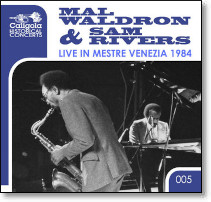
Again, personal motivations and the state of the world are weighing heavily on my mind. I ended last year's poll with serious doubts that I would ever do another. But after fraught months of winter and spring, when Bill Marx asked me if I was planning on doing a mid-year poll, I found myself saying yes. Again, I had the tools and skills. I also had the time, as some things had cleared up, while other projects hadn't yet been started. And after doing an increasingly despairing series of Loose Tabs reports, I felt like taking a break from a world gone mad (especially as it would see me through whatever Trump had in mind for July 4). So here we are. Even with my typical procrastination, it shouldn't take more than a week to wrap this up. After that, I have projects I'm itching to get to. We'll look into them later. New records reviewed this week: Josh Berman Trio: Everybody Else's Life Too (2025 [2026], Corbett vs. Dempsey): Chicago cornet player, credits start in 2002, include groups with Keefe Jackson, Ken Vandermark, Mike Reed, Jason Adasiewicz, many more. Trio with Jason Roebke (bass) and Chris Corsano (drums). B+(***) [bc] Seamus Blake: The Electrifying Seamus Blake Plays the Music of Eddie Harris: EH! (2025 [2026], Cellar): Tenor saxophonist, born in London, raised in Vancouver, has lived all over (Discogs says New York; Bandcamp page puts him in Cologne), has worked steadily since 1991 (Discogs credits him on 211 albums). This opens with Dawn Pemberton singing "Compared to What?" — backed by Sam Yahel (organ/keyboards), Tim Lefebvre (electric bass), and Corey Fonville (drums). This makes for agreeable funk, but the sax seems shortchanged. B+(*) [sp] Henriette Eilertsen Trio: Moder (2024 [2026], Motvind): Norwegian flute player, side credits since 2011 and several albums, trio with Joel Ring (cello/electronics) and drums (Øystein Aarnes Vik), with pianist Jon Balke on a couple of cuts. B+(***) [sp] Ingebrigt Håker Flaten (Exit) Knarr: Fly (2025 [2026], Sauajazz): Norwegian bassist, scores, probably hundreds of album since the early 1990s, several with this group since 2021: two saxophonists (Amalie Dahl and Karl Hjalmar Nyberg), piano (Marta Warelis), guitar (Jonathan F. Horne), and drums (Olaf Olsen). B+(***) [bc] Hayeminol: Ingen Vår I År (2026, Tarmkylling): Norwegian punk band, but that doesn't sound like the real label, so Discogs also offers psychedelic rock and art rock. Quartet, everyone sings, the two songwriters play 10 + 21 instruments. Reminds me of the Flaming Lips, only in a language I can't understand, for better or worse. B [sp] Colin Heshmat: Elastic Groove (2026, HMC): Pianist, first album, quartet with trumpet (Ryo Sasaki), bass (Yuma Takagi), and drums (Ben Cuness), eight originals plus three covers (includine Kenny Dorham and Herbie Hancock). Not especially a groove album. That's just one of many elements subsumed in their postbop. B+(*) [cd] [07-23] Jana Horn: Jana Horn (2026, No Quarter): Singer-songwriter, born in Texas, based in Austin, but has no discernible country airs; started with an interest in Christian screamo, but teaches and writes fiction, and over three albums has settled into a very spare confessional style, playing guitar and synth, with minimal bits of piano, clarinet, and flute. B+(**) [sp] It Was Her Idea: Daughter of War (2025 [2026], PNL): Quartet with singer (sometime cougher) Juliana Venter, backed by piano (Oscar Grönberg), bass (Ole Mortan Vågan), and drums (Paal Nilssen-Love), although I'm more impressed by the piano. B+(*) [sp] Kirk Knuffke: Brother (2026, SteepleChase): Cornet player, "one of modern jazz's most skilled navigators of the divide between freedom and swing," presents a trio with Charlie Burnham (violin) and Thommy Andersson (bass), mostly keyed to Yusef Lateef. B+(***) [sp] Nicolas Leirtrø's Action Now!: Entrance (2025 [2026], Sauajazz): Norwegian bassist, side credits since 2016, just emerging as a leader. Quartet with Mats Gustafsson (saxophones/flute), Kit Downes (organ), and Veslemøy Narvesen (drums), playing the leader's music, which mostly keeps Gustafsson safe from blowing our brains out, although it also saddles him with a flute section I didn't get into — not nearly as much as the loud section at the end. B+(***) [bc] Camila Nebbia & Chris Corsano: Six or Seven Ways Towards Becoming Undone (2025 [2026], Relative Pitch): Tenor sax and drums duo, the former from Argentina but has been tearing up Europe since 2020. B+(***) [sp] Bob Nell & Michael Bisio Trios: We Are Here (2025 [2026], Origin): Pianist, Discogs only lists 9 appearances, starting in 1979, and most with the bassist, who has logged 128 album credits, so while he's hardly a household name, he is much the more famous musician. Plural as they switch drummers, starting with Adam Greenberg, then Austin Belluscio. Originals by Nell. Nice as these things go. B+(**) [cd] [07-24] OM: Südpol (2024 [2026], Intakt): Avant-fusion group from Switzerland, active 1972-82 with Urs Leimbruber (sax), Christy Doran (guitar), Bobby Burri (bass), and Fredy Studer (drums), have regrouped on anniversary occasions since then, until Studer died in 2022, and is replaced here by two drummers, Gerry Hemingway and Tony Buck. B+(**) [sp] Rebecca Rafla: Fundamentally Unfinished (2024-25 [2026*], Rebecca Raffla Music): Jazz singer-songwriter, also plays flute, offers six originals, including the first five, with four standards, one a taste of Brazil to get the rhythm flowing. Steve Allee plays piano, along with horns and strings. The standards get better, especially with "What a Difference a Day Makes" the closer. [*] "first servicing to the press," after a 2025 self-release. B [cd] Catherine Russell: Live at Jazz at Lincoln Center (2024 [2026], Dot Time): Jazz singer, got a late start at 50 with her 2006 debut, but her famous father was older still when she was born (that's swing bandleader Luis Russell, 1902-63, who after 1930 ceded top billing to his star, Louis Armstrong), although her less famous mother, Carline Ray (1925-2013, a singer who played guitar and bass) must have had a more direct influence. She's impressed every time out, but rarely moved this far into the old songs, with a seven-piece swing band — including Jon-Erik Kellso (trumpet), John Allred (trombone), Evan Arntzen (tenor sax/clarinet), and Matt\ Munisteri (guitar), plus a tap dancer on four tracks. B+(***) [sp] Cécile McLorin Salvant: With Every Breath I Take (2025 [2026], Nonesuch): Jazz singer, born in Miami, father Haitian, mother French, moved to France at 18, studied classical voice (and Sarah Vaughan), eighth album since 2013, moving into the top echelon of jazz artists — with the MacArthur "genius grant" to prove it, as if winning the vocal section of our poll every year she had an album out wasn't testimony enough. Still, I've never been much of a fan. I admit that she has exceptional technical command (as did Vaughan), but I've never much enjoyed her albums (aside from the odd song or two). And this one, hyped as her first with an orchestra (Metropole Orkest, with big band master Darcy James Argue co-producing), seemed pretty unlikely to appeal. Then I found myself tempted, by "Send in the Clowns" (of all things), followed by "Barbara Song" (I'm always up for Weill, and she has impressed me there before). But after that, nothing really meshes — not even the French song, or her masterful navigation of the notoriously tricky "Lush Life." Why is hard to pin down, or maybe doing so just doesn't seem worth the effort. B+(*) [sp] Sweet Megg: Massive Negroni (2026, self-released): Retro standards singer Meaghan Farrell, has a dozen albums since 2017. Less swing and more slow ballads than I expected, but "Where or Win" sticks with you. B+(**) [sp] Kalia Vandever: Mana (2026, International Anthem): Trombonist, sings some, fifth album since 2019, second solo album, with "spare piano" and other electronic effects. Title Hawaiian. Vibe ambient. Short (7 songs, 27:06). B+(*) [sp] April Varner: Ella (2025 [2026], Cellar): Standards singer, based in New York, masters degree from Mahnattan School of Music, 2023 winner of "the International Ella Fitzgerald Jazz Vocal Competition," second album (or fourth if you count two volumes of Winter Songs). The notes insist on how original her approaches are to the material, how she "never imitates her long-time idol," instead striving to "capture the spirit of Ella" with "her own creative imagination." Still, her voice is dead on, and her professional help — notably pianist-arranger Emmet Cohen and drummer-producer Ulysses Owens Jr. — know how to work a sure-fire formula, which is great songs swung hard with a more than capable singer. [PS: Alternate parsing of title: Ella by April Varner.] B+(***) [sp] Karsten Vogel: Late Night Ballads (2026, Storyville): Danish alto saxophonist, b. 1943, credits since the 1960s, albums since 1976. Seven standards and an original, played slow, backed by piano-bass-drums.B+(*) [sp] Hein Westgaard & Matt Maneri: Chamber (2024 [2025], Gotta Let It Out): Guitar and viola duo. Guitarist has a few albums, including one from 2023 I liked. Maneri has many records since 1994, picking up his father Joe Maneri's microtonal practices. "Chamber jazz" is a loose term borrowed from classical, where the defining feature is an intimate and intricate group of soft instruments: mostly strings, almost never drums, wind instruments only on their best behavior. Maneri's viola fits the mold, but usually sounds too classical for me. But the guitarist plays around the edges, keeping it interesting, even adding a bit of rhythm. A- [cd] Jack Wright and Ben Bennett: Tourne (2026, self-released): Sax and drums duo, the former from Pittsburgh, with dozens of albums since 1983; the latter from Philadelphia, with several albums together since 2011. Three tracks (35:12). That's a good length for this sort of prickly free jazz, which I find instantly appealing as long as it doesn't run too long, or too loud. Reminds me that I've long appreciated Wright, even if I rarely remember his name. A- [bc] Your Brother's Keeper & Gary Bartz: Where Rivers Meet (2023 [2026], Brownswood): British group, first album under this name but most were members of Maisha, which backed the veteran alto saxophonist (b. 1940) on his 2020 Night Dreamer Direct-to-Disc Sessions. This has a nice spiritual dimension. B+(***) [sp] Recent reissues, compilations, and vault discoveries: Carla Bley: Joyful Noise (Live in Hamburg 1984) (1984 [2026], Moosicus): Pianist (1938-2023), exceptionally famous as a composer and arranger, was a founder of the Jazz Composers Orchestra Association, whose initial project was her ambitious opera, Escalator Over the Hill. Large (10-piece) group, with four brass, two saxes, piano (Ted Saunders), organ (Bley), electric bass and drums. Title is taken from a song, but is also a philosophy of life. A- [sp] Marion Brown: Awofofora (1976 [2026], Aguirre): Alto saxophonist (1931-2010), recorded his debut for ESP-Disk in 1965, followed by albums on Impulse! and ECM, but by this time he was consigned to obscure labels (this on Discomate, a Japanese label). B+(***) [bc] Satoko Fujii: Satoko Fujii's Bunker Ulmenwall Orchestra (2014 [2026], Libra, 2CD): Japanese avant-pianist, very prolific since 1996, went on a big band kick around 2007, organizing a series of orchestras wherever she traveled (first three were New York, Nagoya, and Tokyo). Many more since, with five new tapes of various vintages promised this year, starting with this one from Bielefeld, Germany (Bunker Ulmenwall was a WWII-vintage air raid shelter; to be followed later this year by the Orchestras Kobe, Nagoya, Berlin, and Tokyo). Detailed with many remarkable passages, demanding close scrutiny. A- [cd] [07-10] Wynton Marsalis & Vince Giordano: The Wonderful World of Louis Armstrong (2012 [2026], Blue Engine): They pulled this old tape off the shelf to celebrate the centennary of Armstrong's Hot Five and Hot Seven sessions, so the reference is to the cutting edge of 1920s jazz, not to the pop icon of later years. Giordano is a long-time trad jazz leader, playing bass sax and tuba here, while Marsalis shares trumpet duties with Jon-Erik Kellso. B+(**) [sp] Mal Waldron & Sam Rivers: Live in Mestre Venezia 1984 (1984 [2025], Caligola): Piano and tenor sax duets. Around this time, Waldron was playing in duos with Steve Lacy and Marion Brown, so he has a well-honed sense of how to engage here. It's hard to imagine a more astute accompanist, and his solos never leave you wanting. Probably helps that they stick to standards, including "Scrapple From the Apple" and "Blue Monk." A- [bc] The Wonderful World of Louis Armstrong All Stars: A Gift to Pops (2021 [2026], Verve): A discographical nuisance, opens with a genuine Armstrong from 1964 (Sparks, NV), but after that it's just another anonymous tribute band. I originally filed under Wynton Marsalis, but it turns out that Nicholas Payton plays most of the trumpet, and also does most of the arranging, with Wycliffe Gordon on trombone, soprano sax, and some vocals; also Reginald Veal (bass), Herlin Riley (drums), and scattered others, including vocalists who don't make the slightest effort at the original. Consequently, some songs stray, to mixed effect. B+(*) [sp] Old music: Northwest Improvisers: Fanfares (2022 [2023], Entropy Stereo): Free jazz ensemble, founded in upstate Michigan in 1976 by Mike Gilmore (vibes) and Mike Johnston (bass), added drummer Nick Ashton in 1986, first album was 1994, recorded several albums backing Faruq Z. Bey, one with Dennis González. Gilmore is absent here, but they've added two saxophonists (Dominic Bierenga and Donovan Boxey) and strings (Mike Khoury on violin, Jack O'Brien on cello). Opens with a Don Cherry piece to set up the groove, then builds around it. B+(***) [bc] April Varner: April (2023 [2024], Cellar): Jazz singer, first album, covers 11 songs with "April" in the title — wrote some, including improvised lyrics and some vocalese to Pat Metheny. Only "April in Paris" is well known, done simply here with just piano (Caelan Cardello) backing, after just bass (Reuben Rogers) on "April Blues." The other sources and treatments vary widely, but include nice spots for Russell Malone (guitar), Benny Benack (trumpet), and Dayna Stephens (tenor sax). [PS: Alternate parsing of title: April by April Varner.] B+(**) [sp] Unpacking: Found in the mail last week:
|