|
An occasional blog about populist politics and popular music, not necessarily at the same time. LinksLocal Links Social Media My Other Websites Music Politics Others Networking Music DatabaseArtist Search: Website SearchGoogle: Recent Reading
Music DatabaseArtist Search: Website SearchGoogle: |
Music Week [250 - 259]Monday, July 12, 2021 Music Week
Music: Current count 35803 [35760] rated (+43), 212 [212] unrated (-0). I listened to a lot of new non-jazz this past week. I checked off all the unheard records from last week's Dan Weiss list (12/24), and most of the unheard albums on Expert Witness lists by Christian Iszchak and Sidney Carpenter-Wilson. Also picked up a couple records from Phil Overeem's list, although I'm still about 30 down. All but two records in my (jazz) demo queue are future releases (4 coming out on 7/16, 3 in August, 3 in September). The one I've been remiss on is a 2-LP by Liudas Mockunas and Arfvydad Kaziauskas -- the only vinyl in the queue. I play so little vinyl these days it just seems like too much bother (but I'll try to get to it this week). One of the demos I did play last week was Mario Pavone's last session. I thought I should also include his new Clean Feed album, recorded about a month before, and that got me into belatedly looking at their 2021 releases. Also took a look at my Downloads directory, which is where I found C81. Quite a few B+(***) albums this week (14). There must be a couple in there that could rate higher, but most did get two plays. The ones I'm most tempted to revisit are by Erez Noga and Sylvie Courvoisier, although Rempis and Tyler are also possibles. (Marina and Navy Blue started out in that group, then got bumped with an extra play.) I wouldn't rule out the 10 B+(**) records either. A few more mid-year lists:
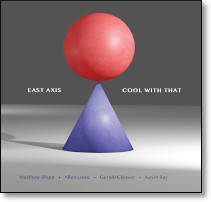
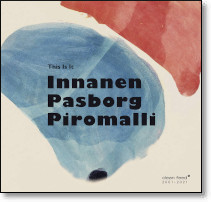
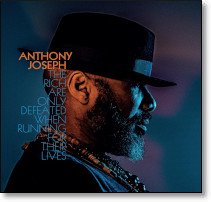
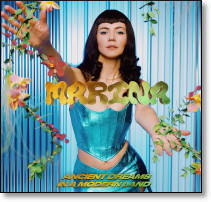
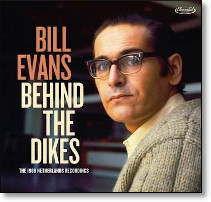
I haven't looked very hard this week. The Quietus list is not only exceptionally long, but includes a lot of electronica, and even a bit of jazz (thanks to Peter Margasak). One last music-crit note is that I set up a page for Joe Yanosik's book, A Consumer Guide to THE PLASTIC PEOPLE OF THE UNIVERSE. I'm not selling it, but the page has several links to get you there. I haven't seen the book yet, but understand they're on the way. I've had a guests section for some time, originally set up to host some of Michael Tatum's writings when he didn't have other outlets, so I was pleased to make space for Yanosik when he started writing his own deep-dive consumer guides. (Unfortunately, he didn't offer me any content this time.) My nephew Mike Hull's documentary on the 1971 Attica Prison revolt, Nelson Rockefeller's murderous response, and the decades-long legal battles to expose what happened and why, will be released on HBO Max in August. Here's the trailer (scraped from Mike's Facebook post): Expect more publicity in the coming weeks. Mike has been working on this film for eight years now, starting with his efforts to digitize Elizabeth Fink's archives on the various legal cases, a major part of her life for 30+ years. Mike has made the archive available here. (Much of this is also available in the Elizabeth Fink papers, 1971-2015 via Duke University.) An earlier film trailer is here. For personal background, I wrote a bit about Liz Fink after she died in 2015. I also want to link to the Buffalo News obituary on Frederic J. Fleron Jr., 83, UB professor emeritus, expert on Russia, especially the line "he took part in Vietnam War protests and the Attica Brothers legal defense." Our connection was not through the latter, but because he married my cousin, Lou Jean, who was every bit as involved -- and who is still active in political causes in Buffalo. Several of the pivotal decisions of my life turned on experiences with "Fritz" (and Lou Jean): I dropped out of high school right after they visited; they talked me into going to my draft physical, reassuring me that I could still refuse induction if I passed (I didn't); when I decided to try going to college, my reward was a trip to visit them in Buffalo -- my first college experience was sitting in on Fritz's poli-sci class, although my much deeper lesson from that week was greatly expanding my taste in food and music. Another line in the obit: "He enjoyed cooking, recipe planning and finding new restaurants." I don't recall him cooking, but he may well have taken it up (at least after divorcing Lou Jean, who was and is an outstanding cook, my greatest inspiration), but few people enjoyed fine food more than he did. Among my acquaintances Liz Fink was one of those few. And I might note that Mike Hull is pretty accomplished in that regard, as well. New records reviewed this week: Backxwash: I Lie Here Buried With My Rings and My Dresses (2021, Ugly Hag): Born and raised in Zambia, based in Montreal, Ashanti Mutinta, raps, sings some, third album, has some metal moves. B+(*) Bfb Da Packman: Fat Niggas Need Love Too (2021, The Lunch Crew): Heavyweight rapper, raised in Flint, based in Houston. Cracks some jokes, slings some raunch. B+(**) Brockhampton: Roadrunner: New Light, New Machine (2021, Question Everything/RCA): Wikipedia calls them a "hip hop boy band." Kevin Abstract also has a solo presence, and probably the rest will follow: Matt Champion, Merlyn Wood, Dom McLennon, Joba, Bearface, Jabari Manwa. Several mixtapes before their major label debut in 2018. Second album since. Rap and sing, expertly both, but I pay more attention to the rap lyrics. B+(**) Burial: Chemz/Dolphin (2021, Hyperdub, EP): British dubstep producer William Bevan, has a couple albums but mostly works on shorter releases, with these two tunes on the long side, at 21:33. First is upbeat, fun. Second is down, ambient, not so much fun. B+(*) [bc] Cloud Nothings: The Shadow I Remember (2021, Carpark): Indie rock band from Cleveland, Dylan Baldi the singer-songwriter, seventh album (skipping a couple self-released pandemic projects). Above-average for the genre, not that I feel like listening anymore. B+(**) Alex Collins/Ryan Berg/Karl Latham: Together (2020-21 [2021], Dropzonejazz): Piano-bass-drums trio, seems to be the pianist's first (with a couple side-credits back to 2015). Six standards, counting one by Wayne Shorter. Drummer produced. B+(**) [cd] Sylvie Courvoisier/Ned Rothenberg/Julian Sartorius: Lockdown (2020 [2021], Clean Feed): Swiss pianist, with reeds (alto sax, clarinet, bass clarinet, shakuhachi) and drums. Nice mix of sharp edges and gentle tones. B+(***) [bc] McKinley Dixon: For My Mama and Anyone Who Look Like Her (2021, Spacebomb): Rapper, based in Virginia, third album. B+(***) East Axis [Matthew Shipp/Allen Lowe/Gerald Cleaver/Kevin Ray]: Cool With That (2020 [2021], ESP-Disk): Piano, alto sax, drums, bass. Joint improv, artist order some approximation of fame, though Lowe is the commanding presence here. Cleaver defines "free jazz" as "many contexts and frames of reference held at once." You feel them in the space these artist so deftly maneuver through. A- Noga Erez: Kids (2021, City Slang): Israeli electropop singer-producer, second album, plays keyboards and percussion. Dry voice, subtle beats, grows on you. B+(***) The Flatlanders: Treasure of Love (2021, Rack 'Em): Lubbock, Texas band back in 1972, recorded an album that didn't get much notice until 1990, after their solo careers took off: Joe Ely, Jimmie Dale Gilmore, Butch Hancock. Regrouped in 2002 when those solo careers were flagging, and they've gone back to the well a couple times since (2004, 2009). Not a great sign that the covers connect first. Ely sounds especially great, Gilmore less so. B+(***) The Front Bottoms: In Sickness & in Flames (2020, Fueled by Ramen): New Jersey indie group/duo, Brian Sella (guitar/vocals) and Mat Uychich (drums), seventh album since 2008. Hooked for pop. B+(**) Danny L Harle: Harlecore (2021, Mad Decent): London-based electronica producer, first album after singles going back to 2013, most on PC Music. Lavishly, extravagantly upbeat, almost comically so -- the sort of thing I sometimes relish, yet I'm not quite convinced I should, here anyway. B+(**) Hearth: Melt (2020 [2021], Clean Feed): Quartet: Mette Rasmussen (alto sax), Ada Rave (tenor sax/clarinet), Susana Santos Silva (trumpet), Kaja Draksler (piano). The pianist isn't notable for keeping time of pushing things along, so this tends to scatter (and splat). B+(*) [bc] Hiatus Kaiyote: Mood Valiant (2021, Brainfeeder): Australian group, third album, edges into neo soul with singer Nai Palm (Naomi Saalfield). B+(*) Mikko Innanen/Stefan Pasborg/Cedric Piromalli: This Is It (2020 [2021], Clean Feed): Finnish saxophonist (sopranino, alto, baritone), backed by drums and Hammond organ. The organ isn't close to soul jazz models, but provides enough lift to let the saxophonist strut his stuff.. A- [bc] Anthony Joseph: The Rich Are Only Defeated When Running for Their Lives (2021, Heavenly Sweetness): Poet, novelist (The African Origins of UFOs, Kitch: A Fictional Biography of a Calypso Icon), singer-songwriter, born in Trinidad in 1966, moved to UK in 1989, eighth album since 2007. Six pieces stretch out, the pointed poems have much to say ("how long do you have to live in a place before you can call it home?"), and the band, which starts jazzy but swings and powers up like Mingus, needs room to breathe. Credits list four saxophonists. Together they're formidable, but the monster solos I'd guess to be the work of Shabaka Hutchings. A Jupiter & Okwess: Na Kozonga (2020 [2021], Everloving): Congolese band, led by Jupiter Bokondji (vocals/percussion), sextet with two guitars, bass, lots of percussion. B+(***) Kiwi Jr.: Cooler Returns (2021, Sub Pop): Indie rock group from Toronto, g-b-d plus Jeremy Gaudet vocals, second album, has a new wave pop humor appeal (reminds me of the Rezillos, or maybe the Adverts, but they'd probably prefer the Ramones). B+(***) Delvon Lamarr Organ Trio: I Told You So (2021, Colemine): Organ player, third album, with Jimmy James (guitar) and Grant Schroff (drums). Soul jazz, rather retro when it was invented 60 years ago, so neatly buttoned down you'd almost think that's their concept. B+(*) Luís Lopes/Lisbon Berlin Quartet: Sinister Hypnotization (2018 [2021], Clean Feed): Portuguese guitarist, electric, impressive discography since 2007, with Rodrigo Pinheiro (fender rhodes), Berlin represented by Robert Landfermann (bass) and Christian Lillinger (drums). Rough wired, ruggedly free. B+(***) [bc] Marina: Ancient Dreams in a Modern Land (2021, Atlantic): Singer-songwriter Marina Diamandis, from Wales (Welsh mother, Greek father), four previous albums as Marina and the Diamonds, first with her name shortened. Her consciousness is more deeply personal, and more militantly feminist. A- MIKE: Disco! (2021, 10k): Rapper Mike Bonema, born in New Jersey, lived in London from 10-15, back to Philadelphia then New York, ninth album/mixtape since 2015. B+(**) Bob Mintzer & WDR Big Band Cologne: Soundscapes (2019 [2021], MCG Jazz): Saxophonist-led big band, a long term interest, dating back to his 1975-77 stretch with Buddy Rich. B+(**) [cd] Navy Blue: Song of Sage: Post Panic! (2020, Freedom Sounds): Brooklyn rapper Sage Elsesser, professional skateboarder, fashion model, visual artist, second album. Speaks over nondescript synths, conscious, at one point explains, "this is therapeutic." A- Navy Blue: Ádà Irin (2020, Freedom Sounds): Earlier album, short (11 songs, 31:13). Music and lyrics more cryptic, but he's onto something. B+(*) Nervous Dater: Call in the Mess (2021, Counter Intuitive): Brooklyn "punk trio" (although I count six credits; first-listed Rachel Lightner: guitar, vocals, saxohphone), second album. B+(**) Billy Nomates: Emergency Telephone (2020, Invada, EP): Quickie follow-up to last year's eponymous album, record of the year in some quarters, came out in December to little notice. Four songs, 16:51. Good but not brilliant ones. B+(***) Mario Pavone/Dialect Trio + 1: Blue Vertical (2021, Out of Your Head): Bassist, died on May 15 this year, recorded this last album on March 25-26, with his Dialect Trio (pianist Matt Mitchell and drummer Tyshawn Sorey) plus trumpet player Dave Ballou. B+(***) [cd] Mario Pavone/The Tampa Quartet: Isabella (2021, Clean Feed): Recorded less than a month earlier, also dedicated to the bassist's late granddaughter Isabella Pavone, a quartet with his son Michael Pavone (guitar), Mike DiRubbo (alto sax), and Michael Sarin (drums). B+(***) [bc] Liz Phair: Soberish (2021, Chrysalis): Released her masterpiece in 1993, slacked off, last album Funstyle, 11 years ago, marginal but underappreciated. Little change here: "I don't live in a world that appreciates me." None of us do. B+(***) The Rempis Percussion Quartet: Sud Des Alpes (2019 [2021], Aerophonic): Eighth group album since 2007, Chicago saxophonist Dave Rempis (alto/tenor), with bass (Ingebrigt Håker Flaten) and two drummers (Tim Daisy and Frank Rosaly). B+(***) [dl] Dawn Richard: Second Line (2021, Merge): From Louisiana, left for Baltimore after Katrina, went through all sorts of gimmicks to get her career started, including a reality TV show that landed her a spot in Diddy's girl group Danity Kane. On her own for a decade now, aims for electrofunk here and hits the mark more often than not, as artificial satisfies as often as authentic. B+(***) Sleater-Kinney: Path of Wellness (2021, Mom + Pop): Riot grrrl band from the Olympia, Washington scene, based in Portland, tenth album since 1995, first since 1996 without drummer Janet Weiss. I've dutifully listened to all of their albums, bought some, never really liked them (mostly due to the shrieking voices), never quite dismissed them, always thought Weiss was a great drummer. None of that really applies here: the voices have mellowed, the drums too, and while most of this is anodyne, there's nothing to rail against. In fact, I rather like "Bring Mercy." B+(*) Slide Attack: Road Trip (2020 [2021], SACD): Two trombonists, Howard Levy and Alan Goidel, backed by piano-bass-drums. Inspired, of course, by J.J. Johnson and Kai Winding. B+(*) [cd] Space Quartet: Directions (2019 [2021], Clean Feed): Rafael Toral (electronics), Hugo Antunes (bass), Nuno Morão (drums), Nuno Torres (sax/electronics). First two were on a previous Space Quartet album, with Toral the leader (although everything here is jointly credited). B+(**) [bc] Tele Novella: Merlynn Belle (2021, Kill Rock Stars): Lockhart, Texas-based "indie-psych band," principally singer-guitarist Natalie Ribbons and bassist Jason Chronis, second album. B+(***) TØRSÖ: Home Wrecked (2021, self-released, EP): Bay Area hardcore group, three songs, 5:05. Short, intense. B [bc] Tyler, the Creator: Call Me if You Get Lost (2021, Columbia): Los Angeles rapper Tyler Okonma, started in the Odd Future collective, sixth studio album since 2011. I didn't care for his early work, but he keeps growing. B+(***) Recent reissues, compilations, and vault discoveries: Diane Delin: Chicago Standard Time (1991 [2021], BluJazz): Violinist, from Chicago, five albums 1997-2006, this short one (5 songs, 28:13) dates back earlier. Quartet, "featuring" Jodie Christian (piano), with bass and drums. One original, nice covers including "Gee Baby Ain't I Good to You" and "They Can't Take That Away From Me." B+(*) [cd] Bill Evans: Behind the Dikes: The 1969 Netherlands Recordings (1969 [2021], Elemental Music, 2CD): This adds to a substantial number of recent releases, mostly on Resonance, of the pianist from this period, mostly live but also some studio recordings made in Europe, like this one. The trio with Eddie Gomez and Marty Morell is one of his most striking, with the bass solos almost as interesting as the piano. This ends with a couple cuts with Metropole Orkest strings that I'd probably have cut, but they, too, are lovely. A- [cd] He's Bad! 11 Bands Decimate the Beats of Bo Diddley ([2021], Slovenly): "Ten years in the making," which suggested this project started around 2010. Eleven bands I've never heard of (ok, except for Rocket 808), True Sons of Thunder claiming two tracks with "Bad Trip pt. 1" and "Bad Trip pt. 2." Probably metal bands, didn't even recognize this as Diddley until I cranked the volume down and heard "Mona." B The Trojan Story (1961-71 [2021], Trojan, 3CD): British record label, founded in 1968, became a major player in reggae music although they were eclipsed by Island in the 1970s. The first of several releases of this title came out in 1971, and it's not clear that anything here was recorded later. Opens with Lord Tanamo calypso "Invitation to Jamaica," which sounds earlier than 1961, but that seems to be when he started. Sanctuary acquired the catalog in 2001, and I've listened to a lot of their reissues, so I know that it wouldn't be hard to assemble a 3-CD box that rivals Island's canon-defining Tougher Than Tough, but this only rises to that level on the shared songs. Nonethless, much of the rest is interesting. B+(**) Old music: C81 (1981, NME/Rough Trade): Sampler, promoted by NME and released on cassette tape, the original running 24 tracks (79:39), mostly post-punk/new wave bands. Some groups on the way up, some down, some just hanging around. B+(*) [dl] Unpacking: Found in the mail last week:
Ask a question, or send a comment. Monday, July 5, 2021 Music Week
Music: Current count 35760 [35715] rated (+45), 212 [205] unrated (+7). Back in my software engineering days, someone came up with the notion of "train-leaves-the-station" release scheduling, where you pick a date (as opposed to a set of needed functionality) and release whatever you have done by the date. That way you get regular releases, even if you rarely get done what needs to be done. On the other hand, content-driven releases invariably took too long. Releasing Music Week every Monday is a "train-leaves-the station" affair. Whatever's in by a cutoff date goes out, regardless of whether it fits together, or is obviously incomplete. Moreover, if I don't feel like writing an introduction, I don't have to. The fact is, I have nothing much to say this week. But I do have 45 records below, so that will have to do. I should note that the Helen Merrill dive was the result of a question about Clifford Brown, the Grace Jones another question, and the Rolling Stones revisit followed a Robert Christgau Big Lookback. I'm also a bit worried that I haven't listened to the Mingus enough for the whole thing to merit that A grade, but the the second set sure does, and the Don Pullen piece added to the second disc sets the jams up perfectly. By all means, please ask more questions. I did collect a few more links to mid-year lists:
As I've noted, the only thing I'm doing with these lists is a quick scan and check to make sure the albums are in the Music Tracking file. Let me also jot down the list Dan Weiss posted in Facebook, with my grades (where I have them) in brackets. His list wasn't numbered, but isn't in any typical unranked order):
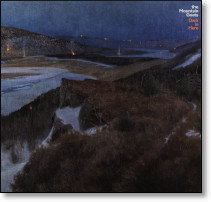
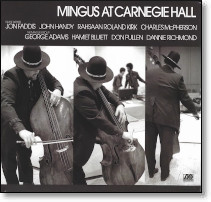
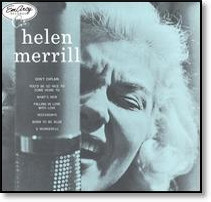
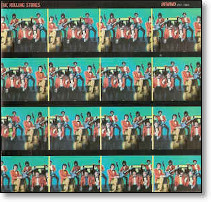
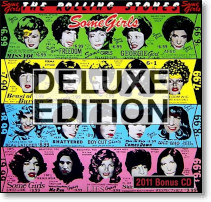
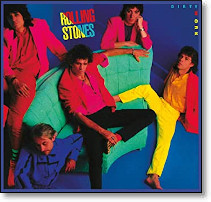
He also has a much longer singles list, which I won't bother with. The only one I recognize there is Olivia Rodrigo's "Brutal," although I'm sure I've heard more. Singles don't stick to my brain like they used to. By the way, here's the best meme I've seen on Facebook in a fair while: Climate Change: A Timeline. Even better than the Crowson cartoon I posted on July 4. Had to fish the latter out of my Facebook photo file as it's no longer in my feed. Mostly food pics there, some pretty memorable. But the jambalaya I made last week was pretty awful. New records reviewed this week: Gary Allan: Ruthless (2021, EMI Nashville): Country singer, from California, last name Herzberg, tenth album since 1996, most gold, first since 2013, co-wrote one song. Has a nice, even flow. B+(*) Keshav Batish: Binaries in Cycle (2021, Woven Strands): Drummer, comes from a line of musicians in India, studying at UC Santa Cruz, first album, quartet with alto sax (Shey Sethov), piano (Lucas Hahn), and bass (Aron Caceres). Five originals, distinctive covers of Monk and Ornette Coleman. B+(**) [cd] [07-10] Lucy Dacus: Home Video (2021, Matador): Singer-songwriter from Virginia, third album (not counting supergroup Boygenius). Cranks up the guitar, and the voice is clear. B+(**) Doja Cat: Planet Her (2021, Kemosabe/RCA): Amala Diamini, from Los Angeles, third album, trap beats, sings more than raps, doesn't have the voice for it, but has vision and style, which makes her something more than a conceptualist. Raised my hopes, then dashed them. [Thumbs down: "Ain't Shit."] B+(*) Elkka: Euphoric Melodies (2021, Technicolour, EP): House producer Emma Kirby, second EP (5 songs, 28:04). B+(**) Chrissie Hynde: Standing in the Doorway: Chrissie Hynde Sings Bob Dylan (2021, BMG): Pretenders leader since 1980, third solo project since 2014. Nine Dylan songs, none what you'd call signature pieces, done up fairly simply, mostly her voice and guitar. B+(**) Loraine James: Reflection (2021, Hyperdub): London-based electronica producer, third album. Rough edges, broken glass, squibs of trip-hoppy vocals. B+(*) Amythyst Kiah: Wary + Strange (2021, Rounder): Singer-songwriter from Tennessee, second album, member of folk supergroup Our Native Daughters, leads off with the anthem "Black Myself." That's the best thing here. No problems with the change-up ballad that follows, but she never changed back. B+(*) LSDXOXO: Dedicated 2 Disrespect (2021, XL, EP): Raushan Glasgow, from Philadelphia, DJ/producer, has two albums. Four tracks, 16:19, hard beats, trivial lyrics (e.g., "I'm a sick bitch/ I like freak sex"). B+(**) The Mark Masters Ensemble: Masters & Baron Meet Blanton & Webster (2019 [2021], Capri): Originally a trumpet player, Masters is a big band arranger/leader with more than a dozen records going back to 1984. Art Baron is a trombonist who played in Ellington's final orchestra and later with Mercer Ellington. Jimmy Blanton and Ben Webster were stars in Ellington's 1940-42 orchestra, Blanton's arrival in 1939 and death in 1942 defining one of Ellington's most legendary periods. Seven Ellington songs, three by Billy Strayhorn, and Juan Tizol's "Perdido." Tim Hagans is featured on trumpet. B+(***) [cd] Bob Mintzer & WDR Big Band Cologne: Soundscapes (2019 [2021], MCG Jazz): Saxophonist-led big band, a long term interest, dating back to his 1975-77 stretch with Buddy Rich. B+(**) [cd] Modest Mouse: The Golden Casket (2021, Epic): Indie band based in Portland, had a run from 1996-2009 with 6 Christgau A- records (4 by me), only their second album since. Dense, complex, may deserve more attention than I feel like giving it. B+(**) The Mountain Goats: Dark in Here (2021, Merge): It's getting harder and harder for me to get a grip on mainstream rock records -- I'm not retaining the words, the melodies all sink into sameness, nothing stands out. I should probably give up on trying to review them. But this does seem special, even if I can't quite put my finger on why. Maybe the brightness of his voice against the dark of recent history? A- Laura Mvula: Pink Noise (2021, Atlantic): Birmingham, UK, singer-songwriter, third album, gets slotted as neo-soul but this is closer to crunchy (if not especially memorable) electropop. B+(*) Marius Neset: A New Dawn (2021, ACT Music): Norwegian alto saxophonist, based in Copenhagen, albums since 2008. Solo. B+(*) Marc Ribot's Ceramic Dog: Hope (2020 [2021], Northern Spy): Guitarist, sings here, fifth group album with Shahzad Ismaily (bass/keyboards) and Ches Smith (drums). Leads with anti-Trump politics. Ends with heroic guitar. B+(***) Sault: Nine (2021, Forever Living Originals): British mystery group ("pseudonymous"), black-identified, first album in 2019 titled 5, second later that year 7. Their next two albums, both Untitled, became the surprise soundtrack to last summer, when fear of pandemic was interrupted by Black Lives Matter protests. I preferred the first batch, probably because the debt to Chic was more obvious, but they continue to be intriguing as they evolve. I'm still unsure of this one. B+(***) Slayyyter: Troubled Paradise (2021, Fader Label): Hyperpop singer-songwriter Catherine Slater, from Kirkwood in the St. Louis suburbs, first album after a 2019 mixtape. What's hyper is mostly the drums, while the porn quotient is toned down (or maybe I just wasn't paying enough attention, which I'd count as the same thing). B+(*) Tune-Yards: Sketchy (2021, 4AD): Merrill Garbus, fifth album. Christgau A-listed the first four, but didn't rush to judgment here. I've never gotten her/them, so I figured no harm in waiting before I check this off my list. I don't mind the chaos, but can't tell what (if anything) it's covering up. And still don't care. B Faye Webster: I Know I'm Funny Haha (2021, Secretly Canadian): Singer-songwriter, based in Atlanta, fourth album. Not as funny as she thinks, but pleasant in its own low-key way. B+(*) Recent reissues, compilations, and vault discoveries: Can: Live in Stuttgart 1975 (1975 [2021], Mute, 2CD): German experimental rock group, first album 1969, used vocalists early but had no vocals at this point, becoming increasingly ambient, a quartet with Michael Karoli (guitar), Irmin Schmidt (keybs), Holger Czukay (bass), and Jaki Leibezeit (drums). Five numbered pieces here, three for 70:09 on the first disc, 2 for 19:56 on the second. Fairly impressive, in their own limited way. B+(***) [bc] Miles Davis: Mercy, Miles! Live at Vienne (1991 [2021], Rhino, 2CD): Recorded a couple months before the trumpet giant died in September, in France, where he was soon to become "a Knight of their Legion of Honour." With Kenny Garrett on sax, funk keyboards, bass, drums. Eight songs (77:28, two each by Prince and Marcus Miller, only one with Davis' name on it. B+(*) Arne Domnérus Quartet: Dompan at the Savoy (1990 [2021], Phontastic): Swedish saxophonist (1924-2008), Wikipedia credits him with 44 albums as leader, many more on the side. He plays alto and clarinet here. Cover credits "featuring Ulf Johansson" (piano/trombone), and lists Sture Åkerberg (bass) and Aage Tangaard (drums). Open with an original, then follow with eleven swing-era standards. B+(**) Charles Mingus: Mingus at Carnegie Hall [Deluxe Edition] (1974 [2021], Atlantic, 2CD): The bassist had floundered a bit in the late 1960s, but by 1974 he had rebounded with a superb quartet which would out-live him by a decade, led by George Adams (tenor sax) and Don Pullen (piano), with his long-time drummer Dannie Richmond. They went on to record his last great albums (Changes One and Changes Two) later in 1974, but for this concert he added Hamiet Bluiett (baritone sax) to make a quintet, and also Jon Faddis (trumpet). They played a set together, then returned with extra saxophonists (Rahsaan Roland Kirk, John Handy, Charles McPherson) to blast through two 22-24 minute Ellington jams ("Perdido" and "C-Jam Blues"). The latter were released as an LP (and later CD), one of my favorite examples of what a great bandleader Mingus could be. The Deluxe Edition restores the whole concert, starting with three long Mingus pieces plus one by Pullen. The restored parts are pretty good, with Pullen the essential star player. But the jams still blow the socks off everyone. A Old music: Can: Landed (1975, Virgin): German rock group, debut 1969, sixth album. Some vocals on first five songs, leading into the 13:21 "Unfinished" instrumental, not quite spacey because it never really takes off. B+(**) Grace Jones: Private Life: The Compass Point Sessions (1980-85 [1998], Island, 2CD): From Jamaica, came to New York and worked mostly as a model. Recorded three albums for Island in the 1970s, but got little notice until her fourth, Warm Leatherette, in 1980, with Sly & Robbie creating a dub/new wave dance synthesis. This offers 6/8 cuts from Warm Leatherette ("Bullshit" is a major loss), 8/9 from Nightclubbing, 5/7 from Living My Life, the title single from Slave to the Rhythm, and 5 non-album songs, many in long/dub versions ("She's Lost Control" has one of each, totaling 17:00). B+(***) Grace Jones: Slave to the Rhythm (1985, ZTT/Island): Trevor Horn takes over as producer. Structured as "a biography," with bits of narration and interview between songs, which themselves are stuffed to the gills without totally giving up the pretense that they are still danceable. But it isn't. B- Helen Merrill: Helen Merrill (1954 [1955], Emarcy): Jazz singer Jelena Ana Milcetic, born in New York of Croatian parents. This was her first album, arranged and conducted by Quincy Jones, sometimes reissued to highlight the contribution of trumpet player Clifford Brown, who gave her the same superb support he provided Sarah Vaughan and Diana Jams (all in 1955). Seven standards, seems unremarkable at first but they grow on you, fast. A- Helen Merrill: Helen Merrill With Strings (1955 [1956], Emarcy): Second album, cover proclaims "a new sound in jazz," "orchestra arranged and conducted by Richard Haymen," but she also has a legit jazz combo led by Hank Jones with Barry Galbraith on guitar, Milt Hinton (bass), and Sol Gubin (drums). Strings in the 1950s were usually the kiss of death, but these are fairly tasteful, as is the combo. Songs like "Anything Goes" are taken awful slow, but Merrill's vocal control is marvelous. B+(***) Helen Merrill: Dream of You (1956 [1958], Emarcy): Gil Evans produced, using a varying cast of 5-8 musicians over three sessions. He had started as an arranger for Claude Thornhill, and gained a measure of fame for the Miles Davis Birth of the Cool sessions, but became much more famous for his later work with Davis, and his 1957 debut as a leader (Gil Evans & Ten). I'm not sure these arrangements deserve their reputation, but they are smart and unobtrusive, and the singer shines. B+(**) Helen Merrill: Helen Merrill With Clifford Brown and Gil Evans (1954-56 [1990], Emarcy): CD reissue highlights her most famous early collaborators, combining her Quincy Jones-produced debut with Clifford Brown (all 7 songs, in order) and 8 (of 12) songs from her Gil Evans-produced fourth album, Dream of You. B+(***) Helen Merrill: Merrill at Midnight (1957, Emarcy): With Hal Mooney and His Orchestra for some fairly anodyne string arrangements. Also credits a small combo with Marian McPartland or Buddy Weed on piano, and Romeo Penque on oboe. B Helen Merrill: You've Got a Date With the Blues (1959 [1989], Verve): Five (of eleven) songs with "Blue[s]" in the title, two titles in French. Slow-to-mid-tempo, light touch, nicely done. B+(**) Helen Merrill: American Country Songs (1959, Atco): Twelve songs, four by the ever-reliable Hank Williams, a couple others that hold up as standards, others a bit of a reach. Strings on eight hamper the singer's jazz instincts. B Helen Merrill/Dick Katz: The Feeling Is Mutual (1965 [1989], Emarcy): Pianist Katz arranged, group includes Thad Jones (cornet), Jim Hall (guitar), Ron Carter (bass), and Pete LaRoca or Arnie Wise (drums). Standards. She's always good, but Jones and Hall add something special here. B+(***) [yt] Helen Merrill/Teddy Wilson: Helen Sings, Teddy Swings! (1970, Catalyst): Initially released in Japan, not sure when recorded but the pianist performed into the 1980s (he died at 73 in 1986). Not the best sound for the singer, but the piano sparkles on old standards. B+(**) [yt] The Rolling Stones: Rewind (1971-1984) (1971-84 [1984], Rolling Stones): Since I was relistening to Dirty Work, I thought I'd try to reconstruct this rare Christgau-approved compilation, with 13 songs from 9 albums -- 3 (or 4) worth owning whole, 3 (or 4) I'd advise skipping. I suspect one could find more good songs in the latter, which might make this more useful, but probably not better. Or they could have shifted the years to omit Exile and pick up Dirty Work, but licensing doesn't work like that. A- The Rolling Stones: Sucking in the Seventies (1973-79 [1981], Rolling Stones/Virgin): Compilation album, skips past the justly legendary 1971-72 albums to pick up in 1973, with three songs from their big 1978 comeback album, Some Girls -- except that one is an edit, another live, and they throw in a B-side not on the album. They also raid the Emotional Rescue sessions for an unreleased piece. The obscurities cut both ways: not the best the period could offer, but also not totally redundant. I was unable to construct a play list, but found most of the songs in the wrong order on YouTube, and filled in the holes so I can say I've heard it all, but not as presented. That's one caveat. No doubt there should be more. B+(**) [yt] The Rolling Stones: Some Girls [Deluxe Edition] (1978 [2011], Universal Republic, 2CD): Like Christgau, I skipped the original album, which I know intimately and rate among their 1970s works higher than Sticky Fingers if not quite Exile on Main Street. Most "Deluxe Edition" filler is redundant -- most often live versions and/or alternate takes -- but the 12 songs here are new (ok, a couple are covers), effectively an entire lost Rolling Stones album. Admittedly, it's a pretty minor one, falling way short of the conceits of an outfit billing itself as The World's Greatest Rock Band. But a little modesty does them good, and reminds you that it wasn't spectacle that put them on top: it was sound. A- The Roots: Organix (1993, Remedy): Philadelphia hip-hop group, first album, runs over an hour, principally rapper Tariq Trotter (Black Thought) and drummer Ahmir Thompson (Questlove), live band has some jazzy overtones, no samples or turntables. Old school, and proud of it. B+(***) [yt] The Roots: From the Ground Up (1994, Geffen, EP): Six songs, 32:50, four previewing their second album (Do You Want More?!!!??!). B+(**) The Roots: Do You Want More?!!!??! (1995, DGC): Second album, first on a major label. Like the sound, but didn't catch much. B+(**) The Roots: Dilla Joints (2010, self-released): Not a lot of info with this. Presumably at least a reference to Detroit producer James Yancey (better known as J Dilla), who died in 2006. One suggestion is that the band is playing Dilla's "greatest hits" without the electronics. Hard to say. B Charlie Shavers: Charlie Shavers and the Blues Singers 1938-1939 (1938-39 [1995], Timeless): Trumpet player (1917-71), started with Chu Berry, group list on Discogs is encyclopedic (Georgie Auld, Buster Bailey, Mildred Bailey, Charlie Barnet, Paul Baron, Count Basie, Sidney Bechet, several dozen more). He's not the headliner here, just the common denominator, and sometimes he gets overshadowed by the clarinet players (Buster Bailey and, especially, Bechet). Singers are Trixie Smith, Leola [Coot Grant] & Kid Wesley Wilson, Lether McGraw, Rosetta Howard, and Alberta Hunter. One cut where Shavers does get to strut his stuff is called "Toot It, Brother Armstrong." Shavers isn't much remembered these days, but he used to do a bit where he replicated the styles of a half-dozen great trumpet players, starting with Pops. He wasn't one of them, but he could sure fake it. B+(***) Charlie Shavers: The Last Sessions [The Definitive Black & Blue Sessions] (1970 [1999], Black & Blue): February 7-8, 18 months before the trumpet player died. Three previously unreleased tracks, almost double the length of the 1970 Live! album co-led by saxophonist Budd Johnson, with J.M. Monestier (piano), Roland Lobligeois (bass), and Oliver Jackson (drums). Shavers also sings three songs. B+(*) Grade (or other) changes: The Rolling Stones: Dirty Work (1986, Virgin): Played this while I was working on posting Robert Christgau's recycled review article. I never believed that the Stones were done after Exile -- well, certainly not after Some Girls -- but did pay less attention over the years. And yes, with its hard and rough angularity, this is a good one. Best song "Back to Zero," and I've always liked "Harlem Shuffle." [was: B+] A- Unpacking: Found in the mail last week:
Ask a question, or send a comment. Monday, June 28, 2021 Music Week
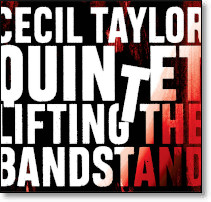
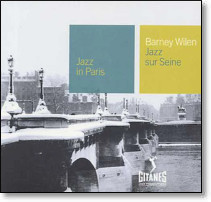
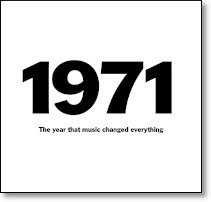
Music: Current count 35715 [35664] rated (+51), 205 [211] unrated (-6). June Streamnotes (link above) wraps up this week. I'll do the indexing later, but a quick fgrep shows 203 albums for the month. I started last week thinking about 1971, which explains old music by Curtis Mayfield, Ike & Tina Turner, and Archie Shepp. I came up shorter in A- records this week, but a couple of those Shepp albums could merit further listening. I haven't been able to follow Hat's Ezz-thetics series, but noticed that they have a new Blase and Yasmina Revisited reissue. I should also note that I decided to go with reissues of the individual BYG albums, not the twofers that later appeared on Affinity. The Joe Newman reissue got me to take a look at his back catalog, which in turn led me to two of my favorite 1950s tenor saxophonists: Illinois Jacquet and Budd Johnson. Nothing I found there blew me away, but I did enjoy every minute of the search. Johnson's Let's Swing remains one of the all-time great tenor sax albums. Newman's 1955-56 albums, The Count's Men and I Feel Like a New Man, are highly recommended, and there is a lot of primo Jacquet to choose from. Listened to more new music last week, but non-jazz forays were few and far between. Main find was an EP that didn't show up in any of my 2020 lists, but its videos have gotten a lot of notice. See this one to get the key song, "Rät," in real time, then look at this one for the annotation. I got the tip from Phil Overeem, who also recommended Ashnikko, another young woman who knows a lot about the world. I shouldn't be surprised, but following politics I'm constantly bombarded with staggering levels of stupidity. Many thanks to Dave Everall for posting Music Week notices on Facebook's Expert Witness thread -- something I've never gotten the hang of. Last week's post elicited a few comments, mostly about Elton John in the 1980s. I wrote about the documentary series 1971: The Year That Music Changed Everything and its Univeral-delimited soundtrack album last week. The series was based on David Hepworth's book, Never a Dull Moment: 1971: The Year That Rock Exploded, so Clifford Ocheltree posted a link to a 283-song Spotify playlist based on the book. I asked for opinions on the book, but only after doing a bit of due diligence. I quoted one line I found in the book: "I was born in 1950. For a music fan, that's the winning ticket in the lottery of life." Several readers took offense at that line. Of course, it resonated for me because I was born in 1950. But also because I've thought quite a bit about the effect of age at time. For instance, I was significantly different in 1957, 1964, 1971, and 1978, which were four pivotal years in the history of rock. My first memories of popular music date from around 1957, but they don't include emerging rock stars like Elvis Presley, Chuck Berry, and Buddy Holly. What I remember from the late 1950s are novelties, including my longstanding love for "16 Tons" (Tennessee Ernie Ford) and "Mack the Knife (Bobby Darin) -- versions that neither older nor younger critics would still prefer. I eventually filled in the gaps, but older critics like Robert Christgau (b. 1942) and Greil Marcus (b. 1945) experienced the birth of rock and roll in real time -- like I did the Beatles and the British Invasion as a teenager in 1964. By the time I became aware of Presley, he was a mediocre actor whose career was interrupted by the Army, so he meant little to me (whereas he meant the world to my elders, especially to Marcus). I know all the songs now, but have little sense of how the chronology played out. On the other hand, I lived through everything from 1964 on, fully conscious of who broke new ground and what followed up. I suppose it's possible that I imposed that 7-year cycle on the available music, as opposed to it fortunately synching up with my life. I don't see anything comparable looking back to 1950, 1943, 1936, 1929 (although the crash did end the "roaring '20s"). Going forward there's some evidence for 1985 (Michaelangelo Matos wrote a recent book on 1984 as a pivotal year in music) and 1992 (grunge and gangsta take over), but what's groundbreaking about 1999, 2006, 2013, 2020? Maybe the music, like me, is getting old? Maybe as old people we just don't notice the changes? What is certain is that we don't live them the same way. It's also possible that change is changing. Kurt Andersen, in his book Evil Geniuses, argues that the decadal changes in fashion and design which made it easy to date artifacts from the 20th century have largely vanished in the 21st. My 2006 car doesn't look far removed from 2021 models, unlike the differences between my father's series of cars (1932, 1949, 1961, 1973, 1979, 1987 -- that '73 Maverick was a real lemon). Progress was dramatic in the 20th century, but it's harder to discern in the 21st: technological changes are more esoteric and harder to grasp, and often turn out to be mixed blessings (e.g., climate). But also blame politics for increasing inequality, which makes affluence harder to come by and hope for. Aside from music, I've long been conscious of the peculiar blessings and handicaps of my age. Nearly all of my cousins are older than me, some a mere two years younger than my father, so they offer a sample group of birth dates from 1925-50, and the second-cousins start up in 1949. What I concluded was that the ones born in the late 1930s were most fortunate: they didn't remember the Depression, were too young for WWII and Korea, and too old for Vietnam; they came of age during the postwar boom, included the first in our family to go to college, many started businesses and prospered, and retired with a fair degree of comfort (several touring the country in RVs, which is sort of a generational calling card). They all lived much longer than their parents, and were generally better off. On the other hand, most are dead now, or getting pretty old, so younger generations do have that advantage. Long ago it occurred to me that there never before was a generation gap as large as the one between my cohort and our parents. The obvious point at the time is that we grew up in a time of sudden affluence and expanding horizons, whereas they grew up during the Great Depression and had to surive World War. But as I thought more about it, I realized that a lot of things started shifting between the end of the war in 1945 and the stalemate in Korea in 1952. The very week I was born, China entered Korea and drove American forces back from the border. Americans didn't realize that they had switched sides, ceasing to be liberators and turning into the backstop of western imperialism. The decline wasn't instantly obvious. We grew up thinking we were on top of the world, and became increasingly cross when the world had other ideas. I recently saw an Elizabeth Warren meme that dated the war on the middle class to "thirty years ago," but there were earlier stages: fifty years ago domestic oil production peaked, and the US started running trade deficits. A sensible choice then would have been to tax oil (like Europe was doing), but we pretended nothing was happening (after all, domestic and foreign oil were controlled by the same international corporations). In the 1970s, capitalists (increasingly financiers) plotted to take over the government and get rid of all the countervailing power/public interest "nonsense" -- with slower growth the only way they could maintain profits was to take more -- and in 1980, they managed to get Ronald Reagan elected. It's been all down hill from there, so of course people growing up now view the world much differently than we did. Rapper Timothy Parker died last week, at 49. He called himself Gift of Gab, started with the group Blackalicious. I wrote about them for Rolling Stone. I thought his 2018 EP Rejoice! Rappers Are Rapping Again! was terrific. Two more major musicians died last week: Jon Hassell (84), played trumpet over "fourth world" electronica; and Frederic Rzewski (83), pianist/composer. I will have answers to some questions later in the week. [PS: Link here.] Also the indexing on Streamnotes. Don't know about Speaking of Which, but it's hard not to find things to write about these days. New records reviewed this week: Rebecca Angel: Just the Two of Us (2021, Timeless Grooves): Standards singer, first album, wrote the last two songs here, producer/keyboardist Jason Miles wrote one. Covers include Jobim, Marley, Satie, "For What It's Worth." Single is "Just the Two of Us." B+(*) [cd] Ashnikko: Demidevil (2021, Parlophone, EP): Singer/rapper Ashton Nicole Casey, from North Carolina, "her parents exposed her to country music and Slipknot" but the music that turned her on was M.I.A., went to high school in Latvia, moved to London at 18. Mixtape (25:24) after three EPs. Cartoonish, until she explains her boredom. B+(**) Steven Bernstein: Community Music (2020 [2021], Royal Potato Family, EP): Trumpet player, played in the Lounge Lizards and Sex Mob, got the gig for musical director for Robert Altman's Kansas City, which led to his big band, Millennial Territory Orchestra. Haven't heard much from him since MTO Plays Sly in 2011, so I jumped on this 4-song, 18:57 EP. Turns out it's a teaser for four forthcoming albums, recorded over four days in 2020, with MTO and Bernstein's Hot 9. Catherine Russell's vocal is a highlight, but I like "Black Bottom Stomp" even more. B+(***) Dopolarians: The Bond (2021, Mahakala): Free jazz group, originally from Arkansas (Chad Fowler on alto sax and Christopher Parker on piano), picked up a singer in Memphis (Kelley Hurt) and wound up in New Orleans, adding Marc Franklin (trumpet) and ringers William Parker and Brian Blade for this record. Hurt enters in a relatively quiet spot around the 7-minute mark, intonating with the band rather than singing over it (which makes her a minor presence here). That first piece runs 21:15, and the second is longer (30:22), ending with a shorter one (9:42). B+(***) Robert Finley: Sharecropper's Son (2021, Easy Eye Sound): Bluesman from Louisiana, born in 1954, released his first album at 62, this is his third. Powerful voice. B+(***) Fire in Little Africa (2021, Motown): More than 60 Oklahoma hip-hop artists -- too many to be a collective, but they can still get together for a cover photo -- reflect on the Tulsa Race Massacre of 1921, which I believe is still the only instance where people used airplanes to fire-bomb an American neighborhood. Still, don't look here for a history lesson. But beware that history isn't even past yet. B+(***) Sean Michael Giddings: Red Willow (2021, Origin): Pianist, from Kansas City, studied at UNT, based in Austin, seems to be his first album. All originals, piano trio with Sam Pankey (bass) and Daniel Dufour (drums), with "orchestral programming on four cuts. B+(*) Pedro Giraudo Tango Quartet: Impulso Tanguero (2021, Tiger Turn): Bassist from Argentina, based in New York since 1996, has eight previous albums (back to 2000). Quartet with Nick Danielson (violin), Rodolfo Zanetti (bandoneon), and Ahmed Alom (piano). Tango, of course, lush, but a bit stilted, which I blame on the connection to classical music. B Ben Goldberg: Everything Happens to Me (2018 [2021], BAG Productions): Clarinetist, steady stream of records since 1991, recruited some superb musicians for this effort: Ellery Eskelin (tenor sax), Mary Halvorson (guitar), Michael formanek (bass), and Tomas Fujiwara (drums). B+(***) [cdr] John Hart: Checkmate (2019 [2021], SteepleChase): Guitarist, 70 this year, shares the spotlight here with Gary Smulyan (baritone sax), a nice mix of tones, also with bass (David Wong) and drums (Andy Weston). B+(**) Kevin Hays/Ben Street/Billy Hart: All Things Are (2021, Smoke Sessions): Piano trio, occasion was the drummer's 80th birthday, Hays and Street have albums going back to the 1990s. B+(*) David Helbock: The New Cool (2020 [2021], ACT): Austrian pianist, albums since 2006, this a trio with Sebastian Studnitzky (trumpet) ad Arne Jansen (guitar). Four Helbock originals, one by Studnitzky, seven covers ranging from Chopin to Cyndi Lauper. B+(*) Cassandra Jenkins: An Overview on Phenomenal Nature (2021, Ba Da Bing): Singer-songwriter from Brooklyn, second studio album, short (7 songs, 31:44) -- fairly minimal, both in music and words (more spoken than sung). Rather appealing. B+(**) Julian Lage: Squint (2021, Blue Note): Guitarist, albums since 2009. Trio with bass (Jorge Roeder) and drums (Dave King). Typically nice record, not have much more to say. B+(**) Lorraina Marro: Love Is for All Time (2021, self-released): Standards singer, from Los Angeles, third album since 2004, "was honored as a Los Angeles 'Jazz Living Legend.'" Risks comparison to Streisand on "People," and pulls it off. Does a couple songs in Spanish. Touts "a team of some of L.A.'s finest musicians. One I've heard of, but haven't heard much from lately, is tenor saxophonist Rickey Woodard. B+(**) [cd] [07-15] Jason Nazary: Spring Collection (2020 [2021], We Jazz): Drummer, alto electronics, first album under his own name but has appeared in various groups going back to Little Women in 2007. Solo, plus guest spots in 5 (of 9) songs. The electronics are disconcerting at first, but eventually this finds a bit of groove. B+(**) [cd] Pluto Juice: Pluto Juice (2019 [2021], Contagious Music): Fusion project, led by saxophonist Dayna Stephens (mostly EWI here) and Anthony Fung (drums), with Andrew Marzotto (guitar) and Rich Brown (electric bass). B+(*) [cd] [07-16] Samo Salamon/Hasse Poulsen: String Dancers (2020 [2021], Sazas): Acoustic guitar duets, former plays 12-string as well as 6-string. Former is well known here, a consistently inventive player. B+(**) [cd] [09-01] Penelope Scott: Public Void (2020, Tesla's Pigeon, EP): Twenty-year-old singer-songwriter, DIY electronics, song "Rät" has over a million YouTube views, a story of nerd love and disillusionment ("I bit the apple 'cause I trusted you, it tastes like Thomas Malthus, you proposal is immodest and insane . . . you promised you would be Tesla, but you're just another Edison"). Initially released as a 6-cut download, then reissued a month later with a 7th song (total 26:06). A- Senyawa: Alkisah (2021, Burning Ambulance): Indonesian doom metal duo, Wukir Suryadi (custom instruments) and Rully Shabara (vocals). Industrial klang, slightly exotic, not unbearable. [PS: Duo had a previous album, Sujud, on Sublime Frequencies, that I liked more.] B [bc] Chris Speed: Light Line (2018 [2021], Intakt): Solo clarinet, a departure from his usual tenor sax but the lighter horn maneuvers better, a big help here. B+(**) Natsuki Tamura: Koki Solo (2020 [2021], Libra): Trumpet player, turns 70 this year, wife Satoko Fujii celebrated 70 by releasing a new album every month, but he's less prolific, at least on his own. Biggest surprise here is how he mixes it up, with piano, wok, and voice credits. Piano forced me to check the credits: he's not as fast as she is, but works in a similar vein. B+(**) [cd] [07-09] Recent reissues, compilations, and vault discoveries: Hamiet Bluiett: Bearer of the Holy Flame (1983 [2021], Strut): Baritone saxophonist (1940-2018), also plays clarinet and alto flute, live set that originally appeared on Black Fire in 1994. With John Hicks (piano), Fred Hopkins (bass), Marvin Smith (drums), and Chief Bey (percussion). Terrific, both the big rhythmic romp that is Bluiett's calling card, and Hicks' marvelous piano. A- ICP Orchestra: Plays Herbie Nichols in Nijmegen 7 May 1984 (1984 [2020], ICP): Dutch group, 12 pieces here, led by Misha Mengelberg (piano) and Han Bennink (drums), with four reeds (including Steve Lacy on soprano sax) and four brass (including tuba), viola, and cello. Mengelberg and/or Lacy have explored Nichols' work on numerous occasions. B+(***) [bc] Joe Newman: Joe Newman at the Atlantic (1977 [2021], Phontastic): One of the lesser-known swing trumpet players, started with Lionel Hampton in 1941, spent 13 years with Count Basie, played with Illinois Jacquet and others. Two 1955-56 albums are favorites. This was recorded in Sweden, with clarinetist Ove Lind's quintet, featuring Lars Erstrand (vibes). B+(***) Cecil Taylor Ensemble: Göttingen (1990 [2021], Fundacja Sluchaj, 2CD): Lineup similar to the Workshop Ensemble that recorded Legba Crossing in 1988, as part of the pianist's massive Berlin showcase: 13 musicians here, 15 then, 10 in common. Two sets, totals 138:34. Noisy, chaotic, difficult to listen to, but long stretches are also quite marvelous. B+(***) [bc] Cecil Taylor Quintet: Lifting the Bandstand (1998 [2021], Fundacja Sluchaj): Recorded at Tampere Jazz Happening in Finland, with his regular drummer Paul Lovens, Tristan Honsinger on cello, and two local musicians: Harri Sjöström (soprano sax) and Teppo Hauta-Aho (bass). Slow start, but by mid-point the musicians are finding ways to make sense of the chaos, and even more. A- Barney Wilen Quartet: Barney and Tete Grenoble '88 (1988 [2020], Elemental Music): Tenor sax quartet, cover extends the credit to "feat. Tete Montoliu," the blind Spanish pianist, and Discogs also credits Riccardo Del Fra (bass) and Aaron Scott (drums), although I don't see their names on the cover. One Wilen-Montoliu credit, two Charlie Parkers, more standards (at least in France). [NB: Napster omits the two medleys, 13:40 + 12:57, so hedged on 7/9 tracks.] B+(**) Old music: Illinois Jacquet: Swing's the Thing (1957, Verve): Real first name: Jean-Baptiste. Born in Louisiana, grew up in Houston, so he's usually counted among the "Texas tenors" -- robust blues/swing saxophonists like Arnett Cobb and Buddy Tate. Started out with Lionel Hampton's big band, and is most famous for his "Flying Home" solo -- widely considered to be one of the first eruptions of rock and roll. All-star sextet -- Roy Eldridge, Herb Ellis, Jimmy Jones, Ray Brown, Jo Jones -- divided into a slow side and one that kicks up heels (for a while). Still, no complaints about Jacquet's ballad style. B+(**) Illinois Jacquet: Bottoms Up: Illinois Jacquet on Prestige! (1968, Prestige): Quartet with Barry Harris, Ben Tucker, and Alan Dawson. Title cut is a monster blues wail. Settles down after that, with a nice ballad to close. B+(***) Illinois Jacquet: The Comeback (1971 [1991], Black Lion): Originally released 1971 as Genius at Work!, but picked up the title song (the only Jacquet original) for the CD, and went with that. Recorded in London with Milt Buckner on organ and Tony Crombie on drums. Opens with Basie, a ballad ("Easy Living"), and "C Jam Blues." Closes with a blues called "I Wanna Blow Now," where he mostly sings. [5/6 tracks] B+(**) Illinois Jacquet: Bottoms Up [The Definitive Black & Blue Sessions] (1974 [1997], Black & Blue): Recorded in Paris, the CD fleshed out with alternate takes. Quartet with Milt Buckner (organ on 7 tracks, piano 5), Roland Lobligeois (bass), and Jo Jones (drums). Mostly easy-going blues. B+(**) Illinois Jacquet: God Bless My Solo [The Definitive Black & Blue Sessions] (1978 [2001], Black & Blue): Another Paris tour, with Hank Jones (piano), George Duvivier (bass), and J.C. Heard (drums). B+(***) Budd Johnson: The Chronological Budd Johnson 1944-1952 (1944-52 [2003], Classics): Tenor saxophonist, one of the all-time swing greats, though rarely recognized as he was most often buried in big bands or working for other leaders (e.g., Earl Hines). Indeed, his name only leads the artist credits in 6 (of 23) tracks here, the others belonging to Clyde Hart, Al Killian, J.C. Heard, Dickie Wells, Leslie Scott, and Johnny King. Varied material, from big band to r&b, including a number of vocals (King is most impressive), but often the saxophone reigns supreme. B+(***) Budd Johnson: French Cookin' (1963, Argo): Mostly French titles (exception is Johnson's own "I Can Live With the Blues"). His quartet (with Hank Jones, Milt Hinton, and Ossie Johnson) is beyond reproach, but the extra guitar/marimba/percussion can be disconcerting. B+(**) Budd Johnson With Joe Newman: Off the Wall (1964 [1965], Argo): Tenor sax and trumpet, with piano (Al Dailey Jr.), bass (George Duvivier or Richard Davis), and drums (Grady Tate). Title cut is irresistible. B+(***) Curtis Mayfield: Curtis/Live! (1971, Curtom): Live double, 12 songs and 4 "raps" (lame spoken intros) picks up pieces from his Impressions catalog, while adding some of his solo album. Light touch, perhaps a bit thin, lots of congas, but great songs. B+(***) Jason Moran: The Armory Concert (2016, Yes): Pianist, recorded for Blue Note 1999-2014, quickly establishing himself as one of the top jazz pianists of his generation. After leaving Blue Note, he started his own label, but he's gotten little publicity (at least none my way), and it's been hard to follow him. This is solo piano. B+(*) Joe Newman With Frank Foster: Good 'n' Groovy (1961, Prestige Swingville): Trumpet and tenor sax, both Basie veterans, backed by a Tommy Flanagan piano trio, playing four Newman pieces, plus "Lil' Darlin'" and "Just Squeeze Me." B+(**) Joe Newman: I Love My Woman [The Definitive Black & Blue Sessions] (1979 [2000], Black & Blue): The label usually waited until artists came to Paris, but they picked up this live set from London, with the trumpet player (and sometime singer) leading a quartet with Hank Jones (piano), George Duvivier (bass), and Alan Dawson (drums). B+(***) Gil Scott-Heron: Pieces of a Man (1971, Flying Dutchman): Spoken-word artist, mostly sings here, music by pianist Brian Jackson, second album, leads off with his most famous piece: "The Revolution Will Not Be Televised" -- perhaps the song of the year, heavily featured in a recent documentary claiming the 21st century was being invented in 1971. Nothing else matches it, or is even in the proto-rap mode. More striking now is the jazzy vibe, with Hubert Laws, Ron Carter, and Pretty Purdie in the band. B+(***) Archie Shepp: Life at the Donaueschingen Music Festival (1967, SABA): Tenor saxophonist, first appeared in the New York Contemporary Five (based in Denmark with John Tchicai and Don Cherry), followed closely in the footsteps of Albert Ayler and John Coltrane -- first album under his own name was Four for Trane. This live set -- with Grachan Moncur and Roswell Rudd on trombone, Jimmy Garrison on bass, and Beaver Harris on drums -- consists of a single 43:45 piece, "One for the Trane." B+(***) Archie Shepp: Blasé (1969, BYG): Live in Paris, with vocalist Jeanne Lee, Lester Bowie (trumpet) on the opener, Dave Burrell (piano) on all but the closer, plus bass (Malachi Favors) and drums (Philly Joe Jones). Good spotlight for the remarkable Lee, and Shepp's perhaps surprising skill at shadowing a siger. B+(***) Archie Shepp: Yasmina, a Black Woman (1969, BYG): Recorded in Paris, title cut is the 20:00 first side with an expanded band. Second side has "Body and Soul" and a piece by Grachan Moncur, with a quartet (plus Hank Mobley on the Moncur piece). B+(***) Archie Shepp: Poem for Malcolm (1969, BYG): Two sidelong pieces with different bands, a bit of voice (Shepp) on the title cut. The other is rather more interesting, especially for Grachan Moncur III's trombone. B+(**) Archie Shepp: Live at the Panafrican Festival (1969 [1971], BYG): Live in Algiers, two pieces, with Algerian and Tuareg musicians adding to the carnival atmosphere, Clifford Thornton (cornet) on both, Grachan Moncur III (trombone) on the first, piano-bass-drums on the second, with Ted Joans poetry read by Don Lee and Joans. B+(***) Archie Shepp: Things Have Got to Change (1971, Impulse!): Tenor saxophonist, leaned avant in the 1960s, got political after 1968 and started making social music, radicalized by black power as well as avant-jazz. First side is the sprawling "Money Blues," co-written by Beaver Harris, Joe Lee Wilson shouting. Second is a short piano piece, "Dr. King, the Peaceful Warrior," then the 16:13 title cut, with Leroy Jenkins on violin. Messy. B+(*) Ike & Tina [Turner]: 'Nuff Said (1971, United Artists): Surname omitted on cover, as title explains. Everything else seems a bit abbreviated. B+(*) Barney Wilen: Jazz Sur Seine (1958 [2000], Gitanes Jazz): French tenor saxophonist, if Americans recognize the name it's probably for the record he made with Miles Davis, but he's been consistently terrific from the mid-1950s up to his death in 1996 (e.g., New York Romance, from 1994). He gets a lift here from a trio of Americans -- with Milt Jackson on piano, Percy Heath and Kenny Clarke -- but remains the star. Originally released by Philips in 1959, several editions since, but I thought I'd credit Verve for their generally excellent Gitanes Jazz series. A- Further Sampling: Records I played parts of, but not enough to grade: -- means no interest, - not bad but not a prospect, + some chance, ++ likely prospect.
Unpacking: Found in the mail last week:
Ask a question, or send a comment. Tuesday, June 22, 2021 Music Week
Music: Current count 35664 [35610] rated (+54), 211 [214] unrated (-3). Ran a day late in posting this. The cutoff was on schedule, late Sunday evening, but I got distracted by the busy work noted below. More mid-year best albums lists (including country and hip-hop specialists, and one short jazz list):
If I had to construct a jazz list at the moment, it would be something like (scraped from my Year 2021 list):
If we were running a Jazz Critics Poll at the moment, only my top two are likely to wind up top ten, with outside shots for Jaimie Branch, Wadada Leo Smith, and maybe one of the Intakt pianists (neither has placed high before, but the label gets attention). Other big names you might see: Miguel Zenón (A-), Vijay Iyer (***), Charles Lloyd (***), Thumbscrew (***), Floating Points/Pharoah Sanders (**), although my guesses are increasingly suspect as you go down my list. Is Joe Lovano (with or without Dave Douglas) a cause célèbre any more? Does the other 3-CD Wadada Leo Smith box overcome its solo trumpet limits? Has anyone actually heard the 10-CD William Parker box? I haven't, although I did finally check out the sampler (below). I'm not seeing much else I haven't heard yet that strikes me as likely contenders. But I should take a look through here: several things that interest me (at least) on just the first page. I've added the records mentioned to my tracking file (haven't tracked down all the labels and dates yet), so it now has more unrated (442) than rated (328) records. I haven't tried to compile the lists, and haven't gotten very far in checking them out, although a few albums I noticed there made it into this week's list. We recently watched 1971: The Year That Music Changed Everything, an 8-episode Apple TV+ documentary series made by Asif Kapadia in England, based on David Hepworth's book Never a Dull Moment: 1971 the Year That Rock Exploded (see: Rotten Tomatoes, no Wikipedia?; reviews in Guardian, Under the Radar, and a rather pissy piece in the New York Times). Reviews inevitably focus on who got included or left out, and whether 1971 was really more important than 1970 or 1972 (or 1967 or 1977), but I don't want to get mired in that (although one should note that they not only featured albums released in 1971, but also singles that were recorded in 1971 but didn't appear on albums until 1972 (like Exile on Main Street and Ziggy Stardust). [PS: I did review the soundtrack tie-in product after my cutoff, but decided to slip it in here. And yes, I did comment on what was and wasn't included.] I will say that there was some remarkable footage. For me, it was most interesting to recheck my memories and nostalgia. In my case, 1971 was something of a low point in my interest in music, which had been waning during several years of self-imposed confinement, and was rekindled once I went to college in St. Louis in 1972, although I was very much aware of key events, like Nixon's escalation in Vietnam, Kent State, and Attica. And while I didn't notice much music in real time in 1971, I made up for it in the next several years, as I found that music was the common denominator of the society I was struggling to enter. Hence, there was very little in the series that I didn't know, or at least catch up on over the next few years (which makes it not 50 years old to me, but 45+). As this is 50 years after 1971, we're constantly running into anniversary reminders. (The one I'm most looking forward to is the release on HBO Max of my nephew Mike's documentary, Betrayal at Attica; see notices in Realscreen and C21 Media.) The most pedestrian of these tie-ins is the appearance of "best of 1971" album lists, like this one (the first I saw) at Yardbarker: Albums turning 50 in 2021 that everyone should listen to. These are 1971 releases. My grades are in brackets.
When I jotted that list down, I didn't have grades for 5 albums, so I scrambled to listen to them. Four were sensible decisions to have ignored, at least in an era where one actually had to buy albums. Reviews below. Spin also has a better (and more obscurantist) 1971 list, 50 albums deep, so it catches some important titles missing from above, as well as dropping in more ordinary albums and a few genuine obscurities. Ones from their list I'd rate A- or better:
I thought I might add a list of A-list albums they missed, then decided I should try my hand at compiling a fairly comprehensive annual list, like I've been compiling since 2002. That project got a little out of hand. It wasn't too hard to scan through my database for "1971" and pick out the actual releases, but most of my jazz records are listed by recording (as opposed to release) date, and I wanted to limit the list to actual (preferably US) releases that calendar year, so I had to do a lot of error checking. I also decided to go with original (preferably US) labels, whereas the database mostly had reissues. In some cases, I thought I should add notes contrasting the original releases with the reissues I actually listened to -- but I kept the database grades. I also decided to flag the jazz albums (J). As I was error-checking, I added a section called "unheard records of some note." Obviously, there are thousands of 1971 releases that I haven't heard, so getting onto this list is pretty arbitrary. (Discogs has something like 120,000 1971 releases, but expect a lot of redundant entries for trivial differences, as well as tons of reissues from previous years. I started looking at the 12,000 jazz releases, and got about 25% into it.) While I was doing all this, I listened to a few 1971 albums I had missed, so I kept shuffling albums around. A few quick observations:
In theory, I could do this for other years, but looks like a lot of work. My guess is that 1970 would have a larger A-list, especially up top. Probably 1972 too. I started buying significant quantities of albums around 1974, so everything picks up from there, to about 1980. From then, the lists would slacken off, then pick up again around 1986, and more so when I started buying CDs. I started buying a lot of jazz and oldies c. 1995, and everything exploded when I started reviewing oldies in 2003 and jazz in 2004, and again when I started streaming around 2010. That finally made it cheap to listen to crap, and I've done plenty. Jazz took a dive around 1970, aside from the fusion fad, which very few musicians showed any real skill at (Miles Davis, for sure, but not Herbie Hancock or Wayne Shorter, who still passed as pretty big successes). Jazz started to rebound in the US in the 1990s, but as art had been saved by small labels in Europe and Japan, and in any case it remains a music of small niches (definitely plural), despite being enormously creative. The thing about 1967-72 was that a lot of the innovation in those years was genuinely popular: we listened to the same records, and they were a common bond. I grew up in that environment, but by the time we published Terminal Zone we were starting to plot the fragmentation. Like the real universe, it's never gotten smaller, nor easier. One more week before we wrap June Streamnotes. It's a 5-week month, so the monthly file is likely to be a big one (currently 162 records). Don't know whether I'll do a Friday news/opinion post. Scratch file for that is currently bare. Got virtually no reaction last week. Got both of the porch rail projects done, thanks largely to Max Stewart, who always seems to be able to bail me out when I get in over my head. I spent what seemed like a lot of money (including a $50 shipping charge), and I'll never do business with them (Simplified Building) again. The hardware fit very loosely and/or awkwardly to the tubing, which was heavy but unattractive. The "self-tapping" screws weren't up to the job. Their instructions were wrong several places, resulting in drilling some holes too big, others too small. First thing I ever bought off an ad in Facebook, and may be the last. I have one more rail piece on order from Amazon (item had a very long lead time). Assuming it fits right, it should be much easier to install. Also bought some small grab bars to locate by the doors, so you can hold on with one hand while opening the heavy screen doors. They came late today, so I still have to install them, but they should be easy. Lots more making life difficult, but occasionally we make a bit of progress. New records reviewed this week: Rodrigo Amado This Is Our Language Quartet: Let the Free Be Men (2017 [2021], Trost): Portuguese tenor saxophonist, group name refers not to Ornette Coleman but to a This Is Our Language recorded by this same quartet in 2012: Joe McPhee (pocket trumpet/alto sax), Kent Kessler (bass), and Chris Corsano (drums). Joint credits, vigorous if a little on the rough side. A- [cd] Armand Hammer & the Alchemist: Haram (2021, Backwoodz Studioz): Hip-hop duo, Billy Woods and Euclid, sixth album since 2013, team up with producer Alan Marman (ex-Cypress Hill). "Haram" means forbidden in Arabic, and pigs figure prominently, especially on the cover. B+(**) Bicep: Isles (2021, Ninja Tune): Electronica duo from Belfast, Northern Ireland: Andrew Ferguson and Matthew McBriar. Second album. "A potent blend of euphoria and melancholy that captures the very essence of rave perfectly." B+(**) Abraham Burton/Lucian Ban: Black Salt: Live at the Baroque Hall (2018 [2021], Sunnyside): Tenor sax and piano duo. Burton was one of the brightest saxophonists to emerge in the 1990s, but has nothing as leader since 1995 -- although his side credits picked up after 2010, including two albums with the pianist. Strikes me as a bit cluttered, partly because the shift from alto to tenor slows him down. B+(**) Brian Charette: Power From the Air (2020 [2021], SteepleChase): Organ player, leads a sextet with a range of horns -- flute (Itai Kriss), alto sax (Mike DiRubbo), tenor sax (Kenny Brooks), bass clarinet (Karel Ruzicka) -- and drums. Postbop, but swings some, DiRubbo stands out among the horns. B+(*) J. Cole: The Off-Season (2021, Dreamville/Roc Nation): Rapper Jermaine Cole, sixth studio album. B+(*) Czarface/MF Doom: Super What? (2020 [2021], Silver Age, EP): Hip-hop supergroup (7L, Esoteric, Inspectah Deck) teams up with rapper Daniel Dumile for a short album (10 tracks, 26:44), a follow up to their 2018 Czarface Meets Metal Face. Originally slated for April 2020, held back due to lockdown, finally appearing after Doom's death in October. A- Dan Dean: Fanfare for the Common Man (2017-18 [2021], Origin Classical): Aaron Copland's title piece runs 3:34, but to these ears it's indistinguishable from surrounding pieces by Elgar, Bach, Debussy, Holst, Mozart, Mendelssohn, Khachaturian, and lots more Bach, rendered in a cappella (but surely multitracked) bippity scat, with a bit of whistle. Some famous titles here, but I hated classical music so much as a child I would plug up my ears or mute the TV, and I've never felt the slightest loss. My bad, perhaps, but not as bad as the "teachers" who thought that nothing else was worth listening to. B- [cd] John Dikeman/Hamid Drake: Live in Chicago (2018 [2020], Doek Raw): Saxophonist, born in America but based in the Netherlands, returns to Chicago for a 37:12 improv with local drummer. B+(*) [bc] Silke Eberhard Trio: Being the Up and Down (2020 [2021], Intakt): German alto saxophonist, also plays bass clarinet, leads the larger group Potsa Lotsa, trio with Jan Roder (bass) and Kay Lübke (drums), whose names also appear on the cover. A- Michael Formanek: Imperfect Measures (2017 [2021], Intakt): Bassist, another member of Tim Berne's 1990s group, dozen or so albums under his own name. This one is solo, pretty good for such. B+(**) Garage A Trois: Calm Down Cologne (2019 [2021], Royal Potato Family): Acid jazz group, sixth album since 2003, first since 2011, now slimmed down to a trio as saxophonist Skerik doubles up on keyboards -- other long-term members are Charlie Hunter (guitar) and Stanton Moore (drums). B+(*) Doug Lofstrom: Music for Strings (2018-19 [2021], Origin Classical): From Chicago, bassist, "has been composing prolifically since the 1970s," has a previous album on this label, but not much else I'm aware of. This was performed by Russian Strings Orchestra, conducted by Misha Rachlevsky. The sort of thing I couldn't stand as a child, and can barely tolerate now. B- [cd] Mach-Hommy: Pray for Haiti (2021, Griselda): Rapper Ramar Begon, from Newark, Discogs credits him with 14 albums since 2016, but most were self-released, and Wikipedia never heard of him. B+(***) Tobias Meinhart: The Painter (2021, Sunnyside): German saxophonist (tenor/soprano, alto flute), half-dozen albums since 2015, this with piano/bass/drums, guest guitar (Charles Altura) on two tracks, trumpet (Ingrid Jensen) on two others. B+(**) William Parker: Trencadis: A Selection From Migration Into and Out of the Tone World (2019-20 [2021], Centering): Bassist, has released massive works before -- e.g., the 8-CD Wood Flute Songs in 2013 -- but this year's 10-CD box is unusual both for its size and the short time involved. I received a promo sampler in January, but didn't bother as it didn't look like product, as I resigned myself to missing his magnum opus. However, this sampler does now seem to have an independent existence, at least as a digital album. No idea who plays or sings (most songs have vocals), and I continue to have doubts and frustrations about the utility. B+(**) Jeremy Pelt: Griot: This Is Important! (2020 [2021], HighNote): Mainstream trumpet player, albums since 2002, impressed me first with his chops, but has rarely made compelling ablums out of them. Ties in with a book of interviews with jazz musicians from Bertha Hope to Ambrose Akinmusire, full title Jeremy Pelt Presents: Griot: Examining the Lives of Jazz's Great Storytellers, Vol. 1. Half-dozen original pieces, a couple more with ongoing commentary, and snippets of interviews. With keyboards (Victor Gould), vibes (Chien Chien Lu), harp (Brandee Younger), bass, drums, percussion. B+(*) Ivo Perelman/Nate Wooley: Polarity (2020 [2021], Burning Ambulance): Tenor sax and trumpet duo, at least the fifth album they've done together but the first duo. Probably because the tone limits wear on you, no matter how creative they sound at first. B+(*) [bc] Tom Rainey Obbligato: Untucked in Hannover (2018 [2021], Intakt): Drummer, I first noticed him with Tim Berne in the late 1990s, has a half-dozen albums, including Obbligato (2014), a quintet mostly reunited here: Ralph Alessi (trumpet), Ingrid Laubrock (tenor sax), Drew Gress (bass), with Jacob Sacks (piano, replacing Kris Davis). B+(**) Skyzoo: All the Brilliant Things (2021, Mello Music Group): Brooklyn rapper Gregory Taylor, tenth album since 2006, underground vibe, not as distinctive as his two 2020 efforts. B+(**) Will St Peter/Steven Heffner/Steve Barnes: Honestly (2020 [2021], Origin): Guitar-bass-drums trio, based in Dallas, studied at UNT, first album. Three St. Peter originals, covers ranging from Mancini to Ornette Coleman. B+(*) [cd] The United States Air Force Band Airmen of Note: The 2021 Jazz Heritage Series (2021, self-released): Taxpayer-supported culture, probably the least offensive thing the USAF does, but still an annual event I hold no hope for and am regularly repaid with varying levels of distress. Not that they can't play, but they have nothing much to say. Does provide a paying gig for a couple of ringers each year: Peter Bernstein and Chris Potter this time. B- [cd] Jennifer Wharton's Bonegasm: Not a Novelty (2020 [2021], Sunnyside): Bass trombonist, second album, group a trombone quartet (John Fedchock, Nate Mayland, Alan Ferber) with piano/bass/drums, and guest spots for Samuel Torres (2) and Kurt Elling (1). B+(**) Recent reissues, compilations, and vault discoveries: 1971: The Year That Music Changed Everything (1971 [2021], Island): Does "That" make any sense here? Subtitle feels like an anagram where you can shift words around endlessly without settling on a satisfactory result. No doubt the music was changing, as was the world, but subject and object are harder to grasp. Maybe it was dialectical? The documentary series runs eight episodes, about 6 hours, and contained enough music for a 4-CD box, so a single CD is bound to disappoint. As a synopsis, sure isn't bad, especially starting with "Imagine" and "What's Going On." But David Bowie, who probably gets more screen time than anyone, and "The Revolution Will Not Be Televised," which is heavily featured as the year's most striking song, are missing here, as are Curtis Mayfield, Bill Withers, Joni Mitchell, and Sly & the Family Stone. On the other hand, there are songs and artists here that I don't recall in the videos (like Rod Stewart, the Beach Boys, Edwin Starr's "Ball of Confusion," and the Temptations' "Just My Imagination"). I'm not inclined to complain about any of those last four -- even the piece from the otherwise lame Surf's Up (although John Martyn and Nick Drake do seem a little parochial, even in England). No doubt licensing has something to do with it, even though Universal, which owns Island, owns damn near everything. Makes me wonder if Sony can do an answer record (which should get us Bowie, Scott-Heron, and Lou Reed's "Walk on the Wild Side"). A- Gary Bartz NTU Troop: Live in Bremen 1975 (1975 [2021], Moosicus, 2CD): Alto saxophonist, played with Dolphy, Mingus, Roach, and Blakey in the 1960s, with Miles Davis in 1971, left to form this band in 1971, with an uncompromising mix of avant postbop, black power, and crossover funk. This is close to the end of their run, down to a quartet with keyboards (Charles Mims), electric bass (Curtis Robertson), and drums (Howard King). B+(***) Tim Berne/Chris Speed/Reid Anderson/Dave King: Broken Shadows (2018 [2021], Intakt): Alto and tenor sax from Berne's breakthrough groups from the 1990s, plus Bad Plus bass and drums. First released by vinyl-only Newvelle in 2019, so technically a reissue, predating Jazzclub Ferrara's live Tower Tapes #2, credited to Broken Shadows, perhaps the best set in their Covid lockdown dump. Impressive group, but slips and slides a bit much. B+(***) Julius Hemphill: The Boyé Multi-National Crusade for Harmony (1977-2007 [2021], New World, 7CD): Box set with 40-page booklet, which may answer some of my questions. Alto saxophonist, major avant-garde figure from 1972 (Dogon A.D.) to his death in 1995, and in some ways beyond. He was the defining force behind World Saxophone Quartet, at least early on, and developed another saxophone choir in the 1990s (see Five Chord Stud), as well as a big band. He continued composing after he was no longer able to play (c. 1990), and periodically ghost bands appear in his name. I don't have date details here, but the stretch 12 years beyond his death is hard to fathom. The only thing he didn't play on was the Disk 4 "Chamber Music," and most of that (37:16) was a quintet he conducted (all horns, two brass/three reeds; the rest is 7:02 by pianist Ursula Oppens, and 19:15 by Daedalus String Quartet). The title is a group he played with c. 1977 (mostly a quartet with Baikida Carroll, Jehri Riley, and Philip Wilson; later with Carroll, Dave Holland, and Jack DeJohnette), and the other groups (various Quartet lineups and the duo with cellist Abdul Wadud) weren't much later. There's a fair amount of squawk early on, and the chamber music isn't that interesting, but this really picks up on the fifth disc (Roi Boyé Solo and Text), particularly the "Unfiltered Dreams" with K Curtis Lyle's poetry set to solo saxophone (e.g., "Nobody Tells Me What to Do"), and the later live groups are both bracing and sophisticated. Not all great, but rises to that level time and again. A- Old music: Bee Gees: Trafalgar (1971, Atco): British group, three Gibb brothers, born on Isle of Man, grew up in Manchester, formed a skiffle group there, took a detour to Australia, releasing Bee Gees' 1st in 1967, the first of four albums (through Odessa) that peaked 4-16 in the UK, 7-20 in the US, 8-13 in Australia. I didn't notice them until their disco revival in 1975, but they scored their first number one US single here with "How Can You Mend a Broken Heart." Nothing else here is remotely decent. C- Anne Briggs: Anne Briggs (1971, Topic): English folk singer, first album (after an EP in 1963), followed almost immediately by The Time Has Come, and very little else. I was surprised to find the latter in my database as a full-A album (English/Celtic folk is really not my thing, but the reissue was a pick hit in my May 2007 Recycled Goods). Much a cappella, remarkable in its own way. B+(***) James Brown: Super Bad (1970 [1971], King): He signed to Polydor in 1971, which took over distribution of his King catalog, so this "live" album and the two-months later Sho Is Funky Down Here got reissued by Polydor within the year. Title hit is so great they stretch it to three parts (9:16), and "Giving Out of Juice" runs a bit longer. Four other songs run 3:05-39 (basically, singles with dubbed audience), including covers of "Let It Be Me" and "By the Time I Get to Phoenix." B+(***) James Brown: Hot Pants (1971, Polydor): Hot single, more funk vamps, about par for a period when everything he touched was golden. [CD reissue adds the 19:09 complete take of "Escape-ism," excerpted on the original.] A- James Brown: There It Is (1972, Polydor): More classic funk grooves, pausing for public service sermons about "King Heroin." A- James Brown: Get on the Good Foot (1972, Polydor): Only album I can recall which features an advertisement for itself in any form, let alone running 5:54 to start off Side 2. Great songs you've heard before and/or will hear again, and other stuff. B+(*) Carlton and the Shoes: Love Me Forever (1978, Studio One): Jamaican vocal group, also known as the Manning Brothers: lead singer Carlton, Donald, and Linford -- the latter two were also in the Abyssinians. First album (of three). B+(**) [yt] Carpenters: Carpenters (1971, A&M): Brother-sister duo, hugely popular, albums 2-5 from 1970-75 went platinum (as did, 7X, The Singles: 1969-1973), declined thereafter, with Richard's drug problems and Karen's anorexia (fatal in 1983) tarnishing their story book wholesomeness. This was their third album, anchored by their most famous single ("Rainy Days and Mondays"), second side with a fairly decent "Superstar," the rest fleshed out with string and choral arrangements that make Mantovani sound like Mozart. C Grin: Grin (1971, Spindizzy): Nils Lofgren, got his start playing guitar and keyboards with Neil Young, led this band 1971-73 before going solo, and winding up as a hired hand for Bruce Springsteen's E Street Band. I was introduced to this band through best-ofs, which emphasize Lofgren, so I recognize a few songs, but others have yet to sink in. Later reissues add "featuring Nils Lofgren" to the cover/title. B+(**) Grin [Nils Lofgren]: 1 + 1 (1971, Spindizzy): Lofgren's name on top, but in smaller type, as if they're having trouble figuring out who this is. Good songs, but they (he?) don't have a trademark sound, nor do they hint at the future Americana mold, and the orchestral swell on the finale leaves me cold. B+(***) Grin: All Out (1972, Spindizzy): Third album, went with the group name, and seem happier for it. This holds up better, but again the "best-of" songs get there first. A- Billy Joel: Cold Spring Harbor (1971 [1983], Columbia): Piano-playing singer-songwriter, first album, barely dented the charts (158, 95 UK, 44 Japan), two years before Piano Man got him some notice. Artie Ripp produced, and reportedly butchered the original mix, leading to a split and a long contract dispute. Ripp remixed the album in 1983, cutting it from 33:07 to 29:53, correcting the pitch, and dubbing in more band. That seems to be the mix I listened to, which is spare but inoffensive. He seems to have a knack for writing show tunes, but not much context for staging them. B Elton John: Elton John (1970, Uni): Piano-playing pop star, second album (but first released in US), scored a hit with "Your Song" but little else. B- Elton John: Madman Across the Water (1971, Uni): Two singles here, "Tiny Dancer" and "Levon," where the definition of an Elton John single is a melody fetching enough they can survive the dead weight of Bernie Taupin's lyrics. B- Elton John: Don't Shoot Me I'm Only the Piano Player (1973, MCA): Helps to pick up the pace, as he did on Honky Château, and again (less consistently) here, especially with "Crocodile Rock." I suppose his "Texan Love Song" has a whiff of irony, but he doesn't impress with his redneck yahoo act. B Elton John: Caribou (1974, MCA): Recorded quick, then dressed up by the producer while he was on tour. Singles: "The Bitch Is Back," "Don't Let the Sun Go Down on Me." Fatigue sets in, if not him, then me. B Elton John: Elton John's Greatest Hits Volume II (1971-76 [1977], MCA): Ten songs on the original North American version: two from albums out before his first Greatest Hits, four from later albums (two from Rock of the Westies, his best album, and one from Blue Moves, possibly his worst), plus four non-album singles, including covers of "Lucy in the Sky With Diamonds" and "Pinball Wizard" and a duet with Kiki Dee ("Don't Go Breaking My Heart"). The covers seem celebrate his status as a celebrity, but don't do anything interesting. B+(**) Elton John: Elton John's Greatest Hits Volume III 1979-1987 (1979-87 [1987], Geffen): After Blue Moves (1976), I paid him no attention -- the only later album in my database was his 2010 duo with Leon Russell (The Union, a B; Christgau gave up after Jump Up! in 1982, aside from this best-of and a 1992 "dud"). However, his singles discography shows 11 top-20 records in this period, and 11 more through 20002 (more on the Adult Contemporary chart), so I thought this might be worth checking out. Only two songs I recognized here, and only one was close to great -- "Sad Songs (Say So Much)." The rest are uninspired formula (at best). B Curtis Mayfield: Curtis (1970, Curtom): Joined a group that became the Impressions as a teenager in 1956. Left them to go solo with this album in 1970. I've been playing his career-spanning 2-CD Anthology a lot lately, and the two most brilliant pieces here are there, but the rest of his music finds a unique groove and persona, and I don't see any point quibbling about details. A- Curtis Mayfield: Roots (1971, Curtom): Maybe you could nitpick some of the arrangements, but his voice and rhythms are so supple they wash right over them. Fewer songs I recognize from Anthology, but the flow is unique, powerful, sweeping. [PS: CD adds 4 alternate takes, underscoring great songs.] A- MC5: High Time (1971, Atlantic): Michigan rock band formed in 1964, cited nowadays as "proto-punk," third and final album (despite partial reunions in 1992, after vocalist Rob Tyner died, and in 2003-10, until bassist Michael Davis died). Eight songs, extra horns on the last. B+(***) [yt] MC5: Babes in Arms (1966-71 [1983], ROIR): Wayne Kramer compiled this from "rare out-takes, mixes, remixes, uncensored and experimental works in progress, and rehearsal tapes," for cassette release in 1983. Yet somehow this strikes me as more satisfying than any of their studio albums: some of their signature songs, loosely done but expertly paced, gets stronger and stronger. A- [bc] Helen Reddy: Helen Reddy (1971, Capitol): Pop singer from Australia, had some hits in the 1970s, especially on the Adult Contemporary chart. Second album, one short of her breakthrough hit ("I Am Woman"). She wrote 1.5 songs, smartly picked covers from John Lennon, Donovan, Carole King, Leon Russell, and Randy Newman, but my favorite is "Tulsa Turnaround." Nice voice, decent arrangements, even the strings. B+(***) Helen Reddy: Helen Reddy's Greatest Hits (1971-75 [1975], Capitol): Ten songs, picked for chart position (9 top-2 AC, the other was the oldest, peaking at 12), so nothing from her 1971 eponymous album. There are more "definitive" compilations, but the CD reissue, with (And More) tacked onto the title, just took her to 1979 (and down to 60 on the pop chart, 41 AC). Reminds me we stopped caring about pop charts as the 1970s progressed, and never gave Adult Contemporary a second thought. Arrangements can be a bit much, but I rather like her. B+(**) The Stylistics: The Stylistics (1971, Avco): Vocal group from Philadelphia, featuring Russell Thompkins Jr.'s falsetto and Thom Bell's production. First album, a tour de force. A- The Stylistics: The Best of the Stylistics (1971-74 [1975], Avco): I should probably sample the four intervening albums, which charted 14-66 (R&B 3-8) and got panned by Christgau (B+, C+, missed the 3rd, C), but I'm impatient. Ten songs, four from the debut, seems like it should have grabbed me faster -- like the first album did, but right now I'd rather move on. B+(***) Ike & Tina Turner: River Deep Mountain High (1966 [1969], A&M): Originally released on producer Phil Spector's label in the UK, but the Ike-less title cut stiffed (peaked at 88 in the US, vs. 3 in the UK), delaying US release. I've long regarded it as genius, but Ike's "I Idolize You" [originally from 1960?] has a lot more grit and soul. As the album alternates six productions by each, it risks schizophrenia, but both halves are so intense they modulate each other, albeit strangely. A- Ike & Tina Turner and the Ikettes: Come Together (1970, Liberty): After opening for the Rolling Stones, they make a (partial) move toward the rock market, adding four rock covers to eight Ike songs. Tina comes close to owning the latter, but really burns on the originals. A- Ike & Tina Turner: What You Hear Is What You Get: Live at Carnegie Hall (1971, United Artists): Live double, but not that long (59:26), notable for the preponderance of covers -- only two Ike credits, one shared with Tina, the other a mere 0:30 of "Ike's Tune" -- with "Proud Mary" featured and Otis Redding for the closer (or encore). B+(***) Unpacking: Found in the mail last week:
Ask a question, or send a comment. Monday, June 14, 2021 Music Week
Music: Current count 35610 [35564] rated (+46), 214 [217] unrated (-3). Turned my attention to new music this week, drawing on sources too numerous to recall, but one was Robert Christgau's June 2021 Consumer Guide: I already had graded Gyedu-Blay Ambolley (**), Dry Cleaning (**), Loretta Lynn (A-), Mdou Moctar (A-), and Olivia Rodrigo (A-) graded, and Chai earlier in the week. Bumped up Dry Cleaning's grade, and checked out old EPs. The other "old music" entries were background for current records, unlike the last month-plus, when I've been working off old music lists. Another source was the highest-rated 2021 album lists at AOTY and Metacritic, although they rarely led to significant finds. Working as fast as I do, I rarely spend enough time on a record to get a deep feel for whatever's unique about it. So what I offer are first impressions, hoping that breadth makes up for lack of depth. Finally, it occurred to me that there must be some mid-year best-of lists popping up. I searched out a few, and added the records mentioned to my hitherto skeletal tracking file. The lists I consulted are (unranked, unless noted):
In past year, I would have been tempted to tote them up, but I've given up on that sort of tracking this year. I doubt I can even guess most of a top ten, but most likely are (in alpha order): Julien Baker, Nick Cave/Warren Ellis, Japanese Breakfast, Olivia Rodrigo, St. Vincent, and/or Wolf Alice, with J. Cole about the only hip-hop breakout, and Floating Points and Sons of Kemet possible jazz crossovers. My own picks, which include two of the above (Rodrigo and Sons of Kemet) are here. (Note that with 26 A/A- in what we'll generously call 4 months, I'm on track to wind up with 78, which would be my shortest list since the 1990s, if not much farther back. The current jazz/non-jazz breakdown is 16/10.) I did an update of the Christgau website tonight, picking up five months of Consumer Guides (although the timelock is, if memory serves, eight months, so you can't read them there, but the records do show up in various indexes, like this 2021 release index. Christgau has 13 A/A- grades on new music releases. I especially want to point out Perfect Sound Forever's Ed Ward Tribute, with Jason Gross interviewing Greil Marcus. Would be lovely if Marcus were to follow up with an anthology of Ed's writings (and broadcast transcripts?), like he did for Lester Bangs. I've had a number of horribly frustrating days, which I realize would probably sound silly if I tried to enumerate my complaints. One thing clear is that as one gets older, little things get ever more troubling. The biggest of the little things was that I spent a couple hours working on installing some porch railing, and wound up behind where I was when I started. Doesn't help that it's gotten so hot the least exertion fails me. One thing I can announce is that I'll return with a new version of my links-plus-comments post. I'm thinking it will come out on Fridays, and the focus will be on picking pieces I want to comment on, as opposed to ones I merely wanted to keep track of. I won't call it Weekend Roundup, or any kind of Roundup, as that isn't the intent. Tentatively I'll revert to my old Weekly Links, but I hope I can come up with something better. New records reviewed this week: Susan Alcorn/Leila Bordreuil/Ingrid Laubrock: Bird Meets Wire (2018 [2021], Relative Pitch): Pedal steel guitar, cello, and tenor/soprano sax. Two public domain songs, five joint improvs. B+(*) Michael Bisio/Kirk Knuffke/Fred Lonberg-Holm: The Art Spirit (2018 [2021], ESP-Disk): Bass, cornet, cello (and electronics), effectively avant-chamber jazz. Grows on you, especially the cello. B+(***) [cd] [06-25] Black Midi: Cavalcade (2021, Rough Trade): British math rock group, 2019 debut Schlagenheim was widely hailed by critics, but impressed as I was (reminded me of Pere Ubu) I found it even more annoying. This starts better, and ends worse. B Namir Blade: Namir Blade Presents Aphelion's Traveling Circus (2020, Mello Music Group): Underground rapper, producer, multi-instrumentalist from Nashville, first album. B+(*) Chai: Wink (2021, Sub Pop): Japanese girl band, third four-letter title after Pink and Punk, conceived like thesis/antithesis/synthesis. B+(**) DJ Black Low: Uwami (2021, Awesome Tapes From Africa): South African DJ, Sam Austin Radebe, various featured rappers. Love the beats here. Don't know much more. A- [bc] Nahawa Doumbia: Kanawa (2018-20 [2021], Awesome Tapes From Africa): Singer from Mali, earlier albums were reissued as several volumes of La Grande Cantatrice Malienne. B+(***) [bc] James Francies: Purest Form (2021, Blue Note): Pianist, from Houston, second album, mostly electronic keyboards, trio with Burniss Travis and Jerey Dutton, plus spots for label stars Immanuel Wilkins (sax) and Joel Ross (vibes), plus vocals. Blue Note seems to be the only jazz label that can break stars from scratch, and there's no reason to doubt the talent they find, but what they do with it rarely pans out. Francies is hot enough for Chris Potter's latest trio, but this is a scattered mess, space warp and bent cocktail music at best, and rarely even that. B- Girl in Red: If I Could Make It Go Quiet (2021, AWAL): Norwegian singer-songwriter Marie Ulven, first album after a couple EPs. Band is bigger, songs flashier, lots of reverb. B+(***) Japanese Breakfast: Jubilee (2021, Dead Oceans): Singer-songwriter Michelle Zauner, born in Korea, but grew up in Oregon (mother Korean, father Jewish-American), third album, has written a memoir which will be filmed. First half is glorious pop, tails off a bit after that. B+(***) Jonathan Karrant/Joshua White: Shadows Fall (2021, self-released): Standards crooner, originally from Ft. Smith, Arkansas, accompanied by pianist. Two previous albums (one live). B+(*) [cd] Kuzu: The Glass Delusion (2018 [2021], Astral Spirits): Free jazz trio -- Dave Rempis (alto/tenor/baritone sax), Tashi Dorji (guitar), Tyler Damon (drums) -- fourth album in fairly short order. B+(**) [bc] Andy Fairweather Low & the Low Riders: Lockdown Live (2020 [2021], Secret): Welsh singer-songwriter, started in Amen Corner (1968-69), had a stretch out of memorable albums in the mid-1970s, got cut loose after 1980 with nothing more until 2006, when he released a fairly good comeback album. Since then he's been coasting, which for Brits of his generation means doubling down on the blues. B+(*) Vic Mensa: I Tape (2021, Roc Nation, EP): Chicago rapper, last name Mensah, father from Ghana. One studio album, one mixtape, half-dozen EPs. Six tracks, 24:04. B+(**) Ashley Monroe: Rosegold (2021, Mountainrose Sparrow): Sometime Pistol Annie, fifth solo album. Shows she's past her upstart phase, as well as any hint of rebellion. Her orchestrations are real pretty. Makes me suspect they're hollow inside. B Naeem: Startisha (2020, 37d03d): Baltimore rapper Naeem Juwan, previously dba Spank Rock. Don't know what to say about this, but gets catchier and more intriguing with each play. A- Larry Ochs-Donald Robinson Duo: A Civil Right (2018-19 [2021], ESP-Disk): Sax-and-drums. Ochs plays tenor and soprano, is part of Rova and has many more albums. Robinson is from Boston, has a couple albums under his own name, a previous duo with Ochs, was also a member of Ochs' Sax & Drumming Core, plus other side credits (mostly as Donald Robinson). B+(***) [cd] [06-25] Genesis Owusu: Smiling With No Teeth (2021, Ourness/House Anxiety): Rapper/singer Kofi Owusu-Ansah, born in Ghana, moved to Australia when he was two, first album, after an EP and a bunch of singles. He doesn't fit any mold, shifting genres, looks, and hooks. I'm impressed, if not quite as delighted as seems to be his goal. B+(***) Evan Parker Electro-Acoustic Ensemble: Warszawa 2019 (2019 [2021], Fundacja Sluchaj): Group formed 1990 as a sextet, released five albums on ECM 1997-2009, recorded a live album in 2010, revived as a tentet for this set. Long-term members are Parker (soprano sax) and Paul Lytton (percussion/electronics). This edition adds trumpet (Percy Pursglove), clarinet (Peter Van Bergen), piano (Sten Sandell), bass, and various electronics. B+(***) [bc] Ralph Peterson: Raise Up Off Me (2020 [2021], Onyx Music): Drummer, started as second to Art Blakey in 1983, and remained devoted to Blakey's memory. Recorded this in December 2020, then died (cancer) in March, so this is his last record. With the Curtis Brothers, Zaccai and Luques, on piano and bass, with guest spots for Jazzmeia Horn (vocals) and Eguie Castrillo (percussion). Peterson plays a spot of trumpet. B+(**) Chris Potter Circuits Trio: Sunrise Reprise (2020 [2021], Edition): Saxophonist (tenor/soprano, clarinets, flutes, sampler/keyboard), reunites with James Francies (piano/keyboards) and Eric Harland (drums), the trio on his 2019 album Circuits. Potter can be terrific, and he has a few moments of that here, but not many. B Dave Rempis/Tomeka Reid/Joshua Abrams/Tim Daisy/Tyler Damon: The Covid Tapes: Solos, Duos, & Trios (2020 [2021], Aerophonic, 2CD): Chicago avant-saxophonist, alto/tenor/baritone, like most musicians spent last summer holed up, which gave him time to release a trove of old tapes -- 15 digital albums one per week from May through August -- but he also recorded some new music: solos at Unity Lutheran Church, plus a few duos (with drummers Daisy and Damon) and trios (with Reid/Abrams and Abrams/Damon). Choice selections here, including some fine takes on standards. A- [cd] [06-15] Serengeti: KDxMPC (2020, self-released, EP): "KD" is David Cohn's alter-ego Kenny Dennis. Kenny Segal produced, "adds more to Ajai world." Haven't figured out what MPC means, but appears in first two tracks. Nine tracks, 21:06. Fourth album of 2020, not that anyone noticed. B+(*) [bc] Serengeti: Curse of the Polo (2020, self-released): Getting difficult to keep up with him: Bandcamp shows six releases so far this year -- all short, but only one with less than 6 tracks. This one has 9 tracks, 31:43. Still, seems like diminishing returns. B+(*) [bc] Squid: Bright Green Field (2021, Warp): British post-punk band, Ollie Judge singer/drummer, first album after three EPs and more singles. Heard "Narrator" during a thunderstorm and didn't enjoy it at all. Still, something here. B+(**) St. Vincent: Daddy's Home (2021, Loma Vista): Annie Clark, sixth album, last four (inclusive) have charted 19-12-10-16, gets a lot of good press. Co-produced by Jack Antonoff, who shares five song credits. Could be more (or less) to it, but just on sound and occasional words: B+(**) Thomas Strønen/Ayumi Tanaka/Marthe Lea: Bayou (2018 [2021], ECM): Norwegian drummer, previously in the group Food with Iain Ballamy. Trio here with piano and clarinet/vocal/percussion. All pieces jointly credited, but not all in the same order. B+(*) Jazmine Sullivan: Heaux Tales (2021, RCA): R&B singer, fourth album since 2008, first since 2015. Short (32:21), didn't connect enough, although I may have missed a point or two. B+(*) Too Much Joy: Mistakes Were Made (2021 People Suck Music): Alt/indie band led by Tim Quirk, had a run from 1987 (debut album title Green Eggs and Crack), best one was Son of Sam I Am (1988), but I only heard two. Quirk took a day job at Rhapsody, and gave me a free subscription (one year), which I decided to repay by writing up notes on what I heard there (much longer). First album since. First question: is label name v.t. or v.i.? Not their best joke, but gets them started. Also some wisdom: "a decent mattress is a must." B+(**) Marta Warelis/Frank Rosaly/Aaron Lumley/John Dikeman: Sunday at De Ruimte (2020 [2021], Doek RAW): Polish pianist, based in Netherlands, second album of hers I've heard recently, with drums, bass, and tenor sax. Four pieces, nicely balanced free jazz. B+(***) [cd] Wolf Alice: Blue Weekend (2021, Dirty Hit): English alt/indie band, principally singer Ellie Rowsell (also guitar/piano) and guitarist Joff Oddie, plus bass and drums. Third album, currently the top 2021 release in Metacritic's metascore (96, but just a 7th place 86 at AOTY). I don't get the excitement or interest, or didn't until "Play the Greatest Hits" caught my attention: intense, uplifting. Next cut is a change of pace, which seems promising until it isn't. B+(**) Recent reissues, compilations, and vault discoveries: Duck Baker: Confabulations (1994-2017 [2021], ESP-Disk): Guitarist, recorded five 1975-80 albums for Kicking Mule, one titled The Art of Fingerstyle Jazz Guitar, and along the way recorded with folkies like Stefan Grossman and John Renbourn, but since his 1994 encounter with Mark Dresser, Baker has gravitated toward jazz, with albums of Herbie Nichols and Thelonious Monk pieces to his credit. These are scattered pieces over the years, with musicians like Roswell Rudd, Michael Moore, and Derek Bailey. The mix keeps this interesting, without detracting from the focal guitar. A- [cd] [06-25] Billy Bang: Lucky Man (2008 [2021], BBE, 2CD): Born William Walker in Mobile, sent to Vietnam in 1967, picked up a violin in a Bronx pawn shop and became the greatest jazz violinist ever. He returned to Vietnam c. 2000, and recorded two brilliant albums drawing on their music: Vietnam: The Aftermath (2001) and Vietnam: Reflections (2004). In 2008, he returned, accompanied by a film crew with Jean-Marie Boulet and Markus Hansen. This is audio recorded on that trip, a dozen snippets of Bang talking, ten pieces playing with various Vietnamese musicians. B+(**) Hailu Mergia & the Walias Band: Tezeta (1975 [2021], Awesome Tapes From Africa): Ethiopian keyboardist, cut a number of instrumental albums in the 1970s before a military coup shut down popular music. Mergia moved to the US in 1980s, gave up performing, and was working as a taxi driver when Brian Shimkovitz's label earned its name with the reissue of one of his albums. He's since released new music, but this is old, his second, a simple and seductive groove. B+(***) [bc] Old music: Duck Baker: There's Something for Everyone in America (1975, Kicking Mule): First album, solo, cover promises "Finger Picking Guitar Virtuosity." Old songs, even the ones he claims as new, most delightful. B+(***) Duck Baker: The King of Bongo Bong (1977, Kicking Mule): Third album. Cover explains: "Hot tunes, Pop tunes, Blues, Instrumentals, and Hilarity." Baker plays guitar and sings some, with Mike Piggott on violin, and producer Stefan Grossman taking the guitar lead on two songs. Not quite hilarity, but definitely fun. A- Duck Baker: Les Blues Du Richmond: Demos & Outtakes 1973-1979 (1973-79 [2018], Tompkins Square): From the finger-picking guitarist's folkie period, fourteen pieces that missed his five albums on Kicking Mule. Solo aside from "That Rhythm Man" with bass and violin, a few vocals. B+(**) Duck Baker: Plymouth Rock: Unreleased & Rare Recordings, 1973-1979 (1973-79 [2020], Tompkins Square): Fifteen more pieces from the guitarist's Kicking Mule era, a couple pairing songs, like the opening "Take Me Out to the Ballgame/America the Beautiful," which is followed by a vocal on "Dr. Jazz." Outlier is "New Song of the South," which reminds me how much I once wanted to escape from my life (although I wouldn't have featured my mother's cooking among the reasons). B+(***) Duck Baker: Spinning Song: Duck Baker Plays the Music of Herbie Nichols (1995-96 [1996], Avant): Solo guitar. Nine songs by the legendary, short-lived jazz pianist, whose work remained a touchstone for avant-jazzers like Steve Lacy and Roswell Rudd. B+(***) Duck Baker: The Roots & Branches of American Music (2009, Les Cousins): Solo guitar, some vocals, mostly trad. pieces, the names starting with Scott Joplin, the outlier by Salif Keita -- the Malian griot whose own search for roots finds common ground with our own. B+(**) Dry Cleaning: Sweet Princess (2018 [2019], It's OK, EP): Six-track cassette/digital debut, 22:06. Opener emphatically drives their concept home. B+(***) Dry Cleaning: Boundary Road Snacks and Drinks (2019, It's OK, EP): Six more songs, 21:02, doesn't jump out quite as strong as its predecessor, but unless you're the type who obsessively parses lyrics it's hard to tell the difference -- other than that they hold the strongest track back for the closer. B+(***) Lisle Ellis: What We Live Fo(u)r (1994 [1996], Black Saint): I would normally parse the cover credit to bassist Ellis, but later group album covers don't single him out like this. Trio with Larry Ochs (tenor/sopranino saxes) and Donald Robinson (drums). B+(*) What We Live: Never Was (1996 [1998], Black Saint): Side note here: Napster has pretty much everything released on Black Saint/Soul Note, the Italian label that more than any other kept jazz active and creative during the 1980s. However, they've filed most of the records under the wrong names. This is credited to Dave Douglas, and I found it looking for Wadada Leo Smith. Neither appear, nor seem to have anything to do with this trio, but I figured I'd listen to it anyway, because members Larry Ochs (tenor/sopranino sax) and Donald Robinson (drums) have a new duo out (above), and it's long been on my Penguin Guide shopping list. Other member is bassist Lisle Ellis: listed first, but order probably alphabetical, with all song credits shared. Very solid work, especially from Ochs. B+(***) What We Live: Trumpets (1996-98 [1999], Black Saint): Presumably where Napster's confusion comes from: same trio (Lawrence Ochs, Lisle Ellis, Donald Robinson) but with trumpet added: Dave Douglas in 1996 (31:54), [Wadada] Leo Smith in 1998 (36:44). Score it for Douglas. B+(***) What We Live: Quintet for a Day (1998 [1999], New World): Sax-bass-drums trio, plus trumpets, together this time: Wadada Leo Smith and Dave Douglas. B+(**) Further Sampling: Records I played parts of, but not enough to grade: -- means no interest, - not bad but not a prospect, + some chance, ++ likely prospect. What Goes On: The Songs of Lou Reed (1967-2019 [2021], Ace): Not available for streaming, but I tried constructing a songlist, and found 17 (of 20) songs -- nearly enough (missed Lloyd Cole, Echo & the Bunnymen, Soft Boys), but lost track early on, only to find a few later tracks clicked. ++ Grade (or other) changes: Dry Cleaning: New Long Leg (2021, 4AD): English post-punk band led by singer Florence Shaw, first album after EPs and singles, dry talk over measured guitar riffs and choppy beats. Reminds some of Gang of Four. Less political, or maybe just more discreet about it. [was: B+(**)] A- Unpacking: Found in the mail last week:
Ask a question, or send a comment. Monday, June 7, 2021 Music Week
Music: Current count 35564 [35522] rated (+42), 217 [208] unrated (+9). Saddened to hear that Frederic J. Fleron, Jr., died last week. Odd that I haven't found an obituary yet -- I did find one for his mother, Esther, from 1998, but it always seemed like fame was his due. He came into my life as Fritz, when he married my cousin, Lou Jean, and was a huge influence until they divorced. He got a Ph.D. in political science at Indiana, and taught at Kentucky and SUNY Buffalo. His specialty was Soviet Studies, and has his name on several academic books, but seemed to slow down with tenure. He came from a ritzy family, and struck me as a boisterous bon vivant, as well as a serious intellectual. He broadened my horizons, and inspired me to persevere through a very tough period in my life (not that my cousin didn't have even greater influence). I became reacquainted with him sometime after 2000. I was visiting my cousin. He recognized me in a Buffalo record store, and came up and started talking. I remember him as being into old blues, which now included a fair sampling of folk and country. He occasionally sent me mixtapes. I didn't reciprocate, because I've never done that sort of thing, but I did return occasional tips and reviews. I follow him and their daughter Ingeri on Facebook, which is where I learned of his death. He was quite a character, and will be remembered and missed. [PS: Here's an obituary for Fred Fleron.] I made a minor change to the Christgau website recently: I was fixing a security issue with the "Google Search" widget, and decided it would be better to target a new tab for the search results, since going to them would lose the website's navigation menus. A bit later, I thought I should have that same functionality on my website. Turns out I had implemented it some time back, but it was only showing up on some pages. It shows up on more now, although the historic sprawl has left some pages with older framing. Reminds me that a redesign is in order, but unlikely any time soon. Redesigning the Christgau website is a higher priority -- one that I've made very little progress towards. I did catch up the Consumer Guide database last week (still not public; probably later this week, but the new stuff is embargoed, anyway; may wait until his June CG comes out). I started this week off by noticing a Randy Sandke reissue in Napster's featured jazz list. Turns out that a lot of Nagel Heyer releases are now available, so I took a dive, which shortly led me to saxophonist Harry Allen. Nagel Heyer is a German label which released a fair amount of retro-swing in the 1990s and afters. One problem with their discography is that they have a bad habit of reissuing old records under new titles, often changing the artist credits as well. I ran across several such cases below, finally noting it on the Butch Miles release(s). Harry Allen is one of my favorite saxophonists, so his dive went further. He developed a big following in Japan in the 1990s, with BMG releasing 3-4 records per year there -- only a few appeared in the US on RCA. I've long been frustrated by inability to find those titles, but Slider reissued the Japanese BMG/Novus records in 2007, and they're now on Napster (and probably other streaming sources). Still, half of this week's A-list records are new music. Having listened to very little new non-jazz over the last couple months, it was easy to pick promising candidates off lists presented on the Expert Witness Facebook Group (one from Sidney Carpenter-Wilson proved most useful: his only A-list album I didn't check out was Black Midi, and the others scored *** or better, while a couple items from his B-list beat the odds). [PS: Gave Black Midi a B: "started better, ended worse."] I'll follow up on more tips next week, including the latest from Phil Overeem, plus whatever Christgau comes up with. (Meanwhile, enjoying Awesome Tapes From Africa at the moment, especially DJ Black Low.) Unpacking up this week, after a recent drought, so suddenly I'm behind on new jazz. Still not much there (other than Dave Rempis' The Covid Tapes) I'm really looking forward to. When I do bother to check sources, it seems like I'm getting very few of the top-tier albums (i.e., by artists I'll check out because everyone else will). I didn't have to look beyond Napster's featured list to find Tony Allen, Jaimie Branch, Dave Holland, and Sons of Kemet -- only two of those I knew were coming. Managed some minor home projects, including a couple bathroom items (faucet aerator, grab bar mounted on tile) that had vexed me for a long time. Trying to figure out what to do about a faulty air conditioner this week -- troubleshoot, repair or replace? I'm already bothered by the heat, and it hasn't hit 90F yet (although it will by Wednesday). Approaching the end of Jack E. Davis' The Gulf, where he gets into the chemical pollution allowed by the right-wing political regimes in the region, especially in Texas and Louisiana. This after the environmental destruction in Florida, which was mostly the work of developers. One might hope that some of this has been reversed, but for four years Trump gave clear signals to pollute all you want, and the impact of that takes time to accumulate. How much we will pay for the folly of letting his corrupt regime take power is still unfathomable. (Of course, it's not just the Gulf. Look at Turkey this week.) Part of the reason is that it's hard to see where real change might come from. While the right-wing gets ever uglier, we're still beset by people (especially in the media) willing to patronize them. Especially ugly this week is Netanyahu's panic over the agreement to make someone else (Naftali Bennett, if that matters) prime minister of Israel. Looks like the intent there is to show Trump what a real coup looks like. (See: Shin Bet chief warns against Netanyahu incitement to political violence.) And speaking of ugly, consider this: Younger brother of Michael Flynn takes command of US Army Pacific. New records reviewed this week: Harry Allen/Mike Karn: Milo's Illinois (2021, GAC): Pandemic project, tenor sax and bass duo, mostly standards. Allen is one of the premier retro-swing players, and sounds typically fine, but the bassist doesn't give him much to swing. Karn, by the way, started out as a tenor saxophonist (one album on Criss Cross) before switching to bass. B+(**) Tony Allen: There Is No End (2020 [2021], Blue Note): Nigerian drummer, started with Fela Kuti, died in 2020. No recording date given, no idea what state this album was in when he died, but as presented features a dozen rappers, most names I recognize (Sampa the Great, Koreatown Oddity, Jeremiah Jae, Danny Brown, Marlowe, Skepta). Most striking cut is "Cosmosis," with Skepta and Ben Okri (Nigerian poet/novelist, won the 1991 Booker Prize). B+(**) Aly & AJ: A Touch of the Beat Gets You Up on Your Feet Gets You Out and Then Into the Sun (2021, Aly & AJ Music): Electropop duo, sisters Alyson and Amanda Michalka, released three albums 2005-07, this their fourth. B+(*) Jaimie Branch: Fly or Die Live (2021, International Anthem): Trumpet player, based in Chicago, has two Fly or Die albums (2017, 2019), a side project called Anteloper. She recorded this one in Switzerland, January 2020, with cello (Lester St. Louis), bass (Jason Ajemian), and drums (Chad Taylor), all credited with vocals (mostly on the "anti-Tr*mp" "Prayer for Amerikkka," sung by Ben Lamar Gay in 2019). Has crossover reach like 1970s Miles Davis, replacing the fusion with even more intense and complex rhythm. A- The Chills: Scatterbrain (2021, Fire): New Zealand singer-songwriter Martin Phillips, formed this band in 1980, reformed it in 1984, 1994, and 1999, the second iteration producing their best albums -- a best-of from this period was called Heavenly Pop Hits. Little change in their basic sound, but the songs take a bit longer to kick in. B+(***) Dave Holland: Another Land (2020 [2021], Edition): English bassist, straddled Miles Davis and Anthony Braxton in the early 1970s, filled in much postbop territory since then. Plays bass guitar as well as acoustic here, with Kevin Eubanks (guitar) and Obed Calvaire (drums), an echo of his g-b-d trio from 1975-96 (Gateway, with John Abercrombie and Jack DeJohnette). B+(**) Jack Ingram/Miranda Lambert/Jon Randall: The Marfa Tapes (2021, RCA Nashville): Lambert you know. Ingram and Randall I don't know, although the former has ten albums since 1995, while the latter has three (his first also appeared in 1995), and more production efforts. Country pros do campfire sing-alongs, against the dry, West Texas sky -- Marfa is near Big Bend, and has been losing population since 1930. B+(***) Gabor Lesko: Earthway (2021, Creativity's Paradise Music): Guitarist, from Italy, has at least one previous record. With various bassists and drummers, bits of sax (Eric Marienthal) and vocals (Guido Block). B [cd] The Linda Lindas: The Linda Lindas (2020, self-released, EP): LA girl group, "half Asian and half Latinx, two sisters, a cousin, and their close friend" -- a formula that has me thinking Beach Boys, but now. Billed as punk, fits the form -- four songs, 9:32 -- but at this point settles for catchy little songs. On the other hand, three more/less later singles -- "Claudia Kishi," "Vote!," and "Racist, Sexist Boy" -- up the punk quotient several levels. I doubt we'll have to wait long for a compilation. B+(***) L'Orange & Namir Blade: Imaginary Everything (2021, Mello Music Group): Producer and rapper/lyricist, Blade, from Nashville, released his debut album last year, so some further research is in order. L'Orange has a real knack for putting tracks together, but he also picks interesting collaborators. A- Mdou Moctar: Afrique Victime (2021, Matador): Tuareg guitar god, from Niger, sixth studio album since 2008, first on a rock label, resulting is some amusing hype: this album supposedly evolves from ZZ Top/Black Sabbath to Van Halen/Black Flag/Black Uhuru. I hear none of that, but fine with me if you want to try Ravi Shankar reaching for Jimi Hendrix's sky. Still, not just guitar. He/they sing in Tamasheq, "with poetic meditations on love, religion, women's rights, inequality, and Western Africa's exploitation at the hands of colonial powers." A- Maria Muldaur With Tuba Skinny: Let's Get Happy Together (2021, Stony Plain): Trad jazz band from New Orleans, Todd Burdick plays the tuba, but Shaye Cohn (cornet) usually gets first mention, backed by trombone, banjo, clarinet, two guitars, and washboard. They have close to a dozen albums since 2009, usually with Erika Lewis singing. Muldaur, who started in Jim Kweskin's Jug Band, is perfectly at home here. A- Olivia Rodrigo: Sour (2021, Geffen): Teenage (18) pop singer-songwriter from Temecula, California; great-grandfather from Philippines. Started taking acting and singing classes at age 6, got a film role at 12, a Disney+ series at 16, and is beginning to sound like a grizzled veteran -- even more so on the expertly paced ballads than on the opening anthem, "Brutal." A- Paul Silbergleit: The Hidden Standard (2018 [2021], BluJazz): Guitarist, four albums in his store (but none on Discogs), also some books on guitar, including Play Like Joe Pass. I'm all for expanding the standards repertoire, but "Eleanor Rigby" and "Goodbye Yellow Brick Road" aren't hidden standards -- they're failed ones. With trumpet, sax, piano trio, and Latin percussion on "Danny Boy" -- another bad idea that doesn't work. B- [cd] Ches Smith/We All Break: Path of Seven Colors (2015-20 [2021], Pyroclastic, 2CD): Percussionist, half-dozen albums since 2006, many more side credits. He released his Vodou project We All Break in 2017, and follows that up here with two discs: one earlier quartet (2015), the other recent octet (2020), packaged in a small box with two substantial booklets. Matt Mitchell (piano) and Miguel Zenón (alto sax) turn in stellar performances. Beyond that, lots of fractured percussion and some voices. The quartet gets the balance better. The octet is best when they fly away from the chants. [Hype sheet says there's a movie, but I haven't found it.] A- [cd] Sons of Kemet: Black to the Future (2021, Impulse!): British jazz group, led by saxophonist Shabaka Hutchings, fourth album, second on major label, first was a major crossover success, and this currently ranks 6th at AOTY with an 87 over 23 reviews -- compare to Vijay Iyer with 6 reviews for a measure of how much attention they've garnered. With Theon Cross on tuba and two percussionists, they put out a lot of rhythm, without simplifying. Nor is it the guest rappers and singers they showcase, although their words have serious impact. Starts with George Floyd, and threatens to burn, before they sweep you away. A Old music: The Harry Allen-Keith Ingham Quintet: Are You Having Any Fun? A Celebration of the Music of Sammy Fain (1994, Audiophile): Ingham's an English trad jazz pianist, teamed up with tenor saxophonist Allen for several early-1990s albums. B+(**) Harry Allen: Tenors Anyone? (1996 [1997], BMG Novus): Tenor saxophonist, a retro-swing player, reprises the greats here, with "Flying Home," "The Peacocks," "Four Brothers," and a lot of Lester Young. One original: "Cool Man Chu." Backed by John Pizzarelli's trio (with Ray Kennedy on piano and Martin Pizzarelli on bass, but no drummer), sounding much like his father on guitar. A- Harry Allen: Here's to Zoot (1997, BMG Novus): Young enough that his models were less Hawkins and Young than the generation that came up after WWII, which included Zoot Sims. No songs by Sims here: just standards they had in common, backed by a rhythm section that knew how to swing: Dave McKenna, Michael Moore, Jake Hanna. B+(***) Harry Allen/Randy Sandke: Turnstile: Music of the Trumpet Kings (1997 [2007], Nagel Heyer): Tenor sax and trumpet, backed by the RIAS Big Band Berlin. This looks very much like a reissue a 1997 album, The Music of the Trumpet Kings, credited to "Harry Allen and Randy Sandke Meet the RIAS Big Band Berlin," so much so that I'll ignore the one source that has the music recorded in 1998. I don't have song credits either, but it starts with "I Love Louis" and ends with tunes by Woody Shaw and Freddie Hubbard. Not wild about the big band, but the soloists get their licks in. B Harry Allen: Day Dream (1998, BMG Novus): Quartet with Tommy Flanagan (piano), Peter Washington (bass), and Lewis Nash (drums). Seems like his ideal rhythm section, especially on ballads, where his more trad outfits have trouble slowing down. A- Harry Allen: When I Grow Too Old to Dream (1999 [2000], BMG Novus): Standards, backed by guitar (Herb Ellis), bass (Ray Brown), and drums (Jeff Hamilton). Typically solid effort, with some amusing song choices, but I find my attention flagging, only to be snapped back by some brilliant run. B+(***) Harry Allen: Once Upon a Summertime (1999, BMG Novus): A nod toward Brazil, with drummer Duduka Da Fonseca most valuable, the band rounded out with Joe Cohn (guitar), Larry Goldings (piano), and Dennis Irwin (bass), with Maucha Adnet singing a couple. Impressive. B+(***) Harry Allen: Cole Porter Songbook (2001, BMG Novus): At some point, I should note that Allen quickly became very popular in Japan, where his BMG Novus releases were released. They could turn him loose on any slice of tradition, as with these famous pieces, backed with piano (Benny Green), guitar (Russell Malone), and bass (Peter Washington). This is often lovely, but shouldn't the songs be jumping out more? B+(***) Harry Allen: Dreamer (2001, BMG Novus): Yet another Brazilian project, this one arranged by Dori Caymmi (guitar, vocals), with Gary Meek (clarinets), Bill Cantos (keybs), bass, drums, and strings, with Kevyn Lettau singing two songs. Don't they now strings are almost never a good idea? B Harry Allen: I Can See Forever (2002, BMG Novus): More Brazilian waves for the Japanese market, with Guilherme Monteiro and Jay Berliner on guitar, and Sumiko Fukatsu on flute. B+(*) Harry Allen: I Love Mancini (2002, BMG Novus): Not as surefire as Cole Porter, but the saxophonist is as happy swooning as swinging. Kenny Werner plays piano and synth, and arranged, which here includes bass and percussion, but also vibes, harp, and strings. The latter, clichéd as ever, are the problem, but "Moon River" is so sappy even they can't sink it. B Harry Allen: The Harry Allen Quartet (2003, self-released): Recorded in New York, with a rough draft for the group he co-led with guitarist Joe Cohn through 2008. With bass (Joel Forbes) and drums (Chuck Riggs). One original, eleven covers, including three by Cohn's father, saxophonist Al Cohn. He seems in exceptional spirits here, pleased that his guitarist is in such fine fettle. A- Harry Allen/Joe Cohn: The Harry Allen & Joe Cohn Quartet (2005, self-released): Leaders play tenor sax and guitar, backed with bass and drums. Quartet recorded a half-dozen albums 2004-09, including two notable collections of show tunes (Guys and Dolls and South Pacific). B+(**) Harry Allen/Rossano Sportiello: Conversations: The Johnny Burke Songbook (2011, GAC): After listening to so many quartet albums with occasional extras, this basic tenor sax/piano duo is a revolution. The Italian pianist came to America idolizing not just the swing classics but the retro-swing players who carried on, logging significant time in the studio with both Scott Hamilton and Allen. Here all he has to do is set up Burke's songs, and Allen knocks them out of the park. A- Harry Allen: Love Songs Only! (1993-2001 [2013], Nagel Heyer): Not in Discogs; all I've found is a song list and partial credits, which leads me to think these came from multiple live shows in the mid-1990s: three each pianists/bassists/drummers, Randy Sandke, Howard Alden, and omits two vocalists and at least one big band. Cover and concept similar to Love Songs Live! (released by Nagel Heyer in 2000, but culled from 1993-96, so I'll use those dates), but none of the same songs. A very mixed bag, mostly useless but has some redeeming moments. [PS: I extended the recording dates after I heard what's probably the same version of "Straighten Up and Fly Right" on Allan and Allen, below.] B Alan Barnes/Harry Allen: Barnestorming (2006 [2007], Woodville): English saxophonist (alto/baritone), with his quartet in London, joined by the tenor saxophonist. Leaders wrote two songs each, the title romp Allen's. B+(**) Butch Miles and Friends: Cookin' (1995, Nagel Heyer): Drummer, actual name Charles J. Thorton Jr., first records appeared in 1978 with Scott Hamilton and Bucky Pizzarelli (latter credited to Butch & Bucky). Friends here are: Randy Sandke (trumpet), Harry Allen (tenor sax), Howard Alden (guitar), Frank Tate (bass), and Terrie Richards Alden (vocals) -- she enters on the fifth song; I didn't count how many more, but I like her. B+(***) Butch Miles and Howard Alden: Soulmates (1994 [2002], Nagel Heyer): Reissue of Cookin', with new title and recording date moved up a year. Question is whether to give it the same grade, or dock it a bunch. B+(***) New York Allstars: The Bix Beiderbecke Era (1993, Nagel Heyer): Octet led by trumpet player Randy Sandke, playing 78 minutes of jazz tunes from the 1920s in the Musikhalle in Hamburg. Leon Bismark Beiderbecke was an early cornet player from Iowa, recorded 1924-30 before his early death at 28. Sandke was such a fan he named his son Bix. Band isn't as famous as advertised, but some names you should recognize: Dan Barrett (trombone), Scott Robinson (sax), Ken Peplowski (clarinet), and Marty Grosz (guitar, sings one, which he introduces in German). B+(**) The New York Allstars: We Love You, Louis! (1995 [1996], Nagel Heyer): Led by Randy Sandke, an octet with tuba and a second trumpet (Byron Stripling, who sings a couple), where only Kenny Davern has much credentials as a star. Like the Beiderbecke tribute, live in Hamburg, with lots of tunes you know, done with great respect and care. B+(*) Randy Sandke: Randy Sandke Meets Bix Beiderbecke (1993 [2002], Nagel Heyer): Reissue of The Bix Bederbecke Era, plus three songs (not sure how they managed that). B+(**) Randy Sandke and the Buck Clayton Legacy: All the Cats Join In (1993 [1994], Nagel Heyer): Clayton and Harry Edison were Count Basie's trumpet players, later noted for his jam sessions. Sandke plays trumpet and leads an octet with Harry Allen, Danny Moss, and Anti Sarpila on reeds, through a batch of Basie standards, recorded live at Birdland Jazzclub in Hamburg. With a smaller band, they generate Basie-level power, at least with the saxes. B+(***) Randy Sandke and the New York Allstars: The Re-Discovered Louis and Bix (1999 [2000], Nagel Heyer): Cover adds "George Avakian presents" and "Lost musical treasures of Louis Armstrong and Bix Beiderbecke," and names featured allstars Kenny Davern, Wycliffe Gordon, Dick Hyman, and Ken Peplowski -- the actual credits list is far deeper, with many substitutions between the two sessions. Wish I had a booklet with the details, but both sets are quite remarkable. A- Vladimir Shafranov Meets Harry Allen With Hans Backenroth/Bengt Stark: Dear Old Stockholm (2016, Venus): Russian pianist, moved to Finland in 1974 and took up jazz. Recorded in Stockholm, with tenor sax, bass, and drums -- could easily be filed under Allen. Usual standards, including a Jobim and a Monk (ok, "Round Midnight"), for the insatiable Japanese market. B+(**) Shaolin Afronauts: Flight of the Ancients (2011, Freestyle): Australian group, draws on Afrobeat and Sun Ra, first album (of 4 through 2014). Band led by bassist Ross McHenry, with trumpet, two saxophones, three guitars, lots of percussion, no vocals. Horns large at first, but over time the rhythm intensifies and carries the day. A- Shaolin Afronauts: Quest Under Capricorn (2012, Freestyle): Second album, considerable personnel churn. B+(**) Rossano Sportiello/Matthias Seuffert: Swingin' Duo by the Lago (2005-06 [2008], Styx): Piano/sax duo (tenor/clarinet), at least for 7 tracks, before Harry Allen joins in for 3 more, with Anthony Howe on drums. Winds up with three earlier tracks from Seuffert's quartet, with guitar-bass-drums, but no piano. No real complaints about Seuffert, but the temperature picks up when Allen enters with "Lester Leaps In," and his "Chelsea Bridge" is beyond gorgeous. B+(*) Allan Vaché and Harry Allen: Allan and Allen (2001 [2002], Nagel Heyer): Clarinet and tenor sax, the former the brother of cornetist Warren Vaché Jr., their father a bassist who played with Eddie Condon and Doc Cheatham and led his own Dixieland bands. Vaché called his group the Big Four, with Eddie Higgins (piano), Phil Flanigan (bass), and Eddie Metz Jr. (drums), and the saxophonist has rarely found himself in more congenial company. A- Unpacking: Found in the mail last week:
Ask a question, or send a comment. Monday, May 31, 2021 Music Week
Music: Current count 35522 [35475] rated (+47), 208 [214] unrated (-6). Mostly old music again, continuing down the unheard Christgau list from Sir Douglas Quintet/Doug Sahm to Butch Thompson. As I'm mostly stopping for Christgau A-listers, my own grades are skewed considerably above the usual curve. I'm 71% through the file, so I'm a couple weeks from ending my first pass (and I skipped bunches of things I didn't feel like at the time). One problem I run into a lot is compilations that are no longer in print. In most cases, I can match them with song lists picked up from other compilations, so that's what I'm doing. If I'm missing 1-3 songs, I can usually pick them up on YouTube, not that the experience is the same. YouTube has been a valuable fallback, but also a nuisance, especially when it automatically segues to something else. I almost never play something twice there, which may be why Dook of the Beatniks stalled out for me. May archive is finished, but I haven't done the requisite indexing, or unpacked the usual Music Week comments. I'll get to them later in the week. Beginning to feel like taking some time to see what else is new, but it's easier to keep ticking off a list. Another one that might be worth exploring is this one by Brazil Beat. While working on Peter Stampfel albums this week, I found this interview, and thought it may be of interest, both on the new box and damn near everything that came before it. Among many items of interest is a discussion of Allen Lowe's latest (and greatest) project, Turn Me Loose White Man (30 CDs, plus notes on every song -- when I bought my copy, I only got one book, but the second volume came in the mail last week, so new buyers should be the whole package; link here). Robert Christgau wrote a review of Eric Weisbard's Songbooks: The Literature of American Popular Music. I like the idea of a book about books, so ordered a copy. Back in my teens, I developed a technique for speed-reading American history books: just read the footnotes, which is where academic historians consign their own opinions, and the bibliography (especially if it is annotated). I learned a helluva lot that way. (Of course, I also had the benefit of Robert Wine's 8th grade Amerian history course -- by far the best grade school teacher I ever had. Much later, I came up with a game: go to bookstore, pick up E.D. Hirsch's Cultural Literacy and go to a random page, check whether you knew the item. I always did, and a good 80% of the items I recalled learning in Wine's class. Of course, that also says something about Hirsch.) The footnotes give you perspective, some insight into how the author thinks, and also a quick sense of what others understand about the subject. Even more useful was pouring over John A. Garraty's Historical Viewpoints, a large book of interviews with prominent American historians. (Later came out in two paperback volumes -- long out of print and damn hard to find.) Hoping Weisbard's book will provide a similar map. Took Friday off and cooked a nice Greek dinner. Looked like this: clockwise from top right: pastisio (mac and cheese on top of ground lamb, eggplant, and tomatoes), horiatiki (chopped salad), baked lemon fish with potatoes, saganaki (fried cheese), and sweetbreads. Had walnut cake for dessert, soaked in a honey syrup. I wrote a postscript to my Damage Assessment piece on the latest atrocities in Gaza, with my latest thinking on how to reverse and repair the tragedy of Israel's moral descent. (Occurs to me that it's been a while since I last heard the IDF described as the world's most moral military -- no, they haven't stopped lying, but no longer consider that something to boast about.) I thought I should clarify my thoughts on political strategy, lest the proposal be misconstrued as urging simple capitulation to Israel. (I wasn't able to make the link jump directly to the PS, so you'll need to scroll down.) Seeing a lot of flag-waving soldier fetishism in the paper, on Facebook, and elsewhere today, including a lot of "ultimate sacrifice for our freedom." I can think of a lot of dead people to mourn, and a lot of family members who were in the military, but not many who died there, and not many who made a big deal out of it. My grandfather went to Europe in the Great War, and came back with medals, but hardly ever talked about it. All four of his sons served, and Bob got shot in WWII and was semi-disabled. My father was in San Francisco waiting to get shipped out when the war ended. They sent him back home to build airplanes -- something he was better at. He thought his time in the Army was the dumbest thing he ever did. My mother's siblings were mostly too young for WWI and too old for WWII, but one brother got in each, as did a few of their children. All survived, but Uncle Allen was killed in a car accident soon after. One second cousin was killed in Vietnam, but under suspicious circumstances: official story is his gun accidentally discharged while he was in a tank, but the alternate story where he was fragged. I've known other people who were killed or maimed in Vietnam -- all were terrible wastes. Uncle James did a tour in Vietnam, but he was an aircraft mechanic and never got off the base. Over the last two decades, some younger relatives (as far as I know, all from Arkansas or Oklahoma) signed up. Always struck me as a waste, but I'm not aware of anything really bad happening to them. I can think of many people who contributed to our freedom and well being, in many ways, but soldiering wasn't one of them. Maybe you can make a case that the Civil War -- my mother's great-grandfather and two of his sons fought in that one, for Ohio, only moving to Arkansas after the war -- and WWII were worth the fight, but neither followed up with the sort of reconstruction needed to establish freedom and justice for all, which is one reason why wars with noble slogans -- like "the war to end all wars" and "the war to make the world safe for democracy" -- only led to more wars. Another reason is that with holidays like Memorial Day we pretend they were something they weren't. New records reviewed this week: Fail Better!: The Fall (2017 [2021], JACC): Free jazz quintet: Luis Vicente (trumpet), Albert Cirera (soprano/tenor sax), Marcelo Dos Reis (guitar), José Miguel Pereira (bass), Marco Franco (drums/flute). Third album. B+(***) [cd] Doug MacDonald: Live in Hawaii (2019 [2021], DMAC Music): Guitarist, albums since 1981, quaret with vibraphonist Noel Okimoto especially prominent. B+(*) [cd] Keith Oxman/Frank Morelli: The Ox-Mo Incident (2019 [2021], Capri): Tenor saxophone and bassoon, Denver-based, Oxman has nine albums, mainstream, while Morelli's previous discography is classical. Quintet with piano (John Jenkins), bass, and drums; two Oxman originals, rest divided between show tunes and classical pieces (Brahms, Puccini, Rachmaninoff, two from Borodin). B+(**) [cd] Wadada Leo Smith: Trumpet (2016 [2021], TUM, 3CD): Released for the AACM trumpet player's 80th birthday year, this adds significantly to his seven previous solo trumpet albums. Solo trumpet is rare: few trumpet players even bother, and no one else has anywhere near that many. The first impression explains why: the tone is narrow, the dynamics slow, it's impossible to generate rhythm or much harmony, leaving you with sharp slashes and smears. Yet as I played and re-played these discs, I started to be entertained. Nice booklet with extensive notes, exploring the deep history that informs this music. B+(***) [cd] Wadada Leo Smith: Sacred Ceremonies (2015-16 [2021], TUM, 3CD): When I first saw these 3-CD sets, I thought compilations, but improvisers just create something new. One disc here is a trio with Bill Laswell (electric bass) and Milford Graves (drums). The other two are duos. The box is dedicated to Graves, who died last year, but his duo disc is the highlight, one of the best things he ever did. Laswell's duo is less interesting: he's a guy who works with an extraordinary range of people, and never overshadows them. The booklet, superb as usual, is especially good for its bios of Laswell and Graves. A- [cd] Butch Thompson & Southside Aces With Charlie Devore: How Long Blues (2019 [2020], Southside Aces): Minneapolis trad jazz group, several albums since 2005 (although this is the first in Discogs), "jazz legend" pianist also from those parts. Starts as a septet, with vocalist Devore entering for the second song. B+(*) João Valinho/Luis Vicente/Marcelo dos Reis/Salvoandrea Lucifora: Light Machina (2020 [2021], Multikulti Project): Drums, trumpet, trombone, electric guitar -- order unclear, as all of the material is joint improv. Especially nice outing for the trombonist, previously unknown to me. B+(***) [cd] Marta Warelis/Carlos "Zingaro"/Helena Espvall/Marcelo dos Reis: Turqoise Dream (2019 [2021], JACC): I guess you could call this "chamber jazz": piano, violin, cello, guitar. The Polish pianist has a couple recent records out -- not sure which one should count as her first. "Zingaro" has been around for ages, and dominates when he plays, slashing through the prickliness. B+(**) Recent reissues, compilations, and vault discoveries: Blue Muse ([2019], Music Maker Foundation): Twenty-one various artist tracks from the outfit that released Hanging Tree Guitars last year. No documentation, but looks like the label has 40+ albums, many full albums by the artists listed here, so effectively this is a label sampler. Could lead to a long research project, but something to be said for the variety. B+(***) [bc] Old music: The Nagel Heyer Allstars: Uptown Lowdown: A Jazz Salute to the Big Apple: Live at the 1999 JVC Festival New York (1999 [2000], Nagel Heyer): Filed this under Randy Sandke, who arranged and directed, and shares the trumpet spot with Warren Vaché. Other Allstars: Allen Vaché, Ken Peplowski, Joe Temperley, and Scott Robinson (reeds); Wycliffe Gordon (trombone), Eric Reed (or Mark Shane, piano), Howard Alden (guitar), Rodney Whitaker (bass), and Joe Ascione (drums). Starts with "The Harlem Medley," and returns to Ellington for the closer. B+(***) Doug Sahm With the Sir Douglas Quintet: Rough Edges (1969 [1973], Mercury): With Sahm moving on, Mercury scraped together this set of Quintet leftovers. Turns out leftovers is what they do best. B+(***) Doug Sahm & the Sir Douglas Quintet: The Best of Doug Sahm & the Sir Douglas Quintet 1968-1975 (1968-75 [1990], Mercury): CD era best-of, 22 tracks vs. 12 for Takoma's 1980 Best of, where the last 4 tracks were missing from The Complete Mercury Recordings -- two from Atlantic albums, two more that are among the album's best. A- Doug Sahm: Hell of a Spell (1979 [1980], Takoma): After Chrysalis bought John Fahey's Takoma label, they scrounged around for artists, and found Sahm available. The label requested a batch of blues, so Sahm dedicated this to Guitar Slim, and capped eight originals with a powerful turn on "The Things That I Used to Do." B+(***) Doug Sahm: Juke Box Music (1989, Antone's): He recorded for Sonet in Sweden after Takoma, and lived in Canada for a spell, but here he is back in Austin, with 15 short songs, only three bearing his byline. Rhythm and blues, mostly obscure, ample horns. B+(**) Doug Sahm: The Last Real Texas Blues Band (1988-94 [1994], Antone's): Live at Antone's Nightclub in Austin, six tracks left over from 1988, eight more presumably more recent, nearly all blues covers. B+(*) Sir Douglas Quintet: The Best of Sir Douglas Quintet (1965-66 [1966], Tribe): Rock band from San Antonio, led by Doug Sahm with Augie Meyers, had a breakthrough hit in 1965 with "She's a Mover," their signature a loud, pumping organ with a Tex-Mex accent. First album ("best of" could have been "rest of"), closest thing to a second hit was "The Rains Came" (31) with "Mendocino" (27) in the future. B+(**) Sir Douglas Quintet: The Best of Sir Douglas Quintet . . . Plus! (1965-67 [2000], Westside): Adds nine tracks, singles on Tribe and other period pieces. Napster attributes this to Edsel, release date 1980, but Discogs doesn't confirm, so I went with an edition that matches what Napster offers -- partly because the title makes the point. Edsel does have a 2-CD compilation, The Crazy Cajun Recordings, that includes everything here plus much more. The extras are about as scattered as everything else. B+(**) Sir Douglas Quintet +2: Honkey Blues (1968, Smash): Feels like they're aiming for a soul record, but as the title indicates, they have doubts. The "+2" are extra horns. Seven tracks (28:53). B Sir Douglas Quintet: Mendocino (1969, Smash): Title cut their second biggest hit (and last of 3 to crack the top 40). They also reclaim "She's About a Mover" here. B+(**) Sir Douglas Quintet: Together After Five (1970, Smash): Seems like he's -- all songs by Doug Sahm, except for a Dylan bit in a medley -- hit his metier, steady as it goes, no hits but everything sounds distantly related. B+(**) Sir Douglas Quintet: 1+1+1=4 (1970, Philips): All five band members are named on the cover, but Doug Sahm is the only one on every track, and he only wrote 5 (or 6, of 11), the band ranging from 4 to 10 musicians, so sometimes you get a big band feel. While that's a little strange, it's not so bad. B+(*) Sir Douglas Quintet: The Return of Doug Saldaña (1971, Philips): The band is back together -- at least Sahm, Meyer, and drummer John Perez, with Ricky Morales taking over on sax, and auditions for bass -- still feels more like a solo singer-songwriter album, but loose and comfortable. Signature song: "Me and My Destiny." A- Sir Douglas Quintet: The Best of the Sir Douglas Quintet (1968-71 [1980], Takoma): Napster has this as All Time Best: The Takoma Recordings, released 2015 by a label called All Time Best, but aside from order this matches the Takoma best-of. Not inconceivable these were re-recorded, but the simplest explanation is that they were licensed from Mercury (Smash or Phillips). Sahm had moved on (or been pushed out) by 1973, and recorded a couple albums around 1980 for Takoma (after it was bought by Chrysalis). Oddly, Mercury didn't produce its own compilation until the CD era in 1990 (22 tracks vs. the 12 here, definitive until the last two, which sound like the psychedelics just kicked in). A- Percy Sledge: The Very Best of Percy Sledge (1966-94 [1998], Rhino): Soul singer from Alabama. I long thought of him as a one-hit wonder, for his magnificent "When a Man Loves a Woman" (1966), but he cracked the top 20 three more times to 1968, and left enough stellar material for a best-of compilation, like this one: part of a CD series that normally stops at 16 tracks, but adds an alternate take here. I didn't snap this one up because I was perfectly satisfied with The Ultimate Collection ([1987], Atlantic), which has more songs and sticks to his 1966-69 heyday. One plus here: "True Love Travels on a Gravel Road." A- Spinners: Spinners (1973, Atlantic): Vocal group, started near Detroit, recorded an album for Motown, but didn't take off until they moved to Atlantic and producer Thom Bell with this, their third album. I totally missed them at the time, and probably didn't put enough time into the best-of I bought much later on. Five songs charted here, but only "I'll Be There" sounds like a hit from the git-go. Still, three plays in even an oddity like "Don't Let the Green Grass Fool You" was clicking. A- Spinners: Mighty Love (1974, Atlantic): Fewer hits, although "I'm Coming Home" and "Mighty Love" suffice. B+(**) Spinners: New and Improved (1974, Atlantic): Not clear to me that either is true. Dionne Warwick joins for a single. B+(*) Spinners: Pick of the Litter (1975, Atlantic): Another short record (8 songs, 33:49), slow-to-mid-tempo, some chart songs, everything pretty enticing but nothing quite strikes me as a hit. B+(***) Spinners: Happiness Is Being With the Spinners (1976, Atlantic): Fifth (and final) gold record with Atlantic, although they carried on, releasing nine more up to 1984. One of their biggest hits ("The Rubberband Man"), nothing else especially memorable. B+(*) Spinners: The Best of Spinners (1972-76 [1978], Atlantic): Ten tracks, all chart singles, not necessarily the biggest and/or the best hits. A- Peter Stampfel: Dook of the Beatniks (1999 [2010], Piety Street Files & Archaic): One of only two albums Christgau filed under the auteur's solo name. Hard to get a handle here, especially as YouTube blended into something else, but he's older than me, and I can recall my fascination with the beats, whih we must have shared. B+(***) [yt] Peter + Zoë Stampfel: Ass in the Air (2010, Jolly Olga): With his daughter, I think, although fact-checking isn't easy. Nor do I have time to figure out what's new and what's old (the latter certainly include "Drink American," "Bad Boy," and "Dook of the Beatniks"). I can't call these duets. At most she's a backup singer, and not just because no one can match his voice. I'm sure songs like "White Man's World" and "Song of Man" are meant ironic, but can't say I enjoyed them. B+(**) Steel Pulse: Reggae Greats (1978-80 [1984], Mango): Reggae band from Birmingham, England; recorded three albums for Island 1978-80, the basis for this LP series (other single artist volumes: Black Uhuru, Burning Spear, Jimmy Cliff, Gregory Isaacs, Linton Kwesi Johnson, Jacob Miller, Pablo Moses, Lee Perry, Sly & Robbie, Third World, Toots & the Maytals, The Wailers), although the group went on to record for Elektra (1982-85) and MCA (1988-97). Five cuts from Handsworth Revolution, two each from the others, plus a stray single. B+(***) Gary Stewart: Greatest Hits (1975-81 [1981], RCA): Country singer-songwriter, grew up in Florida, burst on the scene with singles from his debut Out of Hand -- "Drinkin' Thing," "Out of Hand," "She's Acting Single (I'm Drinkin' Doubles" -- by far, his best album ever. He was one of the first country artists I got enthusiastic about. (I wrote a rave review of his 1976 album Steppin' Out, then let people talk me into thinking it wasn't that good.) This pulls nine songs from five 1975-78 albums, then tacks on a new single, which later/longer compilations unfortunately didn't bother with -- I constructed my play list from 1997's 20-cut The Essential Gary Stewart, then checked the missing "Let's Forget That We're Married" on YouTube. A- Gary Stewart: The Essential Gary Stewart (1974-82 [1997], RCA): Twenty tracks, ends with the title cut from his 1982 duo album with Dean Dillon, Brotherly Love. This was part of an impressive series of CD reissues, and Stewart easily fills the bill. Stewart also appeared in the slightly shorter RCA Country Legends (2004). After mergers, Sony's Legacy reused the title here for a 2-CD 2015 compilation. Also that my favorite remains 1991's Gary's Greatest, on Hightone after they licensed Stewart's RCA catalog. I'm also a fan of his MCA demos, released as You're Not the Woman You Used to Be in 1975 to cash in on his RCA hits, and some of his later Hightone records -- for which, see 2002's The Best of the Hightone Years. A- Gary Stewart: Live at Billy Bob's Texas (2003, Smith Music Group): At 59, his wife of 43 years -- long time for a guy who made his living from cheating songs -- died of pneumonia, and a month later he shot himself dead, leaving this as his last album. Song list is a de facto best-of. A- Super Mama Djombo: Super Mama Djombo (1979 [2003], Cobiana): Band from Guinea-Bissau, a small former colony of Portugal, which is to say it was a port for exporting slaves. The group was formed in the mid-1970s, released several albums from 1978-83. This is considered a compilation, but seems to come from a single 1980 session. Hard to get a real feel for, but mostly quite upbeat. B+(***) Systema Solar: Systema Solar (2009 [2010], Chusma): Colombian group, first album (two more through 2017). Raw, exuberant, the turntablism less important than the percussion, but not by much. A- Howard Tate: Howard Tate (1967 [1969], Verve): Soul singer from Georgia, worked with Jerry Ragavoy, who produced three albums 1967-72, then he basically vanished until Rediscovered in 2003. His first was Get It While You Can, in 1967. This is a reissue, with two extra songs, all impressive, but risks confusion with his 1972 eponymous album. My recommendation is the 1995 CD reissue, with more top-notch material: Get It While You Can: The Legendary Sessions. A- Howard Tate: Howard Tate's Reaction (1970, Turntable): Second album, produced by Johnny Nash and Lloyd Price, on the latter's label (aka Lloyd Price's Turntable). Uneven, although the singer's leaps and flourishes are impressive. B+(**) Howard Tate: Howard Tate (1972, Atlantic): Back with Jerry Ragavoy, who produced and wrote most of the songs. Powerful voice, likes to take it over the top. A- Hound Dog Taylor & the House Rockers: Beware of the Dog! (1974 [1976], Alligator): Blues guitarist-singer, from Mississippi via Chicago, named Theodore Roosevelt Taylor, became a full-time musician in 1957 but didn't get a recording contract until 1971, Recorded two studio albums for Alligator, and had this live one, recorded over several sets in Chicago and Cleveland, in the works before he died in December 1975, age 60. A- Hound Dog Taylor & the Houserockers: Genuine Houserocking Music (1971-73 [1982], Alligator): Previously unreleased scraps from what we'll have to call his prime period (because it yielded his only two studio albums). Cheap guitars, cracked amplifiers, "couldn't play shit, but sure made it sound good!" Indeed, it does, especially fast and loose. Not sure why these are considered inferior to the album picks. Maybe too many Elmore James licks? Sounds to me like a feature. B+(***) Johnnie Taylor: Chronicle: 20 Greatest Hits (1968-75 [1977], Fantasy): Rhythm and blues singer, from Arkansas, replaced Sam Cooke in the Soul Stirrers in 1957, signed with Stax in 1966, charted most of his singles there but only one broke top-10 ("Who's Making Love"). Stax folded in 1975, so this ends there, missing his only number one ("Disco Lady" in 1976). Christgau described Taylor as "everything you could ask for a soul singer except great." That's not wrong, but he deserves credit for hitting the mark so consistently. A- Irma Thomas: Sweet Soul Queen of New Orleans: The Irma Thomas Collection (1961-66 [1996], Razor & Tie): From New Orleans, recorded for Ron as a teenager in the late 1950s, then for Minit and Imperial during this prime period, and kept working into the 1980s. No big hits, but songs like "It's Raining," "Ruler of My Heart," and "Time Is on My Side" are indelibly etched in my brain. [NB: I found 22 (of 23) songs on The Irma Thomas Collection 1961-1966 (Capitol Catalog), which doesn't show up on Discogs.] A- Butch Thompson: Butch Thompson Plays Jelly Roll Morton Solos (1968 [1996], Biograph): Ragtime/trad jazz pianist from Minnesota, recorded two LPs of Morton solos in 1968. This matches the second, Vol. 2, but the smaller print on the cover now reads: "Classic New Orleans Jazz Vol. 3 From the Rare Center Series." Not sure what else appeared in the series (first two volumes were by George Lewis and Jim Robinson) -- I can only speculate that they went with Vol. 2 here because it has more famous songs. B+(***) Butch Thompson: Thompson Plays Joplin (1997 [1998], Daring): Solo piano, ten Joplin pieces plus three others (Arthur Marshall and Louis Chauvin, both of whom wrote with Joplin). As expertly paced and finely tuned as any ragtime set I can recall. A- Unpacking: Found in the mail last week:
Ask a question, or send a comment. Monday, May 24, 2021 Music Week
Music: Current count 35475 [35420] rated (+55), 214 [216] unrated (-2). While I was fretting about yesterday's Israel/Palestine post, I kept powering through the unheard Christgau A-list (Nirvana to Johnny Shines this week), accumulating a substantial Old Music section. In between, I played some new jazz from my demo queue. The most tedious part occurred when I was looking for a compilation that wasn't on Napster. Sometimes I could synthesize one (or at least come damn close) by selecting tracks from other albums. This underscored for me what a mess trying to review compilations is. Several times I punted, when I couldn't find enough, but I decided I was close enough for Del Shannon. Sometimes I'd find a searched-for album (like Agwaya) elsewhere, which led me to an extended alternative. Some compilations (like the Johnny Paycheck Greatest Hits) had to be reconstructed from later compilations. Some I looked for frustrated me. One on the list I didn't bother trying was the Rolling Stones' Rewind (1971-1984). Undoubtedly an A-, but already had many of those. I've had less luck with YouTube lately. There must be some method for creating a playlist to sequence of song/videos approximating an album, but I don't know how to do it. I'll also note that I've seen a couple albums now on Spotify that aren't on Napster. My problems with streaming on Napster have largely abated -- I'm not convinced they won't reappear, as nothing's really changed -- so I find myself wondering whether it might be time to pick a different resource. Any expert opinions appreciated. Starting with Sir Douglas Quintet this week. One more Monday in May, so it might be good to push to the end of the list this week, then take a fresh look at 2021 music in June. Following Christgau's May Consumer Guide, people on Facebook have been praising No-No Boy, so I did finally give his new record a spin, and liked it enough to go back to his debut, which is approximately as good. The concentration camp pieces remind me to recommend Big Bands Behind Barbed Wire, a 1998 record by Anthony Brown's Asian American Jazz Orchestra. Surprise appearance in Facebook's "People You May Know": Mike Pompeo. One "mutual friend," a childhood neighbor I've seen once in 50 years, but thought it would be cool to add him to my limited set of "Facebook friends." By the way, my original intent in joining Facebook was to follow some family members who adopted it as their primary means of communication. Since then, I've only added people I know personally, plus a few I've corresponded with. I regularly get "friend requests" from musicians, and ignore them: nothing personal, but I don't want to see the feed clogged up with music stuff. I infrequently post on Facebook, and when I do it's mostly what John Chacona called "food porn" (something he's better at it than I am). My posts are usually public, so you can check them out if you're interested. I do announce all of my posts on Twitter, so encourage you to follow. Looks like I have 445 followers, and 2,442 tweets. Not a lot as stats go, but I try to make them worthwhile. At the author's request, I removed the contents to Joe Yanosik's Consumer Guide to Franco. Joe is reorganized the material as a book and/or CD, and I guess he thinks his sales prospects will improve by scarcity. I have my doubts, but it's his work, and he can do with it what he wants. At some point I may have more information. (I do know he's working on a guide book to Plastic People of the Universe -- here's a Facebook link, I think). I set up a guests section on my website quite a while back, to publish some of Michael Tatum's writings, and I've used for a couple others, but it's never been a going concern, or even something I've promoted. But I do have that ability, and can even do a bit more. I lease a dedicated server, and can set up web sites if you have something that seems worth doing (or I can set up sub-domains under hullworks.net). I don't come close to breaking even on this, but I'm pleased to help out a few friends, and to have the flexibility for my own projects. New records reviewed this week: Alchemy Sound Project: Afrika Love (2018 [2021], ARC): Postbop group, third album, seems to have two tiers where each core member wrote a song -- Sumi Tonooka (piano), Salim Washington (tenor sax, flute, bass clarinet, oboe), Erica Lindsay (tenor sax, clarinet, alto flute), David Arend (bass), and Samantha Boshnack (trumpet) -- rounding out with trombone (Michael Ventoso) and drums (Chad Taylor). B+(**) [cd] Rossano Baldini: Humanbeing (2020 [2021], RareNoise): Italian pianist, also electronics, couple previous albums, does a lot of soundtrack work. Solo here except for some cello (Carmin Iuvone). Six tight rhythm pieces, short (28:07). B+(**) [cdr] [05-28] Andre Ferreri Quintetto: Numero Uno (2021, Laser): Guitarist, born in New York, based in North Carolina, claims several albums (but I'm not sure about the 1995 nature sounds that are the only things I find on Discogs). With sax, bass, drums, and piano (three names, one each day of the sessions), plus trumpet (1 track). Nice postbop groove. B+(**) [cd] [05-31] Nnenna Freelon: Time Traveler (2018-20 [2021], Origin): Jazz singer, started in church, dozen or so albums since 1992, reprises singers like Dionne Warwick and Roberta Flack here. B+(*) [cd] Greg Germann: Tales of Time (2020 [2021], Origin): Drummer, based in New York, evidently well established for work on Broadway and in films. Not wild about the vocals (Chelsea Forgenie), but he hires two stars -- Luis Perdomo (piano) and Donny McCaslin (tenor sax) -- and gets his money's worth. B+(**) [cd] Thomas Heberer/Joe Fonda/Joe Hertenstein: Remedy (2020 [2021], Fundacja Sluchaj): German trumpet player, albums since 1988, trio with bass and drums. Engaging free jazz, the bassist a standout. B+(***) [bc] Brent Jensen: More Sounds of a Dry Martini (2020 [2021], Origin): Alto saxophonist, recorded a Paul Desmond tribute in 2001, and decided to add another volume here. With guitar (Jamie Findlay), bass, and drums, plus piano on two tracks. Three Desmond songs, one Brubeck, several standards, including an especially nice "These Foolish Things." B+(***) [cd] Shawn Maxwell: Expectation & Experience (2021, Jazzline): Pandemic project, alto/soprano saxophonist, also plays clarinet, wrote these compositions and hit up 30 musicians to record their bits remotely. B+(**) [cd] No-No Boy: 1975 (2021, Smithsonian Folkways): Julian Saporiti, Vietnamese-American born in Nashville, based in Portland, second album, steeped in Asian-American history, group named for John Okada's 1957 novel ("perceived as disloyal to the US but not fully Japanese"), title for the year Saigon fell. A- Almog Sharvit: Get Up or Cry (2019 [2021], Unit): Israeli bassist, based in New York, first album, a short one (6 songs, 26:50). Starts off with a kind of mariachi hoedown, with Brandon Seabrook's banjo and Adam O'Farrill's trumpet. The other pieces are less fun, especially the ones with vocals. B+(*) [cd] [05-28] Vasco Trilla: Unmoved Mover (2020 [2021], Fundacja Sluchaj): Spanish drummer, Discogs credits him with 40 albums since 2013, mostly duos and small groups where everyone is named. Solo here, credited with timpani and gong. B [bc] Uassyn: Zacharya (2019 [2021], JazzThing): Young Swiss avant-sax trio (Tapiwa Svosve, Silvan Jeger, Vincent Glanzmann), second album, recorded in Zürich. Fairly short (32:01), but intense. B+(***) [cd] Carlos Vega: Art of the Messenger (2017 [2021], Origin): Tenor saxophonist, from Florida, third album, all his own material, with Victor Garcia (trumpet), piano, bass, and drums -- an original take on Art Blakey (his two previous albums were titled Bird's Ticket and Bird's Up). B+(**) [cd] Recent reissues, compilations, and vault discoveries: Alex Chilton: A Man Called Destruction (1995 [2020], Omnivore): New wave Memphis rocker, big hit early with the Box Stops, followed by legendary cult band Big Star, followed by a very checkered solo career, ending with his death in 2010 (at 59). Half originals (counting one based on a Chopin funeral march), half obscure covers, this album (originally on Ardent) was as checkered as any. Reissue adds seven more tracks. B+(**) Alex Chilton and Hi Rhythm Section: Boogie Shoes: Live on Beale Street (1999 [2021], Omnivore): Backed by a local band (albeit, as Al Green's rhythm section, a famous one), opening for Rufus and Carla Thomas, so he doesn't bother trying to flog his own catalog. Just ten rock and soul standards that neither is known for but all know. B+(*) Old music: Nirvana: Hormoaning (1992, DGC, EP): Six-songs, 18:47, released in Japan and Australia only. Four covers, two b-sides to Nevermind singles, four back for the 1992 Incesticide compilation (counting the different take of "Aneurism"). I thought they were ridiculously overrated, but liked the trash they collected in Incesticide, and this is of a piece with that. B+(**) [yt] No-No Boy: 1942 (2018, No-No Boy): First album, title recalls the concentration camps the US built to lock up 130,000 Japanese-Americans for the duration of WWII. That racism seems like he foundation of the American experience, with Vietnam -- both the war and the exile and resettlement built on it. A- NRBQ: NRBQ (1969, Columbia): Stands for New Rhythm and Blues Quintet (later Quartet), first album, Terry Adams (piano) the constant over a 50+ year run, with Steve Ferguson (guitar) also contributing original songs, mixed with covers ranging from Eddie Cochran and Sonny Terry/Brownie McGhee to Sun Ra and Carla Bley. Shows their good taste, not the same thing as genius. B+(**) NRBQ: NRBQ at Yankee Stadium (1978, Mercury): Sixth album, including one with Carl Perkins -- I'm not yet ready to check them all out, but this has a bit of a rep. Adams and/or bassist Joseph Spampinato wrote the originals, plus two for guitarist Al Anderson. Still, none as good as the covers ("Get Rhythm," "Shake, Rattle and Roll"). B+(*) NRBQ: Kick Me Hard (1979, Rounder/Red Rooster): Aside from the Quartet, a couple horns help out. More songs about buildings and food, not to mention "Wacky Tobacky." B+(*) Orchestra Makassy: Agwaya (1982, Virgin): East African group, formed in Kampala in 1975 with Zairean and Ugandan musicians, moved to Tanzania to flee Idi Amin, and later to Kenya, disbanding in 1982, leaving this one album. Soukous influence, gently sweetened. A- Orchestra Makassy: Legends of East Africa: The Original Recordings (1982 [2004], ARC Music): Reissue of Agwaya, plus three extra songs (two previously unreleased), presumably from the same period. ("Ubaya Wa Nini," "Muungano," "Mume Wangu"). A- Ray Parker Jr.: The Other Woman (1982, Arista): Soul singer, cut two albums (1978-79) as Raydio, two more as Ray Parker Jr. & Raydio (1980-81), then this solo, followed later the same year by Greatest Hits, which with its catchy "Ghostbusters" bonus seemed like the obvious choice. Light touch, funky bass, leads with a hit, trails off toward the end. B+(***) Parliament: Gloryhallastoopid (Or Pin the Tale on the Funky) (1979, Casablanca): Suspecting a decline, or maybe just a feeling that their extended funk jams were becoming too mechanical, the only one of George Clinton's marquee group's nine 1970-80 I didn't buy. Should have skipped Trombipulation instead, but no real surprise here, other than that you can still grin your way through a whole heep of stoopid. B+(**) Parliament: Greatest Hits: P. Funk, Uncut Funk, the Bomb (1974-79 [1984], Casablanca): First-generation best-of, ten songs from a group that lost nothing when their 2-CD Tear the Roof Off came out in 1993 (and still had me complaining about omissions). Title songs from their first two Casablancas, only three songs from their two peak 1976 efforts, four more of their later vamp pieces. With their many spinoffs, they defined the 1970s for me. Not exactly my choice cuts, but a solid grounding for those of you who missed them. A Parliament: The Best of Parliament [20th Century Masters: The Millennium Collection] (1974-80 [2000], Mercury): Budget series, limited to 11 cuts, but picking long-ish ones adds up to 67:30. Eight dupes from 1984's Greatest Hits, dropping "Do That Stuff" and "Theme From the Black Hole," adding "Dr. Funkenstein," "Agony of Defeet," and "Testify" (the 1974 album remake of Clinton's 1967 doo-wop hit), while discarding chronological order. I'd rate it a very slight improvement, but "Do That Stuff" is not one I would have sacrificed. A Party of One: Dead Violet Shannon (2000, Murder of All Music): Minneapolis guitar-bass-drums trio, singer-songwriter named Eric Fifteen, first album. Sketchy, lo-fi, but something here. B+(**) [bc] Party of One: Caught the Blast (2000-01 [2003], Fat Cat): Second album, new bassist Terrica Kleinknecht sings some, adding an important new dimension to Eric Fifteen's deadpan "oral propaganda." A- [bc] Party of One: Streetside Surprise (2014, Go Johnny Go): A third album for Eric Fifteen's group, a decade after their second. New band, quartet this time, with bassist Joe Holland returning from the first album. B+(**) Pavement: Slay Tracks: 1933-1969 (1989, Treble Kicker, EP): Five songs, 14:02, the most important alt/indie band of the 1990s makes its debut, with the nu-punk "You're Killing Me," the psyhedelic folk "Box Elder," and three more less coherent stabs at guitar noise. No idea what the dates signify. Reissued in 1993 as the first 5 (of 23) songs on Westing (by Muskeet and Sextant). A- Pavement: Demolition Plot J-7 (1989 [1990], Drag City, EP): Second EP, six tracks, 11:52, also in Westing. B/W cover, monochromatic noise, doubt there's anything brilliant buried here, but hard to tell. B+(*) Pavement: Perfect Sound Forever (1989 [1990], Drag City, EP): Seven songs, 11:52, originally on 10-inch vinyl. B+(**) Pavement: Terror Twilight (1999, Matador): Fifth (and final) album, after two EPs I haven't heard (Pacific Trim and Shady Lane), closing out their decade before Stephen Malkmus launched his now-longer solo career. Malkmus is such an odd vocalist that good Pavement albums seem like uncanny miracles. Took me three plays to concede that this is another of them. A- Johnny Paycheck: Johnny Paycheck's Greatest Hits (1972-74 [1974], Epic): Country singer Donald Eugene Lytle (1938-2003), recorded for Little Darlin' in the late 1960s -- I liked CMF's 1996 The Real Mr. Heartache: The Little Darlin' Years -- before signing with Billy Sherrill at Epic in 1972. This seems a little premature, as his only number one hit didn't come until 1977, but this reduces five albums, adding two non-album singles (one a duet with Jody Miller). "She's All I Got" was the closest thing to a hit here. It's pretty good, but not the only song here George Jones sang better. B- Johnny Paycheck: Greatest Hits, Volume 2 (1975-78 [1978], Epic): His breakthrough came in 1978 with his David Allen Coe-penned hit, "Take This Job and Shove It." He moves into his "outlaw" phase here, which puts some swagger into his voice, and must have been fun until he got busted in the 1980s. B+(**) Johnny Paycheck: 16 Biggest Hits (1971-79 [1999], Epic): Doesn't quite go to the end (1982) of his Epic period, but a good, solid selection of his 1970s singles, slanted toward his "outlaw" years, since that's where the better songs lie. B+(***) Johnny Paycheck: Mr. Hag Told My Story (1981, Epic): In 1980, Paycheck recorded Double Trouble with George Jones, mostly playing old rock songs for yucks: "Roll Over Beethoven," "Tutti Frutti," especially "Along Came Jones") and the single, "When You're Ugly Like Us (You Just Naturally Got to Be Cool)." The introductions here are just short of brown-nosing, but the songs aren't predictable, and the band is Merle & the Strangers. B+(**) Pearl Jam: Ten (1991, Epic): In the early 1990s I found myself turning to jazz, to old blues and country, to anything but rock and rap, which fell under the spell of grunge and gangsta. The former was dominated by a rash of Seattle bands, of which this one was ostensibly number two (after Nirvana and, maybe, Soundgarden). First album. I still don't get the grunge concept here, or much of anything else. B Pearl Jam: Yield (1998, Epic): Fifth studio album, the second (after Vitalogy -- the only one I got suckered into buying) Christgau A-listed. This is a bit better, or at least less monotonous. That leaves three more Christgau * or ** albums I won't trouble myself with, as well as scores of live albums he didn't touch. B+(*) Teddy Pendergrass: TP (1980, Philadelphia International): Former lead singer with Harold Melvin & the Blue Notes (1970-75), went solo in 1977 and reeled off five platinum albums before a 1982 car crash left him paralyzed from the chest down. This was the fourth, long on ballads and schmaltz. B+(**) Teddy Pendergrass: Greatest Hits (1977-80 [1984], Philadelphia International): Nine cuts from the five platinum albums, for my money superseded by the 15-song 1998 Greatest Hits on The Right Stuff (8 repeats). I tend to favor his upbeat songs, but they he slips in some sheer seduction like "Close the Door." A- Teddy Pendergrass: The Essential Teddy Pendergrass (1972-84 [2007], Philadelphia International/Legacy, 2CD): Picks up some early cuts with Harold Melvin & the Blue Notes, and touches his first Asylum album. Lots of good material, but I find fatigue setting in. B+(***) Esther Phillips: Esther Phillips Sings (1966, Atlantic): R&B singer Esther Mae Jones, joined Johnny Otis' Rhythm and Blues Caravan at age 14, scoring several hits early on. Second of five 1965-70 albums for Atlantic, with Oliver Nelson, Ray Ellis & Jimmy Wisner arranging the big band and strings. Fine singer, not much else to recommend. B Esther Phillips: Burnin': Live at Freddie Jett's Pied Piper, L.A. (1970, Atlantic): Large (10 piece) band, arranged and produced by saxophonist King Curtis. B+(**) Esther Phillips: Conessin' the Blues (1966-70 [1976], Atlantic): Good selection of blues material from the late 1960s, first side with big bands stocked with jazz musicians like Sonny Criss, Teddy Edwards, and Herb Ellis. Second side small groups, but in all cases her voice is gripping. A- Esther Phillips: Black-Eyed Blues (1973, Kudu): She left Atlantic in 1970 for Kudu, which was Creed Taylor's soul division (although their roster included a lot of soul-oriented jazz musicians, like Grant Green, Lonnie Smith, and Grover Washington). Third Kudu album. Six songs (33:53), title from Chris Stainton and Joe Cocker, others range from Ellington to Withers. Pee Wee Ellis arranged the horns, and Bob James the strings. A- Esther Phillips: The Essential Esther Phillips: The Kudu Years (1971-77 [2018], Legacy, 2CD): Note the qualifier, as this skips the first 20 years of her career, as well as the last 7, before she died in 1984 (at 48). This picks 33 songs from 7 albums -- by reputation uneven ones, but she's such a consistently powerful singer they flow like one, and the bands are well stocked with jazz talent. A- Esther Phillips: Fa-Fa-Fa (Sad Song): 1984/New York City (1984 [2007], Jazzwerkstatt): Studio album, recorded March 6, five months before her death on August 7. Originally released by Muse in 1986 as A Way to Say Goodbye, reissued 1999 in Germany by ITM under the new title, which this label expands on. B+(*) Charlie Rich: The Legendary Sun Classics (1958-62 [2010], Charly): Country singer, became a big star in the 1970s, by which time his early stint with Sam Phillips at least looked good on the résumé. Like most of the label's output, these tracks have been reissued many times, most completely in Bear Family's 3-CD box, The Sun Years, 1958-62. This 14-cut sampler looked like as good a place as any to start. B+(*) Charlie Rich: The Fabulous Charlie Rich (1970, Epic): After Sun, RCA, and Smash, Rich signed with Epic in 1968 and settled into a pleasant countrypolitan groove. Sporting silver hair at 37, he's smooth and steady, picking good songs that hold up even to Billy Sherrill's strings and chorus. B+(***) Charlie Rich: The Best of Charlie Rich (1968-72 [1972], Epic): Seems premature after only three Epic albums, only one charting (peak 44). Indeed, I have to hedge here, given that I could only find 8 (of 10) songs on subsequent Epic compilations I consulted: Greatest Hits (1976), American Originals (1989), Super Hits (1995), Feel Like Going Home: The Essential Charlie Rich (1997, 2CD), 16 Biggest Hits (1999), Love Songs (2000), The Essential Charlie Rich (2007, 2CD) -- the latter, going back to 1959 and forward to 1991, is the one I recommend. B+(***) Charlie Rich: Pictures and Paintings (1992, Sire): Rich died in 1995 (at 62), leaving this final album, produced by Peter Guralnick, nicely playing up Rich's jazzy side. B+(***) Pete Rock & C.L. Smooth: All Souled Out (1991, Elektra, EP): I like this genre: "Golden age hip hop." Producer and rapper, six tracks (including two mixes of "Good Life"), 29:09. Nice bounce to this. B+(***) Max Romeo: Open the Iron Gate (1975 [1978], United Artists): Evidently a reordered, retitled reissue of his 1975 Jamaican album Revelation Time, which means it predates his Island-released 1976 album War Ina Babylon. B+(**) Diana Ross: Diana (1980, Motown): I love the Supremes as much as anyone, but haven't followed her solo career (just one short best-of in my database, a high B+). So I'm gobsmacked that she recorded this closet Chic album -- all eight songs written by Bernard Edwards and Nile Rodgers. A- Del Shannon: Greatest Hits (1961-70 [1990], Rhino): Rock/pop star from the unjustly ignored early 1960s, hit number one with his debut single ("Runaway"), went top 20 3 more times (7 in UK), up through 1964 ("Keep Searchin'"). There are dozens of best-ofs with the same dozen-plus songs, plus varying hard-to-find filler. Christgau likes Music Club's 16-cut This Is . . . Del Shannon, but I gave up 3 songs short. I liked him enough at the time I'm surprised I didn't pick this up, from Rhino's pre-Warners golden age, but again I'm 3 short of 20 cuts (only 1 shy of 14 on on the cassette). B+(***) Del Shannon: This Is . . . Del Shannon (1961-66 [1997], Music Club): Sixteen cuts, different picks toward the end, doesn't make much difference, not even the slightly better hits/also-rans/filler ratio. [13/16] B+(***) Grade (or other) changes: Johnny Shines: Johnny Shines (1970 [1991], Hightone): Christgau: "the most vigorous surviving practitioner of acoustic Delta blues." He was reviewing an eponymous album recorded 1968 and given a US release on Blue Horizon in 1972. Seemed like this might be the one, but per Discogs this was recorded in 1970 and released by Advent in 1974. Christgau's album seems to be more properly titled Blues Masters Vol. 7, with a "The Complete Series" sticker on the cover (Vol. 1 was by Magic Sam). Also turns out I had this one, slightly misfiled, in the database already, so this is a regrade. [was: B] B+(**) Unpacking: Found in the mail last week:
Ask a question, or send a comment. Monday, May 17, 2021 Music Week
Music: Current count 35420 [35378] rated (+42), 216 [220] unrated (-4). Robert Christgau published his Consumer Guide: May, 2021 last week. It included reviews of five albums I had previously weighed in on (his grades in bold, mine in brackets):
Only one of these I've replayed is the Milo, which I could have nudged up a notch, but didn't have to. Spilligion got a lot of favorable press late last year, but I only gave it a single play. I checked out records by Khaira Arby and Milo below. I'm feeling a bit iffy about Arby, which strikes me as a bit raw. If I had the time, I might wind up preferring her 2015 album Gossip (unreviewed by Christgau) over the new Live in New York 2010. But I moved on. Otherwise, I spent more time with my project of checking out old Christgau-graded but unheard-by-me albums -- a list I've been updating as I go along. I did run into a snag on Sunday, when Napster dropped into a deep funk, interrupting the music stream every few seconds, making it nearly impossible to listen to. I finally rebooted, in case background processes were hogging the computer, but with nothing else running it got worse than ever. I've complained. If the problem isn't fixed soon, I should look into other streaming services. Or give up. I can't say as I'm enjoying this very much. We went to Rubena Bradley's funeral on Saturday. Nice service, warm remembrances. I made some cookies for the reception after (dark chocolate chip, macadamia and white chocolate chip, pecan and salted caramel chip, molasses spice with orange zest). They were pretty good, but upstaged by a tres leches cake topped with whipped cream and strawberries. I just heard that Bob Erdos died back in 2017. He ran one of my favorite record labels, Stomp Off, and produced most of their 400+ albums. Stomp Off was a niche label, specializing in the obscure genre I like to call "real jazz." When I was writing Jazz Consumer Guide for the Village Voice, I tried chasing him down, and eventually got a single promo album: Ted Des Plantes' Washboard Wizards: Thumpin' and Bumpin' [review link]. (John Gill also sent me some of his records on Stomp Off. See [here for my review of Yerba Buena Stompers: The Yama-Yama Man.) A quick check shows 86 Stomp Off records in my database, 15 A-listed. Another important label founder, Chicago-based Delmark's Bob Koester (another obit), died last week. Running the same database check, I have 249 Delmark records in my database, 41 A-listed. Probably helped that I got service on their jazz titles -- a mix of AACM/avant and trad jazz -- until recently. They also released a lot of blues (Junior Wells' Hoodoo Man Blues and Magic Sam's West Side Soul put them on the map). Bassist-composer Mario Pavone died last week. He played with Paul Bley's 1968-72 trio, with Bill Dixon and Anthony Braxton briefly, with Thomas Chapin throughout his shortened career, and has released a couple dozen albums as leader -- my favorites are Dancer's Tales (1996), Deez to Blues (2005), and Arc Trio (2013), with another half-dozen real close, and other highly-regarded albums I haven't heard (including 2 4-star Penguin Guide). Outstanding bassist, but also an exceptionally noteworthy composer. I'm not following the news very well, but did notice this headline du jour: Man arrested in wife's murder now accused of voting for Trump in her name. As James Thompson noted on Facebook: "Why does every case of voter fraud I hear about concern a Republican committing the fraud?" Also noticed some pieces about Israel's latest psychotic breakdown. Start with the first two here:
If you want more depth, look to Mondoweiss and Tikun Olam. Early reports in the mainstream US press were almost comically biased with tortured false equivalencies, but as the destruction has accumulated, Israel's deliberation has become harder to ignore, let alone deny. I'm particularly struck by references to "mowing the grass": I wonder how much grass there is in Israel, let alone Gaza; I wonder if the phrase wasn't tuned to appeal to Americans, as it implies something that is both routine and aesthetically pleasing; I wonder whether they realize that the main effect of mowing grass is to stimulate growth. The only thing Israel's periodic assaults on Gaza guarantees is that they'll feel the need to do it again in the not-so-distant future. I've spent some time thinking over whether I should try to write another big piece on Israel. I spent a lot of time researching the subject in the early 2000s. In particular, I thought a lot about how to construct a mutually satisfactory solution. (From 2005, see: A New Peace Plan for Resolving the Israel Conflict.) The situation has changed considerably since then. As I noted above, from the Peel Commission in 1936 through the Bush Roadmap of 2003 (and its ever-fainter echoes, the Mitchell diplomacy of 2010-11, and the Kerry parameters of 2016), most thinking about solutions was based on Partition, with or without Transfer. Israel has occasionally voiced support for such schemes, but never committed to borders, and never been satisfied with the non-Jewish presence within their control, so no permanent "solution" has been possible. I'd argue that this has been consistent with their original colonial project, and has been legitimized because world powers (notably the UK and US) are used to thinking in such terms, but that argument isn't very helpful. The only way out of this trap is to refocus not on states but on people, as individuals, deserving the full complement of what we now tend to call Human Rights. If everyone has the same rights wherever they live, states and their boundaries are arbitrary and irrelevant (not in the short term, but increasingly over time). As an engineer, I have some pet ideas about how to make this work. But what I've learned from experience is that nobody likes my ideas on this -- I'd say because they're all stuck in the injustices of the past, and would rather stay there. (One of the first books I read on the subject caught this idea in its title: Righteous Victims, by Benny Morris, in 1999, just before he made his hard-right political turn.) So for now I'm sitting on my ideas, venturing no more than the tease above. I will say that neither Israel nor the Palestinians will embrace my proposals, so to have any chance they'd have to be adopted by a wide swath of world opinion, especially in the US and Europe. Several of the pieces above suggest that opinion is shifting, not just on Israel's own motives and actions but on the US "blank check" which has only led to greater racism and militarism in Israel. But also, as the piece on Andrew Yang shows, that there is still a long ways to go. I have been working a bit on editing the Trump book. Got up to my big November 12, 2016 election entry, which took a lot of work, not because I regretted anything but because it's so damn long. Next up is the "Election Roundup" on November 19, although if you follow the link, scroll up to "Golden Oldies (5)" on November 16, which quotes various things I wrote from 2006. You may recall that was one of those years Israel tried to "mow the grass," first in the West Bank, then Gaza, then most dramatically in Lebanon. This is still a good paragraph:
Beginning to have doubts that editing the Trump blogs will work as a book. There must be a simpler, clearer way to say what needs to be said. As fascinating as watching a trainwreck might be, in the end the pile of rubble is what matters. Going through my questions, I have three that I've been sitting on, though one is more of a suggestion than a question, and the other two are asking for or second-guessing grades. (Of course, Buck 65 is great, but I have no idea how anyone ranks over a decade. Of course, Laurie Anderson's Strange Angels is an A+. Of course, if you collect three good albums into a 2-CD package, the product is still a good one -- but why should I bother grading every configuration? I could have spent 3-4 days going over every configuration of Gladys Knight's Motowns, but they'd all wind up pretty much the same. (But in her case, the shorter Millennium Collection strikes me as the better value.) Use this form to ask me something. New records reviewed this week: Aaron Germain: Bell Projections (2015-20 [2021], Aaron Germain Music): Electric bassist, grew up in Massachusetts, moved to San Francisco area in 2000, also plays guitars here, with various musicians, recorded over five years. Paul McCandless plays oboe on two cuts, Nestor Torres is one of several flute players, mostly percussionists beyond that. B+(*) [cd] [05-14] Maria Grand: Reciprocity (2020 [2021], Biophilia): Swiss tenor saxophonist, based in New York, third album, sings some, trio with bass (Kanoa Mendenhall) and drums (Savannah Harris). Again impressed by her sax, less engaged by the vocals (some by Harris). B+(***) [cdr] Jeannine Otis: Into My Heart (2021, Adrielle Music/Monpolyhouse): Singer, writes some, originally from Detroit, seems to have a checkered career with an album in 1980, some singles (as Jahneen) in the 1980s. Mix of originals and standards here. B+(**) [cd] Jen Shyu & Jade Tongue: Zero Grasses: Ritual for the Losses (2019-20 [2021], Pi): Born in Peoria, Illinois; parents from Taiwan and East Timor; studied classical music, ballet, theater, and opera; sixth album since 2002, group name from her 2009 album. Early favorite for Jazz Critics Poll Vocal Album, as a significant number of critics seem to like (or at least be impressed by) this sort of disjointed art song. I can't stand it, myself, but will admit that when I did force myself to listen closely, it offered a few alluring details and admirable sentiments. C+ [cd] Amber Weekes: 'Round Midnight Re-Imagined (2021, Amber Inn Productions): Standards singer, several albums. Nothing very surprising in her reimaginings, although her take on the oft-recorded Monk ballad is touching enough. Hits more touchstones from "Hazel's Lips" and "Summer Samba" to "More Than You Know." Lots of strings. B+(*) [cd] Recent reissues, compilations, and vault discoveries: Khaira Arby: Live in New York 2010 (2010 [2021], Clermont Music): Singer from Timbuktu in Mali (1959-2018), touted as the first Malian woman to start a musical career under her own name (1992). Credited with two albums (at least internationally), the first coincident with her 2010-11 tour of the US and Canada, whence this set from Bard College. Tremendous energy here. A- Aaron Neville: Tell It Like It Is: The Sansu Years (1968-75 [2020], HHO): New Orleans singer, best known for his group (The Neville Brothers), with various solo ventures: singles for Minit 1960-63 ("Over You"), a second batch for Sansu (studio name, records appeared on various labels), a solo career from 1986 on. This is the latest repackaging of the Allen Toussaint-produced Sansu period, 19 songs, only the title cut a big hit (although it's hard to see why "Hercules" wasn't). Mixed bag, one cut I could do without is his tortured reading of "Yesterday." B+(***) Old music: Khaira Arby: Tchini Tchini (2012, Clermont Music, EP): Three tracks, 16:11. Fewer rough spots than on the album(s), lasts long enough to get a good groove going. B+(***) Khaira Arby: Gossip (2015, Clermont Music): Second album released in US, reportedly her fifth overall. Strong voice, supple guitar, traditional instruments in cross-cultural splendor. Strikes me as impressive as anything I've heard her do, but I'm at a loss to make fine distinctions. B+(***) Z.Z. Hill: The Complete Hill Records Collection/UA Recordings 1972-1975 (1972-75 [1996], Capitol, 2CD): Three LPs rolled into 2CD. Early albums seem to have an edge, but he's pretty consistent. Nice packaging on this series (I bought quite a few of them when they were new). B+(*) Z.Z. Hill: This Time They Told the Truth: The Columbia Years (1978-79 [1998], Columbia/Legacy): Two years, two albums -- Let's Make a Deal (1978) and The Mark of Z.Z. (1979) -- reduced to 12 tracks, but still the most minor of way stops. The only salvageable cuts go in different directions: "Tell It Like It Is" lets his voice shine, while "Let's Have a Party" is a pure funk rhythm track. Everywhere else: strings. B Z.Z. Hill: Z.Z. Hill (1981, Malaco): Mississippi label, opened a recording studio in 1967, but only started releasing records around 1976, billing itself as "The Last Soul Company" and picking up artists cut loose by majors as r&b evolved into new forms. Hill was one of the most important, releasing six albums up to his death in 1984 (age 48, a heart attack from a blood clot that could be traced back to a car crash). This was his debut, sounding like he was finally in his comfort zone. B+(**) Z.Z. Hill: Down Home (1982, Malaco): Second album here, even more comfortable but he picks up better songs, and knocks most right all out of the park. No reason to prefer this over Greatest Hits, which recycles the top three. A- Z.Z. HIll: The Rhythm & the Blues (1982, Malaco): Christgau complains about a drop in song quality, but hard for me to be that picky. Two more Greatest Hits songs, and "Wang Dang Doodle" is a shot in the arm. B+(**) Z.Z. Hill: I'm a Blues Man (1983, Malaco): Do I detect a little more grit in his voice? He's never been bluesier, but isn't soul his calling card? Four songs made it to Greatest Hits, but they're not the ones I recall instantly. B+(***) Z.Z. Hill: Bluesmaster (1984, Malaco): Fifth Malaco album, last before his death. Two more Greatest Hits, but the delights don't stop there. "You're Ruining My Bad Reputation" and "Why Don't You Spend the Night" are better than anything on the previous album. A- Z.Z. Hill: In Memoriam 1935-1984 (1981-84 [1985], Malaco): Hill was banged up in a car crash in February 1984. Two months later, he died of a heart attack, caused by a blood clot formed after the accident. He was 48. Malaco threw this first draft of history together, ten songs, pulling songs from his middle three albums and adding a couple non-album singles, then a year later came out with a slightly better-programmed Greatest Hits, only repeating "Down Home Blues" and "Someone Else Is Steppin' In." A- Alberta Hunter: The Glory of Alberta Hunter (1982, Columbia): Blues singer, born 1895 in Memphis, recorded extensively in the 1920s, retired in the 1950s, had a second career in nursing, started singing again after she was put out to pasture. Made a big comeback at 85 with 1980's Amtrak Blues, followed by this album -- more great American soundbook than blues, especially the risqué material she's famous for. B+(**) [yt] The Jive Five: Here We Are! (1982, Ambient Sound): Doo-wop group from Brooklyn, had their only real hit in 1961 ("My True Story"), survived the deaths of Jerome Hanna (1962) and Norman Johnson (1970), led by Eugene Pitt until 2006. This is the first of two albums they recorded in the 1980s (front cover notes "Featuring Eugene Pitt"). There are few things I love more than doo-wop, so it's nice to see it carry on, but this didn't sweep me away. B+(**) The Jive Five: Their Greatest Hits (1961-63 [1990], Collectables): Fourteen songs, "My True Story" the only top-ten (or sixty) hit, as far as I can tell all from Belltone -- they recorded for United Artists from 1964-66, with a minor hit ("I'm a Happy Man," 26 in 1965), and Musicor in 1967, but none of that here. The ballads are fine, but the uptempo pieces jump out. B+(**) Joy of Cooking: Castles (1972, Capitol): Berkeley group, led by singers Toni Brown (piano) and Terry Garthwaite (guitar), released three albums 1971-72. Eponymous debut was a landmark, second album a letdown (relatively speaking), then I missed this one (aside from the songs picked up on the American Originals CD, packed in my traveling case and played recently). A- Joy of Cooking: Back to Your Heart (1968-72 [2006], Njoy, 2CD): One disc of studio outtakes. Other disc a live Berkeley concert, climaxing with an 11:02 "Brownsville/Mockingbird" and 9:08 of "Laugh, Don't Laugh." B+(**) Mory Kanté: Sabou (2004, Riverboat): Guinean griot, became lead singer in Rail Band after Salif Keita left, shortly moving on to his own solo career. B+(***) Gladys Knight and the Pips: Greatest Hits (1967-70 [1970], Soul): A Motown group from 1966-1973, they started recording around 1958, and continued with Buddha, Columbia, and MCA up to 1988. This starts with three remade pre-Motown singles, which tend to be omitted in later Motown comps, probably because they have several more years of hits to work with. B+(**) Gladys Knight & the Pips: The Definitive Collection (1967-73 [2008], Motown): Motown never released a Greatest Hits Vol. 2. By 1973, they were issuing their Anthology series (2-LP, 23 tracks, expanded to 40 for the 1986 2-CD). Knight & the Pips have been represented in all the label's reissue series, like the 22-cut The Ultimate Collection (1998), the 11-song The Millennium Collection (2000), and this more recent 18-track edition. I'd like to say this one is the right-sized, but it might be a bit long. B+(***) Gladys Knight & the Pips: Claudine (1974, Buddah): Cover explains: "The Original Motion Picture Soundtrack" and adds "Score Written and Performed by Curtis Mayfield," with some versions also noting stars James Earl Jones and Diahann Carroll. Rather slight, with just six songs and an instrumental running 30:18. B+(***) Milo: A Toothpaste Suburb (2014, Hellfyre Club): Rapper Rory Ferreira used this name before switching recently to R.A.P. Ferreira. First album, after a 2011 mixtape. Liquid beats, "Buck 65's Knee." B+(**) Milo: Who Told You to Think??!!?!?!?! (2017, Ruby Yacht): Kenny Segal produced, as on 2016's So the Flies Don't Comme, but fewer (and less famous) guest shots, focuses more on the star. Hard to write about him, but dozens of rhymes catch my ear, which is all it takes for the ditzy beats to work. A- My Bloody Valentine: Isn't Anything (1988, Relativity): Band from Dublin, reportedly more or less invented "shoegaze," a style where a band plays monotonous guitar riffs while staring passively at their shoes. I can think of examples I like, but not the two (of four) Christgau A-listed albums from this band I bought back in the day (the EP Glider and second LP Loveless). This was their first studio album (per Wikipedia, after two "mini albums" and a live one, on little-known labels). Not totally tuneless, nor totally uninteresting as noise, but no regrets at cutting them short. B [yt] My Bloody Valentine: Tremolo (1991, Sire): Teaser for their much-anticipated album Loveless, 4 tracks, 18:36. Fucking useless. C+ My Bloody Valentine: MBV (2013, MBV): Band signed with Island in 1992, but never released anything, and officially broke up in 1997. They regrouped to tour in 2008, and eventually hacked up this third album. Title stylized m v b. B- The Naysayer: Deathwhisker (2000, Carrot Top): Singer-songwriter Anna Padgett, first album, with co-founder Cynthia Nelson (drums) and Tara Jane O'Neill (guitar). Understated country-ish. B+(*) The Naysayer: Pure Beauty (2002 [2003], Carrot Top, EP): Five songs, brighter and funnier than the album, 15:16. B+(***) Aaron Neville: Make Me Strong (1968-75 [1986], Charly): First repackaging of the Sansu singles, 14 songs, nothing cringeworthy, hits often enough to show off his voice and Toussaint's songcraft. Long out of print. [I cribbed 13/14 songs from the HHO compilation, so should hedge a bit.] B+(***) Aaron Neville: The Classic Aaron Neville: My Greatest Gift (1966-75 [1990], Rounder): Christgau describes this as an "improved version of Charly's Make Me Strong," but is it? Released in the CD era, it retreats from 14 cuts to 12, repeating 7 obvious ones, adding 5 pretty good others. B+(***) Aaron Neville: Hercules (1961-75 [1993], Charly): Twenty-cut CD, trims Neville's Sansu selection back to 10 songs, making way for 10 early Minit sides, starting with "Over You." It's possible to find more completist reissues, like Charly's 2011 2-CD, 47-track Hercules: The Minit & Sansu Sessions: 1960-1977, But this gets you what you need, including another very choice cut: "Let's Live." A- Aaron Neville: Orchid in the Storm (1985, Passport, EP): Six 1950s songs, 19:42, most doo-wop classics, taken slow to show off his high, quavering voice, with a splash of tenor sax (David "Fathead" Newman) on "Pledging My Love." 19:42. B+(***) Aaron Neville: Nature Boy: The Standards Album (2003, Verve): Jazz label, jazz combo -- including Anthony Wilson (guitar) and Ron Carter (bass) -- plus a few horn spots (Roy Hargrove, Michael Brecker, Ray Anderson), with Linda Ronstadt joining for "The Very Thought of You." I suppose he always sounded mannered, but he never reminded me of José James before (although historically, that would have to be reversed). B+(*) Aaron Neville: Bring It on Home . . . The Soul Classics (2006, Burgundy): Annoyed at first that Discogs doesn't have any credits, but the closest thing to an obscurity here is "Ain't No Sunshine" (Bill Withers), and that was close to inevitable. B+(**) New Order: Republic (1993, Qwest): New wave guitar band, produced some of the heaviest disco music of the 1980s, and eventually got popular. Sixth studio album, the only one I missed, perhaps suspecting their run was coming to a close. Indeed, it was eight years before their seventh appeared. Still, this has a slightly lighter texture, as if the grooves are coming more naturally. B+(***) Unpacking: Found in the mail last week:
Ask a question, or send a comment. Monday, May 10, 2021 Music Week
Music: Current count 35378 [35336] rated (+42), 220 [220] unrated (+0). Mostly old music again, continuing down my list of albums graded by Christgau but unheard (at least in that specific release) by me. Started with Sam Baker, whose earlier (somewhat better) albums were reviewed last week. At this late date, the records tend to get a single play (unless something seems like it might be worth clarifying). I also occasionally check out lesser graded albums that catch my fancy (e.g., Lester Bangs, Handsome Boy Modelling School)), and delve deeper into some catalogs. I'm not done with Z.Z. Hill, although I'm pretty sure that the essential album is Malaco's 1986 Greatest Hits. I've resorted my 2021 pending list to keep the records in release order. I'm trying to review things that are out, and hold back on future releases (3 well into June). Would probably be more helpful to sort the box I keep them in, but that's harder to do. Only six records in the queue that are out now but I haven't gotten to. Very sad this week to hear that Ed Ward died. (For obituaries, see: New York Times; NPR; Rolling Stone; Austin American-Statesman. Ward was one of the main rock critics I read in the mid-1970s, leading to my own brief fling at freelance rock crit. I never met him, but we corresponded a bit, and I remember him as being very open and supportive. I learned a lot from his section in Rock of Ages: The Rolling Stone History of Rock & Roll. In recent years, he returned to Austin, and published two volumes of rock history, up to 1977. Two more deaths need to be noted here. Lloyd Price (88) was a major r&b and pop star in the 1950s. His early Specialty hits are worth owning (e.g., Lawdy!), but his 1956-60 pop hits (see Greatest Hits: The Original ABC-Paramount Recordings) are the ones I remember from my youth. In the 1960s he moved into business, and seems to have been quite successful there, too. Curtis Fuller (86) also died. He was one of the most prolific trombonists of the hard bop era, most notably with Art Blakey's Jazz Messengers (1961-66), but he led a couple dozen album, and played on many more, with a great many of the luminaries of the era. I recognized dozens of albums on his credits list, but when I went to compile an A-list I was surprised not to find many (9, 3 of those with Blakey; others with Sonny Clark, John Coltrane, Art Farmer, Benny Golson, Blue Mitchell, Ernie Wilkins; surprised by how many records on the list I've heard of but haven't heard). I'll also note that our friend Ruby Bradley's obituary belatedly appeared in the Wichita Eagle, albeit with her name misspelled. Service on Saturday, May 15. Hopefully the Eagle will correct their error. Much the same write up is also at Cochran Mortuary. Saturday night was the first time in over a year when we had a guest over for dinner. I fixed paella valenciana (see picture), with chicken wings, kielbasa, Chinese sausage, shrimp, and lobster tail. To complement it, I made some tapas/salads (cw in picture): white beans, mushrooms in garlic sauce, cabbage and green bell pepper slaw, tuna-egg-tomato salad, roasted pepper salad. Had strawberry shortcake, key lime pie, and whipped cream on both for dessert. Food was as good as I expected, but the big surprise was getting it all done exactly on time. I hadn't really planned the tapas part out. I thumbed through Penelope Casas' Tapas book for ideas, and noted the mushrooms and peppers recipes. For the beans and tuna recipes, I simply raided the pantry, glad to use up old cans. I bought the cabbage for my regular slaw recipe, but this was close enough I thought I'd try it. One thing I thought about making was deviled eggs stuffed with salmon, but I made them for lunch today. I've spent months shopping for a new inkjet printer. Finally ordered a HP OfficeJet 9015e, and tried to set it up over the weekend. Horrible experience, even punting the decision on whether to sign up for their 8-month "free ink" program. They tape over the USB socket to plug the unit into a computer, as the setup can only be run with the printer connected through wi-fi to the Internet. I wound up having to download an app to my phone, then use the phone to set up the wi-fi and update the printer software. Now HP has their spyware installed directly in my office. But from that point, my Linux machines automagically picked up the printer configuration (while not noticing that the old printer had disappeared). I can also print from the phone, and the app knows about paper sizes and ink levels and such. The ink cartridges all have printed circuit cards to ensure I can't use third-party ink. You may wonder where anti-vaxxers get their conspiracy theories, but dealing with companies like HP helps explain today's paranoia. PS on album covers. I substituted the Cucumbers' Fake Doom Years for their eponymous EP. The actual EP cover is in the top left quadrant of the compilation cover. It's also rated A-. I also didn't bother grabbing a copy of the Handsome Family's Down in the Valley. It's a long out-of-print Irish-only compilation, drawing from three albums reviewed above it. I only bothered because it was on the Christgau A-list, and was only able to do so by stringing a songlist together. New records reviewed this week: Carsie Blanton: Love & Rage (2021, So Ferocious): Singer-songwriter, based in New Orleans, albums since 2005, breakthrough was her 2019 album Buck Up. Eleven more first rate songs. Easy enough: to stay off her "Shit List," just "Be Good." A- Enzo Carniel and Filippo Vignato as Silent Room: Aria (2021, Menace): French pianist, Italian trombonist, both have several previous albums. Duo first played together in tribute to avant-trombone legend Albert Mangelsdorf, but they're also into Brian Eno's ambient synths, and find a pleasing synthesis herein. B+(***) [cd] Marianne Faithfull With Warren Ellis: She Walks in Beauty (2021, BMG): The Bad Seeds violinist used his soundtrack expertise to craft the music. Faithfull reads poetry: Byron, Keats, Shelley, Wordsworth, Thomas Hood and Lord Tennyson. I haven't read them in 50+ years, and doubt I ever will again, but there's no denying their brilliance. B+(**) Satoko Fujii Tokyo Trio: Moon on the Lake (2020 [2021], Libra): A rare conventional piano trio, although bassist Takashi Sugawa doubles on cello, with Ittesu Takamura on drums. Some spectacular passages, as you'd expect. B+(***) [cd] Flow Trio With Joe McPhee: Winter Garden (2020 [2021], ESP-Disk): Tenor/soprano saxophonist Louie Belogenis, released an album in 2007 called The Flow, leading to several Flow Trio albums, with Joe Morris (bass) and Charles Downs (drums). This adds a second tenor sax, an old master making the rounds. Morris is better known as a guitarist, but plays some exceptional bass here. A- [cd] Noah Haidu/Buster Williams/Billy Hart: Slowly: Song for Keith Jarrett (2020 [2021], An Die Musik): Piano trio, the pianist born in 1972, when Jarrett was 27 and conquering the world, joined on bass and drums by players of Jarrett's generation (actually, a couple years senior). All three wrote songs (5 in total), compared to one by Jarrett, plus several standards. B+(**) [cd] Madre Vaca: The Elements (2020 [2021], Madre Vaca): Collective, based in Jacksonville, fourth album as a group but their label lists 13 albums, including ones by various members. Website lists 16 musicians, but just a quartet here: Jarrett Carter (guitar), Thomas Milovac (bass), Jonah Pierre (piano), and Benjamin Shorstein (drums), with one original piece from each (you can guess the titles). B+(*) [cd] [06-12] Recent reissues, compilations, and vault discoveries: The Cucumbers: The Desk Drawer Tapes (1988-2005 [2021], Life Force): Twelve songs, recorded over the years and stuffed into a drawer. Not top drawer material, but distinct in form and spirit. B+(**) Ojoyo: Plays Safrojazz (1996 [2021], Sunnyside): South African saxophonist Morris Goldberg, moved to New York before the fall of apartheid, where he played with Harry Belafonte, Paul Simon, and many others. Leads various musicians here -- one group has Chris Botti on trumpet, another Diego Urcola. The township jive vamps are fun, but neither here nor there. B+(**) [cd] [05-28] Steve Tintweiss and the Purple Why: Markstown (1968 [2021}, Inky Dot Media): Bassist, mostly played in the 1960s on albums by ESP-Disk artists, from Albert Ayler to Patty Waters and Frank Wright. This is billed as "authentic sixties ny city avant-garde free jazz," from two dates (St. Mark's Church, The Town Hall). Compositions by the leader, quintet plus vocals, only name that jumps out at me is Mark Whitecage (tenor sax/flute). Album does feature his bass, and he impresses. B+(***) [cd] Old music: Sam Baker: Say Grace (2013, self-released): Strings return, used tastefully, framing literary songs that don't give up anything easily. Okay, "Ditch" does, but I'm having trouble here. B+(***) Sam Baker: Land of Doubt (2017, self-released): More trouble following his songs, less interest in trying again. Not that I doubt I'm missing something. B+(*) Sam Baker: Horses and Stars (2019, self-released): Live, solo with guitar and harmonica, recorded in Buffalo, ten songs from his first three albums, one each from the other two. I recognize many, but the arrangements are so spare he can only hook you with words, which is hard to do. B+(*) Lester Bangs and the Delinquents: Jook Savages on the Brazos (1981, Live Wire): I knew him as a rock critic, corresponded a bit, but he left Creem before I could write anything for him. I met him my first night in New York, where he tried to make it as a rocker, but rarely ran into him, and never saw him perform. I bought (and kept) his single, "Let It Blurt," but never saw or heard this album -- the only one he released before his overdose (inadvertent, friends assure me) in 1982. Not as consistent as one would like, but several songs stand out, as does enough of the guitar. A- [yt] Ronnie Barron: Blues Delicacies, Vol. 1 (1979 [1981], Vivid Sound): Ronald Barrosse (1943-97), from New Orleans, grew up in the local piano tradition along with Professor Longhair and Dr. John. Sideman with Paul Butterfield and other blues outfits, recorded his first album as Reverend Ether (1971). Discogs lists 6 releases of this album under 4 titles, the hopes expressed by Vol. 1 unrequited. Distinctive voice, familiar songs. B+(***) [yt] Roy Brown: Hard Times (1967-68 [1973], Bluesway): His 1947 single, "Good Rockin' Tonight," is remembered as one of the first great rock and roll songs, but his King compilation (1947-57, out of print on Rhino) flounders, and his Complete Imperial Recordings (1956-58) isn't much better. This seems to be his first proper album, recorded a decade after he "retired," and released half a decade later. The big blues riffs and soul horns really lift him up, and his voice does the rest. A- [yt] Shirley Brown: Woman to Woman (1974, Truth): Soul singer, usual church upbringing, first album, title song her first (and only) hit single, voice drew comparisons to Aretha Franklin. Recorded two more albums for Stax (1974, 1979), then resurfaced on Malaco in 1989. B+(**) T Bone Burnett: Trap Door (1982, Warner Brothers, EP): Eventually better known as a producer, since O Brother, Where Art Thou? (2000), the guy every movie producer seeking roots music turned to. After his 1980 debut on Takoma, he signed to Warners, and released this 5-track, 22:08 EP before his 1983 Proof Through the Night. B+(**) T Bone Burnett: T Bone Burnett (1986, Dot): Fourth album, new label, MCA's revived country imprint. So he goes a bit more country, but just a bit. B+(**) Joe Cocker: Joe Cocker's Greatest Hits (1969-76 [1977], A&M): The history of interpretive rock singers starts with Elvis Presley and ends with Joe Cocker, and doesn't include much in between. Granted, the practice persists in country and pop, but even there the stars usually claim a piece of the action. Like Elvis, Cocker got by on voice and arrangement, but didn't get nearly as far. I was a big fan of his Leon Russell-organized Mad Dogs & Englishmen, but unlike Elvis he never had that many hits, even here. B+(***) Johnny Copeland: Fuel Presents an Introduction to Johnny Copeland (1961-67 [2006], Fuel 2000): Blues guitarist-singer, born in Louisiana, moved to Houston, started recording singles in 1956. This collects 16 tracks from small labels (All Boy, Golden Eagle, Paradise, maybe others). Only one song intersects with Kent's It's Me: Classic Texas Soul 1965-72. B+(**) Johnny Copeland: Copeland Special (1981, Rounder): First proper album, has all the chops you need for flashy blues. Also picked up a lot of horns, including three legendary avant-saxophonists (George Adams, Arthur Blythe, and Byard Lancaster), not that you'd recognize them in the mix. B+(***) [yt] The Cucumbers: The Cucumbers (1983, Fake Doom, EP): Four songs, 10:46, "My Boyfriend" should have been a hit. Included in The Fake Doom Years (1983-1986), which is also: A- The Cucumbers: Total Vegitility (1999, Home Office): Jangle pop band/duo from New Jersey, Jon Fried and Deena Shoshkes, peaked in 1994 with Where We Sleep Tonight. Their jangle is sharpened, but not the songs. B+(**) Miles Davis: Water Babies (1967-68 [1976], Columbia): After his second great quintet folded in 1968, Davis recruited young musicians and invented what came to be called fusion: a style that arguably ruined jazz in the 1970s, although his own records were often glorious exceptions. When Davis went on hiatus in 1975, his record company dredged up this transitional filler, with one side of classic quintet (Wayne Shorter, Herbie Hancock, Ron Carter, Tony Williams), and one one side of his next step, with Hancock and Chick Corea on electric piano, and Dave Holland on bass. B+(**) Miles Davis: Circle in the Round (1955-70 [1979], Columbia, 2CD): More hiatus product: the first side three cuts from 1955, 1958, and 1961 (all great bands); from 1967, the 26:15 title piece, with Joe Beck sitting in on guitar; the 1968 quintet plus George Benson; and finally, from 1970, a much expanded band (Shorter and Bennie Maupin on reeds, three famous keyboard wizards, electric bass, sitar, two drummers, plus Airto Moreira on percussion) vamping on David Crosby's "Guinnevere" for 18:06. B+(**) Miles Davis: The Man With the Horn (1980-81 [1981], Columbia): Married actress Cicely Tyson, kicked cocaine, and returned from hiatus. Jazz-funk, recorded with various lineups, but mostly Bill Evans (tenor sax), guitar, electric bass, drums, percussion. B+(**) Miles Davis: Star People (1982-83 [1983], Columbia): Teo Macero's last production, pieced together from five studio and live dates over seven months. With Bill Evans on sax, Mike Stern (and in 1983 John Scofield) on guitar, Marcus Miller on bass (except for the last-recorded track), Al Foster drums, and Mino Cinelu perussion -- a fast, funky groove album elevated by the trumpet (not that it lasts). B+(***) Kimya Dawson: Hidden Vagenda (2004, K): Antifolk singer-songwriter, started as the more mature half of the Moldy Peaches, went on to the more successful solo career, although both of those comparisons are strictly relative. There's a nursery rhyme simplicity to these tunes, a playfulness that rarely comes around. A- Hakim: Talakik (2002, Mondo Melodia): Egyptian shaabi singer, nicknamed the Lion of Egypt, albums since 1991 (only 2 since 2007). B+(***) Handsome Boy Modeling School: White People (2004, Atlantic): Prince Paul and Dan the Automator, both had independent solo careers, joined up for So . . . How's Your Girl?, one of 1999's best-regarded albums, regrouped five years later for a second (and so far last) album. Lots of guests (maybe too many), lots of skits (better than average). B+(***) The Handsome Family: Odessa (1994, Carrot Top): Husband-and-wife duo, Brett and Rennie Sparks, plus a drummer and maybe others. He writes music, she does the lyrics, he does almost all of the singing -- she quavers punk, while his deadpan voice is clear as a bell, and no more engaging. First album. I missed one later on, but like them enough to go back to the beginning. Enough guitar drone to separate them from the folkies. Too much sarcasm for country (although they try in "Water Into Wine"). Here's another lyric: "How can you say there's only one way up/when you know there's a million ways down/ Some folks are falling, others trying to get up/ I'm the one who's staggering around." Had anyone noticed, this could have been deemed prophetic. Nowadays, of course it is. A- The Handsome Family: Milk and Scissors (1996, Carrot Top): Second album. Settling into a groove, with fewer rough edges. B+(**) The Handsome Family: Through the Trees (1997, Carrot Top): Third album, slipped by easily enough. B+(**) The Handsome Family: Down in the Valley (1994-97 [1999], Independent): Irish-only release, picks songs from the first three albums, slighting the first (2 tracks, vs. 6 and 5 for the later ones). Debut is more interesting in its own right, not least because it has a rock edge the later albums lack, but the later selection kicks out lots of memorable lines. Not sure if they really picked the best songs, or the extra plays paid off. Note that their 2000 Live at Schuba's Tavern covers the same era songs, if anything more entertainingly. Rennie may avoid singing, but she doesn't shy away from the microphone between songs. A- The Handsome Family: Twilight (2001, Carrot Top): Bland voice and simple melodies, doesn't seem like much, but I often enough find myself hanging on the words, grim as they may be. B+(***) The Handsome Family: Smothered and Covered (1993-2001 [2003], Handsome Family Music): Demos and outtakes, covers from "Banks of the Ohio" and "Knoxville Girl" to "Sunday Morning Coming Down" and "Far Away Eyes," short instrumentals of Brett Sparks playing cello and Rennie playing prepared piano. Sound's a little weak. B+(**) The Handsome Family: Singing Bones (2003, Carrot Top): Revisits an old folk song, "Dry Bones," best known from Bascom Lamar Lunsford, binding the murder songs, the more pervasive air of death, even to the end of the world -- twice, once in fire, again in ice. B+(***) Ted Hawkins: Watch Your Step (1982, Rounder): Bluesman, born in Mississippi, drifted around the country, in and out of jails and asylums, wound up busking in Los Angeles. turned to music on hearing Sam Cooke, and he picked up the voice and style. First album, not clear when he recorded it. The liner notes speak of a DJ ("Johnny Jr.") discovering him in 1971, leading to demos, but it's likely these were re-recorded. B+(***) Ted Hawkins: Happy Hour (1986, Rounder): A second album, also produced by Bruce Bromberg. Between records, he spent 18 months on a child molestation charge, which he subsequently denied. Title song is sad enough it belongs in Nashville. Or maybe it came from there? It's one of two non-originals, the other "Gypsy Woman." B+(**) Henry Cow: Legend (1973, Virgin): Experimental British group, thought of themselves as rock but without vocals came closer to jazz. First album, aka Henry Cow and The Henry Cow Legend (all three titles appeared in 1973). Fred Frith (guitar), Tim Hodgkinson (keyboards), Geoff Leigh (reeds), John Greaves (bass), and Chris Cutler (drums), with most credited with additional instruments -- also voice toward the end. B+(**) Henry Cow: Western Culture (1978 [1979], Broadcast): Fifth studio album, three founders remain (Frith, Hodgkinson, Cutler), plus Annemarie Roelofs (trombone, violin) and Lindsay Cooper (bassoon, oboe, soprano sax, recorder), with Hodgkinson writing the first side ("History & Prospects"), and Cooper the second ("Day by Day"). Also a couple guest spots, including Irène Schweizer (piano). B+(***) Z.Z. Hill: The Brand New Z.Z. Hill (1971, Mankind): R&B singer-songwriter from Texas, recorded for Kent in Los Angeles in the mid-1960s, ended up his career in the 1980s with Malaco, where classic soul music was repackaged as blues. This starts with a 3-act "Blues at the Opera," where the connected by spoken word that's hard to follow. The second half songs are perfectly solid. B+(**) Unpacking: Found in the mail last week:
|