Blog Entries [700 - 709]Sunday, November 18, 2018
Weekend Roundup
No intro this week. A few updates but really not much on the elections,
let alone political futures for 2020. I barely managed to work in notice
of Israel's latest round of punitive bombings in Gaza. I'm sure there's
much more to it, but most of the links I did notice have to do with cease
fire negotiations (not going well, I gather) as opposed to why it happened
when. (I will note that this isn't the first time Israel launched a wave of
terror right after an American election.) I think there was also a story
about how last week was the first time the US defended Israel's occupation
of the Golan Heights, seized by Israel in the 1967 war. Another thing I
wanted to write about was the NY Times piece claiming that North Korea has
"snookered" Trump and is still developing missiles. I gather this has been
debunked in various places -- my wife is on top of this and other stories
I haven't had time for -- but I didn't land on a link that made sense of
it all. Also, I have no real opinions on possible leadership contests for
the Democrats in the new Congress. I've been pretty critical of both Nancy
Pelosi and Chuck Schumer in the past, and no doubt will again in the future.
(Whenever I think of Schumer I'm reminded of a story about how he greeted
our friend Liz Fink on the street with his customary "how am I doing?" --
to which she answered, "you're evil, man.") Still, politics is a dirty
business, and no one can afford to get too bent out of shape over it.
Whoever wins, we'll support them when we can, and oppose them when we
must. That much never changes.
Some scattered links this week:
Matthew Yglesias pieces this week:
HQ2 is a perfect opportunity to massively upgrade the DC area's commuter
rail.
What the Amazon tax breaks really mean.
New Pew poll: the public prefers congressional Democrats to Trump on most
issues: Oddly enough, the two questions Trump leads are "Jobs and econ
growth" (44-33) and "Trade policy" (40-38), with "Taxes" near even (38-39).
Strongest Democratic advantages: "The environment" (55-19), "Ethics in
government" (48-22), "Medicare" (51-26), "Health care" (51-28), and "Social
Security" (48-26).
Trump's latest interview shows a president who's in way over his
head: "but what else is new?"
In some ways, the friendliest Donald Trump interviews are the most
revealing. Given the opportunity to ramble and free-associate without
any pushback whatsoever, you can see what channels his mind naturally
follows.
His latest interview with the Daily Caller shows a president who's
fundamentally out to sea. The sycophantic interviewers can't get Trump
to answer a policy question of any kind, no matter how much of a softball
they lob at him. The only subjects he is actually interested in talking
about are his deranged belief in his incredible popularity and how that
popularity is not reflected in actual vote totals because he's the victim
of a vast voter fraud conspiracy.
Actually a fairly long piece with a lot of excerpts backing up the
summary.
Trump's incompetence and authoritarianism are both scary: Takes
exception to a David Brooks tweet about Trump ("It's the incompetence,
not the authoritarianism we should be worried about"), nothing that
"autocrats are often incompetent." Indeed, you could argue that
authoritarianism is Trump's crutch against his own incompetence,
much like how people who cannot speak in the listener's language
think that more volume will do the trick. Brooks' tweet refers to
Jonathan V Last: The Vaporware Presidency, which sums Trump's
approach as: "Step 1: Propose something ridiculous. Step 2: Cause
chaos but don't deliver it. Lather, rinse, repeat." Yglesias offers
the example of promoting Thomas Homan to replace Kirstjen Nielsen
(Secretary of Homeland Security):
This is both stupid and authoritarian at the same time and for the
same reason.
Trump's primary interest is in putting people in place who will
aggressively support Trump rather than people who know what they
are doing. Consequently, he'd rather have a DHS head who suggests
arresting local politicians for disagreeing with Trump than a DHS
head who advises Trump to avoid doing illegal stuff.
This is simultaneously a recipe for vaporware and for autocracy.
Homan, at the end of the day, probably won't actually go around
arresting liberal mayors -- it's just something that sounded good
to say. But when you fill your Cabinet with people who make these
kinds of suggestions and make it clear that's what you want to hear
from your top lieutenants, sooner or later, someone goes and does it.
Even more inevitable is that those who don't follow through with
their stupid/authoritarian sound bites will be taunted for failure,
giving rise to ever more shameless opportunists.
What the 2018 results tell us about 2020: "Realistically, not
much." Actually, the main difference between presidential elections
and "mid-terms" (a term I've always hated) is turnout: about 60% vs.
40%. The big change in 2018 was that turnout jumped to almost 50%.
While Republicans have been very effective at getting their base out
to vote, that bump (relative to past "mid-terms") skewed Democratic.
In fact, at this point both parties have come to believe that their
fates will mostly be decided by voter turnout (hence the R's efforts
at voter suppression). The election also revealed two regional trends.
The Southwest from Texas to California has shifted toward the Democrats,
flipping Senate seats in Arizona and Nevada. You can chalk that up to
demography, further polarized by Trump's anti-immigrant policies. Also,
Trump's gains in the belt from Pennsylvania to Wisconsin and Iowa have
mostly evaporated. There's no reason to think that either of those
shifts will reverse in 2020. I can think of a half-dozen more points
to add in moving from 2018 to 2020, but should hold them back for a
longer essay. My point is that a lot happened in 2018 that bodes well
for Democrats looking forward, and there's very little on the other
side of the ledger. Of course, Democrats could blow it by nominating
another candidate with massive credibility issues.
For another piece on shifting political grounds, see:
Stanley B Greenberg: Trump Is Beginning to Lose His Grip.
Jim Acosta vs. the Trump White House, explained:
This particular weird incident with Acosta and the staffer might be
no more remembered than a dozen other bizarre moments from that press
conference. (Trump openly mocked losing House Republican candidates,
misstated the tipping point states in the Electoral College, threatened
politically motivated investigations of House Democrats, blamed "Obama's
regime" for Russian annexation of Crimea, claimed to be unable to
understand foreign journalists' accents, wildly mischaracterized both
DACA and the Affordable Care Act, and said some stuff about China that
was so incoherent, it's hard to even call it lying.)
Also note this:
But more broadly, to cast the press as the real "opposition party" in
America -- as Trump has -- offers some meaningful tactical advantages.
Trump, in an unusual way, won the 2016 presidential election without
being popular. Not only did he win fewer votes than Hillary Clinton on
Election Day, but his favorability rating was lower than that of the
losing candidates from the 2012, 2008, 2004, and 2000 presidential
elections.
The nonpartisan press can (and does) report facts that are unflattering
to Trump. But a lack of unflattering facts or a failure by the public to
appreciate their existence has never been the foundation of Trump's
political success. And the press isn't going to do the work of an actual
opposition party, which is to formulate a political alternative that an
adequate number of people find to be sufficiently inspiring to go out and
vote for.
That's the job of the Democratic Party, an institution that's had
considerable trouble attracting press attention to its own message and
ideas ever since Trump exploded on the scene. And keeping the media
focused on a self-referential feud between Trump and the media is a
way to maintain his preferred approach of trying to suck up all the
oxygen in the room.
Meanwhile, what matters to Trump isn't any actual crushing of the
media but simply driving the narrative in his core followers' heads
that the media is at war with him. With that pretense in place, critical
coverage and unflattering facts can be dismissed even as Trump selectively
courts the press to inject his own preferred ideas into the mainstream.
PS:
Aaron Rupar: Trump-appointed judge orders White House to temporarily
restore Acosta's credentials. "Even Fox News released a statement
siding with CNN."
Republicans just lost a Senate seat in Arizona because Trump is an
egomaniac.
Alexandria Ocasio-Cortez slams Amazon's imminent arrival in Queens.
For a further critique, see:
Alexia Fernández Campbell: The US economy doesn't need more Amazon jobs.
It needs higher wages.
One chart that shows racism has everything and nothing to do with Republican
election wins: The chart shows a fairly strong correlation between
denial of racism and voting Republican. It's long been hard to get an
accurate survey of racism in America because much of what amounts to
racial prejudice is subconscious (or rarely conscious), and very few
people admit to being racists, even those who often act and/or talk
the part.
Michelle Alexander: The Newest Jim Crow: "Recent criminal justice
reforms contain the seeds of a frightening system of 'e-carceration.'"
Zack Beauchamp: What's going on with Brexit, explained in under 500
words: Or, in under 30 words: Prime Minister Theresa May negotiated
a "soft Brexit" deal that would retain UK access to Europe's common
market and an "open border" in Ireland. Nobody likes it. Also see:
John Cassidy: The Brexit Fantasy Goes Down in Tears; and
Jane Mayer: New Evidence Emerges of Steve Bannon and Cambridge Analytica's
Role in Brexit.
Tom Engelhardt: The Donald and the Fake News Media.
Kathy Gannon: After 17 years, many Afghans blame US for unending war.
Jeff Goodell: The President's Coal Warrior: All about EPA head
(and former coal industry lobbyist) Andrew Wheeler, and his "highly
effective campaign to sacrifice public health in favor of the
fossil-fuel industry."
Glenn Greenwald: As the Obama DOJ Concluded, Prosecution of Julian Assange
for Publishing Documents Poses Grave Threats to Press Freedom.
Michael Grunwald: How Everything Became the Culture War: I guess this
is an important subject, but this could be treated better. One problem is
the meticulously balanced centrism:
At a time when Blue and Red America have split into two warring tribes
inhabiting two separate realities, and "debate" has been redefined to
evoke split-screen cable-news screamfests, this ferocious politicization
of everything might seem obvious and unavoidable. . . . Democrats and
Republicans are increasingly self-segregated and mutually disdainful,
each camp deploying the furious language of victimhood to justify its
fear and loathing of the gullible deplorables in the other.
This is followed by a list of caricatures, evenly sorted between two
camps, except that a strange asymmetry sets in: the terminology, not to
mention the ominous overtones, comes almost exclusively from the right.
For instance, there is nothing remotely like a Church of Global Warming
Leftists. It's not that leftists cannot play culture war games, but the
right uses them as proxies for policies never get aired out (like the
promise to "repeal and replace" ACA with something "better and cheaper").
The reason culture war has increasingly swamped political discourse is
that conservatives have little chance of convincing most Americans of
the merits of their program, so they try to manipulate what they hope
is a viable target base with appeals to their identity, and big lies
and massive shots of fear and loathing. It's gotten much worse in the
last couple years, but isn't that just Trump? I don't know whether he
tries to turn everything into culture war because he has some shrewd
insight into mass psychology or because he has no grasp of policy
whatsoever -- he certainly never manages to say anything intelligible
on whatever he's up to.
I think it's safe to say Obama was never like that, even as he was
subjected to repeated attempts to impugn his patriotism, his religion,
his honesty, his dignity. It's true that not every Republican took that
tack, but many did (not least Trump himself). I just ran across a meme
in my Facebook feed today that is possibly the most offensive one I've
seen: "The Obamas continue to linger, like the stench of human waste
that fouls the air and assaults the nostrils." The comments just build
on this.
Umair Irfan: Why the wildfire in Northern California was so severe:
"Heat, wind, and drought -- and long-term climate trends -- conspired
to create the deadly Camp Fire." Also:
Brian Resnick: Northern California now has the worst air quality in the
world, thanks to wildfire smoke; and
Gabriel Thompson: As Toxic Smoke Blankets California, Who Has the
Ability to Escape? Subhed ("while the wealthy can flee toward cleaner
air, the poorest have no choice but to stay put") isn't exactly true on
any count, not that the wealthy don't have more options. But the wealthy
also need to note that they're the ones who own most of the property
threatened by climate-driven disaster. Beachfront houses aren't owned
by poor people, nor are most of the houses destroyed in California towns
like Paradise and Malibu. Moreover, that "bad air" map covers a lot of
wealthy towns, and air is about the only thing rich and poor still share
alike. Maybe some ultra-rich folk hopped in their jets and went elsewhere,
but most middling property owners are as stuck as everyone else.
Paul Krugman: Why Was Trump's Tax Cut a Fizzle? No surprises here.
Just a review of the things Republicans say to get special favors for
their donors, and how quickly they are forgotten.
Last week's blue wave means that Donald Trump will go into the 2020
election with only one major legislative achievement: a big tax cut
for corporations and the wealthy. Still, that tax cut was supposed
to accomplish big things. Republicans thought it would give them a
big electoral boost, and they predicted dramatic economic gains. What
they got instead, however, was a big fizzle.
The political payoff, of course, never arrived. And the economic
results have been disappointing. True, we've had two quarters of
fairly fast economic growth, but such growth spurts are fairly common --
there was a substantially bigger spurt in 2014, and hardly anyone
noticed. And this growth was driven largely by consumer spending
and, surprise, government spending, which wasn't what the tax cutters
promised.
Meanwhile, there's no sign of the vast investment boom the law's
backers promised. Corporations have used the tax cut's proceeds largely
to buy back their own stock rather than to add jobs and expand capacity.
Also by Krugman:
The Tax Cut and the Balance of Payments (Wonkish). Also:
Jim Tankersley/Matt Phillips: Trump's Tax Cut Was Supposed to Change
Corporate Behavior. Here's What Happened.
Caroline Orr: US joins Russia, North Korea in refusing to sign cybersecurity
pact: This may not be the right deal -- one major plank is to protect
"intellectual property" which often is meant to force an arbitrary division
of the world into owners and renters -- but some sort of effort like this
should be negotiated, and it needs to include Russia and the US, simply
because those (along with China and Israel) are the nations with the worst
track record of waging cyberwar. Take away the idea of cyberwar, and you
could even start to crack down on everyday nuisance hacking, which would
make all of our lives easier.
Sarah Smarsh: A Blue Wave in Kansas? Don't Be So Surprised: The
only state which has elected three female governors, all Democrats
(also a female three-term Senator, Republican Nancy Kassebaum).
Michael Robbins: Looking Busy: The Rise of Pointless Work: A review
of David Graeber's latest book, Bullshit Jobs: A Theory.
Matt Taibbi: Trump's Defense Spending Is Out of Control, and Poised to
Get Worse:
Sabrina Tavernise: These Americans Are Done With Politics: "The
Exhausted Majority needs a break."
A deep new study of the American electorate, "Hidden Tribes," concludes
that two out of three Americans are far more practical than that narrative
suggests. Most do not see their lives through a political lens, and when
they have political views the views are far less rigid than those of the
highly politically engaged, ideologically orthodox tribes.
The study, an effort to understand the forces that drive political
polarization, surveyed a representative group of 8,000 Americans. The
nonpartisan organization that did it, More in Common, paints a picture
of a society that is far more disengaged -- and despairing over divisions --
than it is divided. At its heart is a vast and often overlooked political
middle that feels forgotten in the vitriol, as if the country has gone on
without it. It calls that group the Exhausted Majority, a group that
represented two-thirds of the survey.
"It feels very lonely out here," said Jamie McDaniel, a 36-year-old
home health care worker in Topeka, Kan., one of several people in the
study who was interviewed for this article. "Everybody is so right or
left, and you're just kind of standing there in the middle saying,
"What happened?'"
Rachel Withers: CIA reportedly concludes that Jamal Khashoggi was killed
on the Saudi crown prince's orders. Also:
Alex Ward: Trump doesn't want to punish Saudi Arabia over Khashoggi. His
new sanctions prove it. I don't doubt Crown Prince Mohammed bin Salman's
culpability here, even with the CIA attesting to it, but I also don't think
the US should be unilaterally sanctioning Saudi Arabia or its citizens,
except perhaps through an international process, perhaps based on the World
Court or the International Criminal Court. On the other hand, the US does
need to rethink its relationship to Saudi Arabia. The US should cut off
all arms sales and support as long as Saudi Arabia is engaged in its war
of aggression against Yemen. The US should also stop catering to Saudi
hostility against Iran and seek to negotiate deals that would allow Iran
to enjoy normal, mutually beneficial relationships with the US and its
various neighbors. But the idea that the US should act as judge and jury
in deciding to punish other states and people is arrogant and unfair, a
force of injustice and destabilization which ultimately does more harm
than good.
Speaking of Saudi Arabia and the mischief MBS is up to:
David Hearst: Bin Salman 'tried to persuade Netanyahu to go to war in
Gaza' say sources. Note that Israel in fact launched a series of
attacks on Gaza
starting on November 11; also see
Alex Ward: Israel and Gaza just saw their worst violence in years. It
could get worse.
Rachel Withers: Weekend midterms update: Democrats concede Florida and
Georgia but complete their Orange County sweep: "Plus, where the
rest of the outstanding races stand." For an earlier rundown, see:
All the House seats Democrats have flipped in the 2018 elections.
Withers also wrote:
Trump skipped Arlington Cemetery on Veterans Day because he was "extremely
busy"; and
Trump attacks retired Navy SEAL Admiral Bill McRaven, suggests he
should have gotten bin Laden sooner.
Ask a question, or send a comment.
Tuesday, November 13, 2018
Music Week
Music: current count 30591 [30559] rated (+32), 300 [292] unrated (+8).
Once again, a long, slow slog through
Weekend
Roundup links pushed Music Week into Tuesday. I wrote a brief
summary/introduction Monday evening, and was prepared to post then,
but figured I'd roll this post into the same update. Then I found
myself spending a few hours Tuesday afternoon adding links --
generally trying to limit myself to items posted by Sunday, but
wound up adding a few new ones in the end.
For instance, since I already had a long list of Matthew Yglesias
links, I added one called
The 2018 electorate was older, whiter, and better educated than in
2016 that I ultimately decided was misleading: those are shifts
that occur in every midterm election from the previous presidential
election, because many fewer people vote in midterms. On the other
hand, you get the exact opposite effect if you compare 2018 to 2014,
2010, etc. And that happened precisely because many more people voted
in 2018 than in 2014, 2010, . . . in fact, you have to go back to
1966 to find a midterm election with higher voter participation (see
Camila Domonoske: A Boatload of Ballots: Midterm Voter Turnout Hit 50-Year
High). This year's turnout was 47.5%, down from 60.1% in 2016, but way
up from 36.7% in 2014.
Still, I had to stop somewhere, so I left four Tuesday Yglesias links
for next week: the most important is
Democrats' blue wave was much larger than early takes suggested.
Also especially interesting is
Alexandria Ocasio-Cortez slams Amazon's imminent arrival in Queens.
I'm not sure that the left much less Democrats in general have developed
a coherent response to the repeated scamming of states and cities by big
corporations like Amazon -- and the list goes on forever, ranging from
the $4 billion Foxconn con in Wisconsin to the dozens of local outrages
we fend with every year here in Wichita -- but this one has the makings
of serious public exposure.
As for music, it's been a fairly typical week. Solid rate count,
would have been higher except for a new 3-CD Art Pepper archive set,
followed by an older (and even better) 4-CD set that I had only heard
a sampler from at the time. Late last week I got Downbeat's
December issue with their 83rd Annual Readers Poll results, so I
started out by checking out leading albums I hadn't heard. I think
I had only heard 5 of the top 10 new albums -- also (less surprising)
5 of the top 10 historical albums -- so I had some work to do there.
Most of those were on last week's list (Chick Corea/Steve Gadd, Jazz
at Lincoln Center Orchestra/Wynton Marsalis, Joey Alexander, Kurt
Elling, and further down Esperanza Spalding), although the only
missing historical album I found was Jimi Hendrix's Both Sides
of the Sky, which led me to the old one below.
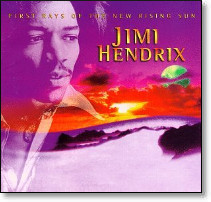
First Rays of the New Rising Sun was the only non-jazz
album on this week's list until Sunday, when ventured into a batch
of country albums in Robert Christgau's
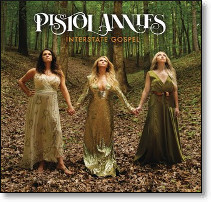
Expert Witness. I don't think the Pistol Annies album is as good
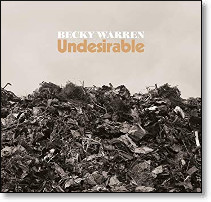
as he says, but figure it's good enough, as are the others (Becky Warren,
Mandy Barnett, and Robbie Fulks/Linda Gail Lewis -- the latter was an
A- here some weeks ago).
I haven't done an update of the
Christgau Consumer Guide database since late January: initially
because it's takes enough work I tend to put it off, but then I
suffered a one-two punch as first my local server than my public
server crashed. When I pulled the data back from archive, I ran
into a character set incompatibility that made it impractical to
update the database (i.e., there was no point changing anything
until the underlying problem was fixed). I floundered with it for
a while, then put it off, working on other things instead. Finally
I took another shot at it last week, and got to the root of the
problem (a hidden flag in the server-side export utility that I
hadn't run into before). Once I got a clean copy of the database,
I started adding in more recent reviews. I'm up through September
now, and will catch up in a couple days (maybe tonight).
I should be able to just update the database without reconciling
the entire website. Since the server crash, I've been doing limited
incremental updates every week (instead of waiting months, as was my
previous custom). There are tradeoffs: I could wind up forgetting
something, but I'm in the middle of a bunch of programming changes
because a lot of functions have been dropped from PHP 7 (which is
what I'm running locally, vs. PHP 5 on the public server). Until I
get all of those things fixed (hundreds of changes) I don't dare do
a full synch up. In the past I've always done database and website
file updates at the same time, but they are independent enough I
should be able to do each as needed. I guess we'll see.
New records rated this week:
- Richie Cole: Cannonball (2018, RCP): [cd]: B+(**)
- Andrew Cyrille: Lebroba (2017 [2018], ECM): [r]: B+(***)
- Josephine Davies: Satori (2016 [2017], Whirlwind): [r]: A-
- Josephine Davies' Satori: In the Corners of Clouds (2018, Whirlwind): [bc]: A-
- John Escreet: Learn to Live (2018, Blue Room): [r]: B+(*)
- David Hazeltine: The Time Is Now (2018, Smoke Sessions): [r]: B+(*)
- Fredrik Kronkvist: Kronicles (2017 [2018], Connective): [r]: B+(**)
- Chris Lightcap: Superette (2018, The Royal Potato Family): [bc]: B+(*)
- Donny McCaslin: Blow. (2018, Motéma): [r]: B+(*)
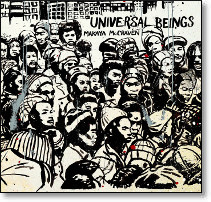
- Makaya McCraven: Universal Beings (2017-18 [2018], International Anthem): [r]: A-
- John O'Gallagher Trio: Live in Brooklyn (2015 ]2016], Whirlwind): [r]: B+(***)
- Pistol Annies: Interstate Gospel (2018, RCA Nashville): [r]: A-
- Nikita Rafaelov: Spirit of Gaia (2016-17 [2018], Gotta Let It Out): [cd]: B+(**)
- Rudy Royston: Flatbed Buggy (2018, Greenleaf Music): [r]: B+(**)
- Jerome Sabbagh/Greg Tuohey: No Filter (2017 [2018], Sunnyside): [r]: B
- Yuhan Su: City Animals (2018, Sunnyside): [r]: B+(**)
- Subtone: Moose Blues (2018, Laika): [r]: B+(*)
- Harry Vetro: Northern Ranger (2018, T.Sound): [cd]: B+(**)
- Cuong Vu 4Tet: Change in the Air (2017 [2018], RareNoise): [bc]: B+(**)
- Becky Warren: Undesirable (2018, self-released): [r]: A-
- Jeff Williams: Lifelike (2017 [2018[, Whirlwind): [r]: B+(***)
Recent reissues, compilations, and vault discoveries rated this week:
- Charlie Haden & Brad Mehldau: Long Ago and Far Away (2007 [2018], Impulse): [r]: A-
- Keith Jarrett: La Fenice (2006 [2018], ECM, 2CD): [r]: B+(*)
- Art Pepper: The Art Pepper Quartet (1956 [2017], Omnivore): [r]: A-
- Art Pepper: Unreleased Art Pepper Vol. 10: Toronto (1977 [2018], Widow's Taste, 3CD): [cd]: A-
Old music rated this week:
- Jimi Hendrix: First Rays of the New Rising Sun (1968-70 [1997], MCA): [r]: A-
- Joakim Milder: Ways (1990-92 [1993], Dragon): [r]: B+(*)
- Red Mitchell/Joakim Milder/Roger Kellaway: Live in Stockholm (1991 [1993], Dragon): [r]: B+(**)
- Art Pepper: Blues for the Fisherman: Unreleased Art Pepper Vol VI (1980 [2011], Widow's Taste, 4CD): [r]: A-
Unpacking: Found in the mail last week:
- The 14 Jazz Orchestra: The Future Ain't What It Used to Be (Dabon Music): January 1
- Anguish: Anguish (RareNoise): November 30
- Eraldo Bernocchi: Like a Fire That Consumes All Before It (RareNoise): advance, November 30
- Magnus Broo Trio: Rules (Moserobie)
- The Gil Evans Orchestra: Hidden Treasures Monday Nights: Volume One (Bopper Spock Suns Music): December 7
- Adam Forkelid: Reminiscence (Moserobie)
- David Friesen: My Faith, My Life (Origin, 2CD): November 16
- Thomas Marriott: Romance Language (Origin): November 16
- Joakim Milder/Fredrik Ljungkvist/Mathias Landraeus/Filip Augustson/Fredrik Rundkvist: The Music of Anders Garstedt (Moserobie)
- Jay Thomas With the Oliver Groenewald Newnet: I Always Knew (Origin): November 16
- Piet Verbist: Suite Réunion (Origin): November 16
- Aida Bird Wolfe: Birdie (self-released): November 15
Ask a question, or send a comment.
Tuesday, November 13, 2018
Weekend Roundup
When I went to bed around 5AM after Tuesday's elections, the Democrats
had won the House and beat Kris Kobach here in Kansas, but it seemed like
a lot of close elections had broke bad. I heard Wednesday that a couple
elections had flipped: Ned Lamont picked up the CT governorship, and more
importantly, Scott Walker lost in Wisconsin. Tester pulled out his Senate
seat in Montana. Nevada had looked promising on Tuesday, and firmed up,
while Arizona got close, and even started to lean toward Democrat Krysten
Sinema. Florida tightened up.
Still, could (should) have been better. Compared to 2014 and 2018, the
Democrats did much better on several counts: they ran better candidates
and contested more seats; and they did a better job of getting out their
vote. Trump didn't get a popular opinion honeymoon after he took office.
He was deeply offensive to most Democrats from the start, and everything
he did prodded them to resist more fervently. That's what motivated people
to run, to campaign, to organize, and ultimately to vote, and often to
win -- although even some of the losses, like Beto O'Rourke in Texas, or
Stacey Abrams in Georgia, were close enough they seemed like progress.
On the other hand, Trump and the Republicans haven't lost much ground.
They've done a lot of things that in themselves are very unpopular --
the big corporate tax cut, for instance, and they dodged blame for ACA
repeal only by failing to pass it -- but their base has held firm, they
still have a lot of money, a strong captive media, and a very effective
ground game. Of course, it helped that the economy hasn't capsized yet,
that their reckless foreign policy hasn't led to major wars, that their
corporate deregulation hasn't produced major disasters yet, and that
only a few of their corrupt minions have been convicted or indicted.
On the other hand, their global warming denialism is beginning to wear
thin with major hurricanes and an unprecedentedly horrific fire season.
Branch Rickey used to say that luck is the residue of design. Trump's
political designs are so faulty that it's unlikely his luck will hold.
On the other hand, he did something in 2018 that Obama had failed to
do in 2014 and 2010, which is that he campaigned relentlessly for his
party in the months and weeks leading up to the election -- indeed, he
never really stopped campaigning after 2016. He hasn't been all that
effective, mostly because he isn't really very popular, but he did keep
his base enthused, and (unlike in 2006, when everyone was sick and tired
of Bush and Cheney) he got his base out to vote. It's going to take a
lot of hard work to get enough people to realize how harmful Republicans
are to most people's interests. And expect a lot of noise and distraction
from Fox and friends along the way: the "caravan" story was as good an
example of truly fake news as you can imagine. Hard to say whether how
much it helped Republicans, but it sucked a lot of air from broadcast
news during the last few weeks.
Democracy took a step forward last Tuesday. A small one. Hopefully
the first of many.
Quick election results recap:
US Senate: Republicans gained two seats, for a 51-46 edge, with
3 undecided: Mississippi (runoff, R favored), Florida (R +13k), Arizona
(D +33k [since I wrote this called for the Democrat]), so it will probably
wind up 53-47 (counting Sanders and King
with the Democrats). Only one-third of the Senate's seats are up for
election each two years, and this year the Democrats were much more
vulnerable (after exceptionally strong showings in 2006 and 2012). To
put the net losses of 2-4 seats in perspective, Democrats won (counting
AZ but not FL/MS) 24 seats to the Republicans' 10. Democrats won 57.4%
of the Senate vote, vs. 41.0% for Republicans. This split was inflated
because both of California's "top two" primary winners are Democrats.
All four (counting FL) Republican pickups were in states Trump won --
3 by 10+ points, 2 against Democrats who won in 2012 after Republicans
nominated especially controversial "Tea Party" candidates. On the other
hand, Democrats won 7 Senate seats (counting AZ) in states carried by
Trump, plus defeated a Republican incumbent in a state Trump lost (NV).
US House of Representatives: Democrats gained 32 seats, with 10
still undecided, for a current 227-198 advantage. Democrats received
51.4% of the popular vote, vs. 46.7% for Republicans, for a margin of
4.7%.
Governors: Democrats gained 7, giving them 23; Republicans lost
6 (assuming FL and GA go Republican; the difference is that Republicans
picked up previously independent Alaska). Popular vote favored Democrats
49.4-48.2%, as state races were less polarized than Congressional ones
(e.g., Republicans won easily in MA, MD, and VT). Democrats gained: ME,
MI, WI, IL, KS, NM, and NV. Republicans gained AK.
538: What Went Down in the 2018 Midterms: Live blog until they got
tired and signed off.
538: The 2018 Midterms, in 4 Charts.
Some scattered links this week:
Matthew Yglesias: Trump voters stood by Trump in the midterms -- but there
just aren't enough of them: Trump was elected president in 2016 with
just 46% of the vote. Republicans got about the same 46% of the vote in
the 2018 congressional elections, so a cursory analysis suggests that they
held their own, while everyone else (including independent voters for Jill
Stein and Gary Johnson) joined the Democrats. Probably not that simple:
Republicans did better than 46% in 2016 congressional races, so they lost
that edge this year. In particular, they lost ground in the Rust Belt and
in the Latino Belt from Texas through Arizona and Nevada to California,
while they hung on more effectively in a swath from Florida up to Idaho.
Other Yglesias pieces:
The 2018 electorate was older, whiter, and better educated than in
2016: "Democrats hit some of their GOTV targets but missed others."
OK, but isn't the relevant comparison 2014 to 2018? Turnout was up
for a midterm (2018 and 2014), but down from the presidential election
(2016). From 2016 to 2018, 18-39 turnout was -7,but from 2014 to 2018,
it was +4. White was +2 vs. 2016, but -3 vs. 2014.
Matthew Whitaker's appointment is the latest Trump Tax the GOP is paying:
"A nominee whose only qualification is his unfitness."
Matthew Whitaker is, by any standard, a wildly unsuitable choice to serve
as Attorney General of the United States.
He's a small time crook who finished fourth in the Iowa GOP Senate
primary back in 2014. He apparently got his job as Chief of Staff in the
Justice Department because Trump liked his TV hits, experience that would
at best qualify him to one the DOJ's chief spokesperson not to be chief
of staff and certainly not to run the Justice Department. Meanwhile,
Kellyanne Conway's husband, a prominent Washington attorney, says
Whitaker's appointment is illegal.
The point, however, is that in a normal administration the question
of legality would simply never arise here. The Justice Department is full
of competent, professional, Senate-confirmed officials who would be more
suitable than Whitaker on both substance and procedural grounds. It's
commonplace in liberal circles to see Whitaker as an inappropriate
selection in light of his previous comments about Robert Mueller's
investigation, but the truth is the Mueller issue is his only conceivable
qualification for the job. Trump's problem with the senior staff at the
Justice Department is he has no way of knowing whether or not they share
with Jeff Sessions and Ron Rosenstein a reluctance to fatally compromise
the rule of law in pursuit of Trump's personal self-interest.
House Democrats must resist Trump's infrastructure trap.
House Democrats must resist Trump's infrastructure trap.
The tragedy of Amazon's HQ2 selections, explained: After announcing
they'd like to auction off the location of a second headquarters site,
they've evidently settled on two winners: one in Virginia's DC suburbs,
the other in Long Island City, Queens, New York. Lots of problems.
Matt Whitaker suggested the attorney general might keep Robert Mueller's
conclusions secret forever.
Debbie Stabenow reelected to the Senate.
Ned Lamont elected governor of Connecticut.
Trump's bizarre post-election press conference, explained.
But shocking as it was in its way, it confirmed what we know about Trump.
He is shameless, relentlessly dishonest, poorly informed about policy,
disrespectful of the norms and principles of constitutional government,
and fundamentally dangerous. He also continues to benefit from a benign
economic situation and from a lack of crises abroad that make a serious
impact on the typical American. For all of our sakes, we'd better hope
that holds up because he does not appear to have the capacity to respond
in a remotely appropriate way to any kind of adversity. . . .
The price of this sort of conduct has already been high. An island
destroyed, a wave of Trump-inspired bombings, a needless destabilization
of relations with key allies, and a growing diminution of the standards
of conduct that we accept for public officials. But for most Americans,
day-to-day life has proceeded apace and that's put a floor under Trump's
approval ratings that's been good enough to keep the whole Republican
Party afloat given gerrymandering and a skewed Senate map. Losing the
House would be a wake-up call for a normal president, but there is no
waking up Trump -- only the hope that nothing goes too badly wrong while
he lasts in office.
Tammy Baldwin reelected to US Senate: a progressive champion wins in
Wisconsin.
Sherrod Brown reelected to US Senate: old-time labor liberalism triumphs
over Ohio's rightward drift.
Why Stacey Abrams isn't conceding yet.
4 winners and 2 losers from the 2018 midterm elections: Winners:
"the favored quarter backlash"; Donald Trump; "the blue wall"; gerrymandering.
Losers: Taylor Swift; "the live models." The explanation on Trump:
And while losing the House is the death knell for the Republican Party's
legislative agenda, Trump himself has rarely seemed to care that much
about the GOP legislative agenda. Indeed, the death of the GOP legislative
agenda could even be good news for Trump politically since much of that
agenda was toxically unpopular. An expanded majority in the Senate,
meanwhile, will let Trump do things he actually cares about, like replace
Cabinet members and other executive branch officials who've displeased
him, while continuing to keep the judicial confirmation conveyor belt
that's so important to his base moving.
The lesson of the midterms: resistance works.
Radley Balko: Jeff Sessions, the doughty bigot:
Jeff Sessions's final act as attorney general was perfectly on-brand.
On the way out of office, he signed an order making it more difficult
for the Justice Department to investigate and implement reform at police
departments with patterns of abuse, questionable shootings, racism, and
other constitutional violations. Sessions once called such investigations --
like those that turned up jaw-dropping abuses in places such as Ferguson,
Mo., Baltimore and Chicago -- "one of the most dangerous, and rarely
discussed, exercises of raw power." He has had only cursory criticism of
the horrific abuses actually described in those reports (which he later
conceded he sometimes didn't bother to read), which disproportionately
affect blacks and Latinos. For Sessions, it is the federal government's
investigation of such abuses that amounts to not just an unjustified
"exercise of raw power," but a "most dangerous" one.
Bob Bauer: An Open-and-Shut Violation of Campaign-Finance Law.
Jonathan Blitzer: Jeff Sessions Is Out, but His Dark Vision for Immigration
Policy Lives On.
James Carroll: Entering the Second Nuclear Age?: With his withdrawal
from the INF treaty with Russia, and with big plans to renovate and rebuild
America's nuclear arsenal, "Donald Trump welcomes the age of "usable" nuclear
weapons." Also at
TomDispatch:
Michael Klare: On the Road to World War III?.
William Hartung: The pentagon's Plan to Dominate the Economy:
Industrial policy should not be a dirty word. The problem is: the
Pentagon shouldn't be in charge of it. The goal of an effective
industrial policy should be to create well-paying jobs, especially
in sectors that meet pressing national needs like rebuilding America's
crumbling infrastructure and developing alternative energy technologies
that can help address the urgent dangers posed by climate change.
Tom Engelhardt: Autocrats, Incorporation: Thoughts on Election Day 2018.
Arnold Isaacs: Misremembering Vietnam: Alt title: "Making America's
Wars Great Again: The Pentagon Whitewashes a Troubling Past."
The cliché that our armed forces are the best and mightiest in the world --
even if the U.S. military hasn't won any of its significant wars in the
last 50 years -- resonates in President Trump's promise to make America
great again. Many Americans, clearly including him, associate that slogan
with military power. And we don't just want to be greater again in the
future; we also want to have been greater in the past than we really were.
To that end, we regularly forget some facts and invent others that will
make our history more comfortable to remember.
Rory Fanning: Will the War Stories Ever End? Author of a book of his
own war stories, Worth Fighting For: An Army Ranger's Journey Out of
the Military and Across America (2014, Haymarket Books).
Maureen Dowd: Who's the Real American Psycho? A look back at Dick
Cheney, occasioned by the screening of a new movie called Vice.
As for the "psycho" question, such things take time and perspective.
If you got sick eight years ago and got sick again now, you won't be
able to make meaningful comparisons until (and if) you survive and
recover. Between Trump ("a frothing maniac with a meat cleaver") and
Cheney ("a professional assassin") the latter may still in theory be
the more menacing, but the threat right now is so immediate and so
open-ended that it's the one you have to deal with right now. Dowd,
by the way, also recently wrote this clever piece on Saudi Arabia:
Step Away From the Orb:
Our Faustian deal was this: As long as the Saudis kept our oil prices
low, bought our fighter jets, housed our fleets and drones and gave us
cover in the region, they could keep their country proudly medieval.
It was accepted wisdom that it was futile to press the Saudis on the
feudal, the degradation of women and human rights atrocities, because it
would just make them dig in their heels. Even Hillary Clinton, as secretary
of state, never made an impassioned Beijing-style speech about women in
Saudi Arabia being obliterated under a black tarp.
Atul Gawande: Why Doctors Hate Their Computers: Fairly long piece on
computerized medical records, which should be great to have but are a lot
of work to maintain, and the slacker and sloppier you get about that, the
less great they are. First point I take from this is that there is a lot
of real work to be done to make the health care system work better beyond
the obvious advantages of single-payer insurance -- something that tends
to be forgotten in that argument. Gawande identifies several problems with
the software, ranging from its impact on focus and communication to the
increasing brittleness of sprawing code systems. One thing worth exploring
is how open source might help, but you also have to look at how to finance
development and support. Another dimension is the increasing use of AI. I
believe that the only way to build trust in complex software is through
open source, but what's needed can't be developed as a free hacker hobby.
Masha Gessen: After the White House Banned Jim Acosta, Should Other Journalists
Boycott Its Press Briefings? Also:
Margaret Sullivan: Words and walkouts aren't enough> CNN should sue Trump
over revoking Acosta's press pass.
Adam Hochschild: A Hundred Years After the Armistice: Due to the world's
fascination with round numbers, I'm reminded that our Nov. 11 Veterans Day
originally started as Armistice Day, marking the end of what was then called
the Great War but was soon eclipsed, now better known as World War I. A date
that should remind all how precious peace is has since become a celebration
of American militarism, as we thank the hapless soldiers and gloss over the
politicians who put them in harm's way. One could write reams about that war,
and indeed its centennary has brought dozens of new books out. Hochschild
wrote one I read back in 2011: To End All Wars: A Story of Loyalty and
Rebellion, 1914-1918, which focused on anti-war resisters in Britain
(like Bertrand Russell -- as close to a hero as I ever had). The tag line
on this piece is: "If you think the First World War began senselessly,
consider how it ended." He recounts several stories of how allied generals
(especially Americans, notably including white commanders of negro troops)
continued to launch offensives after the armistice was agreed to up to
the moment (11AM) it was to take effect, resulting in thousands of
avoidable casualties. He also notes, in less depth, the insistence of
French general Foch on making the armistice as punitive as possible,
leaving a "toxic legacy" that lead to a second world war. Many more
books have been written about the post-armistice Versailles Treaty,
like Arno Mayer's massive Politics and Diplomacy of Peacemaking,
but the best title to date is David Fromkin's A Peace to End All
Peace. The excessively punitive Versailles Treaty is now widely
acknowledge as a cause of WWII. (Arno Mayer has referred to the two
World Wars as 30 Years War of the Twentieth Century.) More important
in my mind is that Versailles failed to repudiate imperialism. In fact,
Britain, France, Italy, and Japan extended their empires through war,
especially whetting the appetites of the latter, while leaving Germany
and others convinced that they needed to enlarge themselves to compete
with the rich nations. By the way,
Josh Marshall recommends The Vanquished: Why the First World
War Failed to End.
Another interesting piece on the war:
Patrick Chovanec: World War I Relived Day by Day.
Fred Kaplan: Could House Democrats Cancel the Pentagon's Blank Check?
Perhaps, but it would take uncommon discipline, given that more than a
few Democrats are deficit hawks and/or Pentagon Keynesians. Given narrow
margins (and the absence of anything like the "Hastert Rule" for Democrats),
Republicans could try to forge opportunistic alliances with either group.
One thing for sure is that House Democrats won't be able to raise taxes,
so there's very little they can do about deficits. On the other hand,
spending bills originate in the House, so with a little discipline they
can keep important programs funded and cut useless and even damaging
ones. But, as I said, that's not something they've ever been much good
at.
Kaplan also wrote:
Trump Retreats From the West: "The president's performance in Paris
was a stunning abdication of global leadership." That sounds like good
news to me -- not to deny that Trump did it pretty ugly. Maybe Trump
was peeved at this:
Macron denounces nationalism as a 'betrayal of patriotism' in rebuke
to Trump at WWI remembrance. Then,
Trump skipped a US cemetery visit abroad. The French army trolled him for
avoiding the rain. But the fact is, Trump's "America First" fetish
doesn't leave him much to offer the rest of the world -- where, as in
everyday life, generosity is appreciated and peevishness scorned. On the
other hand, for many years now US administrations have done little that
actually helps either people abroad or at home that we'd all be better
off if the US (especially its military) would back away. For more on
Trump's Paris trip, see
Jen Kirby: The controversies of Trump's Paris trip, explained.
Paul Krugman: What the Hell Happened to Brazil? (Wonkish): "How did
an up-and-coming economy suffer such a severe slump?"
Robert Kuttner: The Crash That Failed: Review of the latest big book
on the 2008 financial collapse, the "great recession" that followed, and
various government efforts to clean up the mess: Adam Tooze's Crashed:
How a Decade of Financial Crises Changed the World. Interesting
sidelight of an illustration:
William Powhida: Griftopia, based on Matt Taibbi's book.
Dara Lind: The asylum ban -- Trump's boldest immigration power grab yet --
explained.
Mark Mazzetti/Ronen Bergman/David D Kirkpatrick: Saudis Close to Crown
Prince Discussed Killing Other Enemies a Year Before Khashoggi's Death.
Bill McKibben: A Very Grim Forecast: On Global Warming of 1.5°C: An
IPCC Special Report.
Yascha Mounk: Is More Democracy Always Better Democracy? Noted for
future reference, no agreement implied. Author of a recent centrist
manifesto: The People vs. Democracy: Why Our Freedom Is in Danger &
How to Save It. Reviews Frances McCall Rosenbluth: Responsible
Parties: Saving Democracy From Itself (2018) -- arguing: "the
most important ingredient of a functioning democracy . . . is strong
political parties that can keep their rank-and-file members in check" --
and looks back to Marty Cohen/David Karol/Hans Noel/John Zaller: The
Party Decides: Presidential Nominations Before and After Reform
(2008). Mounk's prime example of "too much democracy" was the 1972
nomination and loss of George McGovern, although for a token example
Republican he cites Mark Sanford's primary loss to a Trump zealot (who
last week lost Sanford's SC district). The main problem with Mounk's
thesis is that organizations which lack effective democratic oversight
almost inevitably wind up putting their leaders' elite interests ahead
of their voters. At least with McGovern's Democratic Party reforms,
the party was able to nominate a presidential candidate who reflected
the majority view among rank-and-file Democrats to quit the Vietnam
War. That sounds more to me like an example of democracy working --
especially more than 2016, when the party elites prevailed in picking
a candidate who was even more unpopular. (Sure, Hillary Clinton polled
better than McGovern, but consider her opponent.) As for the Republicans,
you can fault their rank-and-file for favoring someone as odious as
Donald Trump, but at least the limited democracy Republicans practice
saved them from the party elites nominating Jeb Bush.
Rachel Withers: Trump responds to worst fires in California's history
by threatening to withhold federal aid. Also on the fires:
Robinson Meyer: The Worst Is Yet to Come for California's Wildfires; also
Umair Irfan: California's wildfires are hardly "natural" -- humans made
them worse at every step.
Benjamin Wittes: It's Probably Too Late to Stop Mueller: The
morning after the election, Trump fired Attorney General Jeff
Sessions and installed Matthew Whitaker as acting AG, making it
easier for Trump to terminate Robert Mueller's prosecution of
Trump-Russia issues. Wittes takes stock:
Eighteen months ago, I said, President Donald Trump had an opportunity
to disrupt the Russia investigation: He had fired the FBI director and
had rocked the Justice Department back on its heels. But Trump had
dithered. He had broadcast his intentions too many times. And in the
meantime, Mueller had moved decisively, securing important indictments
and convictions, and making whatever preparations were necessary for
hostile fire. And now Democrats were poised to take the House of
Representatives. The window of opportunity was gone.
In the 48 hours since Trump fired Jeff Sessions and installed Matthew
Whitaker as acting attorney general, I have had occasion to wonder whether
I was being overly optimistic a week ago. Whitaker is the kind of bad
dream from which career Justice Department officials wake up at night in
cold sweats. He's openly political. The president is confident in his
loyalty and that he won't recuse himself from the investigation --
notwithstanding his public statements about it and his having chaired the
campaign of one of the grand-jury witnesses. There are legal questions
about his installation at the department's helm. And he's known as the
White House's eyes and ears at Justice.
By the way:
Jerome Corsi says Mueller will soon indict him for perjury.
Finally, some more election-related links:
Alleen Brown: Pipeline Opponents Make Gains in Midterms as Federal Judge
Halts Keystone XL Pipeline.
John Cassidy: Weekend Reading: From the Midterms to Matthew Whitaker
and Stormy Daniels; he also wrote:
Make No Mistake, the Midterm Elections Were a Democratic Victory and a
Rebuke of Trump..
Rachel M Cohen: Progressives Win on Medicaid Expansion, Public Education,
and Voting Rights Through Ballot Initiatives.
David Dayen: Democrats Who Voted to Deregulate Wall Street Got Wiped Out
in a Setback for Bank Lobbyists.
Andrew Gelman: Why the 2018 Midterms May Have Been Bluer Than You
Think.
David A Graham: Why Trump Is the Favorite in 2020.
Shaun King: Why It's a Big Deal That Four Black Candidates Won Their
State Attorney General Races: In Illinois, Minnesota, Nevada, and
New York.
Paul Krugman: Real America Versus Senate America: "Some of us are more
equal than others, and they like Trump."
Aaron Mak: A Black Security Guard Caught a Shooting Suspect. Police Arrived --
and Killed the Guard.
Jane Mayer: Is Kris Kobach's Defeat in Kansas a Model for How to Beat
Trumpism? Not really. First point is that Kobach was a really awful
candidate, to the point that he was a public embarrassment, and quite
a few Republicans realized that he would continue to hurt the party as
long as he held office. (The list of Republicans who endorsed Kelly ran
over 100.) Second point is that Kelly campaigned almost exclusively
against the Brownback legacy in the state, whereas Kobach hung his
campaign almost exclusively on Trump's coattails. Personally, I thought
Kelly missed an opportunity there as Kobach is objectively worse than
Brownback ever was, but she clearly didn't want to campaign against
Trump in Kansas, and in the end she didn't have to. The downside of
not lumping all of the Republicans together is that she had almost no
coattails: the Democrats picked up one House seat, but they won no
other state offices (despite having a strong Secretary of State
candidate running for Kobach's old office). The state house is still
solid Republican, and Kelly won't be able to legislate anything that
the R's don't go for (she'll even have trouble sustaining vetoes).
Not that we aren't happy with her win (and his loss, but he'll still
be around, winding up with a Trump Admin job somewhere, and then go
on do bad movement law work, even after he gets debarred.) Democrats
can't depend on R's nominating candidates as inept and obscene as
Kobach (although Trump is in that league). And Democrats have a lot
of work to do to become a majority party here.
Cas Mudde: Don't be fooled. The midterms were not a bad night for
Trump. Key line: "Trump's biggest victory, however, was within
the Republican party. . . . Trump has shaped the Republican party
in his image instead."
Alex Pareene: Political power never lasts. Democrats need to use theirs
while they have it.
Steve Phillips: Do the Math. Moderate Democrats Will Not Win in 2020.
Author of a book, Brown Is the New White: How the Demographic Revolution
Has Created a New American Majority -- somewhat premature, as shown
by his focus on candidates who came close but (evidently) lost: Andrew
Gillum, Stacey Abrams, Beto O'Rourke.
Andrew Romano: Want to Beat Trump in 2020? Look at Sherrod Brown's
Big Win in Ohio.
Jennifer Rubin: What Democrats' big win in Arizona means. Rubin
also wrote:
Trump is cracking. I do take exception to Rubin's complaint about
Trump's "great North Korea diplomacy . . . (He was snookered.)" I don't
have time to track down the many things wrong with the NY Times piece
that claims North Korea has reneged on their promises to Trump, but
the real problem there is that Trump's has allowed people like John
Bolton to set requirements and expectations meant to sabotage any sort
of resolution.
Amy Davidson Sorkin: The Post-Midterms Dangers of Donald Trump. She
also wrote:
Donald Trump's Final, Bitter Rallies.
Jon Schwarz: Democrats Should Remember Al Gore Won Florida in 2000 -- but
Lost the Presidency With a Preemptive Surrender.
Nate Silver: The 2018 Map Looked a Lot Like 2012 . . . and That Got Me
Thinking About 2020.
Kay Steiger, et al.: The Arizona, Florida, and Georgia election recounts,
explained: Two Senate races: in Arizona, the Democrat is ahead by
21,000 votes (according to this article, but the
NY Times is now reporting a Democratic lead of almost 33,000); in
Florida, the Republican by 13,000.
Two Governors races: in Florida, the Republican leads by 34,000, and in
Georgia the Republican by 63,000, but a runoff election could be mandated
if the recount drops the Republican to under 50%.
Matt Taibbi: Forget 'Conventional Wisdom': There Are No More Moderates:
I share his reluctance to cater to self-appointed centrists who insist
that Democrats have to show their moderation by adopting positions that
can only be described as "Republican-lite," but the fact is that even
the "democratic wing of the Democratic Party" are pretty damn moderate
in their wildest dreams (universal health care, free public education,
world peace, civil rights, voting rights, labor unions, basically things
that most of the economically advanced world take for granted). Also by
Taibbi:
Bernie Sanders Opens Up About New Democrats in Congress, Taking on
Trumpism, and
Far Too Many House Seats Have Been Uncontested for Too Long.
Ruy Teixeira: The midterms gave Democrats clear marching orders for
2020.
Matthew Zeitlin: Trump Has Something New to Blame for a Sluggish Stock
Market: "Presidential Harassment": There's always an explanation
that doesn't involve reality.
Li Zhou: Kyrsten Sinema is the first Democrat to win an Arizona Senate
seat in 30 years.
Ask a question, or send a comment.
Monday, November 5, 2018
Music Week
Music: current count 30559 [30524] rated (+35), 292 [293] unrated (-1).
October's
Streamnotes came out last
week. Four of the week's A- records made it into that column. Three of
those had been pick hits in Robert Christgau's
Expert
Witness columns.
By the way, there is a new batch of
XgauSez on
Christgau's website.
More things I'd like to write about here, but absolutely no time
to do so. I'm exhausted after
Weekend
Roundup once again took much too long to write, while once
again I wound up not getting to scads of material worth reading.
In particular, I wanted to say something about Downbeat's
Readers Poll, which suggested some of the recent records this
week. Also about my nephew's birthday dinner, which I'm afraid
puts my own recent efforts to shame.
New records rated this week:
- Eric Alexander: Song of No Regrets (2017, High Note): [r]: B+(**)
- Joey Alexander: Joey. Monk. Live! (2017, Motéma): [r]: B
- Joey Alexander: Eclipse (2017 [2018], Motéma): [r]: B+(**)
- The Bottle Rockets: Bit Logic (2018, Bloodshot): [r]: B+(*)
- Don Byron/Aruán Ortiz: Random Dances and (A)tonalities (2017 [2018], Impakt): [cd]: B+(***)
- François Carrier/Michel Lambert/John Edwards: Elements (2015-16 [2018], FMR): [cd]: A-
- The Chick Corea + Steve Gadd Band: Chinese Butterfly (2017 [2018], Stretch/Concord, 2CD): [r]: B+(*)
- David Dominique: Mask (2018, Orenda): [cd]: C
- Kurt Elling: The Questions (2017 [2018], Okeh): [r]: B-
- Michael Formanek Elusion Quartet: Time Like This (2018, Intakt): [cd]: B+(**)
- Hamell on Trial: The Night Guy at the Apocalypse: Profiles of a Rushing Midnight (2018, Saustex): [r]: B+(*)
- Idles: Joy as an Act of Resistance (2018, Partisan): [r]: B+(***)
- Jazz at Lincoln Center Orchestra With Wynton Marsalis: Handful of Keys (2016 [2017], Blue Engine): [r]: B+(**)
- Maria Muldaur: Don't You Feel My Leg: The Naughty, Bawdy Blues of Blue Lu Barker (2018, The Last Music Company): [r]: A-
- Riton & Kah-Lo: Foreign Ororo (Riton Time): [r]: A-
- Esperanza Spalding: 12 Little Spells (2018, Concord): [r]: B-
- Tropical Fuck Storm: A Laughing Death in Meatspace (2018, Tropical Fuck Storm/Mistletone): [bc]: B+(**)
- Colter Wall: Songs of the Plains (2018, Young Mary's): [r]: B+(**)
Recent reissues, compilations, and vault discoveries rated this week:
- Dexter Gordon Quartet: Espace Cardin 1977 (1977 [2018], Elemental Music): [r]: B+(***)
- Jimi Hendrix: Both Sides of the Sky (1968-70 [2018], Legacy): [r]: B+(**)
- I'm Not Here to Hunt Rabbits ([2018], Piranha): [r]: A-
- Woody Shaw/Louis Hayes: The Tour: Volume One (1976 [2016], High Note): [r]: A-
- Woody Shaw/Louis Hayes: The Tour: Volume Two (1976 [2017], High Note): [r]: B+(***)
Old music rated this week:
- One for All: Too Soon to Tell (1997, Sharp Nine): [r]: B+(*)
- Woody Shaw: Live Volume One (1977 [2000], High Note): [r]: B+(***)
- Woody Shaw: Live Volume Two (1977 [2001], High Note): [r]: B+(**)
- Woody Shaw: Live Volume Three (1977 [2001], High Note): [r]: B+(*)
- Woody Shaw: Live Volume Four (1981 [2005], High Note): [r]: B+(***)
- Sarah Vaughan: After Hours (1961, Roulette): [r]: B+(***)
- Sarah Vaughan: The Best of Sarah Vaughan [20th Century Masters: The Millennium Collection] (1954-66 [2004], Hip-O): [r]: B-
- Sarah Vaughan: Live in Japan: Volume 1 (1973 [1991], Mainstream): [r]: B+(**)
- Sarah Vaughan: Live in Japan: Volume 2 (1973 [1991], Mainstream): [r]: B+(**)
Unpacking: Found in the mail last week:
- Big Bold Back Bone: In Search of Emerging Species (Shhpuma)
- Big Bold Back Bone: Emerge (Wide Ear)
- Collective Order: Collective Order Vol. 3 (self-released): November 23
- Julien Desprez/Luís Lopes: Boa Tarde (Shhpuma): cdr
- LFU: Lisbon Freedom Unit: Praise of Our Folly (Clean Feed)
- Ernesto Rodrigues/Guilherme Rodrigues/Bruno Parrinha/Luís Lopes/Vasco Trillo: Lithos (Creative Sources)
Ask a question, or send a comment.
Monday, November 5, 2018
Weekend Roundup
Last pre-election post. One measure of the impact of elections is
that I've been writing about 50% more on politics since Trump and the
Republicans won big in 2016, as compared to the previous four years
under Obama. And it's not like I didn't have things to complain about
with Obama -- although I wrote much more then about foreign affairs
and wars, including a lot on Israel (which hasn't in any way changed
for the better with Trump, but has been crowded out of consciousness).
And the fact is, the ratio would be even greater if I had the time and
patience to dig through everything that matters.
One thing I learned long ago is that elections don't fix problems,
but if they go the wrong way they can make many of our lives worse off.
You can't expect that the people you elect will do good things with
their power -- in fact, power doesn't make anyone a better person --
but you can at least try to weed out the ones you know better than.
I can't really blame people who thought they were doing us a favor
in 2016 by retiring Hillary Clinton. I could have written a long book
on why she should never have been considered for president, so I'm
not surprised that many other people didn't like or trust her. Of
course, that doesn't justify them voting for Trump. Elections are
almost always about "lesser evils," and it helps to weigh them out
carefully, even to lean a bit against your prejudices. While it was
easy to see why people might think Hillary "crooked," you have to
flat-out ignore tons of evidence to judge Hillary more crooked than
Trump. Nor was that the only dimension: build a list of any trait
you might think matters in a president, and if you're honest about
the evidence, Trump will lose out to her. Electing him was a glaring
lapse of judgment on the part of the American people.
Nor was it their first. My first election was 1972, when we had
the change to elect one of the most fundamentally decent people who
ever ran for high office, but by a large margin the American people
preferred Dick Nixon. Given that Nixon was even less of an unknown
than Reagan, the Bushes, or Trump, that's a pretty damning reflection
on the American people. I've regularly been disappointed by elections.
After my 1972 experience, I didn't vote again until 1996, when I was
living in Massachusetts but couldn't ignore the opportunity to vote
against Bob Dole (who was second only to Nixon among the villains I
voted against in 1972 -- people forget what a rat bastard he was in
his first couple of terms).
Still, worse than Trump's election in 2016 was the Republicans
seizing complete control of Congress. Not only did this make Trump
much more dangerous, it shows that voters haven't fully realized
the monolithic threat that Republicans represent. I think a lot of
the blame here belongs to Obama and the Clintons, who pursued their
presidential campaigns with scant concern for the welfare of the
rest of the party, largely by not leading the public to understand
what Republicans were up to. In particular, Clinton focused her
campaign on picking up Trump-averse Republicans in the suburbs with
little concern for Trump-attracted working class Democrats. When
the 2016 returns came in, Republicans who didn't particularly like
Trump still voted for him due to party loyalty, as did independents
who for various reasons (deplorable and sometimes not) happened to
like Trump.
Even now, when I meet up with Democrats, they're more likely to
want to talk about who they like for president in 2020 than winning
Congress here and now. My answer is simple: whoever works hardest
to put the party ahead of themselves, but no Democratic president
is going to be worth a damn without a solid partisan base. I've
never been a diehard Democrat, but Republicans have left us no
other choice.
I wouldn't call these links recommendations, but here's a brief list of
things I'm looking at to get a feel for the current elections:
FiveThirtyEight: Forecasting the race for the Senate: Since I started
writing this, odds for a Democratic takeover have improved from 1/7 to 1/5.
This is because the Republican lean in North Dakota against Heidi Heitkamp
has narrowed a bit, and Arizona and Nevada have tipped just barely to the
Democrats (+1.6 in AZ, +0.9 in NV). Marginal Democratic incumbents in
Missouri, Indiana, and Florida remain with very leads (+1.7, +3.7, +3.0).
The other Democratic seats most at risk are Montana (D+5.2) and West Virginia
(D+7.5). If all this falls as predicted, the actual change is D+1, which
would leave the Senate in a 50-50 tie (to be decided by VP Mike Pence).
In order for the Democrats to take over, they'd have to win one of: North
Dakota (Heitkamp is -5.0%, but six years ago she was the only unpredicted
winner), Texas (R+4.5), Tennessee (R+5.5), or Mississippi (Democrat Mike
Espy leads but with 41.4% would face a runoff against a white Republican,
probably Cindy Hyde-Smith). No other Republican seats are anywhere near
vulnerable.
FiveThirtyEight: Forecasting the race for the House. Again, over
the last few days, chances for the Democrats to gain control have risen
from 6 in 7 to 7 in 8, with an average gain predicted at +39 seats.
Democrats are leading in two KS races (KS-3 D+6.6, KS-2 D+1.8; they're
showing KS-4, my own district, as R:+19.4, which strikes me as way too
much).
Nate Silver: Final Election Update: Democrats Aren't Certain to Take the
House, but They're Pretty Clear Favorites.
FiveThirtyEight: Forecasting the races for governor: Closest race
is Nevada (D+0.1), followed by Iowa (D+0.8), Kansas (R+1.3), Ohio (D+1.5),
Wisconsin (D+1.7), Georgia (R+2.2), South Dakota (R+2.5), Alaska (R+4.0),
Florida (D+4.2), Connecticut (D+5.1), Oregon (D+6.5), Oklahoma (R+7.2),
New Hampshire (R+8.7), New Mexico (D+9.4), Michigan (D+9.7).
Perry Bacon Jr: Election Update: Democrats Are Likely to Make Big Gains
in Governors Races: One note here is that 538's models have a split
decision in Kansas: D+0.5, R+1.3, R+0.8.
Nathaniel Rekich: How to Watch the Midterms: An Hour-by-Hour Guide:
When the polls close in each state, and what key races are likely to
be reported shortly thereafter.
Stavros Agonakis/Scott: The 13 most important governor elections in 2018,
briefly explained: Nevada, Georgia, Kansas, Wisconsin, Ohio, South
Dakota, Iowa, Oregon, Florida, Maine, New Mexico, Connecticut,
Alaska.
Ella Nilsen: The 16 most interesting House races of 2018: Incumbents
noted, all endangered R: IA-4 (Steve King), CA-45 (Mimi Walters), WV-4, KS-3
(Kevin Yoder), KY-6 (Andy Barr), VA-10 (Barbara Comstock), VA-7 (Dave Brat),
CO-6 (Mike Coffman), IL-14 (Randy Hultgren), MN-3 (Erik Paulsen), NY-19
(John Faso), TX-7 (John Culberson), NE-2 (Don Bacon), PA-1 (Brian Fitzpatrick),
OH-1 (Steve Chabot), FL:26 (Carlos Curbelo).
Dylan Scott: The 10 most important Senate elections, briefly explained:
Arizona, Indiana, Nevada, Missouri, Florida, Montana, Texas, Tennessee, West
Virginia, North Dakota.
Dylan Scott: The 9 most important state legislature elections in 2018,
explained: Colorado, Minnesota, New York, Maine, Wisconsin, New
Hampshire, Arizona, Florida, Michigan.
Silver's piece above mentions a number of historical and current
trends, and how they weigh on the elections. Obviously, one reason
people are leery about predicting big Democratic gains is that Trump
in particular and Republicans in general did better in 2016 than the
polls suggested. That has people worried that Republicans are being
systematically undercounted, and we won't know if that's the case
until the votes are counted. Could just be a statistical fluke with
no relationship to past or future elections. To the extent that any
correction needed to be made, it's likely that pollsters have done
that already. My own view is that Republicans have developed a very
effective get-out-the-vote system, which Democrats (except for Obama,
and then mostly for himself) never matched. (Clinton was especially
lax in that regard.)
My own reservations about the Democrats' prospects are mostly due
to respect for their "ground game" -- their ability to keep their
base motivated, angry, hungry, and responsive to their taunts and
jeers. The Democrats totally dropped the ball in 2010, and didn't
fare much better in 2014. One thing you have to credit Republicans
with is not letting up in 2018. And while Obama seemed aloof from
his party, Trump has been totally committed to rallying his voters.
Moreover, he does have a fairly robust economy to tout, and no big
new wars to be mired in, and he was saved from blowing a huge hole
in health care coverage. A lot of things he's done will eventually
cost Americans dearly, but many of the effects are incremental. So
he should be in pretty good shape, he's clearly trying hard, and
his party machinery remains very efficient. Also, he's fortunate
in having a playing field very tilted in his favor: the House is
so thoroughly gerrymandered Republicans can lose the popular vote
by 5-7% and still wind up with control, and the break on Senate
seats favors the Republicans even more. The fact there is that even
not counting California (where the top two open primary finishers
are both Democrats, so there's no Republican on the ballot), the
Democrats can win the popular vote by 10% or more without gaining
a seat.
On the other hand, even though Trump has managed to hang on to
virtually all of his supporters (and in many cases he's delighted
them), he never has been very popular, and people who dislike him
really detest him. By making the election so much a referendum on
himself, he's drawing many young and disaffected people out to vote
against Republicans, pretty much everywhere. Silver identifies two
important points favoring the Democrats. One is that they've done
a very strong job of raising money. Even more important (although
the two aren't unrelated) the Democrats have recruited exceptionally
strong candidates to contest virtually every election.
Some other briefly-noted stories on campaigns, polls, and some more
general statements of principles:
Stavros Agonakis: Poll: GOP voters blame news for division in America;
Democrats blame Trump.
Jonathan Chait: Trump Isn't Inciting Violence by Mistake, but on Purpose.
He Just Tols Us. Or, as Paul Woodward linked to it, "Trump flexes his
fascist muscles."
Lee Fang/Nick Surgey: Business lobbyists, GOP operatives plot to take
down wave of Ocasio-Cortez-style democratic socialists in midterms:
I've seen some virulent red-baiting ads that try to box all Democrats
into an extreme "radical left," but they're pretty clunky, making me
wonder whether they'll be at all credible to anyone not already aligned
with the John Birch Society. But clearly, there's money behind this
attack tactic.
Tara Golshan: Donald Trump's race-baiting closing argument going into
Election Day, explained. Also by Golshan:
Beto O'Rourke could lead a blue wave in Texas -- even if he loses his
Senate race.
Paul Krugman: A Party Defined by Its Lies, and
Last Exit Off the Road to Autocracy.
Vernon Loeb/Andrew Kragie: The President's Lies: "Donald Trump is
spreading misinformation at a dizzying clip -- even for him."
Andrew Prokop: The midterm elections are about whether Republican power
will be checked: Although the margins are slim and popular support
is weak, after 2016 Republicans possessed more levers of political power
than they had since 1930, and that's given them opportunity to change a
lot of things to favor their constituencies and themselves. Democrats
now have a chance to reverse some of that leverage: not the presidency,
and the Senate is tough due to the split of seats up this this year,
but if Democrats take over the House, Republicans won't be able to pass
more tax cut bill, or to repeal the ACA, and budgets will require some
degree of bipartisan negotiation. If Democrats gain two seats in the
Senate they'd be able to stop the worst of Trump's cabinet and judicial
appointments (e.g., Betsy DeVos and Brett Kavanaugh). Most governors
are up, and shifting control there and in state legislatures would help
on various issues, including voting rights that can affect elections
in 2020 and beyond. I've sometimes wondered whether there isn't a small
but critically influential bloc that prefers split government: since
1980, single party control of both the presidency and Congress has been
the exception, not the rule.
Aaron Rupar: Trump's final pre-election speeches featured vicious
attacks on Kavanaugh accusers.
Dylan Scott: 2018 is the identity politics election: The catchphrase
"identity politics" gets thrown around a lot, usually as a bad thing but
it's often hard to understand what it's being contrasted to. In some
nations, identities tend to be ethnic/tribal: e.g., early US-sponsored
elections in Iraq didn't even publish the names of candidates on the
ballot, so all voters had to go on was ethnic/religious identities
(note: civil war between those groups ensued). In the US, most people
have multiple identities (roughly correlating to the extent that any
given identity feels discrimination and prejudice against)), mapped
variously onto two major parties, but as a general rule. At its most
basic and inevitable level, identity offers a heuristic: it makes
sense to vote with people more like yourself, or against those you
perceive as threats.
Adam Serwer: Something's Happening in Texas: "The Republican Party's
future dominance of the Lone Star State, and the nation itself, relies
on rigging democracy to its advanage. It won't work forever." Also by
Serwer,
Trump Hits the Panic Button.
Some scattered links this week:
Matthew Yglesias: Journalists should stop repeating Trump's lies:
Refers back to the author's
Hack Gap piece, which should be required homework before voting in
this election. Trump's claim that no other nation has "birthright
citizenship" is a prime example of a lie that's been much repeated
simply because Trump told it.
Other Yglesias posts this week:
What's at stake in Tuesday's elections: Nice, concise statement of the
implications of various outcomes. The one that's missing is the question
of whether Trump, presented with a Democratic Congress, might veer off in
a direction of bipartisan compromises, which could steer the Republicans
out of the dead-end the party's far-right has trapped them in. As long as
he's had Republican control of Congress, he's had no reason to reach across
the aisle, and this has let the far-right effectively veto any attempts at
compromise. But if there's no way a strict party vote can deliver him any
results, he would likely find the Democrats more agreeable than the far-right.
And one thing that is fairly certain is that, win or lose, Trump has gained
strength as the party's leader. He has, after all, really pulled out all the
stops to promote the party. Of course, he could just as well hold firm and
run his 2020 campaign against the Democrat-obstructionists. Indeed, his base
may prefer that stance, and he may prefer it. But there is middle ground he
could gain if he actually did something constructive (infrastructure is a
likely place to start). So he could emerge stronger after a defeat than a
win.
What Democrats can learn from Larry Hogan: Also Charlie Baker, who
looks to be "cruising to reelection in Massachusetts." Hogan and Baker are
Republican governors in otherwise solidly Democratic states -- states that
Democrats would start with if they really were looking to push a far-left
agenda. I'm not sure what lessons Democrats should draw from this, but one
for Republicans seems pretty obvious: that Republicans can win and even
thrive in solid Democratic states by running candidates that are moderate,
judicious, and not sociopathic. There's an element of luck to this, but
also a deep-seated distrust of Democratic politicians, not least among
the party rank-and-file. Massachusetts, for instance, has had many more
Republican governors over the last 30 years than Democrats, but note that
the latest Democrat, Deval Patrick, elected with impeccable progressive
credentials, wound up so tightly enmeshed in business interests that he
wound up as one of the villains in Thomas Frank's Listen, Liberal!
(eclipsed only by Andrew Cuomo among governors, Rahm Emmanuel among mayors,
and the Clintons nationwide). It strikes me that there's a double standard
here: people expect more from Democrats; when Democrats are elected, they
get swamped in everyday administration tasks (which mostly means working
with business lobbies); they can't figure out how to get their platforms
implemented; people are disappointed and grow increasingly cynical. The
best one can hope for in a Republican is quiet competence, and in the rare
cases when a Republican can do that without embarrassment, he or she gets
a free pass.
The cynical politics of John Bolton's "Troika of
Tyranny": the subject of what was effectively a campaign speech
delivered in Miami, a fairly transparent attempt to galvanize Cuban
support for Republicans in Florida "even as President Donald Trump's
closing argument in the 2018 midterms is
demagogic fear-mongering about would-be asylum-seekers from Central
America." Pre-Trump, Republicans distinguished between "good" and
"bad" refugees from Latin America: the "good" ones fled from communism
in Cuba, the "bad" ones from capitalism and US-allied "death squads"
from elsewhere. Trump has managed to muddle this a bit, as his racist,
xenophobic base tends to group all immigrants and all Latin Americans
together -- a point that threatens the Cuban-Republican alliance.
Still, not clear to me this works even as cynical politics. Obama's
opening to Cuba actually played pretty well to Cuban-Americans, who
saw opportunities as Cuba itself was becoming more business-friendly.
Moreover, Trump's militant stands against Venezuela and Nicaragua do
more to prop up the left-ish governments there than to undermine them.
Nor is it likely that Bolton can parlay his strategy into visas for
right-wingers to immigrate to the US, as happened with Cuba. And as
policy, of course, this is plain bad. Also see:
Alex Ward: John Bolton just gave an "Axis of Evil" speech about Latin
America.
Ted Cruz and the Zodiac Killer, explained.
Jill Lepore: Reigns of Terror in America: A brief history lesson on
what's new and not after last week's terrorizing shootings and would-be
bombings. Mostly what's not:
On Friday, May 9, 1958, Rabbi Jacob M. Rothschild, of the Hebrew Benevolent
Congregation, in Atlanta, delivered a sermon called "Can This Be America?"
Crosses had been burned and men had been lynched, but Rothschild was mainly
talking about the bombs: bundled sticks of dynamite tied with coiled fuses.
In the late nineteen-fifties, terrorists had set off, or tried to, dozens
of bombs -- at black churches, at white schools that had begun to admit
black children, at a concert hall where Louis Armstrong was playing, at
the home of Martin Luther King, Jr. One out of every ten attacks had been
directed at Jews, at synagogues and community centers in Charlotte, in
Nashville, in Jacksonville, in Birmingham. In March, 1958, about twenty
sticks of dynamite, wrapped in paper yarmulkes, had exploded in an Orthodox
synagogue in Miami. The blast sounded like a plane crash. . . .
America's latest reign of terror began not with Trump's election but
with Obama's, the Brown v. Board of the Presidency. "Impeach Obama," yard
signs read. "He's Unconstitutional." In 2011, Trump began demanding that
Obama prove his citizenship. "I feel I've accomplished something really,
really important," Trump told the press, when, that spring, the White
House offered up the President's birth certificate.
I'm still working my way through Lepore's big book, These Truths:
A History of the United States -- currently 575 pages in (roughly
1956), 217 to go before the notes -- and even though I've been over this
terrain many times before, I'm still picking up new (or poorly understood)
pieces of information. For instance, she puts some emphasis on the
development of print and broadcast media, of journalism and advertising
and political consultants, and the effects of each on our democracy.
Mike Konczal/Nell Abernathy: Democrats Must Become the Party of Freedom:
notably economic freedoms: "Freedom From Poverty"; "Freedom for Workers";
"Freedom From Corporate Power."
PR Lockhart: Georgia, 2018's most prominent voting rights battleground,
explained. The governor's race there will largely be determined by
who goes to the polls and who doesn't. The Republican candidate, Brian
Kemp, is currently Georgia's Secretary of State, which gives him a direct
hand in managing voter access, and he's been using his position to tilt
the election his way. Same sorts of things are happening elsewhere, but
Georgia has an especially long history of voter suppression, and Kemp
is actively adding to that legacy. For the latest, also note:
Emily Stewart: Brian Kemp's office opens investigation into Georgia
Democratic Party days ahead of the election.
Gregory Magarian: Don't Call Him "Justice": A few more words on
Brett Kavanaugh, whose new position on the Supreme Court only promises
to debase the word "justice" even further.
David Roberts: The caravan "invasion" and America's epistemic crisis:
Yglesias linked to this above, but I wanted to show the title, and the
piece is worth examining closer. Especially the term "epistemic crisis" --
a blast from my past, applicable to all sorts of gross misunderstandings,
including how the right-wing mythmongers take tiny germs of fact and
reason and spin them into lurid fears and fantasies. Not to deny that
sometimes they totally make shit up (like the ISIS jihadis alleged to
have joined "the caravan"), but "the caravan" is basically a dramatization
of a fairly common process, where the poor, threatened, and/or ambitious
of poor countries like Guatemala seek a better life in a richer country
like the US. One might think that an influx of poor people to a rich
country might drag the latter down, or that the continued impoverty of
immigrants might make them more prone to crime, but there is hardly any
evidence of that.
The thing I find most curious about "the caravan" is that it is so
public -- more than anything else, it reminds me of civil rights marches,
which makes it very different from past migration routes (more like the
slave era "underground railroad": quiet and stealthy). Civil rights
marches challenged relatively friendly federal powers to intervene and
limit unfriendly local powers. Nothing like that applies here, with
Trump's administration more likely to be provoked to harsher measures
than to accept the migrants. Given the timing and publicity, a much
more rational explanation would be that "the caravan" is a publicity
stunt designed to promote and legitimize Trump's rabid anti-immigrant
political platform. I'm surprised I haven't seen any investigation
into such an obvious suspicion. Maybe it's that the liberal press
assumes that everyone secretly wants to move here, so it doesn't occur
to them to ask: why these people? and why now? Roberts sticks to the
safe ground of "epistemic crisis":
Trump does not view himself as president of the whole country. He views
himself as president of his white nationalist party -- their leader in a
war on liberals. He has all the tools of a head of state with which to
prosecute that war. Currently, he is restrained only by the lingering
professionalism of public servants and a few thin threads of institutional
inertia.
The caravan story, a lurid xenophobic fantasia that has now resulted
in thousands of troops deployed on US soil, shows that those threads are
snapping. The epistemic crisis Trump has accelerated is now morphing into
a full-fledged crisis of democracy.
Other "caravan" links:
Emily Stewart: Trump said there was a middle-class tax cut coming before
the election. There's no way that's happening. "Instead of running
on the tax bill they already passed, Republicans are trying to convince
voters with a new (nonexistent) one."
Kenneth P Vogel/Scott Shane/Patrick Kingsley: How Vilification of George
Soros Moved From the Fringes to the Mainstream.
Alex Ward: The US will impose new sanctions on Iran next week: "The
goal is to change Iran's behavior. It's unclear if that will happen."
There's hardly any evidence that sanctions do anything other than to
lock in and harden existing stances. If the goal was to "change Iran's
behavior," the key element would be laying out a path for that changed
behavior to be validated, but the sanctions described are all stick, no
carrot, and they're being imposed by a Trump regime that has already
shown no consideration for Iran's steady compliance with the previous
agreement. Moreover, the politics behind the new sanctions are almost
totally being driven by Israel and Saudi Arabia. One obvious Saudi goal
(shared by US oil companies and other major oil exporters, including
Russia) is to keep Iranian oil off the world market -- an interest that
will remain regardless of Iran's "behavior." It's a shame that Trump
cannot conceive of the US having any broader interests (like peaceful
coexistence) than the price of oil and the market for arms. Also see:
Ask a question, or send a comment.
Wednesday, October 31, 2018
Streamnotes (October 2018)
New records relatively light this month, and mostly jazz, although I
made a last-minute effort to catch up with
Robert Christgau's latest picks. I should also note that Christgau's
new essay collection,
Is It Still Good to Ya?
Fifty Years of Rock Criticism 1967-2017 came out last week.
The long list of old music mostly came from my investigation of
Will Friedland: The
Great Jazz and Pop Vocal Albums. Over the month, I increased
my rated share of the 57 albums reviewed there from 33.3% to 89.4%,
while picking up a few extra albums in the neighborhood. I also
managed to check out a few albums by the late baritone saxophonist
Hamiet Bluiett.
Most of these are short notes/reviews based on streaming records
from Napster (formerly Rhapsody; other sources are noted in brackets).
They are snap judgments, usually based on one or two plays, accumulated
since my last post along these lines, back on September 30. Past reviews
and more information are available
here (11969 records).
Recent Releases
David Ake: Humanities (2017 [2018], Posi-Tone):
Pianist, postbop, several previous albums, gets stellar support here,
especially from Ralph Alessi (trumpet), but also Ben Monder (guitar),
Drew Gress (bass), and Mark Ferber (drums).
B+(***)
Alchemy Sound Project: Adventures in Time and Space
(2016 [2018], ARC): Septet, was momentarily confused by only six
names on back cover but they're probably just the writers of the
six pieces, one each: Samantha Boshnack (trumpet), Erica Lindsay
(tenor sax), Salim Washington (tenor sax/flute/bass clarinet), Sumi
Toonka (piano), David Arend (double bass), who play with Johnathan
Blake (drums).
B+(***) [cd]
Eric Alexander: Song of No Regrets (2017, High Note):
Mainstream tenor saxophonist, a steady producer since 1995, best when
he sticks to basics, which here is his familiar quartet: David Hazeltine
(piano), John Webber (bass), and Joe Farnsworth (drums). Doesn't strictly
do that here, adding trumpet (Jon Faddis and Joshua Bruneau) on two tracks
(one he plays organ on), and dabs of Latin percussion (mostly Alex Diaz).
B+(**)
Danny Bacher: Still Happy (2018, Whaling City Sound):
Standards singer, wrote two songs here ("Joi de Vivre" and "In Spite
of All of This, I'm Still Happy"), plays soprano sax, also acts, has
a previous album. Opts for "happy" songs -- "Laughing at Life," "Lucky
to Be Me," "Hooray for Hollywood," and, of course, "Get Happy" (hard
to top that one). Booklet says this was recorded October 17-18, 2018
(i.e., a couple weeks after I got my copy).
B+(*) [cd]
Joey Baron/Robyn Schulkowsky: Now You Hear Me (2016
[2018], Intakt): Percussion duo, both Americans, Baron well known in
jazz circles, Schulkowsky's discography since 1991 more in the domain
of avant-classical.
B+(**)
The Bottle Rockets: Bit Logic (2018, Bloodshot):
Alt/indie band from St. Louis, principally Brian Henneman, has
leaned toward country since Bloodshot picked them up in 2002,
but this seems rather unexceptional.
B+(*)
Jakob Bro: Bay of Rainbows (2017 [2018], ECM):
Danish guitarist, fifteen albums since 2003, recorded this one
live at the Jazz Standard in NYC, trio with Thomas Morgan (bass)
and Joey Baron (drums).
B+(**)
François Carrier/Michel Lambert/John Edwards: Elements
(2015-16 [2018], FMR): Another superb outing for the Canadian alto
sax-drums duo, this time joined by the British bassist. Three pieces,
two sessions.
A- [cd]
Ernesto Cervini's Turboprop: Abundance (2013-16
[2018], Anzic): Canadian drummer, fourth album, second with this
sextet: Tara Davidson (alto/soprano sax), Joel Frahm (tenor sax),
William Carn (trombone), Adrean Farrugia (piano), Dan Loomis (bass).
Lively postbop, nice horn dynamics.
B+(**) [cd]
Mike Clark & Delbert Bump: Retro Report (2018,
Ropeadope): Drummer, played with Herbie Hancock back in his funk-fusion
heyday (1974-77), with Jack Walrath in the 1980s, finally headlined
his own group in 1989 (Give the Drummer Some, followed by The
Funk Stops Here). Bump plays organ, appeared on a pretty good Clark
album in 2010, has a record by his own Organ Trio. This is soul jazz
with extra kick on the one, with Elias Lucero's guitar snazzy enough
he'll be headlining some day soon, and a couple spots for horns.
B+(**)
Drums & Tuba: Triumph! (2018, Ropeadope): Started
in Austin in 1995 as a duo with Tony Nozero on drums and Brian Wolff
on tuba, adding various others while recording eight albums 1997-2005,
including two for Ani DiFranco's Righteous Babe Records, then nothing
until this album. The vocals and drums mark this as ordinary rock, but
the tuba is fun.
B+(*)
Colin Edwin & Lorenzo Feliciati: Twinscapes Vol. 2: A Modern
Approach to the Dancefloor (2018, RareNoise): Two bass players,
plus drummer Roberto Gualdi with a couple of spot guests, present a
minimal concept groove album -- can't assure you it's danceable, but
it's closer to that than it is to jazz (not that I mind).
B+(**) [cdr]
Espen Eriksen Trio With Andy Sheppard: Perfectly Unhappy
(2018, Rune Grammofon): Norwegian piano trio, with Lars Tormod Jenset
(bass) and Andreas Bye (drums), fifth album since 2010. I doubt the
piano would command enough attention as the lead, but it does a fine
job of supporting Sheppard's sax, which is flat-out gorgeous.
A-
Fat Tony: 10,000 Hours (2018, self-released): Rapper
from Houston, Nigerian-American (Anthony Lawson Jude Ifeanychukwu
Obiawunantu), fifth album, been impressed by earlier releases (at
least the ones I've heard), less so here.
B+(*) [bc]
Jonathan Finlayson: 3 Times Round (2018, Pi): Trumpet
player, New York, often works with Steve Coleman, Steve Lehman, and
Mary Halvorson. Third album, sextet with Lehman (alto sax), Brian
Settles (tenor sax/flute), Matthew Mitchell (piano), John Hebert
(bass), and Craig Weinrib (drums). Postbop, often spectacular, a
few spots seem off and give me doubts, but they invariably blast
them away.
A- [cd]
Nick Finzer's Hear & Now: Live in New York City
(2018, Outside In): Trombonist. Went looking for last spring's No
Arrival (Posi-Tone), found this, with no discographical info.
Probably sextet: Lucas Pino (tenor sax/bass clarinet), Alex Wintz
(guitar), Glenn Zaleski (piano), Dave Baron (bass), Jimmy Macbride
(drums). Possibly recorded at Smalls, Sept. 6, 2017. Good postbop
band. Surprisingly striking: "A Flower Is a Lovesome Thing" (not a
tune I've ever associated with trombone).
B+(**)
The Vinny Golia Sextet: Trajectory (2017 [2018],
Orenda/Nine Winds, 2CD): Plays all saxes, clarinets, some flute,
percussion too; born in New York, long based in Los Angeles, has
a huge discography since 1977, mostly on his own Nine Winds Records,
mostly unheard by me (but not for lack of interest). Sextet adds
Gavin Templeton (alto sax), Daniel Rosenboom (trumpet), Alexander
Noice (electric guitar), Miller Wrenn (acoustic and electric bass),
and Andrew Lessman (drums). The rhythm section likes to rock, but
Golia's compositions can make that tricky.
B+(***)
The Marie Goudy 12tet Featuring Jocelyn Barth: The Bitter
Suite (2018, self-released): Trumpet player, from Toronto, all
original material, complex flow, Barth's vocals fit awkwardly.
B [cd]
Devin Gray: Dirigo Rataplan II (2016 [2018], Rataplan):
Spine only lists the drummer, whose name lofts above his illustrious
bandmates: Ellery Eskelin (tenor sax), Michael Formanek (bass), Dave
Ballou (trumpet). Second group album, fractured freebop, never quite
takes off but always seems on the verge.
B+(***) [cd]
Hamell on Trial: The night Guy at the Apocalypse: Profiles
of a Rushing Midnight (2018, Saustex): Folkie singer-songwriter,
originally from Syracuse, has 15 albums since 1989, possibly his best
last year (Tackle Box). Christgau likes this one as much, and I
suppose I should at least acknowledge its unique appreciation of
down-and-out humanity, but all I'm hearing about are drunken louts
and saints stumbling thoughtlessly into what normal people would call
crimes.
B+(*)
Hofbauer/Rosenthal Quartet: Human Resources (2017
[2018], Creative Nation Music): Eric Hofbauer (guitar) and Dan
Rosenthal (trumpet/flugelhorn), backed by bass and drums, the horn
adding flair and feathering to the guitarist's customarily incisive
lines.
B+(***) [cd]
Idles: Joy as an Act of Resistance (2018, Partisan):
British post-punk band, second album, currently the highest-rated
2018 album at AOTY (88 critic score on 23 reviews), DIY says: "No
hyperbole needed, IDLES are the most important band we have right
now." Which should make them comparable to the Clash in 1979, but
whatever they are, they aren't that.
B+(***)
José James: Lean on Me (2018, Blue Note): Standards
singer, has done Bill Withers songs in the past, goes for an entire
album of them here. It's easy going for James, the most effortlessly
listenable album of his career, but one that doesn't give you much
reason to choose it over the original.
B+(*)
Mark Kavuma: Kavuma (2017 [2018], Ubuntu Music):
Trumpet player in England, born in Uganda, debut album, backed by
two tenor saxophonists, guitar, piano, drums, and bass. Upbeat
starter gets you going. Uneven after that.
B+(*)
Shai Maestro: The Dream Thief (2018, ECM): Israeli
pianist, trio with Jorge Roeder (bass) and Ofri Nehemya (drums).
Thoughtful work, builds on rhythmic rolls. Ends with a bit of Obama
spoken word, which seems appropriate.
B+(**)
Dave McMurray: Music Is Life (2018, Blue Note):
Tenor saxophonist, from Detroit, was a member of Was (Not Was)
back from the 1980s on, but released little under his own name
aside from three 1999-2003 jazz albums. However, with Don Was
in charge of Blue Note, he's getting another shot. Blows hard,
enjoys the funk (even covers "Atomic Dog").
B+(**)
Ryan Meagher: Lost Days (2017 [2018], Fresh Sound
New Talent): Guitarist, pronounces his name "marr," grew up in
California, moved to New York, then to Portland, where he's part
of the PJCE. Sixth album, with strong support from Bill McHenry
(tenor sax) and George Colligan (keys), plus bass and drums.
B+(*)
Ryan Meagher: Evil Twin (2018, PJCE): Used to
call this improv, but now "collectively and spontaneously composed
music by a double bassless trio of two guitars, two saxophones,
and two drummers." Feels unplanned, tentative, but eventually
attains a pleasant ambience.
B
Myra Melford's Snowy Egret: The Other Side of Air
(2017 [2018], Firehouse 12): Pianist, made a strong impression with
her first trio recordings in 1990, and has only grown from there.
This group refers back to a 2015 album with this same group: Ron
Miles (cornet), Liberty Ellman (guitar), Stomu Takeishi (bass guitar),
and Tyshawn Sorey (drums). She lays back a bit on the piano, letting
the group work her tricky music out.
A- [cd]
Allison Miller/Carmen Staaf: Science Fair (2018,
Sunnyside): Drummer and pianist, a trio with bassist Matt Penman,
plus tenor saxophonist Dayna Stephens (4/9 tracks), also trumpeter
Ambrose Akinmusire (2 of those 4). Pianist can get heavy-handed,
but the trumpet very impressive at start, horns solid throughout.
B+(*)
Joe Morris/Ben Hall/Andria Nicodemou: Raven (2016
[2017], Glacial Erratic): Guitar, drums, vibraphone, the latter two
also credited with percussion. Guitar has some interesting spots,
the percussion just scattered around..
B+(*) [bc]
Moskus: Mirakler (2016-17 [2018], Hubro): Norwegian
trio, fourth album, Anja Lauvdal on piano/organ, Fredrik Luhr Dietrichson
on bass, Kans Hulbaekmo on drums, vibes, keyboards, musical saw.
B+(**)
Kjetil Møster/John Edwards/Dag Erik Knedal Andersen: Different
Shapes/Immersion (2014 [2018], Va Fongool): Sax-bass-drums trio,
Møster also plays clarinet. Two long improv pieces, live at Café Oto.
B+(*)
John Moulder: Decade: Memoirs (2009-17 [2018], Origin):
Guitarist, couple decades under his belt, cut this in three widely
separated spurts (middle one in 2014), presumably with the same sextet.
At times, Tim Garland (soprano sax/bass clarinet) and/or Gwilym Simcock
(piano) threaten to run away with the album, but it keeps falling back.
B [cd]
Maria Muldaur: Don't You Feel My Leg: The Naughty Bawdy Blues
of Blue Lu Barker (2018, The Last Music Company): A veteran of
Jim Kweskin's 1960s Jug Band, went on to a duo with husband Geoff, then
a solo act, starting with one of my favorite early-1970s singles --
seemed like a one-shot, but over the 1980s and 1990s the blues saved
her bacon, and she struck gold with a Memphis Minnie tribute in 2001,
Richland Woman Blues. She's traded in sex for some time now,
but one can imagine her saving Barker for her 70s. Backed by Dave
Torkanowsky's hot dixieland band, suggested by Barker's New Orleans
roots if not by her music.
A-
Wolfgang Muthspiel: Where the River Goes (2018,
ECM): Guitarist from Austria, has produced some very attractive
records -- 1990's fusion-oriented Black and Blue is my
favorite, followed by his more lyrical Bright Side and
Friendly Travelers (2006-07). He joined ECM in 2013, which
seems to have put a damper on him -- even with all-star support
here: Brad Mehldau (piano), Larry Grenadier (bass), Eric Harland
(drums), and Ambrose Akinmusire (trumpet).
B+(**)
Aaron Parks: Little Big (2018, Ropeadope): Pianist,
first album on Blue Note in 2008, has a couple more on ECM, but cut
another he called Groovements on a Danish label, which is
probably what caught this label's attention. Trio plus guitarist
Greg Tuchey, more focused on adding to the groove than showing off
his own lines.
B+(***) [cd]
Matt Penman: Good Question (2017 [2018], Sunnyside):
Bassist, from New Zealand, studied at Berklee, moved to New York,
then San Francisco, where he is part of SFJazz. This one is built
around a trio with Aaron Parks (piano, Rhodes, organ, vibraphone)
and Obed Calvaire (drums), adding tenor saxophonist Mark Turner on
6 (of 9) cuts, Nir Felder (guitar, on 2), with Will Vinson (soprano
sax) and Rogerio Boccato (percussion) on one cut. Strikes me as the
best of Turner's recent performances: still floats in the air, so
the rhythm section deserves much of the credit.
A-
Madeleine Peyroux: Anthem (2018, Decca): Jazz singer,
born in Athens, GA, but moved with her mother to Paris at 13 and
launched her career from there. Her early albums were strongly
marked by Billie Holiday's phrasing, but I hear little of that
here, as she's grown into her own less distinctive style. Mostly
originals with hints of politics, more sentimental (I'd say) in
the title song (from Leonard Cohen) and the one French standard
("Liberté").
B+(*)
Mikkel Ploug/Mark Turner: Faroe (2018, Sunnyside):
Danish guitarist, has toured with saxophonist Turner and decided to
write a set of original duet pieces: intimate, calm, atmospheric.
B+(**)
R+R=Now: Collagically Speaking (2018, Blue Note):
Filed this jazz/funk/rap fusion under Derrick Hodge (bass), who
co-produces and has a writing credit on all eleven tracks, although
his other co-producers appear on most: Christian Scott aTunde Adjuah
(trumpet), Robert Glasper (keyboards), Justin Tyson (drums), Taylor
McFerrin (synth), and Terrace Martin (synth/vocoder/sax). Also eleven
vocalists, five listed as "featuring," none on multiple tracks. The
raps (three, I think) are much the more interesting. The la-la shit
is more like a satire of the music.
B
Marc Ribot: Songs of Resistance 1942-2018 (2018,
Epitaph): Guitarist, has done a wide range of work, turns to political
songs here -- musicians are jazzbos, but singers are more scattered,
including Fay Victor, Tom Waits, Steve Earl, Sam Amidon, Meshell
Ndegeocello, Tift Merritt, Syd Straw. Proceeds to the Indivisible.
B+(***)
Riton + Kah-Lo: Foreign Ororo (2018, Riton Time):
British DJ, Henry Smithson, started recording in 1999 but first
time I've bumped into his, the breakthrough here the addition of
Nigerian singer-rapper (songwriter?) Faridah Seriki. Beats skew
toward grime, accent too but a bit less, starts with a hit and
pads it out superbly.
A-
Robyn: Honey (2018, Konichiwa/Interscope): Swedish
dance pop star, started at 16 in 1995, peaked in 2010 with Body
Talk (cobbled together from three EPs that year). This is her
first solo album since then, but I now a bunch of EPs along the way.
I should go back and take another listen to her early albums, maybe
some of the EPs as well. Two plays in, this is nice but underwhelming.
B+(**)
Anne Sajdera: New Year (2018, Bijuri): Pianist, from
San Francisco area, second album, first was explicitly samba-oriented,
this more conventional postbop, featuring Miroslav Hloucal (trumpet,
flugelhorn) and Jan Feco (alto sax), with various others popping up
here and there -- Bob Mintzer rates a "special guest" for one track.
B+(*) [cd]
Cécile McLorin Salvant: The Window (2018, Mack
Avenue): Jazz singer, father Haitian, mother French, took the
critics polls by storm with her second album (first promoted by
a real label). I was impressed but never became much of a fan,
so I was surprised to see this panned in an early review. The
complaint seems to be that it's too minimal, with just Sumner
Fortner's piano for accompaniment (plus a bit of Melissa Aldana
tenor sax that I've already forgotten). Strong, clear voice;
impeccable timing; a couple songs in French (I'm always a
sucker for that).
B+(*)
Christian Sands: Reach Further EP (2017-18 [2018],
Mack Avenue): Pianist, from Connecticut, Wikipedia page credits him
with albums recorded in 2002 and 2004, but he would have been 12-15
at the time. A decade later he got noticed playing piano in Christian
McBride's trio, with the label picking him up for a well-received
2017 album, Reach. This 5-song, 42:50 "EP" is an afterthought,
with his trio offering three live takes of Reach songs plus
two new ones. The live pieces kick out real energy.
B+(**)
Christian Sands: Facing Dragons (2018, Mack Avenue):
The pianist expands his trio, adding trumpet (Keyon Harrold), sax
(Marcus Strickland), guitar (Caio Afune), two percussionists, but
is still careful to keep the piano central. Impressive energy and
sweep, but doesn't leave me with much.
B+(**)
JP Schlegelmilch/Jonathan Goldberger/Jim Black: Visitors
(2018, Skirl): Organ/guitar/drums, Schlegelmilch most familiar from
his group Old Time Musketry, which released two good records 2012-15.
Strong guitar lead here, but between the "blurry shoegaze" and
"drone-heavy psychedelic rock" doesn't quite mesh.
B+(*)
Elliott Sharp Carbon: Transmigration at the Solar Max
(2009 [2018], Intakt): Guitarist, also soprano sax and electronics,
tons of records as his initial avant-garde take eventually found a
home on jazz labels. Trio with Zeena Parkins (electric harp) and
Bobby Previte (drums).
B+(***)
Jared Sims: The New York Sessions (2018, Ropeadope):
Baritone saxophonist, second album, also plays tenor this time.
Mainstream quartet, with piano (Chris McCarthy), bass (Alex Trembley),
and drums (Evan Hyde).
B+(**) [cd]
Tyshaw Sorey: Pillars (2017 [2018], Firehouse 12, 3CD):
Drummer, has occasionally ventured into long-form compositions before,
as with his debut That/Not (2007), but really goes overboard
here, with over three hours of slow-moving drone, filled with eerie
tension if you bother to listen close enough. Eight musicians listed
on the back cover, four on double bass (one of those, Joe Morris, also
plays electric guitar, as does Todd Neufeld).
B+(**) [cd]
Alister Spence/Satoko Fujii: Intelset (2017 [2018],
Alister Spence Music): Spence is Australian, plays keyboards (here:
Fender Rhodes electric piano, preparations and effects), was also
on Kira Kira's Bright Force -- my favorite so far of Fujii's
60th birthday celebration monthly discs. This is the gloomiest,
although my ears perk up when I hear the real pianist poke through.
B+(**) [cd]
Mike Steinel Quintet: Song and Dance (2017 [2018], OA2):
Trumpet/flugelhorn player, seems to be his first album although I've
found side credits as far back as 1978 (recently with Michael Waldrop's
big band), has taught at North Texas since 1987. Wrote these nine songs --
one lyric by vocalist Rosana Eckert. Trumpet really lovely.
B+(**) [cd]
Chad Taylor: Myths and Morals (2018, Ears & Eyes):
Drummer, originally from Tempe, Arizona. I associate him with Chicago,
mostly since he's been the strong backbone of Chicago Underground Duo,
Trio, etc., but Bandcamp page locates him in Philadelphia. This is a
duo with Elliot Bergman on electric kalimba. Not sure about the latter,
but Taylor runs a far-ranging clinic on percussion.
B+(*)
Tropical Fuck Storm: A Laughing Death in Meatspace
(2018, Tropical Fuck Storm/Mistletone): Australian band, from Melbourne,
formerly the Drones, first album under their new moniker, sometimes
conveniently abbreviated TFS (citing PIL for PUblic Image Ltd.). Has
some politics, some spunk, is loud and unruly, not so tropical.
B+(**) [bc]
Mark Turner/Ethan Iverson: Temporary Kings (2017 [2018],
ECM): Tenor sax/piano duets, credits 6-2 in favor of the pianist, with
one cover, a Warne Marsh piece. Cautious flow, deliberate.
B+(**)
Steve Turre: The Very Thought of You (2018, Smoke
Sessions): Trombone player, leads a veteran quartet with Kenny Barron
(piano), Buster Williams (bass), and Willie Jones III (drums), plus
"special guests" George Coleman (tenor sax on 2 tracks), Russell Malone
(guitar on 4), and "strings" (string octet arranged by Marty Sheller,
on 4 tracks). Goes for sentimental ballads, played as pretty as a
trombone can. Weak spot, unsurprisingly, is the strings.
B+(*)
Colter Wall: Songs of the Plains (2018, Young Mary's):
Canadian country singer, from the plains of Saskatchewan, second album.
B+(**)
Jeff "Tain" Watts: Travel Band: Detained in Amsterdam
(2017 [2018], Dark Key): Drummer, played for Wynton Marsalis 1982-86
and for Branford Marsalis 1983-2009, also appearing with Kenny Garrett
and Michael Brecker in the late 1990s. Also has a dozen albums under
his own name, including a previous live one called Detained at the
Blue Note (2004). This, recorded at Bimhuis, is a trio with Paul
Bollenback on guitar and Orlando le Fleming on bass. Starts with
"Brilliant Corners," then takes some more.
B+(***) [bc]
Walt Weiskopf: European Quartet (2017 [2018], Orenda):
Tenor saxophonist, originally from Georgia, has been a solid player
since his 1989 debut. Picked up this group -- Carl Winther (piano),
Daniel Franck (bass), and Anders Mogensen (drums) -- for a tour of
Denmark, Germany, and Norway, then cut this at the end, with each
contributing a song, with a couple of covers. A little flashier than
his usual mainstream.
B+(**)
Brad Whiteley: Presence (2016 [2018], Destiny):
Pianist, second album (3 cuts), part trio but mostly quintet (6)
or quartet (2) with Tom Guarna (guitar) and/or Michael Eaton (sax).
B+(**) [cd]
Chip Wickham: Shamal Wind (2017 [2018], Lovemonk):
Plays flute, alto flute, and baritone sax. Second album, recorded
in Spain, "adds some Arab-influence percussion to the mix" (of
"Latin and flamenco whispers"). With flute it always helps to keep
it upbeat, although the "Persian Gulf winds" don't amount to much.
B
Patrick Zimmerli Quartet: Clockworks (2017 [2018],
Songlines): Tenor saxophonist, from New York, has done quite a bit
of classical (which is reflected in song titles like "Waltz of the
Polyrhythmic Palindrome" and "Entropic Variation"). Quartet with
Ethan Iverson (piano), Christopher Tordini (bass), and John Hollenbeck
(drums).
B+(**)
Recent Reissues, Compilations, Vault Discoveries
Tohru Aizawa Quartet: Tachibana Vol. 1 (1975 [2018],
BBE): Label initials stand for Barely Breaking Even, which is probably
more hope than fact. They've started a "J Jazz Masterclass Series" to
reissue obscure Japanese jazz, and this certainly qualifies. Aizawa
plays piano, leading a quartet with Kyoichiroh Morimura (tenor/soprano
sax), bass, and drums. Amusing to see this classified as Latin Jazz
(as well as modal and post-bop), but the closing track is called "Samba
de Orfeu" (by Ikujiroh Tachibana, as are all five tracks) and it really
breaks loose.
A-
Calm Waters Rolling Swells & Roiling Seas: A Whaling City
Sampler (2004-17 [2018], Whaling City Sound): Label sampler,
a fairly useless category unless the label is up to something really
distinctive -- some exceptions are Thirsty Ear's early Blue Series
years, and the French new wave Ze's Zetrospective, and there
are probably some in electronica I don't know about. New Bedford's
premier jazz label has been a credit to the industry, but the sampler
is rather scattered.
B [cd]
Ella Fitzgerald: Ella at Zardi's (1956 [2017], Verve):
Previously unreleased, two sets, twenty-one songs, at Zardi's in Los
Angeles, very shortly after she left Decca for Verve. She's backed by
Don Abney (piano), Vernon Alley (bass), and Frank Capp (drums) -- no
big names there, but as she gets on a roll, all she needs.
A-
I'm Not Here to Hunt Rabbits ([2018], Piranha):
Various artists compilation from Botswana, a patch of desert between
South Africa and Zimbabwe, which gives you a rough set of bearings
for the music. No idea whether these pieces are new or old. More
laid back than mbaqanga, not unlike the drift inland from Senegal
and Nigeria to Mali.
A-
J Jazz: Deep Modern Jazz From Japan 1969-1984
(1969-84 [2018], BBE): I'm not sure how jazz was introduced to and
developed in Japan, but this makes clear that by the 1970s it was
generating a lot of energy. This label is working on a series of
obscure (to us, at least) Japanese jazz reissues, and figured they'd
launch it with this sampler. They went for the upbeat stuff, easy
to relate to, fast and fancy free. Note that the 10-track digital
differs from the 9-track CD (mostly by adding the one artist I had
heard of, trumpeter Terumasa Hino) and the 12-track 3-LP.
A-
Takeo Moriyama: East Plants (1983 [2018], BBE):
Japanese drummer, ten records listed at Discogs (1975-2012, the
first with Manfred Schoof, the last with Peter Brötzmann). This
is a group with two saxophonists (Shuichi Enomoto and Toshihiko
Inoue) and bass. Struck by the musicality of the drumming, and
the cleverness of concept, almost flirting with circus music, or
the Dutch avant-garde.
B+(***)
Ralph Thomas: Eastern Standard Time (1980 [2018],
BBE): Saxophonist (all of them, flute too), from Chicago, early AACM
member, worked for Motown in Los Angeles, soundtracks for Quincy Jones,
tried his hand at reggae, samba, salsa, more exotic world musics --
wound up in Thailand. This seems to be his only album, strikes me as
a cross between soul jazz and highlife with a little Sun Ra in the
aether.
B+(***) [bc]
Old Music
Fred Astaire: The Astaire Story (1952 [2017], Verve):
Film star, extraordinary dancer, Wikipedia scarcely mentions that he
ever recorded music but offers a long list of songs he "introduced" in
his films. Actually, his 1930s records -- see Top Hat: Hits From
Hollywood (1994) -- are quite marvelous. In 1952, Norman Granz got
Astaire into the studio with Oscar Peterson's trio plus guitar (Barney
Kessel), trumpet (Charlie Shavers) and tenor sax (Flip Phillips), to
recap his career for a 4-LP box set, more than three dozen now-standards.
Fine vocals, occasional tap rhythms, the reissue adding two Peterson
romps dubbed "Astaire Blues."
B+(***)
Fred Astaire: Steppin' Out: Astaire Sings (1952 [1994],
Verve): Same sessions, about half of the songs, a bit of interview at
the end, some prime pieces but seems to lean a bit to the ballads.
B+(***)
Tony Bennett and Bill Evans: Together Again (1976
[2003], Concord): These two recorded The Tony Bennett/Bill Evans
Album in 1975, a schmoozy set of voice-and-piano duets. I recall
a review at the time calling it "the ultimate make-out album." I
bought a copy, but it never really delivered on its promises --
probably why I never noticed this sequel (and in turn, why they
never recorded a third). Reissue expands the original ten tracks
to eighteen.
B+(*)
Hamiet Bluiett: Birthright: A Solo Blues Concert
(1977, India Navigation): Baritone saxophonist, second album, solo,
which limits how dynamic he can be, but blues doesn't require much
speed -- just depth of feeling.
B+(**)
Hamiet Bluiett: Resolution (1977 [1978], Black Saint):
Bluiett plays clarinet, flute, and bamboo flute in addition to baritone
sax. He's backed by Don Pullen (piano/organ), Fred Hopkins (bass), and
two percussionists (Jabali, Don Moye).
B+(*)
Hamiet Bluiett: "Dangerously Suite" (1981, Soul Note):
Actually steeped much deeper in blues than classical, the only suspect
spot being the bit of vocals (Irene Datcher). Well, and Chief Bey's
chants, but they're short. Bob Neloms is no Don Pullen, but he acquits
himself fine at piano. Choice cut: "Doll Baby."
B+(***)
Hamiet Bluiett: Ebu (1984, Soul Note): Quartet, plays
alto clarinet as well as baritone sax, backed by John Hicks (piano),
Fred Hopkins (bass), and Marvin "Smitty" Smith (drums).
B+(**)
Hamiet Bluiett & Concept: Live at Carlos 1 (1986
[1997], Just a Memory): The first of three albums recorded at the NYC
club, released a decade later when Bluiett's label, Justin Time, set
up a series for vault tapes. With Don Pullen on piano, Fred Hopkins
on bass, and Idris Muhammad and Chief Bey with percussion -- lots of
fast, intense percussion.
A-
Hamiet Bluiett: Sankofa/Rear Garde (1992 [1993], Soul
Note): Baritone saxophonist, or contra-alto clarinet for a change up,
backed with guitar (Ted Dunbar), bass (Clint Houston), and drums (Ben
Riley), with a song each from Houston and Dunbar, covers from Mingus
and Hemphill.
B+(**)
Hamiet Bluiett: Live at the Village Vanguard: Ballads and
Blues (1994 [1997], Soul Note): Same quartet, relaxed, more
covers, wider range.
B+(***)
Hamiet Bluiett: With Eyes Wide Open (2000, Justin
Time): Another quartet, another generation, with Ed Cherry (guitar),
Jaribu Shadid (bass), and Nasheet Waits (drums). Good case here for
why Bluiett has been the pre-eminent baritone saxophonist of the era.
A-
Rosemary Clooney/Duke Ellington: Blue Rose (1956
[2008], Columbia/Legacy): Pop singer, had a string of hits from
1949 to 1956, appearing in several movies in the early 1950s. She
had a rough stretch in the 1960s, but after 1977 bounced back as
a jazz standards singer, up to her death in 2002. This date with
Ellington and his orchestra is a prestige item in her discography,
some nice work by all concerned, but seems like it should sparkle
more.
B+(**)
Rosemary Clooney: Rosie Solves the Swingin' Riddle!
(1961 [2004], RCA/Bluebird): Nelson Riddle arranged, a superb job of
providing swing and support without showing off, which suits Clooney
to a tee -- especially on the fast ones, where the strings are in
check (if there at all).
A-
Rosemary Clooney: Everything's Coming Up Rosie (1977,
Concord): After an eight-year hiatus, Clooney returned in 1976 to cut
two albums for United Artists, then she signed with Concord, where
she reinvented the jazz art of singing standards. Here she's backed
by a retro-swing quintet, with Bill Berry on trumpet and young Scott
Hamilton on tenor sax. Might seem even more remarkable if they didn't
make it look so easy.
B+(***)
Rosemary Clooney: Sings the Lyrics of Johnny Mercer
(1987, Concord): Well into a songbook series which started with
Sings the Lyrics of Ira Gershwin in 1980 and Sings the
Music of Cole Porter in 1982, this is the one rated 4-star in
Penguin Guide. A fine one, with Warren Vaché on cornet and
Scott Hamilton on tenor sax, with John Oddo on piano and doing the
arranging.
B+(***)
Nat 'King' Cole: St. Louis Blues (1958, Capitol):
Big band album of W.C. Handy songs, arranged by Nelson Riddle, tied
to a film "broadly based" on Handy's life, with Cole playing Handy.
Strikes me as a bit slick on all sides, but then I mostly know these
songs from Louis Armstrong Plays W.C. Handy, which came out
a couple years earlier.
B+(*)
Doris Day: Day by Day (1956, Columbia): Originally
Doris Kappelhoff, started as a big band singer, had a big hit with
Les Brown in 1945 ("Sentimental Journey"), turned to movies in 1948,
but recorded 20 top ten singles through 1958. Standards, her vocals
impeccably clear, orchestration by Paul Weston and His Music From
Hollywood -- could hardly be lamer.
B
Doris Day: Day by Night (1957, Columbia): Music by
Paul Weston and His Music From Hollywood again, the night theme long
on the night-time sky ("Moonglow," "Stars Fell on Alabama") slipping
into dreams ("Dream a Little Dream of Me," "Wrap Your Troubles in
Dreams").
B
Doris Day: 16 Most Requested Songs (1945-58 [1992],
Columbia/Legacy): All hits, not quite picked by rank but 14 went top
ten, the others 13 and 20. Fine singer, but never had a band to push
her. Still, my favorites are the last two songs, where she finally
picks up the pace a bit: "Que Sera, Sera" and "Everybody Loves a
Lover."
B+(*)
Doris Day and Harry James: Young Man With a Horn
(1950 [1954], Columbia): Tied to the 1950 movie starring Kirk Douglas
and Lauren Bacall, featuring Day as a singer, but Day and James (who
dubbed Douglas's trumpet parts) had to re-record their bits. By far
the jazziest Day ever got, with the LP reissue adding a smashing
"Lullaby of Birdland."
B+(**)
Doris Day/Robert Goulet: Annie Get Your Gun (1963,
Columbia Masterworks): Irving Berlin's 1946 musical about Annie Oakley
and Buffalo Bill. The original stage soundtrack featured Ethel Merman,
while the 1950 movie starred Betty Hutton. Over the years there have
been a number of re-stagings, but this was just make-work for Columbia
contract vocalists. Goulet got his break as a song and dance man with
Camelot in 1960. Day is pretty good here, and Goulet is pretty
awful -- at least until he makes a decent showing in "Anything You
Can Do."
B+(*)
Blossom Dearie: Give Him the Ooh-La-La (1957 [1958],
Verve): Jazz singer, actual name (after dropping initial Margrethe),
born in New York but moved to Paris in 1952, singing in the Blue Stars
(which later, without her, became the Swingle Sisters). Norman Granz
discovered her there, brought her back to record six albums. Like her
eponymous debut, this one is backed by Herb Ellis (guitar), Ray Brown
(bass), and Jo Jones (drums), with her piano and vocals. Standards, a
bit less obvious than the debut, one in French.
B+(**)
Blossom Dearie: Once Upon a Summertime (1958, Verve):
Ed Thigpen takes over as drummer, with Mundell Lowe on guitar sort of
melting into the mix. "Tea for Two" starts out too slow, but others
of the well-worn standards are delightful, including "If I Were a Bell,"
"Teach Me Tonight," and "Love Is Here to Stay."
B+(***)
Blossom Dearie: My Gentleman Friend (1959, Verve):
New guitarist, Kenny Burrell, who is terrific, plus some bits of
flute and tenor sax by Bobby Jaspar (married to the singer at the
time), with Ray Brown on bass and Ed Thigpen on drums. Her girlish
voice stands out a bit more, and I'm a sucker for her two songs in
French, and her long, slow burn on "Someone to Watch Over Me."
A-
Blossom Dearie: Blossom Dearie Sings Comden and Green
(1959, Verve): That would be lyricists Betty Comden and Adolph Green,
although these ten songs are better known for their composers: Jule
Styne, Leonard Bernstein, and André Previn. Cover shows the writers
lurking behind her, which may explain why this feels a bit
self-conscious at first.
B+(**)
Blossom Dearie: Soubrette: Blossom Dearie Sings Broadway Hit
Songs (1960, Verve): Unclear how to parse the cover, but this
makes the most sense. She plays her own piano, but leaves the rest of
the music to Russ Garcia and his orchestra.
B+(**)
Matt Dennis: Plays and Sings Matt Dennis (1954, Trend):
Pianist-singer, leads a trio in a live set at The Tally-Ho in Hollywood,
plays a dozen of his own songs (written with various lyricists, most
often Tom Adair) -- "Angel Eyes" and "Everything Happens to Me" are the
ones you know, though you'll never confuse him with Sinatra. Virginia
Maxey chimes in on two songs.
B+(**)
Matt Dennis: Dennis, Anyone? (1955, RCA Victor): Another
live date, this one at The Encore, the group expanded to a quartet with
Bill Pitman on guitar, a little fancier percussion (e.g., "Devil Talk"),
and a bit of scat.
B+(**)
Matt Dennis: Plays and Sings Matt Dennis: Live in Hollywood
(1954-55 [2011], Fresh Sound): Combines two "live in Hollywood" albums,
as above.
B+(**)
Billy Eckstine: Billy's Best (1957-58 [1995], Verve):
Jazz singer, from Pittsburgh, played trumpet when he broke in with Earl
Hines' big band; formed his own bebop-oriented big band in 1944 with
Dizzy Gillespie, Dexter Gordon, Art Blakey, and Sarah Vaughan. These
are new recordings, lushly arranged by Henry Mancini and Pete Rugolo,
mostly standards.
B+(*)
Ella Fitzgerald: Lullabies of Birdland (1947-54 [1955],
Decca): Early LP compilation of songs from 78 RPM singles, mostly backed
by Sy Oliver's orchestra. Nothing special there -- the small groups
Norman Granz would match her with were more helpful, but the singer
is often spectacular.
A-
Judy Garland: Judy at Carnegie Hall (1961 [2001],
Capitol, 2CD): Originally a double-LP, a very big deal when it first
came out, spent 73 weeks on the charts, won four Grammy Awards including
Album of the Year (first woman to do so, but list started in 1959 so
the male streak was snapped at three). Orchestra plays faultless movie
shtick (often lapsing into "Over the Rainbow"), she can really sing
but her talk is equally welcome, and the audience adores her. "I know,
I'll sing 'em all, and we'll stay all night." I don't think I would
have segued from that to "Swanee," even in 1961, but more often than
not I'm touched.
A-
Benny Goodman/Rosemary Clooney: Date With the King
(1956, Columbia, EP): Six cut, 10-inch LP (21:12). Goodman's groups
are described as Trio and Sextet, but the latter has a couple of
lineups. Hot spots for clarinet and trumpet (Buck Clayton), a duet
I don't see a credit for, fine vocals by Clooney.
B+(**)
Eydie Gorme and Steve Lawrence: Sing the Golden Hits
(1960 [1990], MCA): Married vocal duo, Jewish (she was born Edith
Garmezano, he Sydney Liebowitz). She started recording solo in 1953,
he joined in 1958. Original album cover omitted their last names, so
just Eydie and Steve, and included a couple Christmas songs omitted
in this reissue. Not their hits, but the big band arrangements are
spunky, and they're fun together.
B+(**)
Robert Goulet: 16 Most Requested Songs (1960-69 [1989],
Columbia): Emerged in the Broadway musical Camelot, huge voice,
got sucked up in Columbia's pop-vocal machinery, a decade too late to
actually score any popular hits ("My Love, Forgive Me" peaked at 16 in
1964; next best was "Summer Sounds" at 58 in 1965). Unlike Doris Day,
that made it a chore to date these overwrought regurgitations.
C
Beaver Harris 360 Degree Music Experience: Beautiful Africa
(1979, Soul Note): Drummer, from Pittsburgh, given name William Godvin
Harris, played baseball as a teenager for the Kansas City Monarchs in
the old Negro Leagues, conceived his jazz as world music; played with
Ayler, Shepp, and Rudd in the 1960s before leading his own groups from
1975-83; died at 55 in 1991. Quintet with Ken McIntyre (alto sax, bassoon,
flute), Grachan Moncur III (trombone), Rahn Burton (piano), and Cameron
Brown (bass).
B+(**)
Dick Haymes: Rain or Shine (1956, Capitol): Born in
Argentina, moved to Los Angeles at 17, working as a stunt man and film
double, then on to New York where is started singing in big bands, his
first chart singles with Harry James (1941-42) and Benny Goodman (1942).
The hits ended around 1950, but he continued recording into the 1960s,
with this his first LP. Remarkable deep voice, never gets caught on
the wrong side of a note. Mostly famous standards, orchestrated by
Ian Bernard and (sometimes) Johnny Mandel.
B+(**)
Peggy Lee: The Man I Love (1957, Capitol): Singer,
born Norma Egstrom in North Dakota, joined Benny Goodman's band in
1941, scored her first number one hit in 1942. She recorded for
Capitol 1948-52, then Decca, then returned to Capitol for this
album, and stayed for a couple dozen more up through 1972. Vocals
a bit on the coy side, and Nelson Riddle's arrangements barely
move under the dead weight of strings. Frank Sinatra is credited
with conducting. Does, however, end on a brassy high ("It Keeps
You Young").
B
Marilyn Maye: Meet Marvelous Marilyn Maye (1965,
RCA Victor): Standards singer, born in Wichita, grew up in Topeka,
moved to Chicago, recorded an album in 1961, seven more for RCA
1965-70 (this the first), still (at age 90) lives in Kansas City.
Starts with a breakneck "Get Me to the Church on Time," followed
by a damp "Misty." She belts the rest out, the best ones fast and
happy.
B+(*)
Marilyn Maye: The Happiest Sound in Town (1968,
RCA Victor): The sixth of seven 1965-70 RCA albums. Thought I'd try
this one because "happy" seems to perk her up, and was pleased to
find the arranger (don't know who) ditched the strings and polished
up the brass.
B+(***)
Anita O'Day: Sings the Winners (1958, Verve): The
cover lists plenty of winners -- Duke Ellington, Gene Krupa, Woody
Herman, Dizzy Gillespie, etc. -- but the fine print shows that one
side is arranged and conducted by Marty Paich, the other by Russ
Garcia, doing a little extra to live up to expectations.
B+(***)
One for All: Too Soon to Tell (1997, Sharp Nine):
First album by what turned out to be a long-running mainstream jazz
supergroup, although would have been premature to label them then:
tenor saxophonist Eric Alexander, who gets big type and "featuring"
on the cover, had recorded only his second album a month earlier.
Don't know about the others -- Jim Rotondi (trumpet), Steve Davis
(trombone), David Hazeltine (piano), Peter Washington (bass), and
Joe Farnsworth (drums) -- but you know them now. Still, a little
too much.
B+(*)
Della Reese: Della (1960, RCA Victor): Started as a
gospel singer, moved to jazz, acted some. First LP for RCA after five
for Jubilee (1957-59). Distinctive voice, sharp and bitter, opens with
"The Lady Is a Tramp" and it takes a while to get used to.
B+(**)
Della Reese: Della Della Cha Cha Cha (1961, RCA Victor):
Standards, four from Cole Porter, music by O.B. Masingill with lots of
Latin percussion. Between the singer's idiosyncrasies and the congas,
sounds to me like a camp classic.
A-
Robyn: Robyn Is Here (1995 [1997], RCA): Swedish
teen pop star, Robyn Carlsson, first album, cut when she was 16 but
released in US a couple years later.
B+(*)
Robyn: My Truth (1999, RCA): Second album, not sure
when it was released in the US (Napster dates it 2014, and their
version omits the Swedish-language opener).
B+(**)
Robyn: Body Talk, Pt. 3 (2010, Konichiwa, EP): Last
of three 2010 EPs (5 cuts, 18:42), all also included in the Body
Talk CD that came out the same day -- seemed pretty useless at
the time. (The first two had eight cuts each, with just ten making
the album.) The album turned out to be one of my favorites in 2010,
but I never put much stock in the EPs.
B+(***)
Jimmy Scott: The Source (1969 [1970], Atlantic): He
was Little Jimmy Scott in the 1950s, with a genetic condition which
kept his voice high and his stature small, but various factors I don't
understand limited his career, until he made a comeback around 1990.
Between 1960 and 1990, his discography shows one album in 1960, two
in 1969, and one more in 1976 -- so it's not clear now whether this
one was a comeback or a false start. Slow, impassioned, a struggle.
B
Jimmy Scott: All the Way (1992, Sire): Little no
more, Scott mounted a singular comeback in the 1990s, sounding like
no one else ever, and here at least taking his ballads slow, wrenching
as much emotion as possible from each. Aided by first-rate musicians,
including Kenny Barron, Ron Carter, and Fathead Newman.
B+(***)
Bobby Short: Bobby Short (1956, Atlantic): Singer,
mostly standards, played piano, second album, starts out taking risks
with rhythm, offers interesting takes on "Bye Bye Blackbird" and "I've
Got the World on a String," but I started to lose interest with
"Hottentot Potentate."
B+(*)
Nina Simone: Nina Simone and Piano! (1969 [2011],
RCA/Legacy): Sings and plays piano, solo. Legendary deep voice, often
remarkable, but can also turn heavy and sodden, and many of her records
disappoint. I can see how this minimal setting could show off her
undoubted virtues, but it also leaves her limits exposed.
B
Frank Sinatra: Songs for Young Lovers (1954, Capitol,
EP): The beginning of the third (and most remarkable) chapter in his
recording career, following his first whiff of fame as a big band boy
singer (for Harry James and Tommy Dorsey), and the mixed bag of his
years (1946-50) at Columbia. Sinatra broke out of his "slump" in 1953
with a successful movie role (From Here to Eternity) and a new
record contract with Capitol. After a couple of singles, he cut this
10-inch LP (eight songs, 22:00) with Nelson Riddle. Remarkable voice,
a few classic songs, so-so arrangements.
B+(***)
Frank Sinatra: Swing Easy! (1954, Capitol, EP): With
Riddle again, this time taking over the arrangements, which swing so
much the singer really opens up. Eight cuts (19:17), all classics.
A
Frank Sinatra: In the Wee Small Hours (1954-55 [1955],
Capitol): First full-length LP, sixteen cuts, Nelson Riddle arranging
and conducting. After Songs for Swingin' Lovers, probably the
most legendary of Sinatra's Capitols, although I've always been a bit
put off by how slow and weepy it is. Not that he isn't magnificent.
A-
Frank Sinatra: Close to Me (1957, Capitol): Nelson
Riddle arranged and conducted, but instead of running a full orchestra
(big band often plus strings), he built this around a string quartet,
with a couple of horns (the name that stands out is Harry Edison on
trumpet), flute and harp. Makes for a slow one. Sterling voice, of
course.
B+(*)
Frank Sinatra: Come Fly With Me (1957 [1958], Capitol):
Billy May takes over as arranger/conductor, alternately piling on the
brass and wimping out with strings. The title song leads off a series
of travel songs -- "April in Paris," "Autumn in New York," "Moonlight
in Vermont," "London by Night," "Blue Hawaii," "Brazil," "On the Road
to Mandalay" (which seems to have been controversial, for the wrong
reasons).
B+(**)
Frank Sinatra: Come Dance With Me! (1958 [1959],
Capitol): Billy May returns, kicking the fast ones up a notch, but
never had a good feel for ballads.
B+(***)
Frank Sinatra: No One Cares (1959, Capitol): With
Gordon Jenkins piping in the music. Goes for down and out. Someone
might find this touching, but the title strikes me as its own best
review.
B-
Frank Sinatra: Nice 'n' Easy (1960, Capitol):
Title song is a bit too nice and easy, but it sets up the concept,
which is to craft the most classically romantic album of the singer's
career. Almost everything is slow, and Nelson Riddle lays the strings
on extra thick.
B+(***)
Frank Sinatra: Sinatra's Swingin' Session!!! (1960
[1961], Capitol): A quick and easy wrap to Sinatra's tenure with
Capitol, with Nelson Riddle arranging and conducting an old-fashioned
big band, and half of the songs recycled from a decade-old Columbia
album, Sing and Dance With Frank Sinatra. A little short, but
fine songs, impeccably sung, and at least moderately swung.
A-
Jo Stafford: Capitol Collectors Series (1944-50 [1991],
Capitol): Trained for opera, but was drawn into pop, first through a
Stafford Sisters act, then as lead in the Pied Pipers, then solo, "and
by 1955 had achieved more worldwide record sales than any other female
artist." This has less than half of the 53 singles she charted in the
period, mostly dropping standards you know from elsewhere -- plus five
I don't see on her charts, a couple of them duets. The music, mostly by
Paul Weston, is hum-drum period orchestra, her vocals almost too pristine --
it's a relief when she tries on a novelty voice like on "Ragtime Cowboy
Joe."
B+(*)
Jo Stafford: Sings Songs of Scotland (1953-56 [1957],
Columbia): Title rambles on, "With Words by Robert Burns, Music by
Alton Ranker, Arrangements by Paul Weston." Weston's orchestra, too, as
lush (and far from authentic) as can be, framing a voice that has never
sounded more gorgeous. I found it a chore, but "Auld Lang Syne" closed
on a glorious note.
B
Jo Stafford: I'll Be Seeing You (1959, Columbia):
With Paul Weston and His Orchestra, which goes for swoon over swing
every time. The concept refers back to her USO days when she was
known as "G.I. Jo," although the cover note actually reads "to 'G.I.
Joe'/sincerely/Jo Stafford." Presumably the songs date from WWII,
but that's not obvious after Weston's done with them, and I don't
feel up to researching that. I will say that the title song [which
is the only repeat title from her The Best of the War Years
compilation] is exceptionally gorgeous.
B+(*)
Kay Starr: I Cry by Night (1962, Capitol): Singer,
from Oklahoma (her father Iroquois), moved to Dallas then Memphis,
started singing on the radio at age 7, sang for Joe Venuti at 15 and
working her way through a series of big bands, signing to Capitol in
1946, with a bunch of hits 1948-57. Billie Holiday once called her
"the only white woman who could sing the blues." This is in that
vein, and while her "Lover Man" is less ethereal than Holiday's,
it makes up with fat-bottomed swing. The combo sets a comfortable,
laid back groove, but note that the soothing saxophonist is none
other than Ben Webster.
A-
Kay Starr: Capitol Collectors Series (1948-62 [1991],
Capitol): Twenty-five songs, mostly singles from her hit years plus
a few later pieces which partly reflect the rise of rock and roll --
the last is actually called "The Rock and Roll Waltz." Unlike Jo
Stafford, for instance, Starr always had a grounding in blues and
jazz, and even early on her bands had a little extra hop to them.
B+(**)
Maxine Sullivan and Her Jazz All-Stars: Memories of You:
A Tribute to Andy Razaf (1956 [2007], Essential Media Group):
Much confusion here, as I've seen the same album (song order varies)
also listed as Leonard Feather Presents Maxine Sullivan, Vol. II
(or Vol. 2), sometimes adding Music of Fats Waller, and
in one case attributed to Maxine Sullivan with Charlie Shavers &
His Ensemble. Shavers plays trumpet, with Jerome Richardson on sax,
Buster Bailey on clarinet, Dick Hyman on piano, Milt Hinton and/or
Wendell Marshall on bass, and Osie Johnson on drums.
B+(***)
Jack Teagarden: Think Well of Me (1962, Verve):
Trombone great, from Texas, started around 1928, I know him best
from his Big Eight in 1938 and his late-1940s tenure with Louis
Armstrong's All-Stars. As a singer, he was pretty limited, but I
always detected a broad smile. Creed Taylor produced this, mostly
songs by Willard Robison, backed by dishy strings (Klaus Ogerman,
Bob Brookmeyer, and Russ Case each had a hand in the arrangements).
B
Tiny Tim: God Bless Tiny Tim (1968, Reprise): Born
Herbert Buckingham Khaury in New York, sung in a childish vibrato,
played a tiny ukulele, first album, mostly old vaudeville songs with
one, "Tiptoe Through the Tulips," breaking as a novelty single. I
always figured him for a joke, but there are some (like Friedland)
who credit him as a genius/obscurantist. Still doesn't make him
listenable.
B-
Mr. Tophat Feat. Robyn: Trust Me (2016 [2017], Smalltown
Supersound, EP): Swedish DJ/producer Rudolf Nordström, has a pile of
singles (mostly with Art Alfie), spins three long dance tracks (34:32)
with occasional background vocals
B+(**)
Mel Tormé With the Marty Paich Dek-Tette: Lulu's Back in Town
(1956, Bethlehem): Jazz singer, started as a child, had a group called
the Mel-Tones before he got drafted. Started recording under his own
name in 1948, hooking up with arranger/conductor Paich here for the first
of a bunch of records (including a 1988 Reunion). Original record
seems to have been eponymous, but Polydor added the title for their 1969
reissue, and that's how Friedland and others cite the album.
B+(***)
Mel Tormé and the Marty Paich Dek-Tette: Mel Tormé Sings Fred
Astaire (1956, Bethlehem): Songs from Astaire's movies and
records, which is to say mostly by Irving Berlin (4) or the Gershwins
(4), 2 by Dorothy Fields/Jerome Kern, 1 from Johnny Mercer. Terrific
songs, one and all, cleverly arranged.
A-
Mel Tormé: Tormé (1958 [1959], Verve): The first of
a series (up to 1961) of albums for Verve, again with Marty Paich
arranging and conducting. Standards, some well known, some less so.
B+(**)
Mel Tormé: I Dig the Duke/I Dig the Count (1961,
Verve): Original LP had one side of Ellington tunes, the other with
a nod to Basie (who wrote less of his band's book, but Strayhorn's
"Take the 'A' Train" and "Just a Sittin' and a Rockin'" are on the
Ellington side). Johnny Mandel arranged and conducted, and Russ Garcia
produced. [Album was reissued on CD in 1984 as The Ellington and
Basie Songbooks, but reverted to the original title for digital.]
B+(***)
Mel Tormé: Compact Jazz: Mel Tormé (1958-61 [1987],
Verve): The singer's brief stretch with Verve yielded seven albums,
enough to fill many a CD sampler -- as the label has done with every
sampler series they've run in the CD era. I went with this -- their
first -- because Penguin Guide rated it 4-stars, and because
I bought a dozen or more of these from back in the day, but later
series like My Finset Hour are probably interchangeable.
Fine voice, not Sinatra or Cole but give him a good song and don't
screw up the arrangement and he's quite pleasing. Bands are stocked
with West Coast pros (e.g., the drummers are Mel Lewis and Shelly
Manne; when Paich isn't playing piano, Jimmy Rowles is; horns include
Art Pepper, Bill Perkins, Teddy Edwards, Jack Sheldon, Art Porcino,
and on nearly everything, Frank Rosolino).
B+(***)
Mel Tormé: The Best of Mel Tormé [20th Century Masters: The
Millennium Collection] (1958-61 [2005], UME): Universal wound
up owning the Verve catalog, and came out with this budget (max 12
songs) series starting in 1999. I've reviewed most of them -- not
sure how I missed this one -- so I figured I'd give it a spin. Only
repeats 4 (of 16) songs from Compact Jazz (unfortunately, "The
Christmas Song" is on both), and partly makes up for the cut with an
8:04 "Blues in the Night." The other common picks are choice cuts.
The differences aren't better here.
B+(**)
Mark Turner: In This World (1998, Warner Brothers):
Fourth (or fifth) album by one of the more impressive mainstream tenor
saxophonists to emerge in the 1990s. With Brad Mehldau's early piano
trio (Larry Grenadier and Jorge Rossy), plus Kurt Rosenwinkel on guitar.
Seems like he can sail through anything -- even turns in a fine Beatles
cover ("She Said, She Said").
A-
Sarah Vaughan: After Hours (1961, Roulette): Backed
minimally by guitar (Mundell Lowe) and bass (George Duvivier), the
framework suits Vaughan, showing off her precise timing and masterful
phrasing. Standards, most no doubt appear elsewhere in her catalogue,
but unlikely to be rendered with such gem-like clarity.
B+(***)
Sarah Vaughan: The Best of Sarah Vaughan [20th Century Masters:
The Millennium Collection] (1954-66 [2004], Hip-O): Twelve
songs, from her 1954-67 tenure at Mercury/Emarcy (later sucked up by
Universal and reissued through Verve). Like the earlier Columbias,
the (mostly string) orchestras are so swingless I find it a chore to
listen to her -- not that there's nothing to find here. Odd song out:
"Broken-Hearted Melody."
B-
Sarah Vaughan: Live in Japan: Volume 1 (1973 [1991],
Mainstream): Backed by a trio: Carl Schroeder (piano), John Gianelli
(double bass), and Jimmy Cobb (drums). This live date originally
appeared in 1973 on a 2-LP set. Later on CD the first three sides
were grouped as Volume 1, with the fourth side and additional
material moved to Volume 2.
B+(**)
Sarah Vaughan: Live in Japan: Volume 2 (1973 [1991],
Mainstream): Opens with a bit of boogie-woogie piano, credited to
Vaughan herself, before Carl Schroeder takes over and she reverts
to her usual act. No fall off here -- if anything this is a bit
more upbeat and fun, though that's not generally what her fans
seem to look for.
B+(**)
Margaret Whiting: Sings the Jerome Kern Songbook (1960,
Verve): Popular singer, from Detroit, recorded from 1942 in big bands --
had a hit with "Moonlight in Vermont" with Billy Butterfield's Orchestra
in 1943. Signed to Capitol 1946-56, acted some, dabbled in country music
(including a hit duet with Jimmy Wakely in 1949), moved on to Dot 1957-60
(originally and later a country label, but at the time based in Hollywood
under Paramount). Then came two 1960 albums for Verve: one a duet with
Mel Tormé, the other this sprawling (78 minute) songbook project arranged
and conducted by Russ Garcia. No complaints about the singer.
B
Revised Grades
Sometimes further listening leads me to change an initial grade,
usually either because I move on to a real copy, or because someone
else's review or list makes me want to check it again:
Blossom Dearie: Blossom Dearie (1956 [1957], Verve):
Debut album, piano and vocals, backed by Herb Ellis (guitar), Ray
Brown (bass), and Jo Jones (drums).
[was B+]: B+(***)
Robyn: Robyn (2005 [2008], Konichiwa/Interscope):
Fourth album, after 2002's Don't Stop the Music was released
only in Sweden and Japan, but effectively a career reboot, with a
new label, and much sharper disco/electropop, and a nod to hip-hop.
[was B]:
Notes
Everything streamed from Napster (ex Rhapsody), except as noted in
brackets following the grade:
- [cd] based on physical cd
- [cdr] based on an advance or promo cd or cdr
- [bc] available at bandcamp.com
Ask a question, or send a comment.
Wednesday, October 31, 2018
Music Week
Music: current count 30524 [30499] rated (+25), 293 [287] unrated (+6).
Despite the late posting, cutoff was Monday afternoon (including
Monday's incoming mail). Count is low mostly because I took time off
to shop for and cook Birthday Dinner last week. Went with French,
mostly dishes from the South country, definitely nothing gourmet or
nouvelle cuisine-ish. Made a terrific cassoulet with duck, an even
better veal marengo, a slightly inferior boeuf bourguinon, my usual
ratatouille, and a simply divine gratin dauphinois, as well as a few
spreadables (chicken liver, duck rillettes, salmon rillettes, herbed
cheese, tapenade), and a pretty yummy flourless chocolate cake. Took
three solid days: one shopping, two cooking. More extensive notes
in the notebook.
During that time, I listened to golden oldies, including all of
Rhino's The R&B Box. Before (and slightly after) I got
stuck in
Will Friedland's
The Great Jazz and Pop Vocal Albums, playing things he liked
that I hadn't heard, and other things by artists listed that I
thought might be worthwhile (mostly Frank Sinatra's Capitols).
When I first picked up the book at the library, I had heard 19
of 57 listed albums (33.3%). Now I've raised that to 51 (89.4%),
unable to find albums by Bobby Troup (Sings Johnny Mercer),
Lena Horne (At the Waldorf Astoria), Barb Jungr (Every
Grain of Sand), Carmen McRae (As Time Goes By), Jimmy
Scott (Lost and Found), and Jo Stafford (Sings American
Folk Songs). I don't have time to figure out a grade spread,
but safe to say we don't agree on very many of these.
One thing I like to do when I'm doing these dives into old music
is to knock off U-rated albums in my database, but I had trouble
locating (much less finding time for) unrated boxes of Sinatra
and Mel Tormé. (I also have an unrated Bing Crosby box somewhere.
In fact, I should spend some time with Crosby, but as it happened
I had heard Friedland's two Crosby selections, so I skipped over
him.) Maybe someday I'll write my own vocals list. It should be
very different, as only 13 albums on Friedland's list did A- or
better for me.
Streamnotes due October 31. Need to get cracking on that.
I should also note that Robert Christgau's new essay collection,
Is It Still Good to
Ya? Fifty Years of Rock Criticism 1967-2017 came out last
week.
New records rated this week:
- Danny Bacher: Still Happy (2018, Whaling City Sound): [cd]: B+(*)
- Ernesto Cervini's Turboprop: Abundance (2013-16 [2018], Anzic): [cd]: B+(**)
- Colin Edwin & Lorenzo Feliciati: Twinscapes Vol. 2: A Modern Approach to the Dancefloor (2018, RareNoise): [cdr]: B+(**)
- Fat Tony: 10,000 Hours (2018, self-released): [bc]: B+(**)
- The Marie Goudy 12tet featuring Jocelyn Barth: The Bitter Suite (2018, self-released): [cd]: B
- Robyn: Honey (2018, Konichawa/Interscope): [r]: B+(**)
Old music rated this week:
- Robyn: Robyn Is Here (1995 [1997], RCA): [r]: B+(*)
- Robyn: My Truth (1999, RCA): [r]: B+(**)
- Robyn: Body Talk, Pt. 3 (2010, Konichiwa, EP): [r]: B+(***)
- Frank Sinatra: Songs for Young Lovers (1954, Capitol, EP): [r]: B+(***)
- Frank Sinatra: Swing Easy! (1954, Capitol, EP): [r]: A
- Frank Sinatra: In the Wee Small Hours (1954-55 [1955], Capitol): [r]: A-
- Frank Sinatra: Close to You (1957, Capitol): [r]: B+(*)
- Frank Sinatra: Come Fly With Me (1957 [1958], Capitol): [r]: B+(**)
- Frank Sinatra: Come Dance With Me! (1958 [1959], Capitol): [r]: B+(***)
- Frank Sinatra: No One Cares (1959, Capitol): [r]: B-
- Frank Sinatra: Nice 'n' Easy (1960, Capitol): [r]: B+(***)
Frank Sinatra: Sinatra's Swingin' Session (1960 [1961], Capitol): [r]: A-
- Mr. Tophat Feat. Robyn: Trust Me (2016 [2017], Smalltown Supersound, EP): [r]: B+(**)
- Mel Tormé With the Marty Paich Dek-Tette: Lulu's Back in Town (1956, Bethlehem): [r]: B+(***)
- Mel Tormé With the Marty Paich Dek-Tette: Mel Tormé Sings Fred Astaire (1956, Bethlehem): [r]: A-
- Mel Tormé: Tormé (1958 [1959], Verve): [r]: B+(**)
- Mel Tormé: I Dig the Duke/I Dig the Count (1961, Verve): [r]: B+(***)
- Mel Tormé: Compact Jazz: Mel Tormé (1958-61 [1987], Verve): [r]: B+(***)
- Mel Tormé: The Best of Mel Tormé [20th Century Masters: The Millennium Collection] (1958-61 [2005], UME): [r]: B+(**)
Unpacking: Found in the mail last week:
- François Carrier/Michel Lambert/John Edwards: Elements (FMR)
- Annie Chen Octet: Secret Treetop (Shanghai Audio & Video): November 9
- Coyote Poets of the Universe: Strange Lullaby (Square Shaped, 2CD)
- Jake Ehrenreich: A Treasury of Jewish Christmas Songs (self-released)
- Christopher Hollyday: Telepathy (Jazzbeat Productions)
- Adam Hopkins: Crickets (Out of Your Head)
- Jason Kao Hwang Burning Bridge: Blood (True Sound)
- Jazz at Lincoln Center Orchestra With Wynton Marsalis: Una Noche Con Rubén Blades (Blue Engine)
- Lawful Citizen: Internal Combustion (self-released): November 9
- Carol Liebowitz/Birgitta Flick: Malita-Malika (Leo)
- Jack Mouse Group: Intimate Adversary (Tall Grass): January 1
- Jorge Nila: Tenor Time (Tribute to the Tenor Masters) (Ninjazz): January 4
- Chris Pasin: Ornettiquette (Piano Arts)
- The David Ullman Group: Sometime (Little Sky)
- David Virelles: Igbó Alákorin (The Singer's Groove) Vol I & II (Pi)
- Way North: Fearless and Kind (self-released): November 2
- Kenny Werner: The Space (Pirouet): November 2
Ask a question, or send a comment.
Wednesday, October 31, 2018
Weekend Roundup
I haven't written much about the elections this year. Partly, I don't
care for the horserace-style reporting, or the focus on polls as a proxy
for actual news.
FiveThirtyEight currently forecasts that the Democrats have a "1 in
6" chance of gaining control of the Senate, and a "6 in 7" chance of
winning the House. The main difference there is that Democrats have a
huge structural disadvantage in the Senate: only one third of the seats
are up, and Republicans have a large margin among the carryover seats;
most of the seats that are contested this year are Democratic, so the
Democrats have many more opportunities to lose than to win; and the
Senate isn't anywhere near close to uniformly representative of the
general population. The House itself has been severely rigged against
the Democrats, so much so that in recent years Democrats have won the
national popular vote for the House yet Republicans won most of the
seats (same as with the 2016 presidential election). Despite those
odds, it seems likely that the Democrats will get a larger share of
the nationwide Senate vote than the House vote. I'm not sure what
the best thinking is on this, but it seems likely to me that the
Democrats will have to win the nationwide House vote by 4% or more
just to break even. The break-even point in the Senate is probably
more like +10%, so a Democratic wave of +6-7% will give you those
forecast odds.
Of course, one reason for not obsessing over the polls and odds
is that Republicans have tended to do better than expected pretty
much every election since the Democratic gains in 2006-08. I don't
really understand why this has been the case, aside from the hard
work Republicans have done to intimidate and suppress voters (but
I doubt that's all there is to it). Early this year, I thought a
bit about writing up a little book on political eras and strategy,
but never got past the obvious era divisions: 1800, 1860, 1932,
1980; 2020 would be about right, especially since Trump has more
in common with the dead-end presidents (Adams, Buchanan, Hoover,
Carter) than the era-shifters (Jefferson, Lincoln, Roosevelt, and,
ugh, Reagan). Maybe I'll return to that after the election, with
some more data to crunch.
Of course, the real meat of such a book would be a dissection
of the Republican political machine: how it works, why it works,
who pulls the levers, and why do so many otherwise decent people
fall for it. (I don't see much value delving into the so-called
deplorables, although two of them snapped and made the biggest
news this week -- more on that below.) This should be easier now
than it was just weeks or months ago, as Republican campaign
pitches have become even more fraudulent and inflammatory as the
day of reckoning approaches. Still, I'm not sure I'm up to this
task. It's so easy to caricature Trump that most of his critics
have failed to notice how completely, and even more surprisingly
how deftly, he has merged his party and himself into a single,
homogeneous force.
On the other hand, the Democrats are still very much the party
of Will Rogers, when he famously proclaimed: "I am not a member
of any organized political party. I am a Democrat." Despite the
recent polarization of political parties -- mostly accomplished
by Republican efforts to detach Southern and suburban racists
from their previous Democratic Party nests -- Democrats still
range over virtually the entire spectrum of American political
thought, at least those who generally accept that we live in a
complex open society, one that accepts and respects differences
within a framework of equal rights and countervailing powers.
This contrasts starkly with the Republican Party, which has been
captured by a few hundred billionaires, who have bankrolled a
media empire which expertly exploits the fears and prejudices of
an often-adequate segment of voters to support their agenda of
enriching and aggrandizing their class, with scant regard for
the consequences.
We see the consequences of unchecked Republican power every day,
at least since the last general election delivered the presidency
to Donald Trump, and allowed the confirmation of two more extreme
right-wing Supreme Court Justices and many more lesser judges --
indeed, my Weekend Roundups for the last two years, including the
one below, barely scratch that surface. But for all the talk of
polarization, the practical situation today is not a stark choice
between two dogmatic and opposed political extremes, but between
one such party, and another that reflects the often flawed but
still idealistic American tradition of progressive equality, an
open and free society, and a mixed but fair economy: the traits
of a democracy, because they are ideals that nearly all of us
can believe in and agree on.
So despite the billions of dollars being spent to persuade you,
the choice is ultimately stark and simple. Either you vote for a
party that has proven itself determined to make America a cruder,
harsher, less welcoming, less fair, more arrogant, more violent,
and more rigidly hierarchical place, or you vote for Democrats,
who may or may not be good people, who may or may not have good
ideas, but who at least are open to discussing real problems and
realistic solutions to those problems, who recognize that a wide
range of people have interests, and who seek to balance them in
ways that are practical and broadly beneficial. Republicans only
seek to consolidate their power, and that means stripping away
anything that gives you the option of standing up to them: pretty
much everything from casting a ballot to joining a union. On the
other hand, voting for Democrats may not guarantee democracy, but
it will at least slow and possibly start to reverse the descent
into totalitarianism the Republicans have plotted out.
This choice sounds so obvious I'm almost embarrassed to have to
bring it up, but so many people are prey to Republican pitches that
the races remain close and uncertain. Nor am I worried here just
about the polls. I see evidence of how gullible otherwise upstanding
people can be every time I look at Facebook. The main reason I bother
with Facebook is to keep tabs on my family and close friends. While
I have little cause for concern among the latter, my family offers a
pretty fair cross-section of, well, white America. So every day now
I see disturbing right-wing memes -- most common ones this week were
efforts to paint alleged pipe-bomber Cesar Sayoc as a closet Democrat
(one also argued that he isn't white). A couple weeks ago it was
mostly misleading memes defending Brett Kavanaugh. It's very rare
to find these accompanied by even a cursory personal argument.
Rather, they seem to be just token gesture of political allegiance.
Probably the most important stories of the week were two acts of
not-quite-random violence: one (mailed pipe bombs to a number of
prominent Democratic Party politicians and supporters) seems to be
a simple case of a Trump supporter acting on violent fantasies
fanned by the president's reckless rhetoric; the other (a mass
shooting at a synagogue in Pittsburgh) erupts from a much older
strain of anti-semitism, one that was much more fashionable back
in the 1930s when Trump's father was attending pro-Nazi rallies
in New York. Republicans, including Trump, were quick to condemn
these acts of violence (although, as noted above, there has been
a bizarre strain of denialism with regard to the pipe-bomber).
I have no doubt that these are the isolated acts of profoundly
disturbed individuals. Of course, that's what politicians always
say when their supporters get carried away and cross the bounds
of law and decency. Still, I think there are cases where political
figures set up an environment where it becomes almost inevitable
that someone will act criminally. Two fairly convincing examples
of this are the murders of Yitzhak Rabin in Israel (called for by
prominent rabbis) and of George Tiller here in Wichita (killed on
the second assassination attempt after years of being demonized
by anti-abortion activists). I don't think either of this week's
acts rises to that standard, but the fact is that violence against
blacks, Jews, and others vilified by right-wing propagandists spiked
shortly after Obama was elected president, and Trump deliberately
tapped into that anger during and after the 2016 election. Indeed,
right-wing rage has been a feature of American politics at least
since it was summoned up by GW Bush in response to the 9/11 attacks,
deliberately to put America onto a permanent war footing, something
that seventeen years of further war has only increased. That random
Americans have increasingly attempted to impose their political
will through guns and bombs is no coincidence, given that their
government has done just that -- and virtually nothing else but
that -- for most of our lives.
Some scattered links this week:
Matthew Yglesias: The hack gap: how and why conservative nonsense dominates
American politics: This at least starts to explain why, for instance,
when Hillary Clinton referred to half of Trump's supporters as "a basket of
deplorables" the comment was repeated ad nauseum along with the horrified
reactions from both halves of the Trump party, but when Trump says "Anybody
who votes for a Democrat now is crazy" hardly anyone ever hears of it:
The reason is something I've dubbed "the hack gap" over the years, and
it's one of the most fundamental asymmetries shaping American politics.
While conservatives obsess over the (accurate) observation that the
average straight news reporter has policy views that are closer to the
Democratic Party than the Republican Party, the hack gap fundamentally
does more to structure political discourse.
The hack gap explains why Clinton's email server received more
television news coverage than all policy issues combined in the 2016
election. It explains why Republicans can hope to get away with
dishonest spin about preexisting conditions. It's why Democrats are
terrified that Elizabeth Warren's past statements about Native
American heritage could be general election poison in 2020, and it's
why an internecine debate about civility has been roiling progressive
circles for nearly two years even while the president of the United
States openly praises assaulting journalists. . . .
Since there are exactly two significant political parties in the
United States, it's natural to think of them as essentially mirror
images of each other.
But they're not, and one critical difference is that the Republican
Party benefits from the operation of mass-market propaganda broadcasts
that completely abjure the principles of journalism.
Back in the 19th century, most newspapers in America were highly
partisan, but around 1900 they gave way to mainstream papers which
strived to establish clear facts that could inform all readers. As
broadcast media developed, it was licensed by the government and
required to serve the public interest and provide equal time on
matters of controversy. This pretty much ended when Reagan's FCC
got rid of the equal time rule. Right-wingers were quick to buy up
newly unregulated media and turn them into pure propaganda outlets.
The left might have wanted to follow suit, but none (by definition)
could afford to buy up the formerly "free press," while liberals
and centrists were generally content to stick with the mainstream
media, even as its fact-bias tilted to the right to encompass the
"reality" of the propagandists. This continuous rebalancing has had
the effect of allowing the right to define much of the terrain of
what counts as news. A prime example of this has been the nearly
continuous mainstream press reporting on an endless series of Clinton
"scandals" -- even when the reporting shows the charges to be false,
the act of taking them seriously feeds the fears and doubts of many
uncommitted voters, in some cases (like 2016) tilting elections:
And yet elections are swung, almost by definition, not by the majority
of people who correctly see the scope of the differences and pick a side
but by the minority of people for whom the important divisions in US
partisan politics aren't decisive. Consequently, the issues that matter
most electorally are the ones that matter least to partisans. Things like
email protocol compliance that neither liberals nor conservatives care
about even slightly can be a powerful electoral tool because the decisive
voters are the ones who don't care about the epic ideological clash of
left and right.
But journalists take their cues about what's important from partisan
media outlets and partisan social media.
Thus, the frenzies of partisan attention around "deplorables" and
"lock her up" served to focus on controversies that, while not objectively
significant. are perhaps particularly resonant to people who don't have
firm ideological convictions.
Meanwhile, similar policy-neutral issues like Trump's insecure cellphone,
his preposterous claim to be too busy to visit the troops, or even his
apparent track record of tax fraud don't get progressives worked into a
lather in the same way.
This is a natural tactical advantage that, moreover, serves a particular
strategic advantage given the Republican Party's devotion to plutocratic
principles on taxation and health insurance that have only a very meager
constituency among the mass public.
Yglesias cites some interesting research on the effect of Fox News and
other cogs in the right-wing propaganda machine, showing that the margin
of nearly all Republican victories "since the 1980s" can be chalked up to
this "hack gap." One effect of this is that by being able to stay extreme
and still win, Republicans have never had to adjust their policy mix to
gain moderate voters. Indeed, they probably realize that extreme negative
attitudes are, if anything, more effective in motivating their "base,"
although that also leads to them taking ever greater liberties with the
truth.
Other Yglesias pieces from the last two weeks:
The case for amnesty.
Democratic priorities for 2021: what's most important? Given
all the people who are likely running for president in 2020, what
do they hope to accomplish?
In my view, the most important things to tackle right now are climate
change, the state of American democracy, and the millions of long-term
resident undocumented immigrants in the country.
Democrats need to learn to name villains rather than vaguely decrying
"division": Yglesias doesn't get very specific either, but that's
because what he says about Republicans fits damn near every one of them:
But there is also a very specific thing happening in the current American
political environment that is driving the elevated level of concern. And
that thing is not just a nameless force of "division."
It's a deliberate political strategy enacted by the Republican Party,
its allies in partisan media, and its donors to foster a political debate
that is centered on divisive questions of personal identity rather than
on potentially unifying themes of concrete material interests. It's a
strategy whose downside is that it tends to push American society to the
breaking point, but whose upside is that it facilitates the enacting of
policies that serve the concrete material interests of a wealthy minority
rather than those of the majority.
That's what's going on, and it's time to say so.
Here in Kansas, Kris Kobach is running for governor, and his adds try
to turn him into a normal "family man," while attacking his opponent,
Democrat Laura Kelly, as "far left." I don't know the guy personally,
so I merely suspect, based on his public behavior and manifest ignorance
of law, that the former is a bald-faced lie. The charge against Kelly
is no less than rabid McCarthy-ite slander: not that it would bother
me if it were true, but she's about as staidly conservative as any
non-Republican in Kansas can be. Meanwhile, Ron Estes' ads for the
House stress how hard he's is fighting to protect Social Security and
Medicare -- something there's no evidence of in his voting record. No
mention of the real hard work he does in Washington, carrying water
for the Kochs, Boeing, and the hometown Petroleum Club.
Biden is right, of course, that the upshot of that divisiveness is
deplorable and bad for the country. It would be much healthier for
American society to have a calmer, kinder, more rational political
dialogue more focused on addressing the concrete problems of the
majority of the country. But while society overall would be healthier
with that kind of politics, Donald Trump personally would not be
better off. Nor would the hyper-wealthy individuals who benefit
personally from the Republican Party's relentless advocacy of
unpopular regressive tax schemes.
The American people were not crying out for the Trump administration
to legalize a pesticide that damages children's brains and then follow
it up with a ruling to let power plants poison children's brains, but
the people who own the pesticide factories and power plants are sure
glad that we're screaming about a caravan of migrants hundreds of miles
away rather than the plutocrats next door.
Combating this strategy of demagoguery and nonsense is difficult,
but the first step is to correctly identify it rather than spouting
vague pieties about togetherness.
An extended discussion of the US-Saudi alliance shows Trump still has
no idea what he's talking about.
After playing nice for one afternoon, Trump wakes to blame the media
for bombings.
Trump's middle-class tax cut is a fairy tale that distracts from the
real midterm stakes:
There is a kind of entertaining randomness to the things Trump says and
does. The president decides it would be smart to start pretending that
he's working on a middle-class tax cut, so he just blurts it out with
no preparation. Everyone else in the Republican Party politics knows
that when Trump starts lying about something, their job is to start
covering for him.
But because Trump is disorganized, and most people aren't as shameless
as Trump is, it usually takes a few days for the ducks to get in a row.
The ensuing chaos is kind of funny.
But there's actually nothing funny about tricking millions of people
about matters with substantial concrete consequences for them and their
families. And that's what's happening here. Trump is lying about taxes --
and about health care and many other things -- because he will benefit
personally in concrete ways if the electorate is misinformed about the
real stakes in the election.
Ebola was incredibly important to TV news until Republicans decided it
shouldn't be.
California's Proposition 10, explained: This has to do with rent
control. Yglesias once wrote a book called The Rent Is Too Damn
High, so this is something he cares a lot about -- certainly a
lot more than I do, although I sure remember the pain of getting
price gouged by greedy landlords. Yglesias mostly wants to see more
building, which would put pressure to bring prices down.
To defend journalism, we need to defend the truth and not just
journalists:
Trump is a bigot and a demagogue, but he is first and foremost a scammer.
When Trump fans wanted to learn the secrets of his business success,
he bilked them out of money for classes at his fake university. When
Trump fans wanted to invest in his publicly traded company, they lost
all their money while he tunneled funds out of the enterprise and into
his pockets.
He riles up social division by lying about minority groups to set up
the premise that he's the champion of the majority, and then lies to the
majority about what he's doing for them.
He can't get away with it if people know the truth, so he attacks --
rhetorically, and at times even physically -- people whose job it is is
to tell the truth. To push back, we in journalism can't just push back
on the attacks. We need to push back on the underlying lies more clearly
and more vigorously than we have.
Reconsidering the US-Saudi relationship: Argues that a US-Saudi
alliance made sense during the Cold War, and that hostility between
the Saudis and Iran makes sense now (the sanctions keep Iran from
putting its oil on the market and depressing the price of Saudi oil),
but points out that while the Saudis benefit from keeping the US and
Iran at loggerheads, the US doesn't get much out of it. That Trump
has fallen for the Saudi bait just shows how little he understands
anything about the region (and more generally about the world).
The biggest lie Trump tells is that he's kept his promises: Well,
obviously, "a raft of populist pledges have been left on the cutting
room floor," starting with "great health care . . . much less expensive
and much better." Also the idea of Mexico paying for "the wall." Here's
a longer laundry list:
There's a lot more where that came from:
- As a candidate, Trump promised to raise taxes on the rich; as
president, he promised tax changes that at a minimum wouldn't benefit
the rich.
- Trump promised to break up America's largest banks by reinstated
old Glass-Steagall regulations that prevented financial conglomerates
from operating in multiple lines of business.
- Trump promised price controls on prescription drugs.
- Trump promised to "take the oil" from Iraq to reduce the financial
burden of US military policy.
- Trump promised many times that he would release his tax returns
and promised to put his wealth into a blind trust.
- Trump vowed rollback of climate change regulations but said he was
committed to upholding clean air and clean water goals.
- Trump promised a $1 trillion infrastructure package.
The larger betrayal is that Trump portrayed himself as a self-financed
candidate (which wasn't true) who was willing to take stances on domestic
and economic issues that his donor-backed opponents wouldn't. In terms of
position-taking, that was true.
I see less grounds for faulting Trump on this score. For one thing,
I never heard or felt him as a populist -- so half of the above, as
well as such vague and impossible promises as better/cheaper health
care, never registered as campaign promises. A pretty good indication
of my expectations was how sick-to-my-stomach I was on election night.
What Trump's done since taking office is very consistent with what I
expected that night. In fact, I would say that he's been much more
successful at fulfilling his campaign promises than Obama was after
taking office in 2009, or Clinton in 1993. This is especially striking
given that both Clinton in 1993 and Obama in 2009 had strong Democratic
majorities in Congress, which they pissed away in bipartisan gestures.
Trump had much less to work with, and had to awkwardly merge his agenda
into that of the harder right Congressional Republicans, but he's gotten
quite a bit through Congress, and gone way beyond his mandate with his
executive orders. Moreover, things that he hasn't fully delivered, like
his wall, wrecking universal health care, and resetting international
trade regulations, he's made a good show of showing he still cares for
those issues. Of course, he lies a lot about what he's doing, and what
his acts will actually accomplish. And nearly everything he's done and
wants to do will eventually blow back and hurt the nation and most of
its people. But as politicians go, you can't fault him for delivering.
You have to focus on what those deliveries mean, because history will
show that Trump's much worse than a liar and a blowhard.
How to make the economy great again: raise pay.
The Great Recession was awful. And we don't have a plan to stop the next
one. A couple of interesting charts here, comparing actual to potential
output, as estimated over time since the 2008 recession started. Not only
did the recession cause a lot of immediate pain, it's clear now that it
has reduced future prospects well past when we technically recovered from
the recession.
Progressives have nothing to learn from "nationalist" backlash politics:
"Nativism is the social democracy of fools." Cites an op-ed by
Jefferson Cowie: Reclaiming Patriotism for the Left.
Proportional representation could save America: Maybe, but it won't
happen, mostly because no one with the power to make changes to make it
easier for independents and third parties to share power will see any
advantage in doing so. I once wondered why after 2008 no one in the
Democratic Party lifted a finger to restrict or limit the role of money
in elections, but the obvious reason was that even though a vast majority
of rank-and-file Democrats (and probably a thinner majority of Republican
voters) favored such limits, the actual Democrats (and Republicans) in
power were by definition proven winners at raising money, making them
the only people with good self-interested reasons for continuing the
present system.
Jon Lee Anderson: Jair Bolsonaro's Victory Echoes Donald Trump's, With
Key Differences: For the worse, he means. Actually, he's sounding
more like Pinochet, or Franco, or you-know-who:
Bolsonaro himself has promised retribution against his political foes,
swearing that he will see Lula "rot" in prison and will eventually put
Haddad behind bars, too. He has also pledged to go after the land-reform
activists of the M.S.T. -- the Movimento Sem Terra -- the Landless
Worker's Movement, whom he has referred to as "terrorists."
In a speech last week, Bolsonaro called Brazil's leftists "red
outlaws" and said that they needed to leave the country or else go
to jail. "These red outlaws will be banished from our homeland," he
said. "It will be a cleanup the likes of which has never been seen
in Brazilian history." Later, referring to his supporters, he said,
"We are the majority. We are the true Brazil. Together with this
Brazilian people, we will make a new nation."
Also see:
Greg Grandin: Brazil's Bolsonaro Has Supercharged Right-Wing Cultural
Politics; also
Vijay Prashad: Bolsonaro of Brazil: Slayer of the Amazon; and
Noam Chomsky: I just visited Lula, the world's most prominent political
prisoner. A "soft coup" in Brazil's election will have global
consequences..
Peter Beinart: The Special Kind of Hate That Drove Pittsburgh Shooter --
and Trump. In many respects the shooter is a classic anti-semite,
but he specifically singled out the Pittsburgh synagogue for its support
for immigrants, including Muslims. For more on this, see:
Masha Gessen: Why the Tree of Life shooter was fixated on the Hebrew
Immigrant Aid Society. Also of interest:
Abigail Hauslohner/Abby Ohlheiser: Some neo-Nazis lament the Pittsburgh
massacre: It derails their efforts to be mainstream.
Tara Isabella Burton: The Pittsburgh synagogue shooting comes amid a
years-long rise in anti-Semitism; also:
Why extremists keep attacking places of worship; also
German Lopez: Trump's responses to mass shootings are a giant lie by
omission, and
The Pittsburgh synagogue shooting is another example of America's gun
problem, to which I'd add "war problem."
John Cassidy: Donald Trump Launches Operation Midterms Diversion:
Who wants to talk about pipe bombs sent to political enemies and mass
shootings in synagogues (or in grocery stores) when you can send troops
to the Mexican border to brace against the migrant hordes? Cassidy also
wrote:
The Dangerously Thin Line Between Political Incitement and Political
Violence,
Why Donald Trump Can't Stop Attacking the Media Over the Pipe-Bomb
Packages, and
American Democracy Is Malfunctioning in Tragic Fashion.
Michael D'Antonio: Cesar Sayocs can be found almost anywhere in America.
Presidents should take heed:
Trump campaigned using taunts and suggestions that all the Cesar Sayocs
could have heard as calls to violent action. When a protester interrupted
a rally, Trump announced that he would "like to punch him in the face"
and waxed sentimental about the days when protesters would be "carried
out on stretchers."
He referenced a "Second Amendment" response to Hillary Clinton's
possible election and offered to pay the legal bills for those who
assault his protesters. . . .
As president, Trump never pivoted from his destructive campaign mode
to become a leader of all the American people. Just weeks ago, he
praised fellow Republican Greg Gianforte for assaulting a reporter
who had asked him a question. "Any guy that can do a body slam, he's
my kind of . . . He was my guy," said Trump.
The President's encouragement of violence, combined with rhetoric
about the press being "enemies of the people" and political opponents
being un-American, are green lights for those who are vulnerable to
suggestion. Worse, when you think about the President's impact on
fevered minds, is his penchant for conspiracy theories. With no evidence,
he recently suggested terrorists were among immigrants now marching
toward the United States.
Previously, Trump has said that the hurricane death toll in Puerto
Rico was inflated to hurt him politically, Supreme Court Justice
Antonin Scalia may have been murdered, climate change is a "hoax"
and millions of people voted illegally in 2016. Keep in mind, this
is the President of the United States we're talking about, and though
they are favored on the fringes of the internet, none of these ideas
is supported by facts.
Taken together, Trump's paranoid rants encourage people to believe
that almost anything can be true. Can't find actual facts to support
your belief that some conspiracy is afoot? Well, the absence of facts
proves that the media is in on the game. An election doesn't go your
way? As the President says, the system is "rigged."
Consider Trump's paranoid blather from the perspective of a man who
may already feel alienated, angry and afraid. You hear the President
of the United States repeatedly assert that the dishonest press is
hiding the real truth. He implies that his enemies are out to hurt
him and he needs the help of ordinary citizens. Add the way that
Trump encourages violence and seems to thrill at the prospect, and
is it any wonder that someone would act? The real wonder is why it
doesn't happen more often.
I wouldn't have committed to that last sentence, but the rest of
the quote is pretty spot on. I can think of lots of reasons why this
doesn't happen more often. For starters, few people (even few Trump
voters) take politics as personally as Sayoc and Trump do. Even among
those who do, and are as disaffected as Sayoc, hardly any are ready to
throw their lives away to indulge Trump's whims. It might even occur
to them that if Trump really wanted to order hits on his "enemies,"
he'd be much more able to foot the bill himself. (He'd probably even
have contacts with Russians willing to do the job.) But Trump himself
doesn't do things like that: he's not that deranged, or maybe he just
has a rational fear that it might blow up on him (cf. Mohammad Bin
Salman, or for that matter Vladimir Putin). I think it's pretty clear
that Trump attacks the media because he's afraid not of satire (the
former meaning of "fake news") or opinion, but of the corruption,
deceit, and dysfunction that media might eventually get around to
reporting (if they ever tire of his tweets and gaffes). By turning
his supporters against the media, he hopes to create doubt should
they ever get serious about the damage he's causing.
A second point that should be stressed is that you don't have
to be president to incite someone like Sayoc to violence. Indeed,
incited violence most often reflects a loss or lack of power. It
is, after all, a tactic of desperation (a point Gilles Kepel made
about 9/11 in an afterword to his essential book Jihad: The
Trail of Political Islam). I fully expect we'll see an uptick
in right-wing violence only after Trump leaves office -- much like
the one following the Republican loss in 2008, but probably much
worse given the personal animus Trump has been spouting. (Of course,
Republicans who argued last week that Trump is being unfairly blamed
because no one blamed Obama for a Charleston church massacre that
occurred "on his watch" will spare Trump any responsibility.)
For more on Sayoc, see:
Dan Paquette/Lori Rozsa/Matt Zapotosky: 'He felt that somebody was
finally talking to him': How the package-bomb suspect found inspiration
in Trump.
Madison Dapcevich: EPA Announces It Will Discontinue Science Panel That
Reviews Air Pollution Safety.
Garrett Epps: The Citizenship Clause Means What It Says: Adding to
the last-minute campaign confusion, Trump's talking about using his
executive powers to override the 14th Amendment to the US Constitution.
Also see:
Aziz Huq: Trump's birthright citizenship proposal, explained by a law
professor.
J Lester Feder: Bernie Sanders Is Partnering With a Greek Progressive to
Build a New Leftist Movement: The guy who didn't get his name in the
headline is Yanis Varoufakis, who left his post as an economic professor
in Texas to become Greece's finance minister under the Syriza government,
and left that post when Syriza caved in to the EU's austerity demands.
Since then he's written several books: And the Weak Suffer What They
Must? Europe's Crisis and America's Economic Future, and Talking
to My Daughter About the Economy: A Brief History of Capitalism.
The article sees this as a response to Steve Bannon's efforts to forge
an international alliance of far-right parties, normally separated by
their respective nationalisms. Reminds me more of the pre-Bolshevik
Internationale, but maybe we shouldn't talk about that? But globalism
is so clearly dominated by capital that resistance and constructive
alternatives emerging from anywhere help us all.
Umair Irfan: Interior Secretary Ryan Zinke might face a criminal
investigation: Although they're going to have to come up with
something more substantial than "He also compared Martin Luther
King Jr. to Robert E. Lee" (the subhed -- why even mention that?).
German Lopez: The Kentucky Kroger shooting may have been a racist
attack: I don't see much need for "may" here, even if the white
shooter's "whites don't kill whites" quote is just hearsay.
Robinson Meyer: The Trump Administration Flunked Its Math Homework:
On automobile mileage standards.
Dana Milbank: The latest lesson in Trumponomics 101:
Tuesday morning brought a textbook illustration of Trumponomics.
Under this economic theory -- defined roughly as "when it's sunny,
credit me; when it rains, blame them" -- President Trump has been
claiming sole responsibility for a bull market that began nearly
eight years before his presidency.
But this month, wild swings in the market threaten to erase the
year's gains, and on Tuesday, Trump offered an explanation: The
Democrats did it! The market "is now taking a little pause -- people
want to see what happens with the Midterms," he tweeted. "If you want
your Stocks to go down, I strongly suggest voting Democrat."
Most attribute the swoon to higher tariffs set off by Trump's trade
war and higher interest rates aggravated by Trump's tax cut. But
Trumponomics holds otherwise. . . .
When you start from a place of intellectual dishonesty, there is no
telling where you'll end up. That is the very foundation of Trumponomics.
For something a little deeper on Trumponomics, see:
Matt Taibbi: Three Colliding Problems Leading to a New Economic
Disaster.
Bruce Murphy: Wisconsin's $4.1 billion Foxconn boondoggle:
"The total Foxconn subsidy hit $4.1 billion, a stunning $1,774 per
household in Wisconsin." Article also notes that $4.1 billion is
about $315,000 per job promised.
Andrew Prokop: The incredibly shoddy plot to smear Robert Mueller,
explained. Read this if you're curious. Significant subheds here
are "This was an embarrassingly thin scam" and "If this was just
trolling, then it sort of worked." All I want to add that I thought
Seth Meyers' take on this story was especially disgusting, but I
could say that for all of his "looks like . . ." bits.
Catherine Rampell: Republicans are mischaracterizing nearly all their
major policies. Why?
Republicans have mischaracterized just about every major policy on their
agenda. The question is why. If they genuinely believe their policies are
correct, why not defend them on the merits? . . .
[Long list of examples, most of which you already know]
You might wonder if maybe Republican politicians are mischaracterizing
so many of their own positions because they don't fully understand them.
But given that Republican leaders have occasionally blurted out their
true motives -- on taxes, immigration and, yes, even health care -- this
explanation seems a little too charitable.
Republican politicians aren't too dumb to know what their policies do.
But clearly they think the rest of us are.
Brian Resnick: Super Typhoon Yutu, the strongest storm of the year, just
hit US territories: That would be islands in the West Pacific, Tinian
and Saipan, with sustained winds of 180 mph, gusting to 219 mph, a 20 foot
storm surge, waves cresting at 52 feet. Just my impression, but this year
has been an especially fierce one for tropical cyclones in the Pacific,
including two that improbably hit Hawaii. Any year when you get to 'Y' is
pretty huge.
David Roberts: Why conservatives keep gaslighting the nation about
climate change: I've run across the term several times recently,
and sort of thought I knew what it meant, but decided to look it up
to be sure:
Gaslighting is a form of psychological manipulation that seeks to
sow seeds of doubt in a targeted individual or in members of a
targeted group, making them question their own memory, perception,
and sanity.
I guess that makes it the word of the week. As the article points
out, the tactics have changed as climate change has become more and
more undeniable, but the goal -- not doing anything about it that
might impact the bottom line of the carbon extraction companies --
has held steady (although maybe they'll come around to spend money
on "adaptation," given the equation: "nationalism + graft = that's
the right-wing sweet spot").
Alex Ward: Saudi Arabia admits Khashoggi's murder was "premeditated".
Ward also wrote
The US is sending 5,000 troops to the border. Here's what they can and
can't do. Ward cites
Dara Lind, explaining:
It is completely legal for anyone on US soil to seek asylum, regardless
of whether or not they have papers. People who present themselves for
asylum at a port of entry -- an official border crossing -- break no US
law.
Ward also wrote:
Trump may soon kill a US-Russia arms control deal. It might be a good
idea. Uh, no, it's not. Even if you buy the argument that Russia
has been "cheating" -- during a period when the US expanded NATO all
the way to Russia's border -- the solution is more arms control, not
less, and certainly not a new round of arms race. Tempting, of course,
to blame this on John Bolton, who's built his entire career on promoting
nuclear arms races. By the way, Fred Kaplan has argued
Trump Is Rewarding Putin for His Bad Behavior by Pulling Out of a Key
Missile Treaty.
Paul Woodward: Loneliness in America: Could have filed this
under any of the shooters above (specifically refers to Pittsburgh
shooter Robert Bowers), but obviously this is more more widespread,
with much more complex consequences.
Also, saved for future study:
PS: Although I started this back on Saturday, in anticipation
of posting late Sunday evening. Actually got the introduction written
on Sunday, but the miscellaneous links just dragged on and on and on --
finally cut them off on Wednesday, October 31. After which I still had
a Music Week post due on the intervening Monday, and a Streamnotes
wrap up by the end of the month (i.e., today). Of course, it's my
prerogative to backdate if I wish. But while I didn't make an effort
to pick up late stories, inevitably a few snuck in here. So pretend
I just had a long weekend. Feels like one.
Ask a question, or send a comment.
Monday, October 22, 2018
Music Week
Music: current count 30499 [30473] rated (+26), 287 [286] unrated (+1).
Forgot to include the grade for the Myra Melford album reported
last week, so I'm running it again here.
I've had a rough week, and it's left me pretty badly shaken. I used
to think of myself as fairly handy, and started the week with several
seemingly simple projects to do. One was to repair some office chairs.
They have a standard gas lift cylinder to adjust the height. Over time,
it can leak, causing the chair to sink under weight, often in startling
little bursts. I've replaced them before, and never had any problem.
The ends are slightly tapered, so the weight of sitting on the chair
presses them into the base and seat frames. You can find
YouTube videos
that show how easy it is to extract the old cylinder and replace it
with a new one. Typically, you use a hammer to tap the cylinder out of
the base. It took me a few more blows than the video shows, but I did
that part was easy enough. Separating the cylinder from the chair is a
little more awkward, so they suggest using a pipe wrench. I tried that
and failed. It was stuck so completely that my wrench cut deep gouges
in the side of the cylinder without budging it. Nor did spraying WD-40
around the interface help.
So I thought, maybe I could tap it out, like the base. I unbolted
chair from the metal frame the cylinder was stuck into, so I could hit
it from the top. I pulled a clip and moved the handle out of the way.
I clamped the unit into a WorkBench. I took a chisel I use for chipping
apart masonry that's just a bit smaller than the top of the cylinder,
centered it over the cylinder, and smashed it 20-30 times with a heavy
mallet. It didn't budge, although it did start cutting into the top.
Then I took a gear puller, wrapped it around the frame with the screw
centered on the cylinder, and started tightening it with a wrench. No
change (except perhaps that the screw, which has a point to help keep
it centered, is now drilling into the middle of the cylinder). Only
other idea I can think of would be to get a flat steel disc just a
bit smaller than the top of the cylinder, and insert that under the
screw to spread out the pressure more evenly. I thought about using
small stack of quarters, but the amount of pressure I've already put
on it would tear a hole in such soft metal. So right now, this looks
like a total failure: having bought replacement parts, nothing I can
do now but throw the chair away.
Second project was to install some covering over the gutter on the
garage. We had new gutters and covers installed when we had the house
covered with vinyl siding ten years ago, but the garage is detached
and a separate deal. I found some material that looked promising at
Home Depot, and ordered enough for my garage and my nephew's
house (at pre-sale prices, I now see). Should have been a pretty
simple installation on the garage -- one 22-foot run, not very high --
but it would up taking me three afternoons. The material had to be
bent to fit, I had to cut one piece short, and trim both ends. I
bought screws that didn't work very well. But mostly it was just
a lot of aches and pains going up and down the ladder. At least I
got that little project done. But that still leaves my nephew's
house, which will be four times as much work (hopefully, with some
help, and having learned some tricks).
The more serious problem struck Thursday evening. I figured it
was tie to upgrade my main computer from Ubuntu 16 to 18. I've done
this upgrade twice before, so expected it to be slow and disruptive,
but uneventful. To be safe, I copied all my data off onto another
computer, then shut my work programs down and ran the upgrade. It
failed, leaving the machine in "unstable" state. The specific error
concerned grub, which is the Linux boot loader. There is something
called UEFI built into the motherboard software to provide a feature
they call "Secure Boot," which will only allow kernels with certain
signatures to be booted. The install program normally creates signed
kernels, but due to a bug (reportedly since fixed, but somehow still
in the upgrade package) it detected unsigned kernels on the system,
and aborted the upgrade rather than install a boot loader that might
not be able to boot up. I'm not clear on the exact implications of all
that: basically, a bunch of stuff got installed, but not everything,
so there are possible incompatible versions. More obviously, with
the upgrade process aborted, it isn't clear how to identify and fix
the problems, and how to restart and finish the upgrade.
What happened then was basically my mind froze up and I stopped,
not knowing how to back out, and not daring to move forward. The
computer itself was semi-functional: indeed, I'm using it now to
write this post, and should be able to upload it before I'm done
tonight (but between Thursday and now I've done next to nothing).
After I'm through with this upload, I'll try rebooting, which may
or may not work. Worst case is I have to put a new disc in and do
a fresh install, then bring the old disc back and patch it all up.
Best is that it will reboot, finish installing the packages it has
downloaded, and be stable enough that it can look for updates and
finally get a complete up-to-date system installed.
Couple other problems this week, but that's enough to chew on.
My music work stopped with the computer on Thursday. Most of what's
listed below comes from the Will Friedland The Great Jazz and
Pop Vocal Albums
list. I started a
couple weeks ago having only heard one-third of the 57 albums on
the list. Now I've heard 47 of the albums: 6 I wasn't able to find
on Napster, 4 more I haven't gotten around to checking on. I don't
align very well with Friedland's taste here -- I've only rated 12
of 47 at A- or higher -- but three A- records this week all caught
me by surprise (Judy Garland, Della Reese, and Kay Starr; the high
B+ records by Anita O'Day and Maxine Sullivan were pretty much what
I expected, but my previous Garland grades were { C+, C, B, B- },
and I had nothing graded by Reese or Starr).
When I resume, I'll probably go deeper on Frank Sinatra than the
one I've missed (In the Wee Small Hours, which pretty much
everyone regards as A/A+), not least because I actually own (but
never rated) the 14-CD Capitol Records Concept Albums box).
The others I need to look up are less promising: Mel Tormé (2
rated, 1 B+, The Mel Torme Collection: U), Sarah Vaughan
(13 rated, 1 B+(*), 4 B+), and Margaret Whiting (1 rated: C+).
Didn't even think about Weekend Roundup yesterday, although I'm
pretty sure there were some really terrible things to write about
(especially with Trump's America Only foreign policy). Moreover,
even if the computer comes back to life painlessly, I don't expect
to get much done on it next week. I still have the gutters on my
nephew's house to deal with. Also, I'm cooking "birthday dinner"
this week, so will try to come up with something fabulous for that.
Seems like that, at least, is still a project I can carry off. If
not, I'll be even more bummed next week. Doesn't look like I'm cut
out for getting old and decrepit.
New records rated this week:
- Alchemy Sound Project: Adventures in Time and Space (2016 [2018], ARC): [cd]: B+(***)
- Myra Melford's Snowy Egret: The Other Side of Air (2017 [2018], Firehouse 12): [cd]: A-
- John Moulder: Decade: Memoirs (2009-17 [2018], Origin): [cd]: B
- Tyshaw Sorey: Pillars (2017 [2018], Firehouse 12, 3CD): [cd]: B+(**)
- Brad Whiteley: Presence (2016 [2018], Destiny): [cd]: B+(**)
Old music rated this week:
- Judy Garland: Judy at Carnegie Hall (1961 [2001], Capitol, 2CD): [r]: A-
.
- Eydie Gorme and Steve Lawrence: Sing the Golden Hits (1960 [1990], MCA): [r]: B+(**)
- Dick Haymes: Rain or Shine (1956, Capitol): [r]: B+(**)
- Peggy Lee: The Man I Love (1957, Capitol): [r]: B
- Marilyn Maye: Meet Marvelous Marilyn Maye (1965, RCA Victor): [r]: B+(*)
- Marilyn Maye: The Happiest Sound in Town (1968, RCA Victor): [r]: B+(***)
- Anita O'Day: Sings the Winners (1958, Verve): [r]: B+(***)
- Della Reese: Della (1960, RCA Victor): [r]: B+(**)
- Della Reese: Della Della Cha Cha Cha (1961, RCA Victor): [r]: A-
- Jimmy Scott: The Source (1969 [1970], Atlantic): [r]: B
- Jimmy Scott: All the Way (1992, Sire): [r]: B+(***)
- Bobby Short: Bobby Short (1956, Atlantic): [r]: B+(*)
- Nina Simone: Nina Simone and Piano! (1969 [2011], RCA/Legacy): [r]: B
- Jo Stafford: Capitol Collectors Series (1944-50 [1991], Capitol): [r]: B+(*)
- Jo Stafford: Sings Songs of Scotland (1953-56 [1957], Columbia): [r]: B
- Jo Stafford: I'll Be Seeing You (1959, Columbia): [r]: B+(*)
- Kay Starr: I Cry by Night (1962, Capitol): [r]: A-
- Kay Starr: Capitol Collectors Series (1948-62 [1991], Capitol): [r]: B+(**)
- Maxine Sullivan and Her Jazz All-Stars: Memories of You: A Tribute to Andy Razaf (1956 [2007], Essential Music Group): [r]: B+(***)
- Jack Teagarden: Think Well of Me (1962, Verve): [r]: B
- Tiny Tim: God Bless Tiny Tim (1968, Reprise): [r]: B-
Ask a question, or send a comment.
Monday, October 15, 2018
Music Week
Music: current count 30473 [30430] rated (+43), 286 [282] unrated (+4).
Another week with much more old music than new. One chunk of old
music was an attempt to fill in a few holes after baritone sax great
Hamiet Bluiett's death. Other A- Bluiett records my database:
- Hamiet Bluiett: Live at Carlos 1: Last Night (1986 [1998], Just a Memory)
- Hamiet Bluiett: Young Warrior, Old Warrior (1995, Mapleshade)
- Hamiet Bluiett: Makin' Whoopee: Tribute to the Nat King Cole Trio (1997, Mapleshade)
- World Saxophone Quartet: Selim Sevad: A Tribute to Miles Davis (1998, Justin Time)
- Hamiet Bluiett/D.D. Jackson/Kahil El'Zabar: The Calling (2001, Justin Time)
- World Saxophone Quartet: Political Blues (2006, Justin Time)
I didn't follow up with
World Saxophone
Quartet albums I may have missed. I didn't care for their early work --
thought they needed something extra beyond the four-sax harmonics, as
the few records I wound up liking proved. Still, Napster filed a couple
under Bluiett's name, reminding me that I was missing some.
I was pointed to the rest of the "old music" by Will Friedland's
new book, The Great Jazz and Pop Vocal Albums. I made a list
of the 57 albums reviewed at great depth there, found that I had only
heard a third of them (19/57), and vowed to improve myself. Usually
I went straight to the selected album, but sometimes I dug a little
deeper -- e.g., wound up playing all of Blossom Dearie's Verve albums,
a couple of extras from Doris Day and Rosemary Clooney, and a second
Matt Dennis album (that got compiled into a single CD with the pick).
On the other hand, I figured Nat King Cole and Ella Fitzgerald would
have turned into vast time sinks (plus I already have
15 Cole and
36 Fitzgerald
albums graded; Ella at Zardi's was a vault music album from
last year, and too good to skip). I felt more need to check out
Billy Eckstine
(4 records), but I've never been that much of a fan. As for Robert
Goulet, his is a name I remembered from my youth but hadn't heard
in as many years -- a mistake I'm not likely to repeat soon.
I'll try to knock off some more this week: Judy Garland, Eydie
Gormé, Dick Haymes, Peggy Lee, Marilyn Maye, Carmen McRae, Anita
O'Day, Della Reese, a dozen more. Friedland's list is skewed pretty
strongly to the string-drenched pop of the first few years of the
LP era -- basically the pre-rock and anti-rock I grew up rebelling
against, so it's not very promising ground for me. Also not finding
everything, so I'll probably stop close to 80% (missing so far: Lena
Horne, Barb Jungr, Bobby Troup).
I did manage a milestone on one months-long project. I've spent
a couple years now collecting bits of text from my
on-line notebook. My first pass
picked up all the capsule reviews of jazz albums, which I sorted
into two book files: one on records from 2000 forward, the other
on records recorded earlier (20th century). Those volumes added
up to 765 pp (pre-2000) and 1650 pp (post-2000). I then went back
through the notebooks and started pulling out all of the political
notes (four volumes: 1590 pp 2001-08, 1768 pp for 2009-12, 1666 pp
for 2013-16, and 858 pp since 2017), plus another file for various
personal notes (memoir, health crises, dinners, deaths, plus some
movies and tv: another 780 pp).
When I finished those, I realized that there were still a couple
of major chunks of writing unarchived from the notebook: non-jazz
capsule reviews (1863 pp) and miscellaneous music writings (e.g.,
intros to my CG posts, year-end notes, obits: 1735 pp). I finished
my initial pass on Sunday, so the total for the nine volumes is
12,685 pages, which works out to about 5.4 million words.
While most of what I've written since 2001 is either in the
notebook or accessibly linked from it, I still need to look at
other files on the website and fold them in where appropriate.
Biggest chunk here is probably the longer music reviews, but I
also have fragments of book drafts and project plans, and other
things. Would be nice if I can recover my email files -- lost
in my early-summer server crash, but perhaps not hopelessly.
Other things I need to do:
- Make a pass comparing the misc. music notes to the political
files, eliminating redundancies (e.g., political paragraphs stuck
in the middle of Music Week posts).
- Make a pass comparing the non-jazz capsule reviews with the
jazz guides to eliminate redundancies.
- I need to bring the earlier book files up to date, picking up
more recent notebooks and Streamnotes posts.
- The non-jazz capsule reviews are currently organized by date
posted. They should be reorganized by genre and artist name.
- The books currently exist as LibreWriter files, with at least
some versions available on my website. I need to straighten that
out, decide what I want to make available, and write up some sort
of introduction to all that.
- I also need to look into alternate formats. PDF files are one
possibility, but they are much larger than the LW files. Perhaps
more useful would be some sort of Ebook format. I'm aware of some
free tools for conversion, but haven't used them yet.
Ultimately, I see these files as resources for constructing
various other books and/or websites. Laura has read through the
first of the political files (2001-08), but we haven't yet had
any substantial discussions on where she thinks it should go.
I have various scattershot ideas on these things, but won't try
to develop them here and now. I understand that essentially no
one will want to sit down and read any of these "books" straight
through, I find that a fair amount of the writing has held up
over time (some still useful, some even amusing). One good thing
for me about this process is that it's given me something tangible
(and relatively non-taxing) to do over the past two year. But now
it's starting to come to a point where I need to move on: pick a
project (or two or three) and focus on that. End of the year might
be a good deadline for wrapping this up and figuring that out.
A couple more notes:
Allen Lowe (on Facebook) recommended a 20-CD box from Sony (Canada)
called The Perfect Roots & Blues Collection. This looks
like a series of CDs Sony/Legacy issued in the early 1990s. If so,
I've heard (and own) nearly all of them, and I agree that they've
been a really superb series. Even at
Amazon's own price ($93.99) it's a bargain, but they have dealers
in the UK offering it for much less.
When I looked it up, I noticed another tempting 20-CD box,
Jazz From America on Disques Vogue -- jazz recorded by American
artists in Paris late 1940s/early 1950s. RCA released a series of
these in the early 1990s. I have a dozen or more, most quite good.
I've never bought any of Sony's massive boxes, so I can't speak
as to packaging and documentation, but I did write a bit about The
Perfect Jazz Collection back in
November 2011. For me, and
possibly for you, the problem's always been owning so many of the
packaged albums the big boxes, even when quite cheap, are still not
cost-effective. Still, one can imagine others these sets would be
perfect for. Sony also has massive collections of Miles Davis and
Johnny Cash, as you can well imagine.
I also want to point out two books that came out last week, that
my wife, Laura Tillem, edited:
Both authors live here in Wichita, and are good friends of ours.
New records rated this week:
- David Ake: Humanities (2017 [2018], Posi-Tone): [r]: B+(***)
- Myra Melford's Snowy Egret: The Other Side of Air (2017 [2018], Firehouse 12): [cd]: A-
li>Kjetil Møster/John Edwards/Dag Erik Knedal Andersen: Different Shapes/Immersion (2014 [2018], Va Fongool): [r]: B+(*)
- Aaron Parks: Little Big (2018, Ropeadope): [cd]: B+(***)
- Marc Ribot: Songs of Resistance 1942-2018 (2018, Epitaph): [bc]: B+(***)
- Anne Sajdera: New Year (2018, Bijuri): [cd]: B+(*)
- Jared Sims: The New York Sessions (2018, Ropeadope): [cd]: B+(**)
- Alister Spence/Satoko Fujii: Intelset (2017 [2018], Alister Spence Music): [cd]: B+(**)
- Mike Steinel Quintet: Song and Dance (2017 [2018], OA2): [cd]: B+(**)
- Patrick Zimmerli Quartet: Clockworks (2017 [2018], Songlines): [r]: B+(**)
Recent reissues, compilations, and vault discoveries rated this week:
- Ella Fitzgerald: Ella at Zardi's (1956 [2017], Verve): [r]: A-
Old music rated this week:
- Fred Astaire: The Astaire Story (1952 [2017], Verve, 2CD): [r]: B+(***)
- Fred Astaire: Steppin' Out: Astaire Sings (1952 [1994], Verve): [r]: B+(***)
- Tony Bennett and Bill Evans: Together Again (1976 [2003], Concord): [r]: B+(*)
- Hamiet Bluiett: Birthright: A Solo Blues Concert (1977, India Navigation): [r]: B+(**)
- Hamiet Bluiett: Resolution (1977 [1978], Black Saint): [r]: B+(*)
- Hamiet Bluiett: "Dangerously Suite" (1981, Soul Note): [r]: B+(***)
- Hamiet Bluiett: Ebu (1984, Soul Note): [r]: B+(**)
- Hamiet Bluiett & Concept: Live at Carlos 1 (1986 [1997], Just a Memory): [r]: A-
- Hamiet Bluiett: Sankofa/Rear Garde (1992 [1993], Soul Note): [r]: B+(**)
- Hamiet Bluiett: Live at the Village Vanguard: Ballads and Blues (1994 [1997], Soul Note): [r]: B+(***)
- Hamiet Bluiett: With Eyes Wide Open (2000, Justin Time): [r]: A-
- Rosemary Clooney/Duke Ellington: Blue Rose (1956 [2008], Columbia/Legacy): [r]: B+(**)
- Rosemary Clooney: Rosie Solves the Swingin' Riddle! (1961 [2004], RCA/Bluebird): [r]: A-
- Rosemary Clooney: Everything's Coming Up Rosie (1977, Concord): [r]: B+(***)
- Rosemary Clooney: Sings the Lyrics of Johnny Mercer (1987, Concord): [r]: B+(***)
- Nat 'King' Cole: St. Louis Blues (1958, Capitol): [r]: B+(*)
- Doris Day and Harry James: Young Man With a Horn (1950 [1954], Columbia): [r]: B+(**)
- Doris Day: Day by Day (1956, Columbia): [r]: B
- Doris Day: Day by Night (1957, Columbia): [r]: B
- Doris Day: 16 Most Requested Songs (1945-58 [1992], Columbia/Legacy): [r]: B+(*)
- Doris Day/Robert Goulet: Annie Get Your Gun (1963, Columbia Masterworks): [r]: B+(*)
- Blossom Dearie: Give Him the Ooh-La-La (1957 [1958], Verve): [r]: B+(**)
- Blossom Dearie: Once Upon a Summertime (1958, Verve): [r]: B+(***)
- Blossom Dearie: My Gentleman Friend (1959, Verve): [r]: A-
- Blossom Dearie: Blossom Dearie Sings Comden and Green (1959, Verve): [r]: B+(**)
- Blossom Dearie: Soubrette: Blossom Dearie Sings Broadway Hit Songs (1960, Verve): [r]: B+(**)
- Matt Dennis: Plays and Sings Matt Dennis (1954, Trend): [r]: B+(**)
- Matt Dennis: Dennis, Anyone? (1955, RCA Victor): [r]: B+(**)
- Matt Dennis: Plays and Sings Matt Dennis: Live in Hollywood (1954-55 [2011], Fresh Sound): [r]: B+(**)
- Billy Eckstine: Billy's Best (1957-58 [1995], Verve): [r]: B+(*)
- Ella Fitzgerald: Lullabies of Birdland (1947-54 [1955], Decca): [r]: A-
- Benny Goodman/Rosemary Clooney: Date With the King (1956, Columbia, EP): [r]: B+(**)
- Robert Goulet: 16 Most Requested Songs (1960-69 [1989], Columbia): [r]: C
- Beaver Harris 360 Degree Music Experience: Beautiful Africa (1979, Soul Note): [r]: B+(**)
Grade (or other) changes:
- Blossom Dearie: Blossom Dearie (1956 [1957], Verve): [r]: [was: B+]: B+(***)
Unpacking: Found in the mail last week:
- Amu: Weave (Libra)
- Ethan Ardelli: The Island of Form (self-released): November 2
- Bobby Broom & the Organi-sation: Soul Fingers (MRi)
- Don Byron/Aruán Ortiz: Random Dances and (A)tonalities (Impakt)
- Richie Cole: Cannonball (RCP): October 26
- Randy Halberstadt: Open Heart (Origin): October 19
- Art Pepper: Unreleased Art Pepper Vol. 10: Toronto (1977, Widow's Taste, 3CD): November 2
- Lucas Pino's No Net Nonet: That's a Computer (Outside In Music): October 19
- Kristen Strom: Moving Day: The Music of John Shifflett (OA2): October 19
Ask a question, or send a comment.
prev -- next
|