|
An occasional blog about populist politics and popular music, not necessarily at the same time. LinksLocal Links Social Media My Other Websites Music Politics Others Networking Music DatabaseArtist Search: Website SearchGoogle: Recent Reading
Music DatabaseArtist Search: Website SearchGoogle: |
Blog Entries [730 - 739]Monday, August 6, 2018 Music Week
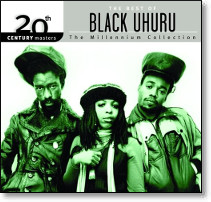
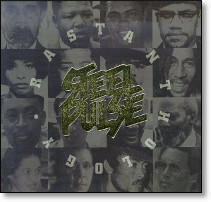
Music: current count 30076 [30033] rated (+43), 337 [344] unrated (-7). I made my usual last-minute push just before publishing July Streanotes on Tuesday, and for once found some A-list records at the last minute. After that, I resumed my mop-up of old Silkheart jazz (leaving about fifteen titles that I couldn't find on Napster; they are all on Bandcamp, but only a few songs each, so can't really be reviewed), and wandered on as the spirit moved me (e.g., found a Darius Jones album I missed). Finally, I spent the latter half of the week listening to old reggae. Two things steered me toward reggae. One was the Nat Birchall Meets Al Breadwinner album, which I found a review of on Bandcamp Daily. The review started with Birchall, but went on to mention and link to a half-dozen older reggae titles, including a Skatalies album (Foundation Ska) I knew and recommend, a Count Ossie album similar to (possibly overlapping) one I have but never graded, and a Tommy McCook set I didn't know. I played a couple of those (still, especially, want to check out the Don Drummond), and they led to others. The other thing that steered me toward reggae was an Xgau Sez letter which argued that Clinton Fearon's Mi Deh Yah was one of the five greatest reggae albums ever. I doubted this. I had never even heard of Fearon (former bassist/backup singer for the Gladiators, which I only knew of through anthologies). Also, the competition starts with four A+ records -- Natty Dread (Bob Marley), Two Sevens Clash (Culture), Anthem (Black Uhuru), Making History (Linton Kwesi Johnson) -- and includes full A albums by the Abyssinians, Black Youth, Cedric Im Brooks, Burning Spear, Jimmy Cliff, Joe Higgs, Ras Michael, Pablo Moses, Niney, Augustus Pablo, Sly & Robbie, Toots & the Maytals, UB-40, and Bunny Wailer. (Dozens more with A- records, including: Ken Boothe, Dennis Brown, Junior Byles, The Chantells, Count Ossie, Desmond Dekker, Dillinger, Leonard Dillon, Clint Eastwood, Winston Hussey, Gregory Isaacs, Macka-B, Tommy McCook, Freddie McGregor, Junior Murvin, Mutabaruka, Lee Scratch Perry, Prince Far I, Ernest Ranglin, Rebel MC, Max Romeo, Skatalites, Steel Pulse, Peter Tosh, U-Roy, Willi Williams, Delroy Wilson, and Yellowman. Admittedly, this list is all 20th century, as I skipped more recent artists, but they're few and far between.) Still, I figured it was worth checking out, so did, then followed up with some Gladiators. That got me looking at my Reggae file, and I honed in on two sets of records: ones I had ungraded copies of, and a few that Christgau had A-listed but I hadn't heard. That added up to quite a few albums. Of course, it's much easier to deal with an ungraded album by streaming it than by tracking down the physical copy. I've done that a few times in the past, and should do it more often in the near future. The unrated count was up around 800 when I started tracking it in the notebook (Feb. 2003), soon jumped over 900, peaked at 1157 (July 2004), rising dramatically on record-buying binges, especially trips out of town and close out sales as Wichita's last decent record stores bit the dust. But after I started getting jazz promos in the mail, my shopping atrophied, and the unrated count slowly dropped: dipping under 1000 in Dec. 2004, 900 (Mar. 2005), 800 (July 2007), 700 (July 012), 600 (Dec. 2012), 500 (Dec. 2014), and 400 (Mar. 2015), with plenty of bumps along the way. Still, with streaming it's been easier (and often more interesting) to look up new records than to dig through my mess to find unrated physical product. (I do have some unrated shelves, but a lot of records on the unrated list are folded into other collections, if indeed I still own them. Still, would be gratifying to knock the number down to whatever the current queue float amounts to. As I am writing this, the only unrateds left in the reggae file are two Big Youth albums. New records rated this week:
Recent reissues, compilations, and vault discoveries rated this week:
Old music rated this week:
Unpacking: Found in the mail last week:
Miscellaneous Album Notes:
Ask a question, or send a comment. Sunday, August 5, 2018 Weekend RoundupI'm thinking this will be the last Weekend Roundup, at least in its current form. I've been going through my old notebooks, collecting my scattered political rants and writing into LibreOffice files which I hope to mine for a book (or three or five). I started the notebook in 2001, and kept it going as a backup when I refocused my writing into blog form. My first Weekend Roundup appeared on September 1, 2007, so I've been doing this pretty much weekly for more than ten years. The concept dates back even further, as I did irregular posts that were basically collections of links plus comments. (For a while, I called them Weekly Links.) In 2014, I ran into server performance problems with the blog, and started a backup/sidecar mechanism I called "the faux blog" -- a set of flat files that a new script could organize into a LIFO (last in, first out) blog format. After that server company went out of business, I fell back to using the "faux blog" exclusively. This made it more of a conscious job to make new posts -- I basically had to update the whole website -- so I found myself falling back into a rut: Weekend Roundup on Sunday, Music Week on Monday, pretty much nothing else (except for the now-monthly Streamnotes). Anyhow, going back through the notebooks, I noticed two things after I started Weekend Roundup: the frequency and atomicity (focus on a single discrete topic) of my posts diminished; on the other hand, the overall amount of material I posted exploded (nearly doubled) -- partly, maybe even mostly, because I was quoting more. In some sense, the latter meant that I was using the notebook as originally attended, as a repository for notes. However, now that I am finally trying to mold 15-20 years of writing into a more coherent, longer-lasting body of work, it occurs to me that I might be better off returning to a proper blog platform, where I can do short posts, on discrete points of interest, and post them immediately without having to carry the overhead of website maintenance. Fortunately, I already have a usable blog set up, Notes on Everyday Life. The name recycles a tabloid some friends published in 1972-74 in St. Louis, a mix of counterculture and new left theory. Ten or more years back I realized that my writing had two distinct audiences -- one into music, the other politics -- so I speculated that placing them in separate domains might make them more accessible. I registered the domains -- the music would go into Terminal Zone, also named for a 1970s publication -- and did some work building the websites, but neither survived my first great server crash. I've long harbored vague ideas of reviving both, even pipe dreams of hosting a community of kindred spirits, but at the moment, this seems like a sensible step. I've been finding myself caught in a bind where I'd come up with something more to say than I could squeeze into a tweet but not enough to add a whole blog post to the current website. Needless to say, that still leaves room for posting Weekend Roundup here: basically as a weekly digest of smaller blog posts. And until I get my head into the new scheme, here's one more gathering of the links:
Ask a question, or send a comment. Tuesday, July 31, 2018 Streamnotes (July 2018)Second largest monthly haul this year. As with February, the trick is chasing down a lot of old jazz records on Napster (100 then, 60 this month, for totals of 165 and 163). Most of these are short notes/reviews based on streaming records from Napster (formerly Rhapsody; other sources are noted in brackets). They are snap judgments, usually based on one or two plays, accumulated since my last post along these lines, back on June 30. Past reviews and more information are available here (11469 records). Recent Releases
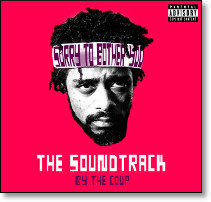
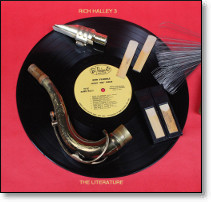
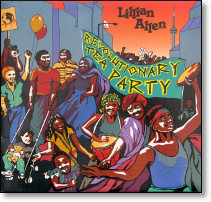
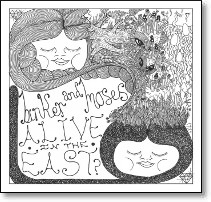
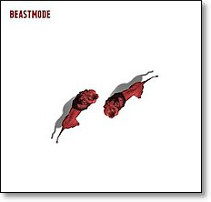
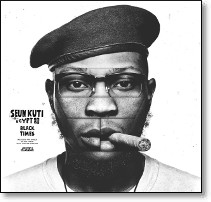
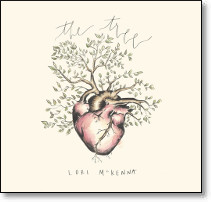
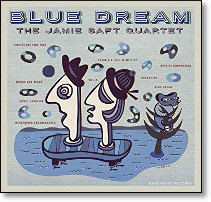
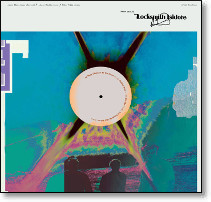
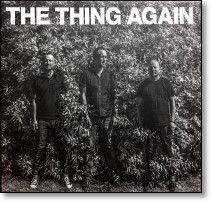
Against All Logic: 2012-2017 (2018, Other People): Nicolas Jaar, electronica producer from Chile based in New York, used this alias (sometimes abbreviated A.A.L.) for a couple of EPs 2013-14, but this period compilation seems to be new (previously unreleased) work. Nothing ambient here: hard dance beats with heavy samples and shrill vocals, sometimes over the top -- meant to be fun, mostly is. B+(***) Amen Dunes: Freedom (2018, Sacred Bones): Damon McMahon, released his first record as Inouk in 2004, one under his own name in 2006, and since 2009 five as Amen Dunes. Singer-songwriter fare, slight whine in his voice but not in the music. B+(*) Tucker Antell: Grime Scene (2017 [2018], OA2): Tenor saxophonist, leads a quartet with guitar and organ nodding toward soul jazz, plus Jason Palmer on trumpet for 5/8 cuts. B+(**) [cd] Arctic Monkeys: Tranquility Base Hotel & Casino (2018, Domino): In which Alex Turner tries his hand as a cocktail bar crooner, segueing into a tryout for a horror show. C+ John Bailey: In Real Time (2017 [2018], Summit): Trumpet player, debut at age 52 but he has side credits going back to 1988. Quintet with Stacy Dillard on tenor/soprano sax, John Hart on guitar, Cameron Brown on bass, and Victor Lewis on drums. Sharp, upbeat, makes a splash, two Brazilian covers (Nascimento and Gil). B+(**) [cd] Barker Trio: Avert Your I (2017 [2018], Astral Spirits): Drummer Andrew Barker, led a sax-piano trio I liked back in 2003 but only rarely heard from since. Another sax trio here, with Michael Foster (tenor, soprano, electronics) and Tim Dahl (electric bass). Intense, screechy. B+(*) [bc] Beach House: 7 (2018, Sub Pop): Dream pop band from Baltimore, principally Victoria Legrand (vocals/keyboards) and Alex Scally (guitar/keyboards). Seventh album, settling into a middle-aged groove that suits them, without going bland. B+(**) Beats Antique: Shadowbox (2016, Antique): Oakland group, world fusion although Middle Eastern dub hits the high points, founded over a decade ago by belly dancer Zoe Jakes, David Satori, and Tommy Cappel. Interesting concept, somewhat scattered results. B+(***) Big Freedia: 3rd Ward Bounce (2018, Asylum Worldwide, EP): Frederick Ross, of New Orleans, "the undisputed Queen Diva of Bounce Music." Loud, lots of bounce. Four cuts, 14:33. B Big Heart Machine: Big Heart Machine (2017 [2018], self-released): Eighteen-piece big band (standard horns; vibraphone, piano, guitar, bass, and drums in the rhythm section), conducted by Miho Hazama, compositions by Brian Krock (alto sax), produced by Darcy James Argue. Nothing strikes me as special, not that they didn't put a lot of effort into it, and they did at least achieve big band volume. B [cd] Binker and Moses: Alive in the East? (2017 [2018], Gearbox): British duo, Binker Golding (tenor sax) and Moses Boyd (drums), although there are also guests here and there, including Evan Parker (tenor/soprano sax, pretty hard to miss). Sounds like guitar on one track, but the closest credit seems to be harp (Tori Handsley. Rather scattered, would take some time to sort out, but much is terrific, not least the drums. A- [bc] Andy Biskin: 16 Tons: Songs From the Alan Lomax Collection (2018, Andorfin): Clarinet player, has mostly worked with traditional and early American melodies, like his exploration of Stephen Foster. By "the Alan Lomax Collection" he means ancient folk songs that Lomax recorded in his tours of the 1930s South and Appalachia, starting and ending with "Sweet Betsy From Pike." His group evokes another Americana tradition: brass bands, although here he's joined by three trumpets, and nothing else but drums, which gives it an odd, postmodern air -- I'm tempted to say Ivesian, but I'm not confident I'm expert enough to make that stick. B+(**) [cd] Leon Bridges: Good Thing (2018, Columbia): Retro soul singer, still in his 20s, second album, got his sound down pat. B+(*) Justin Brown: Nyeusi (2015-17 [2018], Biophilia): Drummer, from Oakland, also plays keyboards here, probably his first album although he's played with various jazz groups (also Thundercat and Flying Lotus). With Jason Lindner and Fabian Almazan on keyboards, Mark Shim on "wind controller," and Burniss Travis on bass. [Packaging did not include CD -- evidently some kind of "environmentally friendly" inconvenience.] B Jarod Bufe: New Spaces (2017 [2018], OA2): Tenor saxophonist, based in Chicago, first album, a quartet with Tim Stine on guitar, Matt Ulery on bass, Jon Deitemeyer on drums. Starts quite impressive, doesn't quite sustain but remains very listenable. B+(***) [cd] Burna Boy: Outside (2018, Atlantic): Damini Ogulu, from Nigeria, combines hip-hop, dancehall, and Afropop, in a rather mixed bag. Includes a feat. Lily Allen, but not as good as his on her album. B+(*) Camila Cabello: Camila (2018, Syco/Epic): From Cuba, moved to Miami at age 5, appeared on The X Factor and failing there was pooled into Fifth Harmony. First solo album. Fairly generic pop, gaining strength on the ballads, ease when she lets up a bit. B+(**) The Carters: Everything Is Love (2018, Parkwood/Roc Nation): Shawn Carter, better known as Jay-Z, and his wife, the even more famous Beyoncé, in concept at least resolving the marital issues that fueled their respective last albums. Beats more in his domain than in hers, but maybe I'm just much more familiar with his work -- I never really got into her recent records, and didn't like the early ones at all. Of course, being filthy rich they can hire whatever extra talent they need (note Pharrell Williams on the single). Still can't complain about that. B+(***) Neko Case: Hell-On (2018, Anti-): Singer-songwriter, born in Virginia, moved to Vancouver in 1994, joined the alt/indie group New Pornographers there and has stuck with them while running a solo career that started alt-country but hasn't sounded like that for well over a decade (even in her folkie harmony group with K.D. Lang and Laura Veirs). But her versatility makes her anonymous, a chameleon with no distinct identity. Clearest example here is a duet Eric Bachmann wrote and dominates. B+(*) Brent Cobb: Providence Canyon (2018, Low Country Sound/Elektra): Country singer-songwriter from Georgia, third album. B+(**) The Coup: Sorry to Bother You: The Soundtrack (2018, UMGRI Interscope): Boots Riley, Oakland rapper, called his first group the Mau Mau Rhythm Collective, changing the name to the Coup in 1992. We last heard from the in 2012 on Sorry to Bother You, a title Riley recycled for his film debut this year. I don't know much about the movie ("a bananas satirical comedy about code-switching and exploitative capitalism"), but his soundtrack offers nine in-your-face pop songs, with Tune-Yards adding jangly noise to the infectious "Hey Saturday Night," Janelle Monáe adding cyborg cool to two more songs, and guest raps from Killer Mike and E-40. Short (35:46), tight, explosive. A- Tomasz Dabrowski Ad Hoc: Ninjazz (2018, ForTune): Polish trumpet player, backed by a Japanese piano trio visiting Warsaw: Hiroshi Minami (piano), Hiroki Chiba (bass), and Horishi Tsubo (drums). Opens up with solo trumpet, then the trio jumps in very aggressive. Tails off midway, running out of steam. B+(*) [bc] The End: The End (2018, RareNoise): Norwegian group, two major saxophonists (Mats Gustafsson and Kjetil Møster), Anders Hana on baritone guitar, Greg Saunier (drums/voice), and Sofia Jernberg (voice). The noise level, even without the vocals, exceeds what I find tolerable. And the vocals are way over the top. D+ [cdr] Florence + the Machine: High as Hope (2018, Virgin EMI): Singer Florence Welch and keyboardist Isabella Summers, group name a contraction of Florence Robot and Isabella Machine, with a couple others since 2007, and more here. B+(*) Future and Young Thug: Super Slimey (2017, Epic/300 Entertainment/Freebandz): Atlanta rappers, mixtape came out last October to scant notice. Reviews I've seen complain about lack of chemistry. Indeed, it comes off as fairly anodyne, not so slimy after all. B+(*) Future: Beast Mode 2 (2018, Epic/Freebandz): Classified as a retail mixtape, name checks a 2015 mixtape. Low key but catchy "sing-rap blues." A- Ben LaMar Gay: Downtown Castles Can Never Block the Sun (2010-18 [2018], International Anthem): Producer, I guess, "has been creating music professionally for over 20 years now," as Gay, Ben Lamar, or other permutations of his full name, working in the interstices of "jazz, blues, hip-hop and electronic." This is compiled from eight years of unreleased work, with a couple dozen musicians floating in and out. He's credited with cornet, synth, voice, flute, and "other instruments." More pastiche than jazz, often interesting, but would take quite some effort to sort out. B+(**) Freddie Gibbs: Freddie (2018, ESGN/Empire, EP): Rapper Frederick Tipton, from Gary, IN, styled the artwork after Teddy Pendergrass, but not so similar beyond that. Ten tracks, 25:02. B+(**) Gorillaz: The Now Now (2018, Parlophone): Originally a cartoon sketch by Jamie Hewlett, their first album (way back in 2001) brought Britpop-going-world maestro Damon Albarn together with estimable hip-hoppers known as Dan the Automator, Del the Funkee Homosapien, and Kid Koala. But six albums in, only Albarn remains, which with all the synth washes isn't much different than you'd expect had Blue stuck together. Evidently the cartoon still has more brand appeal. B- Maria Grand: Magdalena (2018, Biophilia): Tenor saxophonist, from Switzerland, based in Brooklyn, also sings some though credits are unclear, crediting Jasmine Wilson and Amani Fela with spoken word; also guitar (Mary Halvorson), piano (David Bryant and Fabian Almazan), bass, and drums. [received packaging without CD] B+(**) Grouper: Grid of Points (2018, Kranky, EP): Liz Harris, I've been filing her under electronica from first notice, but that's not a good fit, especially here. Nor is "ambient" or "dream pop" (Wikipedia's suggestions), although "ambient dream pop" might work. The central instrument here is piano, with voice (don't know if her own) arranged like an aura. Seven cuts, 21:52. B Grupo Mono Blanco: ¡Fandango! Sones Jaroches de Veracruz (2018, Smithsonian Folkways): I don't see any recording dates, even in the substantial booklet PDF. The group (translates as White Monkey) was formed in 1977, its leader, Gilberto Gutiérrez, born in 1958, looking in photographs younger (but not a lot) than his present age. I've seen some evidence of a 2004 album called ¡Fandango! credited to Mono Blanco y Stone Lips, but there's no mention of Stone Lips here. The music is a regional folk style ("jarocho" from Veracruz, which seems to have more African influence) that goes back at least to the mid-1800s. Voice(s), guitar-like instruments, percussion, nothing rushed. B+(***) Rich Halley 3: The Literature (2017 [2018], Pine Eagle): The letter suggested "something different," but I didn't look at the fine print before putting on what appeared to be his usual tenor sax trio. I didn't notice the difference until I heard "Mood Indigo" wafting through, although I should have picked up earlier that they were doing standards: Monk, Davis, Coleman, and Jimmie Rodgers came earlier, with more Monk and Coltrane, Mingus and Sun Ra, a boisterous "Motherless Children" to follow. Terrific. A- [cd] Haley Heynderickx: I Need to Start a Garden (2018, Mama Bird): Folkie singer-songwriter from Oregon, first album after a couple of EPs, acoustic guitar style harkens back to John Fahey, eventually finds a band -- the title song is choice, partly because its actual title is "Oom Sha La La." B+(**) Nipsey Hussle: Victory Lap (2018, All Money In/Atlantic): LA rapper, Ermias Asghedom, started out with a series of Bullets Ain't Got No Name mixtapes. First studio album, with guest spots for Pugg Daddy, Kendrick Lamar, The-Dream, Cee-Lo Green, a bunch more. Hard and dense, almost impenetrable. B+(*) Susie Ibarra: Perception (2017, Decibel Music): Percussionist, credits musicians as DreamTime Ensemble, has a chamber jazz feel even with the drums: piano/guitar, violin, cello, electronics, voice (Claudia Acuña). B The Internet: Hive Mind (2018, Columbia): Neo-soul group from Los Angeles's Odd Future orbit, fourth album, lead singer Sydney Bennett (aka Syd the Kyd, or just Syd on her solo debut), with a guitarist named Steve Lacy co-writing most of the songs and singing some. Pretty laid back, low-key, something you might get comfortable with, not turned on. I'm tempted to call it ambient groove. B+(**) Juice WRLD: Goodbye & Good Riddance (2018, self-released): Jared Higgins, 19-year-old rapper from the Chicago suburbs, based in Los Angeles. They grow up so fast these days. B+(*) Kids See Ghosts: Kids See Ghosts (2018, GOOD/Def Jam, EP): The third entry in Kanye West's parade of seven-cut productions, with West forming a duo with Kid Cudi. Title track has some appeal, as does the Louis Prima sample. Seven cuts, 23:50. B+(*) Seun Kuti & Egypt 80: Black Times (2018, Strut): Youngest son of Fela Anikulapo Kuti, wound up running his legendary father's band -- fitting because he's a dead ringer, playing alto sax, singing, writing and leading irresistibly bouncy political rants. If they run shorter than his father's side-long essays, that's because he has even more to complain about, and hope for. A- Kyle: Light of Mine (2018, Atlantic): Rapper Kyle Thomas Harvey, from Ventura, CA, first studio album after a couple of mixtapes. Has a charming light touch both rapping and singing. A- Jeremy Ledbetter Trio: Got a Light? (2018, Alma): Pianist, from Toronto, with Rich Brown on bass and Larnell Lewis on drums, with a couple of guest vocal spots. Trained in classics, is "musical director and producer for calypso superstar David Rudder," plays in a Latin jazz band called CaneFire. Album ranges widely, chops impressive, still nothing seems to stick. B [cd] Jennifer Lee: My Shining Hour (2018, SBE): Bay Area singer-songwriter, last name Sevison, wrote 11/13 songs, covering Harold Arlen and Abel Zarate. Three previous records. Long credits list, most for only a track or two, adding to the eclecticism. B [cd] Peggy Lee: Echo Painting (2017 [2018], Songlines): Cellist, from Vancouver, should be well known by now but Google still brings up the singer, even when you add "cello" to the search string. Ten-piece band here, four horns and five strings (including guitar and pedal steel). Mostly orchestral, taken at an even stroll, but on a couple of tracks guitarist Cole Schmidt goes berserk, bringing lots of noise. As a bonus track, Robin Holcomb does a nice job of singing "The Unfaithful Servant." B [bc] Charles Lloyd & the Marvels + Lucinda Williams: Vanished Gardens (2017 [2018], Blue Note): The tenor saxophonist's group includes Bill Frisell (guitar), Greg Leisz (pedal steel and dobro), Reuben Rogers (bass), and Eric Harland (drums), although it drops down to just Lloyd and Frisell on the last two tracks. So it lists a bit toward Americana, taking on a roughened and battered air with the guest vocalist (on 5 of 10 songs, 4 her own, one from Jimi Hendrix) -- not enough to take command, leaving you with a rather pretty curio. B+(***) Nicolas Masson/Colin Vallon/Patrice Moret/Lionel Friedli: Travelers (2017 [2018], ECM): Swiss saxophone/clarinet player, backed by pianor-bass-drums. A bit atmospheric, the way the label likes them. B+(**) Pete McCann: Pay for It on the Other Side (2017 [2018], McCannis Music): Guitarist, from Wisconsin, based in New York, discography goes back to 1998, often impressive but goes a bit over the top here, with Henry Hey's organ the main amplifier, Matt Clohesy on electric as well as acoustic bass, John O'Gallagher on alto sax, and Mark Ferber on drums. B+(*) [cd] Lori McKenna: The Tree (2018, CN/Thirty Tigers): Singer-songwriter, folk division, with possibly the clearest, most immediately appealing batch of songs in a twenty-year career. Does tail off a bit toward the end. A- Joachim Mencel Quintet: Artisena (2015 [2018], ForTune): Polish pianist, also plays hurdy-gurdy, "inspired by traditional Polish dances" (not to mention Chopin). With violin, guitar, double bass, and drums. Nice chamber jazz feel. B+(*) [bc] Shawn Mendes: Shawn Mendes (2018, Island): Teen pop star from Canada, still just 19 on his third album, all three number ones both in Canada and the US. Co-wrote all of the songs, co-produced most, some quite striking ("Nervous," "Like to Be You") but even the bare ballad "Perfectly Wrong" is captivating (with a swell the hook). Has a soul voice, verging on falsetto but not committed to it. B+(***) Migos: Culture II (2018, Quality Control): Three Atlanta rappers, had a commercial breakthrough with last year's Culture so decided to do it again, then thought it might be clever if Culture II was not just a sequel but twice as long. Wears on your patience, especially as they only have one distinctive beat framework to squeeze everything into. B+(**) Nas: Nasir (2018, Mass Appeal/Def Jam, EP): Part of producer Kanye West's 7-song EP series, with West co-writing all of the songs (along with Mike Dean and rapper Nasir Jones). B+(**) Adam O'Farrill's Stranger Days: El Maquech (2018, Biophilia): Trumpet player, brother Zach (drums, both here and with Adam in the O'Farrill Brothers), son of Arturo, grandson of Chico. Quartet with Chad Lefkowitz-Brown (tenor sax) and Walter Stinson (bass). [Packaging did not include CD.] B+(*) Old Crow Medicine Show: Volunteer (2018, Columbia Nashville): Country string band, formed 1998 in Harrisonburg, VA; topped the bluegrass charts with 2004's O.C.M.S. and have been a folk-bluegrass institution ever since. Motto: "I ain't gonna change my sound/when I get to Nashville town." Ain't gonna start thinkin' either. B+(*) Oneohtrix Point Never: Age Of (2018, Warp): Daniel Lopatin, from Massachusetts, parents from Russia, makes electronica, though not much beat here, some vocals (by Lopatin and/or guests), the sonic squiggles interesting but he seems to be all over the place. B+(*) Houston Person & Ron Carter: Remember Love (2018, HighNote): Tenor sax and bass duets, both major players since the early 1960s, with a couple of previous albums together -- their Chemistry was my favorite jazz album of 2016. Ballads here, even slower than usual, possibly suggesting that they're losing a step, or maybe just playing for their own pleasure (others might prefer fewer/shorter bass solos). B+(***) Charles Pillow Large Ensemble: Electric Miles (2017 [2018], MAMA): Alto saxophonist, from Virginia, not a lot under his own name but shows up in a lot of New York area big bands. Figured as we're approaching the 50th anniversary of Bitches Brew, Miles Davis's pioneering fusion music should get the treatment. Shows that may not have been such a good idea -- that not everything sounds better with more brass.. B [cd] Pocket Aces: Cull the Heard (2016 [2018], Creative Nation Music): Trio, names listed alphabetically -- Aaron Darrell (bass), Eric Hofbauer (guitar), Curt Newton (drums) -- all pieces jointly credited, but Hofbauer is by far the best established, and effectively the lead. Nothing splashy, just tight, prickly probing at what may possibly be a melody. B+(**) [cd] Post Malone: Beerbongs & Bentleys (2018, Republic): Austin Richard Post, from Syracuse, second album (first: Stoney), described as "a rich kid whose parents essentially paid his way into music," which leads to a lot of other dumb shit -- odds appear to be 50-50 that he'll turn into Kid Rock. Still, he makes a strong first impression, singing more than rapping but with a rapper's focus on the words, and not just slinging them out. B+(**) Allen Ravenstine: Waiting for the Bomb (2018, Morphius/ReR Megacorp): Keyboard player, best (almost totally) known from Pere Ubu, concocts a bunch of sonic tableaux that can be ominous, or just spooky. B+(*) John Raymond & Real Feels: Joy Ride (2018, Sunnyside): Flugelhorn player, originally from Minneapolis, based in New York, has a couple previos records including 2016's John Raymond & Real Feels. Trio with Gilad Hekselman (guitar) and Colin Stranahan (drums). Postbop, moderate pace, nice resonance between the horn and guitar. B+(**) Dave Rempis/Tomeka Reid/Joshua Abrams: Ithra (2017 [2018], Aerophonic): Chicago trio, Rempis plays alto and tenor sax, matched against cello and bass, which tend to slow him down without providing an effective counterpoint. Still remarkable in its own way. B+(**) [cd] Dave Rempis/Jasper Stadhouders/Frank Rosaly: Icoci (2017 [2018], Aerophponic): Stadhouders plays guitar and electric bass, giving this a little more boost than the sax/strings trio. Drummer helps, too. B+(***) [cd] Rhio: A Rhio Good Thing (2018, Beso): Standards singer, also does four songs by "long-time partner" and producer Leigh Crizoe. Standards start with "I Want a Little Sugar in My Bowl," pass through Phil Ochs and Jobim, and end with "Hoy Quiero Aprender." Probably just my mood, but I found "God Bless the Child" especially touching -- not an emotion her voice suggests. B+(*) [cd] Roller Trio: New Devices (2018, Edition): British jazz-rock trio from Leeds: James Mainwaring (sex), Chris Sharkey (guitar/bass, replacing Luke Wynter), Luke Reddin-Williams (drums). B+(*) Royce Da 5'9: The Book of Ryan (2018, EOne): Detroit rapper, Ryan Montgomery, formed a duo with Eminem in 1998 called Bad Meets Evil, briefly joined D12, then went solo in 2002 (regrouping as Bad Meets Evil for a 2012 EP). Recorded two more duo albums as PRhyme, returning here for his seventh solo. Some good politics. "Caterpillar Remix" (with Eminem and Logic) is a blast. B+(*) Dori Rubbicco: Stage Door Live! (2017 [2018], Whaling City Sound): Standards singer, cover says "backed by the John Harrison Quintet," meaning pianist John Harrison III, and not quite all of the six musicians listed. Standards lean towards '70s rock, which works much better on something like "Twisted" (which they can swing) than "Imagine" (which they can't). B+(**) [cd] Saba: Care for Me (2018, Saba Pivot): Chicago rapper Tahj Malik Chandler, second album after some mixtapes, worked with Chance the Rapper (who appears here). Might be onto something, but listening conditions make it hard to sort out. B+(***) [sp] The Jamie Saft Quartet: Blue Dream (2017 [2018], RareNoise): Pianist, got an early start on organ and keyboards so his emergence as a conventional pianist has been a revelation. Quartet is fairly mainstream with Bill McHenry (tenor sax), Bradley Christopher Jones (bass), and Nasheet Waits (drums), leaning to ballads, but not that simple. Three covers, including a whiff of "Sweet Lorraine." A- [cdr] Rafal Sarnecki: Climbing Trees (2017 [2018], Outside In Music): Polish guitarist, based in New York, has at least one previous album. Music, with Lucas Pino on tenor sax/bass clarinet and Glenn Zaleski on piano, has a whimsical quality, but I don't care for the scat vocals (Bogna Kicinska). B Ty Segall: Freedom's Goblin (2018, Drag City): Garage rocker from Laguna Beach, CA, tenth album since 2007. Revealed a T-Rex fetish on an EP mid-way, and I'm hearing echoes all over this record. Not as catchy, nor as cutesy, which matters less on the rare track when Segall cranks up the noise. Overkill at 19 tracks, 74:48. B Ty Segall & White Fence: Joy (2018, Drag City): The latter's Blogspot is titled "White Fence/Art Collective." Discogs lists ten albums since 2010, including two with Segall. I don't know what they sound like on their own, but their first album was on Make a Mess Records, before they moved on to Woodsist, Castle Face, and Drag City. Here they stoke Segall's T-Rex fetish, making it less pop and more cleverly underground, generally a plus. B+(*) Shame: Songs of Praise (2018, Dead Oceans): British post-punk band, debut album. Have some rage issues and not a lot of range, but can construct a satisfying song; e.g., "Friction." B Aaron Shragge & Ben Monder: The World of Dew (2018, Human Resource): Trumpet and guitar duo, Shragge playing something he calls the Dragon Mouth Trumpet, as well as flugelhorn and shakuhachi. Melodies are inspired by various zen poets, also Charles Bukowski. B+(*) [cd] Sibarg Ensemble: Cipher (2016 [2018], self-released): Based in California, led by Iranian vocalist Hesam Abedini, with a mix of Iranians and American jazz musicians (bassist Kyle Motl is the one I recognize), lyrics from classic poems including Rumi and Omar Khayyam. B+(**) [cd] Marc Sinan/Oguz Büyükberber: White (2016 [2018], ECM): German guitarist, mother "Turkish-Armenian," has several previos albums, two previous credits on ECM, in a duo with the Turkish clarinetist (also electronics), with several pieces including 1916 field recordings made in German detention camps of Armenian prisoners of war. B Skee Mask: Compro (2018, Ilian Tape): Munich DJ Bryan Müller, second album, attractive breakbeats with the occasional splash of ambient. Nothing spectacular, but quite attractive. B+(***) Sloan: 12 (2018, Yep Roc): Alt-rock band originally from Halifax c. 1992, since relocated to Toronto, add pop hooks to their guitar jangle, impressing some friends back in the 1990s but always sounding rather generic to me. Still going, title probably signifies their 12th studio album, only the second I've checked since 1993. Perked my ears a bit mid-way, but lost my interest toward the end. B Snail Mail: Lush (2018, Matador): Singer-songwriter Lindsey Jordan, first album, young (19), takes her guitar seriously. Band adds bass and drums, and producer Jake Aron through in some unobtrusive bells and whistles. B+(*) SOB X RBE: Gangin (2018, Empire): Acronym for Strictly Only Brothers x Real Boi Entertainment. From Vallejo, CA, four members: DaBoii, Yhung T.O., Slimmy B, and Lul G. Group had a turn on Black Panther. Wouldn't call this gangsta, but it's pretty ghetto. Would like it better if it weren't so, uh, parochial. B Sophie: Oil of Every Pearl's Un-Insides (2018, MSMSMSM/Future Classic): Singer-songwriter, electronica producer, DJ. First proper album, after a 2015 compilation of singles and odd bits that attracted a following but mostly just confused me. (Among other things, I took Sophie to be an alias for Samuel Long. Now I see that her name is Sophie Xeon, from Scotland, although that still looks a little suspicious.) Broken beats, smashed up shrouds of sonic fuzz. Best song contrasts "Whole New World" with "Pretend World," and I'm as confused as ever. B+(***) Jason Stein's Locksmith Isidore: After Caroline (2017 [2018], Northern Spy): Bass clarinetist, based in Chicago, has a couple albums under this group name, a trio with Jason Roebke (bass) and Mike Pride (drums). Stein struck me as awkward and tentative when he first appeared, but he's turning into a powerhouse. A- [bc] Sunflower Bean: Twentytwo in Blue (2018, Mom + Pop): Alt/indie trio from Long Island, two lead singers -- Julia Cumming (bass) and Nick Kivlen (guitar) -- and a drummer. "Musical Influences" section on their Wikipedia page is an amusing mish-mash, but Tame Impala is the one they named a song for. B+(*) The Thing: Again (2017 [2018], Trost): I usually take promo copies that look like this as actual releases -- many releases these days are done up with minimal packaging -- but I see from Discogs that my copy is a promo: back cover is different, and I didn't get the Brian Morton liner notes. Three tracks, timed for vinyl (39:06). Group cut their eponymous debut in 2000 (one of their best), the little known (back then) rhythm section now stars in their own right (Ingebrigt Håker Flaten and Paal Nilssen-Love), with saxophonist Mats Gustafsson bringing the noise. There are limits to how much thrash and squeal I can stand in free jazz, and he can easily cross that line, but he generally doesn't here -- even with Joe McPhee helping on the middle track. Still not easy listening, but easier here to appreciate their talent. A- [cdr] Toronto Jazz Orchestra: 20 (2017 [2018], self-released): Big band, founded in 1998 to play repertory, including works by Stan Kenton, Gil Evans, Thad Jones, and Bob Brookmeyer. Josh Grossman directs, and for their 20th anniversary wrote most of the material -- plus a cover of Brad Mehldau's arrangement of "Dear Prudence." B+(*) [cd] Turnstile: Time & Space (2018, Roadrunner): Hard rock group from Baltimore, tight enough some regard them as punk, with only three songs approaching 3 minutes (total 13: 25:15) but the howl is closer to metal, and I'd guess they know their math, but don't want to show off.. B+(*) Underworld & Iggy Pop: Teatime Dub Encounters (2018, Caroline, EP): English EDM duo, started in Cardiff in 1980, sound eternally vital, at least on the opener. Pop toasts along, a role he was born to play, again best on the opener. Three songs top 7 minutes, total for all four 27:28. B+(**) Verve Jazz Ensemble: Connect the Dots (2018, Lightgroove Media): New York group, postbop I guess (although not by much), handful of albums, organized here in various configurations from trio to septet, with drummer Josh Feldstein the leader, Steve Einerson on piano, Elias Bailey on bass, and Tatum Greenblatt (trumpet) and Jon Blanck (tenor sax) the principal horns. Sounds like most people expect jazz to sound like. B [cd] Kobie Watkins Grouptet: Movement (2017 [2018], Origin): Drummer, from Chicago, father played drums in church, has a previous album, side credits mostly with Bobby Broom. Basic hard bop quintet, with tenor/soprano sax (Jonathan Armstrong), trumpet (Ryan Nielsen), piano/Fender Rhodes, and bass. Watkins originals, plus one by Nielsen, and closes with a swinging cover of "Manteca." B+(**) [cd] The Weeknd: My Dear Melancholy (2018, XO/Republic, EP): R&B singer from Toronto, Abel Tesfaye, one of the first artists to build his career on free mixtapes, since going on to release three studio albums and this mini (6 tracks, 21:50). Has his sound down so tight it's gotten to be difficult to discern any difference in his songs (or albums). B+(*) Tierra Whack: Whack World (2018, UMGRI/Interscope, EP): Rapper from Philadelphia, formerly known as Dizzle Dizz, debut consists of 15 songs, each exactly 1:00 long, most cryptic, some funny. Easiest to find with a video, which fills each minute with wonder and awe. B+(***) Dr. Michael White: Tricentennial Rag (2018, Basin Street): New Orleans trad clarinet player, fifteen or so albums since 1983, this one marking the 300th anniversary of his home town's founding. Classic songs, some vocals (trumpet player Leon "Kid Chocolate" Brown), lots of brass (from cornet to sousaphone) and banjo, Steve Pistorius on piano. B+(**) Buster Williams: Audacity (2017 [2018], Smoke Sessions): Bassist, from Camden [NJ], father was a jazz musician, got his start as a teenager playing with Jimmy Heath, then Gene Ammons/Sonny Stitt. Cut his first album in 1975, with fifteen more since, plus hundreds of side credits. Sax-piano quartet, six original pieces plus one each from his band: Steve Wilson (sax), George Colligan (piano), and Lenny White (drums). B+(*) Kamaal Williams: The Return (2018, Black Focus): Keys, based in Loncon, first solo album after his Yussef Kamaal duo with Yussef Dayes and a pile of singles/EPs as Henry Wu. Jazz-funk trio, with Pete Martin on bass and Joshua McKenzie (MckNasty) on drums. B+(**) Florian Wittenburg: Four Waves (2018, NurNichtNur): German composer, works with electronics but also credited here with organ and vibraphone, employs a bit of help this time. Oriented a bit more toward jazz than avant-classical or ambient, but with a good deal of overlap. B+(***) [cd] Wye Oak: The Louder I Call, the Faster It Runs (2018, Merge): Alt/indie duo from Maryland, named after the state tree, with a half-dozen albums since 2007: Jenn Wasner (vocals) and Andy Stack (drums), both also credited with guitar, bass, and keyboards, plus they've added a regular bassist for the road. Nice pop vibe. B+(*) Years & Years: Palo Santo (2018, Polydor): British synthpop band, second album. Beats danceable, vocal harmonies soft. As for content: "The album and its imagery will continue the concept of a genderless dystopian society populated by androids known as Palo Santo." So maybe their soullessness is just artifact? B YoshimiO/Susie Ibarra/Robert Aiki Aubrey Lowe: Flower of Sulphur (2018, Thrill Jockey): First two are drummers, the former also known as Yakota Yoshimi. Lowe, whose aliases range from Rob Lowe to Lichens, adds electronics and voice, shadings that can color or distract from the drums. B+(**) Recent Reissues, Compilations, Vault Discoveries
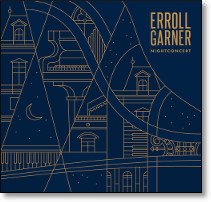
Don Cherry: Home Boy (Sister Out) (1985 [2018], Wewantsounds): Trumpet player, made his mark in Ornette Coleman's legendary quartet, later in their three-quarter reunion Old and New Dreams. In between, he enjoyed a remarkable career, mostly in Europe, mixing avant-jazz and world music, expanding everyone's mind. This was cut in Paris in 1985, a mixed bag of funk beats, reggae, African percussion, spoken word, a soul ballad (sung by Cherry), sea shells, some proto-industrial disco. Can't say it all works, but gives you a taste of the breadth of an extraordinary love for the world. B+(***) [bc] Erroll Garner: Nightconcert (1964 [2018], Mack Avenue): Piano trio with Eddie Calhoun (bass) and Kelly Martin (drums), a previosly unreleased midnight set at the Royal Concertgebouw in Amsterdam. Sparkling standards served with the pianist's usual flourishes. Fine sound. Piano jazz fans will be thrilled. A- Dexter Gordon Quartet: Tokyo 1975 (1973-77 [2018], Elemental Music): From the tenor saxophonist's exile years in Denmark, four previously unreleased tracks from his first-ever tour of Japan, with Kenny Drew (piano), Niels-Henning Ørsted Pedersen (bass), and Albert "Tootie" Heath (drums); sly vocal on "Jelly, Jelly, Jelly" presumably Gordon. CD adds one earlier and one later track with slightly different personnel, both superb. B+(***) Millie Jackson: Exposed: The Multi-Track Sessions Mixed by Steve Levine (1972-79 [2018], Ace): Levine's a British producer, active since 1975, his most famous act Culture Club. Jackson's an r&b singer with some good albums and minor hits in the 1970s, best known risqué (cf. Live and Uncensored). Her heyday coincided with disco, so her music was danceable, but never as slick as strings Levine's remixes enmesh her in. Still, sometimes she breaks free. B Woody Shaw: Tokyo '81 (1981-85 [2018], Elemental Music): Six tracks from the trumpeter's Tokyo gig, with Steve Turre (trombone), Mulgrew Miller (piano), Stafford James (bass), and Tony Reedus (drums), capped by a 14:48 "Sweet Love of Mine" credited to Paris Reunion Band (an octet with Shaw and Dizzy Reece on trumpet, Slide Hampton on trombone, Johnny Griffin and Nathan Davis on sax), recorded in Den Haag in 1985. B+(**) Old Music
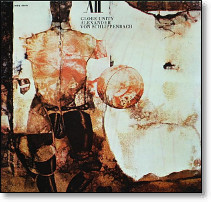
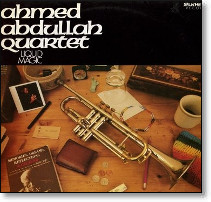
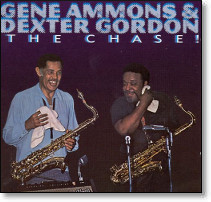
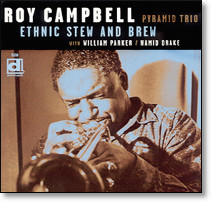
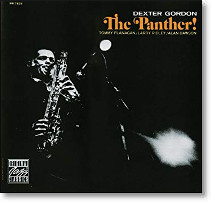
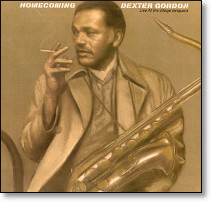
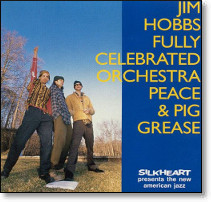
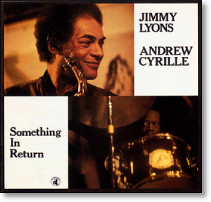
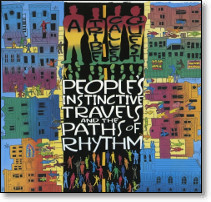
Ahmed Abdullah Quartet: Liquid Song (1987, Silkheart): Trumpet player, born Leroy Bland, played in New York's loft scene in the 1970s, joined Sun Ra in 1976. Not a lot under his own name, but I've filed two A-listed group albums there (Melodic Art-Tet and the Group's Live), as well as his own Tara's Song. With Charles Brackeen (tenor sax), Malachi Favors (bass), and Alvin Fielder (drums). Follows and adds something to the his mentor's avant-swing vision. A- Ahmed Abdullah: Ahmed Abdullah and the Solomonic Quintet Featuring Charles Moffett (1987 [1988], Silkheart): Not sure why drummer gets the featuring credit, other than that he wrote two of eight pieces (Abdullah penned the rest). Quintet is rounded out with David S. Ware (tenor sax/stritch), Masuhjaa (guitar), and Fred Hopkins (bass). (Masujaa, aka Hugh Riley, also has side-credits with Ronald Shannon Jackson and Henry Threadgill from 1987-2004.) B+(***) Bob Ackerman Trio: Old & New Magic (1993, Silkheart): Saxophonist, credit plural (also clarinet and flutes), not a lot under his own name but has recorded with Dennis Gonzalez and Pam Purvis and popped up recently (well, 2012) in the Essex Improviser's Collective. A serious student of the instrument -- even owns his own saxophone shop -- with several titles referring to Coltrane, Hodges, Carter, and Bartok. Backed by Wilber Morris on bass and Dennis Charles on drums. B+(***) Gene Ammons & Dexter Gordon: The Chase! (1970 [1996], Prestige): Title track is Gordon's famous bebop romp with Wardell Gray, one of the most legendary sax duos in jazz history. Meanwhile, Ammons made a specialty out of sax jousts, mostly with Sonny Stitt, so this seems like a natural pairing. Not all fast stuff, which given that Ammons is an all-time great ballad artist (and Gordon isn't too shabby) is jake. Even the original 4-track LP was split between two run-of-the-mill rhythm sections. Bonus cuts, pushing the CD to 70:49, include a Vi Redd vocal on a Billy Eckkstine song. A- Binker and Moses: Dem Ones (2014 [2015], Gearbox): British improv duo, Binker Golding (tenor sax) and Moses Boyd (drums), just the two of them with no overdubs. Good basic combination, nice intro without the added complication of guests. B+(***) [bc] Binker and Moses: Journey to the Mountain of Forever (2016 [2017], Gearbox, 2CD): First disc recapitulates their first album, with more interesting tenor sax/drums duets. Second disc anticipates their third by adding a mixed bag of guests: Byron Wallen (trumpet), Tori Handsley (harp), Sarathy Korwar (tabla), Yussef Dayes (drums), and Evan Parker (tenor/soprano sax), but not yet to such dramatic effect. B+(**) [bc] Thomas Borgmann/Wilber Morris/Denis Charles Trio: The Last Concert: Dankeschön (1998 [2000], Silkheart): Saxophone trio, with bass and drums. Trio recorded several albums in 1997-98 before Charles died, a couple weeks after this set. (Morris died in 2002.) While Borgmann is a very solid improviser, this especially serves as a reminder of the unsung skills of the ill-fated rhythm section. B+(***) Charles Brackeen: Bannar (1987, Silkheart): Avant saxophonist, tenor but leads off with soprano here, from Oklahoma, fairly short discography with a 1968 debut, three more as a leader in 1987, a few side credits from 1973 (Don Cherry) through 1989 (Dennis González, who plays trumpet here). Quartet with Malachi Favors (bass) and Alvin Fielder (drums). One vocal, extolling love for Allah. B+(*) Roy Campbell Pyramid: Communion (1994, Silkheart): Avant-trumpet player, from Los Angeles, a leader of Other Dimensions in Music and the Nu Band until his death in 2014, recorded three albums with his Pyramid Trio -- this is the first -- with William Parker on bass and various drummers (Reggie Nicholson here). B+(**) Roy Campbell Pyramid Trio: Ethnic Stew and Brew (2000 [2001], Delmark): Third album, third drummer, with Hamid Drake (replacing Zen Matsuura of Ancestral Homeland). The world focus extends to "Impressions of Yokohama," where William Parker plays shakuhachi, but also ranges from the ancient "Imhotep" to the breaking news of "Amadou Diallo" (you know, shot 47 times by New York police, an event repeated many times since, but still unmatched for savagery). A- Daniel Carter/William Parker/Roy S. Campbell Jr./Rashid Bakr: Other Dimensions in Music (1989 [1995], Silkheart): Pretty clearly intended as a group from the start, and should be credited as such for four later albums up to 2011 (Campbell died in 2014), but the names are spread out across the top of the cover: sax (alto and tenor, also flute and trumpet), bass, trumpet (flugelhorn, recorder), drums. Four long pieces (15:27-22:58), exploring without discovering much. B+(*) Andrew Cyrille: What About? (1969 [1992], Affinity): Drummer, from Brooklyn, family Haitian, joined Cecil Taylor Unit in 1964, developing into one of the avant-garde's most remarkable drummers. First album, originally released in BYG's Actuel series in France. Five pieces, solo percussion, of marginal interest, nonetheless remarkable. B+(*) Andrew Cyrille & Maono: Metamusicians' Stomp (1978, Black Saint): Quartet with two horns -- Ted Daniel on trumpet and David S. Ware on tenor sax -- plus Nick DiGeronimo on bass. Ware seems rather restrained here, but within those limits sounds uniquely like himself. B+(***) Andrew Cyrille: Special People (1980 [1981], Soul Note): Same quartet, although the bassist's name is given as Nick De Geronimo here (DiGeronimo seems to be correct, although I can't find either name elsewhere). The bassist is actually pretty active here, although the horns (especially Ware) get the glory. B+(***) Andrew Cyrille-Richard Teitelbaum Duo: Double Clutch (1981 [1997], Silkheart): Teitelbaum plays keyboards and electronics, not much under his own name, but he's played in drummer Cyrille's group, also with Anthony Braxton. With neither a proper leader, they takes a while to find themselves. B+(*) Andrew Cyrille Quintet: Ode to the Living Tree (1994 [1995], Venus): Recorded in Senegal with an all-star group: David Murray (tenor sax/bass clarint), Oliver Lake (alto sax), Adegoke Steve Colson (electric piano), Fred Hopkins (bass). Two Cyrille pieces, one each by Murray and Colson, plus a 19:12 slice from "A Love Supreme." Loud, raucous even, still feels cluttered and slipshod. B- Ernest Dawkins New Horizons Ensemble: South Side Street Songs (1993, Silkheart): Chicago saxophonist (alto, tenor, flute) improvises joyous avant-street music, mostly quintet steeped in Sun Ra and AACM, with trumpet (Ameen Muhammad), guitar (Jeff Parker), bass (Yosef Ben Israel), and drums (Avreeayl Ra) -- album cover drops one of the latter while adding trombonist Steve Berry (one cut). B+(***) Ethnic Heritage Ensemble: Ancestral Song: Live From Stockholm (1987 [1988], Silkheart): Chicago drummer Kahil El'Zabar's long-running project, first heard on 1981's Three Gentlemen From Chikago (saxophonists Henry Huff and Edward Wilkerson were the other two), most recently in 2014 celebrating their 40th anniversary. Trombonist Joseph Bowie replaces Huff here -- like Wilkerson, also adding to the percussion. The live mix has the loose informality that has always been the group's signature. B+(***) Ethnic Heritage Ensemble: Ka-Real (1997 [2000], Silkheart): Up to a quartet here, with Atu Harold Murray an extra percussionist (earth drums, talking drum, flute), and Ernest Dawkins taking over Wilkerson's sax slot. Of course, Dawkins and trombonist Joseph Bowie also contribute to the percussion. B+(**) Joel Futterman Quartet: Vision in Time (1988 [1990], Silkheart): Pianist, originally from Chicago but moved to Virginia Beach in 1972, retaining his avant inclination, maintaing ties with AACM pioneers like Joseph Jarman (tenor sax/bass clarinet) here. CD drops down to piano trio for a couple of bonus cuts. The latter are interesting enough, but blot out my impressions of Jarman, who should be key here. B+(**) Joel Futterman Trio: Berlin Images (1991, Silkheart): Unconventional piano trio, with Raphé Malik on trumpet and Robert Adkins on drums. The piano still dominates, taking pounding solos and breaks between jousts. B+(***) The Joel Futterman/'Kidd' Jordan Quintet: Nickelsdorf Konfrontation (1995 [1996], Silkheart): Recorded live in Austria, with Futterman's trio (Jordan on tenor sax and Alvin Fielder on drums) augmented by Mats Gustafsson (tenor/baritone sax) and Barry Guy (bass). [Napster edition abridged.] B+(*) The Joel Futterman/'Kidd' Jordan Trio With Alvin Fielder: Southern Extreme (1997 [1998], Drimala): Piano-sax-drums trio, Futterman originally from Chicago but long resident in Virginia; the others from Louisiana and Mississippi, but the drummer also has a Chicago connection (played with Sun Ra in the 1950s and was an early AACM member). Seems to be Jordan's debut, although he's the same age as Fielder and 11 years older than Futterman, who recorded his first back in 1979. Given that most centers of jazz in the US Southeast tend to mainstream or even retro, this is extreme indeed. B+(**) Joel Futterman and Ike Levin: Live in Chicago (2007 [2017], Charles Lester Music): Futterman's model as a pianist is no doubt Cecil Taylor -- a connection made even more obvious when he recorded a series (1984-91) of albums with Jimmy Lyons. He got similar results with all the others -- Hal Russell, Kidd Jordan, Raphé Malik (trumpet), and again here with Levin, a tenor saxophonist from Chicago who replaced Jordan in 2004. Here they drop down to a duo for a live set, two pieces: "Rhizome" (51:26) and "Renewal" (9:03). Nice that they can slow it down for an occasional respite, and that it's lovely when they do. B+(***) Charles Gayle Trio: Spirits Before (1988 [1989], Silkheart): Tenor saxophonist, originally from Buffalo, moved to New York City in the 1970s, spending many years there homeless, playing on the streets. Cut his first albums for this Swedish label -- three in one week, including this trio with Sirone on bass and Dave Pleasant on drums -- then finally got some attention in 1991 with Touchin' on Trane (FMP), a Penguin Guide crown album. Sounds pretty typical of his 1990s work, but no one could have known that at the time. Rather, one heard echoes of Ayler's holy ghost, with newfound urgency. B+(***) Charles Gayle Trio: Homeless (1988 [1989], Silkheart): Same trio, recorded the same two days as Spirits Before, the CD fleshed out with two extra tracks beyond the LP's four -- originals except for "Life Every Voice" (although it's not much more recognizable). aB+(**) Charles Gayle Quartet: Vol. 1: Translations (1993 [1994], Silkheart): With two bassists -- William Parker (also cello and half-size violin) and Vattel Cherry (also kalimba and bells) -- and drums (Michael Wimbley), with Gayle credited with bass clarinet and viola in addition to tenor sax. I'm not sure when Gayle developed his signature interest in scratchy strings, but it's the dominant motif here. While his sax struggles mightly against that backdrop, it rarely breaks out. B+(*) Dennis Gonzalez New Dallas Sextet: Namesake (1987, Silkheart): Avant trumpet player from Dallas, second album after his superb debut Stefan, a little messier but packed with power -- a second trumpet (Ahmed Abdullah), two saxes (Charles Brackeen and Douglas Ewart, also on clarinet and flute), with Malachi Favors (bass) and Alvin Fielder (drums). B+(**) Dennis Gonzalez New Dallasangeles: The Desert Wind (1989, Silkheart): Septet, presumably with some musicians from Los Angeles although the recorded this in Dallas. Trumpet, trombone, two saxes (Charles Brackeen and Michael Session), cello, bass, and drums (Alvin Fielder, who composed one piece). Seems torn between fancy and free, not all that satisfactory either way. B+(*) Dexter Gordon/Wardell Gray: Citizens Bop (1946-52 [1994], Black Lion): Two tenor saxophonists, early boppers, played together often in the late 1950s -- most famously on "The Chase" and "The Steeplechase" (the name later taken by the Danish label that welcomed Gordon in 1964), but it looks like the duo are only together on the 1952 session here (7 tracks), with Gray alone on four tracks from 1946 and one from 1947. These sessions were first released in 1966 by Fontana as The Master Swingers!, and indeed they swing more than bop. B+(**) Dexter Gordon: Dexter Blows Hot and Cool (1955 [2010], Essential Jazz Classics): Originally a 9-track album for Dootone -- along with Daddy Plays the Horn (also 1955), Gordon's only albums between 1953-1960 -- picked up five bonus tracks from two months earlier, with different piano and drums but same bassist (Leroy Vinnegar). B+(***) Dexter Gordon: The Resurgence of Dexter Gordon (1960, Jazzland/OJC): After producing outstanding records for Savoy and Dial 1947-53, Gordon only released two 1955 albums until this Cannonball Adderley-produced comeback shot, launching his second prime period. (A third one can be mapped from his return to the US in 1976, although he recorded regularly while in Denmark, especially for the SteepleChase album named for him. Sextet, the rest of the band nothing special (best known are Dolo Coker on piano and Lawrence Marable on drums), but the saxophone is ummistakable. B+(**) Dexter Gordon: Body and Soul (1967 [1988], Black Lion): Recorded live in Copenhagen with his usual quartet: Kenny Drew (piano), NHØP (bass), and Albert Heath (drums). Five covers, 9:31-13:25 stretches of four standards and Lou Donaldson's "Blues Walk." B+(**) Dexter Gordon: The Tower of Power (1969 [1993], Prestige/OJC): Still in Copenhagen, but Back on an American label for the first of eight albums through 1973. Quartet with Barry Harris (piano), Buster Williams (bass), and Tootie Heath (drums), plus James Moody for the opening double sax chase. B+(**) Dexter Gordon: More Power! (1969 [1994], Prestige/OJC): Same quartet, same session, and keeping with the "more" theme five cuts (instead of four), two (instead of one) with James Moody joining in. Seems like he can crank out records at this level whenever he gets the chance. B+(**) Dexter Gordon: The Jumpin' Blues (1970 [1994], Prestige/OJC): New quartet, recorded in New York: Wynton Kelly (piano), Sam Jones (bass), Roy Brooks (drums). Leans heavily on bop standards and lights them up. B+(***) Dexter Gordon: The Panther! (1970 [1992], Prestige/OJC): Another quartet -- not sure he ever enjoyed sharing the set with a trumpet -- and a relatively good one, with Tommy Flanagan (piano), Larry Ridley (bass), and Alan Dawson (drums). Includes a long "Body and Soul," and a relatively short "The Christmas Song" -- especially nice where corny was more likely. A- Dexter Gordon: Ca' Purange (1972 [1973], Prestige/OJC): Spoke too early about Gordon eschewing trumpets, as he's joined here by Thad Jones (also on flugelhorn), with Hank Jones on piano, Stanley Clarke on bass, and Louis Hayes on drums. Four pieces, just 31:25, with the saxophonist playing even less. B+(***) Dexter Gordon: Generation (1972 [1973], Prestige/OJC): Formal attempt at a Hard bop quintet, the saxophonist joined by trumpet Freddie Hubbard), piano (Cedar Walton), bass (Buster Williams), and drums (Billy Higgins) -- impressive on paper, but nothing special. CD adds a second take of "Milestones." B+(*) Dexter Gordon: Tangerine (1972 [1975], Prestige/OJC): Looks like leftovers, with three tracs from the Ca' Purnage quintet, plus one from the Generation quartet, appearing a couple years after Gordon left Prestige. B+(**) Dexter Gordon Quartet: The Apartment (1974 [1975], SteepleChase): Ubiquitous Danish bassist Niels-Henning Ørsted Pedersen managed to break into this superb lineup of Americans in Copenhagen: the tenor saxophonist, Kenny Drew (piano), and Tootie Heath (drums). B+(***) Dexter Gordon Quartet: Something Different (1975 [1980], SteepleChase): What's different is guitarist Philip Catherine instead of a piano player. NHØP is on bass, Billy Higgins drums. B+(***) Dexter Gordon Quartet: Biting the Apple (1976 [1977], SteepleChase): Recorded in a New York studio about a month before his live Homecoming at the Village Vanguard. Backed by Barry Harris, Sam Jones, and Al Foster. B+(***) Dexter Gordon: Homecoming: Live at the Village Vanguard (1976 [1977], Columbia/Legacy, 2CD): I remember this as a big deal at the time, and even managed to wrangle a free ticket to one of the sets, but remember little other than the hulking presence of the saxophonist. Backed by Woddy Shaw (trumpet), Ronnie Matthews (piano), Stafford James (bass), and Louis Hayes (drums) -- some sources also credit Rene McLean (sax), but most don't. Starts in a good mood, working in one of his trademark quotations early. Shaw is in especially fine form, further inspiration for the conquering hero. A- Grupo Mono Blanco: Soneros Jarochos: The Arhoolie Recordings 1989-1990 (1989-90 [2006], Arhoolie): Clearly dated, produced by Chris Strachwitz on a trip to Veracruz, with five musicians but only four on the cover, the only constant between here and the new(er) Smithsonian record the leader Gilberto Gutierrez Silva. The harp gives this a distinctly percussive sound, but sometimes it sounds like the microphone got left in the wrong room. B+(***) Jim Hobbs Fully Celebrated Orchestra: Peace & Pig Grease (1993 [1994], Silkheart): Alto saxophonist from Indiana, possibly his first album -- although Babadita has a lower catalog number, and is attributed to the more generic Jim Hobbs Trio, even though this group is the same trio, with Timo Shanko (bass) and Django Carranza (drums). Touches on Ornette; 10:08 "Ice on Fire" really takes off. [PS: cover scan shows recorded January 19-20, 1993] A- Jim Hobbs Trio: Babadita (1994, Silkheart): Alto sax trio, with Timo Shanko (bass) and Django Carranza (drums), same as his Fully Celebrated Orchestra group -- don't have a recording date, but seems likely this came earlier. Also don't have song credits, but "A Posse" is pure Ornette Coleman -- only one of several distinct impressions he makes. B+(***) William Hooker/Billy Bang: Joy (Within)! (1994-95 [1996], Silkheart): Drums and violin (with Bang playing flute on the title tune), from two live sets at Knitting Factory, about a year apart. Seems marginal at first, until Bang finds his magic, and the drummer manages to keep up. B+(***) 'Kidd' Jordan Quartet: New Orleans Festival Suite (1999 [2002], Silkheart): Avant saxophonist from New Orleans, plays tenor, with Joel Futterman on piano (also soprano sax), William Parker (bass), and Alvin Fielder (drums). Jordan was a well-kept secret until Katrina, when he was evidently discovered among the wreckage -- he even managed to play cameos in Tremé (at one point, Wendell Pierce's trombonist blurts out, as Jordan and Donald Harrison enter, "here come the real jazz musicians"). Two half-hour pieces plus an 11:58 closer, nothing sweet to it, the sax caustic, the piano explosive. B+(***) Steve Lacy Sextet: The Gleam (1986 [1987], Silkheart): One of the soprano saxophonist's favorite configurations, with at least six Sextet albums from 1974-92. Group includes Steve Potts (alto/soprano sax), Bobby Few (piano), Jean-Jacques Avenel (bass), Oliver Johnson (drums), and Irène Aebi (violin/vocals). I dislike Aebi's vocals so much I usually dock Lacy's albums one notch per song. Not so bad here, but much better when she lays out (or just plays violin). B+(*) Steve Lacy: 5 x Monk 5 x Lacy (1994 [1997], Silkheart): Soprano saxophone, solo, five Monk songs, five originals, both sets deliberate and methodical. B+(**) Jimmy Lyons/Andrew Cyrille: Something in Return (1981 [1988], Black Saint): Alto sax/drums duo, both played in Cecil Taylor's most legendary group, but hardly need any help or outside inspiration here. Warms up with a sly take on "Take the A Train," followed by two pieces each, winding up with a joint improv, the extraordinary 15:41 "Fragments I." A- Jackie McLean Featuring Dexter Gordon: The Meeting (1973 [1990], SteepleChase): The first of two albums from two nights at Montmartre Jazzhus in Copenhagen, originally The Meeting Vol. 1 followed by The Source Vol. 2, with the volume numbers dropped on reissue, as more tracks were added. The saxophonists were backed by local residents Kenny Drew (piano), Niels Henning Ørsted Pedersen (bass), and Alex Riel (drums), with Drew writing three (of five) pieces. McLean earns his top billing. B+(***) Alexander von Schlippenbach: Globe Unity (1966 [1967], SABA): Album attributed to the pianist (his first), recorded a month after the Berliner Philharmonie concert that launched his famous free jazz ensemble. Cast of thirteen, including two drummers (Jackie Liebzeit, Mani Neumeier), two bassists (Peter Kowald, Buschi Niebergall), three brass (cornet, trumpet, tuba), five reeds (including Peter Brötzmann and Willem Breuker, plus Gunter Hampel on bass clarinet and flute) -- most very young at the time (Schlippenbach was 28). This could be taken as the founding document of the European avant-garde: might even lead to the conclusion that instead of evolving piecemeal, it erupted in a big bang. A- A Tribe Called Quest: Revised Quest for the Seasoned Traveller (1989-91 [2018], Jive/Legacy): Released in 1992, remixes of songs from their first two albums and/or period singles "If the Papes Come" was the flip of "Can I Kick It?"). Not sure whether the goosed up mixes increase the appeal or complicate a vibe that was too subtle for me to grasp back then. Either way, some first rate songs. B+(***) Assif Tsahar Trio: Ein Sof (1997, Silkheart): Tenor saxophonist, born in Israel, moved to New York in 1990. Seems to be his second album (after Shekhina in 1996, on Eremite), a trio with William Parker (bass) and Susie Ibarra (drums). Terrific energy out of the gate, but does wear you down a bit. B+(***) David S. Ware Quartet: Great Bliss Volume 1 (1990 [1991], Silkheart): Pictured on cover playing flute, which he does on 7/8 tracks, more than tenor sax (2), saxello (3), or stritch (1). His quartet, which first recorded in 1988, features Matthew Shipp (piano) and William Parker (bass), with Marc Edwards the drummer. Lots of potential here, at least on the tenor sax tracks, where Ware is a commanding presence, and Shipp's comp rumble is already unique. B+(**) David S. Ware Quartet: Great Bliss Volume 2 (1990 [1994], Silkheart): Flute tracks down to two, vs. saxello (1), stritch (2), and tenor sax (3). B+(**) David S. Ware Quartet: Oblations and Blessings (1995 [1996], Silkheart): Drummer -- the only position that changed over the Quartet's 15-year run -- now Whit Dickey, no doubt brought in by pianist Matthew Shipp, whose trios started with and still feature Dickey. Ware has settled on tenor sax. B+(***) Revised GradesSometimes further listening leads me to change an initial grade, usually either because I move on to a real copy, or because someone else's review or list makes me want to check it again: A Tribe Called Quest: People's Instinctive Travels and the Paths of Rhythm (1990, Jive): Rechecked this after the remixes above, figuring I had almost certainly underrated it -- if only because I could still recall a number of songs (probably thanks to The Anthology, which came out in 1999 after they broke up). Of course, the remixes have a bit more punch, but the flow here shows they were really onto something, and it just took me way too long to appreciate what. (And no, not 28 years: I have their next three albums at A-, a slight drop for the 4th, and also highly recommend The Anthology and their 2016 reunion album. A- NotesEverything streamed from Napster (ex Rhapsody), except as noted in brackets following the grade:
Ask a question, or send a comment. Thursday, August 30, 2018 Music Week
Music: current count 30033 [30010] rated (+23), 344 [345] unrated (-1). Week didn't start until Wednesday, after we got the air conditioning fixed, or probably later given how sleep-deprived I was by then. Returned to the Silkheart catalog, figuring that might be easiest, although by the end of the week, trying to move quickly through so much avant-squawk made it hard to distinguish. Generally speaking, the Sun Ra veterans came out on top, probably because they still swung some. The Ernest Dawkins record is probably the best of the B+(***), although they're all pretty good. And, of course, I strayed off-label for a few things that caught my eye. Unfortunately, Napster only had one cut from Dawkins' Jo'burg Blues, so that remains unreviewed. New music, mostly picked from Napster's lamentably short "featured" lists, didn't yield much of interest, although I started playing the digital-only reissue of a 1992 collection of A Tribe Called Quest remixes before I knew what I was getting into. Most of the songs originated on their debut album, and I was surprised how many I recalled, especially given that at the time I only gave the album a B -- sure, probably from their 1999 best-of The Anthology. Seemed pretty likely that I had underrated their debut. I was tempted to quietly nudge the grade up to B+, but wound up re-checking the album, and decided A- would be more appropriate. Biggest caveat I had was their paean to veganism, but (on principle at least) that's not something I either credit or begrudge. One background note is that I've been reading the questions sent into Robert Christgau's Xgau Sez, and one of the most common threads there is to ask about records he rated low at the time but has since come to regard more highly. I can think of a couple dozen for him, a few more for me, but realistically we only find such shifts (or errors) when there is some current reason to revisit. I'll also note that Christgau feels even less compulsion than I do to match his graded list to his current taste, partly because he's more disciplined at spending his listening time on paying projects, partly because he puts a higher value on the authority of his grades. On the other hand, I'm almost never certain of my grades, figuring they're never more than my latest impression, worth jotting down because I figure any small bit of information is better than none. At one point, I even thought about adding a parameter to the grades: a second number which would indicate an estimate of certainty. For instance, I might add [1] to indicate a single play, [2] for two, maybe even [∞] for the Pet Shop Boys' Very -- the last record I can remember playing at least once a day for more than three months. That might help, but it's just another wild ass guess, and would be a lot of extra hassle. My big project last week was to update Robert Christgau's website to prepare for the release of his new book, Is It Still Good to Ya? Fifty Years of Rock Criticism 1967-2017, to be published October 26 by Duke University Press. One stipulation of the contract is that most of the previously published pieces be embargoed from the website for three months before and two years after publication date, so most of the work involved tucking those pieces away, so they'll reappear on the proper date. I did some further work sprucing up the book pages and the Xgau Sez feature, and started the task of converting old pages as I ran into them into proper validated HTML5. The latter wasn't terribly hard, but frustrating in two respects: one had to do with warnings about nesting CSS styles inside tables, which I temporarily fixed by moving the CSS but a better fix would be to get rid of the tables used for page layout; the other was that in most cases I was left with one or two warnings about a squib of non-conforming javascript code I picked up from Twitter. I decided to let that go, but at some point would like to rewrite the code myself, without the warning (and probably a lot of other shit). Sure, you'd think that a state-of-the-art outfit like Twitter could write valid code, but then I accidentally ran a simple Google search result page through the validator, and results there were shocking indeed: 36 errors, 315 warnings. Turns out that despite my best efforts some of the book pieces weren't even on the website. I did find two in a "nyet" directory that I had forgotten about, and the Chuck Berry obit over on Billboard's website. Not sure offhand what else is missing, but I couldn't find mention of "Sticking It in Their Ear: Bob Dylan" anywhere on the web. I also managed to add this year's Expert Witness posts to the monthly CG columns (although some are time-locked). They're not in the CG database yet. I still have technical problems reconciling the changed database access code and, until I figure out the UTF-8 requirement I'm reluctant to make an database changes. I'll make another push on this once the dust settles. Thus far I've gotten zero feedback on the update, so I guess that means that I didn't screw it up too bad. One more project milestone last week: I've been collecting the political posts from my notebook/blog, starting from 2001, initially under the title The Last Days of the American Empire. Sheer verbiage made me split this project into two volumes, one for the Bush era (2001-08), a second from 2009 on (or maybe just for Obama, as Trump is already getting out of hand, and has a different feel. I made it through 2008 a while back, but decided to make a second pass and stick things into a separate personal file, which I call Notes on Everyday Life: family and friends, cooking, house work, computers and blog maintenance, notes on movies and TV, some bits on music (but not the stuff already collected in the jazz guides). I had initially put some of that stuff (mostly movies) into a 2001-09 volume appendix. The 2001-08 tome wound up at 1590 pages (766k words), while Notes has 316 pages (130k words). I doubt the latter has any but personal interest, although I could refer to it if I ever get around to writing that memoir, and I'm happy to have it better organized. I'd like to think my political writings might have some more general appeal. The most straightforward thing would be to keep the chronicle organization, trim lots of fluff and redundancy, flesh out the framework with historical notes and asides, and add some post-facto commentary. One thing I'm struck by is much of Trump's agenda was introduced by Bush, in many cases implemented much more efficiently. Had Trump not been elected, we should be closing the door on the Bush years -- something Obama should have worked much more dilligently at doing -- but with Trump it's all the more urgent. I've also kicked around three other book ideas that could pick up words from this journal. One is a dictionary of terms and concepts -- I started working on such a thing a long time ago, and it will take some digging to see if I can find what I actually did. A second is a collection of slightly longer essays on various topics, especially those related to free software and related concepts. My working title here is borrowed from an old Paul Goodman book: Utopian Essays & Practical Proposals. A third possible carve out would be material on Israel-Palestine. I wrote a lot more about that than would make sense for a US-oriented political chronicle. I came up with an outline for such a book a while back, and tried pitching it to a friend to co-write. She didn't bite, but if enough good material already exists, it might be worth reconsidering. (And, of course, the second volume will add to this base. Whereas Bush-Obama-Trump make for clearly differentiated epochs, Sharon-Olmert-Netanyahu is a single piece. I've started moving on to 2009. Did a lot of work on the house in January, while Israel was smashing up Gaza, and Bush and Obama were keeping their heads down. One last note: Polish trumpet player Tomasz Stanko has just died, age 76. He played with Krzysztof Komeda in the 1960s, gravitated to free jazz. He somehow managed to straddle the Iron Curtain, playing in Western Europe in groups like Globe Unity while maintaining his ties to Poland. He recorded primarily for ECM from 1994 on, with Leosia and Litania early masterpieces -- you can find my grade list here. Poland continues to be an exceptionally strong and vibrant jazz venue, with dozens of superb musicians emerging in the last decade or two. Stanko was their pioneering giant. PS: Will try to get Streamnotes out tomorrow (last day of July). New records rated this week:
Recent reissues, compilations, and vault discoveries rated this week:
Old music rated this week:
Grade (or other) changes:
Unpacking: Found in the mail last week:
Ask a question, or send a comment. Sunday, July 29, 2018 Weekend RoundupI've been wanting to write something about the liberal hawk rants over Trump's summits with Kim Jong-un and Vladimir Putin, his snubs of "traditional allies" like the EU, his denigration of NATO, and other acts (or just tweets) crossing the line of politically correct dogma, in some cases even eliciting the word "treason" (the one word I'd most like to vanish from the language). Still, as I ran out of time, I decided to do a quickie Weekend Roundup instead, then found myself sucked into that very same rabbit hole. I don't know why it's so hard to explain this. (Well, I do know that everywhere I turn I run into new examples of well-meaning idiocy -- the Stephen Cohen piece below has a bunch of examples. A couple more, by Michael H Fuchs and Simon Tisdall, just showed up in the Guardian. There's that piece by Jessica Matthews on "His Korean 'Deal'" over at NYRB. The Yglesias pieces I do cite below are nowhere near the worst.) After all, a key point was written up by the late Chalmers Johnson nearly years ago and recently republished at TomDispatch as Three Good Reasons to Liquidate Our Empire. Another key point is the cardinal rule of democracy: trust your own people to mind their own business, and trust others to mind theirs. It used to be that many Americans (including most Democrats) believed that disputes and conflicts were best handled through international law and institutions, but that notion doesn't even seem to be conceivable any more.The fact that I missed writing up a Weekend Roundup last week no doubt adds to the eclectic and arbitrary mix below. It's been real hard to sort out what's important., especially when everywhere you look turns up new heaps of horror. But I also neglected the one bright spot I'm aware of from the last two weeks: we had a rally here in Wichita where Alexandra Ocasio-Cortez and Bernie Sanders spoke and some 4,000 people showed up. This was an event for James Thompson's campaign for Congress (the seat previously held by Mike Pompeo and, before that, Todd Tiahrt). Thompson ran for the vacant seat after Trump nominated Pompeo to run the CIA, losing by a 6% margin a district that Trump won by 28% despite getting zero outside support from the national or state Democratic Parties. Thompson vowed to keep running, and we're hopeful. Kansas has a primary on Tuesday. Thompson has an opponent, who may have gotten a lucky break with a newspaper article today that claims the only issue separating the candidates is guns: Thompson, a former Army vet, is regarded as more "pro gun" -- not that he has a chance in hell of wrangling an NRA endorsement. Actually, I suspect there's a lot more at stake: Thompson has established himself as a dedicated civil rights attorney, while his opponent worked as a corporate lobbyist. The Democratic gubernatorial race is a mixed bag, where all of the candidates have blemishes, but any would be better than any of the Republicans (or rich "independent" Greg Orman). Jim Barnett got the Wichita Eagle endorsement for Republican governor, but the actual race seems to be a toss-up between Jeff Colyer (former Lt. Governor who took over when Sam Brownback returned to Washington, and a virtual Brownback clone) and Kris Kobach (current Secretary of State, freelance author of unconstitutional laws, and a big Trump booster). Polls seem to be split, with a vast number of undecideds. Kobach would turn Kansas (even more) into a national laughing stock, which doesn't mean he can't win. Orman came very close to beating Sen. Pat Roberts four years ago, after the Democrat ducked out of the race, but I don't see that happening this time, making him a mere spoiler. Some scattered links this week:
Ask a question, or send a comment. Wednesday, July 25, 2018 Music Week
Music: current count 30010 [29979] rated (+31), 345 [340] unrated (+5). Week was short, for all practical purposes ended Friday or Saturday, when I figured out that the insufferable heat was due to a failed air conditioner compressor. It would have to be replaced, which took until Tuesday. By Saturday afternoon I was so miserable that I decided not to do any writing or even web surfing for the duration -- certainly no Weekend Roundup, although I figured I'd just postpone Music Week. Went to bed relatively early Sunday but only managed about four hours sleep, with a little nap Monday afternoon. Monday night was worse: went to bed at 4:30, and woke up at 7:00, so got up to wait for the service tech, and was up all day. Was so worn out last night I spent an hour staring at a jigsaw puzzle without being able to add a single piece. But by then the house had cooled, and I slept last night. Not enough to catch up, but I'm at least I'm functional today. The one piece of work I did manage to do was to post the first batch of questions and answers on Robert Christgau's website. Joe Levy suggested that Christgau do this to help promote his new book, Is It Still Good to Ya? Fifty Years of Rock Criticism 1967-2017. The obvious model is Ask Greil, where Greil Marcus fields readers' questions. That feature was put together by using the WordPress blog tool, but I thought it would work better with some custom coding. I had this pretty much worked out before the weekend catastrophe, but had trouble with the final edits, and couldn't respond to some style issues under the circumstances. We should have a page intro and a link to the question form. I'd like to have a banner instead of the usual H2 title. Joe wanted to insert some links, but I lost them (as well as a couple edits), and didn't feel up to tracking them down. Current plan is to publish a batch of these every other Tuesday -- which, as long as I'm in the loop probably means early AM (or as I prefer to think of it, late Monday). Currently have 160 questions, so demand has already way outpaced supply. My scheme will present the most recent dozen or so, letting you scroll back through the rest (like the news file). But I've thought a bit about making it easier to search back through the archive, possibly using keywords or simple text search, maybe more complex queries. It also should be possible to develop some sort of FAQ, but that would involve moving the q&a into the database, and that would complicate the still unsettled work flow. Meanwhile I'm trying to manage three sets of work involving the Christgau website. The first problem is that after my computer crash, I had to rebuild my local copy of the website from the server copy, and that revealed a fairly substantial amount of code breakage: PHP 7 dropped support for a number of functions, including literally all of the MySQL database interface. Until I fix that (in a way that remains compatible with the PHP 5 the server is running) I can't do a general website update. I got about a third of the way through that before I got distracted by a bunch of other things several weeks ago. Second, I need to update files to enforce a contractual embargo on various articles that are going into the new book. That's supposed to be done this week (three months before publications date), so has the tightest deadline. I was working on that before the air conditioning went out, and need to get right back to it after I post this. Instead of doing a general update, I figure I can do that by just updating a select subset of files, but they still have to be changed in ways that work on both platforms. Also, I'm trying to change them in ways that will also work in the future. That introduces the third set of work: the website is overdue for a comprehensive redesign. When I originally built it back in 2001, I wrote it to conform to "HTML 4.01 Transitional," using ISO-8859-1 (Latin-1) character set encoding (which works for all Western European languages), implemented using PHP 3 and whatever MySQL was then (I think also 3). Some newer features have been incorporated piecemeal, but I've been fighting a rearguard battle to keep what I have working for more than a decade (I found a 2008 notebook entry about codeset problems). I'm not sure what all this entails, but a good start is to make the files conform to HTML5, and that's what I'm trying to do now, in a piecemeal framework. However, some changes will have to be applied globally -- the viewport change to better support phones, replacing table layout with CSS, and (most traumatically, I'm sure) converting to UTF-8. I hope to have the book support and enough of the code breaks fixed to do a partial update by the end of the weekend. After that, I think the next step is to build a separate beta website, first locally then on the server, to work out the kinks in the redesign. I'd be curious if anyone has ideas to incorporate -- technology, of course, and graphics (obviously something I'm weak in) but perhaps more importantly matters of usability. The other thing to note here is that my rated count passed a pretty major round number this week: 30,000. I suppose I should go back through the notebook and plot the rise. I'm not even sure when I started keeping a rated list. I bought my first computer -- and last Apple, an Apple II -- in 1979, but didn't do a very good job of carrying data forward until I set up my first Linux machine in 1998, which if memory serves was my sixth or seventh generation machine. (I still have that machine, and only shut it down a year ago, when I replaced it with an appliance router.) Sometime before 1998 I had a file called "records.txt" which was an alphabetized list with letter grades as a crib sheet (an aide de memoire in case I got confused over "which was the good one" of some poorly remembered artist). But in its early days, the list didn't capture everything I owned, much less had heard. I had very few LPs before I went to college -- maybe three dozen bought in the 1960s -- and didn't grow much until I left college and finally got a job, setting type in St. Louis. At that point, I started driving all over town, shopping every week, sometimes buying things simply because the cover enticed me. (Not always successfully, but that's how I got into Roxy Music and Ducks Deluxe.) When I moved to New York in 1976, I had a plywood filing cabinet with six drawers, each of which could hold over one hundred albums (you could thumb through them, cover facing), plus a shelf on top with two dividers that could hold a couple hundred more. Not sure when I filled them up and moved on to industrial shelving -- probably after I moved to New Jersey in 1980. I didn't write about music in the 1980s, so I probably slowed down, but my income went up, so maybe I didn't. I think I had somewhere between 2000 and 3000 LPs when I started buying CDs, rather late in that game. The CD numbers exploded in the mid-1990s as I got seriously into jazz (and had a private office where I could play music while I worked), and exploded again for a few years after moving back to Kansas in 1999 (and worked at home, before I became freer still). And from 2003 on, especially after the Voice started publishing my Jazz Consumer Guide, I started getting promos. The rated count jumped further once I started streaming Rhapsody. I started writing Streamnotes in 2007, figuring that as long as I was listening, I should take notes, and the grade is the simplest, most gut level form of note. The earliest rated count I can find in the notebook is from February 2003, when the count passed 8,000, so I've averaged about 1,420 per year since then (or 118 per month, or 27 per week). Perhaps we should divide this stretch into two periods, before and after streaming. February 2008 is a fair dividing line, I averaged 1230/year (101/month, or 24/week), which with streaming rose to 1510/year (125/month, 29/week). This confirms my subjective feeling that 30-count weeks are very common, and that 10-year average still seems to be the case. This year seems to be on track: counting 133 records in July's Streamnotes file, I have 912 graded records for the year-to-date (130/month, 30/week). That would put me on track to hit 40,000 in seven years (August 2025), and 50,000 seven years later (2032), but it's unlikely I'll be able to sustain that pace for anything close to that long -- I'd be close to 75 for the former, 82 for the latter. And every year, with well over 50,000 new records coming out, I'd fall ever further behind -- my list shrinking into an ever smaller sampling. I'm sorry but the more I do this, the more insignificant it feels. As for this week's haul, I noticed new vault tapes from Dexter Gordon and Woody Shaw, so I thought I'd see what else Napster had that I hadn't heard. Turns out there was very little by Shaw, but quite a bit of Gordon -- hence this week's "old music." One album in particular I wanted to listen to was Homecoming, since I had wrangled myself a ticket to one of Gordon's Village Vanguard shows (the only time I saw him, or for that matter the famous club). Also turns out that Shaw was on stage with Gordon there -- something I didn't recall, probably because I wasn't aware of him at the time. Still more Gordon I didn't get to (mostly on European labels, especially the one named for his tune: SteepleChase). New records rated this week:
Recent reissues, compilations, and vault discoveries rated this week:
Old music rated this week:
Grade (or other) changes:
Unpacking: Found in the mail last week:
Ask a question, or send a comment. Monday, July 16, 2018 Music Week
Music: current count 29979 [29939] rated (+40), 340 [342] unrated (-2). Easiest way for me to scrounge for new music is to bring up the "featured" lists on Napster, descending into my dozen or so "favorite" genre lists. (Not most useful, but sometimes easy trumps.) One surprise record on their jazz list was 5 x Monk 5 x Lacy, a Penguin Guide 4-star album that had eluded me, so I jumped on it. It had been released on the Swedish Silkheart label back in 1997, and it turns out that a whole passel of old Silkheart releases have just appeared on Napster (and probably other streaming services, as well as Bandcamp -- unfortunately only limited cuts on the latter, so they're useless for me to review). I scanned through my database and came up with a list of 24 Silkheart records I had noted but hadn't heard, and listened to 18 of them last week. Before this bonanza appeared, I had several Silkheart albums at A-:
I'll probably hit some more of them up in the coming week(s). Another album I picked out of the Napster featured lists is the Millie Jackson remix. It raised my hopes that label Ace's compilations would also be available, but that doesn't appear to be the case. Tempted me to go and take a dive through her back catalog, but I held back. Very likely my database picks will stand: the 1974 concept album Caught Up, the 1979 Live and Uncensored, and to mop up the rest, Rhino's 2-CD compilation Totally Unrestricted. The remix album frames her in disco strings with occasional but weak horns. Pretty useless, although not even Levine can suffocate "Never Change Lovers in the Middle of the Night." Some hip-hop too. Robert Christgau did an Expert Witness on a batch of six recent EPs, including four of Kanye West's 7-cut productions. I listened to four of them in previous weeks: Pusha T: Daytona [***], Kids See Ghosts [*], Gift of Gab: Rejoice! [A-], Kanye West: Ye [*]. I should revisit the first two; good chance both could be nudged up a notch. (Ye is more likely to drop one.) I did bump my initial Tierra Whack grade up after seeing her video: Welcome to Whack World: A Visual and Auditory Project by Tierra Whack. I still have reservations about musical flow, but it doesn't feel too short or incomplete when you keep your eyes glued to the screen. I've never been a fan of EPs. Always thought one needs more time to develop a statement or even a feel, but the recent vogue for mini-albums looks to be unstoppable. Probably ties to shorter attention spans and a huge explosion of digital product. On the other hand, Christgau has always been a big fan of EPs. Probably relates back to his early preference for singles over albums, and his complaints when CDs were introduced about them being too long. Last Friday we announced a new feature on Christgau's website, Xgau Sez, where Christgau will answer readers' questions. Here's a form for submitting questions. The idea came from Greil Marcus's Ask Greil posts. The timing has something to do with promoting Christgau's new (October 2018) essay collection, Is It Still Good to Ya?: Fifty Years of Rock Criticism, 1967-2017. The initial plan is to answer questions in batches of a half-dozen or so, every other week. I've counted 73 submissions to date (not counting 2 spam). I imagine he'll pick and choose the questions that pique his interest, and adjust the quantity and frequency accordingly, depending on how much other work he has (quite a bit at the moment) and his other commitments. Meanwhile, I need to do a fair amount of work to support this new feature, and also to promote the new book. In particular, the book contract requires that most of the essays and reviews in the book be removed from the website for an extended period (if memory serves, five years), so I have to identify and flag all of those. Also write up a new book page. I hope to get most of this work done by the end of the week, but I'm still hampered by the crash and its attendant conversion issues. I'm only about half way through rewriting the PHP files that access the database. (The database interface library was rewritten between PHP 5 and PHP 7 with new function names.) Until that work is done, I won't be able to do a comprehensive update of the server, so I'll have to poke selected files. Complicating this is the longer-term need to convert the website character set from ISO-8859-1 (which handled Western European languages) to UTF-8 (which handles all languages), and to upgrade the HTML markup from 4.1 (Transitional) to 5.0. The former is simple in principle -- just run the program iconv on everything -- but has to be done all at once, upsetting the whole apple cart. The latter is complex, but may be done somewhat incrementally -- I don't have a real good handle on it. It would also be a good time to do some re-design, especially to make the website easier to use from smart phones. I'm far behind the learning curve there. Would appreciate any suggestions on this sort of thing. One big problem from last week appears to have been solved. I was experiencing sudden garbage screen updates, where pieces of previously rendered windows would pop up suddenly on top of things I was working on. I suspected the problem was the video card. Those things have much more memory than is needed for a simple screen buffer, so the computer can offload window manager display lists and buffers. Anyhow, problem has vanished since I installed a new video card (an ASUS R7240-2GD3-L 2GB, cost $75). One more (important) news item: Mike Hull has released a short video on Sacred Space, a collaborative art project that my sister, Kathy Hull, took a leading role in conceiving and executing back in 2002. It consists of eight portals: doorways from around the world, each opening to landscapes featuring endangered wildlife, viewed through the prism of the world's major religions. The portals are 7-8 feet high, 5-6 feet wide. The exhibition includes a labyrinth in the middle of the room, and origami cranes hanging from the ceiling. It is currently exhibited at Wichita State University, and will be up until August 31, 2018. However, the longer-term future of the exhibit is up for grabs. We are looking for a future home for the artwork. Anyone interested should get in touch with Mike (contact details in video). Special thanks to Joanna Pinkerton, who designed three of the portals, and appears in the video. Kathy was very excited about this showing before her death in March this year. PS: One thing that must mark me as an old-fashioned UNIX hand is a fondness for obsolete tools like the classic spell program. (Newbies seem to prefer the interactive ispell, which steps you interactively through a file, giving you alternative choices to toggle in; spell just lists possible misspelled words one per line, leaving it to you to figure out what to do about them.) I had to explicitly download spell to even get it. But when I run it on HTML files, it routinely flags lots of markup, especially URLs, as possible errors. Some while back I had written a shell script to sift the HTML tags out before piping a file through spell, but that got lost in the crash. Finally took a few moments to rewrite the script, and came up with this:
First line throws out some meta-markup I use in my faux blog files. Second is a perhaps over-simplistic way of deleting HTML tags (without deleting HTML comments or PHP markup, which often span multiple lines, but rarely occur in things I need to spellcheck). I could add code to strip HTML entities, but again they very rarely show up. A more useful enhancement would be to add a post-filter to weed out complaints about non-dictionary words that are commonly used (e.g., Silkheart, ECM, Interscope, remix). One way to do this would be to figure out how to add books to ispell's dictionary. Another would be to pipe the output through fgrep -vw and the "good word" list. PPS: Played Daytona three more times, and it didn't budge, but Kids See Ghosts picked up a notch. New records rated this week:
Recent reissues, compilations, and vault discoveries rated this week:
Old music rated this week:
Unpacking: Found in the mail last week:
Ask a question, or send a comment. Sunday, July 15, 2018 Weekend RoundupGot a late start. Hadn't been paying much attention to the news, least of all Trump's European trip. Indeed, the pattern on domestic issues is pretty well set, with only a few details changing, so few things hold any real surprises. Disgust and outrage, sure, but none of that is surprising any more. So I mostly just went through the motions, grabbing a few links from the usual places, occasionally adding a brief comment. Some scattered links this week:
PS: I finished this Sunday night, but didn't post until Monday, by which time the Helsinki summit between Trump and Putin had taken place, with predictable blood curdling howls of outrage from liberal pundits -- as trapped within their militant anti-Russian prejudices as those South Korean conservatives mentioned above. I might as well go ahead and link to Matthew Yglesias: It's time to take Trump both seriously and literally on Russia, just to get the nonsense out of the way before next Weekend Roundup. Yglesias starts by faulting Trump for not raising a stink over a long list of Putin sins (some real, some likely, some unclear and/or distorted), as if the sole point of the meeting is to see who can claim moral high ground. (That is, by the way, a fool's errand for any American president: you seriously want to talk about invading other countries? shooting down airliners? assassinating critics in foreign lands? how many people you've incarcerated? how badly you treat them? efforts to subvert democratic choice? I don't deny that Russia, and Putin in particular, has a checkered record on those counts, but so does Trump and America.) The point of diplomacy is to find common ground to solve mutual problems. To do that, you need to be realistic, to show respect, to see past differences. It's actually very refreshing when Trump says that both sides have made mistakes. It's also completely clear that if you want to, say, reduce the threat of nuclear war, these are the two leaders you need to get together, to find common ground, even if you don't approve of the common traits of both. There are currently a lot of issues where constructive agreement between Russia and the US would benefit everyone. Demonizing the other simply doesn't help. Of course, one has little hope that Trump will see his way to solving any of those disputes. He simply seems too incoherent, not to mention too morally skewed. Nonetheless, he brings something to the table that his predecessors lacked: flexibility. As with Korea, it's just possible that clear thinking on the other side(s) of the table could steer him into a breakthrough that someone like Obama or Clinton couldn't conceive of. It would be a terrible shame if Democrats scuttled worthwhile deals just to spite him. (In fact, it would be a godawful Mitch McConnell-like thing to do.) Also, note that it isn't as if Trump hasn't been giving Democrats plenty of reasons this trip to tear him apart. The problem with Trump's disparaging of the EU, characterizing Europe as a "foe," championing Brexit in the UK, etc., is that he is deliberately, at the highest levels, attempting to interfere in the domestic affairs of other countries -- the same thing Democrats accuse Putin of (just more shamelessly). Ask a question, or send a comment. Monday, July 9, 2018 Music Week
Music: current count 29939 [29896] rated (+43), 342 [348] unrated (-6). New video card arrived today, but I figured I should post this before I risked installation. No guarantee it will fix my screen problem, and no guarantee it won't wreck everything. High rated count this week. Got off to a fast start last Monday as I was collecting data on mid-year best-of lists, and checking out things I had missed. Probably also helped in that more than a few of them turned out to be EPs (or "mini-albums"). Only one of those albums made this week's A-list (Seun Kuti's), but I was pleasantly surprised by Shawn Mendes, and at least understand the interest in the Carters' Everything Is Love and Against All Logic's 2012-2017. Meanwhile, after something of a drought, three good jazz albums -- one from my queue, the other two from Bandcamp. (Actually, pretty sure Again is also on Bandcamp.) The computer problem has kept me from doing much updating of the mid-year aggregate, but Janelle Monae managed to slip ahead of Kacey Musgraves for the top spot. I haven't factored Robert Christgau's grades in yet, but doing so would help (among the top 25): Monae (A-), Cardi B (A), Courtney Barnett (A-), Black Panther (A), Superchunk (A), Superorganism (A-), and Parquet Courts (A). My grades are listed in the file, but also not counted. I have those same records at B+(***) or above, plus Kali Uchis at A- and Saba at B+(***). Latter was hard to find a streaming source for, and I'm not sure how well I heard it. New records rated this week:
Old music rated this week:
Unpacking: Found in the mail last week:
Ask a question, or send a comment. Sunday, July 8, 2018 Weekend RoundupI've been hampered by another, quite maddening, computer problem this week. It helps to understand that every program has its own private piece of screen buffer memory, updating the entire image whenever it wishes to change what you see. Whether you actually see the changes depends on the layering of the windows. You usually see all of the current (active focus) window, but other windows may be partially or wholly covered by the top window, or by other windows in an overlay stack. This means that every possible view of every window is stored in memory somewhere -- either the main computer memory, or dedicated screen memory on a video controller card. The computer (or the video card) keep a display list of everything that is to be shown. What's happening on my computer is that this display list is getting corrupted, so all of a sudden I'll see some screen chunk appear when it shouldn't. The result is very disorienting. For instance, while I've been writing this in an emacs editor window, the screen to my window's left has decided to show a big chunk of a Pitchfork review that I closed from my browser a couple of days ago. I can make it go away by moving the mouse over it and using the wheel to scroll whatever the proper window there has in it (a Wikipedia page). I'm able to work around the problem by using little tricks like that to force proper screen updates, but it's a trial, a real nuisance. This started happening a week ago when I was experiencing heavy load problems. I cut down on the loads by installing an ad blocker and rebooting. That did indeed help on performance, but within a day I started experiencing this phantom screen ghosting (not a technical term, but that's what the screen fragments feel like; just happened again). I'm guessing that the problem is in the video card, and hoping it will go away when I replace the card (new one on order). Before I installed the ad blocker, I ran into another serious problem: I kept hearing random pops from Napster (although not from Bandcamp, which also plays through the browser, or from VLC, which is a separate ap). No such problem with the ad blocker installed, so that problem was clearly due to the added overhead of processing all those annoying ads. Good riddance to the visual distraction, as well. I've been working on a side project this past week. I started this last year, spent a couple of days on it, and let it sit, moving on to other, seemingly more urgent, tasks. The idea is to collect all of the political notes from my online notebook. This starts back in 2001, before I started my blog, and continues to archive all of my blog posts from 2005 on. Originally I was thinking of one file for the whole roll, but as I got into 2006, I realized I need to split it into multiple volumes: one for the Bush years, a second for Obama, and probably one for Trump as long as is necessary. Prime determinant was length, but it also makes more sense subject-wise. Of course, the writing will need a lot of editing to turn it into anything useful. And it's not clear even how it should be organized: day-by-day, or sorted out into subject areas. Good news is that compared to the jazz guides, this one is going pretty fast. Unless the computer situation deteriorates further, I should finish the first pass compilation up to 2008 this coming week. Currently have 465,000 words, up to Feb. 2007 (930 pages of 12 pt. type). I'd like to say a few things about the material I've been reviewing, but don't have much time and the circumstances aren't conducive. Suffice it to say that the one clearest lesson is that nearly everything we've found so galling and appalling about Trump had previously appeared as a big problem under GW Bush. For instance, I have a lot of material in 2006-07 on North Korea. I have a report on a mass demonstration against ICE excesses. I even have a disgusting story about the president and the Boy Scouts. It's not that nothing never changes, but it is very much the case that Trump's agenda is a direct continuation of the shit Bush tried to pull until he flamed out in 2008, leaving the economy in shambles. Some scattered links this week:
|