|
An occasional blog about populist politics and popular music, not necessarily at the same time. LinksLocal Links Social Media My Other Websites Music Politics Others Networking Music DatabaseArtist Search: Website SearchGoogle: Recent Reading
Music DatabaseArtist Search: Website SearchGoogle: |
Blog Entries [760 - 769]Monday, April 30, 2018 Music Week
Music: current count 29628 [29604] rated (+24), 372 [362] unrated (+10). Not a huge rated count, but wrapping up April's Streamnotes I made a special effort to check out my best prospects, and after I hit my post deadline I kept working in that vein. The result is way more than the usual crop of A- records. Probably would have picked up Kira Kira's Bright Force but didn't get it written up in time, so I have to give it another spin. [Pictured right, to be listed next week, but make of that what you will.] My most important tip source this week was Michael Tatum's A Downloader's Diary (48) -- his first in a rough couple of years, but a complete return to form. Also helpful was Phil Overeem's My Favorite Records of 2018, a Third the Way Out, and Chris Monsen's 2018: favorites, which expanded from 10 to 18 records last week. Less useful was that I added the top 100 AOTY Highest Rated Albums of 2018 to my meta-list. That introduced me to a few records that showed up elsewhere (like Dream Wife), but I aside from the Nashville women (Ashley Monroe, Kacey Musgraves, Sarah Shook) I haven't explored this list much. (Couldn't find Saba; Janelle Monáe, Willie Nelson, and five others only showed up after my trawl.) I was pleased to see Overeem post a link to Streamnotes for the Expert Witness group at Facebook, not least because it generated a lot more discussion than my own Facebook posts. A couple points here:
I didn't bother with the White House Correspondents' Dinner when I was collecting yesterday's Weekend Roundup, but did take a look at Michelle Wolf's keynote sketch later on. Not as funny or as cutting as I would have liked -- she didn't have much flow, mostly knocking the jokes off like reading from a laundry list -- but the current administration (most of all its Leader) are so thin-skinned that glancing blows provoked howls of rage. I've always thought this was a bizarre ritual -- it's not like crime beat reporters host events with murderers and rapists to gently needle one another -- but the only time I ever paid much attention to it was Stephen Colbert's bravura 2006 performance. For a general review, see Emily Stewart: The Michelle Wolf White House Correspondents' Dinner controversy, explained, but for deeper issues look up Matt Taibbi: Michelle Wolf Slays Useless White House Correspondents' Dinner. For what it's worth, I think Trump's right not to attend, though I'm pretty sure it's not for the right reasons. New records rated this week:
Recent reissues, compilations, and vault discoveries rated this week:
Old music rated this week:
Unpacking: Found in the mail last week:
Ask a question, or send a comment. Sunday, April 29, 2018 Weekend RoundupBig story of the week is the optimistic meet up between Korea's two leaders, or at least it would be if we actually knew the story. Most American foreign policy pundits have been working overtime to diminish our hopes, and Trump's glib sunniness (with ominous "we'll see" asides) isn't very reassuring. Fred Kaplan tries to sort this out (see What Is Denuclearization Anyway?:
Kaplan also notes that Kim has little reason to trust US pledges on denuclearization: both Saddam Hussein and Muammar Qaddafi shut down their nuclear programs to appease the US and got toppled anyway. Iran did the same, and while they haven't been overthrown Trump and Pompeo are now saying they will scotch the deal while encouraging Israel and Saudi Arabia to attack Iranians in Syria and supposed proxies in Syria and Yemen. He didn't mention the agreement Jimmy Carter negotiated with North Korea in the 1990s, which Clinton and Bush reneged on, leading North Korea to resume its since-completed work on nuclear weapons. On the other hand, it's just possible this time that Trump and co. will be pushed out of the driver's seat on negotiations. South Korea has the power to make its own deal, and the US would find it impossible to keep troops in South Korea without permission. South Korea could also blow a huge hole in the US sanctions regime, and those are the two main issues for North Korea -- probably enough to get the North to mothball (but not totally dismantle) its rockets and nuclear warheads, to open up trade and normalize diplomatic relations. Given how gloomy the "military option" is -- a point I'm sure Mattis and DOD have made many times -- that may not even be such a bitter pill for Trump. America's ability to dictate to its allies has been slipping for decades, but Trump's "America first" agenda accelerates the decline. For instance, one reason South Korea has long been a willing client was that the US was willing to run large trade deficits to help build up the South Korean economy. Trump, before he got so excited with his "fire & fury" and "little Rocket Man" tweets, started by pulling the US out of TPP, criticizing bilateral trade agreements with South Korea, and demanding the South (and everyone from NATO to Japan) to pick up more of their own defense tabs. All these signs point out that the US is becoming a less reliable and cost-effective ally, and as such will continue to lose influence. More links on Korea:
Some scattered links this week:
Ask a question, or send a comment. Saturday, April 28, 2018 Streamnotes (April 2018)This month has been a dull, slow slog. Still, even when nothing else motivated me, I could go through the routine: put a record on, give it a spin, hear clearly enough to render a grade, and sometimes a comment or two. Not a banner month, but not bad for going through the motions. And where my shorter (84 records) March Streamnotes struggled to find A-list records (2 new and 2 old, 0/1 non-jazz), this one has quite a lot to recommend (12 new, 6 old, 5/1 non-jazz). Two things helped: one is that I finally started paying some attention to lists and reviews; the other is that instead of taking my new jazz queue FIFO, I snuck a look and picked a half-dozen stronger candidates to check out (hence the late breaks for Schlippenbach and Carter). Note that the Streamnotes count has topped 11,000 (since December 2007, so a little more than 1,000 per year; in 2014 I folded Jazz Prospecting and Recycled Goods in, picking up any CDs I happened to get or buy). I've long been inclined to favor breadth over depth, but Rhapsody (now Napster) was what made that possible. Later this year, the ratings count should pass 30,000 (currently 29,619, so -381, or if nothing stops me, 12-15 weeks). Most of these are short notes/reviews based on streaming records from Napster (formerly Rhapsody; other sources are noted in brackets). They are snap judgments, usually based on one or two plays, accumulated since my last post along these lines, back on March 27. Past reviews and more information are available here (11040 records). Recent Releases
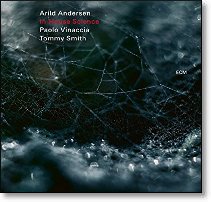
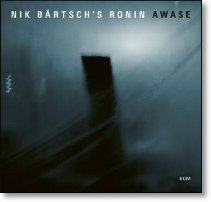
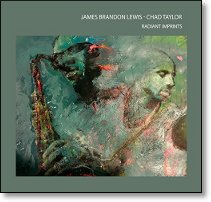
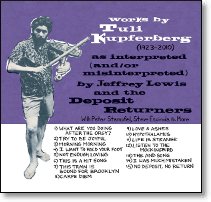
Erlend Olderskog Albertsen: Rødssal Neen Glassdør (2018, Dugnad Rec): Norwegian bassist, played in Akmee (trumpet-piano-bass-drums quartet with a good album last year, Neptun) and Filosofer, seems to be first album under his own name (although the Bandcamp page attributes the record to "Dugnad rec"). Expands on Akmee by adding alto sax (Martin Myhre Olsen) and trombone (Nilas Granseth). Ensemble can kick up a powerful ruckus, but doesn't lose interest when they cut back. B+(***) [bc] Arild Andersen: In-House Science (2016 [2018], ECM): Norwegian bassist, one of several future stars attracted to George Russell in the 1960s, debuted on ECM with the highly recommended Clouds in My Head in 1975, and lately has been running a trio with Paolo Vinaccia on drums and Tommy Smith on tenor sax. This one took me longer than 2008's Live in Belleville, but Andersen is a steady leader, and Smith can be explosive. A- [dl] Nik Bärtsch's Ronin: Awase (2017 [2018], ECM): Swiss pianist, rhythm-focused quartet (formerly quintet) dates back to 2002, with Sha (clarinet/alto sax), Thomy Jordi (bass), and Kaspar Rast (drums). Title is "a term from martial arts, means 'moving together' in the sense of matching energies." Builds on its minimalist base in divers remarkable ways. A- [dl] Nat Birchall: Cosmic Language (2018, Jazzman): For a long while, it seemed like every young saxophonist tried to sound like John Coltrane. That's less obvious now, perhaps in small part because Birchall nails it so perfectly. He even goes the extra step of returning the intense searching of Coltrane's last period back to the structure of the quartet. Still, has a few off moments. B+(***) Martin Blume/Tobias Delius/Achim Kaufmann/Dieter Manderscheid: Frames & Terrains (2016 [2018], NoBusiness): Listed alphabetically: drums, tenor sax/clarinet, piano, bass. Good spots for Delius and Kaufmann, although they tend to isolate. B+(**) [cdr] Benjamin Boone/Philip Levine: The Poetry of Jazz (2012-14 [2018], Origin): Levine is the late US Poet Laureate, winner of Pulitzer Prizes, and like many poets of his generation has much to say about jazz. He also taught for many years at Cal State Fresno, as has saxophonist Boone, who wrote most of the music here -- luxurious riffing behind the poet's words. Cut over four sessions, with numerous guests poking in for a song or a few -- Chris Potter, for instance, joins the "Homage to Sonny Rollins," Tom Harrell "I Remember Clifford," Branford Marsalis "John Coltrane," Greg Osby "Charlie Parker." Levine also knows work. A- [cd] The Breeders: All Nerve (2018, 4AD): Band, formed by Kim Deal and Tanya Donnelly in 1989, the latter replaced by sister Kelley Deal in 1992, with wide spaces between their five albums (1990, 1993, 2002, 2008, 2018). Dense, powerful, stalls toward the end. B+(*) Jakob Bro: Returnings (2016 [2018], ECM): Danish guitarist, tenor so records since 2005, third for ECM, a quartet with Palle Mikkelborg (trumpet/flugelhorn), Thomas Morgan (bass), and Jon Christensen (drums). Even with the trumpet this tends to fade into oblivion. B Chris Byars: New York City Jazz (2016 [2018], SteepleChase): Alto saxophonist, classic bebop player although he's given a good deal of thought to 1950s mainstream sound, including tributes to Duke Jordan, Lucky Thompson, Gigi Gryce, and Frank Strozier. Sextet with John Mosca (trombone), Stefano Doglioni (bass clarinet), Pasquale Grasso (guitar), Ari Roland (bass), and Stefan Schatz (drums). Two Gryce songs among four covers here. B+(**) Daniel Carter/William Parker/Matthew Shipp: Seraphic Light (2017 [2018], AUM Fidelity): Mostly an alto saxophonist, Carter is also credited here with flute, trumpet, clarinet, tenor and soprano saxophones. Not nearly as famous as his bassist and pianist, he is actually older, and has played on quite a few of their better albums, including in Parker's Other Dimensions in Music quartet. No drummer here, so Shipp takes a strong rhythmic role, with Parker fattening the sound and occasionally taking charge. Not one of Carter's flashier performances, but he adds color and flavor. A- [cd] Brian Charette/George Coleman: Groovin' With Big G (2017 [2018], SteepleChase): Organ-tenor sax quartet, with Vic Juris on guitar and George Coleman Jr. on drums. Charette has a relatively fresh take on the B-3, but is happy to lounge in this company, with the octogenarian saxophonist sounding nearly as good as he did a couple years back on A Master Speaks, or for that matter 1991's definitive My Horns of Plenty. B+(***) Anat Cohen/Fred Hersch: Live in Healdsburg (2016 [2018], Anzic): Clarinet and piano duets, the pianist exercising his best manners as an accompanist, so the limit must be the clarinet. B+(*) [bc] Tim Daisy/Michael Thieke/Ken Vandermark: Triptych (2016 [2017], Relay): Drummer, arbitrating between clarinet and Vandermark -- often an overwhelming force of nature, playing tenor sax and bass clarinet here, throttled back enough to keep the trio nicely balanced. B+(**) [bc] Tim Daisy: Music for Lying Still (2017, Relay, EP): One 25:15 piece, solo but not just drums -- no idea where the shaky electronics (or whatever it is) comes from. B+(**) [bc] Tim Daisy's Fulcrum Ensemble: Animation (2017 [2018], Relay): Drummer-led all-star group, strikes me as freebop given all the angles: Josh Berman (cornet), Steve Swell (trombone), Dave Rempis (alto/bari sax), James Falzone (clarinet), Fred Lonberg-Holm (cello). B+(***) [bc] District Five: Decoy (2017 [2018], Intakt): Swiss quartet, from Zürich (although recorded in Köln), guitarist Vojko Huter the main composer, with Tapiwa Svosve (alto sax), Xaver Rüegg (double bass), and Paul Amereller (drums), Huter and Svosve also credited with synths/electronics. First album. Not fusion -- that sort of density, but something more complex. B+(**) [cd] Dream Wife: Dream Wife (2018, Lucky Number): British group, three women, met in Brighton although lead singer Rakel Mjöll hails from Iceland, play hard, a little squeaky around the edges. Choice cut: "F.U.U." B+(***) The Ex: 27 Passports (2018, Ex): Dutch group, career approximately parallels the Mekons starting from similar postpunk and politics, but where the Mekons dabbled with country, the Ex took an interest in jazz and Africa. Still, Arnold de Boer's vocals retain their punk bark, and drummer Katherina Bornefeld is as welcome a change of pace as Moe Tucker. As for the guitarists, they've never before cranked out such driving thrash -- even when they were trying to drown out Ken Vandermark in Lean Left. Can't say much for the words yet, but they've always been right on. A Satoko Fujii Orchestra Berlin: Ninety-Nine Years (2017 [2018], Libra): Not quite a big band: three trumpets, three reeds, trombone, bass, two drummers. Fujii composed and conducts but doesn't play, and her piano is missed -- not that the orchestra can't generate plenty of intensity, but it could use something more to bridge the gaps. B+(**) [cd] Frode Gjerstad Trio + Steve Swell: Bop Stop (2018, Clean Feed): Alto saxophonist from Norway, played in Detail (1981-94) and led Circulasione Totale Orchestra, starting his trio with Jon Rune Strøm (bass) and Paal Nilssen-Love (drums) in 1999. This is a live set from The Bop Stop in Cleveland, kind of a free-for-all but gets more interesting further along. B+(**) Victor Gould: Earthlings (2017 [2018], Criss Cross): Pianist, second album, trio with Dezron Douglas (bass) and Eric McPherson (drums), with guests Tim Warfield (soprano sax), Godwin Louis (alto sax), and Kahlil Kwame Bell (percussion) -- the saxophonists on three tracks each. Four originals, six standards and jazz covers, starting with Mulgrew Miller and Horace Silver; i.e., where he's coming from. B+(**) Johan Graden: Olägenheter (2017 [2018], Moserobie): Pianist, Swedish (I think), seems to be first album under his name (a couple others listed Konrad Agnas or Andreas Pollak first). With Josefin Runsteen (violin), Per Texas Johansson (clarinet, bass clarinet, flute, saw), Pår-Ola Landin (bass), and Agnas (drums), has a chamber feel with extra sparkle. B+(**) Mary Halvorson: Code Girl (2016 [2018], Firehouse 12, 2CD): Guitarist, one of Anthony Braxton's students, has a couple dozen albums since 2004, a very mixed bag as far as I'm concerned, but some of her oeuvre is truly exceptional. This may be her most ambitious effort, adding vocalist Amirtha Kidambi and trumpet star Ambrose Akinmusire to her Thumbscrew trio (Michael Formanek, Tomas Fujiwara). Best work I've heard from the trumpeter, but the singer not only leans toward opera, she drags the songs that way too. B+(*) [bc] The Heat Death: The Glenn Miller Sessions (2018, Clean Feed, 3CD): Scandinavian free jazz quintet, mostly (I think) Swedish, with three famous horn players -- Mats Aleklint (trombone), Kjetil Møster (tenor sax, clarinet), Martin Küchen (alto/sopranino sax, flute) -- plus bass (Ola Høyer) and drums (Dag Erik Knedal Andersen). When I first saw this, I assumed the title referred to Stockholm's Glenn Miller Café, but the hype sheet offers no dates or location and claims: "the resulting music has few resemblances to what the Glenn Miller Orchestra continue to do until this day, but the spirit is here, exploring aspects which were implicitly, but never fulfilled, with all the respect to the historic figure who conceived it." I'm pretty sure that's nonsense, as are the references to Chris McGregor, Jaki Liebezeit, and thermodynamics. B+(**) Tim Heidecker: Too Dumb for Suicide: Tim Heidecker's Trump Songs (2017, Jagjaguwar): Comedian, writer, director, actor, sometime musician, since at least 2001 although I can't say as I've noticed him before. Maybe because his satire isn't funny enough? This barely breaks 30 minutes with a bonus remake of "Trump's Private Pilot. Reportedly, Paul Simon nixed the inclusion of "I Am a Cuck" (sung to "I Am a Rock"). Not sure whether to laugh or cry. B Gerry Hemingway/Samuel Blaser: Oostum (2015 [2017], NoBusiness): Duets, drums and trombone. First rate players, but not exactly a match made in heaven. B+(*) [cdr] Lauren Henderson: Ármame (2016 [2018], Brontosaurus): Singer, originally from Massachusetts but with Caribbean roots and a degree in Hispanic Studies wrote four songs here, all with Spanish titles. Band offers lots of support, including extra percussion. B+(*) [cd] Monika Herzig: Monika Herzig's Sheroes (2016 [2018], Whaling City Sound): Pianist, born in Germany, came to US on an exchange program in 1988 and stuck around. All-woman band with Ingrid Jensen (trumpet), Ada Rovatti (tenor sax), Jamie Baum (flute), Reut Regev (trombone), and Leni Stern (guitar), plus bass, drums, and extra percussion, with several band members contributing songs (Herzig three plus a "House of the Rising Sun" arrangement). Some strong solo moments, and a Latin thing at the end. B+(*) [cd] Il Sogno: Birthday (2015 [2017], Gotta Let It Out): Trio: Emanuele Maniscalco (piano), Tomo Jacobson (double bass), Oliver Laumann (drums). First group album. One cover from Ennio Morricone, the original pieces cutting a fine line, evenly balanced. B+(**) [cd] Jon Irabagon Quartet: Dr. Quixotic's Traveling Exotics (2016-17 [2018], Irabbagast): Tenor saxophonist, made a big impression with Mostly Other People Do the Killing and elsewhere. Still, his own records have been erratic, even though he's often a powerhouse. Here, for instance, an odd mix with Luis Perdomo (piano), Yasushi Nakamura (bass), and Rudy Royston (drums), plus Tim Hagan (trumpet). Awesome in spots, annoying in others. B+(**) [cd] JPEGMAFIA: Veteran (2018, self-released): Baltimore rapper Barrington Hendricks, did four years in USAF, second album, wildly experimental, all chopped up and screwed over. Has a rep among people I follow, and occasional moments do sound promising, but I can't follow it, and don't (yet) see any reason I should. B [bc] Roger Kellaway Trio: New Jazz Standards Vol. 3 (2017 [2018], Summit): All compositions by Carl Saunders (b. 1942, three years after the pianist; a trumpet player with Bill Holman, Stan Kenton, Bob Florence, and Gerald Nilson, with a half-dozen albums under his own name), so maybe not so standard. A fine piano player, with Jay Leonhart on bass and Peter Erskine on drums. B+(**) [cd] Jinx Lennon: Grow a Pair!!! (2018, Septic Tiger): Irish folk singer-songwriter, staunchly (and sometimes militantly) working class. Seems like someone I should cotton to, and indeed I've liked a couple of his previous albums. But I hate the title, the title song even more, and care little for the various ups and downs, not all of which are fairly dismissed. B+(*) James Brandon Lewis/Chad Taylor: Radiant Imprints (2018, OFF): Young tenor saxophonist, first albums came out on a major label (Okeh) so I figured him for a mainstream player, but he showed impressive chops and raw vitality. Since then he's fallen into obscure projects (e.g., Heroes Are Gang Leaders) and labels, and winds up here in a sax-drums duo, an avant specialty. Taylor has done this sort of thing before. He not only gets a terrific performance, he gives one. A- Jeffrey Lewis: Works by Tuli Kupferberg (1923-2010) (2018, Don Giovanni): I think I first first ran into Kupferberg when Grove Press published a very slim book of his, 1001 Ways to Beat the Draft (1966). It offered advice I could have used at the time, but as I recall wasn't all that useful. Nor was what I thought of as his sequel, 1001 Ways to Live Without Working (actually written in 1961). I probably read some of his poetry, but unlike his buddy Ed Sanders -- they formed a rock group in 1964 called the Fugs -- nothing especially memorable. Still, he was a hero to several generations of folkie-anarchists, including Lewis and his older fiddle player here, Peter Stampfel. Lewis allows himself leeway to "interpret and/or "misinterpret" Kupferberg's songs. The music palpably picks up when Kupferberg/Lewis stole it from someone talented (e.g., "I Wanna Hold Your Foot"), and the large-scale sing-alongs tidy his oeuvre up about as much as one could hope. A- [bc] Dave Liebman/John Stowell: Petite Fleur: The Music of Sidney Bechet (2017 [2018], Origin): Mostly soprano sax and guitar duets, Liebman also credited with wood flute and piano. Probably not a huge surprise that someone who plays as much soprano as Liebman does should want to do a Bechet tribute, but from his early days with Miles Davis Liebman's always been a Coltrane fan, and I've never noticed any previous linkage. Indeed, while these are mostly Bechet songs, they don't sound much like him. Nor does Stowell show much affinity, although his nylon-string and fretless baritone guitars are slinky as his norm. B+(*) [cd] Johan Lindström Septett: Music for Empty Halls (2018, Moserobie): Guitarist, also plays pedal steel guitar, spreads out a very diverse album with at least one song as catchy as the "Peter Gunn" theme, another called "Europe Endless Boogie," various spots for his horns that break into free territory -- Jonas Kullhammar (sax), Per Texas Johansson (clarinet), Mats Aleklint (trombone) -- then adds a splash of strings for the closing "Hymn." B+(***) [cd] The Doug MacDonald Quintet/The Roger Neumann Quintet: Two Quintets: Live Upstairs at Vitello's (2017 [2018], Blujazz, 2CD): Neumann plays tenor sax, runs the more conventional quintet, with trumpet (Carl Saunders), piano, bass, and drums. MacDonald is a guitarist, with tenor sax (Rickey Woodard), piano, bass, and drums. I don't really understand why they didn't cut their own albums, but the transitions were pretty seamless. Both play energetic, mostly jazz standards, a bit hotter than the norm. B+(*) [cd] The Maguire Twins: Seeking Higher Ground (2017 [2018], Three Tree): Drummer Carl, bassist Alan, identical, mother Japanese, father American, grew up in Hong Kong, moved to Memphis at 15, now 21 and, well, awful cute. Band made up of seasoned hard boppers -- Gregory Tardy (tenor sax), Bill Mobley (trumpet), Aaron Goldberg (piano) -- and they let it rip. B+(*) [cd] Todd Marcus: On These Streets (A Baltimore Story) (2017 [2018], Stricker Street): Bass clarinet player, from Baltimore, has a previous album. The usually upbeat music here is contraposed with various sound fragments rooted in injustice and unrest, with a vocal that leans gospel without going over the top. George Colligan is a steady driver on piano. Paul Bollenbeck (guitar) and Warren Wolf (vibes) also appear. Gary Bartz and Darryl Harper wrote liner notes. I doubt it fits or flows very well, but give him credit for trying to do something exceptional. B [cd] Ashley McBryde: Girl Going Nowhere (2018, Warner Nashville): Country singer from Arkansas. First album, co-wrote all but one song. Band can get heavy -- "classic rock influences" -- but she's more impressive when she strips everything away except for a thin whisper of guitar -- e.g., "Andy (I Can't Live Without You)." B+(**) Erin McDougald: Outside the Soirée (2018, Miles High): Standards singer, born in Ohio, based in Chicago, has at least one previous album. Can't read the hand-lettered booklet (looks to offer quite a bit of info) but did note the presence of saxophonists Dave Liebman and Dan Block, trumpeter Tom Harrell, and vibraphonist Mark Sherman -- all pluses in a very respectable effort. B+(**) [cd] Nick Millevoi's Desertion Trio With Jamie Saft: Midtown Tilt (2017 [2018], Clean Feed): Guitarist, based in Philadelphia, trio with electric bass (Johnny DeBlase) and drums (Kevin Shea), with Jamie Saft joining on organ (as he did on Millevoi's 2016 album Desertion) plus Ashley Tini (vibes/percussion) on three tracks. Fusion album, power moves laid on thick. B Modern Mal: The Misanthrope Family Album (2017, Mal): Christgau was reminded of Leonard Cohen and Dolly Parton. The former's voice is almost eerily duplicated, but I don't hear Parton and the music averages out as a bit less than the Handsome Family. B+(*) Ashley Monroe: Sparrow (2018, Warner Nashville): Like Kacey Musgraves, the Pistol Annie singer-songwriter makes a pop move, which with Dave Cobb producing means buried in strings. I still like her voice, but everything else is turned to mush. B- Michael Morreale: MilesSong: The Music of Miles Davis (2016 [2018], Summit, 2CD): Trumpet player, has a previous album. This is a quartet, with Tony Regusis (piano/Fender Rhodes), bass, and drums, so a pretty straight, mainstream presentation of fourteen songs -- only four by Davis, a few more from Hancock or Shorter, the rest standards that Davis played. B+(**) [cd] Diane Moser: Birdsongs (2017 [2018], Planet Arts): Pianist, has several previous albums including a duo with Mark Dresser on avant label CIMP. This doesn't even hint at that, although the bassist here, Ken Filiano, can certainly go that direction. Third player is Anton Denner on flute and piccolo, still not especially birdlike. Way too sedate to sustain my interest, although the piano is interesting when I manage to focus. B [cd] Michael Moss/Accidental Orchestra: Helix (2016 [2018], 4th Stream): Clarinet player, several previous albums, leads a large orchestral ensemble -- 22 pieces but only one trumpet, one trombone (Steve Swell), two saxes (one also flute), but six strings (including Jason Kao Hwang), two guitars (Billy Stein and Rick Iannacone, the latter credited with "ambient guitar"), and four percussionists (including Warren Smith on vibes and Badal Roy on tabla). B+(**) [cd] Kacey Musgraves: Golden Hour (2018, MCA Nashville): The most genteel of the Pistol Annies generation of country women, she's still very a very comfortable listen on a slow ballad, but has mostly turned this album over to the producers to craft into pop schmaltz, over-orchestrated but not danceable enough. B Patricia Nicholson/William Parker: Hope Cries for Justice (2017 [2018], Centering): Wife and husband, the former a dancer and organizer of New York's annual Vision Festival. Discogs credits her with a couple of vocal performances, but this is where she steps out front with her spoken-word poetry accompanied by Parker's donso n'goni and bass. I never really get the spirit/myth stuff, but won't fault her cry for hope and justice. Parker is restrained, otherwise he'd steal the show. B+(***) [cd] Danielle Nicole: Cry No More (2018, Concord): Last name Schnebelen, a blues/soul singer-songwriter, plays guitar and bass guitar, second (or third) album after an EP. I suspect she'll fall ever more clearly on the blues side, partly because that's how voices age, partly because she's already leaning hard on her guitar. B+(*) No Age: Snares Like a Haircut (2018, Drag City): Noise pop duo, guitarist Randy Randall and drummer/vocalist Dean Allen Spunt, fifth album, everything they've done so far makes a strong impression, although none of it has stuck with me. Every time I've played this album I've heard non-obvious echoes of a Go-Betweens song. One thing I'm sure of is that I'll never play anything else and find it reminds me of No Age. Still, the sound here moves way beyond noise, with an undeniable vitality. After three plays I enjoy every moment of it. But after three days I doubt I'll remember any of it. A- Meg Okura/Sam Newsome/Jean-Michel Pilc: NPO Trio Live at the Stone (2016 [2018], Chant): Violin/soprano sax/piano. Okura describes what she does as Chamber Jazz, but she's hard pressed to smooth over the rough edges of her partners. B+(*) [bc] Meg Okura & the Pan Asian Chamber Jazz Ensemble: Ima Ima (2018, Chant): Violinist, born in Japan, based om Mew York, converted to Judaism, title draws one word from Hebrew, another from Japanese, translates as Mom Now. Group isn't strictly Asian: guitarist Rez Abbasi is the only one I'm sure of, while I have doubts about Tom Harrell (trumpet), Anne Drummond (flute), Sam Newsome (soprano sax), Sam Sadigursky (bass clarinet/clarinet), Pablo Aslan (bass). Also a drummer, contrary to usual chamber practice, but I suppose the harp makes up for that. B+(*) [bc] William Parker: Lake of Light: Compositions for AquaSonics (2017 [2018], Gotta Let It Out): Four musicians -- Parker, Jeff Schlanger, Anne Humanfeld, Leonid Galaganov -- playing Parker compositions on AquaSonic waterphones invented by Jackson Krall. The instrument can be bowed or struck, so this bears some resemblance to a cello/percussion group, but higher pitched, with extra resonance due to the water. Leans toward noise to start, but grows from there to become quite haunting. B+(***) [cd] Ivo Perelman/Matthew Shipp: Oneness (2017 [2018], Leo, 3CD): Tenor sax/piano duets, as if last year's seven-volume The Art of Perelman-Shipp hadn't exhausted the topic. Of course, it probably didn't. It may even have merely paved the way for this level of intimacy. On the other hand, they're not doing anything they haven't done many times before. B+(***) [cd] Peripheral Vision: More Songs About Error and Shame (2018, self-released): Canadian group, fourth album since 2010, co-leaders Michael Herring (bass) and Don Scott (guitar), backed by the somewhat more famous Nick Fraser (drums) and Simon Hogg (tenor sax). Complex groove with some sharp edges, closing with an exceptionally catchy vamp. B+(***) [cd] Roberta Piket: West Coast Trio (2017 [2018], 13th Note): Piano trio with Darek Oleszkiewicz (bass) and Joe La Barbera (drums), plus guitarist Larry Koonse on two cuts, and percussionist Billy Mintz on one. Two originals, rest covers, ranging from Djavan to John Hicks. B+(*) [cd] Chris Platt Trio: Sky Glow (2017 [2018], self-released): Guitarist, from Canada, first album, trio with bass and drums. Nice flow, a little light. B+(*) [cd] Marvin Pontiac: The Asylum Tapes (2017, Strange and Beautiful): Fictional artist invented by Loung Lizards saxophonist John Lurie. His back story started with birth in Mali in 1932, mother Jewish from New Rochelle, father a west African who abandoned him, grew up in Chicago playing blues harmonica, copying Little Walter; went nuts, believing he had been abducted and probed by aliens; hit and killed by a bus in 1977. Pontiac first appeared in our world when Lurie released his Greatest Hits in 2000. Not much sax here; mostly guitar and growl. Can't claim it's as good as Beefheart, but if you miss him you might welcome a kindred spirit. A- Noah Preminger: Genuinity (2017 [2018], Criss Cross): Tenor saxophonist, has racked up an impressive discography quickly. This is a quartet with Jason Palmer (trumpet), Kim Cass (bass) and Dan Weiss (drums), playing nine originals, showing his range and burning up front and toward the end. B+(**) John Prine: The Tree of Forgiveness (2018, Oh Boy): First record of new songs since 2005's Fair and Square, with its pointed anti-Bush songs. Still, no (even oblique) mention of Trump this time: just a batch of scrimpy songs about love and death, mostly the latter. He practically looks dead on the cover, and his throat-cancer-damaged voice has deteriorated even further, making this hard to listen to at first. Still, you get used to all that, and start noticing his little tics of wit. By the end, he's in heaven, and rather than mourning you're wishing you could come along for the ride. A- Scott Reeves Jazz Orchestra: Without a Trace (2015-17 [2018], Origin): Big band leader, arranges and conducts, also plays a little trombone and alto flugelhorn. Four Reeves originals, three covers, band (featuring Steve Wilson) has a lot of power and swagger. One vocal, by Carolyn Leonhart, reminds me how awkward it seems to try to wrap words around tricky melodies. B [cd] The Rempis/Daisy Duo & Guests: Dodecahedron (2017 [2018], Aerophonic, 2CD): Rempis plays alto and baritone sax, Daisy drums. Third duo album, though they've played together much more than that, going back midway Vandermark 5. The first disc is a live duo set. The second a studio session with guests (no track credits, but sounds like one at a time): Jason Adasiewicz (vibes), Jim Baker (piano), Fred Lonberg-Holm (cello), Steve Swell (trombone), Katie Young (bassoon), Aaron Zarzutzki (electronics). A remarkable sax player, running through a wide range of moves, but still a little tiring. B+(**) Jay Rodriguez: Your Sound: Live at Dizzy's Club Coca Cola (2018, Whaling City Sound): Saxophonist, from Colombia, plays most of them and flute and bass clarinet as well -- the latter is my favorite part here. Billy Harper also plays tenor sax, with Larry Willis on piano, Eric Wheeler (bass), J.T. Lewis (drums), and Billy Martin (percussion). B+(**) [cd] Rent Romus' Life's Blood Ensemble: Rogue Star (2017 [2018], Edgetone): Alto saxophonist, also plays flute, leads a septet with tenor sax, E-trumpet, vibes, two basses, and drums. Some fine stretches, especially when I focus, but slips by when I don't. B+(***) Alexander Von Schlippenbach/Globe Unity Orchestra: Globe Unity - 50 Years (2016 [2018], Intakt): Back in 1966, a hitherto unknown 28-year-old German pianist assembled Europe's (and, really, the world's) first avant-jazz orchestra -- originally an ad hoc merger of groups led by Gunter Hampel, Manfred Schoof, and Peter Brötzmann (ages 29, 30, and 25). The group grew to 18 the next year, and recorded regularly over the next decade, regrouping later for significant anniversaries, with their 50th marking more time than had passed between ODJB's first jazz records and Globe Unity's founding. Still 18 strong here, with Von Schlippenbach, Schoof, and Gerd Dudek returning from the original band, plus Evan Parker, Tomasz Stanko, and Paul Lovens from the 1970 group. Cutting edge then, still pretty far out. A- [cd] Derek Senn: Avuncular (2016, self-released): Singer-songwriter from San Luis Obispo: wife, two kids, day job, second DIY album. With songs about "Vietnam" and "Monica Lewinsky" and "The Drinky Drink" -- you know, the world. B+(***) Sarah Shook & the Disarmers: Years (2018, Bloodshot): Country rocker from North Carolina, worked through a couple bands before coming up with the Disarmers, had their 2015 debut picked up by Americana label Bloodshot in 2017, so this is the sequel. Drinks a lot, rocks a little, at least no strings (yet). B+(*) Alex Sipiagin: Moments Captured (2016 [2017], Criss Cross): Trumpet player, born in Russia, moved to US in 1991, flashy, wailing over two energetic saxophonists -- Chris Potter (tenor) and Will Vinson (alto/soprano) -- backed by John Escreet (keybs), Matt Brewer (bass), and Eric Harland (drums), with two vocals by Alina Engibaryan. None of the horns lack for chops, but I don't care for the keyboards, or the vocals. B Jim Snidero & Jeremy Pelt: Jubilation! Celebrating Cannonball Adderley (2017 [2018], Savant): The leaders play hard bop alto sax and trumpet, same as Cannonball and Nat -- and the latter's "Worksong" closes the album on a high note. Backed by David Hazeltine, Nat Reeves, and Billy Drummond. Could be a long-lost Adderley Quintet album, except that they stick to the top tier of the songbook. B+(**) [cdr] Sons of Kemet: Your Queen Is a Reptile (2018, Impulse!): London-based group, led by saxophonist Shabaka Hutchings, with Oren Marshall on tuba and two drummers. Third album: Hutchings has other projects, like Shabaka and the Ancestors and the Comet Is Coming. Nine songs, each named "My Queen Is" and some name -- the two most familiar to me are Harriet Tubman and Angela Davis, but other track down to Africa and its diaspora. More than a few vocals, evidently guests. Nothing on the reptile, which is just as well. A- Spectral [Dave Rempis/Darren Johnston/Larry Ochs]: Empty Castles (2017 [2018], Aerophonic): Recycles a 2014 album name as group name. Johnston plays trumpet, the others saxophones: Rempis (alto/baritone), Ochs (sopranino/tenor). Interesting enough, but plods without a rhythm section pushing everyone along. B+(**) [bc] Spin Cycle [Scott Neumann/Tom Christensen]: Assorted Colors (2017 [2018], Sound Footing): Drums and tenor sax, with Pete McCann (guitar) and Phil Palombi (bass). Bright postbop, the guitarist neatly tying it all together although the sax, of course, is up front. B+(**) [cd] Superorganism: Superorganism (2018, Domino): British pop group that previously did business as the Eversons, plus significant others from New Zealand, South Korea, and Japan-via-Maine. So irregular I doubt I would have given the time of day except for Christgau's pick, which motivated me to give them three or four extra spins. Got to where I rather like them, but they still seem like harder work than a pop group should be. B+(***) John Surman: Invisible Threads (2017 [2018], ECM): Usual horns -- soprano/baritone saxophones, bass clarinet -- backed by Nelson Ayres (piano) and Rob Waring (vibes/marimba), names on the cover but below the title. B+(***) [dl] Tracey Thorn: Record (2018, Merge): Singer-songwriter from England, started in the 1980s group Marine Girls but became much better known in Everything but the Girl. Released a solo album in 1982, then four more since 2007. Touted as "nine feminist bangers," I can't say much about the feminism, but the "bangers" are pretty muted. One exception: "Dancefloor." B+(**) Frank Wagner: Frank Wagner's Floating Holiday (2016 [2018], MEII): Bassist-led piano trio, with Marco Di Gennaro on piano and David Meade on drums. Wagner's songs, done with a light touch. B [cd] Salim Washington: Dogon Revisited (2018, Passin' Thru): Tenor saxophonist (also plays flute and oboe here), born in Memphis, grew up in Detroit, has a few albums since 1998. This one suggests some sort of relationship to Julius Hemphill's Dogon AD (one of nine songs here). With Melanie Dyer (viola, voice), Hill Greene (bass), and Tyshawn Sorey (drums), looking back at the tradition and remaking it. B+(***) [bc] Dan Weiss: Starebaby (2018, Pi): Drummer, based in New York, plays tabla elsewhere, shows up on quite a few interesting records but I've never gotten into his own. This one too, although he surprised me twice: first with two talented pianists who mostly play synths and contribute damn little (Matt Mitchell, Craig Taborn); second by turning the album over into heavy-handed fusion thrash, a far cry from guitarist Ben Monder's usual rut although closer to electric bassist Trevor Dunn. B [cd] Håvard Wiik Trio: This Is Not a Waltz (2016 [2018], Moserobie): Norwegian pianist, best known for work in groups like Atomic and Free Fall, third trio album with Ole Morten Vågan (bass) and Håkon Mjåset Johansen (drums). Often struck me as a bit ornate for those groups, but that works to his advantage here, as does a challenging rhythm section. B+(***) [cd] Wreckless Eric: Construction Time & Demolition (2018, Southern Domestic): Eric Goulden, second-tier Stiff Records star from 1979, floundered a lot from there but somehow wound up marrying the best singer-songwriter of the 2000's and got top bill on three duet albums, two better than anything he had previously done. This year they decided to do their own albums, and while his isn't as good as hers, it's still pretty good: loud, chunky, a bit of dissonance. B+(***) [bc] Pablo Ziegler Trio: Jazz Tango (2017, Zoho): Argentine pianist, played in Astor Piazzolla's group and carries on, calling what he does Nuevo Tango. Trio adds Hector Del Curto (bandoneon) and Claudio Ragazzi (guitar), the relatively small group permitting a lot of piano flourish. B+(*) Recent Reissues, Compilations, Vault Discoveries
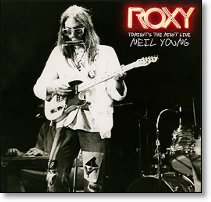
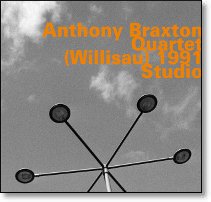
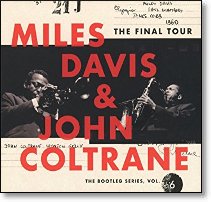
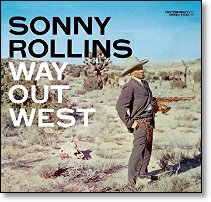
Louis Armstrong: Pops Is Tops: The Complete Verve Studio Albums and More (1957 [2018], Verve, 4CD): Norman Granz got his hooks into Armstrong in 1957, using Ella Fitzgerald as bait. They recorded three albums together: Ella and Louis, Ella and Louis Again, and Porgy & Bess. The first two are classics, with Ella picking faves from her extraordinary explotation of the Great American Songbook, and Armstrong gamely singing along, with occasional splashes of trumpet. We always knew that Armstrong had a remarkable voice, but he had rarely picked such sophisticated fare, so the surprise was how flexible and subtle he could be. Less well known are three more studio albums Armstrong cut for Granz in 1957: one with Oscar Peterson's quartet (with Herb Ellis on guitar), and two with Russ Garcia's string-laden orchestra. This box devotes a CD to each, padded out with alternate takes and false starts. The fourth disc is titled "A Day With Satchmo: August 1, 1957," flushed out with twenty-two takes of four songs. I decided to excerpt the three albums (see below), then make a pass through the extras -- more listenable than I expected, but not a bright spot in Armstrong's stellar career. B Louis Armstrong: The Nightclubs (1950-58 [2017], Dot Time): Tapes from Armstrong's personal archives, 16 tracks, all his usual sextet plus singer Velma Middleton on the back 9; Barney Bigard gives way to Edmond Hall on 11; Jack Teagarden to Russ Phillips on 3 and Trummy Young on 7; Earl Hines to Marty Napoleon on 3 and Billy Kyle on 8; Arvell Shaw to Mort Herbert on 11 (with Dale Jones 3-6 and Milt Hinton on 7), Cozy Cole to Barrett Deems on 8; plus an intro from Billie Holiday. Nothing you haven't heard before, but a nice survey of the decade. B+(***) Derek Bailey & Company: Klinker (2000 [2018], Confront, 2CD): British avant guitarist, in a trio with Mark Wastell (cello) and Simon H. Fell (bass), plus percussion here and there by tap dancer Will Gaines, and some unattributed narration/exhortation. The strings tend to meander abstractly. B Anthony Braxton: Quartet (Willisau) 1991 Studio (1991 [2018], Hatology, 2CD): Previously released as the front half of a 4-CD box -- presumably the June 2 concert CDs will re-appear soon. This is one of the great quartets of all time -- Marily Crispell (piano), Mark Dresser (bass), and Gerry Hemingway (drums) -- in their last year after a decade together. One of their most extraordinary recordings. A- Miles Davis & John Coltrane: The Final Tour [The Bootleg Series Vol. 6] (1960 [2018], Columbia/Legacy, 4CD): A quick one, three cities in four days -- Paris, Stockholm, Copenhagen -- winding up the five-year tenure of Davis' first great quartet, with Wynton Kelly (piano), Paul Chambers (bass), and Jimmy Cobb (drums). Coltrane, well into his string of recordings for Atlantic, was bursting with fresh ideas, not that Davis was willing to give up the lead. Good chance most (or all) of this has appeared before, early on European labels like Dragon, later on Acrobat's 2014 4CD box, All of You: The Last Tour 1960 (which misses Paris but adds other shows in Germany, Switzerland, and the Netherlands). A- Keith Jarrett/Gary Peacock/Jack DeJohnette: After the Fall (1998 [2018], ECM, 2CD): The Standards Trio, fifteen years after they set out, a set deemed worth recovering twenty years later: a return following a bout of "chronic fatigue" which kicked off what turned out to be one of the trio's prime periods -- 2002's My Foolish Heart: Live at Montreux is a personal favorite. Twelve tunes, mostly from jazz sources (although you'll barely note "Santa Claus Is Coming to Town"), stretched with their usual consummate skill. B+(**) Martin Küchen & Landaeus Trio: Vinyl (2013-14 [2018], Moserobie): Swedish saxophonist, plays them all here, with pianist Mathias Landaeus' trio on two sessions (different drummers), each previously released on vinyl. Küchen is best known for his Angles groups, but is a terrific free saxophonist, while the rhythm is just regular enough to let him vamp and boogie a little. A- [cd] Kirk Lightsey/Harold Danko: Shorter by Two: The Music of Wayne Shorter Played on Two Pianos (1983 [2017], Sunnyside): Cover notes "remastered." Music as advertised. B+(**) Wynton Marsalis Septet: United We Swing: Best of the Jazz at Lincoln Center Galas (2003-07 [2018], Blue Engine): The band backing a wide range of singers, some exceptional -- Bob Dylan, Ray Charles, Willie Nelson -- most not (although Eric Clapton's later session with Marsalis was the best album either artist released in this century). The jazz musicians don't get to show off their chops much, but they can fall back on credible blues. B+(*) Barre Phillips/Motoharu Yoshizawa: Oh My, Those Boys! (1994 [2018], NoBusiness): Two bassists, one American but based in France since 1972, the other Japanese, died in 1998 leaving a couple dozen albums I haven't heard -- an early duo with Dave Burrell (1974), at least one more with Phillips. This doesn't particularly sound like bass, more like an underground orchestral soundtrack to a horror flick that never turns really horrible. B+(***) [cd] Sonny Rollins: Way Out West [Deluxe Edition] (1957 [2018], Craft): An early masterpiece, the wood block intro a pure joy even before he saunters into "I'm an Old Cowhand" and ventures far beyond. The reissue -- as far as I can tell digital only -- basically doubles the album with alternate versions spliced with some dialogue. Can't say it offers new insights. You shouldn't skip Work Time or Saxophone Colossus or even Plays for Bird, but I've played just the extras three times and enjoy them as much as I do the original album, and that's one of his very best. A We Out Here (2018, Brownswood): Contemporary jazz sampler from London, saxophonist Shabaka Hutchings by far the best known although I recognize a few other names. Common trait is that the groups favor a groove though some also lean ambient. B+(*) Neil Young: Roxy: Tonight's the Night Live (1973 [2018], Reprise): A live set immediately following the recording of one of Young's most extraordinary albums, one that would sit on the shelf nearly two years before its June 1975 release. Nine of the album's twelve songs appeared here, along with "Walk On" (introduced for the encore as an "old song," but was a 1974 single from On the Beach). Not sure that the live album offers anything extra, the reprise is even stronger than on the album, and I've had songs from this stuck in my head all week. A- Old Music
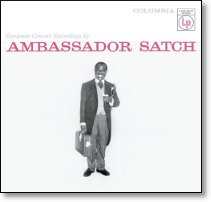
Louis Armstrong: Satchmo Serenades (1949-53 [2000], Verve): Eight cuts from a 10-inch LP released by Decca in 1952, backed by Sy Oliver's Orchestra, plus ten tracks from various 78s with various combinations of Oliver and All Stars. Decca pushed Armstrong to be more pop, and the songs -- including two from Hank Williams -- reflect that. Not that Armstrong can't claim them, with "It Takes Two to Tango" a prime example. B+(**) Louis Armstrong: Ambassador Satch (1955 [2000], Columbia/Legacy): The All-Stars -- Edmond Hall (clarinet), Trummy Young (trombone), Billy Kyle (piano), Arvell Shaw (bass), Barrett Deems (drums) -- tour western Europe, picking from shows in Amsterdam and Milan. Not really his standard show: fewer vocals, more ensemble dixieland, culminating in a riotous "Tiger Rag." Reissue adds three tracks, including a "Clarinet Marmalade" to feature Hall, who was already having a ball. Armstrong was vastly popular in Europe, and these tapes are riddled with applause. The State Department took advantage of his popularity, using him as a goodwill ambassador, notably on tours of eastern Europe -- a practice he stopped in 1957 to protest Eisenhower's "gutless" inaction on civil rights. A- Louis Armstrong: Louis Under the Stars (1957 [1958], Verve): After the Ella and Louis albums, Norman Granz had the idea of featuring Armstrong on a set of sappy standards -- "Top Hat, White Tie and Tails," "I Only Have Eyes for You," "Stormy Weather," "You're Blasé," "Body and Soul" -- backed by Russ Garcia's soupy orchestra. Not really his thing, but he nails them anyway. B+(*) [2:1-8 of Pops Is Tops] Louis Armstrong: I've Got the World on a String (1957 [1960], Verve): With Russ Garcia again. The songs lean a bit more toward blues, but the orchestra is incapable of swing. B [1:1-10 of Pops Is Tops] Louis Armstrong/Oscar Peterson: Louis Armstrong Meets Oscar Peterson (1957, Verve): Seems like everyone Norman Granz recorded during the 1950s had a meet up with Peterson sooner or later. These cuts started out as a spinoff to Ella and Louis, with similar songbook standards. Some (like "You Go to My Head") strike me as overly slow, but like the Fitzgerald sets Armstrong again proves his flexibility and nuance. Rhythm section includes Herb Ellis (guitar) as well as Ray Brown and Louie Bellson. B+(**) [3:1-13 of Pops Is Tops] Louis Armstrong: Louis and the Good Book (1958 [2001], Verve): A (mostly old testament) gospel program, backed by Sy Oliver's Orchestra -- seven pieces, including former All Stars Trummy Young and Billy Kyle, no strings -- and a ten-voice choir. Unmistakable voice and trumpet, humdrum arrangements (aside from "Shadrack," one of his staples). Reissue adds eight tracks, mostly redundant aside from two Elder Eatmore sermons. B Louis Armstrong: Louis Armstrong and His Friends (1970, Flying Dutchman): His last album, recorded over four days in May, 1970, a little more than a year before he died. The song titles, rather than the friends' names, on the front cover. On the other hand, the friends I recognize were mostly young musicians at the time, and only one shares a vocal -- Leon Thomas, on "The Creator Has a Masterplan (Peace)." The music was arranged by Oliver Nelson, with strings, congas, a chorus on four tracks (notably "We Shall Overcome" and "Give Peace a Chance" -- Ornette Coleman joined on those two), and plenty of sharp horns. No trumpet from the leader, but he sings and hams a bit, with "Boy From New Orleans" especially winning. Includes a remake of his last hit, 1967's "What a Wonderful World" (which became the title of a later, reordered RCA reissue). Actually, hard to convey how peculiar (weird even) this album is: he comes of as some sort of septagenarian flower child, making a peace-and-love album knowing how much he's overcome to get there. B+(*) Globe Unity Orchestra: Globe Unity 2002 (2002 [2003], Intakt): Sandwiched between 20th Anniversary (1986) and 40 Years (2006), an isolated reunion for Alexander von Schlippenbach (piano) and Manfred Schoof (trumpet), with three saxes (Evan Parker, Peter Brötzmann, Ernst-Ludwig Petrowsky), two trombones (Hannes Bauer, Paul Rutherford), two drummers (Paul Lovens, Paul Lytton). One 74:05 piece, reminds you they're still kicking, hard. Some spectacular soprano sax solos. B+(**) JPEGMAFIA: Black Ben Carson (2016, Trashfuck): First album, after a mixtapes and a couple of EPs. Difficult musically, but not as hard to follow as Veteran, in large part because when he rails "bitch I'm Ben Carson" you know he's trying to be funny as well as vicious. Choice cut: "The 27 Club." B+(*) Jeffrey Lewis & the Jrams: "A Loot-Beg Bootleg" (2014 [2016], self-released): "Mostly live in the studio Sept. 2014" -- two days, with Caitlin Gray and Heather Wagner (bass and drums, vocals both), wedged discographically between the tour following Jeffrey Lewis & the Jrams and Manhattan, where several songs later surfaced. Asks the timely question, what would Pussy Riot do? B+(***) [bc] Alexander von Schlippenbach/Globe Unity Orchestra: Globe Unity - 40 Years (2006 [2009], Intakt): Roster is 15 deep, with four trumpets, four trombones, four reeds, two drummers, the leader on piano, and no bass. Three (of six) pieces by the leader, the other three by alumni Willem Breuker and Steve Lacy and newcomer Kenny Wheeler (at least I hadn't noticed him in previous lineups, but he's played in similar groups like LCJO). Where 2002 often gave way to Peter Brötzmann brawling (absent here) and Evan Parker showing off, this feels more like a group album. B+(***) NotesEverything streamed from Napster (ex Rhapsody), except as noted in brackets following the grade:
Ask a question, or send a comment. Monday, April 23, 2018 Music Week
Music: current count 29604 [29570] rated (+34), 362 [365] unrated (-3). Made a decent sized dent in the new jazz queue, especially over the weekend when I found it easier to just pull something out than try to figure out what to look up on Napster. I did, however, chase down a few recommendations from Chris Monsen, Phil Overeem, and Robert Christgau. Though not on his list yet, I think it was Monsen on Facebook who mentioned that the Ex have a new record out. Someone wondered who they were, so I pointed out I had rated 24 of their records (7 A-). Probably inappropriate for me to rate the new one as high as I did on a single Bandcamp play, but the grade was pretty clear by midway, and only got better from there out. For more, see Bandcamp Daily's A Guide to (Nearly) Four Decades of Dutch Punks The Ex). The Ex came out of a Expert Witness discussion on the best records of 2018 (so far). One name that popped up frequently and is both on Monsen's and Overeem's lists is JPEGMAFIA's Veteran. Hip-hop, very (as they say) experimental. I didn't get into it at all, but I had a somewhat easier time with his earlier Black Ben Carson. Also from that thread, Jeffrey Lewis' Works by Tuli Kupferberg. In some ways I think the older "A Loot-Beg Bootleg" sounds better -- just Lewis and two women who sometimes sing, versus the mass singalong on the new album -- but I've had a soft spot for Kupferberg, and even if he weren't dead he'd never be able to frame his work in better light. I continue to have problems with Christgau's picks. I don't think there's been one I've said "yeah!" to since Shopping's The Official Body (2/23), although I liked Laurie Anderson's Landfall more than he did, and already had Amy Rigby's The Old Guys at A-. Some I reviewed respectably earlier but haven't replayed: Taylor Childers' Purgatory, Alvvays' Antisocialites, Yo La Tengo's There's a Riot Going On, and Rapsody's Laila's Wisdom. But few have been as disappointing as Jinx Lennon's Grow a Pair. And while I wasn't much impressed with Superchunk's What a Time to Be Alive, it tops Monsen's list. I also noted that Milo Miles raved about Mast's Thelonious Sphere Monk last week. And Overeem wrote a rave review of Tracey Thorn's Record. He also likes the Lewis Kupferberg album, plus two of my recent favorites: John Prine's The Tree of Forgiveness and Sons of Kemet's Your Queen Is a Reptile. Of the B+(***) records below, one that stands out is William Parker's Lake of Light. It's a quartet of aquaphones, so sounds like harps and percussion under water -- a bit too weird for me, but maybe not for you. The Armstrongs are just some mop up after last week's not especially recommended Pops Is Tops box. The Nightclubs would make a nice time capsule entry as it tracks the evolution of Armstrong's 1950s All Stars, although there are better examples of live Armstrong from the era, including all four CDs in The California Concerts. Ambassador Satch strays from his usual live show, as if he worried that Europeans were still expecting ODJB dixieland, so he decided to show them how it's really done. Probably the best "Tiger Rag" ever. April ends next Monday, so it would seem a good idea to wrap up a Streamnotes post by Friday/Saturday. Despite my distractions earlier this month, the draft file currently holds 90 records (14 A- or A) so it's shaping up as a pretty solid month. I want to note that I received a couple dozen personal letters over recent weeks, and I was touched and comforted by those who wrote -- some with fond memories, other from people I've never met but who clearly appreciate my work and care. I have yet to respond to any of those letters, for which I apologize. Sometime sooner or later I hope to, but for now I want all of you to know how thankful I am for your friendship and concern. New records rated this week:
Recent reissues, compilations, and vault discoveries rated this week:
Old music rated this week:
Unpacking: Found in the mail last week:
Ask a question, or send a comment. Sunday, April 22, 2018 Weekend RoundupAnother week where I ran out of time before I ran out of links. Indeed, one I couldn't get to is Chris Bertram: Is there too much immigration? I also noticed that John Quiggin has been publishing chapters to his forthcoming book Economics in Two Lessons on Crooked Timber. Some scattered links this week:
Ask a question, or send a comment. Saturday, April 21, 2018 Book RoundupIt's been eight months since my last Book Roundup -- a major lapse on my part. I started working on this a few months back, then lost track again. At this point I suspect I'm far enough behind that I'll need two more columns just to catch up, but at this point I'm only 15 books into the next one, so don't expect them to come out bang-bang-bang like previous catch-ups. One thing that will slow down the pace a bit is that I've started to simply note the existence of additional books following the forty I've written something on. Usually this is because I don't have anything non-obvious to say. Often, it's just that the book is worth knowing about, but unlikely to be worth reading. Some I may return to eventually, should I change my mind. Given my delays, I've actually managed to read several of these books: Allen Frances: Twilight of American Sanity, David Frum: Trumpocracy, Mark Lilla: The Once and Future Liberal, and Sean Wilentz: The Politicians & the Egalitarians. I'm also about 400 pages into Steve Coll: Directorate S, and I've bought copies but haven't yet gotten to Jennifer M Silva: Coming Up Short, Amy Siskind: The List. I can't really say that any of these books are "must read," but I have learned things from each. My main complaint about the Coll book is that by focusing on the CIA, ISI, and NDS (the Afghan counterpart) he's very rapidly skipped over the most ill-fated US decisions, like the conviction that the US can simply dictate Pakistan's behavior, and the blanket rejection of any possible Taliban role. But he also only barely touches on the CIA's continued support of their Afghan warlord clients even after the Karzai government was formed. I'm currently up to 2009, with McChrystal still in charge of the surging military, and Holbrooke still among the living (if not among the functional) -- two things I know will change soon. Kurt Andersen: Fantasyland: How America Went Haywire (2017, Random House): Big picture history of America, strikes me as like one of those creative writing assignments meant to let your imagination run wild -- probably helps that the author has a couple of novels to his credit. Still, shouldn't be hard to fill up 480 pp. with stories of America's tenuous love/hate relationship to reality. Nor has the election and regime of Donald Trump given us reason to doubt that we're living in a Fantasyland. And clearly Trump was on the author's mind -- probably the reason Alec Baldwin hired him as co-author of their cash-in book, You Can't Spell America Without Me: The Really Tremendous Inside Story of My Fantastic First Year as President Donald J. Trump (A So-Called Parody). Benjamin R Barber: Cool Cities: Urban Sovereignty and the Fix for Global Warming (2017, Yale University Press): Political and cultural theorist, wrote a book I was impressed by back in 1971, Superman and Common Men: Freedom, Anarchy and the Revolution, and a couple dozen books since then: two that intrigued me but always seemed a bit too flip were Jihad vs. McWorld: How Globalism and Tribalism Are Reshaping the World (1996) and Consumed: How Markets Corrupt Children, Infantilize Adults, and Swallow Citizens Whole (2007). Turned his eye toward cities with his 2013 book, If Mayors Ruled the World: Dysfunctional Nations, Rising Cities, to which this is a sequel, focusing on the relative energy efficiency of cities. Sad to read that he died, about a month after this book came out. Ronen Bergman: Rise and Kill First: The Secret History of Israel's Targeted Assassinations (2018, Random House): Big (756 pp) book by the Yedioth Ahronoth military analyst. I doubt there are many secrets here -- Israel has a long history of bragging about its secret agency exploits -- but the scale of the killings may come as a surprise. Some time ago, I spent time looking at a database of prominent Palestinians, and the sheer number of them killed by Israel was pretty eye-opening. Max Boot: The Road Not Taken: Edward Lansdale and the American Tragedy in Vietnam (2018, Liveright): Another attempt to find a scapegoat for the American failure in Vietnam, in this case arguing that if only American leaders had followed the advice of CIA operative Lansdale everything would have worked out for the better. This is an appalling argument in lots of ways. For one thing, Lansdale did have an outsized influence on the decision to cancel elections and stick by Diem's corrupt and vicious regime. Beyond that, Lansdale's successors were always going to view the war as a test of American resolve and power, and they were always going to be contemptuous of the Vietnamese and profoundly uninterested in their welfare. The real tragedy of the war in Vietnam was the failure of America's class of strategic thinkers to learn some humility and restraint following their imperial overreach, as is evidenced by repeated failures in numerous more recent wars. Paul Butler: Chokehold: Policing Black Men (2017, New Press). One of several recent books on how the criminal justice system is stacked against black men, written by a former federal prosecutor who's been there and done that. Previously wrote Let's Get Free: A Hip-Hop Theory of Justice (2009). Also see: Angela J Davis, ed: Policing the Black Man: Arrest, Prosecution, and Imprisonment (2017, Random House); Jordan T Camp/Christina Heatherton, eds: Policing the Planet: Why the Policing Crisis Led to Black Lives Matter (paperback, 2016, Verso Books). Ta-Nehisi Coates: We Were Eight Years in Power: An American Tragedy (2017, One World): A collection of essays, some new, including "Fear of a Black President," "The Case for Reparations," and "The Black Family in the Age of Mass Incarceration" -- important work. Still, I never quite got the feeling that "we were in power" during Obama's two terms, even the first two years when Democrats had large majorities in Congress but let Max Baucus decide life and death issues; meanwhile Robert Gates was Secretary of Defense and Ben Bernanke chaired the Fed. Steve Coll: Directorate S: The CIA and America's Secret Wars in Afghanistan and Pakistan (2018, Penguin Press): Coll's second book about America's misadventure in Afghanistan (and schizophrenic alliance with Pakistan), bringing the story started in Ghost Wars: The Secret History of the CIA, Afghanistan, and Bin Laden, From the Soviet Invasion to September 10, 2001 (2004) up to date. Of course, the post-9/11 US invasion and still ongoing occupation of Afghanistan hasn't exactly been a secret, but presumably this focuses more on the CIA role there rather than chronicling the ham-fisted DOD and their NATO proxies. No doubt an important book, but I expect it leaves much uncovered. Peter Cozzens: The Earth Is Weeping: The Epic Story of the Indian Wars for the American West (2016, Knopf; paperback, 2017, Vintage Books): Covers every front over a 30 year stretch, 1861-1891, during which white Americans fought numerous wars, brokered treaties (and often broke them), ultimately herding Native Americans into a few barren reservations and closing the frontier. Author worked for the State Department, and has written a number of military histories of the Civil War. Larry Derfner: No Country for Jewish Liberals (2017, Just World Books): A Jewish journalist from Los Angeles, typically liberal, moved to Israel and surveys the intolerant, closed, often vicious society he encounters. I've maintained for some time now that constant war even more than greed and corruption (both plenty in evidence) has been responsible for so many Americans abandoning their liberal traditions. Same thing applies to Israel, even more so given the relative intensity of their militarism (a universal draft, for Jews anyway) and their incessant cult of victimhood. EJ Dionne Jr/Norman J Ornstein/Thomas E Mann: One Nation After Trump: A Guide for the Perplexed, the Disillusioned, the Desperate, and the Not-Yet-Deported (2017, St Martin's Press): Quickie from three authors who've made careers explaining, as Dionne put it in his 1992 book, Why Americans Hate Politics -- the others are best known for their 2012 dissection of Congress, It's Even Worse Than It Looks. Dionne seems to be the unshakable optimist -- another of his titles is They Only Look Dead: Why Progressives Will Dominate the Next Political Era -- but these days I find the assumption that there will still be "one nation after Trump" to be ungrounded. Barbara Ehrenreich: Natural Causes: An Epidemic of Wellness, the Certainty of Dying, and Killing Ourselves to Live Longer (2018, Twelve): Seems to be a sequel to her 2009 book Bright-sided: How the Relentless Promotion of Positive Thinking Has Undermined America, her critical instincts sharpened by another decade of getting older (78) and more acquainted with mortality. I've been expecting her to write a major book on the high cost of being poor in America -- a subject she's written several essays about recently. Hope she gets to that. I might also wish she'd explore the inner madness of the Trump voter, but she anticipated all that in her 1989 book Fear of Falling: The Inner Life of the Middle Class. Jesse Eisinger: The Chickenshit Club: Why the Justice Department Fails to Prosecute Executives (2017, Simon & Schuster): Investigates the fact that none of the bank executives responsible for the 2008 meltdown and ensuing recession were ever charged with crimes (although eventually a number of substantial fines were paid by newly profitable companies the public had bailed out, most often leaving their management in place). Nor is it just bankers who seem to be able to get away with whatever. Blames timid prosecutors, but to make sense of it all you'd have to work through the lax regulation companies are subjected to, and the widespread respect civil servants seem to have for money and well-heeled executives. Neil Faulkner: A People's History of the Russian Revolution (paperback, 2017, Pluto Press): One-hundred years later, emphasizes the revolutionary parts of the Russian Revolution, the parts that tore down one of the most corrupt and decadent aristocracies in Europe and tried to build a broad-based alternative -- before violence and paranoia took its toll. In today's post-Soviet era we're inclined to see the revolution and its aftermath as continuous tragedy, which is only true if you forget the injustices of the world it swept away. Allen Frances: Twilight of American Sanity: A Psychiatrist Analyzes the Age of Trump (2017, William Morrow): Argues that Trump is not technically insane, but raises many pertinent questions about whether America as a whole. The opening section on truths Americans reject and myths they embrace is a garden variety liberal list, but this gets more interesting when he goes on to root our understanding of psychology in Darwin rather than Freud. Tricky terrain: I think easy psychological labels are misleading, yet don't doubt that deeply seated mental processes are serving us poorly when we think about politics these days. David Frum: Trumpocracy: The Corruption of the American Republic (2018, Harper): Former Bush speechwriter, has of late argued that Republicans should pay more heed to the needs of their base voters and less to their moneyed elites, which makes him sympathetic with the popular impulse of Trump's campaign and critical of the reality of his administration. Useful mostly for detailing the myriad ways Trump is bound up in corruption, and unflinching in its criticism of other Republicans for condoning and enabling his treachery. Would be more trenchant if only he realized that corruption is the coin of the Republican realm -- not just a side-effect of a political philosophy dedicated to making the rich richer but a way of keeping score. David Goodhart: The Road to Somewhere: The Populist Revolt and the Future of Politics (2017, Hurst): British editor of Prospect magazine, wrote a previous book The British Dream: Successes and Failures of Post-War Immigration, takes the Brexit vote and Trump's win as signposts for a right-wing revolt he deems to be populist. I regard those wins as flukes: possible only because serious economic interests were lucky enough to find themselves with enemies that could be blamed for all the evils of neoliberalism. Most elections don't break quite like that -- e.g., the post-Brexit UK elections. Linda Gordon: The Second Coming of the KKK: The Ku Klux Klan of the 1920s and the American Political Tradition (2017, Liveright): The original KKK was formed in the 1970s to restore white supremacy in the South through the use of terror. Its work was largely done by the 1890s with the adoption of Jim Crow laws across the South and into parts of the North. In the 1910s Woodrow Wilson extended Jim Crow to the federal government, and the movie Birth of a Nation romanticized the old KKK, leading to a resurgence that grew beyond the South. This is the history of the latter movement, how it grew and why it crumbled (not that remnants haven't survived to the present day). David Cay Johnston: It's Even Worse Than You Think: What the Trump Administration Is Doing to America (2018, Simon & Schuster): Journalist, has written several books on how the economic system is rigged for the rich, and has also written a couple of books about one such rich person in particular: Donald Trump. Therefore, he started well ahead of the learning curve when Trump became president. Hopefully he goes deeper as a result. Probably a good companion to Amy Siskind: The List: A Week-by-Week Reckoning of Trump's First Year. Gilles Kepel: Terror in France: The Rise of Jihad in the West (2017, Princeton University Press): French political scientist and Arab expert, wrote Jihad: The Trail of Political Islam (2000 in French where the subtitle was Expansion et Déclin de l"Islamisme; 2002 in English with an afterward on how 9/11 seemed like a desperate ploy to reverse the decline -- thanks mostly to GW Bush it worked), with a steady stream of books since then. This covers recent terror attacks in France and their socioeconomic context. Also new is a thin book by the other famous French jihad expert, Olivier Roy: Jihad and Death: The Global Appeal of Islamic State (2017, Oxford University Press). Sheelah Kolhatkar: Black Edge: Inside Information, Dirty Money, and the Quest to Bring Down the Most Wanted Man on Wall Street (2017, Random House): About Stephen A Cohen and SAC Capital, although the former was never indicted for his hedge fund's insider dealing. Robert Kuttner: Can Democracy Survive Global Capitalism? (2018, WW Norton): Could have filed this with the warnings against right-wing populism, but this goes deeper, seeing the global expansion of capitalism since the 1970s, and especially the tendency of those same capitalists to game supposedly democratic systems, at the root of the crisis. The problem has less to do with authoritarian wannabes and their fans than with corporate managers and financiers seeking to exempt business from any form of public restraint. The results may still bear some formal resemblance to democracy, but not the kind where most people can force the system to treat them fairly. When you think of it that way, the question becomes "has democracy survived global capitalism"? One could answer "no." Brandy Lee: The Dangerous Case of Donald Trump: 27 Psychiatrists and Mental Health Experts Assess a President (2017, Thomas Dunne Books): The "consensus view of two dozen psychiatrists and psychologists [is] that Trump is dangerously mentally ill and that he presents a clear and present danger to the nation and our own mental health." Sounds about right, but then I recall having long ago become a fan of Thomas Szasz's work, particularly his The Myth of Mental Illness, and I myself have been diagnosed as mentally ill by various shrinks, both credentialed and not. Indeed, I doubt it would be hard to sketch out unflattering psychological portraits of anyone who's become president since 1900 (I'm hedging a bit on McKinley but Teddy Roosevelt was mad as a hatter, and half of his successors are comparably easy pickings). Indeed, there's little reason to expect that people we elect to the nation's highest (and presumably most coveted) office should be even close to "normal." On the other hand, Trump is certainly an outlier, especially in his lack of understanding how government works, perhaps even more importantly in his lack of concern for how his acts affect people. Psychologists have compiled a thick book of diagnoses for traits like that (e.g., see "sociopath"), but much of that behavior can also be explained by looking at his class background -- how he inherited and then played with his wealth, parlaying it for fame in his peculiarly own ego-gratifying terms. Moreover, psychoanalyzing him misses the fact that he rules through other people, who while having their own fair share of foibles have aligned thermselves with Trump more for political and/or ideological reasons -- and that, I think, is where we should focus our critiques. (Not, mind you, that I doubt Trump's stark-raving bonkers.) Mark Lilla: The Once and Future Liberal: After Identity Politics (2017, Harper Collins). Short essay rushed out following the Trump election. Argues that liberals need to seek the moral high ground by focusing on universal rights and values instead of what he sees as their recent indulgence in cultivating "identity groups." "Identity politics" is a term much bandied about, near-meaningless with ominous overtones, probably because the right has been rather successful at fragmenting people into tribes and motivating them to vote to thwart the plans of rival tribes. On the other hand, literally everyone votes because of some identity they've developed -- which need not be ethnic or racial or religious, but could just as well be class or even a sense of the positive value of diversity. Liberalism would be an identity too, except that liberals have been running away from the label for 30-40 years now, which has only encouraged conservatives to pile on. Lilla at least is trying to reassert some universal values. Angela Nagle: Kill All Normies: Online Culture Wars From 4Chan and Tumblr to Trump the Alt-Right (paperback, 2017, Zero Books): Short (156 pp) survey of "culture war" rants on the internet, mostly from the "alt-right" but takes a few jabs at supposed lefties for balance. Argues that there's way too much of this stuff, and (I think) that we'd be better off with more taste and mutual respect (as long as that doesn't seem like some sort of radical leftist stance). Rachel Pearson: No Apparent Distress: A Doctor's Coming-of-Age on the Front Lines of American Medicine (2017, WW Norton): By "front lines" she means the leaky bottom of the safety net, where patients can get diagnosed but are left untreated because they too indigent or not indigent enough. Kim Phillips-Fein: Fear City: New York's Fiscal Crisis and the Rise of Austerity Politics (2017, Metropolitan Books): In 1975 New York City risked bankruptcy, and one famous newspaper headline read: "Ford to City: Drop Dead." Banker Felix Rohatyn intervened, staving off the crisis but forcing the city to adopt various changes, including ending its practice of free college. Phillips-Fein previously wrote an important book on the rise of the right in America: Invisible Hands: The Making of the Conservative Movement From the New Deal to Reagan (2009), and sees this as yet another chapter in that rise -- all the more notable today as austerity is the right's standard answer to public debt. Steven Pinker: Enlightenment Now: The Case for Reason, Science, Humanism, and Progress (2018, Viking): Author of The Better Angels of Our Nature: Why Violence Has Declined, continues expanding his case for optimism at a time when contrary evidence is so overwhelming it threatens to bury us. I think he has a point -- indeed, a number of them -- but one shouldn't fail to notice that anti-Enlightenment, anti-Progressive thinking has grabbed considerable political power (at least in the US), so much so that most Americans regard war as a permanent condition, and many see no problem with inequality hardening into oligarchy. Robert B Reich: The Common Good (2018, Knopf): For better or worse, a true liberal. His most famous book, The Work of Nations (1991), was built around one of the worst ideas of our time -- one which, I might add, was the reason Bill Clinton hired him as Secretary of Labor -- and also offered one of the sharpest observations of how life was changing due to increasing inequality. The latter: how the rich were separating and isolating themselves from everyone else, most obviously by moving into gated communities and even more rarefied spaces (like Trump Tower and Mar-A-Lago). The former: his idea how Americans could survive the ongoing process of financial globalization, including the decline of manufacturing industries, by retraining workers to become what he called "symbolic manipulators." In point of fact, it was never possible for more than a tiny sliver of American workers to become "symbol manipulators," it was a convenient rationalization for neoliberals like Clinton to embrace globalization and growing inequality. One might argue that ever since Reich left Clinton's cabinet, he has been trying to do penance for his role there. He's written another dozen books, trying to defend key liberal ideas and save capitalism in the process. This at least is on a key idea that has taken a beating from conservatives: the idea that there is "a common good" as opposed to numerous individual goods that markets allow competition for. He also notes that the common good is built from "virtuous cycles that reinforce and build" as opposed to "vicious cycles that undermine it." We have been stuck in the latter for decades now, and it's cumulatively taking a huge toll. So this is an important concept, even if I don't particularly trust the messenger. Richard Rothstein: The Color of Law: A Forgotten History of How Our Government Segregated America (2017, Liveright): Going back as far as the 1920s, argues that what we think of as de facto segregation has been significantly shaped by law and public policy, even after the Fair Housing Act of 1968 supposedly put an end to all that. Jennifer M Silva: Coming Up Short: Working-Class Adulthood in an Age of Uncertainty (paperback, 2015, Oxford University Press): Short book based on one-hundred interviews with young working class adults in Massachusetts and Virginia, finding their opportunities limited and fleeting as the right-wing attack on unions and the welfare state has focused more on kicking the ladder out for future generations than on wrecking the lives of their elders. Silva also did interviews for Robert D Putnam's Our Kids: The American Dream in Crisis. Amy Siskind: The List: A Week-by-Week Reckoning of Trump's First Year (2018, Bloomsbury): "A national spokesperson, writer and expert on helping women and girls advance and succeed" -- a noble career, no doubt, derailed by her decision to compile weekly blog posts on all the unprecedentedly strange things Trump and his minions have done as they were reported. Early on she came up with 6-9 items per week, but over time that list grew to as many as 150, a quantity that not only means much is slipping through the cracks even in our 24/7 news obsession, but which has overloaded and numbed our sense of outrage and even our ability to analyze. This compiles a year of those reports, a mere 528 pages. Good chance this will endure as an essential sourcebook for the year. Ali Soufan: Anatomy of Terror: From the Death of bin Laden to the Rise of the Islamic State (2017, WW Norton): Former FBI agent, famed for his expert interrogation of terror suspects -- he's the subject of a chapter in Lawrence Wright's The Terror Years: From Al-Qaeda to the Islamic State, and author of the book, The Black Banners: The Inside Story of 9/11 and the War Against al-Qaeda (2011). Cass R Sunstein: #Republic: Divided Democracy in the Age of Social Media (2017, Princeton University Press): Occasionally interesting MOR Democratic theorist, takes his shot here at trashing the internet for propagating self-selected, self-confirming nonsense that divides people into hostile camps incapable of empathy with or understanding of anyone but themselves. This, of course, has been pretty much the high-brow critique of media since Gutenberg, the main point that it detracts from people blindly following whatever experts are sanctified by whoever has the power to do that sort of thing. I suppose there's some truth this time around, but I'd look at the vested interests using social media for their propaganda (ok, they call it advertising) before concluding that "the media is the message." Charles J Sykes: How the Right Lost Its Mind (2017, St Martin's Press): Former "longtime host of the #1 conservative talk-radio show in Wisconsin," now "a regular contributor to MSNBC," features a Trump-like hat on the cover and evidently focuses on how conservatives wound up flocking to Trump. Sounds like he's failed to make the necessary distinction between why the Right lost its mind and things the Right did after having lost its mind. The former would be an interesting book, although it actually isn't so mysterious: the only real political principle behind conservatism is the defense of wealth and privilege, and that's intrinsically a hard sell in a real democracy, so the Right has to hide their soul behind a lot of incidental sales pitches. The latter is just sad and pathetic, like so much recent American history. Heather Ann Thompson: Blood in the Water: The Attica Prison Uprising of 1971 and Its Legacy (2016, Pantheon; paperback, 2017, Vintage Books): A major history of the 1971 Attica prison uprising, its brutal suppression, and the decades-long legal fight that followed. When this happened my philosophy 101 professor at Wichita State was so disturbed he ditched his lesson plan to talk about what happened. Later I became friends with a lawyer who put most of her career into this case, the extraordinary Elizabeth Fink, so it feels like I've tracked this story all my life. The enduring lesson is how much contempt and disdain people in power have for the people they condemn as criminals, and how that hatred and fear can lead them to do things as bad or worse. Katy Tur: Unbelievable: My Front-Row Seat to the Craziest Campaign in American History (2017, Dey Street Books): NBC News correspondent assigned to cover Trump's campaign, where she evidently fact-checked, challenged, and generally made herself a nuissance, while visiting 40 states and filing 3800 live television reports. Sounds like it must have been much worse than "craziest" implies. Richard White: The Republic for Which It Stands: The United States During Reconstruction and the Gilded Age, 1865-1896 (2017, Oxford University Press): A new volume in The Oxford History of the United States, originally planned by C. Vann Woodward and Richard Hofstadter back in the 1950s, with the first volumes appearing in 1982 (Robert Middlekauff on 1763-1789) and 1988 (James M. McPherson on the Civil War), and David M. Kennedy (whose 1929-1945 volume came out in 1999) taking over after Woodward's death. Each of the eleven period volumes (plus a 12th on US foreign relations) is close to 1000 pages, and the few I've looked at (3 remain unpublished) are remarkably imposing tomes. Sean Wilentz: The Politicians & the Egalitarians: The Hidden History of American Politics (paperback, 2017, WW Norton): A major historian, though much more reliable on The Rise of American Democracy: Jefferson to Lincoln than on The Age of Reagan: A History 1974-2000, offers a book of scattered essays, mostly book reviews. Useful for reminding ourselves how prevalent the egalitarian impulse is in American history, and how often pragmatic politicians fall short of even their own professed ideals. Lawrence Wright: The Terror Years: From Al-Qaeda to the Islamic State (2016; paperback, 2017, Vintage Books): Author of one of the best general histories of Al-Qaeda and 9/11, The Looming Tower: Al-Qaeda and the Road to 9/11 (2006), updates the story with scattered pieces -- mostly profiles of more or less related individuals although nothing like a comprehensive update of the ensuing history. Other recent books also noted without comment: Alec Baldwin/Kurt Andersen: You Can't Spell America Without Me: The Really Tremendous Inside Story of My Fantastic First Year as President Donald J. Trump (A So-Called Parody) (2017, Penguin Press). Krystal Ball: Reversing the Apocalypse: Hijacking the Democratic Party to Save the World (2017, Pelican Media). Hillary Rodham Clinton: What Happened (2017, Simon & Schuster). James Comey: A Higher Loyalty: Truth, Lies, and Leadership (2018, Flatiron). Melinda Cooper: Family Values: Between Neoliberalism and the New Social Conservatism (2017, Zone Books). Corey R Lewandowski/David N Bossie: Let Trump Be Trump: The Inside Story of His Rise to the Presidency (2017, Center Street). Keith Olbermann: Trump Is F*cking Crazy (This Is Not a Joke) (2017, Blue Rider Press). Leo Panitch/Sam Gindin: The Making of Global Capitalism: The Political Economy of American Empire (paperback, 2013, Verso Books). Yanis Varoufakis: Talking to My Daughter About the Economy: A Brief History of Capitalism (paperback, 2017, The Bodley Head). Michael Wolff: Fire and Fury: Inside the Trump White House (2018, Henry Holt). John Ziegelman/Andrew Coe: A Square Meal: A Culinary History of the Great Depression (2016; paperback, 2017, Harper). Ask a question, or send a comment. Monday, April 16, 2018 Music Week
Music: current count 29570 [29549] rated (+21), 365 [371] unrated (-6). Looks like rated count tanked, but four of the albums listed below are 2-CD, one 3-CD, and one is 4-CD. Granted, I didn't give the multiple sets (aside from Ivo Perelman) extra spins. My two new A- records got at least four plays. The only question I had about the other -- a 2-CD reissue of the first half of Anthony Braxton's 4-CD Willisau (Quartet) 1991 -- was whether it would rise to a full A, but I noted a couple of off spots, and figured my original A- grade would hold (albeit a high one). On the other hand, I carved out three separate grades for original albums collected in Louis Armstrong's Pops Is Tops: The Complete Verve Studio Albums and More. Finally an Armstrong box you don't need, although to the extend you can isolate the leader's vocals and occasional trumpet from Russ Garcia's orchestra, you might beg to differ. The album with Oscar Peterson isn't so great either. If you want to hear Satch singing show tunes, try challenging him, as Ella Fitzgerald did: see Ella and Louis and, even better, Ella and Louis Again. The Arild Andersen album took a while because it never quite hit me as strong as Live at Belleville, his first album with tenor saxophonist Tommy Smith. The John Prine album was even more marginal. Touted as his first album of original songs since 2005's Fair and Square, one might have hoped that Trump raised up his political hackles like Bush did, but he chose to sing about something less depressing: death -- or at least it's less depressing given his spin on the afterlife. He looks bad, and sounds worse, but bears a message of forgiveness for damn near everyone. Feels a lot like You Want It Darker, which is about as much a decline from I'm Your Man as this is from The Missing Years. Folks get old and decrepit, and maybe you should appreciate them a little before they die. Two near misses. After seven volumes of The Art of Perelman-Shipp last year, I was feeling a little fatigue in facing three more duo CDs. I played the third disc enough to be impressed, but was glad I didn't have to sort them all separately. I was even more impressed by George Coleman on the Brian Charette disc. He's showing remarkable vigor for an 82-year-old, but was somewhat better served on 2016's A Master Speaks. The other B+(***) this week is a bass duo recovered from 1994 -- a rather self-limiting format, but really doesn't sound like a bass duo at all. More like an interesting but oblique soundtrack. Unpacking was very skimpy last week, but I folded Monday's mail in so it looks closer to normal below. Still, didn't factor those into the unrated count, so we're a bit out of sync. I have quite a bit of backlog. One significant addition to the website is that I've resurrected a set of pages on my late sister's Sacred Space project, from 2002. I had these pages tucked into a corner of my website before they got trashed by my ISP. I was able to salvage the text files, but had to scrounge through my stuff to locate a CD-ROM with the images. At this point I've done little more than update the HTML. I still need to annotate the images (I'll need help for that; even more help would be to find better images, as many of these are awful fuzzy), add image links to the portal pages, and add links from the Checklist to the portal pages. I probably need to transpose most of the images, and make thumbnails so they can be presented more sensibly (instead of just by name). I could also use some more historical details. The project was originally displayed at Wichita State University, and has had at least one other presentation, but has mostly been in storage. It was officially directed by Diane Thomas Lincoln (who died in 2012), but I recall Kathy talking about the portal concept much earlier, and I've always regarded her as the driving force behind the project. WSU had agreed to re-present the project this summer -- something Kathy was very much looking forward to. New records rated this week:
Recent reissues, compilations, and vault discoveries rated this week:
Old music rated this week:
Unpacking: Found in the mail last week:
Ask a question, or send a comment. Sunday, April 15, 2018 Weekend RoundupJohn Bolton started work as Trump's new National Security Adviser on Monday. On Friday, Trump ordered a massive missile attack on Syria. Those who warned about Bolton, like Fred Kaplan, have been vindicated very quickly. Presumably, what took Trump and Bolton so long was lining up British and French contributions to the fusillade, to make this look less like the act of a single madman and more like the continuation of a millennium of Crusader and Imperialist attacks on Syria. For a news report on the strike, long on rhetoric and short on damage assessment, see Helene Cooper, Thomas Gibbons-Neft, Ben Hubbard: U.S., Britain and France Strike Syria Over Suspected Chemical Weapons Attack. Two significant points here: (1) the targets were narrowly selected to represent Syria's alleged chemical weapons capability (which raises the question of why, if the US knew of these facilities before, it didn't insist on inspections under Syria's Russia-brokered agreement to give up its chemical weapons -- more rigorous inspections could have kept the alleged chemical attacks from ever happening, as well as saving Syria from "retaliatory" strikes); (2) the US and its cronies consider this round of strikes to be complete (Trump even used the phrase "Mission Accomplished" to describe them). I suppose the good news here is that while Russia is unhappy about the strikes, Trump and Bolton (and "Mad Dog") have limited themselves to a level of aggression unlikely to trigger World War III. On the other hand, what Trump did was embrace one of the hoariest clichés of American politics: the notion that US presidents prove their mettle by unleashing punitive bombing strikes on nations incapable of defense or response. The first example I can recall was Reagan's bombing of Libya in 1986, although there were previous examples of White House tantrums, like Wilson sending Pershing's army into Mexico to chase down Pancho Villa in 1916-17. After Reagan, GHW Bush launched grudge wars against Panama and Iraq, but the art (and hubris) of bombing on a whim was more fully developed and exploited by Bill Clinton, especially in Iraq. Clinton got so much political mileage out of it that GW Bush bombed Iraq his first week in office, just to show that he could. Still, what makes it a cliché is not just that other presidents have done it. People who play presidents on TV and in the movies do it also, if anything even more often and reflexively. I first noticed this in The West Wing -- I didn't watch much TV during its 1999-2006 run, but it seems like nearly every episode I did catch saw its otherwise reasonable President Bartlett ordering the bombing of someone or other. Just last week President Kirkman of Designated Survivor unleashed a rashly emotional attack on a fictional country based on even shoddier intelligence than Trump's. A couple weeks ago in Homeland the US bombed Syria against President Elizabeth Keane's orders, simply because her Chief of Staff thought it would provide some useful PR spin. When all of pop culture calls out for blood, not to mention advisers like Bolton, it's impossible to imagine someone like Donald Trump might get in their way. The usual problem with clichés is that they're lazy, requiring little or no thought or ingenuity. Politicians are even more prone to clichés than writers, because they rarely run any risk saying whatever they're most expected to. Some people thought that Trump, with his brusque disregard for "political correctness," might be different, but they sadly overestimated his capacity for any form of critical thought. On the other hand, Washington is chock full of foreign policy mandarins trapped in the same web of clichés, even as it's long been evident that their plots and prescriptions don't come close to working. And nowhere have knee-jerk reactions been more obvious than with Syria, where America's effort to fight some and promote other anti-Assad forces is effectively nihilist. Rational people recoil from situations where there is no solution. Trump, on the other hand, takes charge. Some more links on the fire this time in Syria:
Some scattered links this week:
Ask a question, or send a comment. Monday, April 9, 2018 Music Week
Music: current count 29549 [29517] rated (+32), 371 [367] unrated (+4). Fairly normal week in terms of overall rated count, but above average in A-list records. That's basically because I finally got a chance to pay some attention to some leads (e.g., Phil Overeem convinced me to listen to the Sonny Rollins reissue, and reminded me to take another look for No Age). Note that the Nik Bärtsch Ronin album doesn't drop until May 6. When I was trying to close March Streamnotes I was rather desperate to find a couple more A-list albums, and the Bärtsch download seemed like a prospect -- but I couldn't find time to dig it up. A few years ago I tried holding back reviews of albums I got to ahead of release date, but found that nobody much cared, so I gave up on the extra complication. Miles Davis/John Coltrane, Sonny Rollins, Sons of Kemet, and a few lesser items appeared on the album ballots for Downbeat's Critics Poll. I cast a ballot last week, while collecting usual notes. As it happens, I was feeling pretty miserable at the time, so after I got through the new/old album questions, I pretty much coasted, in most cases voting for whoever I voted for the previous year. Even more so, the sections in the notes where I list "first pass" picks from their offered ballot went unchecked and unchanged. On the other hand, it doesn't look like whoever at Downbeat put this year's ballot together put a lot of work into revision either. I'm not a big fan of trying to rank musicians, so I'm not bothered by my reduced diligence this year. (I have less objection to sorting them out into broad tiers, like the ones I've noted for their Hall of Fame nominees.) The one category I did give some serious thought to was Hall of Fame, where I voted for: Roswell Rudd (5), George Russell (3), and Anthony Braxton (2). I've voted for Russell every year since I started receiving invitations, and if you don't know why, take that as your homework assignment. I've voted for Braxton off-and-on, and would say that he's the most deserving living musician who hasn't been voted in yet (now that Lee Konitz finally got the nod). This year is the 50th anniversary of his first albums, Three Compositions of New Jazz and For Alto, and while those aren't personal favorites, I have him down for 20 A/A- albums, and that's just the tip of a very massive iceberg. As for Rudd, he died last year, and one thing I've noticed in past critics polls is how they tend to flock to whoever was the most famous musician who died in the past year. (Indeed, I think Konitz finished 2nd or 3rd to just-dead guys a half dozen times or more.) Rudd's long been a personal favorite -- I count 10 A+/A/A- records under his name, and he's played on close to ten more filed under other names -- so I figured I should join in on this expected wave. Problem is, Downbeat didn't list his name on their ballot, and winning on write-ins is probably impossible. I spent a lot of time thinking about the Baseball Hall of Fame back in the 1990s, and much of what I learned applies here too. The key questions you have to ask is how large a set of candidates from the past you wish to honor, and how many comparable newcomers appear each year. The Rock and Roll HOF grows at a rate of 5-or-6 per year (down from 10/year when founded in 1986), which is probably too much -- aside from the question of whether they're picking the best ones, which judging from the 11 2017-18 inductees I'd say they aren't (the most credible picks are Tupac Shakur and Nina Simone, not that I would have picked either. On the other hand, Downbeat's HOF grows at a rate of 2/year: one picked by the Critics Poll, the other by their Readers Poll. While the DBHOF started earlier (1952) and has recently added a few extras through a Veterans Committee, the current total is still just 150. That strikes me as both too few and falling well behind the rate at which new jazz musicians of that calibre are appearing. I explain this more in the notes file. Of course, one problem is that few of the DB critics are into avant-jazz. (Just one bit of proof there: Christian McBride regularly wins as best bassist, while William Parker regularly languishes down in the 7-10 spots.) Still, once in a blue moon someone on the cutting edge manages to get recognized there. One of the first died last week: pianist Cecil Taylor, 89. I'm afraid I'm not a huge fan, but he has done some amazing work. I saw him once, and left early, figuring he'd keep recycling stuff I've already heart for the rest of his second set. Still, I wasn't upset or disappointed. And I've heard a bunch of albums by him that I seriously recommend. From my database, all A- or above:
That a dozen records, out of forty I've heard, out of two or three times that many he released. I'm not sure you really need that many, but then I'm "not a big fan" -- those who are never seem to be able to get enough. The Penguin Guide, for instance, credits Taylor with more 4-star albums than any other jazz artist (including Duke Ellington, Miles Davis, and the even more prolific Anthony Braxton). Unlikely he'll ever be matched -- though it wouldn't hurt to look into some of his successors, especially Irène Schweizer and Satoko Fujii. New records rated this week:
Recent reissues, compilations, and vault discoveries rated this week:
Unpacking: Found in the mail last two weeks:
Ask a question, or send a comment. Sunday, April 8, 2018 Weekend RoundupMeant to write an intro, but ran out of time. So let's cut to the chase. Some scattered links this week:
|