
|
An occasional blog about populist politics and popular music, not necessarily at the same time. LinksLocal Links Social Media My Other Websites Music Politics Others Networking Music DatabaseArtist Search: Website SearchGoogle: Recent Reading
Music DatabaseArtist Search: Website SearchGoogle: |
Blog Entries [80 - 89]Sunday, April 6, 2025 Loose TabsSeems like a good day to print out my accumulated file of scraps and links, making use of the one-day window between yesterday's initial attempt at a catch up Book Roundup and tomorrow's regularly scheduled Music Week, before checking out for cataract surgery on Tuesday, and whatever disoriented recovery follows that. I quit my long-running weekly Speaking of Which posts after the election, figuring I had shot my wad trying to exercise what little influence I might have had, and realizing I had little stomach for what was almost certainly to come. I've usually done a pretty good job of following the news, but I've never been a junkie. I learned early on that the sure sign of addiction was that withdrawal was painful. My wife and her father were news junkies. We took a long car trip to the Gaspé Peninsula once -- quite literally the ends of the earth -- and I noticed how twitchy they became as they were deprived of their news routines (so desperate they clamored even for bits of radio in French they hardly understood; I, of course, had my CD cases, so I usually resisted requests for radio). This became even more clear to me when I spent 4-6 weeks in fall 2008, in Detroit working on her father's house after he passed. I only noticed that the banking system had collapsed one day when I stopped to pick up some food, and glimpsed a bit of TV news where I noticed that the Dow Jones had dropped 5000 points from last I remembered. I had no clue, and that hadn't bothered me in the least. So I figured I could handle a break, especially in the long stretch of lame duck time between election and inauguration, when speculation ran rampant, and everyone -- morose, paranoid losers as well as the insufferably glib winners -- would only double down on their previous expectations. I had made plenty of pre-election predictions, which would be proven or disproven soon enough. I made some minor adjustments in my final post, nothing where I could that the doom and gloom wasn't inevitable, but also remaining quite certain that the future would be plenty bad. As I was in no position to do anything -- and, let's face it, all my writing had only been preaching to the choir -- I saw nothing else to do. And I've always been open to doubts, or perhaps just skeptical of certainty. So when, just before the election, my oldest and dearest comrade wrote -- "From what you wrote, I think the Republicans/Trump are not as evil as you think, and the Democrats are not as benign as you hope" -- I felt like I had to entertain the possibility. I knew full well that most of my past mistakes had been caused by an excess of hope -- in particular, that the far-from-extravagant hopes I once harbored for Clinton and Obama had been quickly and thoroughly dashed. (Curiosly, Biden entered with so little expectations that I found myself pleasantly surprised on occasion, until his war fumbling led him to ruin -- pretty much the same career arc as Lyndon Johnson, or for that matter Harry Truman.) Of course, I could have just as easily have favored the Republicans with hope. On some level even I find it hard to believe that they really want to destroy their own prosperity, or that their wealthy masters will allow them to sink so low. I also understood a few basic truths that advised patience. One is that most people have to learn things the hard way, through the experience of disaster. This really bothers me, because as an engineer, my job (or really, my calling) is to prevent disasters from happening, but the temptation to say "I told you so" rarely if ever helps, so it's best to start over from scratch. (FDR's New Deal wasn't a masterplan he had before the Crash. His only firm idea after the Crash was that government should do something fast to help people. He found the New Deal by trial and error, but only because he was open to anything that might work, even ideas that others found suspiciously leftish.) The second is that what people learn from disasters is very hard to predict, as the brain frantically attempts to find new order from the break and dislocation -- which even if generally predicted often differs critically in details. What people "learn" tends very often to be wrong, largely because the available ideas are most often part of the problem. To have any chance of learning the right lessons, one has to be able to respond to the immediate situation, as free as possible of preconceptions. (By "right" I mean with solutions that stand the test of time, not just ones that gain popular favor but lead to further disasters. Japan's embrace of pacifism after WWII was a good lesson learned. Germany's "stab-in-the-back" theory after WWI wasn't.) The third is that every oppression or repression generates its own distinctive rebellion. Again, there's little value in trying to anticipate what form it will take, or how it will play out. Just be aware that it will happen, prepare to go with (or in some cases, against) the flow. (Nobody anticipated that the response to the Republican's catastrophic loss in 2008 would be the Tea Party -- even those who recognized that all the raw materials were ready to explode couldn't imagine rational beings doing so. This is a poor example in that the disaster felt by Republicans was nothing more than hallucination, whereas Trump is inflicting real pain which even rational people will be forced to respond to, but that only reiterates my point. And perhaps serves as a warning against paranoid overreaction: the Gaza uprising of Oct. 7, 2023, was a real event which caused real pain, but Israel's lurch into genocide, which had seemed inconceivable before despite being fully overdetermined, is another example.) So I knew not only that the worse Trump became, the sooner and stronger an opposing force would emerge. And I also knew that to be effective, it would have to come from somewhere beyond the reach of my writing. I may have had some ideas of where, but I didn't know, and my not knowing didn't matter. The only thing I'm pretty sure of is that yesterday's Democratic Party leaders are toast. The entire substance of their 2024 campaign (and most of 2020 and 2016) was "we'll save you from Trump," and whatever else one might say about what they did or didn't do, their failure on their main promise is manifest. But I'm happy to let them sort that out, in their own good time. I'm nore concerned these days with understanding the conditions that put us into the pickle where we had to make such terrible choices. And putting the news aside, I'm free now to go back to my main interest in the late 1960s -- another time when partisan politics and punditry was a mire of greater and lesser evils, when the prevailing liberalism seemed bankrupt and defenseless against the resurgent right -- which is to think up utopian alternatives to the coming dark ages. More about that in due course. But in everyday life, I do sometimes notice news -- these days mostly in the course of checking out my X and Bluesky feeds -- and sometimes notes. They go into a draft file, which holds pieces for eventual blog posts (like this one). I used to keep a couple dozen more/less reliable websites open, and cycle through them to collect links. I still have them open, but doubt I'll hit up half of them in the afternoon I'm allotting to this. So don't expect anything comprehensive. I'm not doing section heads, although I may sublist some pieces. Sort order is by date, first to last. Mike Konczal: [02-02] Racing the Tariffs: How the Election Sparked a Surge in Auto and Durable Goods Spending in Q4 2024: "An extra 188,500 total cars sold anticipating Trump's tariffs?" I've been thinking about buying a new car for several years now, but simply haven't gotten my act together to go our shopping. Usually, waiting to spend money isn't a bad idea, but this (plus last week's tariff news) makes me wonder if I haven't missed a window. I still have trouble believing that the tariffs will stick: popular opinion may not matter for much in DC, but the companies most affected have their own resources there. By the way, Konczal also wrote this pretty technical but useful piece: [02-14] Rethinking the Biden Era Economic Debate. Robert McCoy: [03-11] The Right Is Hell-Bent on Weaponizing Libel Law: "The 1964 Supreme Court decision affords the press strong protections against costly defamation lawsuits. That's why a dangerous new movement is trying to overturn it." The idea is to allow deep-pocketed people like Trump to sue anyone who says anything they dislike about them. Even if you can prove what you said is true, they can make your life miserable. This is presented as a review of David Enrich: Murder the Truth: Fear, the First Amendment, and a Secret Campaign to Protect the Powerful. Janet Hook: [03-18] Michael Lewis's Case for Government: Lewis's The Fifth Risk was one of the best books written after Trump won in 2016, not least because it was the least conventional. Rather than getting worked up over the threats Trump posed to Americans, he focused on the people who worked for the government, in the process showing what we had to lose by putting someone like Trump in charge. His The Premonition: A Pandemic Story took a similar tack, focusing on little people who anticipated and worked to solve big problems on our behalf. This reviews his new book Who Is Government? The Untold Story of Public Service, a set of profiles of government workers mostly written by his friends. Thomas Fazi: [03-24] Europe's Anti-Democratic Militarization: "Europe is being swept up in a war frenzy unseen since the 1930s. Earlier this month, the European Union unveiled a massive $870-billion rearmament plan, ReArm Europe." The proximate cause of this is Trump, whose election lends credence to doubts that the US will remain a reliable partner to defend Europe against Russia. These fears are rather ridiculous, as the US is almost solely responsible for turning Russia into a threat, but also because the reason the US became so anti-Russia was to promote arms sales in Eastern Europe (and anti-China to promote arms sales in East Asia, the main theater of Obama's "pivot to Asia"). There are many things one could write about this hideous turn -- Europe has been ill-served by its obeisance to America's increasingly incoherent imperial aims, so the smart thing there would be to become unaligned -- but one key point is that the center-left parties in Europe have given up any pretense of being anti-war, anti-militarist, and anti-imperial, so only the far right parties seem interested in peace. Even if they're only doing so because they see Putin as one of their own, many more people can see that interventionism, no matter how liberal, is tied to imperialism, and they are what's driving refugees to Europe. You shouldn't have to be a bigot to see that as a problem, or that more war only makes matters worse. Or that "defense" is more temptation and challenge than deterrence. Jeet Heer: [03-25] Group Chat War Plans Provide a Window Into Trump's Mafia State: "American foreign policy is now all about incompetent shakedowns and cover-ups." On the Jeffrey Goldberg "bombshell", the events he reported on, and the subsequent brouhaha, which is increasingly known as the Signal Scandal (or Signalgate), more focused on the lapse of security protocol than on the bad decisions and tragic events those involved wanted to cover up. Jeer reduced this to five "lessons":
Some more articles on this:
Darlene Superville: [03-27] Trump executive order on Smithsonian targets funding for programs with 'improper ideology': Oh great, not only are the federal employees who act as custodians of our national history subject to arbitrary dismissal and possibly rendering, now they have to spend every day of the next four years arguing with Trump's goons about political correctness!
Liza Featherstone: [03-28] Welcome to the Pro-Death Administration: "From climate change to nuclear weapons to lethal disease, the Trump administration seems to have decided that preventing mass death isn't really government's business anymore." Title was too easy, given the anti-abortion cult's "pro-life" conceit. Still, although there are certain kinds of death the Trump administration unabashedly favors -- capital punishment, bombing Yemen, providing blank check support for Israeli genocide -- the clear point of the article is the administration's extraordinary lack of concern for public health and any kind of human welfare. What's hard to say at this point is whether this frees them from any thought about the consequences of their actions, or their thoughtlessnes and recklessness is the foundation, and carelessness just helps them going. Saqib Rahim: [03-28] Trump's pick for Israel Ambassador Leads Tours That Leave Out Palestinians -- and Promote End of Days Theology: Mike Huckabee, who started as a Baptist minister, became governor of Arkansas, ran for president, and shilled for Fox News, has finally found his calling: harkening the "end of days." Most critics of America's indulgence of Israeli policy find it hard to talk about Christian Zionist apocalypse mongering, probably because it just seems too insane to accept that anyone really believes it, but Huckabee makes the madness hard to ignore. That he's built a graft on his beliefs with his "Israel Experience" tours is news to me, but unsurprising, given the prevalence of conmen in the Trumpist right. On the other hand, "erasing Palestinians" is just par for the course. Huckabee's own contributions there have mostly been symbolic, which doesn't mean short of intent, but as US ambassador he'll be well on his way to an ICC genocide indictment. Too many more horror stories on Israel to track, but these stood out:
Jackson Hinkle: [03-31] tweet: Entire text reads: This is one of the most evil people in history." Followed by picture a smiling (and younger than expected) Barrack Obama. I don't know who this guy is, but he obviously doesn't know jack shit about history, even of the years since his subject became president.[*] But the bigger problem is what happens when you start calling people evil. It's not just that it throws you into all sorts of useless quantitative debates about lesser or greater evils, the whole concept is akin to giving yourself a lobotomy. You surrender your ability to understand other people, and fill that void with a command to act with enough force to get other people to start calling you evil. But to act with such force one needs power, so maybe what's evil isn't the person so much as the power? [*] Hinkle appears to be a self-styled American Patriot (note flag emoji) with a militant dislike of Israel, succinctly summed up with a picture of him shaking hands with a Yemeni soldier (Google says Yahya Saree) under the title "American patriots stand with Yemen," along with meme posts like "Israel is a terrorist state" and "Make Tel Aviv Palestine again." So I suppose I should give him a small bit of credit for not inventing Obama's "evil" out of whole cloth (like Mike McCormick, whose latest book on Obama and Biden is called An Almost Insurmountable Evil), but all he does is take sides -- his feed also features pure boosterism for Putin and Gaddafi, as if he's trying to discredit himself -- with no substance whatsoever. Rutger Bregman: [03-31] What I think a winning agenda for Democrats could look like: This was a tweet, so let's quote it all (changing handles for names, for clarity):
In other words, everybody's right, let's try it all, only, you know, win this time. The thing is, this prescription is pretty much what Harris tried in 2024, and somehow she still lost. Her approximate grade card on these five points: 70/90/90/80/90 -- sure, she could have bashed the rich more, but they reacted as if she did, and Bregman pulls as many punches on this score as she did, so it's hard to see how they could have landed; and her "big tent" extended all the way to Dick Cheney -- the people who were excluded were the ones who had misgivings about genocide (although I suppose the Teamsters also have their own reason to beef). The problem is that even when Democrats say the right things -- many advocating policies which on their own poll very favorably -- not enough people believe them to beat even the insane clowns Republicans often run these days. Their desperate need is to figure out how to talk to people beyond their own camp, not so much to explain their better policy positions as to dispel the lies of the right-wing propaganda machine, and establish their own credibility for honesty, probity, reason, respect, and public spirit. Unfortunately, this isn't likely to happen through introspection. (I remember describing 9/11 as a "wake-up call" for Americans to re-examine their consciences and resolve to treat the world with more respect and care -- and, well, that sure didn't happen.) As Bregman's list of oracles shows, the standard response to a crisis of confidence -- which is the result of the Harris defeat, especially for anyone who believed she was saying and doing the right hings -- isn't self-reflection. It's a free-for-all where everyone competes with their own warmed-over pet prescriptions: the names in 1-4 have been kicking their policy ideas around for years, looking for any opportunity to promote them (although only Sanders and AOC have any actual political juice, which Bregman wants to tap into but not to risk offending his neoliberal allies; 5 is another reminder to water down any threat to change). I should note Nathan J Robinson's response here:
If Democrats can't figure out that war is bad, not just morally but politically, they will lose, and deserve to lose, no matter how bad their enemies are, even on that same issue. (Sure, it's a double standard: as the responsible, sensible, human party, Democrats are expected to behave while Republicans are allowed to run crazy.) If Democrats can't figure that much out, how can they convince people that public services are better than private, that equal justice for all is better than rigging the courts, that protecting the environment matters, and much more? By the way, I've read Bregman's book Utopia for Realists, and found it pretty weak on both fronts. (Original subtitle was The Case for a Universal Basic Income, Open Borders, and a 15-Hour Workweek, which was later changed to And How We Can Get There). I also saw a tweet where Bregman is raving about the new book, Abundance, by Ezra Klein and Derek Thompson. I wrote a bit about the book for an unpublished Book Roundup, which I might as well quote here (I'll probably rewrite it later; I haven't committed to reading it yet):
I should cast about for some reviews here (some also touch on Marc J Dunkelman: Why Nothing Works: Who Killed Progress -- and How to Bring It Back; other have pursued similar themes, especially Matthew Yglesias):
Jessica Piper/Elena Schneider: [04-02] Why Wisconsin's turnout suggests serious trouble for the GOP right now: 'Democrats keep overperforming in down-ballot elections, and the Wisconsin results suggest it's not just about turnout." I knew that night that Musk's attempt to buy a Supreme Court seat in Wisconsin had failed, but I hadn't looked at the numbers, which were pretty huge. Ori Goldberg: [04-02] tweet:
I'm also seeing tweets about and by Randy Fine, a Republican who won a House seat from Florida this week. About: "AIPAC's Randy Fine calls for 5 year prison sentences for distributing anti-Israel flyers, calling it a hate crime." By: "There is no suffering adequate for these animals. May the streets of Gaza overflow with blood." I can kind of understand, without in any way condoning or excusing, where Netanyahu and Ben Gvir are coming from, but I find this level of callousness from Americans unfathomable (and note that Lindsey Graham is one reason I'm using the plural). Sean Padraig McCarthy: [04-02] tweet:
Matt Ford: [04-03] Take Trump's Third-Term Threats Seriously: Don't. It's hard to tell when he's gaslighting you, because lots of stuff he's serious about is every bit as insane as bullshit like this. The first thing here is timing: this doesn't matter until 2028, by which time he's either dead or so lame a duck that not even the Supreme Court will risk siding with him. But even acknowledging the threat just plays into his paranoid fantasies, a big part of what keeps him going. Bret Heinz: [04-03] Rule by Contractor: "DOGE is not about waste and efficiency -- it's about privatization." I'm not sure I had a number before, but "Elon Musk spent more than $290 million on last year's elections." That's a lot of money, but it's tiny in comparison to this: "Overall, Musk's business ventures have benefited from more than $38 billion in government support." Jeffrey St Clair: [04-04] Roaming Charges: Welcome to the Machine. Tariffs, layoffs, etc. I suppose we have to provide a sublist of tariff articles, so I might as well hang it here. Personally, I've never had strong feelings on tariffs or free trade. I have long been bothered by the size of the US trade imbalance, which went negative around 1970, about the time that Hibbert's Peak kicked in and the US started importing oil. I thought that was a huge mistake, that should have been corrected with substantially higher gas taxes (which in addition to throttling consumption and reducing the trade deficit would also have had the effect of blunting the 1970s price shocks). In retrospect, a tariff would have had a similar effect, and probably stimulated more domestic production, which would have had the unfortunate side effect of making oil tycoons -- by far the most reactionary assholes in America -- all that much richer. But tariffs aren't very good for equalizing trade deficits: by targeting certain products and certain nations, they can lead to trade wars, which hurt everyone. A better solution would be a universal tax on all imports, which is keyed to the trade balance. That clearly identifies trade balance as the problem, with a solution defined to match it, and disincentivizes retaliation. Perhaps even easier would be to simply devalue one's currency, which makes imports more expensive (without the clumsiness of a tax) and exports cheaper. But no one talks about these things, probably because few of the people involved seem to worry much about trade imbalances. They have their own reasons, and they don't want to talk about them either. The classic rationale for tariffs is to protect infant industries from competition from cheaper imports. This makes sense only if you have a national economic plan, which the US has traditionally refused to do. (Biden has actually done things like this; e.g., to promote US manufacturing of batteries, but Trump has no clue here. Republican tariffs in the 19th century effectively did this, although they never called it this.) Nor do I regard the issue as especially major. I think the people who have sounded the alarm over Trump's tariff plans have often exaggerated the danger. While the immediate effects, like the stock market tumble, seem to justify those fears, if he stays the course, businesses will adjust, and while the damage will still be real, it won't be catastrophic. But it seems unlikely that he will hold out. The reaction from abroad just goes to show how much American power has slipped over recent decades. When Biden was sucking up to Europe and the Far East, they were willing to humor him, because it cost them little, and the predicability was comforting. Trump offers no such comforts, and is so obnoxious any politician in the world can score points against him, or become vulnerable if they don't. While backing down will be embarrassing, not doing so will be perceived as far worse. I don't think he has the slightest clue what he is doing, and I suspect that the main reason he's doing it is because he sees it as a way to show off presidential power. That still plays to his fan base, but more than a few of them are going to get hurt, and he has no answer, let alone sympathy, for them. A few more articles (hopefully not many, as this is already a dead horse):
David Dayen: [04-04] No Personnel Is Policy: "The Trump administration is accomplishing through layoffs what it couldn't accomplish through Congress."
More on Musk and DOGE:
Elie Honig: [04-04] Trump's war on big law. Not that I have any sympathy for the law firms Trump has tried to shake down -- least of all for the ones who so readily surrendered -- but this is one Trump story I had little if any reason to anticipate. Trump must be the most litigious person in world history -- James D Zirin even wrote a book about this, Plaintiff in Chief: A Portrait of Donald Trump in 3,500 Lawsuits. One good rule of thumb is that anyone involved, even inadvertently, in 1% of that many lawsuits is unfit for office. Branko Marcetic: [04-04] Trump Promised Free Speech Defense and Delivered the Opposite. Hard to believe that anyone fell for that one. Nina Quinn Eichacker: [04-05] The End of Exorbitant Privilege as We Know it: Some technical discussion of the pluses and minuses of seeking trade surpluses, noting that the advantages aren't large, and that for an economy as large as the US the costs of running persistent deficits aren't great -- barring some unforseen disaster, which leads to this:
The author also notes: "Will these tariffs lead to more manufacturing? They're a painful way to get ther, with a lot of degrowth along the way." Adam Tooze: [04-07] Chartbook 369 Are we on the edge of a major financial crisis? Trump's Chart of Death and why bonds not equities are the big story. I can't say I'm following all of this, but I am familiar with the notion that equity and bond markets normally balance each other out, so the idea that both are way out of whack seems serious. And the odds for the "Trump is a genius" explanation are vanishingly small. Current count: 69 links, 6281 words (7446 total) Ask a question, or send a comment. Saturday, April 5, 2025 Book RoundupLast Book Roundup was way back on April 25, 2024 and, well, much has happened since then. When I started looking around, I found a lot of new and urgent 2025 books -- including the first books on the 2024 elections, as well as taking stock of major events, like genocide in Gaza -- that should jump to the top of the queue. Rest assured that I'm working on them, and will have a report (or two, or maybe three) soon. But I also had a ton of stuff in my leftover draft file, so after a wee bit of thought, I decided to try to flush a bunch of those notices out first. My usual rules call for 20 (previously 40) books in the main section, some with bullet lists for extra books related by author or subject, followed by a second "briefly noted" section, for books I don't have a lot more to say about, or feel like putting the time and effort into (reserving the option of returning to them later). I'll follow that format here, but no need to be strict on counts. One rule I will enforce is no 2025 releases (for the main books, but I did slip a few into the extended lists). After four days of working on this, I might as well go ahead and post. One could, of course, keep working indefinitely, but what I missed can always be rolled into another post. The exception might be for books I want to slot under sectional lists. I'm thinking of doing a Loose Tabs post on Sunday, and Music Week on Monday, but holding off on another Book Roundup until late next week (at earliest, more likely a week or two later), so until I start working in earnest on the next books post, it will be relatively easy to patch changes in here (which I'll mark with change bars, unless they seem insignificant). Book cover images indicate books I've read (added to my Recent Reading, or in a few cases have bought and intend to read, but haven't gotten to yet). Internal links to authors/subjects (+ extended lists; the numbering has no meaning other than it saves me from being tempted to count):
Atossa Araxia Abrahamian: The Hidden Globe: How Wealth Hacks
the World (2024, Riverhead): The richest people in the world
have such extraordinary wealth that they are effectively nations unto
themselves, or at least are able to shop around for convenience ports
whenever they need to stash some cash, with little regard for where
they came from, or where they're going. I don't know of many books on
this phenomenon, but this at least gives us a rough sketch. One of
the first things Biden tried to do was to negotiate an international
system to collect taxes from foreign havens. Getting agreement on
principle was surprisingly easy, but implementing an actual system
has been elusive. No one expects Trump, even with his nationalist
rhetoric, to lift a finger on this, which gives the superrich four
more years to work their graft.
Sohrab Ahmari: Tyranny, Inc.: How Private Power Crushed American Liberty -- and What to Do About It (2023, Forum Books): Quasi-conservative intellectual, one of the few to focus more on the dangers of power held by capitalists than government. One result is that he gets favorable blurbs from Marco Rubio and Josh Hawley, James Galbraith and Slavoj Zizek, Michael Lind and John Gray. Max Boot: Reagan: His Life and Legend (2024, Liveright): At 880 pages, the author assumes his subject is a man of great importance, but he was a cipher onto whom you could project whatever you wanted, which his own acts rarely contradicted, because he was just a front for a cabal of crooked, greedy bigots. After his embarrassing start as advocate and enabler for military blunders -- I recommend his 2002 book, The Savage Wars of Peace: Small Wars and the Rise of American Power as a sobering catalog of horrors, which belies his ghoulishly cheery conclusion -- he's turned on Trump and drifted left. That he's bothered to bring this baggage along is testament to the shallowness of his thinking. Bob Bauer: The Unraveling: Reflections on Politics Without Ethics and Democracy (2024, Rowman & Littlefield): Memoir and manifesto by former White House Counsel under Obama. His argument that "renewing American democracy begins with restoring political ethics" sounds about right, but he also asks "where does the line fall between the 'hardball' of politics and attacks on the very foundation of democracy?" While "hardball" doesn't necessarily mean abandoning ethics, politics in America sure seems to. Virtually no one gets to even run for president without sucking up to the donor class, which is just the first of many things they have to deceive the voters about. Once in office, they have more interests to serve, and more secrets to protect, so much so that their political skills are largely measured in how successful they are at lying. And then there's the pretty universal ethic of "thou shall not kill," which Obama (to pick an example who's not Bush or Trump) violated only a few days after taking office, first when he ordered Somali pirates to be killed, then drone strikes, and for the biggest brag of all, the raid that killed Bin Laden. (Bush ordered bombing of Iraq on his first day, months before 9/11, and later much more, including full blown wars in Afghanistan and Iraq. Trump did more drone attacks than Obama.) Still, there is a bigger problem than the ethical lapses of politicians. It's that voters seem to prefer the least ethical candidates. No one voted for Trump because they thought he was the less corrupt, less stable, less violent choice. Trump won because voters saw him as the baddest ass in the game. Maybe if Democrats hadn't played into that game, if they had provided a genuine alternative to show that honesty, integrity, and decency actually worked -- such an ideal may not exist, but Bernie Sanders is a much better example than Obama -- Trump wouldn't have seemed so attractive.
Patrick Bergemann: Judge Thy Neighbor: Denunciations in the Spanish Inquisition, Romanov Russia, and Nazi Germany (2019; paperback, 2021, Columbia University Press): This book came up in reference to Trump's anti-immigrant abductions, which in turn bring back memories of the postwar US Red Scares. That didn't strike me as very exact, but all of these (and many more) cases do fit under the flagrant abuse of arbitrary power. The insistence on convincing people to denounce one another is a way of testifying to that power, in the hope that it will intimidate others. The book itself has just the three historical sections, with some generalizations -- perhaps also further examples? -- in the introductory "A Theory of Denunciation" and the concluding "Denunciations: Present and Future." HW Brands: America First: Roosevelt vs. Lindbergh in the Shadow of War (2024, Doubleday): Wide-ranging popular biographer, much of what I know about Franklin Roosevelt I gleaned from his 2008 biography, Traitor to His Class: The Privileged Life and Radical Presidency of Franklin Delano Roosevelt, which left me wondering why I, born just 5 years after Roosevelt died, heard so very little about him during my super-patriotic childhood. (I now suspect that the main point of the Red Scare, which Democrats were all too complicit in, was to wipe the New Deal from American memory. You certainly can't indict the Democrats for running on their legacy, like Republicans did with their mania for naming things after Lincoln and Reagan.) This book takes a small slice of the biography, probably occasioned by Trump's embrace of the Nazi-simp America First slogan, and inflates it to 464 pages. I must admit a bit of trepidation here: I've long admired the (mostly Republican) progressives who were later slandered as "isolationists" for their reluctance to leap into foreign wars, and I'm at least a bit skeptical that Lindbergh was really the pro-Nazi strawman he's made out to be -- although I have no problem believing that the two Freds, Koch and Trump, were. I'm also fully conscious of the downside of Roosevelt's engagement and management of the war effort -- although, once the decision to fight had become unavoidable, I doubt any other politician could have handled it as masterfully. Perhaps therein lies a lesson for Joe Biden, who didn't even have to suffer a stroke to screw up worse than Woodrow Wilson.
David S Brown: A Hell of a Storm: The Battle for Kansas, the
End of Compromise, and the Coming of the Civil War (2024,
Scribner): Just as we're still writing new books about WWII, we're
still reading books about the Civil War. But this one looks more
interesting than most, and not just because I appreciate the Kansas
angle. This looks deep into the political and intellectual ferment
of the 1850s, which first turned bloody in Kansas, but was rubbed
raw everywhere. There are, for instance, contending chapters not
just on "Bibles and Guns" but on Thoreau and Fitzhugh.
Philip Bump: The Aftermath: The Last Days of the Baby Boom
and the Future of Power in America (2023, Viking): So, what?
The "baby boom" started in 1946 (a few months after WWII ended in
August 1945, followed by a massive military demobilization), and
"lasted until 1964" (seems pretty arbitrary, but one of the charts
here shows births plateauing around 1955-62, then dropping off,
more precipitously after 1964). Lots of charts here, as the author
beats this horse into the ground. The division of American life
into generational cohorts has generally struck me as arbitrary and
useless -- the differences within each are much greater than from
one to the next, although I have to admit that people born in the
late 1940s grew up in a very different world from their parents --
although I'd push the start point back 5-8 years (to the first
children with no real memory of the slump and war, but who were
first to ride the postwar boom). I was born in 1950, so barely
into the second quartile of the 20-year window, but by the time
I got to college, it was already clear that opportunities (e.g.,
for teaching) had started to dwindle. So had our faith in good
times -- especially disillusioning was the Vietnam War. These
days Boomers get bad press for the world they left behind, but
it's hard to see how we really inherited it: the big disaster
was the Vietnam War, which was the work of the so-called Greatest
Generation, as was the turn toward greed with Nixon and Reagan.
Granted, the klatch of presidents born on the leading edge --
1946 for Trump, Clinton, and Bush; Biden, from 1942, fits closer
than Obama, from 1961 -- did little to stop the slide.
Ben Burgis: Canceling Comedians While the World Burns: A
Critique of the Contemporary Left (2021, Zero Books): Jacobin
writer, podcaster (Dead Pundits Society), wrote a short book (136 pp),
"calling for a smarter, funnier, more strategic left." That sounds
fine to me, but the book is long on dumb and/or offensive things
attributed to supposed leftists, and who needs that? Possibly I'm
in denial, thinking that such examples are best ignored.
Erwin Chemerinsky: No Democracy Lasts Forever: How the Constitution
Threatens the United States (2024, Liveright): One of our most
valuable experts on constitutional law, after having written a number
of books against The Conservative Assault on the Constitution
(a 2011 title) and in offering a A Progressive Reading of the
Constitution for the Twenty-First Century (a 2018 subtitle, the
title being We the People) seems to have switched tunes, seeing
the Constitution as itself a big part of the problem. He's probably
right, but without a political consensus in favor of a much better
text, the only practical option is to defend the one we got. To do
that, Democrats need to win elections, and by margins that overcome
the obstacles to reform built into the old system.
Joe Conason: The Longest Con: How Grifters, Swindlers, and Frauds Hijacked American Conservatism (2024, St Martin's Press): Veteran journalist, wrote for Village Voice, has several books, soft on the Clintons but strong on the vast right-wing conspiracy. This one includes a foreword by Clinton-nemesis-turned-never-Trumper George T Conway III (aka Mr Kellyanne Conway). [07-09] Also by Conason:
David Daley: Antidemocratic: Inside the Far Right's 50-Year
Plot to Control American Elections (2024, Mariner Books):
Author has been following Republican efforts to rig elections for
some while now, with this his third exposé timed to come out in
the heat of a presidential election: in 2016, he looked deep into
the nuts-and-bolts of gerrymandering in Ratf**ked: The True
Story Behind the Secret Plan to Steal America's Democracy; in
2020, he shifted focus to Unrigged: How Americans Are Battling
Back to Save Democracy. Back to the bad guys in 2024, with his
biggest book yet (464 pp), including a look at "the crucial role
that Chief Justice John Roberts has played in determining how we
vote." We shouldn't be surprised that Republicans hate democracy
and seek to exploit every trick to subvert it. Their real agenda
is sharply opposed to the best interests of most people, so the
only way they can win is to misdirect voters, and even there they
don't have enough faith in their con to just let the votes count.
They need every cheat, every edge they can find and exploit, and
they need to keep their bad faith and shabby ethics covered up.
Daley helps here.
Jonathan Darman: Becoming FDR: The Personal Crisis That Made a President (2022; paperback, 2023, Random House): Having risen to being the Democratic vice-presidential candidate in 1920, he contracted polio in 1921, was left partially paralyzed, but he found in his hardships, a humbling which many felt gave him special empathy for less fortunate Americans, he rose to new political heights, to governor of New York in 1928, and president in 1932.
Richard J Evans: Hitler's People: The Faces of the Third
Reich (2024, Penguin Press): The author's three-volume
history of Nazi Germany should be all anyone needs to know on the
subject, but interest never seems to wane, and Evans does have a
lifetime of study to draw on, so here he revisits the history
through a series of 25 biographical sketches, a substantial 475
pages plus notes, where Hitler himself claims 94 pages, admitting
"There is no way of beginning this book except with a biographical
essay on Hitler. Without Hitler, there would have been no Third
Reich, no World War II, and no Holocaust, at least not in the form
that those calamitous events took."
I have minimal interest in the military side of WWII, so I haven't paid much attention in the past, but I'm struck by how many recent books have appeared:
Also some books on prominent politicians in WWII:
Henry Farrell/Abraham Newman: Underground Empire: How America
Weaponized the World Economy (2023, Henry Holt): "Reveals how
the United States is like a spider at the heart of an international
web of surveillance and control." The original idea for spying on
business transactions everywhere was to fight terrorism, but the net
effect was to gain leverage that can be used for things like policing
sanctions, America's favorite form of bullying. It's a unique power
that the US wields, one that no other nation can counter or deter in
kind, and as such can be very destabilizing.
Drew Gilpin Faust: Necessary Trouble: Growing Up at Midcentury (2023, Farrar Straus and Giroux): Memoir by the historian, who grew up in the 1950s, "a privileged white girl in conservative, segregated Virginia," and "found resistance was necessary for her survival." That brought her into the civil rights and antiwar movements, and led her to become one of our more eminent historians of the Civil War: most famously for This Republic of Suffering: Death and the American Civil War (2008). Michael R Fischbach: The Movement and the Middle East: How the Arab-Israeli Conflict Divided the American Left (paperback, 2019, Stanford University Press): Argues that the American left split into multiple camps over the 1967 Israeli war, and that those divisions ultimately contributed to the demise of the left in later 1970s. But it's hard to tell what's cause and effect here, as there were many "divergent left-wing paths," both before and "after the storm." What I recall is that there were two small factions -- one that dropped every other left issue to embrace Israel (the editor of a mag I read at the time, The Minority of One, was in that camp), and another that was so universally anti-colonialist that it even turned against Israel (probably the larger group, as it included those who who went beyond opposing America's war in Vietnam to rooting for the Vietnamese) -- but both quickly made themselves irrelevant as the new left broadened its focus beyond civil rights and peace to include women's liberation and the environment. I would argue that the new left was pretty successful at winning the cultural struggle, but failed to achieve the political power that would be necessary to safeguard our gains. Fischbach also wrote:
George Friedman: The Storm Before the Calm: America's Discord, the Coming Crisis of the 2020s, and the Triumph Beyond (2020, Doubleday; paperback, 2021, Anchor): Geopolitical forecaster, has a scheme that breaks American history up into 80-year cycles that start with strife, chaos, and upheaval -- the Revolution of 1776, the Civil War of 1861, the Great Depression/New Deal of 1933 and/or war of 1941, whatever you call what's happening now -- before we settle down and (usually) come out ahead. I have a somewhat similar scheme, but I'm skeptical about both his methods and conclusions: nothing in history works that mechanically. He also wrote:
John Ganz: When the Clock Broke: Con Men, Conspiracists, and How America Cracked Up in the Early 1990s (2024, Farrar Straus and Giroux): Looks like a signficant reconsideration of the rise of the far-right in the 1990s, as Republicans like Newt Gingrich gave up any pretense to offering a normal conservatism, let alone one dressed up as "kinder, gentler." He sees the Buchanan and Perot campaigns as pivotal, although we might also consider how Clinton's surrender of traditional Democratic principles and support like unions emboldened Republicans. Other factors include the end of the Cold War (and the push to remilitarize), the changing media landscape (which Fox soon came to dominate), and the seemingly intractable increase in inequality. Ganz seems to suggest that amounted to a rebuke to Reagan, but at the time it just seemed like the gloves were coming off, revealing the rottenness that had driven the Republican Party at least since Nixon. But now, of course, one also looks for harbingers of Trump. Arlie Russell Hochschild: Stolen Pride: Loss, Shame, and the Rise of the Right (2024, New Press): Her 2016 book Strangers in Their Own Land got some press after Hillary Clinton's loss on a "6 books to understand Trump's win" list. That book was largely based on research in Louisiana. This sequel moves to Appalachia, the "second poorest congressional district in America," where Trump got 80% of the vote. No one has ever worked harder to make Trump supporters seem like decent human beings, as opposed to the "deplorables" Republicans say Democrats say they are. I never doubted that much, but it's not clear to me that replacing smug contempt with smug compassion helps much. CJ Hopkins: The Rise of the New Normal Reich: Consent Factory Essays, Vol III (2020-2021) (paperback, 2022, Consent Factory): Playwright and novelist, based in Berlin, sees the Covid-19 pandemic as a cynical power grab to force the world to conform to a new "pathologized-totalitarian ideology": the cover superimposes a swastika over a surgical mask. The book touts rave blurbs from Robert F Kennedy Jr, Matt Taibbi, Max Blumenthal, and Catherine Austin Fitts -- the middle two formerly valuable writers who once had a sharp eye but have wigged out over Covid-19 and other suspected conspiracies. Earlier volumes:
Gerald Horne: The Counterrevolution of 1836: Texas Slavery & Jim Crow and the Roots of American Fascism (paperback, 2022, Intl Pub): 622 pp. Author has a number of books, including The Counterrevolution of 1776: Resistance and the Origins of the United States of America, which stresses how independence saved slavery in what became the United States. In 1836, Americans who had infiltrated Texas staged a revolt against Mexico, which had abolished slavery on its independence from Spain, and immediately restored slavery in the independent Texas Republic. Cover pic adds a swastika to the Texas flag. This is history where a kernel of truth is used to hook in a contemporary political argument, rather than helping us understand what happened and why. Peniel E Joseph: The Third Reconstruction: America's Struggle for Racial Justice in the Twenty-First Century (2022, Basic Books): The civil rights movement that led to legal breakthroughs in the 1950s and 1960s is sometimes described as a "second reconstruction" -- at least in terms of federal law enforcement to secure civil rights -- but do the Black Lives Matter protests of 2020 and the paltry police reforms that followed in some places really rate that high? At this point, the most common thread running through "reconstruction" is how fragile efforts to change behavior are given widespread indifference.
Dave Marsh: Kick Out the Jams: Jibes, Barbs, Tributes, and Rallying Cries From 35 Years of Music Writing (2023; paperback, 2024, Simon & Schuster). This seems to run from 1982-2017, so starts well after my first scrapes with his writing, and well into what I thought of as his MOR rut, although I suppose I should note that many of these pieces are reprinted from CounterPunch, where his dogged class consciousness won political favor. And within his limits, I imagine he does have some worthwhile things to say.
Clara E Mattei: The Capital Order: How Economists Invented
Austerity and Paved the Way to Fascism (2022, University of
Chicago Press): No doubt the original intent was liberal, in its
classic sense of promoting individual responsibility, not least by
offering no pity for those who fail, but the reasoning has always
been to protect and flaunt the power of capital, and the effect
has been to immiserate labor, driving them to revolt, or failing
that, to restore order by force (which is certainly one definition
of fascism). Starts with Italy and the UK in the 1920s, but the
pattern has recycled since -- Argentina offers several examples.
Tom McGrath: Triumph of the Yuppies: America, the Eighties, and the Creation of an Unequal Nation (2024, Grand Central Publishing): Young Urban Professionals is a term I recall gaining currency in the 1990s, although the phenomenon got a big boost as Reagan became president and Wall Street rekindled its love affair with greed. It's hard to know how seriously to take this, not least the name -- McGrath opens with a chapter on Jerry Rubin, who gave up antiwar activism with the end of the Vietnam war and became a stock broker, literally going from Yippie to Yuppie, one caricature to another. But the bits I've read do offer a lot of detail on the mass culture of the period, and are likely to be interesting for that alone.
Susan Neiman: Left Is Not Woke (2023, Polity):
Philosopher who identifies as left picks apart the intellectual
roots of "wokeism," or perhaps more importantly, reasserts the
fundamental defining principles of the left. "What distinguishes
the left from the liberal is the view that, along with political
rights that guarantee freedoms to speak, worship, travel, and
vote as we choose, we also have claims to social rights, which
undergird the real exercise of political rights. Liberal writers
call them benefits, entitlements, or safety nets. All these terms
make th ings like fair labor practices, education, healthcare,
and housing appear as matters of charity rather than justice."
What I take from this is that the framing of "woke" as an issue
distracts and detracts from the more universal concerns of the
left. In misrepresenting the left, it also creates a useful
target for the right.
Ilan Pappe: Lobbying for Zionism: On Both Sides of the Atlantic (2024, Oneworld): A pretty extensive (608 pp) examination of the development of political influence in the UK -- leading up to the Balfour Declaration and the Mandate -- and in the US, but less (if any) on other lobbying efforts (France and Germany should be interesting case studies, as might be various other targets of interest). I've read various bits and pieces of this before, but it's nice to see them brought together, especially as without understanding this history, it's hard to understand why the US and UK have lined up so readily behind Israel's extremely self-centered nationalist agenda.
Paul Pierson/Eric Schickler: Partisan Nation: The Dangerous
New Logic of American Politics in a Nationalized Era (2024,
University of Chicago Press): As political scientists, they're more
inclined to look at the structure and mechanics of elections and
parties than to the specific reasons people have for preferring one
over the other. As such, they are struck by the historically huge
degree of polarization these days, and see that as a vulnerability
in the system itself. That doesn't necessarily mean that they see
the two parties as symmetrical: Republicans not only wish to claim
the system for their own ends, but to become invulnerable by locking
Democrats out.
Project 2025: Mandate for Leadership: The Conservative Promise (2025, Heritage Foundation): This seems to be the actual title, edited by Paul Dans and Steven Groves, foreword by Kevin D Roberts. I've seen think tanks put out pre-election wish-books for a long time now -- I have one from 1992 prepared for the Clinton campaign, which I long kept handy as a guide to generic policy wonkery -- but this one blew up to become a campaign issue, mostly because the Republican vision for America is so horrific even Trump took pains to walk it back. I didn't see it on Amazon, but had no trouble finding the 922-page PDF, so knock yourself out. Although Trump disavowed this, his own campaign had an extensive series of videos detailing his agenda. They were little noticed by Democrats, but were at least as horrific, and are probably a better guide to what Trump has actually done since taking office. We should see some more substantial books on this later in 2025 (e.g., David A Graham: The Project: How Project 2025 Is Reshaping America [04-22]), but for now I'll just note a few pre-election quickies (self-published if none noted):
Thomas E Ricks: Waging a Good War: A Military History of the Civil Rights Movement, 1954-1968 (2022, Farrar Straus and Giroux): I've read Ricks' first book on the Bush invasion of Iraq, where he was embedded with the general command but took long enough to craft his rah-rah reporting into book form that he wound up calling it Fiasco: The American Military Adventure in Iraq. Hobnobbing with generals is what he knows, so one can appreciate why he thought he could get away with recasting the civil rights movement as military strategy, but that's bound to mess up much more than the occasional insight he produces. David Rohde: Where Tyranny Begins: The Justice Department, the FBI, and the War on Democracy (2024, WW Norton): The author has a reputation as a competent journalist (including a couple of Pulitzer Prizes), but this, as well as his 2020 book (In Deep: The FBI, the CIA, and the Truth About America's "Deep State") has the odor of echoing Trump talking points. Looking back, I was never all that enthusiastic about the Trump impeachments, the criminal charges against Trump and his circle, and the broader prosecutions related to the Jan. 6 riot. I know damn well that the FBI pursues criminal cases for political reasons -- they've done that since before I was born (J Edgar Hoover rose to power thanks to his Red Scare prosecutions c. 1919) -- so I had little trouble recognizing the political component here, but as far as I could tell, that worked more to Trump's advantage than not. Besides, Trump never appealed against the principle of using the FBI for political purposes: he just wanted to put the shoe on the other foot, which in my mind made him more despicable than his actual crimes (at least the ones he was prosecuted for; the ones he's so far got away with may well be another story). Similarly, I don't feel terribly bad that he dropped charges and pardoned his mob, although I do worry that doing so encourages them to commit more serious crimes. And that it signals a will to use law enforcement to run roughshod over our rights isn't so much a worry as an accomplished fact. We may regret the judge who let Hitler out of jail, but he has much less to answer for than the politicians who appointed him chancellor. The law shouldn't be tasked with protecting us from demagogues. That's the job of democracy, which failed far worse in 2024 than even the courts. But back to this book, does the title refer to a different "war on democracy" than the ones under Daley above? Or is it the same war? I could imagine the book being written that way, but this one probably isn't.
David Rothkopf: American Resistance: The Inside Story of How the Deep State Saved the Nation (2022, PublicAffairs): This makes a rather problematic argument that Trump was repeatedly undercut by people within his own administration, by bureaucrats defending their vested interests against Trump's disruptive impulses. He draws blurbs from Miles Taylor (who bragged about subverting Trump as Anonymous in A Warning) and Alexander Vindman (who testified against Trump's handling of Ukraine). Such people seem to be especially entrenched in the defense/security sector, which is a big part of the reason no one seems to be able to budge American foreign policy away from its habitual war footing. That they may have steered Trump away from an even worse path isn't very comforting.
Troy Senik: A Man of Iron: The Turbulent Life and Improbable
Presidency of Grover Cleveland (2022, Threshold Editions).
He was the only Democrat elected President between 1860 (Republican
Abraham Lincoln) and 1912 (Woodrow Wilson), winning two terms in
1884 and 1892, separated by his loss in 1888 (to Benjamin Harrison,
the second of four Republicans to have won the electoral college despite
losing the popular vote). I expected he'd get some interest as Trump
attempts to get a second term à Cleveland. Aside from that, the
main thing Cleveland is notable for is being possibly the most
conservative president since emancipation, in the very old-fashioned
sense of never wanting to change or do anything. That left him with
a legacy of resistance against the imperial ambitions McKinley and
Roosevelt campaigned for. It also left him with the worst depression
in American history, at least up to the Great one in 1929. And while
it may have been little of his own doing, his "popular vote" majorities
were secured by increasing disenfranchisement of blacks in the South,
where Democrats were starting to run up huge majorities and turn them
into Jim Crow.
Timothy Shenk: Left Adrift: What Happened to Liberal Politics
(paperback, 2024, Columbia Global Reports): Historian, wrote a 2022 book
Realigners: Partisan Hacks, Political Visionaries, and the Struggle
to Rule American Democracy, which I read and liked, and he writes
for some left journals. Still, I have very little idea what he thinks
the problem is here, let alone what he sees as the solution. I do know
that I have little patience for people who get their kicks from bashing
the left, especially as most of them are attacking phantoms of their own
imagination. As for the center, which may well be what he means by
"liberal politics," they certainly do have two major problems, which
go to the key problem of credibility: the first is the classic "which
side are you on?" (which is particularly problematic for politicians
who spend most of their time fundraising from the rich), and then
there's "but will what you're proposing actually work?" This book
was released last Oct. 8, which is to say a month before something
like it became urgently needed. But I have no idea whether this is
the book (or part of the book) that is needed. The one thing I do
know is that he leans heavily on two "political strategists" (more
like pollsters), Stan Greenberg and Doug Schoen. I've read Greenberg's
RIP GOP (2019), and found him useful.
Ganesh Sitaraman: Why Flying Is Miserable: And How to Fix It (paperback, 2023, Columbia Global Reports): Well, it's pretty simple: you take an industry that was once very regulated, which put a premium on safety and service, and deregulated it in ways that refocused it on cost cutting but allowed for all sorts of clever price manipulations, while allowing the industry to consolidate and eliminate choice. Arguably, most customers are ok with these tradeoffs, assuming they understand them -- which is deliberately not easy -- and those who actually do insist on a higher level of service still have recourse to paying extra, but much of what they do cannot simply be turned on or off with a checkbox. So it's likely that even those who can/would pay more for service won't be satisfied with the results.
Joseph E Stiglitz: The Road to Freedom: Economics and the Good Society (2024, WW Norton). As Paul Krugman likes to say, "an insanely great economist," one who's able to advise presidents and the IMF, write dozens of mostly sensible books, and keep coming back with revisions and renunciations after conventional remedies fail, without losing his credibility. Part of his secret, I think, is that he's always looked for flaws in the system -- much of his research focused on imperfect information -- and he acknowledges that economies are not just the work of people, with their highly imperfect, often illogical foibles. So he's always refining his thinking, even if ever so subtly. It's not obvious how this edition of his standard book diverges from its predecessors: perhaps a bit more emphasis on linking freedom and "the good society," and more evidence of just where neoliberalism let us down. I still have enough respect for him that my first instinct is to grab every new book, but I'm starting to wonder if that's what we really need. Jonathan Taplin: The End of Reality: How 4 Billionaires Are Selling a Fantasy Future of the Metaverse, Mars, and Crypto (2023, Public Affairs): Having previously written a book about how Facebook, Google, and Amazon have affected our economy and culture, here he turns to the political, the peculiar mix of libertarianism and techno-utopianism that gets fused together by egos backed with many billions of dollars. Starts with profiles of Peter Thiel, Mark Zuckerberg, Marc Andreesen, and Elon Musk -- "the biggest wallets paying for the most blinding lights." This was written well before the 2024 election, where Musk became Trump's sugar daddy, and Thiel got his protégé Vance onto Trump's ticket, while Andreessen
Jeffrey Toobin: Homegrown: Timothy McVeigh and the Rise of Right-Wing Extremism (2023, Simon & Schuster): Lawyer turned journalist, his bestselling books divided between the courts (The Nine: Inside the Secret World of the Supreme Court, The Oath: The Obama White House and the Supreme Court) and infamous criminals (OJ Simpson, Donald Trump), adds one to the latter column. Geoffrey Wawro: The Vietnam War: A Military History (2024, Basic Books): 672 pages, the upshot of which is (or should be) that none of the military history mattered. It was undertaken mostly to show resolve, although on the American side, it mostly revealed contempt and cruelty for the people of Vietnam, reminding them of the need to drive the Americans out. I've read Wawro's big book Quicksand: America's Pursuit of Power in the Middle East (2010), and he's competent enough, so I don't imagine this will play out as some fantasy like Lewis Sorley's A Better War, but he is on the payroll, and he writes for that audience. Susan Williams: White Malice: The CIA and the Covert Recolonialization of Africa (2021; paperback, 2023, PublicAffairs): CIA involvement started in the 1950s, as the prospect of independence from Britain, France, Belgium, etc., opened up the prospect of struggle that could damage business interests left behind by the former colonizers. The cover pic shows Kennedy and Johnson, and the story focuses on their plots to gain the upper hand in Ghana and Congo. But rest assured that the CIA never left Africa, even as the military has taken to larger scale intervention, with its AFRICOM. Related:
Tara Zahra: Against the World: Anti-Globalism and Mass Politics Between the World Wars (2023, WW Norton): The world shortly before World War I was supposedly a golden age of laissez-faire, open to mass migration as well as unfettered trade. I'm skeptical of those claims, especially given that a big part of the rationale for overseas empires was to exploit the colonies. But the growing nationalism behind the war carried over into the 1920s, and turned even more bitter after the 1929 depression. This picks out a couple dozen events in the US and Europe as examples, mostly early in the period (up to 1933, with just two later, one each from 1936 and 1939). This is my regular section on a few more books briefly noted. The idea here is to note the existence of books I don't have much more (or maybe just enough time) to comment on, especially where the books are self-explanatory: Reza Aslan: An American Martyr in Persia: The Epic Life and Tragic Death of Howard Baskerville (2022; paperback, 2023, WW Norton). John Berger: Hold Everything Dear: Dispatches on Survival and Resistance (2007; paperback, 2025, Verso). Ian Bremmer: The Power of Crisis: How Three Threats -- and Our Response -- Will Change the World (2022, Simon & Schuster): Consultant (Eurasia Group), in the business of diagnosing problems he can sell solutions to. David Browne: Talkin' Greenwich Village: The Heady Rise and Slow Fall of America's Bohemian Music Capital (2024, Da Capo). Frank Bruni: The Age of Grievance (2024, Avid Reader Press/Simon & Schuster): One of those books that could be about something, or nothing at all. That he writes columns for the New York Times that I almost never read doesn't help. Jonathan Elg: King: A Life (2023, Farrar Straus and Giroux): Big (688 pp) biography of Martin Luther King. Anthony Fauci: On Call: A Doctor's Journey in Public Service (2024, Viking). Gaines M Foster: The Limits of the Lost Cause: Essays on Civil War Memory (2024, LSU Press): This soft-pedals the whole Lost Cause myth as harmless sentiment, something that wouldn't be out of place in a Trump rally. Paula Fredriksen: Ancient Christianities: The First Five Hundred Years (2024, Princeton University Press). Also wrote When Christians Were Jews: The First Generation (2018), and Paul: The Pagans' Apostle (2017). Scott Galloway: Adrift: America in 100 Charts (2022, Portfolio): Professor of marketing at NYU and "serial entrepreneur," promises a broad, statistical overview of the American economy since 1945. Malcolm Gladwell: Revenge of the Tipping Point: Overstories, Superspreaders, and the Rise of Social Engineering (2024, Little Brown). Jeffrey Goldberg: On Heroism: McCain, Milley, Mattis, and the Cowardice of Donald Trump (paperback, 2024, Zando/Atlantic Editions). Terry Golway: I Never Did Like Politics: How Fiorello La Guardia Became America's Mayor, and Why He Still Matters (2024, St Martin's Press). David Graeber: The Ultimate Hidden Truth of the World . . . : Essays (2012, Farrar Straus and Giroux): Posthumous collection, edited by Nika Dubrovsky. Brendan Greeves: Truckload of Art: The Life and Work of Terry Allen: An Authorized Biography (2024, Da Capo). David Greenberg: John Lewis: A Life (2024, Simon & Schuster): 704 pp. Yuval Noah Harari: Nexus: A Brief History of Information Networks From the Stone Age to AI (2024, Random House): 528 pp. Jonathan Healey: The Blazing World: A New History of Revolutionary England, 1603-1689 (2023, Knopf). Robert Hilburn: A Few Words in Defense of Our Country: The Biography of Randy Newman (2024, Da Capo). Maurice Isserman: Reds: The Tragedy of American Communism (2024, Basic Books). Robert D Kaplan: The Loom of Time: Between Empire and Anarchy, From the Mediterranean to China (2023, Random House). Greil Marcus: What Nails It (Why I Write) (2024, Yale University Press): Three essays (104 pp), on Titian, Pauline Kael, and Greil Gerstley (his birth name, but more likely his father). Alexei Navalny: Patriot: A Memoir (2024, Knopf): The late Russian dissident, seeking a little distance from his American fans. Nate Silver: On the Edge: The Art of Risking Everything (2024, Penguin Press): Focus here on concepts of risk, although it sounds more like he has a gambling problem. Timothy Snyder: On Freedom (2024, Crown): Anti-Russia historian turned anti-Russia polemicist, the new book a sequel of sorts to his 2017 On Tyranny. John Szwed: Cosmic Scholar: The Life and Times of Harry Smith (2023, Farrar Straus and Giroux). Michael Tackett: The Price of Power: How Mitch McConnell Mastered the Senate, Changed America, and Lost His Party (2024, Simon & Schuster). Lucinda Williams: Don't Tell Anybody the Secrets I Told You: A Memoir (2023, Crown). Finally, a one-time section on books that I wrote something a bit more than "briefly noted," but don't feel like expanding to place in the already overloaded main section. In most cases, these are scraps that I wrote down on first perusal, then skipped over in assembling previous columns, so a big motivation here is to get them out of my system. I may, of course, return to them later, if I find some new reason to do so. Nate G Hilger: The Parent Trap: How to Stop Overloading Parents and Fix Our Inequality Crisis (2022, The MIT Press): We expect children to learn more than ever before, basically because the world has gotten much more complicated. But we also demand exemplary character and social skills, and impose stiff penalties for failure. Schools only do some of this teaching, and often not well, at least for many students. Parents are expected not just to pick up the slack but to do much of the heavy lifting. Results are poor, partly because few parents have the skills and time, but also the competitive, individualist society we live in expects most people to fail. I was having trouble figuring out how he proposed to remedy this, but one reviewer stressed his is "a fresh way of seeing deep inequalities by race and class," and another noted he wants "policy changes to support parents and children in new ways." Rowan Hooper: How to Save the World for Just a Trillion Dollars: The Ten Biggest Problems We Can Actually Fix (paperback, 2022, The Experiment): Science writer thinks big, but list doesn't even look all that attractive -- "Go Carbon Neutral," ok, but "Settle Off-Planet"? "Find Some Aliens"? "Turn the World Vegan"? -- let alone possible. Yasheng Huang: The Rise and Fall of the East: How Exams, Autocracy, Stability, and Technology Brought China Success, and Why They Might Lead to Its Decline (2023, Yale University Press). Seems like an odd list, but the idea is that bureaucracy, which in China can be dated back to the introduction of civil service exams in 587 CE, values stability and stifles innovation, eventually leading to ruin, or decline, or something like that. Peachy Keenan: Domestic Extremist: A Practical Guide to Winning the Culture War (2023, Regnery): Pearls of wisdom like: "babies are good, more babies are better; two sexes are plenty; your career is overrated; feminism is how the unpopular and undateable cope with life; mainstream American culture destroys families." Solution is parents have to reclaim their role as "bosses of their kids." Steve Krakauer: Uncovered: How the Media Got Cozy with Power, Abandoned Its Principles, and Lost the People (2023, Center Street): That about sums it up, but note that nearly all the people they collected blurbs from are well ensconced on the right (Ben Shapiro, Megyn Kelly, Tucker Carlson, Piers Morgan, Mollie Hemingway; Glenn Greenwald these days doesn't make for much of an exception). Matt K Lewis: Filthy Rich Politicians: The Swamp Creatures, Latte Liberals, and Ruling-Class Elites Cashing in on America (2023, Center Street). Named one of the "50 Best Conservative Columnists" 2013-15, bit the hand that fed him with 2016's Too Dumb to Fail: How the GOP Went From the Party of Reagan to the Party of Trump, but looking to make amends here by depicting the other guys -- "latte liberals, ivy league populists, insider traders, trust-fund babies, and swamp creatures" -- as the ones who are insatiably corrupt, all the while insisting "this is not an 'eat the rich' kind of book." Brook Manville/Josiah Ober: The Civic Bargain: How Democracy Survives (2023, Princeton University Press): Fancy degrees, a stellar background in academia and business, runs his own consulting firm after being a partner at McKinsey, the sort of guy who reeks of elitism, whose commitment to democracy is pro forma because he's not worried it might change anything. Daniel McDowell: Bucking the Buck: US Financial Sanctions and the International Backlash Against the Dollar (paperback, 2023, Oxford University Press). The US is uniquely able to impose economic sanctions on other countries because the dollar is so widely used for transactions. But when the US imposes sanctions, targets and their business partners look for ways around, and that may include alternatives to the dollar. Todd McGowan: Embracing Alienation: Why We Shouldn't Try to Find Ourselves (paperback, 2024, Repeater): I've seen this plugged as "easily the best self-help book I have read," which makes me think I should hold it back for further research. Author has other books, and is co-editor of a series with Slavoj Zizek and Adrian Johnston. Brian Merchant: Blood in the Machine: The Origins of the Rebellion Against Big Tech (2023, Little Brown): The history of the Luddites, who organized guerrilla raids in early 19th-century England to smash machines. Dana Milbank: Fools on the Hill: The Hooligans, Saboteurs, Conspiracy Theorists, and Dunces Who Burned Down the House: Celebrity reporting on Capitol Hill, if you take the likes of Matt Gaetz, George Santos, Marjorie Taylor Greene, and Loren Boebert for celebrities. While such show offs make for entertaining copy, there is little policy-wise to separate them from 200 other Republicans, every bit as committed to dragging us into their ruins. Ben Rhodes: After the Fall: The Rise of Authoritarianism in the World We've Made (2021; paperback, 2022, Random House): Curious change of subtitle (from "Being American in the World We've Made"), as he seems to be admitting, if not necessarily bragging, that Obama paved the way for the far right. The main way he did so was in continuing to flout American military power, instead of working toward serious disarmament. Carol Roth: You Will Own Nothing: Your War With a New Financial World Order and How to Fight Back (2023, Broadside Books): TV pundit, self-described as a "strategic advisor and C-level consigliere." Critique could come from the left, but as an advocate for "small business, small government, and big hair" she lands on the right, meaning that her "fight back" solutions are hopeless. Batya Ungar-Sargon: Second Class: How the Elites Betrayed America's Working Men and Women (2024, Encounter Books): One of those titles that could have been written by someone on the left, but was left in the hands of someone else. Richard Vinen: 1968: Radical Protest and Its Enemies (2018; paperback, 2019, Harper): Originally published in UK as The Long '68, with four central chapters on the US, France, West Germany, and Britain, before turning to themes (sexual liberation, workers, violence, "defeat and accommodation?"). Peter H Wilson: Iron and Blood: A Military History of the German-Speaking Peoples Since 1500 (2023, Belknap Press): Big subject, big book (976 pp). Author specializes in the earlier period (see books below), before Prussia started pushing everyone else around. Current count: 57 links, 12453 words (14740 total) Ask a question, or send a comment. Monday, March 31, 2025 Music Week
Music: Current count 43953 [43902) rated (+51), 25 [24] unrated (+1). As I've noted often of late, my life is in some kind of limbo until I figure some stuff out, including what (if anything) I should work on writing. It's easy to blame (or credit) procrastination for a big part of that, but one part that is on some kind of schedule is eye surgery. I saw the doctor today, and he was pleased enough to schedule the second (right) eye. I go in next week, April 8. After that, my vision at least should start to clear up. I have an appointment with my old eye doctor a week or two after that, which I will have to reschedule: my annual check up, a full year after he recommended that I see the surgeon in the first place (well, actually more like the 3rd or 4th time) -- it's taken that long. In the meantime, I spent several days working on the backyard shed. A couple of boards had come loose, and the whole structure had slipped off its mounts. It also had a lot of rot on the outside boards. Short of replacing them, my brother advised applying linseed oil and paint thinner, so I did that. I put it all back together, and screwed it firmly to the shed. The shed itself is raised 6-inches, sitting on treated timbers. It's enough space for small critters, like rabbits, to hide, which makes it tempting for the dog to dig around. Laura wanted me to close it off, so I bought a roll of 1/2-inch hardware cloth, cut it into 8-inch swathes, and wrapped the shed with it. That involved a lot of crawling around and digging, so the wire wound up below ground level. Not fun at my age, but over four days I got through it. I still have more to do there. I have some plastic edging I want to dig in next to the wire, which will extend the depth another 3 or 4 inches. I also need to caulk some cracks in the paneling, and repair at least one split trim board. There's a bit of overhang on the ends, and a soffit problem -- if that's the right word (I need to get on a ladder to look at that). I need to wash the siding down, and see about touching up the paint. All that can wait for a nicer day. Same for much clean up around the yard. I also need to pull the grill out, and figure out why I'm not getting all the burners to light. Indoors, I started to work on a blog post expanding on a tweet I wrote:
It quickly became too much of a rabbit hole, so I wound up moving my scraps to the notebook. What got me thinking was Robert Christgau's self-reference to Patriotic Democrats. Bill Clinton's New Democrats were a reaction to losing to Reagan. Clinton accepted (and effectively validated) the core of the Reagan attack on welfare and big government, but thought he could win by doing it better. And sure, he did it better, at least for the tech and finance industries, but few of his gains trickled down to the middle class (let alone to the poor), and in the end he didn't win much. Reagan also made patriotism a big part of his pitch, mostly because it seemed to be a more respectable way of flattering and rallying white identity. Trump even more so, especially as he rarely campaigns on his corrupt economic agenda (when he does, they're reduced to gibberish: tax cuts, drill drill drill, tariffs). All along, some Democrats have tried to out-hawk and out-jingo Reagan and the Bushes, to little a vail. But with Trump they have good reason to suspect he's a phony, and to assert themselves as much truer patriots. (Again, so far, to little avail.) This came to a head with Russiagate and the Ukraine impeachment, which was led by the so-called Security Democrats (and was, I think, a complete disaster, but that's a long story -- one important point, little recognized, is that they helped provoke Putin's invasion of Ukraine, where they remain the most dedicated party to perpetual war. So what I'm wondering here is whether Patriotic Democrats aren't making the same mistake viz. Trump as New Democrats made viz. Reagan? I.e., validating them on points they'll seem more credible for, while aligning themselves with thanklessly bad policies, and looking less than honest in the process. But sorting all that out, and showing that the left has better answers, is a taller order than I'm up to right now. But what it turns out I was up for was assembling a 2025 Metacritic File. I made it all the way through Album of the Year's publication list, even the metal ones I regard as completely useless. I've also gone through the reviews/lists at All About Jazz, Hip-Hop Golden Age, and Saving Country Music, and I've included Phil Overeem's list, plus all of the grades so far from Robert Christgau and myself. It is, to date at least, as comprehensive as I've ever done, resulting in 792 new music albums listed, although only a paltry 14 old music albums. The immediate payoff started with last week's large review list, and continues below (more jazz this week, because AAJ took a long time, Overeem was a good source, and I was quicker than usual to move on some albums I got email on, like the Marsalis. I didn't really touch my demo queue again this week, because most of what I have there is still unreleased. I did continue to post on Bluesky about Pick Hit albums as they I recognized them. My preference there is to find Bandcamp links, but sometimes I have to search out substitutes. By the way, Tim Niland is doing something similar on Bluesky. If you like my tips (or even if you don't), you should follow him there. I'll be adding his listings to my Metacritic File. (He doesn't do grades, but only writes about things he likes.) It seems highly unlikely that I'll keep this file anywhere near up-to-date, but it's something I can always fall back on when I find myself out of sorts, or just get frustrated trying to figure out what to play next. The last two weeks have thrown the March Streamnotes archive into overdrive. I haven't done the indexing yet, but it's on my head, even before getting around to drawing up my todo list. One thing I did do was to create the 2024 frozen file. Late adds to the regular 2024 file henceforth will be marked. I've done this for many years now, but never this late before. What I'm more likely to work on next week is a new Book Roundup. The latest one I've done was back on April 25, 2024, so nearly a year ago. I'm way overdue, and have a lot of catching up to do. Then there is the problem of all the book notes I have left over from a year ago. Most have lost their timeliness, but still should be worked in somehow. New records reviewed this week: Artemis: Arboresque (2025, Blue Note): Third group album from this "female supergroup," which I've been filing under pianist Renee Rosnes (although maybe I shouldn't, as the group writing is, and always has been, pretty widely divided). Now down from seven to six to five, with founders Ingrid Jensen (trumpet), Norika Ueda (bass), and Allison Miller (drums) joined by Nicole Glover (tenor sax, who replaced Melissa Aldana on the 2nd album). (The clarinet/alto sax slot, with Anat Cohen on the 1st album, Alexa Tarantino on the 2nd, has been dropped, and vocalist Cécile McLorin Salvant only had two songs on the 1st.) Postbop of a high order, something I respect more than enjoy. B+(**) [sp] Banks: Off With Her Head (2025, Her Name Is Banks): Singer-songwriter from Los Angeles, goes by her last name, first is Jillian, sixth album since 2014. B+(**) [sp] Bdrmm: Microtonic (2025, Rock Action): From Hull, UK, dreampop/shoegaze band, third album since 2020, following EPs back to 2016. Appealing sound, seems to have come together nicely. B+(***) [sp] Black Milk & Fat Ray: Food From the Gods (2025, Computer Ugly/Fat Beats): Detroit rapper Curtis Cross, 18 or so albums since 2002, including a previous with producer Ray Boggues from 2008. B+(**) [sp] Booker T & the Bleeds: Ode to BC/LY . . . And Eye Know BO . . . Da Prez (2022 [2025], Mahakala Music): Saxophonist (alto/tenor), b. 1949 in Seattle, last name Williams, not the more famous MGs organ player, but I remember him from a 1988 album, Go Tell It on the Mountain, one of those rarities that makes you wonder whatever happened to him? Hehas a few more side credits (Saheb Sardib, Dennis Charles, Roy Campbell, William Hooker, Jean-Paul Bourelly), but not much lately. Featuring credit for Gary Hammon, another tenor saxophonist from Seattle, plus Mark Franklin on trumpet, and some of the label's regulars, including Christopher Parker on piano and a Kelley Hurt vocal. Mixed results: sound a bit harsh, music too. B [bc] Anouar Brahem: After the Last Sky (2024 [2025], ECM): Oud player from Tunisia, has a dozen albums on ECM since 1991, jazz rooted in his native folk and classical music. Quartet, names on the cover: Anja Lechner (cello), Django Bates (piano), Dave Holland (bass). Very nice. B+(***) [sp] Brother Ali: Satisfied Soul (2025, Mello Music Group): Minnesota rapper, originally Jason Newman, albino, converted to Islam, 10th album since 2000, produced by Ant (of Atmosphere). Gets personal: "I got a platinum soul, a solid-gold heart, a steel-trap mind and that's a damn good start," but beware the ego. And philosophical: "human beings are mysterious things" and "the truth isn't always what it seems." A- [sp] Rob Brown: Walkabout (Mahakala Music (2023 [2025], Mahakala Music): Alto saxophonist, first album was a duo with Matthew Shipp in 1988, many side credits with William Parker, but has a couple dozen albums as leader. This is a trio with Brandon Lopez (bass) and Juan P. Carletti (drums). B+(**) [bc] Burnt Sugar/The Arkestra Chamber: If You Can't Dazzle Them With Your Brilliance, Then Baffle Them With Your Blisluth Pt. Two (2022-24 [2025], Avant Groid Musica): A compilation of live performances from the year after founder Greg Tate died, recycling a title from a 2004 collection. Credits, as best I can decipher: Jared Michael Nickerson (leader, electric bubble bass), Bruce Mack (vocals), Leon Gruenbaum (keyboards), Andre Lassalle (electric guitar), Shelley Nicole (vocals), Marque Gilmore (drums), Ben Tyree (electric guitar), Lewis Barnes (trumpet), "et al," which seems to include (at least on some cuts): JS Williams (trumpet), Anthony Arington (sax), V. Jeffrey Smith (sax), Dave Smith (trombone), Paula Marcus (drums), Chris Eddleton (drums), Vernon Reid (directed four tracks). Focus seems shifted to funk, and more covers (including some rework on "Summertime"). Sample lyric: "The world's gone crazy, the least you can do is dance." B+(**) [bc] Nels Cline: Consentrik Quartet (2024 [2025], Blue Note): Jazz guitarist, albums start around 1990, but has played in the rock band Wilco since 2004, and this is his first jazz album since 2020. Quartet, with Ingrid Laubrock (sax), Chris Lightcap (bass), and Tom Rainey (drums). Cline wrote all the pieces, his guitar laying down a foundation for the sax, in particular, to build on. A- [sp] Doodlebug and 80 Empire: A Galactic Love Supreme (2025, Gladiator): Craig Irving, part of the jazzy rap trio Digable Planets, best known for their two 1993-94 albums (several reunions only produced a 2017 live album), not much on his own, but here teams up with Toronto-based producers, brother Adrian and Lucas Rezza. Some of this works well, and some falls flat. B [sp] Mathias Eick: Lullaby (2024 [2025], ECM): Norwegian trumpet player, sixth album on ECM since 2009, also credited with voice and keyboard, backed with piano (Kristjan Randalu), bass (Ole Morten Vågan), and drums (Hans Hulbækmo). B+(**) [sp] Sam Fender: People Watching (2025, Polydor): English singer-songwriter, from near Newcastle, third album since 2019, all big UK hits, not so much elsewhere, gets tagged as "heartland rock," which is to say compared to Bruce Springsteen, Bob Seger, and Tom Petty -- not without reason, but I'm not sure of the point. B+(*) [sp] R.A.P. Ferreira: Outstanding Understanding (2025, Ruby Yacht): Rapper, initials for Rory Allen Phillip, released his first albums as Milo, started using this moniker around 2019, with 2-3 albums/mixtapes per year since. B+(**) [bc] Sullivan Fortner: Southern Nights (2023 [2025], Artwork): Pianist, from New Orleans, debut 2015, got quite a bit of attention for his Solo Game in 2023, returns here with a trio, backed by Peter Washington (bass) and Marcus Gilmore (drums). B+(**) [sp] Rose Gray: Louder, Please (2025, PIAS): British pop singer-songwriter, first album after singles (since 2019), EPs, and a mixtape (2021). Fine dance beats, party themes. B+(***) [sp] Billy Hart Quartet: Just (2021 [2025], ECM): Venerable jazz drummer, Discogs credits him with playing on 763 albums since 1963 (Jimmy Smith, although he appears on a couple later-released Wes Montgomery albums from 1961), including 88 albums as leader or co-leader (since 1977). I figure he was 81 here, writing 3 (of 10) songs, and leading a quartet with Mark Turner (tenor sax, wrote 3 songs), Ethan Iverson (piano, wrote 4 songs), and Ben Street (bass). B+(**) [sp] William Hooker: Jubilation (2023 [2025], ORG Music): Avant-drummer, many records since 1977. Credits are sketchy, but this one opens solo, but also includes: Matt Lavelle (trumpet), Stevie Manning (alto sax), On Davis (guitar), and/or Adam Lane (bass), from a live date. B+(**) [sp] Horsegirl: Phonetics On and On (2025, Matador): Indie rock band from Chicago, made up of Nora Cheng, Penelope Lowenstein, and Gigi Reece, singles from 2019, second album, produced by Cate Le Bon, spine title adds an extra "And On" for good measure. B+(**) [sp] Vijay Iyer/Wadada Leo Smith: Defiant Life (2024 [2025], ECM): Piano and trumpet duo, Iyer also playing electric and electronics, follows a similar album from 2016. Much to notice here if you take the time, but it goes slow, and it's hard to get excited. B+(**) [sp] Jennie: Ruby (2025, Columbia): K-pop singer-rapper Jennie Kim, from Blackpink, first solo album. I'm impressed by the rhythmic sense on the raps, less so on the production overkill on the sung numbers. B [sp] Anthony Joseph: Rowing Up River to Get Our Names Back (2025, Heavenly Sweetness): British poet and novelist, originally from Trinidad, started recording spoken word jazz albums with the Spasm Band in 2007. His 2021 album is a favorite, not only for its title (The Rich Are Only Defeated When Running for Their Lives). This was less immediately appealing, but the bounty of words has few peers, and in the end that's also true for the music. A- [sp] Lola Kirke: Trailblazer (2025, One Riot): Born in London, father was drummer for Free and Bad Company, moved to New York when she was five, has several albums, and a substantial career as an actor. Her 2024 EP Country Curious got her some attention from country music fans. She doesn't have the twang so common in Nashville, but her songwriting can pass -- especially "Mississippi, My Sister, Elvis & Me." B+(***) [sp] Benjamin Lackner: Spindrift (2024 [2025], ECM): German pianist, divided time between Berlin and New York, several albums since 2008, recorded this in France, a quintet with Mathias Eick (trumpet), Mark Turner (tenor sax), Linda May Han Oh (bass), and Matthieu Chazarenc (drums). B+(***) [sp] James Brandon Lewis Trio: Apple Cores (2025, Anti-): Tenor saxophonist, two-time poll winner, backed by Josh Werner (bass/guitar) and Chad Taylor (drums/mbira), on a rock label I get no publicity from, both LP and CD already marked "Sold Out." Terrific, as always. A- [sp] Lolo [Mamah Diabate/Jabel Kanuteh/Stefano Pilia/Marco Zanotti]: Lolo (2025, Black Sweat): Two African griot names on the cover (Diabate, from Mali, plays djeli ngoni; Kanuteh, from Gambia, plays kora), with two Italian names (guitar/bass and percussion). B+(***) [bc] Loot: Loot (2023 [2025], ICP): Quartet led by Dutch pianist Oscar Jan Hoogland, who composed all the pieces, with Ab Baars (tenor sax/clarinet), Uldis Vitols (bass), and Onno Govaert (drums). The label reminds us of the lamentably passed Mengelberg, and so does the opening piano, a playful trickiness that lifts everyone's spirits. A- [bc] Jako Maron: Mahavélouz (2025, Nyege Nyege Tapes): Electronica producer from Réunion, a French island in the Indian Ocean, has a rep for building on local folklore, both on his own and in the group Force Indigène. Rhythm tracks, simple repeated figures with a bit of dissonace. B+(***) [sp] Branford Marsalis Quartet: Belonging (2024 [2025], Blue Note): Saxophonist, mostly tenor, major figure since he (and his brother) left Art Blakey in the early 1980s. Quartet with Joey Calderazzo (piano), Eric Revis (bass), and Justin Faulkner (drums), together since 2012 (when Faulkner joined, otherwise since 1998). Music is by Keith Jarrett, all six tracks from his 1974 album -- possibly his best ever (with Jan Garbarek, and sure, I've always been partial to saxophone) -- expanding on their 2019 cover of "The Windup." As with their previous cover of A Love Supreme, they add something of their own without challenging the original. On the other hand, he reaches further here, and comes up with more. If one took this at face value, it would be one of his best. So why not just enjoy it as such? A- [sp] Caili O'Doherty: Bluer Than Blue: Celebrating Lil Hardin Armstrong (2025, Outside In Music): Lil Hardin played piano, joining King Oliver when he came to Chicago, met and married Louis Armstrong, reportedly convinced him to step out as a leader, and played with him on the first round of Hot Fives, contributing a few classic songs. She then left the band, then left him, and eventually (1938) they got divorced, but she kept the name, and capitalized on it. Tribute here includes vocals by Michael Mayo and Tahira Clayton (I much prefer her), and Nicole Glover on tenor sax (big solos). B+(**) [sp] Jeremy Pelt: Woven (2024 [2025], HighNote): Mainstream trumpet player, couple dozen albums since 2002. Backed with vibes, guitar, bass, and drums, with guest synth on four tracks, vocal on one. B+(*) [sp] Ivo Perelman/Ken Vandermark/Joe McPhee: Oxygen (2025, Mahakala Music): Saxophone trio, the former on tenor, the others credited with "winds." B+(***) [bc] PremRock: Did You Enjoy Your Time Here . . . ? (2025, Backwoodz Studioz): Rapper Mark Debuque ("perhaps best known as one half of ShrapKnel"), but has previous albums more/less under this name back to 2010. B+(***) [sp] Dave Sewelson/Gabby Fluke-Mogul/George Cartwright/Anthony Cox/Steve Hirsh: Murmuration (2023 [2025], Mahakala Music): Bandcamp page attributes this to the label, but since the cover lists five names, and they're all pretty well known -- baritone sax, violin, alto sax/guitar, bass/cello, drums -- we should credit them. B+(**) [bc] Six Sex: X-Sex (2025, Dale Play, EP): Francisca Cuello, from Argentina, no albums but fifth EP since 2019, "combines elements of reggaeton, dance hall and electronic music, by mixing sensual urban rhythms with ecstatic beats." Six songs, 17:24. I was tempted to hold out for more, but came around with multiple plays. A- [sp] Dayna Stephens: Hopium (2022 [2025], Contagious Music): Saxophonist, tenor mostly, has a dozen-plus albums since 2007 plus a lot of side work. Postbop quartet with Aaron Parks (piano), Ben Street (bass), and Greg Hutchinson (drums). B+(*) [sp] Thomas Strønen: Relations (2018-22 [2024], ECM): Norwegian drummer, best known for his group with Iain Ballamy, Food (8 albums, 1999-2015), including in the 76 credits Discogs lists. This was recorded in several places over several years, and it's not clear who plays where, but the credits are: Craig Taborn (piano), Chris Potter (soprano/tenor sax), Sinikka Langeland (kantele/voice), Jorge Rossy (piano). Mixed bag, but Potter (for one) doesn't disappoint. B+(**) [sp] Trio Glossia: Trio Glossia (2024 [2025], Sonic Transmissions): North Texas trio of Matthew Frerck (bass), Joshua Cañate (tenor sax/drums), and Stefan Gonzalez (vibes/drums), first album (although Gonzalez has a bunch of side-credits, starting with his father, and Cañate appears with him in a very good Dennis Gonzalez Legacy Band album last year). B+(***) [sp] Jesse Welles: Middle (2025, self-released): Folkie singer-songwriter, from Ozark, AR, debut 2012 as Jeh Sea Wells, went by just Welles 2018-23, reverted to actual name for 2024's Hells Welles. Title song is antiwar. B+(**) [sp] YHWH Nailgun: 45 Pounds (2025, AD 93): NYC-based experimental rock quartet (post-punk, but even more post-no wave), first album, very short at 21:04 but 10 songs. Electronics expand the sonic palette, and the rhythm splinters into countless shards. I tend to devalue short albums, but this is remarkable, and I'm not sure how much longer it could go on and still retain its impact. A- [sp] Derya Yıldırım & Grup Şimşek: Yarin Yoksa = If There Is No Tomorrow (2025, Big Crown): Anatolian rock group, which is to say Turkish but based in Berlin, where orientalism passes as neo-psychedelia, fifth album since 2019. B+(**) [sp] The Young Mothers: Better If You Let It (2022 [2025], Sonic Transmissions): Founded by Norwegian Thing bassist Ingebrigt Håker Flaten after he moved to Austin, originally a free jazz group but with "hard-hitting punk energy, and hip-hop rhythms," even some rap-song on this third album, with Jawaad Taylor (trumpet), Jason Jackson (tenor/baritone sax), Jonathan F. Home (guitar), Stefan Gonzalez (vibes/drums/voice), and Frank Rosaly (drums). The jazz component is sharper than the hip-hop. B+(**) [sp] Recent reissues, compilations, and vault discoveries: William Hooker: A Time Within: Live at the New York Jazz Museum, January 14, 1977 (1977 [2025], Valley of Search): Live set, previuosly unreleased, where the drummer relentlessly hacks his way through the frenzied cacophony thrown up by a pair of saxophonists, Alan Braufman on alto and David S. Ware on tenor. This was early for all of them, with Hooker senior at 30, and Ware still a decade away from his great run as a leader from 1988 to his death in 2012. Only Braufman, the youngest at 26, had a significant album already released, 1975's Valley of Search (on India Navigation), but he quit shortly, only reissuing the album in 2018 (hence his label name, and this record) when he relaunched his career at 77. B+(***) [sp] Ginger Johnson and His African Messengers: African Party [Deluxe Edition] (1967 [2025], Innovative Collective/BBE Music): Percussionist from Nigeria (1916-75), moved to London after WWII, played with jazz musicians like Ronnie Scott, recorded some singles and this 1967 album (slightly expanded here). Intense drums, wailing sax, chants, lives up to its title. A- [sp] Music Is a Message From Space ([2025], Corbett vs. Dempsey): Various artists, but the subject is Sun Ra, who leads off with a 1:56 snip of solo vocal, "recorded by Ra at home in Chicago during the 1950s," the first side filled out with solo covers of Sun Ra tunes from Raymond Boni (guitar) and Jason Adasiewicz (vibes). Second half starts with Wolfgang Voigt's remixes of Sun Ra loops, then a solo piece by Joe McPhee (from 1970, the only solid date given here). Grade here excludes the vinyl-only bonus track from Spaceways Inc. + Zu, presumably from the album that was my first Jazz CG Pick Hit (2003's Radiale). B+(*) [bc] Neil Young: Oceanside Countryside (1977 [2025], Reprise): Another archival release, presented as a lost album in his "Analog Originals" series, the title (with different takes?) appeared in his Archives Vol. III: 1976-1987, reflecting an LP division into ocean (solo) and country (band) sides. But the songs are familiar: three from Comes a Time (1978), two from Rust Never Sleeps (1979), three more from Hawks & Doves (1980), and remakes of two older songs (one from Harvest, the other a non-album cover. No surprise that much of this sounds great -- those are some of my favorite albums -- but this seems like an unnecessary remix, the variations fine but far from revelatory. [PS: Surprised to find this on Spotify, after Young's publicized removal of his music there back when they cut their big Joe Rogan podcast deal.] B+(***) [sp] Old music: Six Sex: Fantasy (2019, Dale Play, EP): Dance-pop singer-songwriter from Argentina, Francisca Cuello, "combines elements of reggaeton, dance hall and electronic music," plus sex appeal, of course, but still working on that. First EP, 5 songs, 11:38. B+(*) [sp] Six Sex: Area 69 (2022, Dale Play, EP): Still a work in progress, but has a video. Six songs, 12:30. B+(**) [sp] Six Sex: 6X (2023, Dale Play, EP): Some new beats and filler, stretching six songs to 15:10, to mixed effect. B+(**) [sp] Six Sex: Satisfire (2024, Dale Play, EP): Six songs, 15:24. Stronger dance beats with fewer glitches. B+(***) [sp] Unpacking: Found in the mail last week:
Ask a question, or send a comment. Monday, March 24, 2025 Music Week
Music: Current count 43902 [43856) rated (+46), 24 [25] unrated (-1). I'm stuck in some sort of limbo, and expect to be for some time. For now, I'm waiting for an appointment with the eye surgeon, later this month, where he will evaluate the operated-on left eye, and probably schedule surgery on the right. After the surgery, I was hopeful that this would clear up quickly. I'm less optimistic now. The left eye is somewhat better for distance, but still far from clear. There's a fairly significant color shift between the eyes, which suggests I'm getting more light through the left eye. I can see well enough to drive, watch TV, etc. Reading is a bit more difficult, but not impossible. Surgery will make the right eye worse before it gets better. Right now I have doubts that the left eye will be able to compensate for the right as well as the right has for the left. In the long run, of course, it should be better, but in the really long run we're all dead. It's not like I'm looking forward to decades of improved vision. On the other hand, I've lasted much longer than I imagined at 20, when my life was a total wreck, or even at 30, or 50 (when I started looking forward to retirement). Looks like I just have to get through another 6-8 weeks. After which it will be summer, and I can complain about the heat, instead of the cold. If I weren't in limbo, what I should be doing is working on my planning documents, to figure out what I want to do for the next year or two, so I can get on with it. I have plenty of vague ideas -- too many, really, so a big part of the process of articulating them is to help weed out those that are impracticable or just not worth the trouble. Lacking that, I sometimes pick out some little chore and take a shot at it. For instance, my wife was worried about the dog digging under the shed -- it's a dachshund mix, and seems especially inclined to dig -- while I've been bothered by rot and displacement of the ramp I built up to the doors. We had a couple of relatively warm days early last week, so I worked on that. I treated the ramp with linseed oil to stop the rot, and replaced the rusted nails with deck screws, finally attaching the ramp to the shed so it can't get shifted any more. For defense against digging, I got one side wrapped with 1/2-inch square hardware cloth. I still have three more sides to do, plus I need to do some caulking and other repairs, but that can wait until it warms up again. Another chore weighing on my mind was the need to update the database for Robert Chrisgau's Consumer Guide. Since he started buckraking on Substack, he's delayed his Consumer Guides from his website for nine months, so there's little pressure for me to keep them updated. I do add the monthly columns each month a day or two after they appear, but some code checks timestamps and hides them until the release date. Same thing with the database: if you try to access a CG entry less than nine months old, you'll get a link to the Substack page where, if you're a subscriber, you can read the review. With that setup, I should be updating the database regularly, but I've tended to let it slide -- in this case, well over a year. Another thing I did last week with no planning or foresight was Loose Tabs. Although I gave up spending much of my life reading news the 2024 election, when I terminated my Speaking of Which columns, I found myself with a couple dozen browser tabs open to various articles that had caught and kept my attention. I've been noting some of those under my notebook's Daily Log headings, but I wanted to clean up, and there were so many of them that I found it easier just to dump them into a blog post. Then, of course, I wound up writing (just added the counter, so 95 links, 7389 words). Note that counter includes a greatly expanded note on Robert Christgau's March Xgau Sez Q&A, some extra Dean Baker links, and a second thought on turning minds to slop. I have no plans to do this again, but it might not be a bad idea to keep an open file to collect scraps like this (like I have, but don't use often enough, for Books). In this, I was encouraged by the reader who wrote in:
In looking up the X follower numbers in the Loose Tabs piece, I found myself unable to imagine what having many thousands let alone millions of followers might be like, but at my level they feel like personal friends. My Bluesky account is up to 76 followers, with 50 posts. Most of this week's posts have been Pick Hit record links. I thought that was one thing Bluesky might be good for, as (unlike X) their links to files work, and there's no real reason to hoard references to build up suspense for this post. And this week I have a huge number of good records to recommend -- possibly because it's the first week in 2025 where most of my reviews are of 2025 releases. The Pick Hit posts have at most throwaway notes, but they include links, mostly to Bandcamp pages where you can listen to the music. The only A- record below I didn't tweet about was Saba, which I couldn't find a good link for. I've used a few other link sources in recent weeks, but I'm looking for somewhere you can actually sample the music, without having to go to a streaming service. My format have changed several times as I think about how to package this service, and it will no doubt continue to evolve. If/when I do start dipping under the A- line, I can go to "HM" for Honorable Mention. I can't imagine adding "Duds" to the mix, as I'm a pretty tolerant guy, and nothing much really offends me -- the worst I hear these days is more like a waste of time. I expect to do more non-music posts, but the one such tweet I want to reiterate here is my response to a widely circulated (at least 1.4M Views+; I picked it up second or third hand) by Senator Mike Lee (R-UT), who wrote:
First response I saw was from Doug Henwood, who wrote something like: "As an actual Marxist, I can assure you that isn't true." My own response reached back into memory. I started kindergarten in 1955 (there was no pre-school then, at least in working class neighborhoods in Wichita), back when the Pledge of Allegiance (with its newly-inserted "under God") was obligatory, before the Supreme Court ruled against prayers in school, and didn't exit high school until after I read the required Animal Farm, with its teacher guide dictates of which pig meant what. During that entire time, I was never given -- in school, in church, in the Boy Scouts, or on the only three TV channels that existed back then -- even the slightest hint that communists might be anything but sheer evil. Later on, I came to recognize much of what I had been told as propaganda, but none of it was Marxist. The effect was first of all to make me a true believer in "the American way of life," then as I recognized what America's leaders were actually doing, most obviously in Vietnam but all around the world, I started having doubts, and in fairly short order flipped. I started reading actual Marxists, and found deep insight into the modern world, compassion for its victims, and hope for the future. That didn't necessarily make me a Marxist. It certainly didn't make me a fanboy of Stalin or Mao, whom Marxists could critique as savagely as they did Hitler or Churchill. But, as I put it in my response:
I probably should have said "critical thinking" instead of "theory," but the key word there is "tools." And to be fair, it wasn't just Marxists who opened my eyes. After I quit school, I tried to figure out what had gone so terribly wrong, so I read a lot of books about education. The best one was by Neil Postman & Charles Weingartner, Teaching as a Subversive Activity, where they argued that the most important thing anyone can obtain from education is a sensitive "bullshit detector." I got mine the hard way. While Lee's argument is utter nonsense, it is not unprecedented. Back in the 1950s, unbeknownst to me, the John Birch Society was saying that same thing, trying to double down on the McCarthyism that had fallen into disgrace. But the idea is the same: they want the power to dictate what is taught, by by whom, and "Marxist" or more lately "left-wing" is just their name for whatever it is they want to ban. The right has never had any qualms about resorting to force, but often they hope that intimidation will do the trick, and that's the real intent of Lee's messaging. As for the real effect, we'll see. People like Lee and Trump and Musk give "Marxist" and "left-wing" a lot of good publicity, because they admit that there is an alternative to their own crude, cruel, dysfunctional worldview. The left can't buy or finagle this kind of publicity. Nothing, least of all any kind of conspiracy, is pushing Americans leftward more effectively than the "irritable mental gestures" and malfeasance of the Republican Right. But, where was I? Impulsive projects, I think. One worth mentioning is that instead of continuing to get marginal returns from adding to my 2024 Metacritic/EOY Aggregate, I created a new one for 2025. I started by plugging all of my own paltry 2025 list (and its tracking file), then I went to AOTY and picked up their 125 highest rated albums of 2025. I've also started looking at select publications, so that at this point the list is up to 256 albums -- way short of 3616 from 2024, but it's enough of a start that I've come up with a huge and varied crop of A-list albums this week, most of which I wasn't aware of a week ago. On the other hand, I did throttle back on my jazz promo queue, as I was getting into future release territory. And I haven't looked at many non-promo jazz records yet, because AOTY doesn't do a good job of tracking them. (I'll add some stuff from jazz sites later; also from sites like HHGA and SCM, which have already contributed a couple albums below.) I'm skeptical that I'll do a very good job of keeping this up to date, but it is useful in providing answers to the question of what to play next? (As this week goes to show.) I did finally finish with Eric Hobsbawm's Interesting Times this morning. Coming after his tour de force four-volume history of the world 1789-1991, this has been a really extraordinary experience, doing much to help me frame my own understanding of the world. I've written up two posts based on quotes from the book (Hobsbawm Today and Hobsbawm Again), and will probably do another one soon based on a very insightful section on America. I have a lot of things I should read, but the one I'm inclined to check out first is Christiopher Lasch: The Revolt of the Elites and the Betrayal of Democracy (1995, but seems like a pretty good title for 2024). PS: Overheard from the news room (i.e., my wife's den): Q: "Are you making the same mistake that Biden made?" A: "No, of course not." No fucking idea what they're talking about, yet people can talk like this on TV and think we should take them seriously. Reminds me of a "Get Fuzzy" comic strip, where Rob asks "do you smell something?" and Satchel (the dog, and not normally the sharpest tool in the shed) gives a real answer: "About 857 things. Can you be more specific?" New records reviewed this week: Nils Agnas: Köper Sig Ur En Kris (2023 [2025], Moserobie): Swedish drummer, leads a quartet with Max Agnas (on two pianos) and Mauritz Agnas (bass) -- relationship unspecified but likely [cousins; they, but not Nils, are in a group called Agnas Bros.] -- and saxophonist Jonas Kullhammar, in his usual very fine form, playing four jazz tunes (Ornette Coleman, Joe Henderson, two from Carla Bley) and "Over the Rainbow." Quaint line on the hype sheet: "The only foreign musician he has performed so far with is the great Zoh Amba" (who's all of 24 now). A- [cd] Yazz Ahmed: A Paradise in the Hold (2025, Night Time Stories): British trumpet player, born in London, father from Bahrain, fourth album since 2011, billed as "spiritual jazz," draws on Arabic elements, has many vocals, is hugely ambitious. I like parts of it (especially the trumpet), but have little interest in others (vocals, of course, but also ponderous instrumental sweeps). B [sp] Annie & the Caldwells: Can't Lose My (Soul) (2023 [2025], Luaka Bop): Singer Annie Brown Caldwell and her family band, from West Point, Mississippi, no previous records I can find, but they've playing and shouting this gospel/blues revival for a long time -- "twenty years" is suggested, which makes sense because the shot of disco is fully incorporated into their legacy. A- [sp] Ichiko Aoba: Luminiscent Creatures (2025, Hermine): Japanese folk singer-songwriter, Discogs lists 15 albums since 2010. She plays guitar, electric piano, chimes and shells, with various backing including piano/guitar (Taro Umebayashi), strings, bits of harp and flute. B+(*) [sp] Willow Avalon: Southern Belle Raisin' Hell (2025, Assemble Sound/Atlantic): Country singer, presumably writes her own songs, second album. B+(**) [sp] Jarod Bufe: Brighter Days (2024 [2025[, Calligram): Tenor saxophonist, has a previous (2018) album on OA2, label seems to have taken over the Chicago department of Seattle-based Origin (Calligram founders Geof Bradfield and Chad McCullough both had records on Origin/OA2). Mainstream/postbop quartet, with Tim Stine (electric guitar), Matt Ulery (bass), and Jon Deitemyer (drums). All originals, rich tone, sinuous groove, nicely done. B+(***) [cd] Ethel Cain: Perverts (2025, Daughters of Cain): Alias -- or maybe fictional personage is better? -- for Hayden Anhedönia, who released three EPs 2019-21 and a 2022 album, Preacher's Daughter, and announced this as an EP, but at 89:20 (9 tracks) that's one bit of confusion we can avoid. Although this wouldn't lose much but tedium if it were edited much shorter. Little happens. There are few words. The drone is mild enough for background, but doesn't offer much. B [sp] Clipping.: Dead Channel Sky (2025, Sub Pop): Hip-hop group from Los Angeles, fifth album since 2014, Daveed Diggs is the rapper (he has a couple solo albums, as well as an acting career, but is probably best known as Thomas Jefferson in Hamilton). Guitar and drums, as well as electronics, amp up the noise level, which sounds terrific as the words fly by. A- [sp] Cymande: Renascence (2025, BMG): British funk band, mostly musicians with Afro-Caribbean roots, released several albums 1972-74, was revived in 2006 and again in 2012, this their sixth album overall (first since 2015, second since 1981). Protest songs over sinuous grooves, something that never seems to go out of style. B+(**) [sp] Marie Davidson: City of Clowns (2025, Deewee): Canadian electronica producer, from Montreal, half dozen albums since 2014. Mostly spoken vocals over sharp beats with synth frills, gaining momentum as you go. A- [sp] The Devil Makes Three: Spirits (2025, New West): Bluegrass trio with roots in Vermont, formed in Santa Cruz with their debut album in 2002, singer-songwriter Pete Bernhard moved back to Vermont while banjo player Cooper McBean moved to Ausin, but they kept working together, picking up bassist Morganve Swain for this album. B+(*) [sp] Ex-Vöid: In Love Again (2025, Tapete): British power pop band, second album, principally Lan McArdle and Owen Williams, previously in the band Joanna Gruesome (2013-15). B+(*) [sp] Lorraine Feather: The Green World (2022-24 [2025], Relation): Jazz singer, father was famous jazz journalist (and more) Leonard Feather (1914-94), recorded her first albums in 1978 but didn't really get her career going until after 2000. She wrote lyrics here, mostly to music by co-producer Eddie Arkin (guitar) or Russell Ferrante (piano), with strings prominent (Charlie Bisharat on violin), and a bit of Marcus Strickland saxophone. It took me a little while to let this develop. B+(***) [cd] [03-28] FKA Twigs: Eusexua (2025, Young/Atlantic): British electropop singer-songwriter Tahliah Barnett, third album since 2014, all sizable hits, also has a mixtape and three EPs. B+(*) [sp] John Glacier: Like a Ribbon (2025, Young): British rapper, second album, has an underground vibe that slips past you a bit too easily. B+(*) [sp] Tim Hecker: Shards (2020-22 [2025], Kranky): Electronica (mostly ambient?) producer from Canada, 20+ albums since 2001, presents this one as a stopgap compilation, "all material written 2020-22 for the Projects Infinity Pool, The North Water, Luzifer and La Tour" -- i.e., soundtrack work. Seven pieces, 31:09, some sparkly, some subdued, nice enough. B+(**) [sp] Lady Blackbird: Slang Spirituals (2024, Foundation Music Productions/BMG): Jazz singer-songwriter Marley Munroe, based in Los Angeles, second album, has muscled up the production to the point where it's no longer recognizable as jazz, but so far she's making the power work. B+(***) [sp] Jeffrey Lewis: The Even More Freewheelin' Jeffrey Lewis (2023 [2024], Don Giovanni/Blang): Folkie singer-songwriter from New York, or "anti-folk," probably not a distinction that needs existence, started 20+ years ago drawing comics and singing "crass songs," has much more of a bond with Peter Stampfel than with Dylan, so the title and album cover here seem like misdirection, or maybe just a temporary lapse of ideas. Good thing the songs come with a surplus. Also that the band rocks harder than Dylan ever did, but the two soft/slow ones at the end ("100 Good Things" and "The Endless Unknown" are if anything better. A- [sp] Damon Locks: List of Demands (2024 [2025], International Anthem): Sound and visual artist, vocalist for post-hardcore Trenchmouth, joined Exploding Star Orchestra and founded Black Monument Ensemble, spoken word and electronics here on his fourth album (first as solo leader). I can't say that I've followed the words close enough for them to really speak to me, but I get the gist, and the music may bring me back for more. A- [sp] Brandon Lopez: Nada Sagrada (2023 [2025], Relative Pitch): Bassist, has been very busy since 2017 or so, rounded up an unruly septet of various strings (including electric harp and gayageum), electronics, and two drummers (Gerald Cleaver and Tom Rainey) for one 39:12 piece. B+(***) [sp] Tate McRae: So Close to What (2025, RCA): Pop singer-songwriter from Canada, third album, started as a dancer, winning awards and a ballet scholarship. Mostly upbeat dance fare. Sounds fine to me, as far as that goes. B+(***) [sp] Mogwai: The Bad Fire (2025, Rock Action): Scottish post-rock band, 11th album since 1995, last 4 cracked top-10 in UK but little chart action in US. Mostly instrumental, a bit of shoegaze lustre but not too heavy, some vocals, pleasant enough, but for what? B+(*) [sp] Panda Bear: Sinister Grift (2025, Domino): Noah Lennox, a co-founder of Animal Collective, eighth solo album since 1999. I've often had trouble with their records, but this one is too easy-going not to just enjoy. I've seen it tagged as "tropical rock," and other references to beaches. This time I get the vibe. B+(*) [sp] Saba & No I.D.: From the Private Collection of Saba and No I.D. (2025, From the Private Collection): Chicago rapper Tahj Malik Chandler, four albums 2014-22, working with Chicago producer Ernest Wilson, who started in 1992 with Common Sense, moving on to Nas, Jay-Z, Kanye West, and stray cuts with Ghostface Killah, Rihanna, and Beyoncé. Title is very offhand, suggesting there's so much more behind it they can't bother with real titles. Beats are super, flow is terrific, lots of ideas. A- [sp] Moonchild Sanelly: Full Moon (2025, Transgressive): South African (Xhosa) dance-pop singer, touches kwaito and amapiano but in her long list of genres -- her own preference seems to be "future ghetto funk" -- reminds me most of dancehall. I ascribe no import to her "trademark teal hair" or garish makeup, but as dance pop this is pretty otherworldly. A- [sp] Shygirl: Club Shy Room 2 (2025, Because Music, EP): British electropop singer-rapper Blane Muise, has a 2022 album and a bunch of EPs, including 2024's Club Shy, a remix thereof, and now this 6-song sequel (14:46), all but the first with its own "Feat." -- Bambii, Jorga Smith, and PinkPantheress are the ones I recognize (although Yseult is one I should check out). B+(***) [sp] Skaiwater: #gigi (2024, GoodTalk/Capitol): British rapper, Jamaican descent, non-binary, based in Los Angeles, first album, 34:23, stutter-step beats that stumble here and there. B+(**) [sp] Skaiwater: #mia (2025, GoodTalk/Capitol, EP): Eight track, 22:42 sequel to debut album #gigi. B+(*) [sp] Songhoy Blues: Héritage (2025, Transgressive): Saharan blues band from Timbuktu in Mali, moved to Bamako when a jihadi group took power there, and wound up recording Music in Exile in 2015. Fourth album. Steady going. B+(***) [sp] Squid: Cowards (2025, Warp): British band, Ollie Judge the lead singer/drummer, third album, says "post-punk" or "experimental rock" but is pretty eccentric, in ways that alternately attract or repel me. B+(*) [sp] Sharon Van Etten: Sharon Van Etten & the Attachment Theory (2025, Jagjaguwar): Singer-songwriter, guitarist, from New Jersey, based in Los Angeles after a stretch in New York, seventh studio album since 2009, first to name a band. B+(*) [sp] Chris Varga: Breathe (2024 [2025], Calligram): Vibraphonist, from Chicago but moved to Seoul in the 1990s, recording this, his second album, on a return visit, a postbop quintet with Geof Bradfield (tenor sax), Dave Miller (guitar), Clark Sommers (bass), and Neil Hemphill (drums), playing eight of his own pieces. B+(*) [cd] Sunny War: Armageddon in a Summer Dress (2025, New West): Singer-songwriter Sydney Ward, born in Nashville, grew up in Los Angeles but returned to hawk her unique Afro-Americana. Fifth album since 2014, second on the label. B+(*) [sp] Reggie Watkins: Rivers (2024 [2025], BYNK): Trombonist, from Pittsburgh, debut album 2004, only a few more since, including tributes to Maynard Ferguson and Jimmy Knepper. Thirteen original pieces, backed by piano-bass-drums, for a very nice presentation of his horn. B+(***) [cd] [03-28] Michael Wollny Trio: Living Ghosts (2024 [2025], ACT): German pianist, 30+ albums since 2002, ninth trio album, live from Saarländischer Rundfunk, four 12-20 minute sets, with Tim Lefebvre (bass) and Eric Schaefer (drums). Varied, but very present. B+(***) [sp] Recent reissues, compilations, and vault discoveries: Plastikman: Musik (1994 [2024], Nova Mute): British techno producer Richie Hawtin, third album under this moniker (his most common alias, preceded by F.U.S.E. and his own name). Space vibes, with a couple of false finishes. B+(**) [sp] Studio: West Coast (2006 [2025], Ghostly International): Swedish electronica duo, Dan Lissvik and Rasmus Hägg, reissue of their only album, although they had singles 2001-07 and a couple of compilations. Album proper has six very strong songs (57:45), on CD or vinyl, with the digital tacking on six bonus tracks -- mostly redundant versions. Just judging the former. A- [sp] Yo La Tengo: Old Joy (2006 [2025], Mississippi, EP): Short soundtrack (6 songs, 25:56) for a 2006 film by Kelly Reichardt, although there is some suggestion that this is a new recording, with Smokey Hormel playing guitar, pretty much solo. Nice, as far as it goes. [PS: Moved to reissues, as it appears this music was released in 2008 as part of They Shoot, We Score.] B+(*) [sp] Old music: Bantou Mentale: Bantou Mentale (2019, Glitterbeat): Liam Farrell, born in Dublin, based in Paris, started out as a rock drummer, moved toward hip-hop in the 1990s, and later to African music, mostly plays bass and guitar synth here, a group with three expats from Kinshasa, including a vocalist identified as Apocalypse. First of two group albums. Electroclash seems the right word here. B+(**) [sp] Bantou Mentale: Congo Animal (2020, Glitterbeat): Less clash here, that disorienting sense of glass and metal crashing against walls to form sheets of sound. That allows the rhythm tracks to come to the fore, where they belong, a steadiness that holds all the other sounds in balance. A- [sp] Paul Dunmall Sun Ship Quartet/Alan Skidmore/Julie Kjær/Ståle Liavik Solberg/Mark Wastell: John Coltrane 50th Memorial Concert at Cafe OTO (2017 [2019], Confront): English tenor saxophonist, not generally known as a Coltrane afficionado, but he did release two tribute albums in 2012-13, so had some prep going into this live set, recorded on the 50th anniversary of his death. Opens with the trio of Kjær (flute), Solberg (bass), and Wastell (drums) on a long 21:22 title, followed by Dunmall's Quartet (with Howard Cottle on tenor sax, Olie Brice on bass), and Tony Blanco on drums) playing the album Sun Ship (37:07; recorded 1965, released 1971). Finally, the two groups merge, with Skidmore (a third tenor sax) piling on for three more tracks (44:16), ending with a bit of "Ascension." I should admit that late Coltrane gave me a lot of discomfort when I first heard his records -- Sun Ship is still a C+ in my database, and while Ascension is an A-, that was certainly a much later regrade. These days this music is still not quite easy listening, but for me at least it does go down much smoother. My caveats have more to do with sound, but I can't fault the sentiment. B+(***) [bc] The Dunmall album led me to reexamine: John Coltrane: Sun Ship (1965 [1971], Impulse!): The great, and hugely influential, saxophonist -- tenor, but his soprano on "My Favorite Things" led most later tenor saxophonists to double up -- led what was quite possibly the most acclaimed quartet of all time from 1961-66, making stars out of McCoy Tyner (piano), Jimmy Garrison (bass), and Elvin Jones (drums). They reached a pinnacle with 1964's A Love Supreme, after which Coltrane's searches wandered deep into the avant-garde and beyond: a year later to the mass ecstasy of Ascension, and just before his death in 1967 (he was 40) to his duo with Rashied Ali. When I first encountered this music, I intensely disliked like what often registered as cacophony, but over time I've grown to tolerate and occasionally to enjoy the legacy he created. This was one of many albums that only appeared after his death. For better or worse, this is one of his last quartet sessions: better because Tyner's solos are often brilliant, and the bass and drums follow him perfectly; worse because they don't seem all that much in sync with the leader, who seems to want to go places the group isn't ready for. Still, they're good enough, and he's great enough, that this almost works. [was: C+] B+(***) [sp] John Coltrane: Sun Ship: The Complete Session (1965 [2013], Impulse!, 2CD): Probably not a good idea checking this out after two spins of the original album -- the outtakes aren't necessarily inferior, but the false starts are bound to be annoying, and there isn't that much really great stuff in the first place (written as I'm listening to some, which I'm pretty sure was in the first release). B+(**) [sp] Unpacking: Found in the mail last week:
Ask a question, or send a comment. Thursday, March 20, 2025 Loose TabsI spent most of Monday and Tuesday working outside on my shed. I got the screening done on the door side, and got the ramp treated with linseed oil and firmly attached to the shed -- it had been loose all these years, slid out of place, and was rotting around the edges, so work I've long been meaning to do. I expected a cold front on Wednesday to disrupt my work. We got some rain when it came through, and a tiny bit of snow when it settled down towards freezing. I was plenty sore from the work, and wanted no part of the cold, so I resolved to stay inside and fiddle with trivial computer tasks. I updated software, which involved rebooting and restarting Firefox. I found I had a bunch of extra tabs open to various articles that looked promising, so I thought, why not just plug them into one of my Daily Log notebook entries, so I can close them. Then it occurred to me that it would be a bit easier just to create a blog post for them. It wouldn't be part of a series, just a scattered one-shot, like my recent Hobsbawm posts. I didn't finish in one day, so took a second. So this is it. Pieces are sorted by date, with some clusters underneath a lead article. The tabs were mostly opened based on links from X or Bluesky, or sometimes from mail. I've made very little effort to sort through my usual array of sources. I've rarely looked for further articles, and haven't singled out any topics I wanted to pick on. I don't have any real agenda here. I'm just seeing where the wind blows me. Select internal links:
Ryan Cooper: [01-06] Bluesky Proves Stagnant Monopolies Are Strangling the Internet: I kept this open, and eventually followed its advice and signed up to Bluesky, although I have to admit I'm not hugely impressed by Cooper's case. David Dayen: [01-17] The Essential Incoherence of the End of the Biden Presidency: "One reason the president goes out with low approval ratings is that his agenda was internally contradictory." Stephen Semler: [01-24] How the most unpopular US president got reelected. Picky editor that I am, I would have changed that to "elected a second time." Let's start with a quote:
Semler focuses more than I would on economic effects of war -- coming out of WWII, many Americans (especially Democrats) saw guns and butter not as exclusive but as linked, although the effect has steadily reduced over time, especially participation. On the other hand, the risks associated with foreign wars have grown, and support for politicians who have blundered into wars has dwindled. Even if Biden wasn't in his 80s, his inability (or unwillingness) to end wars in Ukraine and Israel/Palestine cast doubts on his competency. Semler does make points about the end of pandemic relief measures as a contributor to widespread economic hardship. Democrats did a very poor messaging job around them: first in not taking adequate credit for the measures -- which Trump only agreed to because the stock market was tanking -- and in not blaming Republicans for loss. Granted, they were meant to be temporary, but most worked well enough they should have been refashioned into more permanent programs. Had Democrats campaigned on them in 2022, they might have gotten a more favorable Congress, and extended them further, leading to a better story for 2024. A better Congress (including ending the filibuster) could also have implemented measures for limiting price gouging and excessive interest rates -- failing to do so, which one could blame squarely on Republicans (and a couple lobbyist-owned "Democrats"), had a big impact on the 2024 election. Instead, Democrats campaigned on the status quo as their big accomplishment, instead of as a work in progress where the big obstacle is too many Republicans in power. Semler's big thing is making charts ("visualizing politics through a class lens"). Some more recent posts:
Rhoda Feng: [01-28] Pulled in All Directions: Review of Chris Hayes: The Siren's Call: How Attention Became the World's Most Endangered Resource. I don't watch his TV show, but I have read his two previous books -- Twilight of the Elites: America After Meritocracy (2012) and A Colony in a Nation (2017) -- and in both cases was impressed by his ability to take big subjects and focus them into tight arguments. This could be another one, but the topic risks being too amorphous to focus on -- I'm reminded of James Gleick's Faster, another great idea that the author, coming off a series of brilliant books, couldn't quite handle. Unclear from the review how much he made out of it, but picking Apple as a villain was a start I can relate to. Thomas Frank: [02-19] Why the Democrats Fear Populism: Interview by Nathan J Robinson, of the author of What's the Matter With Kansas? How Conservatives Won the Heart of America (2004), which taunted Republicans for never delivering on their promises (and inadvertently turned them into a more more dangerous party), and Listen, Liberal: What Ever Happened to the Party of the People? (2016), which chided Democrats for their own failures to deliver promised change (much less successfully), and which tried to remind Democrats that populism was originally a party of the left. Like Frank, I'm a history-minded Kansan, so I know the Populist Party, and have deep sympathies for them -- unlike your fancy elites (including Hofstadter), who tried to write the people off as bigots and fools. Eric Levitz: [03-01] The twisted appeal of Trump's humiliation of Zelenskyy: "Why some conservatives took pride in a national disgrace." I don't think there is any issue where mainstream Democrats think they have a bigger popular advantage over Trump than Ukraine/Russia -- and are more wrong about it. Most Americans want to see the war end, either because they understand that war is bad for everyone or because they realize that a prolonged stalemate is all risk with no possible reward. But Ukraine has become an issue that the so-called Defense Democrats are very passionate about, and not just because many of them blame Putin for Hillary Clinton's 2016 loss. They had already pivoted against Putin from back when Clinton was Secretary of State, seeing the vilification of Putin as their meal ticket to another profitable Cold War, but with Putin's "election interference" and Trump's surprise win, they increasingly came to see Trump and Putin in each other's image. While Republicans had few problems with using Russia as a threat to sow fear and sell arms to Europe, they started to react when Democrats made Zelenskyy out to be their hero in impeaching Trump. While Biden and Zelenskyy generally escaped blame for Putin's 2022 invasion of Ukraine, and Biden had little trouble getting Republican votes to funnel massive amounts of arms to Ukraine, Biden's nonchalance about ending the war eventually trademarked the Democrats as the war party, paving the way for Trump's 2024 comeback win. Although there was no reason to think that Trump would be anything but worse than Harris on Israel/Palestine -- anyone who voted against Harris on that count did so from sheer spite, in total disregard for what was well known by then about Trump and his backers -- it wasn't unreasonable to hope that Trump would be able to put the Russia/Ukraine war to rest. That he hasn't done so shows us that he's as deluded in his own way about the war as Biden is in his. But also that he'd rather play the conflict for his fans than to do anything serious about it. By the way, I think Levitz's explanations for Trump's "twisted appeal" are off base. Trump's performance -- and let's face it, the whole thing was staged as such -- appealed to his base because they want to see Trump in full bully mode. That's big part of why they voted for him. And Trump knows that his berating of Zelenskyy will drive Democrats crazy, reinforcing their commitment as the war party. (Which, needless to add, has once again worked like a charm, as when Slotkin spent a big part of her Trump rebuttal speech on Ukraine when she could have attacked Trump on firmer grounds.) I really doubt that Trump cares one whit about Bannon's Putin-friendly International Brotherhood of Fascists. (Bannon may well make good money off his hustle, but the autocrats themselves are mostly content to rule their own roosts: after all, their real enemies are their own people.) Needless to say, just because Levitz misunderstands Trump doesn't make Trump right. (The right doesn't love Putin or Modi or Millei, not like they love Trump; at most, they envy that they are able to do things to their enemies that Americans cannot. They probably don't love Netanyahu either, but the envy there is really severe.) As diplomacy, Trump's performance was a complete disaster. He could have worked Zelenskyy over in private, then took a deal to Putin that could have let everyone come off smelling, well, not great but a good deal less rotten. As it is, he's squandered a big part of his influence with Zelenskyy, while exposing himself to the argument -- which admittedly doesn't bother him, because it's central to his Trump Derangement Syndrome defense -- that he's in Putin's pocket. Not only has he blown his chance to act as the great mediator -- and probably pick up a Nobel Peace Prize, like Teddy Roosevelt did for brokering the end of the Russo-Japanese War in 1905 -- he's given both Zelenskyy and Putin fresh angles to break up NATO, or at least to cut the US out of the equation. (Which would be a big deal, as the whole reason for NATO these days is to sell overpriced US arms to countries that don't need them. And arms sales was a major focus of Trump I, although Biden far exceeded him in that regard.) Some more articles from Vox, which used to be my primary go-to source, but often these days I can't read at all:
Kenny Stancil: [03-05] The Case for a Shadow Cabinet: "High-energy progressives can provide a compelling daily account of everything going wrong and coordinate opposition to the Trump-Musk nightmare." I've mentioned this before -- I loved the idea first time I heard of it as regular practice in the UK -- and endorse it once again. One thing I would do is instead of staffing it with Congressional office holders, I'd set up non-profit foundation (which, sure, one would have to guard against donor capture) and hire experts and staff for each position. Democrats need a go-to person on each issue, all the more so as Trump "floods the zone" with his bullshit.
Stephen Prager: [03-05] You Really Can Just Do Things: "When Republicans take power, they abuse it. When Democrats take power, they refuse it." I've probably see a hundred pieces urging Biden to use executive powers to just sign an order, which he failed to do out of some respect or fear for some "norm" somewhere. One thing we're likely to see more and more of is arguments that Democrats should be willing to do any arbitrary crap that Republicans try, but the brands are so asymmetric that it's not even clear that's a good idea, let alone that it would work. Much will now depend on whether the Republican-packed courts will side with Trump, especially on cases where there is no precedent that they should. Democrats don't have that margin for error. Even though Biden did less than many Democrats wanted, much of what he did do didn't get past the courts. Scarlet: [03-06] Party of None: How Democrats Lost the Working Class: Part One: A Brief History of the Democratic Party; and [03-14] Part Two: The Well Funded Road to Hell. Jeffrey St. Clair: [03-07] Roaming Charges: Political Personality Crisis in America: He's the one "pundit" I have been reading consistently during the long winter of discontent. Here he starts with a Max Horkheimer quote, after a title that recalls the late David Johansen. John Ganz: [03-07] The Juggler: "Understanding Trump's Economic Moves." Title comes from a line from Marx, about Louis Napoleon III, also the subject of his "history repeats itself, first as tragedy, then as farce":
Dean Baker: [03-14] Trump Tariffs and the Dollar as the World Reserve Currency. This is a bit wonkish, but good if you're interested. Also [03-20] The Masses Were Saying Things Were Good, Not the Democrats, a title which confused me, but the first paragraph got me interested (with the last line after the ellipsis):
PS: I should also have mentioned this article by Baker (either here, or elsewhere where I mention Ezra Klein's interview with Daniel Shor): [03-18] Ezra Klein, David Shor and Elite Excuses: The Hermetically Sealed TikTok Influencer. Klein claims that the New York Times bears no responsibility for Trump's win because most Times readers voted for Harris, so Trump must have won elsewhere. Baker disagrees, and points out numerous cases where the Times distorted Biden's record on Afghanistan and the economy, framing issues in ways that could extend way beyond their direct readership. While looking at Baker's articles, also note:
Kayla Gogarty: [03-14] The right dominates the online media ecosystem, seeping into sports, comedy, and other supposedly nonpolitical spaces: "A new Media Matters analysis found 9 out of the top 10 online shows assessed are right-leaning." That supposedly was a big part of Trump's success, but Trump would be the natural beneficiary of rage-fueled pitches to folks with little grasp of issues and little concern for their effects on others. I've seen arguments that we need to create our own counterprogramming to fill this space without own bullshit. On the other hand, consider:
John Ganz: [03-17] There Was Never Any "Fascism Debate". Maybe not a debate in the proper sense, but there certainly was a lot of blathering, with lots of people spouting their pet theories while talking past one another. Even this article, which is subtitled "They Refused to Engage," manages to slip past its supposed opponents without landing even glancing blows. I don't know why I keep being drawn into this question, but after kicking this article around, I finally broke down and ordered Did It Happen Here? Perspectives on Fascism and America, a 2024 book edited by Daniel Steinmetz-Jenkins, even though it's missing as much as it includes. (I ordered the cheaper pre-election hardcover as it appeared to be identical to the post-election paperback, although the post-election case has gotten much more compelling.) So I'll probably write more about this in the future -- indeed, I probably already have elsewhere. One side comment here for now: after Scott Lemieux mentioned "professional anti-anti-Trump pundits," I recalled Dan Nexon's comment here on "the anti-anti-Trump left," I started wondering what the hell (or more specifically, who) they were talking about. I don't have a good answer (although I made some notebook notes in researching). Provisional conclusion is that no such people exist, as least in significant quantity. It's possible that some confusion is caused by two other groups: right-wing trolls who react to criticism of Trump by belittling the critics (e.g., by diagnosing them with Trump Derangement Syndrome), possibly because they can't think of any credible defense of Trump; and those who are so focused on the evils of US foreign policy that they ignore or (naively, I suspect) defend Trump's schizophrenic posturing. The trolls may be "professional pundits" (in the sense of getting paid to spout nonsense), but they are not from the left. I have doubts about the others, too, but the solution is not to simply counterattack but to respond with clear thinking. Of course, you don't have to be a leftist to oppose Trump. Pretty much everyone has plentiful reasons if only they can cut through the thicket of propaganda and bullshit to see them. We leftists are just much quicker to seeing Trump and his followers for the danger they present, because we sense immediately that they want to kill us, while non-leftists are often in denial until it's too late. There only was one Hitler in history, and he set an impossible standard for other would-be Führers to live up to, but once you allow that there can be a current generalization beyond the historical specifics of his club with Mussolini, you can start to discern the type, and to see analogies take shape, evolve, and permutate. And within that framework, you can anticipate actions, ask questions, consider how best to stop him (and realize how important it is to do so). Nobody is going to change their mind about Trump just because you -- or for that matter, John Kelly -- call him a name. But you might decide that he's crossed some line and become so dangerous that you need to overcome your reluctance to form a Common Front to stop him. And you might recall that even that sacrifice isn't guaranteed to work. Part of the problem is that very little (if any) of what we grasp of current events can be perceived as such. It is filtered through our memory and far-from-perfect understanding of history. Here one big problem is that most people don't remember much, and much of what they've been told is wrong. Even the history of Nazi Germany, which is about as famous and notorious as anything 80-90 years old can be, is recalled by very few people, and most who have even an inkling do so through distorted clichés -- like the oft-repeated capitulation at Munich. But those of us who do know some history are likely to start wondering whether Jan. 6 wasn't Trump's Beer Hall Putsch -- an unlikely thought at the time, but where else have we seen the coddling of criminality by the courts, leading to installation in power arranged by rich elites and the abuse of that power not just to "violate norms" but to run roughshod over law and order? Maybe you can find some better-fitting obscurity, but no other analogy gets the blood pumping faster than fascism. PS: I also ran across this (partly because Bessner seemed to be tagged as an anti-anti-Trump leftist):
Connor Echols: [03-18] Oligarchy in overdrive: "Two months into his second Term, Trump is making mere plutocracy seem quaint." There's a chart here where 48% of "likely voters" say the US is moving toward oligarchy. Matt K Lewis: [03-17] Democrats have four theories to beat Trump. Wish them luck: Actually, wish them better theories. I'm a sucker for clickbait like this because I've thought a lot about tactics over the past year, both upside and downside of November 5. And while I don't claim to have the answers, it's pretty clear to me that these aren't them:
Eventually, rather than picking one, he throws his hands into the air and calls for a combination of all four. But read the fine print and watch them disintegrate: "This is the Tik Tok era, baby." "If they want to win, they need to talk like normal human beings again." "Politics is now show business, and Trump understands this. He's not a candidate -- he's a spectacle." Democrats need "someone like The Rock, Mark Cuban or Stephen A. Smith." (Link added for Smith, because I had to look him up, which in itself makes me doubt he's a "rock star.") And remind me again how effective Cuban was on the campaign trail with Harris? Joel Swanson: [03-18] What Are We Allowed to Say? "How Trump's Department of Education has made it harder for me to teach Jewish Studies." The idea, of course, is to make it difficult to teach anything that goes against the Trump party line. The campaign against anything or anyone that remotely smacks of Woke or DEI is just the first front of attack, an easy way to show who's the boss now, without having to split many hairs. I didn't say "any" here, because as this article points out:
This is problematic for both obvious and subtler reasons. (Designating Jews as a privileged class sets them up for further backlash, as the author notes in his discussion of "the court Jew," although I can think of further examples; doing so to deflect criticism of genocide is disingenuous and even more likely to backfire.) Among other things, this article pointed me to several other pieces worth noting:
Kenny Stancil: [03-19] DOGE Is Going to Kill a Lot of Americans: I haven't been following news and/or opinion site for months now, but based on rare sampling it's possible that The American Prospect has been the most reliable source of solid news about the extraordinary damage the Trump administration is inflicting on the American people. Some headlines:
Robert Christgau: [03-19] Xgau Sez: March, 2025 (also here): I mention this for the lines: "I'm a patriotic democrat/Democrat. So is almost everyone I know except a few out-and-out leftists." I must be one of the latter, because I hardly qualify for the former -- I haven't made a show of being patriotic since Boy Scouts (although I did eventually concede to stretch my legs at ball games -- it's not like I need to make a point at every opportunity), and I only registered capital-D when I realized there was no alternative. Still, nice to be acknowledged and respected, even though I'm not sure I've ever swayed his position on an issue. On the other hand, I haven't tried all that hard, because I don't think we're far apart in principle. When he describes Trump as a "vindictive, pathologically resentful, racist greedhead," he's not just accurate, but speaking from values we share. When he says "barely literate" and "evil" I understand but would have put it differently. There are plenty of literate fools, notably his VP. I make a distinction between ignorance (what one doesn't know) and stupidity (what one knows that is wrong), and Trump is off the charts in both dimensions. But what bothers me most is that Trump has somehow managed to turn his mental defects into some kind of superpower: not only does it do no good to expose his idiocy, it seems to make him stronger. As for "evil," that's a word I'm very wary of: it's been used way too often not just to decry bad acts from bad intentions, but to imply that the only recourse is to kill the evil-doer. The characterization of Saddam Hussein, or Putin, or all Palestinians, as evil has often been an argument for war, and an excuse to avoid negotiation, because how can peace coexist with evil? While acts can be judged on their own merits, intentions are much harder to understand, and people who throw the word around rarely seem to make much effort. On the other hand, as a writer, I sometimes find myself looking for some succinct word to sum up bad acts committed for no good reason, and "evil" is pretty tempting. Is Trump evil? Well, he certainly does a lot of bad things for bad reasons, and the more power you give him, the worse he gets, so it's easy to see why people might think that. The one thing I would caution on is against confusing the person with the power. When I was a tyke, I learned that "power corrupts, and absolute power corrupts absolutely." Maybe the problem with Trump isn't so much that he is evil as that his accession to power -- first his wealth, then his fame, then his votes, and now his cult of the Unitary Executive Theory -- has allowed his fairly common animal spirits to overflow and to instigate bad acts, unfettered by his dearth of heart, soul, and brains. While I don't believe that Evil exists as a force on its own, Trump is as worthy of the word as anyone. (The historical standard for Evil is probably Adolf Hitler, who as a person, disregarding historical details, differs from Trump mostly in having considerably more brains. Whether Trump turns out worse or not so bad is still undetermined, but the main variable is power.) Unwinding from that aside, the "vindictive . . . evil" quote actually came in response to a different question, one where the reader concluded, "I'm truly concerned for your soul," after "And you have no idea how despicable and damaging your ideologies are or how deficient your understanding." I'm tempted to say zero -- this reads like a quantitative question -- but perhaps the more important point to make is that ideas and understanding are personal, so only affect oneself, and as such have negligible effect. Ideology is not something everyone has a personal edition of. An ideology is a set of beliefs that is presented to others. That, too, tends to have little if any impact, unless one's arguments are extremely persuasive -- which is almost always because they are already widely shared -- or because one has the power to impose ideology on others. The obvious example (and certainly uncontroversial) example here is Stalin, but as far as ideology goes, in America most power is soft, proportional to one's fame, money, and institutional clout. Judging from metrics like X followers, Christgau can reach about 10 times as many people as I can (8000 vs 600), but Christgau has a pretty small following, compared to other people on the left I follow, like Astra Taylor (35k), Robert Wright (49k), and Nathan J Robinson (125k). Someone who's actually famous, like Alexandria Ocasio-Cortez, has 12.7M followers, so 20 for every one who follows Robinson. And she trails way behind Musk (219M) and Trump (102M, plus more on his own network -- 10 million?), but at their level, the more important advantages are in money and clout (including lawyers and lobbyists on call, media contacts and influencers, direct and indirect hires, extending in Trump's case to the whole CIA). The only thing the letter writer has to worry about Christgau (or for that matter, the whole left, from top to bottom) is that our "ideology" might make more sense to ordinary voters than the much more widely disseminated fulminations of the rich and powerful. PS: Here's an extra paragraph I wrote earlier but decided I didn't need in place. An earlier draft was more nitpicky about Christgau's terms, which reminded me of a common complaint about leftists who obsess over language (often derided as "political correctness," "virtue signaling," and/or "cancel culture"): I don't think it helps to go around "correcting" the language of people who have basic good intentions. Doing so makes you look snide and morally supercilious, and risks adding you to the list of grievances of people who could, if you didn't make such a point of insulting them, become allies. The right-wing reaction to "political correctness," "woke," etc., is a cynical scheme to politically exploit the tendency of some people on the left to criticize others over language. But just as I don't feel like correcting those who should have spoken better, I also don't blame those who do insist on correcting for their excess principle-driven zeal. To pick one obvious example, while I personally try to speak very carefully about Israelis and Palestinians, I can't blame any Palestinian for overstepping my mark, because deep down the complaint they're trying to express is a valid one. James K Galbraith: [03-19] Trump's Economics -- and America's Economy: "You can't make America great again by wrecking the government." Jasmine Mooney: [03-19] I'm the Canadian who was detained by ICE for two weeks. It felt like I had been kidnapped: "I was stuck in a freezing cell without explanation despite eventually having lawyers and media attention. Yet, compared with others, I was lucky." I have no idea how many stories like this are coming to light -- Mahmoud Khalil's is by far the most publicized one, probably because the Trump goons figure that targeting a Palestinian gives them the best possible spin on a policy they intend to target far more broadly, and indiscriminately. The Wikipedia page on Khalil notes: "Several journalists and human rights organizations have noted similarities between this law and McCarthyism." No doubt, but this is much more similar to the CIA "renditions" of suspected terrorists on foreign soil -- except that it's being done here in America to legal residents. McCarthyism, as far as I know, never involved kidnapping. It was a systematic program of slander, meant to bully people into "naming names," encouraging discrimination against those named, and thereby spreading the slander, aiming at isolating and marginalizing the entire political left, solidifying support for the anti-communist Cold War, and dividing and demoralizing the labor movement. The Trumpist campaign against DEI and other signs of "wokeness" has more in common with McCarthyism, at least as concerns its individual targets, although the political agenda is much the same. Related here:
Vijay Prashad: [03-20] Israel's Hellish Attack on the Palestinians on 18 March: Opening paragraph:
Within days of the Gaza uprising of Oct. 11, 2023, I concluded that Israel has crossed whatever line separates genocide from whatever it is you call the state of menace and siege that existed in Gaza from the 2006 withdrawal until then: "occupation" didn't seem right, with no ground presence, and no semblance of control, but the barriers Israel erected between Gaza and the world, along with the threat of instant death always present (and periodically illustrated, lest anyone doubt Israel's resolve). Baruch Kimmerling got the concept right in his 2003 book, Politicide: Ariel Sharon's War Against the Palestinians, but it takes some effort to realize just how thin the line is between stripping a people of all political rights and killing them. It now seems clear that as soon as Sharon sealed the border Gaza was fated to end this way. The only question was timing. When would some small group of Palestinians to flip their switch from patient cruelty to frenzied slaughter? Or when would the pervasive racism of Israelis finally erode their inhibitions against committing genocide? The Oct. 11 revolt was marginally larger and more invasive than previous acts of desperation, but that hardly explains the qualitative shift in Israel's behavior. Under Netanyahu, Israel was already aching to take it all, to finish Gaza off once and for all. They hardly debated at all. Since the uprising I wrote about the genocide every week until I shut down Speaking of Which after the November election. (By the way, my original term was the more literal "prison break," but the desperation behind it reminded me more of the Warsaw Ghetto Uprising of 1944, when doomed Jews finally fought back against Nazis -- I won't even claim any irony to the sides, as that had flipped 20, 40, possibly 60 years ago.) Since then, I haven't even checked out my most reliable source, Mondoweiss. I knew what to expect, including that the nominal ceasefire of Biden's last days in office wouldn't last once Trump returned. In particular, I predicted that Trump would approve of the eventual forced transfer of the last Palestinians in Gaza to somewhere. (Ok, I wasn't thinking of Uganda, but sure, I get the joke, even if I don't laugh.) And yes, even on this, his absolute worst issue, I already miss Biden. So this article just explains one small bit. I don't feel any need to search out more, although I did have one open tab, so I might as well slot it here:
Current count: 95 links, 7389 words (8661 total) Ask a question, or send a comment. Monday, March 17, 2025 Music Week
Music: Current count 43856 [43814) rated (+42), 25 [34] unrated (-9). I wrote a fairly long political post over the weekend, only very indirectly occasioned by recent events, although it's impossible to totally block out Trumpism and its discontents. The actual stimulus was reading Eric Hobsbawm's 2003 autobiography, Interesting Times: A Twentieth-Century Life, specifically the part where he offers a leftist's observations on the Thatcher demolition of civil society, and the hollow Blair response. With Reagan and Clinton, that all seems pretty familiar. And while in many ways Trump is the linear descendent of Nixon, Reagan, and the Bushes -- even his utter contempt for legalities isn't unprecedented -- he now seems to be breaking things just to show that he can. Probably thanks to reading Hobsbawm, I've been revisiting the Trump/Fascist arguments, so I wound up spending way too much time today on a John Ganz post, There Was Never Any "Fascism Debate". As I recall, there was, but the academic end was mired in arbitrary definitions, and the popular end was if anything counterproductive. After the election, I was convinced that it was a waste of time. I still think it has no potential to influence anyone's politics, and mostly serves people like me as a chance to flaunt one's historical knowledge, it is very hard for people to understand the present except via historical analogy, and there are very few antecedents who come close to Trump's extraordinary impact. While there are still quite many variations, and we're still nearer the beginning than the end of Trump's reign of terror, it's the shoe that comes closest to fitting. The question then is what can one learn from the analogy? Very little, I suspect, about the Führer himself, but if you look at his deputies, his active and passive supporters, his mass of fans you will find unnerving similarities. Even more worrisome is how ineffectual anti-Nazi resistance was, both from the liberals and social democrats who underestimated him and even more so from the leftists who understood the threat perfectly yet were powerless to stop him. There is, as yet, little reason to be that pessimistic, or to surrender even if one were, but it is clear that Trump is doing not just the bad things we expected, but more that we didn't (or couldn't without exposing ourselves as fantasists). And that Trump's acts will not only get worse, but will leave a lasting print that may never be excised. My post goes into some of that, but obviously much more is still kicking around in my head. I still have no plans to write about this, or much of anything else. My only addition so far to my planning documents has been to open a still-empty file on house projects. I've spent three days so far on one, which initially seemed too simple to bother writing up (although, somewhat less formally, I did mention it in the notebook): fixing up the ramp into the shed -- something I've wanted to do for years, which now merged with my wife's request to do something to keep the dog from digging under the shed. It's going very slow, and I'm exhausted today, but at least I've started to feel like I have it under control. Recovery from eye surgery is also going slowly, and hard to gauge, with more erratic or just uncertain moments. Makes it hard to get on with life, so I've tended to let everything slip. I still haven't done the frozen file thing, and I have very little idea what new albums are coming up. The only reason I have much new jazz to report is that it's easier to pick an album out of my promo queue than it is to figure out some good prospect from the media. But I did get a boost this week from Robert Christgau's March Consumer Guide, which netted four A- records, four high B+(***), and one more B+(**), none of which were particularly on my radar. I have the three records I had previously heard -- Mdou Moctar: Funeral for Justice, GloRilla: Glorious, and Marshall Allen: New Dawn -- graded somewhat lower, after brief encounters. Incidentally, I have GloRilla's 2024 mixtape, Ehhthang Ehhthang, a notch high, and two recent Allen features -- Sun Ra Arkestra: Lights on a Satellite and John Blum: Deep Space -- at A-. Four of the Christgau picks, plus one of my jazz albums, led me to dig into unheard back catalog, so there's quite a bit of Old Music this week. I was at one point tempted to start up a 2025 Metacritic file, as an aid in prospecting, but I wound up making little if any further changes to the 2024 file, despite my expectation of doing so. (One reason I didn't was that it was straining my eyes.) Still, like much else, up in the air for now. I have few (if any) expectations for next week. (Although I do want to get more done on the shed Tuesday, before the next cold front blows through on Wednesday. By the way, in local news last week: A highway pileup in western Kansas shows how dust storms can turn deadly; also numerous reports of fires around Kansas last week. The weather is keeping pace with all the other Trumpian weirdness, and there's no reason not to blame him for that too. Campaigning to promote disasters isn't exactly causality but is close enough to count. By the way, I added the Chills album after the initial cutover, so it's not counted in the weekly census. It is tempting to add the reissue of Studio's 2006 album West Coast, but I'm just nearing the end of a first play. I've been posting preview notes on the week's A- records on Bluesky. Initially I was able to link to Bandcamp pages, but I've run into a few snags lately, where I try to offer the best links I can find. I'm up to 35 posts and 68 followers there now. I commented on Lemieux's tweet:
Lemieux was kind enough to reply:
That sounds more like a troll than a pundit. I formulated a reply:
I thought of Matt Taibbi when writing this, but couldn't work him in under the limit. He's not really a leftist: he presents as some kind of iconoclast, balancing his left and right targets, although until 2016 his "left" targets were pretty silly (like 9/11 Truthers). After 2016, he got obsessed with the Clinton camp's anti-Russia rationalizations, which he considered a worse outrage than Trump's election. I haven't followed him since he left Rolling Stone, so I don't know where he's gone with his snark. He wasn't wrong when debunking "Russiagate," but had problems keeping the bigger picture in focus. I did google "anti-anti-Trump": without quotes I got nothing of significance (mostly pieces about Never Trumpers), but with quotes some pieces do show up. Some titles, dates, and possibly quotes (but links only if I followed them, which mostly I did not; sorted by year from early to now):
One obvious point here is that most of these references are old (mostly from 2017), and most come from or relate to Never Trumpers (e.g., Sykes, who wrote a book, How the Right Lost Its Mind), many of whom have a major stake on maintaining their conservative bona fides. (Sure, a few have moved closer to Democrats, especially to ones they find congenial on issues of empire and economy.) Few even mention anti-anti-Trump sentiments on the the actual left, let alone name names. I suspect that if one did, they'd turn out to be sham leftists and/or simple fools. New records reviewed this week: Bad Bunny: Debí Tirar Más Fotos (2025, Rimas Entertainment): Puerto Rican rapper/singer, big star in his niche ("Spotify's most streamed artist of the year, 2020-2022"), sixth studio album. I've listened to, and enjoyed, most of them, without ever quite graduating to fan, which may be chalked up to my incomprehension of the language, or could suggest that the rhythm falls just short of making such concerns academic. B+(***) [sp] Bag of Bones: No One Gets Saved (2023 [2024], 577): British avant-jazz quartet: Riley Stone-Lonergan (tenor sax, from QOW Trio), Rick Simpson (piano), Oli Hayhurst (bass), Will Glaser (drums), first group album. B+(**) [sp] Towa Bird: American Hero (2024, Interscope): British pop/rock singer-songwriter, born in Hong Kong, "half-Filipino, half-English" started on Tik Tok playing "guitar riffs over other artists' songs," first album. B+(***) [sp] Robert Sarazin Blake: Let the Longing Run Wild & Free (2025, Same Room): Singer-songwriter, dozen-plus albums since 1996. B+(**) [sp] Charly Bliss: Forever (2024, Lucky Number): Power pop group from New York, Eva Hendricks the singer, third album, the others from 2017 and 2019 -- long enough ago that I had forgotten how much I liked Young Enough (about as much as I like this one). A- [sp] The Chills: Spring Board: The Early Unrecorded Songs (2025, Fire): The late Martin Phillipps wrote the songs in the early 1980s, probably before the New Zealand group's 1988-92 breakthrough albums. No recording dates given, but Phillipps, who died at 61 in 2024, is credited with electric guitar and vocals on all songs, along with four others who joined the 2021 edition of the band, so these versions are not old demos. At 20 songs, they arguably went overboard, but half are remarkable, and we're unlikely to get more. A- [sp] Helene Cronin: Maybe New Mexico (2025, self-released): Previously unknown country singer-songwriter from Texas, fourth album since 2013 (per Discogs; website has the first of those as an EP, along with a couple more). "We're story tellers and ocean walkers," striking ones about wastes of people and land, from a war-addled rifleman to a stripped mine. A- [sp] Jonah David: Waltz for Eli (2024 [2025], Swish Tap): Drummer, first album as leader, side credits back to 2004 but mostly with Matisyahu. Varied lineups, most with sax, piano (or organ), and bass, guitar on three tracks, vocals (Anna Perkins) on two, trumpet (Jeremy Pelt) on one. B+(*) [cd] FACS: Wish Defense (2025, Trouble in Mind): Chicago post-punk band, name a tribute to Factory Records, so think Joy Division/New Order with edges less honed, or if you remember them (as I do) the 2007-15 band Disappears, where all members of this trio -- Brian Case (guitar/vocals/keybs), Jonathan van Herik (bass), and Noah Leger (drums) -- got their start. My main caveat is that their sound is so consistent it's hard to pick the better albums out from the also-rans, not that I'm sure there really are any. A- [sp] Satoko Fujii Tokyo Trio: Dream a Dream (2024 [2025], Libra): Super-prolific Japanese pianist, this one a trio with bass (Takashi Sugawa) and drums (Ittetsu Takemura), drags a bit in spots, but is brilliant often enough. A- [cd] Funkrust Brass Band: Make a Little Spark (2024, self-released): New York band, 20-piece group (at least at one point), "mixes post punk, disco, EDM, metal, funk, Balkan brass and New Orleans second line, with snazzy uniforms, choreography, megaphone vocals, and all-original music." Two earlier (2017-19) albums fall short of LP-length, and their collection of demos and remixes isn't much longer, but this one counts, and I'm a sucker for a good tuba section. A- [sp] Future: Mixtape Pluto (2024, Freebandz/Epic): Atlanta rapper Nayvidius Wilburn, 17 mixtapes since 2010, first studio album was Pluto in 2012. I've never quite understood the difference, nor can I tell you what distinguishes trap from hip-hop, but if you set up a 2x2 plot on those two axes even I could assign this to the trap/mixtape quadrant. B+(**) [sp] Freddie Gibbs: You Only Die 1nce (2024, ESGN): Rapper, actual last name Tipton, debut 2013, sixth solo studio album. Title refers back to his 2017 album, You Only Live 2wice. B+(**) [sp] Muriel Grossmann: MGQ Live in King Georg, Köln (2022 [2025], Powerhouse): Austrian saxophonist (tenor, soprano, alto here), a "spiritual jazz legend" -- which mostly means she's moved by the holy spirit of John Coltrane -- with her quartet: Radomir Milojkovic (guitar), Abel Boquera (organ), and Uros Stamenkovic (drums). B+(***) [sp] Patterson Hood: Exploding Trees and Airplane Screams (2025, ATO): Drive-By Truckers singer-songwriter, released three solo albums 2004-12 along with group albums, this his fourth (not counting the pandemic-filler Heathen Songs). Too quiet to keep my attention, but interesting enough when I do notice. B+(***) [sp] Lady Blackbird: Slang Spirituals (2024, Foundation Music Productions/BMG): Jazz singer-songwriter Marley Munroe, based in Los Angeles, second album, has muscled up the production to the point where it's no longer recognizable as jazz, but so far she's making the power work. B+(***) [sp] Ben Markley: Tell the Truth (2024 [2025], OA2): Discogs credits him with three 1976-81 albums, but another source has him born in 1981, and when you click on "Credits" those three albums vanish (replaced by two others from 1975-77), with his plausible credits starting in 2007, and own albums in 2009. He has six of the latter, including a couple big band efforts, plus one by Live Edge Trio. He's a pianist, and composed all originals, for this postbop quintet with Wil Swindler (alto sax) and Steve Kovalcheck (guitar), plus bass and drums. B+(*) [cd] Mdou Moctar: Tears of Injustice (2025, Matador): Tuareg singer-guitarist from Niger, steady stream of albums since 2013, started getting some notice after Matador signed him/them in 2021, especially for the 2024 album Funeral for Justice. This is an acoustic remake, recorded after a coup made return problematical for touring musicians. I've made no effort to decipher the words or politics -- the coup itself was notable here for sending US troops in Niger packing, which I took to be good news all around, but I have no idea what the actual impacts there are. In any case, the words mean nothing to me, but slowing them down and quieting the guitars seems as valid as ever. B+(***) [sp] Isabelle Olivier: Impressions (2024 [2025], Rewound Echoes): French harpist, a dozen albums since 1997, takes title and inspiration from Coltrane, but her "genre melding" touches on folk themes filtered through euroclassical. B+(**) [cd] [03-21] Juan Perea: Lightkeeper (2022-24 [2025], Zoho): Pianist, based in Chicago, seems to be his debut at 68, kicks off with "Oye Como Va," followed by seven originals and a reprise. Eric Marienthal plays notable alto sax on three cuts. B+(*) [cd] Jim Snidero: Bird Feathers (2024 [2025], Savant): Alto saxophonist, 28th album over 40 years, decided to mark the occasion with a collection of Charlie Parker tunes, although he slipped four standards into the mix: "These Foolish Things," "Embraceable You," "The Nearness of You," "Lover Man" -- not songs I associate with Parker, but the liner notes explain the connections. Trio with Peter Washington and Joe Farnsworth, an exemplary mainstream rhythm section, as rooted in swing as in bop. Very nicely done, without a hint of danger or irony. B+(***) [cd] Mitch Towne: Refuge (2024 [2025], Cross Towne): Organ player, Discogs lists 8 side credits back to 1999, but this seems to be his first album as leader, a trio recorded in Omaha with Tetsuya Nishiyama (guitar) and Jeffery Johnson (drums), playing six originals and a piece by Kenny Kirkland. B+(*) [cd] [04-04] University of Nevada Las Vegas Jazz Ensemble 1: Let the Good Times Roll (2024 [2025], Vegas): Chances are pretty much any music school in the country could assemble a band like this (I've run across similar efforts from UNT and Toronto). No real reason to search them out, or to get snippy about talented students playing repertory (or their first stabs at originals). But this one is pretty enjoyable, thanks largely to song selection (starting with the title). I wouldn't even mind hearing more vocals, at least from ringer guest Laura Taylor, whose "Alright, Okay You Win" is a highlight. B+(**) [cd] Wavy Bagels With Driveby: A Carfull (2024, Break All): Queens rapper Jackie Mitchell and producer Oscar Torres Jr., each with one other recent album. B+(**) [sp] WDR Big Band: Bluegrass (2025, MCG Jazz): Westdeutscher Rundfunk, founded 1956 when the Köln radio station split off from Hamburg's NDR (Norddeutscher Rundfunk) and pivoted to jazz, where they've proven a ready source for big band backing. Discogs credits them -- usually as WDR Big Band Köln (or Cologne) -- with 104 albums since 1981, many under the names of guest directors (most prominently: Lalo Schifrin, Vince Mendoza, and Bob Mintzer -- at the helm here) or guest stars. Mintzer arranged ten more or less recognizable bluegrass tunes here, and solos on tenor sax and EWI, with Darol Anger (violin) and Mike Marshall (mandolin) guest stars. A nice exercise unlikely to have any lasting impact in either world. B+(*) [cd] Rodney Whitaker: Mosaic: The Music of Gregg Hill (2024 [2025], Origin): Mainstram bassist, from Detroit, many side credits since 1985 (Roy Hargrove, Orrin Evans, Wynton Marsalis), over a dozen own albums, in 2019 he kicked off a now extensive series of albums of the compositions of Gregg Hill, back here with what may be the best one yet, largely thanks to stellar performances by Terell Stafford (trumpet/flugelhorn) and Tim Warfield (tenor/soprano sax), with Rick Roe (piano) and Dana Hall (drums). Also four vocals by Rockelle Whitaker, which I'm less enthusiastic about but they do add another dimension to Hill's work. B+(***) [cd] Recent reissues, compilations, and vault discoveries: None Old music: Helene Cronin: Restless Heart (2014, self-released, EP): First album, six songs, 22:28. Sounds nice enough, but no songs really stand out. B+(*) [sp] Helene Cronin: Belong to the River (2015, self-released, EP): Second album, just a bit longer (7 songs, 24:43), but her sound is striking from the start, as are several of the songs -- including a couple I might object to on politico-philosophical grounds but are too observed to get upset over ("Dangerous," on hazards as childhood learning experiences, and "Lucky Me," on how soldiers make you free). B+(**) [sp] Helene Cronin: Old Ghosts & Lost Causes (2019, self-released): First full album, 11 songs, 42:23. Good songwriter, but tends to stay understated. B+(*) [sp] Helene Cronin: Landmarks (2023, self-released): Second full album, 12 songs, put extra effort into the songs, and developed a real band sound. B+(***) [sp] FACS: Negative Houses (2018, Trouble in Mind): After a pretty impressive 2010-16 run, Disappears bassist Damon Carruesco departed, breaking up the band. But the other three musicians regrouped, with second guitarist Jonathan van Herik moving over to bass, adopting this new name connected to Factory Records -- UK home of Joy Division, which rather more dramatically turned into New Order. This first album preserves their sound, but it's mired in trauma. B+(*) [sp] FACS: Lifelike (2019, Trouble in Mind): Second album, unless 6 songs, 29:22 demotes it to EP status (as Spotify thinks). A bit slow off the mark, but the last song holds up for 8:21. B+(*) [sp] FACS: Void Moments (2020, Trouble in Mind): Third album, 7 tracks, 30:34. Solid sound, doesn't develop much. B+(*) [sp] FACS: Present Tense (2021, Trouble in Mind): Fourth album, 7 tracks, 35:14. Having commented above on how consistent the appeal of Disappears was, and noting the continuity of their latest album, I now have to admit that they fell into a sustained rut -- although their previously heard fifth proper album, Still Life in Decay (2023) did start to step back up. B+(*) [sp] FACS: Maggot Brain 020324 (2024, self-released): Back cover reads: "Smashed Plastic Anniversary 20192024." Live set as dated, celebrating their 5th anniversary, released as a "Bandcamp exclusive," which included a limited vinyl run. I found this first when looking up "Wish Defense" -- the title song of their 2025 album, which first appeared here. Good dry run for the new album. B+(***) [bc] Funkrust Brass Band: Dark City (2017, self-released): First album, or EP if you're bothered by the 26:57 run time for seven songs. Not sure how many musicians are in this edition, but the concept is fully evolved, backed with ample brass. B+(***) [sp] Funkrust Brass Band: Bones and Burning (2019, self-released, EP): Second outing for the "20-piece post-apocalyptic disco-punk brass band playing all original music with megaphone vocals, heavy tuba bass lines, thundering percussion and searing brass melodies." But with just four songs, 18:10, we'll count it as an EP. B+(***) [sp] Patterson Hood: Killers and Stars (2004, New West): Drive-By Truckers singer-songwriter since 1998, they were just taking off when he released this modest solo effort. B+(*) [sp] Laura Taylor: Cry Me a River: A Tribute to Julie London (2000 [2001], Quicksilver): Standards singer, based in Las Vegas, details scarce, but after hearing her as an emeritus guest on the UNLV big band album I wanted to hear more. Discogs lists backing vocal credits back to 1978 (mostly with Diana Ross), but no jazz until 1989-90 with Steve Kuhn. AMG co-credits this to guitarist Joe Lano, but his name doesn't appear on the cover. Back cover has him under "featuring," along with Tom Warrington (bass). The songs are taken at a crawl, which suits them all. B+(**) [sp] Laura Taylor: My Funny Valentine: Memories of Chet Baker (2002, Staying Power): Not as memorable a songbook, but enough to work with, especially with Steve Kuhn (piano), Eddie Gomez (bass), and Lewis Nash (drums). She makes no effort to match Baker's voice or phrasing, other than by taking even the slightest songs slow, which she can do because her own voice is so exquisite. B+(***) [sp] Laura Taylor: Mountain Greenery (2006, Staying Power): I'm not finding any credits for this (even the duet partner in "Straighten Up and Fly Right") but the arrangements are varied, including drenching strings for the "Porgy and Bess Medley" -- one suggestion is that she picked out instrumentals for her Vegas act, making this some kind of ritzy karaoke. I didn't recognize the title song, but Rodgers & Hart wrote it, with Mel Tormé and Ella Fitzgerald covers. Nothing else, least of all "One Note Samba," got past me. B+(**) [sp] Laura Taylor: Have Mercer on Me: Laura Taylor Sings Johnny Mercer (2010, Staying Power): A great and varied song book, which she handles with considerable aplomb. No idea who plays on this, but there is some nice sax, as well as piano trio. B+(***) [sp] Laura Taylor: Dancing in My Feet (1979, Good Sounds): Evidently she did start off as a disco singer, with the title single the theme song for a TV show, Disco Magic. This was produced by T.K. Productions in Florida, presumably related to Terry Kane's TK Records label -- best known for KC & the Sunshine Band and George McRae's "Rock Your Baby" -- although this came out on another Miami-based label. This is a better-than-expected disco obscurity, with the title song recommended for anthologistsm, but I'm also impressed with the ballad "Sad Is the Song." B+(**) [sp] Unpacking: Found in the mail last week:
Ask a question, or send a comment. Sunday, March 16, 2025 Hobsbawm AgainI want to share a fairly long quote, which has some relevance to the present situation (as well as being interesting on its own) from Eric Hobsbawm's 2003 memoir, Interesting Times (pp. 274-277, although I'm going to break this up by paragraphs, so I can add some notes):
Hobsbawm, whose father was British and employed in the colonial empire (making him British), was born 1917 in Alexandria, and grew up in Vienna (home to his mother) and Berlin. He joined the Communist Party in Berlin c. 1930, and moved to England in 1933 to live with relatives, and remained a party member until his death in 2012, despite various misgivings, especially after 1956. So he always identified as a member of the left, effectively outside, but not disinterested in, the fray of British electoral politics. The chapter is called "A Watcher in Politics," and the pages leading up to this quote touch on a number of prominent figures in the post-Wilson, pre-Blair Labour Party: names I only vaguely recognize (Tony Benn, Denis Healey, Michael Foot, Neil Kinnock, Arthur Scargill), and events (strikes, schisms), I have little knowledge of. But my sense from this is that Labour didn't just duck for cover, as most Democrats did instead of facing up to Reagan, but strong left resistance didn't work any better than the cowardice and/or indifference of the moderates. More about why anti-Thatcher resistance failed below, although far short of all that can or should be said. One thing to note here is that while the US left was as strongly anti-Reagan, it was much smaller and more marginalized, partly because the Red Scare purges ran much deeper here (especially in the unions, which were further weakened by 30 yers of Taft-Hartley), and the mass energy of the old left had largely been harnessed and diverted by the New Deal, which had replaced socialism as a quasi-utopian ideal. (We don't need to accept the argument that socialism was impossible in the US due to frontier individualism. The drive toward socialism was effectively blunted all over the west through fairly basic reforms, although the word was most strenuously decried in the US.)
This is basically about the political tactics of people who never had enough power to need tactics. Given that nothing was likely to work, why kick yourself (or others in some sense comrades) for failed choices? Of course, I've seen many debates like this on the American left, where the track record is no better. This, indeed, was the general predicament of socialists in Britain from the middle 1970s on. Things fell apart for moderate reformist social democrats as well as for communists and other revolutionaries. For Marxists and non-Marxists, revolutionaries and reformists, we had in the last analysis believed that capitalism could not produce the conditions of a good life for humanity. It was neither just nor in the long run viable. An alternative socialist economic system, or at least its forerunner, a society dedicated to social justice and universal welfare, could take its place, if not now then at some future time, and the movement of history was plainly bringing this nearer through the agency of state or public action in the interest of the mass of the wage-earning classes, implicitly or explicitly anti-capitalist. Probably never did this look more plausible than in the years immediately following the Second World War, when even European conservative parties were careful to declare themselves anti-capitalist and US statesmen praised public planning. None of these assumptions looked convincing in the 1970s. After the 1980s the defeat of the traditional left, both political and intellectual, was undeniable. Its literature was dominated by variations on the theme 'What's Left?' I contributed to it myself. Paradoxically, the problem was far more urgent in the non-communist countries. In almost all the communist regimes the collapse of a widely discredited 'really existing socialism', the only socialism officially extant, had eliminated any other kind from the political scene. Moreover, it was reasonable enough for people there to place their hopes, even sometimes their utopian hopes, in an unknown western capitalism, so obviously more prosperous and efficient than their own broken-down systems. It was in the west and south that the case against capitalism remained convincing, especially that against the increasingly dominant ultra-laissez-faire capitalism favoured by transnational corporations, backed by economic theologians and governments. While the left suffered political defeats in the 1980s, at least in the US and UK, the notion that it was eclipsed intellectually was never more than a hideous con job, bought mostly by liberals who never made the effort, not least because they never cared. What I will grant is that two fairly big residual notions had to be discarded: one is that the Soviet state had failed, both relative to the west and in its own terms, which led not just to collapse but to a deep well of cynicism; the other, related, was that we lost faith in the regenerative power of revolution, which actually dates back beyond 1917 to 1776 and 1789, and had been replenished as late as Vietnam and Cuba. A third problem should also be mentioned: the increasing immiseration of the masses ebbed and started to retreat after WWII, at least in the "advanced" world, which made it harder to see the proletariat as the political vanguard driving socialism -- an idea which itself was fading into utopian dreams. Those were scarcely problems for leftists like myself, who always saw the history of the left as subject to the exigencies of its times and the limits of subversive imagination. In my view, Marx was -- as Benjamin said of Baudelaire -- a secret agent: of the bourgeoisie's secret discontent with its own rule. Modernist art and science were just other facets of a single drive that could only achieve equilibrium through equality and universality, yet didn't fully trust either. So socialism was really just a mirage: something the brain concocts to fill in the void of an unseeable, and possibly unattainable, future. It doesn't matter that Marx got side-tracked by Hegelian dialectics, or that Lenin and Mao siezed political opportunities and tried to pass them off as revelations. Sooner or later, the flaws would become clear.
More on the 1992 United Kingdom general election, where John Major's Conservative Party won a landslide over Neil Kinnock's Labour, after extensive polling showed the race close.
The problem, of course, is that Blair's Labour Party, having won power, no longer needed any kind of critique about what was wrong with capitalism, and opposed any effort to rock their boat. After all, hadn't they just won? But in adopting so much Thatcherism, they too were bound to collapse under the dead weight of bad ideas and corrupt practices, as indeed they eventually did. But even out of power, they still saw no need for critique, as they had simple faith that the Conservative would fail again, letting them back in. (Which is basically all you need to know about Neil Starmer, whose recent win was inevitable and underwhelming.) In America, Bill Clinton played the same role as Blair, with Obama and Biden stuck in his ruts, free of analysis or principles, and blessed with opponents so odious they can make you think you have no alternative. Still, aside from the rich donors who fund them -- and who often as not work both sides of the party divide -- the neoliberals have no real political base, except in the minds of actual liberals, who are so terrified by the right, and so willing to settle for next-to-nothing, that they're willing to follow the anointed nouveaux riches who spout the right verities while doing nothing to inhibit the slide into oligarchy. Worst still, their pandering to right-wing talking points only encouraged the right to make more extreme demands, secure in their understanding that "centrist" Democrats would at most offer the the sort of lame opposition that could easily be lampooned, and which would offer them to claim the high ground of strong and decisive leadership. Not that I enjoy flogging a dead horse, but it might be useful to recap Clinton's legacy: his adoption of Greenspan's austerity, anti-government program, which he took so seriously he declared "the era of big government is over," launched a program (led by Al Gore) for "reinventing government," and eventually reached the holy grail of a balanced budget (a feat curtly discarded by Dick "deficits don't matter" Cheney); his campaign for NAFTA and other anti-union trade agreements, which not only wiped out manufacturing jobs but by decimating Mexican agriculture triggered the "illegal" immigration that fueled the rise of Trumpism; his lame surrender to Powell on civil rights for homosexual soldiers, and ultimately on every other "defense" budget demand, as well as his "Defense of Marriage" act; persistent bungling on every foreign policy front, from inept incoherence in Somalia and Haiti to the reduction and rape of Russia and the rearmament of NATO, to the commitment to regime change in Iraq, the sham peace process in Israel, and the first volleys in what Bush later christened as the Global War on Terror (bombing Afghanistan and Sudan to provoke reprisals from Al-Qaeda); the "end of welfare as we know it"; the "Washington Consensus" which pushed the "developing world" ever deeper into debt, triggering financial crises for which the only acceptable solution was imposing greater austerity; his repeal of Carter-Glass and hasty deregulation of financial markets (especially derivatives), which led directly to the crash of 2008; his demolition of the Democratic Party into his own personal political machine, which was largely accomplished by destroying Democratic majorities in Congress and at state and local levels, ensuring that regardless of what he might say to the party base, he would only be able to pass laws permitted by the Republican opposition (which, thanks to Newt Gingrich, preferred to gain credibility by fighting him over cutting deal that would bind them to his disasters); and which over all set standards for cant, mendaciousness, and corruption which cut deep enough into the American psyche that even someone as obviously defective as Trump could campaign against. The Hobsbawm quote was written in 2003, so it doesn't follow further analogies between US and UK politics, the most interesting of which was the emergence of renewed left leadership with Corbyn in the UK and Sanders in the US, and the nearly fanatic efforts of moneyed elites in the "left-center" parties to quash any signs of principled rebellion, while the right has been left free to stray into increasingly extremist policies (Brexit in UK, Trump in US). But it mostly interests me as an example of how real leftists think and maneuver in a political system which allows them no genuine representation. In a proportional representation system, one could imagine building a small but like-minded party and gaining a toe hold which could grow and maybe even be bartered into a coalition. But the UK's "first-past-the-post" system militates against third parties (although for some reason the Liberal Dems have survived, often with disproportionately low representation, and districts have allowed sectional parties to prosper), and the US system is even harder to break into. Central to Hobsbawm's analysis is his conclusion that not just revolution but any sort of system-changing socialism hasn't been possible in the the western democracies, at least since the "Golden Age" of 1945-1973, which made up a major section of his The Age of Extremes: 1914-1991. I think he's right, but we needn't go into why right here, let alone the many things this implies, let alone the various permutations among countries where the path to affluence and democracy was more checkered. Although we should note that the orchestration of the Cold War had repercussions in domestic relations, especially in the US and UK, which weakened labor and gave license to finance capital's predatory instincts, ultimately bringing us back to a degree of class polarization we haven't experienced since before WWII. The first thing to note is that in the last 80 years there have been many left variants in the US/UK -- from here on we'll simply ignore the rest of the world, and probably blur some of the US/UK differences[*] -- with varying grievances, prospects, and hopes. But what they all have in common is extreme political marginalization, which was the point of the Red Scare. Hobsbawm notes that the anti-left hysteria was much worse in the US than in the UK, but he still has many stories of how his membership in the CP was held against him. I never had any CP interest, partly because: I was born 33 years after him, missing the Great Depression, the Nazi rise to power, WWII, and memory of the Korean War, McCarthy, the death of Stalin, and the tumult of 1956; partly because I was far removed from its milieu, unlike some friends I only met much later; and partly because the CPUSA never seemed to be anything more than a joke. But while the left has often suffered setbacks, it never really vanished, because it's based on the eternal faith that ethically reasoned solutions are always possible, a belief that resurfaces after every disruption and disaster: during and after WWII; in the 1960s with the new left issues (civil rights, war in Vietnam and elsewhere, women's liberation, ecology and environment, the cultural revolution); and in the as-yet-unnamed now, which has started to look perilous enough to send folks back to their 1930s history books (part of the reason I'm reading Hobsbawm). I've been a pretty diligent observer of American politics since the mid-1960s, and I became a fairly serious student of the Marxian intellectual tradition at least by 1970, so I've been in a ideal position to note any correspondence between Democratic politics and leftist political thought. So believe me when I tell you that there is none. The Democratic politicians who have been most damned for being too far left -- Adlai Stevenson, George McGovern, Edward Kennedy, Howard Dean, Elizabeth Warren -- were nothing of the sort. The closest you come is with mild-mannered reformers who picked up bits of framing from the older left and can play can play them as rhetoric, like Jesse Jackson and Bernie Sanders. I don't mind -- I'm pretty mild-mannered myself -- but I still think that when you shortchange the critique, you have trouble coming up with the best solutions. What attracted me to Marxism in the late 1960s was the depth of insight and understanding as well as the idea that proper answers to problems would lead to a more just society. I discovered reason and enlightenment there, and in many ways doing so saved my life, allowing me to dispense with all sorts of kneejerk reactions and prejudices (e.g., grudges I had built up as defensive mechanisms against my schooling). After a few years, I stopped reading Marxism, because I understood the analysis so well that I could read anything and find what I needed. So I no longer counted myself as a Marxist, but I never lost the notion that people who understood Marx were much smarter than those who didn't, or that people who identified with the left, even if their understanding was suspect, were simply better people (not superior, which would be anti-left, but better). It's quite possible that I had already internalized the insight that revolutionary change in America was impossible and not even desirable. I was, after all, inclined to flip Marx's maxim, to say that the real point wasn't to change the world but to understand it. Hobsbawm's motivation thirty years earlier was the opposite: he joined the KPD for the politics -- not just the goal of changing the world for the better, but the dire immediate need to fight the fascists -- then wound up reading Marx on the side. Later on in the book, he apologizes:
The last 40-45 years has been a disaster for the left, both in the UK and the US, and not because our heads and/or our hearts were in the wrong. The UK history in the Hobsbawm quote is just the start of this ordeal. So whose fault has that been? I don't doubt that we've made mistakes. I could imagine compiling a catalog of fallacies that have popped up here, there, and everywhere. Still, I've never noticed most of what I hear other people complain about, and what I have noticed is often blown way out of proportion. Perhaps more helpfully, I could also imagine writing a guidebook, which starts with principles and develops them through practical exercises. The key definition is that you're on the left if you favor more equality, more freedom, and more mutual support -- which the right opposes, because they seek an order that is hierarchical, privileged, and enforced (preferably by concent, but often resorting to violence and intimidation, enveloped in a web of deceit and pretension). Given this definition, right and left have fundamentally different views of justice. And since both see government as a means for securing justice, they contend over its direction. That's where politics comes into play. In a democratic framework, the left should have a huge advantage, in that many more people stand to benefit from equality, freedom, and mutual support than the right can muster in favor of elite-imposed order. So the right does whatever it can to disparage and discredit the left, ascribing false motives, hidden agendas, any whiff they can come up with of unsavory behavior, and/or simply denying the possibility of left policies ever working. Left thinkers can easily see through these tactics, but left politicians spend most of their time fending off the barrage of attacks and innuendo. That rarely works, but the patrons of the right have one more trick up their sleeves: capture the opposition party, and seed it with ineffectual candidates who, even if they win, can accomplish little if anything. Clinton, Blair, and Obama were all ruling class wannabes. In power, they consistently chose their own gilded futures over the needs of the people who voted for them. No wonder the masses turn cynical and hopeless. It's quite clear now that Trump is going to self-destruct, most likely fairly quickly, and that some Democrat will return to power with a mandate to undo, or at least patch over, much of the damage. What Democrats need to do right away is to establilsh a loud and vigorous opposition, not just to slow down the destruction, but to make people understand that it's the Republicans who are responsible for the damage, and that what they're doing is intrinsic to their nature -- their commitment to various aspects of the right-wing playbook. You don't have to be a leftist to get screwed over by Trump, so we should be happy to support opponents from every angle. In particular, people in the center should learn to appreciate leftists when they can be effective. Leftists, too, need to defer to others when they're more effective. Evils as bad as Trump need broad coalitions to back them down. What Democrats need to do for the next election is slightly different: they need to find effective ways to talk about what Republicans are doing, who they are hurting in the process, and why they're hell bent on doing such damaging things. As part of this, they need to listen to what people are saying, figure out what problems concern them, and come back with realistic solutions: there is no single answer, so you have to figure out what makes sense, and what you can do within your own principled framework. I suspect that most of the principles and many of the policies that prove most promising will come from the left. The left exists because problems need solutions, and in most cases real solutions come from the left. But to make any meaningful changes, they need to appeal to a significant majority of voters, not just squeak through into a divided, do-nothing government. To do that, they need to rebuild the party from the ground up. And to do that, they need to come up with a coherent and realstic plan for addressing real problems: not just the usual laundry list of favors for lobbies. Republicans have huge advantages with their massive propaganda network, the pernicious interests of business lobbies, their gerrymanders and dominance in the courts. On the other hand, their policies are unpopular and/or dysfunctional. And while they are very good at inciting rage against government, that's less useful when they are the government. Their "Trump will fix it" slogan fooled many people, but for how long? While I appreciate the serious work of practical politicians to oppose and counter Trumpism, as well as the efforts of activists to keep their issues active, I agree with Hobsbawm that "critique is more important than ever." [*] The most obvious one is that the left/center party in the UK is called the Labour Party, so is conscious of its original ties to working class unions, going back to a time when those unions were self-consciously anti-capitalist. Hence there once was a left tradition there which Hobsbawm argues as lately died off. The Democratic Party in the US fills the same ecological niche, but goes all the way back to the plantation slaveholder class and such later paleo-conservatives as Grover Cleveland. It only became the party of labor in the 1930s, when Franklin Roosevelt co-opted the unions as part of his plan to rescue and stabilize capitalism by consolidating large organizations limited by countervaling powers. Hence, unions were never dominant in the Democratic Party, but were generally satisfied by New Deal policies and the collective WWII effort, and when they started to lose favor, they found they had no alternatives (the Republicans were even worse, and third party efforts were quixotic, especially with the US deindustrializing and shedding union jobs even faster). Also worth mentioning is the distinct role of racism in the US, the various effects of the closing and reopening of immigration, and massive technological changes -- factors which also affected the UK, although perhaps less radically than the US. Ask a question, or send a comment. Monday, March 10, 2025 Music Week
Music: Current count 43814 [43769) rated (+45), 34 [38] unrated (-4). Added a postscript below. Supposedly on the mend, although the left eye feels a bit worse than it did a week ago, or maybe I just expected better, so I'm more troubled by the twitches and flashes. I have discontinued the 7-day eye drops, leaving me with just the prednislone. Still a couple weeks before I see the doctor again. Until then, no schedule for the right eye. It's hard to say that anything personal is back to normal in what is evidently an extremely abnormal period in American history. I'm not back to following the political world in any detail, but I have signed up for a Bluesky account, where I am following 25 and have 33 followers. I salted my following list by looking at Robert Christgau's, which gave me a couple of political sources and more friends and music critic colleagues. My wife's list yielded some more of both, but she's only following 31, with 23 followers (but pretty inactive with just 2 posts). For whatever it's worth, my current list of political oracles is: Ryan Cooper, David A. Graham, Doug Henwood, Kevin M. Kruse, Scott Lemieux, Adam Serwer, Astra Taylor, and NonZero. There's a good chance that I would add any of the people I currently follow on X if I ran across their handles (especially if you let me know who you are; I've searched for a couple, but thus far to little avail). For my own part, I've made 22 posts to Bluesky, which includes 18 original posts, 2 self-replies, and 2 more replies, so I'd like to think there is some value in following me there. Since setting up my account there on Feb. 13, I've made 8 posts on X, and 2 replies. My current thinking is that I'll continue to post blog announcements and make occasional replies on X, but will make a bit more effort on Bluesky. In particular, I've started posting notices when I come up with A/A- grades, as opposed to making you wait for Music Week. I may at some point extend this to a few lower-graded albums, but this week the pick hits have been coming so fast I haven't been tempted. Of course, I don't mean to discourage you from following me on X: I have 625 followers there, but my last five posts have view counts in the 76-88 range (with 1-3 likes per post, and 1 total reply), so that number doesn't seem to mean much. I do find that even when I use their algorithmic "For You" feed, most of what I find there is still useful. It's only when I wander into the replies lane that I see any indication that it's become a cess pool of rage and inchoate thought. For instance, at the moment, I'm seeing in my "For You" feed: Nathan J Robinson, Eric Levitz, Rick Perlstein, Keith Gessen, Yanis Varoufakis, Samuel Moyn, Ian Millhiser, Kate Willett, Jeremy Scahill, and a half-dozen names I don't recognize but welcome. (I cut the list short at Max Blumenthal and Jeet Heer, who are less reliable but sometimes interesting.) The big advantage I see Bluesky having over X is readers can follow links instead of having to separately google titles. My first idea there was to use it to recommend thoughtful articles, as I have done for years in Speaking of Which. I did a couple of those, and expect I will do more, but I haven't read much worth reporting after the first two. (Probably my oversight, as bad times tend to write themselves.) So much of what I know I pick up from X and Bluesky. And while I'm nowhere near reviving weekly political reviews, I've written Daily Log bits in my notebook every day from March 5 through yesterday. Nothing terribly important there, but I am thinking about a few things. The one "normal" thing I did last week was listen to a lot of music. I'm not really done with 2024 yet, but I found it easier to pick 2025 CDs out of the promo queue than look for 2024 stragglers, so just went with it until I accidentally played a couple that aren't out yet. After I caught up, I finally opened my mail, and fell way back behind again. So the 2025 list is finally real, even though I haven't frozen the 2024 list yet. (Maybe next week. I figure I'm best off kicking this post out first.) Also advancing, but not absolutely finished, is the 2024 EOY Aggregate list. Main thing I did last week was to add a bunch of Uproxx Music Critics Poll voters, which pushed the Metafile Legend list up to 610 sources. My first pass was to just pick out all of the names I had counted in previous years, but then I decided to explore a bit, so I picked out a few albums that struck me as underrated, then checked the voter list for each, and added some (or all) of them. Main thing I wanted to do was to nudge the totals toward more hip-hop. The biggest list I focused on was Doechii's 10th place Alligator Bites Never Heal -- only a B+(***) album for me, so not a big favorite of mine, but I thought it might reveal a little more underground interest than Kendrick Lamar and Tyler, the Creator (both same grade for me) -- which for now at least pushed the album from 7th to 4th place (behind Charli XCX, Lamar, and Beyoncé, passing MJ Lenderman, The Cure, and Waxahatchee). I also did a bit with Sabrina Carpenter (still in 13th, but -4 now vs. -27 last week). I just checked, and see I'm no longer blocked from Facebook (but had to jump through some hoops to login). I'm still upset, and not likely to be posting anything there in the near future, but it was nice to see some updates from true friends. I logged in from a different machine than the one I'm writing on, which should also cut down on my activity. I've made next to no progress on my planning documents. It's hard to develop any enthusiasm for attempting much of anything. Which may be a good thing if all you're interested in is music reviews, because that seems to be the path of least effort. PS [03-12]: I was pleased to see that my number of Bluesky followers increased from 33 to 56 the day after I posted this. I haven't posted anything new there since the notice, but I figure if I add a postscript, I can post the notice again. I can also post a notice to my answer to a question about my embarrassingly paltry reading of fiction. Good question, and I'm likely to jump on anything that gives me a chance to write a bit of memoir -- which is arguably what I should be doing, instead of fretting about social media followers. No new A- records yet this week, although I have a couple high B+ albums (Rodney Whitaker, Jim Snidero). While those albums don't quite do it for me, they are almost certain to strike a chord with some of my readers. Some of my favorite records from the 1970s were Christgau B+ grades: two in particular he sent me promos of, perhaps suspecting I would fall for them (Overcoats, by John Hiatt; Hirth From Earth, by Hirth Martinez; I wasn't quick enough to write about them in the Voice, but I did write about them in Terminal Zone, and I reviewed Martinez's second album in The Voice). My high B+ albums from 2024 include a bunch that topped other critics' lists, like: Kendrick Lamar, Beyoncé, Doechii, MJ Lenderman, Adrian Lenker, and Tyler the Creator -- before rechecks and upgrades also: Charli XCX, Waxahatchee, Sabrina Carpenter, and Vampire Weekend. Among the top 20 in my EOY Aggregate, my only initial A- reviews were for Billie Eilish, Kim Gordon, and Patricia Brennan, followed down to 50 by Hurray for the Riff Raff, Beth Gibbons, Charles Lloyd, Jamie XX, Amyl and the Sniffers, and Kali Uchis. One reason I haven't generated much news this week is that we went a couple friends' house for dinner after posting Monday, then I served a small dinner for another couple on Tuesday. Both led to long, fraught political discussions, as both couples are more activist-inclined than we are (especially me). I remain convinced that much of what Trump is doing is simple gaslighting, meant to drive his opponents crazy fighting against impractical, untenable proposal flares. However, with Trump it's hard to tell what is real and what is not, since both agendas are heavy on stupid and/or insane. It's going to be a long four years. And maybe not yet now, but November 2026 will be a key date to try to limit the damage by flipping Congress (and gaining more traction in state and local races). Until then it's important to expose what they are doing, and to highlight the bad faith, shoddy thinking, and blatant corruption they're operating with. No pics on the Tuesday dinner, which was a pretty minimal effort, with no extra shopping. The main dish was leftover brisket, delicata squash, and sweet potatoes, which I had initially cooked Sunday. I had very little available to complement it, but made mustard slaw from a small head of cabbage, and sliced some carrots for tzimmes (braised in lemon juice -- recipe called for orange -- with extra spices and golden raisins. For dessert I made black & white cookies, and served them with ice cream. Aside from the slaw, those were all first-attempt dishes, and came out very nice. (Well, the brisket was a little weird: I bought one of those packages already prepared for making corned beef, without realizing how much salt was already in the marinade, so first pass came out like corned beef with a surreal amount of salt and spice -- not something my wife was inclined to complain about, but I'm usually pretty good at pushing the seasonings up to a level just shy of too much, and this time I overshot. I soaked and drained the leftovers, which brought the salt back within normal range.) I might as well note here that Christgau's March Consumer Guide appeared today, and it's mostly stuff I wasn't aware of. The exceptions were three albums I played once (or maybe twice) and filed as various shades of B+: Marshall Allen's New Dawn, GloRilla's Glorious and Mdou Moctar's Funeral for Justice. I should circle back around, but will note that I've rated four previous Moctar albums at A-, whereas Christgau has only previously reviewed one Moctar album (at ***). Also I had GloRilla's other 2024 album (er, mixtape, Ehhthang Ehhthang) at B+(***), a notch above Glorious, but I couldn't swear either way. As for Allen, my footnote is that he recorded two other albums shortly before his 100th birthday, and both of those made my 2024 A-list: Deep Space, by John Blum Quartet Featuring Marshall Allen, and Lights on a Satellite, by Sun Ra Arkestra [Under the Direction of Marshall Allen]. So I count myself as a fan, but I wasn't all that impressed by New Dawn. Still, I'm pleased he was. I'll get to more of those records next week. I was aware that the Charly Bliss record existed, and thought about playing it on a couple occasions, but forgot how much I liked their second album. Towa Bird was on three EOY lists, but too low to catch my attention. Aside from Allen, the 2025 releases were all news to me. FACS seems to be related to a 2009-16 group I liked, Disappears -- check out Pre Language (2012). New records reviewed this week: Ambrose Akinmusire: Honey From a Winter Stone (2023 [2025], Nonesuch): Trumpet player, from Oakland, debut 2008, landed on Blue Note in 2011 and quickly emerged as a top-rated player, his fame further extended by a guest spots with Kendrick Lamar. Second album since his move to Nonesuch, ambitious in his use of strings and vocals (notably Kokayi's freestyles). B+(**) [sp] Steve Allee Big Band: Naptown Sound (2024 [2025], Jazzville): Pianist, released his first album in 1979, not a lot since then (aside from his The Bob and Tom Show work). I know him mostly through trios, but he co-led a big band in the late 1990s, and is back with another one here. Or maybe the same one? Sounds very run of the mill. B [cd] [03-15] Marshall Allen: Red Dawn (2024 [2025], Mexican Summer): Alto saxophonist, joined Sun Ra's Arkestra in 1958, has led the ghost band since 1995, started work on this shortly after his 100th birthday, also playing kora and EWI, leading a large band with a string section and guest vocalist Neneh Cherry. I'm seeing hype for this as his "debut" album, although I have eight previous albums under his name in my database, not all co-credited to Sun Ra Arkestra. B+(*) [sp] Russ Anixter's Hippie Big Band: What Is? (2024 [2025], self-released): Arranger and conductor, started playing bass in a Grateful Dead tribute band, leads a scraggly commune of 11 musicians -- 3 reeds, 4 brass (including French horn), vibes/xylo/congas, guitar, bass, drums -- through what will pass for hippie standards, including "Dixie Chicken," "Free Man in Paris" (segueing into "Freedom Jazz Dance"), "She Said She Said," "Saint Stephen" (paired with what I recognize as the theme music to Treme), "Uncle John's Band" (which slides into some James Bond movie music), "Into the Mystic," "Whipping Post," "What Is Hip?" This music is less recent than the Berlin, Porter, and Arlen show tunes were in the 1950s when they became jazz staples, so why not have fun with them now? Note guest spots for Stephen Bernstein and Oz Noy. A- [cd] Barry Can't Swim: When Will We Land? (2023, Ninja Tune): Scottish electronica producer Joshua Mainnie, first album after several EPs (starting 2021). Half is really terrific. Made the Mercury Prize short list. B+(***) [sp] Tim Berne/Tom Rainey/Gregg Belisle-Chi: Yikes Too (2024 [2025], Screwgun/Out of Your Head, 2CD): Alto sax, drums, and guitar trio, one studio album from April, following a live set a month earlier in Seattle. Some fine stretches here, but slips and slides a bit. Slight edge to the live disc (which I accidentally played first). B+(***) [cd] Benjamin Booker: Lower (2025, Fire Next Time/Thirty Tigers): Singer-songwriter from New Orleans, third album since 2014, defies categorization. B+(**) [sp] Alan Chaubert: Just the Three of Us: Me, the Trumpet and the Piano (2021-23 [2025], Pacific Coast Jazz): Swiss trumpet/piano player (video shows him playing left-hand piano while fingering the trumpet with his right), studied at Berklee, recorded this trio -- seems to be his first album -- in NJ, backed with bass (Belden Bullock) and drums (Jon Di Fiore), playing jazz standards, where Monk and Evans figure prominently. B+(**) [cd] Chlöe: Trouble in Paradise (2024, Parkwood/Columbia): Last name Bailey, started at 11 in the sister duo Chloe x Halle (two albums 2018-20), second solo album. [sp] Alex Coke & Carl Michel Sextet: Situation (2024 [2025], PlayOn): Third group album, leaders play flute/sax and guitar, filling out the group with harp, pedal steel, bass, and vibes, so let's call this "chamber jazz," and file it away. B [cd] Liz Cole: I Want to Be Happy (2024 [2025], self-released): Standards singer, from Los Angeles, first album, doesn't spoil indelible standards nor redeem Brazilian pieces (although faster beats slower), wrote a bit of lyric to an Errol Garner composition, ends with Tom Waits. B [cd] Sylvie Courvoisier/Mary Halvorson: Bone Bells (2024 [2025], Pyroclastic): Swiss pianist, albums since 1997, this a duo with the famous guitarist. Engages slowly, but pays off in the end. A- [cd] [03-14] Ermelinda Cuellar: Under a Lavender Sky (2024 [2025], self-released): "Texan-Peruvian" vocalist (Houston-based, of Peruvian descent, sings mostly in Spanish), wrote a couple songs, covers more -- including "Poinciana," "Song for My Father," and some Jobim -- quite ably. B+(*) [cd] Deepstaria Enigmatica: The Eternal Now Is the Heart of a New Tomorrow (2022 [2025], ESP-Disk): Quintet from Memphis named for a rare deep-sea jellyfish, listing Chad Fowler (sax), David Collins (guitar), Alex Greene (keyboards), Khari Wynn (bass, credited as Misterioso Africano), and Jon Scott Harrison (drums). I found another group that latched onto the same name, with somewhat similar cosmic speculation (If Life on Earth Is to Abscise Than I Have Forever Been Quantized), but this one adds a bit of Memphis boogie to the free jazz fusion. A- [cd] Jorrit Dijkstra: PorchBone (2023 [2024], Driff): Dutch alto saxophonist, based in Boston, debut 1992, was a leader in the Steve Lacy tribute band Whammies, seems to mean this title as a group name (per Discogs; Bandcamp credit is Jorrit Dijkstra's PorchBone). Only group album, preceded by Porch Trio -- with Nate McBride (acoustic/electric bass) and Eric Rosenthal (drums) -- joined here by a trombone trio (Jeb Bishop, Michael Prentky, Bill Lowe). B+(***) [bc] Kenyon Dixon: The R&B You Love (2023, self-released): R&B singer-songwriter from Watts, seems to have been lurking in the background at least since 2015, although Discogs doesn't have most of what's in Wikipedia, and even Google doesn't shed much light on the shift from this 17-track, 44:24 digital album to two evidently related EPs released in 2024. B+(**) [sp] Doseone/Steel Tipped Dove: All Portrait, No Chorus (2025, Backwoodz Studioz): Rapper Adam Drucker, from Idaho, got some notice recently for an album with Buck 65, but has a long history with Anticon (Buck 65's first label). Steel Tipped Dove is producer Joseph Fusaro, who has close to 20 albums since 2014. B+(**) [sp] Paul Dunmall: Red Hot Ice (2024, Discus): British avant-saxophonist, has over 200 albums since 1986, impossible for me to keep up with, but often worth the efforth. He plays tenor and C soprano here, in a nonet -- with trumpet, trombone, baritone sax, guitar, two keyboardists, bass, and drums -- plus a few more for handclaps and electronics. B+(**) [sp] Paul Dunmall/Kevin Figes: Duos (2022 [2024], Discus): Saxophone duets, both also playing a range of clarinets and flutes. Figes, also British, has many fewer albums as leader, but has side credits back to 1994. Interesting within its limits. B+(*) [sp] Joe Elefante: Joe Elefante's Wheel of Dharma (2024 [2025], self-released): Pianist, Discogs only has a couple side-credits, Google thinks he's a singer, website shows five albums, including a big band and The Elefante Family Just in Time for Christmas. This is basically a hard bop album, with trumpet (Freddie Hendrix), sax (Erena Terakubo), bass, and drums. B+(*) [cd] Ensemble C: Every Journey (2024 [2025], Adhyâropa): British pianist Claire Cope, second album, features vocalist Brigitte Beraha, the group expanded from 7 to 11 members. While there is much to be impressed with here, I find myself enjoying very little of it. [PS: Cites Maria Schneider, Pat Metheny, and "Michael Brecker's Grammy-winning 2004 Quindectet album" as inspirations.] B [cd] Satoko Fujii GEN: Altitude 1100 Meters (2024 [2025], Libra): Japanese pianist, tons of albums since 1995, this a sextet with two violins, viola, bass, and drums (also some electronics from the violist), which lands it near the heavy end of the scale. B+(***) [cd] Daniel Garbin: Rising (2023 [2025], 6x20): Guitarist, also plays sitar, from Romania, teaches at CUNY (Queensborough Community College), website has sections on mathematics and photography as well as music, seems to be his first album, originals (some co-written by Simona Pop), groove pieces I was perhaps too readily inclined to dismiss. B+(*) [cd] LP Giobbi: Garcia (Remixed) (2024, Round): Jerry Garcia remixes, Discogs gives him co-credit, some vocals I could or should recognize, revived with hopping new rhythm tracks. B+(**) [bc] Philip Glass: Philip Glass Solo (2021 [2024], Orange Mountain Music): Major minimalist composer, b. 1937, range includes soundtracks and operas, some relatively popular. This is solo piano, as was his 1989 Solo Piano. Very nice. B+(***) [sp] Keiji Haino/Natsuki Tamura: What Happened There? (2024 [2025], Libra): Guitar and trumpet duo, the former gets top billing, possibly for raw vocal power, and possibly for pushing this over the edge, and scraping it bloody in the process. Most often I shy away from records this harsh, but here I'm convinced. Probably helped that it's just one 35:43 piece, so not only didn't wear out its welcome, but got a couple extra plays. A- [cd] Jon Irabagon: Server Farm (2023 [2025], Irabbagast): Saxophonist (tenor and sopranino here), got big here, leading a 10-piece group with only one member -- Levy Lorenzo (kulintang, laptop, electronics, vibraphone) -- not previously well-known to me. Big and bold, although I don't care for the vocal. B+(***) [cd] Rodney Jordan: Memphis Blue (2020 [2025], Baxter Music): Bassist, one previous album in my database, side credits from 1999, especially with Marcus Roberts and René Marie. Quintet with trumpet (Melvin Jones), sax (Mark Sterbank), piano (Louis Hervieaux), and drums (Quentin E. Baxter), mostly blues, a mix of jazz tunes (Gigi Gryce, Mulgrew Miller, "Autumn Leaves") and originals (last one is called "The Art of Blakey"). B+(***) [cd] Laura Jurd & Paul Dunmall: Fanfares & Freedom (2023 [2024], Discus): Trumpet player, best known for her group Dinosaur, and long-established avant saxophonist, both British, leading a nonet through a piece commissioned by the Cheltenham Jazz Festival. B+(***) [sp] Karl Latham: Living Standards II (2024 [2025], Dropzone Jazz): Jazz and rock drummer, side credits back to 1988, album title refers back to a 2016 album (which Discogs probably has the label wrong on), a guitar-bass-drums trio covering rock tunes like "Day Tripper," "Low Rider," "White Rabbit," and "White Room." Same concept here, the group expanded to include keyboards, extra percussion, and vibes ("special guest" Wolfgang Lackerschmid -- much of Latham's jazz discography is on his albums). The songs strike me as more obscure, but I've never paid much attention to Stephen Stills or Adrian Belew (of course, I do still recognize the Doors, Led Zeppelin, and Steppenwolf). B+(*) [cd] Steve Lehman Trio + Mark Turner: The Music of Anthony Braxton (2024 [2025], Pi): While I've rated 69 Braxton albums -- looking at the list suggests I still have a lot of work to do -- I've never gotten a good sense of him as a composer, while having no doubts as to his chops, especially on his marvelous standards albums. On the other hand, several of his students have made superb albums from his compositions, and Lehman's own work, both as alto saxophonist and composer, over the last 20+ years has few peers. He wrote two pieces here, to go with five Braxtons and one Monk, and added the tenor saxophonist to his trio with Matt Brewer (bass) and Damon Reid (drums). A- [cd] John Mailander's Forecast: Let the World In (2024 [2025], self-released): Nashville-based fiddle/mandolin player, seems to have started in bluegrass (Molly Tuttle, Billy Strings, Bruce Hornsby) but "moved beyond." Group name from a 2019 album, reused in 2021. Stringed instruments, drums, some sax, one vocal, feels rural but nothing that yells hoedown. B+(**) [cdr] Michi: Dirty Talk (2025, Stones Throw): Pop/r&b singer from Los Angeles, first album. B+(*) [sp] Jackson Potter: Small Things (2024 [2025], Shifting Paradigm): Guitarist, from Minnesota, debug album in 2021 seems to have vanished, new one is a quintet with dueling horns -- Alex Ridout (trumpet) and Troy Roberts (tenor sax) -- plus bass and drums, with voice and extra alto sax (Jaleel Shaw) on one track. B+(**) [cd] Noah Preminger: Ballades (2024 [2025], Chill Tone): Tenor saxophonist, from Brooklyn, debut 2011, hype sheet suggests a connection to John Coltrane's 1963 Ballads, but unclear what that is, beyond the piano-bass-drums backing, and the slow, gorgeous crawl through a different set of songs. B+(***) [cd] Redman: Muddy Waters Too (2024, Gilla House): Rapper Reginald Noble, from New Jersey, debut 1992 went gold, as did next four albums through 2001 (or six with collaborations, including one with Method Man). Fifth album since (including another with Method Man), this first since 2015 runs 32 songs, 81 minutes. B+(**) [sp] Rick Roe: Tribute: The Music of Gregg Hill (2024 [2025], Cold Plunge): Pianist, has albums from 1994 and 2005, both Monk-themed, has side credits on a couple other tribute albums to Hill, a composer based in Michigan with no real discogrpahy of his own, but nearing a dozen tribute albums of late. Trio with Robert Hurst (bass) and Nate Winn (drums). B+(**) [cd] Gina Saputo: Daydream (2024 [2025], GSJQ Productions): Standards singer, based in Los Angeles, several albums since 2003, backed by piano/bass/drums, with guest horns on several tracks. Opens with "You're No Good," but everything else is more standard (give or take a Monk). B+(**) [cd] [04-18] Mark Scott III: Soft Light (2024 [2025], Miller Three Publishing): Guitarist, studied at UNT, based in Austin, first album, trio backed by bass (Ben Triesch) and drums (Mike Gordon). Has a light, steady touch. B+(**) [cd] Sentient Beings: Truth Is Not the Enemy (2024, Discus): Quartet, album title from a 2023 album originally filed under John Butcher, replaced here by John O'Gallagher (alto sax), joining Faith Brackenbury (violin/viola), John Pope (bass), and Tony Bianco (drums). B+(***) [sp] Stress Eater: Everybody Eats! (2024, Silver Age): Czarface spinoff, from 7L & Esoteric with Kool Keith in lieu of Inspectah Deck, longtime denizens of a comic/cosmic underground, this time with a focus on food. A- [sp] Omar Thomas Large Ensemble: Griot Songs (2024 [2025], Omar Thomas Music, 2CD): Composer/arranger, Brooklyn born, parents Guyanese, studied at NEC, Maria Schneider protégé, third album (none I can find on Discogs, although they have one credit from 2013). My eyes can't decipher the print I have, so I'll just let this one run. Big for sure, or is grandiose the word? B+(*) [cd] Warmdüscher: Too Cold to Hold (2024, Strap Originals): British post-punk group, name is German for "warm showerer" ("a derogatory term referring to somebody who is perceived as a wimp, or as not tough enough for life"), fifth album since 2015. B+(*) {sp] Simón Willson: Bet: Live at Ornithology (2024 [2025], Endectomorph Music): Bassist from Chile, based in New York, side-credits since 2016, second album as leader, quartet with Neta Raanan (tenor sax), Evan Main (piano), and Kayvon Gordon (drums), recorded live. Raanan got some Debut notice in the 2024 FDJCP, and gets pushed even harder here. B+(***) [cd] Recent reissues, compilations, and vault discoveries: Paul Dunmall/Paul Rogers/Tony Orrell: That's My Life (1989 [2023], 577): British saxophonist, plays soprano here, Discogs credits him with 201 albums since 1986 (325 credits), so this is a fairly early set, a live tape from Albert Inn in Bristol, backed by bass and drums. I've only sampled him lightly (18 albums, 4 A-), so don't have much sense of how consistent he is, but this one sizzles all the way. A- [sp] The Laws of William Bonney Saxophone Quartet: 1993-2007 (1993-2007 [2023], Acheulian Handwave): Saxophone quartet of Jeffrey Morgan (alto), Martin Speicher (sopranino/alto), Stefan Keune (sopranino/tenor), and Joachim Zoepf (soprano/baritone) -- each with fairly substantial discograpies (Morgan's possibly longest, but least known to me; Zoepf was in Kölner Saxophon Mafia, long on my shopping list but never found). Eleven tracks from four dates, no group records released. (Their namesake was better known as Billy the Kid, 1859-81). B+(***) [sp] Old music: Jorrit Dijkstra/François Houle/Karlis Silins/Kenton Loewen: Coastlines: Music of Steve Lacy, Volume I - Quartets (2022 [2023], Afterday): The alto saxophonist previously recorded three volumes of Lacy tunes in the Whammies, returns here with a Canadian clarinetist who also has a long history with Lacy, who recruited the bassist and drummer (mostly associated with Gordon Grdina, but like Houle based in Vancouver). B+(***) [bc] Jorrit Dijkstra/François Houle: Coastlines: Music of Steve Lacy: Volume II - Duos (2022 [2023], Afterday): Same idea, but loses a critical step without the rhythm section. B+(*) [bc] Kölner Saxophon Mafia: Die Saxuelle Befreiung (1984, Jazz Haus Musik): German saxophone sextet (at least at this point), founded 1981, so a few years after World Saxophone Quartet (1977) and ROVA (also 1977). First studio album, after 1982's Live. They seem less focused on harmonics, and more on the intricacies of composition and flow, although results are mixed. B+(**) [sp] Kölner Saxophon Mafia: Unerhört - Stadtklänge (1984 [1985], Jazz Haus Musik): Third album, the second side a 4-part suite. More ambitious, but also more refined. B+(***) [sp] Unpacking: Found in the mail last week:
Ask a question, or send a comment. Monday, March 3, 2025 Music Week
Music: Current count 43769 [43749) rated (+20), 38 [46] unrated (-8). This will be another perfunctory installment, just noting the few albums I've managed to check out, with minimal embellishment or commentary. I'm effectively stalled, a state unlikely to change any time soon. I've had a rough week, although perhaps not as bad as I had feared. I expect more of the same, although I suppose I should be cheered that the arctic chill has retreated into usual Winter gloom. Also that two minor surgeries have moved to done from looming, and while I can't say I've recovered, I've survived no worse than expected. I had the root canal last Monday, and go back to dentist for a crown on Wednesday, which should be uneventful. I had cataract surgery on my left eye on Thursday, and went back for post-op exam on Friday. I've written about it at more length in my notebook, but no need linking much less reiterating all that here. Both of these events seemed rather ominous coming out of the anaesthetic, but improved significantly the day after. The eye is still blurry, but I'm told that a day later my vision with it had improved from 20/80 to 20/50. I was cleared to drive home, and did confidently. Since then, it's hard to gauge further improvement. It is still not as good looking at computer or reading as the also-not-very-good right eye, but I'm fairly functional with the combination. Still, "functional" does not mean I have much if any ambition to work on anything, including figuring out my future writing life. Aside from the paltry few records below, the only things I've written in recent days were the surgery write-up, a list of highly-rated television shows, and a post-dream tweet:
I didn't initially cross-post this on Bluesky, figuring I'd keep my powder dry there until I figured out what I wanted to do, but seeing as I had 27 notifications there this morning (vs. 2 on X), I let it rip (adding the book title). I couldn't very well excerpt, much less explicate, Hobsbawm in that format, but the gist was that by 1932, the Weimar Republic parties had lost their credibility and their ability to govern, but the left had nowhere near the power to initiate a revolution, despite seeing the obvious need for one. As for the Nazis, they too were unable to seize power on their own, but were ultimately gifted it by aristocratic conservatives who deluded themselves into thinking they could control Hitler as a tool. Hitler offered them a degree of popularity they could never muster on their own. They, in turn, gave Hitler the power to destroy the whole nation. But their decision to do so wasn't driven by necessity. The KPD, while growing as the SPD lost credibility through ineffectiveness, was far from being able to rise to power, and if sensible people just managed to keep their heads and smooth out the kinks in a badly shaken economy, both the Communists and the Nazis would have faded back into the Weimar muddle. The right picked the Nazis not because they had to, but because they relished the idea of using Nazi stormtroopers to impose their will on an unruly public. A few months ago, I was thinking that the mainstreaming of the "Trump is a fascist" meme was simply bad tactics: the few people who even remotely understood it had already made up their minds on Trump — most against, but there are some people who like that aspect of Trump — while everyone else was simply confused. But now I'm beginning to realize that there are very few historical analogies, especially well known ones, that capture the present moment with such resonance and depth. And also that the real problem isn't the right fringe that Trump has rallied to power, and certainly not the leftists who see catastrophe unfolding so clearly, but the emboldened "center-right" who see Trump as their ticket to growing their already ridiculous oligarchy, and the cowardly "center-left" who have dissolved into nothingness. Historical analogies are almost by definition always wrong, but we have few other techniques to clarify out thinking. But rather than start with "is Trump Hitler?" perhaps we should start with "is American Weimar?" Very few Americans know anything significant about Weimar Germany (or any other period of German history, even the Nazi period), but among the few that do, some on the left and more on the right could make a few connections. To the extent that you do, Trump and Hitler, regardless of their differences, are too unique to map to anyone else. The real question is who, in Trump's world, plays the role of Papen, Hindenburg, Krupp, Schleicher, et alem? (Thälmann is irrelevant to the handover of power, as are the more famous minions Hitler promoted and/or eliminated.) I wouldn't expect much precision in such personal analogies, but general types keep returning in various guises — much as Napoleon III reinvented his namesake as farce. I'd also point out that much of Weimar was unique and specific to its time and place, while contemporary America is no less so. (A good background reference here is Barrington Moore's Social Origins of Dictatorship and Democracy, which includes several more comparative studies.) Perhaps the quote I was looking for was this one (pp. 57):
Initially I retyped a promising piece from the following page (p. 58), which didn't quite get to where I recalled it going, but since it's typed, I'll offer it anyway:
This reminds me that I long ago broke the habit of marking up books. (I was taken aback some months ago when I opened up my old copy of Dialectic of Enlightenment and found that it was more underlined than not, mostly in ink.) The Hobsbawm books are full of bits I can imagine wanting to refer back to. (I found the quote above only by looking Papen up in the index.) As my tweet suggests, I now think one has to look at all three Trump presidential campaigns to get a coherent picture of how he works, what his appeal is, and how badly Democrats have bungled the "assignment" of talking about him. (Chait's term in quotes, which despite its inherently snide air is useful for focusing on the one essential asked of every Democrat who's run against him, which is to beat him. Any other compromise is forgivable, but letting him win is not.) We also have to pay considerable heed to the Sanders campaigns, and the intense preoccupation of centrist Democrats with stopping Sanders even at their own expense. Such ideas continue to percolate in my head while I'm otherwise doing next to nothing. Sorry about that, but I'm not ready to "face the music" (even when it's just music). I spent a lot of time last week fiddling with the jigsaw puzzle — which requires eyesight, but not so critically — and watching TV. I didn't get much of the latter done, but did finish Feud: Capote vs. the Swans — L gave up after 2-3 episodes, but I hung on and watched the 4th — picking up with the 5th (easily the best, with Chris Chalk as James Baldwin; way too much drinking himself to death after that, while the aging "swans" hardly seemed worth the trouble, although Jessica Lange's ghost of a mother added some value). I also watched Get Millie Black (which L had started without me, but we finished up together). It's her TV, so unless I get impose, I only get to watch what she wants when she wants, and mostly this week she wanted to watch Oscar movies. To that end, we watched Anora, which milked 10 minutes of plot for 139 minutes of overkill editing, and The Substance, which was horrible — although both had a fair amount of what one friend calls "redeeming social value." With that, I've seen 3 (of 9) Best Picture nominees (the other is Conclave; L went ahead and saw Emilia Pérez without me, as well as 3 animation nominees — although I did catch the end of Memoirs of a Snail). I watched the first 30-40 minutes of the Oscars, and found myself irritated or worse by virtually everything starting with the host change to Conan O'Brien — another reminder that elections have consequences? Sure, I haven't watched Jimmy Kimmel since the election, but not because I want to live in a world devoid of humor and meaning, where "the times" are only whispered about in hushed, ominous tones. While I took comfort from Kimmel's ridicule of Trump, I came away thinking that we have to find new ways of talking about Trump and his posse to his base. Still, that's no reason to back off when you're right. Only thing to note on this week's music is that I finally dipped into the 2025 demo queue. I can't say I felt the need to move on, but found it took minimal thought to pull the next item from the queue, especially compared to searching out more 2024 prospects. Of the latter, note that the two A- albums came from Chuck Eddy's 150 Best Albums of 2024, which I belatedly added to my EOY Aggregate. I suppose I should also note that I've added a fair number of individual top-10 lists, drawing mostly from the Uproxx Music Critics Poll. I originally went through the critics list and picked up names I recognized (pretty much anyone I had picked up in a previous EOY Aggregate). But at some point, I decided it would be ok to skew the results a bit toward hip-hop, so I grabbed the voter lists for several well-regarded albums, especially Doechii's Alligator Bites Never Heal -- now in 7th place, which also helped lift Kendrick Lamar's GNX to 2nd, Beyoncé's Cowboy Carter to 3rd, and Tyler, the Creator's Chromakopia to 11th. (I didn't go through their voter lists, but those three albums picked up more than other contenders, especially the Cure's Songs of a Lost World (drop from 2nd to 5th) and Adrianne Lenker's Bright Future (4th, I think, to 8th). Quite possible I'll do a bit more of that sort of thing, and look for a few more lists, although at this point the utility of putting more work into this project is dwindling. New records reviewed this week: Frank Carlberg: Dream Machine (2023 [2025], Red Piano): Finnish pianist, has a couple dozen albums since 1992, was inspired by a 1959 sci-fi gadget to compose four "Dream" suites (13 pieces in all), with complementary keyboards from Leo Genovese (organ, farfisa, synths), outstanding tenor sax from Hery Paz, backed with bass (John Hébert) and drums (Dan Weiss). A- [cd] Cumgirl8: The 8th Cumming (2024, 4AD): New York post-punk band and "multi-media collective," "their style and artistic practice are shaped by an opposition to patriarchy and capitalism," debut album 2020, this their second (although I've seen it billed as their first). B+(*) [sp] Dengue Dengue Dengue!: Agita2 (2024, Club Romantico, EP): Peruvian DJ duo, Felipe Salmon and Rafael Pereira, a couple albums but mostly singles/EPs since 2012. Discogs abbreviates the group name here as "DNGDNGDNG," which in lower case seems to be top slugline on the Bandcamp page. Five tracks (20:40). B+(**) [sp] Peter Erskine & the Jam Music Lab All-Stars: Vienna to Hollywood: Impressions of E.W. Korngold & Max Steiner (2024 [2025], Origin): Drummer, best known for Weather Report but he has a lot more range than that, with his most memorable early albums as leader being piano trios, and considerable side-work in big bands. Large group here, short of a big band on horns but long on strings, playing hackneyed movie themes arranged by Erskine and Danny Grissett. B+(*) [cd] Flagboy Giz and the Wild Tchoupitoulas: Live From the French Quarter Fest 2023 (2023 [2024], Injun Money): New Orleans MC, took over the venerable New Orleans Indian group, best known for their Meters-backed 1976 eponymous LP. B+(**) [sp] Andreas Gerth & Carl Oesterheit: Music for Unknown Rituals (2023 [2024], Umor Rex): German musicians, have fairly substantial credits since early 1990s, but not much more than their two duo albums as leaders. One of the best albums I've heard in the Hassell-Eno "4th world" domain. A- [sp] Glorygirl2950: Queen of the Land (2024, self-released): Not much on her, some suggestion that her self-released label is UK-based, but Pitchfork review pegs this as "a welcome blast of rowdy Atlanta rap." Accent favors Atlanta. B+(*) [sp] Brad Goode Polytonal Big Band: The Snake Charmer (2023 [2025], Origin): Trumpet player, called his first (1988) album Shock of the New, recorded four albums (2001-03) with Von Freeman titled Inside Chicago, career since has been vigorously eclectic, including a 2008 anticipation of this group called Polytonal Dance Party. Conventional big band, conducted by John Davis, playing six original compositions and two new arrangements ("Ornithology" is one) by Goode. B+(**) [cd] Hieroglyphic Being: Quadric Surfaces (2024, Viernulvier): Chicago electronica producer Jamal Ross, prolific since 2008, soundtrack bits for "an abstract animation film by visual artist Gabriela González Rondon," pleasantly bleepy. B+(***) [sp] Erik Jekabson: Breakthrough (2024 [2025], Wide Hive): Trumpet/flugelhorn player, from Bay Area, side credits from 1996, debut album 2003, eighth own album, has a long list of supporting musicians on most tracks here, including strings, flute, oboe, and some vocals (two tracks). Quite lovely, for the most part, as far as that goes. B+(**) [cd] Jessica Jones Quartet: Edible Flowers (2020 [2025], Reva): Tenor saxophonist, actually two in the group as husband Tony Jones also plays, as well as sharing most writing/arranging credits, backed here by Stomu Takeishi (bass) and Deszon Claiborne (drums). Free jazz, solid and poised. B+(***) [cd] Jupiter & Okwess: Ekoya (2025, Airfono): Congolese group led by Jean-Pierre (Jupiter) Bokondji, who grew up as a diplomat's son in East Berlin before returning to Kinshasa to organize his band, which lately has been big in Europe. B+(*) [sp] Doug MacDonald: Santa Monica Session (2024 [2025], DMAC Music): Guitarist, many albums since 1981, quartet with piano, bass, and drums; three originals, five covers, closing with "Perdido." B+(*) [cd] Polyfillas: Rude Boys of England E.P. (2024, self-released, EP): Brit band from Sunderland (on the North Sea, near Newcastle), Ava and Jamie Dangerous sing, play guitar, wrote the songs, backed with bass and drums: two old-fashioned punk anthems, the "reggae-tinged" 8:30 title track, and "two acoustic numbers" -- total 21:37. Experiments, I figure, each with a small measure of promise. B+(*) [bc] Praktika: Balani Factory (2023 [2024], Blanc Manioc): Electronica duo from Finland, Heikki Rinkinen and Risto Eskolin, debut album 2016, impresses with a cornucopia of beats. A- [sp] Valknee: Ordinary (2024, TuneCore): Japanese rapper, released an album in 2019, not sure what else. Jumps pretty hard to start with. Still, short as it is (10 songs, 26:42) it doesn't quite sustain. B+(**) [sp] Vincenzo Virgillito: Precondition (2017 [2025], self-released): Italian bassist, born in Sicily, based in London, side credits since 1994 but this is his first as leader, and for that matter his first solo album. B [cd] Jeong Lim Yang: Synchronicity (2023 [2025], Sunnyside): Bassist-composer, from South Korea, based in New York since 2011, has a previous (2017) album. Quartet here, focus on viola (Mat Maneri) and piano (Jacob Sacks), with Randy Peterson on drums. Enchanting. B+(***) [cd] Adrian Younge & Ali Shaheed Muhammad: azz Is Dead 22: Ebo Taylor (2025, Jazz Is Dead): Hip-hop producers back with another installment (7 songs, 26:06) in their anti-jazz series, each new volume featuring someone semi-famous from way back when (usually the 1970s), in this case the now 86-year-old Ghanaian highlife star (who also appeared on last year's various artists sampler, JID 21). B+(*) [sp] ZA!/Tomás De Perrate: Jolifanto (2024, Lovemonk): Barcelona band, active singe 2006, combines "African beats, noise, thick distortions, vocal loops, free jazz, sounds from the shepherds of Tuva, Balinese polyrhythms, math rock, dadaism, drones," etc. De Perrate is a flamenco singer of some note. Sounds, indeed, like all that got dumped into the blender. B+(**) [bc] Recent reissues, compilations, and vault discoveries: None Old music: Andreas Gerth & Carl Oesterhelt: The Aporias of Futurism (2021, Umor Rex): I was so struck by Music for Unknown Rituals, I went back to the previous album, which more clearly shows their roots in avant-electronica, minus the acoustic touches and rhythmic quirks that made the later album so appealing. This has its own, more somber, appeal, almost industrial. B+(*) [sp] Unpacking: I have a half-dozen still-unopened packages on my desk. Check back next week. Ask a question, or send a comment. Monday, February 24, 2025 Music Week
Music: Current count 43749 [43700) rated (+49), 46 [44] unrated (+2). I've had a very rough week, or at least the last couple of days, and at the moment I'm so depressed I have nothing to say on this or any other subject. The only rationale I could come up with for posting this at all is that this way I won't have to give it another thought for the rest of the week. This is the last Monday in February, so I've marked the archive file closed, and opened a new one for March, but I haven't done any bookkeeping (probably for months, but certainly not this month). I haven't forked off a frozen copy of my 2024 List, which is usually an end-of-February thing. I did review a few 2025 promos below, on a particularly miserable day when the Internet couldn't be trusted, but since then I've gone back to sifting crumbs from 2024. Neither pursuit netted much. The one thing I should mention is that I answered some questions. Also that I'm on Bluesky (link to left), and not on Facebook. No more news to speak of. It occurs to me that an update wouldn't be amiss here. I rushed this out Monday evening, just to get past it, while being very uncertain how the week was going to week was going to develop, other than that I had much to worry about. I'm scheduled for cataract surgery on Thursday, Feb. 27. While the prognosis for such surgery is usually very good, the short-term effects seem to be very hard to gauge. I am told, for instance, to expect that eyesight will be blurry (perhaps very blurry) for as long as a week. Even after that, my eyeglass prescription is likely to be way out of whack until after the second eye is operated on, and it too heals. I'm also reading things like bruising around the eye ("black eye") is to be expected. While my sight has been declining for years, with many things -- like reading print on CD cases -- practically impossible, I'm expecting the short-term disruption to be . . . well, I really have no idea. Nonetheless, I had a more pressing (and depressing) problem on Monday. I had developed a dental problem over the previous week, and went in to have it checked that afternoon. We decided to do a root canal and crown, which took a little more than 3 hours. When the novocain finally wore off, I found myself with the exact same pain I had started out with, making me wonder if the dentist had missed the actual problem and done something irrelevant. I was also led to believe I'd be needing antibiotics and narcotics for pain, so I filled those prescriptions, but -- wisely it turns out -- waited before starting them. I was pretty wiped out that evening, when I posted this, but next day wasn't too bad. The temporary crown has some annoying imperfections, but no significant pain, and no reason to think the tooth was infected. I also had to start eye drops for the surgery on Monday. I've always hated and dreaded eye drops, but by Tuesday was starting to get the hang of it, so I think that will be ok. Just, for now, trying not to think too much about it all. My wife's birthday was last week, same day as the sole remaining nephew in these parts, so what she wanted to do was for us to go out to some upscale restaurant. However, the weather was awful cold on the day, so she consented to allowing me to cook up a bit of dinner. My self-imposed limit was to only use items in stock. She wanted Ants Climbing Tree, a classic Chinese dish of ground pork and cellophone noodles. I found a pound of ground wild boar in the freezer, so substituted that for the pork. I also found a chunk of boneless pork butt, which I could have used, but thought it might be better in Twice-Cooked Pork: boiled, sliced thin, and stir-fried with bell peppers in a sauce of hoisin, ground bean, black soy, and brown sugar. I made one of my fried rice combos with it, using velveted shrimp, Chinese sausage, stir-fried lima beans, sauteed zucchini, egg, scallions, and pine nuts. Recently, I've been starting fried rice with a shallot, adding some chicken stock to further soften up the rice, and adding a generous sprinkling of curry spices, so the rice could have served as a meal in itself. Dessert was flourless chocolate cake, with ice cream. After the thaw, we did finally go out to George's Bistro on Tuesday, to see how the pros do it. That was my specific intent in ordering the duck à l'orange with cassoulet: I've made both dishes (only a couple times, and not with great success, but pretty close to what they served). Also had their profiteroles for dessert -- I've made them too, but they really nailed the presentation this time. All in all, a very nice dinner. Does, however, make me want to try something a bit more ambitious. I had some more things I wanted to mention, but it's gotten late, so I should post what I have, and return when next I'm able. I should note that I finally finished Eric Hobsbawm's The Age of Extremes, which has been an extraordinary read these last few weeks. Not sure what's next: I have a half-dozen candidates readily available, none of which promises to come close in terms of historical depth and global sweep -- unless, as I'm tempted, I just carry on with Hobsbawm's slightly later memoir, Interesting Times. On the other hand, unclear how much reading I'll be able to do in coming weeks. Also how much music I'll be able to write up. But for now, I can tease you with a couple of album covers, picked up as I've been going through Chuck Eddy: 150 Best Albums of 2024. New records reviewed this week: Ab-Soul: Soul Burger (2024, Top Dawg): Los Angeles rapper Herbert Stevens IV, sixth album since 2011. B+(***) [sp] Beatenberg: The Great Fire of Beatenberg (2024, Leafy Outlook): South African pop/rock band, out of Cape Town, fourth album since 2011, as African bands go, they sound a lot like Vampire Weekend, but more consistently African. B+(***) [sp] BigXthaPlug: Take Care (2024, United Masters): Rapper Xavier Landrum, from Dallas, second album. B+(**) [sp] Fashion Club: A Love You Cannot Shake (2024, Felte): Alias for Pascal Stevenson, from Los Angeles, who plays most instruments and sings, although the credits include a dozen guest spots. Second album. Has a shoegaze fuzz I like, but I don't know what it means. B+(**) [sp] Foxing: Foxing (2024, Grand Paradise): Rock band from St. Louis, fifth album since 2013, must have been confused in my mind with someone else, as they're way too hyperbolic for my taste. B- [sp] Friko: Where We've Been, Where We Go From Here (2024, ATO): Indie band from Chicago, or duo -- Niko Kapetan (guitar/vocals) and Bailey Minzenberger (drums) -- first album, I'm only a bit impressed, and have no idea what genres like "chamber pop" and "noise pop" might mean. B+(*) [sp] David Gilmour: Luck and Strange (2024, Sony): Famed Pink Floyd guitarist, did a nondescript solo album in 1978, returned with another roughly every decade since, this his fifth (not counting a couple live albums). Some signature guitar, plus keyboards recorded before Rick Wright died in 2008. B [sp] Girl Ultra: Blush (2024, Big Dada, EP): Pop singer Mariana de Miguel, from Mexico City, released an LP in 2019, and has several EPs since 2017, this one 7 songs, 14:37. B+(*) [sp] Groovology: Almost Home (2024 [2025], Sugartown): Mainstream jazz quartet from Honolulu, Aaron Aranita (woodwinds, piano) wrote five songs, David Yamasaki (guitar) two more (one reprised), Scott Shafer (drums) two, Ernie Provender (bass) one). B [cd] Muriel Grossmann: The Light of the Mind (2024, RR Gems): Saxophonist, mostly tenor but plays them all, born in Paris, grew up in Vienna, wound up in Ibiza, 16th album since 2007, quartet with guitar, keyboards, and drums, strong whiff of Coltrane throughout. B+(***) [sp] Tim Heidecker: Slipping Away (2024, Bloodshot): Folkie singer-songwriter, albums go back to 2000, has a rep for comedy. B [sp] Eugenie Jones: Eugenie (2024 [2025], Open Mic): Jazz singer, fourth album since 2013, writes about half of her material, with covers like "Natural Woman," "Work Song," "Trouble Man," and "It Don't Mean a Thing." B+(**) [cd] Justice: Hyperdrama (2024, Ed Banger/Because Music): French electronica duo, Xavier de Rosnay and Gaspare Augé, fourth studio album since 2007, they also have three live albums, six EPs, singles back to 2004. Grammy seems to like them. B [sp] Jerry Kalaf: Safe Travels (2024, self-released): Drummer, composed this for piano-bass-drums trio plus string quartet (two violins, viola, cello), which gives it classical airs I rarely enjoy. Tolerable enough. B [cd] Kehlani: Crash (2024, Atlantic): R&B singer-songwriter, last name Parrish, fourth studio album since 2017, along with as many mixtapes. B+(**) [sp] b>Kehlani: While We Wait 2 (2024, Atlantic): Mixtape, came out a couple months after the studio album Crash, title refers back to a 2019 mixtape. I can't tell much difference. B+(**) [sp] Khruangbin: A La Sala (2024, Dead Oceans): Psych-surf-dub-funk instrumental rock band, started at St. John's Methodist Church in Houston, name is the Thai word for airplane, first album 2015, after an album with Vieux Farka Touré and two EPs backing Leon Bridges, back on their own, and not totally vocal-free. B+(**) [sp] Ravyn Lenae: Bird's Eye (2024, Atlantic): R&B singer-songwriter from Chicago, dropped last name Washington, second album after a couple EPs, has a nice groove it but never jumps out of it. B+(**) [sp] Los Campesinos!: All Hell (2024, Heart Swells): Indie rock band from Wales, name from Spanish translates as "the peasants," released five albums 2008-13, only their second album since. B+(*) [sp] Nobro: Set Your Pussy Free (2023, Dine Alone): Girl-punk band from Montreal, founded and led by bassist-singer Kathryn McCaughey, first studio album after EPs going back to 2016. Same attitude/vibe as the earlier EPs, but the songs hold up better. A- [sp] Nobro: Live Your Truth Shred Some Gnar (2021 [2022], Dine Alone): Seven track EP, 20:43, at least on Spotify. Discogs shows 5 releases, all with 11 songs (31:47), most LPs with the title EP on the first side, and the 2020 EP Sick Hustle on the other. B+(**) [sp] Nobro: Sick Hustle (2020, Dine Alone, EP): Four songs, 11:04. B+(*) [sp] NxWorries: Why Lawd? (2024, Stones Throw): Duo of rapper Anderson .Paak and producer Knxwledge, released an album in 2016, Yes Lawd!, followed by remixes, and now this second album. B+(***) [sp] Noel Okimoto: Hō'ihi (2024 [2025], Noel Okimoto Music): Drummer, from Hawaii, title translates to "respect, reverance," leads an octet with trumpet and sax, but neither as prominent as the vibes. B [cd] Pearl Jam: Dark Matter (2024, Republic): Grunge rock band from Seattle, went multi-platinum with their debut in 1991, I've always credited grunge and gangsta with my turn away from rock/pop in the 1990s toward jazz/roots, and it's safe to say I've never had the slightest interest in this band. (Disliking Nirvana, as I did, at least took some will power.) This one I only bothered with once it hit the top of my unheard metacritic list, and I doubt I'll give it a second spin, but as background goes, I've enjoyed virtually every moment of this one, which I'm pretty sure has never happened before. B+(**) [sp] Benjie Porecki: All That Matters (2024 [2025], Funklove Productions): Pianist, also plays organ, hype sheet says he has many previous sessions but this is first in my database. Trio with bass and drums. Six originals, four covers (notably Hampton Hawes, and organ for Sam Cooke). Nice album. B+(**) [cd] Shellac: To All Trains (2017-22 [2024], Touch and Go): Noise rock band founded by Steve Albini (guitar, formerly of Big Black, but better known as a producer), Bob Weston (bass), and Todd Trainer (drums), all credited with vocals, debut album 1994. Sixth studio album, first in a decade, the last sessions recorded shortly before Albini's death. Short (10 songs, 28:13), which is probably just as well. B+(*) [sp] Jae Sinnett: The Blur the Lines Project (2024 [2025], J-Nett Music): Drummer, I had him filed under vocals but just one here, has a dozen-plus albums back to 1986, runs a fairly hot fusion quintet with Ada Rovatti (tenor sax) and Allen Farnham (keybs), jacking up oldies from Edgar Winter, Steppenwolf, and Led Zeppelin. B+(*) [cd] Steve Smith and Vital Information: New Perspective (2024 [2025], Drum Legacy): Drummer, fusion group, been around a long time, trio with keyboards (Manuel Valera) and bass (Janek Gwizdala). Fusion, two plays leaving little impression. B [cd] Dave Stryker: Stryker With Strings Goes to the Movies (2024 [2025], Strikezone): Guitarist, originally from Omaha, came up in soul jazz groups (Jack McDuff, Stanley Turrentine), had a long-running group co-led by Steve Slagle, has been releasing a new album every January for as long as I can remember. This one is different, with a string orchestra arranged and conducted by Brent Wallarab, includes some horns (especially trombones), with the occasional guest soloist. Eleven movie themes. I swear I don't automatically hate every album with strings, but this is a good example of why I enjoy so few. B- [cd] Rose Tang & Patrick Golden: A White Horse Is Not a Horse (2024, ESP-Disk'): Tang, who "plays in about 30 bands and ensembles in New York and Seattle," wrote the lyrics, and plays guitar, keyboards, and small percussion, improvising with Golden on drums. Earlier in life, she was a "prize-winning journalist," who had studied in China and Australia, and was dubbed by one "high school politics (Maoist/Marxist) teacher" as "Wild Horse Running off the Reins." Motto: "Learn through play. Play by ear. Fuck the rest." Impressive, even on piano, but miffed me a bit when the words lost coherence and the singer tried to compensate with volume. B+(***) [cd] Leon Thomas: Mutt (2024, EZMNY/Motown): Second album, first singles (2012) released as Leon Thomas III, doesn't seem to be related to the jazz singer (1937-99), although the dates (III was b. 1993) aren't impossible. B+(**) [sp] Richard Thompson: Ship to Shore (2024, New West): English folk singer-songwriter, goes way back, starting in the 1960s with Fairport Convention. B+(**) [sp] Recent reissues, compilations, and vault discoveries: None. Old music: Louis Armstrong: Satchmo Sings (1955, Decca): Credited as "with Orchestra," musicians unnamed. Brunswick, in 1961, reordered and cycled this as Sincerely Satchmo: Louis Armstrong Sings Standards, citing Sonny Burke, Sy Oliver, and The Commanders. Recording dates could be earlier, with this LP cobbled together from singles. Sounds like standards now, but Armstrong wrote one ("Someday You'll Be Sorry") and most of the others were relatively recent ("I Wonder," "Pledging My Love," "Your Cheating Heart," "Sincerely," "The Gypsy"). I tend to think of his later sessions with Ella Fitzgerald and Duke Ellington as where he matured as a singer, but he was clearly ready here. A- [sp] Louis Armstrong: Louis and the Angels (1957 [2001], Verve): In the mid-1950s, Armstrong recorded several key albums for Columbia, and in 1957 he recorded at least three albums for Verve -- collected as Pops Is Tops: The Verve Studio Albums and More -- but he doesn't seem to have been done with Decca, his main label for the 1930s and 1940s. Adding to the confusion is that Verve reissued this and a couple more late Decca albums. Ten (of 12) songs here either have "angel" or "heaven" in the title, and the others drop in a lyric. Sy Oliver produced, heavy on the strings and chorus. B- [sp] Louis Armstrong: Satchmo Plays King Oliver (1959 [1960], Audio Fidelity): He got his start with Oliver in 1923, and followed him from New Orleans to Chicago, quickly outshining his mentor. A big part of the idea here seems to be to revive the old songs in state-of-the-art stereo -- at a time when reproductions of the originals were decidedly scratchy (they have since much improved) -- but the intervening decades have taken a bit of lustre off the music, while Armstrong has developed into a more skilled singer. Twelve songs, backed by "his Orch." (per the label; cover just has the title and a pic of star with trumpet, not cornet). They were his All-Stars at the time: Peanuts Hucko (clarinet), Trummy Young (trombone), Billy Kyle (piano), Mort Herbert (bass), and Danny Barcelona (drums). They were well schooled in this music, but not all that excited. [PS: Discogs lists a number of reissues of this album under various titles, including: Ain't Gonna Give Nobody None of My Jelly Roll (1964, Audio Fidelity); The Best of Louis Armstrong (1964 & 1970, Audio Fidelity; 1970, Camden, Bellaphon, Musidisc; 1993, Exit); Louis Armstrong and the All-Stars (1967, Concert Hall); With Love From . . . (1974, Capri); Louis Armstrong (1980, Impacto); Los Grandes Del Jazz 68 (1981, Sarpe); I Giganti Del Jazz Vol. 68 (1982, Curcio); plus a few more, undated. These are all literal reissues, but there is also an expanded edition, below.] B+(***) [r] Louis Armstrong & the All-Stars: Satchmo Plays King Oliver (1959 [2000], Fuel 2000/Varèse Sarabande): A CD reissue of the 1960 LP, with a new cover, more credit for the band, and two extra songs, plus eight alternate takes, arrayed inline so you hear most songs twice before moving on. I never cared for that arrangement, and while it seems fairly harmless here, that one scarcely notices it suggests that the original music wasn't all that riveting. [PS: In 2018, Essential Jazz came out with The Complete Satchmo Plays King Oliver, which moved the alternate takes to a second CD, added various 1955-57 tracks of relevant material to the 76:29 "Master Takes" disc, and more 1926-50 tracks to "The Alternate Takes."] B+(**) [sp] Louis Armstrong/Dukes of Dixieland: Louie and the Dukes of Dixieland (1960, Audio Fidelity): The Dukes were a New Orleans trad jazz band founded by Frank and Fred Assunto in 1948, up to 1974 when another group claimed the name. It's a bit shocking to note that as late as 1957 they recorded an album called Minstrel Time (but the cover shows no evidence of blackface, and I'm more bothered by the Confederate flag on the cover of their 1967 album, On Parade). I don't doubt that they were delighted to have Armstrong join them here, but they made few if any concessions in the song list, which not only includes "South" and "Dixie" but also "Washington and Lee Swing." Armstrong is most in control on the slow "Just a Closer Walk With Thee." [PS: This album was reissued as Louis Armstrong: Yeah! (1965, Fontana).] B [r] Louis Armstrong & Duke Ellington: The Great Summit: Complete Sessions (1961 [2000], Roulette, 2CD): I've long been confused on this release, probably because the title of my 1990 single CD is The Complete Louis Armstrong and Duke Ellington Sessions, which has exactly the same 17 songs that were reissued in 2000 as The Great Summit: The Master Takes. Those 17 tracks were originally issued on two LPs: Recording Together for the First Time (1961, same artwork but different title as my CD) and The Great Reunion (1963). Ellington wrote (or co-wrote) the songs, and plays piano, but not orchestra: the rest of the band is Armstrong's combo, aside from clarinetist Barney Bigard, who did considerable work with both leaders (but not recently). The band works perfectly: Duke keeps them swinging, while the others support but don't crowd Armstrong, who has never sounded so cool. The first disc always has been a rock solid A. The second, titled "The Making of the Great Summit," goes beyond "complete" with nine alternate takes and a 1:09 "Band Discussion on Cottontail." The music is at best redundant, but the false starts and blown notes are annoying, and the disc as a whole is worthless. Only question is how much to devalue this given that you're unlikely ever to give the second disc a second spin. B+(**) [sp] Louis Armstrong: Let's Do It: Best of the Verve Years (1957-65 [1995], Verve, 2CD): An entry in Verve's Take 2 series of 2-CD compilations, a mixed bag series which picked up many of Verve's major 1950s artists, sometimes reissuing larger albums (like The Audience With Betty Carter), or combining 3-LPs on 2-CD (e.g., two Ben Webster sets, Music for Loving and Soul of Ben Webster), or sometimes compiling pieces from scattered LPs (like here). Armstrong didn't record a lot for Verve, and only the first duets with Ella Fitzgerald really panned out. They get a fair amount of space here, along with his lesser 1957 albums, and a couple of much later tracks (originally released on Fontana and Mercury). B+(*) [r] Louis Armstrong: Disney Songs the Satchmo Way (1968 [1996], Walt Disney): Ten songs from Disney entertainments, a minor addition to the his song book efforts, done with a light touch and good humor, which is all you can hope for. Disney's own Tutti Camarata produced, with Maxwell Davies arranging, the strings mostly kept in check. Originally released in 1968 on Buena Vista. CD has new artwork, but no extra music. B+(***) [sp] Ella Fitzgerald: Ella Loves Cole: New Interpretations by Ella Fitzgerald of the Great Cole Porter Songs (1972, Atlantic): With her interlude at Capitol dead-ended, and Pablo not yet open for business, Granz produced this back-to-basics project, reuniting her with Nelson Riddle to recycle 13 songs from the first of her great Song Books. Unavailable as such on streaming, as Granz repossessed it in 1978 and reissued it as Dream Dancing. B+(***) [sp] Ella Fitzgerald: Dream Dancing: Ella Fitzgerald & Cole Porter (1972-78 [1978], Pablo): Here Granz reclaims and recycles 1972's Ella Loves Cole, adding two newly recorded songs -- "Dream Dancing" and "After You, Who?" -- with Nelson Riddle arranging and conducting. While the new cuts don't add much, let's give this package a slight edge. But in both cases, the combination of singer, songwriter, and orchestra is a comforting delight. A- [sp] Ella Fitzgerald/Joe Pass: Take Love Easy (1973 [1974], Pablo): Pass (1929-94, name shortened from Passalaqua), was a guitarist from New Jersey, started recording for Pacific Jazz in 1962, in Gerald Wilson's big band and small soul jazz groups (Richard Holmes, Les McCann) and cool (Bud Shank), but he quite literally came into his own when Norman Granz signed him to Pablo in 1973 and had him record a solo album, revealing enough to be called Virtuoso. Granz recorded him often -- Wikipedia credits him with 50 Pablo albums -- including this first duo with Fitzgerald. My first reaction here is that they take it way too easy, but after a career of dazzling us with speed, she amazes with how slow she can go without stalling. Pass takes it even easier, but adds just enough they return for more albums. B+(**) [sp] Ella Fitzgerald: "Fine and Mellow" (1974 [1979], Pablo): Subtitle is Ella Fitzgerald Jams with a long list of named stars: Harry Edison and Clark Terry (trumpet), Zoot Sims and Eddie "Lockjaw" Davis (tenor sax), Joe Pass (guitar), Tommy Flanagan (piano), Ray Brown (bass), and Louie Bellson (drums). Lots of good things here, including a stretch where Terry slings even more scat than Ella. B+(***) [sp] Ella Fitzgerald: Ella Fitzgerald at the Montreux Jazz Festival 1975 [1975 [1993], Pablo/OJC): With his new label, Granz seemed to be in a hurry to fill out the catalog, and the venue was famous enough to justify a live set. Nine songs, starting with "Caravan" and "Satin Doll," peaking with "It's All Right With Me," closing with "The Girl From Ipanema" and "T'aint Nobody's Bizness If I Do." Backed by Tommy Flanagan, Keter Betts, and Bobby Durham -- their names added to the 1993 CD cover. B+(***) [r] Ella Fitzgerald/Joe Pass: Fitzgerald and Pass . . . Again (1976, Pablo): Fourteen more standards, sung expertly, with solo guitar accompaniment, artful but demure enough one can be excused for missing much of it. B+(*) [r] Ella Fitzgerald With the Tommy Flanagan Trio: Montreux '77 (1977 [1989], Pablo/OJC): Different songs from 1975, but same group, with Keter Betts (bass) and Bobby Durham (drums). B+(**) [sp] Ella: Lady Time (1978, Pablo): Cover just has her first name, an understated minimalism reflected in the band: just organ (Jackie Davis) and drums (Louie Bellson). Standards, most songs she's done before (like "Mack the Knife") although the Fats Domino opener is one I don't recall hearing before. B+(***) [sp] Unpacking: Found in the mail last week:
|
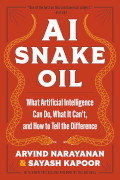

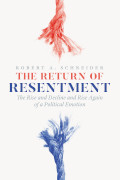
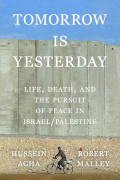
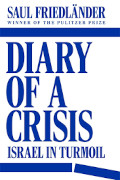


 Zack Beauchamp: The Reactionary Spirit: How America's Most
Insidious Political Tradition Swept the World (2024,
PublicAffairs): Vox journalist, offers comparative reporting on
far-right political movements around the world, with chapters on
America, Hungary, Israel, and India, plus occasional glances
elsewhere. I bought a copy of this but haven't gotten to it yet,
and intervening events may have made it less useful.
Zack Beauchamp: The Reactionary Spirit: How America's Most
Insidious Political Tradition Swept the World (2024,
PublicAffairs): Vox journalist, offers comparative reporting on
far-right political movements around the world, with chapters on
America, Hungary, Israel, and India, plus occasional glances
elsewhere. I bought a copy of this but haven't gotten to it yet,
and intervening events may have made it less useful. Noam Chomsky/Nathan J Robinson: The Myth of
American Idealism: How US Foreign Policy Endangers the World
(2024, Penguin Press): On my "nightstand," not because I expect at
this late date to learn much new -- I've followed him since his
seminal 1967 essay "The Responsibility of Intellectuals" and his
first 1969 book American Power and the New Mandarins, and
no one knows more or has thought deeper about American power --
but because I'm hopeful that Robinson will bring his mass of facts
and analysis into an even more coherent whole. As the Biden wars
and the Harris debacle prove, Democrats are in desperate need of
a complete rethink of US foreign policy. Even if they haven't quite
reached the answer, these are the questions one has to face.
Some other recent Chomsky books (I have 50+ on file, and am nowhere
near complete):
Noam Chomsky/Nathan J Robinson: The Myth of
American Idealism: How US Foreign Policy Endangers the World
(2024, Penguin Press): On my "nightstand," not because I expect at
this late date to learn much new -- I've followed him since his
seminal 1967 essay "The Responsibility of Intellectuals" and his
first 1969 book American Power and the New Mandarins, and
no one knows more or has thought deeper about American power --
but because I'm hopeful that Robinson will bring his mass of facts
and analysis into an even more coherent whole. As the Biden wars
and the Harris debacle prove, Democrats are in desperate need of
a complete rethink of US foreign policy. Even if they haven't quite
reached the answer, these are the questions one has to face.
Some other recent Chomsky books (I have 50+ on file, and am nowhere
near complete): Ta-Nehisi Coates: The Message (2024, One World):
A travel memoir, with short stops in South Carolina and Senegal,
but the chapter on Israel makes the strongest impression, because
the parallels between Israeli and American racism are so obvious
if you have any sense of one or the other. Nothing specific to
Gaza, but the compulsion to grind Palestine to dust permeates all
of Israel -- indeed, it's all Israel has become.
Ta-Nehisi Coates: The Message (2024, One World):
A travel memoir, with short stops in South Carolina and Senegal,
but the chapter on Israel makes the strongest impression, because
the parallels between Israeli and American racism are so obvious
if you have any sense of one or the other. Nothing specific to
Gaza, but the compulsion to grind Palestine to dust permeates all
of Israel -- indeed, it's all Israel has become. H Bruce Franklin: Crash Course: From the Good War to the
Forever War (2018; paperback, 2024, Rutgers University Press):
Cultural historian (1934-2024), ran into legal and academic trouble
due to his antiwar activities, wrote widely, including works on war,
science fiction, prison literature, and marine ecology -- perhaps
most important was M.I.A., or Mythmaking in America (1992),
on the myth that Vietnam was still holding American prisoners. I
picked this up after he died, partly because I was thinking of my
own memoir, and sensed that he followed a parallel political and
intellectual path through much common history (although he had a
16-year head start).
H Bruce Franklin: Crash Course: From the Good War to the
Forever War (2018; paperback, 2024, Rutgers University Press):
Cultural historian (1934-2024), ran into legal and academic trouble
due to his antiwar activities, wrote widely, including works on war,
science fiction, prison literature, and marine ecology -- perhaps
most important was M.I.A., or Mythmaking in America (1992),
on the myth that Vietnam was still holding American prisoners. I
picked this up after he died, partly because I was thinking of my
own memoir, and sensed that he followed a parallel political and
intellectual path through much common history (although he had a
16-year head start). Gideon Levy: The Killing of Gaza: Reports on a Catastrophe
(paperback, 2024, Verso): Israeli journalist, regular dispatches as the
genocide unfolded. He's done this before, e.g., in his 2010 book, The
Punishment of Gaza.
Gideon Levy: The Killing of Gaza: Reports on a Catastrophe
(paperback, 2024, Verso): Israeli journalist, regular dispatches as the
genocide unfolded. He's done this before, e.g., in his 2010 book, The
Punishment of Gaza. Ilan Pappe: A Very Short History of the
Israel-Palestine Conflict (paperback, 2024, Oneworld):
No one has written more history of Zionism and the Palestinians,
and few have written as well. So while I figured I already knew
everything I might find in this condensed 160 pp. primer, I was
curious just to see how he would organize the key points: what
to include, what to leave out. Turns out even I picked up some
significant new details.
Ilan Pappe: A Very Short History of the
Israel-Palestine Conflict (paperback, 2024, Oneworld):
No one has written more history of Zionism and the Palestinians,
and few have written as well. So while I figured I already knew
everything I might find in this condensed 160 pp. primer, I was
curious just to see how he would organize the key points: what
to include, what to leave out. Turns out even I picked up some
significant new details. Adam Shatz: The Rebel's Clinic: The Revolutionary Lives of
Frantz Fanon (2024, Farrar Straus and Giroux): A major
biography of Fanon (1925-61), born in Martinique, fought against
the Vichy regime there and in Algeria, trained in France as a
psychiatrist, only to become one of the most important political
thinkers and writers of the anti-colonial era -- his most famous
books are Black Skin, White Masks (1952) and The Wretched
of the Earth (1961), which were influential in my own thinking,
and have continued to resonate even to Black Lives Matter.
Adam Shatz: The Rebel's Clinic: The Revolutionary Lives of
Frantz Fanon (2024, Farrar Straus and Giroux): A major
biography of Fanon (1925-61), born in Martinique, fought against
the Vichy regime there and in Algeria, trained in France as a
psychiatrist, only to become one of the most important political
thinkers and writers of the anti-colonial era -- his most famous
books are Black Skin, White Masks (1952) and The Wretched
of the Earth (1961), which were influential in my own thinking,
and have continued to resonate even to Black Lives Matter. Daniel Steinmetz-Jenkins, ed: Did It Happen Here? Perspectives
on Fascism and America (2024, WW Norton): I mentioned this
briefly before, but since I wound up buying a copy, thought I would
expand on it. Historically-minded leftists tend to obsess over what
is or not fascism, partly because its complex history suggests many
prospective developments, but also because the simplest definition
is that the fascists are the people who want to kill you. Needless
to say, right and center have different takes. For the right, fascism
is what the people get for threatening to revolt: it may result from
counterrevolution, as in putting down the Hungarian Revolution in
1920, or it may be imposed by worried conservative elites, as with
Mussolini and Hitler. But as long as conservative order is secure,
it's something you know about but have no reason to show off. As for
the center, they are more confused, seeing fascists as an anomaly on
the right that only concerns them when its targets expand beyond the
left. Even Hitler didn't bother them much until his wars upset the
liberal world order, at which point they started mocking leftists as
"premature antifascists." One could just as easily call them "retarded
antifascists," but I don't think anyone ever did. Leftists may see
them as naive, indifferent, and/or hypocritical, but also as potential
allies when the situation turns really dire. Perhaps that's the point
of trying to argue that right-wing forces are not just bad but cross
the line into fascism, at which point even liberals and centrists
might drop their anti-left prejudices to join in a "common front"?
Of course, people who don't know squat about history -- which is to
say the overwhelming majority of American voters -- have no idea
what we're talking about, which makes the public argument pointless
or even counterproductive. Still, it's hard to turn your eyes away
when you see a wreck in real time, and we're certainly in the midst
of that. When you first noticed may vary: I started reading Robert
J Evans in the early Bush years, even before Chris Hedges published
American Fascists (2007), while others didn't notice until
the Jan. 6 Putsch attempt; still others are only being blind-sided
by Trump II, and even worse prospects are likely to follow. This
book rounds up the usual suspects, including some academic quibblers
(e.g., Robert Paxton, who denies that Franco was a fascist, which
literally everyone who volunteered to fight against him in the 1930s
would disagree with).
Daniel Steinmetz-Jenkins, ed: Did It Happen Here? Perspectives
on Fascism and America (2024, WW Norton): I mentioned this
briefly before, but since I wound up buying a copy, thought I would
expand on it. Historically-minded leftists tend to obsess over what
is or not fascism, partly because its complex history suggests many
prospective developments, but also because the simplest definition
is that the fascists are the people who want to kill you. Needless
to say, right and center have different takes. For the right, fascism
is what the people get for threatening to revolt: it may result from
counterrevolution, as in putting down the Hungarian Revolution in
1920, or it may be imposed by worried conservative elites, as with
Mussolini and Hitler. But as long as conservative order is secure,
it's something you know about but have no reason to show off. As for
the center, they are more confused, seeing fascists as an anomaly on
the right that only concerns them when its targets expand beyond the
left. Even Hitler didn't bother them much until his wars upset the
liberal world order, at which point they started mocking leftists as
"premature antifascists." One could just as easily call them "retarded
antifascists," but I don't think anyone ever did. Leftists may see
them as naive, indifferent, and/or hypocritical, but also as potential
allies when the situation turns really dire. Perhaps that's the point
of trying to argue that right-wing forces are not just bad but cross
the line into fascism, at which point even liberals and centrists
might drop their anti-left prejudices to join in a "common front"?
Of course, people who don't know squat about history -- which is to
say the overwhelming majority of American voters -- have no idea
what we're talking about, which makes the public argument pointless
or even counterproductive. Still, it's hard to turn your eyes away
when you see a wreck in real time, and we're certainly in the midst
of that. When you first noticed may vary: I started reading Robert
J Evans in the early Bush years, even before Chris Hedges published
American Fascists (2007), while others didn't notice until
the Jan. 6 Putsch attempt; still others are only being blind-sided
by Trump II, and even worse prospects are likely to follow. This
book rounds up the usual suspects, including some academic quibblers
(e.g., Robert Paxton, who denies that Franco was a fascist, which
literally everyone who volunteered to fight against him in the 1930s
would disagree with).


