|
An occasional blog about populist politics and popular music, not necessarily at the same time. LinksLocal Links Social Media My Other Websites Music Politics Others Networking Music DatabaseArtist Search: Website SearchGoogle: Recent Reading
Music DatabaseArtist Search: Website SearchGoogle: |
Blog Entries [870 - 879]Monday, May 8, 2017 Music Week
Music: Current count 28119 [28096] rated (+23), 399 [396] unrated (+3). Something I missed for yesterday's Weekend Roundup, but two TPM stories gave me pause: White House Blames Obama for Trump Hiring Flynn, and Obama Warned Trump Not to Hire Flynn as National Security Adviser. Seems typical that Trump would do the opposite of what Obama recommended then blame Obama when he turned out to be right. This illustrates the extraordinary extent to which Trump has based his own agenda on the desire to reflexively undo everything Obama has done over the past eight years -- to effectively erase the Obama administration from American history. Moreover, this contrasts sharply with Obama's own considered efforts to maintain continuity when he replaced GW Bush, despite the latter's dreadful legacy of failure. I've long felt that Obama's emphasis on continuity was terrible political strategy -- he gave up the option of continuing to blame the lingering problems he inherited (like the Great Recession and the continuing wars in Afghanistan and Iraq) on the person/party responsible for them, he made it possible for Americans to forget and forgive. The astonishing result was that two years later the Republicans could surge back as the party of resentment against America's corrupt elites. I've long felt that Obama cut not just his own but his party's throat because he bought so deeply into the myths of American Exceptionalism, and that compelled him to rationalize and defend his country even when it had gone wrong. Trump, clearly, has no such scruples or ideals, so it's hardly surprising that his reflexive contempt of Obama so often strikes against Obama's idealized America. One might expect his blind contempt to backfire more often than it has, but unfortunately the Democrats are still more inclined to defend their cherished myths -- e.g., Hillary's "America's always been great" -- than to recognize real problems, identify their causes, and propose real solutions. I'd also like to add that in thinking about the French elections I posted a tweet, which I'll expand a bit here to get past the 140 character cramp:
My point is that an honest recollection of what Republicans have done and tried to do since Reagan would have shown them to be as dastardly and disreputable as the Vichy-rooted National Front. But the media insists on treating Republicans -- even ones as vile as Trump, Cruz, and Ryan -- as respectable Americans, even though that requires massive amnesia. I'm reminded once again of Tom Carson's metaphor of America (embodied in the quintessentially all-American Mary Ann) as a perpetual virgin, regrowing her hymen after every act of intercourse. Unfortunately, the only people still suckered by this myth of American purity are elite Democrats, and their disconnection from reality is killing their party and sacrificing their voters. Not much to say about music this week. Rated count is down, probably just because I've been slow, though I can point to repairing a fence as a distraction, and I took a couple breaks to make nice dinners-for-two (since our social entertaining seems to have withered to nothing). I did find a good record from Buffalo (one of my favorite towns) -- or perhaps I should say it found me. Among the high B+ list (all jazz) the pecking order is probably: Fiedler, Oh, Dickey, Durkin. Three of those came from Napster, as did four jazz records from the next tier down (Preservation Hall, Watson, the two Parker duos). Still have a couple dozen CDs in the mail queue, but lately they haven't been amounting to much. Still, this week's unpacking looks relatively promising. Christgau's Expert Witness last week featured several rap records: Kendrick Lamar's Damn (an A- here last week), two each by Migos and Future (haven't heard yet). He also publisher two pieces last week: Who the Fuck Knows: Covering Music in Drumpfjahr II (something he did for the EMP Conference), and Rob Sheffield Explores How the Beatles Live on Inside Our Heads. There's also an interview Tom Slater did with him at Sp!ked Review. Modest progress collecting the Jazz Guide reviews: currently at 635 + 436 pages, through Eliane Elias in the Jazz '80s file (27%). New records rated this week:
Old music rated this week:
Unpacking: Found in the mail last week:
Ask a question, or send a comment. Monday, May 8, 2017 Weekend RoundupI originally planned on writing a little introduction here, on how bummed I've become, partly because I'm taking the House passage of Zombie Trumpcare hard -- my wife likes to badmouth the ACA but it afforded me insurance for two years between when she retired and I became eligible for Medicare, and it's done good for millions of other people, reversing some horrible (but evidently now forgotten) trends -- and partly because the 100 days was just a dry run for still worse things to come. But I wound up writing some of what I wanted to say in the Savan comment below. One thing that's striking about the Trumpcare reactions is how morally outraged the commentators are ("one of the cruelest things," "war on sick people," "moral depravity," "sociopathic," "hate poor and sick people," "homicidal healthcare bill"). If you want more details, follow the Yglesias links: he does a good job of explaining how the bill works. It's also noteworthy how hollow and facetious pretty much everything the bill's supporters say in defense of it is. I've offered a few examples, but could easily round up more. I've added a link on Democrats-still-against-single-player (a group which includes Nancy Pelosi and Jon Ossoff, names mentioned below). Let me try to be more succinct here: single-payer is the political position we want to stake out, because it's both fairly optimal and simple and intuitive. If you can't get that, fine, compromise with something like ACA plus a "public option" -- an honest public option will eventually wind up eating the private insurance companies and get you to single-payer. But you don't lead with a hack compromise that won't get you what you want or even work very well, because then you'll wind up compromising for something even worse. We should remember that Obama thought he had a slam dunk with ACA: he lined up all of the business groups behind his plan, and figured they'd bring the Republicans along because, you know, if Republicans are anything they're toadies for business interests. It didn't work because the only thing Republicans like more than money is power. (They're so into power they were willing to tank the economy for 4 or 8 years just to make Obama look bad. They're so into power they held ranks behind Trump even though most of the elites, at least, realized he was a hopeless buffoon.) On the other hand, the shoe is clearly on the other foot now: it's the Republicans who are fucking with your health care, and they're doing things that will shrink insurance rolls by millions, that will raise prices and weaken coverage, that will promote fraud and leave ever more people bankrupt. Those are things that will get under the skin of voters, and Republicans have no answer, let alone story. The other big issue noted below is the environment. The EPA is moving fast and hard on policies that will severely hurt people and that will prove to be very unpopular -- maybe not overnight, but we'll start seeing big stories by the 2018 elections, even more by 2020, and air and water pollution is not something that only happens to "other people." I didn't include anything on how these changes have already affected projections for 2018 elections, because at this point that would be sheer speculation. To my mind, the biggest uncertainty there isn't how much damage the Republicans will do (or how manifest it will be) but whether Democrats will develop into a coherent alternative. That's still up for grabs, but I'll see hope in anything that helps bury the generation of party leaders who were so complicit in the destruction of the middle class and in the advance of finance capital. To that end, Obama's $400,000 Wall Street speech clearly aligns him with the problems and not with the solutions. [PS: This section on the French election was written on Saturday, before the results came in. With 98% reporting, Emmanuel Macron won, 65.8% to 34.2% for Marine Le Pen. TPM's post-election piece included a line about how the election "dashed [Le Pen's] hopes that the populist wave which swept Donald Trump into the White House would also carry her to France's presidential Elysee Palace." I don't see how anyone can describe Trump's election as a "populist wave" given that the candidate wasn't a populist in any sense of the word -- not that Le Pen is either. Both are simple right-wingers, who advance incoherent and mean-spirited programs by couching them in traditional bigotries. While it's probable that the center in France is well to the left of the center in the US, a more important difference is that Trump could build his candidacy on top of the still-respected (at least by the mainstream media) Republican Party whereas Le Pen's roots trace back to the still-discredited Vichy regime. But it also must have helped that Macron had no real history, especially compared to the familiar and widely-despised Hillary Clinton. (Just saw a tweet with a quote from Macron: "The election was rly not that hard I mean . . . how despised do you have to be to get beaten by a fascist am I right?" The tweet paired the quote with a picture of Hillary.) [More reaction later, but for now I have to single out Anne Applebaum: Emmanuel Macron's extraordinary political achievement, especially for one line I'm glad I never considered writing: "Not since Napoleon has anybody leapt to the top of French public life with such speed." She goes on to explain: "Not since World War II has anybody won the French presidency without a political party and a parliamentary base. Aside from some belated endorsements, he had little real support from the French establishment, few of whose members rated the chances of a man from an unfashionable town when he launched his candidacy last year." She makes him sound like Kiefer Sutherland, who plays the president in the TV series Designated Survivor -- which despite much centrist corniness is a pleasing escape from our actual president.] France goes to the polls on Sunday to elect a new president. The "outsider" centrist Emmanuel Macron is favored over neo-fascist Marine Le Pen -- the latter frequently described as "populist" in part because Macron, a banker and current finance minister, is as firmly lodged in France's elites as Michael Bloomberg is here. The polls favor Macron by a landslide, less due to the popularity of the status quo than to the odiousness of Le Pen. One interesting sidelight is how foreigners have weighed in on the election -- one wonders whether the French are as touchy as Americans about outside interference. For instance, Barack Obama endorsed Macron -- Yasmeen Serhan: Obama's Endorsement of Macron -- as did, perhaps more importantly, former Greek finance minister Yanis Varoufakis -- Daniel Marans: Top European Economist Makes the Left-Wing Case for Emmanuel Macron, or in Varoufakis' own words, The Left Must Vote for Macron. On the other hand, Le Pen's foreign supporters include Donald Trump -- Aidan Quigley: Trump expresses support for French candidate Le Pen -- and Vladimir Putin -- Anna Nemtsova/Christopher Dickey: Russia's Putin Picks Le Pen to Rule France. And while Putin tells Le Pen Russia has no plans to meddle in French election, on the eve of the election the Macron campaign was rocked by a hacked email scandal: see, James McAuley: France starts probing 'massive' hack of emails and documents reported by Macron campaign, and more pointedly, Mark Scott: US Far-Right Activists Promote Hacking Attack Against Macron. [PS: For a debunking of the "leaks," see Robert Mackey: There Are No "Macron Leaks" in France. Politically Motivated Hacking Is Not Whistleblowing. Evidently a good deal of this isn't even hacking -- just forgery meant to disinform.] One likely reason for Putin to support Le Pen is the latter's promise to withdraw France from NATO. The interest of Trump and US far-right activists is harder to fathom -- after all, even fellow fascists have conflicting nationalist agendas, and nationalist bigots ultimately hate each other too much to develop any real solidarity, even where they share many prejudices. For instance, why should Trump applaud Brexit and further damage to European unity? Surely it can't be because he gives one whit about anyone in Europe. John Nichols argues that Obama's endorsement of Macron Is an Effort to Stop the Spread of Trumpism, but while right-wing nationalist movements have been gaining ground around much of the world, it's hard to see anything coherent enough to be called Trumpism, much less a wave that has to be stopped anywhere but here. Obama may have good reasons for publicizing his endorsement, and may even have enough of a following in France to make his endorsement worth something, but given his recent buckraking it could just as well be meant to solidify his position among the Davos set. Besides, I haven't forgotten his proclamation that "Assad must go" -- his assumption of America's right to dictate the political choices of others, which had the effect of tying America's diplomatic hands and prolonging Syria's civil war. At this stage I'm not sure I even want to hear his position on any American political contest -- least of all one having to do with leadership of the major political party he and the Clintons ran into the ground. Big news this week is that the Republicans passed their "health care reform" bill -- most recently dubbed "Zombie Trumpcare 3.0" -- in the House. They had failed a while back because they couldn't get enough votes from the so-called Freedom Caucus, but solved that problem by making the bill even worse than it was. Some links:
Some scattered links this week directly tied to Trump:
Also a few links less directly tied to Trump, though sometimes still to America's bout of political insanity:
Ask a question, or send a comment. Monday, May 1, 2017 Music Week
Music: Current count 28096 [28064] rated (+32), 396 [397] unrated (-1). Most of what's listed below appeared in Saturday's Streamnotes, so old news there. I made a last minute stab at checking out some 2017 non-jazz releases, and continued that after the column posted. No additional A-list albums after the column, but Body Count's Bloodlust came close -- actually a remarkable album, just one I didn't want to give the extra spins that probably would have moved it over the A- cusp. Ardor & Zeal is a bit less in every respect, including a bit less irritating to a metal-phobe like myself. For Christgau on those two records, look here. Christgau also praised the new Brad Paisley record, the biggest flop of four (I think) overrated full-A records he's found this year (Jens Lekman, New Pornographers, Khalid -- OK, I gave the latter an A-, the others high B+). I like Paisley in small doses, but he never seems to approach album-length without wearing out his welcome, either because his Nashville rock gets boring or because he says something stupid (often both, like here). After grading, I read a bunch of Facebook comments on Bob's review, and it seemed like quite a few were closer to my position. On the other hand, I don't have any non-jazz this year remotely close to full-A: the non-jazz set of the 2017 list-in-progress are (with Christgau grades where known): Orchestra Baobab (A-), Run the Jewels (A-), XX, Jesca Hoop, Kendrick Lamar, Tinariwen (**), Craig Finn (B+), Conor Oberst (A-), Syd (A-), Arto Lindsay, Matt North (A-), Angaleena Presley (A-), Colin Stetson, Khalid (A-). (I normally count Stetson as jazz -- he's a saxophonist -- but he crossed over into post-rock and that's where pretty much all of his critic/fan bases are.) That's 14 records, vs. 22 jazz records (38.9% non-jazz), actually not far from what I had before the EOY lists started rolling in last year. But before last week's 5-0 the split was 9-to-22 (29.0% non-jazz), so I was right to shift focus. I'd do a better job of keeping up if more people I trusted wrote more often. Maybe we'll see some 4-month lists soon. As you may have noticed, I bumped up the grade on Stanley Cowell's Departure #2. I was on the fence at the time, but hedged low until I remembered how much better it was than the 4-5 good Cowell records I played after it. Really pleased that so many SteepleChase albums have appeared on Napster. Lots to catch up on there. New records rated this week:
Recent reissues, compilations, and vault discoveries rated this week:
Old music rated this week:
Grade changes:
Unpacking: Found in the mail last week:
Ask a question, or send a comment. Sunday, April 30, 2017 Weekend RoundupOne-hundred days after Trump became President of the United States, about the best you can say is that he could have done even worse than he did. People make fun of him for only appointing a few dozen of the thousand-plus presidential appointees, but he's hit most of the top positions, including one Supreme Court justice, and he's picked some of the worst nominees imaginable -- in fact, a few way beyond anything rational fears imagined. But one of his worst picks, former General Michael Flynn as National Security Director, has already imploded, and another notorious one, Chief Strategist Steve Bannon, looks like he's been consigned to the dog house. Despite having Republican congressional majorities, Trump has yet to pass any major legislation -- although he's proposed some, and/or bought into Paul Ryan's even more demented schemes. So thus far the main thing Trump has done has been to sign executive orders -- dozens of the things, nearly all aimed at undoing executive orders Obama had started signing once he realized he wasn't going to get any help from the Republican-controlled Congress. While Trump's orders are truly disturbing, that's not so much what they do -- even the ones that aren't promptly blocked by the courts -- as what they reveal about the administration's mentality (or lack thereof). Trump has also had a relatively free hand when it comes to foreign policy -- especially the prerogatives that Congress has granted the president to bomb other countries. His first acts were to escalate American involvement in Yemen, although he's followed that up with attacks against America's usual targets in the Middle East: Syria, Iraq, and Libya. But while nothing good ever comes from America flexing its military muscles in the Middle East, a more dangerous scenario is unfolding with North Korea, with both sides threatening pre-emptive attacks in response to the other's alleged provocations. By insisting on an ever-more-constricting regime of sanctions, the US has cornered and wounded North Korea, while North Korea has developed both offensive and defensive weapons to such a point that an American attack would be very costly (especially for our ostensible allies in South Korea). There are many reasons to worry about Trump's ability to handle this crisis. There's little evidence that he understands the risks, or even the history. On the other hand, he's spent eight years lambasting Obama for being indecisive and weak, so he's come into office wanting to look decisive and strong. Moreover, when he ordered an ineffective cruise missile attack on a Syrian air base he was broadly applauded -- a dangerous precedent for someone so fickle. Maybe he has people who will restrain him from ordering a similar attack on Korea, but he often resembles the "mad man" Nixon only feigned at. Nor does Kim Jong Un inspire much confidence as a well-grounded, rational leader (although see Andrei Lankov: Kim Jong Un Is a Survivor, Not a Madman). First, some 100-day reviews:
Some more scattered links this week in Trump world:
Also a few links less directly tied to Trump, though sometimes still to America's bout of political insanity:
Started this Saturday afternoon (the intro), and the hits just kept on coming. Ask a question, or send a comment. Saturday, April 29, 2017 Streamnotes (April 2017)About the same count this time: 115 vs. 114 in March, which compares to 153 in February and 156 in January, back when I was paying more heed to EOY lists. I made a last-minute effort to listen to well-regarded new non-jazz albums, which helped -- new releases are up to 78 from 52, with old music down roughly that much. The old music came from artists I ran into while collating the jazz guides. In a couple cases I checked out musicians I didn't have any rated albums from before (Pete La Roca, Charles Tyler). In some cases (Herbie Hancock, Freddie Hubbard) I pretty much limited myself to their early Blue Note releases. For Horace Tapscott I found a record that I had written a bit about before but hadn't graded. Most of these are short notes/reviews based on streaming records from Napster (formerly Rhapsody; other sources are noted in brackets). They are snap judgments based on one or two plays, accumulated since my last post along these lines, back on March 31. Past reviews and more information are available here (9514 records). Recent Releases
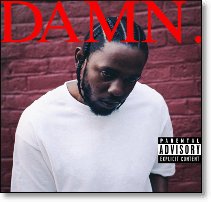
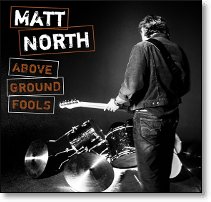
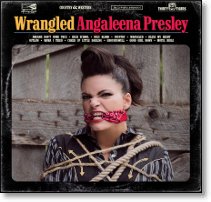
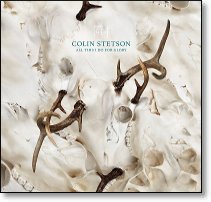
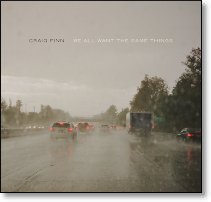
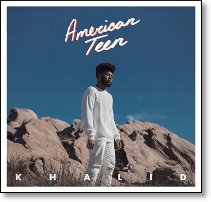
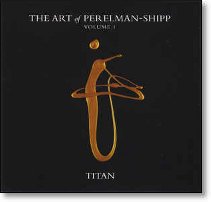
Kevin Abstract: American Boyfriend: A Suburban Love Story (2016, Brockhampton): Rapper-crooner Ian Simpson, barely out of his teens, plying beats too suave and fills too orchestral. B+(*) Actress: AZD (2017, Ninja Tune): British electronica guy, Darren Cunningham, ambient with occasional interruptions, both glitches and more violent eruptions. Last track, "Visa," broke the mold. B+(*) Antonio Adolfo: Hybrido: From Rio to Wayne Shorter (2016 [2017], AAM): Brazilian pianist, based in US (Florida, I think), has several dozen albums since 1969. Eight Wayne Shorter compositions plus Adolfo's closer, all given a nice samba treatment. B [cd] Arca: Arca (2017, XL): Alejandro Ghersi, originally from Venezuela, studied in New York, now based in London. The music is surreal and eerie, something that one could find oddly attractive, were it not for the arch and arcane vocals. B Bardo Pond: Under the Pines (2017, Fire): Rock band from Philadelphia, together and fairly prolific since the early 1990s -- Discogs counts 35 albums plus many EPs, Wikipedia only lists 11 studio albums but mentions 11 side projects. Thick trippy guitars with drone feedback and ethereal moans, they pass for psychedelic these days, but I can't latch onto much beyond their dense ambiance. B Bill Brovold & Jamie Saft: Serenity Knolls (2016 [2017], Rare Noise): Guitar duets -- Saft is normally a keyboard player but is credited with dobro and lap steel here, so he adds some resonance to the relatively placid lead guitar. B+(*) [cdr] Chicago/London Underground: A Night Walking Through Mirrors (2016 [2017], Cuneiform): Since 1998 Rob Mazurek (cornet/electronics) and Chad Taylor (drums) have led various Chicago Underground duos, trios, and quartets, with Mazurek later taking his Underground concept to Sao Paulo. Here the Chicago duo visits London, meeting up with Alexander Hawkins (piano) and John Edwards (bass) -- both are very active, bringing a lot of heat and dynamism to the cooler orientation of the Chicagoans. A- [cdr] Jacob Collier: In My Room (2016, Membran): British jazz singer, first album, title from the Beach Boys song. Belongs to the school that thinks tricking thing up makes them jazzier, but also betrays his background singing Bach chorales. C+ Colorado Jazz Repertory Orchestra: Invitation (2016 [2017], OA2): Big band, produced by alto saxophonist Art Bouton, with baritone saxophonist Wil Swindler doing most of the arranging (and writing the only original piece). Standards from the songbook and major jazz sources like Ellington and Mulligan, done up smartly. B+(**) [cd] Larry Coryell: Barefoot Man: Sanpaku (2016, Purple Pyramid): Probably the late fusion guitarist's last album, the title referring back to his 1971 album Barefoot Boy like a pair of bookends. And he goes out much like he came in, with a groove. B+(*) Rodney Crowell: Close Ties (2017, New West): His geography is bracketed by an opener about Houston and a closer on Nashville. He writes substantial, earthy songs, and sings them with a polite drawl, supplemented by duet features for Rosanne Cash and Sheryl Crow. B+(***) Ernest Dawkins New Horizons Ensemble: Transient Takes (2016 [2017], Malcom): Group's first (2016) album seemed to be credited to Live the Spirit Residency, also on the cover here followed by "Presents # 2" but this is a more sensible credit (of course, I could have followed he cover and added "featuring Vijay Iyer"). Has a rough patch I don't much care for, but coheres more often than not. B+(***) Tom Dempsey/Tim Ferguson Quartet: Waltz New (2016 [2017], OA2): Guitar and bass, respectively, with several albums together, always interesting postbop. Joel Frahm is very solid at tenor sax, with Eliot Zigmund on drums. B+(**) [cd] David Feldman: Horizonte (2016 [2017], self-released): Pianist, born in Rio de Janeiro (where he recorded this), has a couple albums, wrote most of the songs here, most with bossa touches -- hard not to with a band that includes Toninho Horta on nylon guitar. B+(*) [cd] Craig Finn: We All Want the Same Things (2017, Partisan): One of the most distinctive and touching voices in recent rock history (mostly with Hold Steady), a writer with a fine ear for speech and lots of compassion for other people, both down and out and temporarily up -- which seems to be the gamut these days. A- Gerry Gibbs & Thrasher People: Weather or Not (2016 [2017], Whaling City Sound, 2CD): After several albums with what drummer ("Trasher") Gibbs called his Dream Trio (Kenny Barron and Ron Carter), evidently Hans Glawischnig (bass) and Alex Collins (keyboards) are just people. First disc is "The Music of Weather Report"; second is "The Music of Gerry Gibbs." Upbeat enthusiasm, even some thrashing, but much ado about damn little. [My copy only came with the first disc; I listened to the second on Napster.] B Rhiannon Giddens: Freedom Highway (2017, Nonesuch): Lead singer for old-timey revival group Carolina Chocolate Drops, also plays banjo, second album on her own. Sounds primal, even when the producer throw in the kitchen sink. B+(**) Cameron Graves: Planetary Prince (2017, Mack Avenue): Pianist, first album, got a boost as the piano player on saxophonist Kamasi Washington's crossover hit, The Epic. Washington returns the favor here, along with Philip Dizack (trumpet) and Ryan Porter (trombone). Graves pounds the piano hard enough to rock the house, but it all feels stiff and forced to me, except when Dizack tries to light the sky. B- Iro Haarla: Ante Lucem (2012 [2016], ECM): Second line, same size and darker than the title: "for Symphony Orchestra and Jazz Quintet." From Finland, plays piano and harp, has a handful of albums since 2001. Problem, for me anyhow, is the orchestra (Norrlands Operans Symfoniorkester, conducted by Jukka Iisakkila), although the quintet -- with Hayden Powell (trumpet) and Trygve Seim (soprano/tenor sax) -- is far removed from swing or bop. Still, this achieves much of the beauty and grandeur it aspires to. Just not sure that's a good thing. B+(**) Mariem Hassan: La Voz Indómita (del Sahara Occidental) (2017, Nubenegra): Sahrawi pop singer, born in what was then called Spanish Sahara and has lately been occupied by Morocco, died at 57 in a refugee camp, but after building a formidable international recording career, and leaving this compilation from her last four years as some kind of testament. Christgau lauds her as "postcolonial Africa's most striking female singer." Maybe, but there's not a lot more to the music, even by Saharan standards. B+(***) Mariem Hassan/Vadiya Mint El Hanevi: Baila Sahara Baila (2015, Nubenegra): Dance music, so the rhythms pick up, along with what for lack of a better informed context I'll call war whoops. Hanevi makes his mark early on by talking through the dances. While he doesn't have Hassan's legendary voice, the energy he brings makes the difference. A- Heads of State: Four in One (2017, Smoke Sessions): Mainstream quartet on their second album, with founders Gary Bartz (alto sax), Larry Willis (piano), and Al Foster (drums) -- the bass slot originally filled by Buster Williams goes to David Williams (nickname "Happy") here. Bartz has matured into a lovely ballad player, and of course they swing. B+(**) Oscar Hernández & Alma Libre: The Art of Latin Jazz (2016 [2017], Origin): Pianist, based in Los Angeles, with sax/flute and "special guest" trumpet (Gilbert Castellanos), bass, congas and drums. All original pieces, pretty much as advertised. B+(**) [cd] Derrick Hodge: The Second (2016, Blue Note): Bass guitarist, has won a couple Grammys for producing hip-hop/r&b albums, jazz credits include Terence Blanchard and Robert Glasper, this his second album as leader. Mostly multitracked solo, amiable groove, plus a drummer on three tracks, horns on a couple more (not a plus). B Idles: Brutalism (2017, Bailey): British post-punk group, from Bristol, first album, a little heavy but clear and catchy, one that could grow on you. B+(***) The Jazz at Lincoln Center Orchestra: The Music of John Lewis (2013 [2017], Blue Engine): Lewis was the pianist and main composer for the Modern Jazz Quartet, and was an important figure in the decade's brief (but really still evolving) "third stream" movement. Around 2000, when Gary Giddins started pushing for classical-like jazz repertory orchestras, the first person he turned to for leadership was Lewis. So a trawl through the major compositions of Lewis is just the sort of thing the culture empire uptown would sign up for. Executive producer Wynton Marsalis gets his usual "featuring" credit, along with guest pianist Jon Baptiste. B+(*) [cd] Billy Jones: 3's a Crowd (2017, Acoustical Concepts): Drummer, don't know anything about him. Concept here is a set of duos, some "east coast," some "west coast," less than half with musicians I've heard of (John Vanore, Gary Meek, Mick Rossi, etc.), about half horns, two pianos, one each vibes and vocals. Versatile, I suppose, or scattered. B [cd] Khalid: American Teen (2017, Right Hand/RCA): Last name Robinson, b. 1998, grew up on Army bases including six years in Germany, sung in the US Army Band. Doesn't strike me as much of a voice, but his songs are offhandedly catchy and they grow on you. A- Kneebody: Anti-Hero (2017, Motéma): Brooklyn quintet -- Shane Endsley (trumpet), Ben Wendel (sax), Adam Benjamin (keyboards), Kaveh Rastegar (bass), Nate Wood (drums) -- seventh album since 2005. They took a turn toward IDM last time out with Daedelus, but this year's more conventional fusion is also less interesting. B Julian Lage: Live in Los Angeles (2016, Mack Avenue, EP): Guitarist from California, several records since 2009 but still under 30. This is billed as an EP, but its five cuts run 35:06. Trio with Scott Colley (bass) and Kenny Wollesen (drums). B Kendrick Lamar: Damn (2017, Top Dawg/Aftermath/Interscope): Metacritic score 96 on 29 reviews -- if not a lock to top 2017 EOY lists a very strong favorite. As has always been the case, I'm slow getting him -- can't much relate to the slice of life, and the soft beats and sliding melodies take time to sink in. Still, his chronicle of fear really got to me, and there seems to be much more floating in the ozone. Still, doubt I'll really get there: I grew up thinking that the telos of music is pleasure, not (for lack of a better word) art. A- Allegra Levy: Cities Between Us (2016 [2017], SteepleChase): Jazz singer, describes herself as "sultry," graduated from New England Conservatory, has one previous album. Nice combo here with Kirk Knuffke (cornet), Stephen Riley (tenor sax), Carmen Staaf (piano), Jay Anderson and Billy Drummond. Mostly original pieces, or words she added to label legends Dexter Gordon and Duke Jordan. B+(***) [cd] Arto Lindsay: Cuidado Madame (2017, Northern Spy): Part of New York's post-punk "No Wave" movement (his band was DNA), although his experience growing up in Brazil has always tugged him towards Tropicália -- his many albums leaning one way or the other, or in this case both. A- Mike Longo Trio: Only Time Will Tell (2016 [2017], CAP): Piano trio, with Paul West on bass and Lewis Nash on drums. Pianist goes back to the early 1970s, most recently crafting a tribute to Oscar Peterson. Couple originals here, mostly smart covers, including a couple Monks. B+(**) [cd] The Magnetic Fields: 50 Song Memoir (2017, Nonesuch, 5CD): Fifty-year-old Stephin Merritt's autobiographical concept album, one song for each year of his life, one half-hour CD per decade -- actually a more modest, if less tiresome, project than his famous 69 Love Songs, which actually did fill three hour-long CDs. Perhaps unfair to judge given that Napster only offers 16 songs, but they look to be a fairly random sample, and I'm not sure more would overcome my annoyance. B- Laura Marling: Semper Femina (2017, More Alarming): British singer-songwriter, sort of a latter-day Joni Mitchell, which works better some times than others. B+(*) Robert McCarther: Stranger in Town (2016 [2017], Psalms 149 Music): Has a previous album, wrote one song here, covers include Monk and Mancini and two Bill Withers. Band includes horns, piano, guitar, bass, drums. You know he's a jazz singer because he evinces all the usual stereotypical tics. C+ [cd] MEM3: Circles (2011 [2017], self-released): Canadian piano trio, pianist is Michael Cabe, and Mark Lau gets a bass solo I never fail to notice, but the only familiar name is drummer Ernesto Cervini. He provides enough rhythmic regularity to push this into EST territory, but while I started thinking they were pushing something with a pop angle, after several plays I gave that notion up. B+(**) [cd] The Microscopic Septet: Been Up So Long It Looks Like Down to Me: The Micros Play the Blues (2016 [2017], Cuneiform): Group led by Philip Johnston (soprano sax) and Joel Forrester (piano), dates back to 1981 with a break in the 1990s, the addition of tenor saxophonist Michael Hashim the key move to the reunion. Closes with a Joe Liggins song (Dave Sewelson sings), the other dozen tracks split even among the leaders (although Forrester quotes more than the title from "Silent Night" -- nearly a deal breaker for me, until it isn't). Blues, maybe, but the key thing here is swing, which they do not for nostalgia but because it feels right. A- [cdr] The New Pornographers: Whiteout Conditions (2017, Collected Works/Concord): I lost interest in this Canadian semi-super group shortly after their 2000 debut, while sampling most (but not all) of their later albums just in case I missed something. I have little doubt that this is their best ever -- it's the brightest and catchiest by miles -- but after two plays I'm losing interest again, and wouldn't want to bump it higher just because I'm impressed or surprised. B+(***) Matt North: Above Ground Fools (2017, self-released): Nashville session drummer writes and (I assume) sings a batch of big beat rock and roll songs, with clear lyrics more than a little sharp. A- Conor Oberst: Ruminations (2016, Nonesuch): His acoustic album, guitar or piano and harmonica, basically demos of songs written over an Omaha winter, "staying up late every night playing piano and watching the snow pile up outside the window." B+(**) Conor Oberst: Salutations (2017, Nonesuch): Here he refashions his Ruminations songs (plus a few more) for full band. With his harmonica, I was struck by how accomplished his Dylanisms had become on the demos, but he's got an even better sense of electric Dylan's tricks of the trade. Songs maturing too. A- One for All: The Third Decade (2015 [2016], Smoke Sessions): Mainstream jazz group, Discogs shows them recording five albums 2001-05 and not much since, but I heard a missing 2006 album, and the labels claims they've recorded 16 albums in 20+ years, making this the start of their third decade. All names you should know: Eric Alexander (tenor sax), Jim Rotondi (trumpet), Steve Davis (trombone), David Hazeltine (piano), John Webber (bass), Joe Farnsworth (drums). B+(**) Matt Otto With Ensemble Ibérica: Ibérica (2016 [2017], Origin): Tenor saxophonist, has a handful of albums since 2002, teaches at KU. The Ensemble are three guitarists (sometimes oud, cavaquinho, tres, acoustic bass guitar), supplemented by keyboards, bass/cello, and steel guitar -- no drums, so you get that chamber jazz feel, with everything -- especially the sax -- on the pretty side. B+(**) [cd] Brad Paisley: Love and War (2017, Arista Nashville): Nashville superstar, eleventh studio album since 1999, last eight topped the country charts, has an arena-ready sound which rocks hard but is still recognizably country. Even seems like a nice guy, and not a dumb one. But I've never warmed to any of his albums -- even the three (counting this one) Christgau A-listed. Probably has most to do with that big sound -- I stopped caring for Eric Church, too, when he muscled up -- but there's always a lyric (or two or three) to trip over. First one I caught this time: "let's go to bed early, and stay up all night" -- that's not the worst (certainly not next to "just another day in heaven," or his elegy for vets: "they ship you out to die for us/forget about you when you don't" -- fact is they forget about every one once they can no longer be used). B The Ed Palermo Big Band: The Great Un-American Songbook: Volumes I & II (2016 [2017], Cuneiform, 2CD): Alto saxophonist way back when, cut his first album in 1982, has led his big band since 1987, recording three or four (maybe more) albums of Frank Zappa music. Here he examines not so much the British Invasion as the prog strain that followed, starting and ending with bits of Sgt. Pepper, navigating through Move, Cream, Procul Harum, Nice, King Crimson, Blodwyn Pig, ELP, Traffic, Jethro Tull, Arthur Brown, plus Radiohead. Vocals by Bruce McDaniel help pin the songs down, and his patter adds an air of nostalgia. "The Low Spark of High Heeled Boys" followed by "Fire" got to me, too. B+(*) [cdr] Michael Pedicin: As It Should Be: Ballads 2 (2016 [2017], Groundblue): Tenor/soprano saxophonist, mainstream player, should be a natural for a ballads program, but I find his tone a bit thin. Or it may just be that instead of picking surefire songbook classics he had guitarist Johnny Valentino do most of the writing (8/10 songs). I wouldn't call the Paul Simon cover a plus either, and "Crescent" only reminds me of how truly gorgeous Pharoah Sanders' ballads were. B+(*) [cd] Ivo Perelman/Matthew Shipp: The Art of Perelman-Shipp, Volume 1: Titan (2016 [2017], Leo): The first of a trove of seven separately issued discs pairing the Brazilian avant saxophonist with the American pianist -- frequent collaborators since 1996's Bendito of Santa Cruz -- with various rhythm sections. Seems like the ideal might be to listen to all of them then start to make whatever marginal distinctions I can find, but for practical purposes all I can do is take them one-by-one and hope I don't get too lost. This one is a trio with William Parker, who in Perelman's 2016 The Art of the Improv Trio lifted Volume 4. He gets this series off to a strong start, too. A- [cd] Ivo Perelman/Matthew Shipp: The Art of Perelman-Shipp, Volume 2: Tarvos (2016 [2017], Leo): Third member here is veteran drummer Bobby Kapp, who belatedly came to my attention as Shipp's partner on their 2016 duo album, Cactus. The drummer kicks up the energy level here, and the saxophonist responds accordingly. A- [cd] Ivo Perelman/Matthew Shipp: The Art of Perelman-Shipp, Volume 3: Pandora (2016 [2017], Leo): Quartet here, with William Parker on bass and Whit Dickey on drums, a piano trio that backed David S. Ware back in the early 1990s. This isn't as exciting: Perelman would rather work his way around the edges than channel the Holy Ghost, so the group doesn't push him. Still fascinating to follow. A- [cd] Ivo Perelman/Matthew Shipp: The Art of Perelman-Shipp, Volume 4: Hyperion (2016 [2017], Leo): Trio, with Michael Bisio -- another frequent Shipp collaborator -- on bass. I was thrown a bit early on by the high notes -- Perelman may play more in the top end of the tenor sax than anyone else -- but they settle down, and midway take a remarkable run. Not sure this counts as a slip, but it doesn't add much. B+(***) [cd] Ivo Perelman/Matthew Shipp: The Art of Perelman-Shipp, Volume 5: Rhea (2016 [2017], Leo): Quartet with Shipp's usual trio mates Michael Bisio and Whit Dickey. As with the other sessions, the pieces are simply numbered, and it's "Part 6" that puts this over the top with its exhilarating tornado of sound -- everything you could hope for in free jazz. A- [cd] Ivo Perelman/Matthew Shipp: The Art of Perelman-Shipp, Volume 6: Saturn (2016 [2017], Leo): Just a duo, the only such volume in the series. Gives the pianist the chance for a few solos, something he's done little of so far, but still the focus is on the tenor sax, aiming this time more to woo than to overpower. B+(***) [cd] Ivo Perelman/Matthew Shipp: The Art of Perelman-Shipp, Volume 7: Dione (2016 [2017], Leo): Trio with Andrew Cyrille on drums, a stellar choice although as always it's the saxophonist who calls the shots and sets the pace. Could be fatigue setting in -- no idea if these were released in the order recorded, as all are listed as October 2016. Or could just be that the reviewer is tiring (although the moment I wrote that the record entered a particularly interesting passage). B+(***) [cd] Angaleena Presley: Wrangled (2017, Thirty Tigers): Pistol Annies member, cut an excellent debut album in 2014 (American Middle Class), returns for her second. This one takes longer to click, but it ends on a succession of high points, including songs written with rockabilly pioneer Wanda Jackson and the late Guy Clark and a short meditation on a "Motel Bible." A- Priests: Nothing Feels Natural (2017, Sister Polygon): DC-based post-punk group, first album (after a couple EPs). Guitar-bass-drums plus singer Katie Alice Greer, who centers them while making them seem special. B+(**) [yt] Priests: Bodies and Control and Money and Power (2014, Don Giovanni, EP): Seven cuts, 17:24, enough to make an impression. B+(*) Michael Rabinowitz: Uncharted Waters (2017, Cats Paw): Bassoonist, has been playing jazz (at least) since the 1990s, not many of those, so there's a temptation just to let the unusual tone do the work of differentiating this from every other mainstream artist. That's most obvious on the covers, but he also wrote half of the pieces here, and he does a creditable job of taking a heavy and awkward instrument and keeping it breezy. B+(*) [cd] Rashad: #LevelUp (2017, Self Made): Rapper, can't find anything about him -- not DJ Rashad, Isaiah Rashad, probably not Rashad Stark or Tony Rashad or @RashadtheGod though they all pop up inconclusively. Sixteen cuts, most catchy or punchy or something. B+(**) Jason Rigby: One: Detroit-Cleveland Trio (2016 [2017], Fresh Sound New Talent): Tenor saxophonist, long based in New York though I'm guessing he ultimately hails from Cleveland, as his trio mates -- Cameron Brown on bass and Gerald Cleaver on drums -- are Detroit natives. He's always struck me as a fancy post-bop guy, but this is very down-to-basics. B+(***) [cd] Scott Routenberg Trio: Every End Is a Beginning (2017, Summit): Pianist-composer, teaches at Ball State (Muncie, IN), has three previous albums going back to 2000. With Nick Tucker on bass and Cassius Goins III on drums. Original postbop. B+(*) [cd] Trygve Seim: Rumi Songs (2015 [2016], ECM): Norwegian saxophonist (tenor/soprano), sixth album since 2000 (all on ECM), recasts the poetry of Rumi (1207-1273, from Persia) in English translation as songs, sung by classical mezzo-soprano Tora Augestad. The music builds on accordion (Frode Haitli) and cello (Svante Henryson), with Seim's sax acting as a chorus in response to the singer. I rather prefer the sax, which verges on gorgeous. B [dl] The Shins: Heartworms (2017, Columbia): James Mercer's former band, carrying on as a "shell corporation" for his/their fifth studio album. High-pitched pop, tempted to call it catchy but can't say as it caught me. I was, however, intrigued by the jangle-free change-of-pace "Mildenhall." B+(*) Sarah Shook & the Disarmers: Sidelong (2015 [2017], Bloodshot): Band from Chapel Hill, NC, lead singer-guitarist previously fronted Sarah Shook & the Devil. Dates confusion suggests the debut was self-released first then picked up by Chicago's premier outlaw country label. She drinks hard, plays hard, doesn't have a lot of range but does have an impact. B+(***) Bria Skonberg: Bria (2016, Okeh/Masterworks): From British Columbia, plays trumpet, sings, mostly standards but five (of fourteen) originals. Evan Amtzen's clarinet and tenor sax offer a nice complement flirting with trad jazz, but the rhythm section (Aaron Diehl, Reginald Veal, Ali Jackson) are more tuned to swing, and Stefon Harris accents on vibes. The opener, "Don't Be That Way," is choice. B+(***) Sleater-Kinney: Live in Paris (2015 [2017], Sub Pop): I've dutifully listened to all of the albums, but never became enough of a fan to be able to place any of the songs in this reunion tour set (other than "No Cities to Love" -- the title of their reunion album). B+(*) Nate Smith: Kinfolk: Postcards From Everywhere (2017, Ropeadope): Drummer, side credits with Chris Potter and Dave Holland, both with a guest spots on this debut (Potter's on a piece called "Bounce"). Easily the best thing on this broad spread -- Lionel Loueke funk, three singers (Gretchen Parlato the best known), Adam Rogers guitar, scads of strings. B Spoon: Hot Thoughts (2017, Matador): Alt-indie group, based in Austin, goes back to the 1990s with several notable albums. This one holds up at least half way through, an appealing rough chunkiness, then someone's mind wanders -- maybe my own. B+(***) Colin Stetson: Sorrow (A Reimagining of Gorecki's 3rd Symphony) (2016, 52Hz): Stetson is a saxophonist who's picked up a substantial rock following (ties to Bon Iver and Bell Orchestre), but moves toward classical here, performing a piece by Polish compuser Henry Gorecki (1933-2010). Group includes saxophonists Dan Bennett and Matt Bauder, violinist Sarah Neufeld, two cellos, two guitars, keyboards, drums, with vocals by Megan Stetson. B- Colin Stetson: All This I Do for Glory (2017, 52Hz): Saxophonist, plays alto and tenor but specializes in the heavy stuff -- bass sax and contrabass clarinet. Born in Ann Arbor, based in Montreal. Only thing that links him to jazz is his instrument -- otherwise he's basically a post-rock experimentalist (only jazz name I see on his "performed and recorded with dozens of artists" list is Anthony Braxton, but maybe that's the only one comparably famous to Bon Iver, Arcade Fire, LCD Soundsystem, or closer to his home Godspeed! You Black Emperor). This is industrial/minimalist fusion, recycling rhythms with the extra resonance of wind instruments and some vocal shadowing. Seems fairly simple, but remains unique. A- Trio 3: Visiting Texture (2016 [2017], Intakt): Andrew Cyrille (drums), Reggie Workman (bass), Oliver Lake (alto saxophone). Thirteenth album together since 1997, recently adding various guests but this is back to basics, nothing fancy but remarkable craft within the free jazz trade. A- Trio Heinz Herbert: The Willisau Concert (2016 [2017], Intakt): Swiss group, no one named Heinz or Herbert -- two brothers, Dominic and Ramon Landolt, on guitar and keyboards, both cranked up with "effects," and drummer Mario Hänni. Quieter stretches resemble piano trio, but more often their electronics move them into new and surprising sonic terrains -- though nothing I would call fusion. I wound up spending a lot of time on this, torn between the suspicion that what they're doing is marginal and the certainty that it's unique. A- [cd] Valerie June: The Order of Time (2017, Concord): Last name Hockett, from Memphis, father promoted gospel and soul singers. Her music is commonly described as "a mixture of folk, blues, gospel, soul, country, Appalachian and bluegrass" -- i.e., she's a singer-songwriter who has yet to distinguish her voice, although she definitely has one. B+(**) David Virelles: Antenna (2016, ECM, EP): Hot young pianist with three previous albums, credited here with piano, organ, various keyboards, prepared piano, computer and sampler. Released as 10-inch EP, six cuts, 21:43. Joined here by a variety of people on one or two tracks each, including two rap-influenced vocalists and Henry Threadgill (alto sax) -- the only other consistent presence (electronics, sampler, cello) is producer Alexander Overington. Breaks noisy in many directions, hard to pin down. B+(**) [dl] Daniel Weltlinger: Samoreau: A Tribute to the Fans of Django Reinhardt (2016 [2017], Rectify): Violinist, so you might think he'd be more focused on the unmentioned Stéphane Grappelli, especially with the guitar slot rotating among five players -- three with the surname Reinhardt. With bass and accordion on a couple tracks -- the ones you most notice. B+(**) [cd] Jim Yanda Trio: Regional Cookin' (1987 [2017], Corner Store Jazz): Guitarist, trio includes Drew Gress (bass) and Phil Haynes (drums), released to accompany a new recording of the same trio 30 years later -- Yanda's first released record appeared in 2013. Nice straight line guitar, sounds fresh but stays within the usual limits. B+(*) [cd] Jim Yanda Trio: Home Road (2016 [2017], Corner Store Jazz, 2CD): This one is new, same trio as 30 years ago, haven't evolved much but have aged gracefully. B+(*) [cd] Recent Reissues, Compilations, Vault DiscoveriesAbdullah Ibrahim: Ancient Africa (1973 [2017], Delmark/Sackville): South African pianist, a major figure in jazz since the mid-1960s, working until 1977 under the name Dollar Brand -- the name this solo album was originally released under in 1974. Two medleys plus a couple other pieces, some with vocals (liner notes says "spoken word"), the last (previously unreleased) piece played on bamboo flute. His rhythmic rumble was (and remains) unique, but clearer elsewhere. B+(**) [cd] Old Music
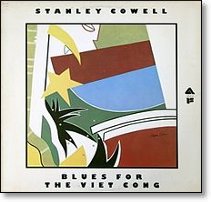
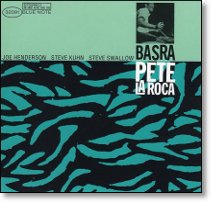
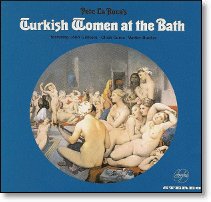
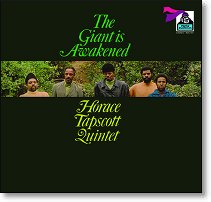
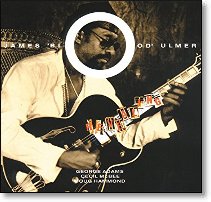
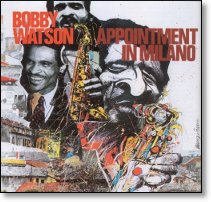
Jerry Bergonzi: Inside Out (1989 [1990], Red): Tenor saxophonist from Boston, one of the most consistent mainstream figures since he signed with Savant around 2006, but early on he recorded with this Italian label, here a quartet with Salvatore Bonafede on piano, Bruce Gertz on bass, and Salvatore Tranchini on drums. B+(**) Stanley Cowell: Blues for the Viet Cong (1969 [1977], Arista/Freedom): Pianist, first album, a trio with Steve Novosel on bass and Jimmy Hopps on drums, some quirky electric piano as well as acoustic ranging from free to boogie -- "You Took Advantage of Me" always perks my attention. I knew this record from its 1977 Arista reprint -- I picked up most of Arista's Freedom reprints around then -- but when Black Lion reissued this on CD, they had second thoughts about the title, picking Travellin' Man instead. A- Stanley Cowell Trio: Departure #2 (1990, SteepleChase): After a frantic decade jumping around labels from avant Strata-East to retro Concord, Cowell found a home with this Danish label, releasing Sienna in 1989 and this follow up. With Bob Cranshaw on bass and Keith Copeland on drums, alternating bright originals with covers ranging from Ellington to Porter to Parker, thoughtful and often flashy. A- Stanley Cowell Trio: Live at Copenhagen Jazz House (1993 [1995], SteepleChase): With Cheyney Thomas on bass and Wardell Thomas on drums -- not a dazzling rhythm section, so this rises and falls on the piano, catchiest when he picks up Ellington or Monk. B+(**) Stanley Cowell: Mandara Blossoms (1995 [1996], SteepleChase): Cover says "featuring Ralph Peterson [drums] & Bill Pierce [tenor saxophone]" and "introducing Karen Francis [vocals] & Jeff Halsey [bass]." B+(*) Stanley Cowell Quartet: Hear Me One (1996, SteepleChase): With Bruce Williams (alto sax), Dwayne Burno (bass), and Keith Copeland (drums). Five Cowell originals, one by Williams, covers of Monk and Parker. Both sax and piano have specular moments, but sometimes make me wonder. B+(**) Stanley Cowell: Are You Real? (2014, SteepleChase): Piano trio with Jay Anderson and Billy Drummond. Cowell seems to have stopped recording after 1997, only to pick it up again with 2010's Prayer for Peace. Two originals, six masterful covers, ending with a sparkling Monk. B+(***) Herbie Hancock: Inventions & Dimensions (1963 [1964], Blue Note): The pianist's third studio album (after Takin' Off and My Point of View), the first recorded after he joined the most legendary edition of the Miles Davis Quintet. Trio, with Paul Chambers on bass and Willie Bobo doing his Cuban percussion thing. B+(*) Herbie Hancock: Cantaloupe Island (1962-65 [1994], Blue Note): Effectively a "greatest hits" from the pianist's most prime period, with two cuts from his debut with Freddie Hubbard and Dexter Gordon, two from his second album with Donald Byrd and Hank Mobley, one each from his peak fourth and fifth albums with Hubbard, Ron Carter, Tony Williams, and George Coleman on the latter. So a bit redundant, especially given that the Byrd cuts you may not have aren't nearly as impressive as the Hubbards you probably do. B+(***) Herbie Hancock: Speak Like a Child (1968 [2005], Blue Note): Sixth album, following his stellar Maiden Voyage, but aside from the pianist, in nice form, the only carryover is bassist Ron Carter, and the unconventional horn section -- Thad Jones on flugelhorn, plus alto flute and bass trombone -- never grabs you. RVG Edition adds three alternate takes. B+(*) Herbie Hancock: The Prisoner (1969 [2000], Blue Note): The pianist's last album for Blue Note, produced by Duke Pearson, with numerous musicians dropping in for a track or two, including three flute (counting tenor saxophonist Joe Henderson). Beyond Henderson, regulars are Johnny Coles (flugelhorn), Garnett Brown (trombone), Buster Williams (bass), and Tootie Heath (drums). Sophisticated postbop composition, overly tricked up production. RVG Edition adds two alternate takes. B+(**) Mariem Hassan: Mariem Hassan Con Leyoad (2002, Nubenegra): Her first album, backed by the Sahrawi group Leyoad. She emerges as a very strong singer backed by a powerful group -- I almost find it too heavy, especially returning after listening to her last albums. B+(***) Freddie Hubbard: Goin' Up (1960 [1961], Blue Note): Trumpet player, seems like he was suddenly everywhere in 1960, second album under his own name, a classic hard bop quintet with Hank Mobley (tenor sax), McCoy Tyner (piano), Paul Chambers (bass), and Philly Joe Jones (drums). Feels a bit rushed for me -- maybe the rhythm section wanted to see how hard they could push the kid. He keeps up, and turns in a nice ballad. B+(***) Freddie Hubbard: Hub Cap (1961, Blue Note): Continuing to make the rounds, this time with Jimmy Heath (tenor sax), Julian Priester (trombone), Cedar Walton (piano), Larry Ridley (bass), and Philly Joe Jones (drums). They tend to switch up too much, but he powers through and blows over them, and the trombone is notably interesting. B+(**) Freddie Hubbard: The Hub of Hubbard (1969 [1971], MPS): Recorded in Germany, not sure of the conditions but the band is American, probably touring with Hubbard at the time: Eddie Daniels (tenor sax), Roland Hanna (piano), Richard Davis (bass), Louis Hayes (drums). Starts with a blistering "Without a Song," and tears through Porter and Styne plus one original. B+(*) Abdullah Ibrahim: Duke Ellington Presents the Dollar Brand Trio (1963 [1997], Reprise Archives): The South African pianist changed his name from Dollar Brand to Abdullah Ibrahim around 1977, and later reissues have tended to indulge him -- I'll follow that convention here, although the reissue title remains unchanged. Ibrahim moved to Europe in 1962, and got noticed in Zürich by Ellington, who arranged the trio session for Reprise. Impressive debut, but he was more out to show his command of jazz repertoire than to make his own mark. B+(**) Dollar Brand/Abdullah Ibrahim Orchestra: African Space Program (1973 [2013], Enja): Big band program, two side-length pieces, the group numbering 12 with 5 saxes and 3 trumpets. Much rougher than necessary. B Abdullah Ibrahim/Johnny Dyani: Echoes From Africa (1979 [1987], Enja): Piano and bass, both from South Africa, both long in exile, the four songs pointed back home -- even the one dedicated to McCoy Tyner. Both sing, not the calling of either. B+(**) Abdullah Ibrahim: African Dawn (1982 [1987], Enja): Solo piano, runs through several of his better known pieces, two by Monk, one by Strayhorn, dedications to Coltrane and Monk. B+(**) Abdullah Ibrahim & Ekaya: African River (1989, Enja): Group named for his 1986 album, one of his best, with four horns -- John Stubblefield (tenor sax, flute), Horace Alexander Young (alto/soprano sax, piccolo), Robin Eubanks (trombone), and Howard Johnson (tuba, trumpet, baritone sax). Pennywhistle jive beats, looping horns, his favorite formula. B+(***) Pete La Roca: Basra (1965 [1995], Blue Note): Born Peter Sims, first noticed playing drums for Sonny Rollins (1957-59). This was his first album, the only one he led until 1997's Swing Time. He wrote three (of six) pieces for this young but stellar quartet -- all born between 1937-40, so 25-28 at the time: Steve Swallow (bass), Steve Kuhn (piano), both impressive but Joe Henderson (tenor sax) even more so. A- Pete La Roca: Turkish Women at the Bath (1967 [2004], Fresh Sound): The drummer's second album, released on a small label I don't recall ever running into but rescued from oblivion by Jordi Pujol's Spanish label. Again, the key is distinctive tenor sax, this time by John Gilmore, but also a pianist who was just starting to get noticed: Chick Corea. (The album was later reissued under Corea's name as Bliss; Sims sued and the album was withdrawn.) A- Pete (LaRoca) Sims: SwingTime (1997, Blue Note): Partly reverting to his original name, the drummer's third (and last) album. Evidently no table of credits, but Jimmy Owens, Ricky Ford, Dave Liebman, Lance Bryant, George Cables, and Santi Debriano are mentioned in the booklet. More bop than swing, and less hard than playful, making a mess out of "Body and Soul" but still can't salvage "The Candy Man." B Red Records All Stars [Jerry Bergonzi/Bobby Watson/Victor Lewis/Kenny Barron/Curtis Lundy/David Finck]: Together Again for the First Time (1996 [1998], Red): The saxophonists are not just the front line. They're the stars, and as in most all-star games, they please most when they show off. And the two bass rhythm section keeps pace. B+(***) Horace Tapscott Quintet: The Giant Is Awakened (1969, Flying Dutchman): Pianist from Los Angeles, first album, as it was for alto saxophonist Arthur Blythe -- the only horn, as the quintet included two bassists plus a drummer, but he does a fine job of wailing over the rumbling rhythm. A- Gust William Tsilis & Alithea With Arthur Blythe: Pale Fire (1988, Enja): Vibraphonist, from Chicago, moved to LA in 2002 where he mostly does TV/movie music. Presumably Alithea is a band name: Allen Farnham (keyboards), Anthony Cox (bass), Horacee Arnold (drums), Arto Tuncboyaci (percussion). Spotty, although the alto saxophonist can warm things up fast when he gets a chance. [5/6 cuts, missing the 15:35 title piece] B Charles Tyler Ensemble: Black Mysticism (1966, ESP-Disk): Most sources list this debut's title as Charles Tyler Ensemble. Tyler plays alto sax, backed with "orchestra vibes" (Charles Moffett), cello (Joel Freedman), bass (Henry Grimes), and drums (Ronald [Shannon] Jackson). Avant scratch with some tinkle, but the raw sax keeps gaining stature. B+(***) Charles Tyler Ensemble: Eastern Man Alone (1967, ESP-Disk): Second album, the group reduced to David Baker on cello and two bassists. The leader's alto sax remains raw and inspired, but Baker's cello plays a much larger role, and its borderline squelch keeps the album on edge. B+(**) James Blood Ulmer: Revealing (1977 [1990], In+Out): Guitarist, made his initial mark with Ornette Coleman's fusion group, Prime Time. His first album, although it didn't appear until 1990, with George Adams (tenor sax), Cecil McBee (bass), and Doug Hammond (drums). Adams makes the strongest initial impression, but every time he threatens to run off with it the guitar fills in something interesting. A- James Blood Ulmer: Part Time (1983 [1984], Celluloid): Ulmer peaked with his 1983 album Odyssey, recorded with Charles Burnham (violin) and Warren Benbow (drums) -- a trio which later regrouped several times as Odyssey the Band. This is that same group, recorded live at Montreux Jazz Festival. Repeats half the album (four songs), more frenetic, harder to follow. B+(**) The James Blood Ulmer Blues Experience: Blues Allnight (1989 [1990], In+Out): Entering full blues crooner mode here, still an idiosyncratic guitarist but the bass-drums-more guitar band would rather be catchy than creative. B+(*) Blood & Burger: Guitar Music (2002 [2003], Dernière Bande): The principals are James Blood Ulmer and Rodolphe Burger, both guitar and vocals, the latter also keyboards. Burger Burger is French, has a couple dozen albums since 1993, some as Kat Onoma. We get songs from each, notably a rather bent "Are You Glad to Be in America?" plus a slow, gritty cover of the Rolling Stones' "Play With Fire" -- and, of course, a lot of guitar. B+(**) Bobby Watson: Live in Europe: Perpetual Groove (1983 [1984], Red): Alto saxophonist from Kansas, helped revitalize Art Blakey's Jazz Messengers in the late 1970s, cut a few albums for American labels but did his most important work in Italy with this group -- Piero Bassini (piano), Attilio Zanchi (bass), and Giampiero Prina (drums). Mostly standards, fast ones like "Mr. PC," "Cherokee," and "Oleo" served up hot and hearty. B+(***) Bobby Watson: Appointment in Milano (1985, Red): Same quartet even tighter, Bassini and Zanchi contributing songs, with the alto saxophonist easily soaring over their breakneck rhythm. A- Bobby Watson & Tailor Made With Tokyo Leaders Big Band: Live at Someday in Tokyo (2000 [2001], Red): Tailor Made was a big band album Watson made in 1993 but only Watson repeats here, backed this time by a crack (if sometimes heavy-handed) Japanese outfit. The alto sax stands out, no surprise. B+(*) Bobby Watson: The Gates BBQ Suite (2010, Lafiya Music): Big band project, a recurrent theme in Watson's oeuvre, this one built around the UMKC Concert Jazz Orchestra, where his day job of late has been director of jazz studies. Sharp and powerful, but as one title has it, "Heavy on the Sauce." B+(**) Additional Consumer News:Previous grades on artists in the old music section.
NotesEverything streamed from Napster (ex Rhapsody), except as noted in brackets following the grade:
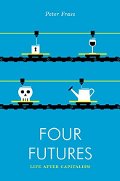
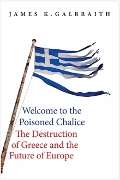
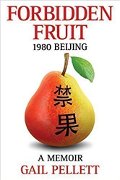
Ask a question, or send a comment. Thursday, April 27, 2017 Book RoundupI haven't done a Book Roundup since August 21, 2017, so I should have about six months worth of books saved up. I don't, but managed to quickly bag my limit (40 per post), and I'm far from done, so will likely follow this up with a second (and probably third) part before long. I posted four of these in 2016, five in 2015, three in 2014, five in 2013, four in 2012, six in 2011. The main purpose is to keep myself abreast of what's being published, at least in my main areas of interest -- politics, economics, and history -- although I sometimes stray (albeit almost never to literature, a luxury indulgence I haven't had time for in many years). This whole series has been plagued by long breaks then sudden flurries of research, usually resulting in clusters of 2-3-4 closely spaced posts. At this point I have about thirty more notes written up, and I'm nowhere near caught up. But perhaps my methodology isn't up to snuff. I usually start with my Amazon recommendations then click on various "related" books, but that approach has lately been yielding diminishing returns. (I wonder if their algorithm's slipped or maybe it's becoming more corrupt -- it is, after all, a form of advertising -- or my own data has gotten confused by buying way too many cookbooks.) In the past I've supplemented this by collecting lists at bookstores and libraries, but I hardly ever frequent them anymore. The other thing that's undercutting my ability to pull forty notes together is that a while back I started adding uncommented notes at the end of posts. At first I was thinking of books that might be worth knowing about but which I didn't have anything non-obvious to add to. One source of these are public figures like Mikhail Gorbachev, Olivier Blanchard, and Sheldon Whitehouse -- I almost includes Elizabeth Warren but decided instead to make a point on Middle Class. Then there are books that don't seem that promising, and books that would just elicit comments similar to past books (the latest Robert D Kaplan has moved into that category. But almost instantly that gave me an out for books I might have written about but don't feel like digging into at the moment. And, as usual, I've grouped some related books under one I wrote about -- not necessarily the best (how would I know?) but the one that got me going. I have thirty more books in my scratch file, and will continue to collect them for a few more days, so expect a follow up post sooner rather than later (hopefully with more paperbacks; for some reason they're exceptionally hard to find just using Amazon). Given how long it's been, I'll note that I've read (or at least started) five of these books (Peter Frase, James Galbraith on Greece, Wenonah Hauter, Gail Pellett, and Matt Taibbi), have a couple more on the shelf (Dean Baker, the other Galbraith, Bernie Sanders), and plan on ordering a couple more (JVP, John W Dower, maybe Pankaj Mishra). Also, Laura's played the audio of Shattered, so I've picked up some of that, too. (Should be required reading for anyone who thought the Clinton machine had any credibility left 24 years after the populist promises of 1992 -- or for that matter any mechanical skills. I'm not sure whether I can exempt myself, inasmuch as, despite quite a bit of awareness to the contrary, I never doubted that Hillary could have been elected in 2016, nor that she would helm a much less obnoxious administration than the one we got with Trump.)
Jonathan Allen/Arnie Parnes: Shattered: Inside Hillary Clinton's Doomed Campaign (2017, Crown): Purports to offer inside dirt on Clinton's failed presidential campaign. Of course, had she won we'd read this differently: perhaps as a triumph over adversity, or maybe just as a vindication for democracy, showing that the people could still see past the shortcomings of the candidate. On the other hand, the fact that she lost, and lost to so unpopular and despicable a candidate as Donald Trump, turns this into a scab you want to pick at -- in the end she lost because too many people hated her more than they feared him, and while that wasn't wholly her fault, she was far from faultless. Carol Anderson: White Rage: The Unspoken Truth of Our Racial Divide (2016, Bloomsbury USA): Flips the tables on complaints of "black rage" in response to recent police shootings of unarmed blacks to point out the long history of intemperate rage and resistance of whites at every advance of civil rights since the Thirteenth Amendment abolished slavery. Dean Baker: Rigged: How Globalization and the Rules of the Modern Economy Were Structured to Make the Rich Richer (paperback, 2016, Center for Economic and Policy Research): How various rules and policies increase inequality, and how different rules could reduce the concentration of wealth. Book available free online as a PDF or ebook. James Brennan: Against Democracy (2016, Princeton University Press): Philosopher, argues that democracy is inefficient and often misguided, mostly because it pretends that people who don't know shit are entitled to make decisions about how everything is run. Brennan argues for a "epistocracy" -- rule by a small number of people who have qualified by taking rigorous tests (developed no doubt by the epistocracy). Sure, maybe those properly qualified could settle their differences by voting, but the process could just as well be narrowed to ever smaller (more qualified) elites until it achieves the ultimate efficiency of dictatorship. Lots of problems with this: one is that rulers quickly develop interests that run counter to public interests, like self-perpetuation. For all its flaws and corruptions, democracy at least gives lip service to the notion that government serves all (or at least most) of the people, and provides remedies when leaders get out of hand. Winston Churchill famously said that democracy was the worst possible form of government, except for the rest. I suspect what he really appreciated about democracy was that it allowed the voters to periodically take leave of him without having to sever his head. Brennan is reportedly writing books Against Politics and cowriting one called Global Justice as Global Freedom: Why Global Libertarianism Is the Humane Solution to World Poverty. Now if only he can come up with a definition of libertarianism that doesn't suspiciously resemble feudalism. Noam Chomsky: Requiem for the American Dream: 10 Principles of Concentration of Wealth & Power (paperback, 2017, Seven Stories Press): Derived from a documentary film made mostly of interviews with Chomsky. Principles (from chapter titles): 1. reduce democracy; 2. shape ideology; 3. redesign the economy; 4. shift the burden; 5. attack solidarity; 6. run the regulators; 7. engineer elections; 8. keep the rabble in line; 9. manufacture consent; 10. marginalize the population. That needs some fleshing out, but this is probably a fairly succinct primer on an important issue. Tyler Cowen: The Complacent Class: The Self-Defeating Quest for the American Dream (2017, St Martin's Press): How much more proof do you need that "the dream is dead" than that this right-wing hack should come along, lecturing how stupid you were to have ever fallen for the idea in the first place? It may help to point out here that what American Dream always meant was the notion that prosperity should be widely shared -- within the grasp of practically everyone (aka the Middle Class, which is to say the condition of sufficient equality where virtually no one is so poor they cannot share in the nation's increasing prosperity). On the other hand, Cowen's resignation to the oligarchy has less to do with insight and vision than with who signs his checks. Books like this must make the rich feel inevitable and invincible. Katherine J Cramer: The Politics of Resentment: Rural Consciousness in Wisconsin and the Rise of Scott Walker (paperback, 2016, University of Chicago Press): After 2016, when Wisconsin voted down Russ Feingold's Senate run and went with Trump for president, after three statewide wins for weaselly governor Walker, you have to admit that Republicans have had remarkable success at capturing Wisconsin -- the subject here. Christopher de Bellaigue: The Islamic Enlightenment: The Struggle Between Faith and Reason, 1798 to Modern Times (2017, Liveright): The start date was when Napoleon invaded Egypt, an event more often remembered as the first salvo of European dominance of the Middle East). This deals with the spread of (and reaction to) cultural and intellectual ideas -- what others have called modernism -- from Europe to the intellectual centers of Islam (Cairo, Istanbul, and Tehran). John W Dower: The Violent American Century: War and Terror Since World War II (paperback, 2017, Haymarket Books): Perhaps our most important historian of Japanese-American relations both during and after WWII, Dower took an interest in Bush's Iraq War schemes when warmongers cited the US occupation of Japan and Germany as successful models for what the Bush administration could do in Iraq. He pointed out many ways in which Iraq was different, but also stressed how the US had changed in ways that made us less fit. I expect a big part of this book to expand on those insights (although possibly not as much as his 2010 book, Cultures of War: Pearl Harbor, Hiroshima, 9-11, Iraq.) Peter Frase: Four Futures: Life After Capitalism (paperback, 2016, Verso): Speculative post-capitalist futurology plotting out broad options based on two axes based on distribution of wealth in a world of plenty or scarcity. Frase calls these options communism, rentism, socialism, and exterminism. Written before last year's election, which suddenly tilted the odds toward the later. James K Galbraith: Inequality: What Everyone Needs to Know (paperback, 2016, Oxford University Press): Galbraith's Inequality and Instability: A Study of the World Economy Just Before the Great Crisis (2012, Oxford University Press), turned out to be a dry compendium of research, meant for specialists, but this primer should be clear and compelling. He did, after all, write two of the most important (and quite accessible) political-economic books of the last decade: The Predator State: How Conservatives Abandoned the Free Market and Why Liberals Should Too (2008), and The End of Normal: The Great Crisis and the Future of Growth (2014). James K Galbraith: Welcome to the Poisoned Chalice: The Destruction of Greece and the Future of Europe (2016, Yale University Press): America's best economist offers a view of the Euro crisis, informed by having worked as an advisor to the Syriza government in Greece. No nation suffered (or continues to suffer) more than Greece for the inflexibility of the Euro system and its rigid control by German bankers. Anne Garrels: Putin Country: A Journey Into the Real Russia (2016, Farrar Straus and Giroux): Before jumping to conclusions about Russia's president, perhaps a good idea to look at Russia itself. This focuses on Chelyabinsk, a city deep in Siberia best known as one of the centers of the Soviet Union's nuclear weapons program. Garrels is an NPR correspondent who spent several years in occupied Baghdad -- see Naked in Baghdad: The Iraq War and the Aftermath as Seen by NPR's Correspondent Ann Garrels (2003; paperback, 2004, Picador). Other recent books on Russia and/or Putin (aside from Satter, which I treat separately): Charles Clover: Black Wind, White Snow: The Rise of Russia's New Nationalism (2016, Yale University Press); Karen Dawiska: Putin's Kleptocracy: Who Owns Russia? (2014; paperback, 2015, Simon & Schuster); Steven Lee Myers: The New Tsar: The Rise and Reign of Vladimir Putin (2015, Knopf; paperback, 2016, Vintage Books); Mikhail Zygar: All the Kremlin's Men: Inside the Court of Vladimir Putin (2016, Public Affairs). Mark Hannah: The Best "Worst President": What the Right Gets Wrong About Barack Obama (2016, Dey Street Books): As Obama's second term comes to a close, it's tempting to start looking at his legacy, which Hannah views through the peculiar prism of the most ungrounded, counterfactual attacks any president has had to suffer. Still, vilification of political opponents is old hat in America, even if now it seems more unhinged than ever. The other part of the problem with Obama is that he hasn't clearly changed much, but he also has this idea that small incremental changes will have larger long-term consequences, and those are hard, perhaps impossible, to accurately gauge now. I suspect that Hannah is trying to claim those changes now, and I don't know that he's not right to do so. On the other hand, Trump is frantically trying to reverse as much of Obama's legacy as possible -- something Obama's focus on small changes makes all the easier. Wenonah Hauter: Frackopoly: The Battle for the Future of Energy and the Environment (2016, New Press): US petroleum production had been declining ever since Hubbert's Peak was hit in 1969, but at least in the short term new technologies like hydraulic fracturing has made it possible to recover more oil and to open up substantial amounts of natural gas trapped in shale deposits. On the other hand, all this new production adds to the amount of carbon dioxide in the atmosphere, and fracking introduces new environmental problems -- so much so that opposition to it has become a potent political movement. Hauter herself heads an organization called Food & Water Watch, and previously wrote Foodopoly: The Battle Over the Future of Food and Farming in America (paperback, 2014, New Press). Chris Hayes: A Colony in a Nation (2017, WW Norton): A look at race relations, keyed off the shooting in Ferguson, MO, expanding on the theme that there remain a managed colony of black people in America, separate and very different from the concept of an egalitarian nation commonly experienced (at least the lip-service) by whites. Hayes previous book, Twilight of the Elites: America After Meritocracy, was one of the most insightful, accessible, and powerful books on increasing inequality. Richard Heinberg/David Fridley: Our Renewable Future: Laying the Path for One Hundred Percent Clean Energy (paperback, 2016, Island Press): Heinberg has written a number of books on the limits of basing our energy needs on oil, starting with The Party's Over: Oil, War and the Fate of Industrial Societies (2003) up to Snake Oil: How Fracking's False Promise of Plenty Imperils Our Future (2013), and he's generally been a pretty pessimistic sort, one book even titled The End of Growth: Adapting to Our New Economic Reality (2011). On the other hand, the cost of renewable energy sources has been plumeting (especially solar cells), opening up the possibility of transitioning to renewables with relatively little disruption (except, of course, to fossil fuel companies). Related: Lester R Brown: The Great Transition: Shifting From Fossil Fuels to Solar and Wind Energy (paperback, 2015, WW Norton); Gretchen Bakke: The Grid: The Fraying Wires Between Americans and Our Energy Future (2016, Bloomsbury USA). Arlie Russell Hochschild: Strangers in Their Own Land (2016, New Press): Sociologist sets out to explore "a stronghold of the conservative right" in Louisiana, finding "lives ripped apart by stagnant wages, a loss of home, an elusive American dream," a context for trying to understand their self-defeating political choices. Made a list of "6 books to understand Trump's win," compiled by people who probably don't understand it themselves. Also on that list: J.D. Vance: Hillbilly Elegy: A Memoir of Family and Culture in Crisis (2016, Harper). Jewish Voice for Peace: On Anti-semitism: Solidarity and the Struggle for Justice in Palestine (paperback, 2017, Haymarket Books): Essay collection probing various aspects of the frequent charge that advocating peace and justice in Israel/Palestine is anti-semitic. JVP has been an important group in America in the campaign to end the Occupation precisely because their activism is rooted in common Jewish values, which has put them in a uniquely authoritative position to dispute this canard. Robert P Jones: The End of White Christian America (2016, Simon & Schuster): Head of something called the Public Religion Research Institute argues that since the 1990s White Christians have both demographically and culturally become a minority in America. Not sure what he does with this insight, but but it does correspond to many Republicans losing grip not just on power but on reality -- as you'd expect, it's a question that only matters to people wrapped up in White Christian identity, especially those nostalgic for an America that honored and privileged their prejudices. John B Judis: The Populist Explosion: How the Great Recession Transformed American and European Politics (paperback, 2016, Columbia Global Reports): Short (184 pp) and topical overview of what passes for populism both on the right and the left, both in Europe and America. It takes a peculiar perspective to see all those stances as related. Even shorter: Jan-Werner Müller: What Is Populism? (2016, University of Pennsylvania Press); also: Benjamin Moffitt: The Global Rise of Populism: Performance, Political Style, and Representation (2016, Stanford University Press). Sarah Leonard/Bhaskar Sunkara, eds: The Future We Want: Radical Ideas for the New Century (paperback, 2016, Metropolitan Books): Editors associated with The Nation and Jacobin collect some essays to sketch out "a stirring blueprint for American equality," starting with the recognition that the present system is an oligarchy. They imagine finance without Wall Street, full employment achieved by limiting work hours, and many other things. Pankaj Mishra: Age of Anger: A History of the Present (2017, Farrar Straus and Giroux): Mishra has written several books on how various Asian intellectuals reacted to modernism, especially given how Europeans presented it wrapped up in self-serving imperialism -- a much trickier subject than figuring out why so many westerners are so full of rage as their world of myth slips out of any illusion of their control. Nor would he ever stop at the West, unlike chroniclers of "populism," because he knows anger circles the world, taking all sorts of form. Cathy O'Neil: Weapons of Math Destruction: How Big Data Increases Inequality and Threatens Democracy (2016, Crown): Former Wall Street quant, defected to the Occupy Movement and now writes a blog as mathbabe. The "big data" she writes about is mostly used by businesses to target sales pitches, to qualify mortgages and loans, and other things that effectively discriminate against the poor or statistical analogs, not least by warping their experiences in self-perpetuating ways (she talks about "siloing" people which strikes me as an apt metaphor, especially since in my part of the country silos are often death traps). Of course, government also uses "big data" and while I wouldn't say they're up to no good, they too often aren't doing you any favors with their own siloing. I'm not so sure the math itself is at fault, but we'd have to turn the power relationships around to give it a chance -- e.g., collect data about everything public on the market and give consumers tools to access it in a consistent and even-handed manner. As it is, "big data" is becoming an increasingly effective tool for managing and manipulating people, one that helps those in power exercise more power than ever. Iain Overton: The Way of the Gun: A Bloody Journey Into the World of Firearms (2016, Harper): Mostly on the US but Overton journeys through twenty-five countries looking into many aspects of gun proliferation -- "meets with ER doctors dealing with gun trauma, SWAT team leaders, gang members, and weapons smugglers." No idea how deep this goes, but it reflects critically enough that Amazon's gun nuts have buried it in negative ratings -- they seem to be even more vigilant than Israel's hasbaraists. Gail Pellett: Forbidden Fruit: 1980 Beijing, a Memoir (paperback, 2015, VanDam): A new left feminist I knew in St. Louis before she moved on to Boston and New York, working in radio and video (including NPR and Bill Moyers). Along the way she spent a year at Radio Beijing as a "foreign language expert," "polishing" news propaganda. That was 1980, post-Mao, a transitional period as the party regime was starting to stabilize after the upheavals of the Cultural Revolution and the Gang of Four -- interesting times, as the old Chinese curse put it. Elizabeth Rosenthal: An American Sickness: How Healthcare Became Big Business and How You Can Take It Back (2017, Penguin Books): With the health care industry sucking up close to 20% of America's GDP these days -- double from a couple decades ago when the gold rush really accelerated with vulture capitalists snapping up previously non-profit hospitals. This promises a big picture look at how business is organized, how they subvert markets, how they game both supply and demand sides, and how they grapple with public policy which hopes to contain costs but is influenced largely by lobbyist money. Zachary Roth: The Great Suppression: Voting Rights, Corporate Cash, and the Conservative Assault on Democracy (2016, Crown): The 2010 sweep reinforced for Republicans the idea that all they have to do to win is keep undesirable people from voting. Since then, they've passed dozens of state laws to make it harder for people to vote: this recounts those efforts, looks at the right-wing money behind those campaigns. This is not just an assault on democracy, it's an attempt at negation: it starts with the Republians' assumption that their group is more worthy than others, and follows that anything they can do to increase their power is justified. Bernie Sanders: Our Revolution: A Future to Believe In (2016, Thomas Dunne): Came out post-election, recognizing that the same platform would be relevant regardless of who won. And while we all supported Hillary figuring she'd be slightly more aware of the problems and slightly more amenable to real solutions, with Trump in the White House and the Republicans controlling Congress (and oh so much more), this looms as the only real way forward for anyone who wants a fairer and less conflict-ridden society (even mainstream Democrats should be supportive of that, given the alternative). David Satter: The Less You Know, the Better You Sleep: Russia's Road to Terror and Dictatorship Under Yeltsin and Putin (2016, Yale University Press): Fourth book on Russia, all harshly critical, so much so that the Russian government expelled him in 2013 as a general nuisance. This new book seems to recapitulate and update his previous ones: Age of Delirium: The Decline and Fall of the Soviet Union (1996), Darkness at Dawn: The Rise of the Russian Criminal State (2003), and It Was a Long Time Ago and It Never Happened Anyway: Russia and the Communist Past (2007). A quote from the second book: "Influenced by decades of mendacious Soviet propaganda, [Russia's reformers] assumed that the initial accumulation of capital in a market economy is almost always criminal, and, as they were resolutely procapitalist, they found it difficult to be strongly anticrime. . . . The combination of social darwinism, economic determinism, and a tolerant attitude toward crime prepared the young reformers to carry out a frontal attack on the structures of the Soviet system without public support or a framework of law." It's hard to overstate how much social and economic damage their "reforms" did, nor to appreciate how popular Putin became as the strong man who ushered in a new era, both by winning back Chechnya and covering up Yeltsin's corruption. Satter returns to the 1999 apartment bombings that gave Putin his excuse for attacking Chechnya -- if true (and I find them credible) a remarkably cruel and cynical turn. While I worry that most anti-Putin fulminations are themselves cynical efforts to relaunch the Cold War -- the lost love of the neocons, Satter has a knack for making them make sense. Ganesh Sitaraman: The Crisis of the Middle-Class Constitution: Why Economic Inequality Threatens Our Republic (2017, Knopf): Argues first that the US constitution was designed to counteract class inequality -- in no small part because "compared to Europe and the ancient world, America was a society of almost unprecedented equality, and the founding generation saw this equality as essential for the preservation of America's republic." Every expansion of democracy since has been linked to putting the nation on a more equal footing, so it's no surprise that the rise of oligarchy today is so eager to limit the franchise, not to mention burying it under mountains of money. Timothy Snyder: On Tyrrany: Twenty Lessons From the Twentieth Century (paperback, 2017, Tim Duggan): Historian, I know him mostly from his late collaborations with Tony Judt, but he has two major books on the Nazis and Eastern Europe, Bloodlands: Europe Between Hitler and Stalin (2010) and Black Earth: The Holocaust as History Warning (2015). His "warning" from the latter: "our world is closer to Hitler's than we like to admit, and saving it requires us to see the Holocaust as it was." This short (128 pp) post-Trump book draws further ties between the genocidal "tyranny" of the WWI era and our own times: another warning. Andy Stern: Raising the Floor: How a Universal Basic Income Can Renew Our Economy and Rebuild the American Dream (2016, PublicAffairs): Former president of the SEIU, one of the few unions which has grown in size since 2000, bucking trends that have been driven by technology and politics. He recognizes that technology has entered a phase where it's more likely to destroy jobs than to create new ones (the main theme of James K Galbraith's The End of Normal: The Great Crisis and the Future of Growth), and he recognizes that this has been a major source of the growth of inequality, and consequently an increasingly inequitable society. His basic income scheme counters inequality while making technological trends less disruptive. When I think along these lines, I tend to think of not just recirculating cash into the hands of workers but also of giving workers equity in the companies they work for, ultimately democratizing the workplace. But for as far as it goes, a basic income is a good idea. Other recent books along these lines: Rutger Bregman: Utopia for Realists: The Case for a Universal Basic Income, Open Borders, and a 15-Hour Workweek (paperback, 2016, The Correspondent); Philippe Van Parijs/Yannick Vanderborght: Basic Income: A Radical Proposal for a Free Society and a Sane Economy (2017, Harvard University Press); and Nick Srnicek/Alex Williams: Inventing the Future: Postcapitalism and a World Without Work (paperback, 2015, Verso). Joseph E Stiglitz: The Euro: How a Common Currency Threatens the Future of Europe (2016, WW Norton): Probably the definitive book on why the Euro has straitjacketed Europe's economy following the 2008 financial meltdown. The idea behind the Euro was to extend and simplify the Common Market with a common currency, but that market was never integrated politically (like, say, the United States) so the central bank, and effectively the single monetary policy, could be effectively captured by German national interests. In pre-recession years this helped fuel housing bubbles in southern Europe and Ireland, which burst in 2008, but left those nations with particularly severe debt overhangs, denominated in Euros so they couldn't compensate by inflating their own currencies. Greece was hit hardest of all, partly its own government's fault, and when the Greek people resisted by electing a left-wing government, the Germans came down even harder, dictating a crippling austerity regime. Stiglitz reviews all this and offers several sensible ways out. If there's a fault it may be that focuses on what is technocratically possible as opposed to the politics that got us here and keep us from fixing it. Matt Taibbi: Insane Clown President: Dispatches From the 2016 Circus (2017, Spiegel & Grau): Quickly patched together from reports covering the election -- you know, the one where it was absurd that Trump would win until the day he did, giving the whole affair a certain whiplash. Still, Taibbi was more sensitive to Trump's supporters and conscious of Hillary's faults than most, so he helps even when he's not totally right. But then he's always been sharp, which he proves here by quoting 20+ pages from his book on 2008 and making it seem as timely as ever. By contrast, Maureen Dowd called her campaign journal The Year of Voting Dangeously: The Derangement of American Politics (2016, Twelve) -- borrowing her subtitle from Taibbi, whose 2008 book was The Great Derangement. Michael Waldman: The Second Amendment: A Biography (2014; paperback, 2015, Simon & Schuster): Two parts: the first a history of the original debate surrounding the framing and adoption of the second amendment ("the right to bear arms"); the second covers the various Supreme Court rulings on the amendment, most recently ones broadening the right of individuals to own firearms. Needless to say, those were different debates and sets of issues. The original, I've long felt, was a way of reserving to the states the option of starting the Civil War, so became obsolete once that happened. Today the key issue has more to do with the acceptability of violence for resolving public disputes. Unfortunately, the federal government's practice of imposing its will abroad through force of arms sets a bad example for everyone under it, leading to all sorts of futile arms races, even much legal ambiguity over when lethal force may or may not be used. Elizabeth Warren: This Fight Is Our Fight: The Battle to Save America's Middle Class (2017, Metropolitan Books): Originally from Oklahoma, one of the few to clearly recognize what was happening during the 2008 banking meltdown, the principle architect of a major tool for ending the consumer abuses which contributed so much to that debacle, acts which gave her a measure of fame from which she won a US Senate seat from Massachusetts. All that plus her aggressive tone against Trump in 2016 positions her to be a credible presidential candidate in 2020, so figure this to be a position stake-out. That's good enough for me, but I want to quibble about her Middle Class usage. The Middle Class is not an entity that one can care for to the exclusion of rich and poor. Rather, it is the effect you get when the economic system is relatively equal -- when differences between most people (blue collar and white collar, manual laborers and professionals) are inconsequential, when all those people have similar opportunities and intergenerational hopes. To get a Middle Class you need institutions, both public and private (like unions), and policies that equalize differences, primarily by leveling up (you move poor people into the Middle Class by supporting them, and you fold the relatively well-to-do back into the Middle Class by reducing their intrinsic advantages). And that's basically what progressive politicians like Warren mean when they say "Middle Class." But the reason they say "Middle Class" instead of "equal" is that they (and/or their target audience) have bought the right-wing's propaganda that the poor are responsible for their own destitution, usually because lack some essential character trait that the "Middle Class" prides itself on. Secondly, "Middle Class" gives the Upper Class a pass, a green light to keep on doing what they're doing -- such as using government as a tool to keep pulling away from the rabble -- but at least "Middle Class" doesn't challenge them the way old-fashioned Populism did. That comes in handy for politicians who are still dependent on the rich for most of their funding. J Kael Weston: The Mirror Test: America at War in Iraq and Afghanistan (2016, Knopf): Former US State Department officer, spent seven years in these wars, writes at great length (606 pp) on the human cost of those wars, though possibly only to the Americans who fought them -- a lot of looking in the mirror here. That may be sufficiently damning, but is far from the whole story. And I have to wonder how critical he can be about American intentions given how long he kept trying to serve them. James Q Whitman: Hitler's American Model: The United States and the Making of Nazi Race Law (2017, Princeton University Press): Well before Hitler came to power, the US codified the set of racial discrimination laws known as Jim Crow. It's pretty well known that South Africa's Apartheid system was based on the American model, but what about Nazi Germany's Nuremberg Laws? Yes and no: "the ultimate, ugly irony that when Nazis rejected American practices, it was sometimes not because they found them too enlightened, but too harsh." Even so, the slope from discrimination to genocide turned out to be much steeper in Germany, probably due to the extraordinary pressures of fighting a loosing war. While interesting in itself, a more interesting book would examine Nazi views of America's own Lebensraum campaign -- the series of wars that drove Native Americans off the land, making room for white settlers. Indeed, the US was the pioneer for white settler colonies all around the world (most recently Israel). Other recent books merely noted: Ryan Avent: The Wealth of Humans: Work, Power, and Status in the Twenty-First Century (2016, St Martin's Press) Olivier Blanchard/Raghuram G Rajan/Kenneth S Rogoff/Laurence H Summers, eds: Progress and Confusion: The State of Macroeconomic Policy (2016, MIT Press) Derek Chollet: The Long Game: How Obama Defied Washington and Redefined America's Role in the World (2016, Public Affairs) Angela Y Davis: Freedom Is a Constant Struggle: Ferguson, Palestine, and the Foundations of a Movement (paperback, 2016, Haymarket Books) Roxanne Dunbar-Ortiz: An Indigenous Peoples' History of the United States (paperback, 2015, Beacon Press) Michael Eric Dyson: Tears We Cannot Stop: A Serman to White America (2017, St Martin's Press) Mikhail Gorbachev: The New Russia (2016, Polity) Pamela Haag: The Gunning of America: Business and the Making of American Gun Culture (2016, Basic Books) Jerry Kaplan: Humans Need Not Apply: A Guide to Wealth and Work in the Age of Artificial Intelligence (2015, Yale University Press) Robert D Kaplan: Earning the Rockies: How Geography Shapes America's Role in the World (2017, Random House) Walter Laqueur: Putinism: Russia and Its Future With the West (2015, Thomas Dunne) Giles Merritt: Slippery Slope: Europe's Troubled Future (2016, Oxford University Press) Trevor Noah: Born a Crime: Stories From a South African Childhood (2016, Spiegel & Grau) Arkady Ostrovsky: The Invention of Russia: From Gorbachev's Freedom to Putin's War (2016, Viking) George Papaconstantinou: Game Over: The Inside Story of the Greek Crisis (paperback, 2016, Create Space) William J Perry: My Journey at the Nuclear Brink (paperback, 2015, Stanford Security Studies) Kenneth S Rogoff: The Curse of Cash (2016, Princeton University Press) Jeffrey D Sachs: The Age of Sustainable Development (paperback, 2015, Columbia University Press) Chris Smith: The Daily Show (The Book): An Oral History as Told by Jon Stewart, the Correspondents, Staff and Guests (2016, Grand Central Publishing) Rebecca Solnit: The Mother of All Questions: Further Reports From the Feminist Revolutions (paperback, 2017, Haymarket Books) Sheldon Whitehouse: Captured: The Corporate Infiltration of American Democracy (2017, New Press) Jason Zinoman: Letterman: The Last Giant of Late Night (2017, Harper) Selected paperback reprints of books previously noted: Mark Blyth: Austerity: The History of a Dangerous Idea (2013; paperback, 2015, Oxford University Press) Steven Brill: America's Bitter Pill: Money, Politics, Backroom Deals, and the Fight to Fix Our Broken Healthcare System (2015; paperback, 2015, Random House) Noam Chomsky: Who Rules the World? (2016; paperback, 2017, Metropolitan Books): Essay collection. Martin Ford: Rise of the Robots: Technology and the Threat of a Jobless Future (2015; paperback, 2016, Basic Books) Theda Skocpol/Vanessa Williamson: The Tea Party and the Remaking of Republican Conservatism (2012; updated ed, paperback, 2016, Oxford University Press) Ask a question, or send a comment. Monday, April 24, 2017 Music Week
Music: Current count 28064 [28033] rated (+31), 397 [401] unrated (-4). Rated count up this week, probably because I didn't find nearly as many A-list records as last week: the two I came up with got (I think) three plays each, as did a couple of high HMs -- African River came closest, although I wound up deciding it was a slightly uneven follower of several better albums, starting with the band-naming (and hugely recommended) Ekaya, and the Dawkins-Iyer record only had one spot I kept tripping on. I did only give Idles -- currently number three on Chris Monsen's 2017 favorites list -- one spin, finding myself more impressed than interested. I haven't yet found his number two Harriet Tubman -- probably a download link in my mailbox -- and I wasn't that taken with his top-rated Angles 9 album (although I liked their smaller group Live in Coimbra and Live in Ljubljana discs), and I've never rated anything by Martin Küchen less than B+(**). A few more things I haven't heard down the list: Atomic, Lithics, Priests, Led Bib (in the queue but temporarily lost), Cloud Nothings, Necks. Made a little more progress in the Jazz Guide compilation: 20th Century up to 619 pages, 21st 372, so I'll probably his 1000 pages sometime this week. Since last time I reported, that's up +9 and +34, so at this point (Seamus Blake, 10% into "Jazz 80s") the latter is growing four times as fast. I think I was just starting the file last week, so some quick envelope math suggests I'll finish it in another nine weeks (end of June), with 20th Century growing to 700 pages and the 21st to 778. After that it should be all post-2000 (aside from relatively small files for Latin and pop jazz). The calendar says I should post April's Streamnotes file later this week. Draft file is currently shorter than usual, especially for new music (58 records, 94 total). So I imagine I'll scrounge around for some scoops, but don't really expect to find much. I also hope to do a book post sometime this week. I haven't done one since August 21, and a lot has happened since then. I will note that I've started reading Gail Pellett's remarkable memoir of 1980, the year she spent working as a "foreign expert" for Chinese radio. I knew her back in St. Louis in the 1970s, so I'm recognizing some things and I'm learning even more -- not least about her background, which for some reason I never enquired into when I could. Something else I should (but probably won't) do is to write up some thoughts on Ian Kershaw's Fateful Choices -- ten moves from 1940-41 that dramatically broadened the wars that started in the late 1930s. The book would probably have been better had he started earlier and included more on the earlier decisions that led up to the war: Japan's decision to invade China in 1937, Germany's to carve up Poland in 1939, the German-Russian pact that allowed Germany into Poland, the Anglo-French decision to declare war on Germany but not Russia over Poland. Of course, those in turn should be backtracked: Japan's previous attack on Manchuria in 1929, Italy's attacks on Ethiopia and Albania, the mix of intervention and avowed neutrality over the Spanish Civil War, and the so-called "appeasement policy" toward Germany. Before that, of course, is the detritus of the first World War, and before that you get the relatively late efforts at empire building by Germany, Italy, Japan, and the United States. In many ways the best book on all this is Nicholson Baker's Human Smoke -- at least he brings all these threads together, albeit too schematically. One thing I learned there was how artfully Franklin Roosevelt maneuvered Japan and Germany into attacking, allowing him to enter the war with broad popular support -- something most Americans weren't interested in until it happened. Various other books I've read recently helped fill in details: Kershaw, Ira Katznelson's Fear Itself, and most of all James Bradley's The China Mirage. But Baker still has the most important insight: that the only people who tried to stop this cascade of bad choices were the pacifists, not only because they were the ones who anticipated the disaster to come, but because they were the ones most sensitive to the injustices which preceded it. Well, also the people less adverse to fighting who were later dismissed as "premature antifascists." New records rated this week:
Recent reissues, compilations, and vault discoveries rated this week:
Old music rated this week:
Unpacking: Found in the mail last week:
Ask a question, or send a comment. Sunday, April 23, 2017 Weekend RoundupWe're approximately 100 days into the Trump administration, which only leaves 1360 more days to go until he's gone -- assuming American voters don't get even stupider along the way. If you've been hiding in a cave somewhere, you might check out David Remnick: A Hundred Days of Trump as a quick way of getting up to speed, although Remnick's piece is long on style and short on substance. If you're really masochistic you can dig up my Weekend Roundups (and occasional Midweek Roundups) since January. Indeed, one could write a whole book on Trump's first 100 days -- probably for the first time since Franklin Roosevelt made that timespan historic (see Adam Cohen's Nothing to Fear: FDR's Inner Circle and the Hundred Days That Created Modern America), although in this case the "accomplishments" are all negative, and the real damage Trump has sown in this fertile period has (mostly) yet to play itself out. As Bill McKibben notes, below, things that we do to the environment now will continue to drive changes well into the future. That's also true for society, culture, politics, and the economy. How much damage Trump ultimately does will depend on how effectively the resistance (not just the Democrats, although they have much to prove here) organizes and how coherently we can explain and make people aware of what's so wrong with the Republican agenda. One thing that has probably helped in this regard is that the false dichotomy between "populist" Trump and "conservative" Republicans has faded away -- Trump is still harshly anti-immigrant in all forms (not just "illegals" but he's also turned against perfectly legal H-1B visa holders), but everywhere else he's fallen into line with orthodox (and often extremist) conservatives. This not only means that Trump and the rest of the Republicans will share blame for everything that breaks bad on their watch, it will force Democrats to refashion their platform into one that counters those disasters. We no longer have to argue what bad things might happen if hawks run wild, if corporate moguls are freed of regulation, if the courts are packed with right-wing ideologues, if any number of previous hypotheticals happen, because we're going to see exactly what happens. In fact, we're seeing it, faster than most of us can really process it. Some scattered links this week in the Trump World:
Also a few links less directly tied to Trump, though sometimes still to America's bout of political insanity:
Ask a question, or send a comment. Monday, April 17, 2017 Music Week
Music: Current count 28033 [28009] rated (+24), 401 [404] unrated (-3). Lowest rated count February 27 (20), second lowest this year. About the only excuse I can think of is that the relative bumper crop of A- records took a lot of extra time -- even the ones on Napster were more likely to get three than two spins, and the Perelman-Shipp CDs have proven nearly impossible to rank or even to sort out -- though they've been a constant pleasure to play. I'll also note that my office space has turned into a horrible mess, where the normally FIFO new jazz queue is now a teetering pile. I need to do a lot of "spring cleaning" -- especially moving trays of CDs to shelves, a fairly hideous task given deterioration of my eyesight. Anyhow, my short-term workaround has been to play old music on the computer, the selections suggested by wherever I'm stuck in compiling my last fifteen years of jazz reviews into two book files. I'm at the stage where I'm going through the database files and fishing the reviews out of a large text file. I just finished Jazz (1960-70s), so next one up is the even longer Jazz (1980-90s), then the really huge Jazz (2000- ), plus post-2000 vocalists, separate files for Latin and Pop Jazz, and some scattered names I've filed elsewhere (Avant-Garde, Classical, New Age, maybe Africa or Latin or Electronica?). The 20th Century file is growing slowly now -- mostly records that came out before I started writing seriously about jazz, plus some later reissues -- at 610 pages (271k words), but the 21st Century file is picking up speed, with 338 pages (159k words). Given how long the last database file took, I can't even imagine when I'll be done (in the sense of finishing the compilation phase. (August? October?) And I expect the result then will be terribly redundant and shot full of holes -- certainly not something a real publisher might take any interest in. To come up with something useful I'd have to go back and take each artist in turn, write a short bio and critical summary, and fill in a few holes. I might also need to take less of a kitchen sink approach -- just focus on "notable" (especially "recommended," maybe even "essential") albums to cover up how much of the rest I never managed (or will manage) to get to. On other fronts, Lee Rice Epstein has a nice piece on the late Arthur Blythe (the star, by the way, of the Horace Tapscott album right/below). I also got notes that Alan Holdsworth and Jay Geils died recently. I had hopes of driving out to the EMP Pop Conference in Seattle (April 20-23), but it's clear now I'm not going to make it. Would have been a nice way to break out of my winter rut, but I guess I'm stuck. Not much more to say. Listening to more Stanley Cowell at the moment. By the way, Cowell's debut album is on Napster as Travellin' Man, but I went with the title of the LP I bought back in 1977 (like many old LPs it slipped my mind when I compiled my original rated records list; glad to fill this one in). New records rated this week:
Old music rated this week:
Unpacking: Found in the mail last week:
Ask a question, or send a comment. Sunday, April 16, 2017 Weekend RoundupAfter a long post on Saturday, I need to keep this one short, almost schematic. Saddened to hear of the death of Amy Durfee, 88, a neighbor of my wife's when she was growing up in Oak Park, Michigan. Amy and Art Durfee remained close friends of the family, people we saw every trip we made to Detroit. I feel fortunate to have known them. The big story this past week has been the Trump Administration's attempt to show North Korea that when they get into a pissing contest the US will not only stand up the challenges but will take the extra step in showing itself to be more insanely belligerent. As best I recall, even Nixon regarded his infamous "madman" ploy as something of a joke -- a nuance Trump clearly is incapable of fathoming. So far, it's been hard to argue that any of Trump's belligerence has transgressed lines that Hillary Clinton was comfortable with, but in Korea he could easily step out too far. This is probably something to write a long post about. Indeed, I've written about Korea several times, including a passage at the start of my memoir, given that I was born the same week China entered the Korean War and turned an American rout into a bloody stalemate. That was the beginning of the end of America both as a global empire and as a nation that could lay some claim to decent and honorable values. Korea was where Americans learned to become the sore losers who invest so much effort in bullying the world and are so unforgiving of any offense. And here we are, sixty-six years later, still picking at the scab of our past embarrassment. Some scattered links this week in the Trumpiverse:
Also a few links less directly tied to Trump, though sometimes still to America's bout of political insanity:
|