
|
An occasional blog about populist politics and popular music, not necessarily at the same time. LinksLocal Links Social Media My Other Websites Music Politics Others Networking Music DatabaseArtist Search: Website SearchGoogle: Recent Reading
Music DatabaseArtist Search: Website SearchGoogle: |
Blog Entries [880 - 889]Saturday, April 15, 2017 Election WarmupThere was an election in south-central Kansas on Tuesday to fill the House of Representatives seat vacated by CIA Director Mike Pompeo. The Republican candidate, Kansas State Treasurer Ron Estes, won with 52.5% of the vote, beating Democrat James Thompson (45.7%) and Libertarian Chris Rockhold (1.7%). In 2016, Pompeo won with 60.67% of the vote, a margin of 30.06% over Democrat Dan Giroux. (Miranda Allen ran as an independent and took 6.91% of the vote. In 2016, Trump carried the district by 27 points. According to 538, only 19% of all Congressional districts are more Republican than this district (KS-4, see: Harry Enten: Why Republicans Are Worried About Kansas). Thompson ran 20 points better than the Democratic Party national ticket only six months later (about three months into the Trump presidency). That augurs well for a Democratic rebound in 2018, which is likely for several other reasons: the party not in the White House usually gains in mid-term elections, Trump is already very unpopular (uniquely by historical standards), and there is very little reason to expect that Trump's administration will be more popular once its acts and effects have taken their toll. No doubt some Trump voters have already turned against their hero, but nowhere near enough to affect this election. Rather, I see four differences this time. The first is that all the awful Trump news has energized part of the Democratic base here in Wichita -- specifically the part that gave Bernie Sanders a 70% victory on the 2016 caucuses. The second is that they nominated a relatively charismatic newcomer in Thompson, narrowly over the party establishment's candidates. The third is that the Republican convention nominated their insider guy, a thoroughly lackluster party hack. And fourth: the candidates started out even in money and name recognition (whereas Pompeo, and before him Todd Tiahrt, rarely entered a reëlection with less than a million dollar warchest), and until he last week or two Thompson was able to run competitively by raising samll contributions. (In the last week, the national party and their dark money benefactors tilted the balance, although their ads were so tone-deaf I doubt they helped much.) Conversely, the Democratic Party (both state and national) took little interest in the race -- a source of much debate and friction; e.g., see John Nichols: Coulda Woulda Shoulda -- Democrats Miss a Huge Opportunity in Kansas, vs. Jim Newell: Democrats Didn't Tank Kansas 4th District. The latter piece, ostensibly defending the Party elites, is pretty embarrassing:
Someone should inform the DCCC that no matter how invisible they try to be, grassroots hatred of the Democratic Party elites will be stoked by Republican ads: the main one that ran this time featured a split screen with Thompson and Nancy Pelosi, even though neither (at least as far as I know) ever even acknowledge the other. Still, what the DCCC's lack of interest suggests to me is not tact, but rather disdain, tinged with self-awareness that the national party doesn't have anything to offer people in states like Kansas. This may have started with the pragmatic idea that given the electoral college there's no point in ever running in right-of-center states, but what really locked it in was basic graft. As political parties became ever more in thrall to big business money -- and really, the thing that made Obama and the Clintons stars in the party wasn't their brains or policy skills and especially wasn't their empathy with Democratic voters. Rather, it was their appeal to big money donors. And in order to deliver to their donors they had to win elections -- something they turned into a narrowly technical set of skills and tricks. In that schema, states like Kansas weren't just lost causes -- efforts to win them were just plain inefficient. And making matters much worse, the Clintons and Obama put their own personal needs way above those of the Party, leaving it hollow and ineffective, and the party's loyal supporters unrepresented. The rationalizations of the national Democratic Party won them a few elections, but they've driven the states they've written off -- both traditionally Republican ones like Kansas and formerly supportive ones like West Virginia -- ever deeper into Republican clutches. To understand why this happened it helps to look at how democracy has evolved (and recently devolved) in America. The key idea is that democracy provides a general method for arbitrating differences between the various stakeholders. Early on those stakeholders were limited to property owners, notably including owners of slaves. Over time, the franchise expanded, although even today there is much pressure (especially from Republicans) to limit who can vote, and therefore to shift the balance of power. For instance, despite the fact that "no taxation without representation" was a founding principle, the US denies the vote to tax-paying resident aliens. One result of the initial restriction of the franchise was that all political parties catered to elite interests, a practice which with few exceptions has persisted to this day. Republicans not only seek to restrict the franchise; they also seek to expand the influence and importance of money. The effect of this is to shift the balance of power toward the wealthy, so that government is more responsive to their concerns, and becomes less concerned with the poor or merely less affluent. The Republicans, especially after Ronald Reagan won the presidency in 1980, have been remarkably successful at this, so Democrats have been left with two largely incompatible choices. One is to organize the vastly greater numbers left out and often hurt by Republican policies. The other is to compete with Republicans for the money and influence of the elites. The Democratic Party establishment, with Obama and the Clintons among its stars, has mostly done the latter. They've had quite a bit of success courting socially liberal donors in knowledge-intensive industries like high tech, communications, and finance, and have tailored their policy initiatives to their benefit. This has let Obama and Clinton raise more money for the last three presidential campaigns than Republicans were able to, but Republicans have done better down ticket, in large part because they've put their money to more effective use in media and organization, and in developing candidates. Meanwhile, Obama and the Clintons have done much to alienate the voters they depend on: partly because they've let their policies become warped by their donors, but mostly because they've neglected (and often undermined) building up a strong party organization. One can only speculate as to why, but one suspects that they fear an organized Democratic rank and file might upset their ability to serve their sponsors -- a prime example being Bill Clinton's decision to favor NAFTA over the unions which had long provided Democratic votes. (Obama made the same choice with TPP, which so unpopular among Democrats Hillary Clinton was forced to reverse course and oppose it.) As I mentioned above, there is an alternative to the focus on donors that has been so prevalent among the elites of the Democratic Party, which is to try to build a mass organization. That is what Bernie Sanders tried to do in 2016, and his near success, combined with Hillary Clinton's abject failure to beat Donald Trump -- by all measures the most blatantly flawed candidate either party has run since, well, forever -- points toward the alternative: one that makes stronger promises to the voters the Democratic Party courts (and counts on), and which by building a strong organization can finally deliver on those promises. (The main knock on Sanders in 2016 wasn't that he couldn't win but that he had so little backing among elected Democrats that he couldn't govern and/or couldn't follow through on his platform. Something like this happened to Trump, but he's so lazy and unprincipled he just turned the reins over to mainstream Republicans. Sanders at least cares about his platform and the people who voted for him.) This is the context that explains the DCCC's snub of Thompson and Kansas. Thompson came out of the Sanders campaign, he built a grass roots organization, and wound up doing much better than anyone expected. It didn't appear to me that he ran an especially radical or populist campaign: he avoided negatives, didn't push a lot of policy positions, just promised to fight for people (building on his personal story). I think he should have slammed the Republicans harder, but given how biased the district was I could be wrong. (By contrast, Estes' ads were extremely negative -- so hateful I would have voted against him without knowing anything else, but there can be little doubt that the Republicans know how to push their voters' buttons.) Thompson's organization was very focused on Wichita, and he wound up carrying Sedgwick County by a couple thousand votes (so Wichita by much more). He came real close to a tie in Harvey County, but he lost the other larger counties about 3-to-2, and the outliers badly, some by 4-to-1 or more. Thompson says he'll run again in 2018, which will bring him much up the learning curve. The obvious downside is that Estes will enter 2018 with a huge funding advantage (unless he gets burned in a primary -- Susan Wagle is talking about a run, and Todd Tiahrt still thinks he's entitled to reclaim his old seat). Also, turnout will be higher -- this election only got 43.52% as many votes as 2016; 2018 will probably split the difference. Hard to say who that will help. The bigger wild card is how much worse off most Kansans will be in 2018 -- as Brownback finishes his second term, with two years of Trump and Ryan doing their worst. It's still going to be hard for Democrats to win in KS-4. It's not so much that Republicans have a huge natural advantage as that the Republican Party (and affiliates like the Kochs) have put a lot of work and money into building a grass roots organization, and have hooked into the national right-wing propaganda network (especially, but not exclusively, Fox) to all but automatically win elections. Still, their intentionally divisive strategy runs the risk of backfiring. On the one hand, it often promotes weak and often very flawed candidates. On the other, the lies build up, and it's become ever more obvious that too much Republican power causes more harm than good. Still, they win if nobody runs against them, which has more often than not been the case. And that's why James Thompson's run was important: not only is he an impressive candidate, he's not out to wheedle his way in by trying to meet Republican talking points half way. He represents real change, and only that promise has a chance against the GOP machine. As you probably know, the first post-election effort to move the national Democratic Party focus toward the voters instead of the donors was Keith Ellison's campaign for DNC chairman. He barely lost to Tom Perez, after the latter made all sorts of conciliatory promises like a return to Howard Dean's "50 state strategy." However, consider this Perez quote from Jamie Peck: The Democratic party is undermining Bernie Sanders-style candidates:
I hope Ossoff wins, but if he does it won't have nearly as much impact as a Thompson win would have had in Kansas. The fact is that Kansans have suffered as much under Republican rule as anyone in the country. Democrats should be able to make their case here as pointedly as anywhere, but they can't unless they try, and they won't as long as they remain dedicated to chasing the donor bucks of the upscale urban liberals they've courted ever since they let the unions go bust and manufacturing jobs move to ever cheaper labor markets abroad. And make no mistake: no matter how much Republicans wanted those changes, Democrats let them happen. Letting districts like KS-4 rot is one way they do that. Also see Harry Enten's post-election piece, Is Trump or Brownback to Blame for the Surprisingly Close Race in Kansas 4?:
I wouldn't get too excited here, although I'm pretty sure Trump will be even more extensively despised by 2018. The California race is pretty atypical -- it was an open primary, with two Democrats nominated for the runoff, and few (if any) serious Republicans ran. And while anti-Trump feeling motivated some Thompson volunteers, it's too soon for many Trump fans to feel betrayed. (For one thing, they're not exactly "high info" voters.) Georgia-6 next week is probably a better test, and a race in Montana is coming up soon, too -- both have serious candidates, which wasn't exactly a given here in Kansas. One big hole the Democrats have dug for themselves is that they've lost sight of the notion of a public interest as they've pursued special interest donors. They need people to understand that there are large aggregates of people whose interests are being trampled on in the mad rush to satisfy the big lobbies. Secondly, they need to bring back the notion of countervailing power: the idea that government can level the playing field so that people who don't have power bases (like businesses) can get a fair shake. One can argue that the Republicans have far too much power, so it would be only prudent to tilt back toward Democracy. Of course, it would be terrific to get rid of the exalted role of money in politics, but as long as the Republicans think that works to their favor, and as long as they have any substantial power, that won't happen. The next best thing is to make people constantly aware of the tinge of political corruption, and that would be an easier task for Democrats if they'd stop indulging in it so conspicuously. (And yes, that means stop nominating Clintons and their cronies.) What Democrats need more than anything is to re-establish a bond of trust among the voters. Republicans do this by exploiting the prejudices and rage of their target audience. Democrats are hard pressed to compete on that level. The only real chance they have to succeed is to become trustworthy. To do this they need to recruit plain-spoken candidates who understand what it means and takes to fight for the underprivileged. James Thompson is just that, and if he can make KS-4 competitive, think what more candidates like him can do all across the nation. Ask a question, or send a comment. Sunday, April 9, 2017 Music Week
First, a couple more links I missed last night:
I should also note that there will be a special election here in Kansas to pick the successor to Rep. Mike Pompeo (R-Koch), who has moved on to become Trump's CIA Director. The favored Republican is Ron Estes, who combines the worst aspects of Pompeo and predecessor Todd Tiahrt (R-Boeing) with a markedly lower IQ -- I wouldn't want to pick on someone just because he looks stupid, but all evidence suggests Estes is the real deal. Republicans have plowed a lot of money into this race, but all they've come up with are smears that attack Democrat James Thompson for supporting "late-term abortion" ("he's too extreme for Kansas") and split screens with Nancy Pelosi. Republicans have held the seat since 1994, usually with big margins, and their base has grown as the district has spread out from Wichita. The Nation finally took note of Thompson: see John Nichols: A Berniecrat Takes on Trump and the Koch Brothers in Kansas. I will add that Thompson hasn't tried to make this a referendum on Trump nor does his advertising cite Bernie Sanders. I think he missed an opportunity there, but he has a strong personal story, and his ads have a lot of guns, so we'll see how that plays out. There are also special elections to fill House vacancies in Georgia and Montana. See: Charlie May: A blue wave begins? Republicans may be in trouble in Kansas, Montana and Georgia elections. Music: Current count 28009 [27981] rated (+28), 404 [400] unrated (+4). Round number notice, as I passed 28,000 records rated. At 30/week it takes 8-9 months to accumulate a thousand, so unless I slow down I'll probably hit 29,000 around the end of the year, and 30,000 close to Labor Day 2018. Big assumption. I've certainly slowed down going through the new jazz queue, mostly because this week's four A-listed records on Intakt and Cuneiform got four or more plays each. On the other hand, the records I downloaded or checked out on Napster got much less attention -- usually a single play, which is what kept the week from being a major wipeout. The old music by Herbie Hancock, Freddy Hubbard, and Pete La Roca was suggested as I was slogging through the database adding entries to the jazz guides (currently 590 + 299 pages, so +5 and +13 over the week -- damn slow progress). For Hancock and Hubbard, I stopped after the Blue Notes ran out (well, I included one Hubbard MPS, which had gotten some Critics Poll reissue votes last year). Both artists declined afterwards, and I figured I had heard enough for now. La Roca had two widely spaced Blue Notes and one outlier, and I wound up most impressed by the latter (John Gilmore is the secret ingredient, as he so often was).Other recent jazz albums were suggested by the Downbeat Critics Poll album ballot (Cameron Graves, Heads of State, Derrick Hodge, Kneebody, Julian Lage, One for All, Bria Skonberg, Nate Smith -- Trio 3 and JLCO were also on the ballot but unrated in my queue). Can't say as I had missed much, but now I can say I didn't. I took the time to compile my usual notes. The invite from Downbeat's editor claimed that some critics can fill out the 20-page ballot in 25 minutes, but it took me over six hours, and that only because I skimmed through the backstretch, most often repeating last year's picks rather than taking the extra time to rethink everything. Horrible experience. The non-jazz records were suggested by Robert Chrisgau's latest: obviously, I like the New Pornographers and Shins considerably less, but was pleasantly surprised by Conor Oberst's neo-Dylanisms. I had previously given Old 97's' Graveyard Whistling a B+(***). Still need to check out that Craig Finn record. New records rated this week:
Old music rated this week:
Unpacking: Found in the mail last week:
Ask a question, or send a comment. Sunday, April 9, 2017 Trump Flirts With InfamyOn Thursday, April 6, 2017, Donald Trump ordered the US Navy to fire 59 cruise missiles from ships in the Mediterranean targeting the al-Shayrat airbase in central Syria (near Homs). This was widely reported as the first time US forces had directly attacked forces loyal to Syrian President Bashar Assad. My first reaction to write up another Day of Infamy post, like I did the day after March 17, 2003, when Bush launched his invasion and occupation of Iraq with a similar volley of cruise missiles. But since those missiles blew up on or near their target, the US hasn't followed up with an invasion or any notable escalation of war. It's not even much of a precedent, as the US has been bombing Syrian territory held by ISIS for several years, and has stationed "military advisers" ("special forces") well inside Syria's pre-war borders. And the US and its nominal allies have been running guns and munitions to various anti-Assad groups within Syria almost from the very start of Syria's Civil War. Obama had gone on record as insisting that Assad "must go" early in that war -- an extraordinarily arrogant stance coming from the leader of a nation which used to proclaim its belief that each nation has a right to choose its own leaders and political system ("self-determination"). The US has had a checkered relationship with Syria and the Assad dynasty since it seized power in the mid-1960s, sometimes forming alliances against common enemies (like Iraq and al-Qaeda), but one issue has effectively kept Syria on the US enemies list and that is Israel -- especially since 1967 when Isreal seized and annexed a strip of territory it calls the Golan Heights. That issue pushed Syria into becoming a military client of the Soviet Union (later Russia -- in neither case for ideological reasons, but because its opposition to Israel closed off access to American arms), and that alignment only (plus the similar one with Iran) only added to the peculiar combination of antipathy, indifference, opportunism, and intolerance which has characterized America's increasingly violent and fitful intervention in the Middle East. The immediate rationale for this particular act of war was the use of poisonous gas, allegedly by Assad's forces, in the town of Khan Sheikhoun, in "rebel-held territory" in Idlib Province. Obama had arbitrariy proclaimed a "red line" that would be crossed should Syria use poison gas. When Syria appeared to have used poison gas in 2013, the US prepared a "punitive" attack against Syria, but backed down, partly because Congress was wary of authorizing US intervention in Syria, but also because Russia intervened and negotiated a deal between Assad and Kerry committing Syria to destroy its stocks of chemical weapons. Although few Republicans wanted to intervene in Syria, neocons were critical of Obama for failing to punish Syria, and Trump picked up that theme on the campaign trail. Given a similar provocation, it's hardly surprising that Trump would want to show his toughness by bombing first -- especially given that the US had a long history, dating back to Reagan in Libya, of punitive bombing against Middle Eastern targets. (Clinton did the same in Afghanistan and Sudan, and turned the pummeling of Iraq into a kneejerk response every time he wanted to deflect attention from his own scandals. Trump understood this political tactic well enough to tweet (not sure when): "Now that Obama's poll numbers are in tailspin -- watch for him to launch a strike in Libya or Iran. He is desperate.") But while Trump's now-signature attack isn't far removed from "business as usual" for the US in the region, it will take some effort to various threads that came together to make Trump's own decision little more than a kneejerk response. One question has to do with the chemical attack cited as the rationale. It's hard to get politically untainted data from the site, but it makes little if any sense that Assad would use chemical weapons after having given them up. As Jason Diltz reports, one possible explanation, promoted by Russia, is "that no such gas attack took place to begin with, and that a Syrian conventional strike hit a rebel warehouse full of chemicals." Russia, having brokered the deal to rid Assad of chemical weapons, isn't a disinterested observer here, but it is likely that chemical weapons caches fell into "rebel" hands early in the war, and there has been reason to suggest that some of the pre-2013 poison gas incidents had been "false flag" operations by "rebels" to goad the US into taking punitive action against Assad. More generally, Assad has evidently been gaining ground recently, and several countries had come to the conclusion that Assad would continue to play a role in a negotiated post-conflict Syria -- even the US seemed to be moving toward that conclusion, at least as part of Trump's more amicable stance toward Russia. So why would Assad risk all that by doing something practically guaranteed to trigger a belligerent response from Trump? It makes no sense -- which doesn't prove it's untrue but does raise suspicion. If you look at who benefits from the chemical attack, it isn't Assad or his foreign allies; it's the anti-Assad "rebels" and elements within the US security establishment who have long benefited from sowing discord with Russia and Iran; e.g., the very people who applauded Trump loudest. Diltz also reports that the Pentagon is investigating whether Russian planes took part in the chemical attack, and that Rex Tillerson says Russia bears responsibility for Assad's gas attack. Strategic thinkers in and around the Pentagon have long cherished Russia as an enemy. The key thing in Trump's attack against the Syrian airfield wasn't what he did so much as how quickly he did it. Speed saved Trump from a lot of possible headaches: he never had to explain what he intended to do, and he didn't give anyone the chance to second-guess him, let alone organize opposition. He didn't consult anyone in Congress. Despite Nikki Haley's recent flurry of tantrums, he didn't engage the UN. What he wanted to do was to show that he could act decisively (unlike Obama, or even Bush, but ironically much more like Clinton). He informed the president of China only after the missiles were launched, and only because they were having dinner together and he was too pleased with himself to keep a secret like that. About the only one he did as much as notify before the fact was the Russians, who were given ample time to clear the air base, minimizing damage and casualties. (Press reports stated that the 59 cruise missiles -- at $1.5 million each he liquidated $90 million in inventory in seconds -- had killed nine Syrians.) You'd think that hardcore Trump-Russia conspiracy devotees would be up in arms over such collusion, but most of them are Clinton dead-enders, and by and large they were so elated by the fireworks they let such details pass. So even if you've forgotten the movie Wag the Dog, it was pretty obvious that the chief objective in bombing Syria had to do with domestic politics. Trump has been struggling in the polls, and he's especially been dogged by charges of underhanded hanky-panky with Vladimir Putin and the Russians -- whose interference in America's notoriously corrupt political system is popularly regarded as nefarious (as opposed to, say, Israel's completely kosher manipulations). So in one stealth blow, Trump shows his independence from Putin as well as his allegiance to the imperial war state, and gets a moment doing the one thing Americans of most political stripes seem to regard as truly "presidential": blowing shit up. And to think that until he did just that, Trump was widely regarded as a dangerous maniac. Conspicuous among those applauding Trump were not only perennial Republican war-mongers like John McCain and Lindsey Graham, but virtually all of the so-called opposition leadership, starting with Chuck Shumer ("the right thing to do") and Nancy Pelosi. Even former presidential hopeful Hillary Clinton came in from the woods to, just before the fact, demand that Trump step up to the challenge and bomb Syria's airfields. (Anyone who thought that Trump might be less hawkish than Clinton has by now been thoroughly disabused of such fantasies, but thus far Trump still hasn't done anything crazier than Clinton herself promised.) Even John Kerry, who negotiated the chemical weapons deal with Assad and Putin, has turned into one of Trump's loudest cheerleaders. Still, the speed with which Trump acted belies the likely fact that he actually has no idea how to end the war. When someone like Kerry looks at Trump's escalation, he sees pressure pointed toward a negotiated settlement, and he sees bombing Assad now as a means of bringing his ambitions down a notch or two. He no doubt recalls Bosnia, where a round of American bombing brought the Serbs to an agreement known as the Dayton Accords. But that was a relatively simple and easy conflict, and the US had virtually no history as a nemesis to Serbia (or Yugoslavia) so had a relatively clean track record as an arbiter. Yugoslavia was also a country that could be sliced up into fairly neat regions, so the outlines of a solution were much more obvious. Also there was very little international involvement, so other countries (even the US) had no real stakes in the outcome. Even so, the Dayton Accords were hardly a model of impartial diplomacy: they halted a war, but didn't repair the ruins, and war soon flared up again in Kosovo, which was resolved far less elegantly. Anyone who gives Syria even a modicum of thought must realize that the only way the war ends there is in an agreement which shares power among all factions. That is especially difficult because there are so many factions, many defined against each other, and many backed by various foreign powers, few (if any) out of any concern for the people who live (or, increasingly, lived) in Syria. The only way to cut through this Gordian Knot is to systematically focus on what would be best for the people, regardless of what it means for the outside parties -- but that is a skill that Americans in particular have great difficulty with. Some aspects of a solution seem fundamental. First, power should be radically decentralized, with each section determined democratically, and much flexibility as to how to organize each section. (This is what should have been done in Aghanistan and Iraq, but wasn't because the US wanted to control local politics through the apparatus of a central state, no matter how alien or unpopular that state became.) This would allow, for instance, some sections to be popularly organized as Islamist statelets, others to be dominated by Sunnis or Alawis or Kurds, and others to favor secular socialism (or even Texas-style crony capitalism, Bush's initial plan for Iraq). Those local sections would need to be demilitarized, and to allow free movement of people to other sections. There would need to be a comprehensive amnesty, and limits on punishment inside sections (some sort of "bill of rights," where mobility was one such right). Such an agreement could be agreed to or imposed, and indeed a broadly agreed to framework might have to be imposed on recalcitrant factions. If imposed, it should be done by neutral soldiers who have no lasting political interests in Syria, and should involve disarmament. An agreed framework could slowtrack disarmament. The settlement would gradually remove all foreign forces, and provide an international agreement against aggression against Syria (Israel and Turkey are two countries with bad track records here). It would also come with a redevelopment bank that would provide grants and loans for rebuilding and development, and would be subject to policing of corruption. I don't see how any other solution might work, although I can imagine various half-assed compromises, like leaving Assad in charge of a rump Syrian state that would be prohibited from infringing the basic rights of the Syrian people, with vague promises of future elections, etc. -- you might call this "surrender with dignity." Or if you cannot condone Assad, you might conspire to turn the country over to Al-Qaeda and hope they evolve into Saudi Arabia. Or I suppose the world powers might get Turkey to occupy and annex Syria, although there's no reason to think they'd do a better job than they have in their Kurdish regions. But none of these are remotely good ideas. They're merely better than maintaining Syria as a hot battleground for the cold wars of a dozen regional and international rivals -- i.e., the status quo. While Kerry might relish the prospect of using the Trump stick to bully Assad and others to a Bosnia-like settlement (or better), it's hard to see Rex Tillerson (let alone Trump) even imagining as much, much less accomplishing it having basically decapitated the State Department (he, of course, in the role of the chicken's disembodied head). Ironically, the only one involved who possesses anything near that sort of imagination is Putin, so wouldn't a plan designed to drive a wedge between Putin and Trump be counterproductive? That's pretty clearly why McCain and Graham, and for that matter Shumer and Pelosi and Clinton and her crew, were so quick to climb on board. Still, without a plan this will go down in history as just another arbitrary and ultimately pointless American atrocity, like so many before it, and Trump's blip in the polls will dissolve into the hole dug by his nasty incompetence. His day of infamy is likely to quickly be forgotten, until his next one anyway. It's not just that those who are ignorant of history are condemned to repeat it. Those who respond only to the moment's temptation will never have firm ground to stand on. One last point I want to make: what disturbs me more than Trump's missile attack has been how easily, how uncritically many Democrats and most of the media have lapped up the rationale behind the attack. OK, whatever rationale suited their prejudices best -- some exalted in American power and Trump's "presidential" resolve, some preferred to play up the vileness of the "enemy," some even believed that the killing and destruction served some humanitarian greater good. But all of them bought into the idea that the US (and the US alone) is entitled to play God and deliver justice. Back in 2008 when Barack Obama said he wants to change the way we think about war, nobody expected that what he meant was that the US should simply become more efficient and precise in its ability to project power across the globe, especially through riskless, remotely controlled long distance weapons. Surely a more reasonable reading would have been that the US should back away from its world policing role in favor of developing international organizations that could keep the peace by putting all nations on an equal footing. Of course, no one expects the Republicans to understand all that, but shouldn't we demand as much from the Democrats. After all, what kind of practical resistance can they offer against Trump and company without making a commitment to peace, justice, and humanity? Some more links on Trump's little venture into Syria:
Tweets I've noticed along the way:
A couple of unrelated links, just to note them:
Ask a question, or send a comment. Monday, April 3, 2017 Music Week
Music: Current count 27981 [27951] rated (+30), 400 [397] unrated (+3). Most of this week's records were rolled up in the March Streamnotes, and for that matter look there for tips on how I found what. As you'll see, one event that set me off searching for albums was the death of alto saxophonist Arthur Blythe. I'm not sure why, but a reader in Australia (chpowell) sent me a letter with a batch of links -- all to AMG, which I'm boycotting at present, but if you're not (my grades where I have them):
As these links suggest, it would be nice to have a more comprehensive Blythe discography. I was unaware of the two Roots albums that showed up on Napster and are listed below. I checked Spotify and they have a couple items I couldn't find on Napster. At some point I need to decide whether to sign up for their "premium" service, but I've never found much there not on Napster (not that searching is any easier). They do, for instance, have the Joey Baron album I've heard, but not the one I haven't. One grade below will probably prove controversial, if not downright offensive. Pretty much everyone I know likes the Magnetic Fields' 50 Song Memoir -- Christgau, Tatum, Ryan Maffei posted that "50 Song Memoir sampler is an A+." I finally looked it up on Napster and found that they only had 16 songs posted, so I played them. Probably not a sufficient sample to proclaim anything a masterpiece -- rule of thumb is the stuff they leave out isn't as good as what they're pitching you with -- but I disliked it so thoroughly I figure the sample is good enough for a (low) grade. Admittedly, not without its occasional charm, and possibly catchy if you can acclimate yourself to his voice, but it left me with no desire to pursue the matter further. Even made me suspect I've overrated him in the past. (I'm certainly not as fond of 69 Love Songs as my A- grade suggests, though I should also note that my wife, who has impeccable taste in music, adores all of it, and probably enjoyed what she heard of the new one much more than I did.) Jazz Guide compilation continues sporadically -- haven't touched it for a couple days around Weekend Roundup and this post -- currently at 575 pages (20th century) and 272 pages (21st century). Next artist in the 1960s jazz file is Freddie Hubbard. Apologies for dragging my feet on new jazz. Pending queue is up to 46 now, and I've mostly been handling it FIFO. I'm reminded of this because Tim Niland is up to Volume 4 of the six Ivo Perelman-Matthew Shipp CDs, and he's broken that series up to review a couple AUM Fidelity releases I wasn't at all aware of (one with Shipp, the other by William Parker). By the way, if anyone can offer some pointers on converting the Christgau website to a smartphone app, please send them my way. Seems like a reasonable thing to do, but right now I'm at the wrong end of the learning curve. Recommended music links:
New records rated this week:
Recent reissues, compilations, and vault discoveries rated this week:
Old music rated this week:
Grade changes:
Unpacking: Found in the mail last week:
Ask a question, or send a comment. Sunday, April 2, 2017 Weekend RoundupLet's start with a tweet from Dak Zak, in response to someone asking "Why couldn't they have done this before the election!?!":
As best I can tell (the twitter links are circuitous) the original question refers to the Los Angeles Times' editorial Our Dishonest President (the first of a promised four-part series running through Wednesday, not that I wouldn't be surprised if they find enough new material for a fifth installment by Thursday. Zak's response is pretty much true, but he underestimates the media's failure by an order or magnitude or more. Sure, they warned us to "stop this man," but they were also so thoroughly bemused by him, and enticed by the ratings his campaign offered, that they repeatedly let him slip the hook. But more important, they didn't say "stop this party" -- because ultimately what makes Trump so disastrous is not that he's "a narcissist and a demagogue who used fear and dishonesty to appeal to the worst in American voters" (to quote the LA Times), but that he was swept into power with complete control of Congress ceded to the Republican Party and its agenda to rig politics and the economic and social systems to perpetuate oligarchy. Trump may be especially flagrant (or perhaps just embarrassingly transparent) but the Republican Party has embraced demagoguery and dishonesty as essential political tactics for well over a generation. Trump is more a reflection of the party's propaganda machine than he is a leader. For proof, look how often he gets caught up in obvious contradictions and incoherencies, yet always resolves them by moving in the direction of party orthodoxy. On the other hand, there is ample evidence that the media is still being bamboozled by the aura of Republican legitimacy, even while individual cases like Trump and Kansas Gov. Sam Brownback turn into public embarrassments. For instance, south-central Kansans will go to the polls a week from Tuesday to elect a replacement for Trump's CIA director Mike Pompeo. The Wichita Eagle, which we often think of as a voice for moderation in Kansas, endorsed Republican Ron Estes, a Brownback flunky lacking a single original thought (they like to describe him as "affable"). The Eagle even singled out Estes' vow to repeal Obamacare as one of their reasons -- even without the usual nostrum "and replace," even with the editorial facing a Richard Crowson cartoon slamming Brownback for vetoing a bill passed by Kansas' Republican legislature to expand Medicaid under the ACA. You'd think a public-interested media would easily see through a partisan hack like Estes, especially given that the Democrats have nominated their strongest candidate in decades ( James Thompson -- saw one of his ads tonight and I can't say I was pumped by the gun bits or even the concern for veterans and jobs, but those things have their constituencies; also thought he should have hit Trump harder, but if he wins that'll be the takeaway). More fallout from the GOP's health care fiasco:
Some scattered links this week in the world of Trump:
Also a few links less directly tied to Trump, though sometimes still to America's bout of political insanity:
Ask a question, or send a comment. Friday, March 31, 2017 Streamnotes (March 2017)Feeling rather negligent this month. New records count dropped to 52 from 120 (February) and 138 (January). Of those 17 were 2016 releases, and 2 go back to 2015, so 33 are 2017 releases (63.5%). Of the 2017 releases, 6 were non-jazz (18.2%): five of those were Christgau picks (Nnamdi Ogbonnaya, Orchestra Baobab, Whitney Rose, Sunny Sweeney, Syd), so that leaves only one I checked out on my own hunch (Murs). So I seem to have moved past 2016, but not really into 2017. On the other hand, when I look at, say, Album of the Year's The Highest Rated Albums of 2017 I'm not real inspired (Mount Eerie? Magnetic Fields? Valerie June? OK, I liked the last Laura Marling album, and I have found three A- records among the top 25 -- Jesca Hoop, XX, Tinariwen -- but I've also wasted my time with Sampha and Loyle Carner; aside from Magnetic Fields, the only Christgau picks in the top 50 are Syd at 34 and Jens Lekman at 43). By the way, Napster only has 16 of Magnetic Fields' 50 songs, as if I didn't already have reasons enough to ignore the thing. On the other hand, more old music this time than in quite some time. The deaths of Chuck Berry and Arthur Blythe triggered most of them. I knew Berry from his compilations (including the 3CD Chess Box, and the earlier LP-era Golden Decade volumes and Rarities, so I thought it might be interesting to work my way through his albums. I was fortunate to find (after some digging) all of them on Napster, but I did stop short of the "complete Chess recordings" boxes (two are online, the early one not). Pickings for the late great alto saxophonist were harder to come by, with most of the Columbias unavailable (including the great In the Tradition), and nothing on India Navigation, CIMP or Savant -- his last masterpiece, Focus, appeared there in 2002. Also, he played a lot in groups (I knew about the Leaders, but the Roots albums below are finds) and as side credits, and not infrequently stole the show on the latter. (The John Abercrombie and Lester Bowie albums below feature Blythe; I'm listening to another by Gust William Tsilis as I'm writing this.) Other things driving me to old music: collating the jazz guides got me to look up a few things -- Gato Barbieri, Bob Brookmeyer, Barney Kessel, Vic Juris. Old albums by Swans and Peter Van Huffel followed from new albums. I noticed Napster finally added Al Green Is Love, which Christgau had bumped up from B+ to A a few years ago (I've moved it to A- myself), so that got me looking at some albums I had missed -- mostly his mid-life gospel phase. Stopped when I couldn't find I Get Joy (1989), but I haven't missed much since then. I also took a long look at Ken Vandermark's Bandcamp page, partly looking for new (or at least recent) material but also finding some older records I had missed (going back as far as 1993's Big Head Eddie, his first quartet). Still a few things I haven't gotten to on that page: especially the big boxes. If it all seems daunting, a good place to start is Spaceways Inc.: Version Soul. Or Vandermark 5's early risk-taking on Target or Flag (which was the one that convinced me). Most of these are short notes/reviews based on streaming records from Napster (formerly Rhapsody; other sources are noted in brackets). They are snap judgments based on one or two plays, accumulated since my last post along these lines, back on February 28. Past reviews and more information are available here (9400 records). Recent Releases
Greg Abate/Tim Ray Trio: Road to Forever (2016 [2017], Whaling City Sound): Saxophonist, credits here list soprano, tenor, and alto in that order, but he also plays quite a bit of flute. Ray is a pianist, also plays keyboards, and his bassist switches between acoustic and electric. Postbop, fluid and eloquent. B+(*) [cd] AMP Trio: Three (2016 [2017], self-released): New York-based Piano trio: Addison Frei (piano, Fender Rhodes), Perrin Grace (acoustic bass), Matt Young (drums). Third album. Played it twice and it does nothing for me, but not bad when I force myself to concentrate. B [cd] Courtney Marie Andrews: Honest Life (2016, Mama Bird): Singer-songwriter from Phoenix, based in Seattle, qualifies as Americana with its plain-spoken songs and modest (give or take some strings) accompaniment. B+(*) Jason Anick & Jason Yeager: United (2016 [2017], Inner Circle Music): Anick plays violin and mandolin, Yeager piano. As a duo, or backed with bass and percussion, they make nice chamber jazz, but the occasional horns perk things up, most monumentally the cut with tenor saxophonist George Garzone. B+(**) [cd] Animal Collective: Painting With (2016, Domino): Having observed (but I must say never understood) how their albums like Meriweather Post Pavilion (2009) captured critics' polls, I was surprised that the group's tenth album hardly generated a blip this year (only one vote in Pazz & Jop, tied for 279 in my EOY Aggregate). Also surprised that its bounciness no long annoys. B+(*) Ballrogg [Klaus Ellerhusen Holm/Roger Arntzen/Ivar Grydeland]: Abaft the Beam (2014-15 [2017], Clean Feed): Clarinets, double bass, various guitars (first listed pedal steel, last banjo, also drum machine). Sort of avant-ambient fusion, which is to say it doesn't try to melt into background but doesn't really go anywhere either. B+(**) [cd] Bat for Lashes: The Bride (2016, Parlophone): British singer-songwriter Natasha Khan, fourth album, full of weepy ballads sung in an artificially pretty timbre. B- Battle Trance: Blade of Love (2016, New Amsterdam): Saxophone quartet, all tenors -- Travis Laplante, Patrick Breiner, Matt Nelson, Jeremy Viner). One piece (40:12) split into three parts, stuck in one narrow tone band bud they fiddle with it a lot. B+(*) [bc] Sam Beam & Jesca Hoop: Love Letter for Fire (2016, Sub Pop/Black Cricket): Beam's own albums are released as Iron and Wine -- six since 2002, including a 2015 duo credited to Iron and Wine & Ben Bridwell. Hoop has a similar number of albums since 2007, including one this year I like a lot (Memories Are Now). Voices mesh nicely, which helps him more than her. B+(*) Carlos Bica & Azul: More Than This (2016 [2017], Clean Feed): Portuguese bassist, currently in Berlin, released a record called Azul in 1995 and kept the name. Group is a trio with Frank Möbus on guitar and Jim Black on drums. B+(***) [cd] Chicago Edge Ensemble: Decaying Orbit (2016 [2017], self-released): Guitarist Dan Phillips composed all the pieces here, but the edge comes from Mars Williams on saxophones and Jeb Bishop on trombone. They can crack up, loose, or any which way. A- [cd] Alex Cline's Flower Garland Orchestra: Oceans of Vows (2016 [2017], self-released, 2CD): Drummer, staged a monumental work here, lots of strings and gongs and a soprano singer, Areni Agbabian, and other sampled voices, all things I normally detest, yet it's all quite lovely and unaccountably moving -- well, maybe if I figured out the packaging and followed the text and all that . . . B+(***) [cd] DIIV: Is the Is Are (2016, Captured Tracks): Brooklyn indie rock band, initially called (and presumably still pronounced) Dive, second album, with Zachary Cole Smith lead singer, and keyboards adding a bit of dream pop catchiness to the guitar grind. B+(**) Dinosaur Jr: Give a Glimpse of What Yer Not (2016, Jagjaguwar): One of the genre-defining alt/indie bands back in the 1980s, slogged on despite Lou Barlow's departure in 1989 to 1997, then regrouped with J Mascis' solo career going nowhere and Barlow returning in 2006. Eleventh album, sounds like they could go on forever. B+(*) Akua Dixon: Akua's Dance (2016 [2017], Akua's Music): Third album, launching a career after turning 60, plays baritone violin and cello this time, backed by guitar, bass, and Victor Lewis on drums -- she certainly has a good sense of how to layer strings together. Sings one too, and not bad at that. B+(**) [cd] Marc Ducret Trio+3: Métatonal (2014 [2015], Ayler): French guitarist, cuts with a sharp metallic edge, his trio adding double bass and drums, the "+3" horns: saxophonist Christophe Monniot, trumpeter Fabrice Martinez, and trombonist Samuel Blaser, but they only let loose when following the leader. B+(**) Krzysztof Dys Trio: Toys (2014 [2016], ForTune): Polish pianist, has at least one previous album, this a trio with bass (Andrzej Swies) and drums (Krzysztof Szmanda). One original piece at the end, one Jobim, the rest bop classics (Monk, Davis, Coltrane, Silver, Evans, Hancock, Shorter), all handled with aplomb. B+(**) [bc] Gorilla Mask: Iron Lung (2016 [2017], Clean Feed): Avant-jazz sax trio, the leader alto saxophonist Peter Van Huffel (Canadian, Belgian roots, based in Berlin), with Roland Fidezius (electric bass, effects) and Rudi Fischerlehner (drums). The bass gives this a certain rockish foundation, which the saxophonist regularly blows up. A- [cd] Bill Hart: Touch of Blue (2016 [2017], Blue Canoe): Guitarist, plays fusion, backed by bass, keys, drums, and percussion, a lot of riffing up and down. B- [cd] Jill Jack and the American SongBook Band: Pure Imagination (2016, UpHill Productions): Singer from Detroit, has a dozen albums since 1997, evidently wrote most of her songs previously but for this project she picks prime standards from "All of Me" to, ugh, "Bridge Over Troubled Water." Pianist Dale Grisa leads a solid jazz combo with guitar and sax. Some interesting twists, but basically as good as the songs. B+(*) [cd] Sarah Jarosz: Undercurrent (2016, Sugar Hill): Austin singer-songwriter, plays mandolin and banjo, originally slotted as bluegrass, fourth album, doesn't seem to belong to any genre, just the work of a talented and sometimes touching songsmith. B+(**) Norah Jones: Day Breaks (2015 [2016], Blue Note): I've collected her reviews for my jazz guide, mostly given her label, but she's never fit very well. Still, the band here is jazzier than ever, as are her originals, and she covers Ellington and Silver (and Neil Young), all the while sounding remarkably sweet. B+(**) Jü: Summa (2016 [2017], Rare Noise): Avant-fusion trio: Ádám Mészáros (guitars, kalimba, percussion), Ernö Hock (bass guitar, bass ukulele, percussion), and András Halmos (drums, bells, kalimba), with a couple guests on one track. Kjetil Møster's sax is a nice touch, but that's about it. B [cdr] Doug MacDonald: A Salute to Jazz Composers: Jazz Marathon 2 (2016 [2017], BluJazz, 2CD): Guitarist, based in Los Angeles where this was recorded live, has a dozen albums going back to 1981 -- no evidence of a Jazz Marathon 1. Horn players are mostly names I recognize -- sax section is Lanny Morgan, Pete Christleib, and/or Ricky Woodard (some churn from cut to cut). Compositions mostly date from the 1950s, roughly Charlie Parker to Sonny Rollins, with one original (MacDonald's "Bossa Don") and an Ellington medley on the margins. So nothing new here, but it's all pretty delightful. B+(***) [cd] Kirk MacDonald Jazz Orchestra: Common Ground (2015 [2017], Addo, 2CD): Tenor saxophonist, from Canada, discography goes back to 1990, fronts a big band with five trumpets and a couple extra reeds, none of which especially stand out. B [cd] Ben Markley Big Band: Clockwise: The Music of Cedar Walton (2016 [2017], OA2): Pianist, has a couple of previous albums, teaches as Director of Jazz Studies at the University of Wyoming, his big band leaning on Denver musicians plus guest trumpet player Terrel Stafford. Walton always had a knack for writing for horns, so his music scales up easily here, a very brassy concoction. B+(*) [cd] Lisa Mezzacappa: Avant Noir (2015 [2017], Clean Feed): Bassist, has a couple albums, leads a sextet here with just one horn (Aaron Bennett on tenor sax) and no piano: the other spots are electric guitar, vibes, electronics, and drums. B+(**) [cd] The Milwaukee Jazz Orchestra: Welcome to Swingsville! (2016 [2017], BluJazz): Big Band from University of Wisconsin Milwaukee, "managed" by Kyle Seifert (tenor sax) and Julia Rose Bustle, main name I recognize trumpeter Russ Johnson. Notes brag about this program being played "live and unrehearsed." That may explain why this gets a slow start, but they hit their stride on "Caravan." B+(*) [cd] Nicole Mitchell: Mandorla Awakening II: Emerging Worlds (2015 [2017], FPE): Flute player, based in Chicago since 1990 although since 2001 she has taught at University of California Irvine. Booklet credits this to her Black Earth Ensemble, a group with shakuhachi, viola, cello, guitar, bass, and percussion. Effectively this is two records, and long enough that both are well developed: it begins and ends with instrumental grunge, something like a jazz elaboration on industrial but a bit more ethereal; in between, we get an extended vocal harangue from "avery y young." I've played this four times, and I'm still ambivalent about both halve, but this is pretty unique, and for once I'm not bitching about the flute. B+(**) [cd] Murs: Captain California (2017, Strange Music): LA rapper, underground, has a couple albums I like a lot, more I never heard. This one, packed with featured guests I've never heard of and nine different producers, wanders all over the place. B+(**) Bill O'Connell: Monk's Cha Cha: Live at the Carnegie-Farian Room (2016 [2017], Savant): Solo piano, the title tune an original, the other material -- originals plus covers of "Afro Blue," "Dindi," and "The Song Is You" -- not pushing either interest very hard or far. B [cd] Nnamdi Ogbonnaya: Drool (2017, Father/Daughter/Sooper): From LA (or Chicago), sings more than he raps, a Christgau pick but while some of this prog trickiness sounds promising I find much of it unlistenable. B- Miles Okazaki: Trickster (2016 [2017], Pi): Guitarist, has an airy style with a slight metallic tinge, leads a quartet here with pianist Craig Taborn impressive as usual. B+(**) [cd] Eivind Opsvik: Overseas V (2016 [2017], Loyal Label): Norwegian Bassist, based in New York, has released four Overseas albums with a core group of saxophonist Tony Malaby and pianist Jacob Sacks, joined here (as on Overseas IV by Brandon Seabrook (guitar) and Kenny Wolleson (drums). Dense and intricate, the guitar and sax blunted and folded back into the group, where the focus is more on sustaining rhythmic force. B+(***) [cd] Orchestra Baobab: Tribute to Ndiouga Dieng (2017, Nonesuch/World Circuit): One of Senegal's most important bands, their 1970s shrined in multi-volume compilations called La Belle Epoque, with more albums since 1992, one of the best (Specialist in All Styles) from 2002, the last before this in 2008. Dieng (1947-2016) was the group's long-time singer, though he is ably replaced here. A- The Radio Dept.: Running Out of Love (2016, Labrador): Swedish electropop group, a bit of a throwback to 1980's new wave (with a dash of shoegaze), the final cut a hint of Pet Shop Boys but rather austere. B+(**) Rocco John: Peace and Love (2014 [2017], Unseen Rain): Alto saxophonist (also soprano and piano) Rocco John Iacovone, leading a group he calls the Improvisational Composers Ensemble in a tribute to Will Connell (1938-2014), a saxophonist with a slim discography (most notably the 1981/83 Commitment recordings with William Parker) who "lived his music." Group is an octet with Ras Moshe Burnett (bells, tenor sax, flute), violin, bass clarinet, guitar, double bass, drums, and percussion. Group hits hard, but is equally interesting when they spread out, chill out, or aim for the heavens. A- [cd] Whitney Rose: South Texas Suite (2017, Six Shooter, EP): Singer-songwriter from Prince Edward Island up in Canada, moved to Austin and after two albums I never noticed came up with this remarkable six cut, 22:19 EP. B+(***) Adam Rudolph's Moving Pictures: Glare of the Tiger (2016 [2017], Meta/M.O.D. Technologies): Percussionist, mostly hand drums here, with two other drummers (Hamid Drake and James Hurt) in the ensemble, along with horns -- Graham Haynes (cornet, flugelhorn) and Ralph M. Jones (flutes, clarinets, saxes) -- keyboards, guitar, and electric bass. Strong suit is rhythm, colors changing from darker to lighter. B+(***) [cd] John K. Samson: Winter Wheat (2016, Anti-): Singer-songwriter from Winnipeg, came out of a couple bands I've heard of (Propagandhi, The Weakerthans), third solo album. B+(*) Jenny Scheinman: Here on Earth (2017, Royal Potato Family): Violinist, working on a soundtrack for the film Kannapolis: A Moving Portrait, based on 1936-42 archival footage by H. Lee Waters of small town folks in North Carolina during the Great Depression. Some scenes included fiddle-banjo-guitar, so she recruited Danny Barnes, Robbie Fulks, Bill Frisell, and Robbie Gjersoe -- reminds me that Frisell hired Scheinman for his very similar Arkansas-based Disfarmer. B+(***) Andy Shauf: The Party (2016, Anti-): Singer-songwriter from Saskatchewan, started out as drummer in a "Christian pop punk band," third solo album here. This is pretty sedate, or pretty but sedate. B Swans: The Glowing Man (2016, Young God, 2CD): Michael Gira's industrial/noise group, toiled in near-complete obscurity from 1983's Filth through 1996's Soundtracks for the Blind, but since regrouping in 2010 they've garnered effusive press and even a bit of commercial acceptance. That fell off a bit on this fourth post-hiatus album, perhaps because its length reinforces the sense of sameness. B+(*) Sunny Sweeney: Trophy (2017, Aunt Daddy): Country singer, cowrote most of her songs -- don't have the credits but evidently Lori McKenna was involved. The backing is nondescript, and they drag a little, but every one hits its mark, even a couple I'd rather not deal with. B+(***) Syd: Fin (2017, Columbia): Vocalist for the Internet tries a solo album. Small voice, matter-of-fact beats, picks up toward the end with a couple of featuring credits (who is this Steve Lacy?) and a song about "Insecurities" -- whoever's doing that low voice is helping a lot. A- Teenage Fanclub: Here (2016, Merge): Alt/indie band from Scotland (or "Northern Britain" as one title put it), long time since anyone here was a teenager, their tenth album losing much of their jangle but keeping light pop harmonies. B- University of Toronto Jazz Orcherstra: Sweet Ruby Suite (2016 [2017], UofT Jazz): Subtitled The Music of Kenny Wheeler featuring Norma Winstone and Dave Leibman (lyricist/singer and soprano saxophonist), so this is a minor milestone in the evolution of jazz repertory, as well as a sentimental tribute to one of Canada's greatest jazz figures (1930-2014). Not a direction I relish or a piece of opera I'm particularly fond of, but I'm not unsentimental (nor unimpressed). B+(*) [cd] University of Toronto 12Tet: Trillium Falls (2016 [2017], UofT Jazz): Terry Promano directed and composed a couple pieces, and Noam Lomish added his piano to his track. Notable covers come from Strayhorn and Ellington. Nice flow, but sometimes I wonder why bother? B [cd] Keith Urban: Ripcord (2016, Capitol Nashville): Country singer-songwriter, born in New Zealand, moved to Australia when he was 17 and broke through there, released his first US album in 1999, married actress Nicole Kidman in 2006, moved to Nashville at some point and became a US citizen, becoming a judge on American Idol. Ninth studio album, first I've heard. A formidable voice and a flexible student of pop hooks, mixing in Carrie Underwood on one track and Nile Rodgers and Pitbull on another. Could catch on if I gave it the chance, but I can remember so little of it after one play I doubt I will. B Velkro: Too Lazy to Panic (2016 [2017], Clean Feed): Recorded in Portugal but mixed in Norway, don't know anything about the trio -- Bostjan Simon (sax, electronics), Stephan Meidell (guitar, bass, percussion, electronics), and Luis Candelas (drums, percussion) -- other than that their 2014 debut blew me away. They describe this one as "a step forward and a dive inward," which is to say the deep sound of their dense fusion takes much longer to sink in. A- [cd] Nate Wooley/Ken Vandermark: All Directions Home (2015, Audiographic): Duets, trumpet and reeds, recorded over two nights in Milwaukee. This actually works out quite nicely, either likely to set up rhythmic vamps the other can slide against, neither in a mood to burn the joint down. B+(***) [bc] Michael Zilber: Originals for the Originals (2016 [2017], Origin): Saxophonist (tenor/soprano), originally from Canada, now based in San Francisco after a long east coast stay (Boston and New York -- his debut seems to have been 1992's Stranger in Brooklyn). Originals dedicated to other saxophonists -- most obviously Michael Brecker, Sonny Rollins, Wayne Shorter, John Coltrane, Paul Desmond), mostly backed by piano-bass-drums (David Kikoski, James Genus, Clarence Penn). B+(**) [cd] Recent Reissues, Compilations, Vault Discoveries
Count Ossie and the Mystic Revelation of Rastafari: Tales of Mozambique (1970-75 [2016], Soul Jazz): Born Oswald Williams (1926-76), he was one of the innovators of nyabinghi, a primitivist hand drumming style wrapped up in the Rastafari cult. His drumming with chants and the occasional horn are simple and seductive. A- Nigeria Soul Fever: Afro Funk, Disco and Boogie (1970s-80s [2016], Soul Jazz): A big country, roughly the population if not nearly the physical size of Brazil (173.6 vs. 200.4 million people), its diversity another reason for adopting so many western musical styles. Label has a good record for compilations, but this often sounds second-hand, even if more energetically so. B+(*) Old MusicJohn Abercrombie/Arthur Blythe/Terri Lyne Carrington/Anthony Cox/Mark Feldman/Gust Tsilis: Echoes (1996 [2005], Alessa): All names on front cover, in alphabetical order, but Blythe (alto sax) only appears on two (of ten) cuts, and Feldman (violin) on one. On the other hand, they dominate their cuts to the point of suggesting the album could turn into something. Otherwise, the guitarist is most chameleon-like, leaving Tsilis' vibes to shine. B+(*) Gato Barbieri Quartet: In Search of the Mystery (1967, ESP-Disk): Tenor saxophonist from Argentina, played with Lalo Schifrin in the late 1950s/early 1960s before following John Coltrane into the avant-garde, leading to this debut album, with Calo Scott (cello), Norris Jones (bass), and Bobby Kapp (drums). Strong stuff, but mostly his screech is barely controlled, and sometimes it slips. B+(*) Gato Barbieri: The Third World (1969 [1970], Flying Dutchman): Front cover just says "Gato" under the title. Album opens with flute, then a little vocal, before blossoming into one of the most identifiable tenor sax tones ever. Interesting line up here, with the first hints of his Latin/tango rhythm melded with Roswell Rudd's trombone growl. B+(***) Gato Barbieri: Fenix (1971, Flying Dutchman): This is where he set the pattern for his best albums of the following decade: he cranked up the Latin percussion (adding Gene Golden on bongos and congas and Na Na on congas and berimbau), let the rhythm section (Lennie White III on drums, Ron Carter on electric bass, and Lonnie Liston Smith on keyboards) ham it up, and blew his sax way past them all. A- Gato Barbieri: El Pampero (1971 [1972], Flying Dutchman): Same instrumental lineup with considerable shuffling of personnel (Lonnie Liston Smith on piano and Na Na on berimbau are the constants), with the saxophonist if anything even more towering. A- Chuck Berry: After School Session (1955-57 [1957], Chess): I discovered Berry through compilations -- Chuck Berry's Golden Decade, which later morphed into The Great Twenty-Eight and the slightly enlarged 30-cut (picking up his 1972 novelty hit "My Ding-A-Ling") The Definitive Collection -- and I've heard the 3-CD Chess Box, but on his death, I figured why not check out as many old LPs as I could find? This was his first, only the second issued by the label, with five classics ("School Days," "Too Much Monkey Business," "No Money Down," "Brown Eyed Handsome Man," "Havana Moon"), a forgotten single ("Wee Wee Hours" from 1955), and filler -- plucky instrumentals plus less developed ballads. B+(***) Chuck Berry: One Dozen Berrys (1957 [1958], Chess): Second album, follows the same formula, with four classics -- "Sweet Little Sixteen," "Oh Baby Doll," "Reelin' and Rockin'," "Rock and Roll Music" -- and mostly instrumental filler (though "It Don't Take but a Few Minutes" is a charming oddity). B+(***) Chuck Berry: Chuck Berry Is on Top (1955-59 [1959], Chess): Third album, possibly his best known, rounded up non-album singles as far back as "Maybellene" (1955) and "Roll Over Beethoven" (1956). Eight of twelve songs made The Great Twenty-Eight, two other singles dropped from the canon ("Anthony Boy" and "Jo Jo Gunne"), and there are two odd little pieces of filler ("Hey Pedro" and "Blues for Hawaiians"). A- Chuck Berry: Rockin' at the Hops (1960, Chess): Only one canon song ("Let It Rock"), but three other songs were released as singles, and they and a couple others (including a cover, "Too Pooped to Pop") are unmistakable Berry. B+(**) Chuck Berry: New Juke Box Hits (1961, Chess): Not really: "I'm Talking About You" is the only canon song, and some of the covers had been around the block too many times ("Route 66," "Rip It Up"). B+(*) Chuck Berry: Twist (1955-61 [1962], Chess): A stopgap released with Berry in jail, the title suggesting something new to cash in on Chubby Checker's twist craze, the fourteen songs old singles (though this was the first album for three: "Oh, Baby Doll," "Come On," "Back in the U.S.A."). It's all brilliant, but docked a bit as misleading, and because later compilations were able to double the length without slipping one bit. [Reissued a year later as More Chuck Berry. That title was then recycled for a 1964 UK release with a different songlist -- only "Reelin' and Rockin'" appears on both.] A- Chuck Berry: On Stage (1963, Chess): Berry was in jail in August when this was released -- had been from February 1962 up to October -- so the label faked this, dubbing applause in over studio tracks, with "Surfin' USA" highlighted on the cover but not in the song listings (oh, yeah, "Sweet Little Sixteen"). Napster adds 12 cuts, probably from a later CD reissue I can't locate -- they appear to be the undubbed originals. B- Bo Diddley/Chuck Berry: Two Great Guitars (1964, Chess): Each side of the original LP starts with a sub-three-minute instrumental, followed in turn by 10:39/14:23 jam, the first side leaning toward Berry, the second McDaniel. A reissue added four bonus tracks, longest 3:44. Grooveful, but might have been more exciting if not just a duo. B+(*) Chuck Berry: St. Louis to Liverpool (1957-64 [2004], Chess): Back from jail, buoyed by royalties from the Beatles and the Beach Boys (after having sued the latter), he wrote ten (or twelve) songs, including three of his greatest ("No Particular Place to Go," "You Never Can Tell," and "Promised Land"). The forgotten songs are pretty solid too, and the reissue adds three cuts. A- Chuck Berry: Chuck Berry in London (1965, Chess): Cover says "recorded in England" but offers no further details -- no evidence of an audience, nor that the recording location matters. But it does feature new material, only three covers (two name-checking St. Louis), nothing that wound up in the canon (although "Dear Dad" and "I Want to Be Your Driver" come close), but the guitar is sui generis even when the blues are generic. B+(***) Chuck Berry: Fresh Berry's (1965, Chess): Last album for Chess, effectively the end of the era, but none of the songs here made the canon, the only one coming close "My Mustang Ford." Ends with a reworking of an early single, this time called "Wee Hour Blues" -- a fitting end. (Berry returned to Chess in 1970, and had a one-shot hit single in 1972, but never regained his 1957-64 genius.) B+(**) Chuck Berry: Chuck Berry's Golden Hits (1966 [1989], Mercury): Freed from Chess Records, the first thing Berry's new label has him do is re-record a dozen of his Chess hits (well, eleven, as "Club Nitty Gritty" is new, a non-hit single in 1966; expanded to 15 songs for the reissue). While I can't swear the songs are vastly inferior to the originals, they do feel a bit off. And while the back cover notes they were recorded "in October and November, 1966" and "Chuck himself was in full charge of the sessions from beginning to end," this can't escape the whiff of fraud (although this practice wasn't unusual -- I'm still soft on The Very Best of the Everly Brothers, recorded for Warners in 1964, because that's where I started with them). Chess answered almost immediately with the 2-LP 24-cut Chuck Berry's Golden Decade, which is where I dove in. B- Chuck Berry: Chuck Berry in Memphis (1967, Mercury): The second of five post-Chess albums Berry cut for Mercury (two live plus that bogus Golden Hits). Two more re-recorded hits, a couple of passable outtakes, a batch of soul ballad covers which are pure filler, and more stress on the horns. B+(*) Chuck Berry: Live at Fillmore Auditorium (1967, Mercury): A proper live album, but Berry had already fallen into the mode of working with whatever local pick up band he could find, drawing what was still known as the Steve Miller Blues Band here. Someone must of whispered in Berry's ear that the hippies dug blues, because he leads off with a long string of blues covers before delving into his own catalog, with only the last three songs recognizably his own (one of them his first recorded take of "My Ding-a-Ling"). B Chuck Berry: From St. Louie to Frisco (1968, Mercury): Seems to be working hard, wrote a batch of new songs -- though "My Tambourine" is just a gloss on "My Ding-a-Ling," and he that's far from the only recycling -- but he's falling behind and further into obscurity. B+(*) Chuck Berry: Concerto in B-Goode (1969, Mercury): First side offers four new songs, all blues, far from bad but not especially memorable. Second side is an 18:40 instrumental, built from familiar licks, evidently intended to roll Beethoven back over. Neither strikes me as a good idea, but he makes them work (sort of). B+(*) Chuck Berry: Back Home (1970, Chess): Well, back in Chicago with Chess, anyway, leading off with "Tulane" -- probably his best song since 1964. Follows up with blues and instrumentals, both better than par. B+(***) Chuck Berry: San Francisco Dues (1971, Chess): I'm curious why Berry has so many San Francisco titles, especially given that whenever he thinks of that town he slows down and melts. B- Chuck Berry: The London Chuck Berry Sessions (1972, Chess): One side (five songs) cut in the studio, including a Little Walter cover. The other side was live, just three songs: "Reelin' and Rockin'" and "Johnny B. Goode" sandwiched 11:33 of Dave Bartholomew's "My Ding-a-Ling" structured as an audience sing-along. Berry had recorded the song before (as well as its alter-ego "My Tambourine"), but this was somehow turned into Berry's one and only chart-topping single ("Sweet Little Sixteen" peaked at 2, "School Day" at 3, "Maybellene" at 5, with three more cracking the top ten). B Chuck Berry: Bio (1973, Chess): Seven original songs show a lot of care if not much genius, but I find the easy and almost effortless pace rather appealing. The band, which fills in seamlessly, also does business as Elephant's Memory. B+(**) Chuck Berry: Chuck Berry (1975, Chess): Mostly covers, a mix of blues and country and "Shake Rattle and Roll," with "Swanee River" adapted to be most Berry-like. It's schlock, but he makes it sound easy and natural, like he's figured out the art of coasting. B+(**) Chuck Berry: Rock It (1979, Atco): Having left Chess for the second time, his first and only album for the Warners combine, and it would turn his last album before his death in 2017 (although a new one is rumored, the posthumous market for legends never richer). Christgau liked this one much more than his previous five (or maybe, probably, more), and it certainly is cheerier, but too much rubs me the wrong way -- not least the "Havana Moon" accent -- to get at all excited. B+(*) Chuck Berry: Rock 'N Roll Rarities (1957-64 [1986], Chess): I wouldn't have bothered with this except I recall having it on vinyl. Some misdirection in that the songs themselves are far from unknown -- 11 of 20 are on The Great Twenty-Eight, which was the standard compilation at the time, and 4 of the remaining 9 were chart singles. Still, the fine print explains that most are demos or alternate takes, some just stereo remixes. And none of the variants stray far. Still, one terrific song was previously unknown ("Time Was"), and I hadn't noticed "Oh Yeah" elsewhere. B+(***) Arthur Blythe: Put Sunshine in It (1985, Columbia): The late great alto saxophonist, came out of Horace Tapscott's circle in Los Angeles, cut a couple albums on small labels, then got a shot on Columbia and responded with two of the major jazz albums of the late 1970s, Lenox Avenue Breakdown and In the Tradition. This was his eighth album at Columbia (out of ten up to 1988), and by then he was struggling for something bright and pleasing. With cello and tuba instead of bass, guitar, and drums (congas on one track), this doesn't push anyone's buttons. B Lester Bowie: The 5th Power (1978, Black Saint): AACM trumpet player, with Arthur Blythe (alto sax), Malachi Favors (bass), Amina Myers (piano), and Phillip Wilson (drums). Five pieces, Myers wrote and sings a "traditional gospel" that doesn't stay true, the rest of the pieces are sketchy and tentative. C+ Bob Brookmeyer: The Dual Role of Bob Brookmeyer (1954-55 [1990], Prestige/OJC): The valve trombonist's first album, cobbled together from two four-cut sessions: the first featuring guitarist Jimmy Raney, with Teddy Kolick (bass) and Mel Lewis (drums); the second with Teddy Charles (vibes), Kolick, and Ed Shaughnessy (drums), plus one nondescript vocal. Leader plays some fancy piano too (opposite Charles). B+(**) Double Tandem [Ab Baars/Ken Vandermark/Paal Nilssen-Love]: OX (2012, dEN): Two tenor saxes (Vandearmark also on baritone, both also switching off to clarinet), jousting mightily with the drummer refereeing. B+(***) [bc] FME: Live at the Glenn Miller Café - Feb. 27, 2002 (2002, Okka Disk): Ken Vandermark free jazz trio, active 2002-05, with Nate McBride on bass and Paal Nilssen-Love on drums. Terrific example of Vandermark in avant-honk mode, weakened only by a couple spots of regrouping. B+(***) [bc] FME: Montage (2005 [2006], Okka Disk, 2CD): Last album for the group, although Vandermark has recorded a half-dozen or more duo albums with drummer Paal Nilssen-Love, and has often employed bassist Nate McBride, so it wouldn't take much for them to regroup. Problem here is that at double the length, they space out the moments of brilliance, and while the anticipation may add something to live performance, it just makes us impatient here. B+(**) [bc] Al Green: Truth N' Time (1978, Hi): His last album before switching over to gospel music. Shows some but not a lot of decline, voice still extraordinary, groove compelling, but nothing really great, and pretty short for an LP (8 songs, 26:39). B+(**) Al Green: Tokyo . . . Live (1978 [1981], Motown): Live double, should fit on a single CD (76:49). Great songs, the two covers long owned, the band proficient, the sound a bit distant compared to the studio cuts you know like the back of your hand. B+(***) Al Green: Precious Lord (1982, Myrrh): Green's third gospel album, after the tentative The Lord Will Make a Way and the more sure-footed Higher Plane. Traded his Memphis groove section for Nashville and more choir, which turned off some, but this is chock full of familiar songs which have rarely been raised so high to the rafters. B+(***) Al Green: I'll Rise Again (1983, Myrrh): Back in Memphis so sure, a better groove record. Not sure of the credits but nothing I recognize, or listened to closely enough to get turned off or on. Wish the title prophesied the soul singer, not Jesus. B+(**) Al Green: Trust in God (1984, Myrrh): His gospel albums have become so perfunctory I only noticed one song here. Looking at the credits there should have been two. B Al Green: He Is the Light (1986, A&M): Discogs says this was originally titled Going Away (after the lead song), but I doubt the record was released in the UK before the US, where this has always been the title. Willie Mitchell returns as producer, helping to focus the groove. Favorite lyric: "I feel like shoutin' for joy." B+(**) Vic Juris: Songbook (1999 [2000], SteepleChase): Guitar trio with Jay Anderson (bass) and Jeff Hirshfield (drums). Title piece is an original, plus two standards by Kern, one each by Jobim and Mancini, the rest jazz touchstones from "Nuages" to "Milestones," all played so modestly none stand out. B Barney Kessel With Shelly Manne and Ray Brown: The Poll Winners (1957 [1988], Contemporary/OJC): Guitar-drums-bass trio, not sure what poll they claimed but at ages 30-36 they were early in their careers, and milked that group title for several more albums. One original, eight standards, Kessel's thin lines and mild metallic tone fast on their way to becoming hegemonic. B+(*) Barney Kessel With Shelly Manne & Ray Brown: Poll Winners Three! (1959 [1992], Contemporary/OJC): Third group record for the guitar trio, Kessel having released a couple albums on his own between each. Again, one Kessel original, another by Brown, the rest standards swung a bit harder this time out. B+(***) The Leaders: Unforseen Blessings (1988 [1989], Soul Note): All-star group came together in 1986 with Lester Bowie (trumpet), Arthur Blythe (alto sax), Chico Freeman (tenor sax), Kirk Lightsey (piano), Cecil McBee (bass) and Don Moye (drums). Third album with that lineup -- they'd go on to cut one more in 1994, but their 2006 reunion replaced Bowie and Blythe with Eddie Henderson and Bobby Watson. The rhythm section also recorded an 1988 album as the Leaders Trio, and Lightsey also seems to be in the helm here -- the horns tentative until they close with a blues. B+(*) Lean Left: Live at Area Sismica (2012 [2014], Unsounds): Ken Vandermark and drummer Paal Nilssen-Love, their duo joined by two guitarists from the Dutch punk band Ex, left to play free and joust with the sax. Group came together in 2008 and recorded four live albums up to this one. B+(***) [bc] Rara Avis: Mutations/Multicellulars Mutations (2012 [2013], dEN, 2CD): Ken Vandermark group recorded in Rome, with Stefano Ferriari as a second saxophonist (soprano/tenor), Simone Quatrana (piano) Luca Pissavini (double bass), and SEC_ (Mimmo Napolitano: electronics, effects). First disc are group improvs. Second, much shorter, breaks down to duos and trios. Some sonic surprises, as well as hard-charging sax. B+(*) [bc] Rara Avis: Rara Avis (2013 [2015], Not Two): Same Vandermark in Italy group, some months later on the road in Poland, improvising nine unnamed pieces. Piano is more prominent, and SEC_'s electronics prod things in interesting directions, while second saxophonist Stefano Ferriari does a pretty solid Mars Williams impression. B+(**) [bc] Reed Trio: Last Train to the First Station (2008-10 [2011], Kilogram): Another live Ken Vandermark in Poland album (this time Gdansk), joined by Mikolaj Trzaska and Waclaw Zimpel who like Vandermark keep a couple clarinets in their toolkits (Zimpel also has a tarogato). Much less aggressive than Sonore (Vandermark's trio with Peter Brötzmann and Mats Gustafsson), partly because the softer reeds predominate, partly because the group often drops down to solo or duo. B+(*) [bc] Roots [Arthur Blythe/Sam Rivers/Nathan Davis/Chico Freeman/Don Pullen/Santi Debriano/Tommy Campbell]: Salutes the Saxophone (1991 [1992], In+Out): Four saxophones plus piano-bass-drums, doing nine standards every saxophonist must know by heart, with swing-era warhorses like "Cottontail" and "Lester Leaps In" raising the hottest jams. Still, the breakout star is the pianist, especially on his first two solos. A- Roots: Stablemates (1992 [1993], In+Out): Names remain prominent on front cover, the only change Idris Muhammad moving in on drums. Mostly pieces by band members, others merely arranged. Pullen has several jaw-dropping moments, but as impressive this time is the sax layering, especially the exquisite altos (mostly Blythe, but also Freeman and Davis). A- Swans: Public Castration Is a Good Idea (1986 [1999], Thirsty Ear): Michael Gira's noise rock band, had a run from 1982 to 1997 then regrouped in 2010. This was their first live album, heavy, plodding, not without a certain rogueish charm but nothing that might qualify as wit. B The Vandermark Quartet: Big Head Eddie (1993, Platypus): I think this counts as Ken Vandermark's first album, recorded shortly after he moved from Boston to Chicago, credited with "reeds," joined by Michael Zerang (drums), Kent Kessler (bass), and Todd Colburn (guitar). Some parts feel overdubbed, but maybe it's just not clear what the guitar is up to. B [bc] Vandermark 5: Drink, Don't Drown (1997, Savage Sound Syndicate): Practically a bootleg, recorded live at the Empty Bottle in Chicago and released in a jewel case with photocopied artwork. Front cover reads, above the title: "Every Tuesday at the Empty Bottle the VANDERMARK 5 will pour an ocean of sound into your bucket." This is the original lineup with Ken Vandermark and Mars Williams (reeds), Jeb Bishop (trombone, guitar), Kent Kessler (bass), and Tim Mulvenna (drums), shortly after their . Sound rather dampened, but they do have their moments. B+(*) [bc] Vandermark 5: Thinking on One's Feet (1998 [1999], Savage Sound Syndicate): Same deal, a year later, with Dave Rempis (alto sax) in lieu of Mars Williams. Front cover, above the title, reads: "Every Tuesday at the Empty Bottle the battle for supremacy continues: the VANDERMARK 5 vs. SANTO, El Enmascarado de Plata." A bit chaotic, but group was in a feisty mood, especially trombonist Jeb Bishop. B+(**) [bc] Ken Vandermark/Tim Daisy: August Music (2006 [2007], self-released): Reeds/drums duo, Daisy at the time was drummer in Vandermark 5, live at the Empty Bottle in Chicago, originally a limited edition of 200 copies. Album cover has two sets of initials, "td" on left and "kv" on right, and Discogs fell that way, but I went with the spine. The sax is as powerful as ever, and Daisy makes the clarinet work as well, pecking adroitly around the edges. Applause is enthusiastic, but I doubt the crowd numbered over two dozen. A- [bc] Ken Vandermark/Tim Daisy: The Conversation (2010-11 [2011], Multikulti): Cover suggests the drummer should be listed first, but Bandcamp page belongs to Vandermark. More duos, drums and various reeds, recorded on two dates in Chicago clubs, impressive work although the high clarinet came off a bit constrained. B+(***) [bc] Ken Vandermark/Paal Nilssen-Love: Letter to a Stranger (2011 [2012], Smalltown Superjazz): Sax-or-clarinet and drums duo, by my count the eighth between these two (half list the drummer's name first), not to mention a couple dozen group albums. Strongest on tenor sax, also impressive on baritone, and the drummer is always attentive. B+(***) [bc] Peter Van Huffel/Michael Bates/Jeff Davis: Boom Crane (2013 [2014], Fresh Sound New Talent): Alto sax trio (plus some clarinet), with bass and drums. All three originally hail from Canada, though are now based in Berlin (Van Huffel) and New York (the others). Not as aggressive as the leader's Gorilla Mask group (formed at the same time), but a good showcase for the individual talents. B+(**) Witches & Devils: Empty Bottle Chicago (1997 [2000], Savage Sound Syndicate): The first of several Ken Vandermark groups to take the name of a famous album (cf. School Days, Free Fall), this one was more conventionally a tribute album, with three of four pieces written by Albert Ayler. Sextet, Mars Williams joins in on reeds, Jim Baker on keyboards, Fred Lonberg-Holm on cello, leading to collisions and pile-ups, but in the end you'd swear the Holy Ghost is tapping feet. B+(*) [bc] Jimmy & Mama Yancey: Chicago Piano Volume 1 (1951 [1991], Atlantic): A boogie woogie pianist of some note, playing solo (bluesy but not terribly fast) on more than half of the tracks, with Estelle Yancey (wife, not mother) singing on the rest -- a straight up blues singer. B+(*) Additional Consumer News:Previous grades on artists in the old music section.
NotesEverything streamed from Napster (ex Rhapsody), except as noted in brackets following the grade:
Ask a question, or send a comment. Monday, March 27, 2017 Music Week
Seems like every time I post a Weekend Roundup, only minutes later I find a piece that I should have mentioned. This week's major one was Mike Konczal: Four Lessons from the Health Care Repeal Collapse. Very thoughtful, very smart piece on what last week's Trump-Ryan cave in means for now and the near future. First photo in the piece shows demonstrators with two placards: "Healthcare is a right, not a privilege!" and "Thanks to the ACA I am having my surgery tomorrow!" As I tried to stress in yesterday's post, Republicans tried to tout how their "repeal and replace" agenda would somehow be better for all (or most, or maybe just some) Americans, but they couldn't spell out any details on paper that plausibly backed up their claims. Nobody's denying that someone could come up with a better replacement -- the big story from last week that I didn't come up with any links for is how people all over the political map were looking at single-payer insurance -- but clearly the Republicans' pet ideas would only do the opposite (stripping some 24 million people of insurance, driving premiums for everyone else through the roof, protecting insurance companies from malpractice and fraud claims, providing even more tax breaks to the very rich). It's beginning to look like people have somehow managed to sort out the key concepts behind the ACA -- especially that universal coverage is the only sane foundation for the health care system -- from its shoddy and corrupt implementation. One of the most interesting moments from last week was watching Charles Krauthammer on Fox News lament this very point. There is much more to be said about this and related issues -- like how Donald Trump has created a prison for himself in the increasingly psychotic Republican Party -- but that will have to come later. Meanwhile, my week in music. Music: Current count 27951 [27921] rated (+30), 397 [403] unrated (-6). I've had an extremely weird week, one artifact being that my work space is in scary disorder. The counts above don't include unpacking last week's mail -- I didn't do that until this afternoon -- and I've added one more rated album below even though it's not in the count above. I've been especially lax on getting to new jazz records -- the pending queue is up to 46 records. I've also had scant interest in new 2017 releases (especially Christgau's pick last week, the 5-CD Magnetic Fields monument -- actually only 50 songs, less than the 69 Stephin Merrit squeezed onto 3-CD on his last excessive binge but still an awful lot from someone I like to a much more limited degree). So the only thing that's kept the rated count from collapsing is diving into old music. This week I continued my Chuck Berry dive to its end in 1979's Rock It -- maybe there are later live albums I haven't noticed. I also started my way into Al Green's gospel period -- actually what kicked that off was noticing Al Green Is Love in Napster's new releases list. (Christgau regraded it significantly up a few years ago, but it hadn't been available and my LP is long gone, so I've been wanting to revisit.) I also checked out Gato Barbieri's early work, stopping at Under Fire and Bolivia, since I reviewed a twofer of those back in early Recycled Goods days (a very solid A-). I suppose I should revisit Chapter Four: Alive in New York since it won its Penguin Guide crown -- I have it at B+(*), as the weakest of Barbieri's Impulse "Chapters." What got me looking at Barbieri was working on collecting reviews and database entries for my jazz guides. I've finished going through my notebook and the various column archives, and have gone through the first four database files. I'm currently 7% into Jazz (1960-70s) (i.e., at Gary Bartz). It's a slow, tiring process, with a lot more to process (looks like 10,939 rated albums, assuming I am indeed 7% through the current file). The jazz guides are divided into two books, one for 20th and the other for 21st century records. The former has virtually all of the known reviews, so I'm mostly adding stubs for records I rated before I started blogging everything. It currently stands at 554 pages (260,890 words), and will probably top 600 pages before I'm done (or start writing new reviews, like this week's Gato Barbieri records). The first draft of the latter was constructed from Jazz Consumer Guide reviews. I took all of the column reviews and stuffed them into a huge text file, and I've been pulling those reviews out and adding them to the book as I go through the database files. It currently runs 217 pages (91,123 words) and is growing rapidly. (The text file has 1,097,330 words, but that's inflated with redundant reviews and metadata, but at least half of that will eventually be copied over, so I'd swag the 21st Century book upwards of 1300 pages.) It remains to be seen whether those books will interest anyone, or even be fit to be published. There is, for instance, a lot of redundancy that should be moved to introductions to each artist. There is also the question of whether what's left, aside from the ratings, will be worth reading. My opinion waxes and wanes as I sort through this stuff. I also note lots of stuff missing (I developed my database as a sort of search list, so it has a lot of stuff that I've seen favorably reviewed but never got to myself) -- especially early on, while the 21st Century book has numerous albums of no lasting interest whatsoever. By the way, I'm using a numeric grading system for both books, but I needed to map my letter grades mechanically. I considered two possible scales, one where A- == 8 and another where A- == 9 and B == 5, and decided to go with the latter (against, I should note, the advice of pretty much everyone I consulted). One reason is that for all practical purposes I've stopped issuing A+ grades (the last jazz record to earn one was James Carter's Chasin' the Gypsy in 2000, and before that you have to go back to 1990 for Pharoah Sanders' Welcome to Love, then 1986 for Don Pullen's Breakthrough and Sonny Rollins' Plays G-Man, then 1980 for Art Pepper's Winter Moon). Further back you'll find a couple dozen A+ albums: a handful each for Armstrong and Ellington, a couple each for Hawkins and Hodges, a few landmarks from Fletcher Henderson, Tatum, Monk, Mingus, Coltrane, Coleman, Davis, and Roswell Rudd (oh, and singers: Holiday, Fitzgerald, and Rushing). Still, I'm not sure that those records are so much better than the 400 (or so) plain A jazz records; most took on added significance for me as I sorted through the tradition. Even those A records peter out over time: including A+, I count 64 since 2000 (15.2% of 420); the only repeat artists are: Billy Bang (2), Steve Lehman (2), Mostly Other People Do the Killing (2), David Murray (3), William Parker (7), Matthew Shipp (2), Ken Vandermark (5). (One each for: Nik Bärtsch, Tim Berne, Arthur Blythe, Anthony Braxton, James Carter, Ornette Coleman, Jon Faddis, Avram Fefer, Rich Halley, Craig Harris, Michael Hashim, Benjamin Herman, Jim Hobbs, Vijay Iyer, Pandelis Karayorgis, Martin Küchen, Adam Lane, Mark Lomax, Allen Lowe, Rudresh Mahanthappa, Billy Martin, Nils Petter Molvaer, Michael Moore, Barbara Morrison, Houston Person, Roberto Juan Rodriguez, Sonny Rollins, Roswell Rudd, Randy Sandke, Bernardo Sassetti, Jenny Scheinman, Alexander von Schlippenbach, Irène Schweizer, Paul Shapiro, Tommy Smith, Sonic Libration Front, Assif Tsahar, Velkro, David S. Ware, World Saxophone Quartet.) End of month is coming up fast, so I need to post Streamnotes this week. Hopefully I'll come up with something new in the next couple days. Too late for last week's "recommended links," but Robert Christgau published a piece at Billboard on Chuck Berry: Yes, Chuck Berry Invented Rock 'n' Roll -- and Singer-Songwriters. Oh, Teenagers Too. Added grades for remembered LPs from way back when:
New records rated this week:
Old music rated this week:
Grade changes:
Unpacking: Found in the mail last week:
Ask a question, or send a comment. Sunday, March 26, 2017 Weekend Roundup
We spent much more time with Mary over the last fifteen years: she was one of the first to welcome us to Wichita's small cadre of anti-war activists; she was quick to visit whenever we ran into troubles; and she was a frequent (and delightful) dinner guest. But she was so active and engaged that even while she made you feel special, you knew that she had dozens of other people and groups she did the same for. And she had been doing this for ages, sometimes regaling us with stories of political struggle over events I only vaguely remember from my teen years. My interaction with James dates from those same years. Seems like he spent most of the 1950s stationed elsewhere -- Germany and somewhere near Las Vegas are places that stuck in my mind, although he joined in 1950 so was involved in Korea -- but after 1960 he was mostly based at McConnell AFB here in Wichita, and his family stayed here through two tours in Vietnam. After I turned 17 he lobbied me hard to sign up, but by then I was resolutely opposed to the Vietnam War and detested pretty much everything related to the military, so he was one of the first people I can recall arguing with about politics. (I was so withdrawn I'd scarcely speak to anyone, but he was so unflappable you couldn't help but argue with him.) After I moved away from Wichita, I had very little to do with him: while he was always very affable and loved a good (even a dirty) joke, his wife (Bobbie Ann) had terrified me as a child, and was so dim-witted and erratic I actively avoided her (and less actively their two shell-shocked sons -- the younger was what we used to call retarded; he wound up in some kind of special care facility and died at age 21). But I did run into him a few years ago, after Bobbie Ann had died, and he was cheerful as ever. He gave me a book he had written: a memoir plus a compilation of poems and political letters and a piece of his "scholarly" research which claimed that American economic performance correlates with frequency of executions, so to get the country moving again we should execute more felons. He titled his memoir I Survived!, but there was virtually nothing in it about his wife or sons, so it's hard to imagine readers without personal knowledge making sense of his point. His work, and his bowling, and probably even his politics, make more sense as an escape from a disappointing home life. One pleasing thing about the funeral was that the pastor was a neighbor and friend, as was another person who spoke. So they made an effort to talk about the actual man rather than wander off into the hereafter. And they pretty much agreed that the man himself was a difficult, cranky person to be around. The most revealing story was one where the pastor asked James what he had been doing today, and James answered "spreading hate and discontent." Asked what he had done yesterday, James answered the same, as he did when asked what he was planning on doing tomorrow. I'm not sure exactly what he thought he meant by that, but his politics was rooted in state violence, something he celebrated both in war and in his obsession over executions. Hate just greases the skids toward violence, which is part of why Trump has escalated the killing in places like Yemen and Syria despite claiming he opposes the disastrous wars Bush and Obama led. You can't sustain those wars without engendering and feeding off a lot of hate. Another possibility was that James was conscious of how he rubbed people wrong with his crackpot theories. He did on occasion joke about the Secret Service coming after him after letters he wrote to the president. I suspect that in some cases he was contrarian for its own sake. Indeed, like with my father, his sense of humor was often rooted in irony against invisible foes. Still, at some point his right-wing bent hardened, probably egged on by the Fox News cabal. (Several people commented on how every time they saw him he had Fox News blaring -- his father and mine were very hard of hearing, and having worked around jet engines for many years I'm sure he was too.) That he wound up bitter and cranky and full of "hate and discontent" was, I think, baked into his political bent. The contrast to Mary couldn't have been more stark. She was probably every bit as critical of the world as he, but everything she did was imbued with hope and love. Even toward the end, she was full of grace. His pastor talked about grace, too, but it seemed like a long shot for James. By the way, speaking of crowd numbers, there also was a "Make America Great" rally for Trump on Saturday. The Eagle's headline on the story was Dozens brave cold winds to rally for Trump. Not sure if the numbers are exaggerated, but the adverse weather sure was. I got into a bit of a Facebook argument with Art Protin, who had posted a meme-pic showing the left half of Hillary Clinton's head and the caption (imagine in all caps): "The next time someone tries to tell you that Hillary Clinton was a weak candidate, remind them that it took the RNC, Wikileaks, the FBI and Russia to narrowly bring her down in an election she won by nearly 3 million votes." Being a reality-based sort of guy, my initial response was to list a dozen or so areas where she had acted or had taken positions that proved detrimental to most Americans, as if voters had been rational in rejecting her. That's not quite it, although we certainly shouldn't neglect the fact that, rightly or wrongly, she's picked up a lot of unfavorable baggage over the years, and that she's been the target of an awful lot of focused political hate -- both personally and due to her association with two Democratic administrations that promised much and delivered little to their neediest supporters. Those things worked to weaken her credibility and to tarnish her integrity, and that's the main thing we mean when we describe her as a weak candidate. But really, the more glaring proof of her weakness is that she lost to DONALD J. TRUMP, who even before the election had the most negative approval ratings of any major party candidate ever, and who afterwards was subject to the greatest "buyer's remorse" we've seen since Nixon in 1972. Clearly, a lot of people hated Clinton so much that they voted for a guy they didn't like instead. I think a lot of factors entered into that choice, and I don't think any of them were very rational. (Sure, she's dishonest and corrupt and much more, but is she worse in any of these respects than Donald Trump? That comparison should have been laughably easy, yet somehow lots of people didn't realize it.) Given all of the points one could make against Trump, it's pretty much axiomatic that anyone who could still lose to him was an awfully weak candidate. The meme also has several other faults. Leave aside the RNC for the moment, the other three forces arrayed against Clinton are/were pretty lame: Wikileaks, the FBI, and Russia. What Wikileaks did was one-sided (does anyone doubt that a hack of the RNC would have made them look like buffoons?) and Comey's dredging up of the whole email mess was unfortunate, but it's hard to believe that they had any more than the tiniest of impacts. And I have no idea what Russia did (beyond the DNC hack, and that's not clear) other than to soften the heads of some DNC types, who thought that red-baiting Trump as soft on Putin would be an easy score -- I can't prove it, but I think the net effect was to make Hillary look more recklessly hawkish, and that was something that hurt her. Of course, the continuing Russia obsession of frustrated Hillary-bots means something else: how hard it is to them to admit that they might bear any blame for policies or organization or candidate. Indeed, the whole meme is just another instance of scapegoating. The three million vote margin is also at risk of being overplayed. Sure, it points to a structural problem (which Republicans will never allow to be fixed), but the problem is not just the structure for how it has been gamed, not least by the Democrats. Trump supporters can point out that they lost in states where they hardly campaigned at all (New York, Illinois, especially California), but the same was true for the 20-30 states Clinton didn't campaign in at all (including a couple she thought she'd carry): the net result being that the popular vote is bogus both ways. I think the net result is a wash, so Trump's failure to gain a plurality is a leading indicator of his unpopularity, but that only gets you so far. As Trump likes to say, "I'm president, and you're not." So while it properly embarrasses him that he only got paltry inauguration crowds, that his rallies regularly play to empty seats, and that he can only get 80 marchers out on a Spring day here in Wichita, it doesn't amount to much. Biggest story this week was the demise of Paul Ryan's health care bill, which Donald Trump had pledged full allegiance to. Some links:
Some more scattered links this week in the Trump swamp:
Also a few links less directly tied to Trump, though sometimes still to America's bout of political insanity:
Got a late start on this, so it feels more scattered than usual. So much crap to deal with these days. So little time. Ask a question, or send a comment. Monday, March 20, 2017 Music Week
Music: Current count 27921 [27888] rated (+33), 403 [389] unrated (+14). More old music than new this week. For one thing, I've been playing CDs from the travel case when I get up in the afternoon instead of things I'd have to work on. Rated count still seems robust as I spent the late nights picking off old Ken Vandermark records I had missed (my rated list here, although this doesn't pick up things where his name wasn't listed first -- a quick count shows 35 of those, including a couple of groups I catalog separately; my chart shows 11 more records I haven't gotten to, including several multi-disc sets). And over the weekend I started listening to the late Chuck Berry's old albums. I must have heard some Berry singles during his heyday, but never owned any of his records until I got to St. Louis and picked up Chuck Berry's Golden Decade (released 1967) and followed up with Vol. 2 (1973) -- though I don't recall Vol. 3 (1974). So I've always known him through compilations, especially the canon-defining The Great Twenty-Eight (1982), and the even better The Definitive Collection (2006), but also the 3-CD Chess Box (1988), which shows the pickings thin out past one disc, but don't disappear entirely. I mentioned three deaths up top in yesterday's Weekend Roundup post: Chuck Berry, Jimmy Breslin, and James Hull. One more troubling still is pending: Mary McDonough Harren, reportedly in the final stage of her terminal cancer. She is the grande dame of the Wichita peace movement, a founder of the Peace and Social Justice Center of South Central Kansas, and a dear friend over the last 15 years. Her passing will leave an unfathomable hole in our lives. A couple links that popped up on Chuck Berry:
New records rated this week:
Old music rated this week:
Unpacking: Found in the mail last week:
Ask a question, or send a comment. Sunday, March 19, 2017 Weekend RoundupChuck Berry died. Jimmy Breslin died. My uncle, James Hull, died. It's been one of those weeks. The big thing Trump did this week was to release a new budget proposal. Some reactions:
Some scattered links this week in the Trumpiverse:
Also a few links less directly tied to Trump, though sometimes still to America's bout of political insanity:
|
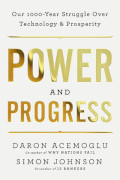
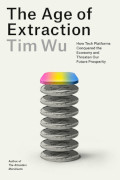
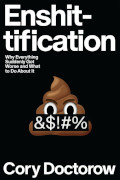





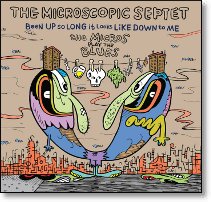




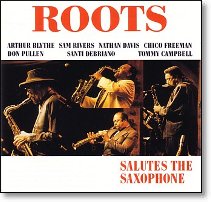
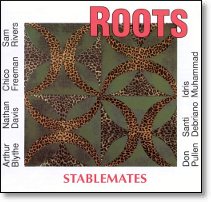


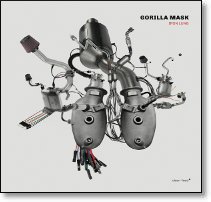


 We went to two funerals on Saturday: the first for long-time peace and
justice activist Mary Harren (91), the second for my last uncle, James
Hull (85), who spent 26 years as a mechanic in the Air Force, and was
well known to Wichita Eagle readers as a right-wing crank. Main
thing I was struck by was the difference in the crowds: close to 300
turned out for Mary, compared to about fifteen (not counting the Color
Guard you taxpayers provided) for James. The former was quite properly
a celebration of a long and fruitful life. The latter was rather sad,
bitter, and pathetic.
We went to two funerals on Saturday: the first for long-time peace and
justice activist Mary Harren (91), the second for my last uncle, James
Hull (85), who spent 26 years as a mechanic in the Air Force, and was
well known to Wichita Eagle readers as a right-wing crank. Main
thing I was struck by was the difference in the crowds: close to 300
turned out for Mary, compared to about fifteen (not counting the Color
Guard you taxpayers provided) for James. The former was quite properly
a celebration of a long and fruitful life. The latter was rather sad,
bitter, and pathetic.