Blog Entries [940 - 949]Sunday, October 16, 2016
Weekend Roundup
Realizing I wasn't going to find much time, I started this early in
the week, and added things when I noticed them without making much in
the way of a systematic search. Since my last Weekend Roundup, much
as happened, including a debate of the vice-president candidates
(which failed to convince me that Tim Kaine was the smart choice), a
second presidential debate (which further cemented Trump's decline),
and major exposés of both candidates' dirty laundry (where Trump's
smelled much fouler).
At the moment, FiveThirtyEight gives Hillary a
86.2% chance of winning based on a 6.5% popular vote advantage,
with Arizona tilting slightly toward Hillary (51.0%), and progressively
better odds in Iowa (62.1%), Ohio (64.8%), North Carolina (69.2%),
Nevada (74.4%), Florida (74.5%), and New Hampshire (the state which
for most of this election was the one that would secure an electoral
college win for either candidate, now 83.7% for Hillary). Trump still
looks to be solid elsewhere, although a third party candidate named
Evan McMullin is polling well enough in Utah that he's given a chance
of picking up the state's electoral votes (Trump's chances there are
92.7%, Clinton 4.6%, so that could leave McMullin with 2.7%). Trump's
weakest leads are currently: Alaska (68.4%), Georgia (73.7%), Missouri
(77.8%), South Dakota (81.2%), South Carolina (83.6%), Texas (86.1%),
Indiana (86.2%), Kansas (87.3%), and Montana (87.4%).
I work out much of the logic under the Christgau link below, but
to cut to the chase, I plan on voting for Hillary Clinton in November,
and urge you to do so too. More importantly, I plan on voting for
Democrats down ballot (even though the ones in Kansas running against
Moran and Pompeo have less chance than Gary Johnson does), and hope
for big gains for the Democrats in Congress and elsewhere -- in many
ways that's even more important than the presidency. One thing I was
especially struck by this past week was interviews with Moran and
Pompeo where they casually referred to "the disaster of the Obama
administration." Do these guys have any fucking idea what they're
talking about? Or do they just mean Obama's been bad for them
personally, like by cutting into their graft and perks? Sure,
Obama has been disappointing, but mostly because he's been
crippled by Republicans -- who clearly live in their own fantasy
world these days.
Some scattered links this week:
Russell Berman: What Bill Clinton Meant When He Called Obamacare
'Crazy': Actually, there's nothing in his specific critique that
couldn't be fixed by rejiggering the subsidy tables to help people
with a bit more income than the current schedules allow -- but that
also rewards the insurance companies for pushing premiums up. The
other approach that is commonly talked about is trying to drive
premiums back down by providing a non-profit "public option" to
compete with the private insurers. What was really crazy about
Obamacare was thinking that you could solve the problem of a
growing number of uninsured people while keeping the profits of
all the parts of the industry propped up, and that problem isn't
going to be countered until you find a way to blunt or eliminate
those profit-seeking opportunities. And the truth is that the
private insurance racket, which could easily be obsoleted by a
single-payer system, is just the tip of that iceberg. We may not
be as far away from coming to that realization as many pundits
think -- in large part because we have the examples of so many
other countries that have figured that out and made health care
a public service and a universal right.
On the other hand, just because Obamacare is crazy doesn't
mean it wasn't a big improvement over the previous system. And
while is hasn't succeeded in making sure everyone is insured,
it reversed a longstanding trend that was stripping health
insurance from millions of Americans. The Republicans never
had an answer to that problem, and while they conceivably
could make good on their promise to repeal Obamacare, they
have no clue how to fix it. Berman talks a bit about various
tinkerings that might help a bit -- the sort of things that
Hillary Clinton is likely to push for. Still, I take Bill's
"crazy" comment as good news: mostly, it shows he's moved
beyond his own even lousier 1990s health care scheme.
Robert Christgau: Confessions of a Hillary Supporter: 'It's Not Like We
Can Breathe Easy': Returns to the Voice with a political
screed, much of it rehashing Nader's role in Gore's fateful
2000 loss to Bush, as well as his still snippy attitude toward Sanders:
I know, you can't stand [Trump] either. For you, Hillary is the hard
part. . . . Hillary lacks daring as well as grace, and
from Libya to Honduras, her instinct in foreign policy has always been
to fetishize "democracy" in an obtusely formalistic way. But she has a
long personal history of doing good for people, an unmatched grasp of
policy, thousands of exploitable relationships, and a platform where
Sanders taught her plenty about the expanding limits of what's
progressive and what's politic.
Best part of the piece is his recounting past efforts to dive
into the political weeds and call on voters. He urges you to do
the same this year: "we don't just want to win -- we want to win
so big across the board that Clinton will feel obliged to activate
her platform and that Trump's racist, xenophobic chauvinism will
seem a perilous tack even to the saner Republicans who are right
now scheming to deliver the U.S. to Big Capital in 2020."
I don't want to relitigate Nader in 2000, but I find it odd
that Christgau singles out Lieberman as the reason he voted for
Nader over Gore. I've never been a Lieberman fan, but I don't
think I gave Gore's VP pick any thought at the time. It was only
later, after Sharon came to power in Israel and put an end to
the Oslo Peace Process, and after 9/11 and Bush launched his
Crusade (aka Global War on Terror) that Lieberman transformed
into a conspicuously monstrous hawk. I don't doubt that he had
long harbored that stance, just as I don't doubt that he had
always been in the pocket of the insurance industry, but it's
not like Gore saw those things as problems. I suspected that
Gore would have tilted against peace in Israel/Palestine, and
I never doubted that he would have gone to war in Afghanistan
and elsewhere (including Iraq) in response to 9/11. He may
have done so less crudely and less carelessly than Bush did,
but those were pretty low bars. It's tempting to look back on
this history and think that Gore would have avoided the many
mistakes that Bush committed, but the whole DLC pitch in the
1990s (which Gore was as much a part of as Clinton) was to
cut into the Republican alignment with oligarchy by showing
that the Democrats could be even better for business, and
they picked up a lot of conservative baggage along the way.
That was Gore in 2000, and while we certainly underestimated
how bad Bush would turn out, that was a pretty good reason
to back Nader in 2000.
On the other hand, I now think that Nader made a major mistake
running as a third party candidate in 2000 (and 2004). We would
have been much better served had he ran in primaries as a Democrat.
He wouldn't have come close to beating Gore, but he would have
been able to mobilize a larger protest vote, and he would have
drawn the discussion (and maybe the party platform) toward the
left. But then we don't get to choose our options, just choose
among them. What persuaded me to give up interest in third party
efforts was the fact that even in 2000, even with no campaign
visibility, Gore outpolled Nader in Kansas by a factor of ten:
37.2-3.4%. I realized then that the people we wanted to appeal
to were stuck in the Democratic Party. Sometimes part of that
appeal means you have to vote for a poor excuse for a Democrat.
The Nation recently ran a pair of articles on Stein vs. Clinton:
Kshama Sawant: Don't Waste Your Vote on the Corporate Agenda -- Vote
for Jill Stein and the Greens, and
Joshua Holland: Your Vote for Jill Stein Is a Wasted Vote.
I don't care for the thinking behind either of these articles,
but only one has a clue what "waste" means and it isn't Sawant.
If you want your vote to be effective, you should vote either
for or against one of the two leading candidates, and it really
doesn't make any difference whether you're positive or negative,
just so you can tell the difference. On the other hand, sure,
vote for a third party candidate if the following is the case:
you can't distinguish a difference you really care about, and
both leading candidates are objectionable on something you
really do care about.
Sawant may well be right if the one issue you really care
about is "the corporate agenda" -- assuming you can define that
in terms where Trump and Clinton are interchangeable, which I'm
not sure you can do. (For instance, Trump wants less regulation
of corporations but Clinton sometimes wants more; Trump wants
the rich to pay less in taxes but Clinton wants the rich to pay
more; Clinton favors a higher minimum wage but Trump doesn't.)
But personally, I don't see "the corporate agenda" (or its more
conceptual proxy, "capitalism") as something to get bent out of
shape about. I don't have a problem with corporations as long
as they are well regulated and we have countervailing mechanisms
to balance off problems like inequality. Clinton doesn't go as
far in that direction as I'd like, and she's much to comfy in
the company of billionaires, but Trump is a billionaire (one
of the worst of the breed), and he clearly has no concern for
the vast majority of Americans. I can think of several issues
I am so deeply concerned about that I might base a decision on
them: war is a big one, racism another, inequality all-pervasive,
and environmental degradation. Trump is clearly unacceptable on
all four accounts (as is the political party for which he stands).
Clinton is clearly better on all of those except war, and she's
probably more temperate and sensible there than Trump is. Perhaps
if Stein ran a campaign specifically against war and empire I might
find her candidacy more compelling, but "corporate agenda" doesn't
do the trick.
Sawant's other argument is that you can only build an alternative
to "the corporate agenda" by staying outside of the Democratic Party.
I don't see that working for three reasons: almost all of the people
who might be sympathetic are already invested as Democrats (and more
all the time are being driven to the Democrats by the Republicans);
your separatism demonstrates a lack of solidarity, and possibly even
an antipathy to the people you're supposedly trying to help; and
you're denying that reform is possible within the Democratic Party,
which given the existence of primaries and such would seem to be
false.
But let's throw one more argument into the mix. Voting is at best
a rare and limited option, whereas there are other forms of political
action that are more direct, more focused, and more viable for people
who don't start with majority consensus: demonstrations, speeches,
boycotts. In these cases what may matter more isn't having politicians
to lead your side but having politicians willing to listen and open
to persuasion, especially based on traditionally shared values. One
instance that made this clear to me was when organizers who were
opposed to Israeli apartheid and occupation came to Wichita and
urged us to talk to our representative and senators. They pointed out
how they gained a receptive audience from longtime Israel supporters
like Ted Kennedy, but all we had to work with was Sam Brownback and
Todd Tiahrt -- bible-thumping end-of-times Zionists who regard us
less as constituents than as intractable enemies. So while it may
not be possible to turn Clinton against American imperialism and
militarism in principle, at least her administration will see a
need to talk to us -- if she's our leader, we're her people, and
that's not something I can imagine with Trump and the Republicans.
(Also not something that seems likely with today's crop of third
parties, which are almost anti-political and anti-social by design.)
Some other more or less leftish opinions:
Fred Kaplan: How Does Obama Respond to Russia's Cyberattacks?
The Obama administration has gone on record not only declaring that
Russia is responsible for recent hacks apparently meant to influence
US elections, but that the US will retaliate against Russia somehow.
Perhaps I'm being dense, but I've never understood what constitutes
cyberwarfare, let alone what the point of it is. I was hoping Kaplan,
who has written a recent book on the subject, might enlighten me,
but about all I've gathered from this article is that a picking a
fight here is only likely to hurt everyone. As Kaplan writes:
If the cyberconflict escalated, it would play into their strengths
and our weaknesses. Again, our cyberoffensive powers are superior
to theirs, as President Obama recently boasted; but our society is
more vulnerable to even inferior cyberoffensives. We have bigger
and better rocks to throw at other houses, but our house is made
of glass that shatters more easily.
What's implied here but rarely spelled out is that the US does
everything we've accused Russia of doing, and probably does it
better (or at least does it on a much more massive scale). I
don't know, for instance, to what extent the US has tried to
influence Russian elections, but clearly we have a long history
of doing things like that, from the CIA operations in post-WWII
Italy to keep the Communist Party out of power to the recent
toppling of a pro-Putin government in Ukraine.
Daniel Politi: Kansas Terrorists Wanted Anti-Muslim Attack to
End in "Bloodbath":
They called themselves the "Crusaders" and had a clear purpose: launch
an attack against Muslims that would lead to a "bloodbath." With any
luck that would help spark a religious war. But their plans were thwarted
as three Kansas men were arrested on Friday for planning an attack on a
Garden City, Kansas apartment complex filled with Somali immigrants that
is also home to a mosque. They planned to carry out the attack one day
after the November election. . . .
The complaint also notes that during one conversation Stein said that
"the only fucking way this country's ever going to get turned around is
it will be a bloodbath and it will be a nasty, messy motherfucker. Unless
a lot more people in this country wake up and smell the fucking coffee
and decide they want this country back . . . we might be too late, if
they do wake up . . . I think we can get it done. But it ain't going to
be nothing nice about it." At one point Stein made it clear he was ready
to kill babies: "When we go on operations there's no leaving anyone
behind, even if it's a one-year old, I'm serious."
Police say they found "close to a metric ton of ammunition in Allen's
residence," which is what led authorities to believe the attack could be
imminent. "These individuals had the desire, the means, the capability
to carry out this act of domestic terrorism," an FBI official said.
The article notes that "There has been an incredible increase in
anti-Muslim and anti-immigrant sentiment over the past few years."
The article didn't note the Donald Trump campaign, nor America's
seemingly endless war in Somalia. On the latter, see
Mark Mazzetti/hjeffrey Gettleman/Eric Schmidt: In Somalia, U.S.
Escalates a Shadow War:
The Pentagon has acknowledged only a small fraction of these operations.
But even the information released publicly shows a marked increase this
year. The Pentagon has announced 13 ground raids and airstrikes thus far
in 2016 -- including three operations in September -- up from five in
2015, according to data compiled by New America, a Washington think tank.
The strikes have killed about 25 civilians and 200 people suspected of
being militants, the group found.
The strikes have had a mixed record. In March, an American airstrike
killed more than 150 Shabab fighters at what military officials called
a "graduation ceremony," one of the single deadliest American airstrikes
in any country in recent years. But an airstrike last month killed more
than a dozen Somali government soldiers, who were American allies against
the Shabab.
Derek Thompson: No, Not Gary Johnson: It's unfortunate that the
Libertarian candidate isn't as articulate about foreign policy and
war someone like Ron Paul. For one thing, that might spare us some
gaffes like "what is a leppo?" or "when he failed to name a single
world leader in a televised town hall" (actually, he was asked for
the name of a foreign leader he admired, which frankly would have
stumped me -- my response would have been that it's inappropriate
for US politicians to render judgment on foreign politicians, as
indeed it was for Filipino president Rodrigo Duterte to defame Obama).
Thompson concludes that Johnson "suffers from an Aleppo mindset, a
proud lack of curiosity about foreign affairs lurking behind an
attractively simplistic rejection of military interventions." It
never occurred to Thompson that if you reject in principle the
whole idea of military interventions, you really don't need to
know a lot of detail about places hawks want to intervene in, or
the trumped up causes they think they're advancing. Still, it
would have been better to have smarter answers handy -- it's
not like candidates can assume that pundits won't ask stupid
questions.
Thankfully, Thompson moves past his dedication to preserving
the American empire to grill Johnson over issues where his
muddle-headedness is more glaring, such as the role of government
in the economy, increasing the contrast by comparing Johnson to
Sanders:
But on policy, the two could not be more opposite. Sanders, a
democratic socialist, proposed to raise taxes by historic sums
and spend hundreds of billions of dollars to nationalize health
insurance and make college free. Johnson's plans are the complete
reverse: He has proposed to eliminate the federal income tax code,
unwind 100 years of anti-poverty and health-insurance programs,
and shutter the Department of Education. His plan would almost
certainly raise the cost of college for many middle-class teenagers
and 20somethings who rely on federal loans and grants, and his
repeal of Obamacare would immediately boot tens of thousands of
them off their parents' health plans.
Beyond his jovial demeanor and admirably passionate anti-interventionist
position, Johnson puts a likable face on a deeply troubling economic
policy. Scrapping the Federal Reserve while cutting federal spending
by 40 percent, while eliminating federal income taxes and trying to
institute a new consumption tax would have a predictable effect: It
would take hundreds of billions of dollars out of the economy, likely
triggering a recession, while shifting the burden of paying for what's
left of the federal government to the poor just as unemployment started
to rise, all the while shutting off any possible monetary stimulus that
could provide relief to the ailing economy.
Thompson's numbers are probably understated -- certainly the number
who would lose their insurance if Obamacare is repealed would be well
into the millions, and the economic collapse is probably more like
trillions. But these examples do help remind us how naïve and foolish
libertarian economic theory is. Still, without their crackpot notions
of economic freedom libertarians would just be liberals. On the other
hand, if liberals gave up the war on drugs and their defense of empire,
libertarians wouldn't have a prayer of siphoning off votes, as Johnson
does this year.
For a longer critique of Johnson, see
Nick Tabor: Gary Johnson's Hard-Right Record. Miscellaneous election links:
Arthur Goldhammer: What Would Alexis de Tocqueville Have Made of the 2016
US Presidential Election
Donald Trump's Disastrous Debate: The Atlantic's live blog on
last Sunday's second debate. David A. Graham summed up:
It was a microcosm of the campaign: Clinton is a weak candidate, with
a train car's worth of luggage trailing behind her. But Trump is weaker
still, and at every turn, he seems to overshadow her problems with much
deeper problems of his own -- much louder gaffes, much more serious
political errors. That has been a rather depressing spectacle for the
nation.
Nate Silver: Where the Race Stands With Three Weeks to Go
Leslie Bennetts: Enough is enough: the 2016 election is now a referendum
on male entitlement: "Donald Trump's inflated masculinity and unabashed
claim over women's bodies speaks to female voters' lived experiences and,
hopefully, men's need for change."
John Cassidy: The Illuminating but Unsurprising Content of Clinton's
Paid Speeches: Nicholas Thompson linked to this and tweeted
(I'll spare you the shouting): "Breaking: new Clinton docs reveal
she's a cautious centrist with advisers who think about policy."
Cassidy quotes another comment, that the admissions also indicate
"a level of self-awareness unimaginable in her opponent." For more
on the speeches, see:
Lee Fang et al.: Excerpts of Hillary Clinton's Paid Speeches to
Goldman Sachs Finally Leaked. Also by Cassidy:
The Election May Be Over, but Trump's Blowup Is Just Starting.
Martin Longman: George Will and David Brooks Lead the Defection:
A quote from Brooks: "Politics is an effort to make human connection,
but Trump seems incapable of that. He is essentially adviser-less,
friendless. His campaign team is made up of cold mercenaries at best
and Roger Ailes at worst."
Matt Taibbi: The Fury and Failure of Donald Trump:
Trump Suggests Vets Who Need Mental Health Services Aren't Strong
Nancy LeTourneau: Trump Still Thinks the Central Park Five Are
Guilty
Dara Lind: Donald Trump shows the opposite of "political correctness"
isn't free speech. It's just different repression.
Katherine Noble: Evangelicals' Response to Assault and the Donald Trump
Audio
Russell Berman: Why the Supreme Court Matters More to Republicans than
Trump: Or, conversely, why it matters more to you than Hillary.
Heather Digby Parton: Wolf in sheep's clothing: Mike Pence conceals his
far-right radicalism with a sedate debate performance
Ezra Klein: Donald Trump's problem isn't a conspiracy. It's him.
Emily Crockett: Donald Trump's books reveal his obsession with women --
and himself
Tierney Sneed: Former Bush DOJer John Yoo: Trump 'Reminds Me a Lot of
Early Mussolini': Funny thing: when someone asked who would be
willing to serve as Attorney General under Trump after he vowed to
jail Hillary Clinton, the first candidate I thought of was Bush's
torture enabler. I guess I underestimated him. On the other hand,
Twitter quickly answered my question: Rudy Giuliani (of course).
Tara Golshan: Donald Trump's Mormon problem, explained: One thing
I didn't know is that there is a third (or fifth) party candidate in
Utah named Evan McMullin who's evidently polling very well there.
Matthew Yglesias: Donald Trump's wild new rhetoric isn't about winning --
it's about what comes next, and
Donald Trump's epic meltdown, explained
Ryan Lizza: Steve Bannon's Vision for the Trump Coalition After Election
Day
Amy Chozick/Nicholas Confessore: Hacked Transcripts Reveal a Genial Hillary
Clinton at Goldman Sachs Events
Jeff Stein: The math says Democrats have little shot at the House. Donald
Trump suggests otherwise. Main thing the article suggests is that the
Democrats would be in better shape if they made a systematic effort to
nominate good candidates (and, yes, Kansas is one of the prime examples).
But also there isn't much ticket-splitting (less than 10% in 2012), so a
Clinton landslide could bring some unexpected wins.
Also, a few links for further study (briefly noted:
Dean Baker: Apologies for Donald Trump:
The white working class is right to feel that those in power are not
acting in their interests. Of course they are not acting in the interests
of the African American or Hispanic working classes either. Unfortunately,
unless mainstream politicians stop doing the bidding of the wealthy, the
white working class will continue to look to political figures who blame
non-whites for their problems, since that will be the only answer they see.
Robert L Borosage: Inequality Is Still the Defining Issue of Our Time:
Title is clearly right, worth repeating at every opportunity. Another
way to make the case is to point out that the entire purpose of
conservativism is to defend and secure the privileges of the rich
and make them richer.
Patrick Cockburn: Talk of a No-fly Zone Distracts from Realistic
Solutions for Aleppo
Jonathan Cohn: The Future of America Is Being Written in This Tiny
Office: Long piece on Hillary Clinton's "policy team."
When it came to formulating her own ideas, Clinton wasn't starting from
scratch, obviously. But since her last run for the White House, the
Democratic Party had undergone a minor metamorphosis -- and in ways that
didn't seem like a natural fit for Clinton, at least as she was perceived
by most voters. The progressive wing was clearly ascendant, with groups
like Occupy Wall Street and Fight For 15 harnessing populist anger at the
financial system, and Black Lives Matter turning an unrelenting spotlight
on racial injustice. Minority voters had come to represent a larger
proportion of both the party and the population, giving Democrats an
electoral-college advantage whose influence was still unclear when Obama
ran for office. And there was another trend at work -- one that was less
obvious, but no less important: In just a few years, the Democratic elite
had quietly gone through a once-in-a-generation shift on economic thinking.
Thomas Geoghegan: 3 Ways Hillary Clinton Can Inspire Americans Without
a College Degree: Lots of good ideas here, like "co-determination"
(giving workers a vote on corporate boards). Third point lumps a bunch
of good things into one:
Third, unlike Trump, Hillary can promise to use the welfare state to
make us more competitive. How? Consider what would happen if we expanded
Social Security. If we get more workers over age 65 to retire, instead
of hanging on because they lack a decent private pension, we could employ
more middle-aged and young workers now sitting at home, or promote them
sooner. We need the government to assume more of the private sector's
"non-wage" labor costs. There are yet other examples where the welfare
state could make us more competitive: Expand Medicare to workers between
ages 55 and 65, so employers can stop avoiding payment for working people
who have higher skills. Or have a fair federal system of worker
compensation, instead of states' using it to bid against each other. Or
have the federal government offer to take over state Medicaid in those
states that promise to use the savings for public education and worker
training. And isn't publicly funded childcare a way of ensuring that we
use human capital more efficiently instead of trapping highly educated
women at home?
Mark Mazzetti/Ben Hubbard: Rise of Saudi Prince Shatters Decades of
Royal Tradition: The new power in Saudi Arabia is 31-year-old Prince
bin Salman, seen here as extravagant and reckless, especially with his
war in Yemen which has lately dragged the US into missile exchanges.
Richard Silverstein: Israel's Stern Gang Mailed Letter Bomb to White
House, President Truman: In 1947, when LEHI was commanded by
future prime minister Yitzhak Shamir.
Cass R Sunstein: Five Books to Change Liberals' Minds: Tries to
pick out books that liberals can take seriously, as opposed to, say,
the partisan paranoid crap published by Regnery. The books are:
- James Scott, Seeing Like a State: How Certain Schemes to Improve
the Human Conditions Have Failed
- Antonin Scalia, A Matter of Interpretation
- Casey Mulligan, Side Effects and Complications: The Economic
Consequences of Health-Care Reform
- Jonathan Haidt, The Righteous Mind
- Robert Ellickson, Order Without Law: How Neighbors Settle
Disputes
The Scalia book came out in 1997, when he still had a reputation
as a serious (albeit flawed) thinker, as opposed to the partisan
crank you remember him as. Scott and Ellickson would seem to be
libertarians, perhaps even anarchists. Haidt's book is a respectful
probe into how conservatives think (I bought a copy, but haven't
read it.) Mulligan complains that Obamacare disincentivizes work,
and as such is a drag on GDP. That makes sense but doesn't strike
me as such a bad thing. Moreover, it's not like there aren't any
countervaling incentives to work (though it doesn't help that so
many jobs suck).
Matthew Yglesias: This is the best book to help you understand the
wild 2016 campaign: The book is Democracy for Realists,
by Christopher Achen and Larry Bartels, and it's a depressing slog
if you've ever fancied the idea that rational arguments based on
real interests might persuade voters to choose candidates and parties
that actually advance those interests. One argument, for instance, is
that party allegiance is based on some unknowably primordial force
(probably identity), and that people pick up the views of their party
rather than the other way around. Another is that fluctuations in
voting results are due to factors beyond any party's control, ranging
from economic performance to the shark attacks and football games.
I'm not sure how much of this I buy, let alone care about. One of
the problems with the social sciences is that every piece of insight
they reveal about anonymous behavior becomes a lever for manipulation
by some interest group. That's one reason why when I was majoring in
sociology, I spent virtually all of my efforts trying to expose how
research incorporates biases, and thereby to increase the doubt that
findings could be usurped. That's also a reason why I quit sociology.
Also why I have no interest in reading this particular book, or any
of the other books on how voters think -- books that I'm sure both
parties (if not necessarily both presidential candidates) have been
diligently studying for whatever tricks they can find.
Ask a question, or send a comment.
Wednesday, October 12, 2016
Golden Oldies (2)
Continuing along as I dig through my old
notebooks for jazz reviews.
Here's my post from April 11, 2003, noting what turned out to
be the high point of American triumphalism for the entire Iraq
misadventure:
There was a period back in the Afghanistan war when the Northern Alliance
started reeling off a quick series of victories -- not so much that they
were defeating the Taliban in confrontations as that the Taliban was
high-tailing it out of the cities, allowing Herat, Kabul, and Kandahar
to fall in quick succession. The hawks then made haste to trumpet their
victory and to dump on anyone who had doubted the US in this war. Back
then, I referred to those few weeks as "the feel good days of the war."
Well, we had something like that in Iraq, too, except that use of the
plural now seems unwarranted. So mark it on your calendar, Wednesday,
April 9, 2003, was the feel good day of the Iraq war. The collapse of
Saddam Hussein's regime has proceeded apace, but there seems to be much
less to feel good about. One big thing was the killing of the bigwig
shia collaborators that the US started to promote, combined with the
unwillingness of other shia bigwigs to collaborate. One of the problems
with this is that it suggests that the US, as always, is looking for
religious leaders to control the people -- which in turn threatens to
roll back the one thing Saddam had going for his regime, which was
that it was strongly secular. The fact is, you want to introduce
something resembling liberal democracy in Iraq, you have to promote
secularism. (Of course, given the contempt that Bush has for liberal
democracy in the US, it's hard to believe that he really wants that.)
Bigger still is the whole looting thing, as well as mob reprisals
against Baath leaders, which threaten to turn into the much predicted
Iraqi-on-Iraqi warfare. The looting itself basically means that what
infrastructure the US somehow managed not to destroy will be taken
down by Iraqi mobs. The likelihood that those mobs are anything other
than just isolated hoodlums is small, but collectively the damage
that they inflict is likely to be huge. And given how unlikely it
is that the US, its allies, and the rest of the world who were so
blatantly disregarded in this whole affair, are to actually pay for
anything resembling real reconstruction, this is just digging an
ever deeper hole. While right now, given that their is still armed
(if not necessarily organized) resistance to the US, it's hard to
see how the US could keep order even if it wants to (which is to
say the least a mixed proposition), but failure to do so is already
setting the US up as responsible for the looting, and adding to the
already huge responsibility that the US bears for the current and
future misery of the Iraqi people. And when the US does start to
enforce order, what is bound to happen? More dead Iraqis. And who's
responsible for that? The US. If this had just happened out of the
blue, I might be a bit sympathetic, but this is exactly what we had
predicted as the inevitable given the US course of action.
So happy last Wednesday. That's very likely to be the last one
for a long time now.
Also found this letter from April 15, 2003, also on the looting
of Baghdad:
The more I read about how archaeologists and other scholars warned
the US military about the very real risks that invasion and occupation
posed to the libraries and museums of Iraq, the more clear it is why
those warnings were ignored: they came from people who disapproved of
the war. One of the major problems with this war was that it wasn't
something, like Pearl Harbor or even 9/11, that happened and panicked
the US into action; it was a program that was concocted inside the
government and hard-sold to the public. And one of the most telling
effects of the hard-sell is that the people who were selling it, so
convinced were they that it was the right thing to do, put blinders
on themselves to any argument, no matter how reasoned, not to proceed
with their program. And since warnings about dire consequences were
reasons not to do it, they were ignored. This is, I think, what
happens when someone falls so in love with their ideas that they
are unwilling to subject them to critical analysis. And when they
crack the whip so hard to force their dreams on a world that turned
out to be very skeptical. It is worth noting that this simplistic
hard-sell approach to what are often very complex problems has become
endemic in US political discourse, and that it has largely driven
open, consensus-building discussions underground. It has also led
to a preoccupation with winning arguments over solving problems, and
the especially insidious tactic of winning arguments by "creating
facts on the ground." The libraries and museums of Baghdad are the
tragic results of this deterioration of political discourse, and
by no means the only ones. The Bush Administration seems to have
realized that the only way they could proceed with their war would
be to discount or ignore its probable consequences, just as they
realized that they would have to lie about why they wanted this
war. And now that they've succeeded, it will take all of the
arrogance and blindness they can summon to deny what they have
wrought. Unless we can manage to break out of their psychology,
we're bound for a lot more tragedy.
Earlier in April I pulled out a terrific quote from Gerald Colby's
Thy Will Be Done: The Conquest of the Amazon: Nelson Rockefeller
and Evangelism in the Age of Oil, pointing out that back in the
1950s Rockefeller advocated an accelerated arms race in an attempt
to bankrupt the Soviet Union. Rockefeller certainly knew a thing or
two about the advantages businessmen with deep pockets have, and
this alone pretty much explains the next 35 years of the Cold War.
I also posted a note comparing America's experiences in Vietnam and
Iraq, where I wrote:
The biggest difference between Vietnam and Iraq is that in Vietnam
we were defending a fraud, whereas now we're attacking a phantom.
The latter, of course, is easier: it's much easier to demonize
Saddam Hussein than it was to make Ngo Dinh Diem, trained and
deployed and propped up by the CIA, look like a patriot. . . .
What they do have in common is the inevitable
resistance of people against foreign occupiers, and the contempt
that U.S. leaders have both for dealing honestly with their own
citizens and for the people of the other countries that they try
to bully and, in fits of rage, to destroy.
Back in summer 2003 before it all turned to shit, someone "in
the Bush administration" coined the saying, "anyone can go to
Baghdad; real men go to Tehran." Sen. Sam Brownback took the
bait and introduced a bill to "destabilize" Iran. (Not that we
didn't count him as a "real man" before -- you could tell from
the way he treated women.) The Wichita Eagle explained:
"Using the same philosophy that drove the war in Iraq, the
Kansas senator is leading a drive for new leadership for its
eastern neighbor." This prompted me to write a letter (June
23, 2003), again explaining the obvious:
Poor Senator Brownback. I hate to pick on someone so obviously suffering
from Attention Deficit Disorder, but his Iran Democracy Act is nothing
more than a rerun of the same mistakes that we made with Iraq. When
Congress voted to make regime change in Iraq national policy, they
started us down the road to the still smoldering war there. That road
was paved with lies and fantasies, and anyone who's taken the time to
notice has been struck by the growing chasm between reality and the
hawks' expectations. But obviously Brownback hasn't noticed anything:
he's off stalking bigger, more dangerous game.
The basic fact is that over the last fifty years the U.S. has done nothing
at all right by Iran. We say we want to promote democracy in Iran today,
but in the early '50s the CIA overthrew the democratically elected Mossadegh
government, immediately resulting in U.S. oil companies getting control
of most of Iran's oil. The U.S. then installed the megalomaniacal Shah
Pahlevi, sold him arms, and trained his vicious security police; the Shah
eventually became so unpopular that every segment of the Iranian people
revolted against him, a tumultuous revolution that was in the end dominated
by the Ayatollah Khomeini. Then the U.S. and its oil sheikh allies in the
Persian Gulf encouraged Saddam Hussein to attack Iran, a horrendously
bloody eight-year war leaving perhaps a million Iranian casualties. So
what in this history makes Brownback think that Iran needs any more U.S.
help?
The only people in Iran likely to benefit from a deluge of American
propaganda are the ayatollahs, who are certain to use this to reinforce
the case that only they can protect Iran from evil foreigners and the
misguided citizens who inadvertently provide aid and comfort to the enemy.
But then that's the same line used by Sharon in Israel and by Bush here:
sabre-rattling is, after all, a time-tested recipe for keeping despots in
power despite their incompetence. Maybe Brownback feels his own career needs
a little sabre-rattling as well? (After all, while Wichita's economy has been
collapsing, he's spent most of his time railing against cloning.) But if by
chance he really does want to do something to undermine the ayatollahs in
Iran, here's what he should do: support international programs to promote
women's rights in Iran and throughout the world, including birth control
and abortion. That is, after all, where the ayatollahs are most vulnerable.
Too bad the same thing can be said about Brownback.
From November 12, 1963:
Quote from John McCain: "We lost in Vietnam because we lost the will to
fight . . ." Come on! We lost the will to fight because we lost the
fucking war. Throughout history, that's about the only thing that has
ever stifled the will to fight. He goes on, ". . . because we did not
understand the nature of the war we were fighting, and because we
limited the tools at our disposal." Not sure what he thinks the "nature
of the war" was, but the following clause suggests that we could have
won if only we had used nuclear weapons. Was there anything else we
didn't use in Vietnam? In Vietnam we destroyed villages in order to
save them. Is McCain saying that our failure in Vietnam was that we
didn't kill them all?
Vietnam was first and last a war about America's self-image as a world
power. At first, it was about the US checking communist revolution and
expansionism, which in the eyes of a great power was naturally attributed
to the machinations of other great powers, e.g. the Soviet Union. In the
end, it was about how the US might salvage, in the wake of defeat, its
status as a world power, so that it might be able to check further
communist revolutions and expansionism. In between, American politicians
uttered a lot of hooey about freedom and helping the Vietnamese and so
forth, but in cold hard fact that war was always about us.
The Iraq War, indeed the entire Global War on Terror, was about us
too: specifically, America's self-conception of its superpowers. What
bothered America's "leaders" about 9/11 had nothing to do with the
death or destruction -- we willing suffer ten times as many gun deaths
each year and far more damage in major hurricanes -- and everything
to do with smacking down the impudence to test American power. After
all, if we don't do so, today's loss will only be the first of many
dominos to fall.
Tempted to quote the post from February 24, 2004, describing a
Dick Cheney's fundraising appearance in Wichita, where he spent 30
minutes and raised $250k. The report noted that his security costs
to the state of Kansas were $120k, not counting the disruptions
from shutting down the airport and the main highway into town,
nor his own travel costs and security detail. Sure makes it seem
like public funding of elections would be more cost effective,
not to mention that it would remove the aura of corruption that
surrounds the entire process. Further down I reported:
U.S. Rep. Todd Tiahrt, the village idiot of Goddard KS, managed to get
an op-ed piece into the Eagle today. One line in particular
dropped my jaw: "Tax relief, according to Federal Reserve Chairman
Alan Greenspan, helped pull the economy out of the Clinton recession."
Just try to tear that sentence apart: "tax relief" refers to Bush's
tax cuts, which were proposed when the economy was booming and the
rationale was to reduce the surplus. "Clinton's recession" must have
been a diabolical scheme: what other politician has ever managed to
create a recession that only started once his successor was ensconced
in office? But have we really pulled out of that recession? One thing
you can count on is that the moment Greenspan thinks that we're out
of the recession woods is that he'll raise interest rates. But has
that happened? Not that I've noticed.
I wish my subsequent analysis had been smarter, but I gave too much
credit to the "logic" of tax cuts as stimulus and didn't yet fully
realize that giving rich people more money to "invest" only increased
their appetites for asset bubbles and other predatory practices. In
hindsight, we now that's pretty much all that happened in the "boom
years" under Bush. (OK, I suppose you could add deficit war spending
and a huge run up in oil prices due to shortages caused by those wars,
but the former mostly moved money abroad to be burned up, and the
latter just enriched the oil barons, again mostly abroad.)
On March 21, 2004, I assessed the Iraq War a year after Bush
launched it. As I noted, "Bush is still marching blithely into
the unknown, and he's dragging us with him." I couldn't offer a
comprehensive analysis, but did jot down a list of bullet points,
including "It is clear now that the US/UK case for going to war
against Iraq was founded on [little more than] arrogance and
ignorance, and presented as [nothing more than] a blatant list
of lies." (I'm tempted today to edit out the bracketed words.)
Another point:
The US occupation of Iraq has been remarkably incompetent. Planning
for the occupation was somewhere between non-existent and delusional.
The initial chaos that allowed extensive looting shattered any prospect
that the US might be powerful enough to conduct an orderly transformation
of Iraq's political economy. For political reasons, the US also chose not
to do the obvious thing, which was to keep existing Iraqi governmental
agencies intact and rule through them. Abolishing the army and police
forces fed the resistance, while belatedly forcing the US to reconstruct
its own Iraqi army and police forces. The resistance itself soon attained
a sufficient level of activity to force the US occupiers to hide behind
their security barricades, disconnecting from the people they allegedly
came to liberate. By failing to hold elections, the US never made an
effort to establish a legitimate Iraqi political presence.
On March 12, 2004, I wrote a fair amount about the 1953 CIA coup
in Iran -- the subject of Stephen Kinzer's All the Shah's Men: An
American Coup and the Roots of Middle East Terror -- and concluded
with this note on the leading Democratic candidate to challenge Bush
in 2004 (although it would have been equally valid for virtually any
possible Democratic nominee, especially the then-junior senator from
New York):
The great worry that we have about Kerry as the next Democratic US
President is that he is so wed to the past verities of US imperial
foreign policy that he will -- like Clinton, Carter, Johnson, and
Kennedy before him -- continue the same vicious policies, albeit
just a shade less maniacally than G.W. Bush. That continuity has
always happened because the rhetoric has always favored the tough
guys -- the badass Republicans. (Reality is another thing: although
Reagan based much of his 1980 campaign on attacking Carter for giving
away the Canal Zone, when Bush finally did invade Panama he didn't
make a move to reclaim the Canal Zone. Reagan's charges were merely
that Carter was soft; Bush's non-action just shows us that Carter
made a concession that realistically had to be made, and that no
amount of obtuseness could reverse.) It seems obvious that Bush has
finally proven just how bankrupt those policies are, but Kerry seems
to feel that the real problem is not Bush's arrogance or ignorance,
but his incompetence. After all, incompetence has long been the
Achilles heel of Republican foreign policy, but if that's all you
attack them for, you can never break out of their rhetorical
straightjacket. It's clear that Kerry hasn't: instead of attacking
the very idea of a "war on terrorism" he attacks Bush's bungling
execution of it. Sure, there's lots to attack there, but if the
very project is intrinsically flawed -- and it is -- no amount of
competence can fix it. Only a new worldview can do that.
From April 24, 2004, following a note on Jon Krakauer's Under
the Banner of Heaven: A Story of Violent Faith, which identifies
Bush and Ashcroft as not that far removed from the religious conceits
of the book's killers:
One of my more/less constant themes has been how we've become
prisoners of our rhetoric. What I've tried to do above is to sketch
out the conceptual model of how this has happened. We live in a
world where we as individuals are profoundly powerless, even in the
cases where we are mostly free to direct our own personal lives. Such
freedom usually depends on the tacit accepteance of powerlessness:
people are free to mind their own business, because it doesn't make
any real difference to others, least of all the elites (who are at
most relatively powerful, by virtue of their ability to manipulate
symbols that are broadly acquiesced to -- religion, patriotism,
material wealth, ideologies like capitalism, abstract concepts
like freedom and democracy, tyranny and terrorism, mere character
traits like toughness, resolve, fortitude). And such freedom is
for most people quite satisfying, as is the sense of belonging to
a well-ordered society. But some people are unsatisfied with the
status quo: they want to test the limits of their freedom, they
start to question the ordering of society. Most such people were
driven to want to change the world by perceived wrongs done them.
But some are driven more by an exaggerated sense of their own
self-importance: Ron and Dan Lafferty, believing that they were
chosen by God to do his work, are simple and pathetic examples.
Where George W. Bush differs from the Laffertys is not so much
in his self-conception as in his support network. Bush is a rare
example of a self-possessed activist, a fanatic, raised to a position
of extraordinary political power. Yet his possession of that power --
one built on the wealth of his political backers, on the cadres of the
Republican party, on the institutional power of the U.S. presidency,
on the symbols of American military might -- in no way changes the
fact that he dwells within the limits of his personal universe. He
can't see beyond those limits, which leaves him mostly at the mercy
of his own mental baggage -- a world haunted by a God who metes out
violence, and by a Karl Rove who vouchsafes that it is politically
safe. With his support network, and with our acquiescence (or more
likely out powerlessness), his mental paroxysms have can have immense
impact. Never in American history has such a dangerous person been
put into such a dangerous position.
At present, Donald Trump is vying for precisely this claim. And
while he strikes one as a far less devout person, the entitlement
he feels by virtue of his class, wealth, and celebrity (not to
mention race and sex) seems to elevate him beyond any shred of
self-doubt -- a common trait of mad would-be emperors throughout
history.
From April 15, 2004, in response to Sharon's plan to unilaterally
withdraw Israeli settlements from the Gaza Strip (something flacks
like Dennis Ross praised as a step toward peace):
But most importantly, Sharon's plan is unilateral: it in no way
depends on agreement with any Palestinians; it doesn't acknowledge
the Palestinians; it doesn't provide any framework for Palestine to
go about the business of rebuilding and healing. The future status
of Gaza is what? It is effectively separated from Israel, separated
from the West Bank, separated from the Palestinian Authority, but in
no way does it become an independent entity. In its assassinations
of Sheikh Yassin and many others, Israel has shown that it has no
qualms about firing at will. Will this in any way change? Without
recognition and agreement, without a plan and process to turn Gaza
into a viable, self-sustaining territory, Gaza will continue to be
a security threat to Israel, and Israel will continue to treat Gaza
as a mob-infested shooting gallery. All that Israel's removal of its
outposts there does is to remove the weak spots in the containment
and isolation, the strangulation, of Gaza. This is an eery reminder
of the myth that Israel propagated to explain the refugee flight of
1947-49: that the Arabs had told the Palestinians to leave Israeli
territory so that when the Arabs marched through an anihilated the
Israelis, they wouldn't be caught in the crossfire. This is hard to
conceive of, but the presence of Israeli settlers in Gaza has at
least been one significant inhibition against Israel attacking Gaza
with genocidal weapons.
In the months that followed, Israel made great sport out of flying
at supersonic speeds over Gaza, rattling houses with sonic booms -- a
practice they only gave up when nearby Israeli towns complained. In
the years that followed, Israel launched one major military assault
after another on Gaza, as well as hundreds of more limited bombing
runs and cannon fire. Meanwhile, Gaza was bottled up, its borders
frequently sealed, while the economy atrophied.
Found this forgotten item on May 13, 2004, reminding us that US
confusion over and participation in Syria's civil war goes back well
before Arab Spring:
The news got burried under the other scandals, but Bush picked
another war this week, when the U.S. announced that it was unilaterally
imposing a wide range of sanctions on Syria, including freezing Syrian
assets held in U.S. banks. The reason given was inadequate vigilance
by Syria in terms of preventing "foreign fighters" from infiltrating
Iraq. (I still bet that more than 95% of the foreign fighters in Iraq
come from the U.S./U.K.) But it is a clear escalation of the rhetoric
of demonization that the U.S. lays in advance of hotter wars. There
are prominent neocons who make no secret about their desire to take
the war to Syria, so this is a victory for them. It also aids Sharon
in that it is one more excuse (as if he needed any) to ignore the
requirement that Israel withdraw from Syrian lands occupied since
1967. Cooperation between Bush and Israel over Syria was demonstrated
most clearly when the U.S. applauded after Israel bombed Syria last
summer, in alleged retalliation for a suicide bombing that had nothing
whatsoever to do with Syria. . . .
Like all acts of war, sanctions are a failure of diplomacy. As
the U.S. occupation of Iraq has soured, the U.S. finds itself driven
to ever more desperate acts, and those acts can only serve to isolate,
embitter, and impoverish us further.
I've run across several obituaries in the notebook so far, most
memorably for my cousin Bob Burns and our friend Bob Ashley. On June
6, 2004, I wrote this one about people I didn't know personally:
A great man died yesterday: Steve Lacy pioneered and exemplified
the avant-garde in jazz -- in particular, the notion that the new
music doesn't evolve from the leading edge so much as it transcends
all of the music that came before it. He was the first postmodernist
in jazz, and he explored the music (Monk above all) and developed it
in novel ways over 45 years of superb records. Ronald Reagan also
died yesterday: he was a sack of shit who in his "what, me worry?"
way destroyed far more than Lacy built. To describe Reagan as the
intellectual forefather of George W. Bush is just sarcasm; for both
ideas were nothing more than excuses for wielding power not just
to vanquish the weak or to favor the strong but to bask in its own
glory. Ideas, of course, did flower up around Reagan, as they do
around Bush -- really bad ideas.
At the time my take on the Reagan administration was that they
were responsible for [making] fraud the biggest growth industry in the U.S.
By the end of Reagan's second term almost every department of the
U.S. government was awash in corruption scandals: despite all of
the talk, the administration's most evident real program was to
steal everything in sight. But ultimately the talk did matter.
At the time there was much talk about a "Reagan Revolution" --
oblivious to the fact that the only right-wing revolutions in
memory led to the triumph of the Fascists and Nazis, to WWII and
the Holocaust. Those are big boots to goosestep in, and it's
taken a while to fill them.
Ask a question, or send a comment.
Monday, October 10, 2016
Music Week
Music: Current count 27244 [27198] rated (+46), 401 [390] unrated (+11).
High rated count, partly inflated by finding some old grades in
old notebooks that had never been registered in the database (see
below). Still, most of the rated count comes from checking out a
bunch of top-rated albums from this year, at least as tabulated by
Album of the Year.
Best album I found there was the new GOAT -- indeed, I'm not real
sure Requiem isn't as good as 2014's A-listed Commune.
As for the others, it's possible that more time might have put one
or more of Savages, Angel Olsen, Kevin Morby, Future of the Left,
or even Solange over the top.
Two A- records from Robert Christgau's
Noisey column. I couldn't play the YouTube link for the Youssou
N'Dour mystery album (or whatever it is -- not sure it's even a thing).
Both are rather marginal finds, but distinctive in their narrow niches.
I'm still undecided about Black Bombaim but will probably wind up
saying the same thing about it.
Working fairly hard on the jazz book(s), although they're still in
the very boring collection phase. (As I wrote that, I had a strange
sense of deja vu, like I've tried to do this before.) I finished
collecting reviews from
Jazz Prospecting. Before moving on to
Rhapsody Streamnotes, I thought I'd
take a look at the
old notebooks, and it's turned out
that at least through 2004 there are quite a few reviews/notes there
that didn't get worked into the various columns. (I hadn't broken
out Jazz Prospecting Notes until JCG(7) in December 2005, so I was
wondering whether I had bothered to write up anything on them later.
I recall that at some point I started dumping the prospecting notes
into the notebook, but those should be redundant with files I have
already rummaged through.)
I'm collecting the post-2000 releases in a flat file which is
currently 98625 lines long (8454 albums, although minus redundancies
probably closer to 6000; 833903 words). I'm also formatting the
pre-2000 album reviews/notes into book form, currently 210 pages.
I'm rather surprised that the latter has grown so large, given
that I picked up most of my 20th century jazz before I started
writing so much. My guess has long been that the amount of work
it would take to turn those writings into a fairly decent guide
book would be prohibitive, but for now it certainly doesn't hurt
to organize what I do have into something more accessible.
I haven't updated the
21st century book, and
probably won't until I finish collecting Rhapsody Streamnotes,
at which point I'll have collected virtually everything I've
written on the subject. Then I figure I can go through the
database and try to edit something coherent from all these
widely scattered scraps. Scary what a huge job that's bound
to be.
New records rated this week:
- 75 Dollar Bill: Wooden Bag (2015, Other Music): [bc]: B+(***)
- 75 Dollar Bill: Wood/Metal/Plastic/Pattern/Rhythm/Rock (2013-15 [2016], Thin Wrist): [bc]: A-
- Amber Arcades: Fading Lines (2016, Heavenly): [r]: B+(*)
- Darcy James Argue's Secret Society: Real Enemies (2016, New Amsterdam): [bc]: B+(**)
- Bon Iver: 22, a Million (2016, Jagjaguwar): [r]: B+(*)
- Neko Case/KD Lang/Laura Veirs: Case/Lang/Veirs (2016, Anti-): [r]: B+(**)
- Nels Cline: Lovers (2013 [2016], Blue Note, 2CD): [r]: B-
- Cymbals Eat Guitars: Pretty Years (2016, Sinderlyn): [r]: B
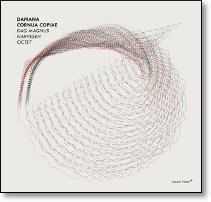
- Damana (Dag Magnus Narvesen Octet): Cornua Copiae (2014 [2016], Clean Feed): [cd]: A-
- Future of the Left: The Peace & Truce of Future of the Left (Prescriptions): [r]: B+(***)
- GOAT: Requiem (2016, Sub Pop): [r]: B+(***)
- Jenny Hval: Blood Bitch (2016, Sacred Bones): [r]: C+
- Ital Tek: Hollowed (2016, Planet Mu): [r]: B+(**)
- Nicolas Jaar: Sirens (2016, Other People): [r]: B+(**)
- Kate Jackson: British Road Movies (2016, Hoo Ha): [r]: B+(*)
- Michael Kiwanuka: Love & Hate (2016, Polydor): [r]: B+(**)
- Hamilton Leithauser + Rostam: I Had a Dream That You Were Mine (2016, Glassnote): [r]: B
- Jørgen Mathisen/Christian Meaas Svendsen/Andreas Wildhagen: Momentum (2015 [2016], Clean Feed): [cd]: B+(*)
- Maxwell: blackSUMMERS'night (2016, Columbia): [r]: B
- Anna Meredith: Varmints (2016, Moshi Moshi): [r]: B
- Mudcrutch: 2 (2016, Reprise): [r]: B
- Kevin Morby: Singing Saw (2016, Dead Oceans): [r]: B+(***)
- The Mowgli's: Where'd Your Weekend Go? (2016, Photo Finish/Island): [r]: B
- Naked Wolf: Ahum (2016, Clean Feed): [cd]: B+(*)
- Steve Noble & Kristoffer Berre Alberts: Condest Second Yesterday (2015 [2016], Clean Feed): [cd]: B+(***)
- Sean Noonan: Memorable Sticks (2015 [2016], ForTune): [bc]: B
- Angel Olsen: My Woman (2016, Jagjaguwar): [r]: B+(***)
- Huerco S: For Those of You Who Have Never (And Also Those Who Have) (2016, Proibito): [r]: B+(**)
- Savages: Adore Life (2016, Matador): [r]: B+(***)
- SBTRKT: Save Yourself (2016, self-released, EP): [r]: B-
- Elliott Sharp Aggregat: Dialectrical (2016, Clean Feed): [cd]: B+(***)
- Solange: A Seat at the Table (2016, Saint/Columbia): [r]: B+(**)
- Touché Amoré: Stage Four (2016, Epitaph): [r]: B+(*)
- Whitney: Light Upon the Lake (2016, Secretly Canadian): [r]: B-
- YG: Still Brazy (2016, Def Jam): [r]: B+(*)
Recent reissues, compilations, and vault discoveries rated this week:
- Vieux Kanté: The Young Man's Harp (2005 [2016], Sterns): [r]: A-
Added grades for remembered LPs from way back when:
- Borah Bergman: The River of Sounds (2001, Boxholder): B+
- Roy Campbell: It's Krunch Time (2001, Thirsty Ear): B
- The Cosmosamatics (2001, Boxholder): B
- The Cosmosamatics: The Cosmosamatics II (2001, Boxholder): B
- Joel Futterman/William Parker/Jimmy Williams: Authenticity (1998 [1999], Kali): B-
- Mat Maneri & Randy Peterson: Light Trigger (2000, No More): B-
- Mat Maneri: Blue Decco (2000, Thirsty Ear): B+
- Jemeel Moondoc & William Parker With Hamid Drake: New World Pygmies, Vol. 2 (2000 [2002], Eremite, 2CD): B+
- The Music Ensemble: The Music Ensemble (1974-75 [2001], Roaratorio): B
- The Nommonsemble: Life Cycle (2000 [2001], AUM Fidelity): B
- Matthew Shipp: Symbol Systems (1995, No More): B
- Alan Silva/Kidd Jordan/William Parker: Emancipation Suite #1 (1999 [2002], Boxholder): C+
Unpacking: Found in the mail last week:
- JD Allen: Americana (Savant)
- George Cables: The George Cables Songbook (HighNote)
- Andrew Downing: Otterville (self-released): October 14
- Clare Fischer Latin Jazz Big Band: ¡Intenso! (Clavo)
- Fond of Tigers: Uninhabit (Offsesson/Drip Audio)
- Eric Hofbauer Quintet: Prehistoric Jazz - Volume 3: Three Places in New England (Creative Nation Music): November 4
- The Matthew Kaminski Quartet: Live at Churchill Grounds (Chicken Coup)
- Brian Kastan: Roll the Dice on Life (Kastan): January 1
- Mike LeDonne & the Groover Quartet: That Feelin' (Savant)
- Houston Person & Ron Carter: Chemistry (HighNote)
- Felix Peikli & Joe Doubleday: It's Showtime! (self-released): advance, October 4
- Revolutionary Snake Ensemble: I Want That Sound! (Innova): October 28
- Carol Robbins: Taylor Street (Jazzcats): January 6
Ask a question, or send a comment.
Saturday, October 8, 2016
Golden Oldies
Finished copying the
Jazz Prospecting reviews into a work
file that will eventually be folded into the Jazz Consumer Guide
book(s). Next obvious step is to move on to
Rhapsody Streamnotes -- a much
larger task, with a fair amount of redundancy up through 2013 and
new stuff thereafter. But instead I wondered whether I might find
some old stuff in the
Notebook, at least up to when I
started collecting my Jazz Prospecting notes in the
Jazz Consumer Guide directory.
Indeed, I found a few things going back to 2001.
I also waded through a bunch of old writings, some of which
I thought worth reprinting here. Like this letter I wrote to the
Wichita Eagle back on December 30, 2001, in response to a "puff
piece" called "Bush's rookie year a success."
Bush's rookie year a success? Well, he's certainly accomplished
a lot: a war that is projected to be endless and that provides
Israel and India an excuse to step up their own wars; an economy
in the toilet, with rising unemployment; tax cuts to the rich,
and bailouts to big business (although not enough to save his
buddies at Enron); the end of the surplus that supposedly had
been necessary to keep Social Security solvent; an assault on our
legal system which has safeguarded our freedom for over 200 years;
and not the least bit of attention to skyrocketing health care
costs; and, of course, more damage to the environment. I'm just
not sure how much Bush success we can really afford.
After quoting the letter, I added:
The list, of course, could have gone on and on, but in tallying
it up so far I'm struck by how huge these calamities really are,
and how hard it was less than a year ago to predict so much
damage so soon. Equally amazing is how little attention people
here seem to be paying.
From December 5, 2001 (I'm reading forward by months, but
backwards within months, so please bear with this idiosyncrasy):
Old news, but it looks like the anthrax threat which so effectively
pushed up US paranoia to grease the skids for Bush's Afghan adventure
was done with US government-made anthrax. Without getting into the
question of who mailed the anthrax, or why, one conclusion is obvious:
the terror would not exist had the US military not developed the weapon.
Which is to say that at least in this case terrorism could have been
prevented by the simple, sensible policy of governments not developing
terrorist weapons.
From December 4, 2001:
Israel's tactic of trying to "motivate" Arafat by bombing
his habitual hangouts reminds me of nothing so much as one of those
westerns where the sadistic outlaw shouts "dance!" as he shoots around
the feet of some schlemiel. . . . Israel's
targeting of Arafat comes on the heels of meetings between Sharon
and the US government. Whereas the early post-9/11 hope was that
the US would moderate Israel in the hopes of gaining much needed
Islamic support against Al Qaeda, it now looks like the 9/11 glee
evinced by the likes of Peres and Netanyahu has prevailed. Israel
indeed has much to teach the US about terrorism: specifically, how
terrorist threats provide cover and excuse for the most vicious and
reactionary of political agendas.
From December 3, 2001, a point in time I later referred to as the
"feel good" days of the American War in Afghanistan, from my comment
on a New Yorker piece by Hendrik Hertzberg:
The campaign we're witnessing is the reflex of
power provoked. But the methods do little more than remind us that
the US's real power doesn't amount to much more than the ability to
indiscriminately bomb and wreak havoc, to unleash terror at a pitch
that Al Qaeda can only dream about.
In this, the US leadership has managed to reverse the plain truth of
the 9/11 attacks, which is that the victims had no relationship to
any plausible complaint about the US or how the US power has damaged
any other part of the world, and that the terrorists had shown
themselves to be utterly immoral in their slaughter of innocents.
Hertzberg is right that no one disagrees with this judgment of the
terrorists. Where he misses the boat is in not realizing that the
same logic that lets the US leaders justify their bombing in
Afghanistan, Iraq, and other quarters of the Islamic world, is
the selfsame logic that leads terrorists, with their relatively
crude weapons, to target US innocents. And while in the US people
like Hertzberg are grinning over laundered news about US military
success in Afghanistan, the even more hardened government/terrorist
factions in Israel have viciously expanded their own power tryst.
Such views were pretty unusual at the time, but still right on
the mark today. There are some earlier posts on 9/11 that I skipped
over before I noticed the Bush letter. Also music, movies, and more
than a few dinner notes.
On October 25, 2002 I lamented "feeling much more over the hill
than seems to be the norm for [my age, 52]," and also bemoaned the
sudden death of Minnesota Sen. Paul Wellstone and the approaching
elections, which would give Bush control of both houses of Congress:
The death of Paul Wellstone and his posse was sad enough, but what is
especially sad is how quickly it submerges into our general nervousness
over the impending elections. Bush and his administration have behaved
so appallingly since their annointment by Antonin Scalia that one
expects the Reichstag to catch fire any day now. Principled Democrat
opposition is astonishingly hard to find -- I'm not even sure that
Wellstone qualified, although it's easy to point to others with far
fewer scruples. Yet the most thing that strikes me the strongest is
how fragile our lives are, and how arbitrarily history wends around
them.
From December 30, 2002, in the buildup to Bush's Iraq misadventure,
I found myself arguing not just against "liberal hawks" but hardcore
pro-war "leftists":
As for the comments, a special raspberry to Ellen Willis, who argues that
the antiwar movement against the US/Vietnam war undermined the "radical
democratic left" by turning into an "apolitical moral crusade." It sounds
like her crowd won't make that mistake again; indeed, once they seize
power their first task will be to purify American power from its present
corruption and put it to good use righting the wrongs in the world.
If forced to choose between the leftists and the pacifists, I'd take the
pacifists any day. For one thing they have principles that one can practice
immediately and build on in everyday life, while the anti-pacifist left can
only struggle for power, becoming what they first hated and losing their
bearings.
On January 29, 2003, I wrote something about economic policy which
I still mean to follow up on some day:
A less obvious approach would be for the government to make strategic
investments in the private sector, where the strategy is to try to
bring prices down. Such investments rarely happen in the private sector,
since the private sector's investment strategy is to maximize profits,
and that rarely involves cutting prices. Yet almost every real gain in
living standards has come about not by people achieving enough income
to buy expensive products but by the products getting cheap enough to
be afforded by the masses. Just look around you: how many people would
have VCRs if they still cost $1300? Personal computers if they still
cost $5000? Further back you have to adjust for inflation, but consider
that cars in the 1900's cost thousands of dollars, but Henry Ford cut
the price of the Model T to less than $300. Just look around and you'll
find many places where prices can conceivably be cut significantly,
enough to vastly expand the market and add to people's real standard
of living. (Of course, given that I'm surrounded by thousands of
compact discs, one example is music; indeed, the very popularity
of file sharing shows that the latent demand is there, if only the
costs can be slashed -- which of course they can be.)
I contrasted this to more commonplace approaches from the left
like stimulating demand by raising the wage floor, giving labor
more clout to negotiate wages, and increasing government spending
(to and beyond New Deal levels). Of course, I favor all of those
things, but I'm offering this as something that's rarely discussed
(and when it is, usually in negative terms like greater antitrust
vigilance).
On January 23, 2003, I wrote a letter about the coming Iraq War
(addressed to Wichita Eagle columnist Bob Getz).
I was unusually tempted to write you after your previous column
on the Bush plan to invade Iraq, but didn't get around to it until
after seeing your second column. So here it is: thanks for an
exceptionally clear-headed and cant-free statement. I really can't
see anything but woe coming out of this war, and I can't see any
reason for Kansans to accept or support it. Even if every vile
thing you hear about Saddam Hussein is true, I can't see Iraq as
a threat to anything in my life -- unlike war, which casts a pall
over the economy, sucking wealth out to be incinerated overseas.
And as for helping those poor Iraqis overthrow their tyrant, God
helps those who help themselves. But even short of that some sort
of negotiated end to the sanctions would do far more good, and
would no doubt be much more appreciated than occupation by an
alien power.
But the thing that worries me most has nothing to do with the
Iraqis: I'm worried about what war, even in victory, will do
to us. An old Kansas named Dwight Eisenhower warned about the
growing threat of a "military-industrial complex," but rather
than heeding that warning John F. Kennedy concocted his "missile
gap" and Lyndon Johnson plunged us hopeless into Vietnam. And
while Johnson and his liberal ideologues may have thought that
they were bringing American democracy to Vietnam, their methods
so undermined them that they became lost, unable to fathom that
it's impossible to save a village by destroying it. On the other
hand, Nixon and his conservative realpolitiker saw that defeat
in Vietnam was inevitable, but tragically escalated the war to
remind the world to respect American power. Since then we've
been in denial about what the war did not only to Vietnam and
Cambodia (millions of dead) but what it did to America, which
was to strip away the innocence of our good intentions and to
cultivate a cynical, power-craving military/CIA establishment.
We had an opportunity to cut back with the collapse of the
Soviet Union, but the hawks were saved by Iraq, and propelled
forward by Al Qaeda. While the rest of the world has steadfastly
moved away from war as a solution to anything, Bush seems to be
intoxicated with America's status as the world's sole superpower
and the military prowess that dubious claim rests on. But that
power is hollow: the power to destroy, but not to build, nor
even to protect. And it's harder than ever to clothe that power
with anything resembling good intentions. And this seems to be
pretty clear to the whole world now, even if some politicians
and media moguls opt to play along.
Back in the 1960s there was a slogan in the antiwar movement:
"Suppose they gave a war and nobody came." At the time reeked
with irony, a flashback to the pro-war parades that launched
World War I. (Hardly a more distant past then than Vietnam is
now -- my grandfather fought in WWI.) Hopefully this old slogan
will lose its irony and become a plain statement of fact this
time.
I won't bother to quote it here, but in January 2003 I wrote
a post on who got elected to the Baseball Hall of Fame and who
didn't, with what still reads to me like pretty solid analysis.
Can't do that any more, but at the time I still knew a thing or
two about the sport.
Next post down I referred to Sam Brownback as "our ultra-slimy
Senator." From February 19, 2003, I see a post about a plan to
keep increases in electric and gas rates secret so as to not tip
the utilities' hands to the terrorists.
On March 18, 2003, I wrote the first of many pieces about the
Bush War in Iraq as a bad fact and not just a bad idea. Long before
I knew that when the time came I'd refer to the Japan's attack on
Pearl Harbor. The post starts out:
Yesterday, March 17, 2003, is another date that will live in infamy.
On this date, U.S. President George W. Bush rejected the efforts and
council of the United Nations, and the expressed concerns of overwhelming
numbers of people throughout the U.S. and all around the world, and
committed the U.S. to attack, invade, and occupy Iraq, to prosecute or
kill Iraq's government leaders, and to install a new government
favorable to U.S. interests.
Nothing I wrote that day requires amendment, although I didn't manage
to anticipate many of the subsequent debacles. At least, as this paragraph
further down shows, I didn't underestimate the unexpected:
As I write this, we cannot even remotely predict how this war will
play out, how many people will die or have their lives tragically
transfigured, how much property will be destroyed, how much damage
will be done to the environment, what the long-term effects of this
war will be on the economy and civilization, both regionally and
throughout the world. In lauching his war, Bush is marching blithely
into the unknown, and dragging the world with him.
I wrote much more about Iraq in the following days, weeks, months,
and years. I'll leave it to you to look that up. But throughout the
entire notebook period I feel that I've been pretty consistent, and
my key insights have been vindicated time and again. Most key is that
the US made a colossal mistake in resorting to military force after
9/11, especially in attacking Afghanistan. Bush bears special blame
because he was in the unique position of being able to stop the march
to war after 9/11. Of course, he didn't, and arguably couldn't, not
just because of the institutional inertia of the American war machine
but because of his own peculiar personal and political history.
But also note that I wrote quite a lot about Israel/Palestine
during the 18 months from 9/11 to Iraq. That was the peak period
of the Israeli counter-intifada when Ariel Sharon destroyed what
was left of the previous decade's "Oslo peace process," which had
begun with much fanfare at Clinton's White House, but which Bush
had no interest in salvaging -- indeed, Bush and Sharon shared a
preference for "solving" conflicts by brute force, a corollary
which only served to worsen each conflict.
Just for perspective, I'll also pull some music bits from the same
period. For instance, on February 9, 2003, I wrote: "Closing in on
8000 records rated." The latest count is 27198, so since that point
I've averaged about 1400 records per year, or 27 per week (which,
yeah, seems like a pretty typical week). The thing that accelerated
those numbers was, first, writing consumer guide columns which got
some publicists to send me free music, and second, various streaming
and downloading services (especially Rhapsody).
I found my first (21st century) Pazz & Jop ballot filed away
on December 20, 2002 (after I had started writing for Michael Tatum
at Static Multimedia):
- DJ Shadow: The Private Press (MCA) 14
- NERD: In Search of . . . (Virgin) 13
- Mekons: Oooh! (Out of Our Heads) (Quarterstick) 12
- Spaceways Inc.: Version Soul (Atavistic) 12
- Youssou N'Dour: Nothing's in Vain (Nonesuch) 10
- Cornershop: Handcream for a Generation (Beggars Banquet) 9
- Buck 65: Square (Warner Music Canada) 9
- Van Morrison: Down the Road (Universal) 8
- Spoon: Kill the Moonlight (Merge) 7
- Cee-Lo: Cee-Lo Green and His Perfect Imperfections (Arista) 6
As of January 6, 2003, my 2002
A-list was 62 albums long,
growing to 77 when I stopped adding records to the file. By
contrast, my
2001 A-list only had 35
albums by January 2, 2002 (eventually growing to 53), but I
rather prefer my mock 2001 Pazz & Jop ballot -- what I
would have sent in had I been invited (which I was not):
- The Coup: Party Music (75 Ark) 16
- Manu Chao: Proxima Estacion: Esperanza (Virgin) 16
- Lucinda Williams: Essence (Lost Highway) 11
- David Murray: Like a Kiss That Never Ends (Justin Time) 11
- Maria Muldaur: Richland Woman Blues (Stony Plain) 9
- Tricky: Blowback (Hollywood) 9
- Bob Dylan: Love and Theft (Columbia) 8
- Orlando Cachaito Lopez: Cachaito (World Circuit/Nonesuch) 7
- The Moldy Peaches: The Moldy Peaches (Rough Trade) 7
- Nils Petter Molvaer: Solid Ether (ECM) 6
Note that Molvaer eventually dropped to 13th, with Buck 65:
Man Overboard (Metaforensics) slipping into 8th, The
Highlife Allstars: Sankofa (Network) 9th, and Shakira:
Laundry Service (Epic) 11th.
Ask a question, or send a comment.
Monday, October 3, 2016
Music Week
Music: Current count 27198 [27183] rated (+15), 390 [381] unrated (+9).
Low rated count. Best explanation I can offer is that I took big
chunks from a couple days to work on a drainage project in the back
yard, and also spent a day cooking for friends (Mexican recipes for
ceviche and corn-on-the-cobb rolled in cotija, Cuban recipes for red
beans & rice and a chicken fricasee, fried plantains, and key
lime pie). But also many of the records below took a lot of time:
the three Springsteen titles (leftover from last week) total seven
discs, and at least five of the others got three or more plays (up
to six). Actually, when I went to close the week out last night, I
only had 14 new rated records -- added Danny Brown and John Lindberg
today (two of those multiplay albums).
Or maybe I've just been bummed. Seems like everything is getting
hard these days. Aside from the physical wear and tear, I had to deal
with a server outage last week -- one of those things that periodically
make me wonder whether it's worth the trouble to pay for the damn thing.
Even more tedious, I've been collecting reviews from
Recycled Goods for possible use in my book-in-progress,
Recorded Jazz in the 21st Century:
A Consumer Guide. Took me a couple seconds to concatenate 115
columns (427k words) and about three weeks to scroll through them
and pick out the jazz reviews. I added the post-2000 records to a
working file which currently has about 5000 reviews to add to the
21st century book. Still have
Jazz Prospecting (110k words) and
Rhapsody Streamnotes (641k words) to go, and I might as well
do that before I start integrating all that material into the
book.
Meanwhile, I took the opportunity to open a second book file,
Recorded Jazz in the 20th Century: A (Haphazard and Woefully
Incomplete) Consumer Guide, and stuffed most of my Recycled
Goods pre-2000 jazz reviews into it (currently 136 pages). You
can look at a PDF
here. I haven't set up
a download page for it. It's not even a real project at this
point, just a repository.
I will say, though, that by the time I got
through the Recycled Goods columns, I was wishing I had set up
a similar file for other things, especially African music. The
database shows I have 703
rated African (and Middle Eastern, mostly from North Africa)
albums. That's a fair start toward a record guide, but barely.
I figure Robert Christgau would be in a better position to do
a Consumer Guide to African Music: his
African
Set List adds up to 613 albums, but it looks like I haven't
updated the list links since sometime in 2003 (max artist id =
5394 (of 7331), max album id = 11171 (of 16849). A quick search
for albums with higher artist ids or VA albums with higher album
ids generated a list of 2185 albums, but the actual number that
should be added to the set list is probably less than 200. (If
anyone wants to sort them out, please let me know.)
Christgau's review of Drive-By Truckers is
here. He also flagged the Handome Family's Unseen as a
HM. For what little it's worth, I had Unseen as an A- last
week.
New records rated this week:
- Beekman: Vol. 02 (2015 [2016], Ropeadope): [cd]: B+(***)
- Danny Brown: Atrocity Exhibition (2016, Warp): [r]: A-<./li>
- Dogbrain: Blue Dog (2016, Dogbrain Music, EP): [r]: B+(***)
- Drive-By Truckers: American Band (2016, ATO): [r]: A-
- Earprint: Earprint (2016, Endectomorph Music): [cd]: B+(**)
- Five in Orbit: Tribulus Terrestris (2015 [2016], Fresh Sound New Talent): [r]: B+(**)
- Mary Halvorson Octet: Away With You (2015 [2016], Firehouse 12): [cd]: B+(***)
- John Lindberg BC3: Born in an Urban Ruin (2016, Clean Feed): [cd]: B+(**)
- Minim Experiment: Dark Matter (2016, ForTune): [bc]: B+(**)
- Moonbow: When the Sleeping Fish Turn Red and the Skies Start to Sing in C Major I Will Follow You to the End (2016, ILK): [cd]: B+(**)
- Parker Abbott Trio: Elevation (2016, self-released): [cd]: B
- John Scofield: Country for Old Men (2016, Impulse!): [r]: B+(*)
- Silva/Rasmussen/Solberg: Free Electric Band (2014 [2016], ForTune): [bc]: B+(*)
Old music rated this week:
- Bruce Springsteen: The Promise (1977-78 [2010], Columbia, 2CD): [r]: B+(*)
- Bruce Springsteen: Tracks (1972-95 [1998], Columbia, 4CD): [r]: B+(**)
- Bruce Springsteen: 18 Tracks (1972-99 [1999], Columbia): [r]: B+(**)
Unpacking: Found in the mail last week:
- Stefan Aeby Trio: To the Light (Intakt)
- Black Bombaim & Peter Brötzmann (Clean Feed)
- Christiane Bopp/Jean-Luc Petit: L'Écorce et la Salive (Fou)
- John Butcher & Ståle Liavik Solberg: So Beautiful, It Starts to Rain (Clean Feed)
- Jonathan Finlayson & Sicilian Defense: Moving Still (Pi): October 15
- Friends & Neighbors: What's Wrong? (Clean Feed)
- Luke Hendon: Silk & Steel (self-released)
- John Lindberg Raptor Trio: Western Edges (Clean Feed)
- Jacam Manricks: Chamber Jazz (self-released): October 28
- Delfeayo Marsalis presents the Uptown Jazz Orchestra: Make America Great Again! (Troubadour Jass)
- Jørgen Mathisen/Christian Meaas Svendsen/Andreas Wildhagen: Momentum (Clean Feed)
- Mark Murphy: Slip Away (Mini Movie): October 25
- Schlippenbach Trio: Warsaw Concert (Intakt)
- Soul Basement feat. Jay Nemor: What We Leave Behind (ITI)
Ask a question, or send a comment.
Monday, September 26, 2016
Music Week
Music: Current count 27183 [27153] rated (+30), 381 [376] unrated (+5).
Most of this week's list already appeared in last week's
Streamnotes. Since then
I saw Steven Colbert's show-long interview with Bruce Springsteen,
checked out his new sampler, and decided I should go back and finally
listen to the back catalog I had ignored -- one studio album (The
Ghost of Tom Joad), a bunch of live albums, and today I've been
slogging through the Tracks box set.
Also spent a lot of time last week combing through the old
Recycled Goods files, in preparation of adding a bunch of
records to my draft book, Recorded Jazz in the Early 21st
Century: A Consumer Guide (if you haven't downloaded the
144-page first pass yet, go to the form
here). After 2-3 weeks
toil, I still have about 25% of the columns to process. From
there the next large cache of writings is the
Streamnotes archive -- about
twice the size of Recycled Goods (821k words vs. 427k). While
going through Recycled Goods, I decided it would be cleaner
if I also stashed the reviews of older jazz into another book
draft file, so I opened one called Recorded Jazz in the
20th Century, and it's currently up to 75 pages. I figure
that's a much lower priority, and seriously doubt I'll ever
make a serious effort to clean it up and flesh it out, but it's
kind of nice to have around.
New records rated this week:
- Jay Azzolina/Dino Govoni/Adam Nussbaum/Dave Zinno: Chance Meeting (2016, Whaling City Sound): [cd]: B+(**)
- Mili Bermejo/Dan Greenspan: Arte Del Dúo (2016, Ediciones Pentagrama): [cd]: B+(***)
- Clipping: Splendor & Misery (2016, Sub Pop): [r]: B+(*)
- Gonzalo Del Val Trio: Koiné (2015 [2016], Fresh Sound New Talent): [r]: B+(*)
- The Dirty Snacks Ensemble: Tidy Universe (2014 [2016], Gotta Groove): [bc]: C+
- Eska: Eska (2015, Naim Edge): [bc]: B+(*)
- Gene Ess: Absurdist Theater (2016, SIMP): [cd]: C
- Charles Gayle Trio: Christ Everlasting (2014 [2015], ForTune): [bc]: A-
- The Handsome Family: Unseen (2016, Loose Music): [r]: A-
- Billy Hart & the WDR Big Band: The Broader Picture (2016, Enja/Yellowbird): [cdr]: B+(***)
- Sabir Mateen/Conny Bauer/Mark Tokar/Klaus Kugel: Collective Four (2015 [2016], ForTune): [bc]: A-
- Rale Micic: Night Music (2015 [2016], Whaling City Sound): [cd]: B+(*)
- Mostly Other People Do the Killing: (Live) (2012 [2016], ForTune): [bc]: B+(***)
- Bobby Previte & the Visitors: Gone (2015 [2016], ForTune): [bc]: B+(*)
- Rae Sremmurd: SremmLife 2 (2016, Eardrum/Interscope): [r]: B+(*)
- Shabaka and the Ancestors: Wisdom of Elders (2015 [2016], Brownswood): [r]: B+(*)
- Tomasz Sroczynski Trio: Primal (2015 [2016], ForTune): [bc]: B+(**)
- Vince Staples: Prima Donna (2016, Def Jam, EP): [r]: B+(**)
- Richard Sussman: The Evolution Suite (2015 [2016], Zoho): [cd]: B
- Rik Wright's Fundamental Forces: Subtle Energy (2016, Hipsync): [cd]: B+(*)
- Pawel Wszolek Quintet: Faith (2016, ForTune): [bc]: B+(**)
- Yells at Eels: In Quiet Waters (2013 [2015], ForTune): [bc]: B+(***)
- Yoni & Geti: Testarossa (2016, Joyful Noise): [r]: B+(**)
Recent reissues, compilations, and vault discoveries rated this week:
- Bruce Springsteen: Chapter and Verse (1966-2012 [2016], Columbia): [r]: B+(***)
Old music rated this week:
- Bruce Springsteen & the E Street Band: Hammersmith Odeon, London '75 (1975 [2006], Columbia, 2CD): [r]: B+(**)
- Bruce Springsteen & the E Street Band: Live 1975-85 (1975-85 [1986], Columbia, 3CD): [r]: B+(***)
- Bruce Springsteen: In Concert/MTV Unplugged (1992 [1993], Columbia): [r]: B-
- Bruce Springsteen: The Ghost of Tom Joad (1995, Columbia): [r]: B
- Bruce Springsteen & the E Street Band: Live in New York (2000 [2001], Columbia, 2CD): [r]: B+(**)
- Bruce Springsteen With the Sessions Band: Live in Dublin (2006 [2007], Columbia, 2CD): [r]: B+(**)
Grade changes:
- MIA: AIM (2016, Interscope): [r]: [was: B+(***)] A-
- Young Thug: No My Name Is Jeffery (2016, 300 Entertainment/Atlantic): [r]: [was: B+(***)] A-
Unpacking: Found in the mail last week:
- Aguankó: Latin Jazz Christmas in Havana (Aguankó)
- Beekman: Vol. 02 (Ropeadope)
- Earprint (Endectomorph Music): October 21
- Mary Halvorson Octet: Away With You (Firehouse 12): October 28
- John Lindberg BC3: Born in an Urban Ruin (Clean Feed)
- Naked Wolf: Ahum (Clean Feed)
- Dag Magnus Narvesen Octet: Damana Cornua Copiae (Clean Feed)
- Steve Noble & Kristoffer Berre Alberts: Condest Second Yesterday (Clean Feed)
- Parker Abbott Trio: Elevation (self-released): October 7
- Punkt 3: Ordnung Herrscht (Clean Feed)
- Elliott Sharp Aggregat: Dialectrical (Clean Feed)
- Wadada Leo Smith: America's National Parks (Cuneiform, 2CD): October 14
Ask a question, or send a comment.
Sunday, September 25, 2016
Weekend Roundup
I don't plan on watching Monday's first debate between Donald Trump
and Hillary Clinton. I'm not someone still trying to figure out where
I stand on those two, and I can't conceive of anything either might
say that might make a difference to me -- although I do harbor a fear
that Hillary might come off as so hawkish she makes Trump look sane
(at least relatively, for the moment). Besides, if I did watch, I'd
probably be preoccupied with trying to figure out how each nuance and
tick affects other folks' views -- you know, the people who don't know
enough to know any better. I'm still haunted by that 1984 debate where
Walter Mondale ran circles around Ronald Reagan -- the most one-sided
debate I ever saw, yet 32 years later the only thing other people
remember about it was Reagan's quip about not holding his opponent's
"youth and inexperience" against him. Reagan won in a landslide that
year -- one of the stupidest decisions the American people ever made
(and there's plenty of competition for that title).
Besides, I'll read plenty about it. And I'll probably tune in
Steven Colbert's after-debate Late Show. Meanwhile, no
comments on the political links below. The current
538 odds favor Clinton at 57.5%, popular vote 46.7-44.8%, the
electoral college teetering on Colorado, New Hampshire, and Pennsylvania
-- those currently favor Clinton (62.7%, 63.0%, 68.2%) but Trump can
win by tipping any one of those three (or Wisconsin or Michigan). The
"chances" exaggerate much smaller percentage edges (D+ 2.2%, 2.7%, 3.1%),
but all three (and the election) would remain Democratic if the votes
were equal (on the other hand, Trump is less than 2.0% ahead in Nevada,
Florida, North Carolina, and Ohio).
Some scattered links this week:
Natalie Nougaryède: The devastation of Syria will be Obama's legacy:
I don't agree with this piece, but want to quote a couple paragraphs
as examples of the flawed thinking that surrounds this horrific and
tragic war. First:
There have long been two takes on Syria. One is the geopolitical realism
line, which Barack Obama has chosen to follow largely because it fits with
his reluctance to get involved in another war. The line is that US or
western security interests are not at stake in an intractable, far-flung
civil war that can more easily be contained than solved. The other is the
moral imperative line that Power has repeatedly advocated within the
administration. It refers to the doctrine of "responsibility to protect,"
according to which a state's sovereignty can be violated when a regime
slaughters its own citizens.
It's always a conundrum when you limit the options to two choices
that are both flat-out wrong. The problem with "geopolitical realism"
isn't that "western security interests are not at stake." It's that
the US doesn't know what its true interests are, because the US has
stumbled blindly through seventy years of blunders in the Middle East
based on three faulty precepts: what seems like good opportunities for
a few dozen multinational corporations, a set of heuristics that like
"the enemy of my enemy is my friend," and a growing conviction that
the only way the US can act abroad is through military force (which
has its own institutional interests, ranging from budget to political
influence but mostly focused on preserving its air of omnipotence).
There can be no doubt that "geopolitical realism" has contributed
to the devastation of Syria, but that fault goes back way before the
civil war started. The US missed an opportunity in 1951 to broker a
peace treaty between Syria and Israel which would have settled the
border and committed Syria to absorb a large number of Palestinian
refugees. When that Syrian missive failed, a series of coups led to
Assad seizing power, and turning to the Soviet Union for arms to
defend against Israel (which after many border skirmishes snatched
the Golan Heights from Syria in 1967). Through those long years the
US came to reflexively think of Assad as an enemy (despite Syrian
support for the US in the 1990 Gulf War against Iraq), so when the
Arab Spring protests broke out, Obama didn't hesitate to offer his
opinion that "Assad should go" -- implicitly aligning the US with
Assad's jihadi opposition (more explicitly backed by US "allies"
Saudi Arabia, Qatar, and the UAE -- monarchies set up by British
imperialism and maintained by global business interests). By now
"realists" are split on Syria, with some recognizing that nothing
the US has done so far has worked in any tangible way to further
"American interests," while others (blending into the delusional
"neocons") see that same failure as undermining America's true
interest, which is projecting power so demonstrably that the rest
of the world is humbled into submission.
One problem that "geopolitical realists" have is that they
pride themselves on their unsentimental rejection of anything that
smacks of idealism -- notably democracy, free speech, human rights,
equality, economic justice -- so they unflinchingly embrace some
of the world's most greedy and cruel regimes. However, this lack
of principle makes it possible for "humanitarian interventionists"
like Power -- the author's second group -- to shame them into acts
of war (better described as "crimes against humanity"). It's hard
to encapsulate everything that's wrong with Power's analysis in a
single paragraph -- one could fill a whole book, which in Power's
honor should be titled A Solution From Hell.
The very phrase "responsibility to protect" is shot full with
puzzling nuances, but at a practical level, the US Military is not
designed to protect anyone. Its purpose is to intimidate, a bluff
which is backed up by extraordinary killing power and the logistics
to project that force anywhere. But once it's engaged, the army is
hard-pressed even to protect itself. (A typical tactic is whenever
an IED goes off they shoot indiscriminately in a full circle, just
in case there are any innocent bystanders.) In short, they "protect"
by killing, or as one Army officer put it, "we had to destroy the
village in order to save it." As Rumsfeld put it, "you go to war
with the army you have, not the army you might want or wish to
have at a later time." At least in the short term, US intervention
in Syria would kill more people and destroy more property. Given
all the evidence we have in recent years, there is no way to paint
this as "responsibility to protect."
As for the longer term, it's also pretty clear that the US isn't
any good at setting up stable, representative governments to move
forward. Part of this is that the US, whether representing tangible
(business) or ideological (neocon) interests, can't help but choose
sides and favor some at the expense of others, who will inevitably
view their losses as unjust. Part is that once you've invested blood
and treasure to conquer a country, you inevitably feel like you're
entitled to some reward -- not least gratitude from the people you
"saved" (at least those still alive, living in the wreckage of your
bombs and shells).
The other paragraph I wanted to quote:
A key problem with the ceasefire deal was the plan to set up a US-Russia
"joint implementation centre" to coordinate strikes against Islamic State.
This was meant as an incentive, as Putin had long sought to be accepted
as a coalition partner alongside the United States. But if implemented,
such a coalition could make the US complicit in Russian airstrikes, which
have been designed to strengthen Assad. The US would endorse a Russian
intervention premised on the notion that there are only two actors in
Syria: Assad and the jihadis.
The key problem with the "ceasefire deal" is that it didn't require
all sides to stop firing. Carving out an exemption for the US and Russia
to bomb IS not only gave the latter no reason to join in, it set up a
debilitating round of excuses: almost immediately the US bombed Assad
forces mistaking them for ISIS, then Russia bombed a UN convoy, perhaps
thinking the same. (For more on this, see
Patrick Cockburn: Russia and US Provide a Lesson in Propaganda Over
Syrian Ceasefire.)
Nougaryède then draws two conclusions. One is to blame Obama not so
much for Syria as for letting Russia show up American power ("Putin is
celebrated by populists around the world for having outmanoeuvred the
US by pulling himself up to the ranks of a leader whose cooperation is
almost begged for"). The other is to regurgitate Power's story of how
Clinton (having belatedly realized that Bosnia "had become a cancer on
our foreign policy and on his administration's leadership") "ordered
targeted strikes on Serbian forces, which forced Slobodan Milosevic to
the negotiating table" -- a fable of the magic of US intervention that
never stood a chance in Syria.
David Hearst: Sisi is a dead man walking: Presents a pretty grim
picture of Egypt under the post-coup leadership of Abdel Fattah al-Sisi:
Abdel Fattah al-Sisi's rule has indeed become torture and suffering for
Egypt.
He has lurched from one promise to another, each one a glittering
bauble dangled over a credulous and fearful nation. The first was the
untold billions that Egypt would continue to get from the Gulf states
who bankrolled his military coup. He boasted to his aides that their
money was so plentiful it was "like rice," a judgment that now looks
dated after the collapse in the price of oil and the Yemen war. He
burnt his way through up to $50bn of their cash, loans and oil
guarantees. [ . . . ]
Now salvation comes, we are told, in the form of a $12bn IMF loan.
For Egypt's currency market, its more life support than loan. In July,
foreign reserves dropped to their lowest level in 16 months, Bloomberg
reported, and constitute only three months of imports. There is no such
thing as a free IMF loan. They are expected to demand a devaluation of
the Egyptian pound, phasing out of subsidies, and the imposition of VAT,
reforms much talked about, but never implemented. The only salaries Sisi
has raised are those of the army, police and judges. As it is, spending
on public wages, salaries, subsidies and servicing debts represent 80
percent of the budget. This leaves little room for cuts. The only option
is to squeeze more out of those who cannot afford to pay.
[ . . . ]
The truth is that Sisi is failing despite the overwhelming financial
and military support of the Gulf and the West. Confidence in him as a
leader is imploding. His remaining weapons are paranoia and nationalist
fear. The question then is not whether Sisi can fight on through the
miasma of doubt which now surrounds him. Most people already know the
answer to that. The real question is how long has he got.
The article concludes with a list of possible successors, mostly
by coup. Meanwhile, al-Sisi and Donald Trump have been saying nice
things about one another. See
Cristiano Lima: Trump praises Egypt's al-Sisi: 'He's a fantastic
guy'. Trump's fondness for authoritarian leaders has often been
noted -- most often Russia's popularly elected Vladimir Putin, but
al-Sisi is a real dictator, one who seized power by force to end
Egypt's brief experiment with democracy, who outlawed his opponents
and killed "thousands of dissidents and protestors." Trump thinks
he's "a fantastic guy," but what he really likes is: "He took control
of Egypt. And he really took control of it." Pretty much what Trump
wants to do to America.
Matthew Yglesias: Republican senators outraged by Wells Fargo's fraud
want to eliminate the agency that uncovered it: More important this
year than deciding who will be the next Commander in Chief is the more
basic political decision whether we'll expose the country to ever more
blatant forms of predatory business behavior, or whether we'll cling
onto the modest levels of regulation that still provide some degree of
protection for consumers and the environment.
A funny thing happened in the United States Senate today, as a chorus
of cross-party agreement broke out during a Senate Banking Committee
hearing on revelations that Wells Fargo employees created hundreds of
thousands of fraudulent bank accounts and credit cards in order to meet
company targets for cross-selling new products to existing customers.
The targets were extremely aggressive -- so aggressive that they couldn't
actually be met -- so thousands of employees responded by faking it.
Wells Fargo is paying $185 million in fines and fired more than 5,000
rank-and-file employees, but so far nothing has been done to personally
punish the high-level executives who reap the rewards when the company
performs well.
Senators today weren't having it, with banker scourge Elizabeth Warren
telling Wells Fargo CEO John Stumpf that he ought to resign and face
personal investigation. [ . . . ] But it featured
a surprising level of bipartisan agreement, with committee chair
Richard Shelby, a hard-right Alabama Republican, accusing Stumpf in
his opening statement of personally fostering "a corporate culture
that drove company 'team members' to fraudulently open millions of
accounts using their customers' funds and personal information without
their permission." [ . . . ]
But even while Republicans are outraged by Wells Fargo's wrongdoing,
all the Republican senators who spoke against the bank at today's
hearing have gone on record at various times in calling for the full
repeal of President Obama's financial regulation law -- which would
mean eliminating the agency that uncovered the wrongdoing and levied
the biggest fines.
Several big things started happening in the 1980s. One is that
major steps were taken to reduce regulation of many industries,
which allowed some businesses to play fast and loose with their
ethics. Another is that marginal tax rates on the wealthy were
reduced, which gave business owners more incentive to make money
any way they could. The result was, as I said many times at the
time, that America's fastest growth industry became fraud. That
didn't end late in the decade when the Savings & Loan banks
blew up. At most, they took a little breather before the stock
market bubble of the 1990s burst to reveal star companies like
Enron as built on little but fraud. Then there was another
bubble in the mid-2000s, which like the others burst to reveal
even more fraudulent activity, this time infecting the entire
financial sector. So now we have thirty-some years of experience
showing that deregulation and tax breaks lead to nothing more
than ever more destructive episodes of fraud -- as well as
inequality, inequity, austerity, poverty, and hardship -- but
the only remedy Republicans can imagine is more deregulation
and more tax breaks. They're so pathetic you'd think Democrats
would make an issue of this.
For some more in-depth reading:
Alana Semuels: Finance Is Ruining America. For example:
But as GE Capital was making money, GE was laying off staff, outsourcing
jobs, and shifting more costs onto employees. Welch laid off 100,000 in
five years and cut research-and-development spending as a percentage of
sales by half, according to Foroohar. GE closed an Indiana refrigerator
plant and relocated some of the production of models to Mexico. It cut
2,500 jobs in a turbine division to save $1 billion. In 2007, it shuttered
a 1.4 million-square-foot plant in Bridgeport that had once, in the heyday
of American manufacturing, made clocks, fans, radios, washing machines,
and vacuums, and employed thousands of people. In short, investors were
getting wealthy, but working class-people weren't sharing the rewards.
Instead, they were losing their jobs.
"The stereotype of what finance is supposed to do is take the income of
savers and channel that to productive investments," Marshall Steinbaum, an
economist at the Roosevelt Institute, told me. "That's not what finance
does now. A lot of finance goes in the opposite direction, where essentially
they are taking money out of productive corporations and sending it back to
investors."
Emma Green: Why Does the United States Give So Much Money to Israel?
In one of his "lame duck" acts, Obama signed a Memorandum of Understanding
stating that the US will give Israel $38 billion over the next ten years,
"an increase of roughly 27 percent on the money pledged in the last
agreement, which was signed in 2007." Most (or maybe all) of this is
for arms, pretty much the last thing Israel actually needs. One plus
is that all the money comes back to Americans arms merchants (under
the old agreement Israel could spend about one-quarter of the grants
on their own industry) so one could look at this as an American jobs
program -- indeed, Obama's record-setting arms sales have been the
only sort of jobs program Congress has allowed him. Not much analysis
of why. Support for Israel is eroding, especially among young Democrats,
and foreign aid for anyone has never been popular. Still, in Washington
lining up to pay homage to Israel is still the safe choice -- heavily
lobbied for, scarcely lobbied against.
Also see
Nathan Thrall: Obama & Palestine: The Last Chance, briefly
reviewing how little Obama accomplished in two terms, or how easily
Netanyahu has manage to deflect Obama's spineless ambivalence. Still,
most of the article is about something minor Obama could still hope
to pull off:
This leaves only one option that isn't seen as unrealistic, unpalatable,
or insignificant: to set down the guidelines or "parameters" of a peace
agreement -- on the four core issues of borders, security, refugees, and
Jerusalem -- in a US-supported UN Security Council resolution. Once passed,
with US support, these Security Council-endorsed parameters would become
international law, binding, in theory, on all future presidents and peace
brokers.
Top US officials see a parameters resolution as Obama's only chance at
a lasting, positive legacy, one that history might even one day show to
have been more important to peace than the achievements of his predecessors.
Once Kerry's efforts extinguished the administration's last hopes of an
agreement on their watch, a parameters resolution became their brass ring;
since then, Israel-Palestine policy has largely been at a standstill in
Washington and capitals throughout Europe, hanging on the question of
whether Obama will decide to grab it.
If he doesn't grab it, and that's the bet I'd put my money on, all
he'll have to show for eight years of trying to reconcile Israel and
the Palestinians is a record-smashing arms deal -- munitions Israel
has used for a series of murderous assaults on Gaza "on his watch."
Ta-Nehisi Coates: What O.J. Simpson Means to Me: I did my best to
avoid the murder case news when it happened, viewing the grotesque
public focus with celebrity as just another of those ways television
perverts our sense of reality. I had followed the NFL back in his day,
watched him emerge on television and in advertising, thinking him a
little bland but likable enough, while not even curious about his
personal life. I do remember that during the trial my mother -- not
a racist but also not someone who felt any qualms about voting for
George Wallace -- thought he couldn't possibly be guilty. I did get
a refresher course in watching the FX drama series (The People v.
O.J. Simpson: American Crime Story, although I bailed out midway
through the documentary O.J.: Made in America). That the
story has resurfaced in such a big way this year says something
about the heightened consciousness now of how fallible the justice
system remains -- not that it continues as it's always been, but
old stories have a way of becoming new again. Coates has much on
the complex racial dynamics surrounding Simpson, but the following
stands out:
How many black men had the LAPD arrested and convicted under a similarly
lax application of standards? "If you can railroad O.J. Simpson with his
millions of dollars and his dream team of legal experts," the activist
Danny Bakewell told an assembled crowd in L.A. after the Fuhrman tapes
were made public, "we know what you can do to the average African American
and other decent citizens in this country."
The claim was prophetic. Four years after Simpson was acquitted, an
elite antigang unit of the LAPD's Rampart division was implicated in a
campaign of terror that ranged from torture and planting evidence to drug
theft and bank robbery -- "the worst corruption scandal in LAPD history,"
according to the Los Angeles Times. The city was forced to vacate
more than 100 convictions and pay out $78 million in settlements.
The Simpson jury, as it turned out, understood the LAPD all too well.
And its conclusions about the department's inept handling of evidence
were confirmed not long after the trial, when the city's crime lab was
overhauled. "If your mission is to sweep the streets of bad people . . .
and you can't prosecute them successfully because you're incompetent,"
Mike Williamson, a retired LAPD officer, remarked years later about the
trial, "you've defeated your primary mission."
Also see
Rob Sheffield: What 'O.J.: Made in America' Says About America Right
Now, where he notes, "The O.J. trial is a nightmare America has
kept having about itself for decades." That may be giving America too
much credit. Sheffield also wrote about
American Crime Story. Miscellaneous election links:
Russell Berman: Five Reasons Why Ted Cruz's Endorsement of Donald
Trump Is Stunning. Also:
Amy Davidson: Why Ted Cruz Surrendered to Donald Trump, and
Cruz: Never Mind, I Guess There Is No Battle for the Soul of
Conservatism:
Cruz probably thought Trump would lose badly, after which Wingnuttia
would conclude that the loss was because Trump was really a filthy
liberal; at that point, Cruz could pose as the "true conservative"
savior for 2020. But Trump, even if he doesn't win, is causing the
right's enemies conniption fits, so he's the strong horse the right
likes at this moment, and everyone on the right needs to get behind him.
Pat Buchanan: How Trump Wins the Debate
John Cassidy: The Presidential Debate Is Clinton's Chance to Outfox
Trump
Chauncey Devega: The lie of white "economic insecurity": Race, class and
the rise of Donald Trump:
Republicans and the broader right-wing movement profit from a Machiavellian
relationship where the more economic pain and suffering they inflict on
red-state America, the more popular and powerful they become with those
voters. This is political sadism as a campaign strategy.
Wilson Dizard: Trump praises Israeli policy of ethnic profiling following
bombing in Manhattan
Tom Engelhardt: America Has Gotten So Absurd That We Are Seriously
Considering Electing a Walking Ponzi Scheme as President
James Fallows: When Donald Meets Hillary
David Freedlander: Why Aren't Democrats Freaking Out Over Clinton's
Poll Numbers?
Todd Gitlin: Be afraid, be very afraid: Trump is trying to cow journalists
out of doing their work
Keegan Goudiss: Rebooting Hillary: How Clinton can win the digital war
and make the debates great again
John Judis: Why Hillary Clinton hasn't been able to leave Donald Trump
in the Dust
Ben Kohlmann: Trump's Twitter dominance: Who's the Obama of 2016?
Simon Maloy: Trump's stop-and-frisk fiasco: A terrible plan for fighting
crime in Chicago (or anywhere)
Jim Newell: How to Beat Trump in a Debate
Evan Osnos: President Trump's First Term:
But envisaging a Trump Presidency has never required an act of imagination;
he has proudly exhibited his priorities, his historical inspirations, his
instincts under pressure, and his judgment about those who would put his
ideas into practice. In "Trump: Think Like a Billionaire," he included a
quote from Richard Conniff, the author of "The Natural History of the Rich":
"Successful alpha personalities display a single-minded determination to
impose their vision on the world, an irrational belief in unreasonable
goals, bordering at times on lunacy."
Heather Digby Parton: Nothing left but the dog whistle: Trump, "real America"
and the death of the conservative movement
Paul Rosenberg: Behold the GOP's not-so-secret plan to dismantle government
services: Defund, degrade and then privatize
Nate Silver: Election Update: Where the Race Stands Heading Into the
First Debate
Matt Taibbi: The Unconquerable Trump
Michael Tomasky: Can the Unthinkable Happen?
Joan Walsh: Yes, Donald Trump Can Win the First Debate -- Here's
How
Matthew Yglesias: What Hillary needs to do at tomorrow night's
debate
Bernie Sanders: The 'Nation' Interview
The Economist/YouGov Poll: Lots of tables, but note this
Billmon tweet:
New YouGov poll: % of voters who think Trump is NOT crazy (38%) is 6 points
LOWER than % who pick him over HRC in head-to-head.
Ask a question, or send a comment.
Thursday, September 22, 2016
Streamnotes (September 2016)
Lot of jazz below (112 out of 126 new records, 88.9%; also 17 out of
23 old music, 73.9%). A big part of that was my decision to try to track
down all of the jazz albums on Downbeat's Readers Poll ballot. I
wound up covering 165 of 186 albums (88.7%, up from the 60.2% I had heard
at ballot time), my mop up operation discovering three A- records and
five B+(***), and a lot of things I was sensible not to have bothered
with in the first place.
I can think of three other factors behind this focus. One is that
I had a large (mostly seasonal) dip in incoming mail so ran out of
new things on CD. Second is that after the flurry of mid-year lists
I haven't bothered to follow the non-jazz online review sites (which
probably had their own seasonal dip), while my favored resources for
such genres have been relatively quiet. Third is that I had the bright
idea of compiling my Jazz Consumer Guide reviews into book form, so
I've been thinking more about jazz, and have the prospect of a second,
longer-term outlet for new jazz reviews. By the way, download the book
here.
The main exception to all that jazz was a break for a reissue of
The Beatles at the Hollywood Bowl, recorded in 1964 and 1965,
released on LP in 1977, and unavailable on CD (except in Japan) until
it was repackaged
as a tie-in to Ron Howard's new Beatles-on-tour film. I noticed a
while back that Rhapsody had belatedly secured rights to stream the
Beatles' catalog, but I was so familiar with the 15 canonical CDs
released in 1988 that I figured I hardly needed to every play them
again. Same could also be said for the 1962-1966 compilation,
which I had rated based on a borrowed copy, and for that matter the
1967-1970 compilation I missed, not that there was anything
even remotely unfamiliar on it. But after Live at the Hollywood
Bowl, I played those compilations, and followed those with the
three 2-CD Anthology sets from 1995-96, which proved even
more trivial than the Past Masters sets. Still missing
Live at the BBC, and those old Hamburg boots, but that's
about it.
The experience left me with two thoughts. One is that I had
forgotten what earworms many Beatles songs are. Since I played
the compilations, I'm pretty sure that my head was filled with
one Beatles tune or another every waking moment I've had without
other music on. The second is that while I've long considered
myself a partisan of the early albums (culminating in Help!),
the songs rattling around in my head have mostly been later ones.
I should probably have gone back and refreshed my memory of the last
three studio albums (from the white album, graded B+, B, B) --
probably haven't heard any of them in thirty years (aside from the
"Naked" version of Let It Be).
One more note: I found it rather amusing when I started wrapping
this up to see 13 A- jazz album covers followed by Brittany Spears.
That's not why I went back and revisited MIA and Young Thug -- I had
planned on doing that anyway, thinking they might be albums that a
bit more exposure to might nudge them up a notch. They're still not
high on the
A-list but they did make the grade.
Most of these are short notes/reviews based on streaming records
from Napster (formerly Rhapsody; other sources are noted in brackets).
They are snap judgments based on one or two plays, accumulated since
my last post along these lines, back on August 25. Past reviews and
more information are available
here (8632 records).
Recent Releases
Paolo Angeli/Robert Burke/Mirko Guerrini/Jordan Murray/Stephen
Magnusson/Stefano Tamborrino: Sardinian Liturgy (2015 [2016],
Jazzhead): Australian group, guitarist Angeli is the one with Sardinian
roots, building around a folk style called canto a tenore. Not
sure who the tenor is (probably Angeli), but the vocals are less to my
taste than the convoluted music.
B+(*)
Carol Bach-y-Rita: Minha Casa/My House (2016,
Arugula): Standards singer, from Spain (I think) but grew up in
Northern California, studied at UC Berkeley, lived at times in
Mexico, Italy, and France. Second album. Brazilian influence,
title (but only one song) in Portuguese, band led by Larry Koonse
(guitar) and Bill Cantos (piano). Does a striking "Nature Boy,"
an energetic "Night in Tunisia," two originals.
B+(**) [cd]
The Bad Plus: It's Hard (2016, Okeh): Piano trio,
formed in 2000 after Reid Anderson (bass) and Ethan Iverson (piano)
had quickly established themselves as formidable young musicians,
with Dave King flexing muscle on drums. Their early albums worked
a surprise cover like "Smells Like Teen Spirit" in, giving them a
melodic hook to hang their improvisation off of. Lately they've
gotten away from that, but looks like their new label ordered up
more covers, so here's a whole album of them. Many odd choices,
none all that impressive, or really even that hard.
B+(*)
Shirantha Beddage: Momentum (2014 [2016], Factor):
Identifies himself as a baritone saxophonist but credit here, on
his fifth album, reads "woodwinds and keyboards." David Restivo
also plays the latter, and they're backed by two bassists (one
acoustic, one electric) and two drummers. The baritone resonates,
the tunes mainstream enough he's been nominated for a Juno, but
nothing overly slick.
B+(***) [cd]
Bent Shapes: Wolves of Want (2015 [2016], Slumberland):
Indie pop band led by Ben Potrykus and Andy Sadoway, their main punkish
trait a compulsion to wrap up their ten songs in less than thirty minutes
(28:02).
B+(**)
Mili Bermejo/Dan Greenspan: Arte Del Dúo (2016,
Ediciones Pentagrama): Voice and bass duets, intimately bound and
balanced, not that I can follow the lyrics -- Spanish, I presume,
given that singer Bermejo was born in Argentina and raised in
Mexico City (also a professor at Berklee since 1984).
B+(***) [cd]
Seamus Blake: Superconductor (2015 [2016], 5Passion):
Saxophonist, born in England, grew up in Vancouver BC, studied at
Berklee, wound up in New York. Mainstream, usually an imposing
tenor but loses that on soprano, especially when the electronics
hold sway, nor do vocals help.
B-
Seamus Blake/Chris Cheek With Reeds Ramble: Let's Call the
Whole Thing Off (2015 [2016], Criss Cross): Two tenor sax
leads, they've done this thing before on 2014's Reeds Ramble
with this same group: Ethan Iverson (piano), Matt Penman (bass),
Jochen Rueckert (drums). Standards, Latin tinge, Jobim, originals
that fit in, very friendly.
B+(**)
Anthony Branker & Imagine: Beauty Within (2016,
Origin): Composer, finds other musicians to play his pieces, coming
up with an all-star quintet for this set of prickly postbop: Ralph
Bowen (tenor/soprano sax), Pete McCann (guitar), Fabian Almazan
(piano), Linda Oh (bass), Rudy Royston (drums).
B+(**)
Joshua Breakstone/The Cello Quartet: 88 (2016, Capri):
Guitarist, mostly works in organ-driven soul jazz groups, trades the
organ in for a cello here -- just one, Mike Richmond, the quartet
including Lisle Atkinson (bass) and Andy Watson (drums). The cello
isn't even that prominent, but Breakstone gets a tasty groove out
of one original and eight tunes from bebop-era pianists, from Tadd
Dameron and Lennie Tristano to Mal Waldron and Cedar Walton.
B+(**) [cd]
Brian Bromberg: Full Circle (2016, Artistry):
Bassist, plays electric and acoustic, has 21 albums since 1986, some
pop, some fusion, some mainstream (two recent albums were tributes,
one to Hendrix, the other Jobim, and you don't have to dig deep to
find one for Jaco Pastorius). First cut is a surprise -- evidently
his father was a Dixieland drummer and this is built around one of
his tapes. No idea who's doing what elsewhere -- cover shows drums,
acoustic and electric basses, each played by Bromberg. Still, he
probably hired out the horns and keyboards and maybe the guitar,
but they all meld together into slick anonymity.
B
Peter Brötzmann/Heather Leigh: Ears Are Filled With Wonder
(2015 [2016], Not Two): Duet, Leigh on pedal steel guitar, Brötzmann
playing tenor sax, bass clarinet, tarogato, and B-flat clarinet over
one 28:10 track (far be it from me to call anything this difficult an
EP). Not sure what to make of the pedal steel, but Brötzmann is always
Brötzmann.
B
Burning Ghosts: Burning Ghosts (2015 [2016], Orenda):
Tag line: "expressionist metal-jazz from the LA underground," promising
"an uncompromising, incendiary artistic response to ubiquitous injustice,"
with Daniel Rosenboom (trumpet), Jake Vossler (guitars), Richard Giddens
(bass), and Aaron McLendon (drums). The clash can exhilarate, but they
lose your attention when they regroup.
B+(**)
Will Calhoun: Celebrating Elvin Jones (2016, Motéma):
Drummer to drummer, but most of the likeness is limited to the drums,
as the albums Jones led were kind of scattered, going wherever the
other musicians took him. That happens here too, with Keyon Harrold
(trumpet), Antoine Roney (tenor/soprano sax, Carlos McKinney (piano),
and Christian McBride (bass) playing rather ordinary postbop, then
Jan Hammer shows up for some queasy fusion.
B
Ron Carter Quartet & Vitoria Maldonado: Brasil
L.I.K.E. (2016, Summit): Maldonado is a perfectly fine singer,
don't know anything else about her, especially on the standards that
the legendary bassist's orchestra serves up so ripely. In case you're
wondering, "L.I.K.E." stands for "Love, Inspiration, Knowledge, Energy."
B+(*) [cd]
Chris Cheek: Saturday Songs (2015 [2016], Sunnyside):
Tenor saxophonist, claims to "present" this, perhaps reluctance given
his last signed album came in 2006, or perhaps just to step aside as he
asserts that the album is "starring" Jorge Rossy (drums/vibes/marimba),
Steve Cardenas (guitar), Jaume Llombard (bass), and David Soler (pedal
steel). Soft-toned and grooveful, something that worked better in the
Claudia Quintet, perhaps because that band had a leader.
B
The Roger Chong Quartet: Funkalicious (2016,
self-released): Guitarist, has a couple albums, this one backed with
keyboards-bass-drums. Not as funky as the title implies, but that's
probably for the best. I'd even call it tasteful, most memorably
on the closing hymn, "Shall We Gather at the River."
B+(*) [cd]
Stanley Clarke/Biréli Lagrène/Jean-Luc Ponty: D-Stringz
(2015, Impulse!): Bass (double, guitarron), guitar, and violin, plus a
bit of percussion (Steve Shehan) on two cuts. All have long and notable
careers -- Biréli released his first Django tribute in 1980, Clarke
started out in the fusion '70s, Ponty's discography dates back to 1964 --
although I can't say I've followed them (3 Clarke albums, nothing over
B; 1 Ponty, a B playing Frank Zappa; no Lagrène). Still, they fit
together nicely, at least until they slow it down.
B+(**)
Cobalt: Slow Forever (2016, Profound Lore, 2CD): Black
metal band, formed in 2001 in Colorado, released three albums 2005-09,
after which founder Phil McSorley left, replaced here by new vocalist
Charlie Fell with Erik Wunder playing everything else. Not something
I'd normally bother with, but Chris Monsen put it on his list, and it
occasionally reminded me of what I imagine to be metal's appeal, with
a piece like "King Rust" pounding out a hypnotic pattern. But before
long it descends back into hyper shrieking and loses me.
B
The Cookers: The Call of the Wild & Peaceful Heart
(2016, Smoke Sessions): All-star septet -- Eddie Henderson (trumpet),
David Weiss (trumpet), Donald Harrison (alto sax), Billy Harper (tenor
sax), George Cables (piano), Cecil McBee (bass), Billy Hart (drums) --
mainstream players these days, came together for an album in 2010 and
have five now. The solos show why they're stars, but hitching all that
horn power together can get heavy and bog them down.
B+(*)
Ian William Craig: Centres (2016, 130701): Ambient
electronics plus Craig's vocals, which range from bare samples to
choirlike, not something I've ever found all that appealing.
B
Elysia Crampton: Demon City (2016, Break World, EP):
Electronica producer from Bolivia to Virginia and back, follows up
her exceptional 2015 debut American Drift by "presenting" a
mini-album (seven cuts, 25:26) of collaborations with Rabit, Chino
Amobi, Lexxi, and Why Be. Notes I've seen cite "an epic poem . . .
an official document of the Severo style" with one song named for
Bolivian revolutionary Bartolina Sisa. Indeed, this often feels
epic, but I can't say as I understand why.
B+(***)
Tim Davies Big Band: The Expensive Train Set (2013-15
[2016], Origin): Drummer, leads two big bands here, one in Los Angeles,
his adopted home, and the other in his native Melbourne, Australia.
B [cd]
De La Soul: And the Anonymous Nobody (2016, AOI):
Not worth the trouble sorting it all out, but this sounds like three
or four markedly different EPs on random play, and one of them, if
separated out, I'd probably like a lot (the one belonging to their
mid-period, the one that left its name on their label). As for the
others, there's the hippy-dippy shit they started with, and something
else I've already blotted out of my memory.
B+(**)
Gonzalo Del Val Trio: Koiné (2015 [2016], Fresh Sound
New Talent): Drummer, from Spain, leads a trio with Marco Mezquida on
piano and David Mengual on bass, all writing with covers from Gershwin
("I Got Plenty O' Nuttin'"), Jobim, and Jarrett.
B+(*)
Dinosaur: Together, as One (2016, Edition): British
jazz quartet, with trumpet player Laura Jurd riffing over bubbling
electronics, roughly equidistant from postbop, soul jazz, and fusion,
so not really in any of those bags.
B+(**)
The Dirty Snacks Ensemble: Tidy Universe (2014 [2016],
Gotta Groove): Project led by Oakland-based vibraphonist Mark Clifford,
with Aram Shelton (reeds) and Kristina Dutton (violin) in the band.
Music is oblique, slippery, with some tinkle, but hard to express how
bad two vocal pieces are, more due to the ill-fitting music than to
Elise Cumberland's voice.
C+ [bc]
Lajos Dudas Quartet/Deutsche Kammerakademie Neuss:
Brückenschlag (2015 [2016], Jazz Sick): Must seem like an
honor for your jazz quartet to join onstage with a "new" classical
string orchestra -- not really full symphonic strength, but who's
counting? -- and have a couple of your compositions worm their way
into a program of Webern and Bartok. I dig the clarinetist, born
in Hungary but long based in Germany, but the strings not so much,
so find this waxes and wanes.
B+(**) [cd]
Mats Eilertsen: Rubicon (2015 [2016], ECM): Bassist,
from Norway, website discography shows 66 albums but they're mostly
side credits -- this is his first on ECM, seventh overall. Two saxes
(Eirik Hegdal and Trygve Seim), sometimes poking the limits, other
times filling in with Harmen Fraanje on piano and Thomas T Dahl on
guitar.
B+(***) [dl]
Eska: Eska (2015, Naim Edge): Last name Mtungwazi.
Brit singer-songwriter, plays many instruments, may or may not have
been born in Zimbabwe (sources disagree) but was raised in Lewisham,
London. First album (after an EP), nominated for a Mercury Prize,
showed up on an "is that jazz?" list: short answer is "no" but with
dramatic flares and occasional losing the beat I'd peg her in prog
art song, somewhere between Sufjan Stevens and Björk.
B+(*) [bc]
Gene Ess: Absurdist Theater (2016, SIMP): Guitarist,
liner notes describe him as a philosopher, originally from Tokyo, grew
up on a US air base in Okinawa, has what you might call a "diverse"
group: Manuel Valera (keyboards), Yasushi Nakamura (basses), Clarence
Penn (drums), Thana Alexa (voice). Slick, except when she returns
scat to its roots.
C [cd]
Paolo Fresu/Richard Gallliano/Jan Lundgren: Mare Nostrum
II (2014 [2016], ACT Music): Trumpet, accordion (and bandoneon
and accordina), and piano, second album together. They play jazz deeply
imbued with European folk standards, softened up into a calm prettiness,
what they call "the sound of Europe."
B+(**)
Satoko Fujii/Joe Fonda: Duet (2015 [2016], Long Song):
Avant piano-bass duets. Fonda has a lot of experience with adventurous
pianists, notably with Matthew Shipp and Michael Jefry Stevens, and it
helps to focus on his work here, even when the pianist takes your breath
away. After the 37:10 piece dedicated to the late Paul Bley, trumpeter
Natsuki Tamura joins in for the 11:20 finale.
B+(***)
Charles Gayle Trio: Christ Everlasting (2014 [2015],
ForTune): Legendary avant saxman shows up at the Dragon Club in Poznan
(Poland), picks up a bassist (Kasawery Wojcinski) and a drummer (Klaus
Kugel -- both, by the way, names I'm familiar with -- and they let it
fly. They play old favorites by Monk, Rollins, Coltrane, and Ayler,
and Gayle shares credits for five of his hymns ("Joy in the Lord,"
"Blessed Jesus," etc.). Midway the old man takes a break and plays a
bit of his convoluted cocktail piano, but he comes back breathing fire.
A- [bc]
Generations Quartet: Flow (2015 [2016], Not Two):
Three veterans -- Oliver Lake (alto sax), Michael Jefry Stevens (piano),
Joe Fonda (bass) -- their birthdates spanning 1944-54 so more or less of
the same generation, and a drummer I hadn't heard of, presumably much
younger. Lake wrote three pieces, Fonda and Stevens two each. Fierce
and imaginative, my only reservation that it may be a bit too harsh,
but I can't help but be impressed by their energy.
A-
David Gilmore: Energies Of Change (2015 [2016],
Evolutionary Music): Guitarist, from Massachusetts, played in Steve
Coleman's M-Base, fourth album since 2000. Band features Marcus
Strickland in impressive form on alto/tenor/soprano saxes and bass
clarinet, backed by a well-known rhythm section -- Luis Perdomo
(piano), Ben Williams (bass), Antonio Sanchez (drums) -- all the
while insinuating the leader's guitar into the mix.
B+(**)
Ricardo Grilli: 1954 (2016, Tone Rogue): Guitarist
from Brazil, studied at Berklee and is based in New York. Quartet,
with Aaron Parks on piano, Joe Martin on bass, and Eric Harland on
drums. Strong suit is flow. He doesn't exactly sound like Wes
Montgomery, but pushes that vibe hard.
B+(**) [cd]
Barry Guy/Marilyn Crispell/Paul Lytton: Deep Memory
(2015 [2016], Intakt): Bassist-led piano trio playing Guy's pieces,
a couple of which let Crispell break out some awesome avant piano
chops. Not sure that's enough, but the more subdued stretches offer
much of interest, and the drummer is used to holding his own.
B+(***) [cdr]
Scott Hamilton/Harry Allen: Live! (2014 [2016], GAC):
Friendly tenor sax duel, about as close as you can come these days
to witnessing Lester Young and Coleman Hawkins square off, this
time in Santa Cruz -- the six cuts include "Tickle Toe" and "Body
and Soul"). Pianist Rossano Sportiello is a fan of both, as am I.
A-
Craig Hartley: Books on Tape Vol. II: Standard Edition
(2015 [2016], self-released): Pianist, in a trio with Carlos De Rosa
on bass and Jeremy Clemons on drums. One original, six (or seven)
standards -- the last a mashup of "Imagine" and "Peace Pipe" --
starting with sprightly takes of "Caravan" and "Jitterbug Waltz."
B+(***) [cd]
Hearts & Minds: Hearts & Minds (2014 [2016],
Astral Spirits): Eponymous group album, a trio of Chicago avants --
Jason Stein (bass clarinet), Paul Giallorenzo (synthesizer), and
Frank Rosaly (drums) -- organized into Side A and Side B for vinyl
or, in my case, a fairly short CD. Free, jumpy, but with the soft
touch the horn is noted for.
B+(***) [cd]
Gilad Hekselman: Homes (2014 [2015], Jazz Village):
Israeli guitarist, based in New York. Low key album, mostly backed
by drums, plus bass on one cut, nothing very conspicuous. One-third
covers, including Baden Powell and Pat Metheny.
B+(*)
Hiromi: Spark (2016, Telarc): Japanese pianist Hiromi
Uehara, seventh album since 2003, piano trio, sometimes electric, with
Anthony Jackson (contrabass guitar) and Simon Phillips (drums). Flashy
in spots, generally upbeat, no surprises.
B+(*)
Anna Högberg: Attack (2016, Omlott):
Swedish avant group, led by the alto saxophonist, confronting two tenor
saxophonists (Elin Larsson and Malin Wättring), backed by choppy piano
(Lisa Ullén), bass, and drums -- all women. A favorite of some critics
I follow, but unfortunately I could only find it on Spotify, which (like
Soundcloud) doesn't seem to understand when a record is over. Harsh high
energy, not sure whether it might win me over.
B+(***) [sp]
Honey Ear Trio: Swivel (2014 [2016], Little (i)
Music): Sax-bass-drums trio, with Jeff Lederer, Rene Hart, and
Allison Miller -- I filed their 2011 debut under Erik Lawrence
but he's the only one who didn't return. Lederer has less power
but trickier moves (cf. his Brooklyn Blowhards earlier
this year). All three write (also Thelonious Monk), and Kirk
Knuffke (cornet) joins on three tracks.
A- [cd]
Dylan Howe: Subterranean: New Designs on Bowie's Berlin
(2014, Motorik): British drummer, son of Yes guitarist Steve Howe, has
played in rock bands (like Ian Dury's Blockheads) and has several albums
with his jazz quintet. Nine instrumentals from David Bowie's Eno-produced
1977 albums Low and "Heroes" with two saxes, piano + synths,
guitar, two bassists, and his old man on koto. Much lusher than the spare
synths Eno deployed, heightening the melodies without jazzing them up all
that much.
B+(**)
Christoph Irniger Pilgrim: Big Wheel Live (2015
[2016], Intakt): Swiss tenor saxophonist, leads a quintet with
piano (Stefan Aeby), guitar (Dave Gisler), bass and drums. Free
but mild-mannered, even when nothing is settled.
B+(***) [cdr]
Darrell Katz and OddSong: Jailhouse Doc With Holes in Her
Socks (2015 [2016], JCA): Katz's Jazz Composers Alliance
Orchestra has long played with the idea of avant-classical mashup.
Here he crafts something we might as well call opera (no adjectives
required), with Rebecca Shrimpton singing texts by the late Paula
Tatarunis -- an arty affair I have little patience for, not that
I don't appreciate a guest appearance by Oliver Lake.
B [cd]
Franklin Kiermyer: Closer to the Sun (2015 [2016],
Mobility Music): Drummer, has a thing for the scattered sacred musics
of the world but mostly the late sainted Coltrane. Conventional sax
quartet, no one I've ever heard of -- Lawrence Clark (tenor sax),
Davis Whitfield (piano), Otto Gardner (bass) -- but they're thrilling
when they run wild, and when they slow down you hang on the tension.
A- [cd]
Sinikka Langeland: The Magical Forest (2015 [2016],
ECM): Singer from Norway, although she appears to be more rooted in
Finnish folk music, even playing kantele. Group names on cover: Arve
Henriksen (trumpet), Trygve Seim (tenor/soprano sax), Anders Jormin
(bass), Markku Ounaskari (percussion), and Trio Mediaeval (vocals) --
the vocal drama penetrating the frosty jazz air.
B+(**) [dl]
Joëlle Léandre/Théo Ceccaldi: Elastic (2015 [2016],
Cipsela): Avant bassist and violinist, both from France, she is well
established since 1982, he has a handful of albums since 2011. They
keep this tight and interesting.
B+(**) [cd]
Lydia Loveless: Real (2016, Bloodshot): Alt-country
singer-songwriter from Columbus, Ohio. Early on she seemed poised to
kick up some serious shit, but she's gotten more generic with each
album, and this one finally lands her in the middle of nowhere.
B
Romero Lubambo: Setembro: A Brazilian Under the Jazz
Influence (2015, Sunnyside): Guitarist, from Brazil, plays
acoustic as much or more than electric, goes solo here, showing
you his approach and technique but unless you're rapt that may
not be enough.
B+(*)
Jon Lundbom & Big Five Chord: Make the Changes
(2016, Hot Cup, EP): Guitarist, group includes formidable saxophonists
Jon Irabagon and Bryan Murray, Moppa Elliott on bass and Dan Monaghan
on drums. The fourth and last of this year's promised set of EPs, to
be released digitally September 30 along with a 4-CD package rolling
them all up. I'm not wild about the marketing concept -- stretches my
work and filing out on what could just as well have been two CDs in
a single package. Main economy would be that they're very consistent,
with a slight nod to EP:3 Play All the Notes. Four cuts, 31:34.
A- [cdr]
Raymond MacDonald & Marilyn Crispell: Parallel Moments
(2010 [2014], Babel): Scottish saxophonist (alto, soprano), has a dozen
or so albums since 2005, mostly duos or small groups with everyone's
name on the marquee. This is a duo with the renowned avant-pianist,
a live set from Vortex in London. She is in her usual fine form, while
he is all over the place.
B+(**) [bc]
Made to Break: Before the Code: Live (2014,
Audiographic): Ken Vandermark quartet formed in 2011, seven albums
(including the two below, recorded a few days later on the same
European tour), with regular drummer Tim Daisy, Jasper Stadhouders
(electric bass), and Christof Kurzmann (laptop/ppooll -- some kind
of audio/visual software system, based on lloopp and presumably
turned inside-out). Starts with live rehash of their Before the
Code album (Trost), adding a 5:19 "Dragon Improvisation." Holds
back at first, trying to let the rhythm find its slot, but the sax
is as compelling as ever.
B+(**) [bc]
Made to Break: N N N (2014 [2015], Audiographic):
Digital-only, four tracks totalling 97:50, so
would require two CDs. Nothing feels rushed here, the subterranean
growl of the bass pulling Vandermark toward his r&b roots.
A- [bc]
Made to Break: Dispatch to the Sea (2014 [2016],
Audiographic): More from not just the same group but the same date
in Antwerp. Three longish pieces (65:03), the electronics filling
in the gaps, but the leader finally breaks loose with awesome sax
runs -- all he really needs to do.
A- [bc]
Joe McPhee: Flowers (2009 [2016], Cipsela): Solo
alto saxophone, recorded live in Coimbra: seven pieces, each one
dedicated to an artist -- five I easily recognized as fellow alto
saxophonists, the other two graphic artists Alton Pickens and
Niklaus Troxler. The one for Ornette Coleman cleverly weaves in
signature lines, but nothing so familiar for the others.
B+(*) [cd]
Francisco Mela: Fe (2016, self-released): Cuban drummer,
moved to Boston in 2000. Nothing especially Latin this time: sparkling
Leo Genovese piano, Gerald Cannon on bass, and John Scofield scarcely
evident on guitar.
B+(**)
MIA: AIM (2016, Interscope): British dance revolutionary,
parents from Sri Lanka, fifth studio album, says it will be her last, and
indeed at 41 she seems to be winding down, with only a few memorable songs,
none qualifying as bombs. Widely panned, which is unfair and foolish, as
even her toned-down beats crack glass, and the whisps of South Asian music
are still world class. But the bonus tracks on the Deluxe are not
cost-effective.
A-
Michelson Morley: Strange Courage (2016, Babel):
British quartet, from Bristol: Jake McMurchie (saxophones), Dan
Messore (guitar), Will Harris (bass guitar), Mark Whitlam (drums).
They produce a sort of minimalist fusion, where the rock component
draws a line from Eno through My Bloody Valentine to Tortoise.
B+(*)
Cameron Mizell: Negative Spaces (2016, Destiny):
Guitarist, evidently not the music producer written up in Wikipedia,
has a previous solo EP. This a trio with Brad Whiteley on organ and
keyboards, and Kenneth Salters on percussion things -- an old soul
jazz formula but while maintaining a groove this doesn't feel very
soulful.
B [cd]
Nils Petter Molvaer: Buoyancy (2016, Okeh): Norwegian
trumpet player, started in group Masqualero and later on his own cut
a remarkable series of jazztronica albums, from Khmer in 1998
through ER in 2006 (perhaps the best). Quartet with Geir
Sundstøl (guitars, including pedal steel, resonator and banjo),
Jo Berger Myhre (basses, guitars, and synth), and Erland Dahlen
(percussion), everyone indulging themselves in electronics. Still,
not much to show for it, mostly spacey ambiance.
B+(*)
Moskus: Ulv Ulv (2015 [2016], Hubro): Norwegian piano
trio -- Anja Lauvdal (piano, harmonium, synths), Fredrik Luhr Dietrichson
(double bass), Hans Hulbaekmo (drums, Jews harp, percussion, saw, wind) --
joined on two cuts by Nils Økland on Hardanger fiddle. But even without
the guest, the piano loses primacy here to industrial-leaning electronics.
B+(**)
Bob Mould: Patch the Sky (2016, Merge): Ex-Hüsker Dü,
Sugar too (if you care; I can't say as I do). He still wraps his
songs in a overblown tornado of guitar, so characteristic it serves
as a trademark even while rendering the songs indistinguishable.
B+(*)
Sabir Mateen/Conny Bauer/Mark Tokar/Klaus Kugel: Collective
Four (2015 [2016], ForTune): Last names only on the cover,
playing reeds (mostly alto and tenor sax), trombone, bass, and drums,
on three long pieces recorded live in Poland. Mateen shows up in a
lot of avant groups but rarely as the leader -- Discogs credits him
with 28 albums, but his name comes first only eight times, and they
also show him belonging to 27 other groups. He's incendiary here,
and the Europeans, especially Bauer, are up to the challenge.
A- [bc]
Shawn Maxwell: Shawn Maxwell's New Tomorrow (2016, OA2):
Alto saxophonist, from Chicago, has a couple of previous albums I didn't
care for, but he pushes his postbop out toward the edge with this quintet,
using three different trumpeters, Matt Nelson on keyboards, Junius Paul
on bass (acoustic & electric), and Phil Beale on drums.
B+(**) [cd]
Tom McCormick: South Beat (2016, Manatee): Saxophonist
(tenor, soprano, flute), teaches in Miami, don't think he has any other
albums under his own name, but he has side credits going back to the
mid-'70s. Band leans Latin, and gets better when they flaunt it. Six
originals, covers of Coltrane and Silver plus two standards.
B+(*) [cd]
Pat Metheny: The Unity Sessions (2014 [2016],
Nonesuch): Guitarist, very popular guy and very serious (although
not necessarily at the same time). He unveiled a new quartet in 2012
with phenomenal saxophonist Chris Potter, Ben Williams on bass, and
Antoni Sanchez on drums, and they recorded a second album in 2013,
Kin -- which I see from the hype sheets won a Grammy and
was the Downbeat Readers Poll's album of the year (I gave
it a B-). They then went on a 150-gig tour, picking up Giulio
Carmassi (piano, flugelhorn, whistling, synth, vocals) somewhere
along the way, and recorded this material, originally released as
a DVD in 2015, at the end. A long and very mixed bag, one that
doesn't diminish my respect for Potter's chops, but which also
reminds me that even with Metheny eschews groove he doesn't have
many better ideas.
B
Tony Moreno: Short Stories (2015 [2016], Mayimba Jazz,
2CD): Drummer, born in New York, teaches at NYU. Notes here say his
mother was a harpist, and he was given his first set of drums at age
10 by Elvin Jones, which sounds to me better than being called to God.
Not sure what else he's done -- there's a drummer Anthony Moreno who
recorded some records on Italian labels in the late 1980s -- but this
is a big project, with contributions by a not-quite-all-star quintet,
with Marc Mommaas (tenor sax), Ron Horton (trumpet), Jean-Michel Pilc
(piano), and Ugonna Okegwo (bass), and covers of Duke Ellington and
Kenny Wheeler.
B+(**) [cd]
Mostly Other People Do the Killing: (Live) (2012 [2016],
ForTune): Bassist Moppa Elliott's piano-less quartet, with Peter Evans
on trumpet, Jon Irabagon on sax, and Kevin Shea on drums, recorded live
at Jazz Klub Hipnoza in Katowice, Poland. Made their reputation by blowing
up bebop (and sometimes postbop) convention -- a fascinating conceptual
coup on their studio albums, but just an excuse for mischief live.
B+(***)
Naima: Bye (2015 [2016], Cuneiform): Group, originally
founded as a sax quartet in 2006, now a piano trio led by Enrique Ruiz,
with Rafael Ramos Sanía on bass and Luis Torregrosa on drums. The trio
can play acoustic or plug in. The former is interesting but not all that
striking. The latter can get heavy, and hammy.
B+(*) [dl]
The Phil Norman Tentet: Then & Now: Classic Sounds &
Variations of 12 Jazz Legends (2015 [2016], MAMA): Near-big
band, led by the tenor saxophonist, half-dozen albums since 1997,
most recently an In Memoriam of Bob Florence. Repertory here,
I should recognize everything but "Lullaby of Birdland" and "Manteca"
jump out at me, even more so the upscaling of "Take Five."
B+(***) [cd]
Lina Nyberg: Aerials (2016, Hoob Jazz, 2CD): Swedish
jazz singer-songwriter, has close to twenty albums since 1993, this
the first I've heard. First disc is a live set of mostly flight-themed
standards backed by a rather scattered avant quartet of piano (Cecilia
Persson), guitar (David Stackenäs), bass, and percussion, a provocative
mix. Second disc is bird-themed, sung against the darkened backdrop of
the Vindla String Quartet. This latter half is less appealing, but I'm
still impressed.
B+(**)
Ray Obiedo: Latin Jazz Project Vol. 1 (2016, Rhythmus):
Guitarist, from the Bay Area, references suggest he's closer to pop jazz
(early albums on Windham Hill) than to Latin jazz, although he's also
done fusion and rock (Rhythmus 21, Sheila E) with many side credits
(especially Herbie Hancock and Pete Escovedo). Rifled his phonebook
for a couple dozen musicians here, picked songs with more jazz than
Latin cred, and spiced them up nicely.
B+(**) [cd]
Opaluna: Opaluna (2016, Ridgeway): Singer Susana Pineda
and guitarist Luis Salcedo, with occasional help from "special guests"
Jeff Denson (bass) and John Santos (percussion). Recorded in Berkeley,
going for that fake Brazilian folkloric effect.
B [cd]
Hanna Paulsberg Concept: Eastern Smiles (2015 [2016],
Odin): Third group album, Norwegian quartet led by tenor saxophonist
Paulsberg, with piano (Oscar Grönberg), bass (Trygve Waldemar Fiske),
and drums (Hans Hulbaekmo). Sort of a Rollins feel, a very tasteful
sax-lovers album running a bit more than mainstream.
A-
Ralph Peterson/Zaccai Curtis/Luques Curtis: Triangular III
(2016, Truth Revolution/Onyx Music): Drummer-led piano trio. Normally
I would parse the cover left-to-right and file this under pianist Zaccai
Curtis, but Peterson's centered name is a tad larger, and he has two
previous Triangular albums on his resume with different groups
(Geri Allen and Essiet Essiet in 1988, David Kikoski and Gerald Cannon
in 2000). The bassist is a familiar name, but somehow I hadn't bumped
into his older brother before.
B+(**)
Enrico Pieranunzi: Proximity (2013 [2015], CAM Jazz):
Italian pianist, has been recording regularly since 1975, has even
become somewhat known in the US thanks to his trio with Marc Johnson
and Joey Baron. Quartet here, with Matt Penman on bass, Ralph Alessi
on trumpet/cornet/flugelhorn, and Donny McCaslin on tenor/soprano sax.
Hard to get much speed without a drummer, but the result is often
lovely.
B+(**)
Enrico Pieranunzi with Simona Severini: My Songbook
(2014 [2016], Via Veneto): Piano trio plus trumpet on two cuts, sax
on three, plus singer Severini. Mostly original material, nothing you
can easily hang on to even though most are in English.
B+(*)
Dominique Pifarély Quartet: Trace Provisoire (2015
[2016], ECM): French violinist, records go back to 1981 though he's
rarely been in charge. The rhythm ranges free, with pianist Antonin
Rayon often moving out front, bassist Bruno Chevillon and drummer
François Merville beating the bushes, the bits of melody blocked
out abstractly.
B+(***) [dl]
John Pizzarelli: Midnight McCartney (2015, Concord):
Guitarist-singer arranges and records thirteen post-Beatles McCartney
songs, using shifting groups, sometimes strings, sometimes horns, the
occasional backing chorus, some Brazilian percussion. Aims for light
and frothy, and gets that more often than not.
B
Bobby Previte & the Visitors: Gone (2015 [2016],
ForTune): American drummer playing in Poland, quartet with Michael
Kammers (tenor sax, organ, piano), Michael Gamble (guitar), and Kurt
Kolheimer (bass), all brimming with energy and fairly compatible with
the leader's fusion instincts.
B+(*)
Joshua Redman & Brad Mehldau: Nearness (2011 [2016],
Nonesuch): Saxophone and piano duets, a format at least among mainstream
players meant to imply intimacy, done here with a live audience. Nicely
crafted, spare, often lovely, rarely inspired.
B+(**)
Little Johnny Rivero: Music in Me (2016, Truth
Revolution): Percussionist (conga, bongo, timbales, "and other"),
has worked with Orquesta Colon and Eddie Palmieri, keeps the salsa
beat moving while a band including Brian Lynch (trumpet), Zaccai
Curtis (piano, Fender Rhodes), Luques Curtis (bass), drums, and
various guests vamp away.
B+(***) [cd]
Rønnings Jazzmaskin: Jazzmaskin (2014 [2016], Losen):
Norwegian group: Petter Kraft (tenor sax), Martin Myhre Olsen (alto sax),
Egil Kalman (double bass), Truls Rønning (drums), the only musician
without a writing credit the namesake. First album, label has the title
as above but Discogs makes it eponymous. Rousing two-horn brawl for the
most part, some breaks I'm less sure of.
B+(***)
Jamison Ross: Jamison (2015, Concord): Singer-songwriter,
also plays drums, starts with a Muddy Waters blues but mostly favors soul.
B
Catherine Russell: Harlem on My Mind (2016, Jazz Village):
Late-blooming singer, started at 50, some 43 years after her famous father
father, bandleader Luis Russell (1902-63), passed on. This is her sixth
album, perhaps her most retro -- for her father's heyday (see Retrieval's
2-CD The Luis Russell Story 1929-1934) and the following decade).
Five songs arranged for tentet by Andy Farber, smaller groups directed
by banjoist Matt Munisteri, all impeccable, as is the singer -- the only
fault I see, but not one to get worked up about.
A-
Arturo Sandoval: Live at Yoshi's (2015, ALFI):
Cuban trumpet player, played in Irakere, met Dizzy Gillespie in 1977
and recorded with him several times before "defecting" to US in 1990.
Has dozens of albums, ten Grammys, a Presidential Medal of Freedom.
Flashy trumpet, congas, bebop-era standards plus a "Dear Diz (Every
Day I Think of You)," the leader both crooning and scatting.
B+(*)
Shabaka and the Ancestors: Wisdom of Elders (2015 [2016],
Brownswood): Led by tenor saxophonist Shabaka Hutchings, born in London
but moved to Barbados when he was six, presumably back to England as an
adult, where he also plays in Sons of Kemet and The Comet Is Coming. This
was recorded in Johannesburg "to immerse himself in the country's rich
musical heritage," most likely with local musicians to fill out the
septet plus singer (Mandla Mlangeni). I can't say as he found the real
South African vibe, but still managed some interest and appeal.
B+(*)
Naomi Moon Siegel: Shoebox View (2015 [2016], self-released):
Trombonist, from Seattle, recorded this on both coasts and in Costa Rica
over nine months so the lineups vary, but they always provide some soft
contrast for the soulful trombone leads.
B+(*)
Edward Simon: Latin American Songbook (2016,
Sunnyside): Pianist, from Venezuela, based on Bay Area, albums date
back to 1995. Piano trio, with Joe Martin on bass and Adam Cruz on
drums, picking through songs from Argentina to Cuba, thoughtfully
focusing on the melodies without spicing up the rhythm.
B+(**)
Ferenc Snetberger: In Concert (2013 [2016], ECM):
Hungarian guitarist, has records going back to 1991, several with
Arild Andersen and Markus Stockhausen. First on ECM, a live solo,
delicately played, pleasant, not without interest.
B+(*) [dl]
Mark Solborg & Herb Robertson: Tuesday Prayers
(2016, ILK): Guitar and trumpet, second duo album together. Agreeably
abstract, but too sparse to really hold your interest.
B
Sonic Liberation 8: Bombogenic (2015 [2016], High Two):
Kevin Diehl's former Sonic Liberation Front, shorn of most of the horns
and voices but still built around Cuban bata drums, joined here by guests
in small type: the Classical Revolution Trio (violin and two cellos), who
tilt this toward post-classical weepy abstraction, and alto saxophonist
Oliver Lake, who brings us back to avant-jazz.
A- [cd]
Omar Sosa/Joo Kraus/Gustavo Ovalle: JOG (2015, Otá):
Keyboards (piano, Fender Rhodes, Motif ESB, samplers, effects, vocals),
trumpet (flugelhorn, effects, vocals), percussion. Title seems to come
from first initials, and J's name appears on cover top left, but I find
the album more often attributed to Sosa, often without mentioning his
lesser known collaborators. The voices are spoken, a minor part of the
flow like the electronics but they move the groove into novel territory,
the slower bits atmospheric, the fast ones compelling.
A-
Britney Spears: Glory (2016, RCA): Ninth album,
big time pop production, every song written by a committee with
at least two producers making sure no trick goes unturned. Still,
sounds very much of a piece, with G-Eazy's second-cut rap elevating
a game that doesn't bother with any more guest stars, and doesn't
let you miss them.
A-
Vinnie Sperrazza/Jacob Sacks/Masa Kamaguchi: Play Tadd
Dameron (2015 [2016], Fresh Sound New Talent): Piano trio,
listed in drums-piano-bass order, playing pieces from a pianist
who has turned out to be one of the most covered composers of the
bebop era. Feels a bit skeletal to me without horns but eventually
the melodies come through.
B+(**)
Tomasz Sroczynski Trio: Primal (2015 [2016], ForTune):
Polish violinist, partial credit on a couple other albums but I don't
know much else about him. Trio, with bass (Max Mucha) and drums (Szymon
Gasiorek). Free jazz, clicks more often than not, drummer most impressive.
B+(**) [bc]
Vince Staples: Prima Donna (2016, Def Jam, EP):
Short, sketchy, built around fragments, short lines and short beats,
some come close to working but seems like too much work to keep on
top of them, and not enough reward. (Seven cuts, one cut short by
a gunshot, 21:44.)
B+(**)
Matthew Stevens: Woodwork (2014 [2015], Whirlwind):
Guitarist, from Toronto, seems to be his first album although he's
had a couple dozen side credits since 2006, notably with Christian
Scott. Original material (aside from the David Bowie cover), tricky
postbop with piano (Gerald Clayton), bass and drums.
B+(*)
Michael Jefry Stevens: Brass Tactics (2008 [2016],
Konnex): Avant-pianist, based in Memphis which has kept him way off
the beaten path despite recording sixty-some albums. This one is
solemn, built on brass tones: two trumpets (Dave Ballou and Ed Sarath)
and a pair of trombones (Steve Swell and Dave Taylor), occasionally
supplemented by the leader's piano.
B+(*)
Eric St-Laurent: Planet (2016, Katzenmusik):
Guitarist, based in Toronto, backed by piano-bass-percussion, the
originals supplemented by three covers that help pinpoint the
artist in space and time: Beethoven, Charlie Parker, Carly Rae
Jepson. Lightweight, easy going, tends to slip past me.
B+(*) [cd]
Al Strong: Love Strong Volume 1 (2016, Al Strong
Music): Trumpet player, from DC, now based in Raleigh-Durham area.
First album, can wax soulful on ballads, or kick up a funk storm
on a Monk tune.
B+(**) [cd]
Dave Stryker: Eight Track II (2016, Strikezone):
Guitarist, usually works with saxophonist Steve Slagle but decided
to try a no horns groove record, anchored by Jared Gold's organ
with excellent sparkle from Steve Nelson's vibes. All covers,
rock and soul standards -- the ones I always notice are "When
Doves Cry," "Time of the Season," and "Signed, Sealed, Delivered,"
but looking at the list I could kick myself for not identifying
the rest.
B+(***) [cd]
Steve Turre: Colors for the Masters (2016, Smoke
Sessions): Trombonist, also plays shells to much the same effect,
fronts a classic mainstream rhythm section -- Kenny Barron on piano,
Ron Carter on bass, Jimmy Cobb on drums -- adding Cyro Baptista for
a little spice on "Corcovado," and saxophonist Javon Jackson to
shadow his trombone leads. Hard to imagine a more risk-free can't
fail project.
B+(**)
The U.S. Army Blues: Swamp Romp: Voodoo Boogaloo
(2008 [2016], self-released): Your tax dollars at work, and there's
no doubt the Army routinely spends more for less value this group
spun off from "Pershing's Own" United States Army Band. Credits
include "Leader and Commander" (Colonel Thomas Rotondi, Jr.) and
"Enlisted Leader" (Command Sergeant Major Ross N. Morgan, Jr.),
although neither play. Basically a mix of trad jazz ("Tiger Rag,"
"Millenburg Joys"), songs that sound related (Duke Ellington and
Stevie Wonder), or at least belong in Louisiana ("Jambalaya," "You
Are My Sunshine"), and a few fitting originals (by trombonist SFC
Harry F. Watters and trumpeter SFC Graham E. Breedlove).
B [cd]
Peter Van Huffel/Alex Maksymiw: Kronix (2015 [2016],
Fresh Sound New Talent): Alto sax and guitar, respectively, duets that
mostly range free.
B+(*)
Glauco Venier: Miniatures: Music for Piano and Percussion
(2013 [2016], ECM): Italian pianist, seems to straddle jazz and classical,
mostly original pieces performed solo -- much more piano than percussion,
but he's credited with both. Self-contained, thoughtful, nevery splashy.
B+(**) [dl]
Cuong Vu/Pat Metheny: Cuong Vu Trio Meets Pat Metheny
(2016, Nonesuch): Vu is a postbop trumpet player from Vietnam, his
trio including Stomu Takeishi on bass and Ted Poor on drums. Metheny
helps fill in, but the trumpet remains front and center.
B+(*)
Waco Brothers: Going Down in History (2016, Bloodshot):
Chicago bar band, led by English painter and radical Jon Langford (Mekons,
Three Johns, many other bands) and Dean Schlabowske (who called his own
previous band Deano and the Purvs). Hard, straight and narrow, almost to
a fault.
B+(***) [sp]
The Doug Webb Quartet: Sets the Standard (2016, VSOP):
Mainstream tenor saxophonist doing standards stuff, backed expertly
by Alan Broadbent on piano, the charmingly named Putter Smith on bass,
and Paul Kreibich on drums. But he takes a while to find his groove,
tempted as he is to try out his stritch and soprano on songs that
really deserve a deep tenor vibrato.
B+(*)
White Denim: Stiff (2016, Downtown): Alt-indie band
formed in Austin in 2006, not without hooks or appeal although they
haven't broken through for me yet.
B+(*)
Anthony Wilson: Frogtown (2016, Goat Hill): Guitarist,
son of big band arranger Gerald Wilson, sings on several songs here,
most impressively the opening blues, but he's also winning on laid
back ballads. One unpleasant bit, the short instrumental "Mopeds" --
some kind of fandango? -- but several things suggest he's aiming at
Ry Cooder, and sometimes he makes that work.
B+(*)
Florian Wittenburg: Eagle Prayer (2014-15 [2016],
NurNichtNur): From Berlin, works with electronics, plays some piano,
has a couple albums including the recent Aleatoric Inspiration.
The electronics flutter and shimmer ambiently, the piano stepping
tactfully.
B+(**) [cd]
Nate Wooley: Seven Storey Mountain V (2015 [2016],
Pleasure of the Text): Avant-trumpeter, also credited with tape here.
I count eighteen musicians, ten playing brass from piccolo trumpet
to amplified tuba, a contrabass clarinet (Josh Sinton) and bass sax
(Colin Stetson), two violins, two vibraphones, two drummers, but they
don't have big band moves. In fact they hardly move at all, cranking
out one giant 49:16 slab of noise with just enough filigree to stay
interesting.
B+(*)
Nate Wooley: Argonautica (2016, Firehouse 12): One
42:53 piece, "a sonic analog [built in three parts] to the epic poem
of the same name," performed by what might be called a "double trio":
two brass leads (Wooley on trumpet, Ron Miles on cornet), two keyboards
(Cory Smythe on piano, Jozef Dumoulin on Fender Rhodes and electronics),
and two drummers (Devin Gray and Rudy Royston). Has a couple dead spots
where they're regrouping, but downright powerful when they all get in sync.
B+(**) [bc]
Lizz Wright: Freedom & Surrender (2015, Concord):
Singer from Georgia, started in the church (father was minister and
musical director), fifth album since 2003, has a share of 9/13 writing
credits. Not a very exciting, jazzy, or even soulful singer but calm
and solid, something that works with the right song -- "Somewhere Down
the Mystic," for instance, or "To Love Somebody."
B+(*)
Rik Wright's Fundamental Forces: Subtle Energy (2016,
Hipsync): Seattle-based guitarist, quartet with bass, drums, and soft
reeds -- James Dejoie on bass and regular clarinet -- keeping subtle
the energy, a fusion pulse with scant urgency.
B+(*) [cd]
Pawel Wszolek Quintet: Faith (2016, ForTune): Bassist,
I figure this for some form of postbop, with guitarist Lukasz Kokoszko
taking most of the melodic leads and pianist Sebastian Zawadzki fattening
them up, while the sole horn, Mateusz Sliwa's tenor sax, holds back until
his show-stopper at the end.
B+(**) [bc]
Yellowjackets: Cohearence (2016, Mack Avenue): Popular
jazz group, founded thirty-five years ago in 1981 by keyboardist Russell
Ferrante and bassist Jimmy Haslip (departed 2012, replaced here by Dane
Anderson), picking up drummer Will Kennedy in 1987 (to 1999, returning
in 2010) and saxophonist Bob Mintzer in 1991. The difference this time
is that this time, aside from a lovely "Shenandoah," the rhythm -- even
Ferrante's comping -- is much freer, which gives Mintzer something
interesting he can riff against.
B+(**)
Yells at Eels: In Quiet Waters (2013 [2015], ForTune):
Avant-trumpet trio, a family affair led by Dennis González, with sons
Aaron (bass) and Stefan (drums), although each member has a long list
of credits, mostly extra percussion and voice (a terminal sing-along).
Quality trumpet, furious rhythm, at one point the record erupts in
applause because that seems like the only way to cap the swell.
B+(***) [bc]
Young Thug: No, My Name Is Jeffery (2016, 300
Entertainment/Atlantic): Aka Jeffery, Jeffery Williams'
third mixtape this year, none especially long (38:03 here, not
counting a "bonus track" I haven't heard). First cuts establish
his mischievously crude humor, after which he needs to do is mug,
although the tense beats make the difference.
A-
Brandee Younger: Wax & Wane (2016, Revive Music, EP):
Harpist, seems to have a couple previous self-released albums, this
one a spin off from the Supreme Sonacy sessions, with a group
that includes tenor sax (Chelsea Baratz), flute (Anne Drummond),
violin/viola (Chargaux), guitar (Mark Whitfield), electric bass,
and drums -- all sideshows to the shimmering lead. Seven tracks,
26:46.
B+(*)
Denny Zeitlin: Early Wayne: Explorations of Classic Wayne
Shorter Compositions (2014 [2016], Sunnyside): Pianist, cut
his first albums in 1964 five years after Shorter's debut, fifty
years before he sat down for his live solo piano dive into ten of
the saxophonist's 1965-74 tunes.
B+(*)
Recent Reissues, Compilations, Vault Discoveries
The Beatles: Live at the Hollywood Bowl (1964-65
[2016], Universal/Apple): Pieced together from two August shows a
year apart, originally released in 1977 as The Beatles at the
Hollywood Bowl, only now repackaged
as a tie-in to Ron Howard's Eight Days a Week documentary,
with four extra tracks (17 total) stretching the album to 43:27.
Pre-Rubber Soul, they play basic rock and roll -- including
six covers -- and play it fast, clear and crisp even given the
non-stop scream torrent from the crowd. No cause to favor any of
this over the studio originals (even the covers), but no reason
not to revel in the whole experience either.
A-
Harry Beckett: Still Happy (1974 [2016], My Only
Desire, EP): British trumpet player from Barbados, died in 2010,
a player I've long meant to check out, but this radio shot may not
be the place -- the trumpet and sax decent enough over pleasant
but electric piano groove. Three cuts on vinyl, 28:48.
B
Born to Be Blue: Music From the Motion Picture
([2016], Rhino): Soundtrack to the Chet Baker biopic, starring
Ethan Hawke and set in the late 1960s as Baker managed something
of a comeback. Aside from pieces by Mingus and Odetta, Baker's
music is all re-recorded by pianist David Braid's quartet, with
Kevin Turcotte better than perfect on trumpet, plus occasional
string sections and Hawke doing his own vocals, even sketchier
than the originals. Despite Turcotte, no reason to buy this over
any of many perfectly good Baker comps, although I can't complain
much about anything that lets me hear "Haitian Fight Song" again.
B+(*)
Peter Erskine Trio/John Taylor/Palle Danielsson: As It Was
(1992-97 [2016], ECM, 4CD): Drummer, best known for Weather Report,
got his name out front on the four piano trio albums collected here,
an epic of good taste and precision -- i.e., not the sort of thing
Weather Report fans might care for. The albums are broken out under
"old music" below, but they are so even and consistent there's no
real point in doing so.
B+(*) [dl]
Shirley Horn: Live at the 4 Queens (1988 [2016],
Resonance): A major jazz singer from 1965 to her death in 2005,
and such a sparkling pianist she not only accompanied herself but
was in demand for non-vocal sessions. At some point I need to go
back and listen to the albums she released in her lifetime (only
four in my database), but this is the sort of posthumous record
that motivates such a search. Backed with bass, drums, and her
own impeccable piano, she covers standards she made a career of
(including two Jobims, and a definitive "Lover Man"), reminding
us she was major indeed.
A- [cd]
Miles Ahead [Original Motion Picture Soundtrack]
([2016], Columbia/Legacy): Narrated by Don Cheadle, star of the
Miles Davis biopic but packed mostly with Davis classics, giving
way at the end to Robert Glasper picking up the torch. Assuming
what you need from Davis is better served by his own discography,
and noting that an expanded set of Glasper is available on his
own Everything's Beautiful, I'm inclined to rate this as
background dinner music for folks who could care less. Some
classic music but the only piece that caught my attention was
Pharoahe Monch's closing rap, keyed to Keyon Harrold's trumpet.
B+(*)
Revive Music Presents Supreme Sonacy, Vol. 1 (2015,
Revive Music/Blue Note): Released to mark the tenth anniversary of
Revive Music, originally "a boutique live music agency that specializes
in producing genre-bending, creative-concept live music shows" but
lately has been signing musicians like Maurice Brown, Marcus Strickland,
and Brandee Younger and releasing albums, often with distribution via
Blue Note (EMI, Universal). This is framed as a live package show with
intro and interludes by Raydar Ellis, but also remixes so seems a bit
patched up. Discounting the remixes, seven acts, mostly one track each,
the more conventional horns impressive, the genre-bending less so.
B-
Tanbou Toujou Lou: Merengue, Kompa Kreyou, Vodou Jazz &
Electric Folklore From Haiti (1960-1981) (1960-81 [2016],
Ostinato): Culled from radio archives and Brooklyn basements, a
stylistic hodge-podge with borrowings from Cuba and Colombia and
the Dominican Republic and a hint of what later developed as Zouk,
this seems more generic than you'd expect from the long independent,
isolated, and impoverished half-island.
B+(***)
Old Music
Ray Anderson/Han Bennink/Christy Doran: A B D (1994-95
[2011], Hatology): Trombone-percussion-guitar, same trio previously
recorded the album Azurety. Prickly but scattered, the guitar
most likely to surprise.
B+(**)
The Beatles: 1967-1970 (1967-70 [2010], Apple, 2CD):
In 1973 Beatles manager Allen Klein picked fifty-four songs from his
group's oeuvre for a pair of canonical 2-LP sets, the group's first
(and aside from 2000's The Beatles 1 only) best-of compilation.
Both had cover photos with the same background, the 1962-1966
showing the foursome as moptops, this one as longhairs, the former
framed in red, this one in blue. The early one ended with "Eleanor
Rigby" and "Yellow Submarine" (from Revolver). The late one starts
with non-album singles "Strawberry Fields Forever" and "Penny Lane,"
followed by four cuts from Sgt. Pepper's Lonely Hearts Club Band.
I replayed the short (26-cut) 1962-1966 and can confirm that
it's still a full A, although that scarcely elevates it from any of
its seven constituent albums (based on the UK releases, the only A-
A Hard Day's Night). However, sometime in the 1970s I soured
on the later albums -- the self-indulgent "white album," Abbey
Road, Let It Be -- so this compilation actually has some
room to improve. It does, but in a way that reminds you how bright
their individual talents burnt before cooling into self-caricature.
In limited doses, even the shlock can be magnificent.
A
The Beatles: Anthology 1 (1958-94 [1995], Capitol,
2CD): Trivia with short bits of after-the-fact interview, the first
disc starting with juvenilia that wouldn't hold any interest had
they not grown out of it -- nothing sounds remotely decent until
track 11 and the first identifiable Beatles song is track 22 ("Love
Me Do"). The first disc ends with five tracks (three covers) from
a live shot in Stockholm. Second disc has more demos, outtakes, and
live hits and covers, but at least by then you know the band.
B+(**)
The Beatles: Anthology 2 (1965-95 [1996], Capitol,
2CD): After the bait cut -- "Real Love," a John Lennon demo from 1979
the remaining ex-Beatles harmonized with in 1995 -- this trivia trawl
picks up with February 1965 outtakes from Help! and ends with
an alt-take of "Across the Universe" from February 1968. One thing
that becomes clear here is how experimental many of the takes were,
not that you'll have much trouble figuring out why these particular
ones were initially released.
B+(**)
The Beatles: Anthology 3 (1968-70 [1996], Apple/Capitol,
2CD): Trivia from the period that spans three albums I never liked
much -- The Beatles ("the white album"), Abbey Road,
and Let It Be -- although I was surprised to find myself
enjoying the highlights packed into 1967-1970. The opposite
here, as the demos and outtakes lose not only the slick ickiness
the album versions but also what little shape and appeal they had.
One thing this dive reminded me of is what incredible earworms so
many of their songs were, yet as I finished this I found nothing
still rattling around in my head.
B
Harry Beckett's Flugelhorn 4+3: All Four One (1991,
Spotlite): Four flugelhorns, with Jon Corbett, Chris Bathelor, and
Claude Deppa joining Beckett, backed by Alastair Gavin on piano,
bass, and drums. Slo-mo bebop, not helped by a Jan Ponsford vocal,
but picks up toward the end.
B
Peter Brötzmann/Masahiko Satoh/Takeo Moriyama: Yatagarasu
(2011 [2012], Not Two): Sax-piano-drums trio, Brötzmann playing tenor,
tarogato and B-flat clarinet. The latter usually soften him up a bit,
but this is all slash-and-burn, and the others are probably having more
fun playing in the chaos than you are witnessing it.
B+(**)
Christy Doran: What a Band (1991 [1992], Hat Art):
Guitarist, born in Ireland, raised (and evidently still based) in
Switzerland. Title's a joke, as this is solo, but he gives us many
looks and sounds, and even works in some percussion.
B+(***)
Pierre Dørge & New Jungle Orchestra: Live at Birdland
(1999 [2003], Stunt): Danish Guitarist, modeled his ten-piece group
on Ellington's early orchestra -- "The Mooche" is in the songbook --
but his African fantasies shirk neither danger nor ecstasy (not avant
but no garden variety swing either).
B+(***)
Peter Erskine/Palle Danielsson/John Taylor: You Never Know
(1992 [1993], ECM): Drummer-led piano trio, only one piece by the leader
vs. four by pianist Taylor, two by Vince Mendoza, one Cole Porter. Not
much beyond the piano, which comes and goes.
B+(*) [dl]
Peter Erskine/Palle Danielsson/John Taylor: Time Being
(1993 [1994], ECM): Same piano trio, the leader writes more but it's
still mostly pianist Taylor's show.
B+(*) [dl]
Peter Erskine/Palle Danielsson/John Taylor: As It Is
(1995 [1996], ECM): Some high points here where the pace and volume
picks up, but not many.
B+(*) [dl]
Peter Erskine/Palle Danielsson/John Taylor: Juni
(1997 [1999], ECM): More piano trio, light and delicate, no hint of
anything more.
B+(*) [dl]
Marco von Orelli 6: Close Ties on Hidden Lanes (2010
[2012], Hatology): Swiss trumpet player, first album, ornate postbop
sextet with trombone, bass clarinet, piano (Michel Wintsch), bass,
and drums, dotes and dabbles without making much impression.
B
Marco von Orelli 5: Alluring Prospect (2015, Hatology):
Trumpet lead, trombone shadow (Lucas Briggen), Michel Wintsch's piano
leading the rhythm section.
B+(*)
Additional Consumer News:
Previous grades on artists in the old music section.
- Ray Anderson/Han Bennink/Christy Doran: Azurety (1994, Hat Art): B
- Ray Anderson/Han Bennink/Christy Doran: Cheer Up (1995, Hat Art): A-
- Ray Anderson:
20 other albums
- The Beatles: Please Please Me (1963 [1988], Capitol): A
- The Beatles: With the Beatles (1963 [1988], Capitol): A
- The Beatles: A Hard Day's Night (1964 [1988], Capitol): A-
- The Beatles: Beatles for Sale (1964 [1988], Capitol): A
- The Beatles: Help! (1965 [1988], Capitol): A+
- The Beatles: Rubber Soul (1965 [1988], Capitol): A
- The Beatles: Revolver (1966 [1988], Capitol): A
- The Beatles: Sgt. Pepper's Lonely Hearts Club Band (1967 [1988], Capitol): A
- The Beatles: Magical Mystery Tour (1967 [1988], Capitol): A-
- The Beatles: The Beatles (1968 [1988], Capitol, 2CD): B+
- The Beatles: Yellow Submarine (1966-69 [1988], Capitol): B-
- The Beatles: Abbey Road (1969 [1988], Capitol): B
- The Beatles: Let It Be (1970 [1988], Capitol): B
- The Beatles: 1962-1966 (1962-66 [1973], Capitol, 2CD): A
- The Beatles: Past Masters, Vol. 1 (1962-65 [1988], Capitol): A-
- The Beatles: Past Masters, Vol. 2 (1965-69 [1988], Capitol): B+
- The Beatles: Let It Be . . . Naked (1970 [2003], Apple/Capitol): B+
- The Beatles: Love (1963-70 [2006], Capitol): B+(***)
- Peter Brötzmann:
39 other albums
- Christy Doran: Corporate Art (1991 [2004], Winter & Winter): B+
- Christy Doran/John Wolf Brennan: Henceforward (1988 [1995], Leo Lab): A-
- Pierre Dørge: Very Hot - Even the Moon Is Dancing (1985, Steeplechase): B+
- Pierre Dørge: Johnny Lives (1987, Steeplechase): B+
- Pierre Dørge: Music From the Danish Jungle (1995 [1996], Stunt): A-
- Pierre Dørge: Dancing Cheek to Cheek (2004, Stunt): A-
- Pierre Dørge: Negra Tigra (2005 [2006], ILK): B+(**)
- Peter Erskine: Transition (1986, Denon): B
- Peter Erskine/Alan Pasqua/David Carpenter: Live at Rocco (1999 [2000], Fuzzy Music): B+
Notes
Everything streamed from Napster (ex Rhapsody), except as noted in
brackets following the grade:
- [cd] based on physical cd
- [cdr] based on an advance or promo cd or cdr
- [bc] available at bandcamp.com
- [sc] available at soundcloud.com
- [sp] available at spotify.com
- [os] some other stream source
- [dl] something I was able to download from the web; may be freely
available, may be a bootleg someone made available, or may be a publicist
promo
Ask a question, or send a comment.
Monday, September 19, 2016
Music Week
Music: Current count 27153 [27128] rated (+25), 376 [374] unrated (+2).
First, I screwed up last night and misnumbered my
Weekend Roundup post, so for various technical reasons the link
I tweeted last night needs to be removed. Since the half-life of
tweets seems to be less than two hours, the old one should soon be
forgotten.
Second, here again is the download link for my book-in-progress,
Recorded Jazz in the Early 21st Century: A Consumer Guide. It
is currently at what I call Stage One, which is to say that I've
collected and sorted reviews from all of the 2004-11 Jazz Consumer
Guide columns, but haven't done much further editing. Stage Two
will add reviews for many more records: things I'm currently
collecting from my Jazz Prospecting, Recycled Goods, and Rhapsody
Streamnotes files. I currently have all of the JCG prospecting
notes collected, and about one-third of Recycled Goods, so I'm
at least a week away from starting to revise the draft. The PDF
file is unchanged from last week, so no need to download it again,
but if you haven't yet, please do.
I've made a couple of piddly decisions on formatting since then:
to remove the bold from the parenthetical label/year, and to change
the year notation from '## to -## -- the latter because I've started
to use "smart quotes" and getting all that consistent is going to be
difficult. I'm also considering making a fairly substantial change
to the grading system. I thought it might be better to convert the
letter grades (with their 3-star subdivision of B+) into a numeric
scale (1-10). My first attempt at a conversion was: 10 = A+, 9 = A,
8 = A-, 7 = B+(***), 6 = B+(**), 5 = B+(*), 4 = B, 3 = B- or C+,
2 = C or C-, 1 = any D, 0 = any E.
Two problems there, one at the top of the scale, the other near
the bottom. The former started when I initially applied my letter
grade scale to my records list, A and A+ made sense only for records
that had stood the test of time and many plays. However, after JCG
started my working methodology changed so that I almost never managed
the several dozen plays those older records had enjoyed. I basically
stopped using those grades. For instance, the one and only A+ I've
given to a jazz record released this century was James Carter's
Chasin' the Gypsy, and that was released in 2000. (I'm pretty
sure my most recent A+ was Lily Allen's It's Not Me, It's You
in 2009, although it didn't get promoted until several years later.)
Actually, there's not much A+ jazz earlier either: I count 41 albums,
one each (or more in parens, but some are redundant) for: Louis Armstrong
(5), Ornette Coleman, John Coltrane, Miles Davis (2), Duke Ellington (9),
Ella Fitzgerald (3), Coleman Hawkins (2), Billie Holiday (2), Fletcher
Henderson, Johnny Hodges (2), Louis Jordan, Charles Mingus, Thelonious
Monk, Art Pepper, Don Pullen, Sonny Rollins (3), Roswell Rudd, Jimmy
Rushing, Pharoah Sanders, Horace Silver, Frank Sinatra, Art Tatum.
That's out of 14032 jazz albums rated, so 1/334 (0.2%). That's, well,
even I have to admit that's pretty picky -- rarefied even -- especially
if the concept is to grade on some sort of curve.
There are a good deal more A records, ten times as many (419, or
2.9% of the total), but they too are concentrated among older artists.
From 2000 onward, I've given out 65 A grades (counting Carter's A+),
an average of 4 per year (exactly, not counting 2016, which so far
has 1). I don't have an easy way of counting the sample size there,
but it's at least 5000 and probably closer to 7000 so we're looking
at a number that will round off (probably up) to 1%. Seems to me
like I could combine A and A+ at 10 and still have no more than 1%
at that level -- less than 100 records covering two decades.
The other problem is at the bottom. Keeping the three subdivisions
of B+, which I think is well justified by my recent practice, pegging
A- at 8 pushes B down to 4, and forces me to combine lower grades.
This is less important, but intuitively it seems to me that B should
be 5, and that the distinction between B- and C+ is meaningful (not
that the difference between 4 and 3, or 3 and 2, is really going to
sway any of your buying decisions). Below that matters less, not
least because I put so little effort into discerning qualitative
distinctions between records I actively dislike.
In recent years my impression has been that each of the three B+
levels were fairly evenly distributed (possibly with a slight bulge
in the middle, at **), with A- and B tapered off, and sub-B grades
rare -- partly because I don't seek out records I'm unlikely to
like, and partly because many of their publicists have given up
on me. But I've never counted until now. I did three counts,
first on the entire rated database (27526 albums), then on the
jazz subset (14032), and finally on the post-2000 jazz subset
(undercounted a bit at 8268), which breaks down thus:
A+ 1 (0.01%),
A 63 (0.76%),
A- 883 (10.7%),
B+(***) 1445 (19.0%),
B+(**) 2122 (27.7%),
B+(*) 1730 (22.6%),
B 1064 (12.9%),
B- 364 (4.4%),
C+ 81 (0.97%),
C 30 (0.36%)
C- 15 (0.18%),
D+ 2 (0.02%),
D 2 (0.02%),
plus 455 additional B+ albums (divided proportionately for the percentages;
the overall B+ percentage is 69.56%). This actually looks rather like a
pretty normal distribution, left-shifted by various factors biased in
favor of selecting better records (ones I bought, sought out, or that
savvy promoters sent my way) in an idiom that I broadly respect and
enjoy. Or it may just be that the left-shift is to be expected, just
because the skillset jazz demands is so exceptional.
Taking all this into account, a few days back I proposed to shift
my grade scale a bit leftward, combining A/A+ at 10 (still just the
top 1% of rated albums), moving A- to 9 (10%, so the top decile),
the B+ tiers to 8-7-6 (all records that will repay your interest),
B to 5, B- to 4, C+ to 3, C or C- to 2, all D to 1. Of course, the
latter ranks will be underrepresented. The only real reason for
flagging a bad album is to warn consumers who might otherwise be
tempted, but most bad records never tempt anyone -- they come from
people you don't know or care about, and quickly vanish without a
trace.
So I wrote my proposal up and sent it around to various critics,
most of whom didn't like it. For example, Robert Christgau wrote
back: "I definitely think everything shd be a notch down, with
perhaps a somewhat lenient view of what constitutes an A plus than
in my system." So I should shift some A records to 10, leave the
rest at 9, peg A- at 8, and let everything else fall accordingly,
combining various lower grades I rarely use anyway. Splitting out
more bins on the left would provide a more even distribution, but
keeping 9 and 10 reserved for less than 1% also suggests a fetish
for perfection that hardly anything can achieve. I'm not sure
that's either useful or achievable.
A couple others mentioned the Spin guide as a familiar
model, with the implication that A- should be pegged at 8 (or maybe
split between 7-8). However, my copy defines 10 as "an unimpeachable
masterpiece or a flawed album of crucial historical importance" and
7-9 as "well worth buying, sure to provide you with sustained
pleasure," and they even have kind words for 4-6 if you're
"deeply interested in the artist or genre." I'm not sure what
I'd be curious to see a histogram of those grades: how does the
distribution line up with my own data? My mapping would put A-
through B+(**) into the 7-9 range, as various degrees of records
I recommend (indeed, that I store separately from recent jazz
graded lower), while the 4-6 range gets B- to B+(*) -- the latter
are records that I respect and sometimes even admire but don't
much feel like playing again (those usually go to the basement,
but thus far I haven't discarded any).
Of course, if one started from scratch, one could devise an
elegant distribution curve (say 4-7-10-13-16-16-13-10-7-4, or
2-5-9-14-20-20-14-9-5-2) and sort everything accordingly. But
that assumes you can rank everything before slicing it into
tranches, something that based on no small experience I find
impossible. But more importantly for me, I need some way to
mechanically transcribe the letter grades I have into numerical
grades. So while I might get a more pleasing curve if I could
move the uper half of my A- records from 8 to 9 and the upper
third of my B+(***) albums from 7 to 8 and slide some slice
starting at B+(*) down a notch, it would be hell for me to
try to figure out how to split my existing levels. (It's going
to be bad enough just to divvy up the unsorted B+ records.)
Sorry to run on like that. I imagine everyone's eyes glazed
over, but mapping it all out like that is helping me think it
through. I'll let you know when I reach a conclusion. Meanwhile,
feedback always welcome.
Minor discrepancy in the rated count, which only includes one of
the three Made to Break albums below. I wrote up the others while
working on this post, but thought it made more sense to keep them
grouped together. The Beatles stuff was in response to the belated
CD release of the Hollywood Bowl album. I also played
1962-1966, which I had previously rated at A and found
every bit as great. I hadn't previously rated 1967-1970,
but knew everything on it. Even so, better than I expected.
I also meant to get the third Anthology in, but had
some problems with Napster that locked me out for a couple
days. Finally got to it tonight and, well, it's not very good.
Might as well add it too.
New records rated this week:
- Paolo Angeli/Robert Burke/Mirko Guerrini/Jordan Murray/Stephen Magnusson/Stefano Tamborrino: Sardinian Liturgy (2015 [2016], Jazzhead): [r]: B+(*)
- Carol Bach-y-Rita: Minha Casa/My House (2016, Arugula): [cd]: B+(**)
- Joshua Breakstone/The Cello Quartet: 88 (2016, Capri): [cd]: B+(**)
- The Cookers: The Call of the Wild & Peaceful Heart (2016, Smoke Sessions): [r]: B+(*)
- Dinosaur: Together, as One (2016, Edition): [r]: B+(**)
- Barry Guy/Marilyn Crispell/Paul Lytton: Deep Memory (2015 [2016], Intakt): [cd]: B+(***)
- Craig Hartley: Books on Tape Vol. II: Standard Edition (2015 [2016], self-released): [cd]: B+(***)
- Hearts & Minds: Hearts & Minds (2014 [2016], Astral Spirits): [cd]: B+(***)
- Honey Ear Trio: Swivel (2014 [2016], Little (i) Music): [cd]: A-
- Christoph Irniger Pilgrim: Big Wheel Live (2015 [2016], Intakt): [cd]: B+(***)
- Joëlle Léandre/Théo Ceccaldi: Elastic (2015 [2016], Cipsela): [r]: B+(**)
- Made to Break: Before the Code: Live (2014 [2016], Audiographic): [bc]: B+(**)
- Made to Break: N N N (2014 [2016], Audiographic): [bc]: A-
- Made to Break: Dispatch to the Sea (2014 [2016], Audiographic): [bc]: A-
- Joe McPhee: Flowers (2009 [2016], Cipsela): [cd]: B+(*)
- MIA: AIM (2016, Interscope): [r]: B+(***)
- Michelson Morley: Strange Courage (2016, Babel): [r]: B+(*)
- Nils Petter Molvaer: Buoyancy (2016, Okeh): [r]: B+(*)
- Tony Moreno: Short Stories (2015 [2016], Mayimba Jazz, 2CD): [cd]: B+(**)
- Dominique Pifarély Quartet: Tracé Provisoire (2015 [2016], ECM): [dl]: B+(***)
- Joshua Redman & Brad Mehldau: Nearness (2011 [2016], Nonesuch): [r]: B+(**)
- Catherine Russell: Harlem on My Mind (2016, Jazz Village): [r]: A-
- Naomi Moon Siegel: Shoebox View (2015 [2016], self-released): [r]: B+(*)
- Edward Simon: Latin American Songbook (2016, Sunnyside): [r]: B+(**)
- Ferenc Snétberger: In Concert (2013 [2016], ECM): [dl]: B+(*)
- Eric St-Laurent: Planet (2016, Katzenmusik): [cd]: B+(*)
- Glauco Venier: Miniatures: Music for Piano and Percussion (2013 [2016], ECM): [dl]: B+(**)
- Nate Wooley: Argonautica (2016, Firehouse 12): [bc]: B+(**)
Recent reissues, compilations, and vault discoveries rated this week:
- The Beatles: Live at the Hollywood Bowl (1964-65 [2016], Universal/Apple): [r]: A-
Old music rated this week:
- The Beatles: 1967-1970 (1967-70 [2010], Apple, 2CD): [r]: A
- The Beatles: Anthology 1 (1958-94 [1995], Capitol, 2CD): [r]: B+(**)
- The Beatles: Anthology 2 (1965-95 [1996], Capitol, 2CD): [r]: B+(**)
- The Beatles: Anthology 3 (1968-70 [1996], Apple/Capitol, 2CD): [r]: B
Unpacking: Found in the mail last week:
- Jay Azzolina/Dino Govoni/Adam Nussbaum/Dave Zinno: Chance Meeting (Whaling City Sound)
- Mili Bermejo/Dan Greenspan: Arte Del Duo (self-released): October 7
- Joshua Breakstone/The Cello Quartet: 88 (Capri): October 21
- Dim Lighting: Your Miniature Motion (Off): advance
- Satoko Fujii/Joe Fonda: Duet (Long Song)
- Billy Hart & the WDR Big Band: The Broader Picture (Enja/Yellowbird): advance, September 30
- Rale Micic: Night Music (Whaling City Sound)
- Moonbow: When the Sleeping Fish Turn Red and the Skies Start to Sing in C Major I Will Follow You to the End (ILK)
- Richard Sussman: The Evolution Suite (Zoho)
Ask a question, or send a comment.
Sunday, September 18, 2016
Weekend Roundup
Mostly writing this today because I have various tabs opened to
possibly interesting articles, and it's only a matter of time before
my antiquated browser crashes. Better, I think, to note them briefly
than to lose them forever.
I wrote some on the campaign horserace a couple days ago (see
Looks Like She Blew It), and nothing much has changed on that
front -- TPM still has Trump ahead by 0.1%, but 538 shows Clinton
with slightly better chance of winning (61.3%, up from 60.0%). So
she may still pull this out, but if she does she'll still wind up
with the lowest share of popular vote since 1992, when someone else
named Clinton won.
Some scattered links this week:
David Dayen: How Democrats Can Overcome Their Self-Defeating Cynicism:
By "pushing actual policies"? Dayen proposes adding a "public option" to
Obamacare as a good place to start. That's actually fairly non-controversial,
at least with mainstream Democrats. It was part of the original ACA, and
was dropped mostly because the bill couldn't be passed without 60 votes in
the Senate, and a couple of them were willing to wreck the whole thing to
spare private insurance companies from competition. He notes that Sen. Jeff
Merkley (Oregon) has a resolution backed by 27 other senators, and that
Obama and Clinton favor it. As for "cynicism" the more apposite term Dayen
uses is "defensive crouch" (although if you want an example of cynicism,
there's the attempt to bundle gun control on top of the rather arbitrary,
putatively anti-terror, "no fly list").
In their defensive crouch, Democrats have forgotten to explain why they
consider it important that "no family have the American dream ripped out
from under them because they can't afford medical care," as Merkley said
on the call. They forget to explain why health care ought to be a right
for every American, not a privilege only available to those who can buy
it at a high price.
This was actually the logic of the Sanders campaign, and a reason for
its unlikely success. Contrary to the political science pros, it was his
ideas, and more to the point his willingness to say them, that animated
his candidacy. It also pushed Clinton to outline a bolder agenda than she
might have been comfortable with in Sanders's absence. When the Democratic
primary pitted ideas against one another, rather than amplifying criticisms,
it let Americans know what Democrats stand for.
The bloodless technocracy that has ruled the Democratic Party has
forgotten how to inspire the body politic. After riding a wave of
enthusiasm to power in 2008, the last couple midterms and even Obama's
2012 campaign were nervy exercises in protecting the tentative gains
Democrats had made -- and seemed half-embarrassed by. Democrats too
often define themselves by who they oppose rather than their own
principles. Not only is this self-defeating for a party that promises
activist government, it makes governing itself harder down the road.
Of course, it's not just the emergence of a bit of political backbone
that's bringing the public option back into play. It's also that the
insurance companies have been conspiring to prevent the competition
that the ACA promised from eating into their profits -- most egregiously
by trying to merge the four largest private health insurers into two
companies (the first mergers I'm aware of the Obama administration
actually opposing). Even short of that they're cutting back on plan
availability, so many Americans will have no choices.
Eric Lichtblau: Hate Crimes Against American Muslims Most Since Post-9/11
Era: "up 78 percent over the course of 2015. Attacks on those perceived
as Arab rose even more sharply. . . . That was the most since the record
481 documented hate crimes against Muslims in 2001, when the Sept. 11
attacks set off waves of crimes targeting Muslims and Middle Easterners,
Mr. Levin said. The huge increase last year was also the biggest annual
rise since 2001, he said." It's tempting to blame this on Trump, whose
anti-Muslim positions are based on and seem to legitimize more blatant
threats: "A number of experts in hate crimes said they were concerned
that Mr. Trump's vitriol may have legitimized threatening or even violent
conduct by a small fringe of his supporters. In a few cases, people accused
of hate crimes against Muslims and others have even cited Mr. Trump." On
the other hand, it's impossible to go to war against a people for fifteen
years and not engender hatred -- something Bush and Obama have worked hard
to cap because it so subverts their war aims, although Obama had a big
disadvantage in that those most inclined to hate Muslims started off by
hating him.
Derek Thompson: America's Monopoly Problem: As I noted above, the
Obama administration has done a remarkably poor record of maintaining
competitiveness within supposedly free markets, scarcely even bothering
to use the rather antiquated antitrust laws that are still on the books.
Those laws, dating to the 1880s, targeted absolute monopolies where a
single company sought to gain complete control of a market. While such
combines are still a threat, the bigger problem now is what we might
call consensual monopoly blocks, where two or three large companies
effectively divvy up a market, crowding out competitors and focusing
more on growing their profit margins than cutting into one another's
market share. The net effect looks like this:
In the past few decades, however, the economy has come to resemble
something more like a stagnant pool. Entrepreneurship, as measured by
the rate of new-business formation, has declined in each decade since
the 1970s, and adults under 35 (a/k/a Millennials) are on track to be
the least entrepreneurial generation on record.
This decline in dynamism has coincided with the rise of extraordinarily
large and profitable firms that look discomfortingly like the monopolies
and oligopolies of the 19th century. American strip malls and yellow
pages used to brim with new small businesses. But today, in a lot where
several mom-and-pop shops might once have opened, Walmart spawns another
superstore. In almost every sector of the economy -- including manufacturing,
construction, retail, and the entire service sector -- the big companies
are getting bigger. The share of all businesses that are new firms,
meanwhile, has fallen by 50 percent since 1978. According to the Roosevelt
Institute, a liberal think tank dedicated to advancing the ideals of
Franklin and Eleanor Roosevelt, "markets are now more concentrated and
less competitive than at any point since the Gilded Age."
Even where there are entrepreneurs, as in high-tech, their typical
business plans focus on building companies to the point where they
be sold profitably to larger companies. For instance, have any of the
biotech startups that were spun up in the 1990s not been sold off to
pharmaceutical giants? Much of this is driven by financial firms, who
can overpay for a startup knowing that it's worth more as part of a
monopolistic conglommerate. Joseph Stiglitz cites monopoly rents as
a major source of increasing inequality, and this is what he means.
A big part of the reason inequality is spiraling out of control is
that government, influenced (as you well know) by those profiting from
monopoly rents, has abdicated its responsibility to ensure that markets
are free, open, transparent, and therefore efficient. It is impossible
to overstate the importance of this issue, so this piece is one you
need to read.
Maggie Koerth-Baker: How the Oil and Gas Industry Awakened Oklahoma's
Sleeping Fault Lines: The first recorded earthquake in Oklahoma
occurred in 1882, before the first oil well was drilled in 1897. This
piece has a map of the known fault lines crossing Oklahoma, and they
are numerous, especially in the southeast corner of the state, home
of what's left of the Ouchita Mountains (high point 2681 feet above
sea level). Still, earthquakes remained rare until less than a decade
ago, rising to more than 900 earthquakes (3.0 or stronger) in 2014 --
the most of any state in the nation. As another map shows, those
earthquakes are located not where most of the faults are, but rather
in the north-central part of the state: relatively flat prairie west
of the Arkansas River, bisected by the Canadian River. This has been
oil country since way before I was born -- indeed, the main tourist
attractions in Ponca City are tours of the mansions of pioneering oil
barons. The yields of those oil wells have long been declining -- a
chart here shows that Oklahoma pumps up five barrels of wastewater
for every barrel of oil (or equivalent natural gas, at this point 80%
of Oklahoma's hydrocarbon production). That would have been uneconomical
back when oil was cheap, but the high prices of the Bush years urged
marginal producers to invest in injection wells -- there are now more
than 4000 across the state -- as they seek to slurp up the last of
their remaining oil. (By contrast, the water/fuel ratio in the newer
fields of North Dakota is currently running just slightly above 1/1.)
The injected wastewater, along with techniques like fracking, may help
increase oil production, but it also lubricates often unseen faults,
which then slip to produce earthquakes. The largest to date, a 5.8
centered between Pawnee and Ponca City, was felt as far away as Omaha
and Austin. Here in Wichita, about 110 miles away, it woke us up as
the house shook for nearly a minute. I've been following this story
since it started to break -- oil geology is one of those subjects I
read for pleasure -- and this is one of the better pieces on it. So
now, in addition to anthropogenic climate change, the oil industry
has brought us anthropogenic earthquakes. You'd think they'd be the
least bit embarrassed, but even before they proved to be so ingenious
at creating "natural" disasters, their sudden riches spawned many of
America's most reactionary political entrepreneurs, from H.L. Hunt
to the Kochs to Dick Cheney. The biggest mistake this country ever
made was letting individuals own the nation's mineral resources. Miscellaneous election links:
Charles V Bagli: A Trump Empire Built on Inside Connections and $885 Million
in Tax Breaks: How to get ahead by starting there. Of course, Trump isn't
the only businessman who taken advantage of "what he calls the pay-to-play
culture of politics and a 'rigged' system of government." Pretty much everyone
does it, a relationship so symbiotic neither side dares question it even
though practically everyone else thinks it stinks to high hell. Long
article with lots of details, mostly on New York real estate.
John Cassidy: Does Donald Trump Pay Any Income Taxes at All? Well,
if he doesn't, that would be one reason he might have for withholding
his tax returns. Cassidy quotes
James Stewart: "No one should be surprised, though, if Donald J.
Trump has paid far less -- perhaps even zero federal income tax in
some years. Indeed, that's the expectation of numerous real estate
and tax professionals I've interviewed in recent weeks." That just
reflects the numerous loopholes that benefit real estate developers,
just part of a crooked system. Also quotes David Cay Johnston, who
"pointed out that Trump paid no income tax in 1978, 1979, 1992, and
1994" and "several times received a type of tax rebate that is
restricted to property owners who report taxable income of less
than half a million dollars."
Also by Cassidy:
Birtherism, Bombs, and Donald Trump's Weekend.
Russel Berman: Hillary Clinton Has a Lot of Money: She raised
$143 million in August, and seems to have been more concerned with
raking in contributions than with winning over voters. The good
news there is that $81 million goes to the DNC and state parties.
How successful she is as president depends on how successful the
Democratic Party is in state and local elections, especially for
Congress -- a point that neither her husband nor Obama learned as
president. Still, she lost ground in the polls while catering to
wealthy donors. We'll see if she can use their money to turn the
election around.
Amy Davidson: Clinton's Sick Days: At least she got some help to
make up for her down time -- from Obama, his wife, Biden, her husband.
Still, Davidson's best line was parenthetical: "(Why, at this stage,
her schedule includes so many travel-intensive fund-raisers, when
she is suffering from a shortage not of funds but of voter rapport,
is one of many side questions that her illness raised.)"
David A Graham: Just Why Does Hillary Clinton Want to Be President?
First thought on seeing this is that it reminded me of the unhealthy
obsession the press in 2000 had with Gore's supposed obsession with
running for president, suggesting that if he failed he might as well
kill himself because his whole life would have been wasted. In point
of fact, after he lost he got a job as a venture capitalist, he got
rid of his wife, he wrote a book that wasn't about himself, he made
a movie about global warming, he won an Oscar for the movie, he won
a Nobel Prize. If he was so obsessed with becoming president, why
did he never run again? He's 68 now, but he's still a few months
younger than Hillary Clinton. So I don't have much interest in
psychological speculation about "what makes Hillary run?" -- I
would, however, find a credible explanation for Trump interesting.
Or maybe just amusing.
Then there's
Clare Foran: The Curse of Hillary Clinton's Ambition. Foran
catches a lot of flying innuendo in her net, and seems willing to
give credence to all of it. She quotes one "man" as saying, "This
has been her entire life's work, it seems like, has been building
up to this moment, so she doesn't have any shots left." Just like
Gore in 2000, except she's even more of a crone. Foran adds, "But
some voters also seem to distrust Clinton because they believe
she wants to win at any cost." This is a journalist? She wouldn't
have to search very hard to find Trump supporters who see that
very same trait in their man and admire him for it.
Harry Enten: Why Clinton's Electoral Map Isn't as Good as Obama's:
Had Obama and Romney received the same number of votes (basically, by
moving 3.9% from D to R in every state), Obama would still have been
elected president by the electoral college. The map this year looks to
me to be much the same, but Enten argues that it has shifted in such a
way that Trump has "a better shot of winning the Electoral College while
losing the popular vote (at 6.1 percent) than Clinton (1.5 percent)."
Of course, there's a chart, showing that 11 of 14 battleground states
have "moved right relative to the country" --Iowa and Nevada enough
to switch sides. Part of this is that Clinton is leading Obama in
some states she'll still lose (Enten mentions Oklahoma, Utah, and
Wyoming). But I also suspect part of this is that they're comparing
Clinton's current polls to Obama's actual votes, so they haven't yet
factored in the intense battleground state "ground game."
Todd S Purdum: What's Really Ailing Hillary: "A long time ago,
Clinton was far more transparent, emotional and open than she is
today. Then the media began slamming her -- and didn't stop."
Matt Taibbi: Stop Whining About 'False Balance': Mostly this is
a rant about the overwhelming banality (not to mention stupidity)
of the mass media, arguing that those are worse problems than bias
which knowledgeable people can see through anyway. Also points out:
The irony is, the Clinton Foundation thing is a rare example of an
important story that is getting anything like the requisite attention.
The nexus of elite connections that sits behind tales like Bill Clinton
taking $1.5 million in speaking fees from a Swiss bank (and foundation
donor) while that same bank is seeking relief from Hillary Clinton's
State Department is exactly the kind of thing that requires the scrutiny
of reporters.
Yeah, sort of, but those reporters are often so wrapped up in their
preconceived notions they wind up shilling for campaign narratives
that don't clarify anything.
Brian Mittendorf: Clinton charities 101: What do they actual do and
where does their money go? Fair amount of detail here on the
structure and organization of Clinton's various foundations/charities.
Much less on the direct involvement of the Clintons: they put some
money in at one end, but that's dwarfed by money raised from others;
they put their name out, which is both used for raising money and
for whatever "good works" the Foundation ultimately does. Clearly,
they must benefit somehow, if only in good will. The benefits to
other donors are unclear, which is perhaps inevitable, and certainly
open to suspicion. I've never been a fan of foundations, which even
at best seem like arbitrary penance for lives of avarice and shoddy
providers of social goods, but given the inequities of the present
I also doubt that any of this would be suspect but for Hillary
running for president, once again making her the target of people
much more greedy and careless than herself.
Heather Digby Parton: The general of gossip: Colin Powell's leaked
emails depict a juvenile busybody rather than an elder statesman:
how devious of him to talk Hillary into using that private email
server!
Colin Powell has a long history of being in the middle of scandals and
wriggling out of any responsibility for them. From his involvement in
the My Lai massacre, to Iran Contra, to personally blocking President
Bill Clinton's promise to allow gays to serve openly in the military,
to his infamous testimony before the UN that led to the Iraq war,
Powell's fingerprints are on the wrong side of history and the truth
time and again and he's always got some excuse as to why it wasn't
his fault.
Also, a few links for further study (briefly noted:
'Hunting of Hillary' Author on Clinton Conspiracies and Conservative
Attacks: Interview with Joe Conason, who has a new book on what
Bill Clinton's been up to since leaving the White House: Man of
the World: The Further Endeavors of Bill Clinton, following up
on his 2001 book The Hunting of the President: The Ten-Year
Campaign to Destroy Bill and Hillary Clinton. He's a reliable
fan, eager to point out all the good the Clintons have done, as
well as how shabbily they've been treated by that vast right-wing
conspiracy thing.
Patrick Cockburn: The US and Russia Have Less Influence in Syria Than
They Think: True, no doubt, as it's often the case that in what
you think of as a proxy war the tail winds up wagging the dog. Russia
can bring Assad a cease fire but getting his forces to stick with it
has never been easy. And the US doesn't even have the luxury of backing
a significant force on the ground. Rather, they have multiple enemies,
making it possible to inadvertently help one at the expense of the
other. Cockburn offers a good example here: the US misidentified a
target as ISIS and bombed it, killing at least 62 Syrian soldiers,
after which ISIS was able to capture the territory the US had cleared
out.
Atul Gawande: Overkill: On how "an avalanche of unnecessary medical
care is harming patients physically and financially." This is an old
story, something whole books have been written on -- Shannon Brownlee's
2007 book Overtreated: Why Too Much Medicine Is Making Us Sicker and
Poorer is probably the classic -- but the author adds his usual insights
and nostrums. He could be more explicit that the core cause is the focus
on profits that turns it all into such a tug of war.
Greg Grandin: The Free-Marketeers Take Over in Brazil -- and the US
Applauds:
The Obama administration was less confrontational than its predecessor,
but no less ideological in its preference for Latin America's
free-marketeers. . . . But with a new round of economic
shock therapy being applied in Latin America, Washington is preparing
for the inevitable "social explosions" the way it does best: According
to the Washington Office on Latin America, the Pentagon has, since 2007,
tripled its special-ops training in the region.
Fred Kaplan: China Won't Stop Kim Jong-un. The US Must Stand Up to
Both of Them: "Sanctions won't work. We can't destroy his nukes.
We can rattle a few sabers, however." Really, very disappointing
piece. We should remind Kim that if the North invades the South,
even having some sort of "nuclear umbrella," we'll come to South
Korea's defense and annihilate North Korea. Really? You think he
somehow doesn't understand that already? You think rattling sabers
will make him less touchy? Less defensive? Less desperate? What
should happen is that the US needs to focus less on muscling North
Korea around and more on figuring out a sane posture which would
allow both Koreas and the US to coexist without threats. Once the
US is willing to live with North Korea -- to formally end the 1950
war, to normalize relations, to open trade, to proportionately
dial back military readiness -- we can worry about getting China,
Japan, the South, and everyone else to buy in.
Mike Konczal: These Policies Could Move America Toward a Universal
Basic Income: Three "simple policies": children's allowance,
$12-an-hour minimum wage, 12 weeks' paid medical leave and 2 weeks'
paid annual leave.
Peter Van Buren: Class of 2017 -- So Sorry!: Subtitle: "Apologizing
to My Daughter for the Last 15 Years of War."
Terrorism is a nearly nonexistent danger for Americans. You have a greater
chance of being hit by lightning, but fear doesn't work that way. There's
no 24/7 coverage of global lightning strikes or "if you see something, say
something" signs that encourage you to report thunderstorms. So I felt no
need to apologize for lightning.
But terrorism? I really wanted to tell my daughter just how sorry I was
that she would have to live in what 9/11 transformed into the most
frightened country on Earth.
Want the numbers? Some 40% of Americans believe the country is more
vulnerable to terrorism than it was just after September 11, 2001 -- the
highest percentage ever.
But there is one difference between terrorism and lightning, which
is that much terrorism can be prevented by eliminating the motivations.
Both before and after 9/11 the US became a target by targeting the
Middle East with injustice and violence.
I read the introduction to Ira Katznelson's big book on the 1930s,
Fear Itself: The New Deal and the Origins of Our Time, where he
makes the point that FDR's famous line "we have nothing to fear but
fear itself" was aimed to preserve democracy, which at the time was
under attack from fearmongers who insisted we needed a strongman to
run the country, Il Duce in Italy and Der Führer in Germany. Fear
continues to be a potent cloak for the right. For example, see
Daniel Politi: Trump Tells Crowd "Bomb" Went Off in New York, Proceeds
to Brag About Polls. Trump quote: "We better get very tough, folks.
We better get very, very tough."
Ask a question, or send a comment.
prev -- next
|