Blog Entries [630 - 639]Monday, July 8, 2019
Music Week
Music: current count 31726 [31702] rated (+24), 262 [260] unrated (+2).
Rated count down this week. Maybe I didn't focus well while Laura
was in Boston, but it's also likely that coming up with a relative
bounty of A- records had an effect: they always take more time. Also,
I didn't take any dives into old music (the VSOP Quintet shows up in
Napster's featured new jazz list, but with digital reissues I usually
just cite the original release label/date -- and it wasn't good enough
to inspire me to check out their other albums).
This is my first Music Week since Robert Christgau posted his final
Noisey Expert Witness column, so it's fitting that I looked a
little harder than usual for recent non-jazz. In this I was helped
by Phil Overeem's
halfway through 2019 list (Freddie Gibbs & Madlib, Peter
Perrett, Billy Woods & Kenny Segal, Abdullah Ibrahim), and by
Facebook comments from Dan Weiss (DaBaby, Open Mike Eagle, Gibbs
again -- he's also big on Denzel Curry's Zuu, which I
previously had at B+(**)). Most of the others were picked up by
scrounging for new music on Napster.
The most controversial of these is probably Madonna's Madame
X. Metacritic average is 70. Rob Sheffield wrote a 3-star pan at
Rolling Stone, although it reads better than the rating. Spencer
Kornhaber takes offense in
The paradox of Madonna's gun-control music video. Took me a lot
of plays before I recognized that the number of songs I was pleased
to recognize exceeded the number of fingers I had available for
counting. I have more doubts about the Peter Perrett album, but I
gave How the West Was Won an A-, and this one hit the same
pleasure spots. Makes me wonder if I underrated Special View
(the 1979 Only Ones album), where I remembered his voice from.
I'll also note that I've given Wes's Best: The Best of Wes
Montgomery on Resonance 3-4 plays with increasing pleasure.
I'd like to review the albums it was selected from before doing
the compilation, but the release schedule hasn't made that
possible. Haven't played the Bill Evans compilation yet, but
same considerations apply there. I've been wanting to hear
those records ever since they came out, but probably wouldn't
have bothered with the compilations had they not appeared in
the mail. Also got a note in email today asking whether I've
downloaded recent AUM Fidelity releases. I've looked for them
on Napster, but didn't notice the email invites. I'll eventually
dig them out, but if you want my attention, best way is still
to send a CD.
There will be a new
XgauSez out
by Tuesday morning. I'm hope to get this post wrapped up before
I take a good look at it, and I've been hobbled by
Weekend Roundup running into overtime. Also in my input queue
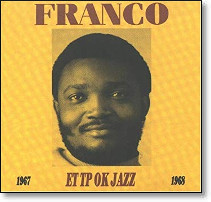
is a lengthy and quite extraordinary "Consumer Guide to Franco"
that Joe Yanosik compiled and asked if I would publish. Expect
that later this week.
New records reviewed this week:
75 Dollar Bill: I Was Real (2019, Thin Wrist):
Guitar-drums duo, Che Chen and Rick Brown, the former studied
Mauritanian music with Jheich Ould Chighaly, perhaps why their most
obvious (indeed, the practically only) connection seems to be with
Saharan blues/rock. No vocals on this third album. The 16:55 title
cut, fourth in, is where my interest kicks in.
B+(***)
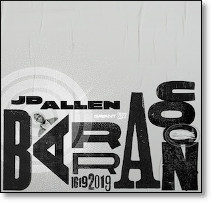
JD Allen: Barracoon (2019, Savant): Tenor saxophonist,
has a distinctive sound and built his reputation by in a series of
powerhouse trio albums. This is another, a return to form with a new
set of bandmates, Ian Kenselaar (bass) and Nic Cacioppo (drums). Title
inspired by a Zora Neale Hurston book. Originals, but closes with a
touching "When You Wish Upon a Star."
A-
Gretje Angell: In Any Key (2018 [2019], Grevlinto):
Standards singer, born in Akron, based on Los Angeles, father and
grandfather both jazz drummers. First album, voice reminds you of
Brazilian singers even before she got to "Berimbau" and "One Note
Samba." Backed by guitarist Dori Amarillo -- some cuts just him,
others with bass, drums, and/or percussion.
B+(**) [cd]
Blind Lemon Jazz: After Hours: New Pages in the American
Songbook (2019, Ofeh): "Featuring the songs of James Byfield,"
who usually does business as Blind Lemon Pledge. He is a guitarist,
"roots songwriter," sings some but mostly turns his songs over to
Marisa Malvino. She brings some blues grit.
B+(*) [cd]
DaBaby: Blank Blank (2018, South Coast Music Group, EP):
Rapper Jonathan Kirk, born in Cleveland, grwe up in North Carolina,
released his first mixtape in 2017, this number nine. Short pieces,
packing 10 cuts into 23:57. Reminds me of Young Thug -- he started
later, but is a year older.
B+(***)
DaBaby: Baby on Baby (2019, South Coast music Group):
First studio album after a bunch of mixtapes, songs remain compact and
sharp, taking 13 to push the album up to 31:36, scoring a hit single
with "Suge" but can't say as it stands out much.
B+(**)
Open Mike Eagle: The New Negroes: Season 1 Soundtrack
(2019, Comedy Central, EP): Cover adds "With Baron Vaughan & Open Mike
Eagle" -- the former the comedian host for the series, with the rapper
some kind of sidekick, his role unclear on these nine short cuts (21:56),
eight featuring other rappers (Danny Brown, MF DOom, Phonte, Lizzo, etc.).
B+(*)
Freddie Gibbs & Madlib: Bandana (2019, Keel Cool/RCA):
Rapper, from Gary, Indiana, second album (plus four mixtapes) with the
producer (Otis Jackson), the combo sometimes known as MadGibbs. Lyrics
are striking, carried along by the sweeping production.
A-
Jesca Hoop: Stonechild (2019, Memphis Industries):
Singer-songwriter, eighth album, leans back toward folk this time,
not as attractive as her pop move on Memories Are Now.
B+(*)
Abdullah Ibrahim: The Balance (2019, Gearbox): South
African pianist, cut his first album for Duke Ellington in 1963, is 84
now. His solo pieces are steady here, but the group pieces really come
to life, especially "Jabula" -- for some reason, Napster regards that
the album title, but other sources read as above.
B+(***)
Mike LeDonne: Partners in Time (2019, Savant): Pianist
here, although he's played organ more often in the past. Names on the
front cover in slightly smaller type, probably because they're more
famous than he is: Christian McBride, Lewis Nash. Lively, support is
impeccable.
B+(**)
Madonna: Madame X (2019, Interscope): She's moved from
London to Lisbon, picked up a few new beats, plus Colombian featured
Maluma, although that was the sort of timely move she's been making for
ages now (single: "Medellin"). As her life in exile puts America ever
more distant in the rear-view mirror, her politics grow both snarkier
and more empathetic, with the solution a path of personal growth that
only she seems to be able to pull off. Still, good for her. [NB:
Listened to "Deluxe Edition," two extra songs, pretty good ones.]
A-
Buddy & Julie Miller: Breakdown on 20th Ave. South
(2019, New West): Husband-and-wife singer-songwriters, have recorded
together off and on since 1995, also separately but they're usually
better together.
B+(**)
Lukas Nelson & Promise of the Real: Turn Off the News
(Build a Garden) (2019, Fantasy): Willie Nelson's son, via
his fourth wife, has run this country-rock band since 2009. Fifth
album (plus two backing Neil Young).
B+(*)
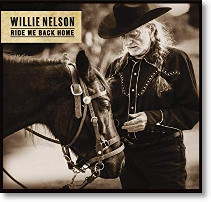
Willie Nelson: Ride Me Back Home (2019, Legacy):
Still prolific at 86, a batch of originals (mostly co-credited to
producer Buddy Cannon), almost as many covers (two from Guy Clark,
one from Billy Joel). Reportedly the final chapter in Nelson's
"Mortality Trilogy," but less focused on age and death than the
previous entries. No dope songs either. Could be the new normal.
A-
Peter Perrett: Humanworld (2019, Domino): Former leader
of the Only Ones, possessing one of the most memorable voices of the
late 1970s punk invasion. Struggled long after the group broke up, only
to make an improbably great comeback album in 2017 (How the West Was
Won). This is a fitting sequel, if anything more fleshed out, more
powerful.
A-
Mette Rasmussen/Julien Desprez: The Hatch (2016 [2019],
Dark Tree): Alto sax and electric guitar. Can, on occasion, irritate
with too much noise, or nod off with too little, but impressive when
walking that fine line.
B+(**) [cd]
Rebekah Victoria: Songs of the Decades (2018 [2019],
Patois): Standards singer, has a previous album with a group called
Jazzkwest ("the jazz band for all occasions!"), works with trombonist
Wayne Wallace and his many friends here. Idea here is to pick one song
from each decade of the 20th century, although she slips a couple more
in. "These Boots Are Made for Walking" (1966) fits most uneasily, then
leads into "It's Too Late" (1971). The later songs, from Split Enz and
Toni Braxton, are less iconic.
B+(*)
Billy Woods & Kenny Segal: Hiding Places (2019,
Blackwoodz Studioz): New York rapper and Los Angeles producer, the
former with a dozen-plus albums since 2002 (including groups like
Armand Hammer). Something of a slog, although much of it is worth
the effort.
B+(***)
Recent reissues, compilations, and vault discoveries:
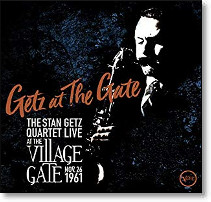
Stan Getz: Getz at the Gate: The Stan Getz Quartet Live at the
Village Gate Nov. 26 1961 (1961 [2019], Verve, 2CD): Tenor sax
great, returns to US after three years in Denmark, a year before his
crossover Brazilian moves made him a star. Hype sheet calls this
"transitional," but it sounds little changed from his 1955-57 West
Coast Sessions, his rhythm as sure, his tone every bit as cool.
Pianist Steve Kuhn has some standout moments. John Neves (bass) and
Roy Haynes (drums) fill out the quartet.
A-
Sourakata Koité: En Holland (1984 [2019], Awesome Tapes
From Africa): Kora master, a Malinké from Senegal, sings some, moved to
Paris in 1978, cut this in the Netherlands with Joseph Nganga (percussion,
background vocals) and S.E.G. Cissé (more percussion). Too amiable for
awesome.
B+(**) [bc]
Asnakech Worku: Asnakech (1975 [2018], Awesome Tapes
From Africa): Actress, dancer, musician, "cultural icon" -- her work
was previously featured in Éthiopiques, Vol. 16: The Lady With the
Krar (as Asnaqètch Wèrqu), which overlaps this album recorded with
Hailu Mergia on organ and Temare Haregu on drums. Her instrument was
the ancient krar ("a lyre, or harp, with 6 strings attached to a
cloth-wrapped wooden crossbar, the sound emits from a resonator bowl
covered with animal skin").
B+(**) [bc]
Old music:
The V.S.O.P. Quintet: Five Stars (1979, CBS/Sony):
Basically, the late-sixties Miles Davis quintet (Wayne Shorter, Herbie
Hancock, Ron Carter, Tony Williams) with Freddie Hubbard filling in
for Davis, who moved on a decade earlier -- the others straggling to
cash in on the fusion Davis created. Initially a live band to tour
Japan, they release four live albums plus this studio effort. Four
pieces, one each from everyone but Carter. None distinguished.
B
Unpacking: Found in the mail last week:
- Rodrigo Amado/Chris Corsano: No Place to Fall (Astral Spirits)
- Peter Eldridge/Kenny Werner: Somewhere (Rosebud Music)
- Augie Haas: Dream a Little Dream (Playtime Music): August 30
- Rich Halley: Terra Incognita (Pine Eagle): August 9
- Jelena Jovovic: Heartbeat (self-released)
Ask a question, or send a comment.
Sunday, July 7, 2019
Weekend Roundup
Donald Trump's big July 4 "celebration" was the week's big non-event,
so naturally garnered plenty of press attention. We'll collect the links
here, to try to keep the silliness of the event from infecting everything
else:
Some scattered links this week:
Ben Armbruster:
The Trump administration is trying to make war with Iran inevitable:
"We should view Iran's recent posturing for what it is: retaliation to
the Trump administration's unnecessary and deliberate provocation."
Related: Phyllis Bennis:
If war breaks out with Iran, it won't be an accident. Dean Baker:
Why aren't Democrats talking about ending patent-financed drug research?
Good question, especially since "free market drugs are a really big deal."
One point I'd stress more is that public funding of drug research is not
only more efficient, and much more transparent, but that it would also
demolish borders which impose artificial costs. Free market drugs would
spread out research investment, allowing all to benefit. Julian Borger:
Nuclear weapons: experts alarmed by new Pentagon 'war-fighting' doctrine.
Alexia Fernández Campbell:
Jonathan Chait:
How Hitler's rise to power explains why Republicans accept Donald Trump.
Back when GW Bush was president and still popular, I bought a copy of
Richard J Evans' The Coming of the Third Reich, figuring it might
be interesting to compare the machinations of the Bush-Cheney regime to
the ascent of the Nazi party in Germany. I never got around to reading
that book, but that same question arose again with Trump, and this time
I did some reading: Benjamin Carter Hett's The Death of Democracy:
Hitler's Rise to Power and the Downfall of the Weimar Republic,
James Q Whitman's Hitler's American Model: The United States and the
Making of Nazi Race Law, and Jason Stanley's How Fascism Works:
The Politics of Us and Them. The unstated assumption here is that
similarities between now and early stages of Hitler's arc to disaster
predict the path we will follow if we don't change direction. Given how
bad things turned out, it's hard to be shocked by each unfolding step.
But Chait makes a key point (leaving out the parentheticals):
All this is to say that German conservatives did not see Hitler as Hitler --
they saw Hitler as Trump. And the reasons they devised to overcome their
qualms and accept him as the head of the government would ring familiar
to followers of the 2016 campaign. They believed the responsibility of
governing would tame Hitler, and that his beliefs were amorphous and
could be shaped by advisers once in office. They respected his populist
appeal and believed it could serve their own ends. Their myopic concern
with specifics of their policy agenda overcame their general sense of
unease. Think of the supply-siders supporting Trump in the hope he can
enact major tax cuts, or the social conservatives enthused about his
list of potential judges, and you'll have a picture of the thought
process.
Today in 'Donald Trump's campaign is a garbage fire'.
Sorry, Obama: Donald Trump is a populist, and you're not: Sorry,
Chait, Trump isn't a populist either, even according to either of your
dubious definitions:
- "The ideological definition of populist means traditionalist
on social issues and interventionist on economic policy -- the opposite
of libertarianism, in other words."
- "Populism can also be defined as a certain kind of political
style. Populists believe the government has been captured by evil and/or
corrupt interests, and that it can be recaptured by a unified effort by
the people (or, at least, their people)."
I've long identified with populism (see the little blurb top left:
"An occasional blog about populist politics and popular music"), most
likely because the political movement it refers to was most identified
with the people and place I came from (three generations of Kansas
farmers before my father got his job in a Wichita airplane factory).
Chait's definitions are wrong for that particular movement, and do
little to capture the populist impulse as it has periodically erupted
in various situations since then. The essential demand of populism is
that power serve the people. It's easy enough to show that liberal
technocrats like Obama at best give lip service to real democracy,
but reactionary demagogues like Trump veer even farther from the
principle. They only appear "populist" to elitist pundits who regard
the masses as nothing more than a seething horde of prejudices. The
more general historical term for such demagoguery is fascism.
Michelle Chen:
AOC's Green New Deal is just the start. Next let's make it global.
Jelani Cobb:
The Supreme Court just legitimized a cornerstone element of voter
suppression. Tom Engelhardt:
War With . . . ?: "We're not the good guys: why is American aggression
missing in action?"
So here's the strange thing, on a planet on which, in 2017, U.S. Special
Operations forces deployed to 149 countries, or approximately 75% of all
nations; on which the U.S. has perhaps 800 military garrisons outside its
own territory; on which the U.S. Navy patrols most of its oceans and seas;
on which U.S. unmanned aerial drones conduct assassination strikes across
a surprising range of countries; and on which the U.S. has been fighting
wars, as well as more minor conflicts, for years on end from Afghanistan
to Libya, Syria to Yemen, Iraq to Niger in a century in which it chose to
launch full-scale invasions of two countries (Afghanistan and Iraq), is it
truly reasonable never to identify the U.S. as an "aggressor" anywhere?
One should add that there are two major forms of aggression that
aren't even being counted here: cyberwarfare and economic warfare in
the form of sanctions. Garrett Epps:
Where John Roberts is taking the court. Jeannie Suk Gersen:
The Supreme Court is one vote away from changing how the U.S. is
governed. Jeet Heer:
Democrats don't need David Brooks: Response to Brooks'
Dems, please don't drive me away. Umair Irfan:
Restoring forests may be one of our most powerful weapons in fighting
climate change: "Adding 2.2 billion acres of tree cover would capture
two-thirds of man-made carbon emissions, a new study found." But we're
still cutting down more trees than we plant -- especially in Brazil.
See Alexander Zaitchick:
Rainforest on fire. Jake Johnson:
Fred Kaplan:
Bolton of Mongolia: "The national security adviser's banishment during
Trump's big diplomatic weekend suggests his days may be numbered." Jen Kirby:
Sudan's military and civilian opposition have reached a power-sharing
deal. Gary Leupp:
Thoughts on the impromptu Kim-Trump summit: Regarding the US media:
"One doesn't hear common sense: that this was a rational friendly gesture
towards a country that Trump has rationally decided not to attack."
Related: Christine Ahn:
It's time to formally end the Korean War. Eric Levitz:
Trump's Fed nominee pledges to serve as a partisan hack: Judy
Shelton, who established her credentials as a partisan back in 2010
when she lobbied for raising Fed interest rates when unemployment
topped 10 percent, but insists that we should lower them now that
unemployment rates are at a record low. The difference, of course,
is the party affiliation of the president. Robert Lipsyte:
How the worst values of sports are taking over America:
A half-century ago, the sporting Cassandras predicted that the worst
values and sensibilities of our increasingly corrupted civic society
would eventually affect our sacred games: football would become a
gladiatorial meat market, basketball a model of racism, college sports
a paradigm of commercialization, and Olympic sports like swimming and
gymnastics a hotbed of sexual predators.
Mission accomplished!
The Cassandras then forecast an even more perverse reversal: our
games, now profaned, would further corrupt our civic life; winning
would not be enough without domination; cheating would be justified
as gamesmanship; extreme fandom would become violent tribalism; team
loyalty would displace moral courage; and obedience to the coach would
supplant democracy.
Okay, I think it's time for a round of applause for those seers.
Let's hear it for Team Trump!
PR Lockhart:
The Alabama woman indicted after a miscarriage will not be prosecuted.
Robert Mackey:
Stephanie Grisham, new White House Press Secretary, has already been
caught lying. Dylan Matthews:
3 reasons the American Revolution was a mistake: This questions some
of my longest and most deeply held beliefs, but for the record:
- Abolution would have come faster without independence.
- Independence was bad for Native Americans.
- America would have a better system of government if we'd stuck with
Britain.
Yascha Mounk:
The more you watch, the more you vote populist: Another entry in
the "television rots your brain" sweepstakes, using Italy and Silvio
Berlusconi as the example. Ella Nilsen:
Republicans dominate state legislatures. That decides political power
in America. Anna North:
The legal battle over the Trump administration's "domestic gag rule,"
explained. Kelsey Piper:
George Soros and Charles Koch team up for a common cause: an end to
"endless war": "The controversial billionaire philanthropists are
launching a new anti-interventionist think tank": The Quincy Institute
for Responsible Statecraft, named for John Quincy Adams ("who said in
an 1821 speech that America 'goes not abroad in search of monsters to
destroy'"). Robert Reich:
There is no 'right' v 'left': it is Trump and the oligarchs against the
rest: Actually, that's the very definition of right v left. Such
naivete Makes me doubt Reich his own title for the otherwise reasonable
Avbolish the Billionaires! Aaron Rupar:
The viral video of Ivanka Trump at the G20 perfectly captures the problem
with nepotism. Raja Shehadeh:
State of exception: Review of Noura Erakat: Justice for Some: Law
and the Question of Palestine, asking "what role has local and
international law played in the Occupied Territories?" Emily Stewart:
Did Justin Amash leave the GOP, or did the GOP leave him? The
only Republican member of Congress willing to consider impeachment
spared the Party the embarrassment of his presence, writing an
op-ed announcing his exit from the party. Trump cheered him on:
Great news for the Republican Party as one of the dumbest &
most disloyal men in Congress is "quitting" the Party.
Related: Bianca Quilantan:
Justin Amash: GOP was broken even before Trump's presidency. Nicholas Thompson:
Tim Wu explains why he thinks Facebook should be broken up. I will
add that buying competitors to put them out of business has been a very
business practice for quite a while now. The startup I worked for from
the late 1980s (Contex Graphic Systems) was eventually sold off to a
competitor (Barco), which shut it down within a year. Other antitrust
matters: Steven Overly/Margaret Harding McGill:
Google's onetime hired gun could now be its antitrust nightmare. Anya van Wagtendonk:
Two earthquakes shook southern California this week. More could come,
but predicting them isn't easy. David Wallace-Wells:
Alex Ward:
Peter Wehner:
The deepening crisis in evangelical Christianity: "Support for Trump
comes at a high cost for Christian witness." Wehner has been described as
"an outspoken Republican and Christian critic of the Trump presidency."
But the article is less interesting for what he fears Trump idolatry is
doing to evangelical Christianity that for its description of how
deranged Trump's evangelical fans have become. Wehner has a recent book:
The Death of Politics: How to Heal Our Frayed Republic After Trump.
Philip Weiss:
Biden often praises Israeli racists -- but don't expect Kamala Harris
to call him out. Brett Wilkins:
A brief history of US concentration camps. Thomas Wright:
Trump couldn't ignore the contradictions of his foreign poicy any longer:
"The president moves to straighten out his own foreign policy -- and leaves
his hawkish national security adviser on the sidelines." Matthew Yglesias:
Democratic candidates' school integration plans, explained: "Bernie
Sanders and Julián Castro have one, Kamala Harris doesn't really."
Democrats are learning the wrong lesson from Donald Trump: He ran
as a moderate -- and it worked." A moderate, that is, only compared to
his fellow Republican candidates, who weren't moderate by any measure.
Moreover, since his election, he has regularly surrendered his promises
to Republican orthodoxy, except in cases like immigration where he is
the lunatic fringe. But Yglesias didn't write this piece to change our
perception of Trump. He wrote it to disparage those Democrats who see
Trump's extremism as reason to driving the Democratic platform further
to the left. Gary Younge:
Britain is run by a self-serving clique. That's why it's in crisis.
Matthew Zeitlin:
Ask a question, or send a comment.
Monday, July 1, 2019
Music Week
Music: current count 31702 [31671] rated (+31), 260 [264] unrated (-4).
Noisey has evidently decided to drop Robert Christgau's
Expert Witness column, the
last one running on Friday. Christgau tweeted:
I do this for money as well as love. So just in case this is the last
Expert Witness not just at Noisey, which I'm sad to announce it is,
but anywhere, it sticks to albums I'm way late on and albums I wanted
to be sure to weigh in on. Enjoy. Consume, even.
Obviously, I should make it a priority to round up these latest
Consumer Guide reviews and stuff them into the
database. Christgau's
first Consumer Guide column was published
July 10, 1969,
so he's ten days short of fifty years. The whole list is
here.
Twice before, Michael Tatum responded to lapses in Christgau's
review schedule, first by debuting then relaunching his
A Downloader's Diary column.
As it happens, he had
a new column, his 50th, ready to roll last week when he read
Christgau's news, and revised his introduction. (Christgau started the
parenthetical numbering scheme, but gave it up after reaching 52 in 1975.
I also used it for my
Recycled Goods columns.)
I managed to check out a few of Tatum's picks this week, but had
previously given A- grades to Big Thief, Coathangers, Control Top,
Dave, Billie Eilish, Little Simz, and Jamila Woods -- also a B+(***)
to Stella Donnelly, B+(**) to Vampire Weekend. I haven't, however,
checked any of his Trash picks.
Streamnotes appeared
last week, so this starts a new month.
Don't have anything more to add -- at least anything fit to print.
Bad day for me.
New records reviewed this week:
Ilia Belorukov/Gabriel Ferrandini: Disquiet (2017 [2019],
Clean Feed): Russian alto saxophonist, never noticed him before but Discogs
credits him with 55 albums since 2007. Teams up here with the Portuguese
drummer (RED Trio and much more). Choppy, somewhat muted.
B+(**)
Lewis Capaldi: Divinely Uninspired to a Hellish Extent
(2019, Capitol): Singer-songwriter from Scotland, young, first album,
processed as pop with his voice stretched toward soul. Topped charts in
UK and Ireland. Impressive so far, but could turn annoying.
B+(*)
Charly Bliss: Young Enough (2019, Barsuk): Power pop
group, Eva Hendricks sings, second album, seems like they got the tone
right, all the hooks buttoned up tight.
A-
Sylvie Courvoisier/Mark Feldman: Time Gone Out (2018
[2019], Intakt): Piano-violin duo, several previous records together
("almost 20 years").
B+(*)
Caroline Davis: Alula (2017 [2019], New Amsterdam):
Alto saxophonist, handful of albums. With Matt Mitchell on synths,
Greg Saunier on drums, bits of voice. Some stretches impress, some
make me wonder, strikes me as overly fancy.
B+(*)
Whit Dickey/Kirk Knuffke: Drone Dream (2017 [2019],
NoBusiness): Drums and trumpet duo, the drummer probably more steeped
in free jazz but Knuffke can swing that way when the occasion calls
for it.
B+(***) [cdr]
Sharman Duran: Questioning Reality (2019, self-released):
Singer-songwriter, plays keyboards, from San Francisco, third album,
rhythm section marks this as jazz, and Melecio Magdaluyo's sax/reeds
drives the point home. Puts her politics up front, asking "who put
them in charge?"
B+(**) [cd]
Ethnic Heritage Ensemble: Be Known: Ancient/Future/Music
(2019, Spiritmuse): Drummer Kahil El'Zabar's long-running group, debuted
in 1981 with Three Gentlemen From Chikago, sixteenth album, only
their second since 35th Anniversary Project in 2009. The leader
is the only constant, with several long-time members falling by the
wayside, replaced here by Corey Wilkes (trumpet), Alex Harding (baritone
sax), and Ian Maksin (cello). El'Zabar sings, chants, incants, an heir
of Sun Ra, more of this world than out of it.
B+(***)
Damon Locks/Black Monument Ensemble: Where Future Unfolds
(2019, International Anthem): Chicago-based "sound & visual artists,"
credited with "electronics, bells, voice" on his first album here, with
a "15-piece" ensemble, but only credits three other musicians -- Angel
Bat Dawid (clarinets), and two percussionists (remaining credits for
singers and dancers). Pulls samples from "Civil Rights era" speeches but
feels more contemporary, proof that the struggle for civil rights is
ongoing.
B+(*) [bc]
Jan Maksimovic/Dimitrij Golovanov: Thousand Seconds of Our
Life (2018 [2019], NoBusiness): Duo, soprano sax and piano,
both Lithuanians -- probably a point of pride for the label, which
has been an invaluable refuge for avant-jazz artists all around the
world (including Japan). Relatively quiet, one could say intimate.
B+(***) [cd]
Jenna McLean: Brighter Day (2018 [2019], Moddl):
Standards singer from Colorado, first album, wrote the title cut and
lyrics to a Wayne Shorter tune and some vocalese on "Lover Man."
Scats some, takes a nice turn on a Joni Mitchell song.
B+(*) [cd]
Gabriele Mitelli/Rob Mazurek: Star Splitter (2019, Clean
Feed): Mazurek, from Chicago, has been recording since the 1990s, playing
trumpet, dabbling in electronics and astronomy (one of his projects is
Exploding Star Orchestra), so it's tempting to take him as the mentor if
not leader here, but the younger Italian has the same tool kit -- his
credits here: "cornet, soprano sax, alto flugelhorn, electronics, objects,
voice"; Mazurek plays "piccolo trumpet, electronics, objects voice." No
shortage of spaciness here, and it does tend to break up.
B+(*)
Monopiece/Jaap Blonk: Monopiece + Jaap Blonk (2019,
Shhpuma): West Coast group, despite name a trio -- Nathan Corder
(electronics), Matt Robidoux (guitar), Timothy Russell (percussion) --
first album, with the Dutch vocalist as wild card. Scattered chaos,
odd noise.
B
Angelika Niescier/Christopher Tordini/Gerald Cleaver: New York
Trio Feat. Jonathan Finlayson (2018 [2019], Intakt): German
alto saxophonist, bassist and drummer from New York, also the featured
trumpet player. Starts with a strong piece called "The Surge."
B+(***)
Evan Parker/Paul G. Smyth: Calenture and Light Leaks
(2015 [2019], Weekertoft): Tenor sax-piano duo, the latter from Dublin,
Ireland, with scattered records since 2003. Expected sound, deliberately
paced.
B+(**) [bc]
Evan Parker & Kinetics: Chiasm (2018 [2019], Clean
Feed): Tenor sax, backed by a Danish piano trio (Jacob Anderskov, Adam
Pultz Melbye, and Anders Vestergaard), from two sets recorded two days
apart, first in Copenhagen, second in London. LP length (38:13), fine
form for the leader, also impressed by the piano.
A-
Caroline Spence: Mint Condition (2019, Rounder):
Singer-songwriter from Virginia, settled in Nashville, fourth album,
first not self-released. Lyrics tend toward the literary, but her
voice softens the edges, and the melodies suffice. Took me a while.
A-
Aki Takase: Hokusai: Piano Solo (2018 [2019], Intakt):
All originals, solo except for two pieces -- one with Alexander von
Schlippenbach also on piano, the closer with a Yoko Tawada reading.
B+(**)
AJ Tracey: AJ Tracey (2019, self-released): British
rapper, debut album after four years of singles, EPs (5), and mixtapes
(2, released as Looney). Grime beats, a little slack.
B+(**)
Gianluigi Trovesi/Gianni Coscia: La Misteriosa Musica Della
Regina Loana (2019, ECM): Duets, piccolo/alto clarinet and
accordion, the pair has at least four albums together, with Trovesi's
discography (much on alto sax) dating back to 1978. The title is a
play on a novel by the late Umberto Eco (1932-2016), a friend and fan
of the duo.
B+(**)
G. Calvin Weston/The Phoenix Orchestra: Dust and Ash
(2019, 577): Drummer, played in Ornette Coleman's Prime Time in the
late 1970s, released an album in 1988 with James Blood Ulmer and
Jamaaladeen Tacuma, a couple other items. First name Grant, sometimes
spelled out, often dropped. Group includes electric guitar, bass,
keyb, some strings, and the odd vocal by Kayle Brecher.
B+(*)
Wschód: Wschód (2017 [2019], Clean Feed): Portuguese
pianist Rodrigo Pinheiro (RED Trio) picked up this trio in Wroclaw,
Poland, with Zbigniew Kozera (bass) and Kuba Suchar (drums). Builds to
a strong simmer.
B+(**)
Recent reissues, compilations, and vault discoveries:
Chance the Rapper: 10 Day (2011 [2019], self-released):
Chicago rapper Chancelor Bennett, one of the decade's best, released
this debut mixtape in 2012, only 18 when he recorded it, yet bursting
with wit, charm, and hooks.
A-
Detail: Day Two (1982 [2019], NoBusiness): Group
founded in 1982 by South African bassist Johnny Dyani, saxophonist
Frode Gjerstad, and drummer John Stevens, initially with a keyboardist
not present here -- a set recorded just ten days after the tracks on
their debut album, First Detail. They recorded several albums
up to Dyani's death in 1986, and regrouped for Last Detail
in 1994-95 (with Kent Carter on bass).
B+(**) [cd]
Kang Tae Hwan/Midori Takada: An Eternal Moment (1995
[2019], NoBusiness): Alto sax and percussion duets, part of Japan's
free jazz scene, little known in the west except for frequent flyers
like Satoko Fujii. Tends to move slow, at times feeling more like a
bass-percussion group, but no less interesting for that.
B+(***) [cd]
Sunny Murray/Bob Dickie/Robert Andreano: Homework
(1994 [2019], NoBusiness): Drums, bass, guitar, although there's an
asterisk indicating that at some point Dickie switched to bass clarinet
and Andreano to bass. Initially released in 1997 in a run of 22 copies.
Main interest is the drummer, not least when the others drop out.
B+(**) [cd]
Horace Tapscott With the Pan Afrikan Peoples Arkestra and the
Great Voice of UGMAA: Why Don't You Listen? Live at LACMA 1998
(1998 [2019], Dark Tree): Los Angeles pianist and community organizer,
first albums in late 1960s were phenomenal, much since then is relegated
to private sessions although The Dark Tree (1989) is a Penguin
Guide crown album, and two late releases on Arabesque caught my ear.
Died in 1999, so this is even later, and too much of a sing-along to
give you a good sense of his piano (although the opening instrumental
piece, the title of his 1995 Arabesque album, is phenomenal). Still,
only the choir at the end starts to wear my patience.
A- [cd]
David Wertman Sun Ensemble: Earthly Delights (1978 [2019],
BBE): Bassist (1952-2013), self-taught, played in New York's late-1970s
loft scene, second album -- jumped out at me because I remember the cover,
but somehow missed listing it. With Greg Wall (baritone sax), David
Swerdlove (soprano/alto sax), John Sprague Jr (flute/percussion), John
Zieman (synth), and Jay Conway (drums). What's recently been referred
to as spiritual jazz, often remarkable, as rooted in Ayler and Shepp as
in hippie mysticism.
B+(***) [bc]
Old music:
Peter Kowald/Kent Kessler/Fred Lonberg-Holm: Flats Fixed
(1998 [2014], Corbett vs. Dempsey): German bassist (1944-2002), one of
few who could keep your interest in a solo album, visits Chicago and
picks up two sympathetic players. Kessler was bassist in Vandermark 5,
and cellist Lonberg-Holm would join that group in 2006.
B+(***) [bc]
Unpacking: Found in the mail last week:
- Ola Onabulé: Point Less (Rugged Ram): August 30
- Mette Rasmussen/Julien Desprez: The Hatch (Dark Tree)
- Horace Tapscott With the Pan Afrikan Peoples Arkestra and the Great Voice of UGMAA: Why Don't You Listen? Live at LACMA 1998 (Dark Tree)
Ask a question, or send a comment.
Sunday, June 30, 2019
Weekend Roundup
I paid rather little attention to the Democratic Party presidential
debates this week: Laura watched them, I overheard some bits, saw some
more (not so fairly selected) on Colbert and Myers, and read a few odd
things. Some links here, including a few non-debate ones that highlight
various candidates, but no attempt at comprehensive:
Kate Aronoff:
Jay Inslee just dropped the most ambitious climate plan from a presidential
candidate. Here's who it targets. Zack Beauchamp:
4 winners and 2 losers from the two nights of Democratic debates:
For instance, he counts "Bernie Sanders' ideas" as a winner, but Sanders
himself as a loser. Robert L Borosage:
The second Democratic debate proved that Bernie really has transformed
the party. Ryan Bort and others:
A report card for every candidate from the first Democratic debates.
Laura Bronner and others at FiveThirtyEight:
The first Democratic debate in five charts. David Brooks:
Dems, please don't drive me away. My gut reaction is that there's
nothing I feel less interest in than mollifying the vain egos of "Never
Trump" conservatives. I'd take his polling reports with a grain of salt
("35 percent of Americans call themselves conservative, 35 percent call
themselves moderate and 26 percent call themselves liberal"), and also
doubt his self-characterization as "moderate," but I'll quote his stab
at articulating the "moderate" viewpoint:
Finally, Democrats aren't making the most compelling moral case against
Donald Trump. They are good at pointing to Trump's cruelties, especially
toward immigrants. They are good at describing the ways he is homophobic
and racist. But the rest of the moral case against Trump means hitting
him from the right as well as the left.
A decent society rests on a bed of manners, habits, traditions and
institutions. Trump is a disrupter. He rips to shreds the codes of
politeness, decency, honesty and fidelity, and so renders society a
savage world of dog eat dog. Democrats spend very little time making
this case because defending tradition, manners and civility sometimes
cuts against the modern progressive temper.
Actually, the further left you go the more sharply moralistic the
critique of Trump becomes, but despite his "savage world of dog eat
dog" line Brooks can't hear this because he only recognizes morality
as the imposition of conservative order, where inequality is a given.
Brooks' "moderates" are closet conservatives. While there are many
Democrats (not just moderate- but also liberal-identified) who agree
with most of Brooks' verities ("politeness, decency, honesty and
fidelity"), Brooks' knee-jerk anti-left instincts prevent him from
joining any democratic movement he can't dictate to. In particular,
he cannot conceive of the need to lean a bit harder to the left than
he'd like in order to get back to the center he so adores. [PS: Just
found this, but not yet interested enough to read: Benjamin
Wallace-Wells:
David Brooks's conversion story. Alexander Burns/Jonathan Martin:
Liberal Democrats ruled the debates. Will moderates regain their voices?
Pieces like this are annoying, and are only likely to become more so,
and more strident, as the election approaches. A better question is:
will "moderates" find anything constructive to say? Their most succinct
declaration so far is Biden's assurance that "nothing would change"
under a Biden presidency. I suppose that's more honest than the "hope
and change" Obama campaigned on in 2008, let alone Bill ("Man from Hope"
Clinton's populist spiel 1992, but at least Clinton and Obama waited
until after the election to hand their administrations over to crony
capitalists and sell out their partisan base. Left/liberals dominate
the debates because: the voters recognize that most Americans face
real and immediate problems; the left/liberals have put a lot of
thought into how to deal with those problems, and the only credible
solutions are coming from the left; having been burned before, the
party base is looking not just for hope/change but for commitment.
It's going to be hard for "moderates" to convince people to follow
without promising to lead them somewhere better. John Cassidy:
Joe Biden's faltering debate performance raises big doubts about his
campaign. Alvin Chang:
Kamala Harris got a huge number of people curious about Joe Biden's
busing record. Zak Cheney-Rice:
Kamala Harris ends the era of coddling Joe Biden on race. Maureen Dowd:
Kamala shotguns Joe Sixpack. Favorite line here, and you can guess
the context: "In my experience, candidates with advisers who belittle
them on background do not win elections." I rarely read Dowd, finding
her longer on snark than analysis, but you may enjoy (as I did) her
Blowhard on the brink. Again, you can guess the context. David Frum:
The second debate gives Democrats three reasons to worry: The
view of a Trump hater who hasn't really changed any other of his
right-wing views: "the weakness of former Vice President Joe Biden";
"the weakness of the next tier of normal Democratic candidates --
especially Harris -- in the face of left-wing pressure"; "the
unwillingness and inability of any of the candidates -- except,
quietly, Biden -- to defend their party's most important domestic
reform since the Lyndon Johnson administration: Obamacare." Abby Goodnough/Thomas Kaplan:
Democrat vs. Democrat: How health care is dividing the party: "An
issue that united the party in 2018 has potential to fracture it in
2020." What united the party was the universally felt need to defend
ACA against Republican attempts to degrade and destruct it. Looking
forward, I think there are very few Democrats who don't see the main
goal as comprehensive health care coverage, as a universal right. The
differences arise over how to get there from where we are now. One way
to do that would be to expand Medicaid and private insurance subsidies
under the ACA, and one thing that would help with the latter would be
to offer a non-profit "public option" to ensure that insurance markets
are competitive. One way to provide that public option would be to let
people buy into America's already-established public health insurance
option: Medicare. Many candidates have proposals to allow some people
to do that. I expect that a Democratic Congress and President to move
quickly on implementing some of those proposals to shore up ACA. It's
not the case that proponents of a true government-run single-payer
system will cripple ACA to force us to take their preferred route
(e.g., Bernie Sanders voted for ACA). But there is one major problem
with ACA: the Supreme Court ruled that the government cannot force
everyone to participate in a scheme that requires some people to buy
private insurance. That's a bad ruling, but fixing the Supreme Court
is likely to be a harder sell than Medicare-for-All -- especially
given that the latter promises better coverage for less cost than
any private/public mix of competing insurance plans. You may wonder
why some Democrats are against Medicare-for-All. The main reason is
they believe the insurance companies are too powerful to fight, but
one thing you'll notice is that the people saying that (e.g., Ezekiel
Emmanuel) are mostly beneficiaries of insurance industry payola.
That preference for ACA over Medicare-for-All is seen as a sign of
"moderation" only shows that "moderates" don't have the guts, the
stamina, or even the imagination to fight for better solutions.
Put Democrats who stand up for their principles and their people
in the White House and Congress, and the "moderates" will start
compromising in the direction of progress. Until then, why should
we listen to anything they say? [PS: For some diagramming, see:
Dylan Scott:
The 2 big disagreements between 2020 Democratic candidates on
Medicare-for-all.] Jeet Heer:
Elizabeth Warren's ideas dominated the debate more than her stage
presence. Umair Irfan:
Climate change got just 15 minutes out of 4 hours of Democratic debates.
Caitlin Johnston:
Kamala Harris is everything the establishment wants in a politician.
Proof of point is no matter how hard the author tries to attack Harris,
she only winds up making her look more formidable (which is something
we desperately crave, isn't it?). Sarah Jones:
Elizabeth Warren thinks we need more diplomats. Jen Kirby:
Foreign policy was a loser in the Democratic debates. Michael Kruse:
The 2008 class that explains Elizabeth Warren's style. Dylan Matthews and other Vox writers:
4 winners and 3 losers from the second night of the Democratic debates. Anna North:
Kirsten Gillibrand gave her opponents a history lesson on abortion
politics at the debate. Ilana Novick:
Why are Democrats afraid to end private health insurance? Andrew Prokop:
This wasn't the way Joe Biden wanted the first debate to go. Gabriel Resto-Montero:
Democrats rally behind Kamala Harris following Donald Trump Jr.'s
"birther-style" tweet. Frank Rich:
Kamala Harris's debate performance should scare Trump.
There may be no word that Trump fears more than "prosecutor," and no
professional expertise that the Democratic base is more eager to see
inflicted on him. At a juncture when Trump defends himself against a
charge of rape by sliming women who are not his "type," Harris's
emergence could not be better timed. She is not his "type," heaven
knows, and, not unlike her fellow San Franciscan Nancy Pelosi, she is
not a "type" he knows how to deal with at any level, whether on Twitter
or a debate stage.
David Rothkopf:
Hey Dems, take it from this ex-centrist: We blew it. Author is
one of the guy who made the Clinton Administration a money-making
machine for Wall Street, so that's where he's come from.
As the first round of debates among Democratic candidates for president
clearly showed, the intellectual vitality of the Democratic Party right
now is coming from progressives. On issue after issue, the vast majority
of the candidates embraced views that have been seen as progressive
priorities for years -- whether that may have been a pledge to provide
healthcare for all or vows to repeal tax cuts benefiting the rich,
whether it was prioritizing combating our climate crisis or seeking
to combat economic, gender, and racial inequality in America.
Indeed, as the uneven or faltering performance of its champions
showed, it appears that the center is withering, offering only the
formulations of the past that many see as having produced much of
the inequality and many of the divisions and challenges of today.
During the debates and indeed in recent years, it has been hard
to identify one new "centrist" idea, one new proposal from the center
that better deals with economic insecurity, climate, growth, equity,
education, health, or inclusion. You won't find them in part because
the ideas of the center are so based on compromise, and for most of
the past decade it has been clear, there is no longer a functioning,
constructive right of center group with which to compromise.
Aaron Rupar:
The Democratic debates helped demonstrate the dubiousness of online
polls: "Gabbard and Yang were the big winners -- on Drudge, at
least." Dylan Scott:
Kamala Harris's raised hand reveals the fraught politics of
Medicare-for-all. This refers to one of the more weaselly moments
in the two debates, where the moderators asked for a show of hands of
those who would "abolish private health insurance." The only candidates
who raised their hands were Bill de Blasio, Kamala Harris, Bernie Sanders,
and Elizabeth Warren. The framing was designed to split the ranks of
Democrats who believe health care should be a universal right, but have
different ideas about how to get that from where we are now: creating
a public option under Obamacare would help, and/or allowing individuals
or various groups to buy into Medicare, are approaches that have broad
support. Moreover, nearly everyone who supports those schemes (and for
that matter who opposes them) believes that a public insurance program
would ultimately drive for-profit private insurance companies out of
the arena, even if they were never explicitly prohibited. But the other
thing that's confusing about the question is that many (if not most)
of the current users of Medicare have private supplemental insurance
policies, which pick up most of the co-payments and shortages that
current Medicare sticks you with. Sanders' plan would fill in those
holes, truly eliminating the need for supplemental insurance, but to
most people the words "Medicare for all" leaves open a role for some
kind of private supplemental insurance. Danny Sjursen:
The Tulsi effect: forcing war onto the Democratic agenda.
Misleading to say "she is the only candidate who has made ending the
wars a centerpiece of her campaign," as several others are leaning
more or less strongly in that direction, but her scrap with Tim Ryan
is worth recounting. I don't give her military background anything
like the special weight she claims. I'd rather people not have to
learn lessons the hard way, but it says something when they do.
The Democratic Party can't escape its own militarism: Mostly on
Beto O'Rourke, who seems to be hitting this theme hard. Sjursen, like
Andrew Bacevich, is an ex-military anti-war conservative, which gives
him some peculiar opinions (like favoring bringing back the draft)
and no sympathy whatsoever for liberal Democrats. I think at least
part of the reason so many of the latter feel so warm and cozy with
veterans is that they're desperately trying to bring back a social
ethic of public service and common good, and they think that the
most undeniable example of that is the people who join the military.
I doubt that's a general rule, but there are people who fit that
bill, and Democrats have been eager to run them for office. David Smith:
No country for old white men: Kamala Harris heralds changing of the
guard. Cute title, but unfair to group Biden and Sanders in the
photo. Harris attacked the former, but held her hand up with Sanders
on the public health care insurance question. I rarely get bent out
of shape when people generalize about "old white men" (or "straight
male Caucasian") but here it ignores the fact that Biden and Sanders
have virtually nothing else in common, and that Sanders has had to
work very hard and overcome a lot of adversity to earn a spot on that
stage (wasn't Biden first inept run for president in 1988?). Even
today he's more likely to be attacked for who he is than anyone else
in the candidate roster (not that anyone makes a point of his being
Jewish). The only reason he didn't make Smith's "standouts" list --
other than prejudice -- is that he's been outstanding for so long
that reporters are starting to take him for granted. Matthew Yglesias:
A quiet Joe Biden debate moment that deserved more attention: "He
cited a bad deal with Mitch McConnell as a legislative success story."
This was the 2012 "fiscal cliff" resolution where the Democrats, with
Biden playing a major role, gave in to making most of the 2001 Bush
tax cuts permanent while cutting spending through a "sequester" and
extending unemployment benefits. Michael Bennet, "one of only two
Senate Democrats to actually vote no on the deal," described it as
"a complete victory for the Tea Party." [PS: I tried looking up the
vote on this, and found 3 D's opposed: Bennett, Carper, and Harkin.
Surprised that Sanders voted yea, after initially filibustering --
his long speech was published in book form as The Speech. Five
R's voted against, including Tea Party favorites Mike Lee and Rand
Paul, not disproving Bennet's characterization so much as reminding
you that even in victory the Tea Party was insatiable.] For more
on this: Ryan Grim:
Joe Biden says he can work with the Senate. The last time he tried,
Mitch McConnell picked his pockets badly. By the way, Grim also wrote:
Joe Biden worked to undermine the Affordable Care Act's coverage of
contraception.
Elizabeth Warren proved she's ready for the big show. Li Zhou:
14 political experts on why the first Democratic debates were
history-making.
You might also find these links useful:
One of my right-wing Facebook friends posted a meme from Fox News
with a picture of Bill de Blasio and a quote: "There's plenty of money
in this world. There's plenty of money in this country, it's just in
the wrong hands. We Democrats have to fix that." Only thing my friend
ever posted that I agreed with, and this time completely. The comments
validated my suspicion that the poster expected readers to react with
horror. I was tempted to comment, or to just give it a big love emoji,
but lost the opportunity.
Beyond the candidates and debates, some scattered links this week:
Josh Barro:
Democrats obsess over health insurers when they should fight doctors and
hospitals. Sure, if it was just about costs, and if you could tackle
the problem on all fronts at once. I often worry that people think that
health care will be fixed as soon as single-payer is implemented, but
that's really just the first step -- the low-lying fruit, expendable
because insurance companies are parasitical obstacles to health care.
On the other hand, lots of countries adopted single-payer insurance
while leaving doctors and hospitals to operate as private businesses,
and all of those countries achieved significant cost savings (at least
relative to previous cost trends). E.g., Switzerland had the second
most expensive health care system in the world (12% of GDP, vs. 14%
for the US at the time) when they implemented single-payer. A decade
later they still had the second most expensive system, but it had
held at 12%, while the US system expanded to gobble up close to 20%
of GDP. Andy Beckett:
The new left economics: how a network of thinkers is transforming
capitalism. Maysam Behravesh:
'Alarm bells': Saudi Arabia's nuclear ambitions cast shadow over the
region. Charles M Blow:
Is Trump a rapist? Miranda Bryant:
Alabama: pregnant woman shot in stomach charged in fetus's death.
Related: Katha Pollitt:
Marshae Jones is proof pro-lifers don't care about life.
Greg Magarian commented on Facebook:
Alabama (1) imposes excessive criminal liability on (2) an African-American
woman for (3) the death of her fetus from (4) shooting by a "law-abiding
gun owner" whom the state isn't charging due to (5) its
stand-your-ground law. Congratulations, Alabama -- you've hit right-wing
lunatic bingo.
Lee Camp:
Trump's military drops a bomb every 12 minutes, and no one is talking
about it. Jonathan Chait:
Trump thinks Putin's attack on 'western-style liberalism' was about
California.
Trump's riff encapsulates the comic and sinister aspects of his political
rise. As demographic change has made the U.S. population more progressive,
Republicans have embraced more authoritarian methods to preserve their
minority rule. . . . But Trump, rather than being grateful for their
efforts to create a rationale for his authoritarianism, is completely
ignorant of them. His contempt for democratic norms is sub-ideological,
a pure product of his narcissistic fear of disobedience and innate belief
in natural hierarchy. He hates democracy deep in his soul, but does not
understand why.
Sahil Chinoy:
What happened to America's political center of gravity? Stephen F Cohen:
Will US elites give détente with Russia a chance? No other piece
I've seen on this meeting got behind the dumb/vile things Trump said
to Putin about election hijinkss and fake news, and Putin's comments
about "Western liberalism." E.g., Fred Kaplan:
Trump's dictator envy isn't funny anymore. Chas Danner:
Laura Tillem took exception to Elizabeth Warren's tweet on Trump's DMZ
meeting. Warren wrote: "Our President shouldn't be squandering American
influence on photo ops and exchanging love letters with a ruthless
dictator. Instead, we should be dealing with North Korea through
principled diplomacy that promotes US security, defends our allies,
and upholds human rights." I'm not so bothered here, because in the
end she does call for principled diplomacy, and I believe that she
could do that if given the chance. I'm a bit bothered by the clichéd
"US security/allies/human rights" litany, but I think she's smart
enough to realize that no human right is as important as avoiding
nuclear war, and the only real way to do that is to reduce conflict
and normalize relations (something that the US has been loathe to
do for nearly 70 years). The first line is more troubling, as it
appears to prejudice the diplomacy against success (something baked
into all previous American negotiation efforts). In particular,
there is nothing diplomatic about referring to Kim as a "ruthless
dictator." The rest is pretty ridiculous: Trump isn't squandering
anything; his schmoozing is a limitless resource, and it's not as
if there's anything better he can do with his time. This is simply
his way of doing diplomacy, and while it's not very constructive
or effective, there's no reason to think that turning it over to
underlings like Mike Pompeo is going to work any better. Trump
can plausibly claim to have made more progress at reducing North
Korea's nuclear threat posture than any of his predecessors,
precisely because he stopped treating Kim with personal contempt
and let himself be seen jerking him off in public. It hasn't been
pretty, but it's a good deed -- practically the only one Trump
can claim. Emma Green:
Imagining post-Trump nationalism: "The small conservative magazine
First Things aims to reclaim what has become a dirty word in the
Trump era." Not clear what that word is -- the first one in quotes is
"bigotry," which doesn't quite seem right, although one could argue that
the point of First Things is to defend the God-given right of
Christian conservatives to attack those they see as unfit and unworthy --
a practice we often describe as bigotry. But then not much comes clear
when conservative intellectuals try to ruminate on their conceits and
prejudices. Mark Hannah/Stephen Wertheim:
Here's one way Democrats can defeat Trump: be radically anti-war.
Jemele Hill:
Megan Rapinoe is on to him, and Trump can't stand it: "In his
rambling screed against the soccer star, the president revealed a
lot about his worldview." Umair Irfan:
113 degrees in France: why Europe is so vulnerable to extreme
heat. Carolyn Kormann:
How rogue Republicans killed Oregon's climate-change bill. Related:
Zoë Carpenter:
Behind Oregon's GOP walkout is a sordid story of corporate cash. Scott Lemieux:
5 takeaways from the Supreme Court's just-ended term: "Liberals
should brace themselves for the next one." George Monbiot:
Shell is not a green saviour. It's a planetary death machine. Gabriel Resto-Montero:
Federal judge blocks new stretch of the US-Mexico border wall. Adam Serwer:
Matthew Yglesias:
Finally, some book reviews/notes:
Ask a question, or send a comment.
Monday, June 24, 2019
Music Week
Streamnotes (June, 2019) archive is available
here.
Music: current count 31677 [31641] rated (+36), 264 [256] unrated (+8).
Spent most of the week exploring the Corbett vs. Dempsey catalogue,
newly available on
Bandcamp. I've been wanting to do that for a while now -- even
wrote them an unanswered letter after Amarcord Nino Rota and
others placed strong in last year's
Jazz Critics Poll.
I even bought a couple of John Corbett's recent books (although not
yet Pick Up the Pieces: Excursions in Seventies Music, which
looks like it parallels my own 1970s experience -- except that he
covers a lot of jazz I only got to 20-30 years later). Corbett
previously compiled the Unheard Music Series that Atavistic ran
in the early 2000s, which brought 50-60 avant-jazz albums out from
deep obscurity. Atavistic started in the 1990s as an avant-rock
label (big names there were Swans and Lydia Lunch) before they
picked up the Vandermark 5, which pulled them more into jazz. Not
sure what happened to them, but most of their records are on Napster,
so I complemented my CvD dive with a few Unheard titles (Tom Prehn,
with one title on each and nothing else anywhere, got me going that
way).
The result is a week which is very slanted toward avant-jazz, and
mostly old music at that. I went with the CD release dates to decide
which CvD records qualified as recent (2018 or later releases, with
2008 the dividing line between new and old music). I went ahead and
included records I got to on Monday after my initial freeze Sunday
night, figuring it's a short (4-week) month, and it would be nice to
keep all this avant-jazz together. That added one more A- record, by
Rodrigo Amado. I noted that Amado has another new record out, a duo
on Astral Spirits. Their records are on Bandcamp, and I've reviewed
a fair number of them there, but recently they've cut them back to
2 cuts each, so I usually don't bother with them, as they're not
really reviewable as such. I made an exception here, hedging a bit
based on 2/5 cuts. I decided to mark records like that "**?" in my
annual list. When/if I get the
chance to listen further, I'll revise.
New records reviewed this week:
Rodrigo Amado/Gonçalo Almeida/Onno Govaert [The Attic]: Summer
Bummer (2018 [2019], NoBusiness): World class tenor saxophonist
from Portugal, with bass and drums. Group name on cover from a 2017 album
I filed under the bassist's name (with Amado but a different drummer),
but spine here lists the artists as given, omitting the group name.
Free jazz, not his best but so right up my alley I finally surrendered.
A- [cd]
Rodrigo Amado/Chris Corsano: No Place to Fall (2014
[2019], Astral Spirits): Tenor sax and drums duo, improv pieces in a
Lisbon studio. The drummer likes to kick up a racket, so this runs
hard and fast (as far as I can tell).
[2/5 cuts: 18:45/48:53]
B+(**) [bc]
Albert Beger Quartet: The Gate (2017 [2019], NoBusiness):
Israeli saxophonist, also plays shakuhachi here in this quartet with
piano-bass-drums. Impressive as long as he stays aggressive on sax.
B+(***) [cdr]
Hamid Drake/Joe McPhee: Keep Going (2018, Corbett vs.
Dempsey): Most sources list McPhee first, but cover favors drummer
Drake. Duets, McPhee playing alto sax and pocket trumpet. Brilliant
in spots, staggers a bit too.
B+(***) [bc]
Rosana Eckert: Sailing Home (2018 [2019], OA2):
Singer-songwriter, from Texas, teaches voice at UNT, has a couple
previous albums. This one is produced by Peter Eldridge, who plays
keyboards and shares three writing credits.
B [cd]
Mats Gustafsson/Jason Adasiewicz: Timeless (2017 [2019],
Corbett vs. Dempsey): Title track is by the late guitarist John Abercrombie,
evidently a common touchstone for the Swedish saxophonist and the Chicago
vibraphonist (also plays balafon, to fine effect).
B+(*) [bc]
Dom Minasi/Juampy Juarez: Freeland (2018, Cirko):
Guitar duo. Juarez is from Argentina -- not much info on him, but
he seems to have another duo album with John Stowell, and more
(although Discogs comes up empty). Nice Monk closer.
B+(*)
Thurston Moore/Frank Rosaly: Marshmallow Moon Decorum
(2012 [2019], Corbett vs. Dempsey): Guitar-drums duo, the guitarist
famous from Sonic Youth, but he's occasionally played with jazz groups
(e.g., the Thing). One 31:36 piece. Gets loud.
B+(*) [bc]
Matt Olson: 789 Miles (2018 [2019], OA2): Tenor saxophonist,
originally from Wisconsin, now based in South Carolina, the title reflects
the distance he's traveled. Two albums with Unhinged Sextet, second on
his own, a trio with Mike Kocour on organ and Dom Moio on drums. "Stompin'
at the Savoy" always sounds good.
B+(**) [cd]
Marlene Rosenberg: MLK Convergence (2016 [2019[, Origin):
Bassist, from Chicago, wrote most of the pieces here, with words from
Thomas Burrell and Robert Irving III for one political cut ("Not the
Song I Wanna Sing"). Otherwise a superb piano trio with Kenny Barron
and Lewis Nash. Two covers, both from Stevie Wonder.
B+(***) [cd]
Ken Vandermark/Mats Gustafsson: Verses (2013 [2019],
Corbett vs. Dempsey): Avant saxophonists, notes say this was their first
time as a duo, but they recorded several albums as a trio with Peter
Brötzmann (as Sonore, first in 2003), and they played together before
that (Vandermark recorded several albums with Gustafsson's AALY Trio,
as early as 1996), as well as in larger groups like Pipeline and the
Peter Brötzmann Tentet. Many of those albums sound like rutting contests
to me, but they seem to be working together here, perhaps because they
can hear one another.
B+(**) [bc]
Recent reissues, compilations, and vault discoveries:
Amarcord Nino Rota (1981 [2018], Corbett vs. Dempsey):
I file this under producer Hal Willner's name, who went beyond this first
album to produce a series of tribute albums worthy of auteur tatus --
most fabulously Lost in the Stars: The Music of Kurt Weill (1985).
Otherwise, this would be "various artists" playing compositions by Nino
Rota from the films of Federico Fellini. Mostly jazz musicians, several
solo (Jaki Byard, Bill Frisell, Steve Lacy), larger ensembles arranged
by Carla Bley and Muhal Richard Abrams, even a medley with the Marsalis
brothers.
A- [bc]
Steve Lacy: Stamps (1977-78 [2018], Corbett vs. Dempsey,
2CD): The soprano sax great's quintet, with Steve Potts (alto/soprano
sax), Irène Aebi (cello/violin/voice), Kent Carter (bass), and Oliver
Johnson (drums). Second disc was originally released by Hat Hut in 1979,
more than doubled here with a previously unreleased 1977 live set: Some
vocals at the top, after which they roll hard, even more so on the
reissued tracks.
B+(***) [bc]
Joe McPhee/Mats Gustafsson: Brace for Impact (2007
[2018], Corbett vs. Dempsey): Two avant saxophonists, alto and baritone
although both rummage through their closet for exotic variants: pocket
trumpet, alto clarinet, and voice for McPhee; slide sax, alto fluteophone,
and electronics for Gustafsson. Expect strain and screech, but this has
remarkable moments when they manage to hold it together.
B+(***) [bc]
Old music:
Fred Anderson: Dark Day + Live in Verona (1979 [2001],
Atavistic Unheard Music Series, 2CD): Tenor saxophonist (1929-2010),
born in Louisiana, joined AACM and recorded a bit 1979-80, then ran
his club until returning to the fray in the late 1990s. First disc
(Dark Day) appeared on an Austrian label in 1979, combined with
a previously unreleased live set here -- three long tracks, repeating
two titles from the album at much greater length. With Billy Brimfield
(trumpet), Steven Palmore (bass), and a young but most impressive Hamid
Drake (drums/tabla).
A-
Fred Anderson Quartet: The Milwaukee Tapes Vol. 1 (1980
[2000], Atavistic Unheard Music Series): New bassist, but essentially
the same powerhouse quartet.
B+(***)
Steve Beresford/Tristan Honsinger/David Toop/Toshinori Kondo:
Double Indemnity/Imitation of Life (1980-81 [2001], Atavistic
Unheard Music Series): Sticker explains: "Two hardcore improvised music
LPs on one CD." But they used the original front and back covers from
Double Indemnity, only crediting Beresford (piano/flugelhorn)
and Honsinger (cello/voice). The second album, Imitation of Life,
added Toop (guitars/flutes) and Kondo (trumpet), its cover, where the
order was Honsinger-Beresford-Kondo-Toop, probably relegated to the
booklet. Hard to sort so much chaos and invention out.
B+(*)
The Peter Brötzmann Trio: For Adolphe Sax (1967 [2002],
Atavistic Unheard Music Series): German tenor saxophonist, first album
(of hundreds, still coming) fashions his uncompromising avant assault
while offering a tribute to the instrument's inventor. I've long found
his attack hard to take, but I guess he's wearing me down. With Peter
Kowald and Sven-Åke Johansson, plus pianist Fred Van Hove on the final
cut.
B+(*)
The Peter Brötzmann Sextet & Quartet: Nipples
(1969 [2000], Atavistic Unheard Music Series): Dialed back a bit from
his legendary octet recording of Machine Gun in 1968, his sextet
here offers a "who's who" of the early European avant-garde, with Evan
Parker (tenor sax), Derek Bailey (guitar), Fred Van Hove (piano),
Buschi Niebergall (bass), and Han Bennink (drums) -- minus the Brits
for the flip-side quartet. The piano is especially striking on both.
B+(***)
The Peter Brötzmann Sextet/Quartet: More Nipples
(1969 [2003], Atavistic Unheard Music Series): Three previously
unreleased pieces, the title from the "Nipples" sextet, two shorter
pieces from the later quartet.
B+(***)
Günter Christmann/Torsten Müller/LaDonna Smith/Davey Williams:
White Earth Streak (1983 [2002], Atavistic Unheard Music
Series): German bassist-trombonist, born during WWII in what became
Poland, played in free jazz groups from 1976 on. Plays trombone here,
with Müller on bass, the others scattered sound effects: piano, violin,
ukulele, viola, pianoharp, objects, guitar, banjo, drums.
B
Guillermo Gregorio: Otra Musica: Tape Music, Fluxus &
Free Improvisation in Buenos Aires 1963-70 (1963-70 [2000],
Atavistic Unheard Music Series): Born 1943 in Argentina, moved to
Chicago and established himself on clarinet and alto sax from 1996.
These are early pieces, starting avant-electronic before moving on,
with some solo sax improvs toward the end.
B
Mats Gustafsson: Torturing the Saxophone (2008-13
[2014], Corbett vs. Dempsey): Solo saxophone, starts on tenor with
five short Ellington tunes, including a surprisingly tender "In a
Sentimental Mood," before he roughs up with some live electronics.
Switches to baritone for the final four tracks -- three Aylers, and
a 22:30 meditation on "Danny's Dream" (a signature piece by the great
Swedish baritone saxophonist Lars Gullin).
B+(*) [bc]
Staffan Harde: Staffan Harde (1968-71 [2015], Corbett
vs. Dempsey): Swedish guitarist, only released this one album in 1972,
cobbled together from three sessions. Two solo tracks, four more with
bass and/or piano, one of those with drums. More is merrier, but
reports that Harde is a unique guitar stylist aren't unwarranted.
B+(**) [bc]
Steve Lacy/Steve Potts Featuring the Voice of Irène Aebi:
Tips (1979 [2015], Corbett vs. Dempsey): Soprano and alto
saxophone duo, plus the vocalist declaiming aphorisms by Georges Braque.
I never could stand her singing, which here takes opera to absurdist
extremes. The saxophonists are wonderful at first, but they too turn
annoying by the end. Originally released 1981 by Hat Hut.
B- [bc]
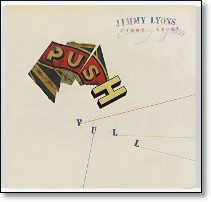
Jimmy Lyons: Jump Up (1978 [2016], Corbett vs. Dempsey,
2CD): Originally released by Hat Hut in 1979 as 3-LP. Alto saxophonist,
best known for his work with Cecil Taylor, leads a fiery quintet with
Karen Borca (bassoon), Munner Bernard Fennell (cello), Hayes Burnett
(bass), and Roger Blank (drums).
A- [bc]
Joe McPhee Quintet/Ernie Bostic Quartet: Live at Vassar 1970
(1970 [2011], Corbett vs. Dempsey, 2CD): A double bill organized by McPhee,
but two separate groups, no overlap, one disc each (although vibraphonist
Bostic played on several other McPhee albums around then, including the
masterpiece Nation Time). McPhee, with Byron Morris as second sax
(alto) and Mike Kull on piano, plays an expansive set (76:06). Bostic,
with alto sax (Otis Greene) and organ (Herbie Leaman) turns in a short
(33:03) set, swinging through "Bags Groove" before tackling "Resolution"
(from A Love Supreme).
B+(*) [bc]
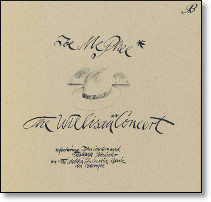
Joe McPhee: The Willisau Concert (1975 [2017],
Corbett vs. Dempsey): Avant-sax trio, recorded live in Switzerland,
the leader playing tenor and soprano, with John Snyder (synthesizer,
voice) and Makaya Ntshoko (drums). Favorite moment is when the synth
aims at Krautrock, which just challenges McPhee to be more inventive.
A- [bc]
Joe McPhee: Variations on a Blue Line/'Round Midnight
(1977 [2012], Corbett vs. Dempsey): Solo saxophone, starts on tenor
with a 17:24 dedication to Coleman Hawkins ("Beanstalk"), then soprano
for a piece called "Motian Studies." Closes with the two title cuts --
the most familiar latter resonant on soprano.
B+(**) [bc]
Joe McPhee: Glasses (1977 [2012], Corbett vs. Dempsey):
Solo tenor sax and flugelhorn, a relatively short "Naima" sandwiched
between two longer originals (42:24 total). Starts out by tapping a
rhythm on a half-filled wine glass, and closes with more percussion,
which is all the help he needs.
B+(***) [bc]
Joe McPhee: Alone Together: The Solo Ensemble Recordings 1974
& 1979 (1974-79 [2015], Corbett vs. Dempsey): Plays his
whole gamut of instruments, including alto horn, overdubbing to build
up his ensembles (duo, trio, quartet).
B+(***) [bc]
Joe McPhee & André Jaume: Nuclear Family (1979
[2016], Corbett vs. Dempsey): Duets, both play alto and tenor sax,
McPhee also pocket cornet, Jaume also bass clarinet. Recorded in
Paris, previously unreleased.
B+(***) [bc]
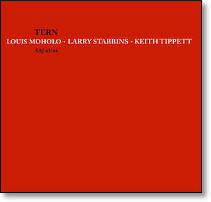
Louis Moholo/Larry Stabbins/Keith Tippett: Tern (1982
[2003], Atavistic Unheard Music Series): South African drummer, English
saxophonist (soprano/tenor) and pianist. Stabbins is the least famous,
but has a long association with Tippett and side credits with LJCO and
many other avant ensembles, and could just as well be Evan Parker there.
Still, the star here is the pianist, who plays free jazz as grand drama.
A-
Pipeline: Pipeline (2000 [2013], Corbett vs. Dempsey):
A sixteen-piece "free music big-band," organized in Chicago with a bunch
of visiting Scandinavians, shelved when the intended label (Crazy Wisdom,
in Sweden) was shuttered. Four reed players (leader Mats Gustafsson plus
Ken Vandermark, Fredrik Ljungkvist, and Guillermo Gregorio); two brass
(Jeb Bishop on trombone and Per-Åke Holmlander on tuba); two each at
guitar, piano, bass, and three drummers. Two long pieces (one Vandermark,
the other Ljungkvist). This was recorded about the time of Vandermark's
first large band project (Territory Band), but is very different:
remarkable flow, rhythmic detail, minimal squawk.
A- [bc]
Tom Prehn Quartet: Axiom (1963-66 [2015], Corbett vs.
Dempsey): Danish pianist, recorded a couple of albums in the 1960s, of
which this 1963 effort is "arguably the rarest LP in European free jazz."
Also one of the most surprising ones, as tenor saxophonist Frits Krogh
predates any comparable free jazz in Europe by close to a decade. Adds
a previously unreleased 12:36 track from 1966, not quite as good as the
original album but clearly related.
A- [bc]
Tom Prehn Quartet: Prehn Kvartet (1967 [2001], Atavistic
Unheard Music Series): Title from front cover, the reissue back cover
translating Tom Prehn Quartet. Same short-lived group, with the
leader on piano, plus Fritz Krogh (tenor sax), Paul Ehlers (bass), and
Preben Vang (drums). Before launching his own label, Jon Corbett directed
this remarkable label series -- I count 38 titles in my ratings database
(7 A- or above), but I had missed this one. Similar, a bit more focus on
the piano, so less intense.
B+(***)
Phillip Wilson: Esoteric (1977-78 [2016], Corbett vs.
Dempsey): Drummer (1941-92), from St. Louis, played in the Paul Butterfield
Blues Band in 1967, moved on to Chicago, where he was involved with AACM,
recorded with Anthony Braxton, Lester Bowie, Julius Hemphill, and David
Murray, plus a flurry of 1978-79 albums. This turned out to be the last,
a duo with Olu Dara (trumpet/serpent).
B+(*) [bc]
Unpacking: Found in the mail last week:
- Gretje Angell: In Any Key (Grevlinto): July 25
- Blind Lemon Jazz: After Hours: New Pages in the American Songbook (Ofeh): July 1
- Mark Doyle: Watching the Detectives: Guitar Noir III (Free Will)
- Pablo Embon: Reminiscent Moods (self-released): July 8
- Bill Evans: Smile With Your Heart: The Best of Bill Evans on Resonance (Resonance)
- Lafayette Gilchrist: Dark Matter (self-released): July 19
- Jazz Piano Panorama: The Best of Piano Jazz on Resonance ([2019], Resonance)
- Wes Montgomery: Wes's Best: The Best of Wes Montgomery on Resonance (Resonance)
- Sing a Song of Jazz: The Best of Vocal Jazz on Resonance (Resonance)
- Zhenya Strigalev/Federico Dannemann: The Change (Rainy Days)
- Rebekah Victoria: Songs of the Decades (Patois)
Ask a question, or send a comment.
Sunday, June 23, 2019
Weekend Roundup
The week's biggest, and most ominous, story was the Trump administration's
decision to launch a "limited" missile attack on Iran, then the reversal
of those orders minutes before execution. Here are some links:
Michael D Shear with others:
Peter Baker/Maggie Haberman/Thomas Gibbons-Neff:
Urged to launch an attack, Trump listened to the skeptics who said it
would be a costly mistake: E.g., Tucker Carlson, who pointed out
that "the same people who lured us into the Iraq quagmire 16 years ago
are demanding a new war, this one with Iran." Zack Beauchamp:
John Bolton and Mike Pompeo are the hawks behind Trump's Iran policy.
Peter Beinart:
Bolton keeps trying to goad Iran into war. Barbara Boland:
Media, war boosters slam Trump for 'chicken' response to Iran: "The
hawks are in their element today, screeching for air strikes and promising
cake walks." Max Boot:
In Iran crisis, our worst fears about Trump are realized. Marjorie Cohn:
Iran had the legal right to shoot down US spy drone. David Ignatius:
Iran must escape the American chokehold before it becomes fatal:
Not someone I look to for sane opinions, but this offers a sense of
how Trump's administration has cornered Iran, leaving their leaders
with few (if any) good options, and thereby ratcheting up pressure
for greater violence. I didn't say "war" there because that implies
that war is a future threat. Ignatius makes clear that the US has
already started war with Iran, but for now is playing a "long game"
by using ever-tightening sanctions to weaken and finally strangle
Iran's leadership. Jen Kirby:
US-Iran standoff: a timeline: Start with Trump's withdrawal from
the Iran nuclear deal on May 8, 2018, and Pompeo's "12 demands for a
new agreement for Iran" (May 21, 2018), and the imposition of a new
round of sanctions, aimed at applying "maximum pressure" to cripple
Iran's economy. Taly Krupkin:
Jim Lobe:
Trump has a $259 million reason to bomb Iran: An accounting of
campaign donations from known Iran hawks. Aaron David Miller/Richard Sokolsky:
Why war with Iran is bad for Trump -- and America. Trita Parsi:
America's confrontation with Iran goes deeper than Trump. Elham Pourtaher:
For Iranians, the war has already begun: "In Iran, US sanctions
are producing a level of suffering comparable to that of wartime." Jason Rezaian:
Iran is outmatched in its latest game of rhetorical chicken. But it
might be too late. Greg Sargent:
Trump's Iran reversal exposes one of his most dangerous lies. Matt Taibbi:
Next contestant, Iran: Meet America's permanent war formula. Michael G Vickers:
To avoid a wider war, Iran must be deterred with limited US military
strikes: Argues that Trump should be ordering more air strikes,
citing Reagan in the late-1980s as an example of forceful deterrence
(e.g., shooting down civilian Iranian airliners). Anya van Wagtendonk:
Trump called off a military strike against Iran. The US targeted its
computer systems instead. Contrast this with
Iranian cyberattacks against the US are on the rise. Both sides
at least given some consideration to consequences when it comes to
shooting off missiles. Iran, for example, stressed than when they
shot down a US drone, they allowed a manned aircraft accompanying
it to pass safely. But neither side seems to worry about cyberwar
turning into full-scale war. That strikes me as reckless ignorance:
the fact is we know very little about the risks and consequences of
attacking and terrorizing computer networks. It also seems pretty
obvious that when the US attacks Iran, Russia, China, and others,
the response will be counterattacks against civilian computers. As
no one has more potential targets for cyberattacks, cyberwarfare
puts Americans at far greater risk than anyone else. Given this,
you would think that it would be in the interest of most Americans
to negotiate protocols against cyberwarfare, but the war planners
can't think that far ahead. They'd rather just press what they see
as carefree advantages, regardless of future blowback.
After cancelling a retaliatory strike on Iran, Trump warns: "If they
do something else, it'll be double". Andrew Ward:
Why Iran is fighting back against Trump's maximum pressure campaign:
Interview with Afshon Ostovar.
Iran shoots down US military drone, increasing risk of war: Update
of the previously unreported story: "US flies military drones over Iran,
increasing risk of war."
9 questions about the US-Iran standoff you were too embarrassed to ask:
The questions aren't that unreasonable, although the answers could be
sharper. Ward is only partly right that the run-up to war against Iran
is different from Iraq. With Iraq, Bush led the propaganda campaign
from the top, with his entire administration in lockstep, and they had
very ambitious goals of invading, seizing power, and reconstructing
Iraq under US control. Under Trump, the pro-war faction is smaller and,
of necessity, more furtive and disingenuous. They haven't articulated
clear goals (least of all a plan to invade and seize power -- Iran is,
after all, a much more daunting target than Iraq and Afghanistan, and
neither of those adventures are remembered as successes). Their more
limited goal has been to sow discord and cultivate enmity, applying
pressure to increase tension and provoke reaction in the hope that
incidents like we've seen this past week will convince Trump to
escalate hostilities.
Trump plans to nominate Mark Esper, a former combat veteran and lobbyist,
as Pentagon boss: "He was a former classmate of Secretary of State
Mike Pompeo [at West Point]." And, more recently, a lobbyist for Raytheon,
and continues as an advocate of high-tech weapons systems aimed at China
and Russia. Brett Wilkins:
The exceptionally American historical amnesia behind Pompeo's claim of '40
years of unprovoked Iranian aggression'. Robin Wright:
What will follow Trump's cancelled strike on Iran? Ardeshir Zahedi/Ali Vaez:
The US should strive for a stable Iran. Instead, it is suffocating it.
Some scattered links this week:
Zeeshan Aleem:
Benjamin Netanyahu just unveiled Israel's newest town: "Trump Heights".
Peter Baker/Maggie Haberman:
Trump campaign to purge pollsters after leak of dismal results. Alexia Fernández Campbell:
Congress has set the record for longest stretch without a minimum wage
increase. Igor Derysh:
Joe Biden to rich donors: "Nothing would fundamentally change" if he's
elected. Glynnis Fawkes:
Nineteenth-century novels, with better birth control. Tara Golshan:
Bernie Sanders's free college proposal just got a whole lot bigger:
"Sanders wants to cancel all student loan debt."
Are Elizabeth Warren and Bernie Sanders the same? The debate, explained.
Not all that satisfactorily, but the two candidates offer a lesson in how
distinct political traditions can converge on similar answers given our
current set of political and economic problems. Early in the 20th century,
people who thought that the system had to be changed could be divided up
as progressives and socialists. (The populist party pre-dates this split,
and had elements that went both ways, but isn't a very useful distinction
these days. Later liberals liked to malign populists as bigots, which is
why the term is sometimes applied to bigots like Trump today, who lack
any affinity to populism.) With her focus on expanding the middle class
and her near-obsession with policy reforms, Warren fits pretty clearly
into the progressive tradition. Sanders, on the other hand, identifies
with the working class, and still likes the idea of revolution (always
qualified as "political" -- i.e., non-violent). Still, the practical
effect of either winning is likely to be very similar, both because
they agree on the key problems (much more equality, an end to war),
and because their scope will be limited by more conservative Democrats
in Congress. I should probably add that within this household, Warren
is deemed less trustworthy on war and the military -- she did, after
all, vote for Trump's military spending increase -- which is something
that presidents have a lot of leeway to act directly on. Golshan doesn't
see that much of a gulf there but, well, this is something we're pretty
sensitive to. Umair Irfan:
Rebecca Jennings:
Taylor Swift's "You Need to Calm Down" wants to be a queer anthem. It
also wants to sell you something. You might find the video link
inspiring, or at least amusing. I noted the "Get a Brain Moran" sign --
a thought I've had before, although to be fair the Jr. Senator from KS
has more on top than most of his caucus (e.g., just voted against arms
sales to Saudi Arabia). Sarah Jones:
E. Jean Carroll: "Trump attacked me in the dressing room of Bergdorf
Goodman." He's just one of many featured in Carroll's
My list of hideous men. Related: Anna North:
E. Jean Carroll isn't alone. That matters. Also: Laura McGann:
Donald Trump is trying to gaslight us on E. Jean Carroll's account of
rape. Ed Kilgore:
Jen Kirby:
Sam Knight:
The empty promise of Boris Johnson: A portrait: "The man expected
to be Britain's next Prime Minister makes people in power, including
himself, appear ridiculous, but that doesn't mean he'd dream of handing
power to anybody else." Hard to believe that whoever wrote that line
wasn't also thinking of Trump, who may not be as sui generis as he'd
like to think. Article mentions that Johnson is one of ten candidates
in the race for Conservative Party leader. That field has been reduced
to two now: Johnson and Jeremy Hunt, with Johnson still heavily favored.
[PS: Or maybe not: Rebecca Mead:
Will Boris Johnson's "late-night altercation" sink his bid to become
Prime Minister?. Ari Kohen:
The GOP doesn't actually care if you call them 'concentration camps':
"This bad faith criticism isn't based on a great deal of care for the
feelings of Jews or a deep understanding of the Holocaust." Related:
Caitlin Dickerson:
'There is a stench': no soap and overcrowding in detention centers for
migrant children. Isaac Chotiner:
Inside a Texas building where the government is holding immigrant
children Masha Gessen:
The unimaginable reality of American concentration camps. Anna Lind-Guzik:
I'm a Jewish historian. Yes, we should call border detention centers
"concentration camps." EJ Montini:
Joe Arpaio ran a self-proclaimed 'concentration camp' for years. Where
was GOP outrage? Andrea Pitzer:
'Some suburb of Hell': America's new concentration camp system. Peter Beinart:
AOC's generation doesn't presume America's innocence, where he
notes that "for the first time in decades, the left is mounting a
serious challenge to American exceptionalism." He admits that the
1960s new left did that too, even citing Noam Chomsky's 1969 book
American Power and the New Mandarins, but he doesn't seem
to have registered that Chomsky has written
more than 100 books since then. [PS: for his latest, see
Noam Chomsky: The real election meddling isn't coming from Russia.]
While the Vietnam War did much
to make Americans aware that their government habitually lied about
its good intentions and covered up its misdeeds, even then one could
not avoid awareness that the government had systematically oppressed
Native Americans and African-Americans ever since the first Europeans
arrived, or that the US had waged brutal wars of conquest against
Mexico and the Philippines. Indeed, the historiography on all of
these issues has grown steadily since the 1960s. Beinart's assertion
only makes sense if, like him, you assume that the leading lights of
"the left" in recent decades were the "liberal interventionists" of
the Clinton and Obama administrations: people like Madeline Albright,
Samantha Power, and Beinart himself (temporarily, at least, as when
he wrote his first book, The Good Fight: Why Liberals -- and Only
Liberals -- Can Win the War on Terror). Between Vietnam and the
War on Terror, many Americans worked hard to forget their "barbaric"
past (as Beinart quotes George McGovern putting it), which is what
allowed the Clintons and Obama to try to reclaim the lost moral high
ground. That those claims increasingly ring hollow is not just because
the left has resurfaced as a force that can be talked about. It's also
because the right, especially since Cheney started bragging about
"taking the gloves off," has become perversely proud of American
atrocities. Eric Levitz:
10 takeaways from the Times' interview with 21 Democratic
candidates: My takeaway from the article is "Elizabeth Warren is
definitely to the right of Sanders on foreign policy." David Lightman/Ben Wieder:
Trump states and rural areas grab bigger chunk of transportation grant
funds: Something reassuring about this bit of old fashioned pork
barrel politics. I don't even mind the increased rural road funding,
although the cuts elsewhere probably affect more people. PR Lockhart:
Writer Ta-Nehisi Coates gives Mitch McConnell a thorough history lesson
on reparations. Related:
Here's what Ta-Nehisi Coates told Congress about reparations. Lili Loofbourow:
The genius of Sarah Huckabee Sanders.
Sanders didn't just defend the president from the effects of his own
statements; she offered herself as a kind of prosaic presence whose
function it was to act like anything Trump did, no matter how shocking,
was no big deal. She exemplified the stolid approval Trump wanted for
everything from family separations to tax cuts for the rich. As her
tenure ends, we can now see how much her reliance on reassuring phrases
like "make a determination" -- and unblinkingly calling lies differences
of opinion and hush payments not worth discussing -- provided a kind of
muted laugh track to the terrible show being forced upon America. Rather
than laugh at unfunny jokes, she loyally normalized despicable conduct.
David Nakamura/Holly Bailey:
'There's no accountability': Trump, White House aides signal a willingness
to act with impunity in drive for reelection. Ella Nilsen:
Joe Biden and Bernie Sanders had 2 very different answers to Trump's
official 2020 campaign launch. Alex Pareene:
Give War a Chance: "In search of the Democratic Party's fighting
spirit." Title is a sick joke -- Democrats have given war plenty of
chances, and for a long while counted warmaking as one of their "core
competencies" (as the MBA's like to put it). Subtitle is closer to
the intended mark, but I still don't care for the imagery. (Fittingly,
Elizabeth Warren, author of books like A Fighting Chance and
This Fight Is Our Fight, is featured in the graphic.) What
should be clearer is that Democrats need to find and stick to some
principles ("worth fighting for" is a cliché hard to avoid here),
instead of always trying to broker compromises with an opposing
party that seeks nothing less than abject surrender. Pareene makes
Biden out to be the poster boy for gutless, guileless surrender --
a task that Biden himself made easier last week in touting his
ability to "work with" rabid racists like James Eastland and Herman
Talmadge (see
Jeffrey St. Clair for "a taste of the rhetorical stylings of
James Eastland"; he also quotes a Biden "love letter" thanking
Eastland for his help "to bring my ANTIBUSING legislation to a
vote"). Kelsey Piper:
Death by algorithm: the age of killer robots is closer than you think.
Andrew Prokop:
Frances Robles/Jim Rutenberg:
The evangelical, the 'pool boy,' the comedian and Michael Cohen:
How Jerry Falwell Jr. fell in love with Donald Trump. Aja Romano:
Curtis Flowers was tried 6 times for the same crime. The Supreme court
just reversed his conviction. Related: Jeffrey Toobin:
Clarence Thomas's astonishing opinion on a racist Mississippi
prosecutor. Aaron Rupar:
Timothy Smith:
How Republicans stopped worrying about the right to vote: "The GOP
launched a four-pronged plan in 2008 to undercut the American tenet of
'one person, one vote.' We're now entering the final phase." Tierney Sneed:
Will a Trump trade move create an election mess for overseas US voters?
That's actually just one aspect of Trump plans to withdraw from the Universal
Postal Union. William Spriggs:
We're less prepared for the next recession than we were for the last:
You may recall that the economy entered a steep decline early in the 2008
recession very similar to the one in 1929, but unlike the Great Depression,
the free-fall was stopped by "automatic stabilizers" like the unemployment
compensation system that saved many families from ruin. Those automatic
stabilizers have not been maintained during the post-2008 austerity, and
that will let the next collapse hit even harder. Matt Stieb:
Six takeaways from Hope Hicks's House Judiciary testimony: One I
believe is "Hicks said Trump's 'Russia, if you're listening' line was
a joke." Matt Taibbi:
Trump kicks off re-election campaign: Get ready for 'Billionaire Populist
II: The Sequel'. David Wallace-Wells:
Disaster upon disaster: Sample paragraph, relatively close to home
(and by no means the most harrowing):
Last month, in the Midwest, 500 tornadoes swept through the region in
just 30 days -- an average of 20 every day. The region is still underwater
from historic flooding earlier in this spring, with some places deluged
by seven feet of water and others issuing multiple disaster declarations
in a single week. The Mississippi River has been flooding for three
straight months; in Baton Rouge, the river rose past "flood stage" the
first week of the year, according to Weather.com, 'and has been above
that threshold ever since." In March, major flooding began in Iowa,
Missouri, and Nebraska -- and in Nebraska alone, damages are expected
to reach $1.3 billion. The whole Midwest, the New York Times wrote, "has
been drowning," and farmers are so far behind in their planting -- with
only a fraction of corn and soybean crops actually in the ground -- that
the whole year's harvest is in peril.
Li Zhou:
Felt like making a rare political
tweet today (tortured
into fitting their character count limit, depending heavily on the
reader's "cultural literacy"):
Another way Trump isn't Hitler: you can't imagine the latter
announcing then postponing Kristallnacht two weeks. Real fascists made
the trains run on time. Poseurs and wannabes flirt with evil, then
make nice, like "good people on both sides." Vile, at least.
Other tweets I felt like saving:
Ask a question, or send a comment.
Monday, June 17, 2019
Music Week
Music: current count 31641 [31614] rated (+27), 256 [251] unrated (+5).
Didn't expect to get to much music this week, but the planned project
fell through. Responded to that by feeling listless and depressed, so not
much of a recovery. Spent a lot of the time I did use on the Moserobie
package, the extra plays merely confirming my first pass impressions.
Finally started in on
Weekend Roundup early Friday afternoon, and finally felt like I was
getting something done -- wouldn't call it mindless, but the task posed
enough structure to keep me going through the motions. The result was
the most personally satisfying Weekend Roundup all year, plus I ticked
off enough records to get close to my 30-per-week target.
The Jamila Woods album was recommended by Michael Tatum, who should
have a new Downloader's Diary out this week. I gave it a spin when I
first heard about it, and probably would have filed it as a mid-B+, but
decided to hold off a while. Returned to it mid-week, and 3-4 plays got
better and better. Followed up on some Downbeat jazz reviews --
nothing very good there -- and landed on a couple of Bandcamps that
looked promising:
Fundacja Sluchaj
(François Carrier has been very good at sending me records, so I
held off on his record there, but eventually couldn't wait),
Unseen Rain
(Dom Minasi sent me mail about his record there, and I found more), and
Corbett vs. Dempsey
(Jon Corbett's obscure reissue label, one I've long wanted to be able
to cover). All typically offer the chance to listen to full albums,
which makes them reviewable. (Many other Bandcamps have dropped down
to a sample cut or two, which makes them unusable for reviews -- that's
the main reason I miss more Ken Vandermark albums than I hear these
days.) More on the CvD next week, and probably for several weeks to
come.
Spoke too soon about NoBusiness dropping me, as I got a big package
early last week. The Sam Rivers set was the one I had heard about, so
I jumped on it first. Would have been a high B+ had I used their
Bandcamp,
but having the CD and booklet encouraged me to play it a few extra
times.
I also looked up what I've been missing from Intakt -- two monthly
packages so far, so four releases -- but nothing looked critical right
now (with Fred Frith's 3-CD live set the most imposing). They have a
Bandcamp as well, but
recent releases only have a couple of cuts available. I think the full
records are on Napster -- at least the old ones are -- so I'll catch
up there, but no rush.
The Team Dresch reissues were all I got from looking at Pitchfork's
Best New Music page -- something
I rarely check, but Woods and Denzel Curry are also listed there, along
with a Don Cherry reissue of an album (Brown Rice) I gave a B+ to
long, long ago, and Slowthai's Nothing Great About Britain (a high
B+ last week).
New batch of Robert Christgau's
XgauSez
questions and answers up tonight. Still hope to launch something like
that myself.
New records reviewed this week:
Fabian Almazan Trio: This Land Abounds With Life (2018
[2019], Biophilia): Pianist, born in Cuba, raised in Miami, fifth album
since 2012, a trio with Linda May Han Oh (bass) and Henry Cole (drums),
plus strings on one track.
B+(*)
Brad Barrett/Joe Morris/Tyshawn Sorey: Cowboy Transfiguration
(2018 [2019], Fundacja Sluchaj): Bass/cello, guitar, and drums trio,
all improv, artists listed alphabetically (although Barrett has sole
credit as producer). Morris tends to get scratchy and choppy in this
sort of group, almost percussion.
B+(***) [bc]
François Carrier/Alexander Hawkins/John Edwards/Michel Lambert:
Nirguna (2017 [2019], Fundacja Sluchaj, 2CD): Free quartet,
the alto saxophonist and drummer long-term companions from Quebec,
here live at Vortex in London, with local pianist (Hawkins) and
bassist (Edwards), almost as practiced together. Two 51-minute sets,
each starting long, closing shorter, the leaders at their most
aggressive.
B+(***) [bc]
Trish Clowes: Ninety Degrees Gravity (2019, Basho):
British saxophonist, sings a bit, fifth album since 2010, backed by
guitar-organ-drums, postbop with some chops.
B+(**)
Anat Cohen Tentet: Triple Helix (2019, Anzic):
Clarinet player, from Israel, based in New York, featured artist
here although the music looks to be by Obed Lev-Ari, a "concerto
for clarinet and ensemble." Two reeds, two brass, cello and bass,
piano and guitar, drums and vibraphone. Best when they kick up
their heels.
B+(**)
Denzel Curry: Zuu (2019, Loma Vista): Florida rapper,
fourth album, sharp and short (12 tracks, 29:02).
B+(**)
Fennesz: Agora (2019, Touch): Electronica producer
Christian Fennesz, from Austria, big pile of records since 1997.
Usually filed under ambient, but the drone here is a bit much.
B
Mark Guiliana: Beat Music! Beat Music! Beat Music!
(2019, Motéma): Drummer, from New Jersey, first album (aside from a
duo that listed Brad Mehldau first) was called Beat Music: The Los
Angeles Improvisations, and he later used Beat Music Productions
as his self-released label name. Single-word titles. Electronic keybs,
bass, with occasional vocals. And, yeah, beats.
B
Per 'Texas' Johansson/Torbjörn Zetterberg/Konrad Agnas:
Orakel (2018 [2019], Moserobie): Avant-sax trio from
Sweden, all three write (but mostly bassist Zetterberg, who some
sources credit first). All seems deeply thought out, nothing
rushed or frantic. Johansson doubles on clarinet. Not much under
his name, but he's been active since the 1990s, often impressive.
A- [cd]
Angelique Kidjo: Celia (2019, Verve): Pop singer from
Benin, father Fon, mother Yoruba, cut her first album in 1981, moved
to Paris in 1983, became an international star after Island picked up
her 1991 album Logozo, but I've only heard one of her fifteen
albums before this tribute to Cuban diva Celia Cruz. The Cuban rhythm
picks up the pace, but she still seems a little stiff for the role.
B+(*)
La La Lars: La La Lars II (2019, Headspin): Swedish
drummer Lars Skoglund, second album under this alias, Discogs lists
70 album credits since 1999, some rock or pop. Quintet, with Jonas
Kullhammar (sax, flute, bassoon), Goran Kojfes (trumpet), Carl Bagge
(piano), and Johan Bethling (bass).
B+(**) [cd]
Matt Lavelle Quartet: Hope (2019, Unseen Rain):
Trumpet/flugelhorn player, alto alto and bass clarinet, Quartet same
as on their eponymous 2017 debut: Lewis Porter (piano), Hilliard
Greene (bass), and Tom Carrera (drums). Surprisingly mainstream,
almost lush.
B+(**) [bc]
Xavier Lecouturier: Carrier (2018 [2019], Origin):
Drummer, based in Seattle, first album, composed 5 (of 10) pieces,
with guitarist Lucas Winter contributing three more and much of the
sound.
B [cd]
Greta Matassa: Portrait (2019, Origin): Standards
singer, based in Seattle, Discogs lists 8 records, one in 1991, the
rest 2001-10, so this is her first in a while. Backed by piano trio
plus saxophone (Alexey Nikolaev). Does a nice job of navigating the
difficult "Lush Life."
B [cd]
Dom Minasi: Remembering Cecil (2019, Unseen Rain):
Guitarist, cut two albums for Blue Note 1974-75, then nothing until
1999 when he surfaced on avant-oriented CIMP. Solo here, a tribute
to the late Cecil Taylor but no songbook -- all inspired-by improvs.
Doesn't remind me much of Taylor either, but I like the thoughtfulness
that went into it.
B+(***) [bc]
Nobject [Martin Küchen/Rafal Mazur/Vasco Trilla]: X-Rayed
(2018 [2019], Fundacja Sluchaj, 2CD): Free-wheeling sax-bass-drums trio
(sopranino/tenor, acoustic bass guitar), a "new atomic working band."
Four tracks from 7:17 to 30:30, short enough (70:30) it could have fit
a single CD. Can get intense.
B+(**) [bc]
RPM: Just Like Falling (2019, Unseen Rain): Group named
for first initials: Rocco John Iacovone (alto sax/piano), Phil Sirois
(bass), and Michael Lytle (bass clarinet). Iacovone has always been a
bracing saxophonist, and the bass clarinet provides a nice contrast.
B+(**) [bc]
Erik Skov: Liminality (2018 [2019], OA2): Guitarist,
based in Chicago, wrote all the pieces for a sextet with three horns
(trumpet, tenor sax, trombone), bass, and drums. Lively postbop with
a bit of groove.
B+(*) [cd]
Ståhls Trio: Källtorp Sessions: Volume One (2017-18
[2019], Moserobie): Vibraphonist Mattias Ståhl, with Joe Williamson
(bass) and Christopher Cantillo (drums). Ståhl should probably be
getting some poll recognition. He always adds something to larger
groups (like Angles 9), but this configuration shows the limits as
a lead instrument.
B+(***) [cd]
Mary Stallings: Songs Were Made to Sing (2019, Smoke
Sessions): Jazz singer, pushing 80, cut a record with Cal Tjader in
1961 but career stalled after tours with Dizzy Gillespie and Count
Basie. Restarted in 1990 on Concord, and had some good years with
HighNote. All covers here, the ungrammatical title leading into the
title of "While We're Young." They're not, although Eddie Henderson's
trumpet stands out.
B+(*)
Jamila Woods: Legacy! Legacy! (2019, Jagjaguwar):
From Chicago, published poet, filed her first album under rap but
she sings her way through this second album. Song titles are names,
all one word (save "Sun Ra"), most easy enough to fill out, with
her best hooked song, "Betty," reprised ("I am not a typical girl").
Took a while to settle in, and probably has more depth than I'll
ever be able to plumb.
A-
Recent reissues, compilations, and vault discoveries:
Agustí Fernández Trio With William Parker & Susie Ibarra:
One Night at the Joan Miró Foundation: July 16th, 1998 (1998
[2019], Fundacja Sluchaj): Pianist, from Barcelona, where this was
recorded. Discography starts around 1986, seems especially inspired
here playing with Cecil Taylor's bassist, who's worth focusing on.
A- [bc]
Beaver Harris/Don Pullen 360° Experience: A Well Kept Secret
(1984 [2018], Corbett vs. Dempsey): Had this in my database as an unrated
LP, but haven't seen it in ages. Harris (1936-91) is a drummer, not much
under his name but played in some important avant groups in the 1960s, and
later cut an African Drums album. Pullen (1944-95) was a brilliant
pianist, and he's often dazzling here, but the group is pretty scattered,
with two saxes -- Ricky Ford on tenor and Hamiet Bluiett on baritone --
plus bass and steel drums.
B+(***) [bc]
Sam Rivers Trio: Emanation (1971 [2019], NoBusiness):
Volume 1 of Sam Rivers Archive Project, drawing on a reportedly large
trove of private recordings, here from the period when the late 1960s
avant-garde retreated to the lofts of Lower Manhattan, chez Rivers in
particular. Two massive chunks, 76:41 in total, with the leader playing
tenor and soprano sax, a lot of flute, and some striking piano, all
backed by Cecil McBee on bass and Norman Connors on drums.
A-
Team Dresch: Personal Best (1994 [2019], Jealous
Butcher, EP): Relatively minor queercore/riot grrrl group, formed in
Olympia, based in Portland, short first album (10 cuts, 24:14). Named
for guitarist/bassist Donna Dresch, but vocals are credited either to
Jody Coyote (Bleyle) or Kaia Kangaroo (Wilson).
B+(*)
Team Dresch: Choices, Chances, Changes: Singles & Comptracks
1994-2000 (1994-2000 [2019], Jealous Butcher): Twelve songs, most
from 7-inch singles (starting with their debut "Hand Grenade") with a
couple of change-ups and a sense of evolution, adds up to 30:31.
B+(*)
Unpacking: Found in the mail last week:
- The Attic: Summer Bummer (NoBusiness)
- Albert Beger Quartet: The Gate (NoBusiness)
- Whit Dickey/Kirk Knuffke: Drone Dream (NoBusiness): cdr
- Kang Tae Hwan/Midori Takada: An Eternal Moment (1995, NoBusiness)
- Jan Maksimovic/Dimitrij Golovanov: Thousand Seconds of Our Life (NoBusiness)
- Jenna McLean: Brighter Day (Moddl)
- Sunny Murray/Bob Dickie/Robert Andreano: Homework (1994, NoBusiness)
- Sam Rivers Trio: Emanation (1971, NoBusiness)
Ask a question, or send a comment.
Sunday, June 16, 2019
Weekend Roundup
Quite a bit below. After a very depressing/blasé week, I got an early
start on Friday, and started feeling better -- not for the nation or the
world, but pleased to be occupied with some straightforward, tangible work.
One thing I can enjoy some optimism about is the Democratic presidential
campaign. I expected it to be swallowed whole with the sort of vacant,
pious clichés that Obama and the Clintons have been campaigning on for
decades now, but what we're actually seeing is a lot of serious concern
for policy. The clear leader in that regard is Elizabeth Warren, and of
course Bernie Sanders has a complete matching set with if anything a
little more courage and conviction, but I've run across distinct and
refreshing ideas from another half-dozen candidates. I haven't noticed
Biden rising to that challenge yet. He remains the main beneficiary of
as fairly widespread faction that would be quite satisfied with their
lives if only the Republican threat would subside in favor of the quiet
competency Obama brought to government. Personally, I wouldn't mind
that either, but I recognize that has a lot to do with my age. Young
people inhabit a very different world, one with less opportunity and
much graver risks, so platitudes from America's liberal past don't do
them much good, or offer much hope. They face real and growing problems,
and not just from Republicans (although those are perhaps the hoariest).
Talking about policy actually offers them some prospect that faith
alone can never fill. And sooner or later, even Biden's going to have
to talk about policy, because that's where the campaign is heading.
This could hardly offer a starker contrast to the 2016 Republican
presidential primary, where there was virtually no difference regarding
policy -- just minor tweaks to each candidate's plan to steer more of
the nation's wealth to the already rich, along with a slight range of
hues on how hawkish one can be on the forever wars and how racist one
can be when dealing with immigrants and the underclass. The real price
of entry wasn't ideas or commitment. It was just the necessity to line
up one or more billionaire sponsors -- turf that credibly favored Trump
as his billionaire/candidate were one. The fact that Cruz and Kasich
folded when they still had primaries they could plausibly have won is
all the proof you need that the financiers pulled the strings, and as
soon as they understood that Trump would win the nomination, they
understood that he was as good for their purposes as anyone else, so
they got on board.
Democrats may have a harder time finding unity in 2020, because
their candidates are actually divided on issues that matter. On the
other hand, they are learning to discuss those issues rationally,
especially the candidates who are pushing the Overton Window left.
Even if they wind up nominating some kind of centrist, that person
is going to be more open to solutions from the left, and that's a
good thing because that's where the real solutions are. Franklin
Roosevelt wasn't any kind of leftist when he was elected in 1932,
and his famous 100 days were all over the map, but he was open to
trying things, and quickly found out that left solutions worked
better than conservative ones. We're not quite as mired in crisis
as America was in 1932, but it's pretty clear that catastrophe is
coming if Trump and the Republicans stay in power. The option for
2020 is whether to face our problems calmly and rationally with
deliberate policy choices or to continue to thrash reflexively
and chaotically. There's no need to imagine how bad the latter
may be, because Trump's illustrating it perfectly day by day.
Some scattered links this week:
Muhammad Idrees Ahmad:
Bellingcat and how open source journalism reinvented investigative
journalism. Eileen Appelbaum:
Private equity pillage: grocery stores and workers at risk. I first
noticed this as a
twitter thread, but the article goes into a lot more detail (while
including all the cartoons). The article focuses on food retailers, but
if you want a quick rule-of-thumb, whenever you read about a familiar
company filing for bankruptcy, you can be pretty sure there's a private
equity fund behind it that has already sucked the firm dry of assets
and piled up unsupportable debt. Private equity firms -- you may recall
that's how Mitt Romney got so rich, not that having a rich and famous
father didn't give him a leg up -- are a plague, especially on American
workers. Some policy wonks should come up with a program to put them out
of business. One idea here would be to allow bankrupted companies to be
reorganized as employee-owned, writing down their PE debt, with public
loans to recapitalize the company. Peter Baker/Maggie Haberman:
Trump campaign to purge pollsters after leak of dismal results. Ross Barkan:
Don't bother replacing Sarah Sanders -- there is no point.
I figured I should offer something to mark the passing of Trump's second
press secretary, but found very little that captures the true banality
she brought to such a thankless and hopeless job. Failing that, this will
have to do. Although I did also find: Luke O'Neil:
Tweets, lies and the Mueller report: Sarah Sanders' lowest moments.
On the other hand, Trump seems to think she has a future:
Sarah Huckabee Sanders, Governor of Arkansas? It's possible. John Cassidy:
The Stephanopoulos interview is another fine mess for Trump. Jonathan Chait:
Trump: witness to my crime can't testify, but trust me he's lying:
That would be former White House counsel Don McGahn, who Robert Mueller
interviewed at length. Sarah Churchwell:
'The Lehman Trilogy' and Wall Street's debt to slavery: How to get
rich in the 1840s, and how to get richer after that stopped working. Iyad el-Baghdadi:
The princes who want to destroy any hope for Arab democracy: Trump's
best buds in "Saudi Arabia and the United Arab Emirates are backing
military leaders who kill demonstrators.". Tom Engelhardt:
If Donald Trump is the symptom . . . then what's the disease?
Reflects on how Trump was elected based on a widespread fear of decline,
economic as well as military, only to accelerate that decline, taking
much of the planet with him. Some other recent TomDispatch posts:
Dennis Etler:
Getting Chian wrong, yet again: Reviews a Council of Foreign Relations
report entitled "Trump's Foreign Policies are Better Than They Seem," so
yeah, they have lots of examples. Also see: Michael Klare:
Bolton wants to fight Iran, but the Pentagon has its eye on China.
Pentagon strategists have long liked to promote conflicts with Russia
and China, as they help fund their dreams of high-tech weapons systems
that never get tested, because wars with nuclear powers like China and
Russia are still unthinkable. Interesting that Klare's next book also
looks at highly speculative Pentagon funding: All Hell Breaking
Loose: Why the Pentagon Sees Climate Change as a Threat to American
National Security. Without such threats, and the misunderstandings
and myths they are based on, one might realize that such arms spending
is unnecessary and, even worse, dangerous. Tara Golshan:
Congress's high-stakes budget fight to avert an economic crisis, explained.
Jeff Goodell:
The world's most insane energy project moves ahead: the Carmichael
coal mine, in Australia, controlled by Adani Group (of India). Lloyd Green:
The Best People review: how Trump flooded the swamp: On Alexander
Nazaryan's new book, The Best People: Trump's Cabinet and the Siege
on Washington (out June 18), about "the scandals, the incompetence,
the assault on the federal government, the bungled attempts to impose
order on an administration lost in a chaos of its own making." Green
also reviewed Michael Wolff's recent dirt-dishing Siege: Trump
Under Fire:
Siege review: Michael Wolff's Trump tale is Fire and Fury II -- fire
harder. Related: Robert Reich:
Welcome to Trump's corrupt state -- the Star Wars cantina of world
politics. Nick Hanauer:
Better schools won't fix America: "Like many rich Americans, I used
to think educational investment could heal the country's ills -- but I
was wrong. Fighting inequality must come first." Mehdi Hasan:
Saudi Arabia may execute teenager for his protests -- including when he
was 10. David Hearst:
Why I'm optimistic about the 'deal of the century': Not because he
thinks Jared Kushner's "peace plan" is viable let alone workable, but it
marks the definitive end of the "two state" albatross that Israel has so
easily slagged off. Rather: "The deal presents the biggest opportunity
to those who have the most to lose from it." I don't get this optimism
yet, although to the limited extent I understand the idea -- despite
the advance publicity, it hasn't been fully presented yet -- but I can
imagine some tuning that might be tolerable going forward. Hearst also
wrote [February 2019]:
Lords of the land: Why Israel's victory won't last. Meanwhile,
some other relevant links:
Umair Irfan:
The UK has now committed to the most aggressive climate target in the
world. Thomas Kaplan/Jim Tankersley:
Elizabeth Warren has lots of plans. Together, they would remake the
economy. Related: Paul Krugman:
Liberal wonks, or at least Elizabeth Warren, have a plan for that; also
Sheelah Kolhatkar:
Can Elizabeth Warren win it all?; also: Ed Kilgore:
Elizabeth Warren's one-two punch for conquering Washington; also:
Alex Isenstadt:
Trump campaign zeroes in on a new threat: Elizabeth Warren. Best
laugh line from the latter piece: "Warren's populist economic agenda,
[Tucker] Carlson said, 'sounds like Donald Trump at his best.'" Ed Kilgore:
Trump can't stop lying about his unpopularity:
Donald J. Trump did not invent the art of political spinning. But he
has perhaps raised it to an infernally high standard of sheer mendacity
in his determination to attack any information suggesting he is anything
other than the most wildly successful and popular politician since Pericles.
That means, among other troubling things, that he is engaged in a perpetual
war against the scientific measurement of public opinion.
Catherine Kim:
Jen Kirby:
Is it actually illegal to accept "campaign dirt" from foreigners?
If it's "something of value" doing so would violate campaign finance
laws. On the other hand, I doubt the law could prevent foreigners from
simply publishing and promoting "dirt" -- which is presumably what a
campaign would do with such information. In fact, most campaigns would
probably prefer that it come from an independent source.
The race to be the next British prime minister, briefly explained:
Seven candidates survived the first round of voting, the most famous
(and possibly the farthest apart politically) Boris Johnson (leader
with 114 votes) and Rory Stewart (last at 19 -- he's written a couple
of books on Afghanistan and Iraq which show some understanding of and
sympathy for the people there). Later rounds will reduce the field to
two, to be decided by registered Conservative Party members -- no one
in power there is eager to risk a new election. No mention of this here,
but since the Tories are a minority in Parliament, it seems to me that
their current coalition partners could scuttle the pick. [PS: See
Michael Savage/Toby Helm:
Boris Johnson's no-deal Brexit plan 'will trigger early election'.]
Sharon LaFraniere/Charlie Savage/Katie Benner:
People are trying to figure out William Barr. He's busy stockpiling
power. Eric Levitz:
The Fed just released a damning indictment of capitalism: Title
after the jump: "The one percent have gotten $21 trillion richer since
1989. The bottom 50% have gotten poorer." Dara Lind/Libby Nelson:
The fight over the 2020 census citizenship question, explained. Josh Marshall:
Trump tells Polish president: US media is corrupt: Actual quote:
"Much of the media unfortunately in this country is corrupt. I have to
tell you that, Mr. President." Trump could have turned this into a much
smarter quote by dropping "unfortunately" and adding: "that's why we
don't have to censor them." Of course, he wouldn't say that, because he
wants to censor them anyway. He feels so entitled he cannot recognize
that the media has been helped him out enormously. And he's such a
thin-skinned whiner he complains about them endlessly. Anything to
avoid a moment of reflection that might acknowledge that he's ever
done anything regrettable, let alone embarrassing.
The American right gets tired of democracy. I'd say the American right
has never liked democracy, and can point as far back as the early 1800s
when proposals to extend the vote to white male non-property holders were
met by worries that such people might use the vote to further their own
personal interests (to the detriment of their richer "betters"). But the
right is certainly getting more brazenly contemptuous of voting rights
and other aspects of democracy. This connects to a cluster of other links,
which purport to grapple with the question of what principles conservatism
has left after the right has pledged itself to politicians like Trump:
Sohrab Ahmari:
Against David French-ism. Isaac Chotiner:
Ross Douthat on the crisis of the conservative coalition: Interview
with Douthat. Ed Kilgore:
Josh Hawley could be the face of the post-Trump right. Adam Serwer:
The illiberal right throws a tantrum: sample quote:
I don't want to overstate the significance of this dispute between French
and Ahmari. They are yelling at each other in a walled garden; conservative
pundits in ideological magazines have little influence over a base whose
opinions are guided by the commercial incentives of Fox News and right-wing
talk radio, and the partisan imperatives of the Republican Party. If they
possessed such influence, Trump would not be president.
The question of whether the Republican Party would abandon liberal
democracy for sectarian ethno-nationalism was decided in the 2016 primary,
and all French and Ahmari are doing is arguing about it after the fact.
The commercial and social incentives for conservative writers to succumb
to Trumpism are vast. Some, like French, have had the integrity to stick
to their stated principles. Others, like Ahmari, have already fallen.
Today's skirmishes among conservatives resemble the irregulars in 1865
shooting at one another because they had not yet heard of Robert E. Lee's
surrender at Appomattox. And the support Ahmari has drawn suggests that
the conservative intelligentsia will offer less resistance to
authoritarianism than it did in 2015 and 2016.
Dylan Matthews:
Ella Nilsen:
House Democrats want to make accepting dirt on campaign opponents
from foreign governments a crime: "Democrats are rolling out a
new package of election security bills after Trump said he's open
to taking dirt on his 2020 opponents." That, or even the lesser
requirement to report foreign offers to the FBI, strikes me as a
bad idea: it practically begs foreign agents to set up and expose
test cases. Anna North:
Alabama's law forcing sex offenders to get chemically castrated,
explained. Kelsey Piper:
Will climate change kill everyone -- or just lots and lots of people?
Oddly enough, I can think of adverse scenarios that are worse than the
ones discussed here -- war over diminishing habitat and resources is the
most obvious one -- but I can't imagine that no one would survive even
that, and I'm dead certain that the survivors will prove adaptable enough
to recover from any climate-induced dystopia. As for civilization ending,
the bigger threat is politically-directed stupidity (which seems to have
already claimed most of the Republican Party). As this explainer points
out, much of the dispute here really turns on the question of how much
threat we have to feel to act politically. Those who feel unheeded are
eager to turn out the hyperbole, but my impression is that so far that
has only had the perverse of undermining their credibility. Andrew Prokop:
Trump's legally problematic claim that he'd accept "oppo research" from
foreign governments, explained. Michael Sainato:
Bosses pocket Trump tax windfall as workers see job promises vanish.
Jason Samenow:
David E Sanger/Nicole Perlroth:
US escalates online attacks on Russia's power grid. Part of the
rationale here is to deter Russia from interfering in US elections,
but this reads more like a provocation along the lines of Nixon's
famous "madman theory" of threatening nuclear war. The assumption
seems to be that Russia will react rationally to such insanity, but
if they believe that, why not just sit down and negotiate some kind
of deal that would lessen the threat of cyberwarfare and present a
unified front against hacking by private parties and other countries.
Probably the same reason the US works to preserve its unique "first
strike" capability: to cower the rest of the world into submission
at the first demonstration of "shock and awe." Richard Silverstein:
Is Pompeo angling to interfere in British politics? "In leaked
comments from a recent meeting with Jewish leaders, the US secretary
of state cites the need to 'push back' against a potential Corbyn
victory." Found a couple of useful links there:
Andrew Sullivan:
Donald Trump and the art of the lie. He draws some examples from
Michael Wolff's Siege, others from the George Stephanopoulos
interview, but he could write the same article with fresh examples
any week of the year.
For Trump, lying is central to his disturbed psyche, and to his success.
The brazenness of it unbalances and stupefies sane and adjusted people,
thereby constantly giving him an edge and a little breathing space while
we try to absorb it, during which he proceeds to the next lie. And on it
goes. It's like swimming in choppy water. Just when you get to the surface
to breathe, another wave crashes into you. . . .
A tyrant's path to power is not a straight line, it's dynamic. Each
concession is instantly banked, past vices are turned into virtues, and
then the ante is upped once again. The threat rises exponentially with
time. If we can't see this in front of our own eyes, and impeach this
man now, even if he will not be convicted, we are flirting with the very
stability of our political system.
Sullivan also writes about Boris Johnson in the next section down
the page: "My Old Chum Boris." Sullivan knew Johnson from their school
days at Oxford together:
Boris was so posh it was funny. . . . He belonged, for example, to the
Bullingdon Club, an exclusive upper-class fraternity that specialized
in hosting expensive restaurant dinners for themselves, in white tie
and tails no less, with members eating and drinking till they were
stuffed and thoroughly shit-faced and then proceeded to puke on the
floors and vandalize the joint, smashing tables and chairs and china,
breaking windows and the like. Daddy would always pick up the price
for repairs. . . . Legend has it Johnson kept reinventing himself
politically and playing down his Toryism and poshness -- with the
help of then-student Frank Luntz, believe it or not -- and eventually
it worked and he won. I have to say I found him hugely entertaining,
and great company, but could never really take him seriously. He has
a first-class wit but a second-class mind and got a second-class
degree. If you want to measure the quality of his scholarship, check
out his deeply awful biography of Churchill, a thinly veiled attempt
to redescribe his own career as a Second Coming of Winston. . . .
But there is some sweet cosmic justice in Boris having to take
responsibility for the Brexit he backed. It may be a catastrophe,
but it will be his, and, for him at least, it sure will be fun.
Jon Swaine:
Company part-owned by Jared Kushner got $90m from unknown offshore
investors since 2017. Also, Vicky Ward:
Jared Kushner may have an ethics problem -- to the tune of $90m. Matt Taibbi:
Peter Wade:
Ivanka Trump cashed $4 million from her father's DC hotel in 2018:
"She and her husband, Jared Kushner, reported earning between $28.8 million
and $135.1 million in 2018. Alex Ward:
Joanna Weiss:
How Trump turned liberal comedians conservative: Nice idea for a
piece, but doesn't deliver on its premise, nor approximate its title.
Weiss laments the eclipse of "wry satire," complaining that today "it's
all outrage and punching up -- and it's not always clear where the joke
is." I don't doubt that there has been a coarsening of humor since Trump
became president. Is any other reaction possible? I worry that many of
the jokes offer lazy simplifications (e.g., ragging on Trump for his
spelling and vocabulary lapses, like "covfefe"). I've also noted that
no one seems to be able to tell funny jokes about Democrats (exception
Hillary, but mostly in contrast to Trump). For instance, I can't recall
Seth Myers ever cracking a funny joke about Bernie Sanders. Also, I've
found myself with a pre-emptive groan every time Colbert does his "Doin'
It Donkey Style" routine. On the other hand, the real thing I've found
myself looking for from these comedians is solidarity. I rarely need
their help in understanding the news, but it's gratifying to know that
someone else shares my outrage. Jennifer Williams:
UK signs order for WikiLeaks' Julian Assange to be extradicted to the US.
Paul Woodward:
Why Trump remains open to receiving foreign aid during election
campaigns: Mostly links to other articles, but his summary is
worth underlining:
As much as the media might be inclined to cast Trump's views on this
issue as an aberration, they are, on the contrary, completely in line
with what has become the GOP's overarching strategy for retaining power
as its capacity to win votes declines: through gerrymandering, stacking
courts, gutting campaign finance regulations, and now welcoming help
from foreign governments.
The Republicans' power-hunger corresponds directly with their
dwindling democratic opportunities.
A party that has realized it can't succeed by conforming with the
operating rules for a functioning democracy has concluded its self-ascribed
"right to govern" depends upon the systematic subversion of the principles
upon which this country was founded.
Robin Wright:
A tanker war in the Middle East -- again? Two oil tankers were
struck in the Straits of Hormuz between Iran and Oman. The Trump
administration and Trump's "allies" in Saudi Arabia and the UAE were
quick to blame Iran (with no proof but lots of innuendo), and Iran
immediately denied responsibility. One line in passing here sticks
with me: "Within hours, oil prices rose four per cent." A reminder
here of the "tanker war" in the late 1980s, although no mention of
the Iranian civilian airliner the US shot down then. More on Iran:
Meanwhile, no skepticism at the New York Times, where Bret Stephens
is already clamoring for war:
If Iran won't change its behavior, we should sink its navy. Matthew Yglesias:
Ask a question, or send a comment.
Saturday, June 8, 2019
Music Week
Music: current count 31614 [31587] rated (+27), 251 [248] unrated (+3).
Ran the numbers late Sunday evening, but added Monday's unpacking,
so the numbers have a slight skew from reality. I'm especially pleased
to get a copy of Orakel, the Swedish label Moserobie. It's
currently ranked number two on
Chris Monsen's Favorites list, and follows a Moserobie release
that topped
my own 2018 list. It's
gotten very expensive to mail CDs from Europe to the US recently,
and several of the last few labels I've been getting service from
seem to have dropped out (the ones I've felt the worst about are
Intakt and NoBusiness, plus Clean Feed a couple years back). With
labels like that, I try to find streaming sources, but it's not
always easy.
Joe Yanosik wrote to tell me he's working up a Franco discography,
and asked whether I've considered doing a deep dive, especially into
his numerous Sonodisc recordings. I had, in fact, picked up a couple
of them in my shopping days, and have generally enjoyed everything I
picked up. Napster has a few of them I hadn't heard, so before long
I started working my way through them -- limiting myself to ones I
could figure out dates for. The grades below split 3 A-, 4 B+(***),
but there wasn't all that much to separate best from worst.
Notable music links this week:
Hank Shteamer: Anthony Braxton's Big Ideas.
New York City Jazz Record: I've never managed to see this before,
although it seems like most of the Jazz Critics Poll voters write
for it. I was first struck by Kurt Gottschalk's label spotlight on
Fundacja Sluchaj -- a Polish label I follow fairly closely because
they put whole records up on Bandcamp.
New records reviewed this week:
Akiko Hamilton Dechter: Equal Time (2018 [2019], Capri):
Organ-guitar-drums trio, with Akiko Tsuruga on organ, Jeff Hamilton on
drums, and Graham Dechter on guitar. Straightforward soul jazz here, a
steady groove with a little embellishment.
B+(*) [cd]
Angles 9: Beyond Us (2018 [2019], Clean Feed): The
expanded edition of saxphonist Martin Küchen's Angles 3, fourth album
at this number (plus one Angles 8), with five horns, piano (Alexander
Zethson), vibes (Mattias Ståhl), bass, and drums. Five cuts, live,
huge ensemble sound with some major solos (Magnus Broo stands out).
B+(***)
Big Thief: U.F.O.F. (2019, 4AD): Brooklyn-based indie
band, third album (although leader Adrianne Lenker also has a solo).
Nothing hard, or even very solid, yet the songs hold together nicely,
with lots of minor pleasures.
A-
Alan Broadbent Trio: New York Notes (2019, Savant):
Mainstream pianist, from New Zealand, discography dates from 1974,
close to thirty albums as leader, seems like I first became aware of
him in Charlie Haden's Quartet West (1987-2002?). Trio with Harvie
S (bass) and Billy Mintz (drums). He's always been a fine pianist,
but this one's exceptionally dazzling.
A-
Avishai Cohen: Arvoles (2019, Razdaz/Sunnyside):
Israeli bassist, leads a piano trio (Elchin Shirinov and Noam David),
adding trombone (Björn Samuelsson) and flute (Anders Hagberg) on four
cuts (of 11). Mostly rhythmic vamps, captivating pieces, the horns
adding weight and color -- the trombone, anyway.
B+(***)
Satoko Fujii/Ramon Lopez: Confluence (2018 [2019],
Libra): Piano-drums duo. Starts and ends slow, contemplative even,
with a strong middle section that shows the pianist moving past her
Cecil Taylor inspiration.
B+(***) [cd]
Injury Reserve: Injury Reserve (2019, Senaca Village):
Phoenix hip-hop trio, debut album after a couple mixtapes, runs rough
but the beats and scratches are first-rate, the words come and go, and
they know a hook when they hang one.
B+(***)
Kedr Livanskiy: Your Need (2019, 2MR): Russian, Yana
Kedrina, lays her vocals on thick over electronics, the dance beats
evidently the work of producer Flaty (Zhenya).
B
Rosie Lowe: Yu (2019, Wolf Tone): British (Leeds)
singer-songwriter, second album, electropop, but avoid glitz, the
slackness drawing you in.
B+(**)
Kelsey Lu: Blood (2019, Columbia): Based in L.A.,
plays cello and sings, last name McJunkins, not sure if Lu is her
middle (she has recorded as Lu Lu McJunkins). First album, after
an EP. Cover reminds me of Solange, albeit with more exposure.
Songs expose more too. Surprise move is the cover of 10cc's "I'm
Not in Love."
B+(**)
Martha: Love Keeps Kicking (2019, Dirtnap): Indie
band from a village called Pity Me in County Durham, far northeast
of England. Third album, very upbeat, a bit busy with all four
musicians (guitar-guitar-bass-drums) singing.
B+(**)
Orville Peck: Pony (2019, Sub Pop): "Psychedelic outlaw
cowboy croons love and loss from the badlands of North America." Wears a
red hat and a black leather mask. Voice/guitar reminds of Robert Gordon,
which probably means nothing to you. Lost me on a song about Kansas. He
could be onto something, or could get even more annoying.
B-
Red Kite: Red Kite (2019, RareNoise): Norwegian "jazz-rock
power quartet, Even Helte Hermansen the guitarist, plus bass, keyboards,
and drums, impressive as long as they keep it hard.
B+(**) [cdr]
Chanda Rule: Sapphire Dreams (2016 [2019], PAO):
Standards singer, born in Chicago, based in Vienna, Austria, has at
least one previous album. Mostly Austrian musicians, with notable
exception of pianist Kirk Lightsey.
B [cd]
The Jamie Saft Quartet: Hidden Corners (2019,
RareNoise): Piano player, started as a groove guy but lately has
been playing free. With Dave Liebman (tenor/soprano sax, flute),
Bradley Christopher Jones (bass), and Hamid Drake (drums). Mixed
bag.
B+(**) [cdr]
The Twilight Sad: It Won/t Be Like This All the Time
(2019, Rock Action): Scottish post-punk band, fifth album since 2007.
Way post-punk, but live up to their name.
B
Federico Ughi: Transoceanico (2016 [2019], 577):
Drummer, from Rome, based in Brooklyn, twenty years worth of records
(unnoticed by me thus far), this an avant-sax trio with Rachel Musson
(tenor) and Adam Lane (bass). Slows down a bit near the end, but I'll
need to keep an ear open for this British saxophonist.
A-
Recent reissues, compilations, and vault discoveries:
Paul Bley/Gary Peacock/Paul Motian: When Will the Blues Leave
(1999 [2019], ECM): Piano-bass-drums trio. Not sure how far they go
back together, but their earlier 1999 album was described as a reunion,
Bley did a duo with Peacock in 1970, and Motian joins them in 1975
(if not earlier). All stars by this point, interesting as ever.
B+(**)
Alex Chilton: Songs From Robin Hood Lane (1991-94
[2019], Bar/None): Four previously unreleased songs, the others from
two early-1990s albums (Medium Cool and Clichés) --
jazz standards, perhaps the point of the titles.
B+(*)
Old music:
Franco Et TP OK Jazz: 1967/1968 (1967-68 [1992],
Sonodisc): Congo's greatest bandleader, the most comparable Americans
would be Duke Ellington and James Brown, from early (1956) up to his
death (1989). Discography is vast, begetting a series of hard-to-find
chronological compilations (as with Ellington and Brown). I doubt if
these are as completist. Seems marginal two or three cuts in, then
finds its own sweet groove.
A-
Franco Et TP OK Jazz: 1966/1968 (1966-68 [1992],
Sonodisc): Should probably have listed this one above 1967/1968,
but found it later, and have little more to add. Nothing blows me
away, but everything is thoroughly enjoyable.
B+(***)
Franco & Le TP OK Jazz: 1971/1972: Likambo Ya Ngana
(1971-72 [1994], Sonodisc): Kicks it up a notch here, not that anyone
is in much of a hurry.
A-
Franco, Vicky Et L'OK Jazz: Marceline Oh! Oh! (1972
[1998], Sonodisc): "Early '70s," some tracks appeared in 1972, near
the end of singer Vicky Longomba's 1961-72 stretch with OK Jazz (often
as Vicky et l'OK Jazz). Feels a little pieced together, leaving me
with little or no sense of Vicky, although Franco often delivers, as
he so often does.
B+(***)
Franco Et Le T.P. OK Jazz: 79/80/81 Live: Kinshasa Makambo
(1979-81 [1994], Sonodisc): Title track is a slow ballad, perhaps a
lament, hard to say. Picks up a little midway, especially on the two
long takes of "Bokolo Bana Ya Mbanda."
B+(***)
Franco Et Le TP OK Jazz: Makambo Ezali Bourreau: 1982/1984/1985
(1982-85 [1994], Sonodisc): Five nice groove pieces, running 9:20 to
12:18.
B+(***)
Franco/Simaro/Jolie Detta Et Le T.P. O.K. Jazz: 1986-1987-1988
(1986-88 [1994], Sonodisc): Two (of four) cuts from a 1986 album with
singer Jolie Detta. Not sure where the rest comes from, but Discogs
credits Franco with 16 albums in these three years, including one with
"Le Poete Lutumba Simaro" (4 tracks, none here). The other nine pieces
are short (3:02 to 5:39) but meaty.
A-
Franco Et Le TP OK Jazz: Les Rumeurs (Inedits 1988-1989)
(1988-89 [1994], Sonodisc): Five previously unreleased cuts, 52:33,
"en compagnie de Sam Mangwana." Another delightful groove album.
B+(***)
Unpacking: Found in the mail last week:
- Sharman Duran: Questioning Reality (self-released)
- Rosana Eckert: Sailing Home (OA2): June 21
- Per 'Texas' Johansson/Torbjörn Zetterberg/Konrad Agnas: Orakel (Moserobie)
- La La Lars: La La Lars II (Headspin)
- Xavier Lecouturier: Carrier (Origin): June 21
- Greta Matassa: Portrait (Origin): June 21
- Moutin Factory Quintet: Mythical River (Laborie Jazz)
- Matt Olson: 789 Miles (OA2): June 21
- Marlene Rosenberg: MLK Convergence (Origin): June 21
- Chanda Rule: Sapphire Dreams (PAO)
- Erik Skov: Liminality (OA2): June 21
- Ståhls Trio: Källtorp Sessions: Volume One (Moserobie)
Ask a question, or send a comment.
Friday, June 7, 2019
Weekend Roundup
No introduction. Cut my finger while cooking, and can't type worth
a damn. Getting late, too.
Some scattered links this week:
Riley Beggin:
Peter Beinart:
13 Democrats recorded messages about Israel. Only one spoke with
courage. Bernie Sanders. Ronald Brownstein:
Democrats learned the wrong lesson from Clinton's impeachment: "It
didn't actually cost the GOP all that much." Alexia Fernández Campbell:
The May jobs report is a big disappointment for workers and bad news for
Trump. Juliet Eilperin/Josh Dawsey/Brady Dennis:
White House blocked intelligence agency's written testimony calling
climate change 'possibly catastrophic'. Masha Gessen:
The persistent ghost of Ayn Rand, the forebear of zombie neoliberalism.
Review of Lisa Duggan's Mean Girl: Ayn Rand and the Culture of Greed.
After mentioning various political figures, like Paul Ryan and Mike Pompeo,
infatuated with Rand, Gessen finishes:
Their version of Randism is stripped of all the elements that might
account for my inability to throw out those books: the pretense of
intellectualism, the militant atheism, and the explicit advocacy of
sexual freedom. From all that Rand offered, these men have taken only
the worst: the cruelty. They are not even optimistic. They are just
plain mean.
What HBO's "Chernobyl" got right, and what it got terribly wrong:
We watched all five episodes this week, and I thought they did a
remarkable job of explaining the causes and consequences of one of
the devastating man-made disasters of our time. Gessen compliments
the series whenever it sheds a harsh light on the Soviet bureaucracy,
then attacks it for not being harsh enough. Her critique is most
effective regarding Ulyana Khomyuk (Emily Watson), a single character
invented to represent the hundreds of scientists assigned to figure
out what went wrong, what more could go wrong, and how best to deal
with all that. Gessen faults Khomyuk as a stock Hollywood hero, but
what bothers me more is the reduction of a large group effort, with
all the complex interaction of major scientific endeavors, to small
acts of individual heroism. I've made the same complaint about the
series Manhattan, which reduced nearly all of the high-level
technical decision to just two characters -- both American, losing
any recognition that most of the major scientists working on the
project were Europeans (who, aside from some Brits and a celebrity
visit by Niels Bohr, were totally written out of the story). The
other conspicuous omission/error I found was when the lead scientist
attributed the critical "design flaw" and the lack of a containment
chamber to the Soviets' tendency to do things on the cheap. As I
understand it, the main consideration for the RBMK reactor design
was its use for producing bomb fuel as well as electricity, which
required frequent access to extract plutonium from the core. Still,
I think the writer here, Craig Mazin, makes a good case for telling
the story this way. See: Emily Todd VanDerWerff:
HBO's Chernobyl is a terrific miniseries. Its writer hopes you don't
think it's the whole truth. I haven't yet followed the link to
Mazin's
podcasts, which reportedly go into more detail about what's true
and what's been fictionalized in the series. VanDerWerff also wrote:
Chernobyl's stellar finale makes a case for the show as science
fiction. Also: Peter Maass:
What the horror of "Chernobyl" reveals about the deceit of the Trump
era. John Hudson/Loveday Morris:
Pompeo delivers unfiltered view of Trump's Middle East peace plan in
off-the-record meeting: What he told "a closed-door meeting with
Jewish leaders." Murtaza Hussain:
An Iranian activist wrote dozens of articles for right-wing outlets.
But is he a real person? "Heshamat Alavi is a persona run by a
team of people from the political wing of the MEK. This is not and
has never been a real person." Sean Illing:
Why conservatives are winning the internet: Interview with Jen
Schradie, author of The Revolution That Wasn't: How Digital Activism
Favors Conservatives. "Ultimately, it's not about the tool; it's
about the inequalities in our society that give certain people advantages
over others." Quinta Jurecic:
4 disturbing details you may have missed in the Mueller report: "and
none of them are favorable to the president." Fred Kaplan:
How Trump could restart the nuclear arms race. And how this dovetails
with Putin's interests in the same: Reese Erlich:
Nuclear disarmament: the view from Moscow. Rashid Khalidi:
Manifest destinies: "The tangled history of American and Israeli
exceptionalism." Review of Amy Kaplan's book, Our American Israel:
The Story of an Entangled Alliance. Jen Kirby:
Trump tightens Cuba travel rules: "The US bans cruises and restricts
certain travel in a move meant to pressure Cuba. . . . All of these
policy moves reflect the administration's Cold War-esque approach to
Latin America that has emerged since Bolton arrived as National Security
Advisor." Paul Krugman:
Farhad Manjoo:
I want to live in Elizabeth Warren's America: "The Massachusetts
senator is proposing something radical: a country in which adults
discuss serious ideas seriously."
I'm impressed instead by something more simple and elemental: Warren
actually has ideas. She has grand, detailed and daring ideas, and
through these ideas she is single-handedly elevating the already
endless slog of the 2020 presidential campaign into something
weightier and more interesting than what it might otherwise have
been: a frivolous contest about who hates Donald Trump most.
Michael E Mann:
Trump is giving Americans dirty water, dirty air, and a very dirty
climate: Alternate title by Paul Woodward -- Newsweek's is "Trump
lied to Prince Charles's face -- and to the world."
To say that Donald Trump's jaw-dropping display of environmental ignorance
while in the United Kingdom is an embarrassment to all Americans would be
an understatement. But the worst part of his ramblings about how we have
"among the cleanest climates there are based on all statistics" isn't that
it sounds like the ramblings of a Fox News addict. It's that his
administration is doing everything it can to work towards the opposite:
dirty water, dirty air, and, well, a very dirty climate.
Found a link there to another article which people who regard Trump
as Putin's stooge might pick up and run with: Hannah Osborne:
Climate change could make Russia's frozen Siberia far more habitable
by the 2080s. Dylan Matthews/Byrd Pinkerton:
The incredible influence of the Federalist Society, explained. Rani Molla:
Samuel Moyn:
The nudgeocrat: "Navigating freedom with Cass Sunstein." Review of
Sunstein's recent short book, On Freedom, although he's been
rehashing those same ideas for a long time now, most notoriously in
Nudge: Improving Decisions About Health, Wealth, and Happiness
(co-authored by Richard H. Thaler). He pushes "libertarian paternalism,"
where technocratic elites rig default choices to help guide the minions
to better choices without making them feel like they're being run. Ella Nilsen:
Anna North:
Joe Biden's evolution on abortion, explained. John Quiggin:
America needs to reexamine its wartime relationships: "The lessons
of the 1920s have been painfully relearned." Evidently not the author's
title, as the main thrust of the article is that Keynes was right about
the Treaty of Versailles in 1919, and is still right today. Quiggin also
pointed me to this report:
Advertising as a major source of human dissatisfaction: Cross-national
evidence on one million Europeans. Nathan J Robinson:
The best they've got: "Examining the National Review's 'Against
Socialism' issue" -- an article-by-article answer, which mostly suggests
that the writers are blithering idiots, with most authors understanding
nothing more than that socialism is bad, bad, bad. Aaron Rupar:
Sigal Samuel:
Forget GDP -- New Zealand is prioritizing gross national well-being.
Dylan Scott:
Why Joe Biden is holding on to such a strong lead in the 2020 primary
polls: "Biden has one big advantage in the 2020 Democratic primary
polls: older voters." Some numbers: with voters over age 45, Biden leads
sanders 45-10%; under 45, Sanders leads Biden 26-19%. Older dividing
lines increase the break for Biden. I'd guess that the world looks very
different as you move away from the 45 dividing line: older voters have
their lives relatively set and secure, as long as moderate Democrats can
protect Social Security/Medicare against further Republican depredation;
on the other hand, younger voters have bleaker job prospects, lots of
debt (their children's prospects looking even worse), and longer range
fears over the environment and war. They see Biden as representative of
the generation of mainstream Democrats whose accommodation to business
and the Republicans have let their prospects decline.
Trump is really unpopular in the most important 2020 battleground states:
"Trump is deep underwater in New Hampshire, Wisconsin, Michigan, and other
key 2020 states. Tim Starks/Laurens Cerulus/Mark Scott:
Russia's manipulation of Twitter was far vaster than believed. Of
course, not just Russia funds trolls. See: Jason Rezaian:
The State Department has been funding trolls. I'm one of their targets.
Joseph Stiglitz:
The climate crisis is our third world war. It needs a bold response.
I get his point, but when he brings up this particular analogy he wanders
into all sorts of conceptual minefields. War and climate change both
cause vast devastation, but the agencies are different, and so are most
of the effects. Even more specious is the notion that we need a war to
work up the courage and will to tackle difficult problems -- as phony
wars on poverty and drugs and so forth have repeatedly shown. Moreover,
you can never measure the true cost of wars in dollars -- as Stiglitz
tried to do in The Three Trillion Dollar War: The Truth Cost of the
Iraq Conflict (2008, so by now probably a couple trillion short).
When the US was attacked during the second world war no one asked, "Can
we afford to fight the war?" It was an existential matter. We could not
afford not to fight it. The same goes for the climate crisis. Here, we
are already experiencing the direct costs of ignoring the issue -- in
recent years the country has lost almost 2% of GDP in weather-related
disasters, which include floods, hurricanes, and forest fires. The cost
to our health from climate-related diseases is just being tabulated, but
it, too, will run into the tens of billions of dollars -- not to mention
the as-yet-uncounted number of lives lost. We will pay for climate breakdown
one way or another, so it makes sense to spend money now to reduce emissions
rather than wait until later to pay a lot more for the consequences -- not
just from weather but also from rising sea levels. It's a cliche, but it's
true: an ounce of prevention is worth a pound of cure.
The war on the climate emergency, if correctly waged, would actually
be good for the economy -- just as the second world war set the stage for
America's golden economic era, with the fastest rate of growth in its
history amidst shared prosperity. The Green New Deal would stimulate
demand, ensuring that all available resources were used; and the
transition to the green economy would likely usher in a new boom.
Lots of other analogies bother me here. I can't imagine that any
amount of climate change will end human habitation or civilization,
and even if it did the earth will carry on, oblivious to evolution
of its surface chemistry. The great risk from climate change is that
it will cause destabilization and disruption, and that those things
will impose pain and loss and, most likely, greater strife. It may
be hard to convince people that such threats matter, but reasonable
people recognize that they do. Matt Taibbi:
Michael Wolff's 'Siege' is like his last book -- but worse. Nick Utzig:
Bowe Bergdahl's story lays bare the tragedy of our forever wars:
review of American Cipher: Bowe Bergdahl and the U.S. Tragedy in
Afghanistan, a book by Matt Farwell and Michael Ames. Alex Ward:
Trump's D-Day speech was great. He was the wrong man to give it.
If all I knew was the title, I'd guess that someone wrote him a fairly
decent speech, but it felt off because Trump is incapable of delivering
the emotions the speech intended to convey. Aside from his peculiar form
of malicious humor, which he manages to deliver with unthinking grace,
he may be the worst speaker I've ever seen among major political figures.
Even when he's reading lines, he's so obviously out of character it's
disconcerting to try to follow him. But Ward doesn't say any of that.
He genuinely praises the speech, quoting sections which reveal nothing
more than the sanctimonious pablum of high school orators. Then he
denies that Trump is entitled to be valedictorian, because he dodged
the draft to avoid Vietnam, and because he's said various impolitic
things about NATO, America's anointed allies, and Robert Mueller --
reminding us that Mueller is a veteran as well as a patriot. Final
line: "If Trump really wants to honor D-Day's heroes, he should live
and work by their values from here on out." Sometimes it's hard to
sort out who confuses Ward the most, but given their demographics
(male, 93+ years old) those surviving "D-day heroes" probably voted
overwhelmingly for Trump. They were no more than typical Americans
at the time, and 75 years of cynical, self-serving militarism later
their view of the world is unlikely to be less warped than that of
anyone else today.
Oh, by the way, isn't the celebration of D-Day anniversaries a
bit chauvinistic (for America, of course, but also for France, which
bequeathed us the term)? The turning point of WWII in Europe was the
Battle of Stalingrad, where the Soviet Union, at enormous cost, halted
and started to reverse the German advance. Even after D-Day the war was
overwhelmingly fought in the East, where the suffering was immense. Not
that D-Day was a picnic. For something realistic, see: David Chrisinger:
The man who told America the truth about D-Day, a profile of famed
journalist Ernie Pyle.
Trump escalates feud with London mayor by calling him a "stone cold
loser": "Trump's spat with Sadiq Khan has lasted years." Emily Wax-Thibodeaux:
In Alabama -- where lawmakers banned abortion for rape victims --
rapists' parental rights are protected. Lauren Wolfe:
Human rights in the US are worse than you think: "From police shootings
to voter suppression to arrests of asylum seekers, a new report finds US
human rights are abysmal." Paul Woodward:
Trump's obfuscation on the climate crisis. Matthew Yglesias:
Public support for left-wing policymaking has reached a 60-year high:
"Just slightly higher than the previous high point of 1961." The study
specifically looks at public attitudes to "big government," although
that's a right-wing scare term. The more basic question is how many
people think government should take a more active role in addressing
general problems, and consequently look to progressive politicians for
help. One thing I find interesting about this is that this shift in
opinion hasn't been led by Democratic politicians advocating a larger
role for government. Rather, it seems to be a groundswell, as more and
more people realize that the Republican "small government" obsession
has lost credibility. I'd also add that popular belief in liberal and
progressive ideals, so dominant in the New Deal/Great Society era,
never changed. Rather, people lost faith in the Democrats' ability
to defend and extend those ideals, which gave Reagan and his ilk a
chance to argue that their conservative ideas might do a better job
of securing the American Dream. They succeeded to a remarkable degree,
but only used their power to increase inequality and injustice. As
their effects have become more manifest, their rationalizations have
become more threadbare and disingenuous, to the point where fewer
and fewer people believe anything they say. The last to realize
this seem to be the mainstream media and centrist Democrats, but
even they are losing their blinders. Eric Levitz also writes
about this study:
America's political mood is now the 'most liberal ever recorded'.
Why Trump's Mexico tariffs are producing a revolt when China tariffs
didn't. Trump's China trade war is (mostly) pro-business, while
Trump's Mexico trade war is about immigration. Opposing immigration
may still be good politics for Trump, but restricting trade makes it
bad for business, and that's the one thing Republicans are willing to
break with Trump on.
What makes this standoff interesting is that Trump is asking, in a
small way, for a sacrifice the business wing of the GOP is never asked
to make. . . . The way the deal is supposed to work is that cultural
conservatives provide the votes, and they get their way on issues the
business community doesn't care about (until cultural conservatives'
views become an unpopular embarrassment the way opposition to same-sex
marriages and military service is), but business isn't supposed to
actually sacrifice its interests for the sake of cultural conservative
causes. With the tariff gambit on Mexico, Trump is overturning that
logic in a way that his other trade shenanigans haven't. And that's
why congressional Republicans are resisting in an unusual way.
The Joe Biden climate plan plagiarism "scandal," explained: "A
reminder of some bad history, but far and away the least important
part of his climate plan." Reviews the "bad history" of plagiarism
charges against Biden in 1987 for cribbing from a speech by a British
politician, which led to his withdrawal from the 1988 presidential
race. Neither case bothers me as plagiarism -- admittedly, not much
does -- but the charges reinforce the notion that Biden isn't a very
original thinker. But so does his climate plan. Indeed, his embrace
of received opinion is the foundation of his campaign.
Judy Shelton's potential nomination to a Federal Reserve Board seat,
explained.
Elizabeth Warren's latest big idea is "economic patriotism": "The
plan is to marry industrial policy to environmentalism and transform
the economy." Robert Reich applauds:
Elizabeth Warren's economic nationalism vision shows there's a better
way.
Jared Kushner's telling indifference on refugees.
Banning former members of Congress from lobbying won't fix the revolving
door: "Congress needs more staff money and public financing, not
tighter rules." Yglesias previously argued
members of Congress themselves should be paid more, so he's extending
that logic to staff members: maybe if they're paid more as public servants
better people would seek these jobs, and be less likely to sell out to
lobbyists later. I rather doubt this. On the other hand, while a lifetime
ban strikes me as excessive, I can imagine some regulations helping. One
could, for instance, limit pay by lobbying firms, which would have put a
severe cramp into Billy Tauzin's move from the House to head up PHARMA
just after Tauzin managed the passage of the Medicare D bill (which kept
insurers from negotiating prices with pharmaceutical companies). Still,
it's hard to think of things that couldn't be worked around. The core
problem is that we live in a very inequal society, which rewards (and
therefore drives) everyone to maximize income, and rarely (if ever)
enforces taboos (let alone laws) against graft. That may seem like too
tall an order, but some little steps would help: much higher tax rates
for high incomes, making lobbying expenses taxable, and most important
of all, cutting off the main flow of corruption by public funding of
campaigns. Gary Younge:
How bad can Brexit get? "Theresa May is out, but the crisis that made
her premiership both possible and untenable has intensified."
Ask a question, or send a comment.
prev -- next
|