Blog Entries [770 - 779]Sunday, March 4, 2018
Weekend Roundup
Once again having to cut this short because I'm running out of time.
Didn't even watch the Oscars tonight, as I tried to gather these links.
Nothing terribly new below if you've been reading all along, although
the Putnam/Skocpol article might help, as well as Yglesias' near-weekly
posts on Republican voting setbacks. I suppose one thing that slowed me
down is that this has been an above-average week for palace intrigue,
even given renormalization after that's been the case for about 50 weeks
in the last year-plus-a-month.
Some scattered links this week:
Matthew Yglesias: The 4 stories that mattered this week in Washington,
explained: Tariffs on steel; Trump went rogue on guns; Hope Hicks
is quitting; Jared Kushner is under fire.
Other Yglesias stories:
Jeff Sessions's dinner with Rod Rosenstein and Noel Francisco, explained.
A telling anecdote about Trump and the opioid abuse crisis: Trump
is appointing Jim Carroll to run the Office of National Drug Control
Policy, evidently because John Kelly didn't like having Carroll as his
deputy chief of staff.
Trump's corruption deserves to be a central issue in the 2018 midterms.
Well, it will be. The only real question is whether Democrats manage to
tar the entire Republican Party with the corruption so evident in the
Trump family. Right now this seems doable, given the prominent role of
big money donors in the Trump administration and the stranglehold over
Trump's agenda held by congressional Republicans, especially Paul Ryan
and Mitch McConnell.
Democrats just flipped 2 state legislative seats in Connecticut and New
Hampshire. I still think that the main reason Democrats have done
so well in interim elections is that the extent of the 2016 fiasco has
motivated stronger and more energetic Democrats to run for office. I
don't think we've seen much of an ideological shift thus far, and we
may not for some time, as we gradually sink into the depths of disaster
Republican rule is causing. Still, it won't take much more than a shift
of enthusiasm to tilt generic elections to the Democrats, and that
seems almost certain. Still, Republicans will have lots of money for
the 2018 elections, and will pull out all stops in their efforts to
whip up anti-Democrat hysteria. The question is how many times can
you cry wolf before people realize that the wolf is you?
Eric Holthaus: Nor'easters are now just as dangerous as hurricanes.
I haven't followed the news close enough to know how these pre-storm
threats have held up.
Eric Lipton/Lisa Friedman: Oil Was Central in Decision to Shrink Bears
Ears Monument, Emails Show. Previously I figured it was mostly about
uranium mining, but I guess there's more to it. Still, both fall under
the general rubric of corruption, as in political officials doing favors
that benefit big campaign donors.
German Lopez: A new, huge review of gun research has bad news for the
NRA: Nearly 39,000 people were killed by guns in 2016, yet the NRA
has managed to keep the federal government from sponsoring any research
into gun deaths, resulting in "a confusing empirical environment." RAND
Corporation has been looking into this, and have released the report
Lopez refers to. By the way, after Trump went off script on guns,
he's evidently been brought back to heel:
Trump met with the NRA -- and now we're back to not knowing what he wants
on guns. By the way, when Trump said, "Take the guns first, go through
due process second," it sounded to me more an attack on due process than
on guns.
Andrew Prokop: Jared Kushner's many, many scandals, explained.
The white albatross mortgage on 666 Fifth Avenue is obviously the
top of Kushner's worry list, which makes you wonder why a businessman
in so much hot water would go pff imtp public service unless he thought
there was a lucrative business angle there. At the same time, note:
Caitlin MacNeal: NYT: Trump Has Asked John Kelly to Push Ivanka Trump,
Kushner Out of WH. Of course, not everything the New York Times
reports is fake news, but this is especially suspicious. Prokop also
wrote:
This week's wild Trump White House chaos, explained, with more
on Hope Hicks' resignation and various rumors that "Kushner, McMaster,
Cohn, and Sessions are said to be on the ropes." Alex Ward delves
further into the Sessions affair:
The angry past 24 hours in Trump's fight with his own attorney general,
explained.
Lara Putnam/Theda Skocpol: Middle America Reboots Democracy: "We
spent months talking with anti-Trump forces -- and they're not who
pundits say they are." Skocpol wrote an early book on the Tea Party
movement and is quick to note that grass roots anti-Trump organizing
is not some sort of "left-wing Tea Party." They also note how little
the Democratic Party "professionals" grasp about what's going on,
and what's producing dramatic results.
Emily Stewart: All of West Virginia's teachers have been on strike for
over a week. West Virginia has trended Republican recently, taking
a very hard turn against Obama, so this comes as a surprise, but also
note:
Avery Anapol: Oklahoma teachers planning statewide strike.
Stewart is evidently a staff writer at Vox. She had a busy week:
Trump's trade war will hurt everyone -- the only question is how
much: interview with Michael Froman, who was US Trade Representative
under Obama (which means he negotiated the TPP, which Trump, Sanders,
and ultimately Clinton opposed; indeed, he continues to defend TPP here);
Trump says China's Xi is "president for life" -- and maybe America
should try it ("probably a joke");
During a chaotic week in the White House, Trump quietly ramped up
his 2020 reelection campaign. The most important of these is
probably the one on the launch of Trump's 2020 campaign. In past
times, the main reason for starting a campaign early was to make
up for lack of name recognition, but that's obviously not Trump's
problem. Even then, it was rare to do so formally until after the
mid-term elections. That really only leaves one reason for Trump
to get such an early start: campaigns can collect money, so his
provides a way for supporters to stand up and be counted, while
allowing Trump to hire full-time propagandists and stage events,
something he seems to enjoy much more than actually fulfilling
the everyday duties of being president.
However, tariffs and trade have gotten a lot more attention; e.g.:
Zeeshan Aleem: Trump's trade tweets prove one thing: he doesn't
understand trade;
Alexia Fernandez Campbell: Trump's steel and aluminum tariffs have
angered nearly every US industry. Note that the stock market
fell 600 points the day after the announcement. Also note that
Trump buddy (and fellow billionaire) Carl Icahn somehow got out
in front of the stock crash -- see
Cristina Cabrera: Ex-Trump Advisor Sold Steel-Linked Stocks Before
POTUS Announced Tariffs. In case you're wondering about that "Ex-":
A longtime friend to Trump, Icahn served as a "special advisor" to the
President before resigning in August 2017 ahead of an incoming
New Yorker story that outlined his attempts to use his position to
help his investments.
Ask a question, or send a comment.
Wednesday, February 28, 2018
Streamnotes (February 2018)
First month post-freeze, so I should be moving beyond 2017, and
to some extent I am. Of ten A-list recent releases, four are 2018
(Laurie Anderson, Evan Parker, Amy Rigby, Shopping), four 2017
(Girma Bèyènè, Youssou N'Dour, Anna Tivel, Wu-Tang), and two 2016
(Peter Stampfel, Celebrate Ornette). Still, three of those
four 2018 releases were picked up after Monday's
Music Week as I was hoping some last-minute scrounging might
even out an otherwise thin month.
Still, this says more about waning interest in 2017 than looking
forward. For proof, note that most of the records below are old.
Partly this is because I finally broke down and finished collecting
my various short jazz reviews for my two Jazz Guides. I've folded
the extra reviews in, adding 9 pages to the 20th Century
(currently 774 pages), and 7 pages to the 21st Century (now
1657 pages). The former is pretty useless, at least compared to
The Penguin Guide to Jazz Recordings, which covers about 4-5
times as many records -- an insurmountable head start, I'm afraid.
However, my post-2000 coverage is comparable to Penguin Guide
in the early years -- it hasn't been updated since the 9th Edition
in 2008.
I believe it would take a vast amount of editing to turn my
draft file into something useful, and doubt I'm up to the task.
Still, even before I worry about spit and polish, I'd like to
figure out some way to make the guides available to the tiny
number of people who might have any interest in them. Stage 3
will be to try to figure out how to do this, adjusting the
format as necessary. As I figure things out, I'll announce
what I can on the blog.
Meanwhile, I suppose you can download my draft files:
20th Century, and
21st Century. To get
any good out of them, you'll probably need to have
LibreOffice installed. I should note that I've been
using an old version of the program (3.5.7.2), so I have
no idea whether you'll run into problems downloading the
current stable (5.4.5) or development (6.0.1) versions.
It's likely that I will have to update to move on to
whatever the next step is.
Most of these are short notes/reviews based on streaming records
from Napster (formerly Rhapsody; other sources are noted in brackets).
They are snap judgments, usually based on one or two plays, accumulated
since my last post along these lines, back on January 31. Past reviews
and more information are available
here (10849 records).
Recent Releases
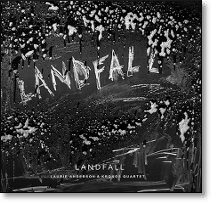
Laurie Anderson/Kronos Quartet: Landfall (2018, Nonesuch):
Audio for some form of visual presentation, Anderson's usual work mode,
reportedly linked to the devastation wrought by Hurricane Sandy. Music
seems less expansive than her best, the string quartet as much anchor as
vehicle. Would be neither here nor there but for the spoken word, which
is fascinating even at its most elliptical.
A-
Louise Baranger: Louise Baranger Plays the Great American
Groove Book (2017, Summit): Trumpet player, played in Harry
James' band just before his death (in 1983), has at least one previous
album. Aside from "Love Potion No. 9" and "The Sidewinder" focuses
on 1970s soul tunes -- Marvin Gaye, Stevie Wonder, Al Green, Bill
Withers, "Never Can Say Goodbye" -- writing one for Wilson Pickett.
B [cd]
David Bertrand: Palmyra & Other Places (2017,
Blujazz): Flute player, wrote all the pieces, nicely set off by
Rafal Sarnecki's electric guitar, plus bass and drums that keep
the beat interesting. Guest soprano sax on one cut.
B+(*) [cd]
Girma Bèyènè & Akalé Wubé: Éthiopiques 30: "Mistakes on
Purpose" (2017, Buda Musique): Ethiopian, no recording dates
but seems to be recent. Bèyènè plays piano and sings, somewhat talky;
Akalé Wubé is a band, with sax, trumpet, guitar, bass, and drums, plus
some guests drop in. Their relaxed flow doesn't sound all that African,
but that's just how unique they are -- and note that the horns can on
occasion slip into jazzy dissonance.
A-
Nick Biello: Vagabond Soul (2016 [2018], Blujazz):
Alto saxophonist, also soprano and synth, first album, postbop septet
with Paul Jones (tenor sax), Phil Markowitz (piano), plus viola, guitar,
bass, and drums. Biello originals, mostly taken fast with soaring sax.
B+(**) [cd]
Dan Block: Block Party: A Saint Louis Connection
(2015 [2018], Miles High): Tenor sax and clarinet, quite a bit of
the latter. Quintet with Rob Block (guitar), Neal Caine (bass),
Tadataka Unno (piano), and Aaron Kimmel (drums). Liner notes by
Joe Schwab, proprietor of Euclid Records in St. Louis for 35 years,
making me feel old as his shop didn't exist when I lived a half
block off Euclid -- what was it, oh dear, 45 years ago? Can't say
St. Louis was much of a jazz town then, but old timers remembered
it differently.
B+(***) [cd]
Owen Broder: Heritage: The American Roots Project
(2017 [2018], ArtistShare): Saxophonist, credit here is "woodwinds,"
ensemble is an octet plus three vocalists, mostly names I recognize,
produced by Ryan Truesdell. I don't particularly get the roots
concept, other than to recognize some American Indian drums and
chants mixed in with the jambalaya.
B
Sarah Buechi: Contradiction of Happiness (2017 [2018],
Intakt): Swiss singer-songwriter, third album, most songs in English
(aside from the trad. "Schönschte Obigstärn"), performed by pianist
Stefan Aeby plus strings (violin-viola-cello-bass) and drums.
B+(*) [cd]
Harley Card: The Greatest Invention (2015 [2018],
self-released): Canadian guitarist, leads a postbop quintet with
sax (David French) and piano (Matt Newton), richly complex and
grooveful, as such things tend to be.
B+(*) [cd]
Dawn Clement: Tandem (2017 [2018], Origin): Pianist,
also sings some but gives way to Johnaye Kendrick on two tracks, spots
other guests like Julian Priester (trombone, 2 cuts), Mark Taylor (alto
sax, 2 others), and Matt Wilson (drums, 2 others). The result is a
record which seems all over the place: I'm impressed by the piano,
love the bits with Priester and the dramatic jump into "Bemsha Swing,"
don't follow the vocals, and haven't (and won't ever) sorted the arc
or concept.
B+(*) [cd]
Ornette Coleman: Celebrate Ornette: Brooklyn Prospect Park
(2014 [2016], Song X, 2CD): Not something you can simply go out and buy,
let alone stream, unless you fork over $100 for a bloated product with a
third CD (the posthumous Ornette Coleman Memorial: Riverside Church),
two DVDs, and some paraphernalia ($275 will get you extra vinyl -- makes
you wonder if Denardo, beyond his unique apprenticeship on drums, hasn't
been taking business school correspondence courses on the side). Still,
this is the piece people who caught (or cajoled) the whole thing regard as
significant: the full concert featuring Coleman's last public appearance,
one where he only plays on the first two tracks, 19:52 of "Ramblin" and
"OC Turnaround" -- a brief reminder of his genius, a fitting coda to a
extraordinary career that started nearly sixty years earlier. After that,
others take over, usually fronting a band known as Denardo VIBE, mostly
playing Coleman tunes, easing us into a world deprived of his singular
genius for turning chaos into beauty, ending in a 20:21 "Lonely Woman"
with four famous-in-their-own-right saxophonists -- Ravi Coltrane,
Branford Marsalis, David Murray, Joe Lovano -- trying to pick up his
torch. Along the way, various others step on stage, including Geri
Allen, Jamaaladeen Tacuma, Nels Cline, James Blood Ulmer, John Zorn,
Henry Threadgill, Bill Laswell, Patty Smith, and Laurie Anderson.
People who were there tell me they were lifted, but in retrospect
it sounds more bittersweet.
A- [cdr]
Rose Cousins: Natural Conclusion (2017, Old Farm Pony):
Singer-songwriter from Prince Edward Island in Canada, generally filed
under folk but goes for a lusher pop sound here.
B
Roberta Donnay & the Prohibition Mob Band: My Heart Belongs
to Satchmo (2018, Blujazz): Old-timey standards singer, cut an
album in 1989, a half-dozen more since 1998, as well as appearing in
Dan Hicks' 2009-12 bands. Has a trumpet player named Rich Armstrong set
the table here before running through a set of songs familiar to Louis
Armstrong and anyone who adored him.
B+(**) [cd]
Duchess: Duchess (2015, Anzic): Jazz-rooted girl
group: Amy Cervini, Hilary Gardner, Melissa Stylianou -- based in
New York but originally from points north (Gardner from Alaska, the
others from Toronto), each with fledgling solo careers, patterned
this group after the Boswell Sisters. Backed by piano trio plus
Jeff Lederer on sax. Sometimes too slow ("Que Sera, Sera," "P.S.
I Love You"), but crackles when they get agitated ("There Ain't No
Sweet Man That's Worth the Salt of My Tears").
B+(**)
Duchess: Laughing at Life (2016 [2017], Anzic):
A second album, the cover again showing the three singers, but
this time a paste-up of three separate photos, their laughs out
of sync, their hairstyles decidedly more mature. Starts off with
old swing tunes which enhance their Boswell Sisters concept, but
changes pace midway and gets a bit lost.
B+(*)
Harris Eisenstadt: Recent Developments (2016 [2017],
Songlines): Canadian drummer, prolific since 2002, this nonet works
its way through a 40:33 composition, abstract with orchestral airs --
flute, bassoon, trumpet, trombone, tuba, banjo, cello, bass, drums,
all jazz musicians I readily recognize.
B+(**)
Fred Farell: Distant Song (2016 [2018], Whaling City
Sound): Farell "sings the music of Dave Liebman and Richie Beirach" --
note, not songs, because lyrics hardly catapult the music into great
American songbook. The whole project is a stretch, although I'll note
that the booklet includes praise from Sheila Jordan and Jay Clayton,
possibly the only singers who could pull this off. But even before I
looked at the booklet, I noted that the saxophone was simply gorgeous,
and undoubtedly Liebman. Turns out the piano is Beirach, too.
B+(*) [cd]
Craig Fraedrich: Out of the Blues (2017, Summit):
Trumpet player, studied at UNT, veteran of US Army Blues, teaches at
Shenandoah University, calls his group (small purple print) The Jazz
Trumpet Ensemble. Starts with five trumpet/flugelhorn players, backs
them up with piano-guitar-bass-drums for a brassy big band sound.
Mostly originals, plus Fraedrich arrangements of "Sometimes I Feel
Like a Motherless Child" and "Giant Steps." One song is called "Shades
of Blue," but I only hear one.
B- [cd]
Satoko Fujii: Solo (2017 [2018], Libra): The prolific
Japanese avant-pianist turns 60 this year, so decided to celebrate by
releasing one album each month, a fairly minor uptick from her usual
rate. January's offering is this solo performance, originals plus one
piece by Jimmy Giuffre. Her first solo outing since, well, last year's
Invisible Hand, the best I could recall of close to a dozen I've
heard. More quiet spots here, which for me at least makes it harder to
follow, less impressive, but not unremarkable.
B+(**) [cd]
Brad Garton/Dave Soldier: The Brainwave Music Project
(2017 [2018], Mulatta): Garton seems to be a programmer, who's come up
with software to convert EEG (brainwave) data into music. Soldier is
a violinist who had a folk group called the Kropotkins and has done
all sorts of off-the-wall projects, like orchestrating a choir of
elephants. Several other names on the cover, with featured roles on
various songs: Margaret Lancaster (flute), Dan Trueman (Hardanger
fiddle), Terry Pender (mandolin), William Hooker (drums). I don't
understand how this works (what they call "data sonification") but
the music is pretty interesting in its own peculiar way.
B+(***) [cd]
Camilla George Quartet: Isang (2016 [2017], Ubuntu
Music): Alto saxophonist, based in London, first album, has appeared
on a couple Zara McFarlane albums, the singer guesting on one cut
here. With Sarah Tandy (piano), Daniel Casimir (bass), and Femi
Koleoso (drums). Nice tone, hugs the beat.
B+(*)
GoGo Penguin: A Humdrum Star (2017 [2018], Blue Note):
British piano trio, from Manchester -- Chris Illingworth (piano), Nick
Blacka (double bass), Rob Turner (drums) -- aims for crossover if not
quite pop stardom with their not quite minimalist groove,
B+(*)
James Hall: Lattice (2016 [2018], Outside In Music):
Trombonist, from Nebraska, based in New York, at least one previous
album. Postbop quintet, matching Jamie Baum's flute against trombone
for the horns, often moving pianist Deanna Witkowski over to electric.
Goes down so easily you wind up wondering what's there.
B+(*) [cd]
Jupiter & Okwess: Kin Sonic (2017, Glitterbeat):
Jean-Pierre (Jupiter) Bokondji, born in Kinshasa 1963, grew up in East
Berlin (where he father was a diplomat), returned to Zaire in 1979 and
joined the band that eventually became Okwess. This picks up various
strands of Congolese pop, but frames them harshly, with metal crunching
and a dash of western funk.
B+(**)
Kaze: Atody Man (2017 [2018], Libra): Two trumpet
quartet, Natsuki Tamura and Christian Pruvost, with Satoki Fujii on
piano and Peter Orins on drums. Fourth or fifth group album (one was
an expanded group called Trouble Kaze). Starts way back but builds
into something special.
B+(***) [cd]
Rich Krueger: Life Ain't That Long (2017 [2018], Rockink):
Singer-songwriter originally from New York but based in Chicago, first
album at 58, somehow wrangled a kitchen sink backing group which reminded
me of Bruce Springsteen (and Gerry Raferty and Harry Chapin) even before
I heard the saxophone. His song about 1977 rings about as true as Don
McLean's about 1958, and isn't the only evidence he can write. So I'm
not unimpressed, but not enjoying this either.
B+(**)
Julian Lage: Modern Lore (2018, Mack Avenue): Young
guitarist (30), made the cover of Downbeat, in a trio with Scott
Colley (bass) and Kenny Wolleson (drums/vibes). Napster filed under folk
for no discernible reason, not that it ticks many jazz boxes either.
B
Les Filles De Illighadad: Eghass Malan (2017, Sahelsounds):
Tuareg group from Niger, fronted by two sisters harmonizing over sparse
guitar and drums.
B+(**)
Daniel Levin/Chris Pitsiokos/Brandon Seabrook: Stomiidae
(2016 [2018], Dark Tree): Cello-alto sax-guitar free improv trio, the
latter two I associate with noise, although they keep that within
interesting bounds here -- a little scratchy, rather abstract, a
fair complement to a scratchy and abstract cellist. Stomiidae, by
the way, are a family of deep sea denizens such as the barbeled
dragonfish, pictured on the cover.
B+(***) [cd]
Dua Lipa: Dua Lipa (2017, Warner Brothers): British
pop singer, born in London in 1995, parents Kosovar Albanians who got
out before the US decided to save their people by bombing them. A bit
of gravity in her voice, nothing spectacular in the arrangements, but
catchy enough and grows on you.
B+(**)
Living Fossil: Never Die! (2017 [2018], self-released):
Group name stylized with back-and-forward slashes, lower case, no space,
but they don't carry that conceit over to their Bandcamp page. Tenor
saxophonist Gordon Hyland gets the large type on the back cover, backed
by guitar and drums, with duties split between two bassists, plus a
couple of others on various cuts.
B+(**) [cd]
Kate McGarry/Keith Ganz/Gary Versace: The Subject Tonight Is
Love (2017 [2018], Binxtown): Standards singer, half-dozen
albums from 1992, 2001, and since 2005. Likes to scat. Backed by
guitar and keyboards/accordion. I've never been a fan, but this
works out nicely, with a particularly touching "My Funny Valentine"
and a rare Beatles cover to close ("All You Need Is Love").
B+(**) [cd]
Hailu Mergia: Lala Belu (2018, Awesome Tapes From Africa):
From Ethiopia, plays keyboards, accordion, and melodica; has driven a taxi
in Washington DC while his early tapes awaited rediscovery -- since 2013,
Brian Shimkowitz has released three of his 1977-85 albums. This, however,
seems to be new music, backed by bass and drums, recorded in Virginia.
Not as "awesome" as its predecessors, just engaging and rather sweet,
catchy too.
B+(***)
Juana Molina: Halo (2017, Crammed Discs): Argentine
singer-songwriter, seventh album, the sort of thing one would be tempted
to call folktronica, with odd bits from all around the world dressed
up with keybs, occasional guitar, and backing voices, but kept very
understated.
B+(*)
David Murray feat. Saul Williams: Blues for Memo
(2016 [2018], Motéma): Williams is more poet than singer, but has a
half-dozen albums, notably Martyr Loser King (2016). He read
a poem at Amiri Baraka's funeral, and Ahmet Ulug got the idea of
arranging a meet up with Murray in Turkey, where this album was
originally released. The saxophonist is typically magnificent here,
the singer/rapper harder to hear and suss out, but offhand doesn't
seem like a good match (unlike, say, Murray's work with Ishmael
Reed).
B+(**)
Musique Noire: Reflections: We Breathe (2017,
self-released): Detroit string/percussion quartet, led by Michelle
May (violin/flute), third album, adds extras here and there, vocals
included.
B+(*)
Youssou N'Dour: Raxas Bercy 2017 (2017, self-released):
Not sure this even counts as a thing: a concert tape dumped out on YouTube,
what in ancient times was called a bootleg and generally ignored by
respectable critics, but nowadays is just data, the original source
apparently the artist himself. Still, good luck trying to come up with
a usable copy -- I'm not sure mine qualifies on that account either.
As live N'Dour concerts go, this does live up to his stellar reputation,
and I especially like the sharp attack on the drums.
A- [dl]
Negative Press Project: Eternal Life: Jeff Buckley Songs and
Sounds (2017, Ridgeway, 2CD): Oakland group, Jeff Denson is
executive producer, Ruthie Dineen (piano) and Andrew Lion (bass) are
arrangers, with various horn players, guitarists, and drums. I never
liked Buckley's records, but was pleasantly surprised by the cogency
and flow of the long instrumental disc. Much less so, of course, by
the vocals on the short second disc.
B+(*) [cd]
Arturo O'Farrill & Chucho Valdés: Familia: Tribute to
Bebo & Chico (2017, Motéma, 2CD): Cuban pianists (the
former actually born in Mexico), both sons of legendary Cuban big
band leaders, both (arguably) more accomplished than their fathers.
Don't have a lot of details, but first disc is credited to the Afro
Latin Jazz Orchestra, which would be O'Farrill's big band, with the
second by the Third Generations Ensemble. Lots of pianistics, horns,
and percussion.
B+(**)
Evan Parker/Barry Guy/Paul Lytton: Music for David Mossman:
Live at Vortex London (2016 [2018], Intakt): Sax-bass-drums
trio, have played together a lot over the years, as a trio since
1980, the Parker-Lytton duo going back to 1967, with both playing
in Guy's big band in 1972. Mossman was founder of the Vortex, a
London club where they've played often for thirty-some years. Not
sure this is one of their best, but hard to deny.
A- [cd]
Allison Pierce: Year of the Rabbit (2017, Masterworks):
Solo debut from the elder sister of the Pierces, who recorded five
pleasantly folkie albums 2000-14. More along those lines, especially
when the harmony swells up.
B
Quelle Chris: Being You Is Great, I Wish I Could Be You
More Often (2017, Mello Music Group): Detroit rapper Gavin
Christopher Tennille, half-dozen albums since 2009. Fuzzy underground
beats, scratches aplenty, voices put me on edge, especially when they
get cluttered.
B-
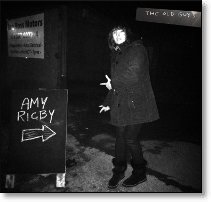
Amy Rigby: The Old Guys (2018, Southern Domestic):
Possibly the best singer-songwriter in America for the decade 1996-2005,
a period bracketed by two A records (Diary of a Mod Housewife and
Little Fugitive, nothing much lower in between. Then she married
Eric Goulden (aka Wreckless Eric) and cut three duo albums with him --
two better than anything he'd done before. First solo album in 13 years,
doesn't rank with her best but at least four songs make me want to come
back, everything else I enjoy -- her voice, of course, but also some of
the hardest guitar she's ever employed.
A-
Jamie Saft: Solo a Genova (2017 [2018], RareNoise):
Pianist, seems like he mostly played electric early on but has
developed into a remarkable acoustic player, and this live set
of mostly standards -- 9/11, but more from rock era songwriters
like Dylan, Mayfield, Mitchell, and Wonder than jazz sources
(just Coltrane and Davis, with Ives as an outlier) -- is
consistently engaging.
B+(***) [cdr]
Samo Salamon/Howard Levy: Peaks of Light (2017 [2018],
Sazas): Guitarist, from Slovenia, duets with harmonica player Levy,
perhaps best known from Béla Fleck and the Flecktones (1988-92,
returned in 2011), but he has more than a dozen albums, most on a
label called Balkan Samba. Strong presence, the guitarist working
deftly around the edges.
B+(***) [cd]
Cecilia Sanchietti: La Verza Via (2017 [2018], Blujazz):
Italian drummer, leads a piano trio with Pierpaolo Principato on the
keys, joined by Nicholas Kummert (tenor sax) on 5/10 cuts. Sanchietti
originals plus covers of Keith Jarrett and Maria Schneider. Nice flow,
sax adds lustre.
B+(*) [cd]
Dolores Scozzesi: Here Comes the Sun (2017 [2018],
Café Pacific): Standards singer, second album, produced by Mark
Winkler, idiosyncratic mix of things that work and others that
don't. She does have a distinctive voice, low but not sultry,
and the arrangements are adroit.
B+(*) [cd]
Andy Sheppard Quartet: Romaria (2017 [2018], ECM):
British tenor/soprano saxophonist, a regular with Carla Bley since
the mid-1990s, backed here by Eivind Aarset (guitar), Michel Benita
(double bass), and Sebastian Rochford (drums). He slows down and
fades into the ether, though this makes for pretty background as
long as you can hear it.
B+(*)
Shopping: The Official Body (2018, FatCat): British
post-punk band, third album, Rachel Aggs plays guitar and sings, bassist
and drummer also sing some. Songs are tight, clean, have a rhythm and
tone similar to that of such classic post-punk bands as Wire, Gang of
Four, and Joy Division. That's pretty good.
A-
Dr. Lonnie Smith: All in My Mind (2018, Blue Note):
Organ player, cut Finger Lickin' Good in 1967 and hasn't messed
with his formula much since then. Trio with Jonathan Kreisberg (guitar)
and Johnathan Blake (drums), playing live somewhere, at some time, no
details yet on that. I'm not immune to his grove, and his opening "Juju"
is fine, but he steps in it on occasion -- a Paul Simon melody for one.
B-
Spellling: Pantheon of Me (2017, self-released): Tia
Cabral, from Oakland, first album after a couple of EPs, hard to classify,
dark as trip hop but short on beats.
B
Peter Stampfel and the Brooklyn & Lower Manhattan
Fiddle/Mandolin Swarm: Holiday for Strings (2016, Don Giovanni):
Went looking for his new one (The Cambrian Explosion) and found
this not-so-old one I had missed. The Swarm is often out of control, and
the mass of not-very-harmonic voices is unruly, but the leader remains
so unique you never for a moment have trouble picking him out from the
chaos.
A-
Edgar Steinitz: Roots Unknown (2017 [2018], OA2):
Physician, professor, lately plays clarinet/bass clarinet/soprano sax,
studied with bassist Dave Friesen, who plays on this belated debut,
a set of pieces exploring Ashkenazi and Sephardic traditions. Backed
with accordion, violin, and percussion, with Jay Thomas guesting on
trumpet/flugelhorn, flute, and tenor sax.
B+(***) [cd]
Bobo Stenson Trio: Contra La Indecisión (2017 [2018],
ECM): Swedish pianist, discography starts in 1971, always impressive,
although I tend to think of him for the quartet he co-led with Jan
Garbarek. This is a basic trio with Anders Jormin on bass and Jon
Fält on drums, Jormin's name on 6 (of 11) compositions (counting a
group credit which gives Stenson 2) -- covers include Bartok, Satie,
and the title piece from Silvio Rodriguez, all played delicately.
B+(**)
Tal National: Tantabara (2018, Fat Cat): Group from
Niger, third record, upbeat, intense even. I find their guitars and
voices a bit grating, although sometimes they overcome my resistance.
B+(***)
Anna Tivel: Small Believer (2017, Fluff and Gravy):
Singer-songwriter from Portland, plays guitar and violin, fourth album,
has a producer who spruces up the sound without clutter or distraction.
A lovely album, I find myself hanging on every word.
A-
Traxman: Tekvision (2017, Teklife): Cornelius Ferguson,
aka Corky Strong, footwork producer from Chicago. Works with a minimal
set of beats, rather clunky. On the short side: 8 cuts, 29:46.
B-
Ty Dolla Sign: Beach House 3 (2017, Atlantic): Rapper
Tyrone William Griffin Jr., second studio album, title acknowledges
two previous Beach House mixtapes (of nine mixtapes since 2011).
Sings more than he raps, or perhaps I should say splits the difference?
B+(*)
Steve Tyrell: A Song for You (2018, New Design):
Born in Houston, moved to New York at 18, established himself as a
record producer, working with Burt Bacharach and Hal David, Dionne
Warwick, and B.J. Thomas. Appeared as a crooner in Steve Martin's
Father of the Bride, leading to a second career as a standards
singer, e.g.: A New Standard (1999), followed by nearly a dozen
titles like Songs of Sinatra and Bach to Bacharach. He
dedicates this album to the late Paul Buckmaster, who evidently worked
on the title track. Opens with a Van Morrison song, followed by "Come
Rain or Come Shine" and "Try a Little Tenderness" -- tidy arrangements,
sweetened by strings from Budapest.
B+(**) [cd]
Mike Vax & Ron Romm: Collaboration (2017 [2018],
Summit): Two trumpet players: Vax mostly in big bands, including work
with Stan Kenton and Clark Terry, with an album under his own name
from 1974; Romm a veteran of the Canadian Brass (1971-2000). This one
focuses on the trumpet tradition from Armstrong to Adderley -- the
latter's "Sweet Emma" is a highlight.
B+(**) [cd]
Michael Waldrop: Origin Suite (2017 [2018], Origin):
Drummer/vibraphonist, runs a big band here, with various bits recorded
elsewhere and tacked together. The title suite is rather short, but
the album goes on and on, alternately richly expressive and overblown.
B- [cd]
Wu-Tang: The Saga Continues (2017, eOne): Released in
October, the group name shortened to note the absence of U-God (some
legal issues, royalties maybe), conspicuously produced by Mathematics,
pretty much universally ignored (68 at Metacritic on 13 reviews, only
one EOY list appearance I've noted, and 100th place at that). I can't
say I've ever been much of a fan, and indeed disliked the whole 1990s
gangsta fad, but time changes everything, not least how one perceives
those who haven't changed. They're old school now, their beats/samples
sound great, giving their tales of drug dealing an air of literature,
and their defense of black masculinity a quest for dignity and power
(albeit with a whiff of sexism).
A-
Hideo Yamaki/Bill Laswell/Bjorn Björkenheim/Mike Sopko/Dominic
James: Inaugural Sound Clash for the 2 Americas (2017, MOD
Technologies): Drummer, bassist, three guitarists, recorded live at
the Stone in NYC on Trump's inauguration day, one long piece called
"Against the Empire of Alternative Facts." Eschews the rage, fear and
loathing the occasional cried out for, settling into a groove showing
strength and resilience, not that the path ahead will be easy.
B+(***)
Recent Reissues, Compilations, Vault Discoveries
Mulatu Astatke: Mulatu of Ethiopia (1972 [2017], Strut):
From Ethiopia, studied engineering in Wales, music at Trinity College
in London and Berklee in Boston, playing keyboards, vibraphone, and
percussion in a mix he called Ethio-jazz, cutting this early record in
New York.
B+(***)
Youssou N'Dour: Africa Rekk: Réédition (2016 [2017],
Jive/Epic): Since leaving Nonesuch, the Senegalese superstar has become
increasingly difficult to follow, his main legit outlet Sony in France
(with limited if any US distribution), plus various download-only items,
legit or not. This adds (and possibly remixes) a couple songs to his
2016 album, but access seems limited to streaming outlets. But at
least that's access, as compared to Christgau's recent picks: the EP
#Senegaal Rekk and the live Raxas Bercy 2017. This is
about half typical/brilliant, half veering into less satisfying styles,
like calypso.
B+(**)
Old Music
Derek Bailey/Evan Parker/Hugh Davies/Jamie Muir/Christine Jeffrey:
The Music Improvisation Company (1970, ECM): Very early in
the long, storied careers of Bailey (electric guitar) and Parker (soprano
sax), at the time no more famous than Davies (electronics), Muir (percussion),
or Jeffrey (voice on two tracks, not that you notice). Could be taken as
some sort of landmark, but scratchy and abstract, hard to follow without
much payoff.
B
Kenny Barron: Scratch (1985, Enja): Piano trio, with
Dave Holland on bass and Daniel Humair on drums. Five originals, one
song from Carmen Lundy.
B+(**)
Kenny Barron Trio: Green Chimneys (1983-87 [1988],
Criss Cross): Piano trio, with Buster Williams on bass and Ben Riley
on drums. One original, nine covers -- including two Monks that jump
out at you, although everything is deftly played.
B+(***)
Raoul Björkenheim & Krakatau: Ritual (1988-90 [1996],
Cuneiform): The American-Finnish guitarist's first album, ten tracks
released in Finland in 1988 plus a couple later ones tacked on for the
US release. Björkenheim went on to release three more albums as Krakatau
with different lineups. Where fusion seeks to make jazz more rocksteady,
he starts with rock licks and improvises on them, with saxophonist Tapani
Rinne bringing on extra noise.
B+(***) [bc]
Carla Bley: Tropic Appetites (1973-74 [1974], Watt):
Lovella May Borg, b. 1936, father a piano teacher and church choirmaster,
moved to New York at 17, became a cigarette girl at Birdland, changed
her name first to Karen then Carla Borg, met and married Paul Bley,
divorced him and married trumpet player Michael Mantler, which lasted
1965-91. (She later married bassist Steve Swallow.) Her first record
came out in 1966, followed by A Genuine Tong Funeral (her music,
but headlined by Gary Burton) and her famous avant-opera, Escalator
Over the Hill, with libretto by Paul Haines. Haines wrote parts of
this as well, with Julie Tippetts first among the singers. I've never
been a fan of any kind of opera, and even though this is far from the
classical model, it seems to me that the words just trip up the music.
Elsewhere, the music is clever and interesting, except when a tenor
saxophone (originally credited to "Unidentified Cat" but instantly
identifiable as Gato Barbieri) elevates it to awesome.
B+(*)
Carla Bley: Dinner Music (1976 [1977], Watt): Large
group, nine musicians, Bley sharing the piano slot with Richard Tee
but also playing organ, tenor sax, and singing one song. Scattered,
but when something exceptional happens it's usually trombonist Roswell
Rudd at work, or sometimes one of the guitarists (Cornell Dupree and
Eric Gale).
B+(**)
Carla Bley: Social Studies (1980 [1981], Watt):
Another large group set: two saxes (Carlos Ward, Tony Dagradi),
four brass (Michael Mantler, Gary Valente, Joe Daly on euphonium,
Earl McIntyre on tuba), bass, drums, Bley on organ and piano.
Nice, richly detailed arrangements. No downside, not much upside
either.
B+(*)
Carla Bley: Live! (1981 [1982], Watt/ECM):
Recorded at Great American Music Hall in San Francisco, her basic
tentet, with the leader on organ, Arturo O'Farrill on piano, two
saxes, four brass (Victor Chancey's French horn replaces the
euphonium), bass and drums. More vibrant than the studio albums,
the rhythm steadier, the top brass has some snap, and the saxes
soar.
A-
The Carla Bley Band: I Hate to Sing (1981-83 [1984],
Watt/ECM): Recorded live, first side in San Francisco, second Willow,
NY. Band basically the tentet, the main difference between the two
sets at tuba (Bob Stewart v. Earl McIntyre). Three songs have lyrics,
somewhat reminscent of Brecht-Weill, using five voices played for
comic effect. The music elsewhere is more distinctively Bley, full
of good humor and wry wit.
B+(***)
Carla Bley: Heavy Heart (1983 [1984], Watt/ECM):
Composer first and foremost, leaves the piano slot in this tentet
to Kenny Kirkland, playing organ and synth herself. One saxophone
(Steve Slagle on alto/baritone/flute), trumpet-trombone-tuba,
guitar-bass-drums plus extra percussion (Manolo Badrena).
B+(**)
Carla Bley: Night-glo (1985, Watt/ECM): Front cover
adds, "with Steve Swallow" -- her bass player for a while, and future
third husband (1991), with Michael Mantler's role reduced to "general
coordination." Back cover lists six rhythm section musicians in larger
type -- Swallow first, Bley (organ, synthesizers), Larry Willis (piano),
guitar (Hiram Bullock), drums (Victor Lewis), percussion (Manolo
Badrena) -- then five horn players in smaller type. Indeed, while the
horns are everywhere they're pretty insignificant. But you could almost
say as much for the rhythm.
B-
Carla Bley: Sextet (1986-87 [1987], Watt/ECM):
Same core group, returning with no horns, although Bley's organ
provides some horn-like coloring, and guitarist Hiram Bullock
gets some solo space.
B+(*)
Carla Bley: Fleur Carnivore (1988 [1989], Watt/ECM):
Five original pieces, fifteen musicians, recorded live in Copenhagen.
Plenty of horn options, a nice mix of spontaneity and plan.
B+(***)
Carla Bley/Steve Swallow: Go Together (1992 [1993],
Watt/ECM): Sequel to 1988's Duets, just piano and bass, the
latter encroaching on guitar territory. Nice piano here, not very
flashy, just picking her way through the fetching melodies.
B+(*)
Carla Bley: Big Band Theory (1992 [1993], Watt/ECM):
Most of Bley's albums to date have had large bands -- 9-11 members --
with a similar (or even slightly expanded) range of instruments, but
short of the 4-4-5 horn sections big bands have used since the middle
ages. Here she lines the horns up according to the book, her only
unconventional decisions the addition of violin (Alex Balanescu)
and organ (daughter Karen Mantler), with Bley playing piano. Three
original pieces, plus a slow, magisterial "Goodbye Pork Pie Hat."
Works pretty much in practice as in theory: more horns, more power.
B+(**)
Carla Bley/Andy Sheppard/Steve Swallow: Songs With Legs
(1994 [1996], Watt/ECM): Sheppard is a British tenor/soprano saxophonist,
did a few albums for Island/Antilles in the late 1980s, got picked up
in Bley's large bands and wound up in her inner circle. Intimate trio
recordings, closing with one from Monk.
B+(**)
The Carla Bley Big Band: Goes to Church (1996, Watt/ECM):
Recorded live at Chiesa San Francesco Al Prato in Perugia, Italy, full
big band plus organ, original material except for a bit of "Exaltation"
by Carl Ruggles. No trace of gospel; if anything, closer to classical,
full of pomp and dramatic gestures.
B+(*)
Carla Bley: Fancy Chamber Music (1997 [1998], Watt/ECM):
Bley and Steve Swallow (piano and bass) are joined by flute, clarinet,
and strings (one each: violin, viola, cello). Too fancy for me, although
much of it is pretty enough.
B
Carla Bley/Steve Swallow: Are We There Yet? (1998 [1999],
Watt/ECM): Another duo album, piano and bass, recorded live somewhere in
Europe. Swallow wrote three tracks, but his bass is hardly noticeable,
making this the closest yet to solo Bley. She also wrote three pieces,
plus they cover Kurt Weill ("Lost in the Stars").
B+(*)
Carla Bley: 4X4 (1999 [2000], Watt/ECM): Title could
refer to the octet, split between four horns (two saxes, trumpet, trombone)
and four rhythm (piano, organ, bass, drums) -- Larry Goldings is the only
new musician here, adding an air of soul jazz that's never been in Bley's
toolkit. Very scattered, some remarkable bits and much more I couldn't
put enough time into to dig or dismiss.
B+(*)
George Cartwright: Dot (1994, Cuneiform): Saxophonist
(alto/tenor), leader of the punk-fusion group Curlew (1980-2003). Not
real clear what the goals is here, sometimes playing soul jazz, on two
cases featuring guest vocalists, occasionally breaking into snarling
avant sax.
B+(*) [bc]
George Cartwright: The Memphis Years: Terminal Moraine
(2000, Cuneiform): Names on front cover: Amy Denio (vocals), Paul
Haines (lyrics). Leader plays various saxes, the band is fairly large,
the music flowing, and he words (including dedications to Kenneth
Patchen and Allen Ginsberg) not without interest.
B+(**) [bc]
Curlew: Live in Berlin (1986-87 [1990], Cuneiform):
Interesting group, cut a remarkable debut album in 1980, only one
more album before this started their association with Cuneiform (7
albums, 1990-2003). Saxophonist George Cartwright and cellist Tom
Cora are the leaders, keyboardist Wayne Horvitz the best known side
man, plus guitar and drums. Hard to peg, some fusion, some avant --
their first album I tied to New York No Wave. CD adds four tracks,
including a deliciously bent "Feelin' Good."
B+(***) [bc]
Curlew: Bee (1990 [1991], Cuneiform): Seems to have
settled down to a regular lineup, with saxophonist George Cartwright
outwriting cellist Tom Cora 8-3, with Davey Williams (guitar) breaking
ground, Ann Rupel on bass and Pippin Barnett on drums.
B+(***) [bc]
Curlew: A Beautiful Western Saddle (1993, Cuneiform):
With Amy Denio singing lyrics by Paul Haines, both names noted on
cover, art-song, I suppose, since it's nowhere near stilted enough
to be opera. Nothing against the vocals, but I generally find the
instrumental passages more interesting, with new guitarist Davey
Williams emerging as most valuable player.
B+(*) [bc]
Curlew: Paradise (1996, Cuneiform): Another lineup
shift leaving saxophonist George Cartwright more than ever the leader,
with longtime cellist Tom Cora parted, a second guitarist added (Chris
Cochrane joins Davey Williams), old bassist, new drummer, and Jim Spake
(bari/soprano sax) as "special guest." Mostly simple groove pieces,
some (not all) bent into interesting shapes.
B+(**) [bc]
Curlew: Fabulous Drop (1998, Cuneiform): George
Cartwright's sax, two guitars, electric bass, new drummer (Kenny
Wolleson), playing within their formula -- at this stage akin to
what was then called acid jazz -- hard and often funky.
B+(***)
Curlew: Meet the Curlews (2002, Cuneiform): More
personnel churn: saxophonist George Cartwright and guitarist Davey
Williams are the only returning members, while pianist Chris Parker
changes the band's complexion, for another mixed bag.
B+(**)
Curlew: Mercury (2003, Cuneiform): Saxophonist George
Cartwright's group, quintet backed with guitar-keyboards-bass-drums,
new guitarist Dean Granos most important. They've always had a fusion
element, so first thought on hearing their initial screech was the
title signifies heavy metal, but slippery.
B+(***)
Elton Dean/Howard Riley/Paul Rogers/Mark Sanders: All the
Tradition (1990, Slam): English alto saxophonist, best known
as a member of Soft Machine as they made their initial jazz-rock move
(Third to Fifth, returning for Soft Machine Legacy
2005-06), but he has a substantial avant discography up to his death
in 2006. Backed by piano/bass/drums, although Riley is more like a
co-leader. Two group improvs, spreading out three covers -- "Darn
That Dream," "Crescent," "I Remember Clifford" -- that give the band
something to chew on.
B+(***)
Elton Dean: The Vortex Tapes (1990, Slam): Five
tracks (9:42-18:39) recorded over five dates at the Vortex Club,
with varying lineups so you get a long list of extra names (13)
on the cover. Still, the groups are small: four quartets, one
sextet with Simon Picard and Trevor Watts additional saxes. The
first piece, "Second Thoughts," is possibly the best thing I've
heard Dean do, with pianist Keith Tippett throwing down blocks
and Dean deftly leaping over them. Mileage varies on the other
pieces, but when you notice the piano again, on the closer, it's
Howard Riley -- very different, but also remarkable.
B+(**)
Elton Dean Quintet: Silent Knowledge (1995 [1996],
Cuneiform): Quintet picks up three-fourths of Mujician (Paul Dunmall,
Paul Rogers, and Tony Levin), with Sophia Domancich on piano. Jousting
with Dunmall is exciting, but I almost prefer one relatively intimate
stretch without him.
B+(***) [bc]
Elton Dean Quartet + Roswell Rudd: Rumours of an Incident
(1996 [1997], Slam): Early in the trombonist's comeback stretch, he
finds himself in a British free jazz group, not one of Dean's stronger
rhythm sections, and thrashes it out on two long improv numbers.
B+(**)
Elton Dean/Paul Dunmall/Tony Levin/Paul Rogers/Roswell Rudd/Keith
Tippett: Bladik (1996 [1997], Cuneiform): A big step forward
for the rhythm section, as Dean introduces Rudd to the quartet otherwise
known as Mujician. Three long improv pieces, a fair amount of slash and
grind, but the alto and the trombone remain pretty distinctive, and
drummer Levin is really terrific.
A-
Jack DeJohnette: The DeJohnette Complex (1968 [1969],
Milestone): Drummer, from Chicago, sraddled hard bop and free, early
on playing with Sun Ra and various AACM guys, joining Charles Lloyd
in 1966, developing into one of the great drummers of our time. This
first album features Bennie Maupin (tenor sax/wood flute/flute),
Stanley Cowell (piano, mostly electric), Eddie Gomez and/or Miroslav
Vitous (bass), and Roy Haynes (drums). Maupin and Cowell each have
spots where they threaten to break free, but the effect is just
scattered, ending on a flute downer.
B
Jack DeJohnette: Pictures (1976 [1977], ECM): Solo
on three cuts (first side), playing keyboards as well as drums, then
duets with guitarist John Abercrombie on the second side (three more
cuts). Rather thin basis for an album, with nothing much standing out.
B-
Jack DeJohnette: New Directions (1978, ECM): In 1977
DeJohnette unveiled a quartet called Directions (album title New
Rags). He retains Abercrombie here, replacing the sax with Lester
Bowie's trumpet, and bringing in Edsel Gomez on bass.
B+(*)
Jack DeJohnette: Special Edition (1979 [1980], ECM):
Quartet with Peter Warren (bass, cello) and two saxophonists: David
Murray (tenor, bass clarinet) and Arthur Blythe (alto). That's a lot
of firepower, but for some reason it's deployed rather erratically.
B+(**)
Jack DeJohnette New Directions: In Europe (1979 [1980],
ECM): The quartet from New Directions -- Lester Bowie (trumpet),
John Abercrombie (guitar/mandolin guitar), Eddie Gomez (bass) -- with
a live set from Willisau, in Switzerland.
B+(*)
Amy Denio/Pavel Fajt/Csaba Hajnóczy/Gabi Kenderesi: The
Danubians (1999 [2000], Cuneiform): Eponymous group album,
but the names are on the cover, and the label identifies this as
Denio's project. She hails from Seattle; plays accordion, alto sax,
bass, and guitar, and sings, often sampled; has a dozen albums but
I first ran into her singing for Curlew. The others seem to be
Hungarian, straddling folk and electronica, with Kerendesi's deep
voice also sampled. Not sure what to make of the mix, but the sax
is impressive.
B+(***) [bc]
The Dirty Dozen Brass Band: The New Orleans Album (1989
[1990], Columbia): Formed in the late 1970s, one of the more successful
and longer lasting (most recent album 2012) of the tourist era revival
bands -- possibly because their idea of tradition draws more on Dave
Bartholomew than on King Oliver. This was their fourth album, Core band
has two saxes, two trumpets, sousaphone, and drums, with trombone on two
cuts, and they make ample use of guests here, including vocals by Eddie
Bo, Danny Barker, Elvis Costello, and Bartholomew (who also takesa hot
trumpet solo; Bo, of course, plays some piano).
B+(*)
The Dirty Dozen Brass Band: Jelly: The Dirty Dozen Brass Band
Plays Jelly Roll Morton (1992-93 [1993], Columbia): Basically
a party band with occasional references to old New Orleans, more to
marching bands than to the revolutionary jazz of the 1920s. Turns out
they have little feel for Morton, even with Danny Baker chipping in
occasional stories and introductions.
B
Paul Dunmall Octet: The Great Divide (2000 [2001],
Cuneiform): British avant-saxophonist, plays tenor here as does Simon
Picard, accompanied by trumpet, two trombones, his Mujician mates on
piano (Keith Tippett), bass (Paul Rogers), and drums (Tony Levin),
plus some extra guests: guitarist John Adams on several cuts, more
(including Elton Dean and Evan Parker) on the closer -- where the
album finally degenerates into a free-for-all.
B+(*) [bc]
Paul Dunmall/John Adams/Mark Sanders: Totally Fried Up
(1998 [1999], Slam): Avant tenor sax/guitar/drums trio. The guitarist
is key here, winding Dunmall up even tighter than usual, although the
same trio's earlier Ghostly Thoughts impressed me more.
B+(**)
Vinny Golia/Aurora Josephson/Henry Kaiser/Mike Keneally/Joe
Morris/Damon Smith/Weasel Walter: Healing Force: The Songs of
Albert Ayler (2006 [2007], Cuneiform): Label credits Healing
Force as the artist group name, but cover lists the musicians above,
credits: reeds, voice, guitar, piano/guitar/voice, guitar/bass, bass,
drums. Most likely Kaiser's concept, as he produced and it's on a
label he's worked with before. Some chance this could grow on one,
mostly depending on how you take the vocals -- a couple are
practically pop songs. I'd rather hear Golia more: he's got
Ayler's Holy Ghost act pat, not to mention more chops.
B+(***) [bc]
Gerry Hemingway Quintet: Special Detail (1990 [1991],
Hat Art): Drummer, part of Anthony Braxton's famous 1983-94 Quartet,
has a couple dozen albums under his own name since 1979. Quintet
includes two Dutch avant-gardists -- Ernst Reijsager (cello) and
Wolter Wierbos (trombone) -- bassist Ed Schuller, and Don Byron,
not someone you expect playing free, which he does remarkably both
on clarinet and baritone sax.
B+(***)
Gerry Hemingway Quartet: Down to the Wire (1991 [1993],
Hat Art): Two horns: Michael Moore (alto sax, clarinet, bass clarinet)
and Wolter Wierbos (trombone), the latter not prominent enough, plus
Braxton mate Mark Dresser on bass.
B+(*)
Gerry Hemingway Quintet: The Marmalade King (1994
[1995], Hat Art): Adds Dutch cellist Ernst Reijsager to the Quartet,
although his impact is less obvious than that of Michael Moore on
various reeds (mostly alto sax and clarinet), bouncing off against
Wolter Wierbos' trombone.
B+(***)
Keith Jarrett/Jack DeJohnette: Ruta and Daitya
(1971 [1973], ECM): Duets, pianist and drummer, but Jarrett also
plays electric, organ, percussion, and quite a bit of flute --
actually pretty good. Earliest recorded album for ECM, although
Facing You appeared first.
B+(**)
Keith Jarrett: Facing You (1971 [1972], ECM): Solo
piano, possible his first ever -- there have been a couple dozen
since. This one is fairly measured compared to later outings like
The Köln Concert which cemented his reputation as the top
pianist of his generation. Might even pass for cocktail rumination,
but can't be dismissed as such.
B+(**)
Keith Jarrett: Arbour Zena (1975 [1976], ECM):
Three pieces, one 27:47 (52:59 total), played by the Stuttgart
Radio Symphony Orchestra, supplemented by Jarrett on piano,
Charlie Haden on bass, and Jan Garbarek on tenor/soprano sax.
Lovely work from the stars, but the Orchestra just mopes in the
background.
B-
Keith Jarrett: The Survivor's Suite (1976 [1977],
ECM): One 48:39 composition, played by Jarrett's "American Quartet"
on his European label: Dewey Redman (tenor sax), Charlie Haden (bass),
Paul Motian (drums). Runs the gamut of colors and emotions, including
some impressively strenuous sax.
B+(**)
Keith Jarrett: Nude Ants (1979 [1980], ECM, 2CD):
The pianist's European Quartet, with Jan Garbarek (tenor/soprano sax),
Palle Danielsson (bass), and Jon Christensen (drums). Recorded live
at the Village Vanguard, encouraging them to vamp at length, six pieces
stretched to 101:36.
B+(**)
Keith Jarrett: Personal Mountains (1979 [1989], ECM):
Same group, recorded a month earlier in Tokyo but unreleased for a
decade. A bit more succinct, perhaps a bit more from Jan Garbarek,
but makes little difference overall.
B+(**)
Franz Koglmann: Schlaf Schlemmer, Schlaf Magritte
(1984 [1993], Hat Art): Austrian trumpet player, one of his earlier
records, a tentet with a wide mix of horns but the only saxophone
is Roberto Ottaviano's soprano. Arty composed music, one hesitates
to say classical or "third stream," but more familiar there.
B+(*)
Franz Koglmann: About Yesterday's Ezzthetics (1988
[1989], Hat Art): Mostly covers, a look back on the jazz tradition,
including two signature George Russell pieces ("Ezz-Thetic" and
"Stratusphunk"), two each from Gillespie and Monk, one each from
Rollins and Lacy, a couple of songbook standards. Band names on
the cover: Steve Lacy (soprano sax), Mario Arcari (oboe), Klaus
Koch (bass), Fritz Hauser (drums). Familiarity normally makes it
easier to figure out what an artist is doing distinctive but this
is still pretty hard to suss out.
B+(*)
Franz Koglmann: A White Line (1989 [1990], Hat Art):
Cover Lists "guest artists" -- Paul Bley (piano), Tony Coe (tenor
sax/clarinet), Gerry Hemingway (drums) -- although they seem to be
full-time band members, along with less famous names on oboe, French
horn, tuba, guitar, accordion, and bass, and the leader on trumpet:
ten in all. Still difficult, but more interesting -- even fun to hear
"At the Jazz Band Ball."
B+(**)
Eero Koivistoinen: Helium (1999 [2001], Texicali):
Finnish tenor saxophonist, made some of the most bracing fusion
records of the 1970s, still soars over a hard groove, toughened up
by guitarist Raoul Björkenheim, plus African drums on 3/9 tracks.
B+(**)
Eero Koivistoinen & UMO Jazz Orchestra: Arctic Blues
(2005-16 [2016], Svart, 2CD): Discogs shows a gap in the Finnish sax legend's
discography between 2001-14, finally broken by several featured appearances
in large contexts. UMO was founded in 1975 and has forty-some albums, at
least two previous featuring Koivistoinen's music. Huge, hard to pick out
the soloist. Small slice (1/6 LP sides) returns to a 2005 concert.
B+(*)
Krakatau: Volition (1991 [1992], ECM): New support
for guitarist Raoul Björkenheim's group: Jone Takamäki (tenor sax/wind
instruments), Uffe Krokors (bass), Alf Forsman (drums -- starts slow,
eventually gains some traction but nothing especially stands out.
B
Krakatau: Matinale (1993 [1994], ECM): New drummer
makes little difference. Saxophonist Jone Takamäki plays more odd
instruments, but atmospherics isn't really this band's strong suit.
The only thing that really matters is when they kick it into gear,
which doesn't happen often enough.
B+(*)
Charles Lloyd Quartet: Fish Out of Water (1989 [1990],
ECM): The tenor saxophonist's first album for ECM, backed by label
stalwart Bobo Stenson's piano trio -- Palle Danielsson on bass and
Jon Christensen on drums -- a match which works nicely all around.
B+(**)
Charles Lloyd: The Call (1993, ECM): Quartet, same
group as on Notes From Big Sur, with Bobo Stenson, Anders
Jormin, and Billy Hart. Long (78:56), relaxed, developing a fine
ballad voice.
B+(***)
Charles Lloyd: All My Relations (1994 [1995], ECM):
Same quartet. Again, long and slow. Too much flute.
B+(*)
Charles Lloyd: Canto (1996 [1997], ECM): Same quartet,
the tenor saxophonist's change-of-pace instrument a Tibetan oboe. Feels
like he's settling in for the long haul, still distinctive even when
he doesn't stretch.
B+(**)
Charles Lloyd: The Water Is Wide (1999 [2000], ECM):
The tenor saxophonist went for a higher-powered quartet on Voice
in the Night -- John Abercrombie, Dave Holland, Billy Higgins --
and turned in his best album since his late-'60s heyday. Here he
adds pianist Brad Mehldau, replacing Holland with Larry Grenadier
(from Mehldau's trio).
B+(***)
Charles Lloyd: Hyperion With Higgins (1999 [2001],
ECM): Same quintet, but Lloyd has rarely sounded so distinctive, so
much so that he sticks with tenor sax throughout. Also brings out
the best in Abercrombie, the drummer too.
A-
Charles Lloyd: Lift Every Voice (2002, ECM, 2CD):
Post-9/11, Lloyd entered the studio in a reflective, expansive mood,
with enough originals for a regular album, but also a desire to play
traditional hymns, Elllington, Silvio Rodriguez, "What's Going On."
He added pianist Geri Allen to his quartet, kept John Abercrombie,
split the bass duties between Larry Grenadier and Marc Johnson,
and, with Billy Higgins passed, returned to Billy Hart on drums.
B+(***)
The Jon Lloyd Quartet: Head! (1993, Leo): British
avant saxophonist (alto/soprano), second quartet album, with John
Law (piano), Paul Rogers (bass), and Mark Saunders (drums). Lot of
good things here, just stumbles a bit.
B+(***)
Jon Lloyd Quartet: By Confusion (1996 [1997],
Hatology): Tim Wells takes over the bass slot, but not much change
as the interaction between Lloyd and John Law is what matters. A
bit more complex than Head!, more consistent yet subdued,
or maybe I mean inside.
A-
Jon Lloyd Group: Vanishing Points (2013, 33):
Quintet, new guitarist Rob Palmer joins pianist John Law as
co-producers, with Tom Farmer on bass and Asaf Sirkis on drums.
Lloyd is credited with soprano sax and bass clarinet, a shift
from the alto sax that was his lead axe in the 1990s. Lacks
the tension of the earlier releases, leaving it pleasant and
often lovely.
B+(**)
Joe Lovano Nonet: On This Day . . . at the Vanguard
(2002 [2003], Blue Note): Large group with three tenor saxophonists --
Lovano, George Garzone and Ralph Lalama -- alto sax (Steve Slagle),
trumpet, trombone, piano (John Hicks), bass, and drums. The fast ones
(like "Good Bait") remind me of bebop-era jam sessions.
B+(**)
Michael Mantler: Something There (1983, Watt/ECM):
Funkless fusion, the leader's trumpet mostly buried in the mix,
along with Mike Stern's guitar and Michael Gibbs' strings. Carla
Bley produced and plays piano, and Nick Mason is listed on drums.
B
Michael Mantler With Don Preston: Alien (1985, Watt/ECM):
Trumpet player, from Austria, studied in Boston, moved to New York in
1964 and met and married Carla Bley, returning to Europe after their
divorce in 1991. Preston plays synths including electronic drums,
setting up the layers the trumpet glides over.
B+(*)
Michael Mantler: Live (1987, Watt/ECM): Front cover "with"
names: Jack Bruce (vocals), Rick Fenn (guitar), Don Preston (synthesizer),
John Greaves (bass/piano), Nick Mason (drums). The musical backdrop,
even the trumpet, is atmospheric but bleak, setting up texts by Samuel
Beckett, Harold Pinter, and Edward Gorey -- the latter was the subject
of Mantler's extraordinary The Hapless Child, but the music is
more constricted here, and no one can replace Robert Wyatt -- least of
all Bruce.
B-
Michael Mantler: Many Have No Speech (1987 [1988],
Watt/ECM): Perhaps the most operatic of Mantler's works, with the
leader's trumpet, Rick Fenn's guitar, and the Danish Radio Concert
Orchestra doing the gloomy backgrounds. You'd think someone could
have fun with a vocal trio of Jack Bruce, Marianne Faithfull, and
Robert Wyatt, but Mantler would rather quote Samuel Beckett, Ernst
Meister, and Philippe Soupault.
C+
Michael Mantler: Folly Seeing All This (1992 [1993],
ECM): Long title piece (28:39), two much shorter ones, the last with
Jack Bruce bellowing a Samuel Beckett lyric. Seems like about par for
the Mantler's string of albums, what with the dense guitar and strings
and trumpet coloring, but a tad more appealing.
B
Michael Mantler: Cerco Un Paese Innocente (1994 [1995],
ECM): "A Suite of Songs and Interludes for Voice, untypical Big Band and
Soloists," words by Giuseppe Ungaretti, featuring Mona Larsen and the
Danish Radio Big Band "plus soloists" -- don't have a list of the latter,
nor is it clear what's "untypical" about the big band, other than that
the horn sections are a bit overweight, and I note a synth player and a
quartet of strings.
B+(*)
Mokave [Glen Moore/Larry Karush/Glen Velez]: Afrique
(1993 [1994], Audioquest): Piano trio, did three albums 1991-94. One
assumes bassist Moore to be the leader -- probably the best known of
the three, mostly as founder of Oregon, although percussionist Velez
has his name on more albums.
B+(*)
Mujician: The Journey (1990, Cuneiform): Long-running
British avant quartet, seven albums 1990-2006, not including pianist
Keith Tippett's 1982 Mujician (source of the group name but a
solo outing). With Paul Dunmall (clarinet and three saxophones), Paul
Rogers (bass) and Tony Levin (drums). This is the first, one 55:02
piece recorded for and broadcast on BBC, runs hot and cold, usually
something interesting going on.
B+(**) [bc]
Mujician: Poem About the Hero (1994, Cuneiform):
Second group album, joint credits, no words although the pieces are
named "First Verse," "Second Verse," etc. Again, more remarkable in
spots than as a whole, although Dunmall is showing signs of coming
into his own, and Tippett is not one to just hang back and comp.
B+(**) [bc]
Mujician: Colours Fulfilled (1997 [1998], Cuneiform):
Penguin Guide's pick of the litter, has fewer gaps than the
live ones, and Dunmall (who I'm often up-and-down on) has developed
a dazzling bag of tricks. I thought, for instance, he was pulling a
major Evan Parker soprano rip over Levin's massive drumm roll for a
climax, but I'm informed he was actually playing bagpipes.
A- [bc]
Mujician: Spacetime (2001 [2002], Cuneiform): Formally
organized as two large multi-part pieces, "Spacetime" and "Exquisitely
Woven Spiritual Communication," with Dunmall limited to soprano and
tenor sax, resulting in more texture and less chaos, a sensible thing
but not an especially exciting one.
B+(***) [bc]
Michel Petrucciani: Oracle's Destiny (1982 [1983],
Owl): Pianist, born in France but father from Naples, suffered from
osteogenesis imperfecta which stunted his growth, caused his bones
to fracture over 100 times, and led to his death at 36. Still, a
remarkable pianist on any terms. This was a relatively early album
(7th, but only two years after his first), solo, dedicated to Bill
Evans but mostly his own compositions (one by Aldo Romano). Not as
dynamic as many of his albums, but thoughtful always.
B+(**)
Amy Rigby: Live at Cat's Cradle 02/26/2003 (2003 [2011],
self-released): Live, no band, just her own guitar, awkward talking, jokes
fall flat, no drummer to wink back on "Give the Drummer Some," not even
the headliner -- occasional glances over her shoulder to see whether "Todd"
has shown up, but at least she gets an encore when he does. Introduces a
song from her fourth album, otherwise this mostly recapitulates 18
Again -- a best-of from her three albums that Koch released as they
were showing her the door. It's all rather humbling, not that the songs
aren't great.
B+(**)
Scoolptures: Materiale Umano (2009, Leo): Free improv
trio: Achille Succi (bass clarinet/alto sax/shakuhachi), Nicola Negrini
(double bass, metallophone, electronics), and Philippe Garcia (drums,
voice, electronics). Interesting armory of sounds, a bit scattered as
deployed in thirteen pieces where the titles all end in "slice" (e.g.,
"Brainslice," "Skinslice").
B+(**)
Scoolptures: White Sickness (2009 [2011], Leo): Fourth
member Antonio Della Marina (electronics) joins in, the song names all
plays on numbers (I think: "Quindiciuno," "Quattrodue," "Dodicidue,"
etc.). Too volatile for ambient, but too often it does dissolve into
the ether.
B
Scoolptures: Please Drive-by Carefully (2012 [2013],
Leo, 2CD): Quartet again, with bassist Nicola Negrini probably the
main driving force, but especially at this length it's much easier
to listen to this as saxophonist Achille Succi's show, especially
as he's the one who raises the energy level.
B+(**)
Scorch Trio: Brolt! (2007 [2008], Rune Grammofon):
Guitar-bass-drums trio, basically the Thing with Raoul Björkenheim
as chief noisemaker instead of Mats Gustafsson. Eponymous debut
(2002) had some minor balance problems, fixed here as everyone
seems to converge.
B+(**)
Henry Threadgill: X-75 Volume 1 (1979, Arista/Novus):
First solo album after several years in Air, a strange, slippery, and
unappealing group which as far as I can tell consists of four bass and
four flute players, although the latter contingent sometimes switch
off to other reeds. Oh, and warbly vocals by Amina Claudine Myers.
[PS: Evidently Legacy released an (Extended) version in 2016
with three additional cuts, but I have no idea where they came from,
and didn't bother listening to them. No Volume 2 appeared.]
C+
Keith Tippett: Mujician Solo IV (Live in Piacenza)
(2012 [2015], Dark Companion): Before forming the quartet Mujician,
Tippett recorded three solo piano albums under that title, 1982-89.
With the group disbanded, Tippett reclaims the name here, although
that could just be marketing. Nothing in my database under his name
since 1996, but Discogs shows a couple albums per year. This shows
him undiminished.
B+(**)
Colin Vallon Trio: Ailleurs (2006, Hatology): Swiss pianist,
from Lausanne, probably his second album, a trio with Pat Moret (double bass)
and Samuel Rohrer (drums).
B+(**)
Glen Velez: Doctrine of Signatures (1990 [1991], CMP):
Percussionist, born in Mexico, grew up in Texas, moved to New York; main
instrument is frame drum, but plays a wide range of drums and exotic
percussion. Four extra tar drummers here, plus Steve Gorn's bansuri
bamboo flute on the shorter first piece, not that the beats are all
that complex -- the softness makes them more trancelike.
B+(**)
Mal Waldron Trio: Free at Last (1969 [1970], ECM):
Piano trio, recorded in Germany with Isla Eckinger (bass) and Clarence
Becton (drums), first record released by ECM (number 1001). Waldron's
rhythmic flair strongly evident here.
B+(**)
Mal Waldron: Blues for Lady Day (1972 [1973], Black Lion):
He played piano for Billy Holiday from April 1957 until her death in
1959, a connection he would be remembered for decades later, even more
than his own remarkable output -- 100 albums as leader, at least 70
side credits. This, subtitled "A Personal Tribute to Billie Holiday,"
is one of a handful of records to recall the connection, solo piano
starting with his own title song, continuing into her songbook. [NB:
Napster version, licensed from 1201 Records, has two extra trio cuts
from A Little Bit of Miles -- see below. Arista/Freedom 1975
reissue includes subtitle on front cover, not evident in the Black
Lion artwork. The Arista reissue suggests this originally appeared
on Freedom, a French label whose catalog Black Lion later obtained.
I used to own most of the Arista/Freedom reissues, but don't recall
having this one.]
B+(**)
Mal Waldron: A Little Bit of Miles (1972 [1974],
Trio/Freedom): Piano trio, recorded in the Netherlands with Henk
Haverhoek on bass and Pierre Courbois on drums. Two side-long
pieces, the title one especially rousing. [NB: Later tacked onto
the reissue of Blues for Lady Day, at least on Napster.]
B+(**)
Mal Waldron Quintet With Steve Lacy: One-Upmanship
(1977, Enja): The soprano saxophonist is in the quintet, paired
with Manfred Schoof on trumpet, backed by bass (Jimmy Woode) and
drums (Makaya Ntshoko). Three Waldron originals, the title track
and "The Seagulls of Kristiansund" on the first side, "Hurray for
Herbie" stretched to fill the second.
B+(***) [yt]
Mal Waldron Quintet: Where Are You? (1989 [1994], Soul
Note): Pianist, started in the 1950s accompanying Billie Holiday, did
some of his most adventurous work 1986-89 for Soul Note. Starts with a
solo take of the title piece, then brings in the band -- Sonny Fortune
(alto sax), Ricky Ford (tenor), Reggie Workman (bass), and Eddie Moore
(drums) -- for two long pieces, followed by a second piano take.
B+(**)
Revised Grades
Sometimes further listening leads me to change an initial grade,
usually either because I move on to a real copy, or because someone
else's review or list makes me want to check it again:
Raoul Björkenheim//Ingebrigt Håker Flaten/Paal Nilssen-Love:
Scorch Trio (2002, Rune Grammofon):
[was A-] B+(***)
Charles Lloyd: Notes From Big Sur (1991 [1992], ECM):
[was B]: B+(*)
Notes
Everything streamed from Napster (ex Rhapsody), except as noted in
brackets following the grade:
- [cd] based on physical cd
- [cdr] based on an advance or promo cd or cdr
- [bc] available at bandcamp.com
- [yt] available at youtube.com
- [dl] something I was able to download from the web; may be freely
available, may be a bootleg someone made available, or may be a publicist
promo
Ask a question, or send a comment.
Monday, February 26, 2018
Music Week
Music: current count 29423 [29386] rated (+37), 367 [375] unrated (-8).
Paid more attention to the new jazz queue last week, but still most
of the newly rated albums are old -- some from my unrated list (mostly
revisited via Napster, but they clear up old U marks), plus a few others
that caught my fancy. The connection between this splurge in old music
and my work on the Jazz Guide(s) is more tenuous and opportunistic this
week, as I've been having trouble thinking of groups/records to look up.
On the other hand, few 2018 releases are coming to my attention. Two
months into the new year, my
A-list is only five albums long:
four jazz (Kevin Sun, Gregory Lewis, Evan Parker, Kris Davis/Craig
Taborn), one non-jazz (Mary Gauthier). Part seasonal, I guess, and
part don't-give-a-fuck. I'm having a tough time this year.
February Streamnotes should be up by Wednesday. Right now looks
like: 57 new records, 2 recent old music releases, 97 old releases.
Not sure if that counts as a very big month, or a very slim one.
When I post it, I'll copy the new reviews into the Jazz Guide files,
and call them done -- at least for what I've been calling Stage 2,
pretty close to the compilation of all the reviews in my various
CG-like columns since 2003. Currently my files contain 765 pages
for the 20th Century (music recorded up through 1999), and 1650
pages for the 21st Century (music released from 2000 on). The
definitions allow for a small amount of overlap (e.g., records
cut in 1999 but not released until 2000, although some are earlier
and/or later). Next step will be to figure out some way to make
these files more accessible. The most obvious option is to export
PDF, which I did at the end of Stage 1. One possible problem is
that the PDF files are much larger than the LibreOffice source
files -- though whether that turns out to be a real problem will
take some testing.
Another approach would be to export the files as HTML and load
them on a website somewhere. LibreOffice has a function to do
that, but I've never used it, and it doesn't look like it will
work nicely. Perhaps the thing to do then would be to write yet
another program to read through the generated HTML and hack it
up into usable shape. Seems like some of these things must have
been done many times before. In addition to the built-in features,
there are some obvious extensions to look at; e.g.,
LibreWeb, and
Writer2ePub. (Actually, at first glance LibreWeb doesn't look
useful at all. More promising is third-party free software like
Calibre and
Alkinea.)
Another interesting question is whether I can convert the book(s) to
populate a website CMS like
MediaWiki. Whereas exporting from LibreOffice to HTML/E-book would
be a periodic (and therefore automated) process as changes are made to
the original source file, the idea behind using MediaWiki would be put
the work into a playpen where it could be further edited/enhanced. One
thing that's clear to me is that while I've invested a hell of a lot of
work into writing those 2415 (and counting) pages, I've long lost the
struggle to keep on top of the domain -- indeed, that's something no
one person can do these days. Indeed, I didn't even bother collecting
my non-jazz reviews -- probably another 1000 pages buried all over the
current website. That's a project for someone else to step up to, but
I suppose I can still try to figure out how it might work.
I started collecting the reviews for the Jazz Guide(s) back in August
2016, more than 18 months ago. During all that time I had the luxury of
knowing I had something I could work on no matter how low or dull I felt,
but that task is pretty much done now, throwing me back into some sort
of transitional phase. Wish I felt up to it, but I don't.
New records rated this week:
- Louise Baranger: Louise Baranger Plays the Great American Groove Book (2017, Summit): [cd]: B
- Dan Block: Block Party: A Saint Louis Connection (2015 [2018], Miles High): [cd]: B+(***)
- Owen Broder: Heritage: The American Roots Project (2017 [2018], ArtistShare): [cd]: B
- Sarah Buechi: Contradiction of Happiness (2017 [2018], Intakt): [cd]: B+(*)
- Kaze: Atody Man (2017 [2018], Libra): [cd]: B+(***)
- Daniel Levin/Chris Pitsiokos/Brandon Seabrook: Stomiidae (2017 [2018], Dark Tree): [cd]: B+(***)
- Living Fossil: Never Die! (2017 [2018], self-released): [cd]: B+(**)
- Evan Parker/Barry Guy/Paul Lytton: Music for David Mossman: Live at Vortex London (2016 [2018], Intakt): [cd]: A-
- Dolores Scozzesi: Here Comes the Sun (2017 [2018], Café Pacific): [cd]: B
- Andy Sheppard Quartet: Romaria (2017 [2018], ECM): [r]: B+(*)
- Mike Vax & Ron Romm: Collaboration (2017 [2018], Summit): [cd]: B+(**)
Old music rated this week:
- The Dirty Dozen Brass Band: The New Orleans Album (1989 [1990], Columbia): [r]: B+(*)
- The Dirty Dozen Brass Band: Jelly: The Dirty Dozen Brass Band Plays Jelly Roll Morton (1992-93 [1993], Columbia): [r]: B
- Gerry Hemingway Quintet: Special Detail (1990 [1991], Hat Art): [r]: B+(***)
- Gerry Hemingway Quartet: Down to the Wire (1991 [1993], Hat Art): [r]: B+(*)
- Gerry Hemingway Quintet: The Marmalade King (1994 [1995], Hat Art): [r]: B+(***)
- Charles Lloyd Quartet: Fish Out of Water (1989 [1990], ECM): [r]: B+(**)
- Charles Lloyd: The Call (1993, ECM): [r]: B+(**)
- Charles Lloyd: All My Relations (1994 [1995], ECM): [r]: B+(*)
- Charles Lloyd: Canto (1996 [1997], ECM): [r]: B+(**)
- Charles Lloyd: Hyperion With Higgins (1999 [2001], ECM): [r]: A-
- Charles Lloyd: Lift Every Voice (2002, ECM, 2CD): [r]: B+(***)
- The Jon Lloyd Quartet: Head! (1993, Leo): [r]: B+(***)
- Jon Lloyd Quartet: By Confusion (1996 [1997], Hatology): [r]: A-
- Jon Lloyd Group: Vanishing Points (2013, 33): [r]: B+(**)
- Joe Lovano Nonet: On This Day . . . at the Vanguard (2002 [2003], Blue Note): [r]: B+(**)
- Mokave [Glen Moore/Larry Karush/Glen Velez]: Afrique (1993 [1994], Audioquest): [r]: B+(*)
- Henry Threadgill: X-75 Volume 1 (1979, Arista/Novus): [r]: C+
- Glen Velez: Doctrine of Signatures (1990 [1991], CMP): [r]: B+(**)
- Mal Waldron Trio: Free at Last (1969 [1970], ECM): [r]: B+(**)
- Mal Waldron: Blues for Lady Day (1972 [1973], Black Lion): [r]: B+(**)
- Mal Waldron: A Little Bit of Miles (1972 [1974], Trio/Freedom): [r]: B+(**)
- Mal Waldron Quintet: Where Are You? (1989 [1994], Soul Note): [r]: B+(**)
Unpacking: Found in the mail last week:
- Benjamin Boone/Philip Levine: The Poetry of Jazz (Origin): Origin: March 16
- The Heavyweights Brass Band: This City (Lulaworld): March 9
- Patricia Nicholson/William Parker: Hope Cries for Justice (Centering): April 13
- Ivo Perelman/Matthew Shipp: Oneness (Leo, 3CD)
- Chris Platt Trio: Sky Glow (self-released): March 9
- Scott Reeves Jazz Orchestra: Without a Trace (Origin): March 16
- Jay Rodriguez: Your Sound: Live at Dizzy's Club Coca Cola (Whaling City Sound)
Ask a question, or send a comment.
Sunday, February 25, 2018
Weekend Roundup
Too late to write an intro, but you know the drill.
Some scattered links this week:
Matthew Yglesias: The 4 biggest political stories of the week, explained:
President Trump endorsed some gun reforms -- well, sort of, but he also
endorsed nonsense like arming teachers (at least any who were ex-Marines);
Robert Mueller's investigation heated up -- especially for Paul Manafort;
HHS is undermining the Affordable Care Act ("Insurers will be able to deny
coverage to people with preexisting conditions on these short-term plans,
meaning a better deal for those who don't have any preexisting conditions --
but that will drain the regular market of many customers, leaving those
with significant health care needs facing higher costs"); Pennsylvania
got a new congressional map. Other Yglesias posts this week:
Jill Abramson: Do You Believe Her Now? "It's time to reexamine the
evidence that Clarence Thomas lied to get onto the Supreme Court -- and
to talk seriously about impeachment." "Her" is Anita Hill, and I believed
her then (unlike. e.g., Joe Biden). One thing worth reminding ourselves
of is that a big part of the reason Hill's charges carried so much weight
was that Thomas ran the government office responsible for investigating
and enforcing charges of sexual harassment, so there was some reason
for holding him up to a higher standard. As for impeachment, I've long
thought that the best case against Thomas would be for the longstanding
conflict of interest caused by his wife working for a right-wing lobby
shop. Republicans have long felt like they had a problem with appointees
drifting toward more liberal positions. One solution to that was to pick
more ideological candidates, and another was to keep them on a tight
payroll leash. Thomas fits both bills (as, by the way, did Scalia). Not
going to happen, of course, but worth recalling.
Julia Belluz: Guns are killing high school kids across America at alarming
rates: "Firearms killed more 15 to 19 year olds than cancer, heart
disease, and diabetes combined in 2016." Total 16,111 from 2010-2016,
an average of 2300 per year, "more deaths than the next 12 leading causes
of teen deaths combined." Meanwhile, Donald Trump wants to arm teachers,
claiming that will deter kids from bringing guns to school. His proposal
is so insane I expected it to be laughed away almost instantly, but he's
stuck to it, doubled and tripled down, despite the revelation that there
were armed guards at Parkland High School and they did nothing to stop
the shooter. Some links:
German Lopez: Why the NRA wants you to talk about arming teachers:
"Arming teachers isn't just a ridiculous idea. It's a deliberate
distraction. When something like this consumes attention, the public
and lawmakers don't talk about the real issue."
This is also true about the focus on mental health care. Every time
there's a mass shooting, gun rights activists -- including Republicans
and the NRA -- argue that the real problem behind mass shootings is
the shooter's mental health.
Don't have the link, but I read a column last week by Cal Thomas
arguing that we need to put some serious investment into mental health,
with the focus more on locking up crazies than on helping them. There's
virtually no chance that Thomas would actually back a serious program
on mental health, even one that was overwhelmingly punitive.
Jane Coaston: Donald Trump said an armed teacher "would have shot the hell
outta" the Parkland shooter.
German Lopez: Trump: armed officer at Florida school "was not a credit to
law enforcement, that I can tell you".
"There's never enough training," Coby Briehn, a senior instructor at
Advanced Law Enforcement Rapid Response Training, told Klepper. "You
can never get enough."
The FBI's analysis of active shooters between 2000 and 2013 has
another relevant data point: "Law enforcement suffered casualties in
21 (46.7%) of the 45 incidents where they engaged the shooter to end
the threat." These are people trained to do this kind of thing full
time, and nearly half were wounded or killed.
Emily Stewart: Multiple armed officers hung back during Florida school
shooting, reports say.
Rachel Wolfe: Trump: 10 to 20 percent of teachers are "very gun adept."
Reality: not even close.
Matt Martin: I've been shot in combat. And as a veteran, I'm telling you:
allowing teachers to be armed is an asinine idea.
German Lopez: The case against arming teachers.
Juan Cole: Top Ten Signs the US Is the Most Corrupt Nation in the World
(2018 Edn.). Cole dismisses Afghanistan right out of the box, then
makes his case by toting up the money at stake and in play. It's been a
while since I looked at Cole's site -- he was an essential blogger back
in the heyday of the Bush/Iraq War -- but I also noticed his
What Does Netanyahu Corruption Case Tell Us About Trump's Fate? I should
also note that he's been covering energy issues; e.g.,
Despite Coal Lobby, Australia to Double Solar Energy in 2018; and
In Anti-Trump Surge, Renewables Make 18% of US Electricity and Impel Job
Growth.
Antonio Garcia Martinez: How Trump Conquered Facebook -- Without Russian
Ads: Actually, this does explain how some of the Russian trolls worked,
much like Trump's own social media minions. This includes both efforts to
zero in on possible Trump supporters and to bum out likely Hillary voters,
hopefully suppressing the vote. Among other things, this article shows that
Trump got more bang for the advertising buck by creating more outrageous
ads and aiming them at people more likely to pass them along.
Emily Stewart: Study: Conservatives amplified Russian trolls 30 times more
often than liberals in 2016. I'm rather skeptical of several of these
findings; e.g., "Conservatives approach the situation from the start with
greater reactivity to threat, a greater prior belief of danger in the world."
I think many conservatives would disagree, pointing out how liberals are
the ones who constantly harping on pseudo-threats, everything from guns
to fracking to global warming. On the other hand, I suppose I can accept
that "liberals appear to have more of a need to think critically than
conservatives." But what the basic numbers show is that Russian trolls
were much more aligned with American conservatives, and that they fed
each other in symbiotic ways. They were amplified because they fed into
this alignment, and in many ways they simply amplified conservatives'
own political interests. Why Russia should do this doesn't make a lot
of sense. One theory is that Russia wants to undermine democracy and
general welfare in America, and many conservative policies effectively
do just that. Another is that oligarchs and/or nationalists -- Putin
at various times wears both of those hats -- seem to have some sort of
mutual admiration society, which is the most obvious common denominator
between the foreign leaders Trump most obviously admires.
Recently in my Twitter feed I noticed an image of an article which
proclaims: "Russia 'is a bigger threat to our security than terrorists'."
I eventually tracked this down to a piece published in England, and
while I couldn't read the actual article -- it was behind some sort of
paywall -- I gather that the gist was that Britain should spend more
money on "defense" weaponry, which is the same pitch neocons here in
America have made of anti-Russian alarmism for ages. Still, even if
you agree that the threat of terrorism has been overhyped, isn't the
exaggeration of "Russian threat" more of a provocation than a solution?
Would North Korea, to pick a timely example, be even more of a threat
had we simply ignored them once it was clear that the truce had held,
instead of repeatedly attempting to isolate and cajole them? America's
"enemies" these days are virtually all enemies of convenience: countries
we could have better relations with but we hold old grudges, pick at
festering wounds, and feel the need to project the dual threats of our
military might and our universalist ideology. And all that generates
unnecessary blowback, sometimes acts of terror but more often in the
form of petty resentments, like trolling for Trump.
Some more, generally skeptical, links:
Matthew Avery Sutton: Billy Graham was on the wrong side of history:
Graham, who died last week at 99, was a big deal in the 1950s when I was
a child. My grandmother, especially, loved him. She was the most bigoted
person I knew back then, a model for me to rebel against. And while I
gave the fundamentalist church of my parents a fair try, going so far
as to earn a Boy Scouts God & Country medal, even back then I was
more than a little suspicious of Graham (or for that matter of any of
the evangelists who got their mugs on television). The turning point for
me was the Vietnam War. And while even then I must have recognized that
there were lots of perfectly respectable Christians opposed to the war,
the media savvy that Graham had plied so successfully in making himself
the face of Christian America had much to do with my rejection of both
God and Country. Graham faded, at least from my view, after Nixon, but
I did notice that he was the pastor the Bushes called to get wayward
George W. back on the straight and narrow. Last I noticed was his son
Franklin, picking up the family business, vowing to follow US troops
into Iraq to convert the heathens -- a mission that wasn't so warmly
embraced by the Occupation generals. As Sutton notes, the evangelical
movement Graham did so much to politicize has gotten more narrow-minded
and vindictive over the years, becoming a pillar of a Republican Party
that increasingly makes the Book of Revelations' locusts look benign.
Some others who remember Graham:
Ask a question, or send a comment.
Monday, February 19, 2018
Music Week
Music: current count 29386 [29345] rated (+41), 375 [375] unrated (+0).
Only one record from my jazz queue this week, and only two other
"new" records: a guitar band from Niger recommended by
Christgau, and a slice (two of three CDs) from the first serious
effort to cash in on Ornette Coleman's death -- courtesy of a reader
who didn't think the third leg of this stool was worth the trouble.
I played the latter at least three times before deciding that it
would be recommended if you didn't have to pay much more than I did --
but I certainly can't see forking over $100 for the "budget" edition.
Makes me wonder if Benardo has been taking business correspondence
courses along with the world's most demanding home schooling on the
drums.
Only one recent reissue/compilation, too, sort of a consolation
prize as the new Youssou N'Dour bootleg Christgau recommended in
the same post proved too elusive for my hacking talents (or, rather,
beyond my patience). Maybe it, too, will someday show up unbidden
in my post. Meanwhile, I've been playing old jazz, partly because
I've been working hard on my Jazz Guides, and partly because it was
easier than thinking up (or, ugh, researching) new things to check
out.
There is, actually, a small bit of logic to the old picks. I
started by looking for old jazz records marked in my database with
a U: stands for "ungraded," the initial default state of my
new mail, but also used for old records that I haven't played since
I started keeping grades, and otherwise don't remember well enough
to specify. These constitute most of the "375 unrated" noted above,
and it occurred to me that it would be easier to stream them than
to dig the LPs out (assuming I still have them), dust off the old
turntable, and flip the damn things over.
Then, once I played the unrated Kenny Barron record (Scratch),
I noticed a PG 4-star album by Barron (Green Chimneys), and
found it as well. Everyone else on the old music list had at least
one unrated album (although I didn't actually find any of the unrated
DeJohnettes). How many more depended on how quickly my interest waned,
with the exercise not yielding much to crow about. Still, I'll most
likely keep poking around a bit as I try to wrap up the Jazz Guide(s).
Next on my search list is Ricky Ford, but neither of his two unrated
records are on Napster. Still, pointed me to a Mal Waldron record I
missed. Alas, not a great one.
Substantial progress on the Jazz Guide(s) last week. I finished
going through the gigantic
Jazz 00's file, and
started working back through a scratch file of Streamnotes reviews,
including the year-and-a-half's worth written since I started
compiling the book(s). I've worked backwards through about four
months of them. This brings my page totals to 1616 (21st Century)
+ 756 (20th Century). Both files are growing at this point, the
newer one 4-5 times as fast as the older -- but given that I have
to jump around to add each entry, "fast" really isn't the right
word. I have no way of estimating how much longer this mop-up
phase will take. I also need to look through my JCG/JP/RG file
to see if there are any marginal entries I missed, and I need
to take another pass through compilations and archival releases.
Still, at this point I'm not trying to be too perfectionist. I
just want to get to a point where I can say I've packaged what
I've written over the past fifteen years, and this is what it
looks like. Turning that into a real book (or books) and/or a
website, cleaning up the writing, filling in holes, etc., is
a next stage thing, hard even to imagine at this point. Before
I move on, I'd at least like to be able to distribute what I
have, at least to a few friends and associates. How I do that?
Right now I have no real idea.
New records rated this week:
- Ornette Coleman: Celebrate Ornette: Brooklyn Prospect Park (2014 [2016], Song X, 2CD): [cdr]: A-
- Samo Salamon/Howard Levy: Peaks of Light (2017 [2018], Sazas): [cd]: B+(***)
- Tal National: Tantabara (2018, Fat Cat): [r]: B+(***)
Recent reissues, compilations, and vault discoveries rated this week:
- Youssou N'Dour: Africa Rekk: Réédition (2016 [2017], Jive/Epic): [r]: B+(**)
Old music rated this week:
- Kenny Barron: Scratch (1985, Enja): [r]: B+(**)
- Kenny Barron: Green Chimneys (1983-87 [1988], Criss Cross): [r]: B+(***)
- Carla Bley: Tropic Appetites (1973-74 [1974], Watt): [r]: B+(*)
- Carla Bley: Dinner Music (1976 [1977], Watt): [r]: B+(**)
- Carla Bley: Social Studies (1980 [1981], Watt): [r]: B+(*)
- Carla Bley: Live (1981 [1982], Watt/ECM): [r]: A-
- Carla Bley: Heavy Heart (1983 [1984], Watt/ECM): [r]: B+(**)
- The Carla Bley Band: I Hate to Sing (1981-83 [1984], Watt/ECM): [r]: B+(***)
- Carla Bley: Night-glo (1985, Watt/ECM): [r]: B-
- Carla Bley: Sextet (1986-87 [1987], Watt/ECM): [r]: B+(*)
- Carla Bley: Fleur Carnivore (1988 [1989], Watt/ECM): [r]: B+(***)
- Carla Bley/Steve Swallow: Go Together (1992 [1993], Watt/ECM): [r]: B+(*)
- Carla Bley: Big Band Theory (1992 [1993], Watt/ECM): [r]: B+(**)
- Carla Bley/Andy Sheppard/Steve Swallow: Songs With Legs (1994 [1996], Watt/ECM): [r]: B+(**)
- The Carla Bley Big Band: Goes to Church (1996, Watt/ECM): [r]: B+(*)
- Carla Bley: Fancy Chamber Music (1997 [1998], Watt/ECM): [r]: B
- Carla Bley/Steve Swallow: Are We There Yet? (1998 [1999], Watt/ECM): [r]: B+(*)
- Carla Bley: 4X4 (1999 [2000], Watt/ECM): [r]: B+(*)
- Jack DeJohnette: The DeJohnette Complex (1968 [1969], Milestone): [r]: B
- Jack DeJohnette: Pictures (1976 [1977], ECM): [r]: B-
- Jack DeJohnette: New Directions (1978, ECM): [r]: B+(*)
- Jack DeJohnette: Special Edition (1979 [1980], ECM): [r]: B+(**)
- Jack DeJohnette New Directions: In Europe (1979 [1980], ECM): [r]: B+(*)
- Any Denio/Pavel Fajt/Csaba Hajnóczy/Gabi Kenderesi: The Danubians (1999 [2000], Cuneiform): [bc]: B+(***)
- Keith Jarrett/Jack DeJohnette: Ruta and Daitya (1971 [1973], ECM): [r]: B+(**)
- Keith Jarrett: Facing You (1971 [1972], ECM): [r]: B+(**)
- Keith Jarrett: Arbour Zena (1975 [1976], ECM): [r]: B-
- Keith Jarrett: The Survivor's Suite (1976 [1977], ECM): [r]: B+(**)
- Keith Jarrett: Nude Ants (1979 [1980], ECM, 2CD): [r]: B+(**)
- Keith Jarrett: Personal Mountains (1979 [1989], ECM): [r]: B+(**)
- Michael Mantler: Something There (1983, Watt/ECM): [r]: B
- Michael Mantler With Don Preston: Alien (1985, Watt/ECM): [r]: B+(*)
- Michael Mantler: Live (1987, Watt/ECM): [r]: B-
- Michael Mantler: Many Have No Speech (1987 [1988], Watt/ECM): [r]: C+
- Michael Mantler: Folly Seeing All This (1992 [1993], ECM): [r]: B
- Michael Mantler: Cerco Un Paese Innocente (1994 [1995], ECM): [r]: B+(*)
Unpacking: Found in the mail last week:
- Heather Bennett: Lazy Afternoon (Summit)
- Dogwood: Hecate's Hounds (Nusica.org)
- Thomas Johansson: Home Alone (Tammt Z)
- Lucas Niggli: Alchemia Garden (Intakt): March 16
- Aruän Ortiz Trio: Live in Zürich (Intakt): March 16
- Sara Serpa: Close Up (Clean Feed): March 18
- Bill Warfield Big Band: For Lew (1990-2014, Planet Arts): March 9
Ask a question, or send a comment.
Sunday, February 18, 2018
Weekend Roundup
Late. No time for an introduction. This is what I came up with in
a day of checking the usual sources. Obviously, there's much more to
report, but the framework remains the same.
Some scattered links this week:
Matthew Yglesias: The 4 stories that drove politics this week:
A gunman killed 17 at a Florida high school; All the different
immigration bills failed in the Senate; The White House's Rob Porter
story unraveled; There were a bunch of other scandals:
including expense abuses at EPA and VA. Other Yglesias pieces:
Andrew J Bacevich: The War That Will Not End: Review of Steve
Coll's new book, Directorate S: The C.I.A. and America's Secret
Wars in Afghanistan and Pakistan, effectively a sequel to his
2004 book Ghost Wars: The Secret History of the CIA, Afghanistan,
and Bin Laden, From the Soviet Invasion to September 10, 2001:
it's oft remarked that "9/11 changed everything," but as far as
America's perverse interest in Afghanistan is concerned, 9/11 was
merely a convenient dividing line for two lengthy volumes on the
same tale of ignorance, arrogance, and misadventure. Bacevich's
opening paragraph is chilling:
Steve Coll has written a book of surpassing excellence that is
almost certainly destined for irrelevance. The topic is important,
the treatment compelling, the conclusions persuasive. Just don't
expect anything to change as a consequence.
Bacevich notes that the American delusion continues past the
scope of Coll's book, quoting Mike Pence's recent pronouncement,
"I believe victory is closer than ever before."
And by the way, US military forces are deployed many more places.
The only reason people noticed Niger, in the central Sahara, is that
four US soldiers were killed there last year. For a long report:
Rukmini Callimachi, et al.: 'An Endless War': Why 4 U.S. Soldiers Died
in a Remote African Desert.
Alexia Fernandez Campbell: This is America: 9 out of 10 public schools
now hold mass shooting drills for students. As the conclusion states,
"This trend is super depressing." I don't actually recall any of those
"duck and cover" atomic attack drills back in the 1950s, even though we
all knew that Wichita was a prime target, with military industries, an
Air Force base, and a ring of Titan missile silos. I do recall drills
for fires and tornadoes -- neither was very likely, but not unheard of.
One thing about drills is that they tend to normalize and routinize the
threat. We stopped doing atomic bomb drills not because the threat went
away but because we realized such drills really didn't do any good. And
while I imagine fire and storm drills have continued, the main thrust
there has long been prevention: build safer buildings, and prevent fire
hazards. On the other hand, mass shooting drills seem to be driven by
the fear that nothing can be done to prevent such incidents -- that
they are as inevitable as storms and earthquakes. That's pretty much
the gist of
Josh Marshall: Our Collective Impotence Feeds the Power of Guns,
but it shows a lack of political will to face the mythology that's
built up around guns and killing (see Taibbi, below). By the way,
one of the myths is exploded in
Paul Ratnet: Just 3% of Americans own more than half of the country's
guns.
Joyce Chen: Donald Trump's Alleged Affair With Playboy Playmate: 6 Things
We Learned. This is a separate story from the one Chen reported on in
Stormy Daniels Details Alleged Donald Trump Fling: 8 Things We Learned,
although the "things" are pretty much all of a piece. Still, some details
may gross you out; e.g.: "Trump told Daniels that he believed his wealth
and his power are linked to his hair."
Ryan Cooper: The rise and fall of Clintonism: Reviews two books --
Michael Tomasky: Bill Clinton and Amie Parnes/Jonathan Allen:
Shattered: Inside Hillary Clinton's Doomed Campaign -- but the
books themselves don't fully support the author's overarching thesis,
nicely summed up in his conclusion:
In the context of postwar politics, the upper class accommodated itself
to a truce in the class war, for about three decades. But when the system
came under strain, the elites launched a renewed class war, leveraging
stagflation to destroy and devour the welfare state. Clintonism could
work in the early stages of that process, buoyed by the economic bubble
of the 1990s. But when the inevitable disaster struck, it would become
an anchor around the neck of the Democratic Party -- and it remains one
to this day.
Thomas Frank's Listen, Liberal: Or, What Ever Happened to the Party
of the People? provides a more trenchant critique of Clintonism, but
Cooper's outline occasionally adds something.
Masha Gessen: Trump Has Created an Entire Class of People Who Are Never
Safe:
Many Americans understand how important it is for every person in this
land to feel safe. The most commonly advanced argument for sanctuary
cities (or towns, or states) is that immigrants must feel safe reporting
crimes -- they must know that the police will not be monitoring their
immigration status. This is the simplest expression of the thesis that
none of us are safe unless all of us are safe.
Trump seems to understand this instinctively. Tyrants -- or aspiring
tyrants -- thrive when populations feel unstable and under threat. His
Administration's ongoing attack on sanctuary cities is more than the
belligerent demand for total compliance: it is part of an effort to
insure that some of us are never safe, in order to insure that no one
is ever really safe.
Rakeen Mabud/Eric Harris Bernstein: Does America believe in public
infrastructure anymore? Yglesias explains the mechanics of Trump's
infrastructure proposal above, but one thing he doesn't make clear
enough is that the only real reason for designing the plan that way
is to pave the way for auctioning off public works to private owners,
allowing them to set up toll traps to recoup their investments and
to further line their pockets. Such a scheme should be laughable but
lots of people have been snowed by the argument that the public can't
be trusted to safeguard let alone advance the public interest, so
we're better off handing the job over to private interests. Give it
a mere minute's thought and you'll realize that's nuts, yet I read
an op-ed in the Wichita Eagle (some "Fox News contributor," I forget
who) arguing that the TVA and other government properties should be
privatized.
Still, see
Paul Krugman: Trump Doesn't Give a Dam:
And even the $200 billion is essentially fraudulent: The budget proposal
announced the same day doesn't just impose savage cuts on the poor, it
includes sharp cuts for the Department of Transportation, the Department
of Energy and other agencies that would be crucially involved in any real
infrastructure plan. Realistically, Trump's offer on infrastructure is
this: nothing.
That's not to say that the plan is completely vacuous. One section says
that it would "authorize federal divestiture of assets that would be better
managed by state, local or private entities." Translation: We're going to
privatize whatever we can.
Krugman also wrote:
Budgets, Bad Faith, and 'Balance'.
Andrew Prokop: The new Mueller indictments tell us a lot about Russian
trolls: The link promised "What Mueller's new Russia indictments
mean -- and what they don't." The indictments seem to show that various
Russians were acting as internet trolls, spreading false information
to influence the 2016 elections, but doesn't directly tie them either
to Putin or to Trump. None of the Russians are likely to be arrested
or tried, so I suspect this is merely the foundation to something else.
There was, by the way, another new indictment, a Richard Pinedo, of
which we know very little; see
David Kurtz: Mueller Playing It So Damn Close to the Vest. Next
on the burner, see
Emily Stewart: Rick Gates is reportedly about to plead guilty to
Robert Mueller.
Also, in light of the indictments, Nate Silver tries to factor
How Much Did Russian Interference Affect the 2016 Election? He
doesn't come up with an answer, but he does note "the magnitude of
the interference revealed so far is not trivial but is still fairly
modest as compared with the operations of the Clinton and Trump
campaigns" and "thematically, the Russian interference tactics were
consistent with the reasons Clinton lost." In other words,
"the Russians were at least adding fuel to the right fire." Still,
I'm struck by how much more the Trump and Clinton campaigns spent --
$617 million by Trump and pro-Trump super PACs, $1.2 billion by
Clinton. Alignment between Trump and Russia doesn't prove collusion,
but it is some form of symbiosis. As for Clinton, the burning issue
remains what did she do with all that money? And why didn't she get
more value for what she spent? That's the same question I was left
with after reading Shattered. Also, note that other Russian
activities haven't been factored in here -- e.g., the DNC email hacks,
which many believe to have been Russian work but haven't been proven.
Of course, it's not just the Russians who meddle in other people's
elections. For a primer, see
Scott Shane: Russia Isn't the Only One Meddling in Elections. We Do It,
Too.
Richard Silverstein: If Israeli Police Take Down Bibi, Don't Expect Much
Good to Come of It: Pretty detailed explanation of the corruption
case against Netanyahu.
Matt Taibbi: If We Want Kids to Stop Killing, the Adults Have to Stop,
Too:
Over two decades ago, I traveled to a city in the Russian provinces
called Rostov-On-Don to interview a psychiatrist named Alexander
Bukhanovsky.
Bukhanovsky, now deceased, was famous. If you've seen the movie
Citizen X, about the capture of serial killer Andrei Chikatilo,
Bukhanovsky was the guy played by Max Von Sydow. He was the Soviet
Union's first criminal profiler.
One of the first things he said was that both Russia and America
produced disproportionate shares of mass killers.
"Giant militarized countries," he said, "breed violent populations."
Bukhanovsky at the time was treating a pre-teen who had begun killing
animals. He told me this young boy would almost certainly move on to
killing people eventually. He was seeing more and more of these cases,
he said.
Nikolas Cruz, the 19 year-old just arrested for shooting and killing
17 people in Parkland, Florida, supposedly bragged about killing animals.
He reportedly even posted photos of his work on Instagram.
There will be lots of hand-wringing in the coming days about gun
control, and rightfully so -- it's probably easier to get a semi-automatic
rifle in this country than it is to get some flavors of Pop Tarts -- but
with each of these shootings, we seem to talk less and less about where
the rage-sickness causing these massacres comes from.
The single most salient fact of life during my lifetime -- nearly
seventy years -- is that the US has continuously been at war abroad.
Even during the decade between the approximate end of the Cold War
and the advent of the War on Terror, the militarist ethos was so
imbued in American thought that we came up with "humanitarian"
rationales for a half-dozen interventions (Iraq, Somalia, Bosnia,
Haiti, Colombia, Kosovo, East Timor, what'd I miss?). And since
2001, that attitude has hardened into an obsession with targeting
and killing individuals. Taibbi notes:
In an era of incredible division and political polarization, military
killing is the most thoroughly bipartisan of all policy initiatives.
Drone murders spiked tenfold under Obama, and Trump has supposedly
already upped the Obama rate by a factor of eight. The new president
apparently killed more civilians in his first seven months in office
than Obama did overall, making use of our growing capacity for
mechanized murder.
"We are killing these sons of bitches faster than they can grow
them now," a CIA official reportedly told a subordinate with glee
some years back. Another CIA vet told the Washington Post
the agency had become ""one hell of a killing machine." . . .
These aren't just scenes from bad movies. They're foundational
concepts in our society. We're conditioned to disbelieve in the
practicality of nonviolence and peace, and to disregard centuries
of proof of the ineffectiveness of torture and violence as a means
of persuasion.
On the other hand, we're trained to accept that early use of
violence is frequently heroic and necessary (the endless lionization
of Winston Churchill as the West's great realist is an example here)
and political courage is generally equated with the willingness to
use force. JFK's game of nuclear poker with Nikita Khruschev is another
foundational legend, while Khruschev is generally seen as a loser for
having backed down. . . .
Gun control? I'm all for it. But this madness won't stop until we
stop believing that killing makes us strong, or that we can kill
without guilt or consequence just by being "precise." What beliefs
like that actually make us is insane and damaged, and it's no surprise
that our kids, too, are beginning to become collateral damage.
Note that the Florida shooter wasn't a veteran, but was in ROTC, so
war and the military were very much on his mind. Also that the gun used
in the Florida shooting, and indeed in many recent mass shootings, was
designed for America's wars abroad. See:
Tim Dickinson: All-American Killer: How the AR-15 Became Mass Shooters'
Weapon of Choice. Also related:
Marcus Weisgerber: Obama's Final Arms-Export Tally More Than Doubles
Bush's.
Ask a question, or send a comment.
Friday, January 12, 2018
Music Week
Music: Current count 29345 [29288] rated (+57), 375 [378] unrated (-3).
Surprised by the high initial rated count (48), but there were 49 records
listed below, so I actually undercounted. I went back and found the error,
plus another record I reviewed last week (bringing the list below to 50),
plus two more older grades I had failed to register, so I manually added
them in. [PS: Also manually added in the Curlew albums I played after my
normal cutoff, to keep them together.]
I took a break last week from compiling EOY lists, and as such from
searching for 2017 records I had missed, to compiling my old reviews
into my Recorded Jazz in the 21st Century guide book. Even made
some notable progress on it, finishing the
Jazz '00s artist list, and
reaching midway in the groups list (52% to be precise, Le Boeuf Brothers).
That brings the draft file up to 1518 pages. I'll probably finish up
the groups this week, reaching a little over 1550 pages. I then need
to go back and pick up things I missed, mostly because I've continued
to write new reviews since I started compiling in August 2016, but
also because there's some fringe stuff I wanted to include but it's
filed elsewhere in the database (e.g., Latin, African, rock).
Once I've done all that -- end of February is a possibility but not
a lock -- I'm not sure what happens next. I'll probably make a PDF
available and issue an RFC (request for comments). I need to look
into tools for converting LibreWriter files into E-book format(s).
I'm sure it would take a massive further effort to edit it into a
worthwhile book -- maybe more than I can ever do (especially given
that I don't have a lot of time to work with). I really don't know
what happens next. I certainly didn't expect to be stuck at this
stage for eighteen months, but that's the size of it.
A side effect of working on the Jazz Guide(s) is that I started
checking out old jazz records. First one was the Italian group
Scoolptures, in my database but with nothing I'd heard, so seemed
like a good idea to give them a try. After that I found it easier
to think of old records to check out than new ones, and they sort
of took over the week.
At some point I looked at
Milo Miles' blog -- probably because he had an RIP post on John
Perry Barlow, and as I scrolled through past posts I noticed a long
one on Cuneiform Records: they're going on some kind of hiatus, where
they'll continue to take orders but not release new records -- usual
gripes there about the forces killing the record business. For some
time now, they've used Bandcamp as a promo tool but made very little
music available to the public there, but last week I noticed that
the entire second Fast 'N' Bulbous album was available. (I reviewed
it, Waxed Oop, gave it an A-.) Turns out that virtually all
of their records are on Bandcamp now, so I started filling in some
of the jazz titles I had missed.
I've also noticed that ECM's back catalog is now mostly up on
Napster. Thus far the only things I've looked up have been a couple
of records that intersect with other artists I've been looking up --
Raoul Björkenheim has several albums on Cuneiform, but also two
Krakatau albums on ECM, so it made sense to serialize them below.
Still, a lot more unheard ECM to work through sooner or later.
I've been working on this stuff pretty quickly, looking for wider
rather than deeper coverage. Sometimes that's easy, sometimes it's
frustrating. The Tippett-Dunmall-Dean albums tend to blur together.
I'm listening to a series of Curlew albums now, and they're even
more of a mixed bag.
One last note on Barlow. Seems like he was always identified as
a Grateful Dead lyricist, but I never knew or cared whatever that
was supposed to signify. I knew him through his work in Electronic
Frontier Foundation (EFF), where he was an important advocate for
free software and a free internet. The recent FCC decision to end
net neutrality is just further proof that his work is more needed
now than ever.
New records rated this week:
- David Bertrand: Palmyra & Other Places (2017, Blujazz): [cd]: B+
- Girma Bèyènè & Akalé Wubé: Éthiopiques 30: "Mistakes on Purpose" (2017, Buda Musique): [r]: A-
- Nick Biello: Vagabond Soul (2016 [2018], Blujazz): [cd]: B+(**)
- Harley Card: The Greatest Invention (2015 [2018], self-released): [cd]: B+(*)
- Fred Farell: Distant Song (2016 [2018], Whaling City Sound): [cd]: B+(*)
- Craig Fraedrich: Out of the Blues (2017, Summit): [cd]: B-
- Brad Garton/Dave Soldier: The Brainwave Music Project (2017 [2018], Mulatta)
- James Hall: Lattice (2016 [2018], Outside In Music): [cd]: B+(*)
- Jupiter & Okwess: Kin Sonic (2017, Glitterbeat): [bc]: B+(**)
- Rich Krueger: Life Ain't That Long (2017 [2018], Rockink): [r]: B+(**)
- Julian Lage: Modern Lore (2018, Mack Avenue): [r]: B
- David Murray feat. Saul Williams: Blues for Memo (2016 [2018], Motéma): [r]: B+(**)
- Negative Press Project: Eternal Life: Jeff Buckley Songs and Sounds (2017, Ridgeway, 2CD): [cd]: B+(*)
- Quelle Chris: Being You Is Great, I Wish I Could Be You More Often (2017, Mello Music Group): [bc]: B-
- Cecilia Sanchietti: La Verza Via (2017 [2018], Blujazz): [cd]: B+(*)
- Dr. Lonnie Smith: All in My Mind (2018, Blue Note): [r]: B-
- Spellling: Pantheon of Me (2017, self-released): [bc]: B
- Edgar Steinitz: Roots Unknown (2017 [2018], OA2): [cd]: B+(***)
- Bobo Stenson Trio: Contra La Indecisión (2017 [2018], ECM): [r]: B+(**)
- Hideo Yamaki/Bill Laswell/Bjorn Björkenheim/Mike Sopko/Dominic James: Inaugural Sound Clash for the 2 Americas (2017, MOD Technologies): [r]: B+(***)
Recent reissues, compilations, and vault discoveries rated this week:
- Mulatu Astatke: Mulatu of Ethiopia (1972 [2017], Strut): [r]: B+(***)
Old music rated this week:
- Raoul Björkenheim & Krakatau: Ritual (1988-90 [1996], Cuneiform): [bc]: B+(***)
- George Cartwright: Dot (1994, Cuneiform): [bc]: B+(*)
- George Cartwright: The Memphis Years: Terminal Moraine (2000, Cuneiform): [bc]: B+(**)
- Curlew: Live in Berlin (1986-87 [1990], Cuneiform): [bc]: B+(***)
- Curlew: Bee (1990 [1991], Cuneiform): [bc]: B+(***)
- Curlew: A Beautiful Western Saddle (1993, Cuneiform): [bc]: B+(*)
- Curlew: Paradise (1996, Cuneiform): [bc]: B+(**)
- Curlew: Fabulous Drop (1998, Cuneiform): [bc]: B+(***)
- Curlew: Meet the Curlews (2002, Cuneiform): [bc]: B+(**)
- Curlew: Mercury (1998, Cuneiform): [bc]: B+(***)
- Elton Dean/Howard Riley/Paul Rogers/Mark Sanders: All the Tradition (1990, Slam): [r]: B+(***)
- Elton Dean: The Vortex Tapes (1990, Slam): [r]: B+(**)
- Elton Dean Quintet: Silent Knowledge (1995 [1996], Cuneiform): B+(***)
- Elton Dean Quartet: Rumours of an Incident (1996 [1997], Slam): [r]: B+(**)
- Elton Dean/Paul Dunmall/Tony Levin/Paul Rogers/Roswell Rudd/Keith Tippett: Bladik (1996 [1997], Cuneiform): [bc]: A-
- Paul Dunmall Octet: The Great Divide (2000 [2001], Cuneiform): [bc]: B+(*)
- Paul Dunmall/John Adams/Mark Sanders: Totally Fried Up (1998 [1999], Slam): [r]: B+(**)
- Vinny Golia/Aurora Josephson/Henry Kaiser/Mike Keneally/Joe Morris/Damon Smith/Weasel Walter]: Healing Force: The Songs of Albert Ayler (2006 [2007], Cuneiform): [bc]: B+(***)
- Franz Koglmann: Schlaf Schlemmer, Schlaf Magritte (1984 [1993], Hat Art): [r]: B+(*)
- Franz Koglmann: About Yesterday's Ezzthetics (1988 [1989], Hat Art): [r]: B+(*)
- Franz Koglmann: A White Line (1989 [1990], Hat Art): [r]: B+(**)
- Eero Koivistoinen: Helium (1999 [2001], Texicali): [r]: B+(**)
- Eero Koivistoinen & UMO Jazz Orchestra: Arctic Blues (2005-16 [2016], Svart, 2CD): B+(*)
- Krakatau: Volition (1991 [1992], ECM): [r]: B
- Krakatau: Matinale (1993 [1994], ECM): [r]: B+(*)
- Mujician: The Journey (1990, Cuneiform): [bc]: B+(**)
- Mujician: Poem About the Hero (1994, Cuneiform): [bc]: B+(**)
- Mujician: Colours Fulfilled (1997 [1998], Cuneiform): [bc]: A-
- Mujician: Spacetime (2001 [2002], Cuneiform): [bc]: B+(***)
- Scoolptures: Materiale Umano (2009, Leo): [r]: B+(**)
- Scoolptures: White Sickness (2009 [2011], Leo): [r]: B
- Scoolptures: Please Drive-by Carefully (2012 [2013], Leo, 2CD): [r]: B+(**)
- Scorch Trio: Brolt! (2007 [2008], Rune Grammofon): [r]: B+(**)
- Keith Tippett: Mujician Solo IV (Live in Piacenza) (2012 [2015], Dark Companion): [r]: B+(**)
Grade (or other) changes:
- Raoul Björkenheim//Ingebrigt Håker Flaten/Paal Nilssen-Love: Scorch Trio (2002, Rune Grammofon): [bc]: was A-, B+(***)
Unpacking: Found in the mail last week:
- Peter Kuhn: Dependent Origination (FMR -17)
- Peter Kuhn Trio: Intention (FMR)
- Roberta Donnay & the Prohibition Mob Band: My Heart Belongs to Satchmo (Blujazz): February 28
- Electric Squeezebox Orchestra: The Falling Dream (OA2): February 16
- Hal Galper Quartet: Cubist (Origin): February 16
- Sergio Galvao/Lupa Santiago/Clement Landais/Franck Enouf: 2X2 (Origin): February 16
- Mike Jones/Penn Jillette: The Show Before the Show: Live at the Penn & Teller Theater (Capri): March 16
- Joe Lovano & Dave Douglas: Sound Prints: Scandal (Greenleaf Music): April 6
- Sahkers n' Bakers: Heart Love (Little i Music): February 14 (digital)/May 26 (CD)
Ask a question, or send a comment.
Thursday, January 11, 2018
Weekend Roundup
I've been reading David Frum's Trumpocracy: The Corruption of the
American Republic, and generally finding it useful in its clear and
principled critique of Trump's vanity, authoritarianism, and corruption,
and how Frum's fellow conservatives have squandered whatever principles
they may have had (probably not many) in becoming toadying enablers to
such a public menace. Among other things, he's finally convinced me
that the Russians had something to do with electing Trump, especially
(not quite the same thing) by releasing the Podesta hack mere hours
after the "Access Hollywood" tape. (By the way, what we need to really
clarify the issue isn't a more complete record of Trump-Russia contacts,
but a much better understanding of the various Trump/Republican cyber
efforts, which seem to have had an outsized impact on election day.
My guess is that expertise and data flowed both ways, not that I've
seen any proof of that. We do have proof of high-level contacts, which
suggests intent to collude, but how did that get turned into meaningful
acts?)
The book is not without faults, such as his fawning over General
H.R. McMaster (among other things a Vietnam War defeat denier), or
his own background as a G.W. Bush speechwriter (reportedly the guy
who coined the "axis of evil" phrase). Based on the intro, at some
point I expected him to finally explain why Trumpism is bad for
conservatives, and he finally takes a shot at that on pp. 206-207:
Maybe you do not much care about the future of the Republican
Party. You should. Conservatives will always be with us. If
conservatives become convinced that they cannot win democratically,
they will not abandon conservatism. They will reject democracy. The
stability of American society depends on conservatives' ability to
find a way forward from the Trump dead end, toward a conservatism that
can not only win elections but also govern responsibly, a conservatism
that is culturally modern, economically inclusive, and environmentally
responsible, that upholds markets at home and US leadership
internationally.
He then spends another page expanding on what enlightened, principled
conservatives believe in and should be doing -- none of which has any
currency within the actual Republican Party, at least as constituted in
the White House and Congress. He doesn't say this, but the closest match
to his ideal conservative politician is Barack Obama. On the other hand,
his beloved Republicans have already realized that they cannot win fair
democratic elections, so grasp at every campaign trick and every tactical
manoeuvre at their disposal: huge money, bald-faced lies, gerrymandering,
filibusters, packing the courts. They know full well that their policies
are extremely unpopular, but they persist in pushing them through, hoping
that come election time they can turn the voters' ire against opponents
who are often caught up in their own corruption and incompetence.
If you look back at how the Republicans formed their coalition -- one
that has never been overwhelmingly popular, one that has often had to
depend on low voter turnout to edge out narrow wins -- you'll find that
they have repeatedly swapped away responsible establishmentarian (which
is a form of conservative) positions to capture blocks willing to vote
against their own economic interests. It wouldn't be difficult to imagine
conservatives who didn't pander to racial or other prejudice, who accepted
that abortion is a private matter, who favored sensible restrictions on
guns, who favored a much lower profile for the military, who didn't feel
threatened by immigration, who understood the need to protect and preserve
the environment, who recognized that equal justice is essential for any
sort of free and fair society. Republicans took those positions not out
of ideological conviction but because they hoped to capture significant
blocks of irrational voters. Indeed, it's not uncommon for conservatives
in other countries to accept high progressive taxes and a robust social
welfare net, because those policies have proven effective at building
stable middle class nations. (For example, right-leaning parties in
Switzerland and Taiwan were responsible for creating universal health
care systems -- if only to take the issue away from left-leaning
parties.)
But not only have Republicans undermined their traditional values
by opportunistic demagoguery, they've surrendered control of the party
to a very small cabal of extremely wealthy donors, who've imposed an
extreme laissez-faire economic doctrine on top of all the bigotry and
invective they've built the Party on. The problem there is not only
does their ideology not work for the Party's base voters, it doesn't
work as a governing philosophy. Thus far, Republican rule has blown
up three times: under Nixon's skullduggery, under Bush I's corruption,
and under Bush II's war and much more. And the prospects of Trump
solving any of those problems are about as close to zero as you can
get. The fact that Republicans keep bouncing back after each disaster
is the chief political problem of our times, especially as it appears
they've doubled down each time. Until they're totally repudiated,
nothing in the party will get better.
Some scattered links this week:
Matthew Yglesias: The 4 most important stories in politics this week:
The government shut down for six hours; What the bill actually does: the
budget deal that ended the shutdown; DREAMers in the balance: one of the
most pressing problems not addressed in the bill; Another senior White
House official resigned in disgrace: Rob Porter. The first three were
all tangents of the shutdown/budget deal, so I expected more. Other
Yglesias pieces this week:
Congress still isn't taking the opioid crisis seriously: compares
$6 billion for opioid issues in the budget deal to that extra $160
billion for the Pentagon. I'm not sure that's a very useful way to
look at the problem: the real fix to the opioid crisis is an overhaul
of the whole healthcare system, not just some band-aid clinics. On
the other hand, the defense budget should be determined by the risk
left in the international system after the diplomats have done what
they can to ensure peace, and that's the exact opposite of what Trump
et al. are doing.
The proof is in: Republicans never cared about the deficit: Actually,
this has been clear for a long time, especially when Republicans want to
pass tax cuts -- deficits exploded following the Reagan and Bush tax cuts,
and no one doubts they will again following Trump's own $1.5 trillion cut.
Similarly, none of the military build-ups under Reagan, Bush, or Trump
were funded with additional taxes; indeed, they were done same time taxes
were being cut, simply adding to the deficits. So the only thing new here
was that the Republicans allowed some non-military spending that Democrats
particularly wanted -- stuff that if anything makes the Trump regime look
a bit less brutal and callous.
Democrats flipped a Missouri state legislature seat that Trump won by 28
points: Democrats lost another Missouri seat 53-47, in a district
Trump won by 59 points.
Congress should swap a DACA fix for something Republicans actually care
about: Yglesias suggests further tax cuts, but that's already been
done, and was done with no Democratic support whatsoever, so I don't
see how this works. Moreover, there's not a lot that Republicans want
to do that Democrats can in good conscience go along with. Wall funding,
maybe, because the wall is stupid and wasteful but ultimately changes
very little.
The Trump Show is addling our brains and blinding us to what matters.
Offers a sample list of stories that have gotten buried under Trump's
tweets:
- Ben Penn reported that
Labor Department political appointees spiked an internal economic analysis
of a new rule governing the handling of tips received by millions of workers
in the food service industry. If the suppressed report is correct, the rule
the Trump administration is promulgating could cost workers billions of
dollars in lost income.
- The Centers for Disease Control reported that
flu hospitalizations in the United States are taking place at a record
pace, while Vox's own Sarah Kliff reported on how Congress's defunding
of Community Health Centers is creating a
crisis of health care access for 26 million Americans.
- In separate CDC news, Lena Sun of the Washington Post reported that
CDC efforts to halt new outbreaks of exotic infectious diseases abroad are
headed for an 80 percent cut.
- Kriston Capps reported for CityLab that the Department of Housing and
Urban Development is
considering new work requirements for recipients of public housing
assistance, measures that would impose hardship on some of the most deprived people in the country.
- Separately, Rachel Cohen and Zaid Jilani of the Intercept reported
on HUD consideration of proposals to
raise rents for public housing users.
- Yet another HUD story has reporters from
both the Washington Post and
CNN uncovering considerable evidence that HUD Secretary Ben Carson's
son, who does not work at HUD, is nonetheless intimately involved in HUD
business mostly in ways designed to benefit himself personally.
- Mick Mulvaney, who is still serving as acting director of the Consumer
Financial Protection Bureau while Trump fails to nominate anyone at all to
fill the job on a permanent basis,
stripped the CFPB's fair lending office of enforcement powers.
- Alan Rappeport of the New York Times reported that not only has the
payday lending industry won a number of regulatory favors from the Trump
administration, they'll be repaying the president personally by holding
their
annual retreat at the Trump Doral Golf Club.
- We had
two significant train derailments, even as Trump revealed his
infrastructure "plan" to be
essentially a giant magic asterisk.
By the way, for more on the CFPB, see
Sheelah Kolhatkar: The Steady, Alarming Destruction of the Consumer
Financial Protection Bureau.
Jeff Bezos' Quest to Find America's Stupidest Mayor: So Amazon is
taking bids from cities/counties/states to host their "HQ2," offering
some large number of office jobs to the winner, i.e., the taxpayers
willing to offer them the biggest kickback. Businesses do this all
the time, and the bigger the prize they can offer, the more saliva
they have to wade through. Is this a good deal, even locally? Most
likely not. Of course, it's even worse for the federal government,
where the zero sum game adds up to zero. There should be a federal
law to either outlaw tax allowances for developments or to tax them
punitively. That wouldn't end all such bidding, but it would be a
good start, and taxing other enticements could follow. As for the
supposed paybacks:
However, most research indicates that the cost to state and local
governments for these subsidies typically outweighs the benefits in
terms of employment and tax revenue, including in the cases of Amazon's
growing network of fulfillment centers.
A new analysis by the Economic Policy Institute looking at employment
in counties that managed to land a fulfillment center in the last 15
years found no evidence that overall employment increased, and in some
instances employment even fell relative to comparison counties. The
implication was that the commitments made to win Amazon's facilities --
subsidies likely worth over $1 billion dollars in total -- usually were
enough of a drag on the rest of the economy, either by imposing a higher
tax burden or diverting resources, to more than offset any jobs and
spending created by Amazon.
One side note: Contrary to the article, Amazon has collected sales
tax here in Kansas (one of the highest in the country) for many years
now, but in our case at least that has little if any effect on whether
we buy locally or through Amazon. Price, selection, and home delivery
are our main reasons for buying on Amazon. I realize some people hate
Amazon on principle, but I'm not one of them. Still, doesn't mean I'm
not bothered about some of the shit they pull. For instance, the reason
we pay sales tax is they opened a distribution center in southeast KS,
with a lot of local perks for the jobs. They closed that as soon as
the initial perks expired (but they still collect KS sales tax).
Baker also wrote:
Three Percent GDP Growth and Democrats' Irresponsible Opposition to Trump
Tax Cuts. Note that he's not saying that opposition was irresponsible.
Just that some of the reasons Democrats gave for opposing the bill were
less than helpful: especially worries about increasing federal debt, and
the argument that a 3% GDP growth rate was impossible -- although he does
admit that nothing in the bill gets us anywhere near 3%. He should also
acknowledge that an extra $1.5 trillion in debt will place downward
pressure on public spending, and that would hurt the economy, as well
as the people's valuation of government services. We would, for instance,
be better off if the government left tax rates unchanged and simply spent
an extra $1.5 trillion, especially on infrastructure but actually on
pretty much anything. He goes into more nuts and bolts on GDP growth,
but the bottom line there is that lowering taxes on the rich doesn't
do a thing for GDP growth. The trick there -- what is needed to get
past our current sluggish recovery -- is to pay workers more, creating
more demand and luring more currently unemployed people into the
workforce (standard unemployment rates are exceptionally low now, but
labor participation rates are still well below 2007 levels, which helps
explain why this recover doesn't feel as strong as previous ones.)
Dan Balz: White House under John Kelly is not so calm and competent after
all: That's still mostly Trump, but people who thought Kelly himself
was "calm and competent" have begun to have doubts -- and, really, this
dates back before the Porter/Sorensen scandals. In particular, it's been
pretty clear that Kelly was instrumental in getting Trump to back down
from any bipartisan DACA deal, so he seems as much an ideology-driven
activist as guys he's banished like Bannon and Gorka. I think he's still
safe from external cries for his head (e.g.,
John Nichols: John Kelly Has Got to Go) but having embarrassed the
petulant president, he's suddenly on thin ice. Another Kelly piece:
Heather Digby Parton: John Kelly's True Self and ICE's Mission Creep:
Tyranny Is Spreading.
David Dayen: Senate Republicans Kept Provision to Fight High Drug Prices
Out of Spending Bill, Democrats Say.
Leo Gerard: Donald Trump's broken trade promises:
The U.S. Commerce Department announced this week that the 2017 trade
deficit rose to the highest level since 2008. . . . The Commerce
Department reported the trade deficit rose 12 percent during Trump's
first year in office, that the goods deficit with China jumped 8
percent to a record $375.2 billion, that the overall non-petroleum
goods deficit shot up to an unprecedented high of $740.7 billion.
Those terrible numbers testify to an administration dawdling, not
performing for American workers who voted for Donald Trump based
on campaign promises of quick and easy action to cure bad trade.
I note this because I'm a bit surprised by the numbers, although
most likely they're a continuation of past trends. Trade deficits
dropped after 2008 because the economy crashed, resulting in less
trade. If nothing else changed (and damn little did), it makes
sense that trade deficits would have risen with the slow recovery.
On the other hand, I've heard charges that Trump's treasury has
been suppressing the dollar to improve exports, and I've noticed
several instances of "punitive" tariffs (one that Boeing lobbied
for would have added three times the cost of competing Canadian
aircraft; it has since been struck down). I wouldn't go as far as
the author in crediting "right thinking" to Trump officials like
Wilbur Ross or Peter Navarro, nor would I whine about China
"stealing trade secrets from American companies." Trump may be
trying to renegotiate NAFTA, but he's finding that he's up not
just against Canada and Mexico but many US businesses (including
farmers) that have a stake in the status quo. Indeed, a big part
of the rationale for his tax bill was that it would make it more
attractive for foreigners to invest capital in the US. For that
to happen, the US will need to run higher trade deficits, so
foreigners will have more capital to return to the US. And what
happens then is less that the new capital will generate jobs than
that it will inflate asset prices, increasing inequality, while
turning more and more American businesses into siphons for the
rich abroad.
Thomas Gibbons-Neff: Trump Wants a Military Parade. But Not Everyone
Is in Step. The official story is that Trump got the idea watching
a Bastille Day parade in France. He assumed that if a second-rate
power like France could put on a good show, a nation which spends
more than ten times as much on soldiers and high-tech gadgetry could
put on something really spectacular -- something he might cite as
proof that he had "made America great again." Of course, it might
have just been his fetish for large crowds and high ratings. But
the first image that popped into my mind was stock footage of the
parades of missiles and tanks the Soviet Union used to put on --
used by the American press to whip up Cold War fears, not least by
reminding us that the Soviet system was close-minded, militaristic,
and sinister. (Nowadays the same footage is most often used to
represent North Korea.) The second image, of course, was of Nazi
parades meant to psych up the Volk to launch WWII. The third was
the military parade in Egypt where Sadat was assassinated. None
of these images seem fitting for a peaceful democracy -- although
you can appreciate Trump's confusion, as the America he seeks to
"make great again" scarcely qualifies on either count. Indeed,
one wonders why France march-steps: nostalgia for their former
globe-spanning empire? some kind of complex over their having
been reduced to a bit role in NATO? maybe they feel some need
to intimidate their revolution-minded citizens? Colbert reacted
to Trump: "He knows Bastille Day is about poor people chopping
off rich people's heads, right?"
Among the reactions to Trump's parade:
Jonathan Freedland: Trump's desire for a military parade reveals him as
a would-be despot;
Alex Ward: Ex-Navy SEAL calls Trump's military parade idea "third
world bullshit".
Umair Irfan: Puerto Rico's blackout, the largest in American history,
explained.
Fred Kaplan: No Time to Talk: "Trump's foreign policy is all military,
no diplomacy. We're starting to see the consequences." Trump's tilt toward
the military reflects a belief that force (and only force) works -- that
all America has to do is act like a Great Power (which Obama manifestly
failed to do) and the world will fall in line. In such a world, adding to
the military reinforces US primacy, while diplomacy (successful or not)
undercuts it. Accordingly, Nikki Haley's job at the UN isn't to negotiate
consensus; it's to bark out threats and orders. The problem is that the
only way conflicts actually end is through agreement. Sometimes this can
be very one-sided, as in the German and Japanese surrenders in WWII, but
usually it's more complicated, involving more give-and-take. That's a
worldview Trump cannot even conceive of, and that's not likely change,
as it suits the neocons in his administration. They believe that it's
actually good for conflicts to fester indeterminately, as long as the
only response the president can conceive of is building up more power.
Obama and Kerry (if not necessarily Clinton) could occasionally see
another way out, but Trump cannot.
Kaplan also wrote on nuclear strategy:
Mattis Goes Nuclear: "Trump's secretary of defense has recently adopted
some dubious and dangerous ideas about nuclear strategy." This piece fits
in neatly with
Matt Taibbi: Donald Trump's Thinking on Nukes Is Insane and Ignorant.
It's certainly the case that Mattis isn't ignorant, and it's possible
he's not insane either, but he's certainly deluded if he thinks he can
see any strategic use for nuclear weapons. While Taibbi makes occasional
reference to Trump's mental state, his article is actually more focused
on the US military's latest strategizing on nuclear weapons, including
the proliferation of "low-yield" warheads as part of a trillion dollar
"modernization" program -- i.e., he's at least as troubled by what
"adults" like Mattis are thinking as what Trump might foolishly do.
One thing Taibbi and Kaplan don't do is explain why the nuclear bomb
mandarins are pushing such an ambitious program now, and why it makes
sense to people like Trump (aside from the obvious points about insanity
and ignorance). What we're seeing is the convergence of two big ideas:
the neocon notion that world order can only be enforced by a single
global power, one that forces everyone else to tremble and pay tribute,
and the conservative notion that the rich are rightful (and righteous)
rulers. This trillion dollar nuclear "modernization" is the sort of
thing big businesses do precisely because their smaller competitors
cannot afford to. This actually fits well with the neocon hysteria
over other countries' "nuclear ambitions" -- how dare anyone else try
to compete with us?
By the way, one other point occurs to me. Trump has long styled
himself as the consummate dealmaker, so many people assumed he'd
use his skills to negotiate (and in some cases re-negotiate) deals
with America's adversaries. But actually, the deals Trump has done
throughout his career are a very limited subset: alliances, based
on mutual greed, to be satisfied at the expense of someone else (or,
rather often it seems, his investors). About the only deal he's
worked so far was with the Saudis: he sold them arms (and blanket
support for their imperial ambitions in Yemen and elsewhere). But
even that deal only worked because the Saudis were so eager to suck
up to him -- a posture he's used to in the business world, but much
rarer in world affairs. Of course, even that wasn't his own work.
It was, at best, something others pitched to him in ways he could
understand.
Patrick Lawrence: A major opening at the Pyeongchang Olympics -- but
not from Mike Pence: "Kim Jong-un's sister and the South Korean
president have lunch, while Mike Pence rattles the sabers ever louder."
Lawrence makes several points:
First, we can discard all assertions in the American press that Moon,
the South Korean president, had suddenly turned hostile toward the
North in conformity with U.S. policy after his election last May. . . .
Second, there is as of now no evident intention in Washington to
approach the negotiating table, as all other nations traditionally
involved in the Korean crisis urge. This appears to hold true under
any circumstances. . . .
Third, in view of Pence's remarks in Tokyo and Seoul, we must
conclude that there are no moderating voices on foreign policy left
in the Trump administration -- to the extent, I mean, that there may
have been any from the beginning. There had been intermittent
suggestions that tempering perspectives in the executive were
keeping things at least minimally civilized. Read Pence's remarks
and imagine they were uttered by Mattis or H.R. McMaster, Trump's
ever-belligerent national security adviser; either of the other two
could have made those statements verbatim. By all appearances, these
figures are now interchangeable. In short, the military runs the
White House on the foreign policy side -- this without any inhibiting
pressure one can detect from other quarters.
Dara Lind: Trump's draft plan to punish legal immigrants for sending US-born
kids to Head Start: "Or getting insured through the Children's Health
Insurance Program, or getting assistance to heat their homes."
Anna North: Trump's long history of employing -- and defending -- men accused
of hurting women: Rob Porter, of course, but note the list also includes
Andrew Puzder, Trump's Secretary of Labor nominee who was forced to withdraw
due to assaulting his (now ex-) wife. Related:
Jen Kirby: John Kelly has a history of believing men over women.
And since these articles appeared, Kirby has also written about Trump
speechwriter David Sorensen:
A second White House aide resigns over domestic abuse allegations.
Also see:
David Remnick: A Reckoning With Women Awaits Trump: One reason the
spousal abuse charges against Porter, Sorensen, and ultimately Kelly,
blew up so fast is that they fit in perfectly with what we know and
despise about Trump himself:
Donald Trump is the least mysterious figure in the history of the
American Presidency. His infantile character, duplicity, cold-heartedness,
and self-dealing greed are evident not merely to the majority of the
poll-answering electorate but, sooner or later, to those who make the
decision to work at his side. . . . Sooner or later, Trump's satraps
and lieutenants, present and former, come to betray a vivid sense of
just how imperilled and imperilling this Presidency is. In their
sotto-voce remarks to the White House press, these aides seem to
compete in their synonyms for the President's modesty of intelligence
("moron," "idiot," "fool"); his colossal narcissism; his lack of human
empathy. They admit to reporters how little he studies the basics of
domestic policy and national security; how partial he is to autocrats
like himself; how indifferent he is to allies. They are shocked, they
proclaim, absolutely shocked. In the past few days, it has been Trump's
misogyny, his heedless attitude toward women and issues of harassment
and abuse, that has shocked them most. And those who know him best
recognize the political consequences ahead.
Mark Schmitt: The Art of the Scam:
Most American workers this month will see their take-home pay go up,
some a little and a few quite a bit, as the new tax act takes effect
and less money is withheld for federal income taxes.
But for many, the gift will be short-lived. Because the law was
rushed and written in a partisan frenzy, withholding may not be
accurate and you might owe money to the I.R.S. next year. You might
even be advised to file new forms so that more money is withheld --
and then the forms and withholding amounts are likely to change again
later in the year and then again every year thereafter as the cuts
for individuals head toward expiration. . . .
It's the experience of the scam economy, where nothing is certain
and anything gained might disappear without warning. It's an economy
where risk is shifted onto individuals and families, financial predators
lurk behind every robocall and pop-up ad, work schedules are changed
without notice and Americans have endless choices about savings,
education, health care and other needs but very little clear guidance
about how to make those choices wisely or safely. . . .
A proposal for paid family leave recently floated by Ivanka Trump
and Senator Marco Rubio takes the policy of "give with one hand, take
away with the other" to an absurd extreme: New parents could pay for
leave from their future Social Security payments, trading a week of
paid leave for a week of retirement benefits, as if people could make
a rational, informed choice between needs that will typically fall
40 years apart in the life cycle.
Finally, this administration has eagerly taken down the guardrails
intended to protect individuals from the worst predators: the "fiduciary
rule," which had required investment advisers to act in the interest of
their clients; the hard-fought rules that protect students from worthless
for-profit colleges and student loans they can't repay; and even the
recent Labor Department rule requiring that employees receive the tips
that are intended for them. Virtually every enforcement action of the
Consumer Financial Protection Bureau has been put on hold or canceled --
even the investigation of the Equifax hack that disclosed the financial
records of millions of people -- exposing all of us to even more scams
and tricks.
It bears noting that all this is happening at the same time people
are encouraged to grab as much money as they can now because without
it their future looks increasingly bleak -- a practice increasingly
free of scruples, as certain political leaders attest.
Alex Ward: Israel just attacked Syria. That's scary, but nothing new.
I've been reading that the US military's favorite option for dealing with
North Korea is what they call a "bloody nose" attack: the US swoops in,
blows some shit up, causes some hurt, but in a limited way that doesn't
invite the escalation of a full-scale response. This is basically what
Israel has been doing to Syria, repeatedly, since well before civil war
broke out, and it's happened a half-dozen times or more during the war.
Syria doesn't want to fight Israel, so they don't respond in kind, let
alone escalate. The assumption is that North Korea doesn't really want
to fight either, so would hold back and be humiliated rather than risk
massive destruction. If you believe that, you have to ask yourself why
you let North Korea's missiles and nuclear bombs worry you in the first
place. Of course, introspection isn't a strong trait of anyone in the
Trump administration, least of all the blowhard-in-chief.
By the way, for more on what we're risking in Korea see:
Yochi Dreazen: Here's what war with North Korea would look like.
Also, a reminder of the last time the US made war on North Korea:
David McNeill: Unknown to most Americans, the US 'totally destroyed'
North Korea once before.
Ask a question, or send a comment.
Monday, February 5, 2018
Music Week
Music: Current count 29288 [29253] rated (+35), 378 [378] unrated (+0).
I got to most of this week's count after posting
January Streamnotes, but
there are a couple of surprises below. I've continued to add to my
EOY Aggregate. One new
list was Ann Powers'
Top 10 Underheard Albums, and three of those records were unknown
to me, all on the folk side of Americana. One, by Anna Tivel, proved
quite good (the others, well, not so good), so that was my first
post-freeze A-. The second was Wu-Tang's The Saga Continues,
which first showed up at number 100 on the
Banquet Records list. The Stampfel album wasn't available when
I looked last year, but showed up when I went looking for this year's
album (unavailable on Napster).
Shortly after posting
Weekend Roundup,
I noticed several quoteworthy tweets:
From LOLGOP (presumably satire, quoting Paul Ryan's presumably
sober "pleasantly surprised her pay up $1.50 a week," but the perspective
rings true):
Charles, a Koch brother in Wichita, said he was pleasantly surprised
that his pay went up $26,923,076 a week . . . he said [that] will more
than cover the cost of buying several more Paul Ryans.
From Rep. Keith Ellison (also a bit of a stretch, but shows
some understanding of how corporate CEOs think these days):
"Kimberly-Clark, maker of paper products like Kleenex, Viva paper
towels, Cottonelle bathroom tissue and Huggies diapers, announced
earlier this month it would use its tax cut windfall to pay the
costs of closing 10 factories and dumping as many as 5,500 workers."
I also want to link to a piece by Dean Baker, which provides a bit
of plausible corrective to expectations of financial collapse under
Trump (like yesterday's link to
Nomi Prins):
It Actually Doesn't Feel at All Like 2006: Refusing to Learn the Lesson
of the Housing Bubble. I've come to similar conclusions based on
a few less informed hunches: we're beginning to see a small housing
bubble, but I doubt anything comparable to 2006 is possible now --
partly because banks are a bit better regulated (although Republicans
hope to change that), but more importantly because I can't see that
ordinary Americans will again be willing (or, perhaps more important,
able) to take on the extraordinary debt they did in the run up to 2008.
This doesn't mean the economy won't run into some severe bumps in the
years ahead. Baker mentions some problem areas, like the stock bubble.
Two more I'll mention are: I expect corruption and deceit to spread
out from the White House into even more corporate boardrooms, leading
to a long series of scandals and failures; and deregulation is likely
to channel capital investment into increasingly risky ventures, some
of which will turn into major disasters. I might add a third point,
but I'm less certain about how it will play out: over the last forty
years, the rich have made a huge power play to amass ever greater
wealth, which at least in the US has largely involved capping and
withering the welfare and prospects of an overwhelming majority of
Americans. Surely they can't keep tightening the screws indefinitely
without something snapping.
Paul Krugman covered this same turf last Friday, asking
Has Trumphoria Finally Hit a Wall. Baker responded:
Taking Issue with Paul Krugman, We're Still Not at Full Employment.
I suspect Krugman would agree with Baker's point. All of this appears
to have been written before Monday's big market slip -- for that, see
Matt Phillips: Dow Jones and S&P Slide Again, Dropping by More Than
4%. Probably not coincidentally, Trump's pick to take over the Fed,
Jerome Powell, was sworn in today, replacing Janet Yellen. My impression
is that for once Trump didn't pick the worst possible nominee, but that
remains to be seen -- he's certainly got investors nervous.
I've started reading David Frum's Trumpocracy: The Corruption of
the American Republic, which 50-pages in is sober and useful, not
that there aren't occasional embarrassments: e.g., his description of
Gen. Michael Flynn as a "battlefield commander" (he was an "intelligence"
officer), his ridiculous praise for Gen. H.R. McMaster, and his line
about the "wise men" of the American foreign policy establishment,
immediately followed by a quote from Sen. John McCain. Frum is smarter
than most arch-conservatives, but one should not forget that he made
his own pitch for membership in the "wise man" club by inserting the
"axis of evil" line into GW Bush's 2003 SOTA.
New records rated this week:
- Samuel Blaser With Marc Ducret/Peter Bruun: Taktlos Zurich 2017 (2017 [2018], Hatology): [r]: B+(*)
- Dawn Clement: Tandem (2017 [2018], Origin): [cd]: B+(*)
- George Cotsirilos Quartet: Mostly in Blue (2017 [2018], OA2): [r]: B+(*)
- Rose Cousins: Natural Conclusion (2017, Old Farm Pony): [r]: B
- Duchess: Duchess (2015, Anzic): [r]: B+(**)
- Duchess: Laughing at Life (2016 [2017], Anzic): [r]: B+(*)
- Harris Eisenstadt: Recent Developments (2016 [2017], Songlines): [r]: B+(**)
- Satoko Fujii: Solo (2017 [2018], Libra): [cd]: B+(**)
- Camilla George Quartet: Isang (2016 [2017], Ubuntu Music): [r]: B+(*)
- Dua Lipa: Dua Lipa (2017, Warner Brothers): [r]: B+(**)
- Kate McGarry/Keith Ganz/Gary Versace: The Subject Tonight Is Love (2017 [2018], Binxtown): [cd]: B+(**)
- Mdou Moctar: Sousoume Tamachek (2017, Sahel Sounds): [r]: B+(*)
- Juana Molina: Halo (2017, Crammed Discs): [r]: B+(*)
- Musique Noire: Reflections: We Breathe (2017, self-released): [cd]: B+(*)
- Arturo O'Farrill & Chucho Valdes: Familia: Tribute to Bebo & Chico (2017, Motema): [r]: B+(**)
- Allison Pierce: Year of the Rabbit (2017, Masterworks): [r]: B
- Stuart Popejoy: Pleonid (2017, Leo): [r]: B+(**)
- Margo Rey: The Roots of Rey/Despacito Margo (2017 [2018], Origin): [cd]: B+(**)
- Jamie Saft: Solo a Genova (2017 [2018], RareNoise): [cdr]: B+(***)
- Ryuichi Sakamoto: Async (2017, Milan): [r]: B+(*)
- Peter Stampfel and the Brooklyn & Lower Manhattan Fiddle/Mandolin Swarm: Holiday for Strings (2016, Don Giovanni): [r]: A-
- Anna Tivel: Small Believer (2017, Fluff and Gravy): [r]: A-
- Traxman: Tekvision (2017, Teklife): [r]: B-
- Ty Dolla Sign: Beach House 3 (2017, Atlantic): [r]: B+(*)
- Michael Waldrop: Origin Suite (2017 [2018], Origin): [cd]: B-
- Wu-Tang: The Saga Continues (2017, eOne): [r]: A-
Recent reissues, compilations, and vault discoveries rated this week:
- Louis Armstrong: The Standard Oil Sessions (1950 [2017], Dot Time): [r]: B+(**)
- Azar Lawrence: Bridge Into the New Age (1974 [2017], Prestige): [r]: A-
- Lucky Thompson: In Paris 1956: The All Star Orchestra Sessions (1956 [2017], Fresh Sound): [r]: B+(*)
- Lucky Thompson: Complete Parisian Small Group Sessions 1956-1959 (1956-59 [2017], Fresh Sound, 4CD): [r]: A-
- Trevor Watts Amalgam: Closer to You (1976 [2018], Hi4Head): [bc]: B+(***)
Old music rated this week:
- Derek Bailey/Evan Parker/Hugh Davies/Jamie Muir/Christine Jeffrey: The Music Improvisation Company (1970, ECM): [r]: B
- Cecil Taylor: Garden 2nd Set (1981 [2015], Hatology): [r]: B+(***)
- Colin Vallon Trio: Ailleurs (2006, Hatology): [r]: B+(**)
Grade (or other) changes:
- Mary Gauthier: Rifles & Rosary Beads (2018, In the Black): [r]: [was B+(***)] A-
Unpacking: Found in the mail last week:
- Dan Block: Block Party: A Saint Louis Connection (Miles High)
- Owen Broder: Heritage: The American Roots Project (ArtistShare): March 1
- Dave Liebman/Tatsuya Nakatani/Adam Rudolph: The Unknowable (RareNoise): cdr, February 25
- Bobby Previte: Rhapsody (RareNoise): cdr, February 25
- Steve Tyrell: A Song for You (New Design): February 9
Ask a question, or send a comment.
Sunday, February 4, 2018
Weekend Roundup
Can't say as I really felt any energy or appetite for doing a
roundup this weekend. Still, practically wrote itself:
Some scattered links this week:
Matthew Yglesias: 4 big stories from a very weird week in Washington:
It's a "new American moment" (Trump's "state of the union" speech);
we talked a lot about a memo (the Nunes memo, accusing the FBI of
picking on Trump for "deep state" political reasons); Trump has an
infrastructure plan ("all that's missing, basically, are the details");
Amazon is (maybe) going to revolutionize health care (maybe) -- some
kind of new joint venture between Amazon, Berkshire, and JP Morgan.
Other Yglesias pieces:
The Steele dossier, explained, with Andrew Prokop.
Trump's new infrastructure "plan," explained: "No money, no details,
and no explanation of how it works." Well, some numbers, but they're
beyond ridiculous. The federal government would pony up $200 billion,
but from spending cuts elsewhere (and presumably not military), not
from new revenues (which the tax bill will shrink by $1.5 trillion),
so the net stimulus effect will be negative. The expectation is that
the federal money would then be matched at a 6.5/1 ratio by state and
local governments, despite the fact that the latter have nowhere near
that kind of borrowing power -- so the key idea is to nudge them into
forming "public-private partnerships," which will put tollgates on
everything they do, so the public will wind up paying much more for
the infrastructure development than would be the case if government
did it all itself. Why?
A more cynical view would be that the main issue here is Trump likes
to talk about the idea of a big infrastructure package, but Trump
doesn't actually run the Trump administration. Neither congressional
Republicans nor the veteran GOP politicians and operatives who do run
the Trump administration want to see a big federal infrastructure
package. If they wanted one, they would have done a deal with Barack
Obama when he was president and called over and over again for one.
What they actually want is cuts in the social safety net -- cuts
that Democrats aren't going to agree to and that aren't especially
popular.
Now Trump has a thing that he can say is his plan, congressional
conservatives can propose paying for it with safety net cuts that
Democrats won't agree to, and Republicans can try to pass the whole
thing off as an example of gridlock or obstruction rather than
reflecting the fact that conservatives don't favor spending more
money on federal infrastructure.
If Trump acted normal, he'd be an unpopular president with an unpopular
agenda: actually, he is, but if he acted normal, we'd be talking
about how unpopular that agenda is, instead of what a boor and moron
he is.
It's worth emphasizing that the Trump Show does have some real strategic
benefits for Trump.
For starters, it ensures that all but the very biggest policy stories
are deprived of oxygen. The typical American has never been exposed to a
robust news cycle about the administration's move to allow broadband
internet providers to sell private user data, its various assaults on
non-climate environmental policy, the dismantling of the Consumer
Financial Protection Bureau, or budget proposals that starve the very
job training and vocational education programs Trump touted in his
State of the Union address.
While some of Trump's antics and culture war battles are misfires
that turn off even voters who might be sympathetic to his policy agenda,
overall, he does better during the Trump Show. In moments when he
manages to effectively fracture American society along racial lines,
he regains the loyalty of the white voters who continue to make up a
large majority of the electorate. Trump's actual execution of the
politics of racial demagoguery is often not so deft, but the basic
concept of elevating racial conflict and downplaying banal public
policy debates makes perfect sense for him. . . .
Whether his erratic behavior sinks him in the end, meanwhile, is
likely to have less to do with political perceptions than with actual
policy outcomes. During campaign 2016, I worried -- as did many
observers -- that Trump's erratic, impulsive behavior would get the
country ensnared in a disastrous war or crash the American economy.
So far, he hasn't done either of those things.
That's a low bar, to be sure. But it's not a given that a president
will clear it; just ask George W. Bush.
In Kennedy's speech, Democrats rediscovered Barack Obama's compelling
vision: "America is about equality, across all dimensions."
Trump's game is to pit people against each other and get them so caught
up in their internecine games that they don't notice the wholesale
looting of America that's taking place under his administration.
Donald Trump as no solutions for America's big problems: Useful
list here.
The Puerto Rico saga is marginal to American politics because Puerto Rico
itself is a marginal part of the country -- an island physically separated
from the mainland, whose residents lack representation in Congress or the
right to vote in presidential elections.
But the sad state of that island is worth dwelling on, because the
devastation of Hurricane Maria remains the one real crisis that Trump's
dealt with that hasn't simply been self-inflicted. He's been inattentive,
ill-informed, dishonest, and ineffective, capping it with tonight's solemn
pledge of solidarity that's totally disconnected from the actual reality
on the ground.
Most of the problems Trump is ignoring are chronic rather than acute,
and if the country needs to suffer through a few more years of neglect
we'll make it. Puerto Rico is facing acute problems and the president is,
likewise, doing nothing.
If we're lucky, those of us on the mainland won't have to find out
what it's like to live through that. But Trump makes it clear on a daily
basis that if we ever do, there's no way he's going to rise to the occasion.
Trump's approval rating is below 50% in 38 states: Map is interesting.
Note that he's below 50% here in Kansas, as well as Nebraska and Utah,
Mississippi and South Carolina. He's only under 40% in one state that
he actually carried, but it's a big one: Texas.
The truth about the Trump economy, explained: The low unemployment
rates Trump touted in his SOTA, like most other growth statistics, are
easily explained as extensions of trends established over the past 5-6
years, which is to say under Obama. Trump hasn't caused them, but he
hasn't blown them up either. On the other hand, that growth partly masks
a longer-term weakness in the economy, which is why workforce participation
is still below 2000 levels: there may be a lot of jobs, but not very good
ones. The one area where Trump has had a discernible effect is the stock
market boom, which started under Obama but has been boosted further by
Trump's deregulation agenda, and now by business tax cuts. Nonetheless,
last week was a rough one for Wall Street, which has been blamed on fear
of interest rate hikes, but like all bubbles is mostly a matter of the
investor class having more money than it knows what to do with.
It's largely forgotten now, but back during the mid-aughts (a time of
more rapid wage growth than what we saw in 2017, incidentally), it was
commonplace in conservative circles to proclaim that we were living
through a "Bush Boom" touched off by his game-changing tax cuts and
deregulation. That story, obviously, eventually ended in tears, as a
poorly supervised financial system channeled inequitably shared growth
into an unsustainable pyramid of debt that eventually collapsed.
For another explanation of the current economy, see
Dean Baker: It's Still the Yellen-Obama Economy. For a view of how
it may end, see:
Nomi Prins: Here Comes the Next Financial Crisis.
An immigration crackdown is a recipe for national decline.
Yglesias also contributed to:
The real state of the union in 2018, explained.
Glenn Greenwald: In a Major Free Speech Victory, a Federal Court Strikes
Down a Law that Punishes Supporters of Israel Boycott: Story has
a local angle, as it was a Kansas Mennonite who challenged the state
law. Note that the governor who signed that law is the new US "ambassador
at large for religious freedom."
Jacob Hacker: Trump's tax cuts are worse than fiercest critics claim:
Introduces a term that's unlikely to mean anything to anyone:
The problem isn't just that the cuts will make inequality worse -- if
that were the case, then adding more tax cuts for the middle class and
poor would fix things. Nor is the issue that driving up the debt will
threaten popular social programs like Social Security and Medicare --
though it certainly will.
The fundamental problem concerns not redistribution but
predistribution: all the ways in which government rules and
activities change how American capitalism distributes its rewards in
the first place. Predistribution policies -- like public investments
in infrastructure, education, research and development, and the
regulation of labor and financial markets -- built the American
middle class. And the collapse of such investment and regulations
is the main reason that the middle class has experienced stagnant
wages, plummeting bargaining power and a declining share of national
income since the late 1970s. If we are going to tackle American
inequality, we need to take seriously the imperative of changing
how markets work. . . .
Thus, the biggest defect of tax cuts -- any tax cuts -- is that they
represent a huge lost opportunity to invest in our future. If the past
generation has taught us anything, it's that tax cuts for investors
and a soaring stock market do little or nothing to help most Americans.
By contrast, we know that public investments in productive physical
and human assets do help, and they disproportionately help the less
well off. Rich people have plenty of private capital to invest. Those
who aren't rich have their human capital (which rests on public
investments) and the public capital that we all share as citizens:
transportation and communication networks, shared scientific knowledge
fostered by public R&D spending, civic institutions and so on.
If we really want to boost growth, we need to return to the successful
investment model that really made America great in the 20th century. And
that requires more revenues, not less; a more effective IRS, not a weaker
one; and, yes, new taxes, such as a levy on carbon emissions that
threaten our planet and a surcharge on short-term financial speculation
that threatens our economy.
Two (possibly more) points here: the real sources of inequality lie
outside of the tax code: the real engine of inequality is the drive for
profit, which we tend to overlook by viewing it as the natural state of
capitalism. In fact, inequality can be limited or even rolled back by
political policies which: increase competition, which both reduces and
spreads out profits; strengthen labor, which distributes gross margins
more equitably to workers; and progressive taxation, which redistributes
profits through public works and services. Conversely, inequality can
be increased by opposite policies, as we've seen repeatedly over the
past forty years. Hacker's "predistribution" policy point is important,
but relatively minor -- effectively, a subset of the third point, that
reducing government income is itself an intrinsic goal of the right's
push for tax cuts. It's not just that the right doesn't want government
to help people; the right doesn't want people to get in the habit of
looking to government to help themselves. (On the other hand, they can
get pretty agitated when they need help themselves.)
Hacker's leaning against the fact that the only time we tend to talk
about inequality is when considering tax bills, and even there the right
likes to muddy the waters by offering chump change to the masses. It is
true that strongly progressive taxation (combined with direct income
redistribution) could compensate for inequality built into the private
sector economy, but hardly anyone on the left is pushing for rates that
would effectively cap private wealth (or, beyond occasional mentions of
a "basic income" for significant income support). Rather, both sides
struggle to move the scrimmage line a bit (for marginal income rates
between 33-39%, although the right has been more ambitious in their
proposals to eliminate estate taxes and vastly reduce taxes on capital
gains and business income -- matters of import to the very rich, but
esoteric to most people). [PS: Just noticed this, pace my generalization:
Hamilton Nolan: The Estate Tax Should Be 100 Percent. Nolan also wrote:
The Entire Rationale for These Tax Cuts Is Bullshit. Found these links
by following
Alex Pareene: Tom Steyer Has Too Much Money.]
Ezra Klein: How democracies die, explained: Ruminations based on
a new book by Steven Levitsky and Daniel Ziblatt, How Democracies
Die.
Demagogues and authoritarians do not destroy democracies. It's established
political parties, and the choices they make when faced with demagogues
and authoritarians, that decide whether democracies survive.
"2017 was the best year for conservatives in the 30 years that I've
been here," Senate Majority Leader Mitch McConnell said this week. "The
best year on all fronts. And a lot of people were shocked because we
didn't know what we were getting with Donald Trump."
The best year on all fronts. Think about that for a moment.
If you want to know why congressional Republicans are opening an assault
on the FBI in order to protect Trump, it can be found in that comment.
This was a year in which Trump undermined the press, fired the director
of the FBI, cozied up to Russia, baselessly alleged he was wiretapped,
threatened to jail his political opponents, publicly humiliated his
attorney general for recusing himself from an investigation, repeatedly
claimed massive voter fraud against him, appointed a raft of unqualified
and occasionally ridiculous candidates to key positions, mishandled the
aftermath of the Puerto Rico hurricane, and threatened to use antitrust
and libel laws against his enemies.
And yet McConnell surveyed the tax cuts he passed and the regulations
he repealed and called this not a mixed year for his political movement,
not a good year for his political movement, but the best year he'd ever
seen.
Richard J Evans has written a couple of relevant book reviews on the
the most exercised of analogies:
A Warning From History and
Rule by Fear -- the former on a new biography of Hitler, the latter
a broader history of "the rise and fall of the Third Reich." Back during
the Bush years I found the analogy tempting enough that I bought a copy
of Evans' own book, The Coming of the Third Reich, but I never
got around to reading it. (I read Cullen Murphy's more explicitly topical
Are We Rome? instead, partly because at the time I knew considerably
less about Rome. Most recently I've been reading Tony Judt's essays from
the Bush years, When the Facts Change, which reminds me how awful
Bush was, while at the same time bringing to mind Michael Lewis' intro to
the 2010 reprint of Liar's Poker, his book about financial scandal
in the 1980s, a tale he finally had to deem "how quaint.")
PR Lockhart: Trump's reaction to the NFL protests shows how he fights
the culture war. Not sure this subject is worth this much reading,
but I'll note that I think the reason many conservatives take a special
delight in football is that they relate to the idea of the strong
dominating the relatively weak through force and violence. That's a
view peculiar to fans. The players, and observers who actually watch
the play and not just the markers, know that what really matters is
teamwork. And while most plays are intricately planned, there's also
a fair amount of leeway for improvisation. You also see teamwork in
baseball and basketball, but in no other sport is it so central as
it is in football. That makes the players more like workers, and
helps foster solidarity -- a point which more than any (other than
opportunism, I guess) explains Trump's vituperation. He's bothered
less by supposed disrespect for the flag than by his disgust that
the owners can't control their workers.
Josh Marshall: First Take: The 'Nunes Memo' Is Even Weaker Than Expected.
Also see:
Zack Beauchamp/Alex Ward: The 9 biggest questions about the Nunes memo,
answered;
Alex Emmons: Nunes Memo Accidentally Confirms the Legitimacy of the
FBI's Investigation.
Dylan Scott: Trump's abandoned promise to bring down drug prices,
explained: Something Trump mentioned in the SOTA, then gestured
to Democrats that now would be a good time for them to applaud.
Emily Stewart: The Trump administration's surprising idea to nationalize
America's 5G network, explained: "Nobody thinks it's a good idea,
including the FCC." Well, as their handling of the "net neutrality"
matter shown, the FCC doesn't work for the public interest any more;
it's been captured by the industry it was meant to regulate. I doubt
Trump's people will pursue this further, because it's a non-starter
with the corrupt cabal known as the Congressional Republicans, and
the communications industry has been more bipartisan than most, so
they have a fair number of Democrats in their pocket as well. But
on the surface, sure, why not nationalize the 5G network? It would
be easier (and cheaper) for the federal government to raise the
investment. They wouldn't have to engineer all sorts of cutouts
and paywalls to recoup their investment. And they could make it a
point to provide inexpensive, reliable service everywhere instead
of having private companies cherry-pick a few lucrative markets.
This sort of thing hasn't happened often in the past because it's
rare for Congress to interfere in a market private companies think
they can make money. (The Post Office and the TVA are two such
exceptions.)
Stewart also wrote:
Paul Ryan tweets -- then deletes -- brag about public school worker who
saw $1.50 pay raise. Fact check: that's a weekly pay check, so the
deduction change nets out to less than four cents per hour.
Ask a question, or send a comment.
prev -- next
|