|
An occasional blog about populist politics and popular music, not necessarily at the same time. LinksLocal Links Social Media My Other Websites Music Politics Others Networking Music DatabaseArtist Search: Website SearchGoogle: Recent Reading
Music DatabaseArtist Search: Website SearchGoogle: |
Blog Entries [800 - 809]Tuesday, November 28, 2017 Streamnotes (November 2017)Don't have time to count, but probably a large edge below for jazz over non-jazz releases, partly because I still get some jazz in the mail, partly because it's easier to find about about jazz things of likely interest, partly because I'm more confident of my views there. Good late run of free jazz albums, bringing my very much in progress Best Jazz Albums of 2017 A-list to a 73-49 edge over Best Non-Jazz Albums of 2017. I should caution you that order of both should shuffle a lot in the next couple weeks. Most of these are short notes/reviews based on streaming records from Napster (formerly Rhapsody; other sources are noted in brackets). They are snap judgments, usually based on one or two plays, accumulated since my last post along these lines, back on October 31. Past reviews and more information are available here (10370 records). Recent Releases
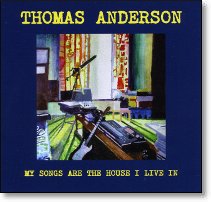
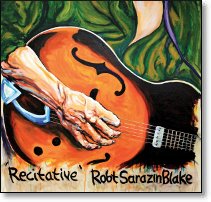
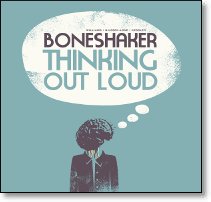
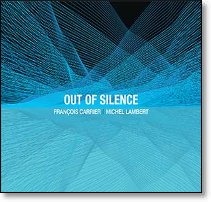
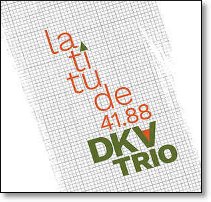
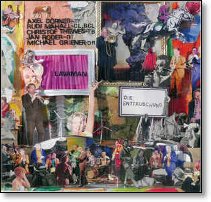
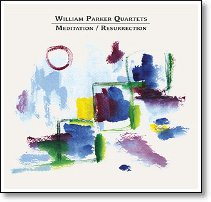
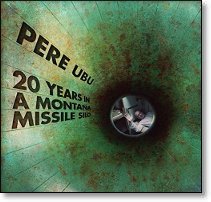
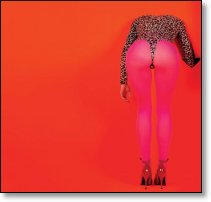
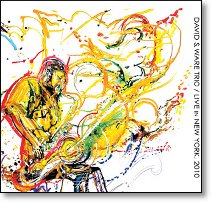
2 Chainz: Pretty Girls Like Trap Music (2017, Def Jam): A rapper from Georgia, Tauheed Epps, fifth big label album plus a dozen mixtapes, many of the latter playing off the Trap Music concept -- not sure how that fits in here, as this all bangs pretty hard. Runs long, too, but develops some appeal. B+(*) Thomas Anderson: My Songs Are the House I Live In (2017, Out There): Singer-songwriter from Oklahoma, self-released a long-titled but marvelous debut in 1988 and has kept working at it -- ninth album in my databse, but there are probably more. He's clear enough I can follow the words, and smart enough I want to, and while this may not be his deepest set, the keyboard-heavy music sets it up so elegantly I want to keep working on it. A- Nicole Atkins: Goodbye Rhonda Lee (2017, Single Lock): Singer-songwriter, fourth album since 2007, based in Nashville but no country influence I can detect. Cites the Brill Building as a prime influence, but don't hear that either. B Rahsaan Barber: The Music in the Night (2017, Jazz Music City): Tenor saxophonist, based in Nashville, teaches at Tennessee State, has at least one previous album. Standards, some as smoothly honed as "Isn't She Lovely" and "The Girl From Ipanema," easy listening without being overly smooth. Backed by piano-bass-drums, guest guitar on two cuts, a Dara Tucker vocal that doesn't hurt, very pleasant stuff. B+(**) [cd] Sam Bardfeld: The Great Enthusiasms (2017, BJU): Violinist, from New York, has a couple of previous albums, plays in Jazz Passengers, Roy Nathanson's Sotto Voce, and Bruce Springsteen's E-Street Band. Trio here with Kris Davis on piano and Michael Sarin on drums, pushing the beat every which way. B+(***) [bc] Cheryl Bentyne: Rearrangements of Shadows: The Music of Stephen Sondheim (2017, ArtistShare): Jazz singer, best known for her long (since 1979) role in Manhattan Transfer, has more than a dozen solo albums (one in 1992, more regularly since 2003), many songbook exercises. Sondheim is probably the biggest name on Broadway not to have entered the Great American Songbook repertoire, partly because he came late to the party. Indeed, if the exception proves the rule, consider "Send in the Clowns": one of his earliest songs (1973), one that Count Basie couldn't swing and Sarah Vaughan couldn't sing, little improved yet it's the best thing here. B- [cd] Big Thief: Masterpiece (2016, Saddle Creek): Brooklyn indie band, principally singer-guitarist Adrianne Lenker, who can slow the band down to a coo or layer on the noise in this debut album. B+(*) Big Thief: Capacity (2017, Saddle Creek): Second album, Adrianne Lenker looking very un-rock-star-like on the cover, singing more heartfelt ballads inside. B+(**) Björk: Utopia (2017, One Little Indian): Icelandic singer-songwriter, many albums since she left the Sugarcubes in 1992, huge star though she works in a unique niche -- folktronica, sources say, but really much weirder than that implies. Sprawling (71:38) album, daunting for non-fans but more listenable than most. B+(*) Raoul Björkenheim Ecstasy: Doors of Perception (2017, Cuneiform): Finnish guitarist, group name comes from his 2014 album (stylized eCsTaSy), with Paul Lyytinen (saxophones, flute), Jori Huhtala (bass), and Markku Ounaskari (drums). Guitar mostly leads, taking command so thoroughly that the sax eventually reduces to shading, not that it started out that way. B+(***) [dl] Brian Blade & the Fellowship Band: Body and Shadow (2017, Blue Note): Drummer, released Brian Blade Fellowship in 1998 and this is a 20th anniversary reunion, with Jon Cowherd (keybs), Myron Walden (alto sax), Melvin Butler (tenor sax), and Chris Thomas (bass) continuous members, with Dave Devine taking over the guitar slot. Densely, artfully layered postbop, doesn't move or engage much. B- Robt Sarazin Blake: Recitative (2017, Same Room, 2CD): Singer-songwriter from Bellingham, Washington; started as Robert Blake, later went as Sarazin Blake, and seems to have settled on this moniker although Robert Sarazin Blake works for his Bandcamp pages. This seems far removed from his folk roots: while I'm often impressed by his wordplay (good examples are "Couples" and "Work"), I'm more so by the music, especially when the decidedly non-folkie saxophone wails. A- Boneshaker: Thinking Out Loud (2017, Trost): Free sax trio: Mars Williams (reeds, toys), Kent Kessler (bass), Paal Nilssen-Love (drums). Third group album, seems to have mellowed a bit but then Williams reels off the most inspired broken field sax run I've heard all year. A- [bc] Mihály Borbély Quartet: Be by Me Tonight/Gyere Hozzám Estére (2016, BMC): Hungerian clarinetist, a pleasant (and memorable) surprise for me shortly after I started writing Jazz CG in 2004 but I never ran across him since, until this. The leader also plays tarogato, alto sax, soprano sax, bass clarinet, tilinko, and supelka, Balász Horváth on bass, and István Baló on drums, and most importantly Áron Tálas on piano. Nice but less memorable. B+(**) Geof Bradfield: Birdhoused (2017, Cellar Live): Tenor saxophonist, mainstream but he's always had an extra edge, leads a sextet here including Marquis Hill on trumpet, Joel Adams on trombone, and Nick Mazzarella on alto sax. B+(**) [bc] Brand New: Science Fiction (2017, Procrastinate! Music Traitors): Rock band, from Long Island, cut four albums 2001-09, breaking up until 2014 when they returned to the studio and started work on this "fifth and final album." Not sure if disbandment is the result of frontman Jesse Lacey's "sexual misconduct" scandal or just that they're growing tired: this lumbers along with some artfulness, but left me empty. B Peter Brötzmann/Steve Swell/Paal Nilssen-Love: Live in Tel Aviv (2016 [2017], Not Two): Sax (or clarinet)/trombone/drums, two long improv pieces, full of strife and churn as you might expect, doesn't strike me as favorably as the same trio's recent Live in Copenhagen, recorded six months earlier. B+(**) Jonas Cambien/Adrian Myhr: Simiskina (2017, Clean Feed): Piano-bass duets, Cambien born in Belgium but based in Myhr's native Norway. Intimate chamber jazz feel, but not so simple. B+(*) Carn Davidson 9: Murphy (2017, self-released): Large band from Toronto -- two trumpets, two trombones, three saxes, bass and drums -- led by William Carn (trombone) and Tara Davidson (alto sax), playing original material, some arrangements credited to other band members. Has some zip, with no one getting out of line. B [cd] François Carrier/Michel Lambert: Out of Silence (2015 [2017], FMR): Canadians, alto sax-drums duets, long-time collaborators, working live in London, they must have a dozen of more/less equivalent albums by now, especially if you count the ones with a guest pianist. Still, they all sound great to me, the only way this is not exceptional. A- [cd] Ernesto Cervini's Turboprop: Rev (2013-16 [2017], Anzic): Drummer, from Canada, has a couple previous albums including one from 2014 titled Turboprop. Sextet, with two saxophones (Tara Davidson and Joel Frahm), trombone (William Carn, who also contributes a song), piano, bass, and drums. Two originals push the peddle, the other pieces mostly from sources I don't recognize, with the Radiohead cover lost on me, but "Pennies From Heaven" is sweet indeed. B+(**) [cd] Bill Charlap Trio: Uptown Downtown (2017, Impulse!): Mainstream pianist, has worked with trio partners Peter Washington (bass) and Kenny Washington (drums) since 1998 -- hard to ask for better ones, and their early albums were sparkling though it's been a while since I've been impressed. B+(**) Corey Christiansen: Dusk (2015 [2017], Origin): guitarist, from and still based in utah, has a handful of records since 2008, nice metallic ring to his tone, claims to be exploring Americana here (all originals except for one trad.). mostly backed by bass-drums, adding keyboards and percussion for 3 (of 8) tracks. b+(*) [cd] Anat Cohen Tentet: Happy Song (2016 [2017], Anzic): Israeli reed player, based in New York, found a niche on clarinet and is the reigning poll winner there. Ten musicians -- trumpet, trombone, baritone sax/bass clarinet, guitar, piano, vibes, bass, and drums -- plus Oded Lev-Ari as Musical Director, who also gets cover credit. Most impressive when they tap into old-time swing, even though they're none too smooth, or throw in a klezmer curveball. B+(***) Richie Cole: Latin Lover (2017, RCP): Alto saxophonist, cut a record called Alto Madness in 1977 and played up the madman theme for many years, then seemed to disappear, but came back with a strong "Ballads and Love Songs" album in 2016. He doesn't go overboard on his Latin twist album -- guest castanets on one song but otherwise no extra percussion or specialists. Four originals (two with "Breeze" in the title), more standards than trad Latin pieces, but he has fun working on his tinge, and his alto is as lovely as ever. B+(***) [cd] Michelle Coltrane: Awakening (2017, Blujazz): Singer, refers to John and Alice Coltrane as her parents but was born before they married, so birth father was probably Kenny "Pancho" Hagood, a jazz singer who started in Benny Carter's big band. Discogs credits her singing on a Gap Band album in the 1980s, and it looks like she had one previous album in 1996 as Miki Coltrane. Very capable singer, can't say that "Tin Man" strikes me as a worthy standard but she swings it and adds some Latin percussion. Good band, including brother Ravi and Lonnie Plaxico. Mother Alice gets a credit for a bit of spoken word. B+(**) [cd] Miley Cyrus: Younger Now (2017, RCA): Sixth studio album, but started as a teen so she's still pretty young: 24. Still, she's sounding older, and more tinged with her country roots -- with or without godmother Dolly Parton singing along. B+(*) Ori Dagan: Nathaniel: A Tribute to Nat King Cole (2017, Scat Cat): Jazz singer from Canada, Toronto I think, third album, wrote five songs loosely tied in with his subject. Voice is far off the mark, but at least his small group swing stays clear of the big band bombast of Gregory Porter's tribute. Also, Sheila Jordan guests on "Straighten Up and Fly Right." B [cd] David's Angels: Traces (2016-17 [2017], Kopasetic): Swedish group, David is bassist Carlsson, the "Angels" three women: Sofie Norling (vocals), Maggi Olin (keyboards), and Michala Østergaard-Nielsen (drums), with Olin and Norling writing the majority of the music and lyrics. Third album, Ingrid Jensen adds some trumpet. B+(*) [cd] Deer Tick: Vol. 1 (2017, Partisan): Dismissed by Christgau as "depressive and folk-leaning" in his rush to get to the simultaneously released Vol. 2, John McCauley's blend of Americana drawl and indie-rock is just a little flat, lacking more in energy than in interest, which is well crafted as always. B+(*) Deer Tick: Vol. 2 (2017, Partisan): Tries harder to get your attention, starting with a crash of guitar and drums. Band stays loud, which sounds better but little (if any) more interesting. B+(*) Marc Devine Trio: Inspiration (2017, ITI): Pianist, based in New York, first album, a trio with Hide Tanaka on bass and Fukushi Tainaka on drums -- his website's upcoming shows list includes quartets and quintets led by Tainaka. One original, standards include "Love Me Tender" and "Will You Still Love Me Tomorrow" as well as bop standards by Hank Mobley, Hank Jones, and Bud Powell. Expertly, tastefully done. B+(***) [cd] Die Enttäuschung: Lavaman (2017, Intakt): Translates as Disappointment, a German group, based in Berlin, first recorded in 1995, with Axel Dörner on trumpet, Rudi Mahall on bass clarinet, and a shifting cast at bass and drums -- currently Jan Roder and Michael Griener, plus new this time out Christof Thewes on trombone. All original material, although their roots as a Monk tribute band -- tapped by Alexander von Schlippenbach for Monk's Casino -- show through in their irrepressible bounce and quirk. A- [cd] Jeff Dingler: In Transit (2017, self-released): Bassist, has at least one previous album, with Brad Shepik (guitar), Lou Rainone (piano), Gustin Rudolph (drums), plus extra percussion on 4/8 tracks. Shepik especially stands out. B+(**) [cd] DKV Trio: Latitude 41.88 (2014 [2017], Not Two): Trio dates back to 1999: Hamid Drake (drums), Kent Kessler (bass), and Ken Vandermark (unspecified reeds). Eighth album together -- counting as one the 7-CD Past Present (2008-11) -- usually a bit rough and hyper but working in some especially eloquent stretches this time. A- [bc] Matthieu Donarier/Santiago Quintans: Sun Dome (2017, Clean Feed): Duets, tenor sax/clarinet and electric guitar. Abstract textures, not enough reverb to count as drone, nor interesting enough. B- Sinne Eeg: Dreams (2017, ArtistShare): Danish jazz singer, eight albums since 2003, wrote six (of ten) songs (all in English), favoring Cole Porter with two covers -- including an "Anything Goes" updated for the Trump era. First-rate band, working in Brooklyn: Joey Baron, Scott Colley, Jacob Christofferson, Larry Koonse. B+(**) [cd] Christoph Erb/Jim Baker/Frank Rosaly: . . . Don't Buy Him a Parrot . . . (2014 [2017], Hatology): Swiss tenor saxophonist, also plays bass clarinet, a member of Manuel Menguis Gruppe 6 but most of his discography since 2011 has been with Chicago avant-gardists, including the pianist and drummer here. B+(***) ExpEAR & Drew Gress: Vesper (2015 [2017], Kopasetic): Gress is a well-known, well-regarded, relatively mainstream bassist, and no doubt helps out here (he even contributes 4/9 songs), but bass tends to sink into the background, and he's no exception. Rather, what we have is a Swedish tenor sax-piano-drums trio (Henrik Frisk, Maggi Olin, Peter Nilsson), with Frisk and Olin splitting the other songs 3-2, and the sax sounding especially luscious. B+(***) [cd] Lorenzo Feliciati: Elevator Man (2017, RareNoise): Mostly plays electric bass, sometimes fretless, but also takes one cut on acoustic and plays some guitar. Lineups vary song to song, with the faster, heavier fusion pieces holding up best, especially when Cuong Vu joins on trumpet. B+(**) [cdr] Satoko Fujii Quartet: Live at Jazz Room Cortez (2016 [2017], Cortez Sound): With partner Natsuki Tamura on trumpet, Keisuka Ohta on violin, and Takashi Itani on drums. Some sections are so quiet I lose track and start wondering if my equipment (or other gear) is on the fritz. Both Ohta and Tamura also credited with voice -- another distraction. At least it ends strong. B [cd] Satoko Fujii Orchestra New York: Fukushima (2016 [2017], Libra): Her most star-filled big band, all thirteen names I recognize on the back cover -- 3 trumpets, 3 trombones, 4 saxes, Nels Cline on guitar but no piano, the leader content to conduct -- but none especially stand out from the grooves. Perhaps the somber theme, which starts out too quiet and never quite raises the horror the piece commemorates. B+(**) [cd] Lee Gamble: Mnestic Pressure (2017, Hyperdub): British DJ and electronica producer, half-dozen albums since 2009. Has a touch of industrial glitz, not much more. B+(*) Howe Gelb: Future Standards (2016 [2017], Fire): Indie rocker, led Giant Sand from 1985 through 27 albums, started supplementing them with solo albums in 1991, 22 so far, and he's run a couple other bands. Plays cocktail piano and sings in a sly whisper, backed by three bass-drums pairs. B+(*) Tee Grizzley: My Moment (2017, 300/Atlantic): Detroit rapper Terry Sanchez Wallace, father murdered, mother jailed for drugs, did time himself, first album. Opening freestyle needs work, but he tightens up with some beats. B+(*) Jari Haapalainen Trio: Fusion Nation (2017, Moserobie): Drummer, born in Sweden, parents Finnish, based in Berlin; trio, with sax (Per "Texas" Johansson) and electric bass (Daniel Bingert), has three short albums (this one is 27:01) all with Fusion in the title. That doesn't quite pigeonhole them -- certainly no throwback to '70s fusion although they do evince a rockish fondness for noise and monster bass riffs. B+(**) [cd] Taylor Haskins & Green Empire: The Point (2017, Recombination): Usually plays trumpet, but credit here is "Steiner/Crumar EVI" -- stands for Electronic Valve Instrument, a breath-controlled analog synthesizer originally developed in the late 1970s. Band adds pedal steel, acoustic guitar, bass, and drums for a pleasant groove with hints of Hawaiian. B+(*) [cd] Alexander Hawkins-Elaine Mitchener Quartet: Uproot (2017, Intakt): English group, pianist Hawkins' trio with bass (neil Charles) and drums (Stephen Davis), plus vocalist Mitchener, who has an avant-garde stance that stretches the music out in odd directions, not necessarily making it more pleasing. B+(**) [cd] Hear in Now [Mazz Swift/Tomeka Reid/Silvia Bolognesi]: Not Living in Fear (2012-14 [2017], International Anthem): Avant string trio: violin, cello, and double bass, respectively, with Dee Alexander singing the title track (Swift also credited with "voice"). B+(**) Vincent Herring: Hard Times (2017, Smoke Sessions): Alto/soprano saxophonist, twenty-plus albums since 1989, multiple side credits with Nat Adderley, Cedar Walton, and John Hicks. Has a quartet here with Cyrus Chestnut, Yasushi Nakamura, and Carl Allen, but adds a lot of guest slots: 3 cuts each for Nicolas Bearde (vocals) and Russell Malone (guitar), more for Steve Turre (trombone), Brad Mason (trumpet), and Sam Dillon (tenor sax). B+(*) Dre Hocevar: Surface of Inscription (2016 [2017], Clean Feed): Drummer, from Slovenia, several albums, this one strikes me as especially scattered, with piano/voice/electronics/bass/reeds in the credits, yet more often than not they barely break the noise threshold. B- Adam Hopkins: Party Pack Ice (2015 [2017], pfMENTUM EP): Bassist, from Baltimore, based in Brooklyn, nothing previous under his own name -- indeed, neither cover nor website suggest this is anything other than an eponymous group album, but I first ran across him in Quartet Offensive, and he's played on at least one Ideal Bread album, also with Kate Gentile and Patrick Breiner (one of two saxophonists here; the other is Eric Trudel). Also with guitar (Dustin Carlson) and drums (Nathan Ellman-Bell). But he does compose here, and the publicist thinks this is his album. Seven short but dense/heavy pieces, 24:24. B+(*) [cdr] Kasai Allstars & Orchestre Symphonique Kimbanguiste: Around Félicité (2017, Crammed Discs): Kinshasa group, has an album in the label's Congotronics series although here they focus more on group singing than on junkyard percussion. But this doubles as a soundtrack, with three Arvo-Part-penned tracks switch over to the Orchestre, totally breaking the intensity and flow. B+(**) [bc] Kasai Allstars: Félicité Remixes (2017, Crammed Discs): Bonus CD to above but appears as a separate thing for download. The remixes dub in their own distractions, with only a couple cuts showing off the source Congatronics, but at least their are no neoclassical interludes. B+(*) Kelela: Take Me Apart (2017, Warp): Last name Mizanekristos, born in DC, parents immigrated from Ethiopia, first album but a previous mixtape and EP were well-regarded enough to come to my attention. Soul, the sort of easy-beat warbly keybs in fashion lately, more befitting a singer who skipped gospel to start out in jazz and moonlight with a prog metal band. B+(**) Jon Langford: Jon Langford's Four Lost Souls (2017, Bloodshot): The once-and-future Mekon, long based in Chicago, went to Alabama and cut this glimpse of the apocalypse the day after the Trump election, a bit unsettled and unsure, except of where their musical roots lie. B+(***) Large Unit: Fluku (2016 [2017], PNL): Drummer Paal Nilssen-Love's 13-piece band: three reeds, three brass (including tuba), guitar, electronics, doubling up at bass (both electric and double) and drums, plus a credit for "live sound." The long title cut builds on a long rhythmic vamp with all sorts of exciting chaos. Still, they hold your interest when they slow it down for disassembly, probably because you anticipate that it will come together in wonder again . . . as it does. A- [bc] The Billy Lester Trio: Italy 2016 (2016 [2017], Ultra Sound): Piano trio recorded in Italy with Marcello Testa on bass and Nicola Stranieri on drums. All original pieces, nice show of contemporary postbop. B+(*) [cd] Harold Mabern: To Love and Be Loved (2017, Smoke Sessions): Pianist from Memphis, first album 1968. One solo track, the rest with Eric Alexander (tenor sax), Nat Reeves (bass), and Jimmy Cobb (drums), plus trumpet (Freddie Hendrix) on three tracks, percussion (Cyro Baptista) on one. I expected something less frenzied for a postbopper in his 80s, and the early sax takes it easy, but the trumpet pushes everyone over the top, and they seem to prefer it like that. B+(*) Made to Break: Trebuchet (2017, Trost): Ken Vandermark quartet, eighth album since 2013 although half of the personnel has changed, employing Jasper Stadhouders (electric bass) and Christof Kurzmann (electronics) at least since 2015. Three pieces, Vandermark typically awesome, the sound mix around him full of nice surprises. A- [bc] Markley & Balmer: Standards & Covers (2017, Soona Songs): Lisa Markley and Bruce Balmer, she sings, both play guitar, and despite the title write some extra lyrics -- reworking, for instance, "Lennie's Pennies" into "Hundred in a Dollar." "Lush Life" and "Caravan" are most familiar, nicely done. B+(*) [cd] Delfeayo Marsalis: Kalamazoo (2015 [2017], Troubadour Jass): Cover reads "An Evening With Delfeayo Marsalis" before the title, so that can be parsed variously. The family's trombonist, leading his quartet (including papa Ellis on piano), recorded live at Western Michigan University. Warm New Orleans vibe, trombone sounds special. B+(**) [cd] Roy McGrath: Remembranzas (2017, JL Music): Saxophonist, backed by piano, bass, drums, and lots of congas, starting off with a spoken word about immigration, then plunging deep into the Latin tinge. Lots of print on the package, but nearly impossible to read (mostly white on light gray). [CD crapped out near the end, but I figured I had heard enough.] B [cd] Joe McPhee/Damon Smith/Alvin Fielder: Six Situations (2016 [2017], Not Two): Tenor sax, bass, and drums, recorded live at Roulette in New York City. Unreconstructed free jazz, some remarkable passages where McPhee seems to be accompanying himself with rumble patterns breaking into flights. B+(***) Lisa Mezzacappa: Glorious Ravage (2017, New World): Bassist, based in San Francisco, has a couple previous albums, leads a large cast here (15 names on back cover, but not clear whether they're all regulars -- the most obvious one is vocalist Fay Victor, who has some trouble navigating the tricky music. B+(*) [cd] Lorrie Morgan/Pam Tillis: Come See Me & Come Lonely (2017, Goldenlane): Sixteenth album for Loretta Lynn Morgan, starting in 1989 and including one previous duet album with the late Mel Tillis' little girl, two years later with ten albums of her own, one in 1983 and the rest since 1991. All covers, starting with one from K.T. Oslin, some as well known as "Tennessee Waltz" and "The End of the World," unexpected males joining in on a creepy "Summer Wine." B+(**) Kyle Motl Trio: Panjandrums (2016 [2017], Metatrope): Bassist from San Diego, leading a trio with Tobin Chodos on piano and Kjell Nordeson on bass. Strong, risky piano work, following a solo bass album that rated nearly as high. B+(***) [cd] The National: Sleep Well Beast (2017, 4AD): Debut album in 2001, seventh overall, singer-lyricst Matt Berenger has a great voice for indie rock, especially when composer-brothers Aaron and Bryce Dessner keep the beats fluid and piquant. B+(***) Paal Nilssen-Love/Frode Gjerstad: Nearby Faraway (2016 [2017], PNL): Drums-sax duets, the latter playing alto and tenor, also Bb and contrabass clarinet. The drummer has a lot of albums with avant saxophonists. He's very responsive here, and Gjerstad gives him quite a workout. B+(***) [bc] Pan-Scan Ensemble: Air and Light and Time and Space (2016 [2017], Hispid/PNL): Nine-piece group from Norway, "brass heavy" (three saxophonists I recognize -- Lotte Anker, Anna Högberg, Julie Kjaer -- and three trumpeters I don't), Sten Sandell on piano, two drummers (Paal Nilssen-Love and Ståle Liavik Solberg). Two improv pieces add up to 45:55, a striking free-for-all that retains interest when they separate and stalk one another. B+(**) [bc] Diana Panton: Solstice/Equinox (2017, self-released): Canadian jazz singer, eighth album, has a couple JUNO Awards, a small and rather cute voice, runs through thirteen songs. Nice band, with Guido Basso on trumpets, Phil Dwyer on saxophones, and Reg Schwager on guitar, but no drummer. B+(*) [cd] The Paranoid Style: Underworld USA (2017, Bar/None, EP): Principally Elizabeth Nelson, following up her one full-length album with a second (or third) EP, this one six songs, 17:17, with a catchy, single-worthy closer ("Revision of Love") and other snappy songs that have yet to sink in, maybe because I keep thinking "Hawk vs. Prez" should be about jazz. B+(***) Evan Parker & RGG: Live @ Alchemia (2016 [2017], Fundacja Sluchaj): British free jazz titan, just playing tenor sax this time out, in an improv Krakow set with a Polish trio: Lukasz Ojdana (piano), Maciej Garbowski (bass), Krzysztof Gradziuk (drums). Still, doesn't feel like a pickup band deal. The piano leads and comping are always interesting, and the drummer pays close attention, accenting everywhere. Parker, too, is always on point. A- [bc] William Parker Quartets: Meditation/Resurrection (2016 [2017], AUM Fidelity, 2CD): The bassist has run two quartet configurations over many years: his freewheeling two-horn Quartet with Rob Brown (alto sax) and Lewis Barnes (trumpet), the latter replaced here by Jalalu-Kalvert Nelson, and the group In Order to Survive with Brown and pianist Cooper-Moore -- both groups with Hamid Drake on drums. One full disc of each here, and while the new trumpet player doesn't match the old one, Cooper-Moore is as breathtaking as ever. A- [dl] Pere Ubu: 20 Years in a Montana Missile Silo (2017, Cherry Red): Originally from Akron, one of my favorite bands of the late 1970s, in business ever since with singer David Thomas essential for continuity, but while none of the original musicians appear here, I often find the guitar reminding me of The Modern Dance, not to mention the drums. A- Ivo Perelman/Matthew Shipp: Live in Brussels (2016 [2017], Leo, 2CD): Tenor sax-piano duets, in case you're not sated after seven volumes of The Art of Perelman-Shipp earlier this year. Seems a little sketchy at first, but there are stretches where they click (as usual). B+(**) Frank Perowsky Jazz Orchestra: Gowanus (2017, Jazzkey): Saxophonist and clarinetist, leads a big band, doesn't list himself among the saxophonists but front and back covers show him with a clarinet. Produced by drummer Ben Perowsky. Recorded in Brooklyn, lots of household names in the band. Four originals, rooted in swing and bop, covering Ellington and Powell with an Ira Hawkins vocal extolling "the Basie sound." B+(*) [cd] Pink: Beautiful Trauma (2017, RCA): Alecia Moore, from near Philadelphia, Broke through as a punkish pop star just out of her teens, like a generation ago. In 2010 she titled her best-of Greatest Hits . . . So Far! -- usually the kiss of death for a career, but her 2012 album was solid (some thought better, with world sales pegged at 7 million) and this one only tails off in an overly dramatic finale. B+(**) Gregory Porter: Nat "King" Cole & Me (2017, Blue Note): Jazz singer, vastly overrated I think, but comes closer to Cole than I expected, a little stuffy but not really the problem. The "core band" (Christian Sands, Reuben Rogers, Ulysses Owens) is probably OK, too, but hard to tell with the London Studio Orchestra slugging out Vince Mendoza's over-the-top arrangements. Still, Porter can't be excused for the one new song he wrote. C+ Lee Ranaldo: Electric Trim (2017, Mute): Sonic Youth founder-guitarist, side projects go back to 1987 but took on a more serious air once the group disbanded, inhabiting an echo of the legend without really being able to flesh it out. Some lyrics by novelist-fan Jonathan Lethem. Guest spot for Sharon Van Etten. B+(*) Re-TROS: Before the Applause (2017, Modern Sky Entertainment): Chinese rock group, "underground" but how would we know? Some vocals (even some in English), but rhythm tracks predominate, some quasi-industrial, some new wave danceable, some sound like Pulnoc fortified by a Kinshasa junkyard, which is to say really amazing. A- Jamie Reynolds: Grey Mirror (2015 [2017], Fresh Sound New Talent): Pianist, from Toronto, based in New York, seems to be his first album. Features guitarist Matthew Stevens, with Orlando LeFleming on bass, Eric Doob on drums, and the Westerlies (a trumpet-trombone quartet) on five tracks. Not sure that the latter is a plus -- they certainly change the group's chemistry. B+(**) Whitney Rose: Rule 62 (2017, Six Shooter): Country singer from Prince Edward Island, cut two albums on a Toronto label, then turned some heads with the EP South Texas Suite early this year. Follows that up here with a third album. Terrific sound and voice, but I can't say the songs stick with you. B+(**) Daniel Rosenthal: Music in the Room (2016 [2017], American Melody): Trumpet player, based in Boston, teaching at Berklee, has recorded as part of the Rosenthals with his bluegrass-oriented father, in the Sommers Rosenthal Family Band, and in Either/Orchestra, with a previous album under his own name in 2001. Group here adds two saxophones, bass, and drums, for some fairly standard postbop. B+(*) [cd] Rostam: Half-Light (2017, Nonesuch): Last name Batmanglij, born in DC, parents immigrated from Iran, first solo album after ten years with Vampire Weekend (all three major albums) and a couple side projects. Plays pretty much everything here -- fourteen side credits, but only the cellist on more than one track (4). Finds his own groove, sound a bit off for me, but could be beguiling. B+(**) Roswell Rudd/Fay Victor/Lafayette Harris/Ken Filiano: Embrace (2017, RareNoise): Trombone-piano-bass trio plus singer, one of the most distinctive ones working today if not always one of the easiest to listen to. In some ways this recalls Rudd's mid-1970s work with Sheila Jordan -- less swing, the pianist a bit more ornate. Victor is especially striking on songs that don't tempt her to scat or vocalise, like "Can't We Be Friends" and "House of the Rising Sun," but she's pretty impressive traipsing over Mingus and Monk. The trombone isn't exactly lovely, but so full of soul it can't be the work of anyone else. A- [cdr] Adam Rudolph: Morphic Resonances (2017, M.O.D. Technologies): Percussionist, has recorded extensively since 1992, featured mostly as a composer here, with seven pieces divvied up between five groups -- the Momenta String Quartet gets the first two, totalling 26:30, which I find unpleasantly arch, while a flute-guitar duo (Kaoru Watanabe and Marco Cappelli) get two shorter pieces. My favorite by far is the Odense Percussion Group. B+(*) [cd] Romeo Santos: Golden (2017, Sony Latin): Born in the Bronx, father Dominican, mother Puerto Rican, led the bachata band Aventura (which sold out Yankee Stadium for a concert) before going solo. Third album, mostly in Spanish, got some beat to it. B+(*) A. Savage: Thawing Dawn (2017, Dull Tools): First name Andrew, singer-guitarist for Parquet Courts taking a solo flyer, stripped down, only hinting at his band sound on the final track, then pulling back. B+(*) Schnellertollermeier: Rights (2016 [2017], Cuneiform): Quasi-industrial postrock trio, the group name a mashup of member names Andi Schnellmann (bass), Manuel Toller (guitar), and David Meier (drums). Grind impressive at first but doesn't go all that far. B+(*) [dl] Brandon Seabrook: Die Trommel Fatale (2016 [2017], New Atlantis): Guitarist, based in Brooklyn, tends toward noise but stretches that out some here, the sextet including Chuck Bettis' "throat/electronics," cello, bass, and two drummers. [7/10 cuts] B+(**) [bc] Sheer Mag: Need to Feel Your Love (2017, Static Shock): Philadelphia rockers, got noticed for three 7-inch EPs (since collected as Compilation) before releasing this debut album. Singer Tina Halliday has a harsh bark, not quite a shriek, and the guitar-bass riffs are solid and tuneworthy. B+(**) Shelter: Shelter (2016 [2017], Audiographic): Yet another Ken Vandermark group, a quartet, although he only has a 3-2-2-2 composition edge over Nate Wooley (trumpet), Jasper Stadhouders (electric bass and guitar), and Steve Heather (drums and crackle box). B+(***) [bc] Blake Shelton: Texoma Shore (2017, Warner Brothers Nashville): Big Nashville star with a TV gig I've never seen but most likely why People named him "sexiest man alive." Has a fine country voice, picks down-to-earth songs (only one co-credit here). B+(*) Idit Shner: 9 Short Stories (2017, OA2): Alto saxophonist, also play soprano, not sure where (or when) she was born, but she studied in Oklahoma City, and is based in Oregon. Backed by piano-bass-drums, all originals except for "Passion Flower," bright postbop. B+(**) [cd] Paula Shocron/Germán Lamonega/Pablo Diaz: Tensegridad (2016 [2017], Hatology): Piano-bass-drums trio, three joint credits, two for Shocron, one each for the others, plus covers of Mal Waldron and Charles Tolliver. Strong, favoring dense chords over noodling. B+(**) Jen Shyu: Song of Silver Geese (2016 [2017], Pi): Singer, dancer, multi-instrumentalist (credits here: Taiwanese moon lute, Korean gayageum, piano), born in Illinois, parents immigrated from Taiwan and East Timor, graduated from Stanford ("in opera with classical violin and ballet training"), fourth album, band (Jade Tongue: vibes, flutes, viola, bass, drums, percussion -- all well-known NY names) named for her first, joined here by Mivos Quartet (strings). Music evidently written for a ballet, choreographed by Satoshi Haga. I imagine the total performance to be mesmerizing, but as a record I find it alternately arch and quaint, classical motifs with bent Asian notes -- not my thing, I guess. B+(*) [cd] Slow Is Possible: Moonwatchers (2016 [2017], Clean Feed): Portuguese group, second album after eponymous effort in 2015: André Pontifice (cello), Bruno Figuera (alto sax), Duane Fonseca (drums), João Clemente (electric guitar/electronics), Nuno Santos Dias (piano), Ricardo Sousa (double bass). B+(*) Martial Solal & Dave Liebman: Masters in Bordeaux (2016 [2017], Sunnyside): Duets, the French pianist nearly 90 at the time, Liebman playing soprano and tenor saxophones. Six standards, with Miles Davis a common bond, the pianist fascinating, Liebman listening and contributing with great care. B+(***) Vinnie Sperrazza Apocryphal: Hide Ye Idols (2015 [2017], Loyal Label): Drummer, called his 2014 album Apocryphal and thought that would make a good group name. Quartet with Loren Stillman (alto sax), Brandon Seabrook (guitar), and Eivind Opsvik (bass). I'm not used to Seabrook playing inside the band without his customary cloud of noise, but he fits nicely with Stillman's sweet tone. B+(**) St. Vincent: Masseduction (2017, Loma Vista): Canadian Annie Clark's fifth (or sixth) album, her bestseller and evidently a critical favorite -- I'd guess top-five in year-end polls but little chance of topping Kendrick Lamar, for starters. A bit arch and arty for my tastes, but always interesting, never more so than here, where half the songs quickly click, and more welcome should I ever give it more than the three spins I've logged. Title song pronounces it "mass seduction" and pairs it with "mass destruction": she has a point, a deeper one than critiquing Trump, although that's part of it. A- Gabriele Tranchina: Of Sailing Ships and the Stars in Your Eyes (2017, Rainchant Eclectic): Born in Germany, based (I think) in Paris, with an eye on Brazil and other points south -- though two of her covers are from Mancini. B+(**) [cd] Trio S: Somewhere Glimmer (2017, Zitherine): Doug Wieselman (compositions, clarinets, loops, banjo), Jane Scarpantoni (cello), and Kenny Wollesen (drums, "wollesonics"). Rather quiet, atmospheric even, pleasant and marginally interesting. B+(*) David S. Ware Trio: Live in New York 2010 (2010 [2017], AUM Fidelity, 2CD): Another posthumous tape for the late tenor sax giant, this one a year after his kidney transplant and about two years before he died. So it's worth noting that he's in remarkable form here, with a couple of solo stretches (some on stritch), but especially when William Parker (bass) and Warren Smith (drums) help out. A- [dl] Galen Weston: The Space Between (2017, Blujazz): Guitarist, from Toronto, lists as idols Mike Stern, Pat Metheny and Steve Vai. Band shares billing and keeps pushing him, and it helps when alto saxophonist Richard Underhill jumps out front. B [cd] Mark Wingfield/Markus Reuter/Asaf Sirkis: Lighthouse (2016 [2017], Moonjune): Two guitarists -- Reuter's credit is "Touch Guitars AU8" (8-string, hollow body, individually tunable pickups) -- and drums. Fits neatly into a fusion bag. B [cd] Deanna Witkowski: Makes the Heart to Sing: Jazz Hymns (2017, Tilapia): Pianist, discography dates back to 1999 -- I have her filed under vocals, but she doesn't sing here. All her arrangements of hymns -- all but one public domain -- for piano trio. Pleasant, and fairly innocuous. B [cd] Lee Ann Womack: The Lonely, the Lonesome & the Gone (2017, ATO): Country singer, ninth album since 1997, co-wrote half of the fourteen songs -- the Frizzell and Jones covers overdone, the others less memorable but the title mood is sustained. B+(**) Charlie Worsham: Beginning of Things (2017, Warner Bros. Nashville): Country singer from Mississippi, studied at Berklee, second album, co-credits on 9/13 (really 12) songs, gets a nice neotrad sound but mostly wastes it -- "Southern by the Grace of God" seems more than a little dated, but is still less offensive than "Birthday Suit." B Eric Wyatt: Look to the Sky (2017, Whaling City Sound): Mainstream saxophonist (tenor, alto, soprano), from Brooklyn, shares a vocal with Andrea Miller, wrote three (of nine) songs, two more by his pianist Benito Gonzalez, with Keyon Harrold on trumpet, plus bass and drums. Takes nearly everything at a breakneck pace, a lot of bounce in his step. B+(**) [cd] Mark Zaleski Band: Days, Months, Years (2016 [2017], self-released): Alto/soprano saxophonist, third album, also credited with bass, brother of pianist Glenn Zaleski (present), joined by Jon Dean on tenor sax, Mark Cocheo in guitar, and Oscar Suchanek on drums. B+(**) [cd] Dave Zinno Unisphere: River of January (2017, Whaling City Sound): Bassist, based in Rhode Island, discography shows he's played on a dozen albums but this appears to be his first leading. Quintet, with Eric "Benny" Bloom on trumpet, Mark Tucker on tenor sax, Leo Genovese on piano, and Rafael Barata on drums, with Tucker and Genovese also contributing songs. Mostly upbeat, saxophonist gives a good accounting. B+(*) [cd] Recent Reissues, Compilations, Vault DiscoveriesDion: Kickin' Child: The Lost Album 1965 (1965 [2017], Norton): I've long been a fan of Dion DiMucci's Bronx Blues: The Columbia Recordings (1962-1965), which traces his shift from doo-wop ("Ruby Ruby," "Donna the Prima Donna") to Dylan emulation, including his 1965 single "Kickin' Child" (third from the end). Columbia released two albums built around the doo-wop singles, then nothing until they mopped up in 1969 (Wonder Where I'm Bound, the title a song from this shelved album). Should at least have some historical value, but I'm with the label here: a single, a couple decent covers (not the Dylan), some really awful shit (the Dylan not the worst). C- Gentle Giants: The Songs of Don Williams (2017, Slate Creek): Eleven songs, familiar and typical if most not actually written by the late country star, performed by artists of varying quality but distinctive enough they add something to the easy-going vibe that was Williams' trademark. Choice cut: Brandy Clark, "I Believe in You." [Missing on Napster: Garth Brooks, "Good Ole Boys Like Me."] B+(***) Motörhead: Under Cöver (1992-2014 [2017], Silver Lining Music): English metal band, formed in 2015, hung it up in 2015 when bassist-auteur Lemmy Kilmister died. One of the few metal bands I've tolerated and occasionally enjoyed -- as Christgau noted in 1980, "no preening solos or blow-dried bullshit." Sure, I haven't checked all five of the A- records Christgau identified from 1984-91, but I enjoyed 2011's The World Is Yours. This compiles eleven covers, roughly half from metal bands that I've heard of but mean nothing to me, the other half from the Rolling Stones, Sex Pistols, Ramones, and David Bowie -- all sturdy enough to bear up under the extra weight. B+(***) Old MusicMihály Borbély Quartet: Hungarian Jazz Rhapsody (2014, BMC): This slightly earlier quartet has a different pianist, Dániel Szábo, and the leader's credits limited to saxophone and tarogato. Title song actually from Hungarian-American guitarist Attila Zoller, with the remaining pieces by unknown-to-me Hungarian-sounding names. Pretty lively, and good as the new pianist is, this one may be even better. B+(***) Die Enttäuschung: 4 (2006 [2007], Intakt): German quartet, had an early fascination with Monk. Axel Dörner on trumpet and Rudi Mahall on bass clarinet, plus second bassist (Jan Roder) and original drummer (Uli Jenneißen). Discography unclear, as 1 (2002) is different from their original (1996) eponymous album, and instead of 2 and 3 there's a second eponymous album before 4 and 5. B+(***) Michael Gregory Jackson: Clarity (1976 [2010], ESP-Disk): Guitarist, first album at 23, also credited with vocals, mandolin, flute, timpani, marimba, percussion, but what caught my attention was the three young horn players: Leo Smith, Oliver Lake, and David Murray. Still, those horns are generally wasted, although Lake has some moments, and gets into the label's ad hoc aesthetic with flute and percussion. B Woody Shaw: Song of Songs (1972 [1997], Contemporary/OJC): Second album -- Cassandranite has earlier recordings but wasn't released until 1989 -- scales back the debut's sax attack, limiting Benny Maupin to one song, with Ramon Morris on two of the three others. That should bring the trumpet out front more, but he tends to slipstream the freebop. B+(**) Woody Shaw: The Time Is Right (1983 [1993], RED): Quintet, recorded live in Bologna, Italy, with Steve Turre (trombone/conch shells), Mulgrew Miller (piano), Stafford James (bass), and Tony Reedus (drums). Four cuts, first two by Shaw. B+(**) Woody Shaw: Imagination (1987 [1998], 32 Jazz): Originally on Muse, which tended to steer the trumpet player back to the mainstream, here with a sharp quintet -- Steve Turre (trombone), Kirk Lightsey (piano), Ray Drummond (bass), Carl Allen (drums) -- playing standards, ending with a blues from Turre. B+(**) Mars Williams/Paal Nilssen-Love/Kent Kessler: Boneshaker (2012, Trost): Sax-drums-bass trio, Williams started out as a Hal Russell protégé, with Kessler was in the original Vandermark 5, with the Norwegian drummer joining many other Vandermark groups. Basically, just what the title promises. B+(***) [bc] Revised GradesSometimes further listening leads me to change an initial grade, usually either because I move on to a real copy, or because someone else's review or list makes me want to check it again: Woody Shaw: Blackstone Legacy (1970 [1996], Contemporary): [r]: was B+(**), now B+(***) NotesEverything streamed from Napster (ex Rhapsody), except as noted in brackets following the grade:
Ask a question, or send a comment. Monday, November 27, 2017 Music Week
Music: Current count 28931 [28909] rated (+22), 391 [394] unrated (-3). Rated count down, mostly attributable to Thanksgiving, when I fixed a small dinner: roast goose with potatoes, baked zucchini niçoise, oven-braised pumpkin, sweet and sour cabbage. All recipes were new to me, and came out as well as hoped. For dessert I made three pies: maple pecan, chocolate pecan, and key lime. For the first two, I tried two different pie shell recipes, and found the "easy" one not only not as good but also not as easy. The key lime had a graham cracker crust that came out rather crumbly, but otherwise I was very pleased. Further disruptions over the weekend: stereo went on the blink on Saturday, which drove me to listening to so-so albums on Napster. It (for reasons currently unfathomable) started working on Sunday, but I couldn't focus, as I was cooking several Indian dishes to get an idea how several menu ideas for next week's Peace Center Annual Dinner might play out. I'll be directing dinner for sixty on Friday, December 1, and until then I expect to have very little time for music. Menu will be Indian (except for dessert), mostly because I can cook more recipes ahead of time, making the logistics relatively manageable. Still, an enormous amount of work for an amateur like myself. The dinner work already wiped out any chance at a Weekend Roundup -- possibly the first one I've missed since Trump was elected (though I may have blocked something out -- I do recall at least one threat to throw in the towel). Current plan is to publish November's Streamnotes on Tuesday. Not likely to have much not already in the file, and there's at least a small chance I might not get the indexing done. But it needs to get up before the end of the month, and I won't have any time after Tuesday. Still will have more records than October (current count 114). While I'm at it, I'd like to recommend Mark E. McCormick: Some Were Paupers, Some Were Kings: Dispatches From Kansas. McCormick wrote an op-ed column at the Wichita Eagle, and this collects many of his best pieces, not least on the perennial topic of race relations. Laura Tillem helped edit and design the book, and I helped her a bit with the conversion from one hideous Microsoft format to another. By the way, McCormick will be giving the main presentation at Friday's Peace Center 25th Annual Dinner. By the way, François Carrier sent me a note asking that I mention his crowdfunding project. I routinely ignore requests to post notices, and certainly don't want to encourage more of them, but a few years ago when I got especially flustered I wrote a mass email to everyone who was sending me CDs announcing my intent to stop reviewing. François wrote me back immediately and insisted he was going to keep sending them anyway. As you can see here, few musicians have given me more pleasure more consistently. So by all means, encourage him to play and record more. By the way, I thought the iconic story of last week was when Trump pardoned the turkey on Thanksgiving, and said "I feel so good about myself doing this." (See Jessica Contrera.) When I first read the quote, I thought it the perfect example of his narcissism. Only when I saw the video later did the full perversity sink in. As Contrera notes, the lead up to the quote was: "Are we allowed to touch? Wow." The video looks like Trump groping the turkey as he says, "I feel so good about myself" -- his look suggesting fond remembrances of other birds he's groped. Another iconic moment was captured in this tweet by Daniel Dale (picture here; story here):
Very sad to see John Conyers caught up in the sex abuse scandals. He was first elected to the Congress in 1964 and was one of the first dozen House members to vote against the Vietnam War. Aside from his brief post-9/11 lapse, he has been one of the most consistent critics of American belligerence abroad, as well as a steady champion of civil rights and liberties. Not perfect, I guess -- I certainly don't like his "Pro-IP Act" -- but for a very long time one of the very best Congress had to offer. New records rated this week:
Recent reissues, compilations, and vault discoveries rated this week:
Old music rated this week:
Unpacking: Found in the mail last week:
Ask a question, or send a comment. Monday, November 20, 2017 Music Week
Music: Current count 28909 [28874] rated (+35), 394 [391] unrated (+3). The Best Albums of the Year usually starts around Thanksgiving. I was going to say that I hadn't seen any yet, but it turns out the first few are indeed out: Rough Trade (100); Decibel (40); Mojo (50); Piccadilly Records (100); and Uncut (75). AOTY is aggregating these lists here, where the order is currently (for laughs, I'll include my grades, where I've heard the record):
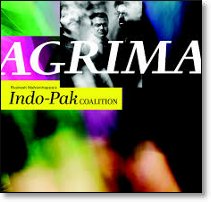
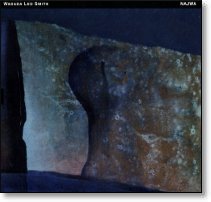
Note (as if you couldn't reverse engineer this factoid) that four of the lists are British (two record stores, two publications), and the other specializes in heavy metal. Expect much of this list to change as more representative critics chime in. I'd have to rate Kendrick Lamar's DAMN as the odds-on favorite -- AOTY's Highest Rated Albums of 2017 lists it first, barely ahead of Lorde's Melodrama [A-], with LCD Soundsystem at 6 and St. Vincent at 8. The other contender I see on AOTY's list is Vince Staples' Big Fish Theory [***] at 4. I expect that Mount Eerie's A Crow Looked at Me [*] (3), Valerie June's The Order of Time [**] (5), and Jlin's Black Origami [**] (7) to get a few nods but have a tougher time adding them up. Beyond that I don't see many contenders on AOTY's list -- maybe Arca (10) [B], Sampha's Process [*] (16), Algiers' The Underside of Power [B] (25). The Richard Dawson album is 15 at AOTY, but I'd be surprised if it has much US support. Further down the AOTY list you'll find The National (31) and Father John Misty (38). The only jazz album in AOTY's top 50 is Vijay Iyer Sextet's Far From Over [***] (29). I suppose that makes it the famous to win this year's NPR Jazz Critics Poll (run by Francis Davis with some help from myself), although that's mostly because I have no idea which albums will be contenders. Diana Krall's Turn Up the Quiet [***] won Downbeat's Readers Poll. When I look at my own A-list, I see very little that jumps out as likely to get broad support -- maybe Steve Coleman's Morphogenesis, Jimmy Greene's Flowers, Hudson, Rudresh Mahanthappa's Agrima, Eric Revis' Sing Me Some Cry, Tyshawn Sorey's Verisimilitude, Wadada Leo Smith's Najwa, Craig Taborn's Daylight Ghosts, Miguel Zenón's Típico. But most years most of the top-20 come from my [***] and [**] lists, and I have no particular knack or (right now) inclination to try to sift them out. With ballots for the Jazz Poll due December 3, I finally got around to sorting out my own 2017 Jazz and Non-Jazz lists. First thing I'm struck by is how unreliable the ordering of these lists is. One sign is that the order favors albums that came out early in the year, not because they've had longer to sink in but because they got to the top of the list first. A fact of my life is that I almost never go back and replay graded records any more (and when I do, I'm more likely to pick something old and classic, often from my travel cases). I expect I'm going to stir the order up quite a bit before I'm done, but whether that's from replay or just memory remains to be seen. Health rated count this week, once again very jazz-heavy even when I'm streaming off internet -- last week's ratio was 30-2. That will probably hold up until I file my jazz ballot, then pivot as I see more EOY lists. At some point I expect I'll start running my own aggregate of 2017 EOY lists, like I did for last year. Main obstacle is that I expect the next 3-4 weeks to be heavily interrupted. First, I'll be cooking a small dinner for Thanksgiving. Then I'm in charge of fixing the Wichita Peace Center annual banquet -- last year we had eighty people, so unless I hear otherwise that's on plan this year. Then I'll need to do some work publishing the individual critic ballots for the NPR Jazz Critics Poll. Sometime in early December I'd like to work in a much-postponed trip to see relatives in Arkansas. In this rush, I'll probably go ahead and post a Streamnotes early this month, to get it out of the way. Presumably I'll need to file a Pazz & Jop ballot in mid-December. By the end of December, I vow to finish two other long-delayed projects: compiling my existing reviews into two Jazz Guide files, and catching up Robert Christgau's website. Lot of work for a guy who's increasingly feeling his advancing age. As Stephen Colbert noted tonight: most presidents age visibly in office, but Trump is aging us. One last note on unpacking: got a large batch of CDs (many multiple sets) from University of North Texas, which has the oldest and probably largest jazz education program outside of the Boston-NY corridor -- it doesn't produce as many famous names as Berklee and Juilliard, but as a working critic I've noticed a lot of fine musicians with UNT degrees. Still, good chance I got some of the artist attributions wrong there -- something I'll have to revisit with I finally get the magnifying glass out and try to decipher the fine print. New records rated this week:
Recent reissues, compilations, and vault discoveries rated this week:
Old music rated this week:
Grade (or other) changes:
Unpacking: Found in the mail last week:
Ask a question, or send a comment. Sunday, November 19, 2017 Weekend RoundupI've often heard that "politics is the art of the possible" -- the quote is most often attributed to Otto von Bismarck, who continued: "the attainable -- the art of the next best." Bismarck is best known now as the architect of the modern welfare state, something he achieved with autocratic Prussian efficiency, his generally satisfactory answer to the threat of proletarian revolution. But the earlier generations he was better known as the founder of German militarism, a bequest which less pragmatic followers parlayed into two disastrous world wars. Then, as now, the "possible" was always limited by preconceptions -- in Bismarck's case, allegiance to the Prussian nobility, which kept his innovations free of concessions to equality and democracy. After immersing myself into the arcana of mainstream politics in the 1960s -- I used to trek to the library to read Congressional Quarterly's Weekly Reports, I subscribed to the Congressional Record, and I drew up electoral maps much like Kevin Phillips -- I pivoted and dove into the literature of the politically impossible, reading about utopian notions from Thomas More to Ignatius Donnelly to Paul Goodman (whose Utopian Essays & Practical Proposals is a title I still fancy recapitulating). But I never really lost my bearings in reality. In college I worked on the philosophy journal Telos, which taught one to always look toward ends (or goals) no matter the immediate terrain, and I studied neo-Kantians with a knack for making logic work to bridge the chasm. Later I turned into an engineer, and eventually had the epiphany that we could rationally think our way through complex political and economic problems to not necessarily ideal but much more viable solutions. From the start I was aware of the standard and many other objections to "social engineering." No time to go into them now, but my background in engineering taught me that I have to work within the bounds of the possible, subject to the hard limits of physics and the slightly messier lessons I had learned from my major in sociology. Without really losing my early ideals -- my telos is equality, because that's the only social arrangement that is mutually agreeable, the only one that precludes scheming, strife, and needless harm -- I came to focus on little steps that nudge us in the right direction, and to reject ideas that couldn't possibly work. Thinking about this has made me a much more moderate person, without leading me to centrism or the notion that compromise is everything. A good example of a political agenda that cannot be implemented -- indeed, one that offers nothing constructive -- was provided a while back by Alan Keys, a Republican presidential candidate whose entire world view revolved around teenagers having sex and how society needs to stop them. Maybe his analysis has some valid points, and maybe there are some paternalistic nudges that can trim back some of the statistical effects (like the rate of teen pregnancy), but nothing -- certainly no tolerable level of coercion -- can keep teenagers from being interested in sex. Of course, Keys was an outlier, even among Republican evangelicals. Only slightly more moderate is Roy Moore, who's evidently willing to carve out an exception for teens willing to have sex with himself. You might chalk that up to hypocrisy, which is common among all Americans, but is especially rife among conservatives (who regard it as a privilege of the virtuous rich) and evangelicals (who expect personal salvation for the fervor with which they damn all of you). But Moore's own agenda for making his peculiar take on Christianity the law of the land is every bit as dangerous and hopeless as Keys' obsession with teen sex. The most chilling thing I've read in the last week was a column by Cal Thomas, Faith in Politics, where he urges conservative evangelicals to put aside their frivolous defenses of Roy Moore and go back to such fundamentals as Martin Luther's 95 Theses, where "Luther believed governments were ordained by God to restrain sinners and little else." The striking thing about this phrasing is how cleverly it forges an alliance with the libertarian right, who you'd expect to be extremely wary of God-ordained governmental restraint. But sin has always been viewed through the eyes of tyrants and their pet clergy, a "holy alliance" that has been the source of so much suffering and injustice throughout world history. News recently has been dominated by a seemingly endless series of reports of sexual misconduct, harassment and/or assault, on all sides of the political spectrum (at least from Roy Moore to Al Franken), plus a number of entertainers and industry executives. Conservatives and liberals react to these stories differently -- aside from partisan considerations (which certainly play a part when a Senate seat is at stake), conservatives are hypocritically worked up about illicit sex, while liberals are more concerned with respecting the rights of women. Yet both sides (unless the complaint hits particularly close to home) seem to be demanding harsh punishment (see, e.g., Mark Joseph Stern: Al Franken Should Resign Immediately Michelle Goldberg and Nate Silver agree, mostly because they want to prove that Democrats are harsher and less hypocritical on sexual misconduct; indeed, instant banishment seems to have been the norm among entertainers, which Kevin Spacey, Louis CK, and Jeffrey Tambor having projects canceled, as well as more delayed firings of Roger Ailes, Bill O'Reilly, and Harvie Weinstein). This drive to punish, which has long been a feature of America's notion of justice, can wind up making things worse (and not just because it could trigger a backlash, as Isaac Chotiner and Rebecca Traister discuss). I'm sure many women have many things to object to here -- the Weinstein testimonies seem especially damning, and I suspect the hushed up Ailes and O'Reilly legacies are comparable -- but I'm finding some aspects of the whole brouhaha troubling. Sex is a messy subject, often fraught and embarrassing to negotiate, subject to wildly exaggerated hopes and fears, but inevitably a part of human nature -- I keep flashing back on Brecht's chorus: "what keeps mankind alive? bestial acts." On the other hand, we might be better off looking at power disparities (inequality), which are clearly evident in all of these cases, perhaps even more so in entertainment than in politics. I can't help but think that in a more equitable society, one that valued mutual respect and eased up a bit on arbitrary punishment, would be bothered less by these problems. Some scattered links this week:
Ask a question, or send a comment. Monday, November 13, 2017 Music Week
Music: Current count 28874 [28842] rated (+32), 391 [396] unrated (-5). Tis the season when most critics (and especially their publishers) start thinking about year-end lists. I expect that before the month is out I'll take my first pass at constructing this year's version of last year's Jazz and Non-Jazz lists. To that end, I started taking a belated look at AOTY's Highest Rated Albums of 2017 list, and picked out a few things to check out (most successfully, St. Vincent's 8th-rated Masseduction). I sought out several albums from Robert Christgau's recent Expert Witness albums (Pere Ubu's 20 Years in a Montant Missile Silo the only thing I've really liked there recently). I also made a point of looking up everything I had missed on Alfred Soto's Best albums of 2017 -- third quarter edition. Rather surprised I didn't find more there. The present Year 2017 file lists 834 albums (28 of those pending grades). That's down from 1075 for 2016 by freeze time (January 28, 2017). Figuring I have 11 weeks left, and I've averaged 18.1 new releases per week over the first 46 weeks, that extrapolates to 1033 records: down a bit from last year, but not much. Down more from previous years, of course, but I won't bother dredging those numbers up. I finally got a bit of work done on compiling the Jazz Guide(s): 21st Century up to 1267 pages (64% through the Jazz '00s database file, up to Ferenc Nemeth); 20th Century edged up to 750 pages as I found a couple stragglers. 21st Century should wind up 1450-1500 pages, hopefully by the end of the year. (So much for my earlier August-September estimates!) Thinking a bit about what should happen next. The drafts are collected using LibreOffice. Obviously, I can export them as PDF, and distribute them as I did the JCG-only version. I don't know the first thing about exporting to ebook formats, but I see there is a Writer2ePub extension, and also a "cross-platform free and open-source e-book reader and word processor" called Calibre. Both of those look promising. It occurs to me that the collected writing would be more useful reorganized as a website. LibreOffice can export as HTML, but I'd need some way to explode the file into many webpages. It's possible that there is an extension somewhere to support that, but thus far is looks like a job for custom programming. That's something I'll need to look into and think about -- not that I haven't thought about pouring my database and reviews into a website for a long time now. It's just that I've always had trouble coming up with an album-based database schema to hang everything on. In recent years I've been gravitating more toward an artist-based schema, even though it doesn't normalize as nicely. That's probably the level I'd try to explode an HTML export of the Jazz Guides. One idea is to dispense with the database and just use Mediawiki, organizing the reviews by artist. In that case one could simply cut and paste from the book to the website. That would still be a lot of work. More troubling for me is the amount of editing that the reviews require. The relatively easy part is stripping out the redundancy that occurs when discrete reviews are stacked up under an artist name. I expect to move dates, instruments, band associations, and other such attributes to a brief artist intro, cutting them out of the album reviews. In many cases that leaves virtually nothing but the credits and grade. It would be nice to flesh them out a bit, but that now appears to be a job for another lifetime, or for someone else. At this point, I'd be happy to let my framework stand as a starting point for someone else to build on, or maybe a whole community. Unclear whether anyone is interested. One thing I neglected to mention last week was Downbeat's 82nd Annual Readers Poll (October 2017 issue). Biggest surprise for me was the late Allan Holdsworth (1946-2017) finishing second on the HOF ballot. I had him filed under rock (1970s) and hadn't rated (or heard) any of his albums. Wikipedia says he "was cited as an influence by a host of rock, metal and jazz guitarists" but the following list of twelve only includes one name I recognize as jazz (Kurt Rosenwinkel). I suppose I should do some research, possibly starting with Gordon Beck's Sunbird (1979; Beck's 1967 Experiments With Pops, with 3rd place finisher John McLaughlin, is a favorite) and two Tony Williams albums not yet in my database. McLaughlin would have been a perfectly respectable choice. I've heard at least two dozen of his albums, with Extrapolation (1969) and Mahavishnu Orchestra's The Inner Mounting Flame (1971) early masterpieces. Fourth- and fifth-place finishers Les Paul and George Benson would have been disgraceful picks, although I can point to at least one superb record each is on. The HOF winner, Wynton Marsalis, is a ho-hum choice: a solid hard bop trumpeter, probably better than Kenny Dorham or maybe even Woody Shaw but less exciting than Lee Morgan and not as versatile as Freddie Hubbard. He also became a huge celebrity, built an empire at Lincoln Center, and wrote some of the most ponderous compositions of the era. I've always liked him best when he was least serious. I credit him with three A- records: his soundtrack Tune In Tomorrow (1990); his Jelly Roll Morton tribute, Mr. Jelly Lord (1999); and his Play the Blues meetup with Eric Clapton (2011). Dorham and Shaw, by the way, have two A- records each, in shorter careers. Elsewhere, the winners were on the stodgy side of mainstream -- the relatively hip picks were Chris Potter (tenor sax), Anat Cohen (clarinet), and I can never fault Jack DeJohnette (drums). Two flat out bad picks: Snarky Puppy (group), and Trombone Shorty (trombone). (Well, Gregory Porter too, but consider his competition.) I don't have time to go deeper down the lists, but for example, Marsalis won trumpet, and I'd have to drop to 13th to find someone I would have voted for ahead of him (in fact did: Wadada Leo Smith; Dave Douglas came in 15th; 4th-place Terence Blanchard gave me pause). Only other down-ballot pick I'll mention is Geri Allen, who came in 3rd at piano. Would have been a pleasant surprise, but she died to get there, and still got beat by Herbie Hancock and Chick Corea, who haven't produced exceptional albums since the early 1970s (OK, I did rather like Corea's 2014 Trilogy). New records rated this week:
Recent reissues, compilations, and vault discoveries rated this week:
Unpacking: Found in the mail last two weeks (sorry I forgot to post last week):
Ask a question, or send a comment. Sunday, November 12, 2017 Weekend RoundupMatt Taibbi is a dedicated, insightful journalist and a terrific writer, but ever since the 2016 campaign started he's repeatedly gotten tripped up by having to meet advance deadlines for Rolling Stone that have left many of his pieces dated on arrival. His latest is especially unfortunate: A Year After Trump's Election, Nothing Has Changed. The factoid he chose to build his article around was a recent poll arguing that 12 months later, Trump would probably still win the 2016 election. The assumption is that Trump is still running against Hillary Clinton. Trump, of course, has been in the news every day since the election, and is already raising money for 2020 and making rally appearances in active campaigning mode. Aside from her self-serving, self-rationalizing book tour Clinton has largely dropped out of site, conceding she's not running again, and not scoring any points attacking Trump -- not that Trump's stopped attacking her, most recently accusing her of being the real "Russia colluder." Still, the poll in question shows Trump and Clinton in a dead 40-40 tie -- i.e., both candidates are doing worse than they did one year ago, but in the interest of sensationalism, the author gives Trump the tiebreaker ("Given that Trump overperformed in key, blue-leaning swing states, that means he'd probably have won again.") As it happens, Taibbi's article was written before and appeared after the 2017 elections where Democrats swept two gubernatorial races (in VA and NJ), and picked up fairly dramatic gains in down-ballot elections all over the country. For details, start with FiveThirtyEight's What Went Down on Election Night 2017. Nate Silver explains further:
Silver also notes:
The thing I find most striking about these election results is the unity Democrats showed. Mainstream Democrats still bitch about lefties who defected to Ralph Nader in 2000, but as someone who remembers how mainstream Democrats sandbagged McGovern in 1972 (and who's read about how Bryan was repeatedly voted down after 1896), I've long been more concerned about how "centrists" might break if anyone on the left wins the Democratic Party nomination. Yet last week saw a remarkably diverse group of Democrats triumphant. The lesson I take away from the results is that most voters have come to realize is that the problem isn't just Trump and some of his ilk but the whole Republican Party, and that the only hope people have is to unite behind the Democrats, regardless of whether they zig left or zag right. Especially after last week's flap over Donna Brazile's book Hacks, that's good news. It's also news that belies Taibbi's main thesis: not so much that nothing has changed in the year since Trump's shocking election win as the charge that we're still responding as stupidly to Trump as we did during the campaign. On the former, the administration's worker bees have torn up thousands of pages of regulations meant to protect us from predatory business, major law enforcement organizations have been reoriented to persecute immigrants while ignoring civil rights and antitrust, and the judiciary is being stock with fresh right-wingers. The full brunt of those changes may not have sunk in -- they certainly haven't hit all their intended victims yet -- but even if you fail to appreciate the threats these changes have a way of becoming tangible very suddenly. And given how Republican health care proposals polled down around 20%, you may need to rethink your assumptions about how dumb and gullible the American people are. Republican proposals on "tax reform" are polling little better than their effort to wreck health care. This polling is helping to stall the agenda, but Republicans in Congress are so ideological, and so beholden to their sponsors, that most are willing to buck and polls and follow their orders. What we've needed all year has been for elections to show Republicans that their choices have consequences, and hopefully that's started to happen now. But whereas the first half of Taibbi's article can be blamed on bad timing, the second half winds up being even more annoying:
Well, I'm as eager as the next guy for a high-minded conversation about common problems and reasonable solutions, but that's not what politics is about these days (and probably never was). But let's face it, the immediate problem is that one side's totally unprincipled and totally unreasonable, and the only way past that is to beat that side down so severely no one ever dares utter "trickle down" again. They need to get beat down as bad as the Nazis in WWII -- so bad the stink of collaboration much less membership takes generations to wash off. Then maybe we can pick up the pieces. As for the "hacks and opportunists," sure they are, but they're approachable in ways the Republicans simply aren't. I've seen good people, hard-working activists, come into Wichita for years and urge us to go talk to our Congressman, as if the person in that office (remember, we're talking about Todd Tiahrt, Mike Pompeo, and Ron Estes) was merely misinformed but fundamentally reasonable. I've met plenty of hacks and opportunists who are at least approachable, but not these guys. They've sold their souls, and they're never coming back. By the way, Thomas Frank's article on the Trump Day anniversary runs into pretty much the same problem: We're still aghast at Donald Trump -- but what good has that done? Well, the American political system doesn't give you a lot of latitude to repair a botched election -- everyone in office has fixed terms, the option of signing recall petitions is very limited (and doesn't apply to Trump), impeachment is virtually impossible without massive Republican defections -- so sometimes being constantly aghast is all one can do. And while the last three US presidents had their share of intractably obsessive opponents, they pale to the numbers of people constantly on Trump's case. Frank wants to minimize our effect, not least because he wants us to consider bigger, wider, deeper, older faults that Trump makes worse but isn't uniquely responsible for.
As an engineer, I've long related to the idea that you have to understand something to change it -- at least to change it in a deliberate and viable way -- but politics doesn't seem to work that way. For nearly all of my life, the most powerful political motivator has been disgust. And while that may seem like a recent bad trend, I pretty clearly remember characters like Dick Nixon, Barry Goldwater, and George Wallace. So it really doesn't bother me when people are simply aghast at Trump without understanding the fine points. Sure, at some point we need to get a better idea of what to do, but all the present situation demands is resistance, and as people line up to defend and demean Trump, those connections Frank wants us to learn are getting made. My tweet for the day:
Some scattered links this week:
Ask a question, or send a comment. Friday, October 6, 2017 Music Week
Music: Current count 28842 [28813] rated (+29), 396 [405] unrated (-9). After many short weeks, back to semi-normal last week, a swing that would have been even more pronounced had I not gotten distracted over the weekend: cooked a fairly large dinner on Saturday, had guests and a birthday party to attend on Sunday. Monday, too, has largely been chewed up by technical problems, so I'm getting a late start on this post, and not including Monday's unpacking. The short and scattered nature of yesterday's Weekend Roundup was one consequence of my weekend distractions. One thing I did there was to cite Donna Brazile's controversial Inside Hillary Clinton's Secret Takeover of the DNC, as well as a rejoinder by Josh Marshall, before moving on to my own concerns. Shortly after I posted, I noticed Charles Pierce's own anti-Brazile rant: The Democratic Party Is Finding a Way to F*ck This Up, which starts off with this hideous preface:
I mean, sure, it was more depressing than 2008, when Hillary Clinton was denied the Democratic Party nomination and therefore was unable to blow the general election. But even though I was delighted with Obama's primary successes in 2008, Bernie Sanders' campaign was unprecedented, and his near-success even more thrilling. The Republican primaries had more faces, and some stylistic variation, but there ultimately wasn't a dime's worth of difference between the candidates. But there were real, significant differences between Sanders and Clinton, and they were things that mattered -- so how could one not get swept up in the opportunity? I don't know, but I have a hypothesis, based on a few people I know who I think of as having more/less lefty (but pro-Hillary) politics and extrapolating to more establishment-oriented liberals. It involves two factors: one is a cynical belief that substantial progressive change is not possible; the other is blind faith in liberal meritocracy, which has anointed the long line of Democratic Party leaders from aristocrats like the Roosevelts and Kennedys to accommodating strivers like the Clintons and Obama. That cynicism lets such people dismiss Bernie with whatever epithet they fancy (for Pierce, "smug, self-righteous") even though there is no evidence for their assertions, while always giving Hillary the benefit of any doubts, even though her own track record is full of compromises and betrayals. Such people are very hurt, probably more by Hillary's loss than by Trump's victory, because the former calls into question their belief in American exceptionalism, whereas the latter mostly hurts other people. Russia is their perfect villain, a way of blaming their failure not on other Americans but on some external evil. Still, I recently read David Daley's Ratf**ked: The True Story Behind the Secret Plan to Steal America's Democracy, and I don't recall a single Russian operative in the entire book. The "ratfuckers" -- the people conspiring to engineer districts and electorates to their partisan advantage -- are Republicans, and they've been very effective at it. I don't doubt that Russia helped them out here and there, but the game plan was hatched in Republican circles, and they were the ones who mostly carried it out. Blaming Russia may make some Democrats feel better about themselves, but it mostly means they're continuing to turn a blind eye to their real enemies. And in their failure to recognize real enemies, they've not only been ineffective at defending against them -- they've lost credibility among the very people who suffer Republican rule the worst. Pierce goes on to attack "SPW" ("Senator Professor Warren"), and to set up scapegoating the left if the Democrat Ralph Northam loses the Virginia gubernatorial race. He's right that the Democrats have various problems achieving unity, even in the face of the most obviously horrid Republicans in history, but it beats me how he thinks he's contributing to solidarity by trashing Bernie. Since I posted, I've run across two more pieces on the Brazile Affair: Glenn Greenwald: Four Viral Claims Spread by Journalists on Twitter in the Last Week Alone That Are False -- three attacking Brazile, two of those repeated by Pierce -- and Matt Taibbi: Why Donna Brazile's Story Matters -- But Not for the Reason You Might Think. The lesson Taibbi draws from the story is how the Clinton camp distrusted democracy -- they sought to rig the primaries not because they couldn't win otherwise, but because they didn't think they should have to submit to the voters.
New records rated this week:
Old music rated this week:
Ask a question, or send a comment. Sunday, November 5, 2017 Weekend RoundupAgain, a very late start, so this is very catch-as-catch-can. Some scattered links this week:
Ask a question, or send a comment. Tuesday, October 31, 2017 Streamnotes (October 2017)Shortest monthly roll-up of Streamnotes this year, by quite a large margin (75 vs. 111 in May; high was 156 in January). Probably the shortest in several years. I've made my excuses in past Music Week posts, so won't rehash them here. I will note that the jazz share of the following is relatively high, even by my standards. Until the EOY lists start appearing, I'm don't seem to be noticing much non-jazz. However, the lists should start appearing in late November. Over the last few years, I've threatened to stop compiling them, but at the moment I'm actually looking forward to the diversion. Also to sorting out my own Jazz and Non-Jazz EOY lists -- I'll probably make my first stab at that shortly after the first lists appear. Meanwhile, the year-in-progress list is here. Current grade breakdown (new releases): 107 A- (64 jazz, 43 non-jazz), 121 B+(***), 186 B+(**), 180 B+(*), 78 B, 23 B-, 5 C+, 2 C; (reissues/compilations): 1 A, 8 A- (2 jazz, 7 non-jazz), 12 B+(***), 14 B+(**), 6 B+(*), 3 B, 1 B-, 1 C+. The A-list usually winds up being pretty evenly split between jazz and non-jazz, but always starts with jazz way ahead (about the current ratio). That adds up to 627 records rated in 10 months, so that projects to 815 over 13 months (January is usually devoted to late-breaking (or merely late-noticed) albums from the previous year. Adding a month for January also makes it easy to compare progress this year to last year, as I can compare a straightforward projection to the actual frozen 2016 list as of January 28, 2016. That file listed 1074 records, so by this first crude approximation I'm down about 24% compared to 2016. I'm not surprised that my rate has slowed in 2017, but this is the first time I've tried making a projection, and the drop is a bit more than I expected. Most of these are short notes/reviews based on streaming records from Napster (formerly Rhapsody; other sources are noted in brackets). They are snap judgments, usually based on one or two plays, accumulated since my last post along these lines, back on September 30. Past reviews and more information are available here (10248 records). Recent Releases
Rez Abbasi: Unfiltered Universe (2016 [2017], Whirlwind): Guitarist, from Pakistan, group expands on a group saxophonist Rudresh Mahanthappa organized (with Abbasi and percussionist Dan Weiss, the Indo-Pak Coalition -- adding Vijay Iyer on piano, plus cello and bass. Main difference is that Abbasi wrote the pieces here, and his postbop stumbles awkwardly in spots. On the other hand, Mahanthappa is terrific throughout. B+(**) [cd] Tony Allen: The Source (2017, Blue Note): Nigerian drummer, met Fela Kuti in 1964 and anchored his band for the next 15 years. Has recorded a couple dozen albums since going on his own in 1979, but this is the first (following an EP) for a jazz label, and this is very straightforward jazz album, a nonet plus a couple spot guests, occasionally working in a bit of African rhythm but not very often. B+(*) Banda Magda: Tigre (2017, GroundUP Music): New York-based band built around Greek singer-songwriter Magda Giannikou (also plays accordion and piano). Third group album. Hard to peg, with its Balkan beats and occasional orchestral swirl. B+(*) Peter Bernstein: Signs LIVE! (2015 [2017], Smoke Sessions, 2CD): Guitarist, strikes me as one of the better examples of the long-dominant Wes Montgomery school, stretches out at great length in this quartet -- although equally featured is pianist Brad Mehldau. Two Monk pieces, the rest originals. With Christian McBride (bass) and Gregory Hutchinson (drums). B+(**) Blue Note All-Stars: Our Point of View (2017, Blue Note, 2CD): Third time Blue Note has tried this, with its 1996 Blue Note All Stars (no hyphen), 2009 Blue Note 7, and now this one: note, first of all, that none of the three albums share any musicians or producers. Lineup this time: Ambrose Akinmusire, Marcus Strickland, Lionel Loueke, Robert Glasper, Derrick Hodge, Kendrick Scott, plus two legends return for a shot at "Masqualero" (Wayne Shorter and Herbie Hancock). Aside from a Loueke showcase not far removed from the hard bop the label was built on, so plus ça change, plus c'est le même chose. B+(**) Borderlands Trio [Stephan Crump/Kris Davis/Eric McPherson]: Asteroidea (2015 [2017], Intakt): Bass-piano-drums trio, the bassist getting a solo intro to kick things off, elsewhere the pianist playing soft rhythmic figures behind the bass. Fascinating there, even more so when Davis jumps out front, bringing the drums into play. A- [cd] Bobby Bradford/Hafez Modirzadeh: Live at the Magic Triangle (2016 [2017], NoBusiness): Cornet-tenor sax quartet, Ken Filiano on bass and Royal Hartigan on drums, each contributing a song (or two for Bradford). Loose and free, but doesn't have the spark of Bradford's legendary quartet with John Carter. B+(**) [cdr] Dee Dee Bridgewater: Memphis . . . Yes, I'm Ready (2017, Okeh): Started as an r&b singer, not making much of a mark with her early Atlantic and Elektra albums (1976-80), well before she moved into jazz (first Verve album in 1993). So this is a throwback to her r&b days, except with better songs -- Memphis-associated, including a couple of Elvis hits. The horn arrangements are stock, the vocal tone a bit darker, so it actually helps when he turns the gospel afterburner on, on "Precious Lord" (of course), even more so on "Try a Little Tenderness." B+(*) Kyle Bruckmann's Degradient: Dear Everyone (2017, Not Two, 2CD): Plays oboe, English horn, electronics, with a dozen-plus albums since 2001. First with this group, backed by Aram Shelton (alto sax, clarinet, bass clarinet), electric bass and percussion, with a text by Matt Shears rendered by 99 readers. The spoken word is scattered about, accenting rather than breaking up the dense music. B+(**) Cortex: Avant-Garde Party Music (2017, Clean Feed): Norwegian two-horn quartet -- Thomas Johanson (trumpet), Kristoffer Alberts (saxes), Ola Høyer (bass), Gard Nilssen (drums) -- first studio album after two terrific live ones. One figures they haven't outgrown their taste for high-energy rock even though their chops and instruments have opened up avant-jazz options. B+(***) Cowboys and Frenchmen: Bluer Than You Think (2017, Outside In Music): Co-led by alto saxophonists Owen Broder and Ethan Helm, who split writing chores 3-4 -- one additional track by Chris Misch-Bloxdorf, who is not in the quintet (piano, bass, drums), and produced by Ryan Truesdell, who prefers delirious unity to conflict. B+(*) [cd] Corey Dennison Band: Night After Night (2017, Delmark): Bluesman, plays guitar and sings, born white in Chattanooga, "immediately felt a strong connection to Soul music," moved to Chicago and fit right in. First half is perfectly respectable Chicago blues, second nudges its way into respectful soul, losing a step but relishing it. B+(***) [cd] Mark Dresser: Modicana (2016-17 [2017], NoBusiness): Bassist, major avant-garde figure including a long stretch in Anthony Braxton's legendary quartet, 35+ records as leader (or 40+ if you could Arcado String Trio), many more side credits. Goes solo here, always a tough sell, but keeps it interesting. B+(**) [cdr] Open Mike Eagle: Brick Body Kids Still Daydream (2017, Mello Music Group): Underground rapper, real name Mike Eagle, one half of Run the Jewels but has kept a solo career going steady since 2010. B+(**) Harris Eisenstadt/Mivos Quartet: Whatever Will Happen That Will Also Be (2015 [2017], NoBusiness): Actually, just the Canadian percussionist's composition -- four movements of the title piece -- performed by a conventional string quartet: two violins (Josh Modney and Olivia De Prato), viola (Victor Lowrie), and cello (Mariel Roberts). Interesting music, but I'm not much of a fan of the form/sound. B+(*) [cdr] Ellery Eskelin: Trio Willisau Live (2015 [2016], Hatology): Tenor saxophonist, with Gary Versace (organ) and Gerry Hemingway (drums). Some remarkable sax and cliché-free organ. A- Bob Ferrel: Bob Ferrel's Jazztopian Dream (2016 [2017], Bob Ferrel Music): Trombonist, side credits include Southside Johnny & the Jukes (1983-86) and Michael Treni Big Band (2011-13), has the run of a fairly large band here, featuring vocalist Dwight West on four tracks, including a "Yardbird Suite" I find inadvertently funny, and one from Ferrell Sanders that notes "whales out in the sea need freedom." More swing than bop, and lots of trombone. B+(*) [cd] Four Tet: New Energy (2017, Text): Kieran Hebden has done most of his laptronica work under this alias since 1999, more than a dozen albums, most quite enjoyable. Seems like there's more guitar than usual here, but otherwise little stands out. B+(**) Ghost Train Orchestra: Book of Rhapsodies Vol II (2012-17 [2017], Accurate): Trumpet player Brian Carpenter's Brooklyn-based large band, fourth album, two modern arrangements of hot 1920s jazz, the Rhapsodies sets featuring chamber jazz from the 1930s. This one takes an odd turn by adding two choirs, one of adults, one of children. Looks like the latter was dubbed over older recordings, and I can't say as I approve (although the music is lovely). B+(*) [cd] Yedo Gibson/Hernâni Faustino/Vasco Trilla: Chain (2016 [2017], NoBusiness): Baritone/soprano saxophonist from Brazil, first album as leader, recorded in Lisbon where he picked up the bassist (best known for RED Trio) and drummer (actually Spanish -- has appeared on ten or so avant albums since 2015). Free jazz tension and strife, spending a fair amount of time grumbling in the basement. B+(**) [cd] Gordon Grdina Quartet: Inroads (2017, Songlines): Guitarist, also plays oud, based in Vancouver, has put together an impressive string of records since 2006. No bassist here, so he tends to melt into that role here, especially as his stars -- Oscar Noriega (alto sax/clarinets) and Russ Lossing (piano/Rhodes) -- bull their way to the front. With Satoshi Takeishi on drums. B+(***) [cd] Ross Hammond + Jon Bafus: Masonic Lawn (2016 [2017], Prescott): Guitar-drums duo, Hammond also credited with resonator, 12-string resonator, and lap steel. Draws inspiration from Americana, but I hear more Chuck Berry than Bill Frisell. B+(***) Hans Hassler: Wie Die Zeit Hinter Mir Her (2015 [2017], Intakt): Swiss accordion player, in his 70s, third album since 2008 for the label. Starts routine, but picks up speed and interest. B+(*) [cd] Dylan Hicks: Ad Out (2017, Soft Launch): Singer-songwriter, based in Minneapolis, albums go back to 1996, also has a novel. Christgau praised this but described him as "logocentric" -- presumably why I didn't readily warm to him, although second time around I did notice occasional turns of phrase. B+(**) Steve Hobbs: Tribute to Bobby (2016 [2018], Challenge): Plays marimba and vibraphone, has a record from 1993, couple more since. Speaks here of his quartet with Bill McConnell, Peter Washington (also on the 1993 record), and John Riley, but there's also a saxophonist in play, a good one, Adam Kolker. "Bobby" is presumably Hutcherson, though the only non-originals are by Dylan and Rodgers & Hart. Three guest vocals almost spoil the groove. B+(*) [cd] Dylan Jack Quartet: Diagrams (2017, Creative Nation Music): Drummer, has a previous duo album with bassist Tony Leva, expanding that here by adding Tod Brunel on clarinets/soprano sax and Eric Hofbauer on guitar -- the part I noticed first. All originals by Jack, stretched out nicely with increasingly strong clarinet. B+(***) [cd] Ahmad Jamal: Marseille (2016 [2017], Jazz Village): Pianist, first albums came out in early 1950s, still has his fine touch at 86. Quartet with James Cammack (bass), Herlin Riley (drums), and Manolo Badrena (percussion), with three takes of the title song, one instrumental, the others with vocals (Abd Al Malik and Mina Agossi). B+(**) Danny Janklow: Elevation (2015 [2017], Outside In Music): Alto saxophonist, also plays alto flute, first album, has some side credits with John Beasley and José James. Personnel split here at piano and bass, with Jonathan Pinson on drums and Nick Mancini on vibes for 6/10 cuts. Bright, upbeat postbop, ending in a Michael Mayo vocal. B [cd] Piere Kwenders: Makanda at the End of Space, the Beginning of Time (2017, Bonsound): Alias for José Louis Modabi, born in Kinshasa, based in Canada. Has a sort of hybridized sound that strays far from the Congo without landing anywhere obvious -- perhaps some future lullaby chant. B+(*) Andrew Lamb/Warren Smith/Arkadijus Gotesmanas: The Sea of Modicum (2016 [2017], NoBusiness): Tenor saxophonist from North Carolina, free and rough, has a fairly short discography back at least to 1995, including a duo with percussionist Smith as The Dogon Duo. Gotesmanas is a second percussionist, not that either make much of an impression here -- Lamb strikes me as rather subdued as well. B+(*) [cdr] Lost Bayou Ramblers: Kalenda (2017, Rice Pump): Cajun group, formed in Lafayette, Louisiana in 1999 by brothers Louis and Andre Michot, with ten albums. Starts out with a stomp, the percussion noisier than expected, the accordion louder, the vocals shriller, all of which stands out in a genre where things tend to blend together. A- Rob Luft: Riser (2017, Edition): Guitarist, from London, 23, first album, quintet with Joe Wright on tenor sax, Joe Webb on organ/piano/harmonium, plus bass and drums -- the Hammond a little cheesy, but sometimes the sax rises up. B Roberto Magris Sextet: Live in Miami @ the WDNA Jazz Gallery (2016 [2017], JMood): Italian pianist, has gone out of his way to send me records so I've heard more than Discogs lists. Vigorous postbop with plenty of Latin tinge, as much in the horns -- Brian Lynch on trumpet and Jonathan Gomez on tenor sax -- as in Murph Aucamp's congas. B+(***) [cd] Rudresh Mahanthappa's Indo-Pak Coalition: Agrima (2017, self-released): The alto saxophonist represents India (he was actually born in Italy, but his parents had previously become US citizens, so his Indian heritage is something he's picked up over the years). Guitarist Rez Abbasi was born in Pakistan, but has been an American nearly as long. The third member is drummer Dan Weiss, from Tenafly, NJ, who also plays tabla, offering the most authentic Indo-Pak spicing, although the aromas whiff in and out, and Mahanthappa's sax is as fluid as ever. A- [cdr] Alma Micic: That Old Feeling (2017, Whaling City Sound): Serbian-born vocalist, sang with the Radio Belgrade Big Band before moving to New York. Fourth album, six delectable standards plus one original ("Ne Zaboravi Me") and a Russian/Romany folk song. Backed by guitarist Rale Micic plus bass and drums. B+(**) [cd] Matt Mitchell: A Pouting Grimace (2017, Pi): Pianist, also plays "Prophet 6" (a 6-voice polyphonic analog synthesizer) and electronics. Has a couple previous albums, and has distinguished himself with side credits. Runs the gamut here from solo electronics pieces to a 12-piece orchestra conducted by Tyshawn Sorey. B+(**) [cd] Nicole Mitchell and Haki Madhubuti: Liberation Narratives (2016-17 [2017], Black Earth Music): Flute player, still calls her band Nicole Mitchell's Black Earth Ensemble, but that name gives way on cover and spine for spoken word artist Madhubuti, whose poetry spans the gamut of black American experience. Deep, and the band keeps it percolating, with Pharez Whitted on trumpet, a violin-violin-cello-bass string section, drums plus percussion. A- [cd] Liudas Mockunas: Hydro (2015-16 [2017], NoBusiness): Lithuanian saxophonist, solo here, credited with "clarinet, percussion, water prepared soprano, soprano and tenor saxophone," on a series of short pieces, eleven titled "Hydration Suite," one "Dehydration." B+(**) [cdr] Paul Moran: Smokin' B3 Vol. 2: Still Smokin' (2017, Prudential): Organ player, based in London, two groups but no session dates. Four originals, covers start with "Come Together" and "One Note Samba" and wind up wondering "Where or When." B- [cd] Van Morrison: Roll With the Punches (2017, Caroline): Original song count down to five, counting the title song he got help on, none keepers, vs. eleven covers, mostly electric blues -- double hitting on T-Bone Walker and Bo Diddley. All get his standard generic treatment, which means remarkable voice and exquisite timing but with twenty-one artist credits that doesn't necessarily salvage the picks. B Mostly Other People Do the Killing: Paint (2017, Hot Cup): Bassist Moppa Elliott's group vehicle, named after his first (and only non-solo) album, made their mark as a pianoless quartet of "bebop terrorists," blowing up themes and styles from the '50s and '60s, but they lost trumpet player Peter Evans in 2013, replacing him with pianist Ron Stabowsky, and now saxophonist Jon Irabagon has dropped out, transforming them into a piano trio. Stabowsky plays heroically here, and Elliott's tunes are as vital as ever, that's a big change (actually I mean loss) to process. B+(***) [cd] Ian O'Beirne's Slowbern Big Band: Dreams of Daedelus (2016 [2017], self-released): Saxophonist, credited here with "reeds" but website pictures him on alto and baritone, and he plays the latter in the Glenn Miller ghost band. Based near Philadelphia (this was recorded in Conshohocken, PA). Big band, has some nice moments. B [cd] Johnny O'Neal: In the Moment (2017, Smoke Sessions): Pianist, also sings some, originally from Detroit, moved to Birmingham in 1974, which got him into the Alabama Jazz Hall of Fame but kept him out of the national spotlight. Has a handful of albums since 1982, the first with Art Blakey. Mainstream quintet with Roy Hargrove (trumpet), Grant Stewart (tenor sax), bass and drums. B+(*) Teri Parker: In the Past (2016 [2017], self-released): Pianist, also electric, based in Toronto. Quartet includes Allison Au on alto sax, which helps elevate her deft rhythmic touch. B+(**) [cd] Wojciech Pulcyn: Tribute to Charlie Haden (2016 [2017], ForTune): Polish bassist, has a couple dozen side credits since 1996 but this seems to be the first album under his name. Starts with two Ornette Coleman pieces (the first a bass solo), followed by six from Haden and the trad. "Oh, Shenandoah." with a vocal on an Abby Lincoln lyric. B+(**) [bc] Tom Rainey Obbligato: Float Upstream (2017, Intakt): Drummer, leads a conventionally shaped all-star quintet: Ralph Alessi (trumpet), Ingrid Laubrock (sax), Kris Davis (piano), and Drew Gress (bass). Six standards, one joint credit. Aptly titled: seems to be all about flow, gently even-tempered even working against gravity, remarkable when it succeeds. A- [cd] Samo Salamon/Szilárd Mezei/Achille Succi: Planets of Kei: Free Sessions Vol. 1 (2016 [2017], Not Two): Acoustic guitar, viola, bass clarinet/alto sax, the acoustic adding a prickly edge to the free string mix, contrasting to the hollow sound of the reeds. B+(***) [cd] Marta Sánchez Quintet: Danza Imposible (2017, Fresh Sound New Talent): Pianist, born and raised in Madrid (as was the same-named Spanish pop singer, a different person), based in New York, second album, all originals. Quintet features two saxophonists: Roman Filiu (alto) and Jerome Sabbagh (tenor), plus bass and drums. Complex postbop with Spanish flair. B+(**) [cd] Irène Schweizer/Joey Baron: Live! (2015 [2017], Intakt): Swiss pianist, one of the greats, in a duo with a notable American drummer -- half-dozen albums as a leader, well over 100 side-credits (John Zorn, Bill Frisell, Tim Berne, John Abercrombie, Enrico Pieranunzi, Laurie Anderson, many more). She has a whole series of piano-drum duos, and most are extraordinary (especially those with Han Bennink and Pierre Favre). So I kept expecting this to take off, but it never quite does. B+(***) [cd] Wadada Leo Smith: Solo: Reflections and Meditations on Monk (2014-15 [2017], TUM): Trumpet player, hard to think of a better one over the last decade, so it's hard to say that anything he does is a bad idea. Still, solo trumpet is tough, even when he works with familiar Monk tunes -- not that the five here are easy to peg, especially when mixed in with three of his own. B+(**) [cd] Wadada Leo Smith: Najwa (2014 [2017], TUM): Group effort, Henry Kaiser making me think of Yo! Miles!, but he's only one of four guitarists, and Smith is looking to take their electric post-funk into places Miles Davis never imagined: all Smith originals, all but the title "love song" namechecking legends: Ornette Coleman, John Coltrane, Ronald Shannon Jackson, and Billie Holiday. With Bill Laswell on electric bass (and mixing), Pheroan akLaff on drums, and Adam Rudolph on percussion. A- [cd] Mike Stern: Trip (2017, Heads Up): Guitarist, played with Miles Davis late in the game and has gone on to make quite a few fusion-oriented albums, none (as far as I know) especially great. This was evidently cut after a fall that broke both of his arms, leading him to write new tunes like "Screws" and "Scotch Tape and Glue." Guest horns (Randy Brecker and Wallace Roney on trumpet, Bob Franceschini and Bill Evans on tenor sax) steer some of this toward hot bop, and he's working harder than ever on his guitar. B+(*) Yosvany Terry/Baptiste Trotignon: Ancestral Memories (2017, Okeh): Quartet, featuring the Cuban-born alto/soprano saxophonist and the French pianist, backed by bassist Yunior Terry (brother) and drummer Jeff "Tain" Watts. Terry is well versed in Afro-Cuban jazz -- a long list of side credits indicates that he's the "go to" saxophonist for such -- but such impulses are muted here, leaving a light postbop impression. B+(*) Charles Thomas: The Colors of a Dream (2017, Sea Tea): Bassist, singing one track (the one standard, "My Foolish Heart"). Looks like this was recorded in three sessions with different bands, but I don't see any dates. At least one of the saxophonists is impressive, but I don't recognize any of them (Marcia Widget, Leon Williams, Joe Cohn). B+(*) [cd] Trio Da Kali and Kronos Quartet: Ladilikan (2017, World Circuit): The trio from Mali features singer Hawa Diabaté (daughter of Kassé Mady Diabaté) plus two traditional instruments: balafon and bass n'goni lute. Kronos is a standard string quartet that stradles classical and much else, with 43 records since 1979 -- 1992's Pieces of Africa was, I think, their first with an African group, and one of their best. Much of this strikes me as rather stately (or do I mean starchy?), although there are spots where it starts to click. B+(*) James Blood Ulmer With the Thing: Baby Talk: Live at the Molde International Jazz Festival 2015 (2015 [2017], Trost): Norwegian power trio -- Mats Gustafsson (baritone/tenor sax), Ingebrigt Håker Flaten (bass), Paal Nilssen-Love (drums) -- meets up with the blues/harmolodic guitarist (no vocals this time). Several previous albums matched the Thing with various guitarists, usually resulting in noisy jousts, but Ulmer just does his thing here, and the extra gravel the group hauls just deepens it. Short (4 cuts, 33:26). B+(***) Kamasi Washington: Harmony of Difference (2017, Young Turks): Tenor saxophonist, I had noticed him with Gerald Wilson, Phil Ranelin, and in Throttle Elevator Music before his 3-CD The Epic became a crossover sensation in 2015. More relevant to his breakthrough was his studio work with Kendrick Lamar and Flying Lotus -- the latter produced The Epic. This one barely tops EP-length: six tracks, 31:54. Mid-to-large groups -- octets on the first half, 21 musicians (not counting the choir) on the 13:30 "Truth" closer. I've never cared for his added voices, but does blow some mean sax. B+(*) Wooden Wand: Clipper Ship (2017, Three Lobed): Singer-songwriter James Jackson Toth, has a lot of recordings since 2004, many released as cassettes or CDRs. Fairly pleasant guitar and voice, nothing really got my attention. B Lizz Wright: Grace (2017, Concord): Jazz singer from Georgia, started out in church, went solo with 2003's Salt. Looks toward Americana here, with Joe Henry producing and suggesting songs, which she handles with steadfast charm. B+(***) Tal Yahalom/Almog Sharvit/Ben Silashi: Kadawa (2017, self-released): Guitar-bass-drums trio, first album, seems like a bit more with guests on 5 (of 12) tracks, Adam O'Farrill's trumpet on three of those. Everyone writes, but mostly Yahalom, whose guitar has a nice ring. B+(**) [cd] Recent Reissues, Compilations, Vault Discoveries
Mose Allison: I'm Not Talkin': The Soul Stylings of Mose Allison 1957-1971 (1957-71 [2016], BGP): Piano-playing jazz singer from Mississippi, draws on blues but never lived them, his light voice flippant and bemused, a carefree hipster from the 1950s who never fit into anyone's mainstream. There should be a compilation that sums up his uniqueness. B+(***) American Epic: The Collection (1916-36 [2017], Third Man/Columbia/Legacy, 5CD): The flagship, a box set tied to a documentary exploring a wide range of pre-WWII American music, country-folk and blues and Latino and Hawaiian and Native American but eschewing pop and jazz -- you get Ma Rainey but no Bessie Smith, Jimmie Rodgers with a cornet not Louis Armstrong. Although the dates spread out a bit, more than 90% fall within 1926-31 -- the two earlier cuts are solo fiddle pieces, the late ones blues so classic they seem older (Leadbelly, Robert Johnson). Closer, that is, to Harry Smith's purist Anthology of American Folk Music than it is to Allen Lowe's broader and deeper 9-CD American Pop. Eleven duplicates from Smith, but I recognize more songs than that as classic, and more still I didn't know at all. Comes in a hardcover book with song-by-song annotation. A [cd] American Epic: The Best of Blues (1927-36 [2017], Third Man/Columbia/Legacy): Seventeen (or thirteen on vinyl) cuts from the box, only one post-1931 (Robert Johnson). That works out to a little less than half of the blues on the box -- depends on whether you count the box's religious cuts, skipped here. Can't say they're the better half either -- I wouldn't have picked more than half, not that the others aren't worthy of the box. Nor do they work particularly well as an old-time folk blues sampler either (not sure what I'd suggest instead, but short of the Smithsonian's The Blues 4-CD box set, maybe Yazoo's more focused Back to the Crossroads: The Roots of Robert Johnson). B+(***) American Epic: The Best of Country (1927-34 [2017], Third Man/Columbia/Legacy): Same deal, sixteen cuts, only one later than 1930. Given the series' folk focus, these early cuts stay clear of the Smithsonian's canonical Classic Country Music -- only three artists in common, two (Carter Family, Jimmie Rodgers) represented here with their first 1928 Bristol sessions. (The third is Uncle Dave Bacon, although comparing the lists I have to wonder how Gid Tanner and Riley Puckett missed here, and Clarence Ashley and Charlie Poole missed there.) So I find this more useful than The Best of Blues, although the integration forced on the box is better still. A- Chévere (2017, Parma): Cuban classical music, as near as I can figure, names of seven composers on the cover -- I thought I recognized Arthur Gottschalk, only to find I had him confused with Louis Moreau Gottschalk (1829-1869). Instrumentation is dominated by strings, and most come with vocals (Kat Parra is the one I recognize) -- neither of those are particularly endearing to me. "Chévere" is a Cuban slang term I've seen variously translated as cool, hot dog, and/or fantastic. B [cd] Roscoe Mitchell: Duets With Anthony Braxton (1976 [2017], Sackville/Delmark): Exactly as advertised, two pioneering AACM saxophonists playing various unqualified reeds and flutes, often more polite than their usual mid-'70s rut. B+(**) [cd] Professor Rhythm: Bafana Bafana (1995 [2017], Awesome Tapes From Africa): Thami Mdluli, from South Africa, started making instrumental albums (mostly synths) around 1985, a sort of township jive meets house music which may or may not be related to kwaito (introduced to the US in Earthworks' Kwaito: South African Hip Hop (2000). Actually sound more like disco to me, or perhaps I should say what "African disco" should sound like? Seroiusly upbeat, ecstatic even. A- Sky Music: A Tribute to Terje Rypdal (2016 [2017], Rune Grammofon): The various artists include nine guitarists, the most famous (Bill Frisell, Nels Cline, David Torn, Jim O'Rourke) only appearing once, Raoul Björkenheim twice, Henry Kaiser four times, Hedvig Mollestad Thomassen five (of nine cuts), matched only by ubiquitous bassist Ingebrigt Håker Flaten and drummer Gard Nilssen. Some keyboards too, all fitting Norwegian guitarist Rypdal more firmly than ever into the fusion lexicon -- mostly by cranking the volume up. B+(*) [cd] Ton-Klami [Midori Takada/Kang Tae Hwan/Masahiko Satoh]: Prophecy of Nue (1995 [2017], NoBusiness): Marimba/percussion, alto sax, and piano. Group formed 1991, had two albums 1993-95. Satoh has a substantial discography (73 items in Discogs; Hwan 11, Takada 4). Rolling percussion with drone is the theme, but the variations only start there. B+(***) [cd] Old Music
Jack DeJohnette: Made in Chicago (2013 [2015], ECM): Names below the title: Muhal Richard Abrams (piano), Larry Gray (bass, cello), Roscoe Mitchell (sopranino/soprano/alto sax, flute, recorder), and Henry Threadgill (alto sax, bass flute), all associated with AACM. Not as consistent as I'd like, but a stellar turn on piano, with the horns shooting every which way. A- [dl] Fats Domino: Alive and Kickin' (2000 [2006], Tipitina's): New Orleans rock and roll legend, scored 18 top-20 hits from "Ain't That a Shame" in 1955 through "Let the Four Winds Blow" in 1961, enough for a near-perfect single-CD compilation (e.g., The Fats Domino Jukebox) but his non-hits rarely distinguished themselves (so don't expect many surprises on his four-CD box). But he hasn't been a factor since then, and hadn't released anything since 1980 until these live shots washed up following Hurricane Katrina, when he was briefly reported as missing. Not sure just when these were recorded ("all were recorded by 2000"), and there are no revelations let alone classics, but he wasn't just an oldies artist -- his one remake ages gracefully, and his obscurities remind you what made him so likable. A- Gordon Grdina's Box Cutter: New Rules for Noise (2007, Spool): Canadian guitarist, second album with this quartet: François Houle (especially strong on clarinet), Karlis Silins (bass), Kenton Loewen (drums). The guitarist brings a little noise, more groove, and keeps it interesting. B+(***) New Lost City Ramblers: Volume II: Out Standing in Their Field (1963-73 [1993], Smithsonian/Folkways): Founded in 1958 by Mike Seeger, John Cohen, and Tom Paley, they played old time folk music on banjo-fiddle-guitar, introducing much of it to a new generation. For that, see The Early Years: 1958-1962, an essential album for any American folk collection. In 1963 Paley was replaced by Tracy Schwartz, offerng a convenient dividing line, with this sampler from seven albums sounding very nearly as classic. A- Trevor Watts/Peter Knight: Reunion: Live in London (1999 [2007], Hi 4 Head): Alto/soprano saxophonist, an important figure in the British avant-garde although he's gotten much less credit than Evan Parker or John Surman (both 5 years younger) as he's appeared much less often as a leader. Knight plays violin. He's best known as a member of English folk group Steeleye Span, but he played in Watts' Moire Music Sextet in 1987 and in Watts' Original Drum Orchestra in 1989. One 56-minute improv piece, the violin a deeply resonant duo partner. B+(**) [bc] Trevor Watts/Veryan Weston: Dialogues in Two Places (2011 [2012], Hi 4 Head, 2CD): Two musicians with a long working relationship, sax-piano duets, one disc from Guelph Jazz Festival in Ontario, the other from a slightly earlier set in Toledo, Ohio. Free improvs. Soprano starts shrill, but the alto balances nicely, and the interaction is vigorous. B+(**) [bc] NotesEverything streamed from Napster (ex Rhapsody), except as noted in brackets following the grade:
Ask a question, or send a comment. Monday, October 30, 2017 Music Week
Music: Current count 28813 [28799] rated (+14), 405 [398] unrated (+7). Rated count is the lowest of any week this year -- you probably have to go back to a travel week to find one lower, although this month has been consistently low: 18 last week, 15 the week before, 17 the week before that. Three major reasons/excuses for this week: I took a day off cooking dinner on my birthday (old family favorites, keeping it relatively simple this year); I spent three days playing pretty much nothing but a 5-CD box, American Epic: The Collection; and I hurt myself rather badly, probably strains from moving some heavy (for me, these days) equipment. I'm still feeling pretty crippled, which is why yesterday's Weekend Roundup was so late and short, and this too will be brief. Also brief will be tomorrow's October-ending Streamnotes -- brief because of the light rated weeks all month long, but I doubt I'll write much introduction either. The equipment story: I finally replaced an old Yamaha receiver with a new Harmon-Kardon unit. The Yamaha had developed an annoying buzz, which I've suffered through for many months now. A friend came over and conclusively proved that it was the Yamaha's fault, and recommended the new unit. I'm very happy with it, but swapping it in wasn't easy. The whole setup is in a large piece of furniture I built back when I lived in New York, so close to forty years ago. It's taller than I am, much wider, deeper too, and weighted down with all of my residual LP collection (about 400 albums). It originally had three equipment shelves: one for the turntable, one for one of those wedge-shaped Nakamichi tape decks, and one on top for an integrated amplifier and tuner. The gear it was built for has expired and been replaced, with one shelf returned to albums, an old turntable resting on top of a CD changer, and now the new receiver filling half of the top. The problem was moving it all away from the wall to get access to the wires in the back. I also had to add a power strip, since the new receiver doesn't have secondary outlets. And, of course, it all needed cleaning. I still don't have it all put back together. Meanwhile, we have another equipment crisis: local wi-fi has been increasingly flaky. I've planned on replacing it for quite some time, buying a new wi-fi router appliance but never installing it. Looks like I need to do that soon. Unfortunately, it involves getting down on the floor and moving cables. It also means reconfiguring the firewall/router, and ultimately decommissioning a very old Linux box (one I built in NJ before moving to Kansas in 1999). So, some point next week everything breaks, then we scramble to put it back together again. I thought I might get away for a brief road trip this week, but the way things are going I'm beginning to wonder if I'll ever go anywhere again. Might not be so bad if I could report progress on book projects, but all I can claim for last week are new ideas I haven't done anything about. For instance, I thought a bit about writing an essay in the form of "A Letter to the Democrats" -- partly reaction to reading Mark Lilla's short and unconvincing The Once and Future Liberal: After Identity Politics, and partly revulsion with much of what I hear from the all-too-loyal opposition party spokespeople in Washington. (Although, not that anyone cares, the Casey Yingling story here in Kansas could offer a rich lode of material.) Meanwhile, I've made no progress even on the most pedestrian of all of my projects, the Jazz Guides. Still only 53% through the last of the monster database files. New records rated this week:
Recent reissues, compilations, and vault discoveries rated this week:
Old music rated this week:
Unpacking: Found in the mail last week:
|