Blog Entries [820 - 829]Monday, September 25, 2017
Music Week
Music: Current count 28719 [28690] rated (+29), 398 [392] unrated (+6).
As I'm writing this, there is no free disk space available to my
server account, so I won't be able to update the website. That was
the situation last night as well when I went to add my
Weekend Roundup post, but just in time a sliver opened up and I
was able to make the update -- my first in over a week (I was able
to sneak my post on
Bill
Phillips up by deleting a huge file and pushing the single
file up). If you're reading this (at least in the "faux blog" I
lucked out again. I dread having to move the website, but unless
something changes soon I'll have to. The problem isn't the static
files, which I have on my work machine. The big problem is the
blog, which will surely be lost. Due (I assume) to disk quotas
(or possibly some other bottleneck) I haven't been able to dump
the blog database for several years now. And the ISP, ADDR.COM,
has for all intents and purposes stopped providing any form of
support -- at this point it's rather surprising that they've even
kept the machines running. Oddly enough, I have been able to store
new blog posts lately, so that may still work.
As for this week's music, I'm surprised the rated count is as high
as it is. I got off to a very slow start last week. Surprisingly, the
two A- records this week were the first two I rated, and they got 5-6
plays each. I picked up some speed as I got into less interesting
albums, but what salvaged the week was a side effect of reading the
latest Rolling Stone paean to their birth year, 1967:
50 Essential Albums of 1967. This was written by David Fricke and
Robert Christgau, expanded a bit from their 2007 survey of the same year,
The 40 Essential Albums of 1967. Christgau had actually written a
Consumer Guide to 1967 back in 1977, the only such retrospective
Consumer Guide he ever wrote -- I added those entries to his
Consumer Guide
database, leaving a never-filled hole for 1968 and into 1969,
when he started writing his monthly columns.
I made a list and decided to check out the records I didn't have
ratings for, and picked up a few extras along the way. The closest
thing to a find was David Lindley's early band Kaleidoscope's
Side Trips, although the only songs that stuck in my head
afterwards were Donovan's two title singles and the Youngbloods'
"Get Together." Still, a surprising number of albums weren't on
Napster: Bobby "Blue" Bland's Touch of the Blues, The Four
Tops' Reach Out, B.B. King's The Jungle, Moby
Grape, The Best of Wilson Pickett, Procol Harum,
Diana Ross and the Supremes' Greatest Hits, Dionne Warwick's
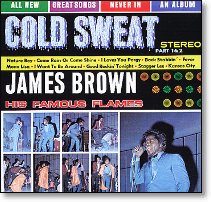
Golden Hits/Part One -- just found James Brown's Cold
Sweat under "various artists," so next week for that.
No jazz on their list. I figured I could rectify that, but a quick
search through my database suggests that 1967 was a sub-par year for
jazz -- maybe the poorest of the decade. Major jazz labels went into
sudden decline after 1965, although there was a partial rebound in
1969 with the emergence of fusion and an avant-garde rebound, both
aided by new artists and labels in Europe. But for 1967 (and I could
be off slightly, as I'm more likely to have recording than release
dates in the database) I only count 2 A records and 15 A- (partial
checking revealed 2 more A- recorded in 1967 were released later).
Sorted approximately:
- Duke Ellington: And His Mother Called Him Bill
- Johnny Hodges: Triple Play
- Miles Davis: Nefertiti
- Jackie McLean/Ornette Coleman: New and Old Gospel
- McCoy Tyner: The Real McCoy
- John Coltrane: Interstellar Space
- Jimmy Rushing: Every Day I Have the Blues
- Miles Davis: Sorcerer
- Stan Getz: Sweet Rain
- Gordon Beck: Experiments With Pops
- Don Ellis: Electric Bath
- Antonio Carlos Jobim: Wave
- Keith Jarrett: El Juicio (The Judgment)
- Pete La Roca: Turkish Women at the Bath
- Bobby Hutcherson: Oblique
- Thad Jones/Mel Lewis: Live at the Village Vanguard
- Tony Scott: Tony Scott
No progress to report on Jazz Guides. The Streamnotes draft file
for September has 122 reviews. I should post it this week, no later
than the end of month (Saturday), if I can get the website working.
Quite a bit of new jazz in the queue right now -- partly because I
managed to account for today's mail from Lithuania. I'd hate to see
the unrated count top 400 again, so I should focus more there. One
reason I slacked off last month was that most of the new records
had much later release dates. Of course, with September waning,
we're nearly there.
New records rated this week:
- Gabriel Alegria Afro-Peruvian Sextet: Diablo en Brooklyn (2017, Saponegro): [cd]: A-
- Richard X Bennett: Experiments With Truth (2017, Ropeadope): [cd]: B+(**)
- Richard X Bennett: What Is Now (2017, Ropeadope): [cd]: B+(**)
- Jean-François Bonnel and His Swinging Jazz Cats: With Thanks to Benny Carter (2017, Arbors): [r]: B+(**)
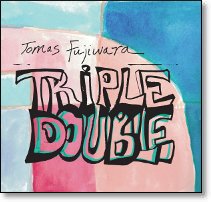
- Tomas Fujiwara: Triple Double (2017, Firehouse 12): [cd]: A-
- Philipp Gerschlauer/David Fiuczynski: Mikrojazz: Neue Expressionistische Musik (2016 [2017], Rare Noise): [cdr]: B+(*)
- Lauren Kinhan: A Sleepin' Bee (2017, Dotted i): [cd]: B
- Florian Hoefner: Coldwater Stories (2016 [2017], Origin): [cd]: B+(**)
- Emi Meyer: Monochrome (2009-16 [2017], Origin): [cd]: B+(*)
- Debbie Poryes Trio: Loving Hank (2017, OA2): [cd]: B+(**)
- Franciszek Pospieszalski Sextet: 1st Level (2016 [2017], ForTune): [bc]: B
- Umphrey's McGee: Zonkey (2016, Nothing Too Fancy): [r]: B+(**)
Recent reissues, compilations, and vault discoveries rated this week:
- Dick Hyman: Solo at the Sacramento Jazz Festivals 1983-1988 (1983-88 [2017], Arbors): [r]: B+(***)
- Sun Ra and His Astro-Infinity Arkestra: My Brother the Wind Vol. 1 (1969 [2017], Cosmic Myth): [r]: B+(**)
- Sun Ra and His Astro-Infinity Arkestra: My Brother the Wind Vol. 2 (1969-70 [2017], Cosmic Myth): [r]: B+(**)
Old music rated this week:
- Bee Gees: Bee Gees' 1st (1967, Atco): [r]: B
- Bee Gees: Horizontal (1968, Atco): [r]: C
- Bee Gees: Idea (1968, Atco): [r]: C+
- Bee Gees: Odessa (1969, Atco): [r]: C
- Tim Buckley: Goodbye and Hello (1967, Asylum): [r]: B+(*)
- Donovan: Sunshine Superman (1966, Epic): [r]: B+(**)
- Donovan: Mellow Yellow (1967, Epic): [r]: B+(**)
- Kaleidoscope: Side Trips (1967, Epic): [r]: B+(***)
- B.B. King: Blues Is King (1966 [1967], Bluesway): [r]: B+(**)
- The Serpent Power: The Serpent Power (1967, Vanguard): [r]: B
- The Youngbloods: The Youngbloods (1967, RCA Victor): [r]: B+(*)
- The Youngbloods: Earth Music (1967, RCA Victor): [r]: B+(**)
Unpacking: Found in the mail last week:
- Rez Abbasi: Unfiltered Universe (Whirlwind): November 10
- Bobby Bradford/Hafez Modirzadeh: Live at the Magic Triangle (NoBusiness): CDR
- Chévere (Parma)
- Mark Dresser: Modicana (NoBusiness): CDR
- Harris Eisenstadt/Mivos Quartet: Whatever Will Happen That Will Also Be (NoBusiness): CDR
- Yedo Gibson/Hernâni Faustino/Vasco Trilla: Chain (NoBusiness)
- Andrew Lamb/Warren Smith/Arkadijus Gotesmanas: The Sea of Modicum (NoBusiness): CDR
- Roberto Magris Sextet: Live in Miami @ the WDNA Jazz Gallery (JMood)
- Rudresh Mahanthappa's Indo-Pak Coalition: Agrima (self-released): CDR, October 21
- Liudas Mockunas: Hydro (NoBusiness): CDR
- Mostly Other People Do the Killing: Paint (Hot Cup): October 20
- Teri Parker: In the Past (self-released): October 20
- Wadada Leo Smith: Solo: Reflections and Meditations on Monk (TUM): October 20
- Wadada Leo Smith: Najwa (TUM): October 20
- Charles Thomas: The Colors of a Dream (Sea Tea)
- Ton-Klami [Midori Takada/Kang Tae Hwan/Masahiko Satoh]: Prophecy of Nue (1995, NoBusiness)
Ask a question, or send a comment.
Sunday, September 24, 2017
Weekend Roundup
Biggest news for me is that the server I use for TomHull.com is
wedged, with no disk space available for uploading updates. I may
(or may not) be able to insert this post into the blog software
(which I've had problems with in the past, but evidently uses its
own separate storage), but cannot update the "faux blog" (which
I've been linking to for the last year-plus). The ISP, Addr.com,
seems to be on auto-pilot, with all of their support tools broken
and no one responding even to email. I know I've threatened this in
the past, but I suppose I have to bite the bullet and move the site.
That will be a pain for me, and disruptive for the world -- as if I
don't have enough problems already.
Some fairly large topics I have nothing on below: Hurricane Maria
and the mass destruction of Dominica and Puerto Rico; devastating
earthquakes in Mexico; elections in Germany which gave the far-right
AfD party seats in parliament; the never-ending Russia investigation
(starring Paul Manafort and Facebook this week); Betsy DeVos' latest
efforts to make college a safe haven for rapists; a revised anti-Muslim
travel ban; the ongoing protests against
police brutality and injustice in St. Louis (special hat tip to Greg
Magarian and Bronwen Zwirner on the ground there); and, of course, the
big deal of protesting the national anthem at NFL football games (and
Trump's hate tweets against those who do) -- the latter is the subject
of the first five articles at Slate, and evidently the top trending
hashtag(s) at Twitter (Jeffrey Goldberg tweet: "The President of
the United States is now in a war with Stephen Curry and LeBron
James. This is not a war Trump will win").
Some more reviews of Hillary Clinton's What Happened and
comments on the 2016 election:
Glenn Greenwald: The Clinton Book Tour Is Largely Ignoring the Vital Role
of Endless War in the 2016 Election Result:
Part of that is the discomfort of cognitive dissonance: the Democratic
branding and self-glorification as enemies of privilege, racism, and
violence are directly in conflict with the party's long-standing eagerness
to ignore, or even actively support, policies which kill large numbers of
innocent people from Pakistan, Libya, and Somalia to Yemen, Iraq, and Gaza,
but which receive scant attention because of the nationality, ethnicity,
poverty, distance, and general invisibility of their victims.
Actually, Hillary gets hurt in several ways: because she always rose
to support the wars, no one can identify with her as a war critic; because
she was actually in office during much of this time (as senator and especially
as secretary of state) she bears some responsibility for the failure of the
wars to accomplish their proclaimed goals; and the simple fact is that after
15 years of continuous war Americans are poorer and meaner than they would
have been otherwise, and Republicans feed on that.
Katherine Krueger: Hillary Clinton Will Never Understand What Happened:
Those looking for mea culpas will get them, but only up to a point,
and always closely followed by qualifications. . . . She then pivots
to consider the "strong headwinds" her scrappy little $623 million
campaign-that-couldn't was up against. . . .
Most of all, Clinton can't understand why young voters were won over by
Sen. Bernie Sanders. And it is here where the essential cynicism underlying
her worldview -- and which ultimately played a key role in her doom --
comes most sharply into focus. For Clinton, politics are fundamentally
about pragmatism, where strategic concessions and horse-trading with
Republicans necessarily means sacrificing ideals for the ultimate good
of Getting (Some) Things Done. To her, change within the system is needed
and worthy, but the system itself can never change. . . .
After a career built on steadfastly upholding the status quo, Clinton
didn't share the anger of the people she sought to govern, because, to
her, the state of the U.S. is not something to be angry about. Even as
she criss-crossed the country talking with veterans and moms and immigrants,
their problems were never her problems. As her fellow Americans continue
to lose their jobs and homes and fall into medical debt and struggle with
opioid addictions, the system Clinton has for years fought to keep intact
is humming along just fine. The fact that racism, militarism, inequality,
and religious fundamentalism pervade this country, or that poor people
are being consumed by the gears of our economy and left exhausted in its
dust, is not something to get "angry" about. In Clinton's words, "It's
always been thus."
Jon Schwartz: Hillary Clinton doesn't understand why the corporate media
is so bad:
The New York Times, CBS, NBC, ABC, CNN, et al., are gigantic corporations --
in most cases owned by even larger ones. And the job of giant corporations
is not to inform American citizens about reality. It's not to play a hallowed
role in the history of a self-governing republic. It's to make as much profit
as possible. That in turn means the corporate media will never, ever be
"liberal" in any genuine sense and will be hostile to all politicians who
feint in that direction.
From that perspective, the media's performance in 2016 was a shining,
glorious success. As Les Moonves effused just as the primaries were
starting, Donald Trump's campaign was "good for us economically. . . . Go
Donald! Keep getting out there!" The entire Hieronymus Bosch-like nightmare,
said Moonves, "may not be good for America, but it's damn good for CBS."
CNN made $1 billion in profits during the election year, far more than
ever before.
Matthew Yglesias: What really happened in 2016, in 7 charts: The
key one is the monumental unpopularity of both candidates. Still, in
that comparison, the odd thing is that Trump ranks much worse than
Clinton, yet more people who disliked Trump voted for him than people
who disliked Clinton voted for her. Why was that? My best guess is
that having no real track record, people significantly underestimated
how damaging Trump would be, whereas she was much more of a known,
and one of the main things you knew was she would be dogged by and
endless procession of (mostly) fake scandals as long as she was in
the public eye. Trump exploited this by asking the question: "what
have you got to lose?"
Joshua Holland: How Right-Wing Media Played the Mainstream Press in
the 2016 Election: Not on Hillary's book, but this is the piece
she should have read before writing up her excuses.
Some scattered links this week:
Andrew J Bacevich: Past All Reason: Review of the 18-hour Ken
Burns-Lynn Novick documentary The Vietnam War and, to some
extent, the war itself. The series remains focused on its American
audience, going out of its way to stress the patriotism and idealism
of American soldiers (though less so of America's political leaders
and generals). But it shies away from war propaganda, mostly because
they make extensive use of Vietnamese voices (from all sides) and
video -- putting human faces on people long caricatured in American
minds.
Burns and Novick pay surprisingly little attention to why exactly
the United States insisted on butting in and why it subsequently
proved so difficult to get out. Their lack of interest in this
central issue is all the more striking given the acute misgivings
about a large-scale US intervention that Lyndon Johnson repeatedly
expressed in the fateful months between late 1964 and early 1965.
The anguished president doubted that the war could be won, didn't
think it was worth fighting, and knew that further expansion of US
involvement in Vietnam would put at risk his cherished Great Society
domestic-reform program. . . . Despite his reservations, Johnson --
ostensibly the most powerful man in the world -- somehow felt compelled
to go ahead anyway. Yet Burns and Novick choose not to explore why
exactly Johnson felt obliged to do what he did not want to do.
Our present situation makes the question all the more salient.
The US war in Afghanistan, although smaller in scale than the war
in Vietnam, has dragged on even longer. It too has turned out to be
a misbegotten enterprise. When running for the presidency, Donald
Trump said as much in no uncertain terms. But President Trump --
ostensibly the most powerful man in the world -- has not turned
his skepticism into action, allowing America's longest war to
continue. . . . As Trump has affirmed, even (or perhaps especially)
presidents must bow to this pernicious bit of secular theology.
According to Burns and Novick, the American war in Vietnam was
"begun in good faith, by decent people." It comes closer to the truth
to say that the war was begun -- and then prolonged past all reason --
by people who lacked wisdom and, when it was most needed, courage.
Other reviews:
Whereas I found the first four episodes valuable, the biases in the
fifth (January-July 1967) started to get out of hand. It's not clear
yet whether Burns-Novick will wind up adopting the position that the
only reason the US lost in Vietnam was that the American people let
the Vietnamese down -- the early episodes seemed to recognize that
the American neo-colonial project never had a chance, but their take
on the Tet Offensive suggests the opposite. Also, as is still the
case in St. Louis today, their cameras love to seek out violence in
antiwar protests, and their narrative goes out of its way to stress
the that there was still much pro-war support -- what Nixon would
come to call "the silent majority" (something I expect we'll hear
much more about in later episodes).
Sarah Kliff: I've Covered the GOP repeal plans since day one.
Graham-Cassidy is the most radical. It surely says something
about rank-and-file Republicans these days that each and every
time their "repeal-and-replace" bills fail to pass, they go back
to the drawing board to come up with something even more damaging.
While other Republican plans essentially create a poorly funded version
of the Affordable Care Act, Graham-Cassidy blows it up. The bill offered
by Republican Sens. Lindsey Graham and Bill Cassidy takes money from
states that did a good job getting residents covered under Obamacare
and gives it to states that did not. It eliminates an expansion of the
Medicaid program that covers millions of Americans in favor of block
grants. States aren't required to use the money to get people covered
or to help subsidize low- and middle-income earners, as Obamacare does
now.
Plus, the bill includes other drastic changes that appeared in some
previous bills. Insurers in the private marketplace would be allowed
to discriminate against people with preexisting conditions, for example.
And it would eliminate the individual mandate as other bills would have,
but this time there is no replacement. Most analysts agree that would
inject chaos into the individual market.
The right has employed the back-to-the-states scam before, but it
strikes me as especially explosive here: whereas now we have a unified
national debate about health care policy, this bill will turn health
care info a burning issue for fifty state political contests -- an
area where Republicans have gained considerable power recently not
least due to the widespread perception that states don't matter much.
That strikes me as a big political risk: both to their own control in
competitive states, and because at least some blue states will use
those block grants to implement single-payer schemes (not that they
won't be inhibited by cutbacks and other regulations).
More on the Graham-Cassidy health care bill:
Bob Cesca: Lisa Murkowski's bribe -- and the GOP's shameless health
care scam.
Alan Fram: Graham-Cassidy Co-Sponsor's State Gets Special Medicaid
Carve-Out: That would be Ron Johnson, of Wisconsin.
Jimmy Kimmel: new Obamacare repeal bill flunks the Jimmy Kimmel Test:
Not a lot of jokes here, but a pretty strong description of the bill, and
why Bill Cassidy is a liar. Also see the follow up:
Jimmy Kimmel: Sen. Cassidy "either doesn't understand his own bill or he
lied to me", and
Jimmy Kimmel vs. Cassidy, round 3: "If these guys would tell the truth . . .
I wouldn't have to".
Anna North: The New Obamacare repeal bill is the worst yet for women's
health.
Dylan Scott: Senate Republicans tweak Graham-Cassidy in latest bid to win
votes.
Kelly Swanson: What every major health group has said about Graham-Cassidy:
American Medical Association, American Academy of Pediatrics, AARP, Blue
Cross Blue Shield Association, eight more.
Matthew Yglesias: The staggering hypocrisy of Bill Cassidy and Lindsey
Graham: Points out that both Senators had previously established
themselves as voices for reason in the GOP's "repeal-and-replace" efforts,
but then: "Their bill brazenly casts aside all of their previous doubts,
featuring the most slipshod legislative process yet and no guarantee of
adequate coverage whatsoever. And neither of them has bothered to explain
why they changed their minds." Actually, Steven Rosenfeld has come up
with one explanation, at least for Graham: see
Senate Republicans want to provide a death blow to any future health
care reform.
Simon Maloy: McCain saves the GOP: Then John McCain withdrew his
initial wobbly support for Graham-Cassidy and vowed to vote against
the bill, pretty much killing it (assuming at least one of Collins and
Murkowski, who have both voted against every "repeal-and-replace" bill
so far steps up). McCain, of course, has reaped much praise for his
independence and integrity here, but I suspect other Republicans (Jeff
Flake and Dean Heller seem likely) wanted to torpedo the bill without
being seen as the ones who did it. As I noted above, kicking health
insurance back to fifty states greatly magnifies the political impact,
turning races in each of those states into referendums on access to and
affordability of health care, while major federal funding cuts cripples
many options. McCain's crucial votes against "repeal-and-replace" would
seem to satisfy the Pareene test (see
Alex Pareene: I Don't Want to Hear Another Fucking Word About John McCain
Unless He Dies or Actually Does Something Useful for Once). Still:
Mehdi Hasan: Despite what the press says, "Maverick" McCain has a long
and distinguished record of horribleness.
Jordan Weissmann: Obamacare Repeal Might Be Dead. Trump's Effort to
Sabotage the Law Is Very Much Alive.
Fred Kaplan: Trump's Reasons for Scrapping the Iran Deal Are the Definition
of Self-Destructive. Also see the Trita Parsi pieces below.
John Nichols: Bernie Sanders Just Gave One of the Finest Speeches of
His Career: "Outlining a vision of an America on the side of peace
and justice, the senator shredded Trump's brutish foreign policies."
Sanders gave his speech at Westminster College in Fulton, Missouri --
the site of several famous world affairs speeches, including the one
in 1946 when Winston Churchill coined the term "iron curtain," to some
extent starting the Cold War. This is especially noteworthy because
Sanders has long shied away from challenging the precepts of American
foreign policy. Some more links:
Sanders' speech stands in especially stark contrast to Trump's UN
speech. For more on that, see:
Evan Osnos: The Risk of Nuclear War With North Korea: A long "letter
from Pyongyang," which Osnos recently visited for a tightly guided tour.
While he wasn't able to meet many people, or see many things, that
first-person experience gives him a leg up on Trump, his generals,
Nikki Haley, or pretty much anyone else in the administration. The
portrait he paints of Kim Jong Un is actually pretty scary, but the
balance of terror is firmly if cavalierly dominated by Washington.
There is also scattered support for a less confrontational option,
a short-term deal known as a "freeze for freeze." North Korea would
stop weapons development in exchange for a halt or a reduction in
U.S.-South Korean military exercises. Proponents say that a freeze,
which could be revoked if either side cheats, is hardly perfect, but
the alternatives are worse. Critics say that versions of it have been
tried, without success, and that it will damage America's alliance
with the South. Thus far the Trump Administration has no interest.
"The idea that some have suggested, of a so-called 'freeze for freeze,'
is insulting," Nikki Haley, the U.N. Ambassador, said before the
Security Council on September 4th. "When a rogue regime has a nuclear
weapon and an ICBM pointed at you, you do not take steps to lower your
guard."
Outside the Administration, the more people I talked to, the more
I heard a strong case for some level of diplomatic contact. When Obama
dispatched James Clapper to Pyongyang, in 2014, to negotiate the release
of two prisoners, Clapper discovered that North Korea had misread the
purpose of the trip. The government had presumed that he was coming in
part to open a new phase in the relationship. "They were bitterly
disappointed," he said. Clapper's visit convinced him that the absence
of diplomatic contact is creating a dangerous gulf of misperception.
"I was blown away by the siege mentality -- the paranoia -- that prevails
among the leadership of North Korea. When we sabre-rattle, when we fly
B-1s accompanied by jet escorts from the Republic of Korea and Japan,
it makes us feel good, it reassures the allies, but what we don't factor
in is the impact on the North Koreans."
The striking thing about the Haley quote is how easily North Korea
could justify taking the same stance. North Koreans surely recall that
prominent US generals advocating nuking Korea during the 1950-53 war.
And while it's only been since the 1960s that the US has had ICBMs
capable of hitting Korea, the US has had conventional bombers within
striking distance since that war. So what gives us the right to insist
that North Korea lower its guard? If it's that the US should be trusted,
that isn't a very convincing argument. Another quote:
Our grasp of North Korea's beliefs and expectations is not much better
than its grasp of ours. To go between Washington and Pyongyang at this
nuclear moment is to be struck, most of all, by how little the two
understand each other. In eighteen years of reporting, I've never felt
as much uncertainty at the end of a project, a feeling that nobody --
not the diplomats, the strategists, or the scholars who have devoted
their lives to the subject -- is able to describe with confidence how
the other side thinks. We simply don't know how Kim Jong Un really
regards the use of his country's nuclear arsenal, or how much North
Korea's seclusion and mythology has distorted its understanding of
American resolve. We don't know whether Kim Jong Un is taking ever-greater
risks because he is determined to fulfill his family's dream of retaking
South Korea, or because he is afraid of ending up like Qaddafi.
More on Korea this week:
John Feffer: It's Time to Make a Deal With North Korea.
David McNeill: Unknown to most Americans, the US 'totally destroyed' North
Korea once before.
Choe Sang-Hun: Kim's Rejoinder to Trump's Rocket Man: 'Mentally Deranged
U.S. Dotard': OK, most of us had to look up "dotard," but looks like
it's pretty apt. Kathleen Geier's tweet on this piece: "Honestly, the
Taylor Swift-Kim Kardashian feud is being conducted on a far higher
level than this."
Trita Parsi: Trump is conflating Pyongyang with Tehran. The results could
be catastrophic. If Trump had any good sense, he'd be trying to work
out a deal with North Korea patterned on Obama's Iran Deal, although it
might be harder now given that the US had a deal with North Korea like
that, negotiated by Jimmy Carter in the 1990s and trashed by GW Bush in
2002, shortly before Bush added insult to injury with his "axis of evil"
speech. Instead, Trump seems determined to drive Iran towards becoming
another North Korea. (Also see:
Jeffrey Lewis: If Trump kills the Iran deal, he may give the world
another Rocket Man.) Parsi also wrote
Netanyahu Is Meeting Trump to Push for War With Iran.
A recent poll shows that Trump is especially untrusted by Americans
to deal with North Korea (see
Trump seen by 66 percent in US as doing more to divide than united
country): the "trust to act responsibly handling North Korea"
is 37% favorable, 62% negative, compared to which US military leaders
score 72-27% favorable. The notion that military leaders are both
competent and trustworthy is widely held, though I'd be hard pressed
to cite any evidence showing it should be. One cautionary piece is:
Stephen Kinzer: America's Slow-Motion Military Coup. He notes that
"given the president's ignorance of world affairs, the emergence of a
military junta in Washington may seem like welcome relief," then goes
on to offer some reasons to worry. There's been much talk of a coup
since Trump took office, but that seems unlikely as long as Trump lets
the junta do whatever they want. The only time I've actually worried
that the military brass might move against civilian government was when
Clinton was elected in 1992, but his surrender to the chiefs was so
complete they didn't have to flex a muscle. Obama proved to be every
bit as supine, not even bothering to replace Bush's Secretary of
Defense (although after Gates quit, he went through a series of safe
names: Leon Panetta, Chuck Hagel, and Ash Carter).
Gary Rivlin/Michael Hudson: Government by Goldman: "Gary Cohn is
giving Goldman Sachs everything it ever wanted from the Trump
administration." Important, in-depth article, goes well beyond
explaining why Cohn hasn't resigned in disgust, which he certainly
felt after Trump's embrace of the Nazis in Charlottesville.
There's Ultimately no great mystery why Donald Trump selected Gary Cohn
for a top post in his administration, despite his angry rhetoric about
Goldman Sachs. There's the high regard the president holds for anyone
who is rich -- and the instant legitimacy Cohn conferred upon the
administration within business circles. Cohn's appointment reassured
bond markets about the unpredictable new president and lent his
administration credibility it lacked among Fortune 100 CEOs, none of
whom had donated to his campaign. Ego may also have played a role.
Goldman Sachs would never do business with Trump, the developer who
resorted to foreign banks and second-tier lenders to bankroll his
projects. Now Goldman's president would be among those serving in
his royal court.
Who can say precisely why Cohn, a Democrat, said yes when Trump
asked him to be his top economic aide? No doubt Cohn has been asking
himself that question in recent weeks. But he'd hit a ceiling at
Goldman Sachs. In September 2015, Goldman announced that Blankfein
had lymphoma, ramping up speculation that Cohn would take over the
firm. Yet four months later, after undergoing chemotherapy, Blankfein
was back in his office and plainly not going anywhere. Cohn was 56
years old when he was invited to Trump Tower. An influential job
inside the White House meant a face-saving exit -- and one offering
a huge financial advantage. . . .
The details of the president's "$1 trillion" infrastructure plan
are similarly favorable to Goldman. As laid out in the administration's
2018 budget, the government would spend only $200 billion on infrastructure
over the coming decade. By structuring "that funding to incentivize
additional non-Federal funding" -- tax breaks and deals that privatize
roads, bridges, and airports -- the government could take credit for
"at least $1 trillion in total infrastructure spending," the budget reads.
It was as if Cohn were still channeling his role as a leader of Goldman
Sachs when, at the White House in May, he offered this advice to executives:
"We say, 'Hey, take a project you have right now, sell it off, privatize
it, we know it will get maintained, and we'll reward you for privatizing
it.'" "The bigger the thing you privatize, the more money we'll give you,"
continued Cohn. By "we," he clearly meant the federal government; by "you,"
he appeared to be speaking, at least in part, about Goldman Sachs, whose
Public Sector and Infrastructure group arranges the financing on large-scale
public sector deals.
Jon Schwartz: The History Channel is finally telling the stunning secret
story of the War on Drugs: A four-part documentary. Much of it seems to
involve the CIA, which has repeatedly forged alliances with drug traffickers --
in Laos, Nicaragua, and most recently in Afghanistan.
That core truth is: The war on drugs has always been a pointless sham.
For decades the federal government has engaged in a shifting series of
alliances of convenience with some of the world's largest drug cartels.
So while the U.S. incarceration rate has quintupled since President
Richard Nixon first declared the war on drugs in 1971, top narcotics
dealers have simultaneously enjoyed protection at the highest levels
of power in America.
This might be a good place to mention
Sheelah Kolhatkar: The Cost of the Opioid Crisis -- an awful piece
which tries to quantify the economic costs of opioid overdoses by toting
up lost hours worked and similar metrics. I don't doubt that these deaths
add up to some kind of crisis, but you need to back up a bit and frame
this issue in terms of two much larger, less acute crises: one is the
"war on drugs," which has accomplished little other than to make people
really stupid about what drugs do; the other is the for-profit health
care system, which has veered inconsistently on pain management, doing
first too little then too much and probably, if the crisis-mongers get
their way, reverting to too little. The big money is in prescribing
pills, not in monitoring treatment.
Matt Taibbi: The Madness of Donald Trump: Starts by noting that
Trump's August 22 speech in Phoenix was "Trump's true coming-out party
as an insane person." Goes on to try to draw fine distinctions between
Campaign Trump, who was crazy in ways that seemed to work, and President
Trump, whose craziness is becoming more and more dysfunctional. After
considering the possibility that America deserves Trump, he pulls out
the DSM and comes up with a diagnosis:
Everyone with half a brain and a recent copy of the DSM (the
Diagnostic and Statistical Manual of Mental Disorders, used by
shrinks everywhere) knew the diagnosis on Trump the instant he joined
the race. Trump fits the clinical definition of a narcissistic personality
so completely that it will be a shock if future psychiatrists don't
rename the disorder after him.
Grandiosity, a tendency to exaggerate achievements, a preoccupation
with "fantasies of unlimited success, power, brilliance, beauty or ideal
love," a belief in one's specialness (which can only be understood by
other special people), a need for excessive admiration and a sense of
entitlement -- sound like anyone you know?
Trump's rapidly expanding list of things at which he's either a
supreme expert or the Earth's best living practitioner would shame
even great historical blowhards like Stalin or Mobutu Sese Seko.
Taibbi's points on Trump's losing war with the English language
are more to the point (though "he makes George W. Bush sound like
Vladimir Nabokov" shows how quickly we forget). He tries to take
some comfort by viewing Trump as just desserts for a country with
so much blood and oppression staining its history, but Trump's too
deranged to deliver a lesson on karma. For more on the madness, see:
Alex Morris: Trump's Mental Health: Is Pathological Narcissism the Key
to Trump's Behavior? One note here deserving caution is a study
that "found that 18 of the first 37 presidents met criteria for having
a psychiatric disorder," although some ailments, like depression, "do
not typically lead to psychosis or risky decision-making." More
interesting is this paragraph:
When it comes to presidents, and perhaps all politicians, some level
of narcissism is par for the course. Based on a 2013 study of U.S.
presidents from Washington to George W. Bush, many of our chief
executives with narcissistic traits shared what is called "emergent
leadership," or a keen ability to get elected. They can be charming
and charismatic. They dominate. They entertain. They project strength
and confidence. They're good at convincing people, at least initially,
that they actually are as awesome as they think they are. (Despite
what a narcissist might believe, research shows they are usually no
better-looking, more intelligent or talented than the average person --
though when they are, their narcissism is better tolerated.) In fact,
a narcissist's brash leadership has been shown to be particularly
attractive in times of perceived upheaval, which means that it
benefits a narcissist to promote ideas of chaos and to identify a
common enemy, or, if need be, create one.
I've long noted something like this: the tendency of people in
times of crisis to rally around whoever seemed to be the most
self-confident. I figure that's something we learned in our early
evolution, something that back in primitive times worked well
enough it didn't get erased through natural selection. However,
in modern times such "emergent leaders" rarely turn out to be
wise choices.
By the way, Taibbi has another piece out:
Steve Bannon Splits From Trump: Hilarity Ensues. This is about
the Republican Senatorial primary runoff between Luther Strange,
who was appointed to fill Jeff Sessions' seat and is backed by
Trump and McConnell, and Roy Moore, the former judge with the Moses
complex who is backed by Bannon. In this contest, you'd have to
say that Strange is the lesser evil, but the margin is so thin I
find it hard to care. I'm even tempted to think that we might be
better if they elect the greater embarrassment (Moore), although
that's pretty much what happened with Trump.
By the way, there are more Alabama races down ballot. See:
Christina Cauterucci: Some of the US's Creepiest Anti-Abortion Men
Are Running for Office in Alabama.
Ask a question, or send a comment.
Wednesday, September 20, 2017
Bill XCIX Phillips
I was dawdling on Facebook last night, and clicked on "Notifications,"
wondering what (if anything) that might do. I scrolled down the widget,
and noticed that someone I didn't recognize commented on something I
had written, so I was curious and clicked. That someone was the sister
of Bill Phillips, telling me that he had died back in January. I got
a Facebook notice that Bill's birthday was June 3, so (something I
don't often do) I sent him a little note. The response came on June
8, but . . . well, I checked my email trash and there was no mention
of it among 1628 deleted Facebook messages. Somebody's algorithm sure
sucks. I should have noticed something was amiss when he stopped
posting after January 3, but I just didn't pay that much attention,
even less than usual this year.
I first met Bill around 1978-79. I was working for a typesetting shop
in New York City, and the co-owner decided to buy a computer and hire
a consultant to set up an accounting system. The computer was a low-end
PDP-11, and Bill was the consultant (or maybe just the guy the consultant
assigned to do the work). At the time I was trying to read electronics
textbooks, thinking I might go back to college and study engineering.
I was making slow progress, especially on the analog stuff, but at some
point I picked up a book on programming in Pascal and it seemed like
the easiest thing in the world. I decided to buy a personal computer.
My first choice was something called the Pascal Microengine, but when
the dealer couldn't deliver, I settled for an Apple II. I wrote some
trivial programs in Basic, but my real interest was designing my own
typesetting systems software. I talked to Bill about this, and we
wound up pitching the co-owner on the idea. He gave us an allowance
to buy some hardware, and I wrote a 300-page functional spec for a
distributed, networked multinode editing ("front end") system.
By the time we gave up on the project, Bill had steered me toward
programming in C and using an editor called MINCE (a recursive acronym
for "MINCE Is Not Complete Emacs" -- basically, a text editor inspired
by Richard Stallman's LISP-based EMACS editor, written in C to run on
a Z-80 microprocessor). MINCE came with partial source code, and the
documentation was the author's Master's Thesis. Both turned out to be
remarkably fine tutorials, and Bill was my first brilliant mentor. I
left Wizard in 1980 and landed a job as a Software Engineer at Varityper
in East Hannover, NJ. Varityper made "direct-entry" phototypesetters,
which set type incrementally as you keyed the text and commands in.
But they had just started a project to build a multi-user system not
unlike the one I had designed, so they hired me to consult on that,
then wound up throwing a number of tricky programming assignments my
way. I spent the next three years there, then moved to Massachusetts
to work for Compugraphic, their largest competitor, and a year later
moved on to a start-up working on color prepress software for package
design: Contex Graphics Systems.
While I was learning lots of new things in my various jobs, Bill
was mostly stuck babysitting legacy systems in New York, which left
him in something of a rut. We kept in touch over those years: not
close, but I knew he was having trouble finding work in New York,
and that he was especially fond of Boston. When I started taking
on management duties, I had the opportunity to hire a couple of
consultants, so I offered Bill a job, and a place to stay until we
turned it into a regular job, and he and his wife Jane moved to
Cambridge. Over the next couple years, Contex went through a lot
of ownership trouble, eventually being sold to Xyvision shortly
before their main business ("tech pubs" systems, again similar to
my original design) crashed. I had to lay Bill off then, and I don't
think he ever made much of a living again. But Jane had found a
decent job, he loved Cambridge, and he was very active in local
computer clubs, so he was reasonably content. I saw him socially,
and tried to rope him into my Ftwalk project, but he resisted.
After I left Massachusetts and wound up back in Kansas, I picked
his brain for various projects -- among other things, he made a
contribution to
robertchristgau.com. After
Jane died in late 2011 he moved back to New York. I saw him at least
three times there -- most recently in June 2016. He had gotten into
political interests, adopting "XCIX" as his middle name to signify
solidarity with the 99%, and was the first person I knew to get
involved in the Bernie Sanders campaign. For some reason we had
never talked about politics back in our initial period -- though
we talked a lot about music (not that we had much in common: he
turned me on to some quality folk music, but by then he was mostly
into new age, and I was more into punk, funk, and avant-jazz).
First inkling I had of his politics must have been in 1989 when
Abbie Hoffman died, and Jane (I think it was) suggested they should
go to the funeral to show solidarity. I didn't get the impression
they had a direct connection, but that does say something about
where they came from. As I'm writing this, I realize there's so
much about him I don't know. He was born in Queens, a few years
older than me but I'm not sure how many -- not a lot -- and was
living in Queens when I first met/visited him. His mother was still
alive when he moved back to New York. He had two sisters, I think,
but I never met either. They had a son, who was close to ten when
I first met him. Went to college in Binghampton, and at least for
a while turned into a Dead Head. Last I knew they didn't seem to
be close, but I don't think I ever met the son as an adult. Toward
the end he seemed worn and weary, and felt trapped. He talked like
he might leave New York, possibly for Washington State, but I doubt
he had the energy.
I do remember lots of little things. He always had a beard, which
I can't remember not being grizzled white but it may have been blond
way back when. He always looked rumpled, moving slow and speaking
softly. He liked model trains and western shirts -- had a whole
rack of them bought mail-order from Sheplers, the famous outfitter in
my own home town. (I had a few myself, though I regarded them more as
a joke. But I don't think I ever saw his trains.) He used the alias
"Old Professor Bear," and called his web business Shoestring Projects.
He spent most of his
disposable income on books and records, especially books, and lived
in a constant state of hopeless clutter -- no doubt a big part of the
reason he had such trouble picking up and moving. I was taken aback
at one point when he was at Contex and I noticed the title, How
to Work for a Jerk -- but I already owned the same title.
He liked assembly code, working "close to the machine," and his
favorite programming stories were clever optimizations. At one point
I was taken with the ideal of "simple and elegant." He came back with:
"but why make something simple and elegant when you can make it complex
and wonderful." Not really the words of a first-rate engineer, but he
made a marvelous mentor, and a fine friend. One of the sweetest, most
generous people I've ever known.
I'm really staggered that we've lost him.
Ask a question, or send a comment.
Monday, September 18, 2017
Music Week
Music: Current count 28690 [28650] rated (+40), 392 [376] unrated (+16).
Did almost nothing last week but listen, all jazz except for a couple
items Phil Overeem recommended in tweets, only three albums coming from
my recently expanding CD queue. The majority (22+5/40) of the records
were Clean Feed/Shhpuma releases I never got in the mail -- I just brought
up their 2017 releases pages and found it all on Napster, so easy enough.
Nothing bad or especially good there: high was two B+(***), low three B.
I rather expected more given that I had previously logged six A- records
on Clean Feed (three on CD, three streamed). I don't believe this includes
their September releases (I have some email on such, but lately they've
gotten into making life difficult).
I did manage a push forward on compiling the Jazz Guide(s) last week.
Up to John Hébert in the
Jazz Post-2000 file (39%),
which brings the post-2000 guide to 1140 pages. I was at 29% a week ago,
so if I keep up the slog I still have six weeks to go (plus the groups
I've shunted to the side). I'm still estimating it will hit 1500 pages,
although the estimating formula I've been using shows it a bit shorter
(1375, down from 1425, but that doesn't account for group entries).
By the way, some very bad political news since yesterday's already grim
Roundup:
John McCain announced he will "regrettably" vote for the Graham-Cassidy
ACA repeal (see
Arizona Governor Backs O'care Repeal, Likely Securing McCain's and Flake's
Votes). The Graham-Cassidy bill is in many ways even worse than the
previous Repeal/Replace bills, reminding us that as with the House bills,
the key to getting more Republican support is to make the legislation
even more vicious.
Perhaps even more disturbing is this report:
U.S. warns that time is running out for peaceful solution with North
Korea. I think the last time that precise headline was used was
1914: "Austria-Hungary warns that time is running out for peaceful
solution with Serbia." By the way, it was Rex Tillerson delivering
the threat. Isn't he supposed to be the adult in the Trump playpen?
Slightly less ominous but still way past the cusp of sanity, there's
a picture of Trump and Netanyahu shaking hands under the title
Trump on Withdrawing From Iran Nuclear Deal: 'You Will See Very
Soon'.
Of course, we've seen plenty of hints already of these things, but
it's part of human nature to discount worst-case scenarios.
New records rated this week:
- Alfjors: Demons 1 (2015 [2017], Shhpuma, EP): [r]: B+(**)
- Chino Amobi: Paradiso (2017, NON): [r]: B
- Michaël Attias Quartet: Nerve Dance (2016 [2017], Clean Feed): [r]: B+(***)
- Chamber 4: City of Light (2016 [2017], Clean Feed): [r]: B+(**)
- Zack Clarke: Random Acts of Order (2017, Clean Feed): [r]: B+(*)
- Kaja Draksler Octet: Gledalec (2016 [2017], Clean Feed, 2CD): [r]: B
- Harris Eisenstadt Canada Day Quartet: On Parade in Parede (2016 [2017], Clean Feed): [r]: B+(**)
- Mats Gustafsson & Craig Taborn: Ljubljana (2015 [2017], Clean Feed): [r]: B
- João Hasselberg & Pedro Branco: From Order to Chaos (2017, Clean Feed): [r]: B+(*)
- Honest John: International Breakthrough (2015-16 [2017], Clean Feed): [r]: B+(**)
- Humcrush: Enter Humcrush (2014-15 [2017], Shhpuma): [r]: B+(**)
- Kokotab: Flying Heart (2016 [2017], Clean Feed): [r]: B+(**)
- Luis Lopes: Love Song (2015 [2016], Shhpuma): [r]: B
- Tony Malaby/Mat Maneri/Daniel Levin: New Artifacts (2015 [2017], Clean Feed): [r]: B+(**)
- Luís José Martins: Tentos -- Invenções E Encantamentos (2017, Shhpuma): [r]: B+(*)
- Meridian Trio: Triangulum (2016 [2017], Clean Feed): [r]: B+(*)
- Mind Games [Angelika Niescier/Denman Maroney/James Ilgenfritz/Andrew Drury]: Ephemera Obscura (2013 [2017], Clean Feed): [r]: B+(**)
- MIR 8: Perihelion (2017, Shhpuma): [r]: B+(*)
- Jonah Parzen-Johnson: I Try to Remember Where I Come From (2017, Clean Feed): [r]: B+(**)
- Mario Pavone: Vertical (2016 [2017], Clean Feed): [r]: B+(***)
- The Rempis Percussion Quartet: Cochonnerie (2015 [2017], Aerophonic): [cd]: A-
- Dave Rempis: Lattice (2017, Aerophonic): [cd]: B+(***)
- ROVA Saxophone Quartet/Kyle Bruckmann/Henry Kaiser: Steve Lacy's Saxophone Special Revisited (2015 [2017], Clean Feed): [r]: B+(*)
- Vitor Rua and the Metaphysical Angels: Do Androids Dream of Electric Guitars? (2017, Clean Feed, 2CD): [r]: B+(*)
- Rune Your Day: Rune Your Day (2016 [2017], Clean Feed): [r]: B+(**)
- The Angelica Sanchez Trio: Float the Edge (2016 [2017], Clean Feed): [r]: B+(**)
- The Selva: The Selva (2016 [2017], Clean Feed): [r]: B+(*)
- Matthew Shipp Quartet: Not Bound (2016 [2017], ForTune): [bc]: A-
- Tommy Smith: Embodying the Light: A Dedication to John Coltrane (2017, Spartacus): [r]: A-
- Wadada Leo Smith/Natsuki Tamura/Satoko Fujii/Ikue Mori: Aspiration (2016 [2017], Libra): [cd]: B+(**)
- David Stackenäs: Bricks (2013 [2017], Clean Feed): [r]: B+(*)
- Rain Sultanov: Inspired by Nature (2017, Ozella): [r]: B+(**)
- Trespass Trio: The Spirit of Pitesti (2015 [2017], Clean Feed): [r]: B+(*)
Recent reissues, compilations, and vault discoveries rated this week:
- Vincent Ahehehinnou: Best Woman (1978 [2017], Analog Africa): [r]: B+(**)
Old music rated this week:
- Anthony Braxton: Quartet (Warsaw) 2012 (2012 [2013], ForTune): [bc]: A-
- Mario Pavone: Sharpeville (1985 [2000], Playscape): [r]: B+(*)
- Mario Pavone Nu Trio: Remembering Thomas (1999, Knitting Factory Works): [r]: B+(***)
- Mario Pavone/Michael Musillami: Op.Ed (2001, Playscape): [r]: B+(**)
- Mario Pavone Nu Trio/Quintet: Orange (2003, Playscape): [r]: B+(***)
- Trevor Watts & Veryan Weston: At Ad Libitum (2013 [2015], ForTune): [bc]: B+(***)
Unpacking: Found in the mail last week:
- Lena Bloch & Feathery: Heart Knows (Fresh Sound New Talent): September 25
- Collective Order: Vol. 2 (self-released): September 29
- Corey Dennison Band: Night After Night (Delmark)
- Ghost Train Orchestra: Book of Rhapsodies Vol II (Accurate): October 20
- Gordon Grdina Quartet: Inroads (Songlines)
- Eric Hofbauer: Prehistoric Jazz Volume 4: Reminiscing in Tempo (Creative Nation Music): November 3
- Dylan Jack Quartet: Diagrams (Creative Nation Music): September 22
- Matt Mitchell: A Pouting Grimace (Pi): September 29
- Roscoe Mitchell: Duets With Anthony Braxton (1976, Sackville/Delmark)
- Ian O'Beirne's Slowbern Big Band: Dreams of Daedelus (self-released)
- Chris Parker: Moving Forward Now (self-released): October 6
- Tom Rainey Obbligato: Float Upstream (Intakt)
- Irène Schweizer/Joey Baron: Live! (Intakt)
- Sky Music: A Tribute to Terje Rypdal (Rune Grammofon)
- Lyn Stanley: The Moonlight Sessions: Volume Two (A.T. Music): October 6
- Trio S: Somewhere Glimmer (Zitherine)
- Tal Yahalom/Almog Sharvit/Ben Silashi: Kadawa (self-released)
Ask a question, or send a comment.
Sunday, September 17, 2017
Weekend Roundup
This has been another week when I could have spent every waking
hour compiling stories and still not covered it all. There is nothing
below on Korea, where there have been new missile tests, new even more
vicious sanctions, and the usual threats of nuclear annihilation --
one story I was tempted by was on how the new UN sanctions attempt
to choke off North Korean exports of clothing (evidently one of their
major sources of foreign currency). Nothing on Nikki Haley's bluster,
nor on Trump's forthcoming UN speech. Nothing on Burma's attacks on
the Rohynga. (Wasn't opening up Burma Hillary Clinton's big coup as
Secretary of State?) Nothing on US threats to close the embassy in
Cuba. Only the most general comments on Yemen-Syria-Iraq. Nothing
on Israel/Palestine, which ever deeper into an abyss of inhumanity,
even while Netanyahu and family are in legal trouble. Nothing on
the latest ISIS bombing in London, nor on Trump's inane tweets about
it. Very little on the big hurricane season, other natural disasters,
and how well (or more likely miserably) the feds are dealing with
them. Nothing on voter suppression (although Kris Kobach has been
busy on that front). Nothing on Jeff Sessions refusal to investigate
civil rights abuse in St. Louis, nor on protests against same, nor
on Missouri's governor's preference for meeting protests with a show
of military force. Nothing on Harvard's failed chemistry experiment,
where they tried to mix Mike Pompeo and Chelsea Manning. Nothing
on the Russia investigation, where an interesting side-story has
developed over Facebook advertising. Very little on so-called tax
reform. Nothing on rape on college campuses, although Betsy De Vos
seems to be set on making it more difficult to punish. Nothing on
DACA, not even Trump's alleged DACA deal with Democrats nor the
way Republicans blew up after it was reported. And I'm sure there
were dozens of other stories I could have found worthy.
On the other hand, maybe there's too much on Hillary Clinton's
campaign memoir, What Happened, and also on the Democrats'
intra-party struggles. Perhaps that has something to do with our
preoccupation with talk-about-talk. But most other stories just
add to the cumulative weight of moral rot in the Trump regime.
The new books by Clinton (in her backhanded way) and Sanders
(much less reviewed, probably because it's much less gossipy)
point forward -- as does Sanders' new "Medicare for All" bill
(please stop calling it "Berniecare").
Just before posting, I noticed this piece by Jay Rosen:
Normalizing Trump: An incredibly brief explainer. It offers
a short list of things "most every journalist who covers Trump
knows:
- He isn't good at anything a president has to do.
- He doesn't know anything about the issues with which he must
cope.
- He doesn't care to learn.
- He has no views about public policy.
- Nothing he says can be trusted.
- His "model" of leadership is the humiliation of others.
He adds: "If nothing the president says can be trusted, reporting
what the president says becomes absurd." That reminded me of a piece
I noticed but didn't figure was worth pursuing -- until it became
perfectly illustrative:
Elliot Hannon: A Ranking of Trump's Sunday Morning Tweets From Least
to Most Insane.
Some scattered links this week:
Dean Baker: Adults in the Room: The Sordid Tale of Greece's Battle
Against Austerity and the Troika: Review of former Greek finance
minister Yanis Varoufakis's book, Adults in the Room. The Troika
is the European Commission (EC), the European Central Bank (ECB), and
the International Monetary Fund (IMF). Greece had run up large debts
then fell into a major depression after 2007, losing 25% of its GDP --
all the worse because Greece had joined the Eurozone, leaving it at
the mercy of an EU dominated by Germany. To make good on those debts,
the Troika was set on forcing Greece into extreme austerity, combined
with massive privatization of public assets -- a "solution" that
Varoufakis understood not merely to be vicious but untenable. What
happened is little short of gruesome.
Ross Barkan: Universal healthcare in America? Not a taboo now, thanks
to Bernie Sanders: Sanders introduced his "Improved Medicare for
All" last week, remarkably co-sponsored by sixteen Democratic Senators.
Other related links:
Ariel Dorfman: A Tale of Two Donalds: Dorfman wrote a seminal
essay, a masterpiece of Marxist cultural criticism, back in 1971,
How to Read Donald Duck, one I read
avidly when it was translated (and, if memory serves, published in
Radical America). Here he updates his analysis to encompass
that other Donald. I suppose some times history repeats itself,
first as farce and then as tragedy. Other recent TomDispatch pieces:
Here's a sample quote from Sjursen:
Take a good, hard look at the region and it's obvious that Washington
mainly supports the interests of Israel, the Kingdom of Saudi Arabia,
Egypt's military dictator, and various Gulf State autocracies. Or
consider the actions and statements of the Trump administration and
of the two administrations that preceded it and here's what seems
obvious: the United States is in many ways little more than an air
force, military trainer, and weapons depot for assorted Sunni despots.
Now, that's not a point made too often -- not in this context anyway --
because it's neither a comfortable thought for most Americans, nor a
particularly convenient reality for establishment policymakers to
broadcast, but it's the truth. . . .
While President Trump enjoyed a traditional sword dance with his
Saudi hosts -- no doubt gratifying his martial tastes -- the air forces
of the Saudis and their Gulf state allies were bombing and missiling
Yemeni civilians into the grimmest of situations, including a massive
famine and a spreading cholera epidemic amid the ruins of their
impoverished country. So much for the disastrous two-year Saudi war
there, which goes by the grimly ironic moniker of Operation Restoring
Hope and for which the U.S. military provides midair refueling and
advanced munitions, as well as intelligence.
Engelhardt notes how a president supposedly obsessed with winning
has surrendered his administration to three of America's "losingest
generals": H.R. McMaster, John Kelly, and "Mad Dog" Mattis. For
instance, consider McMaster:
Then-Colonel H.R. McMaster gained his reputation in 2005 by leading
the 3rd Armored Cavalry Regiment into the Iraqi city of Tal Afar and
"liberating" it from Sunni insurgents, while essentially inaugurating
the counterinsurgency tactics that would become the heart and soul of
General David Petraeus's 2007 "surge" in Iraq.
Only one small problem: McMaster's much-publicized "victory," like
so many other American military successes of this era, didn't last.
A year later, Tal Afar was "awash in sectarian violence," wrote Jon
Finer, a Washington Post reporter who accompanied McMaster into that
city. It would be among the first Iraqi cities taken by Islamic State
militants in 2014 and has only recently been "liberated" (yet again)
by the Iraqi military in a U.S.-backed campaign that has left it only
partially in rubble, unlike so many other fully rubblized cities in
the region. In the Obama years, McMaster would be the leader of a
task force in Afghanistan that "sought to root out the rampant
corruption that had taken hold" in the American-backed government
there, an effort that would prove a dismal failure.
Meanwhile, see if you can discern any hope in these recent reports
from Afghanistan:
Helene Cooper: US Says It Has 11,000 Troops in Afghanistan, More Than
Formerly Disclosed;
Rod Nordland: US Expands Kabul Security Zone, Digging in the Next
Decade;
Mujib Mashal: US Plan for New Afghan Force Revives Fear of Militia Abuses;
Max Fisher/Amanda Taub: Why Afghanistan's War Defies Solutions.
Thomas Frank: Hillary Clinton's book has a clear message: don't blame
me: Clinton's campaign memoir, What Happened, was released
last week, generating enough publicity to put her back in the spotlight.
Before publication we were treated to various sections where she tried
to blame Bernie Sanders and/or his supporters for her loss, which fit
in with the general perception that she's not one to take responsibility
for her own mistakes. I haven't looked at the book, and have no desire
to read it, so I don't know how fair those charges are. But really, one
could write a huge book about Hillary and all the ways the world has
treated her unfairly -- to her advantage as well as to her detriment.
Frank, too, tells us more about his own focus on populism, although
this seems likely to be a fair summary:
She seems to have been almost totally unprepared for the outburst of
populist anger that characterized 2016, an outburst that came under
half a dozen different guises: trade, outsourcing, immigration, opiates,
deindustrialization, and the recent spectacle of Wall Street criminals
getting bailed out. It wasn't the issues that mattered so much as the
outrage, and Donald Trump put himself in front of it. Clinton couldn't.
To her credit, and unlike many of her most fervent supporters, Hillary
Clinton doesn't deny that this web of class-related problems had some
role in her downfall. When she isn't repeating self-help bromides or
calumniating the Russians she can be found wondering why so many
working-class people have deserted the Democratic party.
This is an important question, and in dealing with it Clinton writes
a few really memorable passages, like her description of a grotesque
campaign stop in West Virginia where she was protested by a crowd that
included the former CEO of the company that owned the Upper Big Branch
mine, where 29 coal miners died in 2010.
But by and large, Clinton's efforts to understand populism always
get short-circuited, probably because taking it seriously might lead
one to conclude that working people have a legitimate beef with her
and the Democratic party.
Countless inconvenient items get deleted from her history. She only
writes about trade, for example, in the most general terms; Nafta and
the TPP never. Her husband's program of bank deregulation is photoshopped
out. The names Goldman Sachs and Walmart never come up.
Besides, to take populism seriously might also mean that Bernie
Sanders, who was "outraged about everything," might have had a point,
and much of What Happened is dedicated to blasting Sanders for
challenging Clinton in the Democratic primaries. Given that he later
endorsed her and even campaigned for her, this can only be described
as churlish, if not downright dishonest.
That Clinton might have done well to temper her technocratic style
with some populist outrage of her own only dawns on her towards the
end of the book, by which point it is too late.
Not to mention impossible. Hillary Clinton simply cannot escape
her satisfied white-collar worldview -- compulsively listing people's
academic credentials, hobnobbing with officers from Facebook and Google,
and telling readers how she went to Davos in 1998 to announce her
philosophy.
Other posts on Clinton's book:
James Fallows: Why Hillary Clinton's Book Is Actually Worth Reading:
"It's the rare interesting work by a politician -- and it offers an
important critique of the press." Fallows stresses how often Hillary
does take responsibility for losing, although when he quotes
her, you get this (Fallows' emphasis):
I don't understand why there's an insatiable demand in many quarters
for me to take all the blame for losing the election on my own shoulders
and quit talking about Comey, the Russians, fake news, sexism, or anything
else. Many in the political media don't want to hear about how those
things tipped the election in the final days. They say their beef is
that I'm not taking responsibility for my mistakes -- but I have, and
I do again throughout this book. Their real problem is that they
can't bear to face their own role in helping elect Trump, from
providing him free airtime to giving my emails three times more
coverage than all the issues affecting people's lives combined.
Hadley Freeman: America's vitriol towards Clinton reveals a nation
mired in misogyny: But is it really? No doubt there are pockets
of misogyny that somehow escaped the women's liberation movement of
the 1970s and the growing feminist consciousness which has largely
settled into common sense, much as there are pockets of racism left
untouched by the 1960s civil rights movement. And clearly, Clinton
brings misogynistic slurs to the forefront, if only because those
who most hate her lack the imagination to craft anything new --
much as many of those who hated Obama reverted to racist vitriol.
On the other hand, had she won -- which she would have if only the
constitution's framers put a little more care into how elections
work -- we'd be complimenting ourselves for how enlightened we've
become (much as we did with Obama's election in 2008). Granted,
that Donald Trump, as unreconstructed a racist/sexist as we can
imagine these days, sure looks like a setback, but could there
be some other reason?
Sarah Leonard: What Happened by Hillary Clinton review -- entertainingly
mean but essentially wrong-headed: For example:
It feels tiresome to explain this, but many Americans consider bankers
the enemy, and voters wanted her to pick a side. The fact that she
couldn't see that reveals a fundamental problem with her politics. And
it isn't symbolic -- America's particular form of political corruption
is rarely a simple exchange of cash for laws. Instead, as a famous
Princeton study has shown, wealthy institutions like banks exercise
substantial influence over legislative outcomes through the softer
power of lobbying and campaign donations, while average people and
their institutions exercise almost none. It is laughable that an
American politician would be indignant about her right to accept
money from banks. . . .
She primarily attributes her loss to what she calls "tribal
politics" -- a blend of racism, sexism and economic discontent --
and FBI director James Comey's press conference days before the
election. She may be right about Comey shifting enough white swing
voters to ultimately cost her the race. But Clinton's relationship
to populism is more complicated.
"Tribal" isn't the word I would choose for racism and sexism,
but there is something primitive about those traits. However,
economic discontent is something quite different, something that
only looks quaint and irrational if you're able to make ten years
average wages for a single speech to bankers.
Sophia A McClennen: The great Hillary Clinton paradox:
As Clinton blames Sanders for disrupting the party and causing
"lasting damage" to her campaign she fails to notice the various
advantages she had. From her biased treatment by the DNC to the
superdelegates to her $150 million war chest (twice Trump's) to
the backing of mega-stars from Bruce Springsteen to Beyoncé to
Oprah to her massive list of media endorsements, Clinton had
plenty of support. She had more endorsements from newspapers
than either Reagan or Obama.
This brings me back to the paradox. There is no doubt that
Trump ran a sexist campaign, but that doesn't mean that the
Sanders campaign was sexist too. And there is no doubt that
some of those who voted for Trump are sexist, but not all of
them are.
McClennan then cites
Emily Ekins: The Five Types of Trump Voters: the type Ekins dubs
American Preservationists are closest to the racist/sexist/xenophobic
stereotype, but they only number 20% of Trump voters (not that such
views don't lap over into other "types"). Still, the "lasting damage"
Sanders wrought has an Emperor's New Clothes air: it assumes
that no one would have noticed that Hillary wasn't an immaculate
progressive if only Sanders hadn't pointed out her shortcomings.
There is some truth to this: I, for instance, had early on resigned
myself to her inevitability, mostly because I thought that she alone
among Democrats could raise the sort of money necessary to compete
with the Kochs. Obviously, her fundraising prowess came at a cost,
which had been painfully evident over the last four Democratic
presidential terms, but it wasn't hard to imagine how much worse
any name Republican would be. Sanders changed my calculus, not by
telling me anything I didn't already know about Clinton, but simply
by offering better policies, and backing them up with a credible
history of integrity that Clinton lacked.
Still, this raises an interesting question: if Clinton actually
thought that Sanders had undermined her in the primaries, why didn't
she make a more dramatic effort to heal the chasm, specifically by
making Sanders her running mate? Granted, she did give up some ground
on the platform, but personnel is a more serious predictor of policy
than campaign platitudes. It wouldn't have been an unusual move, and
Sanders would have been an asset to the campaign (unlike Tim Kaine,
who at best helped a little in Virginia). Like Gore in 2000 when he
picked Joe Lieberman, and like Bill Clinton in 1992 when he picked
Gore, Hillary signaled with her VP pick that she was going to go
her own way, paying no heed and owing no debts to the "democratic
wing of the Democratic Party." So, again like Gore, she now finds
herself blaming the left for her own campaign's shortfall after her
bad bet that there were more money and votes to be had by snubbing
the left than by embracing it.
McClennan also wrote:
A tale of two leaders of the left: New books by Bernie Sanders and
Hillary Clinton emphasize their differences.
Jeff Spross: This Hillary Clinton would've won: Specifically,
this hinges on the book's revelation that Hillary considered pushing
for a Universal Basic Income (UBI) scheme.
David Roberts: Hillary Clinton's "coal gaffe" is a microcosm of her
twisted treatment by the media: Even more than her "basket of
deplorables" comment, Hillary singles her taken-out-of-context "We're
going to put a lot of coal miners and coal companies out of business"
as the one comment she regrets most. Still, had the media put the one
line in its actual context (even just its paragraph), and noted that
Clinton was proposing a $30 billion plan to help communities hit by
the declining coal market rebuild their economies, her comment may
not have been interesting, but shouldn't have been crippling. Still,
the media, prodded by right-wing agitators, made it so:
There is one and only one reason to pluck out that sentence and make
a story of it: to try to hurt Clinton politically by lying about her
meaning and intentions. . . .
From the media's perspective, "Clinton garbled a sentence" is true
but not particularly newsworthy. "Clinton boasted about putting coal
miners out of work" is false but definitely newsworthy (and damaging
to Clinton) if it were true. In other words, there's no honest reason
to make this "gaffe" a story at all. . . .
Right-wing operatives and media figures watch Clinton intensely.
Anything she says or does that can be plausibly (or implausibly) spun
to appear maleficent, they spin. A vast echo chamber of blogs, "news"
sites, radio stations, cable news shows, and Facebook groups takes
each one of these mini faux scandals and amplifies the signal.
If one of the faux scandals catches on enough and dominates
right-wing media long enough, then a kind of alchemy occurs. The
question facing mainstream outlets is not, "Why aren't you writing
about what Clinton said?" That question is easy to answer: It's a
nothingburger. The question becomes, "Why aren't you writing about
the scandal over what Clinton said?"
Reputable mainstream journalists don't have to pretend that
Clinton meant the ridiculous thing right-wing media says she meant.
They can just report that "some interpreted Clinton to mean
[ridiculous thing]," and hey, that's technically true. The fact
that a bunch of right-wing political and media hacks feigned
outrage becomes the story.
Jon Schwarz: Hillary Clinton Doesn't Understand Why the Corporate
Media Is So Bad:
Then there's Clinton's peculiar affection for the New York Times. Yes,
she says, it has often viewed her "with hostility and skepticism," but
"I've read the Times for more than 40 years and still look forward to
it every day. I appreciate much of the paper's terrific non-Clinton
reporting." . . .
Since Clinton has no structural critique of the press, why does she
believe she was so badly mauled in 2016? The only explanation she
presents is that the rules are different for her personally. . . .
In the end, Clinton's ideas about the media demonstrate that, more
than anything, she badly needed to watch the Noam Chomsky documentary
"Manufacturing Consent" or get a subscription to the Fairness and
Accuracy in Reporting newsletter. Then she could have approached her
campaign with fewer illusions, and with a much greater chance of winning.
Instead, she's left with the bitter observation that the press "want
me to stop talking. If it's all my fault, then the media doesn't need
to do any soul searching." But that's the whole point: The corporate
media doesn't have a soul. It just has a balance sheet.
Jeffrey St. Clair: Hillary Happened: The late Alexander Cockburn's
Mini-Me, better known recently for his virulent, supposedly left-wing
attacks on Bernie Sanders, manages to save some bile for Hillary and
her book, occasionally managing to be witty -- to no small part because
Hillary's never looked much good from the left, even against the vile
backdrop of attacks from the right. Favorite line: "Clinton was miscast
from the beginning as a political candidate for elected office. Her
skills and temperament were more suited to the role of political
enforcer in the mode of Thomas Cromwell or John Ehrlichman."
Rebecca Traister: Hillary Clinton Is Finally Expressing Some Righteous
Anger. Why Does That Make Everyone Else So Mad?
People have been reacting with atavistic censure to Hillary Clinton
for decades, and she's been expected to simply absorb it all without
returning fire. There are shirts, as she writes in What Happened,
that feature an image of Trump holding her bloody severed head aloft;
others, which she doesn't mention, read "Hillary Sucks, But Not Like
Monica."
You can disagree with Clinton; you can reasonably acknowledge that
some of her pique does sound defensive. But she's not lying; she's not
inciting violence. She's not freaking out about crowd size or claiming
that antifa protesters are as bad as neo-Nazis or suggesting that
protesters be taken away on stretchers.
Shea Wong: Let's talk for a second about #ImWithHer . . .: I
was steered to this twitter thread by Robert Christgau (via
DailyKos), who tweeted:
Hillary haters owe it to history and their own integrity to read this.
She's not perfect. You're totally fucked up.
I'm not sure Bob would count me among the "Hillary haters" -- I
voted against her in two caucuses, but voted for her against Trump,
and didn't consider any of those choices to be close calls. To say
"she's not perfect" omits volumes of serious detail -- although
nothing I couldn't personally overlook compared to Trump. On the
other hand, I do know people who swear they'd never vote for her --
not that any of them hated her enough to vote for Trump. Still, I
take offense that they, let alone we, are "totally fucked up." They
are, for starters, people who can be counted on to oppose senseless,
fruitless wars that Hillary has always been eager to support -- and
that one might reasonably expect her to start in the future. I don't
agree with their voting decision, but I have to respect them: at the
end of the day, they're comrades, while Hillary skews somewhere
between "lesser evil" and "lesser good." Still, I'm open to reading
something that makes a case for her -- indeed, many of the reviews
I've cited in this section give her credit. But this thread is
something quite different. This isn't "excellent" (as hpg put it),
or enlightening, or even coherent, and I have to wonder about sane.
Obviously much of problem is twitter, both for chunking and for the
nine distracting and irrelevant videos Wong inserted. As best I can
discern, Wong's rant boils down to two salient points: Hillary was
the victim of a vile and unrelenting torrent of misogynistic smears,
and that was mostly the fault of Bernie and the left ("We watched
progbros parrot trump talking points, and vice versa, to the point
if you covered avatar/bio you couldn't tell the difference"). Wong
then concludes: "If she could be torn down that easily. So could
any of us." I'm not sure Wong is right even on the first point. By
far the most effective attack was the "Crooked Hillary" meme. One
might dispute this, especially in comparison to Trump, but it has
nothing to do with her gender. The second point is certainly false,
running opposite to the very principles that define the left, and
continued harping on it by diehard Hillary fans reeks of old-fashioned
liberal red baiting.
Josh Marshall: More Thoughts on the Intra-Democratic Divide: Meant
as a follow-up to his commentary on Ta-Nehisi Coates'
The First White President
(
Thoughts on the First White President). To oversimplify a bit,
Coates argues that racism remains the fundamental dividing line in
American politics, one that cannot be erased by cleverly attempting
to fashion a class-based appeal to working class Trump supporters.
Marshall looks to have it both ways: agreeing that Coates is right
on racism, but still stressing the need to recapture some Trump
supporters, probably by appealing to them on economic grounds --
but he kind of makes a muddle out of it. Let's try to clear up
this confusion:
- "Identity politics" will always be with us: it's the default
mode of most voters -- not necessarily just "low information" but
it's especially prevalent there. Unless you know better, the safe
and sensible vote is to follow the people you identify with --
usually people most like yourself. Everyone does it. I know a
good deal more about politicians than most folk, but every now
and then I find myself choosing between two people I don't know
anything substantial about, so I fall back on my prejudices --
the most common identity there is partisan, and while I don't
especially identify with Democrats, I've learned that Republicans
are dangerous (and often demented).
- Of course, it's just as easy to vote against categories you
don't identify with, and political parties have found it efficient
to focus on that. The Republican Party was founded on the interests
of independent farmers and manufacturers ("vote yourself a homestead,
vote yourself a tariff") but given its solid Northern protestant
homogeneity soon took to rallying against its opponents, deriding
the Democrats as the party of "rum, Romanism and rebellion." In
the 1970s, Richard Nixon and the architects of The Emerging
Republican Majority saw an opportunity to expand the party's
base to pick up two major blocks of white Democrats: protestants
in the South and catholics (mostly) in the North. They used coded
appeals to racism, but wrapped them up with God and guns and sheer
avarice into a package that was very flattering to their targets,
and repulsive to the groups they rallied against. The latter had
little choice but to align with the Democrats, even if it wasn't
clear what they were supporting. The key point here is that the
Democrats didn't deliberately build their recent coalition: as
with their late-nineteenth-century coalition, they got the odds
and ends after the Republicans had seized the middle ground.
- In both centuries, it appeared as though Republican efforts
to rally its chosen people against the margins was destined to
run against demographic trends -- mostly driven by immigration.
Republican identity politics found its greatest success in the
1920s, with prohibition and a hard turn against immigration. In
recent years, some Democratic Party strategists have started to
flirt with their own identity politics, calculating that the
groups the Republicans have left them with will grow into a new
Democratic majority. This idea is attractive to Democratic Party
elites because it lets them think they can bank on winning votes
without having to offer the voters tangible value.
- As usual, the Republicans have been on the leading edge of
this dynamic. As Thomas Frank pointed out in What's the Matter
With Kansas?, Republican elites had constructed a scam where
the base would vote for causes they were passionate about (guns,
anti-abortion, anti-immigrant) but all elected Republicans would
do is to cater to their donor class. Since Frank wrote, the GOP
has seen an upheaval as the base have forced their concerns onto
the party agenda. Nowhere has this been more drmatic, much to our
detriment, than here in Kansas. As Frank pointed out in Listen,
Liberal, the same elite/mass split exists in the Democratic
Party -- it's easy to note Democratic governors and majors who are
every bit as deep in donor pockets as the most corrupt Republicans
(e.g., Andrew Cuomo and Rahm Emmanuel). And indeed, what we saw in
2016 was a rank-and-file revolt against the elites of both parties --
unsuccessful, sure, because Clinton was still able to keep enough
Democrats in line, and because Trump was a fraud, but both served
notice that the gap between what parties run on and what they try
to deliver needs to close.
- Republican identity politics never recognized as such because
the white protestants (and later catholics) that made up their core
were so ubiquitous -- until recently, when they've become minorities
in many urban areas, including the nation's most booming economies.
This added a sense of fear, urgency, and despair to the Trump vote,
and the result was a small but significant shift in the white vote
against the Democrats, especially away from the coasts. Democrats
are divided on this: some argue that Democrats should focus more on
class (economics, inequality) to broaden their base to bring back
some of those white voters; others regard the white voters as lost
causes, atavisms, who will fade away as the nation becomes ever more
urban and globalized. Some of the former have characterized the
latter as "engaging in identity politics" -- this strikes me as
misguided and self-destructive.
- At this point we can dispense with the Republicans, aside from
noting that Republican rule invariably ends not from demographic
misjudgments but from corruption and disastrous economic crashes
that (temporarily anyhow) expose the folly of their pro-business
ideology -- on the other hand, Democratic rule usually ends when
people get a sense of recovery and stability, and grow reckless
and fickle again.
- The Democratic Party is divided today, with the emergence of
a faction which focuses on reducing inequality and securing real
economic gains for the vast majority of the American people, and
another which caters to wealthy urban liberals and promises to
somehow protect various targets from vicious Republican attacks.
The former still lack power in the party, although their grass
roots visibility has grown significantly over the past year. The
latter still has their rich donor base and a grip on the levers
of party power, but they also have a track record of failure --
most embarrassingly to Trump in 2016. It is unlikely that this
divide will heal soon, but they do have dangerous enemies in
common -- which should help focus the mind.
- I am getting to where I have very little patience for the
still-prevalent internecine sniping between these camps. But
that doesn't mean we shouldn't argue about important matters
of policy, like the tendency of the Clinton and Obama admins
to undermine unions, to promote job-killing trade deals, to
allow financiers to take over our industries and run them to
ground, to increase mass incarceration, to allow the national
security state to withdraw ever further from the purview of
the people they're supposed to serve -- and one should add
the global war on anything that affronts American egos, which
is an issue that even Bernie Sanders has treated as a sort of
"third rail."
- Whereas Republicans can at least make short-term gains merely
by cranking up the volume of their social polarization, Democrats
have to respond rationally and systematically. First thing they
(especially the elites) need to do is to shift their program to
emphasize a tangible return to the people they expect and hope
will vote for them -- even if that means becoming less responsive
to their donors. Second, they need to make the donors realize that
the viability of the party depends on the party delivering benefits
to its base -- and in fact that the country as a whole would gain
by forging a more equitable economy and society. And third, those
who wish to appeal to the more white workers need to convince them
that they cannot prosper without helping everyone -- that Republican
demagoguery offers them nothing but ruin, and that only the Democrats
are offering them a hand up.
Josh Marshall: The Real Problem With Equifax:
It now seems clear that the massive data breach at Equifax was caused
not simply by aggressive hackers but by clear and potentially negligent
security errors by Equifax itself. But fundamentally, this isn't a
security problem. It's a market failure and a legal and regulatory
failure. . . .
In some cases consumers would rebel. That would solve the problem.
But that's actually a key part of the problem: consumers aren't
Equifax's customers. They're the product. You're the product.
Banks and other lenders like credit agencies because they offer a
systematized and standardized way of evaluating risk. The banks are
the customers. Credit rating agencies would prefer never to deal
with consumers at all. They only do so when forced to or, more
recently, as they've developed a secondary business in selling
consumers services to help them protect themselves against errors
or security breaches by credit rating agencies.
Bill McKibben: Stop talking right now about the threat of climate
change. It's here; it's happening: Massive hurricanes, record
high temperatures and wildfires on the west coast, drought in North
Dakota -- and that's just seven days in the US. Other related links:
Matthew Yglesias: The 4 most important stories in politics this week:
Senate Republicans threw an Obamacare repeal Hail Mary: Senators
Cassidy and Graham proposed repealing ACA and replacing it with that
old standby: block grants to the states; DREAMer deal: Trump's
over-dinner deal with Shumer/Pelosi; Berniecare: kiss-of-death
label for Sanders' "Medicare for All" bill; Tax reform is coming
soon, maybe. Other Yglesias pieces this week (skipping the ones
on Apple's product announcements, which would only be of interest
if they explained the predatory nature of Apple hype, which they
don't):
Berniecare leaves enormous discretion to the executive branch;
Trump should actually do what he's pretending he'll do on tax reform;
The Trump administration's big new anti-leak memo leaked last night;
Medicare-for-all is nothing like "repeal and replace";
Donald Trump is making the single-payer push inevitable. I'm
not happy Yglesias keeps referring to "Berniecare," but he does
offer a pretty fair description of the Republican alternatives:
Repeal and replace wasn't just a slogan that covered up some internal
disagreements. It was a lie. Repeal and replace was an effort to bridge
a fundamentally unbridgeable gap between the American people's complaints
about the ACA -- premiums, deductibles, and copayments that were too
high -- and the Republican Party donor class's complaints about the ACA:
that it levied too much in taxes. This left Republican legislators not
just with some difficult trade-offs to grapple with, but with the
difficult question of how to break the news to the American people that
the outcome of their legislation was going to bear no resemblance
whatsoever to what had been promised.
Ask a question, or send a comment.
Monday, September 11, 2017
Music Week
Music: Current count 28650 [28627] rated (+23), 376 [369] unrated (+7).
Light count, mostly because I missed three days from the middle
of the week -- would have been much lower had I not hit Rhapsody
hard on the weekend. On Wednesday, I took a long day trip to see
my extraordinary cousins in Independence, KS. Left around noon,
and got back after midnight. Actually, night before I made a
chocolate
cake for the occasion (much to the disappointment of those
hoping for a my mother's legendary
coconut cake,
but I had so little time I went with simple and surefire).
Friday I cooked a Turkish dinner for seven (if you're interested,
I did a brain dump in the
notebook). Thursday
I had a doctor's appointment, then went shopping, and finally
started cooking. Worn out after that, and aggravated by a
couple stupid kitchen mishaps (plus a couple pieces of
technology that completely discredit my reputation as a smart
shopper).
Many of the records below came from
Phil Overeem's latest 2017-to-date list: only things I haven't
heard there now are the two AUM Fidelity jazz releases (William Parker
and David S. Ware), Obnox: Niggative Approach (only 4/12 cuts
on Bandcamp), and the Nots' single (or so I assume). Public Enemy was
available as a free download for a week or so, but that's dried up and
the only copy I found was on YouTube. Could be that more plays might
raise it a notch -- ditto for Shabazz Palaces -- but I'd say odds are
equal that they wouldn't. The worst, no surprise, were Dylan's songbook
albums: the 2016 one was on Overeem's 2016 list but I hadn't noticed
it on Napster until now.
My grade breakdown from Overeem's list: 20 A-, 14 ***, 17 **, 11 *,
3 B, 1 C+, 4 unheard. This week's only A- record comes from his list,
a case where Ghana and Mozambique meet somewhere in Europe. I don't
have a breakdown for how many I actually have CDs for -- probably not
many (ok, 5, all but one jazz).
Haven't done anything on the jazz guides in 2-3 weeks, so my hopes
of wrapping them up -- first draft, just raw collection -- by the end
of the month are pretty slim. I've been stuck 29% of the way through
Post-2000 Jazz, which
leaves me with 1638 more artists in the file (plus 173 deferred
groups), plus some relatively minor (but hard to estimate) mop up.
No idea how long that will take, but the obvious answer is forever
if I don't get started again.
I thought I had posted the first two links below, where various
former writers and other workers at the Village Voice write about
the past on the occasion of the Voice terminating its print edition,
but they were still stuck in my scratch file. The others continue
the thread.
I was reminded of the anniversary of 9/11/2001 today by a small
article in the Eagle and a couple of items on the comics page. Theme
was "never forget." So why the fuck is that? What exactly have sixteen
years of obsessing over the outrage, picking at the scab, and flailing
at our supposed enemies gotten us? We would have been better off to
have treated it like a bad hurricane: grieved, consoled, rebuilt,
moved on. And it's not as if Americans never forget. They had already
forgotten why the people who hijacked and crashed those planes did so,
leaving them with no better understanding of what happened than "hate
our freedoms" and "axis of evil." Indeed, most Americans have forgotten
lots of big things, like slavery and genocide against Indians, so why
not this? The only real reason is that some people have agendas that
exploit memory. Bush and company saw 9/11 as their ticket to launch a
vast and endless war to reassert neocon supremacy. Most Democrats had
compatible agendas, based largely on their supposed superiority at
winning wars (e.g., Peter Beinart's book, The Good Fight: Why
Liberals -- and Only Liberals -- Can Win the War on Terror).
This fetish of victimhood on 9/11 mocks our annual remembrance of
the 1941 Japanese attack on Pearl Harbor: both supposedly signify
how an innocent and peace-loving people got dragged into war by a
dastardly attack on a "day of infamy," but Americans in 2001 could
hardly be described as innocent or peace-loving -- certainly not
by anyone aware of the US Defense budget. The other WWII event
we still celebrate isn't the end of the war: it's D-Day, when US
troops landed in France -- not nearly the turning point of the war
that the Soviet victory at Stalingrad was, but the best we can lay
claim to. The agenda of Pearl Harbor + D-Day is to make us feel
good about war, and pass those Defense budgets. (Peace people also
remember Hiroshima, and again there is an agenda: to remind us
that nuclear holocaust is still a real possibility.)
For once, I'm not alone in voicing these views. See:
Paul Krugman: The Day Nothing Changed.
New records rated this week:
- Django Bates: Saluting Sgt. Pepper (2016 [2017], Edition): [r]: B
- João Barradas: Directions (2017, Inner Circle Music): [r]: B+(**)
- Black Lips: Satan's Graffiti or God's Art (2017, Vice): [r]: B+(*)
- Action Bronson: Blue Chips 7000 (2017, Vice/Atlantic): [r]: B+(**)
- Don Bryant: Don't Give Up on Love (2017, Fat Possum): [r]: B+(*)
- Brian Charette Circuit Bent Organ Trio: Kürrent (2017, Dim Mak): [r]: B+(*)
- Damaged Bug: Bunker Funk (2017, Castle Face): [r]: B
- Dave Douglas With the Westerlies and Anwar Marshall: Little Giant Still Life (2016 [2017], Greenleaf Music): [cd]: B+(**)
- Mike Downes: Root Structure (2016 [2017], Addo): [cd]: B+(*)
- Bob Dylan: Fallen Angels (2016, Columbia): [r]: C+
- Bob Dylan: Triplicate (2017, Columbia, 3CD): [r]: C+
- Erica Falls: Home Grown (2017, self-released): [r]: B+(**)
- Gato Preto: Tempo (2017, Unique): [r]: A-
- Garland Jeffreys: 14 Steps to Harlem (2017, Luna Park): [r]: B+(*)
- LCD Soundsystem: American Dream (2017, DFA/Columbia): [r]: B+(**)
- David Lopato: Gendhing for a Spirit Rising (2017, Global Coolant, 2CD): [cd]: B+(*)
- Public Enemy: Nothing Is Quick in the Desert (2017, Enemy): [yt]: B+(***)
- Shabazz Palaces: Quazarz: Born on a Gangster Star (2017, Sub Pop): [bc]: B+(***)
- Shabazz Palaces: Quazarz vs. the Jealous Machines (2017, Sub Pop): [bc]: B+(**)
Recent reissues, compilations, and vault discoveries rated this week:
- James Luther Dickinson: I'm Just Dead I'm Not Gone (Lazarus Edition) (2006 [2017], Memphis International): [r]: B+(***)
- Joe King Kologbo & the High Grace: Sugar Daddy (1980 [2017], Strut): [r]: B+(***)
- Shina Williams & His African Percussionists: Agboju Logun (1984 [2017], Strut, EP): [r]: B+(*)
- Neil Young: Hitchhiker (1976 [2017], Reprise): [r]: B+(***)
- Zaïre 74: The African Artists (1974 [2017], Wrasse, 2CD): [r]: B+(**)
Old music rated this week:
- Bulbul: Hirn Fein Hacken (2014, Exile on Mainstream): [r]: B+(**)
- David S. Ware: Live in the Netherlands (1997 [2001], Splasc(H)): [r]: B+(**)
Unpacking: Found in the mail last week:
- Richard X Bennett: Experiments With Truth (Ropeadope)
- Richard X Bennett: What Is Now (Ropeadope)
- Florian Hoefner: Coldwater Stories (Origin): September 15
- Emi Meyer: Monochrome (Origin): September 15
- Debbie Poryes Trio: Loving Hank (OA2): September 15
- Nestor Torres: Jazz Flute Traditions (Alfi): September 15
- Ken Wiley: Jazz Horn Redux (Krug Park Music)
Ask a question, or send a comment.
Sunday, September 10, 2017
Weekend Roundup
Back in 2001, I knew that most of my friends in New York didn't like
Mayor Rudy Giuliani, but I couldn't tell you why. (Well, I had heard
about his stop-and-frisk policies, but that hadn't really sunk in.) I
was visiting a friend, Liz Fink, in Brooklyn on 9/11, so I wound up
spending a lot of time over the next week watching Giuliani, and I
noticed something interesting. At every press conference, Giuliani
managed to convey the right tones: sympathy, concern, dedication,
and competent management in the face of crisis. He was, in short,
both a professional and a human being -- a stark contrast to most
of the country's politicians (most memorably GW Bush and Hillary
Clinton), who had nothing tangible to do so they spent all of their
time posturing. Even Liz granted my point. Of course, Giuliani's
spell didn't last. After the immediate crisis waned, he started
reading his press. It swelled his head, and he turned (returned?)
to being an asshole, but it was interesting to watch at the time.
Hurricanes Harvey and Irma have given some other Republicans the
opportunity to put their vicious ideological programs aside and come
out as human beings. Governors Greg Abbott and Rick Scott seem to
have mostly passed that test. Donald Trump failed, painfully and
pathetically. (If you doubt me, read
Josh Marshall: He Can't Even Fake It.)
But even he managed to have one decent moment this
week: he negotiated a deal with the Democratic leadership in Congress
to pass $15.3 billion in aid to rebuild after Harvey, and to extend
the federal debt ceiling to allow that money to be spent. Of course,
there never was any doubt that Democrats would vote to extend the
debt ceiling or to fund disaster relief. Trump needed the deal to
bypass the Republican right-flank, with ninety House Republicans
opposed. I haven't looked at the vote list, so don't know how many
of the curmudgeons hail from Texas or Florida. I didn't see enough
of Ted Cruz this week to answer
Is Ted Cruz Human? but I understand he no longer thinks the
reasons he voted against Sandy aid should apply to Harvey. It might
not matter if Trump or Cruz are sociopaths if their politics showed
some empathy and concern, but it doesn't -- making their personality
defects all the more glaring.
With the Republicans solidly in control of government all across
the disaster zone, the one silver lining is that none of them are
quoting Ronald Reagan this week, who famously said:
The most terrifying words in the English language are: I'm from the
government and I'm here to help.
The fact is that when disaster strikes, no one can be heard saying
"the markets are going to fix this in no time." Their first instinct
is to look to the government for help, because deep down they understand
that in a democratic republic, government belongs to, is accountable to,
and works for the people and their general welfare. The old joke is that
"there are no atheists in foxholes"; equally so, there are no libertarians
in hurricanes. I'm not going to slam anyone for looking to socialize the
costs of natural disasters. Rather, I'd argue that socialism would be a
good thing, not just for such extraordinary events but for everyday life.
And if you only come to realize that now, well, that's better than never.
Some scattered links this week:
Ross Barkan: Trump cut a deal with the Democrats. Is a new era upon us?
Probably not. Trump takes his policy cues from Fox & Friends,
plus whatever Paul Ryan throws his way. In theory he has some in-house
experts, but they turn out to be guys like Nick Mulvaney, who lie and
con him, then go out and brag about it to the media. Nothing any of them
want can get any Democratic support at all -- which given how corrupt
Democrats are regarded as being is a pretty astonishing statement -- so
he has little option except to depend on the narrow Republican majority,
and that is constantly endangered by a right-wing faction that doesn't
care what they wreck so long as they can push the party to the right.
The Harvey aid/debt ceiling deal worked because Democrats have no desire
to do what Republicans did for eight years: sabotaging the government
hoping folks would blame Obama. And Trump had to do it because Texas
is his turf, because federal disaster aid mostly supports the business
class that voted so heavily for him, because letting government spending
halt in the middle of a disaster recovery would be insane, and because
he couldn't trust Republicans to get the job done. There may be similar
cases where sanity dictates that he offer something to get Democrats on
board: if he really does want to legitimize DACA, that's a possibility,
but it's going to be hard to do any broader immigration legislation
without tripping over many red lines. Health care and taxes are other
issues where the Republican desire to do something insanely destructive
is too great to compromise. The other question is whether Democrats
should make a habit of bailing Trump out of his own partisan chasms.
Democrats have had a terrible track record with such "grand bargains"
in the past, and they should be extra wary now.
Bryan Bender: Trump review leans toward proposing mini-nuke:
Back around 1950, Robert Oppenheimer was asked why he was opposed to
developing "the super" (the hydrogen bomb). His answer was because
the targets were too small. In the following decades, ever-larger
hydrogen bombs became all the rage, until their wholesale use
threatened to cause something called "nuclear winter." At the same
time, the US and Russia worked hard on miniaturizing nuclear weapons,
producing mini-nukes that could be lobbed by artillery (hoping, like
WWI's poison gas, that the wind didn't shift to blow the radiation
back on your own troops). The fear about small ("tactical") nuclear
weapons has always been that we wouldn't fear them enough to not use
them. Precisely this reasoning made them prime targets for arms talks,
with Bush I agreeing to remove tactical nukes from Europe and Korea,
for the time de-escalating the Cold War. This news is especially
alarming because Trump has long seemed to be fascinated with using
such weapons: indeed, this article is about a review "which Trump
established by executive order his first week in office" -- as if
he had nothing better to do.
Ta-Nehisi Coates: The First White President: Of course, many other
presidents have happened to be white -- a streak that ran up to 41 until
Barack Obama was elected in 2008 -- but what makes Trump unique isn't
the color of his skin so much as his resolve to restore the office's
racial identity, especially by obliterating any trace of Obama: "The
fact of a black president seemed to insult Donald Trump personally.
He has made the negation of Barack Obama's legacy the foundation of
his own." Various things here I'd quibble with -- the paragraph on
Mark Lilla's "The End of Identify Liberalism," followed by three on
George Packer's "The Unconnected," could support a whole post -- but
this is a view that deserves respect. For instance, his overly succinct
summary of the last decade:
When Barack Obama came into office, in 2009, he believed that he could
work with "sensible" conservatives by embracing aspects of their policy
as his own. Instead he found that his very imprimatur made that impossible.
Senate Minority Leader Mitch McConnell announced that the GOP's primary
goal was not to find common ground but to make Obama a "one-term president."
A health-care plan inspired by Romneycare was, when proposed by Obama,
suddenly considered socialist and, not coincidentally, a form of reparations.
The first black president found that he was personally toxic to the GOP
base. An entire political party was organized around the explicit aim of
negating one man. It was thought by Obama and some of his allies that this
toxicity was the result of a relentless assault waged by Fox News and
right-wing talk radio. Trump's genius was to see that it was something
more, that it was a hunger for revanche so strong that a political novice
and accused rapist could topple the leadership of one major party and
throttle the heavily favored nominee of the other.
I would add three notes to this: (1) conservatives were never serious
about their wonk schemes, which were never more than red herrings meant
to distract and derail real reforms; (2) the right-wing would have fought
back against any white Democrat elected president in 2008 in much the
same terms, although it may have resonated differently (oddly enough, the
fact that Americans had elected a black president seemed to loosen some
of the political inhibitions against overt racism, encouraging racists to
come out into the open -- a trend Trump's election has only increased);
(3) the "hunger for revanche" was real but not broad enough to elect
Trump; that was only possible because the Democrat was so compromised
and reviled, and Republicans were so united in their opportunism.
Closing paragraph:
It has long been an axiom among certain black writers and thinkers that
while whiteness endangers the bodies of black people in the immediate
sense, the larger threat is to white people themselves, the shared
country, and even the whole world. There is an impulse to blanch at
this sort of grandiosity. When W.E.B. Du Bois claims that slavery was
"singularly disastrous for modern civilization" or James Baldwin claims
that whites "have brought humanity to the edge of oblivion: because
they think they are white," the instinct is to cry exaggeration. But
there really is no other way to read the presidency of Donald Trump.
The first white president in American history is also the most dangerous
president -- and he is made more dangerous still by the fact that those
charged with analyzing him cannot name his essential nature, because
they too are implicated in it.
The Atlantic's print magazine cover story is "The Trump
Presidency: A Damage Report": Jeffrey Goldberg sets the tone:
The Autocratic Element: Can America recover from the Trump administration?,
interviews David Frum ("The thing I got most wrong is that I did not
anticipate the sheer chaos and dysfunction and slovenliness of the Trump
operation . . . We'd be in a lot worse shape if he were a more meticulous,
serious-minded person."), and introduces pieces by Eliot A. Cohen, Jack
Goldsmith, and Coates.
Sarah Kliff: This is the most brazen act of Obamacare sabotage yet:
The Trump administration has let funding for Obamacare's $63 million
in-person outreach program lapse, leading to layoffs and confusion
among nonprofits that enroll vulnerable populations in coverage. . . .
The sudden funding halt comes at a critical time for the Affordable
Care Act. Navigator groups were just beginning to ramp up outreach for
the health law's open enrollment period, which begins November 1. Now,
some have done an about-face: They've canceled outreach work and
appointments with potential enrollees because they have no budget
to cover those costs.
No outreach should translate into fewer sign-ups, hence more adverse
selection in the insured population, which threatens to cut into insurer
profits, who will respond by raising prices, demanding more subsidies.
Trump will argue that this proves Obamacare is imploding. Kliff also
wrote
Trump has found another way to undermine Obamacare. Kliff regularly
includes links at the bottom to other health care pieces. Notable here is
Elana Schor: Chris Murphy's stealthy single-payer pitch. Sen. Murphy
is proposing that all individuals and business be able to buy Medicare
through the Obamacare exchanges -- i.e., Medicare becomes the "public
option," but more notable is that this allows an easy migration from
business group plans.
Caitlin MacNeal: Haley Says North Korea 'Begging for War': Isn't this
what psychologists like to call projection? That's when you attribute your
own thoughts to someone else (projecting yourself onto the other person).
This happens a lot, especially to people who lack self-awareness, even
more so to those who lack respect, empathy, and concern for others, who
can't be bothered with even trying to understand them. As a social trait,
this sort of thing is annoying, but the misunderstandings it leads to
rarely matter. Among the powerful, it can be dangerous, and in this case
can lead to nuclear war. Of course, Haley is not the only one in Trump's
administration spouting ignorant bluster. Mattis has promised to respond
to "any threat" with "massive military response": the problem there is
that "any threat" is a very low threshold, especially given that Trump's
administration takes such umbrage over North Korea's missile and bomb
tests, repeatedly describing them as threats. Most of all there's Trump,
with his "hell and fury like never seen before" and "we'll see." Frankly,
this is a crisis which wouldn't exist if the US simply ignored it, but
having made such a big deal out of missile and bomb tests in the past,
they see continued tests as an insult and challenge to their superpower
egos -- again, they're projecting their own world-hegemonic ambitions
onto another state, one that the US has tried to destroy for 67 years
now (not so literally since 1953, more passive-aggressively, but while
the conflict drifted in and out of American consciousness, it's always
been a pressing fact-of-life in North Korea).
Several other thoughts here: long ago American presidents generally
appointed UN Ambassadors that reflected favorably on the country --
Adlai Stevenson and Andrew Young come to mind -- but at some point that
changed, the result being a string of ambassadors whose job seemed to
be to display contempt for the UN and the principles it was founded on
(Madeline Albright, John Bolton, and Nikki Haley are examples). As this
happened, American speeches at the UN ceased being honest attempts to
engage with the world and were increasingly focused for domestic political
consumption. Although several others have had notable politican careers,
Haley is relatively unique in the baldness of her political ambitions --
indeed, one suspects that she came up with the idea of campaigning for
the post by watching House of Cards, where First Lady Claire
Underwood (Robin Wright) hopes to launch her own political career by
getting her husband to nominate her for UN Ambassador.
Some more pieces on North Korea:
Andrew J Bacevich: Seven Steps to a Saner US Policy Towards North
Korea: A few quibbles, though. First, I don't see this, even
with his later carve-out "apart from Fox and a handful of outliers":
"The national media is obsessed with Trump and is determined to
bring him down." Obsessed maybe: he's a buffoon and a public menace,
which makes him news/entertainment-worthy, and they certainly love
that, but I don't see the media pressuring or panicking Trump into
starting a war. I also think he overestimates the value of deterrence
and ignores the desperation induced by ever-tightening sanctions.
The greatest risk is becoming too successful at boxing North Korea
in, leaving them with no alternatives.
Robert Parry: How 'Regime Change' Wars Led to Korea Crisis:
Specifically Iraq and Libya, which were wars the US felt safe to
pursue because neither target had sufficient power -- atom bombs
and the missiles to deliver them -- to deter US aggression. But
more generally, from WWII on, the US goal in war has always been
to unconditionally destroy its enemies and replace them with new
states subverient to America.
Jacob G Hornberger: Sanctions Are an Act of War: I'd qualify
this by saying that certain limited sanctions, like the BDS campaigns
against South Africa and Israel, are a useful means of highlighting
deplorable behavior without even suggesting the threat of war. On the
other hand, US sanctions against North Korea, Cuba, Iran, and several
others were clearly meant as low-intensity proxies of war, backed up
by threat of destruction and designed in such a way that the targets
may find no recourse. South Africa, for instance, was able to escape
sanctions by allowing free and democratic elections, and lifting the
sanctions did not depend on the result.
Ariane Tabatabai: What the Iran Deal Can Teach America About North
Korea: "If credibility depends in part on a country's willingness
to follow through on military threats, surely it also depends on
whether it abides by diplomatic commitments." It seems pretty obvious
that Obama's Iran Deal could serve as a model for North Korea: both
are countries long isolated, marginalized, and threatened by the US,
and both decided to defend themselves by developing nuclear power
and missile technology into a deterrent against American attack; in
both cases the US responded with sanctions and even graver threats.
With Iran, this was resolved diplomatically, and there seems little
reason why the same couldn't be done with North Korea (in fact, the
same dispute flared up in the 1990s and was resolved by Jimmy Carter,
acting independent of the Clinton administration; Carter's agreement
was accepted by Clinton, but broke down as the US, especially under
GW Bush, failed to keep its end of the deal, resulting in North Korea
restarting its nuclear program). Unfortunately, Trump seems committed
to scuttling the Iran deal, learning nothing from it. If he does so,
he will signal to North Korea that the US cannot be trusted to follow
through with its diplomatic commitments. Indeed, the US decision to
attack Libya after it had agreed to dismantle its own nuclear program
has already been noted by North Korea's leaders.
Sophia A McClennen: A tale of two leaders of the left: New books by Bernie
Sanders and Hillary Clinton emphasize their differences: Clinton finally
finished her campaign memoir, What Happened; Sanders published his
memoir Our Revolution: A Future to Believe In before 2016 expired,
and now has a slimmed-down primer, Bernie Sanders' Guide to Political
Revolution.
The contrast between high priced VIP tickets to an event for a memoir
about losing the election and a down-to-earth how-to guide for progressive
politics aimed at young readers offers us clear evidence of the vastly
different ways that Clinton and Sanders see their roles as national
leaders.
Sanders is looking forward and Clinton is looking back. Sanders is
engaging the young and working to build momentum for his progressive
agenda. Clinton is naming names, bristling at her unfair loss and
cashing in. . . .
And, while Clinton mocks Sanders for his idealistic desire to think
big, Sanders starts his book reminding readers that his views are those
of the bulk of Americans: "On major issue after major issue, the vast
majority of Americans support a progressive agenda." For Clinton, though,
the progressive agenda wanted by the majority is nothing more than the
hocus pocus of magic abs or the dreams of those who want a pony. . . .
She literally sees political vision as nothing but a fantasy. She has
so thoroughly imbibed the corporatist, pro-status quo version of the
Democratic party that she can't even notice how pathetically uninspiring
her positions are for those young voters she referred to as basement
dwellers on the campaign trail.
Against the snarky, negative tone of Clinton's book, Sanders offers
his readers a combination of political passion and practical advice.
When it refers to him personally, it does so by quoting a Sanders tweet
that links to the issue being covered. The tweets are used to show how
Sanders has been standing up for these issues for years. It is a
technique that privileges the cause, not the ego.
This is one thing that separates Sanders from the political pack.
I was talking to my cousin last week and she complained that with
Elizabeth Warren it's always "I'll fight for you," somehow making
the it all about her. She noted that Sanders wasn't like that, nor
was Obama. None of us mentioned Clinton. Some things are too obvious
to speak of.
Michael Paarlberg: Why Verrit, a pro-Clinton media platform, is doomed
to fail: "The website has been blasted for its unsubtle propaganda.
There is a reason it works for Republicans and not Democrats."
Brainchild of Clinton hyper-loyalist Peter Daou, the "media venture for
the 65.8 million" (referring to Clinton's popular vote tally) offers up
treacly quotes and random factoids, readymade for social media and
"verified" by the site, so that you can be sure Clinton really did say
"America is once again at a moment of reckoning."
Within days, it won the endorsement of Madame Secretary herself and
the mockery of everyone else, due in part to its founder's fondness for
all caps and getting in fights on Twitter. . . .
Thus there's far less appetite among Democrats for the type of
unsubtle propaganda that Verrit traffics. One can see it in the way
Fox News trounces MSNBC in viewership: Republicans see Fox as the only
news source they can trust in media landscape that does not align with
their values. Democrats would rather just read the New York Times. . . .
In theory, Democrats could be open to more ideological conflict, now
that they are shut out of all three branches of government, the majority
of statehouses, and have little to lose. And a smarter media outlet might
be able to tap into that demand. But it would be one catering to a very
different party than the Democrats currently are, one that sees itself
as a social movement, with a broader vision for how the world should
look, and a willingness to use media as a blunt instrument to get there.
One that looks curiously like what Clinton's main rival for the nomination
was pushing.
But if there's one group that Daou hates more than Republicans, it's
Bernie Sanders supporters.
I followed Daou's blog for a while, citing him once in 2006, then
maybe a dozen times in 2010-12, but I wasn't aware that he worked for
Clinton in 2008, and haven't noticed him since 2012. I wouldn't have
expected him as a "Hillary superfan," but clearly she does have some
kind of cult (cf.
Abby Ohlheiser: Inside the huge, 'secret' Facebook group for Hillary
Clinton's biggest fans; Ohlheiser also got stuck with investigating
Verrit, here:
What even is Verrit, the news source endorsed by Hillary Clinton?),
and the timing here coincides with Clinton's campaign memoir, which
evidently features a number of attempts to blame Bernie for her loss.
All of this is happening at a time when there are literally hundreds
of stories each week about how Trump and the Republicans are scheming
and acting against the majority of Americans: you'd think that would
be reason enough to bury the hatchet and unite Hillary and Bernie
supporters, but Daou seems more intent on smearing Bernie than on
resisting Trump (see
Who's Paying Peter Daou to Smear Bernie Sanders and the Left?).
I wouldn't discount the power of money here, but I'll also note that
it's pretty much inevitable that centrists will spend more of their
time attacking and distancing themselves from the left, because that's
how they curry favor with their well-to-do patrons. For another view:
Jack Shafer: This Pro-Hillary Website Looks Like North Korea
Agitprop.
Matthew Yglesias: The 4 stories that defined the week, explained:
Hurricane Irma battered the Caribbean; Donald Trump ended DACA; Donald
Trump changed his tune on DACA; Democrats stuck a deal with the White
House. Other Yglesias links:
The debt ceiling deal is a template for how Trump can get things done;
Trump is souring on his top economic aide for the worst possible reason
("Gary Cohn is too tough on Nazis");
5 different things people mean when they say we need to revive antitrust --
more like different aspects of the general problem of concentrating corporate
power;
Stanley Fischer announces resignation, opening yet another Fed vacancy for
Trump ("good news for people who like risky banking");
Trump's arguments on DACA contradict his position on the travel ban;
Trump isn't delivering his own DACA policy because he's cowardly and
weak;
The looming fight over "tax reform," explained ("in the end, it's
about a tax cut for the rich");
The case for immigration ("America's openness to people who want
to move here and make a better life for themselves is fuel for that
greatness" -- how ironical, or dumb, does that make a anti-immigrant
politician so obsessed with the nation's greatness?);
Seattle should make a pitch to be Amazon's 2nd headquarters -- this
skirts the real issue of why Amazon needs a second corporate headquarters
in these times when every company is looking to make management leaner
(and meaner), though he does offer this:
And from the company's point of view, the best part is that it will
also set off an irresistible race to the bottom as cities compete to
shower subsidies on the company in hopes of luring the proposed 50,000
jobs spread across 8 million square feet of offices at an average
compensation of $100,000 a piece.
I'd like to see federal legislation to make it illegal (or at least
prohibitive) for states and local entities to bid for corporate favors.
Boeing, in particular, has engaged in this peculiar combination of
bribery and extortion so regularly you'd think they had decided that
their "core competency" was political influence peddling, not airframes.
This process damages losing states and cities without notably helping
the winning bidders.
The "Case for Immigration" piece is long and covers a lot of good
points. I suspect one could construct a counter-argument, a "Case
Against Immigration," but it couldn't argue for economic growth --
indeed, it would try to make a virtue out of conservation that can
only be achieved with zero or negative growth -- and it certainly
wouldn't bruit the word "greatness" anywhere. Indeed, it would call
for dismantling America's world hegemony, which both pushes and pulls
immigration.
Took a quick look at some Hurricane Irma news before posting. The
storm is moving north at about 14 mph, so its crawl up Florida's Gulf
Coast is pretty slow. I saw some live broadcasts while the eye was
over Naples about 6PM EST, and I've seen some later video showing
Naples pretty severely flooded. I suppose it's good that the eye has
moved inland: almost straight north through Fort Myers to about 35
miles east of Sarasota at 10PM EST, but the current forecast track
has it shifting northwest to pass straight through Tampa, then
briefly out to sea before landing again west of Ocala. It should
weaken faster over land, regenerate some over water, but the storm
is so large it's producing storm surges and tropical-storm-force
winds along the east coast as well as the west. Looks like it will
move into Georgia around 2PM Monday, and Tennessee 2PM Tuesday,
stalling there and dumping a lot of rain.
Ask a question, or send a comment.
Monday, September 4, 2017
Music Week
Music: Current count 28627 [28590] rated (+37), 369 [374] unrated (-5).
Some of this came out in the
August Streamnotes, posted
on Wednesday as I decided that waiting for the end of the month wouldn't
net much more of major interest. Chalk that up as one of those "watched
pot never boils" stories: after closing, I came up with the five A-list
jazz albums to the right, plus a Swet Shop Boys EP I didn't know existed
(see
Christgau's Expert Witness -- by the way, third week in a row where
he featured a record I had previously A-listed: Waxahatchee's Out in
the Storm, Hamell on Trial's Tackle Box, and Swet Shop Boys'
Cashmere; on the other hand, I panned Algiers' The Underside
of Power with a B-).
Tips on the jazz albums came from all over, notably from Francis
Davis returning to the
Village Voice to write about Kirk Knuffke. The John Escreet album
was one I was vaguely aware of (it came out in 2016 and got some
Critics Poll votes) but didn't bother looking up until I saw it on
Phil Overeem's latest 2017-to-date list. Similarly, Nate Wooley
is on
Chris Monsen's 2017 list; and DEK Trio (like Barry Altschul last
week) has been recently reviewed by
Tim Niland (to do list: Matt Lavelle, Matthew Shipp, Mette
Rasmussen). On the other hand, Ernest McCarty Jr. & Jimmie Smith's
Erroll Garner tribute came from my queue -- secret weapon there is
the late pianist Geri Allen channeling the master so expertly you'll
wonder if it was recorded posthumously in heaven.
Those records led me off on several tangents, which you can easily
map out from the following list.
Also regarding the Village Voice, I added a bunch of recent Voice
articles to
Carol Cooper's website
today. Interesting stuff, including a couple of tips I should follow
up on.
Tweeted on
Nikki Haley Says North Korea 'Begging for War':
Classic projection as Nikki Haley is the one begging for war, repeatedly
tightening sanctions noose to provoke one.
It's getting hard to explain the Trump Administration without resorting
to psychological concepts, because their disconnection from reality goes
so far beyond quirks and ordinary neuroses. I stumbled across a guy the
other day talking about an unprecedentedly deranged leader and it sure
sounded like he was talking about Trump. Only context eventually pointed
to Kim Jong-un, a person you can be virtually certain he knows absolutely
nothing about. I wrote some more about Haley in the notebook today. Maybe
I'll fold that into Weekend Roundup, if we get that far.
A secondary point: I entered the URL into the tweet like I usually do,
but Twitter picked up a picture, the title, and a lead and put them into
a box like I often see, but that never happens with my own posts. There
must be some trick to that -- something websites do to tell Twitter what
to use in a link. Wish I knew whatever that is.
[PS: Just after posting, I noticed this Max Blumenthal tweet:
Neocons rented the vacant space in Nikki Haley's head. Lindsey Graham was
the broker, Sheldon Adelson the lender.
Tweet included a link to
Jim Lobe: Nikki Haley: Neocon Heartthrob. Blumenthal's "vacant space"
snark may be offensive, but Lobe notes that Haley's "most influential
adviser" is Graham's former chief counsel, and that Adelson contributed
$250k to Haley's "A Great Day" slushfund, five times as much as number
two-ranked Koch Industries.]
New records rated this week:
- Tim Berne's Snakeoil: Incidentals (2014 [2017], ECM): [dl]: B+(***)
- Stanley Cowell: No Illusions (2015 [2017], SteepleChase): [r]: B+(**)
- DEK Trio: Construct 1: Stone (2016 [2017], Audiographic): [bc]: A-
- DEK Trio: Construct 2: Artfacts (2017, Audiographic): [bc]: B+(***)
- DEK Trio: Construct 3: Ovadlo 29 (2017, Audiographic): [bc]: B+(***)
- Chet Doxas: Rich in Symbols (2017, Ropeadope): [cd]: B+(*)
- John Escreet: The Unknown: Live in Concert (2016, Sunnyside): [r]: A-
- Filthy Friends: Invitation (2017, Kill Rock Stars): [r]: B+(*)
- Jim Gailloreto's Jazz String Quintet: The Pythiad (2016 [2017], Origin Classical): [cd]: B-
- Gogol Bordello: Seekers and Finders (2017, Cooking Vinyl): [r]: B+(**)
- Kesha: Rainbow (2017, Kemosabe/RCA): [r]: B+(*)
- Kirk Knuffke: Cherryco (2016 [2017], SteepleChase): [r]: A-
- Ernest McCarty Jr. & Jimmie Smith: A Reunion Tribute to Erroll Garner (2017, Blujazz): [cd]: A-
- Orchestral Manoeuvres in the Dark: The Punishment of Luxury (2017, White Noise): [r]: B+(***)
- Lewis Porter/Phil Scarff Group: Three Minutes to Four (2017, Whaling City Sound): [r]: B+(***)
- Saint Etienne: Home Counties (2017, Heavenly): [r]: B+(***)
- San Francisco String Trio: May I Introduce to You (2016 [2017], Ridgeway): [cd]: B+(*)
- Unhinged Sextet: Don't Blink (2016 [2017], OA2): [cd]: B
- Swet Shop Boys: Sufi La (2017, Customs, EP): [r]: A-
- Carl Winther & Jerry Bergonzi: Inner Journey (2016 [2017], SteepleChase LookOut): [r]: B+(***)
- Nate Wooley: Knknighgh (Minimal Poetry for Aram Saroyan) (2016 [2017], Clean Feed): [r]: A-
Recent reissues, compilations, and vault discoveries rated this week:
- George Freeman: 90 Going on Amazing (2005 [2017], Blujazz): [cd]: B+(*)
- Mono No Aware (2017, Pan): [r]: B+(*)
- John Prine: September 78 (1978 [2017], Oh Boy): [r]: B+(***)
Old music rated this week:
- DEK Trio: Burning Below Zero (2014 [2016], Trost): [r]: B+(***)
- John Prine: Prime Prine: The Best of John Prine (1971-75 [1976], Atlantic): [r]: A-
- John Prine: Pink Cadillac (1979, Asylum): [r]: B
- John Prine: Storm Windows (1980, Asylum): [r]: A-
- John Prine: John Prine Live (1986, Oh Boy): [r]: B+(*)
- Saint Etienne: Good Humor (1998, Sub Pop): [r]: B+(**)
- Saint Etienne: Sound of Water (2000, Sub Pop): [r]: B+(**)
- Saint Etienne: Finisterre (2002, Mantra): [r]: B+(**)
- Saint Etienne: Travel Edition 1990-2005 (1991-2004 [2004], Sub Pop): [r]: B+(***)
- Trio-X [Joe McPhee/Dominic Duval/Jay Rosen]: On Tour: Toronto/Rochester (2001, Cadence): [bc]: B+(***)
- Trio-X [Joe McPhee/Dominic Duval/Jay Rosen]: Journey (2003, CIMP): [bc]: B+(**)
Unpacking: Found in the mail last week:
- Gabriel Alegria Afro-Peruvian Sextet: Diablo en Brooklyn (Saponegro): September 22
- Eric Hofbauer: Ghost Frets (Creative Nation Music)
- Lauren Kinhan: A Sleepin' Bee (Dotted i)
Ask a question, or send a comment.
Sunday, September 3, 2017
Weekend Roundup
At some point I need to write about the book I just finished, Rosa
Brooks' How Everything Became War and the Military Became Everything:
Tales From the Pentagon (2016; paperback, 2017, Simon & Schuster).
I didn't bother with this when it came out in hardcover last year, but
I noticed the paperback about the time Gen. Kelly replaced Reince Priebus,
which got me to wondering what is was people see in flag officers that
makes them seem to be uniquely capable functionaries. This mindset seems
to be especially widespread on the right, though perhaps by default as
their more fundamental belief is that all other bureaucrats are incapable
of doing anything worthwhile, or perhaps they mean just up to no good.
Still, liberals have grown increasingly fond of brass, and politicians
of all stripes trip all over themselves in prostrating themselves to
America's sainted heroes.
Unfortunately, while Brooks sometimes gets caught up in such idolatry,
she never offers much elucidation. The closest she comes is to point out
that the military has increasingly tended to take over functions that
previously belonged to the State Department because the military has so
much more money to work with. Even that gets very little analysis beyond
the "day everything changed" 9/11 cliché. But the disturbing thing about
9/11 wasn't what changed then but what had changed sometime earlier. The
objective facts of 9/11 meant we should at least have considered the
option of responding to crimes through law enforcement (FBI and Interpol,
maybe drawing on "intelligence" from CIA and NSA) as opposed to declaring
war and sending the military to invade distant countries. Clearly, Brooks'
title described something real: in the mindsets of the Bush administration,
and evidently with the Clintons before, and possibly much further back,
the default worldview of America's politicians had become militarized.
So how, and why, had that happened? Brooks doesn't tell us.
Well, she does provide a couple of hints, starting with a critique
of "metaphorical wars" -- basically, political campaigns that attempted
to recruit the sort of public unity and support, including self-sacrifice,
that WWII had achieved: the "war on poverty" and "war on drugs" perhaps
the most famous examples, with cancer, crime, AIDS, and terror getting
various degrees of attention. Even going back to the 1950s, something
as basic and benign as building interstate highways could only make it
through Congress if rationalized as national defense. Brooks provides
other examples where people (businesses and non-profits as well as
politicians) tried selling us things by invoking the military -- e.g.,
we were told that obesity is bad because it reduces the recruitment
pool of possible soldiers. What she doesn't seem to notice is that
every one of these conceptualizations failed, often because they
were laughably stupid, more so because they were inappropriate and
misguided, and I suspect ultimately because, regardless of what you
might think WWII proved, war never really accomplishes its original
goals nor redeems its initial reasoning.
I've tried to formulate this before, and Brooks has only, albeit
inadvertently, increase my conviction. The first thing to understand
about war is that you lose the moment it begins. Arguably, you may
cause the other side to lose more than you do, but the misfortune of
others never compensates for your own losses, especially what the
experience of war does to your own psyche. The second thing is that
war isn't "an extension of politics by other means" but the abject
failure of politics to resolve potential conflicts short of war.
Brooks spends much of her book delving into anthropology, trying
to convince herself that war is a constant, inevitable feature of
humanity, even though she'd like to subject it to a system of law
to manage it better, to limit some of the atrocities that seem to
mess up so many wars. Her big innovation here is to push the idea
that war/peace represent a continuum with many intermediate "gray"
areas as opposed to the dichotomy or negation we are used to thinking
in terms of. Here's a sample quote (pp. 353-354):
What would it mean, in practice, to manage this churning, changing
"space between" -- to develop laws, politics, and institutions
premised on the assumption that we will forever remain unable to draw
sharp boundaries between war and peace, and that we will frequently
find ourselves in the space between?
This will be the work of many minds and many years. But the task is
surely not impossible if we remind ourselves that we human beings can
make and unmake categories and rules. And it is surely not
inconsistent with the core principles enshrined both in America's
founding documents and in human rights law: that life and liberty are
unalienable rights, that no person should be arbitrarily deprived of
these rights, and that no one -- no individual, no organization, no
government, and no state -- should be permitted to exercise power
without being held accountable for mistakes or abuses.
If we take these principles seriously, we might, for instance,
develop better mechanisms to prevent arbitrariness, mistake, and abuse
in targeted killings.
Thus she inches up to the edge of a chasm, then plunges in. Why isn't
it obvious that "if we take these principles seriously" we wouldn't be
doing any "targeted killings"? All you have to do is to reverse the
case examples to see that the problem is the idea of targeted killing,
not the likelihood of "arbitrariness, mistake, and abuse." In larger
terms, the problem isn't that war is very probably compounded by all
manner of mistake and abuse, but that war is practiced at all. After
all, what is war but an elaborate moral charade meant to justify all
sorts of slaughter and havoc? -- things that are sensibly prohibited
under law in the domain of peace. And isn't Brooks' campaign to map
out gray areas just a ruse for allowing war (and the military) to seep
into civil society, spoiling peace?
One odd thing here is that while Brooks seems to be a big fan of
international laws which prohibit many common practices of war and which
promote broad notions of human rights, she doesn't seem to grasp that
the intention behind those laws is to outlaw war. Moreover, that very
point is obvious to the conservatives, nationalists, and militarists
who instinctively reject such international law -- and at least in the
former case, any notion of human rights based on equality. Way back in
1945 when the UN was founded, it was at least an aspirational goal of
the liberals who then ran the US government to prevent future wars by
establishing a mutually acceptable creed of equal rights for nations
and for people within nations. Obviously, the real nations of the time
had some work to do to achieve those aspirations, but at least they
pretty much all recognized the need to avoid a repeat (or escalation)
of the just-concluding world war. And they understood that by putting
their best ideals forward, they could inspire one another to do better.
However, since that date, many Americans, including virtual all working
politicians, have discarded those ideals and instead embraced the US
military -- its power to terrify and cower the rest of the world -- as
the root of their security, and therefore their sense of justice.
I'm not really sure why that happened, but certainly the seeds were
all present before the end of the Korean War (1953). Part of it was
that many Americans found WWII to be exhilarating, the source both of
community and prosperity. Part was the hatchet job done on the working
class by the Red Scare and the Cold War. (Conveniently, many American
workers were temporarily shielded by anti-communist unions, but we all
know how that eventually turned out.) Part was the way we fought the
Cold War, especially by embracing right-wing dictators against their
own people. One thing America's emerging militarism cannot be blamed
on was actual wartime successes by the US military: Korea was a bloody
stalemate; Vietnam an unequivocal loss; Iraq an expensive, tainted and
temporary technical win; Afghanistan not even that. Sure, the Soviet
Union folded, but the nations we struggled hardest against have proven
the most resistant to our hegemony -- notably including Russia. All
the while, the US has sunk to the bottom of the list of "rich nations"
in every measure of widespread prosperity -- something we should blame
on extravagant military budgets and the right-wing political factions
which benefit from continuous hostility and war.
It's probably unfair to blame all of this on Brooks and the liberal
hawks of her generation -- the lawyers and policy wonks who felt so
much shame over inaction in Rwanda and who counted Bosnia and Kosovo
as big successes for a military juggernaut they idealized and came to
love (Brooks actually marrying a Green Beret). It is especially sad
that Brooks fell for this con, given that
her mother (Barbara Ehrenreich) is one of the most incisive social
and political critics of our time -- one who, among many other things,
wrote her own insightful anthropology of war, the 1997 book Blood
Rites: Origins and History of the Passions of War. The difference
was that Ehrenreich strove to raise myths and primeval emotions to a
level of consciousness, where we could rationally encounter them and
consciously change. Brooks does the opposite, starting with reason
and remythologizing it, turning war from a conscious option back into
a quasi-religious belief.
Well, that's the gist of what I wanted to say. Someone should write
a big book on how and why American political figures lost their faith
and interest in international cooperation, law, justice, and peace.
When I searched for "america turns against international law" the
first piece that came up was from 2015:
Alfred W McCoy: You Must Follow International Law (Unless You're
American). It's not as if no one notices American contempt for
international law, but it's so ensconced it's hardly even an issue
for politicians here. At most it's a nuisance, an inconsequential
way other people have of insulting us. The serious question of how
this attitude limits our options in dealing with the world never
seems to come up.
So I guess the best thing about Brooks' book is the title. Too
bad she didn't write a better book on its subject.
Some scattered links this week:
Michael Arria: In Attacking Overtime Pay, Trump Is Hurting His Biggest
Fans: In his campaign to make sure no good deed is allowed to stand,
Trump continues to reverse Obama-era regulations, especially where they
limit his favorite business interests:
In 1975, Gerald Ford set the income threshold above which employees
could be exempt from overtime to around $58,000 in today's dollars,
but this number was never updated to reflect inflation or wage growth.
That means the number is now $23,660. In May 2016 Obama announced that
he was doubling the annual salary threshold to $47,476, effectively
giving millions of salaried employees making less than that a raise.
Obama's move was hardly radical. In fact, it wasn't even as progressive
as Ford's. The new rule would have covered 34 percent of full-time
salaried workers in the United States; in the 1970s, 50 percent of
them were covered. Nonetheless, according to the Department of Labor
(DOL), it was poised to raise wages for an estimated 4.2 million
workers.
More:
Helaine Olen: The Rollback of Pro-Worker Policies Since Trump Took
Office Is Staggering.
Eric Holthaus: Harvey Is What Climate Change Looks Like:
Houston has been sprawling out into the swamp for decades, largely
unplanned and unzoned. Now, all that pavement has transformed the
bayous into surging torrents and shunted Harvey's floodwaters toward
homes and businesses. Individually, each of these subdivisions or
strip malls might have seemed like a good idea at the time, but in
aggregate, they've converted the metro area into a flood factory.
Houston, as it was before Harvey, will never be the same again.
Harvey is the third 500-year flood to hit the Houston area in the
past three years, but Harvey is in a class by itself. By the time the
storm leaves the region on Wednesday, an estimated 40 to 60 inches of
rain will have fallen on parts of Houston. So much rain has fallen
already that the National Weather Service had to add additional colors
to its maps to account for the extreme totals. . . .
Climate change is making rainstorms everywhere worse, but particularly
on the Gulf Coast. Since the 1950s, Houston has seen a 167 percent
increase in the frequency of the most intense downpours. Climate
scientist Kevin Trenberth thinks that as much as 30 percent of the
rainfall from Harvey is attributable to human-caused global warming.
That means Harvey is a storm decades in the making.
While Harvey's rains are unique in U.S. history, heavy rainstorms
are increasing in frequency and intensity worldwide. One recent study
showed that by mid-century, up to 450 million people worldwide will
be exposed to a doubling of flood frequency. This isn't just a Houston
problem. This is happening all over. A warmer atmosphere enhances
evaporation rates and increases the carrying capacity of rainstorms.
Harvey drew its energy from a warmer-than-usual Gulf of Mexico, which
will only grow warmer in the decades to come.
Other links on Texas, Hurricane Harvey, and related issues:
Kate Aronoff: Now Comes the Uncomfortable Question: Why Gets to Rebuild
After Harvey? Mostly about the National Flood Insurance Program (NFIP),
which underwrites most flood insurance at below-market rates, and thanks
to Katrina, Sandy, and lesser flood events is pretty much bankrupt -- or
at least will be later this month, unless Congress acts.
Alleem Brown: Harvey Victims Face Toxic Pollution as Hurricane Recovery
Begins.
Naomi Klein: Harvey Didn't Come Out of the Blue. Now Is the Time to
Talk About Climate Change.
George Monbiot: Why are the crucial questions about Hurricane Harvey
not being asked?
Steven Mufson: ExxonMobil refineries are damaged in Hurricane Harvey,
releasing hazardous pollutants.
Eliza Relman: Trump reversed regulations to protect infrastructure
against flooding just days before Hurricane Harvey: Part of his
effort to obliterate everything Obama did, especially regarding the
threats of climate change.
But because of Trump's rollback of President Barack Obama's Federal
Flood Risk Management Standard, experts across the political spectrum
say much of the federal money sent to Texas is likely to be wasted on
construction that will insufficiently protect against the next
storm. . . .
Lehrer called Trump's decision to revoke the standards "the biggest
step backwards that has ever been taken in flood-management policy" and
said the move would waste taxpayer money, harm the environment, and cost
lives.
Neena Satija et al: Houston is a sitting duck for the next big hurricane.
Why isn't Texas ready? Published March 2016, with a photo from a 2006
hurricane that has now been totally eclipsed.
Dylan Scott: A perfect Hurricane Harvey response is impossible.
David Sirota et al: Texas Republicans Helped Chemical Plant That Exploded
Lobby Against Safety Rules.
Wen Stephenson: Houston's Human Catastrophe Started Long Before the
Storm.
Joan Walsh: Everyone's a Socialist After a Natural Disaster: Even
Ted Cruz, who voted against federal aid to the New York area following
Sandy on principles he'll gladly give up when his own state has been
battered.
George Zornick: Trump Budget Cuts Could Halt the Investigation Into the
Texas Chemical Plant Explosion: "Trump wants to eliminate the US
Chemical Safety Board, which is looking into the Arkema explosion."
Anup Kaphle: South Asia Is Also Experiencing the Worst Flooding in Decades
and the Photos Are Horrifying.
Hank Johnson: President Trump is giving police forces weapons of war.
This is dangerous: "The president has signed an executive order
that will reopen the floodgates of military-grade weaponry entering
American streets." Again, Trump is reversing an Obama executive order
from 2015 -- not sure when the surplus program began, but it had
already caused a lot of problems. Coming shortly after a Trump
speech encouraging local police to abuse prisoners, Trump's "many
sides" reaction to Charlottesville, and his pardon of Arpaio, this
looks to be a step toward creating some kind of fascist police
state, more focused on controlling a disgruntled population than
on serving and protecting against crime. A big part of the problem
is that the military has been massively involved in setting up and
training police in Iraq and Afghanistan along this very model. Add
to that the fact that many police officers in the US have military
backgrounds, that a large percentage of veterans have PTSD issues,
and that lax gun laws have greatly increased the risks of police
work in the US. For more, equally ominous, see:
Attorney General Jeff Sessions: Hurricane Harvey Is Proof We Need to
Militarize Our Police Forces. Also consider another of Trump's
favorite sheriffs:
John Nichols: Scandal-Plagued Sheriff David Clarke Would Make a Bad
Trump Administration Even Worse.
Mike Konczal: Well-off "helicopter" parents are super annoying, but
they didn't create economic inequality: Reviews Richard Reeves'
book Dream Hoarders, which charges the upper 20 percent ("the
professional class") as the main beneficiaries and perpetrators of
increasing inequality in America, especially for how their zealous
parenting practices seek to hoard opportunity for their own children,
rather than allowing meritocracy to rebalance itself. Most critics,
including Konczal, would rather discuss inequality in terms of the
top 1% (or even 0.1%), because that's where the changes have been
most dramatic -- Konczal provides a chart of "share of GDP by income
level, 1979 to 2014" showing no visible change from 79-94 percentile,
slanting up to about a 35% rise at 98 and 90% at 99. Beyond demolishing
Reeves' arguments, Konczal offers some practical proposals:
Here are more practical ideas: We know how to start draining the rents
from the upper middle class. An aggressive public option and governmental
price-setting in health care would deflate medical sector rents. Free
college would force private schools to compete on price rather than
continue to feed off people's desperation to climb illusory status
ladders. Deeper transparency in financial markets, more comprehensive
prudential regulations, and enforcement of financial crimes would make
it harder for financiers to profit off the systemic risk they create.
Enforcing antitrust and public utility rules more aggressively would
open up bottlenecks in economic activity. Higher progressive taxation
reduces the incentives to rent seek in the first place. . . .
If you want to go after the upper-middle-class's 401(k) deductions,
you're going to have to strengthen Social Security. If you want to go
after employer provided health care, it matters greatly whether or not
there will be Medicare for All or a serious "public option" as an
alternative. And if you want to go after college savings accounts,
you need to have broadly accessible free public colleges.
Paul Krugman: Fascism, American Style: Fascism in each country
has its own style: while Mussolini looked back to Rome, Hitler used
two previous German Reichs, while Franco was fond of the Inquisition.
America doesn't have anything quite like those, but Trump's slogan
implies a similar mythic past. Still, what makes fascism a coherent
political ideology isn't aesthetics. It starts by denouncing groups
of people, and uses the hatred it generates as a springboard to power,
moving on to use state violence to attack supposed enemies, while its
elite cadres help themselves to the spoils. I haven't seen a lot of
value in describing Trump as a fascist, mostly because I still see
more mainstream Republican conservatives as more dangerous, but no
doubt that he colors himself fascist, even when he doesn't have the
more expert Steve Bannon to touch up the details. One thing that
helps Trump out is that conservatives have already done much of the
intellectual work in creating a view of a fallen past greatness
Trump can promise to restore: think of Scalia's "originalism," the
distorted Founding Father images invoked by the Tea Party, and most
effectively how the cult of the "lost cause" was used to reestablish
white supremacy (although most Americans have grown weary of making
a fetish out of slavery). Krugman doesn't work this out. What pushed
him into using the F-word was Trump's Arpaio pardon:
Let's call things by their proper names here. Arpaio is, of course,
a white supremacist. But he's more than that. There's a word for
political regimes that round up members of minority groups and send
them to concentration camps, while rejecting the rule of law: What
Arpaio brought to Maricopa, and what the president of the United
States has just endorsed, was fascism, American style.
Trump's motives are easy to understand. For one thing, Arpaio,
with his racism and authoritarianism, really is his kind of guy.
For another, the pardon is a signal to those who might be tempted
to make deals with the special investigator as the Russia probe
closes in on the White House: Don't worry, I'll protect you.
Finally, standing up for white people who keep brown people down
pleases Trump's base, whom he's going to need more than ever as the
scandals creep closer and the big policy wins he promised keep not
happening.
I haven't been reading Krugman's columns lately, nor his blog
(which he seemed to be abandoning as his attention span moved to
Twitter), but here are some recent columns:
Trump and Pruitt, Making America Polluted Again (Aug. 25).
What Will Trump Do to American Workers?
Trump Makes Caligula Look Pretty Good (Aug. 18).
Who Ate Republicans' Brains? (July 31):
The Republican health care debacle was the culmination of a process
of intellectual and moral deterioration that began four decades ago,
at the very dawn of modern movement conservatism -- that is, during
the very era anti-Trump conservatives now point to as the golden age
of conservative thought.
A key moment came in the 1970s, when Irving Kristol, the godfather
of neoconservatism, embraced supply-side economics -- the claim,
refuted by all available evidence and experience, that tax cuts pay
for themselves by boosting economic growth. Writing years later, he
actually boasted about valuing political expediency over intellectual
integrity: "I was not certain of its economic merits but quickly saw
its political possibilities." In another essay, he cheerfully conceded
to having had a "cavalier attitude toward the budget deficit," because
it was all about creating a Republican majority -- so "political
effectiveness was the priority, not the accounting deficiencies of
government."
The problem is that once you accept the principle that it's O.K.
to lie if it helps you win elections, it gets ever harder to limit
the extent of the lying -- or even to remember what it's like to
seek the truth.
The Sanctimony and Sin of G.O.P. 'Moderates' (July 27).
Meanwhile, Krugman's blog has a useful post on
Monopoly Rents and Corporate Taxation (Wonkish); also
How Bad Will It Be If We Hit the Debt Ceiling?, and the post-Bannon
Whither Trumpism?:
So if Bannon is out, what's left? It's just reverse Robin Hood with
extra racism.
On real policy, in other words, Trump is now bankrupt.
But he does have the racism thing. And my prediction is that with
Bannon and economic nationalism gone, he will eventually double down
on that part even more. If anything, Trumpism is going to get even
uglier, and Trump even less presidential (if such a thing is possible)
now that he has fewer people pushing for trade wars.
Jim Lyons: The Rush to Develop Oil and Gas We Don't Need: The
Trump administration is going apeshit in its eagerness to do favors
for the oil and gas industry, even at a time when oversupply undercuts
prices and companies are loathe to develop the properties they already
have. Also see:
Alison Rose Levy: Who's Behind Fossil Fuel Extraction? It's Not Just
Republicans.
Danielle Ofri: 'No Apparent Distress' Tackles the Distress of the Sick,
Poor and Uninsured: Book review of Rachel Pearson: No Apparent
Distress: A Doctor's Coming-of-Age on the Front Lines of American
Medicine, about what happens to people who can't get (mostly
because they can't afford) decent health insurance:
This is the blossoming truth of No Apparent Distress -- that
a segment of American society has been casually cast aside, left to
scavenge on the meager scraps of volunteer health services, and
failing that, left to die. Such abdication is no mere oversight, as
Pearson outlines. The president of U.T.M.B. later publicly stated
that care for those without means was no longer part of the school's
"core mission." The same can be said for much of the United States.
Pearson describes a homeless man whom the students diagnosed with
throat cancer. (Texas chose not to expand Medicaid under the Affordable
Care Act so is now home to 25 percent of the adult Americans who fall
into the coverage gap between private insurance and Medicaid.) It took
eight cruel months until a hospital accepted the patient into its
indigent program for treatment. To satisfy a requirement that the man
live nearby, a relative was found who bought him a tiny trailer home.
Just after the first scans were done, though, the hospital got wind
of the trailer. This "asset" disqualified him as indigent and he was
promptly kicked out of the program. The cancer was never removed or
treated.
Matthew Rozsa: Missouri Republican: People who vandalize Confederate
statues should be lynched: Well, that's certainly in the spirit
of the people who put them up. I normally don't bother with
stupid-things-stupid-people-say articles, otherwise I'd wind up
linking to things like
This pastor thinks that Houston deserved Hurricane Harvey because of
its "pro-homosexual mayor".
Gershon Shafir: Why has the Occupation lasted this long? A slice
from the author's new book: A Half Century of Occupation: Israel,
Palestine, and the World's Most Intractable Conflict. Mostly stuff
you should know by now, but it's worth recalling that settlements in
the Occupied Territories were driven from two distinct movements, each
operating from their own peculiar logic. The first was the LSM (Labor
Settler Movement), driven by habit from the earliest days of Zionism
but couched in terms of defense and security, and implemented by a
state and military controlled by Labor until 1977. The other was led
by Gush Emunim (Bloc of the Faithful), a messianic cult led by Rabbi
Kook, which was adopted by the Revisionist camp after Likud (Menachem
Begin) came to power in 1977. The following quote sums up this change
nicely, underscoring that the latter settler movement always intended
to dominate the Palestinians, even though that formula precluded any
possible peace. One should also note that because Labor was genetically
disposed toward settlement, Labor politicians have never been able to
check the expansion of the settlements, even if they realized how much
they were an obstacle to peace and ultimately to the defense of Israel.
In short, to gain national legitimation, Gush Emunim made the great legacy
of colonization its own even as it reinterpreted it through a religious
lens. After a conversation with Gush Emunim representatives in July 1974,
Shimon Peres concluded: "We are living in two separate countries. You live
in a country that needs to be settled, while I live in a country that needs
to be defended." Porat rejected the assertion that the role of Zionism was
to constitute a safe haven for Jews so they could hold their own in the
world. Gush Emunim viewed Zionism differently, as "the process of redemption
in its concrete sense -- the redemption of the people, and the redemption
of the land -- and in its divine sense -- the redemption of the godhead,
the redemption of the world." Just how far Gush Emunim had distanced itself
from the idea of maintaining a "military frontier" may be seen from its
rejection not only of the principle of security but also of the goal of
peace. "A secular peace," said another founder of Gush Emunim, "is not our
goal." Its starting point with regard to peace was religious and messianic,
so it saw peace as attainable only in the end of days.
Third, Gush Emunim colonization rejected demographic criteria for
choosing the location of Jewish colonies. The odd "N"-shaped pattern of
colonization during the Yishuv -- running from Upper Galilee down to the
Bet Shean Valley and then diagonally across the Jezreel Valley (Marj
Ibn-Amer) up to Haifa and Nahariya, and down again to Gedera -- followed
the layout of the valleys and coastal areas, less secure during Ottoman
times and consequently less densely inhabited by Palestinians. Gush Emunim
colonization, in contrast, was aimed at the mountainous regions where the
vast majority of Palestinians resided (see map 2). As Gush Emunim saw it,
Jewish settlements up to the 1948 War had spread out over the "wrong" part
of the Palestine, the coastal region that in antiquity was inhabited not
by the Jews but by the Philistines. Gush Emunim wanted not only to correct
this pattern and restore history by moving Jews into the lands they had
held in biblical times but to join the ancient homeland to Israel within
the Green Line. In the process, Gush Emunim tossed overboard the LSM's
goal of creating an ethnically homogeneous colony. It advocated pushing
settlement into the locations of ancient Jewish towns and villages that
had a dense Palestinian population in order to undermine the possibility
of territorial partition. It also raised the Israeli-Palestinian conflict's
stakes by leaving little contiguous territory for a potential Palestinian
state, increasing friction, and producing higher levels of violence in
which the settlers themselves played the role of both vigilantes and
soldiers drafted into regional military units that protected their
settlements.
In case you've wondered about Jared Kushner's "peace mission" to
Israel-Palestine, note that he's actually showed up for work, then
refused to do any. Richard Silverstein explains:
Trump Trashes Two-States . . . and 30 Years of U.S. Policy on
Israel-Palestine. By giving up on the "two state solution" Trump
and Kushner are admitting they're not even going to go through the
motions of pretending that they have any interest or intent on
resolving the conflict peacefully. Maybe they imagine that Abbas
will eventually surrender to an Israeli diktat, but I doubt the
Israeli leadership can even come up with one. As we've seen from
fifty years now, they'd much prefer the status quo -- and that's
not about to change as long as the US continues to provide them
unquestioning support and cover:
It's vitally important to understand the broader implications: there
will be no advances in the peace process as long as Trump is president.
We knew this implicitly. But now we see it plain as day. . . .
I hate to repeat myself, as I've written something like this before:
we are in for a wicked few years of chaos and violence given this policy
vacuüm caused by Trump's absconding from a meaningful role. A people
with no hope has nothing to lose. If you think you've seen violence,
it can and will get worse. And in ways we can't now foresee.
Even Peter Beinart, who first noticed the import of the quotation
in the Post article, calls the Trump position "absurd." The only thing
I could add is to call it criminally absurd. That is because of this
atrocious policy position tens of thousands are likely to die. Among
them will be scores, if not hundreds of Israelis (this last statement
is meant for the hasbarafia who will likely cheer this development in
the comment threads).
I'll add that the world -- and I don't just mean the "Arab world"
or "Muslim world," although there's that too -- already sees the US
as culpable for Israel's repression, cruelty, and violence, and the
more evidence the world sees, the more resentment will build up. At
the same time Trump is more directly engaged in murderous wars against
ISIS and other Islamist groups from Afghanistan through Syria to Libya
and Somalia, while US proxies are committing mass murder in Yemen --
and Trump has largely ceded direction of those wars to narrow-minded
generals. Moreover, Trump is closely aligned to Islamophobes in the
US and Europe, who would like nothing better than to impose their
injustice and bigotry in the harshest terms possible.
Eileen Sullivan/Mark Landler: Trump Says US Is Paying 'Extortion Money'
to North Korea: Nobody knows what he's talking about, possibly
because they were more terrified by his next line: "Talking is not
the answer!" Over recent months I've taken some solace when I've
taken the "nothing is off the table" cliché as meaning that talks
are still possible, but Trump seems determined to exclude the only
thing that might actually work, even though he really doesn't have
any other option. As for "extortion," from the start of his campaign
he's been clear that other countries should be paying the US more --
including South Korea and Japan, whose "defense" has the US has long
subsidized.
Kenneth P Vogel: Google Critic Ousted From Think Tank Funded by Tech
Giant: Decades ago the right-wing laid the foundations of their
power by funding so-called think tanks to give their agenda a bit of
intellectual spit and polish. In the 1990s, liberals realized they
needed to play that game too, founding a number of groups, including
the "non-partisan" New America Foundation in 1999. Google's Eric
Schmidt is chairman of a board which includes finance capitalists,
some fairly well-known middle-of-the-road authors (James Fallows,
Atul Gawande, Zachary Karabell, Daniel Yergin, Fareed Zakaria) and
some token conservatives (David Brooks, Walter Russell Mead, Reihan
Salam), with liberal hawk Anne-Marie Slaughter president. [By the
way, Rosa Brooks is a fellow there. One of her articles cited there,
published back in October, is:
The Importance of Working in the Trump Administration.] The fired
researcher is Barry C. Lynn, director of their Open Markets project,
author of two important books: End of the Line: The Rise and
Coming Fall of the Global Corporation (2005) and Cornered:
The New Monopoly Capitalism and the Economics of Destruction.
As his New America bio notes:
Lynn's writings on the political and economic effects of the extreme
consolidation of power in the United States have influenced the
thinking of policymakers and antitrust professionals on both sides
of the Atlantic.
Google was recently found guilty of violating EU antitrust law
and fined 2.42 billion Euros ($2.7 billion) for rigging its search
results in favor of its advertisers -- offhand, that sounds more
like racketeering than antitrust, but it's their de facto search
engine monopoly that makes such a racket possible. Lynn's statement
on this appeared in a
New America press release:
The Open Markets Team congratulates European Commissioner for Competition
Margrethe Vestager and the European competition authority for this important
decision. Google's market power is one of the most critical challenges for
competition policymakers in the world today. By requiring that Google give
equal treatment to rival services instead of privileging its own, Vestager
is protecting the free flow of information and commerce upon which all
democracies depend. We call upon U.S. enforcers, including the Federal
Trade Commission, the Department of Justice, and states attorneys general,
to build upon this important precedent, both in respect to Google and to
other dominant platform monopolists including Amazon. U.S. enforcers
should apply the traditional American approach to network monopoly,
which is to cleanly separate ownership of the network from ownership
of the products and services sold on that network, as they did in the
original Microsoft case of the late 1990s.
Some more pieces on Google, New America, and Lynn's firing:
Sam Biddle/David Dayen: Google-Funded Think Tank Fired Google Critics
After They Dared Criticize Google.
Alexis C Madrigal: The Dumb Fact of Google Money.
Dominic Rushe: Google-funded thinktank fired scholar over criticism of
tech firm.
Matthew Yglesias: A leading Google critic's firing from a Google-funded
think tank, explained: Most useful for its background on Google's
lobbying efforts and political alignments. For example:
Google has been especially an especially aggressive player at deep
influence. The Wall Street journal reported in July, for example, that
they've spent millions of dollars subsidizing academic research that
backs Google policy positions, often mapping out the thesis to be
proven and then shopping to find the scholar to do the work. Google's
money, not always disclosed, has backed donations to think tanks
across the ideological spectrum as well as more prosaic forms of
influence peddling like campaign contributions.
What makes Google somewhat unusual for such a big company is that
it's fairly closely aligned with the Democratic Party. Dozens of
people moved from jobs at Google to jobs in the Obama administration,
and vice versa, over its eight-year span. Schmidt was a major Hillary
Clinton donor. More tellingly, Schmidt owns a company called Civis
Analytics that does an enormous amount of behind-the-scenes data work
for Democratic Party campaigns. This alignment grows out of both
cultural affinity between Democrats and Google on social issues, and
also years of regulatory struggle that often saw Google, Democrats,
and consumer groups on one side pitted against telecommunications
industry incumbents.
David Dayen: New Think Tank Emails Show "How Google Wields Its Power"
in Washington.
Zephyr Teachout: How I Got Fired From a D.C. Think Tank for Fighting
Against the Power of Google.
Evidently Open Markets will be spun off as an independent outfit,
Citizens Against Monopoly, so at least this gives them some
much needed publicity. For more on Google, see
Jonathan Taplin: Why is Google spending record sums on lobbying
Washington?:
Given the increased antitrust scrutiny that is coming from the Democrats'
new "Better Deal" policy platform, Donald Trump's random tweets attacking
Google's fellow tech giant Amazon for its connection to the Washington
Post, and his adviser Steve Bannon's recent comments that Google and
Facebook should be regulated as utilities, it is likely Google will only
increase its lobbying expenditure in the next few months.
The largest monopoly in America, Google controls five of the top six
billion-user, universal web platforms -- search, video, mobile, maps and
browser -- and leads in 13 of the top 14 commercial web functions,
according to Scott Cleland at Precursor Consulting. . . .
It is important to understand that Google is not politically neutral.
Though its executives may signal liberal stances on gay rights and
immigration, it is at heart a libertarian firm which believes above
all that corporations should not be regulated by the government. Just
as extreme lobbying by the bank industry led to a loosening of
regulations, which then resulted in the great mortgage scam of 2008,
Google's efforts to keep the government out of its business may have
deep implications for the next 10 years. . . .
But now, for the first time in their histories, the possibility of
regulation may be on the horizon. Google's response will be to spend
more of its $90bn in cash on politicians. K Street is lining up to help.
It's probably dated by now, but the first taste that I got that Google
was potentially dangerous came from Siva Vaidhyanathan's 2011 book, The
Googlization of Everything (And Why We Should Worry). I'm still less
bothered by Google than I was by Microsoft when I followed the antitrust
case closely circa 1999, but their profits, power, and potential for
abuse are comparable. Moreover, Schmidt's chuminess with Obama and the
Clintons doesn't make any of them better public servants. Also, one of
the most sobering facts I've run across lately is how Trump's massive
buy of last-minute YouTube advertising probably tipped the election --
that's one of Google's platforms, an effective monopoly that he had no
problem selling to the highest (or in many ways, the lowest) bidder.
Real competition would save us from that kind of power.
Odd Arne Westad: The Cold War and America's Delusion of Victory:
Excerpt from the author's book, The Cold War: A World History.
a broad picture with many things I'd quibble with (e.g., he says
"Stalin's policies" made conflict with the US inevitable, and he
dismisses Mao's entire rule as "out of tune with its needs").
America's post-Cold War triumphalism came in two versions. First was
the Clinton version, which promoted a prosperity agenda of market values
on a global scale. Its lack of purpose in international affairs was
striking, but its domestic political instincts were probably right:
Americans were tired of foreign entanglements and wanted to enjoy
"the peace dividend."
As a result, the 1990s was a lost opportunity for international
cooperation, particularly to combat disease, poverty and inequality.
The most glaring examples of these omissions were former Cold War
battlefields like Afghanistan, Congo and Nicaragua, where the United
States could not have cared less about what happened -- once the Cold
War was over.
The second was the Bush version. Where President Bill Clinton
emphasized prosperity, President George W. Bush emphasized predominance.
In between, of course, stood Sept. 11. . . .
As America entered a new century, its main aim should have been to
bring other nations into the fold of international norms and the rule
of law, especially as its own power diminishes. Instead, the United
States did what declining superpowers often do: engage in futile,
needless wars far from its borders, in which short-term security is
mistaken for long-term strategic goals. The consequence is an America
less prepared than it could have been to deal with the big challenges
of the future: the rise of China and India, the transfer of economic
power from West to East, and systemic challenges like climate change
and disease epidemics.
Gradually between the founding of the UN in 1945 and the mid-1990s
American politicians lost all faith in international institutions and
law, and that's ultimately a big story. The first stage was when the
US started creating captive alliances to exclude the Soviet Union and
launch the Cold War (Marshall Plan, NATO, etc.). The second was when
the US formed alliances with imperial powers (like France in Vietnam)
and local despots (like Iran's Shah and Indonesia's Suharto) against
popular movements, democracy, and human rights. Along the way the US
developed an instrumental view of the UN, trying to use it to advance
exclusive interests and eventually finding it to be more of an obstacle
than a subordinate. In this regard, Israel has been pivotal: the more
Israel become ostracized in the UN, the more the US seeks to obstruct
and marginalize the UN. By the 1990s, liberal hawks came to prefer US
unilateral military action to international stalemate. The neocons
brought all of these tendencies together, insisting that world order
be dictated by the US as the "sole superpower." Early on US foreign
policy was captured by globalized corporations and arms merchants,
and while they didn't necessarily see eye-to-eye, their compromises
turned the US into the dangerously conceited rogue state we see
today. It's easy enough to see that anti-communism was at the root
of all this, and that the contempt it held for workers has not only
turned the US imperious abroad, it has flooded back into domestic
politics, its promotion of inequality rendering government, business,
and society ever more careless and cruel.
Matthew Yglesias: Four Stories That Actually Mattered This Week:
Devastating floods hit Texas and Louisiana; Congress is facing a busy
September; Trump is cutting Obamacare marketing to the bone; DACA is
hanging in the balance. Other Yglesias posts:
Mick Mulvaney brags that he tricked Trump into proposing Social Security
cuts;
Trump is looking to revive a discredited Bush-era tax gimmick;
Paul Ryan's postcard tax return is really dumb;
It's time for Democrats' wonk class to write some single-payer plans.
The "postcard tax return" piece has some interesting points -- some gleaned
from T.R. Reid's book A Fine Mess, a survey of how other nations run
their tax collection systems. He points out that in Japan, for example, the
government collects tax input information continuously and automatically
adjusts withholding so that most people wind up paying exactly the right
amount each year. At year end, the government sends out a notice of what
it did, which taxpayers can amend, but otherwise they needn't file returns.
Such a system is pretty easy for most wage earners, even with interest
and other currently tracked earnings. I can imagine it being developed
further to handle more complex cases, like small businesses. Yglesias
points out that things like tax brackets have no real effect on form
complexity. Virtually all of the complication in the income tax system
comes from income determination, mostly deciding what expenses to allow
in offsetting gross receipts. (Itemized deductions to personal income
have largely been phased out in favor of a relatively generous "standard
deduction," although it wouldn't be too hard to track them in real time
either.) Moreover, the government could start an open source software
project to implement all of this, adding accounting and personal finance
features that would reduce the cost for businesses while collecting all
the necessary inputs. Of course, politicians like Ryan don't want to do
any of this: they want to keep taxation painful so it will be easy to
rile people up against the tax system. And, of course, making sure the
government doesn't do useful or helpful things for most people makes
taxes look like expenses instead of investments.
The big breaking story as I was writing all of this is that North
Korea has tested some sort of hydrogen-booster nuclear warhead, one
reportedly small enough that it can be delivered by one of their
recently tested ICBMs. This has resulted in a lot of typically
unguarded and occasionally insane threats from Trump and company:
e.g.,
Trump: North Korea Is a 'Rogue Nation' for Conducting a 'Major Nuclear
Test';
After Reported H-Bomb Test, Trump Mulls Attacking North Korea;
Trump: Maybe we'll end all trade with countries that trade with North Korea;
Mnuchin Says He Will 'Draft a Sanctions Package' Against North Korea;
Mattis: US Will Meet 'Any Threat' With 'Massive Military Response';
Trump Says He'll Meet With 'Military Leaders' to Discuss North Korea.
Also note that Trump has lately become increasingly hostile to China
and Russia, the most obvious diplomatic channels to Pyongyang -- e.g.,
US Plans More South China Sea Patrols to 'Challenge China';
Jim Mattis, in Ukraine, Says U.S. Is Thinking of Sending Weapons;
US Seizes Russian Diplomatic Posts in San Francisco, Washington, New York;
Russia to 'Respond Harshly' to Latest US Measures;
Putin Warns US-North Korea Standoff Risks Starting Large-Scale Conflict.
When asked whether he intends to attack North Korea, Trump's response was
"we'll see." I've written enough about this I shouldn't have to rehash
the risks and follies of US policy. Indeed, most knowledgeable people
in Washington -- a group that excludes the president -- seem to grasp
the basic issues, but their minds are stuck in the rut that sees the
military as the only answer to every problem. So, I guess, we'll see.
Ask a question, or send a comment.
Wednesday, August 30, 2017
Streamnotes (August 2017)
I suppose I should make a big deal out of the fact that the rated
count since I started writing this
Streamnotes column in late 2007 has
now topped 10,000 records. But that's only a thousand per year, 85 or
so per month, less than 3 per day. The metric measures time more than
anything else. And even if the records were all new at the time, my
sample of what's been added to the world's pile of recorded music
during this time is well under 2%, probably under 1% -- so I've lost
way more ground than I've gained.
Back in 2007, I did a little work for Rhapsody, and one of the
perks was a free subscription. I figured I should take notes on what
I heard there, hence the column. Well, it didn't even become a column
until sometime later -- the notes originally appeared in my Notebook,
until I realized I was checking out enough stuff to post something
regularly. At the time I was doing
Jazz Consumer Guide,
Jazz Prospecting, and
Recycled Goods, but RG was erratic
after I stopped posting at Static Multimedia, and JCG ended after
2009 -- although I continued to get jazz promos, the rate has
gradually declined (currently a bit less than half the 2009 level).
In January 2014 I decided to consolidate everything under the
Streamnotes umbrella -- even actual CDs (about half of the jazz
below (25/51 of new jazz, but adding in the old jazz changes the
share to 26/87, or 29.8%). The share of non-jazz that is streamed
is, like most months, 100%.
So it's fair to say that streaming has not only changed my life
as a reviewer, it's the main reason I've been able to hang on. I
dropped "Rhapsody" from the title when they rebranded as Napster --
an early digital music purveyor that I never used and never felt
any nostalgia for -- but they remain my main source, followed by
Bandcamp (not bothering with records that only have a few cuts
available), then by download links provided by publicists. I've
never mastered the more arcane methods of downloading, so when I
run into a wall I tend to back out. And it's been a long time
since I bothered to pitch or beg a release -- only one I recall
in the last couple years was a letter to the since-departed Joe
Fields that got me two top-rated 2016 releases: Houston Person's
Chemistry and JD Allen's Americana. (If Steven
Joerg is reading, the new William Parker Quartets is at
the very top of my wish list -- it's also at the top of
Chris Monsen's favorites list, which also notes a new JD Allen
release, Radio Flyer).
So, in a sense, this column is running on fumes. This month's
119 records is down from 136 in July and 149 in June, although
it's slightly above the previous three-month lull: 111-115-114.
And it is August -- never a pleasant month here in Wichita,
although pace global warming we've gone all month without a
single 100F day, and we've had enough rain to keep the grass
green (most years it's brown). Still, always glad when August
is over.
Most of these are short notes/reviews based on streaming records
from Napster (formerly Rhapsody; other sources are noted in brackets).
They are snap judgments, usually based on one or two plays, accumulated
since my last post along these lines, back on July 28. Past reviews and
more information are available
here (10029 records).
Recent Releases
Laura Ainsworth: New Vintage (2017, Eclectus):
Standards singer (not the actress), one original here, from Dallas,
third album since 2012. Nice voice and phrasing, stays away from
overly familiar songs, nice sax touches.
B+(**) [cd]
Carol Albert: Fly Away Butterfly (2017, Cahara):
Singer-songwriter, plays keyboards, seven albums since 2005, bills
herself as smooth jazz but I recognize this as art-disco, the dance
beat on the soft side and occasionally nodding toward MPB. Pleasant
surprise.
B+(**) [cd]
Barry Altschul 3Dom Factor: Live in Krakow (2016
[2017], Not Two): American drummer, a free jazz legend since his
early 1970s records with Dave Holland, later with Anthony Braxton's
1980s quartet, dropped from sight in the 1990s until 2010 when he
appeared on saxophonist Jon Irabagon's Foxy, the first of a
bunch of collaborations under one name or another (third as 3Dom
Factor, with Joe Fonda on bass). Mostly notable for Irabagon's no
holds barred sax, although the bass-and-drums duets are super too.
A-
Arcade Fire: Everything Now (2017, Columbia):
Alt/indie group from Montreal, fifth album since 2004, hugely
popular and critically esteemed -- third album, The Suburbs,
seemed to be a lock on album of the year polls until Kanye West
spoiled their party. I'm not a huge fan but haven't found much
cause to fault their albums. I might quibble about this being
too ornate, but after five or six plays nearly every song has
clicked. Still, probably won't play it again until EOY, but I
have little doubt I'll enjoy it then.
A-
Gerald Beckett: Oblivion (2017, Summit): Flutist,
from Beaumont, TX, studied at UNT, moved on to San Francisco. Sixth
album, long personnel list but typical groups have 5-6 musicians,
the standout alto saxophonist Ruben Salcido. Nine covers, several
(Piazzolla, Pascoal, Tjader) bringing the Latin tinge, others
mainstream jazz (Davis, Mulligan, Ellis Marsalis), with a long
"Out of This World" to close.
B+(*) [cd]
Tim Berne's Snakeoil: Incidentals (2014 [2017],
ECM): Alto saxophonist, influenced by Julius Hemphill, which shows
up strongest here in his harmonics with Oscar Noriega (clarinet,
bass clarinet). Group name comes from their 2012 Snakeoil,
with Ryan Ferreira (guitar), Matt Mitchell (piano/electronics),
and Ches Smith (drums, vibes, percussion). Dense and turbulent,
has some marvelous moments as well as puzzling ones.
B+(***) [dl]
Big Bold Back Bone: In Search of the Emerging Species
(2015 [2017], Shhpuma): Swiss-Portuguese quartet: Marco von Orelli
(trumpet), Sheldon Suter (prepared drums), Luis Lopes (guitar), and
Travassos (electronics). One 43:02 piece, plumbs sonic depth but
rarely rises to demand your attention.
B
Jane Ira Bloom: Wild Lines: Improvising Emily Dickinson
(2017, Outline, 2CD): Soprano saxophonist. Group: Dawn Clement (piano),
Mark Helias (bass), Bobby Previte (drums), plus Deborah Rush reading
Dickinson poetry on the second disc only. I'm inclined to favor the
music-only disc, but while I rarely register the words, somehow the
music on the second disc seems even more vibrant.
B+(***) [cd]
Burnt Sugar/The Arkestra Chamber: All You Zombies Dig the
Luminosity (2016-17 [2017], Avant Groidd): Group assembled
by noted rock critic Greg Tate back in 2001, more of a jazz group
then but with more lyrics their 13th album is exceptionally jazzy
funk. Steven Bernstein (trumpet) and Avram Fefer (alto sax) are
probably the best known musicians, but the core is guitars (4),
bass, keys, violin, and drums -- not counting Tate, creditd with
guitar, bass, and "beats & loops."
B+(***)
Anat Cohen & Trio Brasileiro: Rosa Dos Ventos
(2017, Anzic): The clarinetist joins a Brazilian choro group --
Dudu Maia (bandolim), Douglas Lora (7-string guitar), Alexandre
Lora (pandeiro, hand pan, percussion). Clarinet tends to blend
in with the strings.
B
Anat Cohen & Marcello Gonçalves: Outra Coisa: The Music
of Moacir Santos (2017, Anzic): More Brazilian, a duo with
Cohen on clarinet and Gonçalves playing 7-string guitar, on a set of
"things" from Brazilian saxophonist Santos. The clarinet is somewhat
delicate here, but still stands out framed against spare guitar.
B+(**)
Lana Del Rey: Lust for Life (2017, Interscope):
Fifth album since 2010, started as a young pop ingenue but shifted
last time into a winning slowcore groove which works even better
here, especially when she plaintively demands "the fucking truth" --
helps that she doesn't evince any of the genre's depressiveness,
and employs the occasional rapper. Tails off a bit at the end, but
only after a trio of songs that I take to be patriotic in the best
sense -- about caring for each other.
A-
Beth Ditto: Fake Sugar (2017, Virgin): Mary Beth
Patterson, "fat, feminist lesbian from Arkansas," singer in the so-so
indie band Gossip, went solo with an EP I liked in 2011. This is her
first full-length solo effort, produced by Jennifer Decliveo as
exceptionally straight and clear, perhaps even a bit simplistic,
major league pop.
B+(***)
Miles Donahue: The Bug (2015 [2017], Whaling City Sound):
Alto saxophonist, b. 1944, didn't record until around 1992, also plays
trumpet and flugelhorn here, keyboards elsewhere. Even when he switches
off you get strong saxophone from Jerry Bergonzi, guitar by Mike Stern
on three tracks, piano (Tim Ray), bass, and drums.
B+(*) [cd]
Downtown Boys: Cost of Living (2017, Sub Pop):
Radical punk band from Providence, formed by a tuba player and
singer Victoria Ruiz. Third album, pounding beat, loud scream
and indecipherable screed, probably smart but I like it best
when topped with a little saxophone.
B+(**)
The Fall: New Facts Emerge (2017, Cherry Red):
Mark E. Smith's pioneering post-punk group, dating back to 1979,
still featuring their trademark crunch and growl. While I'm a
fan of the growl, the signature-sounding closing instrumental
piece is this album's saving grace.
B+(*)
Filthy Friends: Invitation (2017, Kill Rock Stars):
Portland supergroup, only ones I'm familiar with are singer Corrin
Tucker (Sleater-Kinney), guitarist Peter Buck (REM), and bassist
Krist Novolselic (Nirvana). First album, after group appeared on
the politically themed Battle Hymns benefit album. Seems
like a better-than-average hard rock group here, nothing more.
B+(*)
Floating Points: Reflections - Mojave Desert (2017,
Luaka Bop): British, someone with the memorable but not very original
name Sam Shepherd, has a previous album and beaucoup short pieces,
plays keyboards but works with larger groups. The dominant sound for
much of this is guitar, reminding me of Pink Floyd spaced out under
a vast nightsky.
B+(*)
Billy Flynn: Lonesome Highway (2017, Delmark):
Chicago blues guitarist-singer, originally from Wisconsin, seventh
album since 1992, whips up impressive groove but somehow it all
feels rote.
B
Jim Gailloreto's Jazz String Quintet: The Pythiad
(2016 [2017], Origin Classical): Soprano saxophonist, with a string
quartet plus bass and singer Cheryl Wilson -- a combination I don't
care for on many levels, one where the classical underpinnings make
it hard to hear any jazz.
B- [cd]
Hal Galper and the Youngbloods: Live at the Cota Jazz
Festival (2016 [2017], Origin): Pianist, started in the
mid-1970s and has had a long and remarkable career, joined here
by three young musicians I've never heard of -- Nathan Bellott
(alto sax), Dean Torrey (bass), and David Frazier (drums) -- on
four pieces ranging from 11:08 to 17:40. I'm especially struck
by Bellott and, of course, the pianist.
B+(**) [cd]
Julian Gerstin Sextet: The One Who Makes You Happy
(2017, self-released): Percussionist, teaches ethnomusicology in
Vermont, credits here include tanbou bèlè, congas, tupan; seems
to be his first album although I've found a side-credit on a 1992
album by Kotoja -- a California-based Nigerian-American group.
Sextet adds clarinet, trumpet, piano, bass, and drums, plus a
singer shows up on one track that sounds rather Brazilian.
B+(*) [cd]
Gogol Bordello: Seekers and Finders (2017, Cooking
Vinyl): Gypsy punk band from New York with roots back in Ukraine,
first emerged in 1998 and has some very notable records. This one
scores high marks for energy and sometimes adds insight and humor.
B+(**)
Laurel Halo: Dust (2017, Hyperdub): Born in Ann
Arbor, based in Berlin, third album, disjointed electronica with
(presumably her own) vocals.
B+(*)
Hamell on Trial: Tackle Box (2017, New West):
Singer-songwriter Ed Hamell has been cranking out DIY folk tunes
with punk intensity since 1989, includes a song here mostly about
Trump ("The More You Know"), one about the fear even white folk
have about getting shot by cops, and best of all an Australian
"Mouthy B"'s critique of America (some choice lines: "I don't
think your government cares about its people," "what's with all
the flags? I've never seen such insecurity in all my life,"
"along with freedom 'heroes' is the most overused word in your
national vocabulary"), as well as four "Froggy" songs. Cover
shows a burning city behind a blasphemous Lady Liberty. Title
song is about life coming with many hooks.
A-
Hamell on Trial: Big Mouth Strikes Again: Hamell Live
(2017, New West): Seems to be download only, with a code provided
with the new studio album, but streams separately. Some redundancy
(including another "Mouthy B"), some songs from earlier albums (like
"The Happiest Man in the World"), some patter including a story
about three grandmas coming up to him and asking whether he has
any edgier material. He tries to satisfy them, even to the point
of explaining "that's how you wave a towell."
A-
Hard Working Americans: We're All in This Together
(2017, Melvin): Todd Snider's hard working alt-rock band, with a
few other guys I don't recognize from bands I've barely heard of
(Widespread Panic, Chris Robinson Brotherhood, Great American
Taxi). Title cut actually works as a live band intro after their
hardest guitar rave, followed by a souped up "Is This Thing Working?"
and ending with a Chuck Berry anthem -- a fine encore.
B+(***)
H. Hawkline: I Romanticize (2017, Heavenly): Welsh
singer-songwriter Huw Gwynfryn Evans. Fourth album, has a high voice
and a light, jangly feel that gradually grows on you.
B
Paul Heaton + Jacqui Abbott: Crooked Calypso (2017,
Virgin EMI): Main singer-songwriter behind the Housemartins and the
Beautiful South, probably my favorite bands in the waning days of
the 20th century. Third album with Abbott, their most problematical
one, with flashes that bring back fond memories but he's packed it
with way too much pomp. Deluxe edition adds four long songs (25:26),
changing little
B+(*)
Fred Hersch: Open Book (2016-17 [2017], Palmetto):
Solo piano. Three originals plus pieces from Monk, Jobim, Benny
Golson, and Billy Joel. He reached a new plateau with 2014's
Floating, and continues at that level, thoughtful, serene,
touch as deft as ever.
B+(***) [cd]
Ray Wylie Hubbard: Tell the Devil I'm Gettin' There as Fast
as I Can (2017, Bordello/Thirty Tigers): Singer-songwriter
from Oklahoma, called the band on his first (1976) record the Cowboy
Twinkies, didn't strike me as very important until his 2010 album
A. Enlightenment B. Endarkenment (Hint: There Is No C), but
has topped that good one three times since.
A-
Jon Irabagon/John Hegre/Nils Are Drønen: Axis (2013
[2017], Rune Grammofon): Saxophone-guitar-drums trio, the latter two
Norwegian. Two pieces, 17:43 and 18:56, focus on stress, eventually
breaking free.
B+(*)
Vijay Iyer Sextet: Far From Over (2017, ECM): Pianist,
very highly regarded, used to lead a group called Fieldwork with Steve
Lehman on alto sax and Tyshawn Sorey on drums -- they had three superb
albums 2002-08 -- and essentially doubles that group here, adding Mark
Shim (tenor sax), Graham Haynes (cornet/flugelhorn/electronics), and
Stephan Crump (bass). I'm not sure the extra weight helps, but Lehman
remains especially striking, as is the dense piano scaffolding.
B+(***) [dl]
Max Johnson: In the West (2014 [2017], Clean Feed):
Young bassist, b. 1990, fifth album, with Susan Alcorn (peddle steel),
Kris Davis (piano), and Mike Pride (drums) -- the pianist making by
far the biggest impression.
B+(*)
Paul Jones: Clean (2017, Outside In Music): Tenor
saxophonist, has at least one previous album. Postbop, all original
pieces, core group a quintet with Alex LeRe on alto sax and Glenn
Zaleski on piano, plus various extras including the SNAP Saxophone
Quartet (5/14 tracks), the Righteous Girls (flute/piano, same 5),
guest clarinet/oboe (same 5), cello (4 others), and bassoon (9).
B [cd]
Noah Kaplan Quartet: Cluster Swerve (2011 [2017],
Hatology): Saxophonist (tenor and soprano), has a couple previous
records. MVP here is guitarist Joe Morris, invariably the one you
wind up focusing on. With Giacomo Merega (electric bass) and Jason
Nazary (drums & electronics).
A- [cd]
LAMA + Joachim Badenhorst: Metamorphosis (2016 [2017],
Clean Feed): Mostly Portuguese avant trio with Susana Santos Silva
(trumpet), Gonçalo Almeida (bass/keys), and Greg Smith (drums), the
latter two dabbling in electronics. Their guest, who also appeared
on their 2015 album, plays clarinet and bass clarinet -- Chris Speed
was their guest back in 2013. Wound tight, makes me think it's the
bassist's album, but the horns get the best breaks.
B+(*)
Steve Langone Trio: Breathe (2016 [2017], Whaling
City Sound): Drummer-led piano trio, with Kevin Harris on piano and
Dave Zinno on bass. Zinno wrote two songs, one each for the others,
plus pieces from Chick Corea, Richard Rodgers, and "unknown" --
"Down By the Riverside" is a highlight.
B+(**) [cd]
Lean Left: I Forgot to Breathe (2015 [2017], Trost):
Fifth album, the first subtitled The Ex Guitars Meet
Nilssen-Love/Vandermark Duo -- the former being Terrie Hessels
(aka Terrie Ex) and Andy Moor, with Paal Nilssen-Love on drums and
Ken Vandermark on reeds.
B+(**)
The Liberation Music Collective: Rebel Portraiture
(2017, Ad Astrum): Nearly a big band -- 13 pieces, plus an extra
guitar on a couple cuts, and singers, based in Chicago, founded by
bassist Hannah Fidler and trumpeter Matt Riggen, citing the "activist
tradition of such jazz composers as Charles Mingus, Max Roach, and
Charlie Haden." Not quite, of course, and the lyrics never grab me.
B+(*) [cd]
Charles Lloyd New Quartet: Passin' Thru (2016 [2017],
Blue Note): Not exactly new -- this Quartet lineup dates back to Rabo
De Nube, recorded in 2007: Jason Moran (piano), Reuben Rogers (bass),
Eric Harland (drums). His tenor sax is as lucid as ever, and Moran is
an impressive accompanist. Flute feature has Indian airs and what sounds
like guitar -- presumably bass.
B+(***)
Manchester Orchestra: A Black Mile to the Surface
(2017, Loma Vista): Indie rock group from Atlanta, fifth album since
2006, all serious and a bit heavy-handed.
B
Rob Mazurek: Chants and Borders (2016 [2017], Clean
Feed): Trumpet player from Chicago, credited here with cornet, modular
synth, sampler, and piano, with a group in Brazil that expands beyond
Mazurek's São Paulo Underground group: Guilherme Granado (keyboards,
synthesizer, sampler, electronics), Thomas Rohrer (rabeca, flute,
soprano sax, electronics), Philip Somervell (piano, prepared piano),
Mauricio Takara (drums).
B+(**)
Rob Mazurek: Rome (2014 [2017], Clean Feed): Solo,
credits read: cornet, piano, prepared piano, electronics. Recorded
in Rome, which inspires some titles but probably has little to do
with the music. Tends toward atmospheric but doesn't intend to stay
there.
B+(*)
Vic Mensa: The Autobiography (2017, Roc Nation):
Chicago rapper, name shortened from Mensah, first studio album
after a couple of well-regarded EPs/mixtapes. This rubbed me wrong
from the start -- a boast about striking it rich while keeping
one's integrity -- but the teenage sex yarns aren't so bad, not
that I don't get he's some kind of cad. Still no interest in the
drugs or suicide.
B-
Meredith Monk: On Behalf of Nature (2015 [2016], ECM):
Composer, has worked in music, dance, theatre and film since the 1960s,
with a dozen records for ECM since 1981's Dolmen Music, mostly
in their postclassical New Series. She sings here, often with others,
against a fairly minimalist backdrop.
B+(*) [dl]
Marcus Monteiro: Another Part of Me (2017, Whaling
City Sound): Alto saxophonist, from Massachusetts, has at least one
previous record. Quartet with piano, electric bass, and drums (Steve
Langone). Wrote three originals (of 12 songs), covers ranging from
Horace Silver to Michael Jackson. Fairly mainstream, but rich tone
and easy swing.
B+(***) [cd]
Randy Newman: Dark Matter (2017, Nonesuch): First
album of new songs since 2008's Harps and Angels, not that
he hasn't been busy during the Obama era: Discogs shows him with
two Songbook volumes, two live albums, and five soundtracks --
by now, not just his meal ticket but his toolchest. The first three
songs, with their historical-philosophical concerns, are so detailed
it takes little effort to imagine the videos. The rest of the album,
aside from the story of Sonny Boy the First, is unsentimental filler,
and probably better for that. Christgau proclamed this an "album of
the year contender" -- something I don't hear at all, but I massively
underestimated Harps and Angels, doubting it for much the same
offhandedness.
A-
Pale Horse: Badlands (2015 [2016], 5049): Clarinet player
Jeremiah Cymerman, group name taken from the previous album by this
"apocalyptic chamber ensemble" with Christopher Hoffman on cello and
Brian Chase on drums. Two LP-length tracks, total 34:02. Cites as
inspiration "the work of composers Scelsi & Ligeti, the novels
of Cormac McCarthy, the films of Wim Wenders and the hypnotic beauty
of Swans." More modest than any of those, but more pleasing than his
early raw noise.
B+(*) [bc]
Elan Pauer: Yamaha/Speed (2015 [2017], Creative Sources):
German pianist, real name seems to be Oliver Schwerdt -- has a previous
trio album with Axel Dörner and Christian Lillinger and a couple albums
as Schwerdt. This is solo, short (31:46), named for two of the three
pieces (the other is the 2:21 "Farewell"). Impressive, more for the
rumble he generates than for the runs.
B+(***) [cd]
Richard Pinhas/Barry Cleveland: Mu (2016, Cuneiform):
Pinhas is a French guitarist, formed the "electronic rock" band Heldon
in the 1970s, has also recorded as Schizo and Schizotrope, and has
twenty-some records under his own name, three with Merzbow. Cleveland
is another guitarist ("new age and experimental ambient"), and Michael
Manring (bass, elbow bass) and Celso Alberti (drums, electronic drums,
percussion) are also "featuring" on the cover, if not the spine.
B+(**) [dl]
John Pizzarelli: Sinatra & Jobim @ 50 (2017,
Concord): Marks the 50th anniversary of the 1967 encounter between
the crooner and Brazil's most famous songwriter (who played piano
and guitar and contributed some backing vocals) -- not a very good
album for either, with Claus Ogerman's arrangements part of the
problem. Pizzarelli's catalog includes titles like Dear Mr.
Sinatra and Bossa Nova, so I don't doubt his dedication.
He takes some liberties with the arrangements, turning two pairs
of songs into medleys and interposing bits of other songs. Daniel
Jobim adds his voice, Helvio Alves and Duduka Da Fonseca manage
the rhythm, and someone they don't mention plays some nice sax.
B-
Platform: Flux Reflux (2017, Clean Feed): French
clarinet player Xavier Charles, discography goes back to 1996,
second album under this name, with Katrine Schiøtt (cello), Jan
Martin Gismervik (drums), and Jonas Cambien (keyboards). All
improvised, the focus more on deep sound than on flow.
B
Lewis Porter/Phil Scarff Group: Three Minutes to Four
(2017, Whaling City Sound): Saxophonist Scarff has been a member of
Aardvark Jazz Orchestra since 1993, and leads the group Natraj, which
plays Indian classical music. Pianist Porter has played with AJO on
several occasions, and has shown up on a couple Allen Lowe projects,
but is probably better known as an author and educator. With John
Funkhouse (bass) and Bertram Lehmann (drums). Can't say I hear the
"east-meets-west jazz, where Indian raga merges with western classical" --
reminds me more of someone like Charlie Mariano, with a real sharp
rhythm section.
B+(***)
Dave Potter: You Already Know (2017, Summit):
Drummer, first album, has a few side credits with Jason Marsalis
(vibes), Miguel Alvarado (saxes), and Will Goble (bass), all
present here. Mostly originals, one tune each by Marsalis and
Alvarado, five covers, mostly jazz sources (Monk, Shorter,
Golson, Watson). Cut in several sessions, using three bassists,
three pianists, two trumpeters, but never more than quintets.
Swings, bops, swings some more.
B+(**) [cd]
Eric Revis: Sing Me Some Cry (2016 [2017], Clean
Feed): Bassist, played for Betty Carter and Branford Marsalis but
has tended to be more avant on his own albums. Quartet here with
Ken Vandermark (tenor sax/clarinet), Kris Davis (piano), and Chad
Taylor (drums) -- an explosive combination, most often moderated
by the bassist but extraordinary when he cranks them up.
A-
Roots Magic: Last Kind Words (2016 [2017], Clean
Feed): Italian group, second album: Alberto Popolla (clarinet, bass
clarinet), Errico De Fabritiis (alto/baritone sax), Gianfranco
Tedeschi (double bass), Fabrizio Spera (drums), plus guests on
organ/piano (4 tracks), cello (2), and dub effects (1). Plumbs a
deep blues base drawing on Charlie Patton and similarly influenced
jazz musicians like Julius Hemphill and Marion Brown, tuned up to
a fine fury.
A-
Mark Rubin, Jew of Oklahoma: Songs for the Hangman's
Daughter (2017, Rubinchik): Folk singer-songwriter, plays
a range of instruments, born in Stillwater, OK, but "Texas-reared,
and now living in New Orleans" -- clearly not one to shy away from
audience prejudices. He sings about being bipolar ("it's a wonder
I've yet to land in prison"), shows his regional colors when he
decries "the war of northern aggression," claims to have mastered
barbecue with kosher beef, covers "a fun old Bad Livers tune" (a
band he was in).
B+(**) [bc]
Oliver Schwerdt: Prestige/No Smoking (2015 [2017],
Euphorium, 2CD): German pianist, also records as Elan Pauer, goes
long here with two substantial servings of solo piano, dense and
crunchy, much like the Pauer record above.
B+(***) [cd]
Matthew Shipp: Invisible Touch at Taktlos Zürich
(2016 [2017], Hatology): Solo piano, recorded live at the Swiss
festival, all originals except for "Tenderly." His usual impressive
range from deep rumble through long lines to delicate touch.
B+(***)
Skyzoo: Peddler Themes (2017, First Generation
Rich/Empire, EP): Rapper Gregory Taylor, from Brooklyn, seven LPs,
scads of mixtapes, third EP, eight solid tracks (30:36).
B+(**)
Tyshawn Sorey: Verisimilitude (2016 [2017], Pi):
Drummer, sometime pianist -- he played a big chunk of his 2007 2CD
album That/Not -- I've even seen him lately on trombone,
but here just drums. I mention this because this strikes me as
very much a piano album (Corey Smythe), the percussion and bass
(Chris Tordini) often all but vanishing. Sometimes the piano,
too. I'd prefer something more in-your-face, and there's some
of that here too.
A- [cd]
Chris Speed Trio: Platinum on Tap (2016 [2017],
Intakt): Tenor saxophonist, has a fairly short list of albums
under his own name since 1997, but has a pretty long list of
side credits. This format, with Chris Tordini on bass and Dave
King on drums, pushes him out front, and he doesn't bother with
the clarinet, so you get a consistent sound which grows in
authority and panache.
A- [cd]
Jason Stein Quartet: Lucille! (2017, Delmark):
From Chicago, plays bass clarinet, quartet adds Keefe Jackson
(tenor sax, contrabass clarinet), Joshua Abrams (bass), and Tom
Rainey (drums) -- terrific group, with Jackson complementing
the leader's airy sound. Three originals, covers from Bird and
Monk, two from Lennie Tristano and another from Warne Marsh,
plus one called "Roused About" that I assume honors Charlie.
A- [cd]
Vieux Farka Touré: Samba (2017, Six Degrees):
Guitarist-singer from Mali, father was Ali Farka Touré, pioneer
of Saharan/desert blues, a tradition he carries on and extends,
mostly by rocking harder.
B+(***)
Triocity [Charles Pillow/Jeff Campbell/Rich Thompson]: I
Believe in You (2016 [2017], Origin): Reeds-bass-drums
trio, Pillow credited with alto sax, alto flute, bass flute,
clarinet, and bass clarinet -- last is certainly not least. He
only has a couple previous albums, but appears in quite a few
notable big bands (John Fedchock, Alan Ferber, David Liebman,
Pete McGuinness, Bob Mintzer, Ted Nash, Maria Schneider, and
others). Songbook and jazz standards (Monk, Parker, Davis),
closing with "Cherokee" -- always a thrill.
B+(**) [cd]
Tyler, the Creator: Flower Boy (2017, Odd
Future/Columbia): Los Angeles rapper Tyler Okonma, started out
in Odd Future collective, never seemed like he was quite ready
but gets a major label deal here. Has managed to smooth off
the rough edges, but that doesn't leave him with much.
B
Ken Vandermark/Klaus Kugel/Mark Tokar: Escalator
(2016 [2017], Not Two): Tenor sax/clarinet trio, drums and bass
respectively, recorded live at Alchemia in Krakow. I'm afraid I
find the clarinet annoyingly squeaky, but Vandermark is a tower
of power in this context, and remarkably adept.
B+(***) [bc]
Raphael Vanoli: Bibrax (2017, Shhpuma): Guitarist,
based in Amsterdam, first record, solo. Metallic tones, patiently
experimental.
B+(*)
John Vanore: Stolen Moments: Celebrating Oliver Nelson
(2016 [2017], Acoustical Concepts): Trumpet player, leads a big band
(16 pieces, only 2 saxes and 2 trombones, but 5 trumpets and 2 French
horns) through a splashy set of Nelson pieces, with sharp solos and
a certain postbop swing.
B+(**) [cd]
Matt Wilson: Matt Wilson's Honey and Salt (2016
[2017], Palmetto): Subtitle: "Music inspired by the poetry of Carl
Sandburg." Snatches of Sandburg poetry as well, read by various
members of the band and extras, as well as vocals (and guitar) by
Dawn Thompson. With Ron Miles (cornet), Jeff Lederer (reeds),
Martin Wind (bass), and Wilson on drums. Too many words for my
taste, but sometimes remarkable music.
B+(*) [cd]
Reggie Young: Forever Young (2017, Whaling City Sound):
Guitarist, first album but not so young, born in 1936, started out
playing rockabilly in Memphis, part of the Bill Black Combo (led by
Elvis Presley's first bass player, opened for the Beatles on their
1964 US tour). Best known for session work, including "Down in the
Boondocks" (Billy Joe Royal), "The Letter" (Box Tops), Dusty in
Memphis (Springfield), "Suspicious Minds" (Elvis), and "I Can
Help" (Billy Swan). Nice relaxed groove album with keyboards, bass,
drums, and sometimes a little cello.
B+(*) [cd]
Bobby Zankel & the Wonderful Sound 6: Celebrating William
Parker @ 65 (2017, Not Two): Alto saxophonist, a couple years
older than the famous bassist -- on board here, an event in Philadelphia,
along with Steve Swell (trombone), Diane Monroe (violin), Dave Burrell
(piano), and Muhammad Ali (drums). Old-fashioned avant joust, something
the bassist has presided over many times.
B+(**)
Omri Ziegele: Where's Africa: Going South (2016 [2017],
Intakt): Credit could be parsed several ways, including mention of Yves
Theiler (keyboards, reed organ, melodica, vocals) and Dario Sisera
(percussion, drums). Where's Africa is the name of a 2005
album -- a duo with pianist Irène Schweizer -- and was also used in
the credit of a 2010 trio (with Schweizer and Makaya Ntshoko). Ziegele
is Swiss, plays alto sax, Uzbek flute, and is credited with vocals.
Not sure who sings (weirdly) and who raps (impressively), affectations
which annoyed me at first as they interfered with the wonderful Township
Jive-inflected groove.
A- [cd]
Recent Reissues, Compilations, Vault Discoveries
Albert Ayler Quartet: European Radio Studio Recordings
1964 (1964 [2016], Hatology): Two sessions from the tenor
saxophonist's banner year, a quartet -- Don Cherry (cornet), Gary
Peacock (bass), Sunny Murray (drums) -- that toured Europe in the
latter months of the year. Six tracks from Hilversum, three more
from Copenhagen -- The Hilversum Sessions first appeared in
1980, The Copenhagen Tapes (also including a Club Montmartre
date) in 2002. Strikes me as a bit hit-and-miss, which isn't quite
the same as saying his avant-garde's become old hat.
B+(**)
Albert Ayler Quartet: Copenhagen Live 1964 (1964
[2017], Hatology): This is the Club Montmartre set previously released
on The Copenhagen Tapes, minus the three radio shots moved into
European Radio Studio Recordings 1964 -- these releases are
evidently part of an Ayler Estate effort to bring some order to the
various long-circulating Ayler bootlegs. Same quartet. Same chaos.
B+(**)
Albert Ayler: Stockholm, Berlin 1966 (1966 [2011],
Hatology): Two dates, a week apart, same group: Donald Ayler (trumpet),
Michel Sampson (violin), William Folwell (bass), Beaver Harris (drums).
Tightly layered, especially with the violin, around a skeleton of
gospel and circus music.
B+(***)
Paul McCandless With the Paul Winter Consort: Morning Sun:
Adventures With Oboe (1970-2010 [2017], Living Music): Playing
oboe mostly, some English horn (soprano sax and bass clarinet elsewhere,
notably with Oregon from 1980 on), McCandless joined soprano saxophonist
Winter's group for three 1969-72 albums, with several reunions from 1986
to 2010. Together they sound like medievalists trying to pass for new
age, and the occasional vocals hardly qualify as either.
C+ [cd]
John Prine: September 78 (1978 [2017], Oh Boy):
Recorded Sept. 23, 1978 in Chicago, after his four justly famous
Atlantics and first of three mostly forgotten Asylums (Bruised
Orange). Originally released on numbered orange vinyl for Record
Store Day 2015, now available for the masses. I first saw him a
decade later when he was reduced by playing solo, which he carried
off easily on wit, but this band, with organ and flashy guitar,
hems him in, although they rock impressively on his lesser known
songs (one appeared later on 1980's Storm Windows, two only
show up here, including one tantalizingly close to Chuck Berry).
B+(***)
Old Music
Burnt Sugar/The Arkestra Chamber: Not April in Paris: Live
From Banlieus Bleues (2004, Trugroid): Cover reads Live
01 at Banlieus Bleues but website gives this title. This closes
out the group's most intensive period, following six releases (7-CD)
in three years. Personnel list omits credits, but aside from leader
Greg Tate the names I don't need to look up are Vijay Iyer (keybs),
Lewis Barnes (trumpet), Matana Roberts (alto sax), and Mazz Swift
(violin) -- figure most of the 16 for guitar and vocals, plus bass
and drums. Slippery groove, not a lot of vocals but they can swing
either atmospheric or funky.
B+(***)
Burnt Sugar/The Arkestra Chamber: If You Can't Dazzle Them
With Your Brilliance, Then Baffle Them With Your Blisluth
(2004 [2005], Trugroid, 2CD): Another live set, from performances
in Spain, France, and New York. Unable to find a credits list, but
the first concerts immediately follow Not April in Paris.
"A Night in Tunisia" gives you something you can calibrate from, or
try, as the multipart pieces run on and on. No idea what "blisluth"
means.
B+(***)
Burnt Sugar/The Arkestra Chamber: More Than Posthuman:
Rise of the Mojosexual Cotillion (2006, Trugroid, 2CD):
Personnel list runs to 37 names: 4 guitarists, 5 drummers, and
10 vocalists (counting "rhymes" and "recitation/oratory"), the
goal "23rd century R&B," the grooves stretched and pliable.
Like most of their records, especially the long ones, there are
patches of brilliance and long stretches of enjoyable groove.
B+(***)
Burnt Sugar/The Arkestra Chamber: Chopped and Screwed:
Volume 2 (2007, Trugroid): Remixes, the title referring
to a technique DJ Screw developed in Houston in the 1990s based
on slowing the beat down -- something I don't know enough about
to judge how it was applied here. No evidence of a Volume 1.
Personnel listed as Greg Tate, Jarid Michael Nickerson, and Mazz
Wright, although horns are audible, as is some spoken word (rap?).
B
Jeremiah Cymerman: Purification/Dissolution (2011-12
[2012], 5049): Clarinetist, fifth album since 2007, solo but also
credited with amplifiers, synths, and electronics, which push this
into the domain of avant-noise. Bit harsh for me.
B [bc]
Jeremiah Cymerman/Christopher Hoffman/Brian Chase: Pale Horse
(2013 [2014], 5049): Clarinet/cello/drums, two cuts at 21:45 and 16:26.
Less of a noise album, but dense and mysterious, not anything you'd
take for chamber jazz.
B+(*) [bc]
Jeremiah Cymerman/Evan Parker/Nate Wooley: World of Objects
(2013 [2014], 5049): The clarinetist returns to noise world through his
"digital post-production." Saxophonist Parker is still unmistakable,
especially on soprano, while trumpet player Wooley remains a journeyman.
Not uninteresting, but my tolerance for this sort of thing is limited.
B- [bc]
Bill Frisell: Ghost Town (1999 [2000], Nonesuch):
Solo guitar, sometimes banjo, mostly originals but five covers offer
framework -- two old country songs, two showbiz standards, a piece
from John McLaughlin. Nothing exciting, but picks carefully.
B+(*)
George Garzone: Moodiology (1998 [1999], NYC):
Saxophonist (tenor/soprano), from Boston, a legendary educator and
mentor to many dozens of famous saxophonists, has most often recorded
as the Fringe, a sax trio as ragged as its name. With Fringe rhythm
section here -- John Lockwood on bass and Bob Gullotti on drums --
plus Douglas Yates (alto sax/bass clarinet), Claire Daly (baritone
sax), Kenny Werner (piano), and Mike Mainieri (vibes). Exceptional
chops, but the other horns sometimes add a sour note, and some of
his cover ideas don't work out so well.
B+(**)
George Garzone: The Fringe in New York (2000, NYC):
The Fringe albums date back to 1978, and this is the only one with
the star saxophonist's name on the cover, hence the credit. Mike
Mainieri joins on vibes, which can tilt the group into something
merely pretty -- especially when Garzone gives up his fierce tenor
for pretty soprano.
B+(**)
George Garzone: Among Friends (2009, Stunt):
Especially pianist Steve Kuhn, who often takes over the album,
also Anders Christensen (bass) and Paul Motian (drums). The
leader's tenor sax is especially eloquent on the ballads.
B+(***)
Jon Irabagon/Andrew Neff/Danny Fox/Scott Ritchie/Alex Wyatt:
Here Be Dragons (2009 [2012], Fresh Sound New Talent):
Tenor sax/alto sax/piano/bass/drums, with Chris Cash (programming)
a guest on one cut. Opens with the saxes neatly in sync, but the
leader is hard to contain.
B+(*)
Noah Kaplan Quartet: Descendants (2008 [2011],
Hatology): Same group as on the new album. Guitarist Joe Morris
is the main draw, with the leader playing more soprano sax, and
taking the tenor slower.
B+(**)
Joe Morris Trio: Antennae (1997, AUM Fidelity):
Avant guitarist, discography starts around 1990. With Nate McBride
on bass and Jerome Deupree on drums, loose yet jagged.
B+(**)
Joe Morris/Mat Maneri: Soul Search (2000, AUM Fidelity):
Guitar and viola duets, both electric, neither overpowering, closer in
effect to Maneri's bent avant-classicism than to the guitarist's usual
idiosyncrasies.
B+(*)
Joe Morris: Singularity (2000 [2001], AUM Fidelity):
As the title suggests, a solo album, with Morris playing steel string
acoustic guitar instead of his usual electric -- adds more texture
while better exhibiting his speed and dexterity.
B+(**)
Joe Morris Bass Quartet: High Definition (2007 [2008],
Hatology): No fear, just one bassist -- Morris, better known at guitar
but has many recordings on double bass. Two horns: Alan Chase (alto,
soprano, and baritone sax) and Tyler Ho Bynum on cornet, with Luther
Gray on drums. Tails off a wee bit at the end, but most of the way
the horns spin gloriously, while the leader's longtime drummer keeps
the rhythm surprising.
A-
Joe Morris: Mess Hall (2011 [2014], Hatology):
Guitarist, emphasis on electric here, backed by Jerome Deupree on
drums and (less obviously) Steve Lantner on keyboards. Five pieces
from 9:01 to 11:52, dense and gnarly.
B+(**)
Randy Newman: Live (1971, Reprise): Recorded at the
Bitter End in New York, just singer-songwriter and his piano, after
only two studio albums -- notably his likely best-ever 12 Songs
(4 songs from there, 5 from his debut, 2 destined for Sail Away,
1 eventually reworked for 1977's Little Criminals, 2 more).
B
Randy Newman: The Randy Newman Songbook Vol. 1 (2003,
Nonesuch): Reconstructed demos, just the songwriter pounding on his
piano and barking out his lyrics -- except to songs you already know --
well, songs I know. Strikes me as long on history and "Political Science"
(a title as well as a theme). "Rednecks" catches ever deeper in my craw,
perhaps because he sings it with such gusto. He does "God's Song" the
same way, and that's fine by me.
B+(*)
Randy Newman: The Randy Newman Songbook Vol. 3 (2016,
Nonesuch): Released five years after Vol. 2, itself eight years
following Vol. 1, he's obviously in no hurry. He opens with two
of his most famous/notorious songs, "Short People" and "Mama Told Me
Not to Come," although he winds up picking a couple songs I don't recall
(one with a surprisingly generous refrain: "it's just amazing how fair
people can be"). Also one song I've been thinking about a lot as Trump
and Pruitt lay waste to the environment: "Burn On," about the time the
Cuyahoga River caught fire. Just piano and vocal, scaling "I Love L.A."
back to human size, especially touching on "Guilty."
B+(***)
Randy Newman: The Randy Newman Songbook (2003-16 [2016],
Nonesuch, 3CD): This box rolls up the three Songbook volumes,
plus four extra songs at the end, including the caustic Bush-era "A
Few Words in Defense of Our Country" and the presumably satiric
Obama-era "I'm Dreaming" ("of a white president") with lines like:
"he won't be the brightest/but he'll be the whitest/and I'll vote
for that."
B+(**)
Flip Phillips: Swing Is the Thing (1999 [2000],
Verve): Tenor saxophonist, original name Joseph Edward Flipelli,
born 1915 in Brooklyn, came up in big bands including the Benny
Goodman and Woody Herman outfits and was a Jazz at the Philharmonic
regular. Died in 2001, so this was his last album: with Benny Green
(piano), Howard Alden (guitar), Christian McBride (bass), Kenny
Washington (drums), and guest spots for Joe Lovano and James Carter --
they bump up the energy level, but the leader's light tone swings
everything else.
B+(**)
Flip Phillips: Celebrates His 80th Birthday at the March
of Jazz 1995 (1995 [2003], Arbors): Big party, as befits
an eminent swing-to-bop saxophonist, surrounded here by near
contemporaries and younger retro players -- eighteen names in the
"combined personnel," including fellow saxophonists Scott Hamilton,
Phil Woods, and Bob Wilber, plus Buddy DeFranco on clarinet, Randy
Sandke on trumpet; three each pianists, guitarists, and bassists;
two drummers. Gives the party a JATP flavor, especially closing
with "Perdido."
B+(***)
John Pizzarelli: Let There Be Love (2000, Telarc):
Guitarist, working on becoming a standards crooner, with band going
soft to keep from overwhelming his voice -- Ray Kennedy on piano,
brother Martin Pizzarelli on bass, Tony Tedesco's credit is "brushes
on book." Some guests (including father Bucky Pizzarelli) show up
late but don't make much of an impression.
B
John Prine: Prime Prine: The Best of John Prine
(1971-75 [1976], Atlantic): Twelve songs from four albums worth
owning on their own, released as soon as Prine left (was cut?)
for Asylum. Christgau panned this: "Not as rewarding cut for cut
as John Prine or Sweet Revenge, not as interesting
conceptually as Diamonds in the Rough or Common Sense.
Good songs, useless album." I wouldn't have bothered but I owned
the album way back when -- probably bought it after I got my first
taste on personal favorite Common Sense but before I wised
up and grabbed the others. Superseded by the first disc of Rhino's
Great Days, but somehow this is the one that stayed in print.
So if you don't know any better:
A-
John Prine: Pink Cadillac (1979, Asylum): Sixth
album, second for Asylum, recorded in Memphis at Sam Phillips
Recording Studio by sons Knox and Jerry Phillips, with only five
Prine originals -- Billy Lee Riley joins to duet on his song, and
others include Floyd Tillman's "This Cold War With You," "Baby
Let's Play House," and "Ubangi Stomp." I'm not sure that any of
the rockabilly moves work -- for one thing the sound leaves much
to be desired -- but the Tillman cover shows that he can always
fall back on country tradition, and "Down by the Side of the Road"
is top-shelf.
B
John Prine: Storm Windows (1980, Asylum): Midway
in a series of five albums between the four Atlantics and his two
brilliant 1991-95 albums (The Missing Years and Lost Dogs
and Mixed Blessings), a solid album I might have taken for more
had I been paying attention at the time. Only two covers, and his
originals are much more appealing -- a couple I know from elsewhere
(probably Great Days), others that couldn't be by anyone
else.
A-
John Prine: John Prine Live (1988, Oh Boy):
Double LP, later a single CD, with 19 songs, recorded at five
spots but the only dates provided are song copyrights -- all
but two 1971-79 (1981, 1986). Mostly solo, acoustic guitar and
vocals, which fits my memory of the period -- I didn't pick up
a lot of the patter but did recognize "the happy enchilada song"
bit. Steve Goodman joins in for one song, and Bonnie Raitt takes
the lead on "Angel From Montgomery."
B+(*)
Schweizer Holz Trio [Hans Koch/Urs Leimgruber/Omri Ziegele]:
Love Letters to the President (2008, Intakt): Swiss
wood, as in woodwinds: bass clarinet/soprano sax, soprano/tenor
sax, alto sax/voice. With no rhythm to move them along, the horns
are erratic, prickly, and sometimes a bit warbly.
B+(*)
Matthew Shipp: Duos With Mat Maneri and Joe Morris
(1997-98 [2011], Hatology): Alternates tracks from two of Shipp's
Duo albums, Thesis with guitarist Morris (6/13 tracks), and
Gravitational Systems with violinist Maneri (5/10). Neither
were personal favorites, but the mix helps focus on the remarkable
pianist.
B+(*)
Chris Speed: Yeah No (1997, Songlines): The tenor
saxophonist's first album, a title he later recycled as a group name.
He also plays some clarinet, with Cuong Vu on trumpet, Skuli Sverrisson
on bass, and Jim Black on drums. The two-horn freeplay starts in high
gear, downshifts later.
B+(**)
Chris Speed: Deviantics (1998, Songlines): Same group,
with trumpeter Vu doing much of the slicing and dicing.
B+(**)
Chris Speed: Emit (2000, Songlines): Same quartet, the
leader playing some clarinet as well as tenor sax, drummer Jim Black
also credited with melodica. Trumpet player Cuong Vu continues to claim
the high ground.
B+(***)
Chris Speed/Chris Cheek/Stéphane Furic Leibovici: Jugendstil
(2006 [2008], ESP Disk): I've been known to confuse the two Chrises:
they were born a year apart, both mostly play tenor sax, have less
than a dozen headline albums (starting in 1997-98) but play on many
more. Cheek plays tenor and soprano here, Speed clarinet, Leibovici
bass. Very minimal, soft harmonies with a little fuzz, no beat. A
second disc, Jugendstil II, was released in 2010 with Lee
Konitz replacing Speed.
B
Chris Speed/Zeno De Rossi: Ruins (2011-13 [2014],
Skirl): Duets. De Rossi is an Italian drummer -- not much under
his name but he's recorded in a couple dozen groups, especially
with Franco D'Andrea but the groups also include Full Metal Klezmer
and Meshuge Klezmer Band. Speed plays some of his most powerful
tenor sax in this stripped down framework.
A-
Chris Speed: Really OK (2013 [2014], Skirl): Tenor
saxophone trio with Chris Tordini (bass) and Dave King (drums), same
as his later Platinum on Tap, pushing him to the forefront to
show off his chops. Seven originals, plus pieces from Coltrane and
Coleman and "All of Me."
B+(***)
Omri Ziegele Billiger Bauer: The Silence Behind Each Cry:
Suite for Urs Voerkel (2001 [2002], Intakt): Alto saxophonist,
born in Israel, studied in Boston and London, settled in Zürich. Group
here is a nonet, named for a "workplace" (Google translates as "cheap
farmer") in Zürich. Voerkel was a Swiss pianist (1949-99), honored but
evidently uninvolved in this project, a four-part suite built around
poems by Robert Creeley (sung operatically, presumably by Ziegele).
B+(*)
Omri Ziegele Billiger Bauer: Edges & Friends (2004
[2006], Intakt): Octet, just two horns (Ziegele on alto and Jürg
Wickihalder on soprano sax), with piano, cello, two each bass and
drums. Eight pieces, again structured around poetry -- Robert Creeley,
Dylan Thomas, Ziegele himself. The band can impress -- especially
pianist Gabriela Friedli -- but I could do without the poetry.
B
Omri Ziegele's Where's Africa Trio: Can Walk on Sand
(2009 [2010], Intakt): Expands the Swiss alto saxophonist's duo with
pianist Irène Schweizer from their 2005 Where's Africa, adding
South African drummer Makaya Ntshoko, with Jürg Wickihalder adding
his soprano sax to three cuts. Abdullah Ibrahim is a shared passion.
B+(***)
Notes
Everything streamed from Napster (ex Rhapsody), except as noted in
brackets following the grade:
- [cd] based on physical cd
- [bc] available at bandcamp.com
- [dl] something I was able to download from the web; may be freely
available, may be a bootleg someone made available, or may be a publicist
promo
Ask a question, or send a comment.
prev -- next
|