|
An occasional blog about populist politics and popular music, not necessarily at the same time. LinksLocal Links Social Media My Other Websites Music Politics Others Networking Music DatabaseArtist Search: Website SearchGoogle: Recent Reading
Music DatabaseArtist Search: Website SearchGoogle: |
Blog Entries [350 - 359]Monday, July 11, 2022 Music Week
Music: Current count 38330 [38282] rated (+48), 78 [78] unrated (+0). I wrote up a short Speaking of Which, mostly on Friday and Saturday, then on Sunday added a "brain dump" of my latest thinking on the political book I've been thinking about for 20+ years. After I tweeted about it, I got some much appreciated "write that book" feedback, and even a title suggestion (What Is to Be Done, which someone else pointed out was a Tolstoy title -- I'm pretty sure the copyright has run out on it, unless Disney somehow obtained it). Much easier said than done. I'm considering how it might be possible, but I'm pretty pessimistic at the moment. I can plod through routine work like this week's review haul easily enough, but don't seem to have the ability to discipline myself for major projects. I was also pleased to see one Twitter follower pull a line out to retweet, on the Republican right:
You probably know the story about how the old-line conservatives in Germany appointed Hitler chancellor because they thought they could control him. They couldn't, and Hitler immediately went on a terror spree, in which several of those conservatives were killed. In retrospect, the guy they really wanted wasn't Hitler. It was Trump, a charismatic buffoon who would entertain the riff-raff while he rubber-stamped their agenda. That Trump lacks the verve and cunning to be Hitler may make him less dangerous, but it doesn't make him the better person. Meanwhile, the other two components of the Nazi takeover are still intact: the rich right-wingers who tried to pick their puppet-leader, and the ordinary folk who so desperately seek a charismatic champion to follow, in vain hope of vanquishing their imagined enemies. The 2024 primary will be an audition for the grim men with the money, but realistically any Republican would carry their water equally well. The real contest will be to see who can stir the most followers, and that's one where Trump will always beat the Romneys and Ryans, and where a real Hitler will beat Trump. The race to the bottom has begun. By the way, I've started reading Four Threats: The Recurring Crises of American Democracy, by Suzanne Mettler and Robert C Lieberman. It covers six decades when American politics seemed to be going off the rails (1790s, 1850s, 1890s, 1930s, 1970s, 2010s), and discerns four recurrent threats that appear in many of those crises: political polarization, "who belongs?" (who can or should vote or count), economic inequality, and executive aggrandizement. The time framework has a slightly too pat 40-year periodicity -- although as I noted, the 1990s can be viewed as the revolution that didn't succeed, although it still had repercussions -- and I find the framing of the 1930s troubling (maybe the 1970s also, but the resolution there was clearly for Reagan). As for the threats, some are more like causes, others like consequences, and "executive aggrandizement" is mostly a side effect of complexity (unless it means something else, like war, which is widely, though perhaps wrongly, viewed as a unifying force). So I have reservations, but it is obviously relevant to my book. I expected the rated count to slip this week, and it did a bit, but recovered when Clifford Ocheltree recommended some blues albums, then pointed out that he got many of his picks from Living Blues annual charts, like this one for 2021. I like classic blues as much as anyone, but I'm not easily impressed by newcomers, so I tend to miss them. Blues is still a category at DownBeat, so I often don't even hear about blues albums until they turn up in their Critics Poll, by which point I find myself having heard only 10-20% of the nominees. I will note that from this particular list, I already had a couple albums listed:
I voted for the Muldaur album in the DownBeat poll. I've also rated 2021 blues albums not on this list (more than I would have expected; I didn't keep stats or the nominee list this year, as I have done some while back):
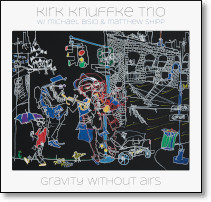
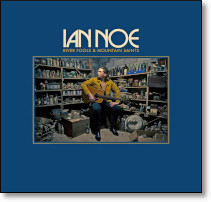
I've almost completely switched over to Spotify this week from Napster. Main reason is I still get a lot of hangs and interruptions from Napster, plus their new interface makes it no easier to browse than Spotify, and maybe a bit worse (which is pretty bad). I went to Napster six times below, especially for the Neil Young album. More disturbing are reports of Napster getting into crypto, which I regard as a terminal mark of stupidity if not (yet) much worse. I had to deal with a "denial of service" attack at the Robert Christgau website last week. As a result, most people saw "out of resource" errors for about 12 hours. They exploited a security hole I was aware of but had been slow to fix. I've plugged the most obvious one, but still have more programming to do to clean up the rest. Meanwhile, I'm monitoring the situation, and blocking IP addresses that look malicious. I sent out a more detailed explanation to the tech mail list. Following up, I took a look at several nagging problems with my own server. It's mostly been a slow and painstaking learning process, with one issue resolved and another I may just continue to live with. Thought I was making some progress on the unrated count, but that was wiped out by an unusually large mail haul. Still, I've found a few things I've been wondering about, so I'll get to them next week. New records reviewed this week: Caterina Barbieri: Spirit Exit (2022, Light-Years): Italian electronica producer, fifth album since 2017, adds strings, guitar, and vocals to her usual synths. B+(**) [sp] Sarah Bernstein: Veer Quartet (2022, New Focus): Violinist, leads a string quartet with second violin, viola, and cello. Music not without interest, but I've often found the sound unappealing, and this is a sustained example. B [cd] [09-02] Burna Boy: Love, Damini (2022, Atlantic): Nigerian singer-songwriter Damini Ogulu, studied in London and Oxford before returning to Lagos. He seems to have kept his UK and US connections, producing a hip-hop fusion that travels effortlessly. First time I heard him was on a Madonna album. This album includes spots for a wide range of guests, from Ed Sheeran to Popcaan, J Balvin to Hus, Blxst and Kehlani. B+(**) [sp] Tia Carroll: You Gotta Have It (2021, Little Village Foundation): Blues singer, based in California (Bay Area), second album, wrote 3 (of 11) songs. B+(**) [sp] Columbia Icefield: Ancient Songs of Burlap Heroes (2021 [2022], Pyroclastic): Group name from trumpeter Nate Wooley's 2019 album, also with Susan Alcorn (pedal steel guitar), Mary Halvorson (guitar), and Ryan Sawyer (drums), with Wooley doing the electronics that leave long stretches of barren and desolate ambience. Mat Maneri (viola) and Trevor Dunn (electric bass) also play on one track each. B+(**) [cd] [07-29] Bob Corritore & Friends: Spider in My Stew (2021, SWMAF/VizzTone): Blues harmonica player, based in Chicago, many albums since 2007, usually sharing the bill with someone like John Primer or Tail Dragger, or with various mixes of his Friends -- he uses eight bass players here, five drummers, four keyboard players, a bunch of singers. B+(**) [sp] Guy Davis: Be Ready When I Call You (2021, M.C.): Country blues singer, shades of Taj Mahal, early albums in 1978 and 1984, a regular stream from 1993 on. Sharpest song here is "Flint River Blues"; sappiest is "Palestine, Oh Palestine," or maybe "I Looked Around," but credit for trying. B+(***) [sp] Randal Despommier: A Midsummer Odyssey (2021 [2022], Sunnyside): Alto saxophonist, from Louisiana, duo with guitarist Ben Monder (listed as "featuring" on cover), playing nine pieces, as the fine print notes "The Music of Lars Gullin." If you don't know Gullin, you have some catching up to do: a baritone saxophonist, he was one of Sweden's most eminent jazz musicians from the early 1950s to his death in 1976. This is brief (34:06), surprising, and lovely. B+(***) [cd] [07-15] Sonny Green: Found! One Soul Singer (2020, Little Village Foundation): Soul singer with some grit in his voice, first album at 77, Discogs credits him with ten singles 1969-75. Reminds one of Z.Z. Hill, a bit of Bobby Bland tool, maybe a dash of Wilson Pickett -- which seemed familiar way back when, but these days you take what you can get. B+(***) Gwenno: Tresor (2022, Heavenly): Singer-songwriter from Wales, last name Saunders, third album, sings in Welsh and Cornish. B+(**) [sp] Joshua Hedley: Neon Blue (2022, New West): Country singer-songwriter from Florida, plays violin as well as guitar, second album. B+(**) [sp] Christone Kingfish Ingram: 662 (2021, Alligator): Blues singer-guitarist from Clarksdale, Mississippi, young (b. 1999), second album. Has some chops. B+(*) [sp] Eva Kess: Inter-Musical Love Letter (2021 [2022], Unit): Bassist, from Berlin, started her career as a ballet dancer in Brazil, has a couple albums. I was impressed by her mostly strings Sternschnuppen, but thrown by this one, where she doubles the band size, adding some horns and vocals (Mirjam Hässig). Easy enough to blame the latter, but now seems more like an excess of ambition, which can too readily lead to opera. B+(*) [cd] [07-22] Kirk Knuffke Trio: Gravity Without Airs (2022, Tao Forms, 2CD): Cornet player, many albums since 2009, composed 14 pieces here (90:17), backed by Michael Bisio (bass) and Matthew Shipp (piano), who really keep this moving. A- Joy Lapps: Girl in the Yard (2022, self-released): Steel pans player, based in Toronto, wrote everything here, "first full-length album" (but several more on her website), draws on African as well as Caribbean sources. Upbeat, flashy, ends strong. B+(**) [cd] Veronica Lewis: You Ain't Unlucky (2021, Blue Heart): Boogie piano-playing blues singer, young (18), from New Orleans, first album, wrote 6 (of 8) songs. She isn't quite right for one of the covers (Louis Jordan's "Is You Is My Baby"), but her piano is fast and furious (including an "Ode to Jerry Lee" that doesn't leave you thinking the wrong Lewis is playing), and she gets a lot of help from the sax (mostly Don Davis). B+(***) [sp] Yaroslav Likhachev Quartet: Occasional Sketches (2021 [2022], Clean Feed): Russian-born tenor saxophonist, based in Germany, leads a quartet with piano, bass, and drums. B+(***) [bc] Janiva Magness: Hard to Kill (2022, Fathead): Blues singer-songwriter, from Detroit, grew up in foster homes after both parents committed suicide, cut records in 1991 and 1997 before picking up the pace, including a stretch (2008-12) with Alligator. "Strong as Steel" lives up to its title, but doesn't stay that hard. B [sp] Metric: Formentera (2022, Metric Music International): Canadian electropop band, debug 2003, principally Emily Haines (vocals, keyboards) and James Shaw (guitar). B+(**) [sp] John Minnock: Simplicity (2022, Dot Time): Jazz singer, classic crooner voice, writes some lyrics, second album, pianist Mathis Picard writes some of the music, Dave Liebman is featured on soprano sax. More drama than I typically care for, but gets his point across. Closes with "You Don't Know What Love Is." B+(*) [cd] Moor Mother: Jazz Codes (2022, Anti-): Philadelphia poet Camae Ayewa, fronts the jazz group Irreversible Entanglements, uses this alias for more hip-hop projects, although the genres are pretty fluid for her, as are melodies and beats. Lots of guests here in her expanding universe, making it more complex than art needs to be, but still not as messy as real life. [sp] Ian Noe: River Fools & Mountain Saints (2022, Thirty Tigers): Country singer-songwriter, from Kentucky, second album. Hooked me with the song that sounded like John Prine, and even though the rest don't quite ring that bell, they're all pretty good. A- [sp] North Mississippi Allstars: Set Sail (2022, New West): Southern blues-rock band, debut 2000, founded by two sons of Memphis legend Jim Dickinson (Luther and Cody), 13th album. Leans toward funk, but barely registers. B+(*) Ol' Savannah: They Lie in Wait (2022, Anticapital): Canadian folk group, based in Montreal, albums since 2011. I was skeptical at first, but "Which Side Are You On?" won me over. B+(**) [bc] Katy J Pearson: Sound of the Morning (2022, Heavenly): UK singer-songwriter, started out as half of Ardyn (two albums 2015-16), second album, produced by Ali Chant (Yard Act) and Dan Carey (Fontaines DC). B+(*) [sp] John Primer & Bob Corritore: The Gypsy Woman Told Me (2020, SWMAF/VizzTone): Chicago bluesman, born in Mississippi, played behind Junior Wells and Muddy Waters before he moved out front in 1991, and has several dozen albums since. Corritore plays harmonica, third album with Primer, many more albums either listed second or as "Bob Corritore & Friends." First I've heard by him/them, but it sounds classic, hitting the mark every time out. A- The Duke Robillard Band: They Called It Rhythm & Blues (2022, Stoney Plain): Blues guitarist, sometime singer, co-founder of Roomful of Blues, many albums since 1978, including some where he wanders into jazz. Mostly jump blues songs from the 1940-50s, with 14 guests listed on the front cover. B+(**) [sp] Curtis Salgado: Damage Control (2021, Alligator): Blues singer, harmonica player, from Everett, Washington, based in Oregon, close to a dozen albums since 1991. Survived liver cancer with a transplant, and came back singing, "the longer that I live, the older I want to get" B+(*) [sp] Space Quartet: Freedom of Tomorrow (2019-21 [2022], Clean Feed): Fourth album by group led by Rafael Toral, who promises "electronic music with a human touch," aided by alto sax (Nuno Torres), bass (Hugo Antunes), and drums (Nuno Morão). B+(**) [bc] Ziv Taubenfeld's Full Sun: Out of the Beast Came Honey (2020 [2022], Clean Feed): Bass clarinetist, from Israel, based in Netherlands, band name from his 2020 album. Sextet with Michael Moore (clarinet/alto sax), Joost Buis (trombone), piano, bass, and drums. B+(**) [bc] Joanne Shaw Taylor: Blues From the Heart: Live (2022, KTBA): British blues-rocker, ninth album since her 2009 debut, also on DVD. Has the guitar. Also has Joe Bonamassa (3 tracks). B+(*) [sp] There Be Monsters: Rubikon (2021 [2022], Klopotec): Slovenian saxophonist Bostjan Simon, third album for his group, with Mirko Cisilino (trumpet/trombone), Goran Krmmac (tuba), vibes, and drums. B+(*) [bc] Toro Y Moi: Mahal (2022, Dead Oceans): Chaz Bundick, from South Carolina, a dozen or so albums since 2009, producing a style of electropop called chillwave, although I've also seen this filed as psychedelia. At any rate, not very chill. B [sp] Viagra Boys: Cave World (2022, Year0001): Swedish post-punk band, fronted by English-singing singer Sebastian Murphy, third album. B+(*) Wee Willie Walker and the Anthony Paule Soul Orchestra: Not in My Lifetime (2021, Blue Dot): Born in Mississippi, grew up in Memphis, moved to Minneapolis in 1959, sang gospel switching to soul, died at 77 in 2019, so title is pretty literal. Cut some singles as far back as 1959, but the albums only start in 2004. B+(***) [sp] Steve Washington: Just a Matter of Time (2020, JSP): Soul/blues singer, plays drums and organ, first album, features Lucky Peterson (piano), seems like they go back a fair ways. Not much grit, but that works too. B+(**) [sp] Hank Williams Jr.: Rich White Honky Blues (2022, Easy Eye Sound): Three years old when his namesake father died, who gave him a nickname (Bocephus) after a ventriloquist dummy, like everything else he both embraced and struggled with. He's 45 years older now than his father was when he died, and while he's never been as intensely productive as his father, he's accumulated 56 albums to date. Only one I count as a winner -- Hank Williams and Friends, from 1975, after a near-death experience -- but I haven't listened to that many, especially since he slowed down after 2000 (this is only his sixth this century). (I've probably heard more by Hank III -- evidently the voice skipped a generation.) Title song boasts that he "knows how to play the blues," despite the obvious handicaps, and namechecks a long list of blues masters, although he no more knew Robert Johnson than he did his father. He sounds more like he's been cribbing his blues from ZZ Top, but that's actually pretty satisfying. B+(***) [sp] Wu-Lu: Loggerhead (2022, Warp): UK singer-songwriter Miles Romans-Hopcraft, first album was electronic/instrumental, but this third album is chock full of vocals, some rapped, some choral, with scattered sounds, a mix of trip-hop and industrial though rarely anything in particular. B+(*) [sp] Zola Jesus: Arkhon (2022, Sacred Bones): Goth singer-songwriter Nicole Hummel, aka Nika Roza Danilova (grandparents immigrated from Ukraine, and she liked the Slavic name), born in Arizona, grew up in Wisconsin, first album 2009, this her sixth. B+(**) Recent reissues, compilations, and vault discoveries: Bob Corritore & Friends: Down Home Blues Revue (1995-2012 [2022], SWMAF/VizzTone): Chicago harmonica player, doesn't sing, which he makes up for by rotating his many friends. He has four previous albums designated as such, but many more collaborations. This plumbs his vault for 13 songs with 10 friends, the dupes T-Model Ford and Robert "Bilbo" Walker. B+(**) [sp] Bob Dowe: Build Me Up (1973-78 [2021], Trojan/Sanctuary): Reggae singer (1946-2006), best known for the Melodians, but released this 1974 album under his own name, a second in 1981, and many singles. Reissue, which matches the first disc of a Doctor Bird 2-CD, adds a dozen bonus tracks, which if anything up the ante (though nothing quite rises to the level of the alternate mix of "Girl I've Got a Date," which you know from the group). B+(**) [sp] Bob Dowe/The Melodians: Build Me Up/Pre-Meditation (1968-78 [2021], Doctor Bird, 2CD): Heard this twofer reissue split into pieces, but easy enough to sum it up. B+(***) [sp] Madonna: Finally Enough Love (1982-2019 [2022], Warner): A remix best-of, 16 tracks, an advance teaser for the 50 Number Ones (a record, but the fine print notes we're only talking about dance charts) coming out in August. Hard to know how to judge remixes, but compared to You Can Dance or The Immaculate Collection, this shades late, which lets me feel this is a bit less indispensible. B+(***)The Melodians: Pre-Meditation (1968-78 [2021], Trojan/Sanctuary): Legendary Jamaican vocal group, third album from 1978 (which included a couple cuts from 1968) plus extras, on 2-CD with Bob Dowe's Build Me Up from Doctor Bird but digital is split. B+(***) [sp] Orchestre Volta-Jazz: Air Volta (1974-77 [2022], Numero Group): Group from Upper Volta, a landlocked French colony in West Africa, between Ghana and Mali, renamed Burkina Faso in 1984. Discogs lists these 9 songs as singles, but only provides a couple of dates. Early cuts Sound like junkyard percussion, but that could just be the recording. A slow one ("Djougou Toro") is especially nice. B+(**) [sp] Neil Young With Crazy Horse: Toast (2001 [2022], Reprise): Previously unreleased 7-song album, from between Silver and Gold and Are You Passionate?, which are both pretty good if not quite landmark albums. B+(**) Old music: Francis Bebey: Nandola/With Love: Works: 1963-1994 (1963-94 [1995], Original Music): Born in Cameroon 1929, died in Paris 2001, in between distinguished himself not just as a musician but as a poet, novelist, folklorist, and historian. He studied math to start, but an interest in broadcasting took him to Paris and New York before Kwame Nkrumah persuaded him to move to Ghana, newly independent in 1957. He sang, played guitar and flute, drawing on a wide range of African music, but also got into electronics. This ranges widely, nothing that really blows you away, but interesting pieces abound, and the notes (by John Storm Roberts) help. B+(***) [cd] Sathima Bea Benjamin: Memories and Dreams (1983 [1986], Ekapa/Blackhawk): South African jazz singer, not sure of her race (father from St. Helena; mother "had roots in Mauritius and the Philippines"), but she left South Africa for Europe with future husband Abdullah Ibraham in 1960, after the Sharpeville Massacre, and lived most of the rest of her life in New York -- where this was recorded, with Onaje Allan Gumbs (piano), Buster Williams (bass), Carlos Ward (sax/flute), and on drums either Billy Higgins or Ben Riley. First side is her chronicle of the struggle against apartheid, "Liberation Suite." Second side has four covers, including two Ellington pieces. B+(***) [lp] Jack DeJohnette's Special Edition: Audio-Visualscapes (1988, Impulse): Drummer-led quintet, also plays keyboards, same group as above but more electric bass (and probably more flute). Long (74:05), feels muddled. B- [cd] Paul Rutherford/Derek Bailey/Barry Guy: ISKRA 1903: Chapter One (1970-72 [2000], Emanem, 3CD): Trombone, guitar, bass: three major figures in the British avant-garde, early in their careers (aside from this, Bailey's debut was 1970, Guy's 1972, Rutherford 1975). Originally a 2-LP with 11 Improvisations, the CD reissue adds Offcut 1-3, Extra 1-3, and 38:55 of "On Tour." Abstract and scratchy as you'd expect if you know these remarkable musicians. Rutherford went on to use ISKRA variants for a number of albums, later replacing Bailey with Philipp Wachsmann. B+(***) [cd] Unpacking: Found in the mail last week:
Ask a question, or send a comment. Sunday, July 10, 2022 Speaking of WhichJust a few scattered links this week, then I spent a whole day writing an afterword that tripled the length. One small note from Twitter, where Marc Masters created a meme from three Kathleen Parker headlines:
Back during WWII, the OSS (the predecessor of the CIA), came up with a term to describe American leftists who warned about the growing threat of Nazi Germany, some of whom were so bothered they volunteered to fight for Spain against Franco and his German and Italian allies. They were called "premature anti-fascists," as if sensible people should hold up and wait until some line-crossing moment when anti-fascism suddenly became fashionable. I always thought that the earlier people recognized problems, the better, but Parker clearly isn't that perceptive. So how come she's a widely syndicated columnist? Zack Beauchamp: [07-06] How conservatism conquered America -- and corrupted itself: Reviews three books, but the author seems to be working toward a book of his own. The books are: Matthew Rose, A World After Liberalism; Matthew Continetti, The Right; and Tim Miller, Why We Did It. The problem with Rose's illiberal "thinkers" is that hardly anyone on the right understands them, or cares about maintaining ideological continuity between Nazis and today's Republicans. To the extent that people on the right have any ideology, it's closer to the "classic liberalism" of Hayek, Rand and Koch than the völkish romance of Spengler. It's true that the right never had a problem with libertinage-for-us and the-jackboot-for-you. But they didn't become corrupt with Trump. They were corrupt from the start. Trump's only innovation was that he was utterly shameless about it, which came off to his followers as authenticity and candor. The right has always wanted to speak for the freedom to be cruel. Lindsay M Chervinsky: [07-07] Garland Has to Prosecute Trump for January 6 to Restore Faith in the Justice Department: Problem is it won't work, and more likely will backfire. It will inevitably look political, and Trump is very unlikely to be convicted, so while it may be fun to watch him squirm, it would be a waste of effort. Moreover, even if successful, it's way short of what it would take to "restore faith." Part of the problem is that the obvious charges like seditious conspiracy are bullshit political laws, even if you define them narrowly and document them rigorously. What I would like to see is a Special Prosecutor charged with investigating a wide range of corruption charges, ranging from the scandals that sunk Pruitt and Zinke to the hundreds of millions Jared Kushner got from the Saudis. Even where charges can't be filed, it would open some eyes to get a thorough accounting of the most thoroughly corrupt administration in American history. Fabiola Cineas: [07-07] What we know about the deadly police shooting of Jayland Walker: "Akron police officers released body camera footage of the killing that raises questions about excessive force." Excessive? Walker was unarmed. Police shot 90 rounds, and hit Walker 60 times. Ryan Cooper: [07-07] President Biden Is Not Cutting the Mustard: "Young people are abandoning him in droves because he won't fight for their rights and freedo." Michelle Goldberg: [07-07] The Delightful Implosion of Boris Johnson. She admits to Schadenfreude, but bad as Johnson was, hard to avoid a bit of jealousy that UK Conservatives could put down a dysfunctional leader, while Republicans don't dare touch Trump. The following pieces often return to this theme:
Jonathan Guyer: [07-05] Inside Ukraine's lobbying blitz in Washington: It's inconceivable running a war in Washington without greasing some palms. Margaret Hartmann: [07-08] Shinzo Abe, Former Prime Miniser of Japan, Is Assassinated. But isn't it kind of strange that 80% of the article are reproductions of tweets from world leaders, as if any of them have anything at all interesting to say? It's hard to convey how exceptional any shooting is in Japan, where there was only one murder-by-gun in all of 2021. More info:
Ellen Ioanes: [07-09] Protests force Sri Lanka's leaders to resign: "Entrenched corruption and a political dynasty may keep them in power, though." Paul Krugman: [07-08] Wonking Out: Rockets, Feathers and Prices at the Pump: Finally admits that, "yes, market power can worsen inflation." A paper by Mike Konczal and Niko Lusiani seems to have finally convinced him. Krugman also wrote That Was the Stagflation That Was, where he notes that: "The wholesale price of gasoline has fallen about 80 cents a gallon since its peak a month ago. Only a little of this plunge has been passed on to consumers so far." You still believe all of those articles about how greed has nothing to with gas prices? Ian Millhiser: [07-09] The post-legal Supreme Court: "The highest Court in the most powerful nation in the world appears to have decided that it only needs to follow the law when it feels like it." Kate Riga: [07-06] Kansas Republicans Scheduled Big Abortion Vote for Low-Turnout Primaries. Will It Backfire? If Republicans thought their amendment would be popular, they wouldn't have scheduled it on a typically low-turnout primary day, and they wouldn't be lying so much about what it means. Corey Robin: [07-09] The Self-Fulfilling Prophecies of Clarence Thomas: "For decades, Thomas has had a deeply pessimistic view of the country, rooted in his reading of the Fourteenth Amendment. After the Supreme Court's recent opinions, his dystopia is becoming our reality." Robin has written several books on the reactionary right, including a whole one on The Enigma of Clarence Thomas. Jeffrey St Clair: [07-08] Roaming Charges: Knocked Out and Re-Loaded. Some of the gun violence statistics actually managed to take me aback. One is that "124 people die every day in the US in acts of gun violence." That works out to 45,260 per year, which is about what I knew, but breaking it down per day makes it seem more inexorably relentless. The other is that we've had "320 mass shootings, putting 2022 on track to finish as one of the deadliest years in US history." But that works out to about 2 per day, which may be par, but feels like less than we hear about many days. St Clair also linked to the following:
The possible political book keeps evolving in my mind. Last week I was debating between writing a Speaking of Which and working on an outline. I decided I could do the former then maybe tack the outline on at the end, but didn't get to it. This week, well, I had a bit of time, so did a quick brain dump on my latest thinking. Titles aren't great, but here's what the structure looks like:
I've written outlines of American History in Four Eras several times (e.g., at some length on Jan. 27, 2019, but also on June 10, 2018, June 2, 2019, Jan. 19, 2000, March 9, 2020, May 31, 2020. The original insight was that US history could be broken up into four long eras of partisan dominance, each starting with a major two-term president and each ending with a disastrous one-termer: Jefferson-to-Buchanan, Lincoln-to-Hoover, Roosevelt-to-Carter, and Reagan-to-Trump. (Washington-to-Adams also fits that criteria, except for length.) In each of these, the dominant party's long rule was interrupted by loss to two opponents: in the Jefferson-Buchanan period, Whigs won by running ex-generals (Harrison and Taylor), but they died in office, having little effect; the other eras were interrupted by two-term each (Cleveland and Wilson, Eisenhower and Nixon, Clinton and Obama; note that none were consecutive, unlike Roosevelt-Truman and Reagan-Bush). Several things are interesting about all this. One is that the exceptions tried to maneuver under and around the hegemony of the dominant party. Eisenhower and Nixon accepted the "big government" New Deal paradigm, although they sought to undermine it at the edges. Clinton and Obama bought into the pro-business, militarist, "end-of-big-government" Reagan mythology, even if they tried to soften its harsh prescriptions. The earlier periods are messier to map, and one might be tempted to split them. Jackson marks a pretty clean break in the first era; McKinley is the right time to divide the second, but Bryan's takeover of the Democratic Party may have been the more important shift, producing progressive movements in both parties, reflected variously by T. Roosevelt and Wilson. The point I want to draw out here is how operating under the hegemony of a dominant party may be practical politics, it doesn't help you prepare for the crisis that occurs when the dominant party fails. Another thing is that each era starts with a crisis resulting in a massive shift of power -- in terms of Congress, Reagan is anomalous, but by 1980 the presidency had become so powerful that gave him a lot of leeway. The first three of those eras were marked by initial shifts to the left -- Reagan, again, is the exception, and the Reagan era is again anomalous in that it along represented a turn against a broader and more inclusive democracy. We have to ask how that was even possible. The answer would appear to be that in all eras, as politics returns to normal, people are less engaged, and special interests worm their way in, exploiting a deeply ingrained (even if very unpopular) tendency toward corruption. After all, getting rich has been a common aspiration and a matter of national pride since colonial days. The Grant and Harding administrations were perhaps the most famously corrupt, and while it's easy to blame them on inattentive leaders, they occurred at points when business was finding government favor especially lucrative (railroads and oil, respectively). But the Republican Party has always looked to government as a source of private riches (in 1860, the campaign slogan urged farmers to vote themselves free land, and manufacturers to vote for tariffs). By the time you get to Reagan and the "greed is good" decade, this penchant for corruption was baked into their DNA. Every Republican administration from Nixon on has been wracked by corruption scandals. We'll return to this frequently throughout the book. The second section follows the Republicans from the freak election of 1946 (which among other things passed Taft-Hartley) on. We can talk a bit about the Goldwater right, but Richard Nixon is the key figure, because he's the one who taught the party to do whatever it takes, no matter how deceitful, unscrupulous, or plain illegal, to win. We'll look at Kevin Phillips' The Emerging Republican Majority, and how Republicans welded several reactionary factions into a solid base. We'll look at how that base allowed them to recover from defeats when their policies blew up disastrously. And we'll show how those decisions, while allowing them to claim and hang onto considerable power, despite repeated proof of their inability to govern wisely or even competently. Indeed, each time they lose, they bounce back more vicious and insane than ever. Another thing we need to talk about here is the structure of the Republican Party: particularly, the donor networks, their think tanks and university alliances, the lobbies, allied groups like the NRA, their propaganda organs, and their influence on "mainstream media." The third section introduces the Republicans' most intractable enemy: reality. Republicans are masters at crafting rhetoric that flatters their supporters and excoriates their imagined enemies (the "radical left"), but their deeply ingrained corruption keeps them from facing their real problems (especially problems they themselves created). In this section, we take a handful of sample subjects, explain briefly how they work, how they eventually break down, and why the Republicans have no solution for them. This chapter could grow into a massive book of its own, so it is important to pick relatively obvious cases. Some possibilities: health care, climate, trade, immigration, civil service, information, education, public welfare, war, justice. These are all big subjects, so I'm inclined to start with some common threads. First, I'd emphasize how much the world has changed in my lifetime, especially since my grandfather's before me (he was born in 1895). This new world is much more complex, and much harder to understand, especially in its complex interdependency. As a practical matter, we have to delegate large parts of responsibility to experts, and they have to be trustworthy. That's hard in any case, but all the more difficult in a hyper-individualistic society largely driven by the profit motive, with its consequent levels of inequality and injustice. The individual topics are big and deep, and risk swallowing up our available attention. One approach that may help is to limit analysis to Republican approaches. We don't have to solve health care or climate; just show that Republicans won't, can't, and are only likely to make the situation worse. Chapters two and three should demolish any hope that Republicans might face up to and overcome the problems of the modern world. The fourth chapter is about and for the Democrats. It starts with some history, a survey of how Democrats have reacted to Republican attacks, probably going back (briefly) to 1946, but mostly we have to deal with the Reagan-Bush-Trump era. That involves spending some time with the New Democrats, to make two important points: one is that their concessions to the Republicans failed politically, both to gain ground in the center and to hold their own base; the other is that they failed to solve major problems, or even to help us understand why such problems matter and persist. Clinton and Obama may have made the world a little better than they found it, but they did not prepare the voters to keep it better, and to keep on working to make it better. Otherwise they would not have lost their Congressional majorities after two years, nor been succeeded by such manifestly incompetent and disastrous presidents as Bush and Trump. The rest of this chapter is meant to help Democrats campaign more effectively. After all, they are the only alternative to Republicans, who are hopelessly compromised. (Third-party prospects can be easily dismissed.) If we look at real interests, we should be able to show that Republicans favor a vanishingly small minority, which in a democracy should quickly be rendered powerless. We can even point out that Republicans understand this, as they've as much as admitted by their anti-democratic efforts (voter suppression, gerrymandering, unlimited money, etc.; these points may fit just as well in the 2nd chapter). The main way they get away with it is due to their ability to convince voters (who are notoriously ill-informed, and rarely able to grasp complex problems and policies) not to trust Democrats. The only way out of this is for Democrats to show voters that they care about their voters, that they are open and honest and not beholden to special interests. They need to be seen as approachable and sincere. They need to be regarded as fair and just. While this may seem like a high bar, in practice they only need to be seen as clearly better than the Republicans, so by all means point out when Republicans betray public trust, or otherwise attempt to deceive and manipulate voters, such as by appealing to their prejudices. This chapter is likely to turn into a hodge-podge of political advice, ranging from how to counter stereotypes about Democrats to how to avoid overreacting to problem issues. I won't try to sketch out a list here, but every day I read the paper I run across cases that could be handled better. As critical as I am of businesses, we need them and they need to be profitable, so any policy that hits them needs to be considered carefully. Most policy questions involve tradeoffs, and one needs to be sensitive to all concerned. But "all concerned" needs to include the public, and (even harder to factor in) the future. We need to recognize what we don't (or can't) know, and we need the flexibility to adjust when things don't work out as expected. We need to avoid getting too caught up in our own rhetoric and logic. We need to understand that it's impossible to change things immediately, and that changing things too fast is disruptive and upsetting. On the other hand, that's no excuse for doing nothing. The fourth chapter will avoid discussions of policy specifics, but it may get into philosophical principles. Democrats need to align themselves more firmly in favor of individual freedom and responsibility, but they also need to be more sensitive to the corrosive effect of power imbalances. Inequality would be less of a problem if it were possible to mitigate the differences in power. Often the easiest way to do this is to create countervailing power forces. The fifth chapter is reserved for policy matters. I expect that this will eventually be cut from the book, possibly to be spun off into another, but for the time being, it is a place to move policy thoughts out into. I have a lot of policy ideas that I think would be good for Democrats and for the country and the world, but they are outside of the present Overton Window, so they have no value in a book of practical politics. Ending intellectual property and replacing it with a system of public grants and free licenses is a relatively clear example. (Even so, it involves some fairly deep changes in how we think about creativity, incentive, and the public interest.) The "Introduction" and/or "Afterword" are needed to fit the body of the book into a particular political context. At this point, it's impossible to write this and release it before the November 2022 election, which is likely to significantly alter the landscape. I've been kicking around ideas for a political book as far back as the late 1990s. I even took some time off then to work on a draft. I had studied philosophy and sociology in college, but made a career out of software engineering. It occurred to me that one could apply engineering discipline to many political issues without succumbing to the hack mechanistic simplifications common to the genre. Perhaps my personal background would help figure out what might and might not work. But I wasn't satisfied with what I came up with, and shelved it. After 9/11/2001, I took a renewed, more urgent interest in politics, and started blogging. I was dead set against the War on Terror from the very start. By 2004, I saw the need for a narrowly-focused polemic Case Against the Republicans, but missed the election window. Still, I kept turning the ideas around my mind, mostly thinking of a longer time frame. I've been fond of utopian writing since my late teens, so I found the title The Way Things Ought to Be very appealing. (Unfortunately, Rush Limbaugh used it, in a 1992 book that turned out to mostly be an insane rant against Anita Hill.) I've long been struck by the extent of change over the last 150 years, and felt that people everywhere had done a poor job of adjusting their thinking to cope with the times. But while bad ideas were everywhere, really dangerous ones were concentrated in the Republican Party, so I tended to vacillate between focus on urgent vs. important matters. While Obama was president, it seemed more important to think long, but when Trump lucked out, an urgent sense of impending doom took over. In early 2020, I again narrowed the focus and opened a file for A Letter to the Democrats, which I started by copying the "four eras" outline. I hoped to close the door on the Reagan-to-Trump era, and open a new one -- sure Biden didn't rise to the standards of Jefferson, Lincoln, and Roosevelt, but history has never been a mechanical cycle. I imagined a short book, with the four eras for historical background, and a second part closer to chapter four above. I had a short window, and blew it. After the election, it took some time for me to think through the second and third chapters, which again return the focus onto the Republican threat. For a while, the third was "The Way the World Works," but while reading Vaclav Smil's similar title it occurred to me that "Breaks" would be better than "Works." Republicans break things. It's not that I have had writer's block. I have millions of words written in my various notebook/blog files (collected in 4 huge volumes here), but at this stage I have no confidence in my ability to pull an actual book together. Perhaps it's just a psychotic "will to fail"? But I do think this outline makes sense, and there's no shortage of material to flesh it out -- once you get going, the harder thing is to decide where to stop. The target audience would be active Democrats, who by now fear Republicans as much as I do, but are hard-pressed to formulate effective tactics to oppose them. I have no experience in doing so, but can draw on a lifetime of observing Democrats fuck up and sell out short. The 2016 debacle was not because America was too conservative, but because a critical sliver of the public so distrusted Hillary that they were willing to take a chance on Trump. Incredibly stupid that was, but that's why we need smarter critics. Ask a question, or send a comment. Monday, July 4, 2022 Music Week
Music: Current count 38282 [38227] rated (+55), 78 [87] unrated (-9). Posted a rather substantial Speaking of Which yesterday. (Added one more link today, after finding a tab I had opened but missed.) After complaining about no Facebook reaction last week, I finally got a like, a comment, and a message from an old Boston friend, so let's dedicate this one to her. I was torn at first between writing one and starting to jot down my latest book thinking. I decided I could do the latter in the end section of the post, but it turns out I never got that far. I had two things I wanted to write about: first was Robert Christgau's Hillary Clinton Lookback; second was further correspondence with Crocodile Chuck, following my last week Q&A. After that it was mostly a matter of filling in the sections on Ukraine, SCOTUS, and the January 6 Committee. As I went through my paces, I found a few more topics to note, and wound up including a couple pages I didn't have much to say about, but felt like bookmarking anyway (e.g., Elizabeth Nelson on Anthony Bourdain, Annie Proulx on swamps). By the way, I ordered the two Tariq Ali books (on Churchill and Afghanistan). I'm also through the first section of the Millhiser book (Injustices). I was already familiar with a number of the 19th century cases in that section from reading Jack Beatty's Age of Betrayal: The Triumph of Money in America, 1865-1900, but Millhiser's description of the conditions is remarkably good. Millhiser also has a more recent (2021) but shorter (143 pp) book: The Agenda: How a Republican Supreme Court Is Reshaping America, and has written a lot more since then in Vox. Another promising book on the recent Supreme Court is Adam Cohen's Supreme Inequalilty: The Supreme Court's Fifty-Year Battle for a More Unjust America. (Cohen previously wrote a whole book on the Carrie Buck case, which Millhiser presents in 4-5 pages.) Another valuable critic of the right-wing takeover of the Court is Erwin Chemerinsky, who has a number of books on the subject. The only one I've read so far fits into a slightly different genre: books that offer close readings of America's founding documents and find them compatible with progressive reform. Chemerinsky's is We the People: A Progressive Reading of the Constitution for the Twenty-First Century. A similar book is Danielle S Allen's Our Declaration: A Reading of the Declaration of Independence in Defense of Equality. I recommend them both (Allen's is especially appropriate on this 4th of July), and even more so Ganesh Sitaraman's The Crisis of the Middle-Class Constitution. I'll also note that two of our greatest historians have found progressive kernels in the Constitution: Gordon S Wood, in The Radicalism of the American Revolution, and Eric Foner, in The Second Founding: How the Civil War and Reconstruction Remade the Constitution. I'm fully aware that every step forward is met with vitriol and retrenchment from self-proclaimed conservatives, and that they have often been successful, but when we look back on our history, the moments we're proudest of, and most inspired by, have always aspired toward more universal justice. I suppose I should note that I started out as a devout believer in what I saw as American ideals, the consistent application of which led me toward a peculiarly individualized understanding of the left. One early step for me was reading Staughton Lynd's Intellectual Origins of American Radicalism (1968). I was so taken by the book that I wrote a defensive letter to Eugene Genovese, who had written a brutal review of Lind's book in The New York Review of Books. Genovese kindly replied, and suggested I read some of his work (which aside from papers at the time was just The Political Economy of Slavery). I did, and that was my introduction to Marxism. I came to understand Genovese's critique, but doubt I ever lost my initial sympathy for Lind -- or for the idea that a better America could draw on the ideals of the Revolution and Reconstruction. I wrote the above last night, without particularly realizing that today is the 4th of July. We have no holiday plans. I probably won't even bother walking down the block to where the big fireworks show should be visible. I don't mind celebrating the holiday so much -- as I said above, the Declaration of Independence still resonates for me -- but I've come to hate the idea of celebrating by blowing things up. I don't have much to say about music this week. I'm still trying to track down my long-time unrated list, which is the only reason I bothered with two Christmas albums this week. The top "old music" find this week was an LP I noticed while looking for something else. It turned out to be unrated but not in my unrated list, so finding it was dumb luck. Makes me wonder how many more there are. Otherwise, I've been following tips from more lists than I can keep track of. Some came from mid-year lists, links here. As we've hit mid-year, I suppose I could offer you a list. The usual full one is here, but to focus a bit, let's omit the jazz (about half of the A-list, more like two-thirds of the overall list), and also omit records Robert Christgau has already reviewed/graded (since you probably know them already). That leaves us with this:
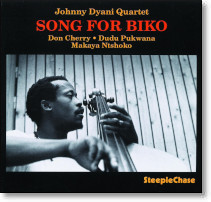
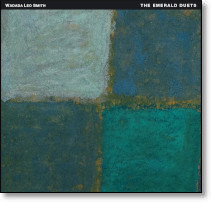
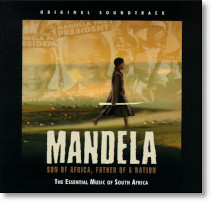
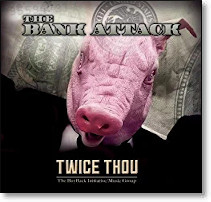
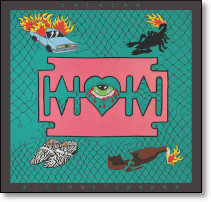
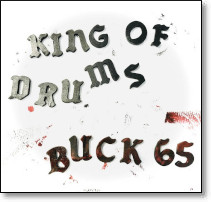
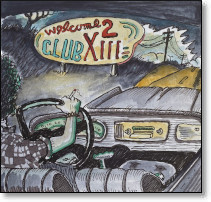
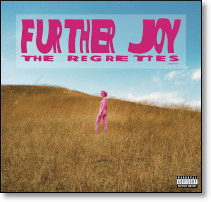
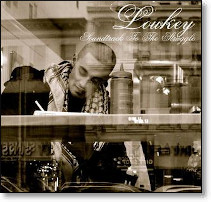
I imagine a couple of those will appear in July's Consumer Guide, but don't dare guess which. Two are items I only wrote up today, too late for this post, so they'll be part of next week's (but I'll give you the album covers anyway). New records reviewed this week: Angles: A Muted Reality (2021 [2022], Clean Feed): Octet, led by Swedish alto saxophonist Martin Küchen, who has used the group name for a number of projects, usually qualified by the number of players, from 3-9. Three pieces, 38:26. Takes a while to find the track, but impressive when they do. B+(***) [bc] Avalanche Kaito: Avalanche Kaito (2022, Glitterbeat): "A Burkinabe urban griot [Kaito Winse] meets a Brussels noise punk duo" [Benjamin Chavel on drums/electronics, Amaud Paquotte bass]. A sign of the times, if not much more than that. B+(*) [bc] Camille Bertault & David Helbock: Playground (2021 [2022], ACT): French jazz singer, fourth album, wrote three songs here, four more coming from the Austrian pianist, with widely scattered covers (Monk, Scriabine, Gismonti, Björk, "Good Morning Heartache"). B+(**) [sp] Daniel Carter/Matthew Shipp/William Parker/Gerald Cleaver: Welcome Adventure! Vol. 2 (2019 [2022], 577): Label likes to do these staged 2-volume deals, with Vol. 1 out back in 2020. Carter is credited with saxophones and clarinet; the others you know (piano, bass, drums). B+(**) [dl] Daniel Carter/Patrick Holmes/Matthew Putnam/Hilliard Greene/Federico Ughi: Telepatica (2018 [2022], 577): Leader plays saxes, clarinet, and trumpet; others: clarinet, piano, bass, drums. B+(*) [dl] Roxy Coss: Disparate Parts (2022, Outside In Music): Tenor saxophonist, fifth album, backed by guitar (Alex Wintz), piano (Miki Yamanaka), bass and drums. B+(**) [sp] Amalie Dahl: Dafnie (2022, Sonic Transmissions): Danish saxophonist (alto/baritone, also clarinet), based in Trondheim, first album, group listed as Amalie Dahl's Dafnie, but cover parses as above. Quintet with trumpet, trombone, bass, and drums. B+(**) [sp] Glenn Dickson: Wider Than the Sky (2021 [2022], Naftule's Dream): Klezmer clarinetist, first album under his own name, after group albums with Shirim Klezmer Orchestra and Naftule's Dream. Solo, accompanied by loops. B+(**) [cd] [07-08] Signe Emmeluth/Dag Erik Knedal Andersen/Magnus Skavhaug Nergaard: The A-Z of Microwave Cookery (2020 [2022], Astral Spirits): Norwegian sax/bass/piano trio, alto/tenor. Joint improv, loses a bit when they slow down, but not much. B+(***) [bc] David Francis: Sings Songs of the Twenties (2022, Blujazz, EP): Seattle-based standards singer, opens with "Honeysuckle Rose," touches on "Oh, Lady Be Good" and "Rockin' Chair," finishing seven songs in 19:17, not bad, been done better. B [cd] GoGo Penguin: Between Two Waves (2022, XXIM, EP): British piano trio (Chris Illingworth, Nick Blacka, Jon Scott), albums since 2012, build off a snappy rhythm. Five songs, 24:41. B+(**) [sp] Hard Bop Messengers: Live at the Last Hotel (2022, Pacific Coast Jazz): Group from St. Louis led by John Covelli (trombone), with Ben Shafer (sax/flute), Luke Sailor (piano), bass, drums, and lounge lizard singer Matt Krieg. Not as hard bop as you'd expect, but they swing some. B+(*) [sp] Landaeus Trio: A Crisis of Perception (2019 [2022], Clean Feed): Piano trio led by Mathias Landaeus (also some interesting electronics), with Johnny Aman (bass) and Cornelia Nilsson (drums). Pianist has albums going back to 1996, and Trio has appeared on several albums backing up Martin Küchen. B+(***) [bc] Magnus Lindgren/Georg Breinschmid: Jazz at Berlin Philharmonic XIII: Celebrating Mingus 100 (2022, ACT): Six Mingus classics, four arranged by Lindgren (baritone sax/bass clarinet, from Sweden), the others by Breinschmid (bass, from Austria), both with 20+ year careers that lean toward big bands. Group is an octet (plus vocalist Camille Bertault on one song), which splits the difference between the big bands that have flocked to Mingus since his death and the quintets that Mingus somehow whipped up into sounding even larger. B+(***) [sp] Jeremy Manasia Trio: Butcher Block Ballet (2021 [2022], Blujazz): Straightforward piano trio, with Ugonna Okegwo (bass) and Charles Ruggiero (drums). B+(*) [cd] Moskus: Papirfuglen (2020 [2022], Hubro): Norwegian group, albums since 2012, started as a piano (Anja Lauvdal), bass (Fredrik Luh Dietrichson), and drums (Hans Hulbaekmo) trio, but vary their sound more here, adding: synths/cembalo/vocoder, cello/mandolin, jews harp/drum machine/glockenspiel/recorder. B+(**) [bc] OK:KO: Liesu (2022, We Jazz): Finnish quartet, led by drummer Okko Saastamoinen, with sax (Jarno Tikka), piano, and bass. B+(**) [bc] Samo Salamon/Arild Andersen/Ra Kalam Bob Moses: Pure and Simple (2021 [2022], Samo): Slovenian guitarist, sends me most of his work, which I'm quite fond of, but rarely this much. The elders on bass and drums are more than inspiring. A- [cd] Samo Salamon/Sabir Mateen: Joy and Sorrow (2020 [2022], Klopotec): Date given as "a couple years ago." Guitar and tenor sax/clarinet duo. Short (4 tracks, 35:50), some power. B+(***) [bc] Samo Salamon/Cene Resnik/Urban Kusar: Takt Ars Sessions: Vol. 3 (2022, Samo): Guitar/tenor sax/drums, free improv set, new drummer this time after Jaka Berger on first two volumes. B+(***) [bc] Linda Sikhakhane: Isambulo (2022, Ropeadope): South African saxophonist (tenor/soprano), studied in New York (Billy Harper was a mentor), based in Norway, third album. His sax has a spiritual (as in Coltrane) vibe to it. Parras and Anna Widauer vocals not so much. B+(**) Soccer Mommy: Sometimes Forever (2022, Loma Vista): Singer-songwriter Sophie Allison, born in Zürich, grew up in Nashville, third album, starting to lose me. B+(*) Günter Baby Sommer & the Lucaciu 3: Karawane (2022, Intakt): Venerable German drummer, says here "at the height of his musical career," but he's 78, born in Dresden shortly before the March 1945 fire-bombing that burned much of the city and killed 25,000 (revised estimate, I recall much higher numbers), old enough that he adopted his nickname in honor of Baby Dodds. Still pretty vigorous here. The Lucacius are Antonio (sax), Simon (piano), and Robert (bass), much younger (Antonio was born in 1987), also German (from Plauen). They get better when Sommer lights a fire under them. One highlight is a jive vocal, Sommer again. B+(***) [sp] Regina Spektor: Home, Before and After (2022, Sire): Singer-songwriter, pianist, born in Moscow, came to US in 1989, and released her first album in 2001. This is number eight. Every song is striking, most lyrics are memorable. A- The Sun Sawed in 1/2: Before the Fall (2022, self-released, EP): Neo-psychedelic pop outfit from St. Louis, founded 1990 by brothers Ken and Tim Rose, recorded five albums through 2000, one more in 2013, several EPs since 2021. This one is 6 songs, 25:09. B [bc] Tarbaby Feat. Oliver Lake: Dance of the Evil Toys (2022, Clean Feed): Group a piano trio led by Orrin Evans with Eric Revis (bass) and Nasheet Waits (drums), appeared originally in 2009 on a short eponymous album, with three more albums through 2013, including one with alto saxophonist Lake as a guest. This one also adds Josh Lawrence (trumpet) and extra percussion (Dana Murray) on the title track. Evans' vocal on the opener threw me, but Lake gives another strong performance. B+(**) [bc] TEIP Trio: TEIP Trio (2020 [2022], Sonic Transmissions): Free jazz trio ("with heavy rock elements") from Trondheim, Norway: Jens-Jonas Francis Roberts (clarinet), Arne Bredesen (guitar), Nicolas Leirtrø (baritone guitar). Closer to ambient, but on the creepy side. B+(*) [bc] Crystal Thomas: Now Dig This! (2021, Dialtone): Blues singer, plays some trombone, old-fashioned enough the album is in mono, band led by Lucky Peterson on organ, with Johnny Moeller on guitar, plus bass and drums. No originals: writing credits include Albert King, Shirley Scott, Jerry Williams Jr., Janis Joplin. B+(***) [sp] Kobe Van Cauwenberghe: Ghost Trance Septet Plays Anthony Braxton (2021 [2022], El Negocito): Guitarist, also credited with synths and voice, from Belgium (Antwerp), has a couple albums, including Ghost Trance Solos on this same music. Septet here covers a nice range with trumpet/euphonium, tenor sax/bass clarinet, piano, violin, bass, and drums (no names I recall running into). Four pieces, each 22-25 minutes. I've somehow managed to miss all of Braxton's Ghost Trance Music (GTM) recordings, so entered this with no particular expectations. But for tarters, most pieces are pretty bouncy, in that stilted way of old classical music (Bach?), but much less predictable, and much more interesting. B+(***) [dl] Bugge Wesseltoft: Be Am (2021 [2022], Jazzland): Norwegian pianist, ventured into electronics with his New Conception of Jazz records. This, however, is mostly solo piano (acoustic, but some electric, kalimba, and effects), with tenor sax (Håkon Kornstad) on two tracks. B+(*) [sp] Wild Up: Julius Eastman Vol. 2: Joy Boy (2022, New Amsterdam): Large group base in Los Angeles, lots of strings with twice as many reeds as brass, and voices as needed. Did Femenine for their first volume of Eastman compositions, expect to release seven volumes before they're done. The previously unrecorded title piece is especially interesting. B+(**) Tom Zé: Língua Brasileira (2022, Sesc): Iconoclastic Brazilian singer-songwriter, started in the late 1960s with the Tropicália movement, slipped into obscurity but Americans discovered him through two 1990-04 Luaka Bop compilations. I've been up and down on him, and find this one even more confusing than most. B+(**) [sp] Recent reissues, compilations, and vault discoveries: A Chant About the Beauty of the Moon at Night: Hawaiian Steel Guitar Masters: Lost + Rare Performances 1913-1921 (1913-21 [2022], Magnificent Sounds): Title about covers it. Sound on the thin side, but could be worse given the dates. An interesting curio. B [bc] Ingebrigt Håker Flaten/Rolf-Erik Nystrøm: El Sistema (2000 [2021], Sonic Transmissions): Norwegian bass and sax duo, no spec on the saxophone(s), but alto seems to be his first choice. The combination usually favors the saxophonist, but more often than not the bassist is out front. B+(***) [bc] Malik's Emerging Force Art Trio: Time and Condition (1982 [2022], Moved-by-Sound): Alto saxophonist Maurice Malik King, from St. Louis, first and possibly only album, trio with Zimbabwe Nkenya (bass violin) and Qaiyim Shabazz (congas). B+(***) [bc] Asha Puthli: The Essential Asha Puthli (1968-80 [2022], Mr. Bongo): Indian singer and actress, early singles with a group called the Surfers (including covers of "Sound of Silence," "Sunny," and "Fever"), appeared on Ornette Coleman's Science Fiction (2 tracks here), at least four albums for CBS in the 1970s (as far as this album goes). Hard to tell much from such scattered examples, but I rather like her disco phase. B+(***) [bc] Sirone: Artistry (1978 [2022], Moved-by-Sound): Bassist Norris Jones (1940-2009), from Georgia, best known as a member of the Revolutionary Ensemble (with Leroy Jenkins and Jerome Cooper). First of only several albums as leader, with James Newton (flute), Muneer Bernard Fennell (cello), and Don Moye (percussion). B+(*) [bc] Old music: Ray Charles: True to Life (1977, Atlantic): On his return to Atlantic, he tries to turn on the genius, and scores some minor successes. B+(**) [yt] Jason Paul Curtis: These Christmas Days (2017, self-released): Jazz singer, based in Virginia near DC, fourth album (turns out I got the title wrong of the one I've heard). Mostly originals, half done with a big band called Swing Shift, the other half with a 4-piece combo called Swinglab. B- [cd] Jack DeJohnette's Special Edition: Irresistible Forces (1987, MCA/Impulse): Drummer, used this group name for six albums (1981-91), here a sextet including "special guest" Nana Vasconcelos (percussion). The others are Greg Osby (alto/soprano sax), Gary Thomas (tenor sax/flute), Mick Goodrick (guitar), and Lonnie Plaxico (bass). B+(**) [lp] Johnny Dyani Quartet: Song for Biko (1978 [1979], SteepleChase): Bassist, one of the Blue Notes exiled from South Africa, settled in Denmark, where he found Don Cherry (cornet), joined here by two more South Africans: Dudu Pukwana (alto sax), and Makaya Ntshoko (drums). The titles may look back to Africa, but the music plunges head first into freedom. A- [lp] Kansas: Miracles Out of Nowhere (2015, Epic): Prog-rock band out of Topeka, appeared in 1974 with a lousy album featuring an iconic John Brown painting on the cover (part of a mural in the Kansas State Capitol building). Some time later, I wrote a review making fun of them -- I never was very happy with that piece, because it was built on prejudices, but it went over well with my Voice audience -- and never listened to them again -- even after I got this deluxe package, a CD plus a Blue Ray and DVD of a documentary movie about the band (still haven't watched it, and doubt I ever will). I'm only bothering with the CD now because it's on my checklist. It includes spoken word bits, mostly working as intros to the overblown but not always awful music. C+ Steve Lacy: The Door (1988 [1989], Novus): Soprano saxophonist, started in Dixieland, bypassed bebop for the avant-garde, although he often looked back to Monk and Herbie Nichols -- he plays pieces by Monk, George Handy, and Strayhorn/Ellington here, along with three originals. Two duos here, three quintet pieces (with Steve Potts on alto sax and Bobby Few on piano), adding Irène Aëbi (violin) and a second drummer, Sam Woodyard (in one of his last performances), for the Ellington. B+(***) [lp] Michael Mantler/Carla Bley: 13 & 3/4 (1975, Watt): German trumpet player, the former Lovella May Borg's second famous musician husband -- she started touring as Carla Borg in the late 1950s, then married Paul Bley and kept the name. She made her mark initially as a composer, with George Russell and Jimmy Giuffre recording her pieces. Her and Mantler founded the New Music Distribution Service, for artist-owned small labels (theirs was Watt, named for the Samuel Beckett novel), and the Jazz Composers Orchestra, which recorded notable albums by a rotating cast of leaders (Roswell Rudd's Numatik Swing Band is a personal favorite), including Bley's big opera (Escalator Over the Hill in 1971). This album gave each artist a side to compose and conduct, with Bley's band big (19), and Mantler's humongous (56). Both pieces are ambitious, but Mantler's stands out, not just for its grandeur but for Bley's exceptional piano solo midway. Probably no surprise that Mantler wound up doing soundtracks. B+(**) [lp] Motohiro Nakashima: And I Went to Sleep (2004, Lo): Japanese electronica producer, Discogs lists four albums (2004-09), this the first, but Bandcamp has more recent material. Plays guitar, keyboards, picks up some folk influence, keeps a nice flow. B+(*) [cd] Sun Ra and His Interglactic Solar Arkestra: Soundtrack to the Film Space Is the Place (1972 [1993], Evidence): Sixteen tracks for a 1974 sci-fi film directed by John Coney, and written by Ra and Joshua Smith, recycling the title of the group's 1973 Impulse album (5 tracks, 42:51; 2 titles appear in both, but in different versions). Not much mood music, but some vocals help with story hints, or are amusing in their own right. B+(**) [cd] The U.S. Army Blues: Swinging in the Holidays (2017, self-released): Feels stupid to be listening to Christmas music in July, but feels stupid in December too, and this band always gets my blood up, even when they don't personally deserve it. C [cd] Cedar Walton: Spectrum (1968, Prestige): Pianist (1934-2013), played in the Benny Golson-Art Farmer Jazztet 1958-61, then with Art Blakey (1961-64), led his own albums from 1967, also the group Eastern Rebellion. Second album, one trio track with Richard Davis (bass) and Jack DeJohnette (drums), four more with Blue Mitchell (trumpet) and Clifford Jordan (tenor sax). B+(**) Cedar Walton: The Electric Boogaloo Song (1969, Prestige): Quintet, same horns (Blue Mitchell and Clifford Jordan), different bass and drums (Bob Cranshaw and Mickey Roker), with Walton opening on electric piano for the title cut. B Cedar Walton: Spectrum (1968-69 [1994], Prestige): Twofer CD, adds The Electric Boogaloo Song to the original album (69:26 total). B+(*) Cedar Walton: Soul Cycle (1970, Prestige): With James Moody (tenor sax), Rudy Stevenson (guitar), Reggie Workman (bass), and Tootie Heath (drums), again opening electric some kind of soul jazz gesture, but acquits himself better on acoustic. B+(*) Cedar Walton Quartet: Third Set (1977 [1983], SteepleChase): Walton did much of his best work with sax quartets, especially the 1976 album Eastern Rebellion with George Coleman, Sam Jones, and Billy Higgins. He kept the group name, releasing an Eastern Rebellion 2 in 1977 with Bob Berg taking over at tenor sax, and continued using it into the 1990s with Ralph Moore. This is the quartet with Berg, the third from Montmartre in Copenhagen (Second Set is a favorite). Starts with a Higgins tune, followed by two Walton originals, winding up with two shorter Monk pieces. B+(***) Cedar Walton: Among Friends (1982 [1992], Evidence): This is a trio, with Buster Williams (bass) and Billy Higgins (drums), plus a guest spot for Bobby Hutcherson (vibes). B+(**) [cd] Cedar Walton Trio: Cedar (1985 [1990], Timeless): Piano trio, five Walton originals plus one each from David Williams (bass) and Billy Higgins (drums). B+(***) [sp] The Phil Woods Quintet: Heaven (1984 [1996], Evidence): Alto saxophonist, also plays some clarinet here, started in the early 1950s as one of "Bird's children," much later was often found in the company of Benny Carter or Lee Konitz. This comes off as a hard bop quintet, with Tom Harrell (trumpet/flugelhorn) and Hal Galper (piano) giving him a run for the money. B+(***) [cd] Tom Zé: Grande Liquidação (1968 [2011], Mr. Bongo): Brazilian singer-songwriter Antônio José Santana Martins, discovered for Americans by David Byrne, who packed his 1973-75 singles into Brazil Classics 4: The Best of Tom Zé. This was his first album, from when he was close to the Tropicália movement. Even then, this is odd enough to be called psychedelic, not that I have any idea what that means. Album was originally released as Tom Zé, as was his next two. B+(**) [bc] Tom Zé: Tom Zé (1970 [2014], Mr. Bongo): Second album, has retained its original eponymous title. Cover suggests a simple singer-songwriter, but nothing with this guy goes quite the way you expect. B+(***) [bc] Unpacking: Found in the mail last week:
Ask a question, or send a comment. Sunday, July 3, 2022 Speaking of WhichPS: Added the Demillo paragraph, which I had intended to include in this post. I tried answering Crocodile Chuck's letter last week, but I focused on the big question of inflation, but skipped past his "We didn't vote for WWIII" line. He wrote back, ominously:
Chuck is a longtime reader and correspondent, an American familiar with my old St. Louis stomping ground, who sensing doom moved across the Pacific -- and not the only one I know who did that. I doubt I'd be identified as an optimist, but this is a bit too paranoid for me. I seriously doubt that there is any cloistered segment of the American deep state that has anything approaching a serious plan to dismantle China or the Russian Federation. And yeah, I believe there is some kind of "deep state," which ensures continuity of American imperial strategy regardless of changes in elected officials. I just don't think they're that smart or competent. They strike me as more like some bundle of conditioned reflexes, which always return to the old mantras of strength, control, dominance, and hegemony. That said, one of their core beliefs is any degradation of supposed enemies is a zero-sum win for America. So they always see prying former Soviet Republic into the American orbit as desirable, regardless of how Russia may react. They'd love to break Xinjiang and Tibet off China, too, but China doesn't seem to be as fragile as Russia, so for that they have to be contented with Taiwan and jockeying over South China Sea islands. Needless to say, such people are dangerous, and given a free hand they could well start WWIII. But, thus far at least, the system has constrained them. Is anything different now? Well, a couple things are. The Cold War was built around Kennan's notion of containment, where the US never directly threatened the Soviet Union itself, and generally left it a free hand in dealing with recognized satellites. There were some disputes on the margins (Korea, Cuba, Vietnam, later Afghanistan), but both sides kept them to the margins. This worked partly because although Russia sympathized with anti-colonial liberation movement, they didn't control or depend on them; meanwhile, the US was primarily concerned with continuing the western exploitation of the colonial world (replacing the old powers with globalized companies and local cronies), and didn't need to get too greedy. (Indeed, western companies were quite delighted with the business deals China offered them.) But when the Soviet Union disbanded, America's Cold Warrior got even more greedy and arrogant, with Russia in particular getting the short end of the stick. And with every US effort to nibble a bit more on Russia's borders, the American threat to and contempt for Russia grows more existential. The administration is not completely unaware of this, and seems to be trying to draw a fine line between protecting Ukraine and provoking Russia, and the Americans monitoring that line aren't necessarily the most prudent people possible. Many things they've approved have crossed lines Russia has proclaimed. While none of them have yet led to a really catastrophic response (ranging from Russian attacks outside Ukraine -- e.g., Putin ally says Moscow could torpedo Dutch ports: 'Europe is not invincible' -- to nuclear weapons). On the other hand, other NATO countries, and Ukraine itself, seem less circumspect. Another thing that I find especially disturbing is how conflict with Russia has become ideologized, especially among Democrats, who have become unusually hawkish. The tendency here is to treat Putin as an aggressively anti-democratic force, both within and beyond Russia, which puts a premium on stopping him sooner rather than later. There is some evidence for this -- the 2016 election interference looms especially large for Democrats -- but beyond ethnic Russians and a few allied groups (as in Transnistria and Abkhazia) it's hard to see Russian nationalism having much appeal. But by taking Putinism as ideology, you're imagining much higher stakes than there are, and that's dangerous. Chuck wrote me again, making four points which I'll try to condense:
The third point is the most contentious one here. It's true that Biden and Blinken wanted to reëstablish the US as a world leader -- their slogan was "America's back" -- after Trump's "America first" agenda damaged relationships with Europe while surrendering large chunks of US foreign policy to Israel and Saudi Arabia. Defense of Ukraine was one way to do that, especially in Europe (though not so much elsewhere). I'm not totally clear on the facts, but suppose for the sake of argument the US and Zelensky goaded Putin into his invasion of Ukraine, and therefore deserves some share of blame for the war (although it was Putin who took the bait). How has the war blown up in America's face. Sure, it's cost America a lot of money -- both the state in terms of aid, and the private sector in various kinds of losses and inflation -- but why shouldn't Biden consider that a price worth paying for democracy in Ukraine? (Or for greatly increased US arms sales, and all the other dividends that accrue to America's increased stature among its "allies"?) Granted, it's cost other people and nations more, but since when has the US factored that sort of thing into its calculation? Maybe in the long run those costs will catch up and be regretted, but the zero-summers in the war departments think Russia's losing, so musn't the US be winning? The other points I've made variants of myself, but I saved the last line for separate treatment: "We all would have been better off under Trump [under whom this never would have happened]." What wouldn't have happened? The invasion? Trump applauded Putin when he did it, so hard to see that as a deterrent. Maybe had Trump not promised support to Ukraine, Zelensky would have been more accommodating, and that might have satisfied Putin, but not according to the logic Putin has given for his decision. Then there's the scenario where Trump vacillates, suggesting Putin has a clear hand to invade, but the Deep State then bullies Trump into fighting, at which point Trump tries to show how tough he is, and blows everything up. Trump's entire foreign policy repertoire is a mix of the worst of Nixon ("mad man" theory) and Agnew ("bag man" corruption). You really don't know what you're going to get, but you can be sure it won't be thought out, and no one will have the slightest idea what the consequences will be. Still, even if Trump had somehow avoided the war, a second term would have left us so much worse off in so many other areas, it's just mind-boggling to contemplate. By the way, I ran across this Trump quote, a response to Fox News asking him what he'd do differently from Biden in Ukraine:
If this isn't a simple endorsement of Biden's "amazing job," the only thing it suggests he'd do differently is to send US planes in to enforce some kind of "no-fly zone" -- something Biden has ruled out, because he realizes it doesn't just risk but amounts to direct war with Russia, with all the attendant risks of further escalation to nuclear war. Trump may have been personally inclined to let Putin roll over Ukraine, but when Putin invaded Trump's whole security team would have goaded him to action, and because he wants to be seen as a tough guy, he would have wussed out and went with the flow, projecting his contradictions ever more incoherently. More on Ukraine, Russia, and Biden's foreign policy:
The Supreme Court term came to an end last week, with a stunning series of rulings as the Bush-Bush-Trump-appointed 6-3 majority is flexing its muscles. The January 6 Committee is demonstrating in increasing detail how Trump tried to end democracy by fraud and, failing that, by force, but these Court rulings finally prove that the poison was administered earlier, in the form of those three (and hundreds of lesser) Court appointments, even if the killing stretches out over the years. As bad as this year's rulings were, it's almost certain that worse are still to come. How bad was this term? Mark Joseph Stern explains: [06-30] Why Today Felt Like the Most Hopeless Day of the SCOTUS Term gives us a quick rundown of what the Court ruled:
Stern continues:
There is much more worth reading in this piece. For instance, he concedes that Roberts "split the baby" in Biden v. Texas, reversing an egregious lower court ruling that prevent Biden from rescinding Trump's executive order of his "Remain in Mexico" policy. This "looks like a victory for the President. And it is, but only in the sense that five justices took one small step back from the abyss of total judicial lawlessness." He goes on, noting that "texturalism" and "originalism" are guiding ideologies for the right-wing justices only when they can be twisted to support their political prejudices. He concludes:
More on the Supreme Court and its recent rulines, including abortion:
January 6 Committee: The surprise hearing with Cassidy Hutchinson, who was Mark Meadows' Chief of Staff, provided the best view yet into the White House on the day. The title that sums it up most succinctly is Walter Shapiro: [06-28] President Trump Was a Violent Maniac Behind Closed Doors. Other pieces of note:
Jonathan Chait: [07-01] The Democratic Party Needs Better Moderates: "The centrists have lot of complaints but no solution." Isn't that mostly because they're usually carrying water for business interests? I've said many times they have to move left, because that's where the solutions are. But it's not impossible to imagine moderate programs that make tangible progress on major problems but also respect established business interests and/or cultural concerns. There's little doubt that the left would support serious, practical compromises. (Medicare-for-All advocates in Congress all voted for ACA.) There's also a category that should be very popular among moderates, as it's especially strong among independents and laps into both political parties, but strangely gets no attention (at least among the elected, regardless of party): the political influence of money. Won't someone run with that? Chait cites a piece by Jason Zengerle: [06-29] The Vanishing Moderate Democrat, which argues "their positions are popular," but two 1990s presidential wins for Bill Clinton, while losing decades-long control of Congress, doesn't seem like much proof. For another take on Zengerle see: Ryan Cooper: [06-30] 'Moderate' Democrats Are Anything But. Robert Christgau: [06-29] The Big Lookback: Hillary Clinton. New introduction for a piece published on October 11, 2016, when it still looked like the nomination of Hillary Clinton for president might work out. It didn't, and that's probably the source of the moment's temptation to say "I told you so" (but for many of us it just underscores her failure). I never doubted that we would have been better off had Hillary won (although it's easy now to overlook that given how she most happily ran on her superior Commander-in-Chief cojones, she could have turned truly awful). Much of the piece focuses on excoriating third parties -- Democrats expect to own the left's votes without doing anything to earn them -- combined with a snide dismissal of Bernie Sanders that only comes up short of a vicious attack because he appreciates Sanders campaigning not just against Trump but for Clinton. Like Christgau, I soured on third parties after 2000, but that was less because I saw Gore's loss as a huge step back (which it turned out to be) than because I realized then that the only path to power for the left would be through the Democratic Party, if simply for the reason that's where the voters most interested in joining us are stuck. (That was clearest here in Kansas, where Gore got over 10 times as many votes as Nader [37.2% to 3.4%], despite the DP not raising a finger to help Gore.) Still, I've never felt the slightest temptation to blame anyone on the left for the Democratic Party's failures, especially when you have candidates like Gore, Kerry, and the Clintons veering to the right figuring that's where they'll find more votes (or at least more donor money). I understand the logic that says "lesser evils are still evil," even if I don't think that's a maxim to live by. (I don't doubt for a moment that Gore would have responded to 9/11 by unleashing the War on Terror, and I rather doubt that he would have stopped short of invading Iraq -- remember, he voted for the 1990-91 war on Iraq, supported Clinton's repeated bombing, and had überhawk Joe Lieberman as his VP. I also doubt he would have fared any better at war. On the other hand, he wouldn't have eviscerated FEMA before Katrina, and he wouldn't have appointed Alito or Roberts to the Supreme Court. In between, there's a lot of iffy policies, not least his sometimes principled, sometimes compromised concern about global warming.) More importantly, I know that when the Democrats sell out or go crazy -- which happened a lot under Clinton, and again under Obama -- the tiny fragment of the left that refused to vote for them will be among the first to stand up for what's right. Still, everyone mourns in their own way -- even those of us who foresaw the Supreme Court threat as far back as the Bork nomination. Ryan Cooper: [07-01] Mitch McConell Once Again Takes Advantage of Democratic Fecklessness: Examples of how the Democrats are hamstrung by Senate rules and maneuvers, which they don't have the numbers to overcome (and in two particular cases don't seem to have any desire to get anything done). Meanwhile, McConnell can hold out offers of very limited bipartisan support for extortionate prices. And in the end, Democrats will get blamed (and in many cases will blame themselves) for such failures. Dexter Filkins: [06-20] Can Ron DeSantis Displace Donald Trump as the G.O.P.'s Combatant-in-Chief? The Florida governor has gotten a lot of press, much touting him as the Trumpiest of all the contenders who could pick up the Republican torch should Trump himself falter. Sample:
Margaret Hartmann: [07-03] Read the Nastiest Lines From Trump's $75 Burn Book: It's called Our Journey Together, a bunch of pictures with captions evidently written by Trump himself (you can tell because they're stupid and nasty). By the way, Hartmann's The Drama-Lover's Guide to the New Trump Books has been updated [06-29]. Robert Hitt: [06-30] Robocallers Still Have Your Number: "The FCC has implemented new rules, but the decades-old problem requires stronger tactics." This seems like the sort of nuisance problem it should be relatively easy to solve. We get 30+ unwanted phone calls per day on the land line, or presumably unwanted as we don't pick up unrecognized caller ids. Why not automatically kick those calls to a monitoring service, and when a caller's count rises above some modest threshhold, kick off an investigation aimed at shutting them down? Sure, only some of those calls are clearly aimed at fraud, but solicitations for funds are every bit as intrusive, and can feel like harassment. I'd like to see a crackdown on all forms of intrusive advertising, but this is a good place to start (and unlike radio and TV, doesn't require a rethinking of how those industries can be financed). Advertising isn't free speech. Even when it isn't intended fraud, it's much more akin to assault. (Hacking is a similar problem, which isn't taken seriously by the people who could put a stop to it. My server has to fend off hundreds of attacks every day.) Paul Krugman: Interesting but varied set of pieces here, some in response to books he's been reading:
Daniel Larison: [07-01] Another round of talks fail as the Iran nuclear deal appears to be slipping away: "JCPOA opponents planted political poison pills to prevent reentering the deal and Biden is letting them get away with it." You'd think that restoring JCPOA would be a no-brainer. It was a key diplomatic achievement for Obama. Trump violated it for no good reason. While Obama (wrongly, I think) took pains to provide a smooth continuity in foreign policy when taking over from Bush, there's no reason for Biden to follow suit. (He certainly hasn't with Ukraine and NATO.) Coming to an understanding with Iran would not only solve one problem, it would make America look more capable of reason elsewhere. Besides, with Russian oil off the world market, the easiest fix to drive prices back down would be to let Iran back in. On the other hand, Biden is heading off to Israel and Saudi Arabia, no doubt to supplicate like Trump did. Also see:
Rebecca Leber: [06-27] The biggest myths about gas prices: Six of them, generally useful but I'd quibble with "Myth 2: Oil companies are price-gouging American consumers." Oil companies are always greedy, always price-gouging, at least within the limits of competition (which is still healthier than it is in most industries). If they weren't, they'd lower their margins to cushion the price shocks, but if they can keep their margins as costs increase, their profits go way up, and that's what we're seeing. I also think that it's likely that there is a massive behind-the-scenes lobbying effort to get articles (like this one) to counter the intuitive idea that oil companies are making out like bandits. I've seen dozens of such articles, which given the push from Bernie Sanders and others for a "windfall profits tax" (as was implemented in the 1970s) is something they'd have a serious interest in promoting. By the way, for a broader review of the role of greed in capitalism, see Nathan J Robinson: [06-20] Is Capitalism Built on Greed? (Executive summary: yes.) Andrew Marantz: [06-27] Does Hungary Offer a Glimpse of Our Authoritarian Future? Viktor Orbán is certainly popular among elements of the US right that are in any way aware of their fellow fascists around the world -- Steve Bannon and Tucker Carlson are obvious examples, but the author also mentions J.D. Vance and Rod Dreher as admirers, and Ron DeSantis as someone who could fit the bill. Orbán came to my attention quite a while ago, and what struck me most was how he used the power of a freak landslide election to consolidate long-term control of the nation, including passing an extensive legal framework that could only be undone by a super-majority: the use of such gimmicks to guarantee right-minority control struck me as very Republican -- although viewed as Orbánist it should seem even more un-American. Choice lines:
Elizabeth Nelson: [07-14] Difficult Man: 'Kitchen Confidential' and the Early Days of Anthony Bourdain's Legacy. Tory Newmyer: [07-03] Bill to grant crypto firms access to Federal Reserve alarms experts: Sen. Kirsten Gillibrand is in on this graft (along with a Republican from Wyoming; looks like Wyoming already as some sweetheart deals with crypto grifters). I'm not sure what all the ramifications are, but making crypto "too big to fail" sounds like an awful idea, especially given that it's not actually good for anything (legal, anyway). Andre Pagliarini: [07-01] Live From Brazil: A Clueless Tucker Carlson: "Fox News's chief wingnut has spent all week fawning over authoritarian President Jair Bolsonaro and making absurd, ignorant statements about the country." Worth remembering here that Carlson is also infatuated with Hungary's Viktor Orbán: see Viktória Serdült: [02-01] Tucker Carlson Has Become Obsessed With Hungary. Here's What He Doesn't Understand. Annie Proulx: [06-27] Swamps Can Protect Against Climate Change, if We Only Let Them. "Wetlands absorb carbon dioxide and buffer the excesses of drought and flood, yet we've drained much of this land." Nathan J Robinson: ]07-01] The Incredibly Disturbing Texas GOP Agenda Is a Vision for a Theocratic Dystopia. Too much here to even start getting into, but make sure to check out the contrasting pictures of car-free downtown Ljubljana, Slovenia, and "fucking Houston." And while most of the planks reduce to variants on complete-lawless-freedom-for-me and prohibition-on-you, sometimes it just gets weird, like "enshrining a right to cryptocurrency in the Texas Bill of Rights." Evidently, someone told them crypto is "a right-wing hypercapitalistic technology built primarily to amplify the wealth of its proponents through a combination of tax avoiance, diminished regulatory oversight and artificially enforced scarcity," and they said, "wow, give me some of that." Walter Shapiro: [06-27] 1989-2001: America's Long Lost Weekend: "From the fall of the Berlin Wall to 9/11, we had relative peace and prosperity. It was an opportunity to salve some festering national wounds. We squandered it completely -- and helped give rise to the crises we're dealing with today." One nugget here is that in his speech accepting the 2000 Democratic presidential nomination, Al Gore spent all of one sentence talking about climate change -- a problem that Gore understood well enough to write a book about in 1992 (Earth in the Balance), but didn't seriously return to until 2006 (An Inconvenient Truth). Shapiro previously covered this territory in [2019-04-29] The Lasting Disappointment of the Clinton Presidency. Alex Skopic: [04-20] Winston Churchill, Imperial Monstrosity: Not sure how I missed this before, but Tariq Ali has finally released a book we always knew he was uniquely qualified to write, Winston Churchill: His Times, His Crimes. Few people realize this, but Churchill was a uniquely malign force in 20th century politics (he actually got his start at the end of the 19th, his first taste of war -- which he relished -- in the Sudan at the most lop-sided massacre European imperialists ever engineered, followed by a tour of the Boer War in South Africa, where he learned to love concentration camps). During WWI he dreamed of starving all of Germany to death, while he was more directly responsible for the disastrous attack on Gallipoli. He was a diehard defender of the British Empire, yet largely responsible for the most tragic decisions of its retreat: the religious division of Ireland, Palestine, and India, creating conflicts that killed millions and more or less persist to this day. He can even claim credit for starting the Cold War (with his "iron curtain" speech -- he did have a knack for rhetoric). And that's just the broad outline. Ali adds more details, including Churchill's role in the Bengal Famine during WWII. Also a discussion of the mythbuilding that kept elevating Churchill from one disaster after another. By the way, Ali has another recent book: The Forty-Year War in Afghanistan: A Chronicle Foretold, compiled from concurrent writings and wrapped up with a new introduction (probably a well-deserved "I told you so"). Jeffrey St Clair: [07-01] Roaming Charges: Whatd'Ya Expect Us to Do About It? Argues that Democrats, given advance notice of Alito's ruling overturning Roe v. Wade, should have spent that time coming up with a coherent response, including executive orders, to fight back, but instead seem to have spent the time formulating fundraising letters. I've seen a lot of similar recriminations, especially against the "gerontocracy." Not entirely fair, but a predisposition to compromise with an opposite side that can never be satisfied does lead to a lot of backpedaling (and frequent falls on one's ass). Much more, of course, including a line suggesting that maybe the intent, which the Court couldn't discern, of the Clean Air Act was in its title. St Clair also reprinted a 2005 column co-written with Alexander Cockburn on the author of Roe v. Wade's demise: Holy Alito! Jennifer Szalai: [06-29] 'Why We Did It' Is a Dark Ride on the 'Republican Road to Hell': Review of Republican political operator Tim Miller's book, about why Republicans more or less enthusiastically lined up behind Trump after his 2016 election win. Pretty much as I suspected: they were so desperate to win they abandoned all scruples. Reviewer suggests pairing this with another book by a Republican operative, Stuart Stevens: It Was All a Lie: How the Republican Party Became Donald Trump. By the way, Covid new cases topped 100,000/day on May 17, and have remained at or above that level ever since, making the last six weeks the fourth highest peak period on record. The number of cases had dropped under 30,000 on March 21. Deaths are up 24% over 14 days ago. Closing tweet, seems to be related to Jeff Bezos: "If the Biden administration is out of touch with Billionaires, imagine how the average American worker feels." Ask a question, or send a comment. Sunday, June 26, 2022 Music Week
Music: Current count 38227 [38165] rated (+62), 87 [93] unrated (-6). Couldn't sleep this morning, so woke up in an exceptionally foul mood. Part of the bad mood had simply carried over from writing yesterday's Speaking of Which, which necessarily focused on the right-wing Supreme Court's renouncing the formerly "settled law" of Roe v. Wade. I've written more than a little on the subject over the years, and I scarcely wanted to rehash all that, but felt obligated to at least register the event and the temperature in the notebook I perhaps foolishly think I might want to look back on some day, as I recollect the changes I've seen. The post took a lot out of me, and I was further disappointed not to get any reaction at all this morning, either to the regular Twitter or Facebook notices. (I normally limit my use of Facebook to following old friends and family, and normally limit my posts there to food pics.) I mean, I don't mind not getting hate mail, but occasional acknowledgments are appreciated. The one thing that did lift my spirits is this video, where Olivia Rodrigo calls out the Supreme Court junta by name, with help from Lily Allen. (There's more info in an article here. This is the last Monday in June, so the monthly archive is officially closed. I haven't done all of the indexing, but the rated count for the 4-week month is 212. I'll finish the indexing and add the Music Week introductions in later this week. Not a lot of work, but I'm hoping to get this out sooner rather than later. Maybe I'll have time to do some yardwork before the trash goes out. This is probably the first week where I've listened to Spotify more than Napster. Spotify hangs less, and seems to get new records out earlier, and they seem to be a bit easier to find, although I wouldn't say they qualify for a blue ribbon. On the other hand, at least one record below I found on Napster after failing on Spotify. Also picked up one record under "limited sampling," and it reflects a change in how I'm handling the category. Previously I used it for records where only a few cuts were available on Bandcamp or streaming, but I listened to everything that was available. For Voivod, I simply hit reject 4 tracks in. It wasn't even that I couldn't stand the record; I just got tired of it, and decided I wanted to move on. Good chance there will be more like that in the future. May even encourage me to check out some videos, on the theory that they probably represent choice cuts. I've decided to score such records as rated in the tracking and metacritic files, but I'm not counting them in the rated totals. I may have to fiddle with the tracking stats, as that's where I look to see how many rated records I have each year. I'm adding some mid-year lists to the metacritic files, starting with those compiled at AOTY, adding in (sometimes informal) lists I'm picking up from Expert Witnesses on Facebook (one with a public link is from Alfred Soto. Few of the lists are ranked, and I'm paying no heed to those that are. Each mention is marked with '+', which is temporary until the EOY lists appear. (I added a couple more -- GQ, Treble, Vulture -- until my eyes gave out. Links are in the legend file files.) In old music, made some further progress in digging out the unrated albums. Was surprised to find a couple winners there. Don't know what comes next. I'm too exhausted right now to give it any thought. New records reviewed this week: 700 Bliss: Nothing to Declare (2022, Hyperdub): Philadelphia hip-hop ("experimental club") duo of DJ Haram (Zubeyda Muzeyyen) and Moor Mother (Camae Ayewa). First album, after an EP, doubles down on the "experimental." B+(*) Joey Alexander: Origin (2022, Mack Avenue): Actual name Joey Sila, a piano prodigy from Bali, Indonesia, who cut a pretty good first record (My Favorite Things) when he was 11, and is back for his 6th while still just 18. Ten songs spread over 2-LP, all originals, core trio with Larry Grenadier (bass) and Kendrick Scott (drums), joined by guitar (Gilad Hekselman, 3 tracks) and tenor/soprano sax (Chris Potter, 2). He's only grown since his debut, filled out (especially with his writing), turning into a very solid, if not especially remarkable, jazz musician. Helps to be playing with stars, too. B+(***) [sp] Harry Allen: My Reverie by Special Request (2022, TYR1102): Retro-swing tenor saxophonist, something I especially enjoy, very popular in Japan (where this was released, unsure about the label). Quartet with Dave Blenkhorn (guitar), bass, and drums, playing standard fare (including "Carioca" for a taste of Brazil). B+(**) Harry Allen & Dave Blenkhorn: Play the Music of Phil Morrison (2022, GMAC): Morrison is a bassist-songwriter, originally from Boston, long based in Brunswick, Georgia, and he plays on this album, along with his regular trio of Keith Williams (piano) and Rudy Manuel (bass). Somehow he hooked up with Blenkhorn (a guitarist from Australia), which brought Allen onto the project. Nice enough, although I wasn't happy when they brought strings in. B+(*) The Ano Nobo Quartet: The Strings of São Domingos (2021 [2022], Ostinato): From Cape Verde, a guitar quartet named after one of the island nation's famed guitarist-songwriters (1933-2004), the four guitarists only identified as: Pascoal, Fany, Nono, and Afrikanu, with one of them singing. B+(*) [bc] Anteloper: Pink Dolphins (2022, International Anthem): Chicago group, principally Jaimie Branch (trumpet, sings some) and Jason Nazary (drums), with Jeff Parker producing and filling in elsewhere (guitar, bass, synthesizer, percussion), plus Chad Taylor (mbira) on one track (of 5). Folks like to compare this to electric Miles, which is half-true, but seems sludgier to me. B+(**) [sp] Edwin Bayard/Dean Hulett/Mark Lomax II: Trio Plays Mingus (2022, CFG Multimedia): Normally the drummer's Trio, based in Columbus, Ohio, probably the best-kept secret in American jazz, but playing a set of five Mingus classics, it's nice to be able to file this under the star saxophonist's name, and to include the bassist on the credit line. As great as Bayard is, he stays pretty close to the melodies, although the drummer takes some liberties. B+(***) [os] Benny the Butcher: Tana Talk 4 (2022, Griselda/Empire): Buffalo rapper Jeremie Pennick, third studio album after a tall stack (2004-16) of mixtapes, including Tana Talk and Tana Talk 2. B+(**) Cola: Deep in View (2022, Fire Talk): Canadian indie band, first album, singer-songwriter-guitarist Tim Darcy and bassist Ben Stidworthy fresh from Ought, better than average guitar strum, singer seems a bit iffy, last song a promising change of pace. B+(*) Theo Croker: Love Quantum (2022, Masterworks): Trumpet player from Florida, seventh album since 2007, uses hip-hop beats, sings some but mostly has guests for that, including Jill Scott, Ego Ella May, Jamila Woods, and Wyclef Jean. Opens with a song proclaiming "jazz is dead," but maybe he just forgot how to enjoy it? B+(*) [sp] Flasher: Love Is Yours (2022, Domino): Indie band from DC, Emma Baker (drums) and Taylor Mulitz (guitar), both sing, neither particularly well, but they're pleasantly catchy. B+(*) [sp] Foals: Life Is Yours (2022, Warner): British rock band, seventh studio album since 2008, Yannis Philippakis the singer, all tracks also credited to Jimmy Smith (guitar/keyboards) and Jack Bevan (drums). Half of this sounds a bit like a nod to the Spinners, and half doesn't, although they usually keep the beat going. B+(*) Gordon Grdina's Nomad Trio: Boiling Point (2022, Astral Spirits): Guitar/oud player from Vancouver, second album with this trio, with Matt Mitchell (piano) and Jim Black (drums). B+(**) [bc] Gordon Grdina/Mark Helias/Matthew Shipp: Pathways (2021 [2022], Attaboygirl): Guitar/oud, bass, piano, Shipp playing hard enough to make up for the lack of a drummer. B+(***) [bc] Scott Hamilton: Classics (2022, Stunt): Mainstream tenor saxophonist, many albums since 1977, cherry picks some melodies from classical music here, arranging them for quartet with Jan Lundgren (piano), Hans Backenroth (bass), and Kristian Leth (drums). Lovely, of course, but doesn't swing much. B+(**) [sp] Hercules & Love Affair: In Amber (2022, Skint/BMG): "Dance music project" by Andy Butler, an American DJ now based in Belgium. Anohni and Elin Eyþórsdóttir appear as vocalists, for a note of unnecessary drama. B Ari Hoenig Trio: Golden Treasures (2021 [2022], Fresh Sound New Talent): Drummer, from Philadelphia, dozen albums since 1999, trio here with Gadi Lehavi (piano) and Ben Tiberio (bass), wrote three originals to go with six standards, like "Cherokee," "Sophisticated Lady," and "Doxy" (a drum solo to close). B+(*) [sp] Grace Ives: Janky Star (2022, True Panther Sounds/Harvest): Indie pop singer-songwriter, second album, has some beat and quirk. B+(***) [sp] Randall King: Shot Glass (2022, Warner Nashville): Country singer, from Lubbock, second album, major label after a self-released debut, writes some but has lots of help, photographed with a guitar but subcontracted that too. What he does have is a first-rate voice, and and the production suggests he grew up on Joe Ely, and would be happy to be mistaken for him -- as you probably would with this in a blindfold test. B+(**) [sp] Kilo Kish: American Gurl (2022, Kisha Soundscape): Art-pop singer-songwriter Lakisha Kimberly Robinson, second album, of a mixed mind whether she wants to go deep or trashy. B+(*) [sp] Masayo Koketsu: Fukiya (2021 [2022], Relative Pitch): Japanese alto saxophonist, solo, one 46:32 piece, a bit less ugly than Braxton's For Alto. B Kristina Koller: Get Out of Town (2022, self-released): New York jazz singer, wrote three (of 12) songs on her debut (2017), third album offers interpretations of eight Cole Porter tunes (short at 28:42), nicely done, didn't find the credits. B+(**) [sp] David Krakauer & Kathleen Tagg: Mazel Tov Cocktail Party! (2022, Table Pounding): New York-based clarinet player, a klezmer specialist since 1995's Klezmer Madness!, with South African pianist Tagg (also plays accordion an cello, arranges and produces), with Yoshie Fruchter (guitar) and Jerome Harris (bass) in the band, plus various guests, notably vocalist Sarah MK. B+(**) [sp] Martin Küchen/Agustí Fernández/Zlatko Kaucic: The Steps That Resonate (2021 [2022], Not Two): Sax/piano/drums trio, the former playing soprano and sopranino, recorded at BCMF Festival in Slovenia (the drummer's home turf; the others are from Sweden and Spain). Prickly. B+(**) [sp] Martin Küchen: Utopia (2021 [2022], Thanatosis Produktion): Swedish saxophonist (tenor/alto here, also tambora and electronics), best known for his Angles groups. This looks to be solo, leaning toward ambient. B Latto: 777 (2022, RCA): Atlanta rapper Alyssa Stephens, formerly Miss Mulatto, second album (32:54), after EPs and mixtapes (3 each). B+(**) Charles Lloyd: Trios: Chapel (2018 [2022], Blue Note): Trios seems to be a series name, of which this live recording from Coates Chapel in San Antonio is the first: with Bill Frisell (guitar) and Thomas Morgan (bass) -- evidently drums don't work well in the chapel, but that doesn't recommend the flute, either. B [sp] Lupe Fiasco: Drill Music in Zion (2022, 1st & 15th): Rapper Wasalu Muhammad Jaco, from Chicago, eighth album since 2006. Finds it groove and hangs in there. B+(***) [sp] Jamal Moss: Thanks 4 the Tracks U Lost (2022, Modern Love): Chicago DJ, better known as Hieroglyphic Being (or at least should be) and in groups like Africans With Mainframes. More than a dozen albums under his own name (most with 4 in the title). Not obvious how this relates to a 2020 album with much the same title (plus a Vol. 1), credited to Hieroglyphic Being. B+(***) [sp] Mr. Fingers: Around the Sun Pt. 1 (2022, Alleviated): Larry Heard, from Chicago, DJ and electronica producer, records since 1985, crafts a fine groove. B+(**) [sp] Muna: Muna (2022, Saddest Factory/Dead Oceans): Indie pop band from Los Angeles, three women, third album. B+(*) [sp] Vadim Neselovskyi: Odesa: A Musical Walk Through a Legendary City (2022, Sunnyside): Urkainian pianist, based in New York and Dusseldorf, albums since 2013, this one solo. Odesa (formerly and still better known as Odessa) is the 3rd largest city in Ukraine (a bit over one million), a port on the Black Sea well to the west of Crimea, founded by Catherine the Great in 1794 on the site of earlier Greek and Tatar villages (Khadjibey). In 1897, it was the 4th largest city in Russia, with a population 49% Russian, 30% Jewish, 9% Ukrainian, 4% Polish, followed by small numbers of Germans, Greeks, Tatars, and Armenians. The main thing I associate with it was the pogroms of 1881 and 1905. Since then the population has shifted from Russian to Ukrainian (in 1939 Jews were a plurality but they were killed off by the Nazis in WWII; by 2001 Odesa was 61% Ukrainian, 29% Russian). We haven't heard much about Odesa during Putin's invasion, at least after the advance from Crimea halted short of Mykolayiv, although the port is blocked by the Russian navy. None of which matters much in listening to these rhythmically interesting pieces. B+(**) [bc] Perfume Genius: Ugly Season (2022, Matador): Singer-songwriter Mike Hadreas, sixth album. Not someone I'm ever likely to care enough about to get into the weeds, but his use of electronics is getting better (e.g., "Hellbent"). B+(*) Phife Dawg: Forever (2022, Smokin' Needles/AWAL): Rapper Malik Taylor (1970-2016), rapper along with Q-Tip in A Tribe Called Quest, which split up after 1998 but reunited for a final album in 2016 when Taylor died. In between, he worked on solo projects, releasing an album in 2000, and working on this over a decade, recording about two-thirds of the eventual album. They did a nice job of conjuring up the right air. B+(**) [sp] Yunè Pinku: Bluff (2022, Platoon, EP): Asha Catherine Nandy, Malaysian-Irish, dance pop producer (and presumably singer), debuts with 4 songs, 13:54, a decent single and beatwise filler. B+(**) [sp] Ravyn Lenae: Hypnos (2022, Atlantic): R&B singer from Chicago, last name Washington, first album after three EPs. Thin voice, slinky rhythm, could prove seductive. B+(**) Wadada Leo Smith: The Emerald Duets (2014-20 [2022], TUM, 5CD): Four sets of trumpet-drums duos, mostly playing Smith's compositions. The one with Han Bennink dates from 2014, the others with Pheeroan akLaff, Andrew Cyrille, and Jack DeJohnette 2019-20, with the latter one lapping over into a fifth disc. DeJohnette and Smith are also credited with a bit of piano. Dive in anywhere. A- [cd] Wadada Leo Smith: String Quartets Nos. 1-12 (2015-20 [2022], TUM, 7CD): The AACM trumpeter really kicked it into high gear around ten years ago, when he turned 70 -- not that his previous decade wasn't remarkably productive, but since 2011 I'm counting 3 2-CD sets, 2 3-CD boxes, additional boxes of 4-5-7 CDs, and at least 10 singles, including some major comissions (e.g., Great Lakes Suites, America's National Parks). No one doubts his trumpet chops, but this is the sort of move jazz musicians take when they want to be considered seriously as a composer, and that's something I'll never be focused enough to evaluate. It probably doesn't help that I associate string quartets with classical music that drives me up the wall, but I recall listening to more abstract pieces back in the 1970s -- e.g., a 3-LP box called The Avant Garde String Quartet in the U.S.A. -- and this is at least as interesting. The pieces tend toward the 20-30 minute range, so two or three to a CD, except for "No. 11" (98:45, spread over 2 discs), leaving "No. 12" (20:33) alone on disc 7. RedKoral Quartet plays, plus harp on "No. 4" and extras on 6-8: Smith's trumpet is a plus on 6 & 8, but largely negated by Thomas Buckner's voice on 8. Comes wrapped up in one of the label's gorgeous boxes, with a nice booklet. B+(***) [cd] Bartees Strange: Farm to Table (2022, 4AD): Last name Cox, born in England to an American military family, moved to Germany and Greenland before turning to US and settling in Oklahoma. Second album. B+(*) [sp] Vieux Farka Touré: Les Racines (2022, World Circuit): Guitarist-singer from Mali, ninth album since 2007, traces his roots, which mostly means his father, Ali Farka Touré, who did more than anyone else to bring this twist on the blues to world attention. B+(***) Erlend Viken/Jo Berger Myhre/Thomas Strønen: Djupet (2022, OK World): Norwegian trio, playing Hardanger fiddle/octave fiddle, bass/electronics, and drums/percussion. B+(**) [bc] WeFreeStrings: Love in the Form of Sacred Outrage (2021 [2022], ESP-Disk): String quartet (violins: Charles Burnham and Gwen Lester, viola: Melanie Dyer, cello: Alexander Waterman) plus bass (Ken Filiano) and drums (Michael Wimberly). Dyer formed the group in 2011, but I'm not aware of any other albums. Lovely with a bit of edge. B+(***) [cd] Recent reissues, compilations, and vault discoveries: Bob Wilber With Dave McKenna and Pug Horton: Original Wilber (1978 [2022], Phontastic): Trad jazz sax/clarinet player, kicked career off in 1959 with a tribute to Sidney Bechet (who he had played with in the late 1940s), many more records up to his death in 2019. With McKenna (piano), Bill Crow (bass), and Connie Kay (drums), with Horton singing three songs. B+(*) [sp] Wire: Not About to Die: Studio Demos 1977-1978 (1977-78 [2022], Pinkflag): Outtakes from the group's second and third albums (Chairs Missing and 154), only three songs making it to the final albums, but the demos appeared as a bootleg in the 1980s and eventually wound up on "deluxe editions" of the reissues. And if you don't know those albums, you really should start with the superb On Returning comp, which picks up most of their Pink Flag debut. Still, on its own this is remarkably lean and taut, perhaps a bit softer than the punk times called for, but fresher than most contemporary indie bands. A- Old music: Grace Ives: 2nd (2019, Dots Per Inch): First album, at least that I know of, although the beats and synths are so sharp I'd be surprised if she didn't have some practice tapes on a shelf or in her attic. B+(***) [bc] Mandela: Son of Africa, Father of a Nation [Original Soundtrack: The Essential Music of South Africa] (1954-96 [1997], Mango): Seven tracks are labeled "original score" and are connecting passages, the other 19 offer a wide sample of the exceptionally rich legacy of South African music, along with a ringer -- "Nelson Mandela" by the Specials -- that ties it all together. The 1950s cuts are especially welcome. A- Dudu Pukwana: Zila '86 (1986, Jika): South African saxophonist, started with the Blue Notes and went with them into exile in Europe, playing with the avant-garde but also recording some exceptional township jive (cf. In the Townships, 1973). This band seems to be a crossover attempt, with pop vocals and dance beats, but much more happening. B+(***) [lp] RG Royal Sound Orchestra: Impact (2009 [2010], RG): Initials stand for Recaredo Gutiérrez, who is also listed as producer, with ike Lewis as orchestra director, five arrangers, and a big band ("a group of A-List Miami-based musicians"). Opens with a flamenco "Hotel California," then doubles down on "My Way." The third song, "Volare," is more of a mambo. Amusing enough, except that it turns nauseous when they take on "Yesterday" and find it's way too slow to mess with. B [cd] Terry Riley: Poppy Nogood and the Phantom Band/All Night Flight: SUNY Buffalo, New York, 22 March 1968 (1968 [2006], Elision Fields): Live solo set, with Riley playing soprano sax, organ and "time-lag accumulator." "Poppy Nogood and the Phantom Band" was the flip side to his career-defining A Rainbow in Curved Air, expanded here to 39:48, finally released in 1996. B+(*) Dean Schmidt: I Know Nothing (2006 [2007], OA2): Seattle bassist, this is his first and seems to be his only album, employs 10 additional musicians, not broken down by track but not likely to have three keyboard players or two tenor saxophonists constantly on call. Three percussionists, perhaps (congas, guiro, steel pans/vibes). Schmidt seems to be a Latin afficionado. [ex-cd] B+(*) [sp] Harvie Swartz & Urban Earth: It's About Time (1988, Gaia): Bassist, debut 1978, I know him best for his duos with Sheila Jordan, released Urban Earth in 1985, and kept the title for a group name here and on at least one more album. With Billy Drewes (soprano sax), Jay Azzolina (guitar), Yves Gerard (drums), and a couple guests, for something quasi-fusion. Later changed his name to Harvie S. B [lp] Steve Tibbetts: Compilation: Acoustibbets/Elektrobitts/Exotibbets (1976-2010 [2010], Frammis, 3CD): Guitarist, from Wisconsin, debut 1976, recorded mostly for ECM from 1982-2018, the "Acoustibbets" don't go far beyond new age, the "elektrobitts" can have a bit of edge and a lot more beat, and the "exotibbets" flit around the world (but especially Nepal and Tibet). I don't think this career-spanning collection was ever real product, but the promo got distributed wide enough to get logged on Discogs and sold on Amazon. Could be worth a more extended dive, but not now. B+(*) [cd] Turning Point: Matador (2005, Native Language): Jazz-funk group: Thano Sahnas (guitar), Demitri Sahnas (bass), Steve Culp (keyboards), and John Herrera (drums), with guest spots for sax and violin. [ex-cd] B- [sp] Twice Thou: The Bank Attack (2012, The Buy Back Initiative/Music Group): Boston rapper Marco Ennis, aka E-Devious, first credits go back to 1986, called his first album Long Time Comin', then took a decade before releasing this one. Staunchly political, starts with a tribute to community group City Life/Vida Urbana before moving out to hunt some bankers. Some of the references are ripped from the headlines, but few feel dated -- especially this week. A- [cd] Twice Thou: Trials & Tribulationships (2015, The Ennis Group): Old school rapper, moves from the simple world of politics into the more complicated intricacies of relationships. B+(***) Twice Thou: Loose Screws: Las Aventuras de Tonito Montana (2017, The Ennis Group): Comes up with a gangsta story. B+(*) [sp] The United States Air Force Band Airmen of Note: The Jazz Heritage Series 2009 Radio Broadcasts (2009, self-released, 3CD): Radio shots, way too much talk, not that the music is much better. Guest artists Kurt Elling, Allen Vizzutti, Rufus Reid. C- [cd] The United States Air Force Band Airmen of Note: The Jazz Heritage Series 2010 Radio Broadcasts (2010, self-released, 3CD): Same, Dick Golden's talk sounding even more like recruiting ads. Guest artists: New York Voices, Joey DeFrancesco, Gary Smulyan. C- [cd] The United States Air Force Band Airmen of Note: The Jazz Heritage Series 2011 Radio Broadcasts (2011, self-released, 3CD): Guests are Kurt Rosenwinkel, Al Jarreau, and various almuni. C [cd] The United States Air Force Band Airmen of Note: The Jazz Heritage Series 2017 Radio Broadcasts (2017, self-released, 3CD): Guests are a step up: Steve Turre, Cyrus Chestnut, and Terell Stafford. The interview with Turre includes a bit about how he figured out how to play shells, where he admits: "I'm not gonna play 'Donna Lee' or 'Giant Steps' on the shells." C+ [cd] Limited Sampling: Records I played parts of, but not enough to grade: -- means no interest, - not bad but not a prospect, + some chance, ++ likely prospect. Voivod: Synchro Anarchy (2022, Century Media): Canadian metal band, 15th album since 1984. [4/9] - [sp] Unpacking: Found in the mail last week:
Ask a question, or send a comment. Sunday, June 26, 2022 Speaking of WhichI suppose after the Roe v. Wade reversal, I have to write one of these, if only as a placeholder in the notebook. As usual, the best place to look on Supreme Court rulings is with Ian Millhiser. Start with: [06-24] The end of Roe v. Wade, explained. As Millhiser notes, this ruling has little to do with legal theory -- it's been increasingly clear for some time that the "conservative majority" is just making shit up (in that, Gore v. Bush back in 2000 was a harbinger) -- but reflects a political coup accomplished through decades of the right scheming to pack the Court with their cultists. I wrote a bit about the politics in a recent Facebook comment to a post by Greg Magarian, a law professor at Washington University, in St. Louis, where I studied for a couple of years). Magarian wrote:
My comment: Back around 1970, in "The Emerging Republican Majority," Kevin Phillips argued that Republicans would become the majority party if they could flip two traditionally Democratic constituencies -- southern Baptists and northern Catholics. They did this by orchestrating a cultural backlash, most obviously based on race but abortion gave them a way to use religion. (The Schlafly backlash against women's rights was also a factor.) I've long viewed Missouri as the laboratory for this transformation. In the 1950s the state was solidly Democratic, but regionally divided: the cities and river valleys on the D side, the northern plains and the Ozarks on the other. The Danforths share a lot of the credit/blame for this transformation. It took another 20 years for Missouri's anti-abortion politics to spread to Kansas (in the 1990s, although Bob Dole jumped the gun in 1972), where WASP Republicans had easily ruled since the 1860s (aside from a brief Populist interlude) and had no need of such scheming. The Republican use of select Catholic doctrines has mostly been purely cynical (although there are cases of conservatives converting, like Sam Brownback, whose devotion to the cause is more devoutly evil). As for the Catholic dominance of the Supreme Court, that seems to be an artifact of the Federalist Society's control of the nominee list, which was largely a reaction to Souter's apostasy after he joined the court. Conservatives had seen many seemingly solid WASP nominees turn into liberals after joining the Court, and wanted to put a stop to that. I haven't looked into just why the FS almost exclusively nominates Catholics, so I'm reluctant to speculate as to why, other than to note that they have much in common with cults. Millhiser also wrote a deeper historical piece that you should read: [06-25] The case against the Supreme Court of the United States. I recently picked up a copy of Millhiser's book on this same topic, Injustices: The Supreme Court's History of Comforting the Comfortable and Afflicting the Afflicted. One thing few people realize now is how fortunate those of my age cohort (the "boomers") were to grow up in a period when the Court was expanding individual rights against the tyranny of the politically connected elite. Those days are gone, and outrage against "Supreme Injustice" is coming back. Life was certainly easier and less fraught when we didn't need to worry about the Supreme Court taking our rights away. Some more links on the Supreme Court this week:
Since we're here, some other stories, briefly noted: Ukraine: The war grinds on, with Russia continuing to make small gains in Luhansk, including their capture of Severodonetsk, and little interest from either side in ending the war. Some stories:
Inflation: Look: Democrats worked hard to save the economy from collapse during the pandemic, both in early 2020 when the stock market plunged so bad even Republicans were willing to play along, and in early 2021 when they pushed a serious stimulus bill through to get things moving again. The reforms weren't targeted as precisely as possible, so some people came out of the crisis better off than before, while others barely survived. But Republicans had nothing to offer, other than their bitter opposition, which along with a couple of chickenshit Democratic senators eventually brought better prospects to a halt. Meanwhile, the disruptions caused (and still being caused, e.g., in China) by the pandemic messed up supply chains, and sudden shifts in supply and demand got converted into higher prices -- the same sort of price gouging we saw early in the pandemic. All this adds up to higher consumer prices (aka inflation, although many economists tie the word more closely to higher wages, which is what they really get worked up about).
Eric Alterman: [06-24] Will the Oligarchs Who Own the US Media Save Democracy? Don't Bet on It. Justin Elliott/Jesse Eisinger/Paul Kiel/Jeff Ernsthausen/Doris Burke: [06-21] Meet the Billionaire and Rising GOP Mega-Donor Who's Gaming the Tax System: Susquehana founder and TikTok investor Jeff Yass. Ben Jacobs: [06-23] Donald Trump's cuckoo coup: By all rights, the January 6 Committee hearings should be dominating the news this week. Thanks to Republican non-participation, we've never seen Congressional hearings this clear and focused, so free of cant and obfuscation. Sure, the net result is pretty much what we understood at the time: an understanding that led almost immediately to Trump's second impeachment. Jacobs also wrote: [06-22] A new right-wing super PAC is attacking Liz Cheney as a "DC diva". More on the hearings:
Kathryn Joyce: [06-24] 'National Conservative' manifesto: A plan for fascism -- but it's not hypothetical. Document, came out of a conference last fall, hard to tell how seriously to take it, but one speaker sequence mentioned here suggests it's not just a few "think-tankers": Rick Santorum, Nigel Farage, Mark Meadows. Jen Kirby: [06-23] Afghanistan's staggering set of crises, explained: "Almost a year after Kabul's fall and the US's withdrawal, the economy remains in free fall, and the country faces a near-constant humanitarian disaster." Why do you think it was any better when the US military was ensconced in Kabul? Granted, it probably looked better to Americans, with their governmment pumping up a bubble around them, but if it was so great why did the people let the Taliban back in? Not unpredictably, US sore-loserdom has set in, with the US seizing Afghan assets abroad, and refusing to provide humanitarian aid for a crisis large of its own making. Continued US hostility also gives away any change at leverage that engagement might offer. This only plays into the hands of the most reactionary elements of the Taliban, who much like reactionary elements here are the least competent of all possible administrators. Of course, the US has played the sore-loser card many times before. North Korea, Cuba, Vietnam, Syria, and Iran are countries we once supposedly cared for but stand today as monuments to America's hurt vanity. One reason this has popped up again is that Afghanistan was hit by an earthquake last week, killing at least 1,000. See: Adam Weinstein: [06-24] Earthquake poses test of US resistance to the Taliban. Rohan Montgomery: [06-26] The First Item on the G7 Agenda Should Be to Cancel the Global South's Debt: "The simplest way to fight global warming and injustice at the same time would be for the world's richest countries to end the vicious debt cycle that forces poor countries to exploit natural resources." Of course, it's not going to happen. The reason the G7 is the G7 is that they're happily collecting rent from the rest of the world. Also that most of the rent doesn't go to the governments, but to the moguls and oligarchs those governments serve. After WWII it became clear that Western Colonialism wouldn't be sustainable, so they came up with a new way to continue the exploitation without the political visibility. That was debt, which along with intellectual property rents keeps the Global South down. Nicole Narea: [06-21] What Eric Greitens's "RINO hunting" ad means for the Missouri Senate race. Gross, gratuitous violence, sure, but isn't it weird when Greitens huffs: "Order your RINO Hunting Permit today!" Here he is, urging followers to commit crimes, but insisting that they need a permit first? And who exactly is issuing these permits? Nicole Narea: [06-24] Congress passes a landmark gun control package: "Landmark" is a bit of a stretch, as it doesn't do much -- so little a handful of Republicans went along with it, perhaps confident after the Supreme Court's gun ruling this week that the courts will strip it down even further. On that angle, see [06-24] So is Bruen the reaso a few Republicans went along with a gun bill? Jim Robbins/Thomas Fuller/Christine Chung: [06-15] Flooding Chaos in Yellowstone, a Sign of Crises to Come. Jeffrey St Clair: [06-24] Roaming Charges: The Anal Stage of Constitutional Analysis. Raymond Zhong: [06-24] Heat Waves Around the World Push People and Nations 'To the Edge'. Daily Kos headlines:
I've started following Rick Perlstein's Twitter feed. Here's one highly a propos:
I also follow Zachary Carter, whose book The Price of Peace is one of the best I've read in the last couple years, but I take exception to this:
But aren't there several plausible plans in play: blue states are passing legislation codifying support for abortion rights, and offering sanctuaries; Congress could do the same if Democrats had slightly larger majorities; with larger majorities, the Supreme Court itself could be reformed (the subject of an op-ed by Jamelle Bouie: How to Discipline a Rogue Supreme Court. Sure, some Democratic plans in the past haven't worked out so well, like Hillary Clinton's 2016 campaign, which was at least partially sold on the need to prevent the right-wing takeover of the Supreme Court. There are other areas where Biden and the Democratic leadership are coming off as more inept, not least because they are conflicted. There is no good solution for inflation without also considering all other economic factors, including inequality and the environment, and sane people have serious disagreements about what to do when there. Also on the Ukraine War and many other foreign policy disasters, which are the end result of decades of bad policy and missed opportunities. The simple fact is that any time a Democrat gets elected president -- and that only seems to happen after a Republican has made a total botch of the world -- that Democrat is going to be hit with multiple crises that have been gestating over long periods of time, then hampered by not having the power or the good will to do what really needs to be done. Somehow Republicans get a free pass on blame, and new chances to fuck things up even more, knowing that Democrats will have to clean up their messes, and will be found wanting for doing so, which will kick off yet another cycle of rage and retribution. The 2022 elections will ultimately come down to one question: do voters want the emotional satisfaction of punishing the Democrats for everything that's gone wrong, or will they wise up to the fact that Republicans have nothing constructive to offer, and that the only way to actually fix our problems is to give Democrats the power to do so? If the latter, of course, we'll have to keep a close eye on them, but at least we'll be dealing with people who recognize problems and are willing to reason about how best to solve them. I've been reading Matthew Yglesias since he started blogging, at least up to the point when he went to Substack and started charging monthly (and also writing columns for Bloomberg, which for all I know probably has its own paywall). I sometimes wonder whether I should at least follow his Twitter feed, but sometimes a tweet like this leaks through:
I'm hard pressed to recall what "more moderate position" she didn't adopt in 2016. As Jeet Heer noted, for VP she picked "a pro-life Catholic man like Tim Kaine." Was that meant to reassure us that she'd fight to the end to protect abortion rights? Besides, she did win "slightly more votes," but lost the election because she didn't win them where she most needed them. Folks who voted for Trump because they thought he's "fight for them" were foolish and stupid, but they got the body language right -- the mistake was in thinking Trump identified with them. But Hillary, despite all her sabre-rattling, was never going to "fight" for anyone. She was always going to bend over for the highest bidder. And thanks to our two-party system, she was all that stood between Trump and us. One last tweet, from Barack Obama, hitting key points succinctly enough to be worth quoting:
One more thing: I'd like to quote a particularly good paragraph by No More Mr. Nice Blog, which starts with a quote from a Ross Douthat column I didn't think worth citing above:
Ever since Biden took office and the Democrats tied up the Senate, we've been seeing Republicans put on a master class in "clinging to power" and "gumming up the works" -- often with the help of self-hating Democrats and a mainstream media that keeps legitimizing Republicans no matter what they say or do. He goes on, quoting Douthat again, then responds:
And (there's no point in me inserting the Douthat quotes, because you can imagine them already):
He also quotes from that "NatCon Manifesto" (see Kathryn Joyce link above). Ask a question, or send a comment. Monday, June 20, 2022 Music Week
Music: Current count 38165 [38120] rated (+45), 93 [97] unrated (-4). When I mentioned to my wife that I had written a "rant about reparations" yesterday, she visibly gulped. This morning she admitted "it was not as bad as I feared." See: Speaking of Which. When I wrote the piece, I wasn't aware (or didn't recall, or maybe I noticed but it just didn't sink in) that the State of California had a task force studying reparations, and that it had just [June 1] released an interim report. Otherwise, I would have included some links, like:
It seems very likely to me that a 500 pp report would contain a lot of information that should be better known, and that they would come up with a number of proposals that are worth considering in their own right, even if (like me) you are wary of trying to sell them as reparations. (Not that there aren't some people who buy into the "liberal guilt trip" logic they usually come off as, and certainly not to offend the people who really do feel guilty.) For instance, one apparently modest proposal is to end "voter approval for publicly funded 'low-rent housing.'" One pet idea I have is to designate the poorest neighborhoods in major cities as "upgrade zones," where money would be offered to resident homeowners to improve their properties. Advisers would be provided to help owners plan their upgrades, and to negotiate fair prices with contractors, and review their work. The lender (probably city government) would receive a lien to cover the cost of upgrades, but the lien would be written off over 10-20 years, provided the original owner continues to occupy the house. Owners could choose to resell their houses, in which case the remaining lien would be paid off ahead of previous mortgages. Property tax assessments would also be frozen as long as the lien exists, but may be adjusted when the property is sold. This wouldn't help renters much, but could be combined with a program to help renters buy their houses, and thereby become eligible for upgrades. Needless to say, a similar type of program could be offered more broadly for "green" upgrades, which is another case where helping individual homeowners helps the whole public. I've got a lot of ideas along these lines. If I was younger I'd consider opening a "think tank." Actually, 20+ years ago I had the idea of writing open source business plans, which other people could pick up and run with. (For an example on home automation, look here.) I did write a bit about inflation yesterday, but more and more I'm convinced that what we're seeing is a self-induced oil panic -- the decision to blockade Russian oil after Putin invaded Ukraine is the pivot, but sanctions against Iran and Venezuela, and continuing conflict in Iraq, Syria, Libya, and Yemen also reduces supply -- compounded by monopolistic concentration, which gives companies great leeway to raise prices. In this context, raising interest rates if a blunt and misguided weapon. The one area where higher interest rates may help is in reducing the amount of profitable leverage available to speculators who are to some extent driving up prices. (If you think prices are going to rise, you can bet on that, and help make it happen. But higher interest rates make such bets more expensive and more risky -- especially with the Fed threatening to induce a depression.) I'm glad I'm not one of the economists who recommended that Jerome Powell be re-appointed "because he had learned his lesson." I've always said that Biden should have appointed someone who would look out for him.[*] (Obama made the same mistake with Bernanke, and Clinton with Greenspan.) [*] I considered singling Larry Summers out, because I was so offended by a line asserting that Summers has been proven right in his prediction that Biden's early stimulus would be inflationary. Now I see that Summers is still peddling the discredited NAIRU theory, saying: "We need five years of unemployment above 5% to contain inflation -- in other words, we need two years of 7.5% unemployent or five years of 6% unemployment or one year of 10% unemployment." As Jeff Stein noted, what Summers is calling for is "devastating joblessness for millions of poor American workers." Zachary Carter added that this is "really bad economics." I miss George Brockway, who worked so hard to expose the intellectual and moral vacuity behind NAIRU (stands for Non-Accelerating Inflation Rate of Unemployment; Yglesias has a piece on NAIRU here; Brockway wrote about it in his collection of New Leader columns, Economists Can Be Bad for Your Health: Further Reflections on the Dismal Science). At this point, the single most important thing Biden should be doing is impressing on Zelensky the need to end the war, and reassuring Putin that if a fair solution is arrived at, Russia can be more secure and engage world commerce without being plagued by sanctions. He also needs to start dealing honorably with the raft of countries that are currently on the US "shit list" (most likely to be joined soon by Colombia and Brazil[**]). [**] As Ryan Grim tweeted, "The Colombian right conceded the election, acknowledged it was fair and represented the will of its people." Then he cited the reaction from Ron DeSantis: "The election in Colombia of a former narco-terrorist Marxist is troubling and disappointing. The spread of left-wing totalitarian ideology in the Western Hemisphere is a growing threat. Florida stands with Colombian Americans on the side of freedom." When are Americans going to understand that immigrants no longer get to dictate who wins in the countries they left? I'm especially sick and tired of Cubans, who were generously welcomed to America (despite the fact that some of them turned out to be Ted Cruz and Marco Rubio), holding American foreign policy hostage just to vent their spite. (Sure, one can say the same thing about East Europeans who came here and turned into political totems -- e.g., to pick a more recent example than Zbigniew Brzezinsi or Madeleine Albright, Ukrainian war hawk Alexander Vindman.) Feeling better this week, if not about the world, at least in my little corner of it. The mini-split air conditioner in the bedroom appears to be truly fixed, which is good for a couple more hours of sleep most nights. These days, even trivial tasks like replacing a porch light or a toilet fill valve feel like accomplishments. Finally making some progress with sorting and storing. Even managed to get the "unrated" list below 100. I have little idea where those 93 LPs and CDs actually are (other than a pile of USAF CDs), but the search is on. Didn't have too much trouble finding new records to play this week. The demo queue is pretty close to empty, aside from two Wadada Leo Smith boxes (12-CD total, enjoying Emerald Duets today). Dave Sumner's Bandcamp reports pointed me to a lot of interesting items, as did Christian Iszchak's consumer guide (Lalalar wasn't an instant hit, but I stuck with it). Auntie Flo and Shawneci Icecold seemed interesting enough to merit a bit of a dive, even though not much came out of it. I heard about the latter because he wrote in, and I felt like doing some due diligence. I suppose I should mention that the father of one of the Nova Twins is a virtual friend of my wife's. That may have put some pressure on me to get to the record early, but I also pegged their debut, Who Are the Girls, at A-, so it was only a matter of time. I'm hoping to do a Q&A sometime this week, although I don't currently have a lot to chew on. New records reviewed this week: Chad Anderson: Mellifluous Excursions Vol. 1: Where You Been (2022, Mahakala Music): Drummer, has a previous solo album, with Zoh Amba (sax/flute), Warren Smith (vibes), and Barry Stephenson (bass), plus Ankhitek's sharp spoken word on two tracks. B+(***) [bc] Auntie Flo & Sarathy Korwar: Shruti Dances (2022, Make Music): Former is Brian D'Souza, a British DJ/producer, originally from Goa, "known for taking World Music into the future." Discogs lists four previous records, possibly worth a deep dive. Korwar was born in the US, raised in India, based in London, a percussionist I've had my eye on -- his More Arriving was on my 2019 A-list. His tabla contrasts with the electronics ("meditative drones"), an intriguing synthesis but ultimately a bit thin. B+(**) [sp] Yaya Bey: Remember Your North Star (2022, Big Dada): R&b singer, originally from Brooklyn, based in DC, second album, nice flow but gradually loses definition. B+(**) [sp] Steve Davis: Bluesthetic (2022, Smoke Sessions): Mainstream trombonist, debut 1995, I should probably go back and check out his early albums on Criss Cross, but they are probably much like his recent batch. A compatible, distinguished group here: Peter Bernstein (guitar), Geoffrey Keezer (piano), Steve Nelson (vibes), Christian McBride (bass), and Willie Jones III (drums). Not so bluesy, but nice ballad ending. B+(*) Tetel Di Babuya: Meet Tetel (2021 [2022], Arkadia): Singer from Brazil, also plays violin, actual name Marcela Venditti (or Marcela Sarudiansky -- the name used for the song credits). Mostly in English, with one cover (the closing "Someone to Watch Over Me"), although others (like "Willow Don't You Weep") are substantially familiar. B+(**) [cd] Donkeyjazz: Play the Blues (2021, Singo): When Napster updated their web interface recently, they offered me a list of "popular jazz artists," headed by this outfit I had never heard of. (Followed by: Maureen, George Benson, Boney James, Fireboy DML, Soul II Soul, Kenny G, Gregory Porter, Nina Simone, Brian Culbertson, Herbie Hancock, Jean Turner; so 4 of 12 I've never heard of; 2 are legends with as many bad records as good; 1 perhaps could have been a legend but wasted it completely; 1 is a singer with some critical rep but nothing I like; 1 is a r&b group with 2 good records 1989-90 but has nothing since 1997; rest, as far as I know, are pop jazz hacks.) When this came up again, I figured WTF and clicked on it. I mean, there's lots of stuff I haven't heard of, and some of it might be worth hearing. But I was surprised to find that Discogs haven't heard of Monkeyjazz either, and shocked that Google has nothing on the album (not even the Napster link). Closest I came was a brief YouTube video ("Donkey Jazz - Freestyle rap/jazzy au piano"), but no vocals here, and the keyboard is vanishingly thin. By the way, Singo is a German company that provides a conduit to streaming platforms, and if you pay them enough they can impersonate a label. Presumably this placement is testimony to their ability to manipulate streaming platforms, because nothing else explains it. C Binker Golding: Cameron Graves: Live From the Seven Spheres (2022, Mack Avenue): Keyboard player, two previous studio albums, member of collective West Coast Get Down, straddles jazz and whatever (website sez: "Classical, Rock and Hip-Hop"). B- I Am [Isaiah Collier & Michael Shekwoaga Ode]: Beyond (2021 [2022], Division 81): Chicago-based sax and drums duo, also features "Sound Healer Therapist and Poet" Jimmy Chan on the 11:29 intro. That didn't engage me, nor did the spiritual searching, but a track toward the end, "Omniscient (Mycellum)," does get it on. B+(**) [bc] Shawneci Icecold/Daniel Carter/Brandon Lopez: Toro (2021, Underground45): Pianist, seems to have a good deal more than the two albums listed on Discogs, and more hip-hop than jazz, but this (one track, 51:09) is free jazz, with bass (Lopez) and whatever Carter feels like (sounds like trumpet, not his main instrument, then alto sax, but no faster). B+(*) [sp] Shawneci Icecold/Daniel Carter: Familiar Roads (2021, Underground45): Piano and sax duo, nice but doesn't push very hard. B [sp] Shawneci Icecold & Fatlip: Carte Blanche (2021, Underground45, EP): Hip-hop, appears on streaming services but hard to find further information, but presumably the jazz pianist (above) does the beats (no evident piano). Rapper is probably Derrick Stewart, ex-Pharcyde, but I'm not sure of that. Five songs, 15:45. B+(*) [sp] Shawneci Icecold & Rob Swift: For the Heads That Break (2022, Fat Beats, EP): Hip-hop, eight short pieces, 11:27, Swift (Robert Aguilar), who started in the 1990s in the X-Ecutioners, brings the turntable spin. B+(*) [sp] Brian Jackson: This Is Brian Jackson (2022, BBE): Mostly known as the guy who wrote the music for Gil Scott-Heron (1971-80), has a couple albums of his own, as well as other collaborations, including a recent Jazz Is Dead. This is on a reissues label with a soft spot for 1970s jazz-funk (e.g., Roy Ayers), but is presumably new ("first solo album in over 20 years"). Still, doesn't sound new. B+(*) Jones Jones: Just Justice (2020 [2022], ESP-Disk): Avant-sax trio with Larry Ochs (tenor/sopranino), Mark Dresser (bass), and Vladimir Tarasov (drums). Fourth group record, starting with sets in St. Petersburg and Amsterdam released in 2009. B+(***) [cd] Kaleiido: Elements (2022, Exopac): Danish group, or duo: Anna Roemer (guitar) and Cecille Strange (sax), second (or third) album. Tranquil enough this could pass for ambient. B+(*) Lalalar: Bi Cinnete Bakar (2022, Bongo Joe): Turkish group, generate an enticing but not especially distinctive grind. Title translated to "all it takes is a frenzy." Takes a while to grow on you, as it's less about the frenzy than the steady power, the relentless flow. A- Brian Landrus: Red List (2021 [2022], Palmetto): Baritone saxophonist, also plays bass clarinet, various flutes. Dedicates this music to "the preservation of our endangered species," with several prominent examples on the cover. He recruited a large supporting cast, and his own leads flow impeccably. B+(***) [cd] [06-17] George Lernis: Between Two Worlds (2021 [2022], Dunya): Drummer/percussionist, also santur, has at least one previous album. Title is a 5-part suite (24:38), plus three other pieces. Cover notes "Ft. John Patitucci," probably because he's better known than the more prominent musicians: Burcu Gulec (voice), Emiel De Jaegher (trumpet), and Mehmet Ali Sanlikol (piano/voice/oud). B+(*) [cd] Linus + Nils Økland/Niels Van Heertum/Ingar Zach: Light as Never (2021 [2022], Aspen Edities): Folk-oriented jazz duo of Ruben Machtelinckx (guitar/baritone guitar/banjo) and Thomas Jillings (tenor sax/alto clarinet/synthesizer). debut 2014, later albums with guests, including 2017's Mono No Aware with this trio (hardanger fiddle, euphonium/trumpet, percussion). B+(*) [bc] Kjetil Mulelid Trio: Who Do You Love the Most? (2021 [2022], Rune Grammofon): Norwegian pianist, based in Copenhagen, has two previous trio albums plus a solo; backed by Bjørn Marius Hegge (bass) and Andreas Skår Winther (drums). B+(**) Nova Twins: Supernova (2022, 333 Wreckords Crew): British melting pot "bass-heavy duo fusing grime and punk," Amy Love and Georgia South, second album after several EPs. Drums and guitar give them some cred among metalheads, but the bass is a whole lot funkier, and they get up in your face. A- Jessica Pavone/Lukas Koenig/Matt Mottel: Spam Likely (2019 [2022], 577): Viola/electronics, drums, keytar/3 string guitar (a "keytar" is a lightweight synthesizer on a strap like a guitar). Two pieces (the other is "Binge Listen"), improvs that start with an interesting sound and expand upon it. A- André Rosinha Trio: Triskel (2022, Nischo): Portuguese bassist, third album, a trio with João Paulo Esteves da Silva (piano) and arcos Cavaleiro (drums). B+(**) [bc] Felipe Salles/Zaccai Curtis/Avery Sharpe/Jonathan Barber: Tiyo's Songs of Life (2022, Tapestry): Compositions by Tiyo Attallah Salah-El (1932-2018), né David Riley Jones, fought in Korean War, returned to play saxophone, but wound up spending the last 50 years of his life in jail. Salles is a tenor saxophonist, was born in Brazil, came to US in 1995, teaches at U. Mass., has a half-dozen records. He arranged Salah-El's compositions, radiantly backed by piano, bass, and drums. A- [cd] Satoyama: Sinking Islands (2021 [2022], Auand): Italian quartet, "deeply influenced by the north european jazz, contemporary classical music and world music," fourth album, members play trumpet (Luca Benedetto), guitar (Christian Russano), bass, and drums. B+(**) [bc] Matthew Shipp Trio: World Construct (2021 [2022], ESP-Disk): Piano trio, with Michael Bisio (bass) and Newman Taylor Baker (drums). Shipp has recorded many albums like this, the third with this lineup for this label -- Trio albums with Bisio go back to 2009, with Baker to 2015 (before that, you mostly get William Parker and Whit Dickey). Rhythm has always been his strong suit, and you hear that most clearly when he picks up the pace. B+(***) [cd] Josh Sinton/Tony Falco/Jed Wilson: Adumbrations (2021 [2022], Form Is Possibility): Leader plays baritone sax, alto flute, and bass clarinet; eighth album since 2011 (plus group work, like in Ideal Bread); backed with piano and drums. B+(***) [cd] Torben Snekkestad/Søren Kjaergaard: Another Way of the Heart (2021 [2022], Trost): Former plays tenor/soprano sax, trumpet, and clarinet, duo with piano. B+(*) [bc] Sprints: Manifesto (2021, Nice Swan, EP): Irish post-punk quartet, lead singer/songwriter Karla Chubb, backed by guitar-bass-drums. Four songs, 13:06. B+(*) [bc] Sprints: A Modern Job (2022, Nice Swan, EP): Moves beyond punk with the spoken word opener, "How Does This Story Go?" -- the music, not the attitude. Title song reveals ambition: "I wish I had a life/ and I wish that this wasn't it." Five songs, 15:29. B+(***) [bc] SSWAN [Jessica Ackerley/Patrick Shiroishi/Chris Williams/Luke Stewart/Jason Nazary]: Invisibility Is an Unnatural Disorder (2020 [2022], 577): A while back, I got a package of CDs on the 577 label that hadn't been released yet (4 of 5 I couldn't even find release dates for, and this one is still close to 3 months out, but the demo queue is damn near empty). This is about what I'd expect: three pieces (36:52) of medium tempo, medium noise avant tinkering. Principles play: guitar, sax, trumpet, bass, and drums. I especially like the way the guitar weaves in and out. B+(***) [cd] [09-02] Gebhard Ullmann/Gerhard Gschlössl/Johannes Fink/Jan Leipnitz/Michael Haves: GULFH of Berlin (2018 [2021], ESP-Disk): First four -- tenor sax/bass clarinet, trombone/sousaphone, bass/cello, drums -- released a 2014 album called GULF of Berlin. In addition to his initial, Haves adds "live sound processing" (whatever that is). B+(**) [cd] Devin Brahja Waldman & Hamid Drake: Mediumistic Methodology (2019 [2022], Astral Spirits): Alto sax/drums duo. Starts a little slow, but doesn't leave at that. B+(**) [bc] Weakened Friends: Quitter (2021, Don Giovanni): Indie band from Portland, Maine; second album after a couple EPs, Sonia Sturino the singer/guitarist, with Annie Hoffman (bass/vocals) and Adam Hand (drums). B+(**) Tommy Womack: I Thought I Was Fine (2021, Schoolkids): Singer-songwriter from Kentucky, based in Nashville, started in a band called Government Cheese, solo albums since 1998, surprises with a couple of covers here ("That Lucky Old Sun," "Miss Otis Regrets"). A straight rocker with some stories, including one about a minister buying ice cream, and another about Elvis. B+(***) Eri Yamamoto/Chad Fowler/William Parker/Steve Hirsh: Sparks (2022, Mahakala Music): Japanese pianist, has had a close relationship with Parker (bass) since she moved to New York. Hirsh plays drums, with Fowler playing stritch and saxello, instruments which dial back his sound just enough to make clear how inventive he can be. A- [bc] Recent reissues, compilations, and vault discoveries: Barney Wilen: Zodiac (1966 [2022], We Are Busy Bodies): French saxophonist (1937-96), backed by Karl Berger (vibes/piano), Jean-François Jenny Clark (bass), and Jacques Thollot (drums), plays 12 short pieces (one for each zodiac sign), intended as a soundtrack but the movie never got made. B Old music: Auntie Flo: Goan Highlife (2011, Huntleys & Palmers, EP): Brian D'Souza, originally from Goa -- a colonial enclave claimed by Portugal in 1510 that India invaded and annexed in 1961 -- moved to Glasgow, and eventually to London. This was his first record, two tracks, 12:44: Indian percussion/strings, chants, some electronics, the seed of a formula. B+(*) [sp] Auntie Flo: Future Rhythm Machine (2021, Huntleys & Palmers): First legit album, eight tracks, 33:04, three with featured guests. Still seems to be dancing around the concept. B+(*) [sp] Auntie Flo: Theory of Flo (2015, Huntleys & Palmers): Second album, features a singer named Anbuley on six (of 10) tracks. B+(*) [sp] Auntie Flo: Radio Highlife (2018, Brownswood): Bigger album, more guests, many from Africa, although nothing that especially strikes me as classic highlife. B+(**) [sp] Jakuzi: Hata Payi (2019, City Slang): Turkish synthpop band, second album. Not exactly Krautrock, but not far removed. B+(**) Sarathy Korwar & Upaj Collective: Night Dreamer Direct-to-Disc Sessions (2019 [2020], Night Dreamer): London-based drummer, draws on Indian percussion, second album with this fluid group (5 members here -- sax, guitar, keyboards, violin, drums -- vs. 11 for their 2018 My East Is Your West). B+(***) [bc] The United States Air Force Academy Band: The Falconaires: Sharing the Freedom (2010 [2011], self-released): Other name on the cover is "Lieutenant Colonel Larry H. Lang, Commander." Big band, playing standards with a few originals mixed in, with TSgt Crissy Saalborn taking three vocals. Her "Nature Boy" isn't bad, but all the TSgt- and MSgt- and SMSgt-prefixes gives me the creeps. Nor do I take comfort in that the USAF has worse ways of "sharing the freedom." B- [cd] Unpacking: Found in the mail last week:
Ask a question, or send a comment. Sunday, June 19, 2022 Speaking of WhichLate Saturday start, with no aim other than to blow off some steam (starting with the Cineas piece below). This is a very troubling, very unpleasant time. While it's never been more clear how destructive the Republican Party from top to bottom has become, we're stuck with a Democratic Party which is increasingly conflicted and befuddled, where we're stuck with factions which not only don't get along but are often seen putting their own narrow interests ahead of everyone else. And at the top, well, as one headline put it: Biden Survives Bike Fall After Failed Backpedaling Attempt. The only thing I'm grateful there is that the headline is literal, and not some horrendous metaphor. I have no time or desire to try to draw up a list, but since I don't say any more about it below, the stupid dilly-dallying over the war in Ukraine is worth mentioning. Somewhere I read that Zelensky is unwilling to resume negotiations until August, when he hopes to be in a better position. Meanwhile, the NATO chief is projecting the gravy train (err, the war) will go on for years. Meanwhile, Biden is headed to Saudi Arabia hat-in-hand to beg for lower gas prices, rather than seeking relief from the countries (Iran and Venezuela) the US is sanctioning for disrespecting the empire. And the Senate (Graham and Menendez, of course) wants to shovel an extra $4.5 billion to Taiwan to piss off China. Nonetheless, even the worst Democrats are orders of magnitude less awful than the Republicans, so here we are, struggling to help Biden get back up on that bicycle (ok, that's a metaphor). Kate Aronoff: [06-17] Biden Wrote a Stern Letter to Oil Refiners. His Government Should Take Over the Industry Instead. I've occasionally said that the biggest mistake America ever made was to allow the oil industry to be private. The profit motive led to a vast squandering of natural resources. (The Spindletop fiasco is a classic example, where the biggest find to date was pumped dry in three years, during which oil prices totally collapsed.) But also, that decision gave us oil millionaires/billionaires, who have been a political menace ever since. Still, Biden's letter doesn't inspire much faith in the greater wisdom of the public sector, as he's mostly looking for politically expedient price relief, without little if any concern for the longer term consequences. Recent price rises, which are still less than half what Europeans pay, are mostly due to a supply crunch caused by US sanctions against Russia, Venezuela, and Iran. One could argue that price increases (although not the foreign policy that's led to them) are a good thing, in that they will incentivize people and business to use less oil and gas. (Of course, the smart way to do this would be to plan tax increases well into the future, so the expectation of higher prices is set, without the immediate pinch, but Americans don't like planning, so you get movement through poorly understood panics instead.) There is much more that could be said about nationalization, but it's an issue with no short-term chances, so no real urgency. Socialists have been overly fond of nationalization in the past, and overly reticent of late. I think there are cases where it would be a good idea, but I'm not sure what they are, or whether oil is one (regulatory and tax policy are other options, and there is a big question about stranded assets -- a lot of "wealth" is in the form of untapped oil reserves, which may turn out to be worth a lot less than current appraisals). Christina Carrega: [06-15] The land of the free leads the world in incarceration. Why? Sewell Chan/Eric Neugeboren: [06-19] Texas Republican Convention calls Biden win illegitimate and rebukes Cornyn over gun talks. Fabiola Cineas: [06-15] There's no freedom without reparations. The article has problems even defining a reparations program, which should be a clue as to why it isn't a viable political agenda. If politics is the art of the possible, reparations is something else (perhaps a rhetorical device which promises to go away with suitable inducements?). But impossibility is only one of the problems with reparations. More importantly, it is simply the wrong answer to the problem -- even if you accept that the problem (the persistence of poverty and prejudice among descendants of victims of slavery and legal discrimination) is an important one that should be addressed seriously. It is wrong because it imagines the past can somehow be repaired. It is wrong because it compounds injustice, by assessing damages from people who weren't responsible to compensate people who weren't immediately affected. It is wrong because it assumes one can redress inequities without addressing inequality. A much better solution is to aim to bar discrimination and promote equality across the whole of society, regardless of past conditions, even if you have to proceed piecemeal. And it is wrong because it inevitably produces a backlash. The most obvious example is the reparations imposed on Germany after WWI, but the backlash against "affirmative action" in the 1970s should be cautionary enough. It wasn't a bad idea when the economy was booming for everyone, but as inequality increased and businesses turned against their workers, it became a wedge issue for separating the white working class (many of whom were descendants of immigrants who arrived in America well after the Civil War). It's also wrong because it is rooted in a fundamental misconception about what justice can and cannot do, and that misconception seems to be increasingly rampant these days. Justice cannot change the past, It can (to some extent) exact revenge for recent past events, but revenge never heals, rarely soothes, and often misses its target completely. And while justice can be harsh on individuals (especially powerless ones), it is rarely up to dealing with larger groups, let alone corporations and political parties, or worst of all, national leaders who launched wars. Bill Clinton made headlines in his rush to put Ricky Ray Rector to death, but never had to face justice for his bombing of a pharmaceutical factory in Sudan, or his repeated bombing of Iraq, or his even more devastating sanctions to starve Iraqi children. And he's just one example, and certainly not the worst. The International Criminal Court might sound like a good idea, but what kind of justice do you have when you almost never bring the guilty parties. (Sure, they did prosecute Slobodan Milosevic over Kosovo, but it was Wesley Clark, under Bill Clinton (again!), who ran the bombing campaign against Serbia, killing up to 2,000. I have no objection to impressing upon all Americans how despicable slavery was, and how systematically and often violently both officials and ad hoc groups terrorized "free" blacks after the Civil War. I'd go so far as to say that it's important to acknowledge all unsavory acts over centuries by American state(s) and people. While the arguments for reparations start with explaining this history, and should be applauded for that, the framework of reparations recasts history as political, inviting reaction. While it's true that reparations need not be a zero-sum game, but it is easily understood as such: a transfer of wealth from the public (which through taxes means everyone, in an economy where most people are vulnerable) to an arbitrarily selected few. The left's key political proposition is to help nearly everyone, fairly and equally, but reparations can easily be twisted into an argument for putting certain minorities ahead of an increasingly fragile and frightened majority. Needless to say, reparations for any one issue raises questions about other past injustices, of which they are many. There has, for instance, been some reparations for Japanese-Americans interned during WWII. There is something to be said for the symbolic effect of admitting past wrongs, and that may be all some reparations advocates are working for. Similarly, I don't see much harm in suing police departments for wrongful deaths, especially where prosecution is impossible. Sometimes it even works to sue a corporation (as with Purdue Pharma), but such cases have to be pretty egregious, and they're no substitute for better regulation to prevent such disasters from happening. While the right to sue is one important safeguard for justice, I fear we've gone way overboard, resulting in a justice system which is arbitrary and inconsistent. Elizabeth Dwoskin: [06-19] Peter Thiel helped build big tech. Now he wants to tear it all down. Another billionaire who thinks his money entitles him to run (or ruin) the world. Chris Haberman: [06-18] Mark Shields, TV Pundit Known for His Sharp Wit, Dies at 85: I remember watching him on NPR square off against David Brooks, in the latter's Bush-toady phase. He didn't impress me much, but Brooks developed a reputation as slime that has stuck to him, even as he's tried to distance himself from more reptilian Republicans. Roxana Hegeman: [06-17] Heat stress blamed for thousands of cattle deaths in Kansas. It wasn't extraordinarily hot, but the combination of heat and humidity killed over 2,000 cattle, in a preview of the sort of killing heat waves likely to be common as global temperatures rise. Probably not the first such example, but this one hit especially close to home. Ian Millhiser: [05-15] Democracy in America is a rigged game. Timothy Noah: [06-17] Was Nixon's Guilt as Obvious as Trump's Is? Not much here on Trump, but then you already know about the Jan. 6 Committee's evidence. Focus is more on whether Nixon ordered the Watergate break in, as opposed to merely covering up the excessive zeal of his crew, and Noah presents a fairly strong case why we should think so, even with no one coming out and admitting it. For one thing, Nixon ordered similar break ins. For another, Nixon was directly involved in more crimes than you can shake a stick at -- Noah has several examples of campaign finance violations, and there was still the back channel promises to derail negotiations that might have ended the Vietnam War in 1968 (Nixon's prosecution of the war in Vietnam and extension to Cambodia will always remain in my mind his supreme crime, on a level with the worst monsters of the 20th century). One can go much deeper into the Nixon/Trump comparisons -- as Woodward and Bernstein tried to do last week -- but they will mostly show that however cunning and unscrupulous Nixon was in exceeding his authority and venturing beyond the law, he was conscious of what he was doing, and aware of what he was risking. Trump, on the other hand, aspired to do much worse, but lacked the managerial chops to pull it off. In the end, he was hoisted by his own words, as testified to by his ridiculous "advisers," and by the acts of his most outrageous fans. That the latter were (probably) disconnected and acting autonomously doesn't excuse him; it underscores how irresponsible and damaging his lies and cult had become. Noah ends with an indictment of the media, for letting Nixon fade gently once he resigned, instead of digging to get to the bottom of all the evil he had done. Their failure then has been compounded with Trump now. We should by now understand that Nixon and Trump are two types who should never be allowed even remotely near presidential power. Yet the media was so smitten with both, they not only failed to expose their crimes, they never admitted their own complicity in letting them fester until the crimes became impossible to ignore. Gina Schouten: [05-24] Why We're Polarized, Part 1. The first of four notes on Ezra Klein's Why We're Polarized, by a Harvard philosophy professor. The others are [05-31] Part 2, [06-08] Part 3: Moving on to Institutions, and [06-15] Part 4: The Last one, about Party Differences. The latter focuses on how the Republicans have cultivated a monolithic identity, which is continually reaffirmed ever more starkly, while the Democrats are bound to be a loose coalition with divergent interests, united only by their fear of Republicans. Samantha Schmidt: [06-19] Gustavo Petro, former guerrilla, will be Colombia's first leftist president. Jeffrey St Clair: [06-17] Roaming Charges: A River Ran Through It: Title refers to Yellowstone, the first patch of America reserved as a National Park, a place where you can still observe relatively unsullied nature. Well, nature struck back, and now the Park is closed. "They called it a 1000-year flood. It will probably happen four more times in the next 50 years." In other stories, he notes that Republicans flipped a House seat (TX-34), in a district that is 84% Latino. (I see here that turnout was 7.34%, so you'd think there would be room for improvement in November, but that's pretty embarrassing. For more on this, see GOP Win Says More About Filemon Vela Than a South Texas 'Red Wave'.) That's the first of a number of incendiary lobs at the Democrats (especially the pathetic idolization of Liz Cheney and Mike Pence). There's also this little gem:
Evidently they have no plans to examine the footage themselves to help figure out how to correct for the "weaknesses" it reveals. Emily Stewart: [05-15] Stopping inflation is going to hurt: "The economy will feel worse before it feels better." Well, that's largely because the fight against inflation is being led by the Fed, and they see their job as helping bankers by turning the screws on borrowers and consumers. There are other possible approaches, especially given that a major driver of inflation is the Ukraine War, and that has nothing at all to do with interest rates. Same thing for monopoly rents and supply chain kinks, although slack demand will eventually reduce those pressures -- while further discouraging businesses from developing more capacity, which would help drive prices down. Also on inflation:
Ask a question, or send a comment. Monday, June 13, 2022 Music Week
Music: Current count 38120 [38065] rated (+55), 97 [107] unrated (-10). It's been a very frustrating week, especially a blow to my confidence that I can manage basic tasks of household maintenance. Still trying to figure out an air conditioner problem with the temperature over 100F. Dreading tomorrow, but no reason to think I won't get through it, or feel better once it's over. Nothing much more to say about the music below. I did bump two albums I had at B+(**) up a notch today on revisit, but I'm pretty sure that's as high as they will go. Been trying the new Napster web interface, and so far I hate everything about it. Looks almost exactly like a Spotify clone. Given that Spotify has more music and is much more robust -- comparing Spotify's Linux app to Napster's web interface; Spotify's web interface is probably no better -- the only reasons I thought of for keeping Napster were that it was a bit better for browsing (still pretty awful) and a bit easier for song lists, and they managed to squander both advantages. Plus Napster has a unique problem: it periodically stops with a notice that my account is being used on another device. I've also had to swat down many offers to download the supposedly superior Napster app, only to find they still don't have one for Linux (though supposedly they're working on it now). New records reviewed this week: 070 Shake: You Can't Kill Me (2022, GOOD Music/Def Jam): Rapper Danielle Balbuena, second album, sings more here, so much so I had this noted as "art pop" before spinning it. Deeper than that. B+(***) Florian Arbenz/João Barradas/Tineke Postma/Rafael Jerjen: Conversation #5: Elemental (2022, Hammer): Swiss drummer, in several groups including VEIN since 2006, started his Conversation series in 2021 with various guests, this quartet the largest mix to date, the others playing accordion, sax, and bass. B+(***) [bc] Bad Bunny: Un Verano Sin Ti (2022, Rimas Entertainment): Puerto Rican rapper-singer, fourth album, I figure him for reggaeton but Wikipedia also says "Latin trap." Appeal mostly in the beats, as usual. Long: 81:53. B+(**) Bloc Party: Alpha Games (2022, Infectious/BMG): British indie band, debut EP 2004, sixth album, suggested genres like "dance-punk," but more clearly within the Britpop gamut, closer to Blur than to Oasis, less catchy than either. B Boris: W (2022, Sacred Bones): Japanese "heavy rocks" band (to crib from their website, probably more accurate than doom metal, drone, psychedelia, noise, or experimental rock), 27th album since 1996, group name taken from a Melvins song, have some collaborations with noise artists Merzbow and Keiji Haino. Album title is supposedly a postscript to 2021's NO. I'm not getting a typical metal reaction here, but not much else either. B- Buck 65: King of Drums (2022, self-released): Canadian rapper Richard Terfry, from Nova Scotia, Bandcamp puts him in Toronto, started 1994, went on hiatus in 2015, started to resurface in 2020. No song titles, just "Part" 1-21 (54:53). Rhymes fast and clever, over beats little evolved from his heyday. A- [bc] Buck 65/Tachichi: Flash Grenade (2022, Black Buffalo): Canadian rappers Rich Terfly and Tyrone Thompson, the latter with a couple 1998-2002 albums, more since 2017. B+(**) [bc] Burton/McPherson Trio: The Summit Rock Session at Seneca Village (2021 [2022], Giant Step Arts): Unnamed member of the Trio is bassist Dezron Douglas. Abraham Burton released two outstanding albums on Enja in 1994-95, then largely disappeared until he started recording again in 2014. He did, however, record a quartet album in 1998 co-led by drummer Eric McPherson, so their group seems to start there. B+(**) [cd] [06-19] Neneh Cherry: The Versions (2022, EMI): Don Cherry's step-daughter, released a great hip-hop album in 1988 (Raw Like Sushi), two more through 1996, has occasionally resurfaced with odd projects since then (e.g., The Cherry Thing, with Norway's avant-jazz group, the Thing). This is a various artists tribute she nonetheless claims: 10 pieces (including 2 takes each of "Manchild" and "Buddy X") from those three albums, done by as many guests, some bringing the beat, some not so much. B Tom Collier: The Color of Wood (2022, Summit): Mallet player, Discogs credits him with a 1988 album, five more 2004-16. Uses three different marimbas here, not sure what (if anything) else. B [cd] Dan Ex Machina: All Is Ours, Nothing Is Theirs (2022, self-released): New Jersey band and/or singer-songwriter Dan Weiss -- not the drummer, nor the other drummer, but known to me mostly as a rock critic, although I've listened to his Bandcamp oeuvre, which remains too obscure to get listed in Discogs (but AOTY lists two albums and an EP, with a total of 3 user scores). Bandcamp page says these 17 songs were written between 2003-11, and "have been played live for more than a decade," and were "mastered in 2021," and offers shifting lineups, but doesn't come out and say when they were recorded. So we'll treat it as a new album, although it could pass for juvenilia. Gets better down the home stretch, possibly helped by slipping in a couple covers (Kurt Cobain, Lisa Walker). B+(***) [bc] Drive-By Truckers: Welcome 2 Club XIII (2022, ATO): Southern rock band, many superb albums since 1998. This seems to be one of the more measured ones, with quiet songs just ambling along. I find them gently reassuring. A- [sp] Eels: Extreme Witchcraft (2022, E Works/PIAS): Indie band from Los Angeles, principally Mark Oliver Everett, who recorded two albums as E (1992-93) before naming this group in 1996. Fourteenth album, first I've bothered with. Has an agreeable sound, without bombast or other excesses. B+(*) Empath: Visitor (2022, Fat Possum): Noise punk band from Philadelphia, Catherine Elicson the singer, second album. Sound has some appeal, but I don't hear much more. B Everything Everything: Raw Data Feel (2022, AWAL): English art rock band, from Manchester, sixth album since 2010. Singer Jonathan Higgs leans into his falsetto, electrobeats are snappy and occasionally catchy. B+(*) Fantastic Negrito: White Jesus Black Problems (2022, Storefront): Xavier Dphrepaulezz, b. 1968 in Massachusetts, moved to Oakland at 12, father Somali, released a record in 1996 as Xavier, switched to this moniker in 2014, fifth album as such. Often described as "black roots music," drawing on blues, soul, and funk, but not precisely defined, as if it's not necessarily rooted yet. B+(***) [sp] Hugo Fernandez: Ozean (2022, Origin): Guitarist, (4) in Discogs, second album, quartet with electric bass, drums, and trumpet/flugelhorn -- Christoph Titz stars here. B+(***) [cd] [06-17] Liam Gallagher: C'mon You Know (2022, Warner): Founder, with his brother Noel, of Oasis, which in England seems to be regarded as the greatest band since the Beatles, perhaps even greater, although I don't know anyone who shares that view. After Oasis broke up in 2009, he started Beady Eye. Third solo album since 2017. Sometimes impressive (e.g., "I'm Free"). B+(*) Mary Gauthier: Dark Enough to See the Stars (2022, In the Black/Thirty Tigers): Folk singer-songwriter, often impressive. B+(***) S.G. Goodman: Teeth Marks (2022, Verve Forecast): Singer-songwriter from Kentucky, first name Shaina, second album. This didn't really register until the guitar riff that kicks off the second-side opener, the grim but defiant "Work Until I Die." B+(***) Michael Head & the Red Elastic Band: Dear Scott (2022, Modern Sky): Singer-songwriter from Liverpool, started with the Pale Fountains (1982-85), then Shack (1988-2006). Second album with this group, after an EP in 2013. B Honolulu Jazz Quartet: Straight Ahead: The Honolulu Jazz Quartet Turns 20 (2022, HJQ): Discogs only lists one album, from 2003, with three members still here -- Tim Tsukiyama (sax), Dan Del Negro (piano), John Kolivas (bass) -- so Noel Okimoto (drums) was a late arrival. I have another album in my database, and Google knows of at least two more. Eight originals (all four write individually), plus five covers, some of which one prays will never become part of the standards repertoire ("Scarborough Fair," "Wichita Lineman"). B [cd] Kathryn Joseph: For You Who Are Wronged (2022, Rock Action): Scottish singer-songwriter, third album, plays keyboards, not much else going on musically -- though just enough for her purposes. B+(*) Avril Lavigne: Love Sux (2022, DTA/Elektra): Canadian singer-songwriter, seventh album 20 years after her bestselling debut (also newly available in a 20th anniversary edition). Most pieces co-written with John Feldmann and Mod Sun, who also co-produced with Travis Barker. Twelve fast tracks in 33:38, fierce songs that tend to confuse love and hate, perhaps because the music fits both. B+(**) Dmitri Matheny: Cascadia (2021 [2022], Origin): Flugelhorn player, born in Nashville, based in Seattle, fifth album since 1995, quintet with Charles McNeal (tenor/soprano sax), Bill Anschell (piano), bass, and drums. B+(*) [cd] [06-17] Ben Morris: Pocket Guides (2022, OA2): Pianist, based in Boulder, Colorado; first album, original compositions with a text from E.H. Gombrich. Large band: 13 strong, including cello and two violins (one doubling on mandolin, the other on Hardanger fiddle, for a Norse folk touch). Unpleasing to my ears, but cannot deny its art quotient. B- [cd] [06-17] My Idea: That's My Idea (2021, Hardly Art, EP): Five song (12:41) debut for Brooklyn duo of Nate Amos (from the group Water From Your Eyes) and Lily Konigsberg (who has a 2021 solo album, an earlier duo, and the group Palberta). B+(**) [sp] My Idea: Cry Mfer (2022, Hardly Art): Full-length debut, 13 songs plus 2 "digital bonus tracks." Small voice, light touch, nice drums. B+(***) The Mysterines: Reeling (2022, Fiction): Indie rock band from Liverpool, first album after several EPs. Got some chops, but grinds a bit hard, and I suspect they're full of it. B [sp] Jason Palmer: Live From Summit Rock in Seneca Village (2021 [2022], Giant Step Arts): Trumpet player, prolific since his 2014 debut, this live set a quartet with Mark Turner (tenor sax), Edward Perez (bass), and Johnathan Blake (drums). B+(**) [cd] [06-19] Red Hot Chili Peppers: Unlimited Love (2022, Warner): Funk rock band from Los Angeles, debut 1984, commercial breakthrough with their 5th album in 1991, releases slowed down after 2002 -- six years before this 12th album, 73:04 long, with John Frusciante back, and Rick Rubin producing. B The Regrettes: Further Joy (2022, Warner): Band from Los Angeles, Lydia Night the singer (presumably the songwriter), seems to have started as punk or riot grrrl (list of cited influences starts with Bikini Kill, L7, and 7 Year Bitch, but also includes Lesley Gore and the Crystals/Ronettes). Third album, reminded me at first of Voice of the Beehive but wound up close to Lily Allen territory. Line I jotted down: "you're so fucking pretty it takes my breath away." Second pass could add a dozen more. A- Derek Senn: The Big Five-O (2022, self-released): Singer-songwriter from San Luis Obispo, three previous albums, claims he's sold out a venue in Aberdeen ("where his Americana's more popular than with the Americans"). Some topical songs (from "Quarantine" to "Texas Legislature"), some personal, at least one on the "Zeitgeist." B+(**) [bc] Alexander Smalls: Let Us Break Bread Together (2022, Outside In Music): Singer, seems to be his first album, if anything he's better known as a chef, with three cookbooks to his name. Not a commanding or even very compelling vocalist, he seems to ease back and let the songs do the work, like the menu composer he is. Starts with "Wade in the Water," "St. Thomas," "Watermelon Man," the title piece (reprised at the end, after "Mood Indigo"). He doesn't sing on "St. Thomas" -- John Ellis reprises the Sonny Rollins classic, and plays some fine bass clarinet later on. Ulysses Owens Jr. seems to be the one who rounded up the all-star band. B+(***) [cd] Soft Cell: Happiness Not Included (2022, BMG): British electrop duo, Marc Almond and Dave Ball, recorded four albums 1981-84, one in 2002, now one more. They sound little evolved from their heyday, plastic synth melodies formed into songs that are just catchy enough. B+(**) Spanish Harlem Orchestra: Imágenes Latinas (2021 [2022], Ovation): Led by pianist Oscar Hernandez, eighth album since 2002, exactly as advertised. Thirteen members, including vocalists Marco Bermudez, Carlos Cascante, and Jeremy Bosch. B+(*) [cd] Grant Stewart Quartet With Bruce Harris: The Lighting of the Lamps (2021 [2022], Cellar): Mainstream tenor saxophonist, debut 1996 but discography picks up around 2004, quartet with piano (Tardo Hammer), bass, and drums, plus Harris on trumpet. B+(**) [cd] [06-17] John Wasson's Strata Big Band: Chronicles (2022, MAMA): Bass trombonist, originally from Minnesota, studied at UNT, played in their big band and with the USAF, other big bands (best known were Stan Kenton and Woody Herman, late but I don't know how late), recordings mostly with the Dallas Brass (he also holds the position of "staff arranger for the Dallas Cowboys stadium band"). Seems to be his first album. B- [cd] Orlando Weeks: Hop Up (2022, PIAS): From Brighton, former singer for the Maccabees (2005-15), third solo album. B+(*) The Whitmore Sisters: Ghost Stories (2022, Red House): Eleanor and Bonnie Whitmore, sisters, first album together although Bonnie has six on her own (since 2004), Eleanor one (plus she plays in Steve Earle's band, and shares the spotlight on four albums with her husband Chris as the Mastersons). Roots sounds, nice harmonies. B+(**) [sp] Recent reissues, compilations, and vault discoveries: Cumbia Sabrosa: Tropical Sound System Bangers From the Discos Fuentes Vaults 1961-1981 (1961-81 [2022], Rocafort, EP): Six songs, 15:53, physical is 3 x 7" vinyl, short, upbeat singles by Climaco Sarmiento, Michi Sarmiento, Afrosound, Los Golden Boys, and Peyo Torres (2). B+(**) [bc] Old music: Bike for Three!: So Much Forever (2014, Fake Four): Long-distance collaboration between Buck 65 (Canadian rapper Rich Terfly) and Greetings From Tuskan (Belgian singer Joëlle Phuong Minh Lê), second album after a 2009 debut. B+(**) [bc] Buck 65: Sore (2004, WEA, EP): Three mixes of the title single, plus two extra cuts (17:33 total), worth hearing. B+(*) Buck 65: Dirtbike 1 (2008, self-released): Idea was to knock out three hour-long tapes within three months, this one the first (66:38). B+(**) [bc] Buck 65: Dirtbike 2 (2008, self-released): Second installment, a month later. Works in more hillbilly twang. B+(***) [bc] Buck 65 [Produced by Jorun Bombay]: Laundromat Boogie (2014, DWG): This came out a day before his last WEA Canada album (a divorce saga called Neverlove), a song cycle of laundry and dirty romance structured as a single 33:17 mix. B+(***) [bc] Abraham Burton/Eric McPherson Quartet: Cause and Effect (1998 [1999], Enja): Tenor sax and drums, with James Hurt (piano, wrote 2 pieces vs. 3 for Burton and 1 long one for McPherson) and Yosuke Inoue (bass). Strong saxophone. B+(***) [sp] Neneh Cherry: Man (1996, Virgin): Third album, last for a stretch out to 2012, picked up a single shared with Youssou N'Dour ("7 Seconds"), Cameron McVey co-wrote most of the songs, produced by Booga Bear, Jonny Dollar, and/or Dave Allen. She seems to have fallen into a soul diva rut. B+(*) Hata Unacheza: Sub-Saharan Acoustic Guitar and String Music (1960s [2013], Canary): Old timey music from Africa, 18 songs from 16 artists from 7 Central African nations (mostly: the outliers are Sierra Leone to Zambia, with 9 songs from Congo or Kenya) -- the artists served twice are S.E. Rogie (who I'm familiar with) and Jean Bosco Mwenda (who I should be). Flows nicely enough, but all seems a little quaint. B+(***) [bc] Avril Lavigne: Let Go (2002, Arista): Debut album, she was 17 at the time, but with her advance had moved from Canada to Los Angeles to work with Clif Magness and the Matrix, and they turned out a big hit, selling 16 million copies, led by "Sk8er Boi." So far, so good, but the power ballads suck, and then there's this: "'Cause I'm feeling nervous/ trying to be so perfect/ 'cause I know you're worth it." B- Avril Lavigne: Under My Skin (2004, Arista): Second studio album, another big seller (6 million worldwide). Mostly co-wrote with Chantal Kreviazuk, I find most of this absurdly heavy, but she does find a bit of clarity on a couple of punkish pieces, perhaps a way out. B- [sp] Lowkey: Dear Listener (2008, SO Empire): British rapper Kareem Dennis, born in London, mother Iraqi, father English. I heard about him when a Zionist front group tried to get him banned from Spotify. First studio album after several mixtapes. Finding his politics, with a gruesome one on Iraq, and a more affirmative one called "I Believe." B+(**) Lowkey: Soundtrack to the Struggle (2011, Mesopotamia Music): More political here, with six "skits" that aren't even remotely funny, though there are some nuanced stories, as well as principled and sometimes even hopeful anthems. Music is more assured, the rap fast and sharp. Early intro: "I'm a product of the system I was born to destroy." Runs long: 95:08. A- Lowkey: Soundtrack to the Struggle 2 (2019, Mesopotamia Music): In 2012, he decided to "step away from music and concentrate on y studies." He returned with a single in 2016, and finally with this album, built around samples of Noam Chomsky, who points out: "Today's Republican Party is the most dangerous organization in human history." At the moment, I'm up to 1933 in a memoir called Defying Hitler, and the SA is already doing things few Republicans can even dream of, but the Nazis were stopped 12 years later, while it's still unclear how evil the Republicans will become, or how long it will take to stop them. The extra study may have sharpened his critique of neoliberalis (cf. "Neoliberalism Kills People"), but hasn't sharpened his beats. New events intrude, like "McDonald Trump" and "Letter to the 1%." Also reprises "Long Live Palestine," because some things haven't changed. A- Jackie McLean/John Jenkins: Alto Madness (1957, Prestige): Two alto saxophonists, both b. 1931, Jenkins a couple months older but McLean already had a half-dozen albums, with many more to come. Jenkins was also busy in 1957 -- include Kenny Burrell, Donald Byrd, Teddy Charles, Clifford Jordan, Hank Mobley, Paul Quinichette, Sahib Shihab, and Wilbur Ware -- but nothing later until a reunion with Jordan in 1990. Backed by piano-bass-drums, McLean's title piece ran 11:48, Jenkins' two pieces added up to 13:14, and they blew through two standards (another 14:19). B+(**) Grachan Moncur III: New Africa (1969, BYG Actuel): Trombonist, father was a bassist of some note, died June 3 at 85, played on two landmark Jackie McLean albums in 1963, which got him two Blue Note albums (1964-65; all four plus two more McLean albums Moncur played on were packaged under his name for the first 3-CD Mosaic Select box). Discography after that was rather spotty, with two BYG albums (1969-70, this is the first), a JCOA set in 1975, one on Denon in 1977, and two much later (2004-07). Quintet with Roscoe Mitchell (alto sax), Dave Burrell (piano), Alan Silva (bass), and Andrew Cyrille (drums), plus Archie Shepp (tenor sax) on the last track. B+(***) Grachan Moncur III: Aco Dei De Madrugada (One Morning I Waked Up Very Early) (1969 [1970], BYG Actuel): Short album (4 tracks, 28:41), recorded in Paris with Fernando Martins (piano/voice), Beb Guérin (bass), and Nelson Serra de Castro (drums). B+(**) Unpacking: Found in the mail last week:
Ask a question, or send a comment. Sunday, June 12, 2022 Speaking of WhichI don't feel like doing a general survey this week, but I felt like jotting down a quote from Sebastian Haffner's 1938 memoir, Defying Hitler -- Brian Eno recommended the book recently so I thought I'd give it a try. Haffner is a pseudonym for a young German lawyer (Referendar, basically a clerk in the courts system), from a professional class family, with centrist politics breaking against the Nazis (as opposed to the many centrists who broke the other way). From page 224:
I don't know which German word was translated as "self-reflection," but I imagine it has more to do with mirror-gazing than with any sort of mental self-scrutiny. Aside from that quibble, this is a pretty apt definition. I've often noted that political appeals to patriotism work mostly as flattery, as least for those who identify with the nation, and who use that identity to elevate themselves apart from others, who are easy then to characterize as enemies. The paragraph continues:
Haffner underestimates the pathology of nationalism in other countries, while failing to note that one thing that made German nationalism so ominous was that Germany was a large and powerful country that could invoke the memory of past empires. In small countries, nationalism may be equally distasteful, but it's more likely to assume a defensive crouch. (Nationalists in Ukraine may be as personally noxious as Russian nationalists, but the aggressor there is the one with size, power, and history.) Haffner also credits Germans with more cosmopolitanism than seems warranted. As recently as 1918, Germany was a monarchy with a powerful military caste, a landed aristocracy, and an industrial and commercial autocracy, bent on imperial conquest. It shouldn't be surprising that many Germans who had bought into such delusions would seek out dynamic new leaders -- rather than admitting that the ideas themselves were rotten. (This was well before Britain and France were forced to abandon their overseas empires.) On the other hand, you can plug "America" into this paragraph and it makes more sense. American history has its share of blemishes and warts, but what we remember fondly, what we most of us identify as distinctively American, has come from the left: ending slavery, expanding democracy, equal rights, free speech, opportunity for immigrants, freedom to develop and create and prosper -- things that the right has sought at every juncture to hinder. Take those things away, as America's self-identified nationalists want to do, and America will, like Germany in the Nazi years, become a bitter, hardened, hollow shell of itself. It's unnerving to read this section the week the House Select Committee on January 6 chose to unveil their findings. The thing I find most disturbing isn't what happened at the time, but how Republicans (especially on Fox News) are reacting. However briefly, at the time many Republicans, including Congressional leaders Kevin McCarthy and Mitch McConnell, instinctively sought to distance from the rioters and the inciters. But most of them have since reversed course, finding excuses first for Trump, eventually for the rioters. But what I heard after the Committee presentation was how many of them (especially on the Fox payroll) have adopted the rioters, most explicitly as martyrs to the Republican cause. While the insurrection was happening, I never for a moment doubted that it would be put down, that Congress would reconvene, and that the election results would be confirmed. My reasoning was simple: those were still things that the people believed in, regardless of the outcome. But seeing how so many Republicans have embraced both Trump's lies and the rioters' crimes, I'm less certain they will defend democracy next time around. Back around the time GW Bush was reëlected in 2004 I bought a copy of Richard J Evans' The Coming of the Third Reich, figuring it was time to brush up on the signs of how a nation could come to embrace fascism. It's still on the shelf. Bush self-destructed shortly after the election. Initially, he decided to use his mandate to wreck Social Security, which I knew would backfire, due to technical obstacles built into its design, and also politically. His wars got worse, leading to sacking Rumsfeld and sidelining Cheney. Katrina hit, and suddenly a "heckuva job" wasn't enough. Congress went to the Democrats in 2006, ending any chance of going after Social Security. Then the banking system collapsed, and with it the economy. Bush finished his term with the lowest approval rating of any president ever. While I never got to Evans' book, I did wind up reading Bejmanin Carter Hett's The Death of Democracy: Hitler's Rise to Power and the Downfall of the Weimar Republic, which covers the same ground in half as many pages (Haffner's corresponding section is less than half that long, but includes the now-familiar names). And I've read a good deal more specifically about the Nazis, as well as more broadly about fascism (e.g., Robert Paxton's The Anatomy of Fascism, which narrowly excludes "conservatives" like Francisco Franco, who are still fascists in my book). As a leftist, I'm exceptionally sensitive to the slightest whiff of fascism, so points of similarity tend to resonate with me: each one implies the likelihood of others, and cumulatively they add up to a diagnosis. Still, it only matters if the insight scores political points. (We do still oppose fascists, don't we?) And most people are reluctant to use The F Word -- liberals because they're extra-careful to respect political differences, and conservatives because, well, it cuts too close to the bone. But with Trump and his fan base, we keep getting closer (e.g., see Zack Beauchamp: The January 6 hearings showed why it's reasonable to call Trump a fascist). My considered view is that Trump is a Fascist, at least as long as he gets to be Der Führer/Il Duce, but America isn't ready for a Fascist dictatorship, and he isn't smart/skilled/driven enough to make it happen. On the other hand, the number of Americans who would welcome a Trump dictatorship has probably doubled in the last six years. That's scary, but still not a huge number. And while they have a lot of guns, Trump militia like the Proud Boys are a long ways from being able to terrorize "the left" like the SA did -- not least because the police and courts, bad as they are, are unlikely to roll over like their German equivalents. What Trump, like Hitler and Mussolini, does have up his sleeve is deep support from conservative elites, who thus far are right in their belief they can pull the puppet strings (at least where it matters, on taxes, regulation, and the courts). Hitler was especially ruthless where it came to consolidating power. Trump has no idea how to do that -- not that he wouldn't applaud giddily if someone slew his enemies. In Trump's wake, there seems to be renewed interest in Richard Nixon, especially his conspiracy to cover up Watergate. For example, see: Woodward and Bernstein thought Nixon defined corruption. Then came Trump. If Trump seems worse than Nixon now, it's largely because Nixon (and Reagan and Bush-Cheney and dozens of lesser Republicans) set the bar so low. The concept behind Watergate was the exact same one that led Trump's staff to meet with Russians, and the dump of DNC emails was as damaging as anything they hoped to dig up at Watergate. The two were morally equivalent. Nixon and Trump shared several traits. Both lusted for power, and neither had any scruples about pursuing it. Both believed that as president they were above the law. (As Nixon put it, "When the president does it, that means it is not illegal.") Both cultivated lists of enemies, and hurt themselves pursuing vengeance. Nixon broke new ground in raking in campaign money, and in manipulating the media. Trump followed suit, and probably topped him at both. (While Nixon seems to have been interested in money only for the power it could bring, Trump was after more money.) Nixon initiated the agenda of packing the Supreme Court, and Trump brought it to fruition. Nixon designed the reactionary political realignment (start from his "silent majority") which Trump kicked up to another level. Trump left policy to his minions, who pursued corruption like never before, causing grave damage to the very concept of public service. Nixon was much more engaged, especially in foreign policy, where what he did was much worse. Nixon's escalation in Vietnam, and especially his "incursion" into Cambodia, were among the worst war crimes of the Post-WWII era. His coup in Chile was also murderous, just on a smaller scale, but forever a stain on America's reputation as a champion of democracy. Nixon still gets a lot of credit for his opening to China, but defense mandarins may be second-guessing him there. He was also responsible for promoting the regional power ambitions of countries like Iran and Saudi Arabia -- thinking both would be allies against the Soviet Union, they turned out to have their own agendas, with blowback. Nixon also presided over the decision to ignore peak oil, replacing declining domestic oil production with imports, leading to the oil price shocks of the 1970s. One nearly immediate impact was that the trade surpluses the US had enjoyed for decades turned negative in 1970, never (so far, at least) returning. That produced a drag on the economy, and jump started the trend to ever greater inequality -- Republicans stoked this at every opportunity since, while Democrats did little to halt the trend. Longer term, Nixon's decision to keep gas cheap only accelerated today's climate crisis. Finally, we should mention the one ridiculous piece of Nixon's foreign policy that Trump was especially suited for: the "madman theory," where the US tries to intimidate rivals by feigning insanity. Nixon was never quite insane enough to pull it off, although Reagan's careless rhetoric nearly did lead to a nuclear confrontation. But Trump was so volatile his military leaders went behind his back to reassure foreign leaders the US won't nuke them. Speaking of Watergate, we've watched the first three episodes of the eight-episode Starz series Gaslit, which focuses on the turbulent marriage of Martha and John Mitchell (Julia Roberts and Sean Penn -- the latter under massive makeup, leaving only his grin and voice recognizable, and producing more cognitive dissonance by playing him as such a horndog), with major parts for John Dean (Dan Stevens, juggling his insecurity and scruples while pursuing his own romance) and G. Gordon Liddy (Shea Wigham, psychotic). They seem to be keeping their facts straight, while taking liberties with the characters -- mostly making them much funnier than you figured, and therefore much more interesting to watch. (Martha Kelly as Nixon secretary Rose Mary Woods is especially note-perfect. Brian Geraghty, who played a sociopathic kidnapper in The Big Sky, reprises that character as a "minder" assigned to keep Martha Mitchell from talking to the press.) We've started but never finished several recent series on recent political figures (Mrs. America, Impeachment: American Crime Story), but this one we are enjoying. Also note that historian Rick Perlstein is on board to keep the facts straight. On the back story, this just appeared: Manuel Roig-Franzia: During Watergate, John Mitchell Left His Wife. She Called Bob Woodward. Here are a few more links. I haven't made any effort to collect on the Jan. 6 hearings, or on Ukraine, nor do I have more to say about guns. (Breaking news is that some kind of deal has been made in the Senate, but that still doesn't guarantee passage.) I also avoided pieces on the economy, which are hard to sort out or make sense of. We seem to be stuck with more and more inflation, even if there's a recession, which Wall Street and the Fed seem to be in a race to trigger. Also nothing on elections (American, anyhow). One gun story I don't have a link for -- it's in today's Wichita Eagle -- is Kris Kobach explaining how he gives his children "a chance to shoot a deer" once they turn 7. His preferred gun is the AR-15, because it's designed to minimize the kickback, making it easier for children to handle. He also likes the AR-15 for coyotes (probably because it improves the chances of hitting one without having to aim carefully). He doesn't describe this as hunting, and doesn't mention what they do with the carcass (assuming they hit something), so maybe they're just not very good shots. My father took us hunting, but we never held a gun until well into our teens, and then it was a single-shot bolt-action .22 rifle. He also had shotguns, and I shot them a few times later, but never liked hunting or target shooting. I'm reminded, though, of a story a few years back, when a small girl was given an Uzi at an Arizona shooting range, and lost control of the gun, killing her instructor. The story also notes that all three Republican candidates for KS Attorney General favor arming teachers. One is quoted about how "an armed society is a polite society." (I wonder what evidence they have. I haven't noticed many police becoming more polite once they realize a suspect is armed.) If elected, Kobach has vowed to target the ACLU, and to set up a whole task force dedicated to suing the Biden administration. He's nothing but a terrorist with a Harvard Law degree. Jon Lee Anderson: [06-06] Can Chile's Young President Reimagine the Latin American Left? Andrew Bacevich: [06-07] The F-Word (The Other One): Fascist, of course. I could have slipped this link in above inasmuch as the author offers his opinion (and several others) on whether Trump is a Fascist. ("My own inclination is to see him as a narcissistic fraud and swindler." Sure enough, and bad enough, don't you think?) But the bone he wants to pick is with Timothy Snyder: [05-19] We Should Say It. Russia Is Fascist. Snyder is a historian of 20th Century Eastern Europe, whose hatred for Nazi Germany is only matched by his loathing of Soviet Russia, leading him to identify strongly with anyone caught up in their savage machinery: Bloodlands is his big history book, but he's also written political tracts which try to defend liberal democracy against its modern foes, who are invariably rooted in the region's totalitarian past. In this, he's found that mapping his targets to Fascism is all it takes (QED), so that's what he does with Putin. On some level, this is more satisfying than the pundits who try to pigeonhole him as a Marxist (no evidence of that), the ghost of some Tsar (or Rasputin), or (more commonly) as a diehard KGB spook. No doubt Putin shares some traits with Fascists, but most are common to many right-wingers (nationalism, reactionary cultural tastes, a heavy hand defending the order), and few offer any insight into why Putin decided to invade Ukraine, or what he wants to achieve. Rather, the F-Word is a label which argues he needs to be stopped, because his aggression is insatiable. Bacevich is historian enough to debate the 1930s vs. now, but his reticence to use the F-Word may owe more to his wariness of getting caught into an inevitable war trap. Because in the end, war is what Snyder wants, and he wants it now, in Ukraine, against Putin, because he sees that conflict as some sort of cosmic struggle. ("If Russia wins in Ukraine, it won't just be the destruction of a democracy by force, though that is bad enough. It will be a demoralization for democracies everywhere.") Bacevich knows better than to give into that kind of ideological blackmail. Jonathan Chait: [06-10] Republicans Respond to January 6 Hearings by Defending Trump: No remorse, no accountability. Probably much more like this. Probably more even worse. Trump's own: "January 6 was not simply a protest, it represented the greatest movement in the history of our country to Make America Great Again." Jason Ditz: [06-10] Syria's Damascus Airport Shuttered After Major Israeli Attack. Matt Ford: [06-08] The Supreme Court Keeps Chipping Away at Your Constitutional Rights. "What recourse do ordinary citizens have when federal agents violate their rights? After Wednesday, not much." Also on this, Ian Millhiser: [06-08] The Supreme Court gives lawsuit immunity to Border Patrol agents who violate the Constitution. Sarah Jones: [06-09] Democrats Need a Vision. Fast. I meant to write more about this, but for now will merely note it. Also in this vein: Jason Linkins: [06-11] You Deserve the Good Life. Democrats Should Promise to Deliver It. Ed Kilgore: [06-10] Rick Scott Backtracks, But His Plan Is Still Ultra-MAGA Madness: I only note this because I wrote a long critique of Scott's manifesto, in case I want to update it later. The main change seems to be an attempt to dodge the charge that he wants to raise income taxes, but he's made up for it by finding new ways to demean poor folk. Markos Kounalakis: [06-09] The US Should Recognize Belarus's Government in Exile: Why? Because Putin isn't paranoid enough about US intentions on his border? (Or as the author puts it: "Recognizing Tikhanovskaya's government in exile would force Russia to worry about its western flank as it attacks eastern Ukraine.") Author also wants "to designate Russia a state sponsor of terror (SST)." The net effect would be to add insult to injury, making it even harder to negotiate peace. But the general principle just underscores how arrogant the US is in believing it has the right to pass judgment on who represents other countries. William LeoGrande: [06-10] Biden's 'Summit of the Americas' showcases failed Cold War worldview: In excluding Cuba, Nicaragua, and Venezuela, another example of the US presuming it has the right to pass judgment on the political choices of other countries. Also Rosa Elizalde: [06-10] Storms at the Summit of the Americas. Edna Mohamed: [03-25] Lowkey says he will 'not be silenced on Palestine' after push to remove him from Spotify: I've had this tab open for quite a while, meaning to check him out. Finally did last week (he's still on Spotify, also Napster), and will have reviews tomorrow. For whatever it's worth, "Long Live Palestine" is a small part of his repertoire -- at least compared to neoliberalism, or war in Iraq. (He was born in London, but his mother came from Iraq.) Nick Parker/Bryan Pietsch: [06-12] 31 tied to hate group charged with planning riot near LGBTQ event in Idaho. Christian Paz: [06-11] Can blaming corporate greed save Democrats on inflation? Let's concede that as far as 2022 is concerned, inflation is a political issue of some import. What Democrats need to be able to do is argue that they can deal with it better (for most people) than Republicans can, and corporate greed is an issue that should break their way, and is worth hitting on otherwise. Where Biden is most responsible for inflation is for letting the Russia-Ukraine War drag on, which is constricting the world market for food and fuel. I don't expect people to grasp that point, but peace could make a dramatic change in two of the most obvious categories. Jeffrey St Clair: [06-10] Roaming Charges: The Politics of Limbo. Robert Wright: [06-12] A case study in American propaganda: The Institute for the Study of War (aka the Kagan Industrial Complex). |