Blog Entries [710 - 719]

Sunday, September 9, 2018


Weekend Roundup

This is how last week started, with a few choice tidbits from Bob Woodward's new book, Fear: Trump in the White House: Philip Rucker/Robert Costa: Bob Woodward's new book reveals a 'nervous breakdown' of Trump's presidency As Aaron Blake (in The Most damning portrait of Trump's presidency yet -- by far):

Bob Woodward's book confirms just about everything President Trump's critics and those who closely study the White House already thought to be the case inside 1600 Pennsylvania Avenue. It's also completely stunning.

The book doesn't go public until 9/11 -- wouldn't you like to have been a "fly on the wall" for the marketing sessions that picked that date? -- but not much that's been reported so far is surprising. I've long suspected that Trump ordered a plan to pre-emptively attack North Korea, and that the military brass refused to give him one, but that story didn't strike Blake as important enough to even mention. (He does cite Trump's tantrum over Syria: "Let's fucking kill him! Let's go in. Let's kill the fucking lot of them.") Still, the main effect of the book leaks was simply to get the mainstream press to return to such quickly forgotten stories, and to provoke more reactions to feed the 24-hour cable news cycle.

One such reaction was the now infamous New York Times anonymous op-ed piece, I Am Part of the Resistance Inside the Trump Administration, reportedly by "a senior official in the Trump administration whose identity is known to us and whose job would be jeopardized by its disclosure." Again, this has mostly been reported as a dis of Trump, but it is actually a very scary document, revealing that even as deranged as Trump is, he's not the most despicable and dangerous person in his administration. When the author claims "like-minded colleagues and I have vowed to thwart parts of his agenda and his worst inclinations," they're not doing it out of any sense of higher loyalty to law and the constitution. They're doing it to advance their own undemocratic, rigidly conservative political agenda. And if these people are really "the adults in the room," as competent as they think, they'll probably wind up doing more real harm to the people than Trump could ever do on his own.

Of course, the op-ed launched a huge guessing game as to the author. Trump played along, tweeting something about "TREASON" and urging Atty. General Jeff Sessions to investigate (although on further reflection I doubt he'd really welcome another DOJ investigation of his staff). And, of course, everyone who is anyone in the administration has denied responsibility -- hardly a surprise given that a willingness to stand up for truth and take responsibility for one's actions were disqualifying marks for any Trump administration job. Besides, as John Judis notes, "I'd look for whoever in the administration most vociferously denounces the author of the op-ed."

For an overview, see Andrew Prokop: Who is the senior Trump official who wrote the New York Times op-ed? -- although you'd have to go to the links to come up with possible names and reasons. Jimmy Kimmel noticed the unusual word "lodestar" and came up with a reel of Mike Pence using the word in a half-dozen different speeches. (Colbert ran the same revelation a day later.) Actually, that suggests Pence's speechwriter, whoever that is. Indeed, there are dozens of anonymous little folk you've never heard of scurrying around the West Wing offices, where they could stealthily carry on the "good fight" of enforcing rightist orthodoxy. It's not like anyone had ever heard of Rob Porter before he got fired, but his precise job was to shuffle papers for Trump's signature.

The other thing to remember about Pence is that he was the main person responsible for staffing the Administration after Trump got elected, so he's likely the main reason why all these totally orthodox conservatives have been empowered and turned loose to wreak havoc on the administrative state -- indeed, on the very notion that the government is meant to serve the people and promote the general welfare of the nation.

Additional links on Woodward and/or the Anonymous op-ed:

  • Masha Gessen: The Anonymous New York Times Op-Ed and the Trumpian Corruption of Language and the Media:

    The Op-Ed section is separate from the news operation, but, in protecting the identity of the person who wrote the Op-Ed, the paper forfeits the job of holding power to account. . . . By publishing the anonymous Op-Ed, the Times became complicit in its own corruption.

    The way in which the news media are being corrupted -- even an outlet like the Times, which continues to publish remarkable investigative work throughout this era -- is one of the most insidious, pronounced, and likely long-lasting effects of the Trump Administration. The media are being corrupted every time they engage with a nonsensical, false, or hateful Trump tweet (although not engaging with these tweets is not an option). They are being corrupted every time journalists act polite while the President, his press secretary, or other Administration officials lie to them. They are being corrupted every time a Trumpian lie is referred to as a "falsehood," a "factually incorrect statement," or as anything other than a lie. They are being corrupted every time journalists allow the Administration to frame an issue, like when they engage in a discussion about whether the separation of children from their parents at the border is an effective deterrent against illegal immigration. They are being corrupted every time they use the phrase "illegal immigration."

  • David A Graham: We're Watching an Antidemocratic Coup Unfold: Graham basically agrees with David Frum (see This Is a Constitutional Crisis, a piece I read then decided wasn't important enough to cite) that acts by White House staff to subvert Trump's presidential directives constitute some kind of attack on American democracy, even though they both agree that Trump is crazy, demented, stupid and cruel. I think they're way overreacting. On the one hand, it's simply not reasonable that any president -- even one elected with a much less ambiguous mandate than Trump was -- should have the power to dictate the acts of everyone who works under the executive branch. The fact is that everyone who works for government has to satisfy multiple directives, starting with the constitution and the legal code, and in many cases other professional codes, labor contracts, and job descriptions. On the other hand, every organization involves a good deal of delegation and specialization, and virtually all managers expect subordinates to push back against ill considered directives. Most of the concrete cases Woodward cites are occasions where rejecting Trump's directives is fully appropriate. The author of the "we are the resistance" op-ed is a different case because he (or, unlikely, she) is claiming a higher political right to go rogue, but in the absence of specific cases that isn't even clearly the case. What we probably do agree on is that Trump himself thinks he should have more direct power over his administration than he does in fact have, and this is more painfully obvious than is normally the case because he tends to make exceptionally dreadful decisions, because in turn he's uninformed, impetuous, unwilling to listen to expertise, and unable to reason effectively. Given the kind of person Trump is, occasional staff resistance is inevitable, and should be recognized as the normal functioning of the bureaucracy. (Graham actually cites a previous example of this: "Defense Secretary James Schlesinger, worried by Richard Nixon's heavy drinking, instructed generals not to launch any strikes without his say-so -- effectively granting himself veto power over the president.")

  • Greg Sargent: Trump's paranoid rage is getting worse. But the White House 'resistance' is a sham.<

  • David Von Drehle: The only solid bet is on Trump's panic (but the op-ed was probably Jared): I'm mostly linking to this because my wife's been offering opinions on who did it all week, and her latest pick is Kushner. I don't buy this for a lot of reasons, but mostly because the op-ed reads like the work of an ideological purist -- something I seriously doubt of Kushner. (I also doubt Kushner could write it without a lot of help -- whatever else you may think, it is very well crafted.) On the other hand, the bottom third about the Mueller investigation makes perfect sense, and gives you a lot to think about. The public hasn't seen Trump's tax returns, but "Mueller almost certainly possesses" them. Also financial transaction records from Deutsche Bank, "which also coughed up $630 million in fines in 2017 to settle charges of participating in a $10 billion Russian money-laundering scheme."

Concurrently, the Senate Judiciary Hearing has been holding hearings on Trump's Supreme Court nominee, Bret Kavanaugh. Some links:


Some scattered links this week:

  • Matthew Yglesias: No summary of the week, but he wrote some important pieces this week:

    • John McCain's memorial service was not a resistance event: Cites Susan Glasser's New Yorker article for its ridiculous resistance meme -- something I wrote about last week. As noted, McCain's occasional dissent from Trump rarely had anything to do with policy, and when it did it was usually because Trump has never been as steadfastly pro-war as McCain. (Arguably Trump is so impetuous and erratic he's ultimately more dangerous, but I don't believe that.) Sure, one might imagine a principled conservative opposition to Trump, but Republicans gave up any hint of such principles ages ago (e.g., when Arthur Vanderberg welcomed the military-industrial complex, when Barry Goldwater sided with segregation, when Richard Nixon decided winning mattered more than following the law, when all Reagan and Bush decided to sacrifice abortion rights for political expediency, when right-wing jurists ruled that free speech rights are proportional to money, and that anything that tips an election in your favor is fair play). But it's real hard to find any actual Republican politicians who adhere to such conservative principles. On the other hand, there is a real resistance, not just to Trump but to the whole conservative political movement.

      Also on McCain: Eric Lovitz: John McCain's Service in Vietnam Was a Tragedy.

    • Trump's White House says wages are rising more than liberals think: This gets pretty deep in the weeds, trying to make "the best case for Trump: surging consumer confidence," but concluding "wage growth isn't zero, but it's still pretty low." My hunch is that it feels even worse, because Trump's anti-union and other deregulation efforts are aimed at increasing corporate power both over workers and consumers, while those and other policies shift risk onto individuals.

    • Republicans are preparing to disavow Trump if he fails -- then come back and try the same policies: You've heard this one before: every time conservatives get political power, they screw things up -- Reagan ended in various scandals from HUD to S&Ls to Iran-Contra, Bush I in a rash of short wars and recession, Bush II with his endless wars and even huger recession, and now Trump with his ticking cacophony of time bombs -- but bounce back by claiming that their ideas never got a fair chance. As the subhed puts it, 'Conservatism can never fail, only be failed." Indeed, Trump's catastrophic failure now seems so ordained that some Republicans are already heading for the exits and shelters, preparing themselves for the next wave of resurgent conservatism. Paul Ryan is the most obvious example.

    • Republicans are arguing that Medicare-for-all will undermine Medicare: Same old strategy they've always used, sowing FUD (fear, uncertainty, doubt) to rally the uninformed and easily confused against any proposed change. Still, seems a little far fetched, especially coming from the party that tried to stop Medicare from passing in the first place, the same one that periodically comes up with new schemes to weaken it.

    • Obama wants Democrats to quit their addiction to the status quo. Alternate title, the one actually on the page: "Obama just gave the speech the left's wanted since he left office." Actually, the left wanted him to step up 9-10 years ago, back when he was in a position to do more than just talk. And while he embraces the "new idea" of Medicare for All, ten years ago that was actually better understood program than the one the Democrats passed and Obama got tarred and feathered with. Yglesias wonders how effective Obama speaking out might be. To my mind, the key thing that he's signaling is that mainstream Democrats shouldn't fear the party moving to the left. Rather, they need to keep up with their voters. For more on Obama's speech, see Dylan Scott: The 7 most important moments in Obama's blistering critique of Trump and the GOP: Starts with "It did not start with Donald Trump."

  • Tara Golshan/Ella Nilsen: Trump says a shutdown would be a "great political issue" 2 months from the midterms: On the surface this seems like a monumentally stupid thing to say. I think we've had enough experience lately with playing chicken over budget shutdowns that it's pretty clear that whoever initiates the shutdown loses. If Trump doesn't get this by now, that can only suggest he's, well, some kind of, you know, moron.

  • Dara Lind: Trump's new plan to detain immigrant families indefinitely, explained: Some highlights:

    • Tighten the standards for releasing migrant children from detention
    • Detain families in facilities that haven't been formally approved for licenses
    • Give facilities broad "emergency" loopholes for not meeting standards of care
    • Make it easier for the government to revoke the legal protections for "unaccompanied" children
  • Ernesto Londono/Nicholas Casey: Trump Administration Discussed Coup Plans With Rebel Venezuelan Officers: Takeaway quote: "Maduro has long justified his grip on Venezuela by claiming that Washington imperialists are actively trying to depose him, and the secret talks could provide him with ammunition to chip away at the region's nearly united stance against him." Trump has also talked up staging an outright US military invasion.

  • German Lopez: Chicago Mayor Rahm Emanuel's disastrous handling of a police shooting tanked his reelection bid: Emanuel announced he won't run for third term, even though he had already raised $10 million for the campaign.

  • Rick Perlstein/Livia Gershon: Stolen Elections, Voting Dogs and Other Fantastic Fables From the GOP Voter Fraud Mythology: A long history, going back to Operation Eagle Eye, launched by Republicans convinced that the 1960 presidential election was stolen from Richard Nixon.

  • Greg Sargent: Trump's latest rally rant is much more alarming and dangerous than usual:

  • Dylan Scott: The 4 House GOP scandals that could tip the 2018 midterms, explained: Scott Taylor, Chris Collins, Duncan Hunter, Rod Blum. "Democrats' 2018 message is that Republicans are corrupt."

  • Felicia Sonmez: Trump suggests that protesting should be illegal: Tempted to file this under Kavanaugh above, given that the key tweet was in response to protesters at the Senate hearings (most of whom were in fact arrested), but the first example in the article refers to him lashing out at "NFL players for kneeling during the national anthem, and further examples include the "Giant Trump Baby" in London. Also related: John Wagner: Trump suggests libel laws should be changed after uproar over Woodward book. Actually, changing libel laws to allow him to sue anyone he thinks defamed him was something he campaigned on in 2016 -- something at the time I didn't think stood a chance of passing, but still revealed much about his worldview. Treating dissent and even criticism as criminal is a common trait of the class of political figures we commonly describe as dictators. Trump has long shown great sympathy for such figures, which only adds to the notion that he aspires to be a dictator as well.

  • Kay Steiger: 4 winners and 3 losers from Brett Kavanaugh's many-hour, multi-day confirmation hearings: Simpler version: "Winner: Trump. Loser: women and people of color." Another loser: "civil libertarians," although I'd read that more broadly.

  • Alex Ward: A North Korea nuclear deal looks more likely to happen now. Here's why. The sticking points seem to be matters of who does what first. Advisers like Bolton seem to have convinced Trump that the only way to get Kim to do what he says he wants to do is to keep applying maximum pressure, even though that mostly suggests that the US is the one who can't be trusted to deliver unforced promises. Take the issue of formally ending "the state of war" between the US and North Korea. What possible reason is there for Trump not to do this (and for that matter not to do it unilaterally and unconditionally)? Ward doesn't really provide reasons for optimism on that account, but that North and South are continuing to meet and negotiate in good faith does give one reason for hope. On some level, if both Koreas agree the US should have little say in the outcome.

    Also nominally on Korea, but more directly connected to matters of resistance/insubordination by Administration staff opposed to Trump's "worst inclinations," see: Fred Kaplan: Is Mattis Next Out the Door? Woodward reported that Mattis defused Trump's "Let's kill the fucking lot of them" directive on Syria by directing his staff "we're not going to do any of that." That's not the only case where Mattis has acted to restrain Trump, but this is a case where Mattis is trying to overrule Trump's directive to suspend provocative war exercises in Korea. Evidently Trump got wind of this one and publicly redressed Mattis. That's often the prelude to a purge (although Mattis, like Sessions, could be relatively hard to get rid of).

Not really news, but other links of interest:

  • Mary Hershberger: Investigating John McCain's Tragedy at Sea: Originally published in 2008, so not an obit. Before McCain got shot down over Hanoi, another confusing incident in the navy pilot's accident-prone career. Side note I didn't know:

    [McCain's] first effort at shaping that narrative received a remarkable boost when the May 14, 1973, edition of U.S. News & World Report gave him space for what is perhaps the longest article the magazine had ever run, a 12,000-word piece composed entirely of his unedited and often rambling account of his prisoner-of-war experience. Ever since, McCain has added compelling details at key points in his political career. When his stories are placed beside documented evidence from other sources, significant contradictions often emerge.

    That initial piece was written well before McCain ran for office (1982, AZ-1 House seat; in 1986 he ran for the Senate, succeeding Barry Goldwater). Every politician has a back story, but few have made that story so central to their political ambitions as McCain has.

  • Nathaniel Rich: The Most Honest Book About Climate Change Yet: A review of William T. Vollmann's magnum opus on global climate change, Carbon Ideologies, a single work published in two volumes, No Immediate Danger and No Good Alternative. "Honest" because he regards the fate of life on earth as intractably locked in.

    Most of the extensive interviews that dominate Carbon Ideologies are thus conducted with men who work in caves or pits to produce the energy we waste. If "nothing is more frightful than to see ignorance in action" (Goethe), these encounters are a waking nightmare. Oil-refinery workers in Mexico, coal miners in Bangladesh, and fracking commissioners in Colorado are united in their shaky apprehension of the environmental damage they do, not to mention the basic facts of climate change and its ramifications. "Mostly their replies came out calm and bland," Vollmann reports, though this doesn't prevent him from recording them at length, nearly verbatim. On occasion his questions do elicit a gem of accidental lyricism, as when an Indian steelworker at a UAE oil company, asked for his views on climate change, replies, "Now a little bit okay, but in future it's very danger." It's hard to improve on that.

    By the way, in What Will Donald Trump Be Remember For? Tom Engelhardt argues that the thing Trump will be longest remembered for is his contribution to the global roasting of the planet. He comes to that conclusion after a long list of the relatively stupid but trivial things Trump gets into the news cycle every day with. Trump's love affair with fossil fuels (especially "beautiful clean coal") will certainly rank as one of those "Nero fiddling while Rome burns" cases, but Engelhardt is also skipping over a harrowing number of less likely but still catastrophic breakdowns, including a major economic depression, several wars (worst case nuclear), some kind of civil war, a military coup, the end of democracy and freedom as we once knew it.

  • Maj. Danny Sjursen: The Fraudulent Mexican-American War (1846-48): A brief history of America's most nakedly imperialist war.

Ask a question, or send a comment.

Monday, September 3, 2018


Music Week

Music: current count 30261 [30216] rated (+45), 278 [275] unrated (+3).

Posted Streamnotes on Thursday, figuring it was foolish to think I could find any more A-list records on the last day of August. But part of that problem was that I was looking for August-released pop, and none of the obvious picks -- Ariana Grande, Mitski, Nicki Minaj, Blood Orange, even that Methodist Hospital album Christgau recommended -- did the trick. After posting, I switched to new jazz, and came up with three A- avant-jazz albums in short order (Schnell, Rempis-Piet-Daisy, Hegge).

Actually, what steered me toward the Clean Feeds was Chris Monsen's 2018 favorites, which lists Mia Dyberg at 18 and Chris Pitsiokis at 29 (also Hegge at 34), but not Schnell (or Carlos Bica). Monsen also lists two more Clean Feeds: The Heat Death's The Glenn Miller Sessions and Jon Rune Strøm Quintet's Fragments, which I had previously reviewed at B+(**). I have one other A- Clean Feed this year: Angles 3's Parede, and six more at B+(***):

  • Jonas Cambien Trio: We Must Mustn't We (Clean Feed)
  • Sean Conly: Hard Knocks (Clean Feed)
  • Marty Ehrlich: Trio Exaltation (Clean Feed)
  • Igor Lumpert & Innertextures: Eleven (Clean Feed)
  • Matt Piet & His Disorganization: Rummage Out (Clean Feed)
  • Samo Salamon/Tony Malaby/Roberto Dani: Traveling Moving Breathing (Clean Feed)

I haven't done the research, but there's a good chance that my Clean Feed grades have slipped a bit (and are otherwise more slapdash) since they stopped sending me physical CDs. (Certainly I'm slower in getting to them.) The Rempis album turned up in my effort to flesh out the jazz listings in my Music Tracking file. Strikes me as the best thing he's done all year (I have four more albums of his in my Year 2018 file.) I spent a fair amount of work last week trying to identify more 2018 jazz releases, adding 363 new entries to the file (was 1498 albums, now 1885, 806 of them jazz). The original purpose of this list is to build a list of things that might be interesting to hear, but it also provides a framework for aggregating EOY lists, including the Jazz Critics Poll.

I got most of them by looking at the 2018 jazz album list under Discogs: 5,727 records (vs. 12,849 for 2017, 13,394 for 2018). Obviously, I didn't add everything. I just picked out artists that I more/less recognized, things on well-regarded labels, and a few others that looked interesting. For instance, of the 50 albums on the first page, I list 11 (*5 added this week): Chris Burn*, Verneri Pohjola*, Globe Unity, Henri Texier*, Skadedyr, YoshimiO, Kamaal Williams, Sylvie Courvoisier, Jerry Granelli*, Dinosaur*, Terence Blanchard. Many records appeared multiple times (e.g., separate listings for CD, LP, and Downloads), so we're looking at more like 1,500 distinct titles. picked up some reissues, but skipped even well known ones where they didn't seem to offer anything new. After that, I took a look at Free Jazz Collective's reviews, and also All About Jazz's reviews, although I didn't get very far back there before I started running into uncertain dates. (Maybe this link will work better.)

Under "old music," I noticed a new vinyl reissue of Roland Kirk's Domino, and felt like streaming it, then one thing led to another. Still a few later albums I haven't heard, but I don't have a lot of hope for them. Then I noticed a Zoot Sims record in a search (I was actually looking for Tom Abbs' new Hawthorne), and felt like hearing him. Finally, Randy Weston died (92, elected to Downbeat's Hall of Fame just last year). Here's an obituary by Giovanni Russonello; another by Harrison Smith. My grade list is here, with Carnival (1974) and Khepara (1998) my personal picks (plus three more A- records).


Noteworthy links I missed in yesterday's Weekend Roundup:


Recommended music links:

Also, I'll be posting another batch of Robert Christgau's Xgau Sez Q&A sometime Tuesday. You can always get the latest first at that link.


New records rated this week:

  • Carlos Bica & Azul: Azul in Ljubljana (2015 [2018], Clean Feed): [r]: B+(*)
  • Blood Orange: Negro Swan (2018, Domino): [r]: B+(**)
  • Rodney Crowell: Acoustic Classics (2018, RC1): [r]: B+(*)
  • Mia Dyberg Trio: Ticket! (2017 [2018], Clean Feed): [r]: B+(***)
  • Jason Eady: I Travel On (2018, Old Guitar): [r]: B+(***)
  • Robbie Fulks/Linda Gail Lewis: Wild! Wild! Wild! (2018, Bloodshot): [r]: A-
  • Ariana Grande: Sweetener (2018, Republic): [r]: B
  • Shay Hazan: Good Morning Universe (2017 [2018], NoBusiness, EP): [cdr]: B+(*)
  • Hegge: Vi Är Ledsna Men Du Får Inte Längre Vara Barn (2017, Particular): [sp]: B+(***)
  • Bjørn Marius Hegge Trio: Assosiasjoner (2018, Particular): [sc]: A-
  • William Hooker Trio: Remembering (2017 [2018], Astral Spirits): [bc]: B+(***)
  • Pablo Ledesma/Pepa Angelillo/Mono Hurtado/Carlo Brandan: Gato Barbieri Revisitado (2017 [2018], Discos ICM): [bc]: B+(**)
  • The Mekons 77: It Is Twice Blessed (2018, Slow Things): [r]: A-
  • Methodist Hospital: Giants (2017, self-released): [bc]: B+(***)
  • Parker Millsap: Other Arrangements (2018, Okrahoma): [r]: B+(*)
  • Nicki Minaj: Queen (2018, Young Money/Cash Money): [r]: B+(***)
  • Mitski: Be the Cowboy (2018, Dead Oceans): [r]: B
  • The Necks: Body (2018, Northern Spy): [r]: B+(**)
  • Tami Neilson: Sassafrass! (2018, Outside Music): [r]: B+(**)
  • Peter Nelson: Ash, Dust, and the Chalkboard Cinema (2018, Outside In Music): [r]: B+(**)
  • Chris Pitsiokos CP Unit: Silver Bullet in the Autumn of Your Years (2017 [2018], Clean Feed): [r]: B+(**)
  • Dave Rempis/Matt Piet/Tim Daisy: Throw Tomatoes (2017 [2018], Astral Spirits): [bc]: A-
  • Schnell [Pierre Borel/Antonio Borghini/Christian Lillinger]: Live at Sowieso (2017 [2018], Clean Feed): [r]: A-
  • Tom Zé: Sem Você Não A (2017, Circus): [r]: B+(***)

Recent reissues, compilations, and vault discoveries rated this week:

  • Kaoru Abe/Sabu Toyozumi: Mannyoka (1976 [2018], NoBusiness): [cd]: B+(***)
  • Choi Sun Bae Quartet: Arirang Fantasy (1995 [2018], NoBusiness): [cd]: B+(***)
  • Alexander Von Schlippenbah/Aki Takase: Live at Café Amores (1995 [2018], NoBusiness): [cd]: A-

Old music rated this week:

  • Cachao Y Su Combo: Descargas Cubanas (1957 [1994], Planart): [r]: A-
  • Blood Orange: Cupid Deluxe (2013, Domino): [r]: B+(***)
  • Roland Kirk: Introducing Roland Kirk (1960, Argo): [r]: B+(*)
  • Roland Kirk: Domino (1962, Mercury): [r]: B+(*)
  • Roland Kirk: Reeds & Deeds (1963, Mercury): [r]: B+(**)
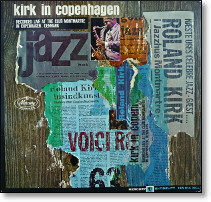
  • Roland Kirk: Kirk in Copenhagen (1963 [1964], Mercury): [r]: A-
  • Roland Kirk: I Talk With the Spirits (1964 [1965], Limelight): [r]: B+(*)
  • Roland Kirk: Left & Right (1968, Atlantic): [r]: B+(*)
  • Rahsaan Roland Kirk & the Vibration Society: Rahsaan Rahsaan (1970, Atlantic): [r]: B+(***)
  • Rahsaan Roland Kirk: Natural Black Inventions: Root Strata (1971, Atlantic): [r]: B+(**)
  • Rahsaan Roland Kirk: Blacknuss (1972, Atlantic): [r]: B+(***)
  • Zoot Sims: Hawthorne Nights (1977 [1994], Pablo/OJC): [r]: B+(*)
  • Zoot Sims: Suddenly It's Spring (1983 [1992], Pablo/OJC): [r]: B+(**)
  • Randy Weston: Solo, Duo, Trio (1954-56 [2900], Milestone): [r]: B+(*)
  • Randy Weston: Get Happy With the Randy Weston Trio (1955 [1995], Riverside/OJC): [r]: B+(**)
  • Randy Weston Trio + Cecil Payne: With These Hands . . . (19565 [1996], Riverside/OJC): [r]: B+(***)
  • Randy Weston Trio/Cecil Payne: Jazz A La Bohemia (1956 [1990], Riverside/OJC): [r]: B+(**)
  • Randy Weston: Little Niles (1958 [1959], United Artists): [r]: B+(***)
  • Randy Weston Trio + 4 Trombones: Destry Rides Again (1959, United Artists): [r]: B+(***)
  • Randy Weston: Destry Rides Again/Little Niles (1958-59 [2012], Fresh Sound): [r]: B+(***)
  • Randy Weston: African Cookbook (1964 [1972], Atlantic): [r]: B+(***)


Unpacking: Found in the mail last week:

  • Randy Brecker & Mats Holmquist: Together (Summit)
  • Stan Kenton Legacy Orchestra: Flyin' Through florida (Summit)
  • Al Muirhead's Canadian Quintet: Undertones (Chronograph)
  • Portland Jazz Composers Ensemble: From Maxville to Vanport (PJCE)
  • Scott Routenberg Trio: Supermoon (Summit)
  • Andrés Vial: Andrés Vial Plays Thelonious Monk: Sphereology Volume One (Chromatic Audio): September 28
  • Jay T. Vonada: United (Summit)

Ask a question, or send a comment.

Sunday, September 2, 2018


Weekend Roundup

Had a lazy, bewildering week, where I didn't get any work done on the server/websites, so I wound up with nothing better to do on Sunday than gather up another Weekend Roundup.


Some scattered links this week:

  • Julia Azari: Is Trump's Legitimacy at Risk? I generally don't care to get into these polling things, but while I've been feeling more pessimistic the last couple weeks about the public's ability to see through Trump's relentless torrent of scandal and outrage, it turns out that his approve/disapprove ratings have actually taken a sudden plunge: down to 40.3% approve, 54.5% disapprove. Similarly, the generic Congress split now favors the Democrats 48.8% to 39.4%. I don't have any real explanation for this. Maybe the attempts to use McCain's death to shame Trump are paying off? Maybe, with the first convictions of Manafort and Cohen's guilty plea, the Russia probe is finally drawing blood. I've long felt that there's a fair slice of the electorate that simply wishes public embarrassments to go away. In fact, I think most of those voters turned on Hillary Clinton, not so much because they thought she was guilty of anything as because they knew that if she was elected president, we'd wind up enduring years of feverishly hyped pseudo-scandal charges. It could also be how poorly Trump and his flacks are handling all the charges: they are acting pretty guilty of something, especially in their appeals to shut the investigation down. It's also possible that their inability to make progress with North Korea is costing them.

    For a quick reminder of what stinks in the Trump administration, see: Matthew Yglesias: Here's House Republicans' list of all the Trump scandals they're covering up.

  • Natasha Bertrand: Trump's Top Targets in the Russia Probe Are Experts in Organized Crime. Also by Bertrand: New York Prosecutors May Pose a Bigger Threat to Trump Than Mueller. Also notable: David A Graham: Why Trump Can't Understand the Cases Against Manafort and Cohen: "The president is used to operating in a business milieu where white-color crime is common and seldom prosecuted aggressively."

  • Jason Ditz: US Strategy in Syria: 'Create Quagmires Until We Get What We Want': Quotes a Trump official as saying, "right now, our job is to help create quagmires [for Russia and the Syrian regime] until we get what we want." This reminds me of something I've occasionally wondered about over the years: Could the US have negotiated an end to the Vietnam War where power was ceded over to the DRV but with amnesty so that no one who had sided with the US during the war would be jailed or discriminated against once power changes hands? Such an agreement could include an exile option, such that if the DRV really wanted to get rid of someone, or if someone really couldn't abide living on in the DRV, that person could go elsewhere. One might also have hoped to negotiate further rights guarantees, but amnesty with the exile option covers the worst-case scenarios without making much of an imposition on DRV sovereignty. As far as I know, the US never even broached this possibility. And it's possible the DRV wouldn't have agreed, or would have reneged after US forces left, but still it would have shown that the US felt some responsibility to the people it recruited to fight what ultimately proved to be a very selfish and egotistical war.

    One can ask the same thing about Syria, or Afghanistan for that matter. At this point, it looks like Assad will prevail, at least in reoccupying the last major holdout region, in Idlib. After that, it's not clear: Syria has been wrecked, millions have been driven into refugee camps and/or abroad, the economy has cratered, a lot of people have offended the regime, and the regime has long tended to harshly punish any sign of dissidence. Meanwhile, some level of guerrilla activity is likely to continue, especially if the foreign powers that have repeatedly funneled arms and fighters into Syria don't put a stop to it. This would, in short, seem to be a situation that sorely needs a negotiated end. And taking the restoration of the Assad regime as a given, the only other real consideration is the welfare of the Syrian people. Yet, here we have Trump's flack saying we don't want to soften the landing in any way: we want to keep forcing Syria and Russia into untenable situations ("quagmires") because we have blind faith that eventually Assad will collapse and we'll get out way. One obvious rejoinder here is that Libya's regime did collapse, and the US got nothing worthwhile out of the resulting chaos. Nor has Yemen panned out in our favor.

    Needless to say, if Kissinger and Nixon weren't smart enough to figure this out for Vietnam, I don't hold much hope Bolton and Trump. Of course, with Nixon and Kissinger, the problem wasn't brains -- they simply never cared about Vietnamese people, certainly way less than they cared for their cherished Cold War myths. Not that either can detest human welfare more than Bolton and Trump. For more on Idlib, see: Louisa Loveluck: A final Syrian showdown looms. Millions of lives are at risk. Here are the stakes. Also: Simon Tisdall: Russia softens up west for bloodbath it is planning in Syria's Idlib province.

  • Larry Elliott: Greece's bailout is finally at an end -- but has been a failure: Most obviously for Greece, which continues to be mired in a deep recession, but austerity has slowed recovery all across the Eurozone. E.g., see: Marina Prentoulis: Greece may still be Europe's sick patient, but the EU is at death's door.

  • James K Galbraith: Why do American CEOs get paid so much? In 1965, which is now remembered as some sort of golden age for the middle class, CEO pay averaged 20 times what median workers made -- a disparity which hardly qualifies as equality. Today the ratio is 312 to 1. Much of that comes in the form of stock, which nominally tracks future expected profit. With such incentives, CEOs focus on short-term gains, often by taking on risk, short-changing r&d, and squeezing employees.

  • Elizabeth Kolbert: A Summer of Megafires and Trump's Non-Rules on Climate Change: A Los Angeles Times headline: "Trump Tweets While California Burns." Trump's tweets included blaming the fires on "bad environmental laws," while he was busy trying to get rid of Clean Air Act rules that would limit pollution from coal-fired power plants.

    But perhaps what's most scary about this scorching summer is how little concerned Americans seem to be. . . . As a country, we remain committed to denial and delay, even as the world, in an ever more literal sense, goes up in flames.

  • Paul Krugman: For Whom the Economy Grows: As you probably know, the government works constantly to track GDP growth, which is why, for instance, we can officially identify, date and measure recessions. Chuck Schumer has introduced a bill to take the next step and figure out who pockets that growth. For instance, one oft-noted statistic was that during the first few years of recovery from the 2008-09 recession, no less than 97% of the economy's gains went to the top 1% of income recipients. Looking at that statistic, it's no wonder why most Americans scarcely noticed that there was any recovery at all. The same dynamic probably applies today. We hear, for instance, Trump bragging about how strong the economy is, but unless you own a lot of stock and have a high income, you probably haven't noticed any personal change.

  • Laura McGann: Obama's McCain eulogy would be banal under any other president: I thought it significant that Obama sent a written message to be read at Aretha Franklin's funeral, but showed up in person for McCain's. He's ever the politician, even though he never looked as happy on the job as he did watching Aretha perform a few years back. One might argue that he was a mere fan to Aretha, where the four years he and McCain overlapped in the Senate gave them a personal connection, perhaps even one that tempered their twelve years in political opposition. There's nothing wrong with treating political foes civilly, and it's often possible to respect people you disagree with (sometimes even profoundly). One might even claim that in death at last McCain brought forth some sort of centrist political miracle, bringing the opponents who defeated him in two presidential campaigns (GW Bush was the other one) and assorted other bigwigs of both political parties and the media empires that promote and lord over them. On the other hand, those paying tribute included Joe Biden, Joe Lieberman, Henry Kissinger, Lindsay Graham, Warren Beatty, Jay Leno, Michael Bloomberg, "and a plethora of current and former senators and cabinet secretaries from both parties." In other words, people who have much more in their common perch atop America's far-flung imperial war machine than they do with the overwhelming majority of Americans. So, of course Obama's remarks were banal. As much as anyone, he's fluent in the coded language these elites use to speak to one another, as well as the platitudes they lay on the public. All this would be completely unremarkable but for the one guy in American politics who broke the code and trashed the platitudes, and still somehow got elected to the office McCain could never win: President Donald Trump. The point of McGann's piece is that Obama's mundane address should be taken as a subtle critique of Trump, but to what point? There are many problems with Donald Trump, but his being impolitic isn't a very important one. I get the feeling that many Democrats think that by cozying up to the dead McCain they're scoring points against the nemesis Trump. They're not -- at least not with anyone they need to convince to resist Trump. Moreover, they're doing it on McCain's turf, on his terms, which is to say they're lining up with the most persistent war hawks of the last 50-60 years. (You do know who Kissinger is, don't you?) When Obama praises how much McCain loves his country, he's talking about a guy who never shied away from a possible war, who never regretted a war he supported, who never learned a single lesson about the costs of war. Back in Vietnam, the saying went: "in order to save the village, we had to destroy it." Since returning from Vietnam, McCain's adopted that irony as the pinnacle of patriotism. Of course, as a conservative Republican, he's found other ways to save villages by destroying them.

    If you're not sick of reading about McCain by now, here are some more links:

    • Susan B Glasser: John McCain's Funeral Was the Biggest Resistance Meeting Yet: She doesn't give us numbers to back up the "biggest" claim, but no church could hold the 500,000 to 1,000,000 people at the January 2017 Women's March on Washington right after the Trump inauguration. Maybe by "biggest" she's thinking quality over quantity? Her subhed: "Two ex-Presidents and one eloquent daughter teamed up to rebuke the pointedly uninvited Donald Trump." (The ex-presidents you know about, and more on the daughter below.) I understand that many people find Trump so repulsive that they will rejoice at any sign of rejecting him, but with McCain you don't get much -- is the disinvite of Trump anything more than a personal spat between two notoriously thin-skinned politicians? -- plus you're cuddling up to a lot of unsavory baggage. Nor has McCain really differed from Trump on much. FiveThirtyEight has a tool for tracking how often Senators vote with Trump, and McCain scores 83.0% and, factoring in Trump's margin in his state, that places him just above Ted Cruz and Joni Ernst. To paraphrase Trump himself, I prefer resistance heroes who don't get captured by the enemy. PS: More names of those on hand -- remember, this was invitation-only: John Boehner, David Petraeus, Leon Panetta, Al Gore, Madeleine Albright, Paul Ryan, John Bolton, John Kelly, Jared Kushner, Ivanka Trump, Hillary Clinton. OK, to not muddy the effect, I left out Elizabeth Warren -- aside from the obvious disconnects, I'm pretty sure she's the only one to come from a working-class family. I'm not saying that she shouldn't have attended. Just that no one should mistake this crowd for one of her rallies. PPS: OK, here's the "gag me" line:

      Heads nodded. Democratic heads and Republican ones alike. For a moment, at least, they still lived in the America where Obama and Bush and Bill Clinton and Dick Cheney could all sit in the same pew, in the same church, and sing the same words to the patriotic hymns that made them all teary-eyed at the same time. When the two Presidents were done speaking, "The Battle Hymn of the Republic" blared out. This time, once again, the battle is within America. The country's leadership, the flawed, all too human men and women who have run the place, successfully or not, for the past few decades, were all in the same room, at least for a few hours on a Saturday morning.

    • Andrew Prokop: Meghan McCain's eulogy: "The America of John McCain has no need to be made great again": Leave it to the daughter (and conservative media icon) to co-opt Hillary Clinton's slogan, as plain a case of "Emperor's New Clothes" rhetoric as has ever been foisted on the American public, but of course this is just the crowd to lap it up. The following paragraph is even stirring, at least until your final "what the fuck"?

      The America of John McCain is the America of Abraham Lincoln: fulfilling the promise of the Declaration of Independence that all men are created equal and suffering greatly to see it through. The America of John McCain is the America of the boys who rushed the colors in every war across three centuries, knowing that in them is the life of the republic. And particularly those by their daring, as Ronald Reagan said, gave up their chance at being husbands and fathers and grandfathers and gave up their chance to be revered old men. The America of John McCain is, yes, the America of Vietnam, fighting the fight even in the most forlorn cause, even in the most grim circumstances, even in the most distant and hostile corner of the world, standing even defeat for the life and liberty of other people in other lands.

    • Matthew Yglesias: The fight over renaming the Russell Senate Office Building after John McCain, explained: I thought this was a terrible idea. Then I remembered who Richard Russell was, so I wouldn't mind tearing down his name. Still, one could do a lot better than McCain. At the head of the list, I'd put the two senators who voted against the Tonkin Gulf resolution that authorized LBJ to escalate the Vietnam War: Ernest Gruening and Wayne Morse. I'd pick Morse: he served longer, straddled both parties (initially elected as a progressive Republican before becoming a Democrat), and he held (or for all I know may still hold) the record for the longest filibuster speech -- a very Senator-y thing to do.

    • Laura McGann: John McCain, Sarah Palin, and the rise of reality TV politics: Yeah, not his brightest hour picking Palin to be his running mate, hailing that as "a team of mavericks." But being McCain, he's never had to apologize for anything, but he always has an excuse for everything: "After being diagnosed with cancer, McCain still defended Palin's performance but said he regretted not picking [Joe] Lieberman as his running mate."

    • Matt Taibbi: Why Did John McCain Continue to Support War? More on Vietnam, but also Kosovo, Afghanistan, Iraq, Libya, Syria -- hey, what about the one that got away, Georgia? McCain's constant lust for war, as well as his blindness to the consequences of those wars, has been a constant in our political lives since he first campaigned for the House. Indeed, he was probably recruited for just that purpose. But Taibbi is right that McCain didn't cause the wars he promoted. Rather, America has a problem (dating back to WWII) in thinking that military force is the answer to all our problems in the world. It is that mindset that keeps the warmakers in business. And that's why we should feel shame and horror when people we look to for peace honor someone like McCain.

    • Rebecca Solnit: John McCain was complex. His legacy warrants critical discussion: I can't really agree, although she makes valid points on Jefferson and Lincoln, and indeed most people are complex. Still, McCain's always struck me as a shallow opportunist. I even think his militarism was just a role he was born into, and plays just because it's easy and expected.

    • Doreen St. Félix: Aretha Franklin's Funeral Fashion Showed Us How to Mourn.

  • Richard Silverstein: Trump to Defund UNWRA to Eliminate Palestinian Refugee Status, Right of Return: This is supposed to be the stick after Jared Kushner's "deal of the century went splat. The idea seems to be that without UN recognition and US aid five million Palestinians will give up their refugee status and stop pestering Israel about their so-called Right of Return. The effect is that Palestinian leaders will stop kowtowing to insincere and unprincipled American advice, rightly seeing the US as a puppet of Israel, extraneous to any possible peace process. Good chance US support in Europe will further diminish, although there could be lots of reasons for that.

  • Emily Stewart: A grand jury will investigate whether Kris Kobach intentionally botched voter registration in 2016: Normally, intent is harder to prove than actually doing something, but in Kobach's case, intent is pretty much his campaign platform. Kobach won the Republican nomination for governor of Kansas after an extremely close race, and the poll mentioned here has Kobach leading Democrat Laura Kelly 39-38, with "independent" Greg Orman at 9. Much debate in these parts about who Orman will spoil the election for.

  • Emily Stewart: Trump's supposedly spending Labor Day weekend "studying" federal worker pay after freezing it. Not that lip service has ever been worth much, but over the last decade Republicans have lost any sort of decency regarding organized labor or for that matter all working Americans. Cancelling a schedule 2.1% that has already been eaten up by inflation is petty and vindictive, especially after his $1.5 trillion tax cut for businesses and the super-wealthy. Also see: Paul Krugman: Giving Government Workers the Shaft. Also: Robert L Borosage: Donald Trump Has Betrayed American Workers -- Again and Again.

  • Matt Taibbi: The Cuomo-Nixon Debate Was a Preview of Democrat-DSA Battles to Come: "Democrat Sith Lord Gov. Andrew Cuomo slimed his way past the corporate money issue and attacked Cynthia Nixon's celebrity."

  • Matthew Yglesias: Trump's continued indolent response to Hurricane Maria is our worst fears about him come true:

    Speaking to reporters briefly at the White House, Donald Trump repeated the most consequential of the many lies of his presidency -- that the federal government did a "fantastic job" in its response to last year's Hurricane Maria catastrophe that killed nearly 3,000 people in Puerto Rico.

    That's a line that Trump has maintained ever since he made a belated visit to the island after two straight weekends golfing, followed by the observation that "it's been incredible the results that we've had with respect to loss of life."

    In fact, the results they had with respect to the loss of life were awful. Awful in terms of the sheer number of dead, but also awful in terms of the reluctance from the very beginning to deliver an accurate death count. That the disaster turned out to be deadlier even than Hurricane Katrina is shocking, and the fact that it took the government until this week to finally acknowledge that fact is an entirely separate shock.

    More on Trump's incompetence, including his instinct to turn "everything into a culture war." For more on Puerto Rico itself, see: Alexia Fernández Campbell: Puerto Rico is asking for statehood. Congress should listen.

  • Matthew Yglesias: The big idea that could make democratic socialism a reality: I haven't had time to digest this, but it's called the American Solidarity Fund, which would invest government funds and pay out returns to all Americans.

Ask a question, or send a comment.

Thursday, August 30, 2018


Streamnotes (August 2018)

As I noted in last week's Music Week, the largest Streamnotes column ever was posted November 8, 2009, with 206 records, which at 188 I didn't come close to matching this month. On the other hand, the record covered a period of 41 days. Recently I've kept to a monthly schedule (occasionally with two posts in a month, as in Jan. 2016, Dec. 2014, Sept. 2014, Jan. 2014, Jan. 2011 -- that is, mostly during the EOY crunch. Within those single-month posts, my previous record was 185 (Nov. 2013), followed by 179 (Sept. 2015), so I barely topped that.

The big difference this month has been a lot of old records, many of them long-time residents of my "unrated" list (albums I own but never graded). Back around 2002, before I started reviewing records (and much before I stopped buying them) that list was up over 900, with most of them stashed away where I wouldn't be likely to stumble across them. Of course, that's still the case, but I've found a bunch of them from streaming, and that's good enough for my present purposes. The list is down to 275 now. I'd like to knock it down under 200, but doubt I can do that just by streaming. At some point I need to start digging up things, but then I've needed to houseclean for a long time now.

Made a last-minute stab at much-hyped pop records released in August. There were more of them than I expected, but I wasn't much impressed by any of them (OK, except Robbie Fulks/Linda Gail Lewis). The one I felt had the most potential was Blood Orange, but three plays weren't enough. Did quite a bit to add non-jazz to the Music Tracking File, mostly looking through AOTY lists. I'm currently listing 1497 records there (I've rated 566 of those). Unfortunately, AOTY has only noticed about 10-20 jazz records this year, so they're no help in that regard. I haven't found a good way to track new jazz releases yet. In the past I've used the review scrolls at All About Jazz and Free Jazz Collective, but they've proven really tedious. so I've yet to do that this year.

Assuming we're 7 (not 8) months into the year, I'm on track to review 970 records, and find 113 A/A- new releases. That compares with, as of freeze-time last year, 1135 records (-14.5%) and 139 A/A- new releases (-18.7%). It's tempting to attribute that to slowing down (and possibly getting crankier) with age, especially given all the bad things that have happened this year, but chances are I'm in some similar slump every year at this time, only to pick up the pace once EOY lists start rolling in. Of course, that depends on things not getting even worse. I am at least thankful this summer is coming to a close.

Now what?


Most of these are short notes/reviews based on streaming records from Napster (formerly Rhapsody; other sources are noted in brackets). They are snap judgments, usually based on one or two plays, accumulated since my last post along these lines, back on July 31. Past reviews and more information are available here (11657 records).


Recent Releases

Stefan Aeby Trio: The London Concert (2017 [2018], Intakt): Swiss pianist, trio with André Pousaz on bass and Michi Stulz on drums. Original compositions (one by Pousaz), has a deft touch which keeps everything at a moderate distance, encouraging contemplation. B+(***) [cd]

Aguankó: Pattern Recognition (2018, Aguankó): Latin jazz band from Detroit, led by percussionist Alberto Nacif, "steeped in the tradition of jazz infused Son-Salsa." Seems like the real deal, just cruising right past me. B+(**) [cd]

American Aquarium: Things Change (2018, New West): Alt-country band from Raleigh, NC, led by BJ Barham -- had a solo album I liked in 2016, Rockingham, but this has been his main vehicle since 2006. I'm not following the songs about drinking (or not drinking), but "The World Is On Fire" could be a new national anthem: "when did the land of the free become the home of the afraid?" is only one of many insights. B+(***)

Dave Anderson: Melting Pot (2018, Label1): Saxophonist (soprano, alto), a Minnesota native, moved to Toronto then New York. Spices his 3-part "Immigrant Suite" with sitar, tabla, flute, and extra percussion (Roberto Quintero). Breezy, relatively short (33:32). B+(*) [cd]

Simon Barker/Henry Kaiser/Bill Laswell/Rudresh Mahanthappa: Mudang Rock (2017 [2018], Fractal Music): Drummer, from Australia, seems to have his hands in a lot of projects, networking here with the guitarist (globe-trotter), bassist (studio denizen), and alto saxophonist (Indian parents, born in Europe, raised in the US, covers all the bases). Music "inspired by the Korean shamanic tradition," fused all sorts of ways. B+(***) [cd]

Nat Birchall Meets Al Breadwinner: Sounds Almighty (2018, Tradition Disc): British tenor saxophonist, usually hews pretty closely to Coltrane, goes Jamaican in Manchester, with Breadwinner playing drums, guitars, and keyboards, and Vin Gordon on trombone. Birchall claims the writing credits (one co- for each of his guests), but they're pretty generic, with "dub" in 4 titles, "skank" in another. Of course, I love the riddim and the dub echo. Just a bit disappointed that the sax blends in so strictly. B+(**) [bc]

Blood Orange: Negro Swan (2018, Domino): Dev Hynes, fourth album as Blood Orange (two earlier ones as Lightspeed Champion). Genre classifiers are very cofused here (folk? baroque pop?), but this has spots where the artist seems confused too. Vocals clear as soul, but rhythms sketchy, experimental, sometimes lost in the ether. B+(**)

Steve Coleman and Five Elements: Live at the Village Vanguard, Vol. I (The Embedded Sets) (2017 [2018], Pi, 2CD): Live double, two full sets. For rock groups this sort of thing is usually slotted after the group has done considerable touring, building up a market for a retrospective, and often also because the new material is slowing down. The alto saxophonist's group is pretty much at that point: the band is solid and cohesive through a number of albums. Indeed, this sums them up nicely. B+(***) [cd]

Rodney Crowell: Acoustic Classics (2018, RC1): Old songs (mostly, "Tennessee Wedding" is new, and some others have been reworked), the acoustic treatment not primitivist (no pedal steel, but lots of fiddle). B+(*)

Tim Daisy: Configurations (2018, Relay): Avant Chicago drummer, first noticed when he broke into the Vandermark 5, a very busy guy ever since. Solo percussion, recorded live sans overdubs, mallet instruments like marimba and bass xylophone loom large, and that helps. B+(**) [bc]

Dennis Llewellyn Day: Bossa, Blues and Ballads (2018, DDay Media Group): Jazz singer, writes some (like the lyrics here to "Zawinul & Cannonball Blues"), has a handful of albums since 1999 (some as Dennis Day). Nice mix here, with the "bossa" earning its top billing. Couple dozen musicians, only Ray Blue (tenor sax) on more than four cuts (6), best known pianist Harold Mabern (piano, 4). B+(*) [cd]

Jason Eady: I Travel On (2018, Old Guitar): Country singer-songwriter from Mississippi, based in Texas, eighth album since 2005, only two barely grazing the US Country chart (40, 45). Still, very solid songwriting, sound more trad than neotrad, has a voice too. B+(***)

Robbie Fulks/Linda Gail Lewis: Wild! Wild! Wild! (2018, Bloodshot): Jerry Lee's sister is 12 years his junior, 15 years older than Fulks. She cut two albums in 1969 (one with Jerry Lee), then nothing until 1990, when she found a rockabilly market in Europe. She's been touring hard ever since, with 20+ albums up through 2015's Hard Rockin' Woman. She met Fulks in Sweden through a common publicist, and one thing led to another. I'm not finding any credits: are these old songs, or do they just sound that way? is that Linda on the piano? Either way, great fun. And while I'm a sucker for rockabilly, the change-of-pace pieces work just as well. A-

Ariana Grande: Sweetener (2018, Republic): Pop star, fourth album, leans heavily on Pharrell Williams for tunes, features spots by Missy Elliott and Nicki Minaj. Probably explains why here and there I thought she might be onto something, but by the end I no longer cared to figure out what. Sure, "God Is a Woman." But "Get Well Soon" doesn't. B

Darrell Katz and the JCA Orchestra: Rats Live on No Evil Star (2016-17 [2018], JCA): Composer, arranger, bandleader, plays guitar on one cut here. Originally from Kansas, moved to Boston in 1975, teaches at Berklee, founded the Jazz Composers Alliance Orchestra in 1985, a big band with occasional extras, has a dozen albums, mostly with them. Always struck me as hit and miss, but this has some rousing music and one of the year's best political songs, "Red Dog Blues," with Allizon Lissance singing. B+(***) [cd]

Gayle Kolb: Getting Sentimental (2018, JeruJazz): Standards singer, from Chicago, first album, age not given but she lived in Los Angeles in the early 1970s and returned to Chicago in 1974. Voice has some personality, and the band adores her. I have mixed feelings about "Wichita Lineman," but songs like "Second Time Around" suit her perfectly. B+(**) [cd]

Mahobin: Live at Big Apple in Kobe (2018, Libra): Another entry in pianist Satoko Fujii's 60th birthday celebration: a two-horn quartet, with Natsuki Tamura on trumpet and Lotte Anker on sax, but the music is primarily formed by the glum landscape of Ikue Mori's electronics. B+(**) [cd]

Debra Mann: Full Circle: The Music of Joni Mitchell (2018, Whaling City Sound): Jazz singer, pianist, Berklee graduate, based in Rhode Island, three previous albums, writes some, cites Jobim and Frishberg as favorites, and here dedicates a whole album to folksinger-turned-jazzbo Mitchell, covering two of her Mingus lyrics and ten other songs, closing with a "Woodstock" I found improbably touching. Dino Govoni's sax a plus. B+(**) [cd]

Brian McCarthy: Codex (2017 [2018], self-released): Saxophonist (alto/soprano), postbop quartet with Justin Kauflin on piano, plus bass and drums. Four covers, including pieces by Joe Henderson and Clark Terry. B+(**) [cd]

Lonnie McFadden: Live at the Green Lady Lounge (2018, Jazz Daddy): Trumpet player, song and dance man (website says "entertainer") from Kansas City, one previous album, backed by piano trio, opens with "Moten Swing" and closes with his own "Swing Like Count Basie," with a tap number for an encore. Tells stories about rehearsing "In the Basement" and performing "What a Wonderful World" on a USO tour in decidedly unwonderful Baghdad. Claims to like James Brown and "modern jazz," but you know what's in his DNA. B+(***) [cd]

The Mekons 77: It Is Twice Blessed (2018, Slow Things): Reunion of the band's original 1977 lineup, with for-the-duration members Jon Langford and Tom Greenhalgh, plus four others (Kevin Lycett, Mark White, Andy Corrigan, Ros Allen) -- not sure when they left, probably not far into the 1980s. Closer to their punk roots, a time when they weren't yet the great country-ish band they became in the mid-1980s, but their vintage post-punk sound hits the spot today, as does their heartfelt politics. A-

Methodist Hospital: Giants (2017, self-released): Rock band from Chicago (with cross-references to PA and FL), first album, 9 tracks, 33 minutes, no idea how to slot it -- website suggests something evolved from pop punk and sludge metal, but that isn't very helpful. First third very impressive, then holds solid. B+(***)

Parker Millsap: Other Arrangements (2018, Okrahoma): Singer-songwriter from Oklahoma, niche market Americana, rocks out of the gate but gets a bit sketchy toward the end. B+(*)

Nicki Minaj: Queen (2018, Young Money/Cash Money): Fourth album (counting both Pink Friday twice), four years since her third, and she's converted her flamboyance and outrage into some sort of corporate brand, the rhythms mechanical, the rappers hired guns, herself somewhere in the mix -- I suppose a video might clear that up. Still enjoy nearly everything here, but having trouble remembering any of it. B+(***)

Nicole Mitchell: Maroon Cloud (2017 [2018], FPE): Flute player, from Chicago, part of a new generation of AACM activists, backed here by piano (Aruan Ortiz) and cello (Tomeka Reid), and joined by vocalist Fay Victor. Took me a while to recognize the singer: I still dislike the dark operatic opening, but by the time she gets to "No One Can Stop Us" she's fully in charge. B+(***) [cd]

Mitski: Be the Cowboy (2018, Dead Oceans): Last name Miyawaki, born in Japan, father American, raised in 13 countries before settling in New York. Fifth album (counting two digital-only school projects). Big sound, more rock than pop, a few good lines and fair melodies but I'm neither impressed nor pleased. I can't begin to tell you why this has gotten such rave reviews. B

Chris Monson: Seldom in the Well (2018, self-released): Canadian Guitarist (Toronto, I think), first album, sextet with trumpet (Kevin Turcotte), tenor sax (Kelly Jefferson), piano, bass, and drums. "a meditative, explosive exploration of progressive and jazz traditions": all dumped into the postbop blender. B [cd]

The Necks: The Body (2018, Northern Spy): Australian piano trio -- Chris Abrahams (piano), Lloyd Swanton (bass), Tony Buck (drums) -- formed in 1985, first album in 1989, twenty-some since. Can go electric with Buck playing guitar, as happens here when they kick it up a notch 25 minutes into the single 56:40 piece. They dial it back a bit 20 minutes later. B+(**)

Tami Neilson: Sassafrass! (2018, Outside Music): Country singer, born in Canada, moved to New Zealand in 2007, sixth album since then, a favorite of the country music-loving detective in The Brokenwood Mysteries. Mostly rockabilly first time I heard her (Dynamite!, but aims for soul ballads here, and her voice doesn't let her down. B+(**)

Peter Nelson: Ash, Dust, and the Chalkboard Cinema (2018, Outside In Music): Trombone player, from Michigan, based in New York, first album (after an EP in late 2017), postbop, seems over-eager to showcase more variety than he needs, including some voice. I do like the trombone. B+(**) [cd]

Dan Phillips/Hamid Drake: Trail of Inevitability (2017 [2018], Lizard Breath): Guitar-drums duo, based in Chicago, Phillips had a good record last year leading Chicago Edge Ensemble. Seems to have some trouble getting on track, but impressive when they do. B+(***)

Dan Phillips Trio: Divergent Flow (2017 [2018], Lizard Breath): Guitarist, backed by Krzysztof Pabian (double bass) and Tim Daisy (drums). B+(**)

Dan Phillips Quartet: Converging Tributaries (2017, Lizard Breath): Guitarist, his current Chicago trio -- Krzysztof Pabian on bass and Tim Daisy on drums (he also has a group based in Bangkok) -- plus Jeb Bishop on trombone. Whereas his trio albums feature his frenzied riffing, the trombone takes center stage, adding weight and drive, and letting the guitar fill in around the edges. Not that Phillips doesn't get moments to shine, but they tend to be quieter, contrasting his sweet tone against the deeper growl. A- [bc]

John Pittman: Kinship (2018, Slammin' Media): Trumpet player, seems to have come out of Manitoba, winding up in Toronto. First album, also plays in the Heavyweights Brass Band. Standard hard bop quintet, Shirantha Beddage on sax, but tends to soften toward the end. B+(*) [cd]

Serpentwithfeet: Soil (2018, Secretly Canadian): Josiah Wise, from Baltimore, now based in Brooklyn, r&b singer, first album after an EP. Long on ululation, flow gets tripped up. B

Amanda Shires: To the Sunset (2018, Silver Knife): Singer-songwriter from Lubbock, sixth album (or eighth counting duets with Rod Picott and Jason Isbell -- she married the latter), appeared on a bunch of albums I like (including Todd Snider and John Prine). Filed her last album under country but this one rocks pretty hard, only rarely allowing her country voice to peek through. Still don't care for the opener, which suffers from prog glitz not unlike the hideous album cover, or the gruesome closer. B+(***)

Sarah Shook & the Disarmers: On Audiotree Live (2018, Audiotree, EP): Alt-country singer/band, two pretty fair LPs, five cuts, 16:26. B+(*)

Günter Baby Sommer: Baby's Party [Guest: Till Brönner] (2017 [2018], Intakt): Swiss drummer. Small party, just a duo with the guest on trumpet and flugelhorn. Unclear on the credits, which include bits of "Danny Boy" and "In a Sentimental Mood." The piece called "Third Shot" I recognize as Ani Di Franco's "Which Side Are You On?" although it may not have started there. B+(***) [cd]

Stéphane Spira: New Playground (2017 [2018], Jazzmax): French saxophonist, plays soprano here, handful of albums including a Round About Jobim, leads a quartet here with piano/keyboard (Joshua Richman), bass (Steve Wood), and drums (Jimmy MacBride), all originals (one by Wood), recorded in NYC. Postbop, upbeat, lots of spark and dazzle. B+(***) [cd]

Steve Tibbetts: Life Of (2018, ECM): Guitarist, some piano, backed by cello (Michelle Kinney) and percussion (Marc Anderson), although neither has much impact here, all very peaceful. Ten titles fit the "Life of X" ("Life of Emily," "Someone," "Lowell," "Dot," etc.). B+(*)

The Tiki Collective: Muse (2018, Vesuvius Music/Slammin' Media): Large group, guitarist Eric St-Laurent listed first, with horns, strings, keyboards, flute, vibes, electric sitar, and a revolving cast of guest singers who all sound pretty much the same. Nice "Mood Indigo." Surprise standard "(Don't Fear) The Reaper." "Quizas Quizas Quizas" perked up my ears, but I kept expecting it to turn into "Fernando." B- [cd]

Miguel Zenón: Yo Soy La Tradición (2017 [2018], Miel Music): Alto saxophonist, from Puerto Rico, based in New York, won a MacArthur fellowship a few years back. Has lately been leaning toward strings, and goes the whole way here, his sax coloring on top of a conventional string quartet ("featuring Spektral Quartet"). I have mixed feelings. I've never been much for strings, and they're clearly the point here. Still, rather lovely as these things go. B+(***) [cd]

Recent Reissues, Compilations, Vault Discoveries

Don Drummond: Don Cosmic (1960-65 [2017], Studio One): Jamaican trombonist, played for Studio One including the Skatalites, with dozens of singles under his own name. His career ended in 1965 when he was convicted of killing his girlfriend, and was imprisoned until his death in 1969. All instrumentals, groove pieces, trombone leading like it belongs there. B+(***)

The Gladiators: Symbol of Reality (1982 [2018], Omnivore): Moving out of Studio One, this album originally released on Nighthawk with the Itals backing Albert Griffiths, pinning him into a deeper rasta-roots groove, the reissue packed with extra dub versions. Dub is something I always enjoy but am rarely impressed by, so it kind of blurs things when it takes over here. B+(**)

Tommy McCook & the Agrovators: Super Star/Disco Rockers (1977 [2018], Pressure Sounds): Saxophonist (1927-98), born in Havanna but moved to Jamaica at six, spending a few years in Miami before he joined the Skatalites and did a vast amount of session work for Studio One. Insrumental group, riddim classic, his horn an effective lead. B+(**) [bc]

Alexander von Schlippenbach/Aki Takase: Live at Café Amores (1995 [2018], NoBusiness): Two pianists, German and Japanese, each famous before they got married. Pieces include medleys of Mingus and Monk as well as their own tunes. Remarkable throughout. A- [cd]

Old Music

Ad the Voice: Maxi-Single (2007, Statik Entertainment, EP): Antonio Delgado, running for political office this year (Democrat in NY-19) but more than a decade ago recorded this rap album: ten cuts, 38:10, but four are versions of "U Scared" and two others appear twice, so only five distinct songs. I've seen a reference to a 2006 album, but this is the only one I've found. His Republican opponent thinks he'll have a field day pointing at Delgado's lyrics. I'm not fast enough to transcribe "Venom," but I'd sure vote for him. A-

Arthur Alexander: Rainbow Road: The Warner Bros. Recordings (1972 [1994], Warner Archives): Country-soul singer from Sheffield, Alabama. Cut three albums: one for Dot in 1962, a second for Warners in 1972, and a third for Elektra Nonesuch just before he died in 1993. Compilation drops one song from the album, adds a few singles, moving the better songs to the fore, and ending on an unfortunate gospel note. B+(*)

Lillian Allen: Revolutionary Tea Party (1986, Redwood): Dub poet, born in Jamaica but moved to New York at 18 and on to Toronto. Smart politics, fierce and feisty. A-

Amy Allison: No Frills Friend (2003, Diesel Only): Singer-songwriter, daughter of Mose Allison, grew up listening to country music, drawn to the sad songs. She recorded this third album in Scotland, and picks up a wee touch of their brogue -- gloom too. Sample lyric: "I'm dreaming of the way things ought to be . . . Someone wake me up and make me face reality. Dreaming's killing me." A-

Amy Allison: Everything and Nothing Too (2006, Cheater's World): Perfectly fine album. If sound was everything, might be her best. Still, if it were, I ought to be able to write more about it after three plays, don't you think? B+(***)

Amy Allison: Sheffield Streets (2009, Urban Myth): Fifth album over 13 years, with nothing since. She always identified with country music, but she's rarely crafted songs as perfectly country as "I Wrote a Song About You." A-

Bob Andy: Retrospective (1970-75 [1986], Heartbeat): Keith Anderson, co-founded the Paragons but left early, recording singles for Studio One and writing songs for other rocksteady artists. Discogs credits him with 98 singles, most 1967-89, but this doesn't offer a very broad sample: seven cuts from his 1975 album The Music Inside Me, four songs I can't date but seem to be earlier. B

Antietam: Victory Park (2004, Carrot Top): Indie rock band from Louisville, principally marrieds Tara Key and Tim Harris, released an eponymous album in 1985, eight more through 2011, plus two Key solo albums and one as Babylon Dance Band in 1994-95. After that burst, there was a nine-year drought until this one came out. B

Amédé Ardoin: The Roots of Zydeco: I'm Never Comin' Back (1930-34 [1995], Arhoolie): One of the first major cajun musicians to record, born 1898 in Evangeline Parrish, LA, only spoke French, played accordion, his vocals high and lonesome, both sound utterly classic. Died in 1942. This seems to be most of his output. Not to be confused with his cousin, Alphonse "Bois Sec" Ardoin, another major figure. A-

Steve Arrington: Dancin' in the Key of Life (1985, Atlantic): Soul/funk singer, started as a percussionist in Slave before moving up, then out, recording two albums as Steve Arrington's Hall of Fame before this solo debut. B+(***)

Backstreet Boys: Backstreet Boys (1996 [1997], Jive): Boy band from Florida, first US release after the same title was used in Europe and elsewhere to build their brand/market. More ballads than not, a pale take on a soul group but that works in this demographic, as does the pop glitz of the upbeat tracks. B+(**)

Bad Luck: Four (2016 [2018], Origin): Seattle-based duo: saxophonist Neil Welch and drummer Chris Icasiano. Fourth album since 2009, one I filed under the drummer (although I no longer see why: Welch has 6-7 records under his own name, vs. 0 for Icasiano, although his was the name I recognized). Rockish riffs and rhythms, avant edge, nice fusion concept. B+(***)

Big Sandy and His Fly-Rite Boys: Swingin' West (1995, Hightone): Western swing revival band, formed in California c. 1990, with 13 albums through 2013, this their fourth. B+(*)

Black Light Burns: Cruel Melody (2007, I Am Wolfpack): Debut album from the band Wes Borland formed after leaving rap/metal band Limp Bizkit (Fred Durst was the singer there, and the band kept on without Borland.) Light industrial, some songs like the opening "Mesopotamia" downright catchy. B+(*)

Black Uhuru: The Best of Black Uhuru [20th Century Masters: The Millennium Collection] (1979-84 [2004], Island): The great reggae group of the 1980s, with three singers -- Michael Rose, Puma Jones, and Duckie Simpson -- powered by Sly & Robbie, through five good-to-great studio albums, discounting their live sets and dub remixes. I didn't bother with this when it came out because I had the albums and 1993's dub-rich 2CD Liberation: The Island Anthology, and somehow missed it when I did a Recycled Goods trawl through the budget series. This is a one-stop bargain, relatively generous at 11 cuts, 50:43, but overall I still prefer Anthem and Red. A-

Black Uhuru: Guess Who's Coming to Dinner (1979-80 [1981], Taxi): Six of these seven tracks were originally released on Taxi (Sly & Robbie's label) in Jamaica in 1979 as Showcase, and "Shine Eye Gal" added in 1980. What happened to the record after that is confusing, with eponymous albums issued in Europe, and this title appearing belatedly in the US on Heartbeat in 1987, or maybe Virgin in 1983. Somewhat minimalist sound, clearly rooted in dub but doesn't have the finishing touches yet -- probably a plus. B+(***)

Black Uhuru: Brutal (1986, RAS): Junior Reid joins the group; Puma Jones still in but seems on the way out. Less political, closer to dancehall. B+(**)

Black Uhuru: Brutal Dub (1986, RAS): By this point, they had gotten into the habit of releasing dub version of each new album. Pretty much their stock set of effects. B

Black Uhuru: Now (1990, Mesa): Michael Rose left after Anthem, and Puma Jones split after one more album, leaving the group (brand name) to Duckie Simpson, joined here by Don Carlos and Garth Dennis, for the first of four albums through 1994. B+(**)

Blood Orange: Cupid Deluxe (2013, Domino): Second album, the one I missed (although I'm surprised; cover is certainly familiar). Plays it close, but less fractured than the new one, in some cases clear enough for pop, but somehow beyond all that. B+(***)

Cachao Y Su Combo: Descargas Cubanas (1957 [1994], Panart): Cuban bassist Israel López, regarded as "co-creator of the mambo and a master of the descarga (improvised jam sessions)." These appear to be his first sessions as leader, a dozen pieces mostly named for a featured instrument. The horns are impressive, the voices a little harsh, but the real star is the percussion. A-

Chic: Chic (1977, Atlantic): First album, Napster now lists them as "classic disco," with the girls on the cover and the guys -- Nile Rodgers and Bernard Edwards -- in the grooves. I didn't catch on until their third album, but have probably heard most of this on their two volume Rhino best-ofs. Even retrospectively, the hit barely has a gimmick, the strings are cliché, and the voices are thin. B

Chic: C'est Chic (1978, Atlantic): They're learning to trust their bass/guitar lines, and with "Le Freak" even the singers perk up. Nothing else jumps out like that, but "I Want Your Love" is a worthy second single. They're getting somewhere. B+(**)

Chic: Les Plus Grand Succès de Chic (Chic's Greatest Hits) (1977-79 [1979], Atlantic): Seems a little soon to cash in with a "best of" after a mere three albums, especially with the third, Risqué filling up a whole LP side (and in the US release, not reprising the actual hit). On the other hand, not exactly the same thing, with two songs in 8+ minute dance versions, others in shorter radio edits. B+(***)

Chic: Real People (1980, Atlantic): Most songs are just tasty funk lines tagged with a slogan that gets repeated endlessly, with scant regard for making sense; e.g.: "26 / My baby's a 26 / On a scale of 1 to 10 she's a 26." Sure, it doesn't add up, until it does. A-

Count Ossie and the Mystic Revelation of Rastafari: Grounation (1973 [2016], Dub Store, 2CD): Tokyo record store, trying their hand at the reissue business, starting with this Jamaican drummer, a founding figure in a primitivist rastafarian strain called nyabinghi -- I tend to think of it as campfire music, so far out in the sticks you can't imagine it in a studio. Pretty scattered, although the 15:08 title track and its 15:05 "Continued" are remarkable. B+(***) [bc]

The Mystic Revelation of Rastafari: The Roots of Reggae (1973 [2001], Recording Arts, 2CD): Same sessions, had this sitting on my shelf for ages, the plus a booklet that turns out not to be all that useful. B+(***) [cd]

Dälek: From Filthy Tongue of Gods and Griots (2002, Ipecac): Hip-hop trio from New Jersey -- rapper is MC Dälek (Will Brooks), others listed as Oktopus (producer) and Still (turntables), with additional personnel including DJ Rek. Key concept is to muscle hip-hop up with layered noise, drawing on precursors like My Bloody Valentine and Einstürzende Neubauten, and this works best when they do just that. B+(**)

Delaney & Bonnie and Friends: D&B Together (1971 [1972], Columbia): Delaney Bramlett was a session musician in LA in the mid-1960s, playing in the house band for Shindig!, a TV rock showcase. He married singer Bonnie O'Farrell, formed a bluesy duo, and started recording and touring with various friends -- Leon Russell, Eric Clapton, Duane and Gregg Allman (Wikipedia also lists Gram Parsons, Dave Mason, and George Harrison; Carl Radle and Jim Gordon were everywhere). They produced a couple of great albums, but their business always was a mess, and they were headed for breakup and divorce in 1973. This was their last album, originally released on Atco as Country Life. A couple songs here that resurface on their compilations, but with the "friends" numbering close to forty, this gets pretty hot and bothered. [Guitarists: Eric Clapton, Duane Allman, Dave Mason, Steve Cropper, plus John Hartford on banjo and Red Rhodes on steel; King Curtis is one of three saxophonists; Tina Turner and Rita Coolidge are among the dozens of extra vocalists.] B+(**)

DJ Muggs: Muggs Presents: The Soul Assassins, Chapter 1 (1997, Columbia): The beatmaster from Cypress Hill rounds up various artists ranging from coast to coast (from Dr. Dre to RZA/GZA, anyhow), with three Mob/Mobbs in between. Catchiest for me is Wyclef's "John 3:16," but it all flows neatly together. B+(***)

Anna Domino: East and West (1984, Les Disques du Crépuscle, EP): Singer-songwriter, an army brat born in Tokyo, grew up in Ann Arbor, Firenze, and Toronto before winding up in New York and getting signed to a Belgian label. Five-cut debut, 22:55. Hard to peg. Christgau tried "hypnotic with no cosmic aspirations." B+(***)

Anna Domino: East and West + Singles (1984 [2017], Les Disques du Crépuscle): CD reissue adds three increasingly catchy singles and a demo, getting us to a respectable 38:19. A-

Anna Domino: Anna Domino (1986, Les Disques du Crépuscle): First full album, ten cuts (more on later reissues), leans a bit more on dance beats but that doesn't seem to be the point. Not sure what is. B+(**)

Anna Domino: This Time (1987, Les Disques du Crépuscle): The last album I noticed by her, although I see now that she released three more over the next three years before she gave up (although she returned in the alt-folk Snakefarm in 1999, and again in 2011). Wouldn't say she's slipping here, but she's growing less distinctive, more solid. B+(**) [cd]

Clint Eastwood & General Saint: Stop That Train (1983, Greensleeves): DJ duo, given names Robert Brammer and Winston Hislop, did two albums together, the first (Two Bad D.J.) the better, but this one adds to their shtick: catchy grooves and obvious jokes. B+(***)

Alton Ellis: Alton Ellis Sings Rock and Soul (1967, Coxsone): Rocksteady singer's first album, covers as advertised given the Studio One treatment, not that all of them can handle it. B+(*)

Eminem: Eminem Presents the Re-Up (2006, Shady/Interscope): Spoils after Eminem's first string of hit records, from 1999 up to his Curtain Call: The Hits collection in 2005, featuring the label exec on the first two songs plus a few more down the stretch. Of course, the idea was to showcase the label mates he collected, guys like Obie Trice, Ca$shis, Stat Quo, and Bobby Creekwater -- the only ones you're likely to have heard of are 50 Cent, Nate Dogg, maybe Lloyd Banks. One voice stands out, of course, but not because he's aiming to. B+(*)

Th' Faith Healers: Lido (1992, Elektra): British experimental/noise rock group, cut this debut and one more album in 1994, with Roxanne Stephen vocals, backed by guitar-bass-drums. Dense, distorted guitar tension comes in waves, threatening to drag you under, but turns appealing when you go with it. A-

Fall Out Boy: From Under the Cork Tree (2005, Island): Rock band from Illinois, second album, got a big label push here and went double-platinum. Part of the push included sending me an advance and a lot of hype. Didn't look very interesting, so I put it aside figuring I'd consider it again when they sent a final copy, which never happened. Five albums later, four chart-toppers, and I've never noted enough critical interest to make me wonder what I missed. Only the bookkeeping matter brought me back here. They sound hard and dense, enough so you don't mind not hanging on every word, possibly because you suspect there's really not much there in the first place. But then I pretty much figured that out before I didn't bother listening to them when they were "the next big thing." B-

Clinton Fearon: Mi Deh Yah (2010, Makasound/Makafresh): Pointed to this by an Xgau Sez submission, proclaiming it the "best Reggae album since prime Marley, Spear, Toots, Culture and probably stronger than any single offering from any of them." Not that great, but retains much of that 1970s reggae vibe, echoing a number of period stars. Fearon played bass and sang backup in the Gladiators (1976-82, behind Albert Griffiths), before he moved to Seattle and started a solo career. Hadn't heard of him, and although Griffiths and the Gladiators rang a bell. Good tip. B+(***)

The Follow: Up With the Sun (2006, Oni Music): Rock band from Columbia, MO, Troy and Amy Rickertsen on guitar and bass, plus Mat Matlack on drums. Eight albums 1997-2015, but still fairly minor. B-

For a Life of Sin: A Compilation of Insurgent Chicago Country (1994, Bloodshot): Looks like a label sampler, but with catalog number BS 001 this looked forward, what you might call a vision statement. Most of these artists never recorded full albums for the label -- Jon Langford, Robbie Fulks, Freakwater, the Bottle Rockets, and the Riptones were the exceptions, with the Handsome Family the one that got away. Inauspicious, but the label developed into one of my favorites a decade later, and their reputation for left-wing alt-country remains strong enough I still check out nearly everything they release. B

Heinz Geisser-Guerino Mazzola Duo: Folia/The Unam Concert (2000 [2001], Silkheart): Swiss duo, percussion and piano, recorded in Mexico City, intense, energetic free improv, loud and chaotic. B+(*)

Howe Gelb: Dreaded Brown Recluse (1991, Restless): Singer-songwriter, has released 27 albums since 1985 as Giant Sand, another 23 under his own name, and has used a few more aliases along the way. This was actually the first album he put his name to. Puts a lot of emphasis on harsh guitar riffing, then he sits down at the piano and talks up some free association. B+(***)

The Gladiators: Presenting the Gladiators (1969-76 [2006], Sankofa): A first gathering of twelve singles, although I can't say they're the best of the crop -- "Rainy Night in Georgia" is the one that bothers me most -- nor do they clearly present the group, other than to point out that after ska and pop failed they started to reinvent themselves as roots-rasta. B+(*)

The Gladiators: Studio One Singles (1969-78 [2007], Heartbeat): A second collection of early singles for Albert Griffiths' roots-rasta group, not especially catchy but the basic riddim keeps you going. Several are followed by dub versions, or "Pt. 2" B-sides. B+(**)

The Golden Palominos: Blast of Silence (Axed My Baby for a Nickel) (1986, Celluloid): Drummer Anton Fier's boho-rock "group" -- bassist Bill Laswell and what seems like an ever-expanding circle of hangers-on: twenty this time, three-quarters famous enough I don't have to rack my brain for but improbable together (not that I've done the diagramming to see just who played with whom). Less jazz, more country, not that either end stands out. On the other hand, Jack Bruce's piece sounded pretty good, but even it ran on too long. B-

Stefan Grossman: Guitar Landscapes (1990, Shanachie): Folk guitarist from Brooklyn, learned fingerpicking style by studying with Rev. Gary Davis and listening to dozens of other blues masters. Early albums had titles like The Gramercy Park Sheik (1969) and The Ragtime Cowboy Jew (1970). This is one of his last -- only two more after 1990. B+(*)

Guy: The Future (1990, MCA): R&B trio from New York, recorded two albums 1988-90 (plus a third for a 2001 reunion), popularized the term "new jack swing" for their funk beats and hip-hop rap-song. This is their second, a long one, which might have seemed like the future when it was released but sounds more like the past now. B+(**)

John Hartford: Me Oh My, How the Time Does Fly: A John Hartford Anthology (1976-84 [2003], Flying Fish): Banjo-playing folksinger, grew up in St. Louis, developing a fixation on the Mississippi River -- his first Flying Fish album was called Mark Twang. This anthology originally came out in 1986, the CD bringing the sample to 18 tracks from 9 albums. B+(**)

Jon Hassell: Vernal Equinox (1977 [1978], Lovely Music): Trumpet player, born in Memphis, studied in Rochester, Köln (with Karlheinz Stockhausen), and Buffalo -- where he ran into Terry Riley and LaMonte Young, and developed an interest in traditional musics of the world, sending him off to India to study with Pandit Pran Nath. He coined the term "Fourth World" to describe his integration of primitive exotic musics with advanced electronics, finally getting noticed with his 1980 collaboration with Brian Eno: Fourth World Vol. 1: Possible Musics. Before that, he recorded two albums: this the first, with his trumpet hovering over scattered percussion (mostly Nana Vasconcelos and David Rosenboom) and electronics. Nothing real special, but a fair proof of concept. B+(**)

Jon Hassell: Earthquake Island (1978, Tomato): Second album, Hassell plays Arpstrings and Polymoog as well as trumpet, adds Badal Roy and Dom Um Romao to Nana Vasconcelos on percussion, Brazilian guitars, Miroslav Vitous on bass, and bits of voice, nonetheless making the album sound more ambient. B+(*)

Jon Hassell: Power Spot (1983-84 [1986], ECM): After three of his "fourth world" albums on Eno's Editions EG, Hassell makes a brief stopover at ECM, where he planted the seeds for later jazztronica -- (a minor interest of the label, but enough to bring us Nils Petter Molvaer and Nik Bärtsch, as well as one more Hassell album in 2009. Here he seems to have given up on the exotic percussion, while doubling down on electro groove. And, as always, the trumpet provides just the right human touch to keep the machines in their place. Produced by Eno and Daniel Lanois. A-

Jon Hassell: Maarifa Street (Magic Realism 2) (2005, Nyen): Ambient exotica, with Peter Freeman's programming, John Beasley's keyboards, Dhafer Youssef's oud and voice, and Abdou Mboup's drums, the trumpet present but not really in charge (at least until Paolo Fresu guests). B+(**)

William Hooker Quartet: Lifeline (1988 [1989], Silkheart): Drummer, the first track a 50-minute set at the R.A.W. Jazz Festival (stands for Real Art Ways), with two alto saxophonists (Alan Michael and Claude Lawrence) plus William Parker on bass; the remaining 18:02 a different quartet with tenor sax (Charles Compo), trombone, and piano. Former includes some spoken word, with the saxes under Ornette's spell. Latter tracks have more muscle, and are better for it. B+(*)

William Hooker Ensemble: The Firmament Fury (1989 [1994], Silkheart): Actually, small groups: a duo with Claude Lawrence (alto sax), trio with Charles Compo (tenor/soprano sax) and Masahiko Kono (trombone), quartet adding Donald Miller (guitar), drum solo at the end. The larger groups are better, but the drummer's solid too. B+(**)

Abdullah Ibrahim: African Piano (1969 [1973], Japo): South African pianist, solo recorded in Jazz-Hus Montmartre, Copenhagen, originally released as Dollar Brand in 1970. B+(***)

The Itals: Brutal Out Deh (1981, Nighthawk): Rasta vocal trio, had five years together after solo careers to get their shit together for this, their first album. B+(***)

Rick James: Street Songs (1981, Gordy): Funk singer, first album went gold in 1978, but he trailed off after that, until this (his fifth) became his biggest hit. Can't say as this has aged gracefully, although "Super Freak" is twice the highlight, better at 7:05 than at 3:24. B+(*)

Flaco Jiminez: Arriba El Norte (1969-80 [1989], Rounder): San Antonio-born accordion player, father a conjunto pioneer who put him on stage at age 7, has long been the most accessible of Tex-Mex stars, playing with Doug Sahm in the 1960s, the guy Ry Cooder turned to when he wanted some Chicken Skin Music, eventually a founder (with Sahm and Freddy Fender) of Texas Tornados. B+(**)

Flaco Jiminez: Entre Humo Y Botellas (1982-87 [1989], Rounder): This picks up his 1980s work, a nice set that won't blow anyone away. B+(*)

J-Live: All of the Above (2002, Coup d'Etat): Jean-Jacques Cadet, aka Justice Allah, day job teaching English in Brooklyn, second album (six more up to 2015). B+(*)

David Johansen: In Style (1979, Blue Sky): Former singer for the New York Dolls, notorious for their makeup and poses, but actually produced two of the most vital rock albums of 1973-74. Second solo album. Still sounds much like his old band, which of course always sounded like him, but only the title cut stands out. (Well, also "Wreckless Crazy.") B+(**)

David Johansen: Here Comes the Night (1981, Blue Sky): Third solo album, seems to be distancing himself, maybe losing touch, although in the end he comes up with a great song the Dolls couldn't have done: "Heart of Gold." B+(***)

David Johansen: Live It Up (1982, Blue Sky): Starts with an Animals medley, moves on to the Four Tops, winds up with two NY Dolls songs, mostly tapping his superior solo debut for filler. Puts on a hot show. B+(**)

David Johansen: David Johansen and the Harry Smiths (2000, Chesky): Having run his retro-swing Buster Poindexter concept into the ground, Johansen takes advantage of the 1997 6-CD reissue of Harry Smith's Anthology of American Folk Music to dig deeper into folk-blues. He makes for a credible blues singer, and the band is up to the task. B+(*)

Freedy Johnston: The Trouble Tree (1990, Bar/None): Singer-songwriter from Kinsley, KS, first album. I had an aunt who taught fourth grade there, so I asked her about Johnston and she recalled the family, but not teaching him -- came off a farm south of town, which never struck me as very good land (though probably better than my family's homestead in nearby Hodgeman County). The guitar -- indeed, his whole demeanor -- seems tougher here than on later albums: a strong showing, probably took a while to sink in. A-

Freedy Johnston: Never Home (1997, Elektra): Fifth album, after such masterpieces as Can You Fly and This Perfect World, one more exceptional collection of songs -- he makes it seem easy, but it surely isn't. A-

Freedy Johnston: Right Between the Promises (2001, Elektra): Cover shows him standing on asphalt in front of cheap hotel rooms, looking markedly older but still slinging his guitar. Some more good songs, a couple of relative dull spots. B+(**)

Freedy Johnston: The Way I Were (1986-92 [2004], Bar/None): Early demos, on the label that released his first two albums. B+(***)

Darius Jones Quartet: Book of Mae'bul (Another Kind of Sunrise) (2012, AUM Fidelity): Alto saxophonist, tremendous talent but can get way too noisy for my taste. He does manage to keep this one under control, mostly by listening to pianist Matt Mitchell, who does a lovely job. Also with Trevor Dunn (bass) and Ches Smith (drums). B+(**)

Kid Creole and the Coconuts: To Travel Sideways (1993 [1995], Atoll): August Darnell's new wave Caribbean fantasy band, beyond brilliant 1980-83, or -85 or later (I was a huge fan of 1991's You Shoulda Told Me You Were). Still, after Sire lost and Columbia dropped them, their 1990s albums became hard to find, with this and its successor only appearing in the US after fans in France and Japan got first shot. For once, feels like coasting, or maybe that's the title concept. Especially unsettling is "The Anniversary Medley," with its laconic versions of their own classics. B

Kid Creole & the Coconuts: Kiss Me Before the Light Changes (1994 [1995], Atoll): Partial return to form, at least beatwise. B+(**)

Kid Creole & the Coconuts: The Conquest of You (1997, SPV): Released originally in Germany, with a US reissue in 2005. This one's a complete return to form, with tremendous rhythm, wit, elegance, and plenty of dancing coconuts. Even some rap. A-

Kid Creole & the Coconuts: Lost Paradize Edits (1980-83 [2012], ZE): Remixes, picking up sixteen songs from four years and four brilliant albums, hardening the beats and raising the noise level, neither of which help. B+(*)

Joachim Kühn: I'm Not Dreaming (1983, CMP): German pianist, discography starts in 1969, mixed group here with trombone (George Lewis), cello, percussion, and Herbert Försch on marimba and pipe organ. Always an impressive pianist, the trombone adds something interesting, less sure about the rest. B+(*)

Joachim Kühn: Dynamics (1990, CMP): Solo piano, often impressive. B+(**)

Lambchop: How I Quit Smoking (1996, Merge): Lo-fi alt-country band from Nashville, Kurt Wagner the frontman, shows a modest touch as it plods through these light but endearing tunes. B+(*)

Christine Lavin: Good Thing He Can't Read My Mind (1988, Philo): Folk-based singer-songwriter, fifth album, a free thinker with a sense of humor, still rather prim -- several years away from titles like Getting in Touch With My Inner Bitch and I Don't Make This Stuff Up, I Just Make It Rhyme. B+(**)

The Leaves: Hey Joe (1966 [1993], One Way): Garage band from Los Angeles, title cut was a minor hit, earning them a slot on Nuggets. They recorded two albums: this the first plus five extra tracks for the CD reissue. B+(*)

The Leaving Trains: Favorite Mood Swings (Greatest Hits 1986-1995) (1986-95 [1997], SST): Post-punk band from Los Angeles, released seven albums and a couple of EPs on SST, this wrapping them up in one neat package, missing one early and two later albums. First half doesn't really grab you, but a stretch near the end is much more impressive -- including two cuts from an EP I like, Loser Illusion Pt. 0. B+(***)

Ray Lema: Kinshasa-Washington D.C.-Paris (1983, Celluloid): From Congo, moved to US then to France in 1982, a journey nicely summed up here, on one of his first albums. Plays keyboards, so not as guitar-centric as most soukous, but the rudiments are there, and he adds some flair. B+(*)

Laurie Lewis: Restless Rambling Heart (1986, Flying Fish): Singer-songwriter from California, got into folk music through festivals in Berkeley, picked up the fiddle in addition to guitar and string bass, graduated into bluegrass. Second album, the twang barely acquired, but quite lovely. B+(***)

Bob Lind: You Might Have Heard My Footsteps: The Best of Bob Lind (1966-67 [1993], EMI): Singer-songwriter, had what turned out to be a novelty hit in 1965 ("Elusive Butterfly"), parlayed that into the two Jack Nitzsche-produced produced albums collected here, a better-known album on Verve Folkways (The Elusive Bob Lind, not here), and a 1971 swansong on Capitol. Nitzsche wrapped his folkie guitar in anonymous strings, occasionally adding orchestral effects. B

Shane MacGowan and the Popes: The Rare Oul' Stuff (1994-97 [2001], ZTT): Former frontman of the Pogues, basically a punk rock group with a lot of Irish brogue. After they broke up, his new band offered a hint and a joke for two albums, 1994-97, and this odds-and-sods collection, mostly singles, EP cuts, and live bits. B+(**)

Maroon: The Funky Record (1987 [1988], Arb): Rap duo -- Will E.P. (William Pfaum) and MK Chilly Dog (Martin Kierszenbaum) -- met in Ann Arbor, recorded this one album. Christgau liked it, I bought a copy (evidently the first release, without cover art), never graded it, don't know whether I still have the copy. Skinny beats, quirky smartass humor, and, yes, funky. [Looks like there's a 30th anniversary "Special Edition" with extra cuts, but I haven't heard them.] A- [sc]

Loreena McKennitt: An Ancient Muse (2006, Verve/Quinlan Road): Canadian singer-songwriter, plays piano, harp, and accordion; draws her music from local Mennonite traditions, from her Irish and Scottish heritage, and from various world musics, especially Middle Eastern. Seventh album, first after a nine-year gap. Opening "Incantation" didn't sound promising, but the Celtic harp offers a nice surrounding for her voice, and every little bit of beat helps. B+(**)

Ras Michael & the Sons of Negus: Nyabinghi (1974, [2006], Charly): Michael George Henry, First album, group basically a drum circle to which the leader chant-sings refrains that are scarcely removed from nursery rhymes. In later albums like Rally Round he/they got really good at this. [Included in a 1998 Trojan reissue along with Dadawah: Peace & Love. B+(**)

Ras Michael: Know Now (1989, Shanachie): Fifteen years in, he's developed into a seasoned performer, kept the faith, but lost something in the drums. B+(*)

Mighty Diamonds: Right Time (1976, Virgin): Jamaican vocal trio, first album, I missed it at the time, figuring that Island had a lock on the best reggae groups. Or maybe I just thought the young men on the cover looked too cute. Still, they're right with Jah and deeply concerned for the world. A-

Charles Mingus: Shoes of the Fisherman's Wife . . . (1959-71 [1988], Columbia): Had to cobble this compilation together from other sources, with six tracks from 1959 (with two Ellingtons) and the title track (continues, ". . . Are Some Jive Ass Slippers") from a 1971 big band project. Not an essential pairing, but the title piece does sound better here than in the 1972 album Let My Children Hear Music). B+(**)

Roscoe Mitchell/Brus Trio: After Fallen Leaves (1989 [1994], Silkheart): Swedish group -- Arne Forsén (piano), Ulf Åkerhielm (bass), Gilbert Matthews (drums) -- recorded a couple of albums (1984-92) on their own, three with guest saxophonists (the others: Charles Tyler, John Tchicai). Starts with Mitchell on flute as if they're trying to spin some chamber jazz. Stronger when he moves to alto sax, better still when all hell breaks loose, then for some reason they quiet down. B+(*)

Pablo Moses: Pave the Way (1981, Mango): Reggae singer, also a producer (if memory serves), hit-and-miss although 1983's In the Future is a keeper. This was his third album, the one previous, but better distributed as Island/Mango cornered (actually, built) the US market for reggae. B+(*)

Pablo Moses: Pave the Way Dub (1998, Tabou): Dub remixes of the 1981 album, the nine titles renamed (usually not by much, stretched out a bit, vocals trimmed but not absent. Doesn't help much, but doesn't hurt either. B+(*)

Pablo Moses: Pave the Way + Dubs (1981-98 [2004], Young Tree, 2CD): Combines both slices. B+(*)

Art Neville: His Specialty Recordings: 1956-58 (1956-58 [1992], Specialty): Founder of the Meters (1965) and the Neville Brothers (1977), his only recordings under his own name a few singles -- one on Chess when he was 18, a few in the 1960s on Instant and Cinderella, but principally these twelve cuts (plus 8 demos for 20 cuts, 46:54). Once you get past the demos, this sounds pretty classic -- indeed, the most recognizable songs were hits for others, but his voice suits them perfectly. A- [cd]

Mojo Nixon: Whereabouts Unknown (1995, Ripe & Ready): Born Neill Kirby McMillan Jr., genres listed as cowpunk and psychobilly, basically a comic who knows some choice blues chords. He cut six albums with Skid Roper 1985-90, my favorite 1989's Root Hog or Die, then called his next group the Toadliquors. Somehow, this solo album didn't even make his page in Wikipedia, but it finds him in a particularly fiery mood. I suppose I should distance myself from his paean to armed insurrection ("You Can't Kill Me"), but verbal outrage is his shtick. Sample lyric (referring, I think, to the first George Bush): "I ain't gonna be George Pussy's whore / You can't make me kill another man / . . . My free will just ain't willin'." A-

Mojo Nixon: Gadzooks!!! The Homemade Bootleg (1997, Needletime): Rocks hard and rolls harder, can be simplistic ("I Like Marijuana") or crude ("The Poontango") or downright scatological ("Amsterdam Dogshit Blues"), and includes too many alcohol songs (although "Are You Drinkin' With Me Jesus" is a keeper). Even lifts a melody from the Velvet Underground. B+(**)

No-Man: Schoolyard Ghosts (2008, K-Scope): British group, formed in 1993 with a dozen albums through 2012, this next to latest. Tempted to call this dream pop, almost ambient, plaintive vocals on a softly shimmering backdrop. B+(*)

Johnny Osbourne: Truth and Rights (1979 [1980], Heartbeat): Jamaican reggae crooner, released a couple dozen albums 1979-91 (one earlier, one later), starting at Studio One with this fine effort. B+(**)

Ozric Tentacles: Sunrise Festival (2007 [2008], Snapper): British instrumental rock band, started releasing cassettes in 1985 with a steady stream of albums through 2013, one in 2015, a tour in 2017. Strikes me as prog, quite a bit of liftoff, neither cheesy nor pretentious, but otherwise of little utility. B

Paul Pena: Paul Pena (1972, Capitol): Singer-songwriter, grandparents immigrated from Cape Verde Islands, born with congenital glaucoma and blind by age 20, produced this debut album two years later, another in 1973 that didn't appear until 2000. Pena recorded nothing more until the late 1990s, when he learned Tuvan throat singing. By then, his health was failing, and he died at 55 in 2005. This has been out of print until it finally appeared on digital in 2011. Not easy to pigeonhole, especially up front, but by the time he gets to "Something to Make You Happy," he's got it. A-

Buster Poindexter: Buster Poindexter (1987, RCA): David Johnansen put this novelty act together a decade after the New York Dolls broke up and he went solo. Mostly covers from the 1940s or earlier, songs he loves but they don't necessarily love him. B

Buster Poindexter: Buster's Spanish Rocketship (1997, Island): Johansen's fourth (and last) BP album -- haven't heard Buster Goes Berserk or Buster's Happy Hour, but they mostly look like jump blues with an increasing set of originals compositions. All original pieces here, but the retro concept persists, fleshed out with rhumba rhythms and show-tune sets. Clearly, a lot of work went into this, but my patience wore out midway. B

Portastatic Featuring Ken Vandermark & Tim Mulvenna: The Perfect Little Door (2001, Merge): Indie rock band, a side project for Superchunk singer-guitarist Mac McCaughan, recorded eight albums, a bunch of EPs and singles 1993-2009. With five cuts, this one is counted as an EP, but runs 33:39. The featured guests play sax and drums, avant-garde stars in Chicago but you'd hardly guess that here. First four cuts Vandermark barely provides some shading, but he does lead off the fifth, "When You Crashed," with a terrific (if not very far out) solo, accompanied by Mulvenna's jazz drums, before the guitar fades in, and after four minutes the leader's voice. B+(**)

The Posies: Amazing Disgrace (1996, DGC): Power-pop band from Seattle, cut three albums for Geffen in their heyday, from 1990 to this one, before dropping back to minor labels, solo projects, and various regroupings. Their harmonies have a certain sweetness, but they don't seem to be very happy about anything -- while still clinging to the notion that "there has to be an upside." B+(*)

Quodia: The Arrow: A Story in Seven Parts (2007, 7d Media): Comes with a DVD, which probably makes more explicit this "synthesis of music, theater, video art, and animation; a psychedelic contemporary parable." On its own you get spoken voice, sometimes backed with percussion (nice), sometimes melodramatic synths and cello (not so), even a bit of choir voice (ugh). Trey Gunn is the main voice. Regina Spektor does one piece I could do without. B-

Ride Your Bike: Bad News From the Bar (2007, Deep Elm): Colorado band, Mike Getches the singer-songwriter, released two albums. Has a distinctive voice, emotional command, more than a few things to say. B+(**)

Hal Russell-Joel Futterman Quartet: Naked Colours (1991 [1994], Silkheart): Alto saxophonist, born in Detroit 1926 as Harold Luttenbacher, was a protean figure in the Chicago avant-garde with his free jazz NRG Ensemble and his post-rock group, the Flying Luttenbachers (both figured in Ken Vandermark's early discography). Futterman is a pianist with Chicago connections and a Cecil Taylor fetish, and they're backed here by Jay Oliver (bass) and Robert Adkins (drums). B+(**)

Hal Russell NRG Ensemble: The Finnish/Swiss Tour (1990 [1991], ECM): Group dates back to 1981, with two saxophonists (Russell and Mars Williams), Brian Sandstrom (trumpet, guitar, bass), Kent Kessler (bass), and Steve Hunt (drums/vibes), with several players trying on the didgeridoo. Kinda all over the place, but terrific when the avant-squall finds a hard beat (choice cuts: "Raining Violets," "Linda's Rock Vamp"). B+(***)

Hal Russell: Hal's Bells (1992, ECM): Solo album. Not sure how much was overdubbed, but I can't imagine anyone playing sax and trumpet at the same time -- Russell was known as a saxophonist (tenor and soprano here) but majored in trumpet in college, so he dusted that off here, and breaks up the horn stretches by playing a lot of percussion instruments: especially vibraphone and marimba but also drums (he started there at age 4) and bells. B+(**)

Shaggy: Pure Pleasure (1993, Virgin): Orville Richard Burrell, from Jamaica, moved to New York, joined the Marines for the first US invasion of Iraq, "perfected his signature singing voice in the Marine Corps." Back in Jamaica, he cut a dancehall version of the old ska hit "Oh Carolina" -- I've seen the two versions used to bookend a pretty definitive history of Jamaican music. As the 1980s progressed, reggae riddims hardened into dancehall beats, and Shaggy's gruff voice sealed the deal, making him a big star. B+(**)

The Shangri-Las: Greatest Hits (1964-66 [1993], Charly): Girl group, initially two pairs of teenaged sisters (later a trio when the elder one got pregnant), produced by Shadow Morton. Cut two albums, two top-five singles ("Remember (Walking in the Sand)" and "Leader of the Pack"), 4 more top-twenty (including "Give Him a Great Big Kiss," later covered by the New York Dolls). Many "best-of" compilations -- the most generous is Mercury/Chronicles' 25-cut The Best of the Shangri-Las (1996), but this 20-cut edition is the one I happened to pick up. Choice non-hits: "Sophisticated Boom Boom," "He Cried." The early filler is just that, but the latter songs make you wish they had hung on. B+(**)

The Shangri-Las: The Best of the Shangri-Las (1964-67 [1996], Mercury): I thought I'd isolate the eight songs on this 25-cut compilation not on Charly's Greatest Hits. Not much plus/minus here, and nothing essential dropped out (4 songs, like "The Boy"). B+(**)

Shapes and Sizes: Shapes and Sizes (2006, Asthmatic Kitty): Canadian indie band, from Victoria, BC, later moved to Montreal. First of three albums, couple of singers, Caila Thompson-Hennant the best known (Cecile Believe, Mozart's Sister, a couple other bands). Kind of prog-ish. B-

Pete Shelley: XL-1 (1983 [1995], Grapeview): Singer (guitarist) in the Buzzcocks, one of the better punk/new wave groups to emerge in late-1970s Britain, cut four solo albums 1980-86, of which this is the third. Tightens up the dance beats, not uncommon for new wavers in the 1980s. B+(**)

Jo-El Sonnier: Cajun Roots (1994, Rounder): Cajun singer-songwriter, plays accordion, close to 30 albums since 1967, goes for roots revival here, sounding timeless. B+(***)

Steel Pulse: Reggae Fever (1980, Mango): Reggae group from England (Birmingham), third album, released as Caught You in UK but Reggae Fever in US and Canada. B+(**)

Steel Pulse: The Best of Steel Pulse [20th Century Masters: The Millennium Collection] (1978-91 [2002], Hip-O): Twelve cuts, front-loaded from their three Island records, one song each from three of their next five plus a stray single. I don't doubt their rasta cred or their political acumen, but they've always struck me as a little urbane, but I like how this winds up with "Taxi Driver." B+(***)

Steel Pulse: Rastanthology (1978-96 [1996], Wise Man Doctrine): Presented as a 20-year history, later dubbed Vol. 1 after the 2006 Rastanthology II: The Sequel. Picks up six cuts from the early Island/Mango records, more from later labels, mixed up with no regard to chronology, and ends with a delightful cover of "When You're in Love With a Beautiful Woman" (Dr. Hook & the Medicine Show) -- no idea when it was recorded, but it came out as a single the year after it appeared here. A- [cd]

Jason Stein & Tim Daisy: Alive at Woodland Pattern Book Center (2014, Relay): Bass clarinet and drums, from Chicago, improv duo here recorded live in Milwaukee. Digital only, so probably figured why not? B [bc]

Stew: The Naked Dutch Painter . . . and Other Songs (2002, Smile): Mark Stewart, from Los Angeles, founded a group called the Negro Problem in 1997, did five albums through 2012, overlapping five solo albums from 2000-05, this in the middle of all that. B+(*)

Sway and King Tech: Wake Up Show Freestyles, Volume 2 (1996, All City): Bay Area hip-hop duo, best known as DJs for the Wake Up Show, radio (I guess), eventually compiled eight volumes of "best freestyles" (1994-2004). Various artists, maybe a dozen I've heard of, closer to two dozen I haven't, done to the same beats, but they work fine. B+(**)

Television: The Blow-Up (1978 [1982], ROIR, 2CD): Before I moved to New York, I had read reams about CBGB and the new bands starting out there, with Television the most instantly legendary. After I moved, they were the one band I never managed to see live, so I always figured I missed something there. I did happen to be in Robert Christgau's apartment when he first played Marquee Moon -- I watched him open his mail, and he cleared the turntable to play it immediately -- and while it sounded good to me, his reaction was far more famiiar, and ecstatic. The main reason I never saw them was that they broke up after two albums. (Indeed, Richard Hell split before the first, leaving only one 45 with his credit.) Not sure who initiated this project (originally an 85-minute cassette, split onto 2CD in a 1999 reissue), but Christgau and John Piccarella wrote the liner notes -- for some unknown reason we never managed to get them up on Christgau's website, so I've yet to read them. Christgau's argument is that this documents them as "a great guitar band." Second half is best in that regard, as they stretch "Little Johnny Jewell" and "Marquee Moon" out to 14-minutes each, then close with a blistering Stones cover ("Satisfaction"). Their Dylan cover isn't as well chosen. B+(***)

Television: Television (1992, Capitol): After two albums, the band broke up, with Tom Verlaine recording seven solo albums 1979-92 to Richard Lloyd's three. Then they regrouped for this one-shot, broke up again, with neither artist recording much more. As songwriter and vocalist, this fits easily into Verlaine's solo progression, although Lloyd's slight edge in guitar solos may seem like a renovation.. B+(***)

Steve Tibbetts: Steve Tibbetts (1976 [1995], Cuneiform): The guitarist's first album, a duo with Tim Weinhold on percussion, the leader actually credited with: "instruments, tape effects, vocals, and engineering." Several sources put him in fusion, which I had never heard but figured might be an early thing. Still, this started out sounding almost as pastoral as his latest, until midway when he started adding electronics and picking up speed. The blurb describes this as "an unholy mix of finger-style guitar Americana with the psychedelic spirit and effects of Jimi Hendrix." I can't say as he earns either end of that spectrum, but the closer ("How Do You Like My Buddha?") is one terrific piece of music. B+(**) [bc]

Steve Tibbetts: Yr (1980 [1988], ECM): Second album, originally released in 1980 by Frammis, reissued after the guitarist had moved on to ECM. Tibbetts plays guitar, keyboards, mandolin, dobro, sitar, kalimba, and "easy percussion" -- leaving the trickier bells and bongos to Tim Weinhold and Marc Anderson, plus tabla by Marcus Wise or Steve Cochrane. I do here more echoes of Fahey this time, wrapped in exotic percussion, and it becomes more fun when he turns it up (e.g., "You And It"). B+(**)

Big Joe Turner: Rhythm & Blues Years (1952-59 [1986], Atlantic): Blues shouter from Kansas City, most of his early work was with boogie-woogie pianists like Pete Johnson. Was past 40 when Atlantic signed him and pointed him toward rock and roll, although only two of his songs broke out of R&B to the pop charts ("Corrine, Corrinna" and "Honey Hush"). I've long recommended his 14-cut Greatest Hits (on Atlantic), which doesn't intersect with this 32-track companion set. Nothing here really strays from the blues fold, but then it never did. B+(***)

UB40: Signing Off (1980, Virgin): British reggae band, multi-racial, from Birmingham (like Steel Pulse), first album. Beats draw on dub. Some of the catchier tunes I know from their 1980-83 compilation, which was the point we started paying attention to them. B+(***)

UB40: Present Arms (1981, Virgin): Second album, also flows into 1980-83 but stands a bit more on its own. Trademark style: after the songs they just slip into an extended groove, which satisfies as well. A-

UB40: UB44 (1982, DEP International): Third album. The group is named after one UK welfare form, and the album title comes from another. This was a big hit in the UK, but seems awful subtle here. Again, the most impressive songs are so familiar I must have picked them up from 1980-83. The others follow in the group's neatly tended groove. [PS: Picked these three albums out of something called 5 Album Set, which finishes up with albums I knew well at the time: Labour of Love and Geffery Morgan, A and B+ respectively. Doule be a real bargain.] B+(***)

Laura Veirs: Saltbreakers (2007, Nonesuch): Singer-songwriter, raised in Colorado, lives in Portland with husband-producer Tucker Martine with some jazz connections -- Eyvind Kang on viola, Keith Lowe on double bass, Bill Frisell on electric guitar (one cut). First album 1999, this her seventh. B+(*)

Wailing Souls: Wild Suspense (1979, Mango): Another Jamaican vocal group, primarily Winston Matthews and Lloyd McDonald (with Garth Dennis here), originally formed in 1964 by Joe Higgs as the Renegades. They cut singles for Studio One, an album in 1975, then got this second one picked up by Island. Deep rasta roots, fine harmonies, first-rate studio band including Sly and Robbie. The 1995 reissue adds a bunch of dub remixes. I'm tempted to dock it a notch for trailing off, but while less interesting, it still has a certain charm. A-

Wailing Souls: Wild Suspense + Dub (1979, Mango): B+(***)

Caron Wheeler: Beach of the War Goddess (1993, Capitol): British soul singer, started in Brown Sugar and Afrodiziak, and most notably in Soul II Soul. Released a solo album, UK Blak, in 1990, then this one -- helped out by the odd rap. Runs long, but I liked "Naughty Eyes." B+(*)

Andrew W.K.: I Get Wet (2001 [2002], Island): Initials short for last name Wilkes-Krier, born in Stanford, CA, grew up in Ann Arbor, father a famous legal scholar, went to elite prep schools, was serious about music from an early age. Still, his debut album is a straight-laced rip on arena rock party anthems -- a pretty good one. B+(***)

Mia X: Unlady Like (1997, No Limit): Rapper Mia Young, from New Orleans, second album, a rare woman in this game at this time, which she handles by toughening up, and working in guest males. B+(*)

X-Ecutioners: Built From Scratch (2002, Loud): Hip-hop group, four DJs (perhaps I should say turntablists?), raps pretty basic over basic beats and oodles of scratches. Theme seems to be "A Journey Into Sound," although you also get "Feel the Bass" and "Play That Beat" and "Let It Bang." B+(**)

Miguel Zenón: Looking Forward (2001 [2002], Fresh Sound New Talent): The alto saxophonist's first album, fairly large group, mostly Latin specialists -- Diego Urcola (trumpet), David Sanchez (tenor sax), Luis Perdomo (piano), Ben Monder (guitar), Hans Glawischnig (bass), Antonio Sanchez (drums), plus two percussionists. Ambitious compositions go light on Latin tinge, aren't overly fancy, but don't really sink in either. Does have his sound set. B+(**)

Tappa Zukie: In Dub (1976 [1995], Blood & Fire): David Sinclair, most commonly known as Tapper Zukie but his Discogs page some three dozen variations, and I'm finding chaos and confusion everywhere I look for him. His 1973 debut Man Ah Warrior is well regarded but has thus far escaped my review. Instead I found this, which is remarkably bright and spry for a dub album -- tuneful even. A-

Revised Grades

Sometimes further listening leads me to change an initial grade, usually either because I move on to a real copy, or because someone else's review or list makes me want to check it again:


Guy: Guy (1988, MCA): After listening to their second album, I figured I probably underrated their debut. More harmony, less funk. Underrated? A bit. [was: B] B+(*)

David Johansen: David Johansen (1978, Blue Sky): First solo album, sounds like most of the songs were ready for a third New York Dolls album, and while such a thing would have been a step down from the first two, this fills the bill nicely now. Gave it another chance because I remembered more songs from it than is usual for B+ records. [was: B+] A-

Notes

Everything streamed from Napster (ex Rhapsody), except as noted in brackets following the grade:

  • [cd] based on physical cd
  • [bc] available at bandcamp.com
  • [sc] available at soundcloud.com

Ask a question, or send a comment.

Monday, August 27, 2018


Music Week

Music: current count 30216 [30165] rated (+51), 275 [310] unrated (-35).

Running on a new server. I ordered the replacement from Hosting & Designs non Tuesday. Everything is kind of a blur now, but I think it was late Friday afternoon when I was finally able to log in and start configuring accounts and rebuilding websites. Unfortunately, we had a miscommunication on setting up the nameservers, so I didn't get DNS running properly until Saturday evening. I now recall that I made the same stupid error when we set up the initial server eight years ago. By Saturday night I had rebuilt four websites I had active copies of: hullworks.net, tomhull.com, carolcooper.org, and caroladibbell.com (the latter lost some pages that had been managed by WordPress).

I'm still digesting a lot of server details -- I'm getting a lot more status email than I ever did before. The first message, even before I got my login directions, was a notice that hackers tried to login and have been blocked. I expected the Russians would chomp at the bit, but the first blocked address was from China, the second from the US, then half a dozen other countries (Italy, Netherlands, Poland, Colombia, France, Thailand) before Russia showed up. I've been saving those notices, and have 30-40 blocked IPs so far. Nothing very troubling so far, but I can't say as I understand it all.

One thing that happened last time was that some of my website software broke because the security setup blocked some of the PHP functions I was using. So far that does not appear to have happened. Still, the server has moved from PHP 5 to PHP 7, and that transition broke a lot of things when I changed my local server several months back. I'd appreciate it if you'd be on the outlook for breakage and let me know so I can get it fixed. This particular server change does not affect robertchristgau.com, but I'm still mid-stream in dealing with similar issues there.

I still have four more websites to set up, but three are basically empty stubs, and I'm waiting on some configuration info for the fourth. So, I figured those could wait a bit, and like God, I decided to take a day of rest. Well, of doing some of my own writing. I came up with Weekend Roundup, but didn't actually get it done until late afternoon Monday. Then, of course, there's this. After which, I'll have to do my first partial update of my website. Shouldn't be a problem, but I've been running into a lot of Murphy lately.

My plan to start writing short, single-topic news/politics posts got put on hold with the server crash. The planned outlet is one of the WordPress websites I haven't set up yet. Still seems like the right thing to do, especially after juggling a half-dozen topics in Weekend Roundup. I wound up rather flummoxed by the Korea piece, which ran on through 16 paragraphs, leaving me thinking: it was too long, it didn't cover everything that needed to be covered, and it didn't come to a real conclusion. I have an idea for a simpler piece: a simple op-ed, on "Trump should start by ending the Korean War now." Then save the stuff on how American mental attitudes lead us to such stupid and arrogant policies.

Another piece might be on McCain. I said pretty much what I wanted to say, but it doesn't feel like I made the points in proper order. And I added a couple of points today that could have been woven into the main piece. On the other hand, I probably understated the extent to which McCain has been a media creation, and what this says both about us and the media.

Those two issues overwhelmed the week, but another half-dozen items deserve deeper, more focused treatment. I also have thoughts on Masha Gessen's book, The Future Is History: How Totalitarianism Reclaimed Russia: not so much about the political system in Russia as the overall mindset which supports Putin, and how common that mindset is even in the United States. I'm reminded of much here, ranging from the classic studies by Arendt, Adorno, and Fromm (which Gessen cites) to Chris Hedges' still-important American Fascists: The Christian Right and the War on America (2012). Much to write about there.


Not much to say about the music below. The new jazz queue had shrunk to almost nothing a couple weeks ago. It's back up to 20 records now, but most of them have September-October release dates, so they didn't seem very urgent. August is relatively slow for new releases. Several weeks ago I made an effort to catch up with many of the 2018 releases that showed up on mid-year lists, so I doubted more research now would yield much. But also, a couple weeks ago I started streaming records I have long listed as U (unrated) in my database. Some were old LPs I had long ago but never jotted down a grade for. Most were used CDs I bought at closeout sales c. 2000-2004, when I was still buying a lot of CDs on spec, before I started getting all the promos I could handle. And some were promos I received but didn't find time to get to (mostly non-jazz from 2006-07; pending counts from 2005-17 are: 6, 20, 14, 6, 4, 8, 8, 2, 1, 0, 1, 0, 2). My unrated list peaked over 900, but I've been slowly knocking it down for many years now. I took a big chunk out of it last week, dropping under 300 for the first time since I've been counting, winding up at 275.

Early in the week I worked off the database rock files. Later on I just pulled all the unrateds out regardless of where they came from. I also started collecting a list of Christgau A-list records I hadn't heard (or at least graded), and occasionally tried something there. Three of this week's six A- records came from Christgau's A-list (Amy Allison's No Frills Friend, Chic's Real People, and Paul Pena). Two came from my unrated CDs (Amédé Ardoin, Art Neville). The other Amy Allison record I just picked up when I was in the neighborhood.

I'll probably continue the tactic another week or so, but at this point half of what I look up isn't on Napster. On the other hand, I do presumably have physical copies of these records, somewhere, and I've started to find and play some (Art Neville was one). On the other hand, I'm likely to have a lot of distractions the next couple of weeks. The new server and the Christgau website still need a lot of work. I'm trying to wrap up one last pass through the Notebook, this time to collect all of the non-jazz reviews and most of the non-review scraps I've written on music. The former I hope to hand over to Michael Tatum, in the hopes that he can fix my mistakes, flesh out the many places where I'm too cryptic (or evasive), and fill in the numerous gaps. I doubt the latter has any value as a book, but it should make it easier to find scraps that can be used elsewhere. I'm currently in 2009, so about half of the way through. When I'm done, I will have hacked the notebook into nine volumes, ranging from 800 to 1,800 pages each -- should run close to 15,000 pages in total. It's most of what I have to show for nearly two decades of ranting and raving "on the web."

August ends on Friday, so if nothing major breaks I'll post a Streamnotes by then. Currently the draft file includes a very low 32 new records, 3 recent compilations, 137 old records, and 2 grade changes, so 173 total records. That's a pretty big month -- I should check whether I've ever topped it. (Let's see: the most ever for a column was 206 on November 8, 2009, but that covered 41 days after September 28; the most on a monthly schedule was 185 for November, 2013, followed by 179 for September, 2015. The most so far this year was 165 in February, followed by 163 in July and 157 in January. Not much chance I'll top 206, but 185 is possible, and 179 is likely.)


New records rated this week:

  • Darrell Katz and the JCA Orchestra: Rats Live on No Evil Star (2016-17 [2018], JCA): [cd]: B+(***)
  • Stéphane Spira: New Playground (2017 [2018], Jazzmax): [cd]: B+(***)
  • Miguel Zenón: Yo Soy La Tradición (2017 [2018], Miel Music): [cd]: B+(***)

Old music rated this week:

  • Amy Allison: No Frills Friend (2003, Diesel Only): [r]: A-
  • Amy Allison: Everything and Nothing Too (2006, Cheater's World): [r]: B+(***)
  • Amy Allison: Sheffield Streets (2009, Urban Myth): [r]: A-
  • Amédé Ardoin: The Roots of Zydeco: I'm Never Comin' Back (1930-34 [1995], Arhoolie): [r]: A-
  • Big Sandy and His Fly-Rite Boys: Swingin' West (1995, Hightone): [r]: B+(*)
  • Black Light Burns: Cruel Melody (2007, I Am Wolfpack): [r]: B+(*)
  • Chic: Chic (1977, Atlantic): [r]: B
  • Chic: C'est Chic (1978, Atlantic): [r]: B+(**)
  • Chic: Les Plus Grand Succès de Chic (Chic's Greatest Hits) (1977-79 [1979], Atlantic): [r]: B+(***)
  • Chic: Real People (1980, Atlantic): [r]: A-
  • Fall Out Boy: From Under the Cork Tree (2005, Island): [r]: B-
  • The Follow: Up With the Sun (2006, Oni Music): [r]: B-
  • For a Life of Sin: A Compilation of Insurgent Chicago Country (1994, Bloodshot): [r]: B
  • Stefan Grossman: Guitar Landscapes (1990, Shanachie): [r]: B+(*)
  • John Hartford: Me Oh My, How the Time Does Fly: A John Hartford Anthology (1976-84 [2003], Flying Fish): [r]: B+(**)
  • Abdullah Ibrahim: African Piano (1969 [1973], Japo): [r]: B+(***)
  • Flaco Jiminez: Arriba El Norte (1969-80 [1989], Rounder): [r]: B+(**)
  • Flaco Jiminez: Entre Humo Y Botellas (1982-87 [1989], Rounder): [r]: B+(*)
  • Joachim Kühn: I'm Not Dreaming (1983, CMP): [r]: B+(*)
  • Joachim Kühn: Dynamics (1990, CMP): [r]: B+(**)
  • Christine Lavin: Good Thing He Can't Read My Mind (1988, Philo): [r]: B+(**)
  • The Leaves: Hey Joe (1966 [1993], One Way): [r]: B+(*)
  • Ray Lema: Kinshasa-Washington D.C.-Paris (1983, Celluloid): [r]: B+(*)
  • Laurie Lewis: Restless Rambling Heart (1986, Flying Fish): [r]: B+(***)
  • Loreena McKennitt: An Ancient Muse (2006, Verve/Quinlan Road): [r]: B+(**)
  • Charles Mingus: Shoes of the Fisherman's Wife . . . (1959-71 [1988], Columbia): [r]: B+(**)
  • Art Neville: His Specialty Recordings: 1956-58 (1956-58 [1992], Specialty): [cd]: A-
  • No-Man: Schoolyard Ghosts (2008, K-Scope): [r]: B+(*)
  • Paul Pena: Paul Pena (1972, Capitol): [r]: A-
  • Portastatic Featuring Ken Vandermark & Tim Mulvenna: The Perfect Little Door (2001, Merge): [r]: B+(**)
  • Quodia: The Arrow: A Story in Seven Parts (2007, 7d Media): [r]: B-
  • Ride Your Bike: Bad News From the Bar (2007, Deep Elm): [r]: B+(**)
  • Shapes and Sizes: Shapes and Sies (2006, Asthmatic Kitty): [r]: B-
  • Jo-El Sonnier: Cajun Roots (1994, Rounder): [r]: B+(***)
  • Stew: The Naked Dutch Painter . . . and Other Songs (2002, Smile): [r]: B+(*)
  • Big Joe Turner: Rhythm & Blues Years (1952-59 [1986], Atlantic): [r]: B+(***)
  • Laura Veirs: Saltbreakers (2007, Nonesuch): [r]: B+(*)
  • Caron Wheeler: <,i>Beach of the War Goddess (1993, Capitol): [r]: B+(*)
  • Andrew W.K.: I Get Wet (2001 [2002], Island): [r]: B+(***)
  • Miguel Zenón: Looking Forward (2001 [2002], Fresh Sound New Talent): [r]: B+(**)


Unpacking: Found in the mail last week:

  • Fred Frith Trio: Closer to the Ground (Intakt): September 18
  • Myriad 3: Vera (ALMA)
  • Ivo Perelman/Rudi Mahall: Kindred Spirits (Leo, 2CD)
  • Ivo Perelman/Jason Stein: Spiritual Prayers (Leo)
  • VWCR [Ken Vandermark/Nate Wooley/Sylvie Courvoisier/Tom Rainey]: Noise of Our Time (Intakt): September 18

Ask a question, or send a comment.

Sunday, August 26, 2018


Weekend Roundup

Laura and I were invited to a discussion on "the ethics of nuclear weapons" at the UU Church last night. My late sister was a member of that church, so it was nice to see a number of her old friends there. We didn't really prepare for the official topic, but instead spent most of the time talking about Korea. I wasn't very pleased with the way the discussion went: mostly, it turned on one person's argument, an intractable set of beliefs I'd sum up as follows:

  1. North Korea is controlled by a ruthless dictator, Kim Jong-un, whose sole goal is to extend his power over the rest of Korea, united under his rule.
  2. The only thing that keeps Kim from doing so is the presence and projection of American military power over Korea.
  3. That the purpose of Kim's recent diplomatic ventures is to get Trump to lower America's guard, so North Korea can invade the South.
  4. That against such a determined foe, the United States shouldn't do anything to reduce the pressure (like sanctions) on North Korea.
  5. That the only "happy solution" to this conflict would be for the North Korean government to abdicate, allowing Korea to be unified under South Korea's government (like West Germany's absorption of East Germany).

This is probably a pretty common cluster of beliefs, at least among people who are old enough to have swallowed whole the dominant American propaganda line of the late Cold War era, and the self-congratulatory platitudes that followed the collapse of the Soviet Union. (At the time, I likened this to a wrestling match, where one fighter collapses of a heart attack in the ring, and the other pounces on top of the carcass to claim victory.) As with most myth, there are kernels of fact buried in the fantasy.

During WWII, the Soviet Union avoided a two-front war by signing a non-aggression treaty with Japan, allowing them to concentrate their war effort against Germany. After Hitler fell, Truman lobbied Stalin to declare war on Japan. The Soviet Union complied, and two weeks before the US dropped atomic bombs on Hiroshima and Nagasaki, Soviet troops invaded the Japanese puppet regime in Manchuria, pushing into Korea. When Japan surrendered, the US and the Soviet Union agreed to partition Korea (a Japanese colony since 1910) at the 38th Parallel. Both powers installed presumably loyal dictators: Kim Il Sung in the North, Syngman Rhee in the South. Both dictators harbored ambitions of unifying Korea under their own rule, and started to arrest anyone they suspected of sympathy for the other.

In June 1950, faced with massive arrests of communist sympathizers in the South, Kim's forces invaded the South in an attempt to seize power there. The South's forces were initially overwhelmed, but the US organized a counterattack and by October had almost completely conquered the North. At that point, Chinese "volunteers" infiltrated North Korea, and forced US forces to retreat, eventually establishing a stalemate along what in 1953 became the armistice line, flanked on both sides by a demilitarized zone. With both sides claiming the right to rule the whole of Korea, neither side was willing to declare the war ended, or to normalize relations. However, 65 years later, despite much ill will from both sides, that border has held, with neither side showing any active interest in restarting a war which in 1950-53 had been utterly devastating.

Since 1953, North and South Korea have evolved in very different ways. The South eventually overthrew the US-installed dictatorship, and developed into a flourishing democracy, with a strong export-driven economy dominated by huge industrial combines. The command economy in the Communist North grew rapidly through the 1960s, but stalled after that, while the government itself, with its hugely expensive military sector, grew increasingly isolated and paranoid. The US and its allies had always shunned relations with North Korea, and the North became even more isolated as the Soviet Union collapsed and China focused increasingly on trade with the West. From the 1990s on, the only times North Korea managed to get any attention from the US was when they threatened to develop nuclear weapons -- something they have now succeeded at, including ICBM rockets that can deliver nuclear warheads to the continental US.

This raises a whole bunch of questions. To start at what's more logically the end, why does the US care whether North Korea has nukes? No nation has used nuclear weapons since 1945, when he US destroyed two Japanese cities, killing some 250,000 people, but that happened in a context that we haven't come close to reproducing since: at the end of a genocidal World War which killed over 50 million people and left two continents devastated, and at a time when the bombs were new, poorly understood, and possessed by only one nation, one which had no reason to fear retaliation. America's nuclear monopoly ended in 1947, when the Soviet Union tested its first atomic bomb, shortly followed by the UK (which had collaborated in the Manhattan Project), and in the 1960s by France and China -- and later still by Israel, India, Pakistan, South Africa (since dismantled), and North Korea..

Many other nations possess the know how and wherewithal to build nuclear weapons -- the most obvious are Germany and Japan, which build their own nuclear power plants (actually a good deal more difficult than bombs: starting a nuclear reaction is much easier than keeping it from blowing up) -- but others have given serious thought to the prospect. The reasons should be obvious, but we in the US have blind spots here. Such weapons are very expensive to develop, and even more so to maintain. They threaten, but have no practical utility. There are only two real reasons to develop them: one is ego -- the idea that mastering nulear power shows the world that a nation is a truly modern world power -- which seems to be the main motivation for the UK and France, and has figured into the calculations elsewhere. The other is to provide a deterrent against attack by a hostile power: for the Soviet Union, that was the US; for China the US and/or the Soviet Union; for India and Pakistan, each other (although India and China had a border war in the 1960s); for Israel, much larger neighboring Arab countries. South Africa developed their bombs when they were the last white colonial appendage left in Africa, and they dismantled them when the apartheid regime gave up. North Korea, of course, has lived under the threat of US nuclear weapons since the 1950-53 war started. At that time, there were loud voices in the US calling for using A-bombs there. It isn't clear whether those calls were ever seriously considered, but one might argue that the threat of Soviet retaliation quashed the idea. And ever since then US politicians have repeatedly threatened North Korea with their "all options are on the table" rhetoric. (Insert insane Trump tweet here.)

Given all this, a rational observer would conclude that the sole reason North Korea developed nuclear weapons and missile delivery capability was to deter a possible US attack. If the US had no such plan, on what possible grounds could the US object? Yet the string of US presidents from Clinton through Trump have repeatedly thrown tantrums when faced with the prospect that North Korea might do to us what we could do to them a thousand times over. Rather, they've turned the issue of North Korea's potential capability into a test of American power -- one that has clearly failed now. Still, this is only a problem because American arrogance and obstinacy has made it one. Trump could unilaterally dismiss this problem by declaring that the United States has no desire ever to attack or impose its will on North Korea, but remains confident that it can respond to North Korean aggression -- even one employing nuclear weapons.

Of course, Trump won't do this, because his administration is prisoner to a couple of serious misconceptions about how the world works. Most important, they think that a strong military posture makes us safe, and that from that position of strength they can dictate terms the rest of the world will have to comply to. The former is a stock line of American political debate which goes back as far as the 1790s when Alexander Hamilton wanted to build up the US Navy -- ostensibly for defense but more to poke our noses into excluded colonies (in the 1800s this was rechristened the Open Door policy; one door it opened was the rise of Japanese militarism, culminating in WWII). In point of fact, America is secure because we're a big, rich country that no other power can intimidate, let alone conquer. On the other hand, spreading US forces all around the world just invites resistance, making the US look unjust and vulnerable. Attempting to dictate terms further sets us up for failure, as we've seen all around the world: Cuba, Vietnam, all over the Middle East, Venezuela, Ukraine, Korea.

But while most of the Korea problem is strictly in the heads of politicos in Washington -- note that John Bolton is the worst possible person to be directing national security -- two other questions need to be asked: What does North Korea want? And what does South Korea want?

I don't doubt that Kim Il-sung never forgot his dream of reuniting Korea under his rule, he found it increasingly difficult to mount any sort of serious challenge, and died in 1994 with the country in crisis. His son and successor, Kim Jong-il, was 9 when the war started, so it remained a living memory for him, he took over during a famine and was preoccupied to his death in 2011 with consolidating his family hold on power, which he did through a quasi-religious personal cult combined with a major militarization of society. However, his successor, Kim Jong-un, wasn't born until 1983, long after the war, his formative years marked by the collapse of the Soviet Union, the market reforms of China, and the rise of South Korea to affluence: very different circumstances that should prefigure a different approach. I think it's fair to say that no one in America really understands how politics works in North Korea -- especially what sort of factions/coalitions exist and how power shifts between them -- but I think it is telling that Kim Jong-un hasn't adopted the Great/Dear Leader persona of his ancestors. He has continued the process of introducing market reforms started by his father, but those have been hampered by trade limits imposed by US and UN sanctions. It makes sense that he thinks that if he can end the sanctions, he can lead North Korea into an era of much greater prosperity. He just needs to be able to do that without surrendering political power. (Again, China is the model.) And it's long been speculated that more than deterrence North Korea's doomsday assets might be the one trading card the US might pay attention to.

In short, what North Korea wants is security, continuity for the regime, and economic opportunity. In order to give up major defense forces, Kim has to be convinced that the US and South Korea aren't going to take advantage of his weakness and attack or try to subvert his regime. Trump has as much as said that he would take that deal. (He'd even be willing to consummate with a Trump golf resort on one of North Korea's beaches.) The problem doesn't seem to be where both want to wind up, but Trump's so enthralled by the notion that America has the power to bully others into submission that he's unwilling to take the obvious first step in suspending the sanctions (even after Kim suspended all bomb and missile testing -- the rationale for the sanctions in the first place).

As for South Korea, it looks like the "happy solution" of the South absorbing the North into a single country and economy has lost much of its previous sentimental appeal. The two nations have been separate for 65 years, and the South has done very well as a result. It would be nice not to have the military threat the North poses hanging over them -- e.g., the thousands of pieces of artillery that could reduce Seoul (metro population 25.6 million) to rubble in hours. Moreover, they must realize that all these years the US has been "protecting" them from the North, the US has also been taunting the North, making their own lives more precarious. Beyond that, of course, opening up the North to travel and trade would be a plus. Throughout the recent negotiations, the Moon government has been the essential intermediary between North Korea and the US, flattering both to reduce tension and get things done. Moon is in a position where he could force the US to accept whatever deal he and Kim agree to.

At the meeting we had some discussion of how the "German model" might apply to Korea. South Korea has about twice the population of the North (51-25 million), but about 60 times the GDP ($41,388 per capita vs. $1,800), a much tougher merger case than Germany, where the West had approximately 4 times the population (63-16 million) but only six times the GDP ($15,714 per capital vs. $9,679 in the East. Moreover, only an American would see German reunification as a "happy ending": it was very difficult, very expensive, and hasn't worked out all that well (25 years later, East German GDP is still just 67% of West). The "cold shock" models for converting previously Communist economies in Russia and Eastern Europe fared even worse in most cases. Nobody knows how to merge two economies so different, least of all anyone who thinks it's possible.

Of course, most Americans can't even conceive of such a problem. But then they also have shown themselves to be remarkably indifferent to the harm their government thoughtlessly inflicts on other people. In fact, Republicans don't even seem to care about the harm their ideological policies and corrupt politics inflict on most Americans.

Some Korea links:


Some scattered links this week:

  • Lisa Friedman: Cost of New EPA Coal Rules: Up to 1,400 More Death a Year. As Donald Trump sez: "We love clean, beautiful West Virginia coal." Also: Eric Lipton: EPA Rule Change Could Let Dirtiest Coal Plants Keep Running (and Stay Dirty); also: Brad Plumer: Trump Put a Low Cost on Carbon Emissions. Here's Why It Matters. For a longer list, see: 76 Environmental Rules on the Way Out Under Trump.

  • Umair Irfan/Emily Stewart: Hurricane Lane weakens to a tropical storm as heavy winds and rain continue.

  • Fred Kaplan: Make No Mistake: The Goal of Trump's Iran Policy Is Regime Change: North Korea is evidently so committed to making some kind of denuclearization deal with the US that it's chosen to ignore the way Trump has handled Iran: first by tearing up a deal Obama signed that, in exchange for relief from economic sanctions, ended any development that might lead to Iran possessing nuclear weapons, then by piling new sanctions onto Iran, in the evident hope that those sanctions will drive the Iranian people to overthrow their government. The main difference between the two cases is that North Korea actually has nuclear weapons and an intercontinental missile delivery system, where all Iran had was centrifuges and some enriched uranium. The obvious lesson here is that Trump cannot be trusted to make and keep a deal. Also that Trump's true goal in both cases is not to reach a normal working relationship but to undermine and end the regime he's dealing with.

    Still, there is one difference between Iran and North Korea that Kaplan doesn't mention: US policy toward Iran is evidently dictated by Israel and Saudi Arabia, whereas Trump presumably has the autonomy to formulate his own policy viz. North Korea. (Kaplan does say that "most military and intelligence officials -- in the United States, Europe, and Israel -- support the deal," but obviously Netanyaho's strident opposition to the Iran deal carries more weight with Trump.)

  • Ezra Klein: The truth about the Trump economy: Not the whole truth, not even nothing but the truth. The main point seems to be that top-line economic indicators since Trump became president are not much different from the later years under Obama. (Subtitle: "Did Trump unleash an economic miracle, or take credit for Obama's work?") The most obvious thing missing is any analysis of distribution trends under Trump. Increasing inequality has meant that virtually all of the gains from economic growth have gone to an ever-thinner slice of the wealthiest: the 1%, the 0.1%, etc. Obama did little to slow that trend down -- a modest increase in marginal tax rates had a little impact, but didn't change the fundamentals driving inequality. Trump, on the other hand, has done a couple of things that are already exacerbating inequality. First, of course, is a massive tax cut that especially benefits corporations. Secondly, Trump's deregulation agenda lets businesses cut corners and engage in riskier, more careless behavior, including fraud. Both of these have increased speculation and fueled a stock bubble, which in the short term disproportionately favors the already rich. These top-line figures give Republican flacks lots of positive talking points, but you have to wonder who will believe them. I doubt, for instance, that most Trump voters have seen or will see any real gains in their living standards, or hopes for their children. Of course, the donors who spent millions getting Trump/Republicans elected are reaping huge returns, but there aren't many such people. And even them haven't factored in the downsides: risks compound, bubbles burst, pollution and corruption accumulate, unattended infrastructure decays, and unjustly impoverished people grow bitter.

  • Paul Krugman: Capitalism, Socialism, and Unfreedom: Intro and endorsement of two notable pieces: Corey Robin: The New Socialists, and Neil Irwin: Are Superstar Firms and Amazon Effects Reshaping the Economy? Krugman agrees that these authors are right to critique neoliberalism, and that neoliberalism is the right word for what they're critiquing. Word of the days; monopsony (markets with only one buyer). Also related here: Joseph E Stiglitz: Meet the 'Change Agents' Who Are Enabling Inequality: a review of Anand Giridharadas's book, Winners Take All: The Elite Chaade of Changing the World. Talks about rich people who want to do "virtuous side projects instead of doing their day jobs more honorably."

  • Jill Lepore: Measuring Presidents' Misdeeds: Recalls a survey a bunch of historians did in the wake of Nixon's scandals, to put them in perspective by comparing them to scandals of previous presidents.

    The historians who undertook the project dropped everything to do it. "Found not much to tell on F.D.R.; quite a lot under Truman," James Boylan now recalls. James Banner, who as a young professor at Princeton wrote the reports on Jefferson, Madison, and Monroe, said that he worked on them out of a sense of the "civic office of the historian." He came to see a pattern. Serious malfeasance really began with Jackson, reached a pitch with Buchanan, then quieted down until the Presidencies of Grant and Harding, but all these shenanigans, he thought, seemed quaint compared with what Nixon stood accused of. . . .

    Those never-befores ought to have become never-agains. But they haven't. Trump has already done some of them -- not secretly but publicly, gleefully, and without consequence -- and is under investigation for more. William Leuchtenburg, ninety-five, supervised the work from T.R. to L.B.J. "However much Richard Nixon deserved impeachment and the end of his Presidency," he says, "what he did does not match the Trump Presidency in its malfeasance, and in the depth of his failure as President."

  • Cory Massimino: Atrocities in Yemen Speak to Trump's Moral Character: Well, he doesn't have a moral compass, so of course he doesn't have any sort of "moral character." In some ways that's refreshing, especially in contrast to the hawks who try to guilt-trip us into foreign wars, and the overarching conceit of judging other countries as evil if they don't show us the submission we deem our due. For instance, when Trump dismisses charges that Putin has killed his enemies by pointing out that "we kill people too," he's at least conceding that standards should be universal (although his standards don't seem to be bothered by killing opponents). Of course, unlike Trump I do believe that moral principles should govern one's own actions: in particular, we should not harm other people, nor should we enable and encourage our so-called allies to harm others -- as we are clearly doing to Yemen.

  • Ella Nilsen: Sen. Elizabeth Warren just unveiled a dramatic plan to eradicate Washington corruption: She calls it the Anti-Corruption and Public Integrity Act, and it has a lot of good things in it. She's on a roll as far as filing concrete bills to show off major policy initiatives. Has no chance of passing the current Congress, and not much chance even if the Democrats win in November.

  • Joshua Yaffa: How Bill Browder Became Russia's Most Wanted Man: Long piece on the hedge fund manager who made a fortune in post-communist Russia but eventually ran afoul of Putin and turned into his nemesis, evidently responsible for some of the sanctions which currently hamper Russia. I've read much of this before, but it resonated further after reading Masha Gessen's The Future Is History: How Totalitarianism Reclaimed Russia.

  • Matthew Yglesias: John McCain, who died at 81, explained: Reviewed is more like it. I'm not sure anyone can actually explain the various contradictory impulses that McCain exhibited over his public life. We live in an age when virtually all Republicans spout their rote talking points and vote as they are told -- so much so that McCain's actually infrequent deviations let him be played up as some sort of "maverick." His willing enablers here were a great many journalists. It's hard to think of any other political figure over the last 30-40 years who has so fawned over by the media -- and not just the working press known for trading favors for access, but even outsiders as talented as David Foster Wallace, who turned a puff piece on "the straight-talk express" into a short book. (All the more disappointing given that Wallace had already wasted the perfect title on another book: Brief Interviews With Hideous Men.) But then I've never noticed his legendary charm, much as I've never felt that his so-called principles were rooted in any genuine concern and respect for other people.

    I suspect this all starts with his claim to be a "war hero." As far as I'm concerned, the only Americans who did anything heroic during the Vietnam War were the ones who opposed it, and that's something McCain never did. He was the pampered son of a Navy admiral, a reckless "hot shot" pilot, who got shot down in one of his bombing runs, and wound up spending five years in prison while Nixon futilely protracted the war. American hawks had long used "POW-MIA" soldiers as mascots to further promote the war, and McCain fit their "hero" profile to a tee, so they backed his political career, and he pledged undying loyalty to America's war machine. Indeed, well before 9/11, before Bush's "axis of evil," McCain had established himself as America's foremost warmonger. When he campaigned for president in 2000 he was the clear neocon favorite (although Bush wound up stocking his administration with the very same neocons who initially supported McCain). Bad as Bush was, there is no reason to think McCain wouldn't have made the same horrific mess out of the "war on terror" -- and indeed when he did differ from Bush, it was invariably to favor more war (as with his memorable "bomb, bomb, bomb, bomb, bomb Iran" chant). Even more terrifying was his knee-jerk reaction to Russia's skirmish with Georgia. He was the most dangerously unhinged major party presidential candidate since Barry Goldwater (his immediately predecessor as US Senator from Arizona).

    It's possible to pick your way through his career and find respectable votes and gestures -- something, for instance, you cannot do with Trent Lott or Mitch McConnell -- but it's harder to tell why he did any given thing. Most recently he cast a crucial vote to keep the Senate from repealing the ACA (i.e., more than a year ago). My favorite, for a while anyway, was when he managed to derail a thoroughly crooked Boeing deal to convert an obsolete generation of airliners for use as Air Force tankers. (Eventually, Boeing prevailed, and they're already into cost overruns and delivery delays, as was easily predicted.)

    Other McCain-related links:

  • A much-too-early 2020 poll has some bad news for Donald Trump: For starters, he's trailing Bernie Sanders 32% to 44%; same margin with more "don't know" behind Joe Biden. Lesser-known Democrats trail off, but losing almost all of their support to "don't know" -- Trump himself never drops below 28%.

  • Matthew Yglesias: Donald Trump talks like a mob boss -- and reminds us he has no idea what he's doing: There was actually quite a bit of news last week on Trump's various legal threats, starting with guilty verdicts on half of the charges against Paul Manaford (the other half were hung with only one juror voting to acquit), a guilty plea deal by Michael Cohen, grants of immunity for testimony from David Pecker (National Enquirer, who has repeatedly buried stories on Trump while sensationalizing every innuendo against the Clintons) and Allen Weisselberg (Trump Organization CFO), as well as other entertainments from Rudy Giuliani and a new round of threats to fire Attorney General Jeff Sessions, and Trump-affiliated scandals like Duncan Hunter.

    He lies, repeatedly (but he always does that), seems to accidentally admit to breaking campaign finance law, peddles bizarre conspiracies about the FBI, and goes off on an extended tangent about how the main investigative technique used in the United States to bring down organized crime operations should be illegal.

    But beyond that, on several different occasions he shows us that when it comes to the core job of the presidency, he has simply no idea what he's talking about. Even on his signature issue of trade, he can't begin to describe the situation correctly -- much less outline a coherent strategy for improving Americans' economic well-being.

    There is also a long list of suspicions that have been noted by Democrats but are scarcely being investigated by the Republicans: see Matt Shuman: Report: Worried GOPers Privately List Potential Probes If Dems Retake House.

  • Veteran left-wing journalist and peace activist Uri Avnery dies at 94: Here's an important one -- a hero, if the term means anything honorable -- to mourn this week. For more, see: Adam Keller: The Israeli peace activist who crossed enemy lines and shaped generations.

Ask a question, or send a comment.

Monday, August 20, 2018


Music Week

Music: current count 30165 [30119] rated (+46), 310 [325] unrated (-15).

Server still down, so I'm writing this for posterity -- not for immediate consumption. Working in seclusion like this made it seem more appropriate to continue using Napster to look up albums in my database as unrated (things I have physical copies of, or had, but they're often difficult to locate in my clutter). I started this a couple weeks ago with reggae and rap, then I started with the rock lists: currently up to rock-90s, although I skipped some 2CD sets along the way, and couldn't find others. The old music list below is mostly '80s. Along the way, I started to compile a list of Christgau A-list albums I missed. Mostly this came into play only after I had an unrated album by an artist: e.g, I had two unrated Anna Domino albums, but Christgau had preferred her first, so I checked it out too; David Johansen (I had Buster Poindexter unrated, but had missed two A- records, and wound up checking out a couple more; another case where I went fairly deep was Freedy Johnston. I had one unrated Kid Creole album, and went further there just to satisfy my own curiosity. On the other hand, after Christgau's A- picks from Steve Arrington and Rick James didn't make the grade, I didn't feel compelled to look further.

I figure I'll keep doing this for a while. August is always a slow month for new music -- indeed, most of the new jazz in my queue doesn't officially released until September -- so I don't feel much pressure to keep up. And with so much shit breaking all around me, focusing on the unrated list saves me from having to do a lot of research. It also, as this week shows, makes it much easier to keep the rated count up. Also, mixing in the Christgau picks where convenient makes it likely to find some A-list records of my own. (Lido and Never Home were Christgau picks, but Christgau didn't even review The Conquest of You and Whereabouts Unknown, so they came as big surprises.)

Along the way, I also took the time to reconsider a couple of records that I had previously rated, but seemed like I might have underestimated way back when. David Johansen was a special case because I recalled a number of songs there with the sort of detail I often have trouble mustering for A-list albums these days.


New records rated this week:

  • Dave Anderson: Melting Pot (2018, Label1): [cd]: B+(*)
  • Bad Luck: Four (2016 [2018], Origin): [cd]: B+(***)
  • Steve Coleman and Five Elements: Live at the Village Vanguard, Vol. I (The Embedded Sets) (2017 [2018], Pi, 2CD): [cd]: B+(***)
  • The Tiki Collective: Muse (2018, Vesuvius Music/Slammin' Media): [cd]: B-

Old music rated this week:

  • Arthur Alexander: Rainbow Road: The Warner Bros. Recordings (1972 [1994], Warner Archives): [r]: B+(*)
  • Antietam: Victory Park (2004, Carrot Top): [r]: B
  • Steve Arrington: Dancin' in the Key of Life (1985, Atlantic): [r]: B+(***)
  • Backstreet Boys: Backstreet Boys (1996 [1997], Jive): [r]: B+(**)
  • Delaney & Bonnie and Friends: D&B Together (1971 [1972], Columbia): [r]: B+(**)
  • Anna Domino: East and West (1984, Les Disques du Crépuscle, EP): [r]: B+(***)
  • Anna Domino: East and West + Singles (1984 [2017], Les Disques du Crépuscle): [r]: B+(***)
  • Anna Domino: This Time (1987, Les Disques du Crépuscle): [r]: B+(**)
  • Anna Domino: Anna Domino (1986, Les Disques du Crépuscle): [r]: B+(**)
  • Th' Faith Healers: Lido (1992, Elektra): [r]: A-
  • Howe Gelb: Dreaded Brown Recluse (1991, Restless): [r]: B+(***)
  • The Golden Palominos: Blast of Silence (Axed My Baby for a Nickel) (1986, Celluloid): [r]: B-
  • Guy: The Future (1990, MCA): [r]: B+(**)
  • Rick James: Street Songs (1981, Gordy): [r]: B+(*)
  • David Johansen: In Style (1979, Blue Sky): [r]: B+(**)
  • David Johansen: Here Comes the Night (1981, Blue Sky): [r]: B+(***)
  • David Johansen: Live It Up (1982, Blue Sky): [r]: B+(**)
  • David Johansen: David Johansen and the Harry Smiths (2000, Chesky): [r]: B+(*)
  • Freedy Johnston: The Trouble Tree (1990, Bar/None): [r]: A-
  • Freedy Johnston: Never Home (1997, Elektra): [r]: A-
  • Freedy Johnston: Right Between the Promises (2001, Elektra): [r]: B+(**)
  • Freedy Johnston: The Way I Were (1986-92 [2004], Bar/None): [r]: B+(***)
  • Kid Creole and the Coconuts: To Travel Sideways (1993 [1995], Atoll): [r]: B
  • Kid Creole & the Coconuts: Kiss Me Before the light Changes (1994 [1995], Atoll): [r]: B+(**)
  • Kid Creole & the Coconuts: The Conquest of You (1997, SPV): [r]: A-
  • Kid Creole & the Coconuts: Lost Paradize Edits (1980-83 [2012], ZE): [r]: B+(*)
  • Lambchop: How I Quit Smoking (1996, Merge): [r]: B+(*)
  • The Leaving Trains: Favorite Mood Swings (Greatest Hits 1986-1995) (1986-95 [1997], SST): [r]: B+(***)
  • Bob Lind: You Might Have Heard My Footsteps: The Best of Bob Lind (1966-67 [1993], EMI): [r]: B
  • Shane MacGowan and the Popes: The Rare Oul' Stuff (1994-97 [2001], ZTT): [r]: B+(**)
  • Mojo Nixon: Whereabouts Unknown (1995, Ripe & Ready): [r]: A-
  • Mojo Nixon: Gadzooks!!! The Homemade Bootleg (1997, Needletime): [r]: B+(**)
  • Ozric Tentacles: Sunrise Festival (2007 [2008], Snapper): [r]: B
  • Buster Poindexter: Buster Poindexter (1987, RCA): [r]: B
  • Buster Poindexter: Buster's Spanish Rocket Ship (1997, Island): [r]: B
  • The Posies: Amazing Disgrace (1996, DGC): [r]: B+(*)
  • The Shangri-Las: Greatest Hits (1964-66 [1993], Charly): [r]: B+(**)
  • The Shangri-Las: The Best of the Shangri-Las (1964-67 [1996], Mercury): [r]: B+(**)
  • Pete Shelley: XL-1 (1983 [1995], Grapeview): [r]: B+(**)
  • Television: The Blow-Up (1978 [1982], ROIR): [r]: B+(***)
  • Television: Television (1992, Capitol): [r]: B+(***)
  • X-Ecutioners: Built From Scratch (2002, Loud): [r]: B+(**)


Grade (or other) changes:

  • Guy: Guy (1988, MCA): [r]: [was: B] B+(*)
  • David Johansen: David Johansen (1978, Blue Sky): [was: B+] A-


Unpacking: Found in the mail last week:

  • Kaoru Abe/Sabu Toyozumi: Mannyoka (1976, NoBusiness)
  • Choi Sun Bae Quartet: Arirang Fantasy (1995, NoBusiness)
  • Yelena Eckemoff: Better Than Gold and Silver (L&H Production, 2CD): September 21
  • The Equity & Social Justice Quartet: Argle-Bargle or Foofaraw (Edgetone)
  • Shay Hazan: Good Morning Universe (NoBusiness): cdr
  • Ayn Inserto Jazz Orchestra: Down a Rabbit Hole (Summit): September 21
  • Darrell Katz and the JCA Orchestra: Rats Live on No Evil Star (JCA): October 12
  • Ernest McCarty Jr./Theresa Davis: I Remember Love (Blujazz)
  • Joey Morant: Forever Sanctified (Blujazz)
  • Bobby Naughton/Leo Smith/Perry Robinson: The Haunt (1976, NoBusiness)
  • Stephane Spira: New Playground (Jazzmax): Steptember 21
  • University of Toronto 12Tet: When Day Slips Into Night (UofT Jazz)
  • Alexander Von Schlippenbah/Aki Takase: Live at Café Amores (1995, NoBusiness)
  • Western Michigan University Jazz Orchestra: Turkish Delight (Blujazz)
  • Miguel Zenón: Yo Soy La Tradición (Miel Music): September 21

Ask a question, or send a comment.

Monday, August 20, 2018


Weekend Roundup

Here's a lead story for the week: Kofi Annan, former UN secretary general, has died at 80. Annan had the misfortune of being Secretary General at a time when the US decided to stop giving lip service to international institutions and go its own way with its own ad hoc "coalitions of the willing." He is remembered for consistently and presciently warning the US against Bush's invasion and occupation of Iraq. Nor was that the last time Annan failed tragically in the cause of peace. In 2012, the Arab League appointed him to mediate in Syria's civil war, but the US refused to participate, letting the war continue another six-plus years. See, e.g., Michael Hirsh: The Syria Deal That Could Have Been:

Former members of Annan's negotiating team say that after then-Secretary of State Hillary Rodham Clinton and Russian Foreign Minister Sergei Lavrov on June 30, 2012, jointly signed a communique drafted by Annan, which called for a political "transition" in Syria, there was as much momentum for a deal then as Kerry achieved a year later on chemical weapons. Afterward, Annan flew from Geneva to Moscow and gained what he believed to be Russian President Vladimir Putin's consent to begin to quietly push Assad out. But suddenly both the U.S. and Britain issued public calls for Assad's ouster, and Annan felt blindsided. Immediately afterward, against his advice, then-U.N. Ambassador Susan Rice offered up a "Chapter 7" resolution opening the door to force against Assad, which Annan felt was premature.

Annan resigned a month later. At the time, the soft-spoken Ghanaian diplomat was cagey about his reasons, appearing to blame all sides. "I did not receive all the support that the cause deserved," Annan told reporters in Geneva. He also criticized what he called "finger-pointing and name-calling in the Security Council." But former senior aides and U.N. officials say in private that Annan blamed the Obama administration in large part. "The U.S. couldn't even stand by an agreement that the secretary of State had signed in Geneva," said one former close Annan aide who would discuss the talks only on condition of anonymity. "He quit in frustration. I think it was clear that the White House was very worried about seeming to do a deal with the Russians and being soft on Putin during the campaign." One of the biggest Republican criticisms of Obama at the time was that he had, in an embarrassing "open mike" moment, promised Moscow more "flexibility" on missile defense after the election.

Philip Gourevitch: Kofi Annan's Unaccountable Legacy is far more critical of Annan, especially for the international failure to intervene in the Rwanda genocide. I don't doubt that Annan tended to blame the peacekeeping failures that plagued the UN during his tenure (and long before and ever since) on the members, who left the UN with few options. Still, one can counter that US interventions in Somalia and Kosovo fared no better, and probably made matters even worse.


Some scattered links this week:

  • Franklin Foer: How Trump Radicalized ICE: This is an interesting story. "When Donald Trump was elected, Thomas Homan, the acting director of ICE until his retirement in June, said that the new president was 'taking the handcuffs off' the agency." Same concept here as Cheney's unshackling the CIA to set up their torture sites and populate them with "renditions." Both agencies were evidently seething with latent criminality, which their new political masters unleashed and actively encouraged. So it's not surprising that ICE agents have become more aggressive and heavy-handed since Trump took over, but the fact is they were pretty brutal before. Indeed, they have this theory, called "self-deportation," which dramatizes their brutality and injustice in hopes of terrorizing immigrants into leaving the country. Actually, when you read the details, a more accurate and scandalous term comes to mind: ethnic cleansing.

    By the way, Foer credits Kris Kobach with the theory behind "self-deportation":

    The work undertaken by Sessions, Hamilton, Miller, and their ilk is based to some degree on a theory first developed by Kris Kobach, the Kansas secretary of state. Over the past year, Kobach has emerged as a prime bête noire of the left because of his ferocious, ultimately doomed attempts to stamp out a phantom epidemic of voter fraud. But for many years, he served as a lawyer for an offshoot of the Federation for American Immigration Reform -- the loudest and most effective of the groups pressing for restrictive immigration laws. In that position, he helped write many of the most draconian pieces of state-level immigration legislation to wend their way into law, including Arizona's S.B. 1070.

    Kobach set out to remake immigration law to conform to a doctrine he called self-deportation or, more clinically, attrition through enforcement -- a policy that experienced a vogue in 2012, when Mitt Romney, campaigning for president, briefly claimed the position as his own. The doctrine holds that the government doesn't have the resources to round up and remove the 11 million undocumented immigrants in the nation, but it can create circumstances unpleasant enough to encourage them to exit on their own. As Kobach once wrote, "Illegal aliens are rational decision makers. If the risks of detention or involuntary removal go up, and the probability of being able to obtain unauthorized employment goes down, then at some point, the only rational decision is to return home." Through deprivation and fear, the government can essentially drive undocumented immigrants out of the country.

  • Shadi Hamid: Trump Made Socialism Great Again: Title is way too cute, not least because it's getting hard to see anything good in "great." But there has been a public rehabilitation and resurgence of socialism in America, and Trump has made a minor contribution to that. I see four reasons for this. By far the most important is that inequality has reached unprecedented levels in the United States, with profound effects not just on most folks' living standards but even more so on their prospects for the future. Needless to say, this realization is much more pressing for young people than it is for people my age. Second, socialism today is exemplified by the social democracies of Western Europe, which are democratic, allow individual freedom and private enterprise, but also provide not just a "safety net" for the unfortunate but broad support for an expansive middle class. We see in Europe that broadly equitable societies are realistic options. Indeed, Americans can look back to their own past -- the Progressives, the New Deal, the Great Society -- for similar options, which were only recently thwarted by concerted right-wing political corruption. Third, the Cold War propaganda hysteria against socialism has lost its credibility -- partly because bogeymen like Stalin have vanished into the dustbin of history, and partly because the rabid anti-socialists always got more worked up over liberal reformers like FDR and MLK. (One example of their overkill: in early 2009 we hired a guy to lay some tile, and he insisted on listening to Rush Limbaugh as he worked. That's when I was pleasantly surprised to find out that Obama is a socialist.) As for Trump's contribution, the key thing he did was to discredit the neoliberal wing of the Democratic Party, mostly by showing that they couldn't even beat the most ridiculous politician in American history. Of course, his contributions don't end there. He's also pushing objective conditions over the precipice of what most Americans can stand. And he's making billionaires look as venal and incompetent as the last Romanovs.

    Paul Krugman, who's far from my idea of a socialist, weighs in on Something Not Rotten in Denmark:

    Should Democrats simply ignore Republican slander of their social-democratic ideas, or should they try to turn the "socialist" smear into a badge of honor?

    But these aren't very deep divisions, certainly nothing like the divisions between liberals and centrists that wracked the party a couple of decades ago.

    The simple fact is that there is far more misery in America than there needs to be. Every other advanced country has universal health care and a much stronger social safety net than we do. And it doesn't have to be that way.

  • Umair Irfan: Ryan Zinke's claim that "environmental terrorists" are to blame for wildfires, explained.

    If Zinke is looking for someone to blame, he may want to look at his own boss. For the second year in a row, the Trump White House proposed eliminating the Joint Fire Science Program, a research initiative across six agencies, including the Interior Department, to improve forest management and help firefighters. It's especially alarming given that fire seasons are getting longer and conflagrations are becoming more destructive.

    Also: Ryan Zinke Uses Climate-Fueled Wildfires to Boost the Timber Industry -- and It's Not the First Time.

  • Jason Johnson: Is Trump a racist? You don't need an n-word tape to know. Talk about points that should be obvious, but after decades of "gotcha" journalism feeding into (and ushered along by) the bloodlust of expecting "zero tolerance" punishments, the isolated forbidden word is about the only thing the media can trust themselves to recognize. Late night, in particular, is thrilled with Omarosa because she's practically handing them the prefab jokes. The only interesting question about her is when exactly did she decide to double cross Trump, and to what extent did she then engineer her self-serving revelations? Most people who get trampled on don't have the foresight or wherewithal to tape their villains, but clearly she did.

  • Ellen Knickmeyer: US Says Conserving Oil Is No Longer an Economic Imperative: Just one of a bunch of recent Trump initiatives that go way beyond stupid -- in this case, probably three or four dimensions of stupid. There are several reasons for conserving oil: the world's supply is finite, and at present consumption rates that means we will run out in much less time than we can expect our progeny to survive; as the supply declines, it becomes more expensive to get at reduced quantities; oil is a commodity, which means we can replace domestic losses with imports, but at increasing costs (e.g., trade deficits); even if we did have infinite resources, a major by-product of burning oil is global warming, which has already altered the climate and at some point may do so catastrophically. All of this used to be common sense. For instance, oil-poor countries like Germany have long taxed oil heavily to suppress demand and imports. Back in the 1950s, a geologist named Hubbert came up with the concept of peak oil, which said that oil production will increase up to a peak point, then decline steadily thereafter. Oil production in the US peaked in 1969, but the industry was able to replace lost production and satisfy growing demand with imports -- the US trade balance turned negative in 1970, and increased steadily after that. Every oil field goes through such a boom-and-bust cycle. When a national government owns its oil, it tends to think about how to conserve that resource for a relatively long period, but with indidivual owners (as in the US) there is an active race to exhaust the supply as quickly as possible. (The famous Spindletop field in Texas was pumped dry in three years.)

    You heard a lot about peak oil back in 2000-04, when world oil production was plateauing amid much turbulence. You don't hear much about it now because over the last decade secondary extraction (e.g., fracking) has improved enough to temporarily reverse the post-1969 production decline. A normal person would be pleased at this turn of events (provided that the environmental costs of fracking aren't too onerous, which is hardly proven), but still recognize that there are other compelling reasons to conserve oil. But oilmen aren't normal: their only concern is to extract as much money from the ground as fast as possible. So, of course they're lobbying Trump to bring back gas guzzlers. And of course, that's what Trump's doing, because in Trump's world only now matters, and the only thing now matters for is making obscene amounts of money.

  • Andy Kroll: Inside Trump's Judicial Takeover: Not just the Supreme Court, but all of them, and all Trump has to do is to pick names off a pre-screened list:

    If Republicans retain control of the Senate this fall -- to say nothing of Trump in 2020 -- McGahn and Leo and McConnell could have as much as 20 percent of the American judicial system to fill. As Heritage's Malcolm puts it, "This is the president's legacy."

  • Micah Lee: NSA Cracked Open Encrypted Networks of Russian Airlines, Al Jazeera, and Other "High Potential" Targets. Also: Alleen Brown/Miriam Pensack: The NSA's Role in a Climate-Changed World: Spying on Nonprofits, Fishing Boats, and the North Pole.

  • Jennie Neufeld: Trump's $92 million military parade is postponed -- for now.

  • Michael Peck: How Russia, China or America Could Accidentally Start a Nuclear War: Several scenarios here, including escalations from cyberattacks and/or anti-satellite defense. Part of the problem here is that the line between conventional and nuclear weapons systems is more often blurred than people realize. Indeed, all sorts of tricky lines are continually being set and tested. The fact that no one has yet responded to a cyberattack with conventional military force doesn't mean that no one ever would. Indeed, every time a country gets away with a cyber caper, they grow more confident that they can do so with impunity, meaning they can take on greater risk. This sort of "defense" gaming is inherently unstable. Yet things like Trump's Space Force are almost certain to push it over the brink. Russia's efforts to hack US elections are dangerous not so much because they might tip a close election in favor of a dangerous imbecile (although that's been super unfortunate for most of us) but because they set a baseline for ever greater mischief.

  • Richard Silverstein: Israeli Attempts to Overthrow Corbyn and Other Foreign Leaders: No other country is so brazen in its attempts to influence foreign political systems as Israel. Even Russia has to work in the dark, buying influence where it can (as with Manafort and Flynn). Israel, on the other hand, can tape into long-standing supporters in the US and UK.

  • Emily Stewart: Donald Trump's sudden interest in quarterly earnings reports, explained: Someone told Trump that it would be better for businesses if instead of having to file quarterly reports to the SEC they could wait six months, so he's having the SEC "look into it." The most obvious impact is that it would be harder for investors to make informed valuations of companies. It would also increase the value of insider information, and make it easier for management to obfuscate (or downright fudge) results. As Stewart notes, this wouldn't affect the Trump Organization, which doesn't file SEC reports because it is privately owned. But as you can see, reduced scrutiny often means increased fraud. You can see why Trump might think that's a good idea.

  • Emily Stewart: Trump reportedly plans to strip more security clearances to distract from the news cycle: Former CIA director John Brennan was the first, and evidently Bruce Ohr (of the Justice Department) is on deck. Part of the idea may be that Brennan's loss of his security clearance will make it easier to cast doubt on his criticism of the Trump administration, although the notion that this is just a play for the news cycle is a simpler and more Trumpish explanation. It also plays up a false issue: instead of talking about why so much of what the government does in our name is classified secret, we wind up arguing over which past and future insiders are entitled to know. As for Brennan, no matter how much delight you might take in him bashing Trump, he's so much a creature of the dark recesses of the state that we have no reason to trust him anyway. Indeed, the world would be a better place if fewer people like him had top secret clearances. Of course, Trump has no intention of helping us here. He's just following his own petty, spiteful ego.

    Still, one interesting question is raised by John Cassidy: How Important Is the Protest Against Trump From the National-Security Establishment? While the ins and outs of security clearances mean nowt to you and me, no less than seven ex-CIA directors have signed a letter objecting to Trump's dis of Brennan. Cassidy thinks this may be a "have you no shame" moment as the responsible establishment finally turns against Trump's juvenile antics. However, while it's not surprising that all those ex-CIA directors should stick together, I seriously doubt that any of them have any real popular standing -- in large part because the CIA hasn't done anything deserving of popular respect in its seventy-year history. The most astonishing thing I've ever seen Trump do was to stand up at one of his rallies and make fun of Obama saying "God bless America" -- the most unobjectionable thing any American can say, but also, as Trump's cynical fans understand perfectly, the most pointless. After Helsinki, lots of politicos tried to shame Trump for not believing the leaders of "America's intelligence community" on Russian interference. But, really, why should anyone believe anything those characters have to say? Especially when they can declare their evidence top secret, so it can't even be examined.

  • George F Will: Another epic economic collapse is coming: Yes, I know, smart people lie Nomi Prins have been saying this for some time. But what are we to make of someone like Will, who (if memory serves) sure didn't have the vaguest clue of the recession coming ten years ago? Helps that he's reading Robert Schiller this time. (Schiller's done a wide range of important economics, but his specialty was housing bubbles, and he identified that one 4-5 years before it burst.) On the other hand, there's no evidence that he understands him, or much of anything else either. Will's worried a lot about public debt/GDP levels. The real problem there has less to do with the ratio but the fact that under Trump increasing deficits are the result of tax cuts for the rich and more military waste, neither of which contribute to growth or any other useful investment or spending.

  • Matthew Yglesias: Elizabeth Warren has a plan to save capitalism: She's introduced a bill called the Accountable Capitalism Act, which "would redistribute trillions of dollars from rich executives and shareholders to the middle class -- without costing a dime." As I understand it, this is mostly effected by changing the balance of corporate governance and responsibility. Over the last 30-50 years, corporations have been able to act solely to maximize shareholder value, which has turned them into giant machines for sucking up value and wealth and channeling it to financial investors, with a large slice reserved for the CEO. This has caused a lot of bad things to happen, both to the hollowed out corporations and to the society at large. One real world example of how this could have been done differently comes from Germany, where corporations are required to distribute board seats to employee representatives (co-determination). With employees on the board, even if strictly in a minority role, corporations are less inclined to bust unions and to ship jobs abroad. Workers, in turn, are more productive and produce higher value products. One result is that Germany runs trade surpluses, whereas the US runs massive deficits. There are lots of things like this that can be done -- some in the private sector (like Warren is proposing), some public -- and any real plan is going to take a lot of tinkering with, but it is refreshing to see any Democrat actually getting serious about inequality, coming up with anything more than mere band-aids or platitudes.

    Needless to say, the closer we get to being able to implement some of these things, the more the rich are going to go ape-shit over the threat to their privilege. Yglesias offers an example: Kevin Williamson's unhinged attack on Elizabeth Warren's corporate accountability bill, explained. Also on Warren's bill: Ganesh Sitaraman: We must hold capitalism accountable. Elizabeth Warren shows how.

  • Matthew Yglesias: Democrats are nominating an unprecedented number of women to run for Congress: "So far across the 41 states that have held their primaries, 41 percent of all Democratic Party nominees -- and 48 percent of all non-incumbent nominees -- are women, a level that simply obliterates all previous records." Needless to say, this seems perfectly appropriate given who the figurehead of the Republican Party is. Also: Ed Kilgore: GOP's Fate in the Midterms Is in the Hands of Women.

  • Julian E Zelizer: The New Enemies List: More about Nixon's famous Enemies List than the one Trump is compiling, but this fits in with Trump's efforts to purge those he suspects of disloyalty, especially in the Justice Department, as well as his broader propaganda campaign to inoculate his fan base from the outside chance that the media might start reporting real news. Especially note his tweet that White House Counsel Don McGahn is not a "John Dean type 'RAT'," adopting the gangsta voice he assumes is his right.

Ask a question, or send a comment.

Monday, August 13, 2018


Music Week

Music: current count 30119 [30076] rated (+43), 325 [337] unrated (-12).

Server crashed Thursday and has been down since, so I don't have anywhere to post this. Latest message says: "We are trying to get your server online today. Thank you again for your patience." Evidently it was damaged by a power surge, and it took a couple days for them to get the undamaged servers up. Second message had something about disk drives, suggesting they have some slow and tedious salvage method. Presumably the worst-case scenario is starting again from scratch on a new server -- probably faster, maybe a bit cheaper. Most of the websites are cloned or backed up elsewhere, so I don't expect much permanent loss -- although a couple have been managed to someone else, and I don't know the state of his backups. Reconfiguring all of the domains and accounts (8-10) isn't something I remember how to do, so will be a bit of a slog.

Of course, this situation is somewhat worse coming a couple months after my local server crashed, costing me a lot of data loss. I've been able to rebuild my local copies of websites from the server, but differences in software revisions have caused a lot of code to break. I haven't been doing full updates since then, so things have gotten a bit precarious. (Robert Christgau's website is on its own virtual server, so is still up. I updated about 95 files recently, but still have a bunch more to work on before I can do a complete resynch.) I've been taking it easy since the disruption, trying to avoid panic and depression. So far, so good, but I imagine the cumulative weight of all this stress will take a toll. I'm sure not as confident in my mastery of this technology as I thought I was.

Meanwhile, been playing music. Continued my scan through my reggae list, especially seeking out albums I previously owned and marked as U in my database. Wound up with just two U records left (both by Big Youth). Decided to play some Jon Hassell after that, starting with two albums I used to own but never got registered in the database, then picked up a couple more that Christgau had liked. Finally, moved on to U-rated rap albums, having a bit less success at finding them (still unrated: M.O.P.'s Handle Ur Bizness [EP], Twice Thou's The Bank Attack, MTV: The First 1000 Years: Hip-Hop. Moving on to the rock lists next. Maybe at some point doing this I'll knock the unrated list down to something I can print out and physically search for.

Meanwhile, actually made a dent in the new jazz queue. I haven't been getting much, and most of what's been in the mail recently has September (or later) release dates, so didn't seem like a rush. Also took a look at Dan Phillips, who had sent me a download link for his latest a few months back. I downloaded it, but wound up reviewing it from Napster. Also found it and more on Bandcamp. I didn't go all completist on him, but did find one from 2017 I liked even more than the new one. (His Decaying Orbit, credited to Chicago Edge Ensemble, was also on my 2017 Jazz List.)

Other main thing I've been doing has been to collect the political bits from my notebook. I created one book file for 2001-2008 (766k words, 1590 pages), another for 2009-2012 (708k words, 1768 pages), and I've just filled out a third for 2013-2016 (675k words, 1666 pages). Most likely I'll do the same thing for post-2016. At the same time, I've collected various non-music, non-political notes into a sidecar file (currently 324k words, 780 pages): autobiographical bits, notes on friends and family (many deceased), work on the house, computers, cooking, movies and television I've watched, pets, various maladies. Should be useful for the long-procrastinated memoir, but mostly it's gotten me reviewing the late stages of my life. Not sure whether I should be proud of all the work I've put into writing since Laura told me she'd rather I do that than start that home automation business, or ashamed of all the time I've wasted while not making any sort of tangible living. Probably will depend on whether she (or anyone else) can carve all this writing up into several worthwhile books.

At some point I'll share these files -- assuming that at some point I get a working server, or come up with some other suitable outlet.

PS: Occurs to me that I should make one more pass through the notebook to pick out the music writings that I didn't already stick in to the jazz guide books. Some good material there, especially from the Expert Comments period. Unfortunately, also a lot of lists and statistical analysis that are likely to be of little if any general interest. I wish someone else would take a crack at that, not least because such a person would start with a different vantage point. Also, I already have way too much to work with already.


New records rated this week:

  • American Aquarium: Things Change (2018, New West): [r]: B+(***)
  • Aguankó: Pattern Recognition (2018, Aguankó): [cd]: B+(**)
  • Dennis Llewellyn Day: Bossa, Blues and Ballads (2018, DDay Media Group): [cd]: B+(*)
  • Gayle Kolb: Getting Sentimental (2018, JeruJazz): [cd]: B+(**)
  • Mahobin: Live at Big Apple in Kobe (2018, Libra): [cd]: B+(**)
  • Debra Mann: Full Circle: The Music of Joni Mitchell (2018, Whaling City Sound): [cd]: B+(**)
  • Lonnie McFadden: Live at the Green Lady Lounge (2018, Jazz Daddy): [cd]: B+(***)
  • Nicole Mitchell: Maroon Cloud (2017 [2018], FPE): [cd]: B+(***)
  • Dan Phillips Trio: Divergent Flow (2017 [2018], Lizard Breath): [r]: B+(**)
  • Dan Phillips Quartet: Converging Tributaries (2017, Lizard Breath): [bc]: A-
  • Dan Phillips/Hamid Drake: Trail of Inevitability (2017 [2018], Lizard Breath): [r]: B+(***)
  • John Pittman: Kinship (2018, Slammin' Media): [cd]: B+(*)
  • Serpentwithfeet: Soil (2018, Secretly Canadian): [r]: B
  • Amanda Shires: To the Sunset (2018, Silver Knife): [r]: B+(***)
  • Sarah Shook & the Disarmers: On Audiotree Live (2018, Audiotree, EP): [r]: B+(*)
  • Steve Tibbetts: Life Of (2018, ECM): [r]: B+(*)

Recent reissues, compilations, and vault discoveries rated this week:

  • Don Drummond: Don Cosmic (1960-65 [2017], Studio One): [bc]: B+(***)

Old music rated this week:

  • Ad the Voice: Maxi-Single (2007, Statik Entertainment, EP): [r]: A-
  • Bob Andy: Retrospective (1970-75 [1986], Heartbeat): [r]: B
  • Black Uhuru: Brutal (1986, RAS): [r]: B+(**)
  • Black Uhuru: Brutal Dub (1986, RAS): [r]: B
  • Dälek: From Filthy Tongue of Gods and Griots (2002, Ipecac): [r]: B+(**)
  • DJ Muggs: <Muggs Presents: The Soul Assassins, Chapter 1 (1997, Columbia): [r]: B+(***)
  • Clint Eastwood & General Saint: Stop That Train (1983, Greensleeves): [r]: B+(***)
  • Alton Ellis: Alton Ellis Sings Rock and Soul (1967, Coxsone): [r]: B+(*)
  • Eminem: Eminem Presents the Re-Up (2006, Shady/Interscope): [r]: B+(*)
  • Jon Hassell: Vernal Equinox (1977 [1978], Lovely Music): [r]: B+(**)
  • Jon Hassell: Earthquake Island (1978, Tomato): [r]: B+(*)
  • Jon Hassell: Power Spot (1983-84 [1986], ECM): [r]: A-
  • Jon Hassell: Maarifa Street (Magic Realism 2) (2005, Nyen): [r]: B+(**)
  • J-Live: All of the Above (2002, Coup d'Etat): [r]: B+(*)
  • Maroon: The Funky Record (1987 [1988], Arb): [sc]: A-
  • Mighty Diamonds: Right Time (1976, Virgin): [r]: A-
  • Sway and King Tech: Wake Up Show Freestyles, Volume 2 (1996, All City): [r]: B+(**)
  • Steve Tibbetts: Steve Tibbetts (1976 [1995], Cuneiform): [bc]: B+(**)
  • Steve Tibbetts: Yr (1980 [1988], ECM): [r]: B+(**)
  • UB40: Signing Off (1980, Virgin): [r]: B+(***)
  • UB40: Present Arms (1981, Virgin): [r]: A-
  • UB40: UB44 (1982, DEP International): [r]: B+(***)
  • Mia X: Unlady Like (1997, No Limit): [r]: B+(*)
  • Tappa Zukie: In Dub (1976 [1995], Blood & Fire): [r]: A-


Unpacking: Found in the mail last week:

  • Dave Anderson: Melting Pot (Label1)
  • Bad Luck: Four (Origin): August 17
  • Calm Waters Rolling Swells & Roiling Seas: A Whaling City Sampler (Whaling City Sound)
  • Debra Mann: Full Circle: The Music of Joni Mitchell (Whaling City Sound)
  • Peter Nelson: Ash, Dust, and the Chalkboard Cinema (Outside In Music): August 31

Ask a question, or send a comment.

Sunday, August 12, 2018


Weekend Roundup

Haven't made my transition to posting on Notes on Everyday Life: partly inertia early in the week, but my server vanished from the web Thursday evening and still (late Sunday) hasn't come back. Not being able to do anything about this -- ISP says they've had a "power problem," adding that some hard drives were damaged and "we are attempting to slave primary drives on several servers," evidently a slow process -- I went ahead and assembled a Weekend Roundup, not that I have anywhere to post it.


Some scattered links this week:

  • Jonathan Chait: Trump Invites For-Profit Colleges to Exploit Students: Sure, too late to help Trump University, but Betsy De Vos believes in the principle that if government has to subsidize education, the benefits should go to business, not students.

  • Jane Coaston: What Sunday's Unite the Right 2 rally tells us about the state of the alt-right in America: I'd just as soon ignore the whole thing (at least as long as Trump himself doesn't make an appearance, or send a personal representative, like Steven Miller or Jared Kushner). He has little need for the "bad optics" ("marching with tiki torches and chanting slogans from the Third Reich") and media hassle of associating himself with these poseurs. After all, his own stand up act at "campaign rallies" is safer and more effective, and most importantly reinforces his own movement leadership. So why doesn't he try to shut Unite the Right down? Probably because he figures counterprotests and media flak will redound to his benefit: the more his enemies attack him, the more he seems like the lord and protector of his fan base. (See Laura McGann: Donald Trump seems fine with Nazis gathering on his lawn.) So I'd skip the counterprotests as well (not that I won't be amused when the latter outnumber the former, as has usually been the case). As we've seen, targeted protests against Trump/Republican policies have drawn much larger crowds than anyone can imagine here. Still, the season is coming when the most critical protests against Trump will be at the ballot box.

  • Kevin Cook: Joe Pyne Was America's First Shock Jock: A little nostalgia here, as I watched Pyne regularly in the late 1960s. Always thought he was something of an asshole, but he wasn't stupid. I liked a few of his guests (like Paul Krassner) and didn't mind him eviscerating some of the others (like George Lincoln Rockwell and, especially, Nathaniel Branden). The article includes a Krassner story I didn't witness but read about in The Realist. I hadn't heard the Frank Zappa one, also pointing out Pyne's wooden leg.

  • Jason Ditz: Trump, Pence Again Announce Intentions to Establish 'Space Force'. So ridiculous, it looked to me like getting Pence to hold the press conerence was meant to permanently demolish his political career. (Mattis also appeared, and looked every bit as dumbfounded, but most news outlets skipped over that. I thought Jimmy Kimmel had the best line on this: "The logo for the Space Force should just be a picture of money being shredded and thrown at the moon." Actually, instead of "money" I thought Kimmel said "a trillion dollars." Although ridicule is the obvious reaction, one piece that takes this proposal seriously is Fred Kaplan: Space Farce, where among other tidbits you will find that there already is an Air Force Space Command, "founded in 1982 and headquartered in Colorado Springs, has 36,000 personnel and budget this year of $8.5 billion" -- so they'll finally have something to defend: their turf in the ensuing budget battles. There's also the even larger, $15 billion National Reconnaissance Office (NRO), which runs all (or most) of America's spy satellites. Kaplan sees lots of practical issues, but doesn't raise basic ones, like what sort of message does forming an expensive Space Force sends to the rest of the world. On the one hand, it's a challenge to other countries to start deploying weapons in space, if for no other reason than to counter the US challenge. On the other, it tells the world that the US is aiming to radically expand its ability to rain devastation on every corner of the Earth, even more so than they can currently do. The hedge is that no other nation would be able to spend money on this level, but the admission is that no other nation is deranged enough to do so: that hardly makes anyone feel more secure. And while we're used to the stock line that arming ourselves preserves the peace, the temptation to use new weapons is all but irresistible: it's only a matter of time before someone like Madeleine Albright comes around and taunts you with "what's the purpose of having this magnificent army if you can't use it?"

    Kaplan cites China's test of technology means to disable satellites, but doesn't point out the obvious message: you can't secure space-based weapons, so don't bother building them. Indeed, one of the cardinal rules of war is that it's much easier to break things than to protect them. Chalmers Johnson illustrated this in The Sorrows of Empire when he showed how easy it would be for a hostile force to destroy every satellite in Earth orbit: just launch a dumptruck load of gravel, which traveling at 18,000 mph would soon shred every last one, and make it impossible to ever rebuild.

  • Adam Gopnik: The Las Vegas Massacre Report and the Rise of Second Amendment Nihilism.

  • Sam Knight: Jeremy Corbin's Anti-Semitism Crisis: Huh? I couldn't even follow the logic of the charges, which generally follow the form: over decades of activism, Corbyn associated with X who in some other context said Y which out of context could be deemed an anti-semitic slur, especially if you count any criticism of Israel as such. Making matters worse, Corbyn has tried to deny and/or explain away the charges. Of course, a conscientious reporter wouldn't bother reporting innuendo like this, much less trying to inflate it into a "crisis." Even Knight is pretty clear that there's nothing here, so why is he adding to it? This reminds me of the old Lyndon Johnson story:

    Legend has it that LBJ, in one of his early congressional campaigns, told one of his aides to spread the story that Johnson's opponent fucked pigs. The aide responded "Christ, Lyndon, we can't call the guy a pigfucker. It isn't true." To which LBJ supposedly replied "Of course it ain't true, but I want to make the son-of-a-bitch deny it."

  • Will Porter: Iran Sanctions Aren't Just Counterproductive, They're an Act of War: True enough, but when the country that proclaims and enforces them is massively more powerful and massively more terrifying, what can the victim do about it? Commit suicide? Pretend they can reciprocate with their own sanctions? Appeal to the UN or World Court? The latter might be a reasonable recourse if the power differential hadn't already rigged them. Maybe that leaves some asymmetric options, like aiding terrorists, but there's no way you can game that out as a winning strategy. In the case of Iran, the one hope is that Europe will not support the US sanctions, reducing the effectiveness of American bullying.

  • Grant Smith: Can the US Keep Lying About Israel's Nukes?

  • Michael Weiss: What Russia Understands About Trump: Putin built his career and regime on alternately coddling and cornering oligarchs. And that's pretty much all Trump is: vain and corrupt.

  • Fareed Zakaria: Looking Back at the Economic Crash of 2008: A review of Adam Tooze: Crashed: How a Decade of Financial Crises Changed the World. Tooze is a British economic historian, best known for The Wages of Destruction, a history and analysis of the German economy under the Third Reich; also The Deluge: The Great War, America and the Remaking of the Global Order, 1916-1931. One point here I never quite realized:

    What this shows is that the US power elite -- a consensus shared by Bush and Obama -- had come to put the interests of global capital above those of ordinary Americans. Indeed, this shift, which had never been debated politically, started with the post-WWII Cold War, when the US sided with capital against labor everywhere, even to the point of supporting failing empires and corrupt dictators. This was explicit with the Marshall Plan, but that could still be viewed in national terms, as a win-win deal for American and European business. What happened later was that capital flows became so free globally that the Fed couldn't stimulate the American economy without much of the cash injection crossing borders. Indeed, the 1990-92 recession mostly resulted in dollars flooding currency bubbles in Mexico and East Asia. (Conversely, aggressive stimulus spending by China after 2008 helped shore up the economies of Europe and America. European central banks were less effective because they were politically caught up in the austerity fad.)

    The second key point here is that while the technocrats did a good job of propping the banks up and halting the slide into depression, the way they did it cost them much of their political credibility -- discrediting the political center and fueling "populist" parties both on the left and the right.

  • Some Yemen/Saudi Arabia links: I don't really know what to make of these:

Ask a question, or send a comment.

prev -- next